


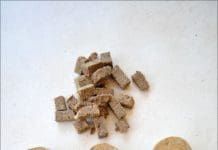
Dehydrated Dog Food Review 2014
On what do we base that ranking? While it's difficult to get nutritionists to agree on just about anything, it's likely that most would agree on the following general idea: that a diet that was formulated to be complete and balanced" and comprised of fresh

Consider Dehydrated Dog Foods for Your Dog!
Occasionally we are asked to rate the various options that owners have for feeding their dogs, based on the relative healthiness" of each major type of food: home-prepared (raw or cooked); commercial raw
The Top 5 Things to Look for on a Commercial Dog Food Label
Recently I visited a fancy new pet supply store?* seriously, the fanciest store I've ever seen. It boasts a fenced and rubber-matted area for patrons' dogs to play while their owners shop; an area where owners can bathe their dogs (with warm water, cross ties in the raised tubs, shampoo and conditioner on tap, waterproof aprons, cool blow driers, and plenty of towels); an area where visiting veterinarians can provide vaccinations and basic health exams; a climate-controlled, glassed-in area for puppy and dog training classes; and, oh yeah, aisle after aisle after aisle of toys, beds, treats, shampoos, and lots and lots of dog (and cat) food.
5 Common Mistakes to Avoid When Buying & Feeding Dry Dog Food
The vast majority of dog owners feed dry dog food to their dogs and quite a few of them select and store the bags of food in a way that turns a wholesome food into a health hazard for their beloved companions. Are you handling your dog's food in a safe manner? Or do you regularly make the following mistakes?
Five Ways to Protect Your Dog from Potentially Toxic Chewy Treats
The U.S. Food and Drug Administration (FDA) began receiving reports in 2006 regarding dogs becoming ill – sometimes fatally ill – shortly after being fed dried chicken “jerky” treats. Most, but not all, of the treats mentioned in these reports were made or sourced in China.
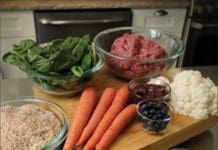
Whole Foods in Vet-Prescribed Dog Food
Three months ago, I asked, Why can't veterinary nutritionists design recipes that meet most nutritional needs through the use of whole foods
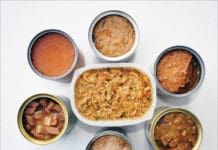
Whole Dog Journal’s 2013 Canned Dog Food Review
Price is the most commonly cited reason that people prefer to feed dry food to their dogs; canned food is far more expensive to feed than dry food. Owners of large dogs or multiple dogs rarely feed canned food as anything other than an occasional treat, for this reason alone.Of course, there are other objections, too.
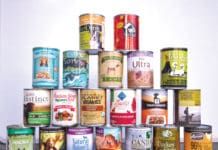
The Benefits of Canned Dog Food: WDJ’s Canned Dog Foods 2013
Wet dog food, a.k.a. “canned” dog food, is not nearly as popular as dry food. The total sales figure for dry pet food in the U.S. last year (more than $12.7 billion) was more than 21/2 times that of wet pet food (almost $4.8 billion). I understand the reasons for this, but wish it wasn’t so. Canned food is actually a much healthier diet for dogs than kibble.

Dishing On Diets
Four veterinarians from the School of Veterinary Medicine at the University of California, Davis, published a study in the June issue of the Journal of the American Veterinary Medical Association, entitled “Evaluation of recipes of home-prepared maintenance diets for dogs.” I don’t think any WDJ readers will be surprised to hear that their findings were not exactly positive. The study analyzed 200 recipes. Of those, 133 were obtained from 2 veterinary textbooks and 9 pet care books (two of which were also written by veterinarians), and the remaining 67 recipes came from 23 different websites. Of all the recipes analyzed, 129 were written by veterinarians, and 71 by nonvets.

Complete and Balanced Dehydrated Dog Foods
We haven't reviewed dehydrated diets for quite some time long enough that there have been quite a few additions to the pool of companies who make and sell this type of dog food. It's increasingly popular, for a lot of reasons.
New Guides In Town
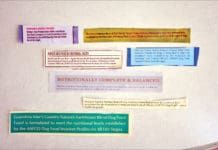
When buying food for their dogs, owners depend on the product manufacturers to deliver a “complete and balanced” diet in those bags, cans, and frozen packages. Perhaps without even being aware of it, owners also understand that there are government agencies responsible for setting standards as to what constitutes a “complete and balanced diet” for dogs, and for making sure that pet food makers meet those standards.
Dietary Fats in Dog Food
As soon as a food is manufactured, it begins to undergo a variety of chemical and physical changes. It's a basic law of the universe (the second law of thermodynamics) that everything degrades over time. This includes the proteins and vitamins in dog foods, but it's the fats I worry about the most.