

Home Search
senior%20dog%20care - search results
If you're not happy with the results, please do another search
The Controversy Over BPA-Free Dog Food Containers
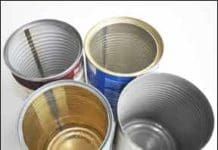
On March 30, the U.S. Food and Drug Administration announced that it had rejected a petition from environmentalists that would have banned bisphenol A (BPA) from all food and drink packaging. The scientific evidence at this time, said the FDA, does not suggest that the “very low levels of human exposure to BPA” afforded through our diets are unsafe. “The agency has performed extensive research on BPA, has reviewed hundreds of other studies, and is continuing to address questions and potential concerns raised by certain studies,” the news release continued. “The agency takes all concerns about BPA seriously and is evaluating them as part of the agency’s ongoing oversight of food safety.”

How Dog Breed Discrimination Can Affect Your Homeowners Insurance Coverage
When Erin Sullivan’s employer offered her a promotion and relocation to Orlando from Baltimore, she jumped at the chance to leave the cold behind in favor of the Sunshine State. Little did she know that her excitement would soon be quashed as she attempted to find a rental home – and subsequently, renter’s insurance – that would accept her, her Pit Bull, and two Pit Bull-mixes. Stories of breed discrimination by insurance companies (and rental property owners) abound as insurance companies increasingly refuse to write homeowner’s and renter’s policies for people who own breeds of dogs that the insurance industry considers to be “dangerous.” Many opponents argue that the industry’s decisions are based on faulty assumptions and improper use of dog bite statistics.

5 Steps to Enhancing Your Dog’s Store-Bought Dog Food
Whole Dog Journal readers have learned how to identify the best commercial foods when they shop for their dogs. But whether you feed dry kibble or canned food, even the best commercial diets can be improved with the addition of appropriate fresh foods. Keep the following things in mind when adding fresh foods to your dog's diet.
It’s OK to Get a Second Opinion Before Putting Your Dog Through Surgery
Your dog is limping and you don’t know why, so you take him to your veterinarian. The vet pushes, pulls, and palpates and announces that your dog probably has torn ligaments in his knee. She says that he needs surgery, and she can take care of that. While you love your dog’s vet, you’re just not sure that you agree, and you’re also unsure whether surgery is the route you want to take. You feel uncomfortable thinking the thought, but wonder what another veterinarian might recommend.
Help For a Dog With Car Phobia
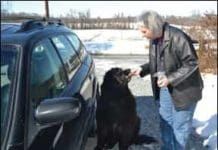
Behavior issues, from simple good manners infractions to the more concerning problems of phobias and aggression, appear in dogs both large and small. But while training to modify behavior issues might look the same regardless of size, in other respects, the bigger the dog, the bigger the problem. When a Dachshund has a lapse in housetraining, the cleanup process is significantly easier than if an Irish Wolfhound has an accident. If a Havanese frantically jumps up on your elderly Aunt Tilly, the collateral damage is less than if a Great Dane does the same. And if a Yorkie is terrified of riding in the car and refuses to get in for an emergency trip to the vet, he can be picked up and placed inside – not so when a Newfoundland steadfastly refuses.
Training Police Dogs and Military Dogs Using Positive Methods
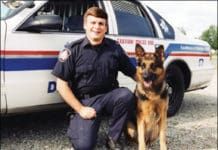
both for law enforcement and civilian trainers.üStaff Sgt. William Riney uses a toy and a game of tug to reward his military dog for detecting narcotics around vehicles on the grounds of Lackland Air Force Base
Blood Transfusions for Dogs
Denise Mankin, DVM, was on duty late one night in a Des Moines, Iowa, emergency veterinary clinic when Yeller, a Labrador Retriever, was rushed in sporting a fresh wound to his back. Yeller had been shot after escaping from his rural home. After stabilizing Yeller with IV fluids, antibiotics, and pain medications, Mankin opened up the dog's abdomen to find blood filling his abdominal cavity. A bullet had perforated Yeller's small intestine in five different locations, and two of the sites were hemorrhaging profusely. Within moments, his blood pressure plummeted. As Mankin worked desperately to tie off the blood supply to his damaged bowel, Yeller went into cardiac arrest. Cardiac drugs restored Yeller's heart beat, and donor blood, having been warmed for transfusion, was pumped into him.

Shelter Sadness
I spent a half day at my local shelter recently, working with a half-dozen large, adolescent dogs who have been languishing there for two or more months. Not one of these dogs knew the cue “sit” but they were friendly and healthy and in need of homes.
Preventing Bladder and Kidney Stones in Dogs
Bladder and kidney stones are serious problems in dogs as well as people. These conditions which are also known as uroliths or urinary calculi can be excruciatingly painful as well as potentially fatal. Fortunately, informed caregivers can do much to prevent the formation of stones and in some cases actually help treat stones that develop. Last month, we described struvite stones (see Canine Kidney Stone and Bladder Stone Prevention" Whole Dog Journal April 2010). Struvites contain magnesium

How to Prepare for a Dog’s Death
For many of us, the death of our dog will be the first time that we've experienced the loss of a loved one, human or otherwise. And even for those who have lost a relative, spouse, or close friend, dealing with the death of a beloved dog can be a whole new experience, unleashing a wave of emotions that just might sweep us off our feet. Although no amount of preparation can make the pain disappear, planning ahead for the loss of a pet can allow us to make better decisions and be ready with the right resources should we find ourselves on an emotional roller coaster.

Dancing With Dogs
Snapping fingers and tapping feet are the signature moves of musical freestyle – and that’s the audience! What happens between dog and handler during a musical freestyle performance is simply magical. The handler gives subtle cues, and her dog executes complicated maneuvers, one after the other, as the pair moves across the floor, their routine choreographed to music that emphasizes their connection. For those of you whose introduction to this sport was watching a widely distributed video clip of Carolyn Scott’s routine to “Grease” with her Golden Retriever, Rookie, you were probably awestruck. You may have even gotten a little misty eyed, recognizing the commitment, training, and connection between two different species. But it was the look on Rookie’s face that sold you that this was a sport worth exploring. This dog was having a blast, and the behaviors he was doing were difficult! How could training something so hard be so fun?

Helping Your Dog Lose Weight
When Ella, a five-year-old Norwich Terrier, first came to live with me a few months ago, she weighed a svelte 10.8 pounds. But within two months her weight had ballooned by almost a full pound, and there was no way you could call her anything but plump. How could this happen? How could I have let my new dog get fat me, the one who perpetually preaches the benefits of keeping dogs lean? And what the heck was I going to do about it? The answer is that it happened because Id never owned such a small dog before, and it turned out I was massively overfeeding her, particularly when I counted all the treats she was getting. And I would do whatever it takes to get her back to the weight she should be, and keep her there. Here is what I learned during my struggle to help Ella lose weight.