

Here is a topic for discussion that was inspired by real-life events.
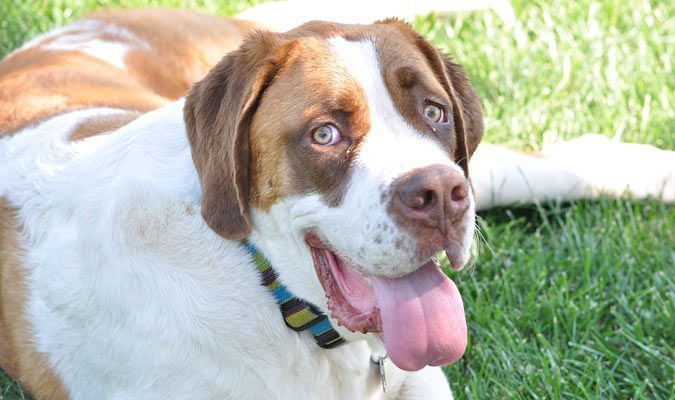
Two couples are both interested in a big, active dog at the shelter.
One couple is older. They own their home. Property is at least several acres, but unfenced. Husband is retired and home most days, puttering in garden and with hobbies. Wife works 30 or so hours a week. They formerly owned another big, active dog, who recently died of old age. They have a 2-year-old small dog who misses having canine company. They have a trainer who they have worked with previously and plan to do so again.
Second candidate couple is young, early 20s. They are renters. They also live on several acres, but their home property is fenced. They have another big, young, active dog, a female. They both work.
My bias in placing the dog was toward the older couple. While it’s true that they lacked a fenced yard for the dog, the fact that they own their home reassures me that they won’t be at the mercy of future landlords if they have to move for whatever reason. They also have the financial wherewithal to provide the dog with whatever medical or behavioral interventions he is likely to need. A week in training? Knee or hip surgery? Wouldn’t be a problem for these people.
Staff at the shelter was biased in favor of the young couple. The fact that their property was fenced, their youth, and that they were already dealing with a big, active dog made them seem more equipped to deal with the dog’s perceived need for activity.
I’m just curious: Where would most people, or most shelter staffers, end up placing a dog like this?




My first inclination would be the older couple for all the reasons listed. But I would have to hear far more about both, and definitely do a home visit, because what looks obvious on the outside, may not be the case. My own experience is a perfect example.
Several years ago, I had a 2-year-old Gordon Setter who did not get along with my 3-year-old Irish Setter. They had to be kept strictly separated or they would most definitely try to kill it each other. After a year of consulting with trainers, behaviorists, vets, etc., a friend told me about her neighbors, an older, retired couple, living on 5 acres, who had just lost their 10-year-old Gordon and wanted another one. For more than forty years of owning Setters and swearing I would never give one up, for any reason, I realized I was being selfish, that the constant tension in the house was making both dogs miserable. So I agreed to let him go, but insisted on retaining co-ownership and their promise that he would be returned at the slightest sign of trouble, and reassured that they understood the importance of him being an only dog.
On the other hand, when my husband and I were in our twenties, about to be married, and living with my future in-laws, we bought a typically energetic Irish Setter puppy. Shortly after that, we packed up our stuff and drove cross country to California, with our dog happily dancing back and forth in the back seat. We finally found a landlord who would accept dogs, and moved into a one-bedroom apartment.
Between the two, the older couple were far more suited to own a dog. It didn’t work out that way.
I kept in touch with the older couple, and all seemed well, even though they shaved off his gorgeous coat and let him balloon to 100lbs. after switching from raw to kibble. All of which upset me, but according to his new owners, he was happy, loved their grandkids and enjoyed chasing quail on their property. Then I didn’t hear from them for several months, no emails, no photos. Finally I got a letter saying he hadn’t worked out and they had given him to their groomer who ran a pit bull rescue. I reminded them that I co-owned him and he should have been sent back to me. They shrugged. We forgot. The groomer, who had placed him with a family that had a Golden Retriever, didn’t care either, and refused to tell me who they were or where they lived. I never heard from the couple again and have no idea where my precious Gordon ended up.
In the second story, my husband and I worked part-time jobs, so our Irish Setter was rarely alone, and was much loved by all our neighbors in the apartment complex. Plus, she got to go to a fenced baseball park, every day, rain or shine, where she could run and chase tennis balls to her heart’s content. She couldn’t have had a better life or been more loved.
So,on first glance, I’d say the older couple. From my own experience, the younger couple.
Depends on the breed of the dog. I work with Great Dane and Irish Wolfhound rescue. We will adopt Great Danes to homes without a fence (if they have had dogs in the past and have demonstrated they don’t let the dogs run at large, etc). We will not even consider an unfenced home for a Wolfhound. Wolfhounds are sighthounds and many a wolfhound will promptly ignore and forget any and all training to chase a furry little critter–what they were bred to do and it’s just too difficult for training to overcome genetics for some dogs. Once a Wolfhound is on the chase, roads are “nothing”, cars are “nothing”. For a Dane, I’d probably favor the older couple. For a Wolfhound, I wouldn’t even consider the older couple unless they were willing to put up a fence.
We are an Older,active retired Couple. Everything already stated for the older couple, I’m for it.
We are an older couple and lost our Rescue Chow Chow a year ago.He was beautiful beyond our belief.
Due to our enthusiasm, and this being our 3rd Chow Chow – we did overlook a couple of important issues.
The immense expense that does occur with any ownership of a pet, young or old.
Our love and devotion was and is always in place. Our income is not what it once was.
We have tracked back on our expenses for our loving pets and boiled down to the fact could we be OK – financially if our pet and us were looking at health problems that simply were $15,000. one year – $8,000 another year.
If this sounds cold and unloving …. we apologize. We miss our Chow Chow’s ! We miss the time and immense attention we gave to each one. Never had they been left with a house sitter as we travel. The pet was with us on every trip, every hotel, every outdoor cocktail happening.
Things change and if an older couple has the financial means to cover immense pet health care – I’m all for it.
Things change and financial pictures as one is older change.
GOOD NEWS: a very dear friend of our travels for her company. We are now the official babysitters for a precious dog. A win win for all of us.
I favor the older couple. this dog needs lots of space. Dogs need lots of love as do older people also
I ran a national rescue for 8 years and we had a comprehensive application that we used. So on the surface I would go with the older couple. But in my rescue, we always looked at the written answers to see what knowledge an adopter had toward dogs and their care and attitudes that were expressed.
I vote for the older couple. Our farm country yard is not fenced. My husband is retired and I work part time for a nonprofit. Our medium large shelter dog is the center of our world. Nothing is too good for her. She gets 2-3 mile long walks daily. She gets doggy play dates and vet approved homemade dog food. She gets regular checkups and dental care. She goes everyplace we go where dogs are allowed, HomeDepot, dog friendly restaurants, farm markets, camping and TD Bank. For no dogs allowed places, one of us takes her for a walk. Older doesn’t mean sedentary!
I agree with those who say “not enough information.” If I had to make a decision based only on the information provided, I’d go with the older couple due to their proven track record. However, I’d be very concerned that the little dog and big dog might not get along, even if an initial meeting or two went well. I do want to add a couple observations. One downside to older adopters is health: I’m 67, and I do worry whether my partner could handle all three of our dogs if something happened to me; two of them are under three. On the other hand, I wouldn’t dismiss a renter too quickly. My partner has rental properties, and he’s found dog owners to be reliable tenants overall. Yes, there’s a bit more cleanup when they move out, but in general, they keep their unit up, and the rent is on time.
As someone who works with Great Dane and Irish Wolfhound rescue, we adopt to homes with small dogs all the time (at one time, we even had a small dog ourselves–a little girl that wandered up to our yard one day that we found huddled against our fence and, of course, just never left). We’ve not experienced any problems with the larger ones not getting along with or attacking the small ones (we’ve had dogs that didn’t like cats, but not ones who weren’t good with smaller dogs). We took in 2 Danes that “killed” a Chihuahua (dead Chihuahua was in the Danes’ yard, no one saw what happened, Danes were blamed). We tested these dogs up one side and down the other with small dogs and could never get them to react in any threatening or aggressive manner (but did not adopt those two to homes with small dogs just to be very safe).
I lean toward the older couple because of all you mentioned in your article and I think they are the more stable home. Their small dog is used to large dogs. The young couples young, big dog may end up not getting along with another big dog. The older couple have had two dogs till recently and will understand how to integrate another dog into the family. And I must admit a bias against people working full time having a dog. I don’t believe dogs should be left all day and wonder if the young couple want the second dog as ‘company’ for their present dog. Dogs need people around.
As for the fence vs non fenced, although I prefer fenced yards, dogs can be trained to not go off their property and there are several acres.
Just my thoughts
Older couple would be my choice for various practical reasons. But most of all, they are still a couple, whereas, the younger couple may or may not beat the odds of staying a couple,
Working couples can make caring for a dog work but it is not easy and can be expensive. I did not hear anything about children. Caring for children can take all of a person’s non-working time. Future children can be problematic. The fact that you are hearing mostly from older folks demonstrates that they have more time to devote to furry companion knowledge and care. Property that is owned and can be fenced is always desirable, especially for large dogs. I wouldn’t be without a very large fence. It is not safe for dogs to be loose and dogs really like to be off leash. Mine chase squirrels and birds that come to feeders in the fence (never catch them), dig holes and take their time about their business. They have plenty of shade and are outside all summer.
We had one problem with this–adopted a Dane to a young couple and when they had a child, they returned the dog. Pissed me off. But, on the other hand, we had other young couples who adopted a dog and then had children and kept the dog. And it can be tricky having a child that is crawling and toddling with a dog the size of a Dane or Wolfhound, as the dog can easily knock them down (not because the dog is aggressive–just big).