

Here is a topic for discussion that was inspired by real-life events.
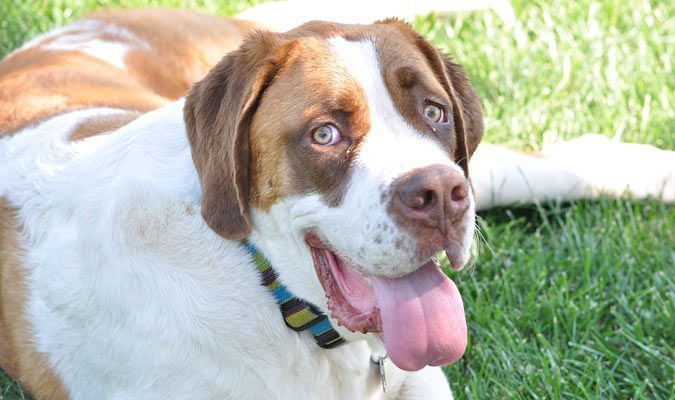
Two couples are both interested in a big, active dog at the shelter.
One couple is older. They own their home. Property is at least several acres, but unfenced. Husband is retired and home most days, puttering in garden and with hobbies. Wife works 30 or so hours a week. They formerly owned another big, active dog, who recently died of old age. They have a 2-year-old small dog who misses having canine company. They have a trainer who they have worked with previously and plan to do so again.
Second candidate couple is young, early 20s. They are renters. They also live on several acres, but their home property is fenced. They have another big, young, active dog, a female. They both work.
My bias in placing the dog was toward the older couple. While it’s true that they lacked a fenced yard for the dog, the fact that they own their home reassures me that they won’t be at the mercy of future landlords if they have to move for whatever reason. They also have the financial wherewithal to provide the dog with whatever medical or behavioral interventions he is likely to need. A week in training? Knee or hip surgery? Wouldn’t be a problem for these people.
Staff at the shelter was biased in favor of the young couple. The fact that their property was fenced, their youth, and that they were already dealing with a big, active dog made them seem more equipped to deal with the dog’s perceived need for activity.
I’m just curious: Where would most people, or most shelter staffers, end up placing a dog like this?




The older couple.
I felt like the older couple would be better. More stability.
I vote for the older couple. I read through Carole Rashella’s story and the truth is you can never know how life will play out once you place the dog. I think all you can do is interview the family, do a reference and maybe a home check and make a decision. From the description, the older couple sounds more stable, if the younger couple were home owners and had experience with a bigger dog then maybe but it is nice for the owner to be home during the day. I know of a co-worker who got a companion for his dog and they both sleep all day waiting for him to come home.
I think that there is no right or wrong answer here. If both families meet the shelter’s requirements, both are likely to be adequate owners and should be able to adopt the dog. First come first serve.
I would submit that you cannot infer which home would be more suitable based on a few general facts about each family. How would you even begin to define “better owner” in this scenario? The decision would be based on personal bias, not data. Personal experience that is not quantified, although not useless, is still bias.
Since past behavior is the best predictor of future behavior, how many animals have they owned in the past, and what happened to each one? That’s a great question to ask, knowing there’s no guarantee of truthful answers.
I just think that without an accurate and detailed history, there’s no way to judge the “better” candidate based on the information given. Either family would be adequate, based on available info.
I favor the older couple. They’re more stable and as previously stated, have the means to care for the dog’s medical and training needs as well as the time to spend with the dog. Just because a person is retired doesn’t mean he/she can’t handle an active dog, especially if they have experience with that type dog. A well trained dog can be taught recall and other training cues to teach them how to stay within their boundaries.
I would choose the older couple for many of the reasons stated above but the most important being that husband is retired and is puttering outside every day so the dog will not be crated or penned but be able to enjoy the big yard throughout the day. Also, they have already committed to a trainer to help ease the adjustment and their small dog misses having a canine companion
.
Older Couple who is home all day. Dog love human companionship. The couple who works might be getting a dog to keep the other dog company all day, but there is no one that can correct any bad behavior and left to their own devices. If they work shifts and like hikes and outdoor activity, then they might be better. Just because they rent doesn’t mean they will give up their dog when they move. It depends on everyone’s lifestyle and what needs to be decided is what is best for the dog? No straight answer here.
Wow, everyone has an opinion, and I do too! I’m a co-founder of Turbo Kees Foundation, a Keeshond dog breed rescue organization. Based on the limited amount of information provided in your article, I could not make a decision. Reasoning, there simply isn’t enough info about either adopter or the dog in question. With that said, in the shelter environment, there is usually not enough time to really get to know the dogs, nor does shelter life really allow the dog(s) to be “themselves.” Shelters usually do not have the resources nor personnel to screen potential adopters. Age is a number as far as people are concerned, IMHO. I’ve been doing dog rescue for nearly 24 years, and our rescue group has some of the most strict policies anywhere. I’ve know older folks who are in better shape, than young folks… everything can be & is relative!
I would tend to favor the older couple for many reasons. I have adopted 2 senior dogs -one was 12 years old and the other 14 years old. Both adoptions were very heartwarming and you learn so much from them on how life should be lived. My latest adoption was a lab/GPR mix – he was supposed to be 6 years old and from the encouragement of my family to adopt a younger dog I felt this was an excellent choice. I am 71 years old and have had him for 3 years now. He came from Texas as a stray that it appears was abandoned in the middle of nowhere – he had heart worm treatment and when I received him he needed 2 more weeks of quiet time. Training has been a challenge and expensive and still working on a couple of problems. He is very anxious and needs to be walked and played with to keep his energy from becoming a problem. It turns out ,it seems, that he was only 1 1/2 years old and 60 lbs. and now is 98 lbs. Much care has been given to him from meds to grooming costs. I am very fortunate that I have the time and the financial resources needed to give this to him. He is smart , loving and would not ever say it was a mistake to take this on at my age. I would wonder if the younger couple would be able to do all of this ? It is all about the dog and being able to give him or her a wonderful life. I will never give up on getting him to be the ‘perfect dog’. Once you adopt a dog you should be ready to take on whatever happens – Also plans are in place if something does happen to me I cannot take care of him.
First instinct would be the older couple but I would want to know more about the dog available and if possible have the families dogs meet the dog available to determine which would be the best match as a family.