If your dog has a swollen eye, you should make a veterinary appointment promptly. These issues are usually not an emergency, but eye problems can progress quickly without proper treatment.
Dog Swollen Eye Home Treatment
The things you can do at home to provide your dog relief while you wait for a vet appointment include:
- Apply a warm compress to the swollen eye. This should be warm, not hot. Applying heat is soothing and encourages circulation to decrease swelling.
- Flush with plain artificial tears. Lubricating the eye can provide pain relief and may dislodge any foreign material that is causing irritation.
- Consider giving Benadryl. Diphenhydramine is an antihistamine that can help relieve itchiness and discomfort due to allergies. This is most appropriate if your dog has a history of environmental or food allergies, both eyes are swollen, or if your dog also has itchy feet and/or ears. Your veterinarian can tell you a safe dose for your dog.
Remember, though, eye problems can accelerate and become bad quickly and permanent eye damage is possible. Don’t skip the vet visit. Get your dog in as soon as possible.
What Is Blepharitis in Dogs?
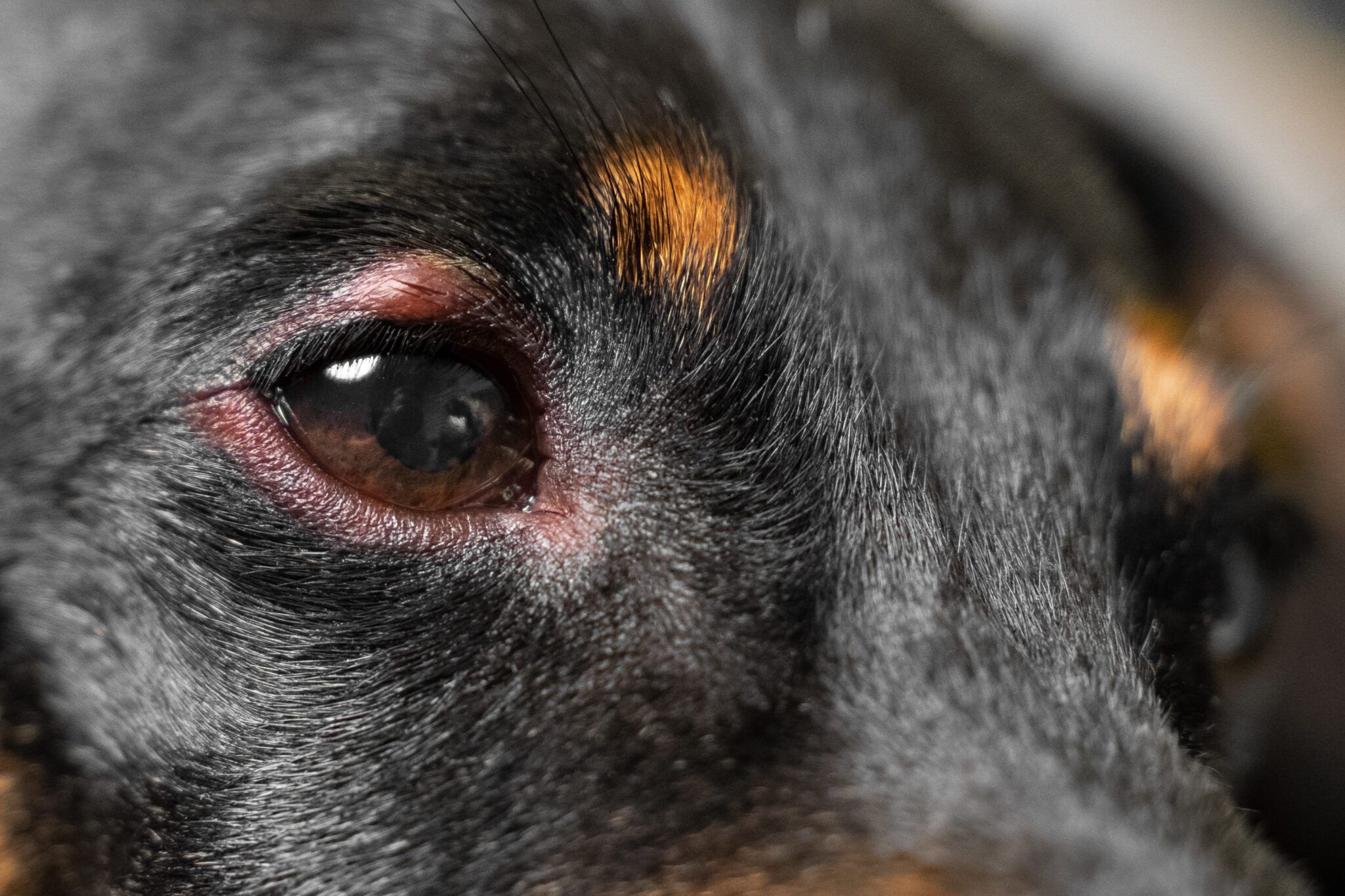
Blepharitis means inflammation of the eyelids. It is uncomfortable, so your dog will probably show some behavioral changes as well as swelling and redness around the eye.
Symptoms include:
- Swelling of the eyelids and around the eye
- Excessive blinking
- Squinting
- Rubbing at the eye(s)
- Reddened skin around the eye(s)
- Hair loss around the eye(s)
- Redness in the sclera, or white part of the eye
- Pigment changes in the skin around the eye(s)
- Discharge from one or both eyes
- Pain
When your dog rubs or paws at his painful eye, he could accidentally damage the inflamed skin or even the eye itself. These scratches can lead to sores around the eye or infected ulcers on the surface of the cornea.
Why Does My Dog Have a Swollen Eye?
Many things can cause blepharitis. Possible causes include:
- Trauma to the eye
- Chalazion, a mass-like inflammation of the meibomian glands in the eyelid
- Allergies
- Entropion (folding in of the eyelid, causing eyelashes to rub against the eye or grow abnormally)
- Bacterial infection
- Parasitic infection such as demodectic mange or sarcoptic mange
- Viral infection, including papillomavirus
- Tumor on the eyelid such as meibomian gland adenoma, melanoma, or squamous cell carcinoma
- Immune disorders such as pemphigus or lupus
- Zinc-responsive dermatitis
- Metabolic disorders such as hypothyroidism, diabetes, or Cushings disease
Sometimes we don’t know why a dog develops a swollen eye. Brachycephalic dogs and other breeds with facial folds have an increased risk of blepharitis, and certain breeds have increased risk for health conditions that can lead to it. Breeds with an increased risk of developing blepharitis include the Shih Tzu, Pekingese, English Bulldog, Lhasa Apso, Pug, Golden Retriever, Labrador Retriever, West Highland White Terrier, Siberian Husky, Akita, German Shepherd Dog, Poodles, Chinese Shar Pei, Chow Chow, Rottweiler, and Collies. That said, any breed or mix can experience this issue.
Getting a Diagnosis for a Dog’s Eye Problem
Your veterinarian will need to know when you first noticed the swelling around your dog’s eye as well as any other symptoms or changes in your dog’s life and routines. After a thorough exam, the vet will recommend next steps based on what he or she thinks may be causing irritation.
Diagnostics might include a Schirmer tear test, bloodwork, swabbing the eye for a bacterial culture, testing for viral disease, or biopsy.
Treating a Swollen Eye
The exact treatment will depend on why your dog’s eye is swollen.
Your dog may receive topical eye drops or ointment to relieve pain in the eye or treat a bacterial infection. Many tumors and masses can be removed surgically, as can entropion. Parasites are treated with appropriate preventive medication. Zinc responsive dermatitis is treated with diet changes.
Allergies, immune disorders, and metabolic disorders generally require lifelong management. Once the underlying problem has been addressed, your dog’s swollen eye should resolve.