Home Search

dog obedience training - search results

If you're not happy with the results, please do another search

Professional Dog Training Titles

Not to be outdone by the veterinary profession (See Alphabet Soup

Dog Certifications and Titles

2
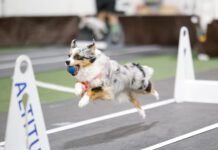
My friend has super fast dogs, and they compete in agility. I always imagined that the magnets on the back of her vehicle indicated just how fast they could run: MACH speeds! And C-ATCH: Catch me if you can! Obviously my Border Collie, Duncan, and I didn't get far enough in our brief agility career to earn any titles (he preferred to make up his own courses). But when my curiosity got the better of me and I looked into what, exactly, those letters on my friend's car actually meant, I quickly learned that there are countless titles and certifications that can be bestowed upon our canine companions.

Training Police Dogs and Military Dogs Using Positive Methods

1
both for law enforcement and civilian trainers.üStaff Sgt. William Riney uses a toy and a game of tug to reward his military dog for detecting narcotics around vehicles on the grounds of Lackland Air Force Base

Positive Dog Training for Hunting Dogs

Depending on who you talk to, “hunting dog” means very different things. The only thing in common may very well be that the human end of the leash historically toted a gun in pursuit of some type of “game.” The game in question was not after-dinner parlor entertainment, but the entree on your dinner table. That might be pheasant, duck, or squirrel. Through hundreds of years, the real-life pursuit of food for one’s family has morphed into a competitive sport for people who rely upon Safeway to meet their nutritional needs.

Rally Obedient Dogs

0
Forward! The judge cues the team to begin. The handler cues her dog to “heel” and, with her left arm bent in at her waist, briskly moves forward with her dog on her left side, heading toward the first in a series of signs that prompt her to cue one of a variety of behaviors. As she completes an “about turn,” a particularly challenging behavior for her long-bodied dog, she smiles, praises him, and moves on to the next sign, attempting to keep up a steady pace around the course of 20 signs. Wait! Did we hear her praise her dog in the ring? Horrors! Surely, the judge made note of that! He’s scribbling furiously now! The handler moves toward another sign and executes the “halt / sit / down / walk around” maneuver. As she releases her dog, she praises him again and even sneaks in a quick pat on the head. She can’t be serious! The judge must be grinding that pencil to a nub now! Does this handler not know that talking or touching your dog in the ring is not allowed? Ah, but therein lies the unique nature of “rally obedience.” It’s not just the signs and the greater variety of behaviors involved; it’s the philosophy of this sport that makes it distinct from its cousin, traditional competition obedience. Rally obedience was envisioned as a sport that would promote the human-canine bond by allowing more natural communication in both training and competition than historically had been available in traditional obedience.

Force-Based Training Methods and Some Unintended Consequences

0
Most people, unwittingly or intentionally, use a lot of physical force when raising and training their dogs. The purposeful ones have a whole variety of reasons. Some may have read about behavioral theories regarding dominance and “the importance of showing the dog who’s boss.” Fans of these theories may advocate imitations of canine behavior such as “scruff shakes” or “Alpha rolls” to convince the dog he’s at the bottom of the family hierarchy. Others may have been influenced by advocates of traditional, military-style training – think of yanking collar ‘corrections’ or using the leash leveraged under their foot to forcibly pull a dog into a Down.

New to Positive Dog Training?

Switching to positive training? At first, it might be frustrating for you – and your dog. The benefits, however, will last a lifetime. In positive training, the goal is to help the dog do the right thing and then reward him for it, rather than punishing him for doing the wrong thing. If he makes a mistake, the behavior is ignored, or excused with an “Oops, try again!” to encourage the dog to do something else.

Feeling Alone in Group Training Class

Group training classes are a mixed bag of pros and cons. And I say this as someone who has made a fair amount of my annual income by teaching group training classes. I also attend group classes with my own dog. By design, the ideal candidate" for a positive-reinforcement group manners class is the generally happy-go-lucky

Training the Dog to Stay

Recently, I was struck by the realization that while "Wait!" is one of the most valuable cues I use with my dogs, it's a behavior we didn't usually teach in old-fashioned choke-chain obedience classes. Oh, we taught rock-solid obedience ring "Stays." Some trainers substituted the word "wait" for "stay" to differentiate between recalls ("wait" means you're going to get up and come to me when I call you) and the one-minute and three-minute sit-and-down-stays (stay means you are never to move no matter what happens until I come back to release you). Generally, though, we didn't use "Wait" to mean "pause" as many of us dog owners do today. "Wait" is a valuable cue; I'd be lost without it. Of course, a cue takes on whatever meaning you give to it when you teach your dog a new word or hand signal. We tend to use words that are meaningful to us (they are much easier to remember!) but if you wanted, you could teach your dog that "Banana!" means sit, "Orange" means down, "Pumpkin" means stay, and "Kiwi" means wait. As long as you teach your dog what behavior you want him to associate with your words and use them consistently, your dog will learn the meaning you've assigned to them and the cues will work for you.
force free gundog training

Lessons on Force-Free Dog Training From Gundog Trainers

0
Ever hear of force-free gundog training? Neither have most of America’s 3 million duck, pheasant, and migrating bird hunters, but what’s new in the...