Bad breath in dogs can be a symptom of anything from poor dental hygiene or periodontal disease to underlying health conditions such as diabetes or kidney failure. So if your dog’s breath makes you feel like you’re going to pass out every time your pup exhales, it’s time for an intervention. Once the cause has been identified, you can often freshen dog breath at home, but you must be diligent.
How to Get Rid of Bad Breath in Dogs
If your dog has seriously bad breath, you’re going to need to visit your veterinarian to determine if there is an underlying problem. If the odor is traced back to a dental issue, the goal will be to get your dog to a reasonable base line and then maintain it.
To start, get your dog’s teeth professionally cleaned by your veterinarian. This will give you a big boost in trying to freshen dog breath at home. Just like when you get a dental cleaning, your dog’s teeth will be scaled and polished to remove the nasty plaque and tartar that contribute to bad breath. Periodontal disease is a major cause of bad breath and a professional dog dental cleaning is the first step to treating it.
If your dog has signs of infection in his mouth, your veterinarian will prescribe antibiotics to kill the bacteria. Oral infections create a particularly pungent odor and clearing them up will help to freshen a dog’s breath. Without treatment, an ongoing dental infection can lead to more serious dental and overall health conditions.
How to Freshen Dog Breath at Home
At home, work to keep your dog’s mouth sparkly clean. In addition to freshening your dog’s breath, this will help prevent dental problems and other related health issues down the road.
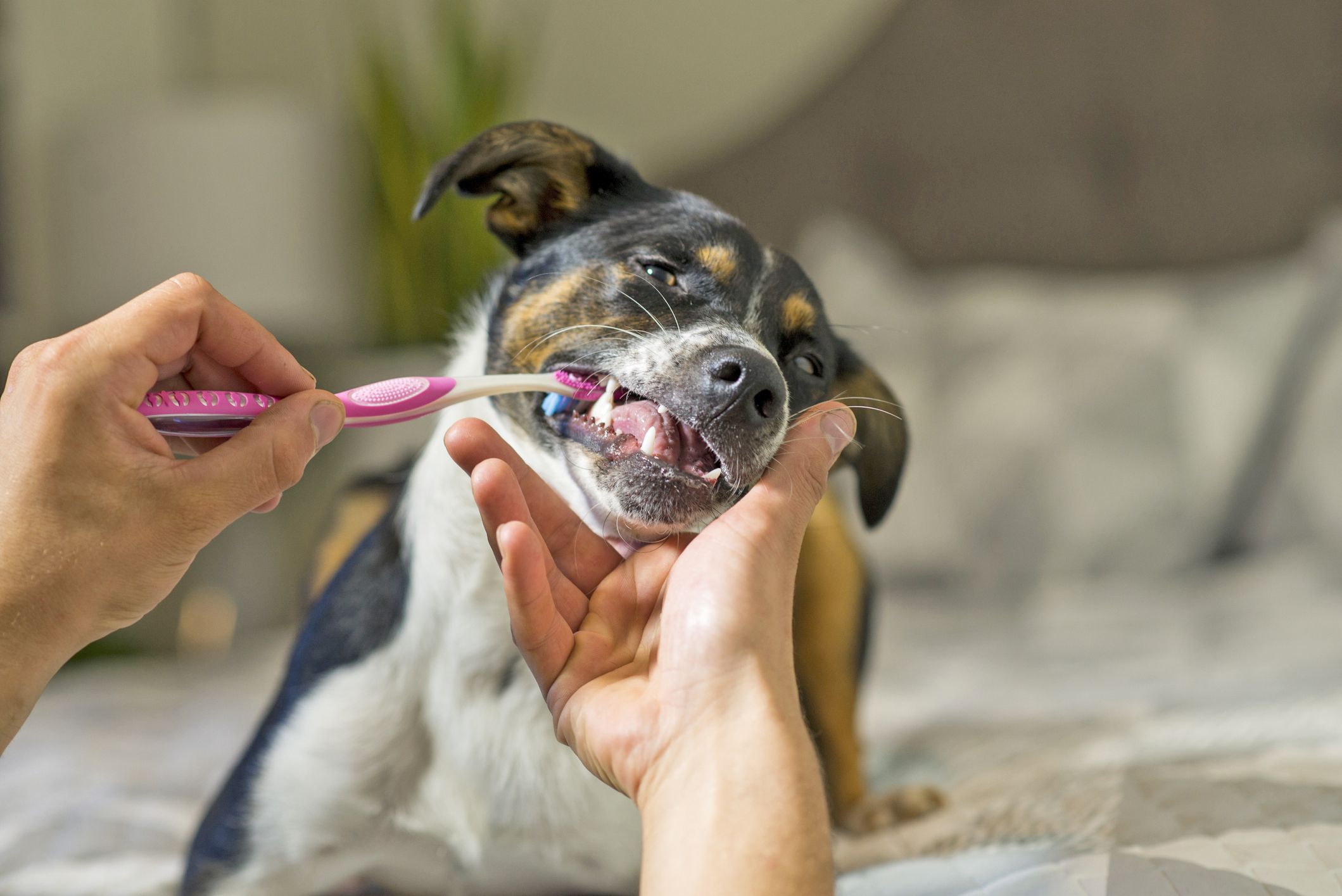
Brushing your dog’s teeth with an enzymatic toothpaste made for dogs is a good way to get rid of bad breath. Introduce brushing slowly – start by just letting your dog lick the toothpaste off a toothbrush. The enzymes in enzymatic toothpaste work to break down plaque just by being in the mouth.
As with many necessary dog grooming tasks, you’ll likely need to take some time to get your dog comfortable with having their teeth brushed. Be sure to introduce brushing slowly—start by just letting your dog lick the toothpaste off a toothbrush. Over time, you will be able to add brushing action to really clean your dog’s teeth. If your dog isn’t interested in licking the toothpaste off of the toothbrush, you can try simply rubbing your finger or a washcloth over your dog’s front teeth. Once they become accustomed to this, work your way towards the back of their mouth. When they are comfortable with that, reintroduce the toothbrush. Even if your dog never gets used to the toothbrush, remember that enzymatic toothpaste will still help.
We like the PetSmile system, which has enzymatic toothpaste and applicators without bristles; you can rub the stuff right on the teeth and gums, and many dogs prefer this method.
Other Ways to Help Freshen a Dog’s Breath
If you’re looking for a more economical way to combat bad breath in dogs, there are some homemade toothpastes that may be more economical, if you’re willing to do the work. Remember that human toothpaste shouldn’t be used on dogs, as it isn’t made to be swallowed and can cause stomach upset.
Dental chews and water additives are also easy ways to help prevent plaque buildup on your dog’s teeth that cause odor. A prescription dental food may help dogs with chronic tooth issues and bad breath.
If you want to naturally freshen dog breath, provide your dog with safe chew items. These include raw marrow bones (given under supervision), carrots, apples, and even celery. Chewing works similarly to tooth brushing by physically removing the bacteria that creates plaque. Note: dental sprays aren’t highly regarded as effective.