

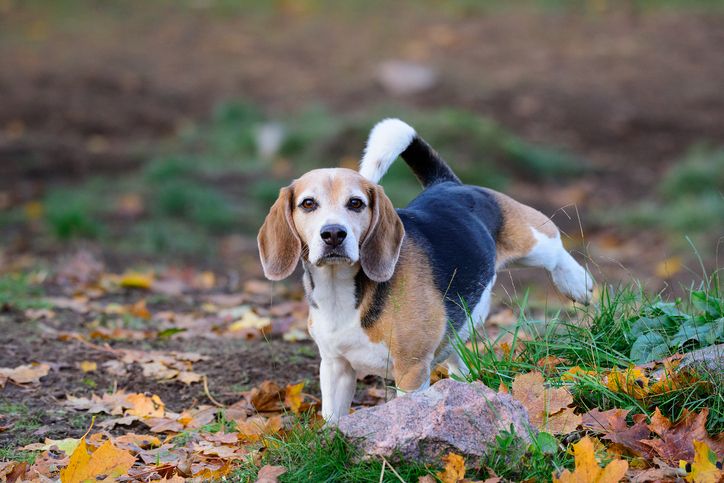
Housetraining your adult dog (also known as potty training) may be easier than you think – or not! It depends on why your dog is eliminating indoors. If she just never learned that she’s supposed to go to the bathroom outside, the fix for the house soiling could be pretty simple. If her indoor accidents are due to medical or behavioral problems, however, that’s a larger challenge.
Why Adult Dogs May Not Be Housetrained
Your adult dog may have grown up outdoors, in a kennel, or in a home where no one paid attention to her bathroom habits (such as a hoarder’s home). If that’s the case, it may be just a matter of teaching her a new skill: “Hold it until you get outside.” The process to use here is the same as housetraining a puppy:
- Take your dog out to her designated bathroom spot more often than she has to go
- Reward her immediately every time she “goes” outside
- Supervise her closely when she’s indoors, or contain her in a crate or small pen, so she doesn’t have any opportunity to make a mistake.
If she already has a history of indoor accidents it may take a little longer than you might think to get her to “reliably housetrained,” but you can do it!
Medical Issues That Can Affect Housetraining in Adult Dogs
Medical problems such as a urinary tract infection, spay incontinence, or gastrointestinal distress (and others) can make it physically impossible for your dog to “hold it.” It is critically important that your veterinarian gives your dog a clean bill of health – or diagnose and treat any disorders – if you want to be successful with your housetraining program.
Behavior Challenges That Can Complicate Housetraining an Adult Dog
It’s important to consider stress and anxiety if you are struggling with stubborn housetraining challenges. Persistent indoor “marking” (urinating small amounts on objects or walls) is often a function of stress. While male dogs are more likely to persist in marking indoors, female dogs are also known to sometimes mark.
When To Seek Professional Help for Housetraining Problems
Generalized anxiety and stress can result in an inability to “hold it,” with resulting bathroom accidents, and can also cause gastrointestinal distress that results in very loose stools – which are also virtually impossible to “hold” for long periods of time. If your dog is stressed or anxious, consider a consultation with a qualified force-free behavior professional, with a likely recommendation that you talk to your veterinarian about anti-anxiety medications.
A good dog training professional can help you with your housetraining challenge, even if it’s not a medical or behavioral issue. Here is information on how to find a good dog trainer and/or behavior consultant who can help you teach your dog appropriate bathroom behaviors.




Our rescue dog, Bailey, is unreliable in the house even after 2 1/2 years. She’s probably six-ish years old and spayed. We take her out four times/day and she sleeps in a crate at night, yet she peed on our bed yesterday – a place where she often naps during the day, so I was really surprised that she peed there! She’ll go months with no accidents, and then she goes in the house again and it feels like we must start over. It seems like there’s never going to be a time when we can relax and trust that she’s house-trained. Since she’ll go months with no problems, we assume there isn’t a medical issue. So how does one know when a dog is indeed house-trained? Our other rescue dog, Maddie, would explode before she’d go in the house!