

Home Search
allergies/feed/rss2/Rawhide%20chews%20are%20potentially%20dangerous%20because%20they%20can%20be%20a%20choking%20hazard%20or%20cause%20gastrointestinal%20obstructions%20if%20your%20dog%20manages%20to%20chew%20off%20a%20piece%20that%20is%20small%20enough%20to%20swallow,%20but%20too%20large%20to%20pass%20unimpeded.%20In%20addition,%20some%20rawhide%20chews%20are%20hard%20enough%20to%20break%20or%20damage%20teeth. - search results
If you're not happy with the results, please do another search
Cognitive Dysfunction Syndrome in Senior Dogs
Each of us has, at some point, wandered into a room and realized that we've forgotten why we've gone there. When that happens, chances are we are momentarily perturbed with ourselves, but typically we chalk it up to too much on the brain, remember why we're there, then move on. Should our dogs wander in the same fashion, it could well be a sign of cognitive dysfunction syndrome (CDS), a condition quite similar to Alzheimer's in humans. CDS happens when the aging process affects brain pathology, resulting in behavioral changes, including cognitive decline (memory and learning).

Kennel Cough Treatment and Prevention
Anyone who's heard it will recognize the dry, hacking, something's-stuck-in-my-throat cough that won't quit. It's the signature symptom of canine infectious tracheobronchitis, also known as Bordetellosis, Bordetella, and most commonly as kennel cough. Whatever you call it, tracheobronchitis is one of the world's most widespread canine diseases. Like the common cold in humans, tracheobronchitis is highly contagious, rarely fatal, and runs its course in a few days. Fortunately, there are several ways to help make canine patients more comfortable, speed recovery, and prevent future infections. Tracheobronchitis is called kennel cough because of its association with boarding kennels, animal shelters, veterinary waiting rooms, grooming salons, and other areas where dogs congregate in close quarters. It can strike dogs of any age but is most common in puppies, whose immune systems are still developing, and adult dogs with conditions that impair immune function.

Building a Healthy Relationship With Your Dog
Like most positive dog trainers, I constantly remind my students that, whether they are conscious of it or not, they are training their dogs every moment they spend together. Whatever you choose to reinforce -- even when you’re not in a formal training session -- will affect your dog’s future behavior. The things that your dog does that you frequently reinforce are likely to increase, so it makes sense to reinforce him as frequently as you can for the behaviors that you enjoy. Here’s an interesting and powerful side-effect of frequent positive reinforcement: This practice can not only influence your dog’s behavior in a way that you like, but also improve your relationship in a sort of positive feedback loop. When a dog (or anyone!) is rewarded, it makes him feel good – about himself and the person giving the reward. And when your dog feels good about you, it tends to make him want to be with you more, and it motivates him try to earn even more reinforcements. Said simply, frequent positive reinforcements strengthen the relationship between you and your dog.
Teaching Your Dog to “Leave It” On Cue
mark the desired behavior with the click of a clicker (or the word "Yes!") and feed him a different treat.üPractice "Leave it!" with everything your dog likes in real life: food

Socializing a Shy Dog
Somewhere at this very moment, perhaps at a shelter near you, a frightened dog huddles in the back of her kennel, trembling, terrified by a chaotic overload of sensory stimuli: sights, smells, and sounds that are far beyond her ability to cope. Somewhere, today, a warmhearted, caring person is going to feel sorry for this dog - or one similar - believing that love will be enough to rehabilitate the frightened canine. Sometimes, it is. More often, though, the compassionate adopter finds herself with a much larger project than she bargained for. While shelters can a prime source for frightened and shy dogs, they are certainly not the only source. Pet stores, puppy mills, rescue groups, and irresponsible breeders (even some who breed top quality show dogs) can all be guilty of foisting off temperamentally unsound (due to genetics/nature) or under-socialized (due to environment/nurture) puppies and adult dogs on unprepared adopters.

How to Help With Separation Anxiety in Dogs
Fixing a dog's separation anxiety is hard work. It's all too easy to get frustrated with your dog's destructive behavior. Remember that he's not choosing to do it out of spite or malice - he is panicked about his own survival without you, his pack, there to protect him. It's not fun for him, either; he lives in the moment, and the moments that you are gone are long and terrifying. If you make the commitment to modify his behavior and succeed in helping him be brave about being alone, you'll not only save your home from destruction, you will enhance the quality of your dog's life immensely - as well as your own - and perhaps save him from destruction, too.

Train Your Dog to Greet People
Recently, I switched the group class format at my Peaceable Paws Training Center to Levels." Instead of a progressive curriculum with new exercises introduced each week
The Dangers of Vinyl Dog Toys
which are made with natural rubber."

Top Quality Dog Treats
While a dog treat should be something special for the dog, it shouldn't undermine his health, or counter the positive effects of a healthy diet. Artificial preservatives and colors can cause cancer. Too many sweets can contribute to the development of diabetes; fatty treats can trigger an attack of pancreatitis. And an excess of treats can pose serious problems. It can spoil the dog's appetite for healthier, nutritionally complete and balanced foods. If the treats contain ingredients to which the dog is allergic or intolerant, an excessive allotment can trigger a dramatic reaction. And, of course, a chronic excess of treats can cause obesity, which contributes to many other disease processes.

Frequently Used Canine Healing Methods for Injured Dogs
We call it the spark of life for good reason. From birth to death, all living creatures generate and transmit energy. Entire healing therapies, some of them thousands of years old, have been built around energy. Once dismissed by Western science as impossible or ridiculous – and still viewed with suspicion by conventional physicians and veterinarians – energy medicine is slowly gaining acceptance in the United States. Several energy therapies are taught in American universities or are used by a growing number of healthcare practitioners. Can energy therapies help your dog? The descriptions and resources provided here may help you decide.
Dogs and Cats Living Together
You've no doubt heard the phrase fighting like cats and dogs." The media likes to play up stories about personality differences between "cat lovers" and "dog lovers
The 5 Most Common Dog Training Mistakes
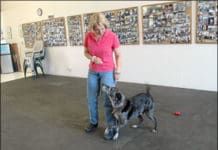
You'll never hear me say that coercive dog training methods don't work; they can. Nor will you ever hear me say that positive dog training turns every dog into a model canine citizen. It doesn't. There is a big difference, however, between positive and coercive training. When methods that rely on the use of force and application of pain fail, it's often because of the dog's inability to tolerate coercion and intimidation. This can result in serious long-term behavioral damage and sometimes physical injury.