

Home Search
allergies/feed/rss2/Rawhide%20chews%20are%20potentially%20dangerous%20because%20they%20can%20be%20a%20choking%20hazard%20or%20cause%20gastrointestinal%20obstructions%20if%20your%20dog%20manages%20to%20chew%20off%20a%20piece%20that%20is%20small%20enough%20to%20swallow,%20but%20too%20large%20to%20pass%20unimpeded.%20In%20addition,%20some%20rawhide%20chews%20are%20hard%20enough%20to%20break%20or%20damage%20teeth. - search results
If you're not happy with the results, please do another search

The Scooting Dog Decoded
Why is Rover dragging his butt across the carpet? Not just annoying to watch, this behavior is usually indicative of a bigger problem - infected or impacted anal sacs. Also called anal glands, these little pouches are found on several different mammals including dogs and cats, and are not very noticeable when healthy. When they are clogged or infected, however, your dog will MAKE you notice them.

(Raw Dog Food Tip #1) Grains… Good or Evil?
Dogs are not engineered to gain a significant portion of their nutrition from grains. This explains the large, soft stools excreted by most kibble-fed dogs. It is clearly processed poorly by the dog. Many vets agree that corn, wheat and soy may cause allergies, skin and coat problems. Overfeeding grains may be a big factor in the frequency of canine obesity today. This in turn may cause or aggravate many other health problems.

How Dogs Interpret Your Body Language
People who work successfully with dogs either have good instincts about how to interact with them, or they learn quickly. There is a real art to using body language to help a dog feel at ease with your presence. The most competent professionals make training look almost effortless, because all the messages they convey to their canine pupils are calm, clear, and consistent and that means both the cues and rewards they use consciously, and the posture and movements they use without thinking.

Complete and Balanced Dehydrated Dog Foods
We haven't reviewed dehydrated diets for quite some time long enough that there have been quite a few additions to the pool of companies who make and sell this type of dog food. It's increasingly popular, for a lot of reasons.

Training Your Dog to Execute an “Extremely Fast” Reliable Recall
having students compete for the fastest recall in heat after heat

Managing Diabetes in Dogs
What causes diabetes in dogs? Diabetes is one of the most common endocrine diseases affecting middle-aged and senior dogs, with 70 percent of patients older than seven at the time of diagnosis. Diabetes in puppies hardly exists - diabetes rarely occurs in dogs younger than one year of age, and it is more common in females and neutered males than in intact males. Keeshonds, Pulis, Cairn Terriers, Miniature Pinschers, Poodles, Samoyeds, Australian Terriers, Schnauzers, Spitz, Fox Terriers, Bichon Frise, and Siberian Huskies may be at higher risk.
Improving Upon Your Homemade Raw Dog Food Recipes
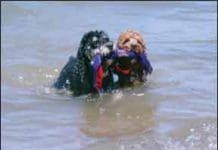
Bill and Marin Corby of Romeo, Michigan, feed a homemade dog food diet to their two rescued Cockapoos. Max, estimated to be anywhere from 6 to 9 years old, has been with them for three and a half years. Max weighed 32 pounds when first adopted, but his current weight is a healthy 20 pounds. Mickey was four months old and very sick when they first brought him home, as he had problems digesting his food. The Corbys switched Mickey to a raw dog food diet, and he’s now thriving at 20 months of age and 16½ pounds.

Consider a Holistic Approach to Your Dog’s Health
Developing a holistic approach to your dog's health is a process
a process of self-discovery on your part, leavened with lots of trial and error. The real meaning of holistic dog care

How to Manage Your Resource-Guarding Dog
high-value treat. Peanut (Dog A

Addison’s Disease in Dogs: Detection and Treatment
Somethings wrong with your dog but youre not sure what. She seems listless, her eyes have lost their spark, and she just seems off. You might notice intermittent muscle weakness, tremors, and an inability to jump into the car or onto a sofa. Or your dog frequently ignores her dinner, vomits, or has diarrhea. These vague symptoms, which may improve and then return, could stem from a dozen canine illnesses or they might point to Addisons. Addisons disease, named for the 19th century physician who defined this adrenal gland dysfunction, is also known as hypoadrenocorticism or adrenal insufficiency. While fatal if left untreated, with appropriate treatment Addisons can be managed so that affected patients lead normal, active lives. First diagnosed in dogs in the 1950s, it is considered an uncommon canine disorder.
Identifying and Treating Skin Conditions that can Affect Your Dog
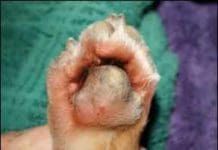
Yikes! What happened to Fido’s nose? And what’s wrong with Fluffy’s paw pads? The possibilities are many, and a surprising number of nose and paw pad problems are related. Because illnesses in this category often have similar or identical symptoms, a veterinarian’s diagnosis can be important. The following overview will help you identify, prevent, or treat these disorders. The most frequently asked questions about dogs’ noses concern color. Dogs have black or dark noses and paw pads because of melanin, a pigment that darkens skin. When melanin production slows or stops, the skin lightens uniformly or in patches. The term nasodigital refers to both nose and toes. A thickening of the outer layer of skin (hyperkeratosis) at the edges of the nose or paw pads can develop into painful cracks, fissures, erosions, and ulcers.
Food Elimination Trial: A Valuable Tool (When Done Correctly)
A valid food elimination trial for the purpose of confirming food hypersensitivity consists of three phases: elimination, challenge, and provocation. In the first (elimination) phase, the dog is fed a diet consisting of a single protein source and a single carbohydrate source. Both of these ingredients should be completely “novel” to the dog – foods he’s never eaten before. (Thirty years ago, lamb and rice was the go-to food elimination diet, because those ingredients were not yet widely available in commercial pet foods. Because the diet was novel, few dogs had developed allergies to those ingredients, and “lamb and rice” gained an unearned reputation as a “hypoallergenic” diet.