Home Blog Page 239

Dog Got Skunked? DON’T Use Water (At Least, Not at First)

One of my friends posted on Facebook the other day, “What works best for skunk spray? Pepper got skunked right before we were leaving for work!” (She gets to bring her dog to work – usually!)

I immediately responded: “Don’t wash her!” And my friend responded just as quickly, “Too late! Why?”

I guess a blog is a good place to be repetitive. We’ve covered this in WDJ and maybe on the blog before, but I guess one can’t say it enough:

If your dog gets hit with skunk spray, DO NOT wash him with water (or tomato juice or anything else). Get thee to a bottle of hydrogen peroxide! And box of baking soda!

Chemist Paul Krebaum gets the credit for applying his chemistry knowledge to the age-old need for a substance that can neutralize the smell of skunk spray. He researched the putrid oil (which skunks can shoot out of special glands under their tails as a potent defense mechanism) and determined that the chemical responsible for the distinctive odor was in a class called thiols. The human nose is extremely sensitive to these organosulfur compounds, and can detect them at 10 parts per billion. But if you subject the substance to just the right compound, you can inactivate the chemicals responsible for the odor, as fast as a chemical reaction can occur.

Krebaum came up with a formula – a quart of 3% hydrogen peroxide and a ¼ cup of baking soda – that would alter the thiols in skunk spray and render them odorless. He recommends using fresh peroxide (not an old bottle that’s been open for years). Stir together in a bucket or large bowl – NOT a bottle, as the mixture will bubble and produce gas bubbles (which could cause a plastic bottle to explode). A teaspoon or two of dishwashing liquid (such as Dawn) is added to make it easier to distribute the mix evenly through the dog’s hair.

He recommends you wet the dog thoroughly with the mixture, down to the skin. Be careful not to get any in your dog’s eyes (or cuts) however; it stings! I’ve used a sponge before to thoroughly wet my dog’s face without getting it in his eyes. (You can also put a sterile lubricant eye ointment – such as Artificial Tears — in your dog’s eyes first, which will help protect them from being stung by any of the mixture.)

After the dog is thoroughly wet, you shouldn’t be able to smell the skunk spray any more. If you can still smell it, you haven’t gotten every bit of the skunk oil wet with the mixture. Once the odor is neutralized, rinse the mixture off. I usually follow this rinse with a regular shampoo bath; even though you can’t smell the skunk spray any more, it’s still oily and a shampoo will help get it off the dog’s fur.

If you FIRST washed the dog with water (or tomato juice, or some other home remedy), sorry, this approach won’t be as effective as it could be. Water also affects the thiols, making the stinky substance resistant to being chemically neutralized.

I’m sure I’m butchering the language of chemistry in trying to explain this. For a technically correct chemistry lesson on how this mixture works, see Paul Krebaum’s website: http://home.earthlink.net/~skunkremedy/home/sk00003.htm

And for the basic recipe and directions from Mr. Krebaum, see his FAQ page: http://home.earthlink.net/~skunkremedy/home/sk00001.htm

Choosing The Right Harness for Your Dog

Harnesses for our canine companions come in a wide variety of colors, shapes, and sizes. But did you know that many are made for a particular purpose? Have a dog you want to pull you on your skis? Got it. Have a puller – and you’d like a respite? Covered. Have a little dog? The possibilities are endless. Despite that fact, many of us walk into our local big box pet store and pull a harness off the rack without even considering the harness’ fit and function. With just a little more awareness, you can be sure that the harness you select for your dog is the right one.

Photo by David Waehner

288

Harnesses were originally created for the purpose of pulling – i.e., sleds, carts, freight, tracking, etc. Despite the fact that some harnesses can actually encourage a dog to pull due to the harness’ design and good old opposition reflex, a harness is a piece of equipment many of us, today, have in our dog equipment toolbox. Harnesses can be used for:
– An alternative to a collar
– To facilitate pulling activities
– Canine sports
– Little dogs (who might need to be picked up quickly)
– Assisting a dog with mobility
– Automobile restraint systems
– Working (service, police, etc.)

While some harnesses can cross over or serve more than one purpose, most should be considered single purpose. For example, you wouldn’t attach a dog seat belt to a front clip/no pull harness. The following are a few broad categories into which many harnesses fall, although the list is not exhaustive.

Traditional Harnesses
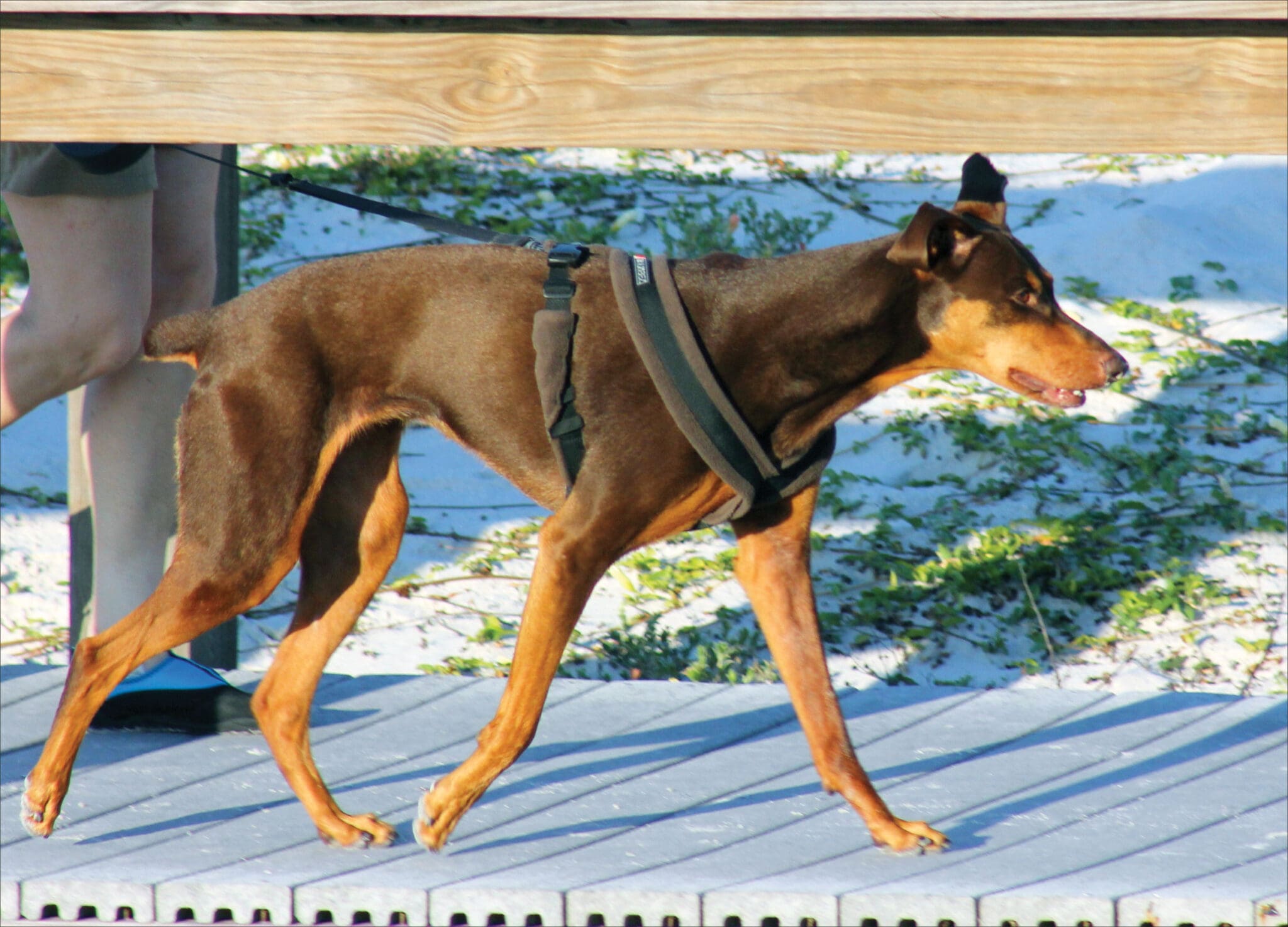
If you’re looking for an alternative to a collar due to your dog’s anatomy, medical condition, or you just don’t like the idea of a collar on your dog’s neck, your best bet is a simple harness that has the leash attachment on the back of the harness. Typically these harnesses have the following connected pieces: a neck piece that fits around the dog’s neck, almost like a collar; a piece that runs under the dog’s chest (in some models this is mesh, fabric, or lightly padded); and a piece around the belly. This type of harness is a good choice if your dog walks nicely on leash or you are committed to teaching him to do so, or if your dog is small.

For an everyday harness, comfort and proper fit are important. Look for a harness that doesn’t restrict the dog’s movement in any way – including his front legs and shoulders – and that has padding if/where needed. The material and stitching should be durable enough for daily use. Straps and clips should not dig into or chafe the dog’s skin.

How does the harness go on? Does your dog have to step into it? Is she physically able and willing to do so? Or does it slip over her head? Also, pay attention to the security of its fit; dogs who are really determined or creative can quickly learn to back out of some harnesses. For example, sled dogs use a neck line that attaches from their collar to the centerline of their pulling harnesses to prevent this, while other types of harnesses come with a girth strap (strap around the belly).

According to Christine Zink, DVM, PhD, DACVP, DACVSMR, a well-fitted, traditional style harness that allows free limb movement “…transfers the point of stress to the dog’s sternum, which then transfers pressure throughout the sternum, ribs, and to the vertebrae, all of which makes a very solid structure to support the dog’s weight if it does pull, while still allowing the dog’s front legs to move freely.”
Some examples of good traditional harnesses include the Sure-Fit, Walkeez, and Urban Trails. While pet supply chain stores might have what you need, generally, you can find a better selection from independent pet supply stores and online specialty retailers.

Best for:
– Walking and running on leash, particularly if your dog doesn’t pull
– Some dog sports (i.e., tracking, nose work)
– Dogs whose anatomy or a medical condition mandate the use of a harness
– Collar alternative
– Small dogs

Should NOT be used for:
– Dogs who pull on leash (if your goal is that the dog not pull)
– Pulling tasks

Note: If you use a harness in lieu of a collar, be sure you have an ID tag attached. Tags that lay flat, such as the Adjustable Collar Tag by Boomerang, work well on harnesses.

Pulling Harnesses
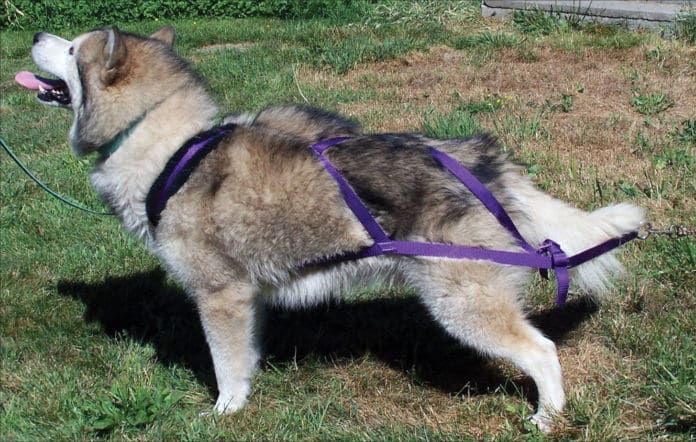
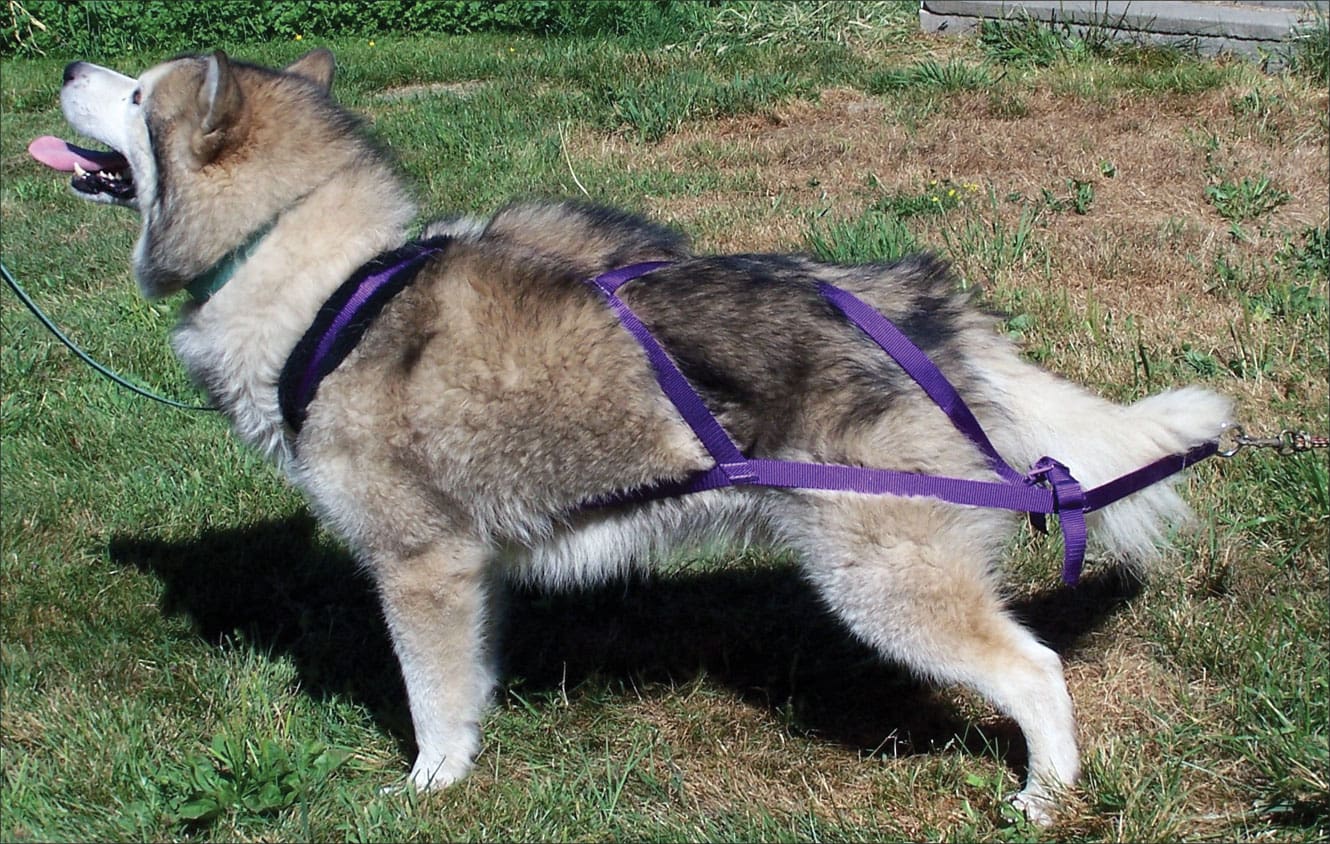
Harnesses that are designed for the job of pulling need to fit perfectly, be comfortable for the dog, and include padding, particularly in the neck area. Care must be taken that undue pressure is not put on sensitive parts of the dog’s body that could chafe over time, nor in areas that would restrict her movement. Material considerations are important, depending on the activity and whether the harness will get wet frequently.

Photo courtesy Nordkyn Outfitters

288

Pulling harnesses come in two basic styles: those with a fitted neck (siwash) and those with a breast band. Nordkyn Outfitters specializes in pulling harnesses, including custom gear; all of its harnesses have fitted necks. According to company owner Jane Riffle, who has been making harnesses since 1983, “The breast band harnesses (straps running horizontally across the chest) are easier to fit but are quite restrictive since they usually cross about the point of the dog’s shoulder.”

(Continued on Page 2)

Nordkyn’s website notes that getting the correct size of harness is critical, as is neck design and padding. The neck should fit snugly around the dog’s shoulders, distributing the weight evenly. If it’s too large, the harness will slip, rub, or interfere with movement; too small, and it will cut, bruise, or choke. Padding keeps webbing from cutting or chafing the dog, and provides some cushion to prevent bruising.

Riffle adds that the weight of the load the dog is expected to pull, and at what speed and distance, are equally important factors in pulling harness selection. Across the board, though, “the harness should allow the dog to lower his head, throw his shoulders into the harness, and drive with his rear.” While some models might have a clip on the back of the harness, most have side clips to which the load is attached via traces. Harnesses for pulling are best sourced from a company that specializes in this type of equipment.

Best for:
– Sports involving the pulling of weight such as mushing, skijoring, carting, and freight pull
– Activities such as nose work and tracking (certain models)

Should NOT be used for:
– Walking, particularly for dogs who pull on leash
– Other sports that don’t require the dog to pull in some fashion
– As a collar alternative
– no-pull harnesses

As the name implies, no-pull harnesses are designed to reduce the dog’s ability to pull on-leash. In many models, the leash attachment clips to the front of the harness (dog’s chest area), while others use a back clip. Some designs accomplish a cessation of pulling by causing discomfort or pain to the dog, while others (such as the Easy Walk) do so by giving a mechanical/leverage advantage to the owner. We prefer the latter type.

Additional features on some models (such as the Halti Dog Harness) include rings on both the chest and back sections. This allows the handler to clip the leash onto the back to use the harness in a more traditional style (although the harness strap still crosses the dog’s chest and is therefore restrictive), or to use a double clip leash on the front and back of the harness simultaneously.

It’s critical to carefully size and fit no-pull harnesses. We see great benefit in using no-pull harnesses while teaching dogs how to walk politely on-leash, but encourage owners to set a goal of weaning their dogs off no-pull harnesses. Because all of these harnesses restrict the dog’s movement in some way, it is imperative that they be removed for vigorous exercise (such as jogging or while at the dog park). Consider getting assistance from a qualified positive dog trainer regarding selection, fitting, and proper usage.

Best for:
– Training your dog not to pull
– Handlers who require extra control (small handler with a large dog, children, seniors, etc.)

Should NOT be used for:
– Restraining a dog in a vehicle
– Use during play
– Running or vigorous exercise
– Pulling tasks
– K9 sports/activities

Assistive harnesses
These harnesses, like pulling harnesses, are meant to do a job, so proper fit and comfort are key considerations. An assistive harness should not impede the dog’s movement in any way. Typically meant for lifting the dog (by a person), the harness should have a wide coverage area for doing so, to avoid putting undue pressure on a small area of the dog’s body. Handles should be firmly attached and appropriately placed and padded so as to allow the handler to safely assist the dog.

Photo by David Waehner

288

For dogs with mobility issues, the harness and its clips should be well padded. RuffWear’s Web Master and Doubleback harnesses can do double duty as harnesses for active dogs and small dogs, as well as for dogs who are mobility impaired, while the Help ’Em Up harness is an example of a two-handled harness designed for dogs requiring physical assistance.

Note: Just because a harness has a handle, as some sport harnesses do, does not mean that it is appropriate for lifting. If your dog has serious mobility issues, we recommend that you seek the assistance of a rehabilitation veterinarian or a professional certified in canine rehabilitation to assist with the selection, measurement and fitting of a harness. (See the March and August 2011 issues of WDJ for more on assistive equipment.)

Best for:
– Dogs with mobility impairments
– Geriatric dogs
– Lifting dogs
– Restraining dogs in vehicles (depending on the harness model)
– Walking, running, hiking, and some K9 sports

Should NOT be used for:
– Dog-dog play
– Pulling tasks

Car Restraint Harnesses
Recent press about results from canine automotive restraint crashworthiness testing performed by the Center for Pet Safety showed that four harnesses tested failed (actually, one harness did not fail but the seat belt length was too long, allowing the dog “dummy” to hit the back of the front seat).

Despite the negative results, a case can still be made that it’s safer for a dog to ride restrained via a harness and dog “seat belt” than to ride free, if only to reduce the distraction that dogs can be to drivers. While standards for dog automotive restraints need to be set, it’s nonetheless important for an automotive dog restraint harness to be well padded, particularly in the chest area; comfortable; and to have a proper fit. Measure and choose wisely.

Photo courtesy Nordkyn Outfitters

288

Best for:
– Restraining dog in a vehicle

Should NOT be used for:
– Pulling tasks
– Dog sports
– Every day use

Purpose-driven design
Whatever the purpose for which you’ll be using a harness, it’s important to consider fit, function, comfort, and durability. Follow the manufacturer’s instructions for sizing and fitting the harness and select a harness that’s appropriate for your dog’s activity. Whatever you do, don’t choose a harness only because the hot pink paisley print matches your favorite shorts!

Lisa Rodier is a freelance writer from Georgia, who shares her home with her husband and a young male Bouvier des Flandres.

The No-Pull Harness Debate

[Updated November 15, 2017]

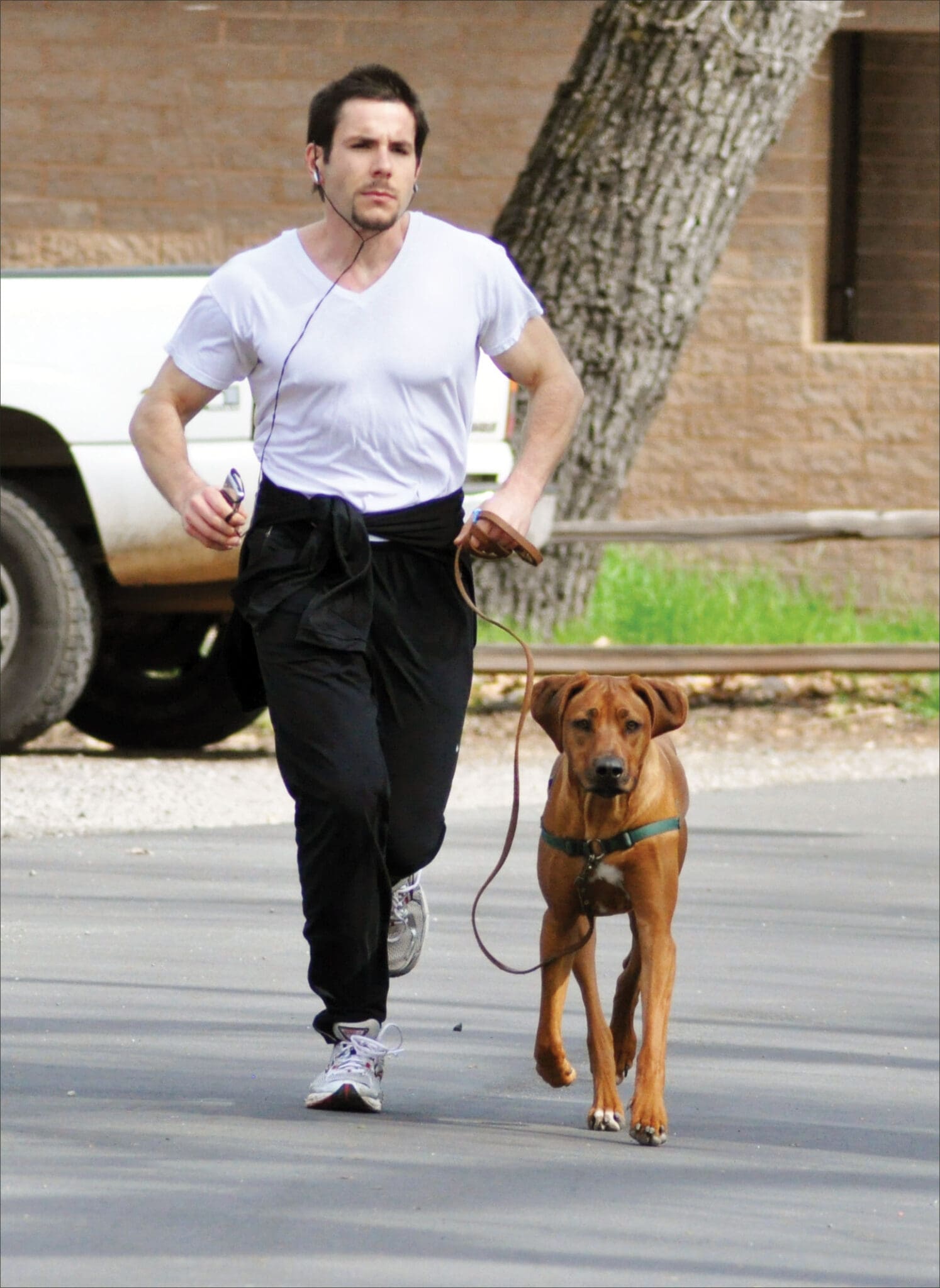
Recently, WDJ received a letter from Christine Zink, DVM, PhD, DACVP, DACVSMR, who was concerned about the photo in WDJ (on the cover, no less!) of a jogger whose dog, running alongside, was wearing a front-clip-type harness.  A sports medicine guru and canine athlete enthusiast, Dr. Zink (and others) posit that no-pull harnesses are detrimental to a dog’s structure and gait – and are especially inappropriate for canine athletes.

no pull harness

In a limited gait analysis study, Dr. Zink observed that dogs wearing no-pull, front clip harnesses bore less weight on their front legs than they normally would – even when the harness wasn’t attached to a leash! In addition, the dogs bore less weight on the leg that was on the far side of where the person walked, even when there was no leash attached; when the dog had a leash attached, it was more significant. This suggests to her that the dog was reacting to the presence of the harness against the leg by pushing harder against it. In all cases, the gait of the front limbs was altered whenever the harness was on.

Dr. Zink explains that these harnesses sit on top of the biceps and supraspinatus tendons, two of the most commonly injured structures in dogs’ forelimbs, particularly in canine athletes. She asserts that, just by logic, one has to assume that the pressure this kind of harness exerts on the dog’s forelimbs in an activity where the dog is supposed to be extending her forelimbs (i.e., running, walking), is not a good idea.

“I do not believe that there is a harness on the market that is nonrestrictive and that also helps the dog not to pull,” says Dr. Zink.” There are however some very nice, well constructed, nonrestrictive harnesses on the market. However, those should not be considered as a method to teach a dog not to pull. In my opinion the real way to get a dog to stop pulling is to train it.”

Taking another position altogether are the thousands of dog trainers and behaviorists who contend that no-pull harnesses save lives, because by giving handlers a mechanical advantage over the dog, they help people who have been unable to train their dogs (for whatever reasons) to walk politely, to walk their dogs anyway.  

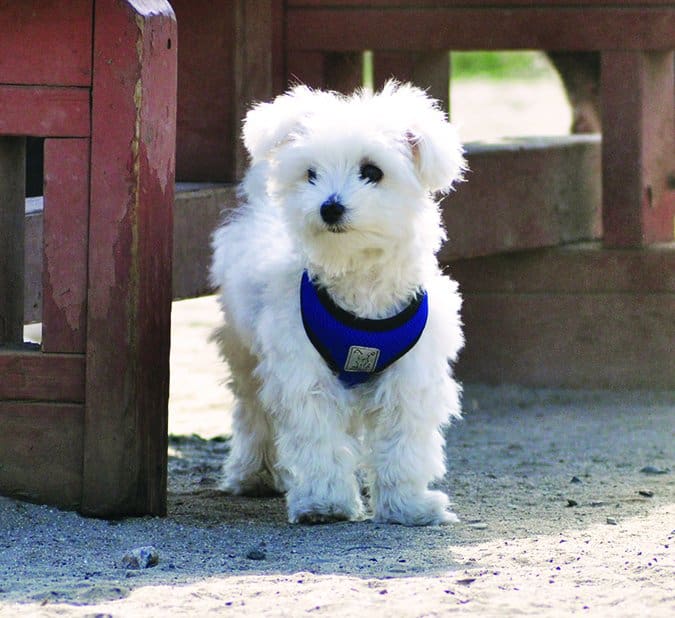
puppy in harness

Whole Dog Journal Training Editor Pat Miller, CBCC-KA, CPDT-KA, comments, “I am a dog trainer/behavior professional with a very specialized concern about helping dogs be well-mannered companions to their humans. I agree that the way to get a dog to stop pulling is to train it. No-pull harnesses provide, in my experience, the least harmful way to give many owners the window of opportunity to reinforce -and thereby train – polite leash walking. An owner can’t train a dog to walk on leash if she is getting dragged off her feet. I will continue to use front-clip harnesses and recommend them to clients, at least until someone comes up with an even safer non-aversive alternative.”

Like so many of our equipment choices, there are cases for and against using a front-clip or other no-pull harness. Each of us must consider the benefits and risks, and make an educated decision based on what is best for us and our own dogs.

Peacekeeping Among Cats and Dogs

[Updated October 19, 2017]

It’s fairly common for dogs to be placed for adoption with a caveat that there should be “no cats,” “no small animals,” or “no livestock” in their new homes. These warnings are usually based on observations of the dog while he spent time in a shelter or rescue, or on the dog’s history in his most recent home. While they are meant to prevent a tragedy, especially in the home of a well-meaning but not very experienced owner, the warnings can scare away committed owners who are willing and capable of addressing the dog’s predatory leanings. Here’s the story of one very determined couple who helped their new dog get past her cat-chasing past and go on to share her hearth with a pair of kitties.

multi species household

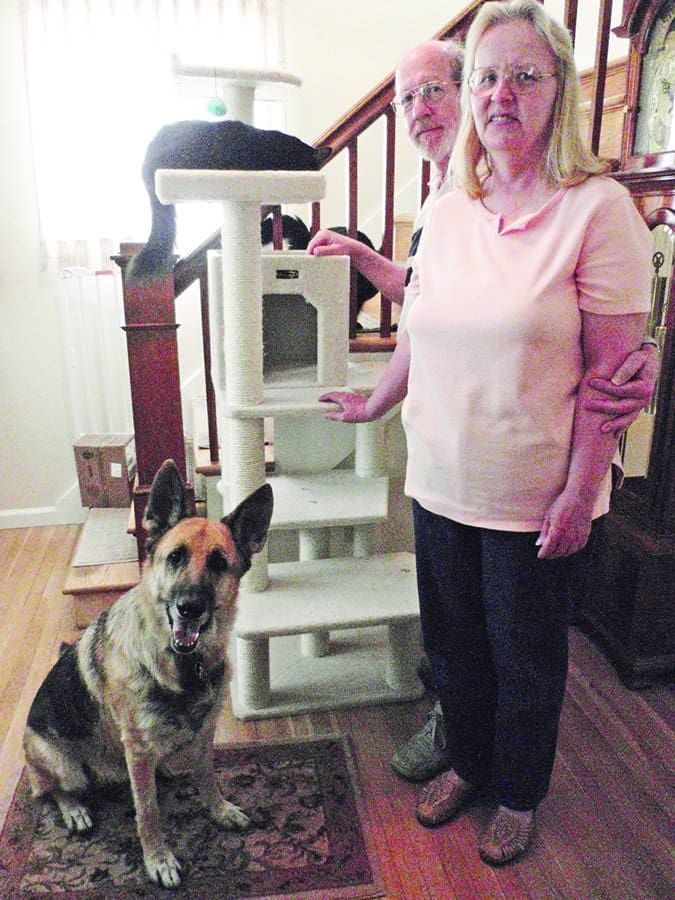
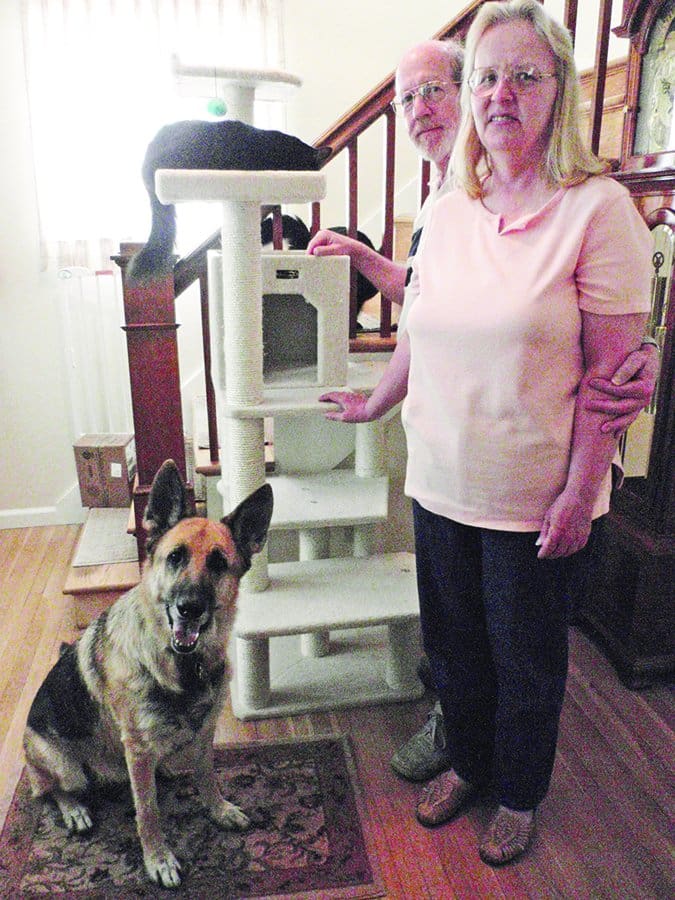
Ken and Sue Johnson love German Shepherd Dogs and are very aware of the pet overpopulation problem. So it made sense, when their senior Shepherd died of old age, to adopt their next canine companion from a rescue group. They contacted a German Shepherd rescue, and adopted five-year-old black-and-tan Sara.

The rescue staff informed them that Sara, seized in a neglect case, had lived with cats in her previous home, so they felt confident taking her home to meet their senior cat. Much to their dismay, they discovered that while Sara may have lived with cats before, it probably wasn’t a harmonious relationship. When we met for our first behavior modification session they said, “We had a cat when we first brought Sara home. She chased the cat upstairs where he stayed for the next two months until he passed away.”

The Johnsons love cats, and were aching to adopt a bonded pair, to fill the void left by their last cat’s passing. Wisely, however, they didn’t want to subject two new cats to constant harassment by an aroused dog dedicated to terrorizing the felines. They asked if I could help Sara learn to get along with cats. I said we could try, and they signed up for a series of private behavior modification consults. The Johnsons were committed to keeping Sara whether we succeeded or not. They really wanted cats in their home, but were prepared to remain catless if we couldn’t make it work.

Finding a Good Feline Participant

We have three cats in the Miller household. Although they live with our own four dogs, I knew that Blue and Viva wouldn’t take kindly to participating in behavior modification sessions with a rowdy German Shepherd. Barney, however, is unflappable, and thus was drafted to be our “neutral cat.”

On the day of the Johnson’s first scheduled session in mid-December of 2012, I brought Barney out to the training center and placed him in a covered exercise pen, with a blanket over the top so he couldn’t leap out. We wanted him confined for his own safety, as well as to minimize his movement to help keep Sara’s arousal level low. I put an open carrier inside so Barney had a place to hide if he felt threatened by Sara. The stage was set and we waited for the Johnsons to arrive.

Cross-Species Relationships

While canines and felines are notorious for “fighting like cats and dogs,” they are not the only potential “mixed-family” challenge. Dogs who are not well socialized to other species can pose a threat to many other companion animals, from small rodents to rabbits, fish, birds, ferrets, pigs, goats, sheep, horses, and everything in between.

My modification protocol of choice for introducing a dog to a new species is classical conditioning: giving the dog a positive association with the new creature, while at the same time managing (with a leash, crate, baby gate, closed door, etc.) so said dog never learns the joy of chasing said (insert your species of choice here) in your home. Because classical and operant conditioning work together, at the same time your dog is creating a healthy association with your new furred, finned, or feathered family member (Cockatiels make pieces of delicious chicken appear!) he is also learning a new behavior (If I sit by my human’s side when the cockatiel is present I can make her feed me pieces of chicken!).

If you’re proactive with your introductions – and if your dog didn’t come to you with a lot of practice at chasing other animals – you can often create harmony in your household in a short time with reasonable effort.

If, however, you have a dog like Sara who already has an unhealthy predator/prey or other predatory association with other species, you’ll have to work hard to counter-condition (change) and desensitize her association and related behavior. Counter-conditioning is a “subset” of classical conditioning.

Classical conditioning is my preferred choice for many protocols because it is relatively easy to do well – easier for most of my clients, in my experience, than other options such as BAT and CAT (see “Other Modification Protocol Options,” below), and because I have had great success using it in a wide variety of behavior modification programs. I’ve seen it work well for everything from nail trimming and touch sensitivity, fear of cars and dog reactivity, resource guarding and fear-related aggression, to my own Scottish Terrier’s desire to maul Viva, the eight-week-old kitten we brought into our home 11 years ago.

Counter-Conditioning for Cat Tolerance – SESSION 1

The Johnsons arrived for their scheduled appointment, and after a brief discussion about the plan, we set to work. We initially introduced Sara to Barney-in-the-pen at a distance of 40 feet. I find that to be a good average threshold distance for most of my clients’ dogs in the presence of their arousal-causing stimuli. Not Sara! When she saw a cat 40 feet away she went immediately “over threshold” – ignoring food (venison instead of chicken, due to Sara’s food allergies), whining and aroused, trying to drag Susan toward the pen.

We backed up to 60 feet and tried again. At this increased distance Sara was able to begin working, and quickly made the association between the sight of Barney and receiving venison treats. Before long, she would look at Barney and quickly look back to Ken for her treat. This swift development of a conditioned emotional response (CER) gave us hope for success, despite her initial intense reaction to the sight of the cat in the pen. By the end of the session, Sara was able to be within 25 feet of Barney’s pen, with a relaxed, soft body language and expression.

Since the Johnsons didn’t have access to an accommodating Barney-style cat at home, I sent them off for two weeks to practice counter-conditioning Sara using the squirrels in her neighborhood – another source of high arousal for the dog.

SESSION 2

Improvement at the next session was slow but obvious. We started this session at a distance of 50 feet and ended 20 feet away from Barney in his pen. In fact, for the most part, Sara was far more interested in Ken and her venison than she was in Barney. We incorporated Leslie McDevitt’s “Look At That” (LAT) exercise so we could operantly cue Sara to look at Barney in order to get treats and continue strengthening the association between see-cat-and-receive-venison.

two cats at window

We added in “relax” sessions, moving 60 feet away from Barney and asking Sara to lie quietly at Ken and Susan’s feet. We continued to feed venison if she looked at Barney, but also reinforced her just for settling and relaxing. We wanted her to understand she could just “hang” in the vicinity of a cat without always expecting action. Susan reported that Sara was becoming much less aroused when she saw squirrels on their walks. I suggested the Johnson’s purchase a realistic-looking  stuffed cat so they could practice CC&D with Sara in their home, in addition to their work with squirrels.

Sara had also been diagnosed with hypothyroidism and was on medication for this condition. The adjustment to her thyroid levels was doubtless contributing to her behavioral improvement.

SESSIONS 3-5

In the third session, we were able to consistently close the distance to 25 feet, getting good CERs, using the LAT cue to get Sara to look at Barney when needed, and interspersing “relax” periods in between the CC&D work. This session we taught Sara an operant “Find it!” exercise, so we would have a tool to refocus her if she appeared close to threshold.

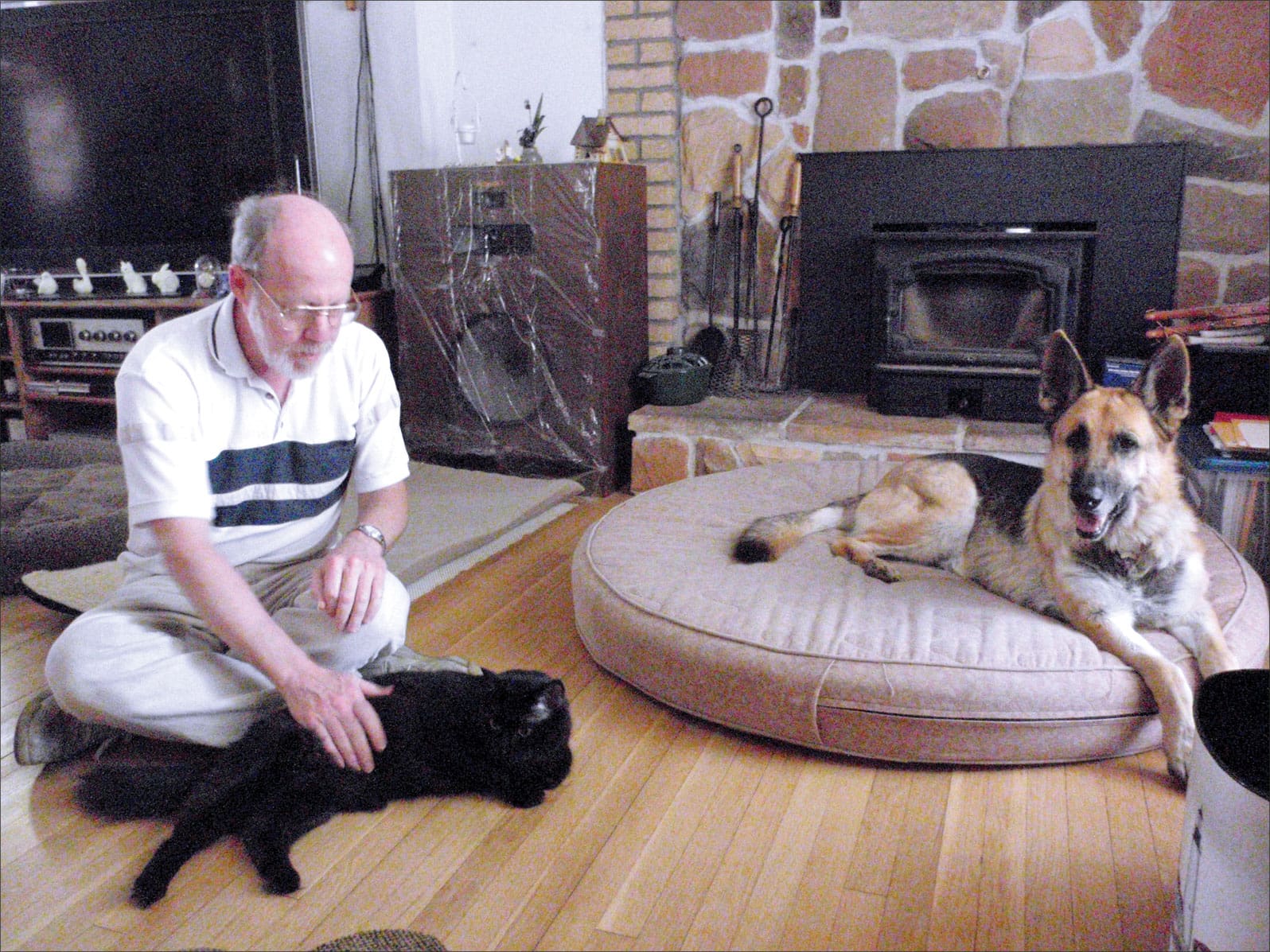
Sara continued to show marked improvement in the next two sessions. We closed the distance to two feet, with Ken sitting on the floor between the dog and cat and petting them both. As proof that Sara was becoming non-threatening, Barney moved freely around his pen and even reached through the wires toward Ken. This sparked a little interest from Sara, but didn’t send her over threshold.

As he was sitting on the floor between Sara and Barney, Ken looked at me and said quietly, “I never thought we would be able to do this.” His heartfelt comment brought tears to my eyes.

Time for a serious discussion about where to proceed from here. I had begun reaching out to all my trainer contacts, looking for a bonded pair of cats in need of a home, and who grew up with dogs so they wouldn’t be put off by a dog who might become over-excited by their presence. We scheduled our next session at the Johnson home; Barney would be going on a field trip so Sara could practice her newly found calm skills in the presence of a cat in her own home.

SESSIONS 6-10

We did five sessions with Barney at the Johnsons’ home. Sara was, indeed, aroused at the first introduction to a cat in her own home. The Johnsons’ house is significantly smaller than our training center, and we had only about 20 feet maximum distance to put between the cat and dog where they could both still see each other. We set up Barney’s pen near the front door, by the stairs, and brought Sara in from the backyard.

aggravated cat

Sara heard Barney meow before she saw him, and was instantly excited, whining and pulling toward the sound. Ken fed her until she calmed, and we moved her into view of Barney. With continued CC&D it took about 20 minutes for her to settle on her bed. We started implementing the Karen Overall Protocol for Relaxation – a procedure that teaches a dog to remain calm while the owner very gradually moves away from the dog. We didn’t want Sara to have to be right next to Ken and Susan the entire time cats were in the house. We also practiced “relax,” encouraging Sara to lie calmly on her side with her head down.

Session 10 was in mid-April, four months after we started working with Sara. She was now able to remain quite calm with Barney moving around freely in the pen. At this session we again had Ken sitting on the floor between dog and cat, and decided to risk going one step further and allow Sara to sniff Barney.

Sara greeted Barney calmly and politely, but to our surprise and dismay, Barney reacted with a loud hiss, and swatted Sara on the nose. Happily, Sara took the reprimand calmly, without any sign of arousal. She had just graduated from get-along-with-cat-school – with honors. Ken, Susan, and I looked at each other, delighted and amazed. “She’s as ready as she’ll ever be,” I said. Ken nodded.

I had located a trainer with a pair of cats who sounded like they met our needs perfectly. “I’ll call her,” Ken said.

Introducing the Household Cats

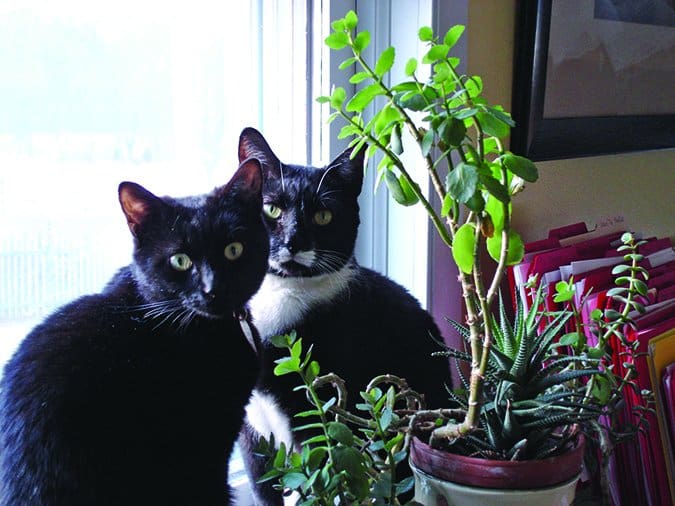
Ken and Susan met with my acquaintence and the two long-haired black cat brothers, Ralphie and Randy, and brought the cats home. We had agreed that the cats would stay safely stashed in a bedroom until our next session, when I could help with the introduction.

A week later I arrived for the big moment. Ken and Susan had been letting the cats roam the house whenever Sara was in the back yard, so she was familiar with their scent, and the cats made plenty of noise as they romped together in their bedroom, so she had heard them playing. We placed Ralph and Randy in the exercise pen that the Johnsons had purchased, and we brought Sara in.

Sara was curious but calm, and began offering CERs in less than three minutes. She easily went and laid down on her bed on cue, and didn’t become aroused when Ralph and Randy started to wrestle on their cat tree. After a thirty-minute session of CERs and relaxation, we invited Randy and Ralph back upstairs to their bedroom and breathed a collective sigh of relief. All was going according to plan.

I had one prepaid session left with the Johnsons. The plan was for them to continue controlled interaction daily between Sara and the cats for a couple of weeks – more concentrated now that they had their own cooperative cats to work with. However, changes in my schedule interfered, and it was a full month before I could come back for our final session at the end of May. I called the day before to confirm our appointment.

“How are things going?” I asked Susan when she answered the phone.

“We have an integrated household!” she exclaimed happily.

Although the plan had been to not allow free interaction until I was there to assist, Ralphie, the bolder of the cat brothers, had other plans. Several days before my scheduled visit he made a break for the bedroom door when Susan went in to feed him, and dashed down the stairs to the living room where Sara was resting. It was a non-event. All the Johnson’s hard work had paid off in spades. When I arrived for our final session all we had to do was sit and smile as we watched Sara, Ralphie, and Randy amicably sharing their living space.

Dogs and Other Species

The same CC&D technique that worked for Sara, Ralphie, and Randy can work equally well for conditioning your dog to get along with other species. A lot of our clients’ dogs are startled to meet horses for the first time they come to our property, and react to these monster-sized (to them) aliens by barking or even lunging at them. After a few “horses-make-chicken-happen” associations, most dogs behave appropriately around the horses, seeing them as a source of chicken rather than as threat or prey. I’ve even successfully counter conditioned a dog who had an unhealthy intensity about fish in an aquarium to live peacefully with his aquatic family members.

dog people

The Johnsons were successful in integrating cats into their home with the previously cat-reactive Sara for several reasons. Attention to these same factors will increase your likelihood of success regardless of what other species you might want to introduce into your household:

Short-Term Management – The Johnsons managed Sara’s environment so she wasn’t regularly reinforced for chasing cats or other small animals. Behaviors that are reinforced repeat and increase. It is well-nigh impossible to modify an unwanted behavior if the dog is allowed to repeatedly practice the behavior and be reinforced for it.

Whether fish, feline, fowl, ferret, or other small companion animal, keeping your new family members safely isolated from your dog when not under your direct supervision is key to success – unless and until you are 100 percent sure your dog will do them no harm. With large animals such as livestock, management for safety goes both ways. Just as your dog can injure or even kill a horse or cow, he can also be badly injured or killed by them. Manage, manage, manage, until you are confident that things will go well.

Long-Term Management – It’s too soon to know if Sara will ever be able to be trusted home alone with Ralphie and Randy. The signs are promising, and as long as all continues to go well, the Johnsons may soon start a program of gradual departures – for just a couple of minutes at first, and then adding a few minutes at time. If Sara at any time shows any indication of a return to her prior aroused behavior around the cats, then management will be long term, with dog and cats never left alone together when their humans aren’t home to intervene if needed. You will need to make the same judgment for your own multi-species household.

Commitment – The Johnsons were serious about their goal of adopting cats into their family, and were willing to commit their time, energy, and other resources into making it happen. I have many clients who are seriously committed to implementing the modification protocols we create, and I was still impressed by the Johnsons’ investment in helping Sara learn to accept cats in her home. It may not take as much time and energy if your dog is less intense about other animals than Sara, but you still need to be prepared to do what it takes to make it work.

Realistic Expectations – The Johnsons knew they would need to find behaviorally compatible cats. They were willing to wait until they could find the right cats, and until Sara was ready for cats to come into the home. Cats who were likely to be stressed by an intense dog would not have been a wise choice, nor would it have been smart (or fair)  to rush things and introduce cats too soon in the process. Ken and Susan knew they were taking on a major project, and were prepared to give up their dream of adopting cats if we weren’t successful in our behavior modification program.

Prior History – The Johnsons were flying a little blind on this one. Although Sara reportedly had lived in harmony with cats in a prior home, her behavior didn’t support that statement. In fact, it appeared more likely that she hadn’t. Predatory behavior alone isn’t an automatic deal-breaker; the Miller dogs have killed groundhogs here on our farm, and still live quite peaceably with our three house cats.

However, if your dog has a strong reinforcement history for extremely inappropriate behavior toward other species – if he has successfully killed cats, or other domestic animals, it may be a huge challenge to bring potential prey into your home – and perhaps unfair to the potential victims. Think long and hard about how well you can manage your environment, and how committed you are to doing the work to modify the behavior. One management slip could be fatal.

Good News

The good news is that many dogs can and do live peacefully with other species. It happens day in and day out, all over the world. With a little luck your dog has no prior unhealthy association with the “other” of your choice, and you can plan to do a minimal classical conditioning program to get your housemates off together on the right paw, wing, or fin. If you end up with a dog like Sara, you may need to find a good, positive reinforcement-based behavior professional to help you. There’s a good chance you can make things work. Choose carefully, manage well, make the commitment, and be realistic.

Here’s to your happily blended multi-species household!

Pat Miller, CBCC-KA, CPDT-KA, is WDJ’s Training Editor. She lives in Fairplay, Maryland, site of her Peaceable Paws training center, where she offers dog training classes and courses for trainers. Pat is also author of many books on positive training, including, Do Over Dogs: Give Your Dog a Second Chance at a First-Class Life.

Artificial Needs: Service-Dog Imposters Abound

On the scale of “how low can you go,” passing your dog off as a service animal so you can bring him to public places where dogs are otherwise banned has to be close to rock bottom. Yet fake service dogs are everywhere out there: Chain-store managers complain about having to clean up after them in their shopping carts and aisles. Websites cater to them, selling official-looking vests and identification badges. And fellow fanciers are alternately embarrassed and enraged when the faux disabled book their dogs onto airplanes so they can hop to the next dog show or agility trial.

According to the 2000 U.S. Census, 43 million Americans identify themselves as having some sort of disability. But only a fraction use service dogs. One advocacy organization (servicedogcentral.org) estimates that the number of task-trained service dogs is 100,000 to 200,000 – significantly less than 1 percent of the nation’s population of people with disabilities.

But loopholes in federal law make it very easy for posers to proliferate. Indeed, fake service dogs are so ubiquitous – or at least the awareness of them is – that they’ve crept into the popular culture. In September 2011, actress and stand-up comedian Natasha Leggero raised some hackles on NBC’s “The Tonight Show With Jay Leno” when she deadpanned about putting a vest on her dog to impersonate a service dog. Leggero told the late-night host, “Sometimes I pretend like I have epilepsy,” so she can get into restaurants with her dog.

That presumably was a joke, but the fakers are out there. “I’ve seen them. I’ve met them,” says veteran Lon Hodge of suburban Chicago, whose service dog Gander, a 3-year-old Labradoodle, helps him deal with autoimmune arthritis as well as post-traumatic stress disorder, or PTSD. “When you’ve been around service dogs like I’ve been, it’s really easy to spot a dog that’s just being a good dog, as opposed to one that’s been trained as a service dog.”

When Hodge has asked people point-blank about whether their dog is really a service dog, all have freely admitted that they weren’t, he says. “People seem strangely proud of the fact that they’ve scammed themselves into a motel without paying the extra $30 pet fee, or they got their dog in to a movie theater.”

DEFINING TERMS
Language is important, and no less here, where there are distinctions between “therapy dogs,” “service dogs” and “emotional-support dogs.” Though the terms are sometimes used interchangeably, each means a different thing.

“Therapy dogs” are those who provide affection and comfort to people in a variety of settings, including hospitals, retirement and nursing homes, hospices and schools. They may be called in to help people cope with the aftermath of traumatic events, such as natural disasters or tragedies, like this year’s devastating tornados in Moore, Oklahoma, or the Sandy Hook school shooting in Newton, Connecticut. And they may find themselves on call for relatively low-trauma but nonetheless stressful occasions, like final-exam week at college campuses.

A variety of organizations certify therapy dogs, including the Delta Society and Therapy Dogs International. While their tests vary, their main objective is the same: to make sure the dogs are calm, friendly, and under control in a variety of environments, some of them overwhelming or stressful. But other than knowing some basic obedience commands, therapy dogs do not need to be trained to be anything other than polite pooches who are happy to dispense and accept affection.

While a therapy dog may have an avocation, a service dog has a definite vocation: service or assistance dogs are specifically trained to help a person with a disability in some aspect of his or her everyday life. Unlike therapy dogs, they are specifically and vigorously protected by the Americans with Disabilities Act of 1990. In other words, under federal law, a hospital has the right to refuse to allow therapy dogs to call on patients, but it cannot prevent entry to a visitor accompanied by a service dog.

Ironically, service-dog imposters can only exist because of that landmark legislation, which prohibits persons with disabilities from being required to answer questions about the nature of their disability. While this provides privacy and dignity for the individual, who has a right to navigate through her day without answering intrusive questions about why she needs the dog at her side (or in her purse), it is a double-edged sword, allowing opportunists all the wriggle room they need to let their pet dogs impersonate service animals.

EMOTIONAL RESCUE
Until several years, just about any animal could be labeled a service animal, and interpretation of the federal law was getting pretty creative. In one California case, a woman managed to get her building’s no-pet clause waived when she produced a doctor’s note that said breeding hamsters helped her deal with her infertility and inability to express her maternal instinct. Cats, parrots, iguanas, monkeys – all could be considered bona-fide service animals under the law.

In March 2011, the U.S. Justice Department revised its regulations for implementing the Americans with Disabilities Act. The definition of “service animal” was narrowed to mean just dogs – specifically, those that are “individually trained to do work or perform tasks for a person with a disability.” Those tasks might include guiding a person who is blind, alerting a diabetic about a plummeting blood-sugar level, or pulling a wheelchair. (One other species also got a green light, albeit with more restrictions: Miniature horses, which, like dogs, can be trained and housebroken, can also be used as service animals under the law.)

Service dogs also help people with emotional or mental disabilities, but, again, they must be trained for the job: They aren’t just comforting their handlers, but are actually providing ways for them to cope. For example, a service dog can be taught to calm a person with post-traumatic stress disorder (PTSD) by positioning himself to create a sort of furry safety barrier during an anxiety attack, or a service dog might remind a person with mental illness that it is time to take a prescription medication.

In other words, a service dog doesn’t just make you feel better and lower your anxiety; in order to live up to that title, a dog must actually be trained to do something that alleviates your emotional distress.

The Justice Department revisions specifically mention animals that are used for emotional support, noting that they do not quality as service animals under the Americans with Disabilities Act if their “sole function is to provide comfort or emotional support.”
That’s not to say, however, that emotional-support animals are never afforded special recognition. Some states and municipalities have laws that are different from the federal law, and that require business establishments to provide access even to emotional-support dogs. In addition, the federal Air Carrier Access Act has a wide-ranging definition of assistance animals, and it includes emotional-support animals. The handler must present a doctor’s letter that says the animal is needed to help deal with a specific mental or physical illness that “substantially limits one or more major life activities.”

In the general public, however, confusion still abounds. Earlier this year, actress Kristin Chenoweth tweeted about her emotional-support dog, Madeline, being barred from an American Airlines flight when a gate agent said she didn’t have the right paperwork. Saying she was “bullied and embarrassed,” the actress reportedly burst into tears, and the airline later issued an apology and a refund of her $125 cabin pet charge.

Celebrity-news show TMZ reported on Chenoweth’s “trip from hell” and described Madeline as a “service dog” – and was quickly corrected by the actress via Twitter, who said she was an emotional-support dog. At least she knew the distinction.

GEARED UP
Dress for success, the saying goes. The same applies when someone is trying to masquerade his or her dog as a legitimate service dog. Web sites that cater to the service-dog community sell all types of vests in a rainbow of colors, embroidered with words like “Service Dog, “Full Access,” “Working Dog/Do Not Pet.” Though many of the sites warn that fraudulent use of the products they sell is not permitted, they don’t – and probably can’t – ask for any proof to weed out the lying from the legitimate.

Judith Kujawa of Brighton, Michigan, uses her service dog Syd, a Rhodesian Ridgeback, to help with her mobility, which was impaired after an accident. Syd helps her climb stairs, and walking with him gives her balance – and confidence. He always wears his vest when the two go into places of business, restaurants, and stores.

“I was extremely surprised that ordering Syd’s vest, as well as the service dog patch, was so easy, that it was so readily available online,” Kujawa says, adding that the ease of acquiring a vest probably makes it more likely people will cheat.

Like Kujawa, many service-dog handlers opt to have their dog wear the special vests, especially if they have a disability that is not visually identifiable or immediately apparent.

Renée Le Verrier of Newburyport, Massachusetts, has a 2-year-old Great Dane, Sir Thomas, who helps her with mobility issues resulting from Parkinson’s disease. “He’s my furry four-legged cane,” she says. “He’s not going anywhere – whichever way I’m about to topple, he’s there.”

Wearing a vest is an important part of taking Sir Thomas out in public. “When I go to the airport or am in a restaurant, I absolutely have his vest and kerchief on,” Le Verrier says. “It screams ‘service dog.’”

And sometimes, turning up the volume is a necessity. Thomas’ vest telegraphs his role to people who are curious about the giant breed and what Le Verrier is doing with him. “It’s almost comical sometimes. They’ll say, ‘Is he a hearing dog?’ and they don’t realize they’re asking me,” she explains. “Sometimes they don’t even see me – they just think, ‘Oh, it’s a Great Dane – how exciting!’”

Sometimes, it isn’t obvious that Le Verrier has a disability; the vest helps thwart questions. “I might look fine,” she says, “but in an hour I might not be.”

While bona-fide service dogs like Sir Thomas often wear vests, the same is usually not true for identification cards, badges, shields, and other accessories that are sold online. “The ADA mandates that this dog and owner have full access to all public places. It is the LAW,” reads one laminated card that is sold online. Emblazoned with the words “FULL ACCESS REQUIRED,” it sells for $21.99.

Another moneymaker for these websites is enrollment in a registry for service dogs. The companies do not test the dogs, or offer any assurances about the validity of the information they are recording: They just assign a number and issue a card. The certification is wholly unnecessary: The Americans with Disabilities Act does not require handler or dog to have or present identification. And Le Verrier thinks doing so, even under the most benign circumstances, is a bad idea.

“If someone asks you for papers, and you comply, it might make it more helpful for the person who’s asking,” she says. “But think about the precedent you’re setting for everyone else.”

For her part, Kujawa carries along business cards that she distributes to anyone who needs a little education. The cards explain “what and where a service dog can go,” she says. “Which is anyplace I can go!”

LESS IS MORE
Outrage over fake service dogs is a natural response. But some advocates for the disabled point out that legislating morality is not only futile, but may have serious repercussions for the very community it is trying to protect.

Michelle Spencer, a disabled veteran from Portland, Oregon, points out that stringent measures, such as national certification or registration of service dogs, will create more red tape for those who actually need them. Is trying to ferret out each and every imposter worth the risk of limiting a person with a disability’s legitimate access? As someone who actually has a service dog, she thinks not.

“It reminds me of the legislation put in many years ago in Oregon around driver’s licenses and illegal immigrants,” she explains. “Everyone said, make it mandatory that to get a driver’s license you have to show a birth certificate. Seems pretty simple, right? Well, what happened was it made it harder for citizens to get a driver’s license, and those who couldn’t just drove anyway.”
Spencer also thinks some canine posers are less problematic than others.

“There are those people who take their perfectly well-behaved pets on airplanes or into restaurants. Unless someone says that the dog isn’t a service dog, no one knows. These are 99 percent of the examples I hear … ‘I know a breeder who took their show dog to show X,’ or ‘You should have seen the plane full of dogs going to the dog show,’” she says. “Is it wrong? Absolutely. Is there anything I or anyone else can do about it? Usually not.”

More egregious and troublesome, she says, are those people who take ill-behaved dogs into public and pass them off as service dogs. “These are the dogs that pee in the hardware store, bark and lunge at the public, and do things that are quite obviously not appropriate for service dogs,” she says. “These are the folks that tear at the rights of we who have and use service dogs in a completely appropriate manner. They are the ones we are concerned about.”

There are laws that are already on the books that deal with disruptive service dogs, whether they are “legit” or not. Federal law allows businesses to ask two questions: “Is this dog a service dog required because of a disability?” and “What work or task has the dog been trained to perform?”

They cannot require medical documentation for the person or ask about the person’s disability; nor can they require a special identification card or training documentation for the dog. They also cannot ask that the dog demonstrate his ability to do the task for which he has been trained. But, if a dog is out of control and the handler cannot manage the situation, or if the dog is not housetrained, the person with the disability can be asked to leave the premises. And they can also be charged for any damage their dog may have done.

Spencer adds that some states are pursuing legislation to punish “fakers.”

“In Oregon, I and others have been working with the state legislature to make it a class C misdemeanor to say one’s dog is a service dog when it isn’t,” she says. “I suspect, over time, case law will set a precedent, and word will get out, but it is a process.”

IT’S ALL ABOUT ME
Years before her accident, Kujawa remembers taking a flight and meeting a man on board with a Dachshund. “He was traveling to a dog show,” she says, “and he was proud that he managed to take the dog on board, with a borrowed service vest.”

The problem then and now, Kujawa says, is an epidemic of self-entitlement.

“I think that, across the board, people – at least those so inclined – just take advantage of what they can. They just feel entitled to get any assistance possible, be it financial or designating their dog an assistance dog,” she says. “Sadly, most seem to feel that if it’s OK for someone who truly requires a service dog, it’s OK across the board. It is not.”

Hodge adds that most of the dozen or so people he’s met who have admitted to faking their dog’s service status honestly don’t think there are any long-term consequences to their actions. He thinks otherwise. “If their dog bites someone, it’s not just their legal liability,” he explains. “Now I have people who have created a hostile environment. There are a lot of people who are naturally afraid of dogs from the get-go. I’ve had people shriek when they get into Gander’s space. The reason I have a service dog is to avoid the stress.”

Also underlying the fake-service-dog phenomenon is a real lack of understanding of what a service dog does, and the responsibility that partnership places on the handler.

“People say to me, ‘You’re so lucky – you can take your dog everywhere with you,’” Le Verrier says. While she usually responds with a vague, “Yeah, he’s a good boy,” what she really wants to say is: “Have you thought about the reason why he’s with me?”

In addition to being indispensable helpers, service dogs are also a lot of work, Le Verrier reminds. “It’s like having a toddler and a date at the same time.” While Sir Thomas is at her side and attentive – that’s the date part – she has to plan for his needs, tote along his supplies, and make sure he doesn’t get distracted by koochie-cooers.

On some level, the self-absorption that leads people to palm their dogs off as service dogs also extends to the insistent desire to interact with a working dog like Sir Thomas, despite all the requests not to. “People want to pet him, and I’ve come to realize that it’s not really for him – it’s for them,” Le Verrier says. “That helps make it easier to say no when people ask.”

Speaking of saying no, there is another group of individuals who arguably could do more to take a stand on service-dog fakers. They are those who know people who do it, but never speak up.

“Maybe the problem is really with me, or at least people like me, who let their friends get away with it without saying anything,” says a dog owner who has several friends who are misrepresenting their dogs as service dogs, and who wants to remain anonymous for that reason. “I’m familiar with the ‘They came for the XYZ and I didn’t say anything, and then they came for me and there was no one left to speak for me’ argument. And that rings true. But I’m not willing to personally confront or take on those people. It’s not a battle I choose to fight.”

And in most cases, unless you know someone very well – including the intimate details of their physical and emotional status – it’s not a good idea to assume that their service dog is anything other than what they say it is. After all, giving the benefit of the doubt is an integral part of safeguarding the the freedom and dignity that people with disabilities deserve. Stopping those who take advantage of that is important – but not at the expense of those who need service dogs to begin with.

“The issue may be clear,” concludes Michelle Spencer, “but the solution isn’t necessarily so.”

Tick Paralysis: What to Do if Your Dog Seems Paralyzed

6

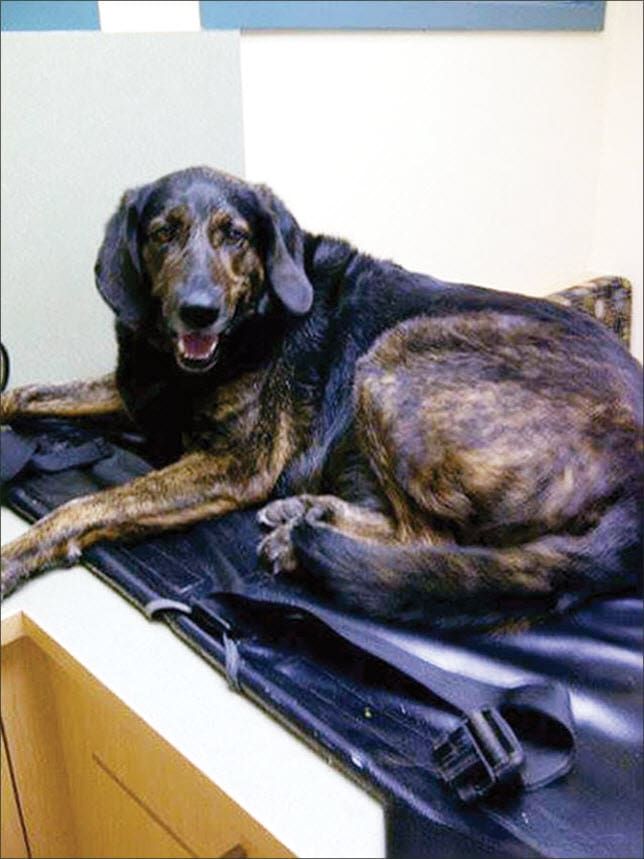
My friend Chris was awakened by a bump in the night – a noise coming from the living room in the middle of the night. She listened intently for a moment, and, hearing nothing more, fell back asleep. But when she heard a dog’s nails scrabbling wildly on the hardwood floor in her hall a few hours later, she remembered the bump sound and jumped out of bed to investigate.

She found her Bloodhound/Border collie-mix, Indi, thrashing on the floor. At first she thought Indi was having a seizure; the dog’s front paws were madly paddling at the slick floor. Then Chris realized that Indi’s back legs weren’t moving at all.

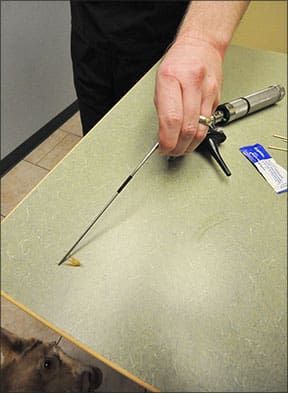
I would have had heart palpitations, but Chris used to work in a veterinarian’s office, and she instantly suspected tick paralysis. As she comforted and calmed the big dog, she ran her hands all over Indi’s body, feeling for an engorged tick. After a few minutes, she found one in Indi’s armpit; it was swollen to the size of a fat sunflower seed. She removed the tick, taking care to get the entire insect (mouthparts and all), and kept searching. Only when she was satisfied that there were no more ticks on Indi’s body, did she get dressed and prepare to take the dog to the emergency vet clinic.

Tick paralysis is caused by a neurotoxin produced by egg-engorged female ticks, who transmit the toxin from their salivary glands to the dog during feeding. The production (and transmission) of the toxin is greatest when the tick has been attached to and feeding from the dog between five and seven days. Five species of North American ticks produce the neurotoxin: the blacklegged tick (a.k.a. the deer tick), American dog tick, Rocky Mountain wood tick, the Lone Star tick, and the Gulf Coast tick. Most North American cases occur between April and June, when the ticks are at their peak reproductive activity.

If your dog suddenly seems paralyzed, there is a good chance it is tick paralysis. Here are steps to take when you suspect tick paralysis in dogs:

1. Check your dog immediately for ticks, and remove any you find. Then check again just in case.

The sooner you remove the tick, the better the dog’s prognosis. The earliest sign of this condition is often a change in the dog’s ability to bark, caused by laryngeal paralysis. He may also have trouble eating, and may gag, drool, cough, or vomit. The back legs are almost always the first to be affected, but as the paralysis spreads, he may lose coordination of all four legs. Death can occur if the paralysis stops the dog’s breathing. However, the moment the tick is removed, the dog will slowly start to improve.

2. Don’t give your dog water (or food).

While you want your dog to stay cool, and you do want him to be well-hydrated, if his larynx is partially paralyzed, he may not be able to swallow properly and can choke. Taking water or food into his lungs due to the incoordination could trigger further health crises.

3. Go to the veterinarian, and try to keep your dog calm.

If your dog is having trouble breathing, get him to the vet as quickly as possible so oxygen can be administered. Keeping him calm and cool will reduce his need to pant.

4. If you don’t find a tick, take him to the vet as soon as possible anyway.

Your vet may be able to find a tick that you could not, but if no ticks are found, further tests will be needed to determine the cause of his condition.

The vet will probably administer intravenous fluids, to help flush the toxin from your dog’s system. No other treatment is generally needed. Most cases of tick paralysis resolve completely within 24 hours of removing the tick, as long as further complications have not developed (from a lack of oxygen or inhaling water, for example).

5. Prevent further tick bites by any means necessary.

If ticks are numerous in your area, make sure your dog is treated with a spot-on tick repellent such as Frontline. According to many anecdotal reports, these preparations are less effective today than they once were – but they are still more effective than nothing, and more effective than any of the homemade sprays made from essential oils that we’ve tried. It may also be wise to avoid trails or areas where ticks are found during the peak season (April to June) for the tick’s production of this toxin.

Indi spent the day receiving fluids under observation at the vet’s office. By the time Chris picked her up in the afternoon, she was able to walk (somewhat woozily) out of the clinic and hop into Chris’ van by herself. By bed time that night, she was completely recovered.

Download the Full July 2013 Issue PDF

...
To continue reading this article or issue you must be a paid member.

Join Whole Dog Journal

Get full access to Whole-Dog-Journal.com – more than 4,000 articles – for just $20.
Join today and save 30% off our full price.
Already a member?
| Forgot your password? | Activate Web Access

Emotional Rescue

0

Allow me to take a moment to thank anyone and everyone who participates in or supports the rescue movement. I had an experience recently with some rescue folks whose efforts on behalf of a dog I am trying to help brought me quite literally to tears. I’m amazed at their commitment on behalf of a dog they haven’t even met yet, on the word of some stranger who says it’s a nice dog who deserves some extra help. It’s astonishing.

288

Though I’ve long been aware of the rescue movement, I’ve had a mostly arms-length relationship with rescue people; all of my volunteer efforts over the past decade have been with shelters. Of course, shelters and rescues sometimes work together, and I’ve reached out to breed rescues a few times when there was a purebred in the shelter where I volunteer who needed some extraordinary help. For example, some Shar-pei people helped us place some abused Shar-pei who needed special care. And a local Dachshund rescue group once took on a heartworm-positive weiner dog that we volunteers had all fallen in love with, despite the fact that he was also a little bitey.

I’ve also had some ugly experiences with bad rescue people – faux rescuers, actually. Most notable was the woman who ran a small dog “rescue” but whose dogs, my shelter’s officers kept hearing, were in terrible shape. Our officers had contacted her numerous times, but she was hostile and basically told them that if they ever wanted to see her “rescue facility,” they were going to need a warrant. It took far too long to get a judge to sign a search warrant, but when the officers finally succeeded, they were aghast at what they found: over 100 emaciated small dogs, almost all of them in very bad shape with internal and external parasites and infections. Many of them had wounds from fighting (for food). There were pregnant females and others with nursing litters; a couple of the litters were sick with what proved to be distemper. (As a result of the ubiquitous plea bargain, the “rescue” owner eventually paid a fine and is on probation – not harsh enough punishment for the suffering she caused.)

Then there are people like this: There is a big, handsome hound in our shelter right now. Buddy is young and untrained and full of energy. He needs exercise and training, and I and some of the other volunteers have been working with him – but mostly he needs to get out of the shelter. He’s been there for two months already, and he’s so frustrated with his confinement that he goes bananas when people walk by to look at him, jumping, baying, and generally looking like a nutcase. If a volunteer or staff member is nearby, we always rush over to show anyone who might be interested that he’s really a good boy, he can sit quietly if you ask him to (and have some treats handy). We haven’t been able to convince anyone yet.

Desperate, I recently put out the word to some hound rescue people. And within a few days, I received word that several people are coordinating transportation for Buddy to an experienced hound foster home some hundreds of miles away. I received a text from one woman I spoke to telling me not to worry, “This boy will be saved by someone in our rescue.” I could not be more grateful, more happy for Buddy, or more amazed at the kindness and generosity of rescue people. Thank you.

Raccoon Attack!

One of my worst dog-owner nightmares recently came true. Or I should say, almost came true. A raccoon attacked my dog, injuring her, but I was able to save her life by fighting off the raccoon myself! As bad as that experience was, I never imagined the problems I would have to deal with that have emerged since our initial suburban wildlife encounter.

288

My dog Ella is a Norwich Terrier, weighing just 11 pounds. I worried when I got a smaller dog that she would be more vulnerable to attack, whether from another dog, or from one of the critters (raccoons, opossums) that frequent my area because I live near a creek. While I rarely spot them, I know they’re around.

We went out to the backyard around 10:00 Saturday night, so Ella could go pee one last time before bed. I usually wait at the door, but this time, for whatever reason, I walked out with her. We were both on the grass when Ella started barking at something I couldn’t see on the fence. I figured it was one of the neighborhood cats – until it suddenly charged down the fence and in a flash attacked Ella, despite my being no more than two feet away and screaming at it to try to drive it away.

Ella tried to run for the house (she’s not a fighter, despite being a terrier) and they were on the deck in an instant, with the raccoon trying to attack her underside. I knew that if I didn’t do something, the raccoon, which was two or three times her size, would almost certainly kill my dog. My first thought was to pick Ella up, but I was afraid the raccoon would just keep attacking, and would then get me as well. In desperation, I went for the raccoon instead.

I grabbed its tail and pulled back and up, lifting it off the ground. It had hold of Ella’s head at that point and didn’t want to let go, but I kept pulling and it finally released her, or she managed to pull away. She was able to run into the house, while I spun around twice in a circle, swinging the raccoon by its tail.  I launched it as far from me as I could (maybe six feet). When it landed, it turned right back toward me, despite the fact that I was screaming at it like a banshee. After what seemed like a long moment, it finally turned away and left.

I hurried into the house to find Ella with blood on her face and favoring one of her front legs. I drove her to the emergency vet immediately, and it turned out she had several puncture wounds on her muzzle and front legs, but nothing worse. They sedated her, cleaned the wounds, gave her pain medication and antibiotics, and sent us home with more of the same.

She was very sore Sunday morning, hardly able to put weight on her right front leg, and her wounds had already stopped draining, which was not good; the vet wanted them to stay open so that any infection would drain out rather than create an abscess, in which case a drain would have to be put in. I applied warm compresses for 10 minutes four times that day, following the vet’s instructions. By evening, Ella was walking more normally, and obviously feeling much better.

Emotional Wounds
Ella’s physical improvement was fast; her wounds were nearly completely healed within a few days. It will take much longer, however, for the emotional scars to heal. She is now afraid to go into the backyard. Worse, she is showing signs of post-traumatic stress disorder (PTSD), including hypervigilance (constantly on the alert) and hyperreactivity (overreaction to movement and sounds coming from the direction of the backyard).

On Tuesday night, three days after the attack, Ella also began showing signs of anxiety disorder, including panting, pacing, trembling, trying to hide, and being unable to relax. This started in the evening while we were in my bedroom, which looks out into the backyard through a sliding glass door. I closed the blinds so that she wouldn’t be able to see out, but her behavior did not change. I took her for a short walk (about half a mile) in the hopes that the exercise and getting away from the house would calm her down. She was fine on the walk, but her anxious behavior resumed as soon as we returned home.

There’s a difference between anxiety and fear. Fear is related to something concrete. It is logical and it can be addressed with behavior modification, such as desensitization and counter-conditioning. It may take some time, but fear will diminish if properly handled.

Anxiety is different. It is a diffuse emotion, not specific to anything in particular, but more an all-over feeling of anxiousness, as though something terrible may happen at any moment. It’s heartbreaking to watch a dog who is truly anxious, as nothing you do helps. I know; my last dog, Piglet, developed generalized anxiety disorder, which destroyed her quality of life in her later years. I was able to keep her anxiety under control with the use of a lot of medication, but she was never again the confident dog she was before she developed the disorder.

Piglet’s anxiety started with a noise phobia that kept escalating, but I didn’t take it seriously enough until it was too late. I tried medication (buspirone) at one point, but when it didn’t seem to help, I quickly gave up. I later learned that my vet had not prescribed a high enough dose, which is a common problem.

On Wednesday morning, I called my vet. I wanted to start Ella right away on a long-acting drug, which can take several weeks to become fully effective, as well as getting a quick-acting drug to use on an as-needed basis. The vet prescribed fluoxetine (Prozac), a long-acting anti-depressant that also helps with anxiety; and clonidine, a short-acting drug that can be used when quick relief is needed.

Nicholas Dodman, BVMS, DACVB, Program Director of the Animal Behavior Department of Clinical Sciences at Tufts University’s’ Cummings School of Veterinary Medicine, is one of this country’s leading veterinary behaviorists. I learned at a seminar of his that Dr. Dodman prefers using clonidine over alprazolam (Xanax) for immediate anxiety relief, as clonidine doesn’t carry the risk of paradoxical reaction that alprazolam does. If the medications prescribed by my vet don’t work well, I will contact Tuft’s PETFAX Behavior Consultation service for further advice.

I started Ella on both medications right away. Together they had a minor sedating effect – she walked rather than trotted – but otherwise, she acted like herself, with no further signs of anxiety. I continue to give fluoxetine daily, which is not causing any sedation, and will keep her on that drug until she returns to normal and is no longer afraid to go into the backyard or reactive to sights and sounds coming from the yard in the evening and at night. I will use the clonidine only as needed while waiting for the fluoxetine to take full effect, or if something happens to increase her anxiety.

Overreacting?
Some of you may be rolling your eyes at this point, thinking you would never be so quick to drug your dog. I know, because I used to be one of those people. If I could do one thing over, I wish I could go back in time and start Piglet on medication before it was too late, before she developed the generalized anxiety disorder from which she never recovered. I will never make that mistake again.

When in doubt, particularly when anxiety is getting worse rather than better, I encourage everyone to use anti-anxiety medications sooner rather than later. Worst case, your dog doesn’t really need them and you’ll be able to wean her off quickly, but in some cases, it may change or even save your dog’s life. These medications are not dangerous and they don’t make your dog act “drugged.” They simply help dogs to overcome irrational anxiety, which they may not be able to do on their own.

Medications are not meant to replace behavior modification. Studies have shown that anxiety issues improve more quickly when anti-anxiety drugs are combined with behavior modification than when either method is used alone.

I have already begun working with Ella using treats and playing games to get her more comfortable near the backyard, and even occasionally going into the yard during the day, usually from a different direction (through the garage or gate rather than through the door where she was attacked). Ella and I recently began a Nose Work class, so I have her hunting for treats near the sliding glass door inside the house. (See “Sniff This – You’ll Feel Better,” WDJ April 2013, for more information on nose work.)

I debated skipping class on Monday, two days after the attack, but since she was moving well by then, I decided to take her, and it was the best decision I could have made. While a bit hesitant at first, she quickly got into the game and I saw her relax and start to show some of her personality again for the first time since the attack.

Since evening is when the raccoons are most likely to be out, and when she is more fearful, we do our behavior modification work during the day. I allow her to choose what she’s willing to do, giving her praise, encouragement, and food rewards for willingness to venture near and into “the scary place,” but never forcing her or even trying to coax her beyond her comfort level. This will be a long process that will take patience, but trying to rush things is only likely to make it worse, so we’ll take our time.

I was in touch with WDJ editor Nancy Kerns in the days after the raccoon attack, during which time, coincidentally, she was discussing an article with trainer and writer Nicole Wilde, the author of Help for your Fearful Dog: A Step-by-Step Guide to Helping Your Dog Conquer His Fears (Phantom Publishing, 2006). Nancy happened to mention what I was going through to Nicole, who very kindly responded with some advice for me.

Wilde suggested, “If there’s a dog your dog loves to play with, inviting that dog over to play in the yard could help more than anything.” She also recommended gradually feeding Ella closer to the backyard, petting Ella (or doing whatever Ella likes best) outside the door leading to the backyard, and playing games or feeding treats just outside the backyard (on the outside of the gate, not inside the house) and then gradually going in that way rather than going out through the house.

Wilde also suggested giving Ella alpha-casozepine, a component of milk that binds to the same receptors in the brain as valium and other diazapenes. Alpha-casozepine is marketed as De-Stress from Biotics Research in Canada and Zylkéne in the UK. Alpha-casozepine is also called Lactium, which can be found in a variety of supplements.

Ridding the Raccoon
Here’s another thing I didn’t anticipate: Having to keep dealing with the raccoon. It has returned each night since the attack. I called my local Animal Control Monday morning, and they suggested I contact my county’s Vector Control office, which I did. An agent came out Tuesday, along with my local animal control officer, to assess the situation.

The two men told me that the culprit was probably a female raccoon with babies  in a den under my deck. They were unwilling to try to trap her, though. If she proved to be a nursing mother, they would either have to let her go (transforming her into a trap-smart raccoon who would never be caught again), or kill her (causing the babies to die a lingering death and then decompose under my deck). As much as I wanted the raccoon gone, these were not good options.

They suggested instead that I try to drive the raccoon away by playing loud music (they said big band music is best!) from 8 in the morning to 6 at night, so that she’d be unable to sleep and would move the babies somewhere else.

The agents also found what they called a “latrine” – a big pile of scat – on the side of my house. At their suggestion, I cleaned up all the scat, then poured both bleach and Pinesol over the entire area, in hopes this would smell bad to the raccoon. I also sprinkled cayenne pepper around the area, hoping that a snoutful of pepper would make the area even less enticing to a raccoon.

The county agent told me that if these steps did not work, he would come back and pour male raccoon urine around the opening under my deck, to further incentivize the female to move her young. Once I am certain there are no raccoons under there, I will hire a professional company with experience dealing with raccoons to seal off the opening so that no other animal can move in.

I asked the agents if they had any suggestions for fighting off a raccoon, should it happen again, but all they could tell me was to call 911, which of course would have taken too long. I’m sure it was dangerous for me to grab the raccoon, and I was incredibly lucky that things turned out as well as they did. I didn’t get injured at all, so there was no need for me to get post-exposure rabies shots.

In the meantime, I have installed brighter lighting outside, and carry a weapon of some kind with me each time I go outside with Ella. My favorite is a mop with a flat head that I feel I might be able to use to pin the raccoon down, if needed. I also ordered an airhorn – if it will scare off a bear, maybe it will work for a raccoon as well. The downside is that it would also frighten my dog.

Rabies
Ella was current on her rabies vaccination, thank goodness. Laws regarding possible rabies exposure vary from state to state, and local agencies are given a lot of leeway in enforcing these laws.

In California, where I live, if a dog is involved in an encounter with another animal whose rabies status is unknown, and that dog does not have a current rabies vaccination, the dog would either be euthanized (!) or would have to be quarantined on the owner’s property for six months. The vector control officer told me that California law requires dogs with current rabies vaccinations to be quarantined for 30 days. All dogs except those who have been vaccinated in the last 30 days are also given a rabies booster within 48 hours of a bite from an animal infected with rabies or whose status is unknown.

A friend (also in California) contacted her county animal control director, to find out whether this varies county by county, and was told that a 30-day quarantine was the minimum requirement, and they would increase that to six months if the attack was severe. Their argument was that no vaccine is 100 percent reliable, although the Centers for Disease Control (CDC) conducted a nationwide study of rabies among dogs and cats in 1988 and found “no documented vaccine failures occurred among dogs or cats that had received two vaccinations.”

I’ve heard of dogs being confiscated by local authorities after a run-in with a wild animal who were euthanized immediately due to a slightly overdue rabies booster. I’ve also heard from people who were told that their dogs would have to be quarantined in an animal control facility, at great cost to the owner (and great stress to the dog), rather than on the owner’s property, as the law generally permits. Be very careful about allowing anyone to take your dog; if possible, stay with your dog at all times while contacting a lawyer or someone else who can help if the authorities insist on taking your dog into custody.

While raccoons are the most frequently reported rabies carriers in the U.S., and the primary vector for the disease on the east coast, raccoons on the west coast almost never carry rabies. In California, bats are the most common source of rabies, with a handful coming from skunks and the occasional fox.

Progress
As of this writing (Saturday, one week after the attack), Ella is doing well, but I still see the raccoon nightly. She is no longer using the “latrine” since I cleaned it up, but I continue to check it daily. I just started playing the radio under my deck today, so I’m hoping that maybe she’ll move out in the next couple of days. If she is still around after I am certain there are no babies, I will have her trapped and killed; in California, it’s illegal to relocate raccoons, as they will most likely either become someone else’s problem (and now impossible to trap), or will starve in a new environment. I would strongly prefer to “live and let live,” but not at the risk of my dog’s life.

Mary Straus is the owner of DogAware.com. She and her Norwich Terrier, Ella, live in the San Francisco Bay Area.

Foxtail season is in full swing

0

Just a reminder to immediately investigate any time you notice your dog licking any body part more than usual – and of course, any unexplained wound, bleeding, or lump.

288

The other day, I took a walk with my two dogs, and a friend and her two dogs (one of whom is Chaco, a Kelpie, one of my former fosters from my local shelter). We hiked on a trail next to the Feather River, which flows through my town. It’s hot here already, and the dogs jumped in the river and drank and swam frequently as we walked. About a mile from the trailhead, I, too, took the opportunity to clamber down an embankment and take a quick swim (the water is like ice). And from the low vantage of the water’s edge, I was able to see something that neither my friend nor I had seen as we had walked along: Chaco was bleeding a bit, in a most private area. Just a bit, and from above, the blood was hidden by her tail; I was able to see it only because she climbed out of the water and up the bank ahead of me; I was below and right behind her! If she had been an intact female, I would have figured she was in heat. But she’s spayed.

288

We cajoled Chaco into lying down, and Chris rubbed Chaco’s tummy while I looked for a wound. I couldn’t find a wound but blood was all over her vulva. We immediately turned back for the car, calling a veterinarian as we walked as fast as we could. We were lucky: Chris had gotten off of work early, so it was only about 5 pm, and the vet was open until 6.

Long story short, Chaco had a foxtail in her vagina. Yikes! It was corroded enough that the vet thought it was likely that it had been in the dog for a few days. Chris had last walked her dogs on a trail three days before, so it was likely on that trip (not ours that day) when Chaco picked up one of the nefarious awns. Chris had noticed Chaco licking herself, but not much more than usual. And she hadn’t had any other symptoms – yet.

Foxtails (and many other grasses) have seed heads with barbed tails; the barbs are aligned so that the seed head will attach to anything it touches and “travel” in one direction. Each little piece of the awn – every little thread of tail – can travel in a wound and cause infection everywhere it goes.

Foxtails are most notorious for getting between dogs’ toes, up their noses, and in their ears. But they can embed themselves in any place. The veterinarian we saw said that Chaco’s was the second he had removed this season (so far) from a female dog’s private anatomy, and that he had removed one  (so far this season) from a dog’s penis. Dogs with matted or thick coats can get them in any fold of skin or particularly thick bit of hair.

A dog’s skin is its only protection against foxtails, but it is all-too-easily breached. Once the foxtail gets past the skin (whether into an orifice or by stabbing into a thin-skinned spot, like between the toes), the awn can travel all over the body, causing infection, pain, and trauma. Generally, if you notice a dog worrying at himself early enough, a veterinarian can find the point of entry, follow the tract of infection, and remove the awn. But if the wound goes unnoticed and unexplored, the awn may travel far enough and cause enough trauma and infection to necessitate a major exploratory surgery to find and remove it. 

At this time of year, when the grasses are turning brown and dry, and the seedheads are starting to blow about, be sure you check your dog carefully for stickers (and ticks!) after walking outside. Stay alert to any signs that your dog is grooming himself more than he usually does. And if he shows any sign of swelling, pain, head-shaking, bleeding, or limping, take him to see your veterinarian right away.

Dog Games To Play if You Are Physically Impaired

[Updated February 5, 2019]

How to exercise yourself at the same time you exercise your dog was the subject of “Fitness Together” in the April 2013 issue of WDJ. But there are many reasons the human half of the equation may not be up for much physical exercise, some permanent and some thankfully temporary. Fear not, there are ways to exercise your dog physically, whether he’s outside at the end of a leash, or inside, playing games that permit him to run around a less-than-active you. Your dog needs exercise; your job is to figure out how to meet that need, even if you can’t join in. A tired dog is a content, well-behaved, relaxed dog, one more likely to choose to snooze while his people are at work.

A man playing tug of war with a medium-sized dog
Incorporating some games of tug into your walk can help tire a dog who needs more miles than you can walk. Practice having your dog drop the toy on cue.

And choosing snoozing over chewing is more apt to let him remain in his home, allowing him to skip that sad trip to the shelter. Maybe those familiar words shelter workers hear – “I just don’t have enough time for him,” “He needs a place in the country, where he can run,” and all their variants – would be less often heard if only he was happily tuckered out, instead of bored to distraction and destruction. It is possible to get him tired, without knocking yourself out.

Suppose for a moment you’re like me: a lifelong dog owner now in your 70s, with a young dog, large or small (I have one of each), who revels in exercise. Maybe you’re younger, but you’ve suffered an injury or required surgery. There are any number of reasons you can’t be as active as you might (or should) like to be. Here are a few ways to keep your exercise at a minimum, and still tire your dog.

Play Tug!

I can walk just fine, but not as far as it would take to truly tire my 6-year-old Bull Terrier, Zee. By incorporating some random games of tug into our walks, I can, however, increase her exercise while my own remains the same. You can, too! Most dogs love to tug!

On walks, we play the game on-leash. In many areas, your dog is legally required to be on-leash. Plus, it is often safer for your dog to be on-leash.

Fans of agility, flyball, and other high-energy sports often use brief sessions of tug as a reward for a good practice or competition run, and so catalogs and pet supply stores that cater to performance sports carry a wide variety of tug toys. There are tug toys for dogs with every type of preference for the part of the toy they grip in their mouths: balls, rope, fleece, leather, rubber, and more.

Sometimes it isn’t convenient to carry a toy for your dog. I’ve added a “toy” to the handle end of my leash, a “regular” solid-color six-foot Mendota leash that attaches to my girl’s collar. My “tug toy extension” is a four-footer with similar colors in a pattern, which I clip to the handle of the six-foot solid-colored leash. So far, every dog I’ve played this game with has been able to perceive the difference between “plain” and “patterned.” Not one has ever mouthed a leash, and yet they’ve been happy to tug on the four-foot patterned extension. It’s easy enough to replace the “tug toy” leash when it becomes frayed and shortened.

My big girl loves this game, and there’s no need to carry a yucky, soggy toy in my pocket. If I’m tired of tugging, I unclip the “toy” part from the “leash” part, stick it in a clean pick-up bag, into my pocket it goes, and the game is over.

Make sure your dog follows the most basic rule of the tug game, however: If he won’t let go on cue, the game ends with an “Oops!” or “Wrong!” As long as he drops the tug toy on cue, he may earn the chance to play again.

Stairball

If you are blessed with a dog who enjoys retrieving, and you live in a place with stairs to other floors, or stairs to your yard, or a deck, you can play stairball!

I took up stairball many years ago, after I had sprained my ankle and could not walk. I had a puppy under a year old at the time, and she needed a lot more exercise than I could give her on crutches.

I learned that the simplest and safest way to play this game is for you to be at the bottom of the stairs, with your dog at your side. You throw the object to be retrieved up the stairs. Your faithful hound races up the stairs to get the toy, and then down again, gleefully dropping the toy at your feet. If your dedicated retriever is never clumsy, you can move to the top of the stairs and throw the object down, but there’s less chance she’ll trip if she’s racing up to get the toy, rather than down.

A variation is throwing the toy from a second story deck to your fenced yard, and having your (well-coordinated adult) dog run down the stairs to search it out. In the course of potty training, my girl learned that the word “yard” meant she should go there. If your dog doesn’t get it right away, employ a helper to call her to the yard, and encourage her find the toy and return it to you for another run.

There’s also a chance for some nose work, in searching for a toy thrown into the yard; if you throw over a deck rail, it will be hard for the dog to see where the toy landed. You can throw into cover, and she’ll have to sniff it out.

Repeat throws until your dog is fully exercised. Some will let you know when they’ve had enough and others will overdo it. You won’t be tired, because you aren’t moving much – you might even be sitting down with a tall drink at your side! So, be sensitive to signs she may be ready for rest, and stop before she’s overheated.

Stairball is good practice for retrieving – informal, but with lots of fun repetitions. The pup I played this game with learned to bring the retrieved object to hand, because if she didn’t, I couldn’t reach it to throw it again, which she badly wanted me to do.

Stairball can be played indoors or in a long hallway. But please note: Hardwood or other slippery floors are not a good venue for these games; a dog in a rush to retrieve on a slick surface can slip and tear an ACL all too easily.

Looneyball

This is an outdoor game, played mostly on a sandy surfaces, since it involves great leaping and pounding, and that can be hard on the joints. Grass is fine when there’s no beach handy.

What a great game for satisfying prey drive! My dogs are never allowed to chase any living thing (well, except another dog, in play); looneyball offers a substitute. “Here’s something you can chase, and you can kill it if you can catch it.”

Equipment is needed, but making it isn’t difficult. Take a broom handle or dowel of a similar diameter, and saw off a section about 30 inches long. Smooth the cut end of the handle part with sandpaper if you have any; if not, you can skip this step. Drill a hole large enough that a shoelace will run freely through it.  Run your thong through the hole (a leather shoelace works well) and knot it securely.

looneyball equipment
A piece of broomstick, a leather shoelace, and an inexpensive “punching ball” is the equipment you need for this game. Photo by Shari Mann.

Now you need a large, heavy-duty balloon on a long rubber band. These balloons, often called “punch balls,” are a made of thicker material than ordinary party balloons, and the necessary rubber band is attached to each one. I get mine from Oriental Trading Company (orientaltrading.com) but they are not hard to find elsewhere. They vary in price, about 50 cents each in quantities of a dozen.

Run the rubber band attached to the uninflated balloon through the thong at the end of the broom handle. Then inflate the punch ball. It is less apt to be popped if it is slightly underinflated. I carry a spare uninflated balloon or two, so if one does get popped, the game need not end.

One caveat: it’s best not to play this game if you can’t readily remove things from your dog’s mouth. Swallowing pieces of punctured balloon is best avoided, though unnaturally colorful stool has been picked up a time or two, and no harm done.

Looneyball is a fine game to practice work on your “out” or “drop” command. Dog won’t let go? The game ends. Dog releases? The game continues. And the human likely gets to practice taking things from the dog’s mouth. That’s good practice: It could save his life some day, if he grabs something that will harm him.

Finally, you’re ready to play. Your dog can be leashed or not, depending on where you play. If a leash is required, at least 10 feet is best. Zee trails her 10-foot leash easily. Six feet is too short to allow room for a high leap or long jump. If you’re playing in your grassy, fenced yard, going leash-free is fine.

You can see the joy on Zebra’s face when she’s playing her favorite game. Photo by Carol Gallagher.Wave the ball around and encourage your dog to get it! Wag it from left to right, high to low. Play matador, whisking it skyward when she leaps for it. Drag it sloooowly in front of her; chances are she’ll stalk it.  Allow her to snap at it, making the ball bounce wildly to the end of its tether. When she appears ready to pounce, change its elevation – the sky’s the limit.

Zee would rather play this game than almost any other; it’s pretty hard to distract her from it. She has a blast, and I get to remain relatively stationary. Of course you can play this game with your dog and run all over the place, if you want to. It’s a lot of fun for both parties, played either way.

How to Train Your Dog to Go to the Bathroom Outside

House training concerns are probably as old as the roots of our relationship with canis familiaris. I suspect prehistoric humans were as unhappy about having those early canids poop and pee in their caves as we are today when we find a pile or puddle in the middle of the living room rug. If you have always had the good fortune to share your home with easy-to-housetrain dogs, it may come as a surprise to you – or even a shock – if your next dog is one of those who doesn’t come with a well-installed “clean den” ethic.

The basics of house training are simple: take your dog outside more often than she has to go, and in between trips, supervise her well so she doesn’t have the opportunity to go where she should not! Sometimes it is that easy. Sometimes it’ isn’t. Despite the simplicity of the basic housetraining formula, there’s much that can go awry.

You can prevent some of the house training missteps by going out with your dog, at least until she is trained. Take her out on-leash to her designated bathroom spot, wait until she has emptied, and then play with her before taking her back inside. This will accomplish some important things:

– Your pup will learn to potty first, so she can then play. If you let her play first and take her in as soon as she goes, she may learn to hold it as long as possible in order to prolong play. If she has to go first to make play happen, she will develop the habit of eliminating as soon as you take her outdoors. This will serve you well throughout her life, especially when you are in a hurry, or during inclement weather. If you go out with her, you will know whether or not she has emptied. If she doesn’t go, especially during the training phase, you’ll know to bring her back in and either re-crate her or at least keep her under direct supervision, until the next bathroom break.
– Consistently taking her directly to her designated bathroom spot will not only encourage her to go right away, but also teach her where to go, which facilitates future clean-up and decreases accidental step-in-poo incidents.
– By teaching her to go to the bathroom on-leash early in your relationship together, you may prevent the challenge of the dog who will go to the bathroom only when off-leash.

What’s the Frequency?

Assuming (for now) that your dog or pup has no medical or behavioral problems, how often does she have to go out? One oft-quoted rule of thumb for puppies is that they can generally hold it for up to one hour longer than their age in months. So a two-month-old pup could/should be able to refrain from eliminating for up to three hours, a three-month-old pup up to four hours, and so on. Unless she just ate, drank water, played, or woke up from a nap, in which case she’s likely to have to go any minute. And since pups are almost always eating, drinking, playing, or sleeping, they are almost always ready to “go.”

So the “one-hour-longer” guideline really applies only to enforced inactivity, such as when a pup is crated overnight or while her owner is at work. A better rule for young puppies is “every hour on the hour, and anytime they have just eaten, drunk, played, or awakened from a nap.”

Most adult dogs, once trained, are capable of routinely holding it for six to eight hours. While some dogs can go as long as 10 hours or more between bathroom breaks, they really shouldn’t have to. Professional petsitters are a good option for midday breaks if you don’t have a neighbor, friend, or family member you can trust to provide a potty opportunity.

Most humans sleep longer than four to five hours overnight, so clearly you can expect at least one oh-dark-hundred wake-up call per night during the first few weeks of your pup’s new life with you. Make sure your baby dog is crated near enough to you that you can hear her when she wakes up and cries to go out – and make sure you do get up and take her out – or you risk one of the behavioral problems discussed below.

Nighttime bathroom trips should be all business. On leash, go out, eliminate, come back in, and go to bed. If you include play or cuddling, you may teach your pup to wake you up for wee-hour fun even when she no longer has to empty her bowels and bladder overnight.

The good news is that many pups beat the rule and can sleep through the night by the time they are four months old – in part because they are not eating, drinking, playing, or waking up. You may get that longed-for night of uninterrupted sleep sooner than you think!

Getting Through the Early Days

These days, a majority of dog owners work outside the home for a full eight hours plus commute. If you are a stay-at-home mom or dad, work from a home office, or have other housemates who work different shifts and can share puppy training duty, you can skip this next part. If your pup must be left alone for long hours, read on. There aren’t many (any?) young pups who can go 6 to 10 hours without eliminating – nor should they have to. If you adopt a puppy and work outside the home you have several options:

– Take her to work with you. You can only do this, of course, if you have a workplace that allows it, and a workload that can accommodate a puppy’s needs.
– Hire a petsitter to come in as many times as needed during the day to make sure all your pup’s waste ends up outdoors where it belongs. For a young pup, this is at least two, perhaps three visits during a workday. Depending on where you live, this could cost anywhere from $15 to $40 per visit.
– Leave her with someone responsible that you trust to look after her, take her out often, supervise her activities, and reinforce the positive dog-human relationship that you are building with her. (Doggy daycare is not an appropriate place for a young puppy unless they have a completely separate puppies-only group and monitor the interactions very closely to ensure that all puppies are having a happy time.)
– Leave her at home indoors in an exercise pen large enough for her to have a designated potty corner and still keep the rest of her bedroom clean. (Lay a tarp on the floor, cover it with newspapers, and put your puppy pen on top.) Note: You should be aware that this option may make it more challenging to eventually convince her to only eliminate out-of-doors.
– Set up a very secure, weather-proof outdoor kennel area where she can stay during the day. (This is my least favorite option. I don’t believe dogs should be outdoors all day when their owners aren’t home, you risk annoying neighbors with her barking – and possible retribution such as theft or poisoning – and your dog still lacks the opportunity to learn not to soil her living area.)

If you are able to take your dog out more often than she has to go, your training efforts should pay off in a reasonable time with clean carpets, uninterrupted sleep, and a dog who knows her bathroom is outside.  If you are unable to do the above, you need to seriously rethink your dog/puppy-owning plan.

A Canine Litter Box

As a suburban or rural dweller for most of my life, I’ve always had the luxury of a backyard for my dogs. City dwellers often must alter house-training procedures to accommodate urban living. If you live on the 23rd floor of an apartment, there’s no way you’ll get your pup down the elevator and out the door before she has to empty her bladder.

If this describes your living situation, consider a litter box for your dog. You can use real sod, fake grass (Astro-turf), or even litter box material made for dogs. If you have a balcony, you can put your canine litter box there, and housetrain just as you would if you were taking your dog outside. Absent a balcony, set your litter box up in the chosen room of your apartment and housetrain there just as you would in a backyard. (If you have a male dog, you can put a secure post in your potty-box upon which he can lift his leg and still keep the urine within the confines of the box. Install a splash shield behind the post if necessary.)

Signals

A “gotta go” signal can facilitate housetraining. When your dog knows she can tell you she has to go out, there is less responsibility on you to make sure you take her out more often than she has to go; she will let you know when it’s time. Here are two methods for teaching your dog to communicate her bathroom needs to you.

Get Happy

This is my preferred method. It’s simple, and dogs learn it almost by osmosis. Every time I take my dog out for a bathroom break I get excited and say, “Want to go out?!” She gets excited and dances around in response to my excitement, and in fairly short order will offer the bathroom dance when she needs to go out. If you want your dog to bark to tell you she needs out, increase the excitement level until she barks, then take her out. I like this method because my dog will come and find me in order to deliver the signal.

Ring a Bell

Some owners like to teach their dogs to ring a bell hung on the doorknob when they need to go out. To do this, teach your dog to ring a bell on a string by either nose or paw targeting, then hang the bell on the preferred doorknob and ask your dog to ring it every time you take her out for a potty break. One downside to this method, especially if you live in a large house, is that you need to be close enough to the potty door to hear the bell when it rings. If your house is too large for this and you want to use this method, you will need to install an electronic bell or buzzer and have speakers installed throughout the house.

Complications

Of course, if housetraining were always as simple as it sounds, we wouldn’t need articles written about it. There are a number of things that can go wrong, even if you do all the things described above. Such as:

Medical Issues

Anything that upsets your dog’s normal patterns of elimination can complicate house training. These might include urinary tract infections, gastrointestinal upset or illness that causes diarrhea, mobility issues that make it difficult for your dog to get outside quickly, dietary or schedule changes, and consumption of some medications (such as prednisone) that cause increased water intake and subsequent increase in urinary output. Any time there is an unexplained house-training lapse in an adult otherwise house-trained dog, consider and explore whether there may be a medical issue.

Stress

Anxiety or stress can create an increased need for elimination. Dogs who suffer from separation or isolation stress often urinate and/or defecate during a stress episode. While owners sometimes perceive this dog as being “spiteful,” he is not. He can’t help it. He’s stressed.

Prior History

Some dogs have a prior history of house- or crate-soiling. The worst of these are dogs from puppy mill or hoarder environments, where dogs live for months (or years) in tiny cages and have had no choice but to eliminate where they live. Their inhibitions against soiling their own living quarters are damaged, and it can be very challenging to repair. It sometimes requires a very strong commitment to help these dogs learn new, appropriate bathroom habits.

Submissive and/or Excitement Urination

“Submissive urination” is a social signal. The dog who offers this behavior usually has an appeasing personality, and pees when she is approached, spoken to, or perhaps patted on the head, as her way of saying, “I am not challenging you.”

In contrast, “excitement urination” is more likely a function of a weak bladder sphincter – a dog who gets so excited she just “pees her pants.” You can talk to your vet about this one, but a good remedy for both of these is to 1) not punish for the behavior, as they are both beyond the dog’s deliberate control; and 2) take the dog out to empty her bladder before greeting her (or allowing others to greet her), and/or greeting her outdoors so the pee ends up where it belongs.

Don’t Skimp on This

There really is no excuse for failing to house-train your dog. Dogs who soil their homes are likely to lose them. The “moving, can’t keep” reason for giving up a dog to a shelter or rescue is often a screen for, “Moving, don’t want the carpets in our new home soiled the way the old ones were.” If you want your dog to go with you on all your future moves, make sure she always knows where the bathrooms are, and how to “hold it” until she gets there.

Midge, the Pet Store Puppy

Midge was a pet store puppy who, unfortunately, languished in her sales cage until the age of five months, when the Parker family took pity on her and purchased her. They knew the risks of buying a pup from a pet store, but they couldn’t bear to watch the adorable Midge growing up in a cage.

When they made an appointment to come see me for a private consult, it was for other behavioral issues – primarily the fear-related behaviors that resulted from a now two-year-old Midge’s lack of socialization in the puppy mill where she was born, and the pet store where she had grown up. They noted her house-soiling issues in the behavior intake form I asked them to complete, but were less concerned about that than the fear-based behavior that was escalating into biting. Recognizing that house soiling also put her at risk for losing her forever home, I convinced the Parkers that we needed to address both issues.

Reverse Crate Training

You can’t use a crate in the normal way to house train a dog who has learned to soil her bed. Normally, a dog – even a puppy – will try very hard not to soil the crate, so you confine them to prevent them from eliminating. Not so with Midge – in her mind she was supposed to eliminate in her crate. So we did the opposite: the Parkers started putting Midge in her crate only when they knew she had eliminated recently. At first they crated her for a maximum of 10 to 15 minutes, and then gave her supervised house freedom until her next bathroom break. Then she was back in the crate for a short spell. Gradually they lengthened her time in the crate, always removing her before she felt the need to eliminate, so she wouldn’t be tempted. If they had to leave her alone they left her in the bathroom, where she had a “legal” potty corner. The goal was to rebuild her natural inhibitions against soiling her bed.

I initially saw Midge some six months ago. It’s taking some time to resove her fear issues, but she’s made very happy progress in housetraining. She is now able to be crated for up to four hours during the day while her humans are away, and is immediately taken to eliminate outside when family or the pet sitter arrives at the home. She can be crated overnight in the Parker’s bedroom without a halftime potty break. She has been accident-free for the past four months, and is no longer supervised closely when loose in the house with her owners at home. The Parkers are delighted with her new house-training skills, and continue to work diligently to modify her fearfulness.

Teach Your Dog to Ring a Bell!

Some owners like to teach their dog to ring a bell as their bathroom signal. You can do this by teaching your dog to target her nose or paw to a bell suspended on a string from the doorknob, or to a button that causes a buzzer to go off.

Nose:

This one is usually pretty easy, since dogs are likely to sniff a novel object that we present to them. Hold the bell in your hand and offer it to your dog. When she sniffs it (or sniffs near it) click your clicker (or use a verbal marker such as the word “Yes!”) and feed her a treat. Repeat until she is eagerly nudging the bell with her nose in order to get you to mark-and-treat. Add your “Want to go out?” cue just before you offer the bell for her to nudge. Now lower the bell an inch on its string, and click and treat for nudging. As you let the string get longer and longer, start only clicking nudges that are hard enough to make the bell jingle.

When she’ll consistently make it jingle at full string length, hang it on the doorknob and continue the lessons. When she can easily jingle the hanging bell on cue, start cueing it right before you take her out to potty. Gradually increase the distance you are from the door when you give the cue, and before long she’ll be offering the behavior on her own when she needs to go out.

Paw:

If your dog already knows a cue for “Shake hands,” ask her to “Shake” while holding the bell in the palm of your hand. After a few of these, precede the “Shake” cue with your new “potty bell” cue, whatever you want that to be. In short order, she will tap the bell in your hand with her paw on the bathroom cue, and you can drop the “Shake” cue, reserving that for when you really want her to shake. Gradually lengthen the string and follow the directions above to teach her to paw the bell as her bathroom cue to you.

If your dog doesn’t already know a cue for “Shake hands,” you can prompt her to paw at your hand by holding a treat in your closed fist (click and treat!) until she offers the behavior easily, then transfer it to the bathroom bell. Or you can shape the behavior by clicking her for any paw movement at first, gradually clicking only for paw movements that come closer to ringing the bell, and eventually only for those that ring the bell.

Squeak:

Dogs who enjoy playing with squeaky toys may take to this alternative to bells. Use the shaping process described above to cue your dog to grab and squeak the toy, and then move the game to the door to your yard. With a zip-tie or string, fasten the squeaky toy to the door handle, at a height where it’s easy for your dog to reach and mouth it, but not low enough to make it easy to chew.

Pat Miller, CBCC-KA, CPDT-KA, CDBC, is WDJ’s Training Editor. She lives in Fairplay, Maryland, site of her Peaceable Paws training center, where she offers dog training classes and courses for trainers.