Home Blog Page 4

Most Dog Liver Shunts Are Congenital

3
Liver shunts in dogs are congenital defects that can reduce a dog's life expectancy.
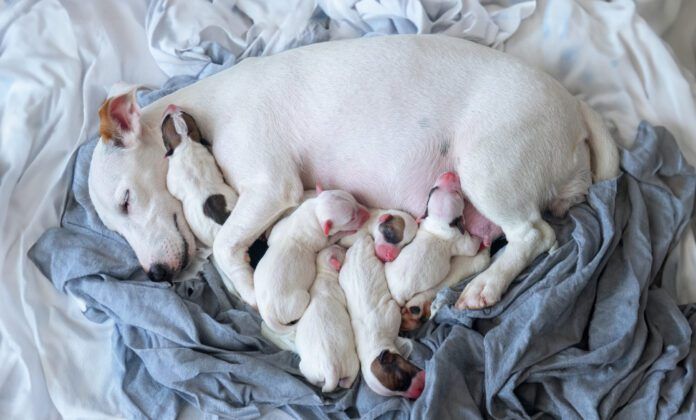
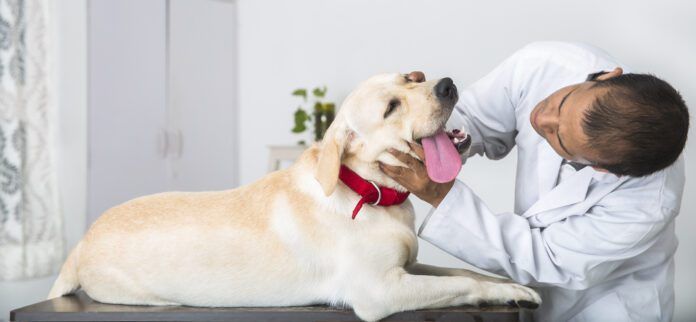
In a puppy born with a liver shunt, the blood is sent around the liver instead of through it, so the liver can’t perform its job of handling nutrients and filtering out toxins. Credit: Yanukit Raiva | Getty Images

About 80% of canine liver shunts are present at birth (congenital) and involve the portal vein. In utero, puppies have a vessel called the ductus venosus that shunts blood flow around the liver since it is not functioning pre-whelping. When a puppy is born, however, this vessel should collapse so normal canine anatomy takes over.

“Five out of every 1,000 dogs in the general population are born with an inherited liver shunt,” says Jerold S. Bell, DVM, of Tuft’s Cummings School of Veterinary Medicine, in his paper “Exploring the Mysteries of Liver Shunts.”  Caught early on, however, puppies with a congenital portosystemic shunt can go on to have a normal life once the shunt is corrected. Note: These dogs should not be bred however, since there is a genetic component.

Shunts may occur within the liver (intrahepatic) or outside the liver (extrahepatic).  Secondary shunts can occur in older dogs due to cirrhosis with multiple small blood vessels interfering with the normal blood flow plan.

What Is a Liver Shunt in a Dog?

A liver shunt is an anatomic defect that directs blood flow from your dog’s gastrointestinal tract, including the pancreas, plus the spleen around the liver instead of through it. With the portal vein shunted off, the liver isn’t doing its normal functions of handling nutrients and filtering out toxins. You will often see the term “portosystemic shunt” used since the portal vein is usually the culprit.

The liver has multiple important functions in the body. With nutrients not being handled efficiently, puppies with liver shunts tend to be smaller than littermates. They are often less active as well. As toxins build up in the blood, neurologic signs are noted.

Signs of a Liver Shunt in a Dog

Dogs with liver shunts may circle, press their heads into corners and “be stuck,” act disoriented, and eventually progress to seizures. Some may show gastrointestinal signs such as vomiting and diarrhea. Often clinical symptoms are seen after a high-protein meal due to the metabolites from protein.

Some dogs may form bladder stones and others will exhibit pica, which is a tendency to eat unusual items. Some breeds, ranging from Irish Wolfhounds to Yorkshire Terriers, have a genetic predisposition to portosystemic shunts.

Diagnosing a Portosystemic Shunt in Dogs

Diagnosing a portosystemic shunt may be easy or tricky. Bloodwork is often the first step. A complete blood count and a blood chemistry panel, combined with the physical exam and history, will often be diagnostic but not always.

Some dogs will have mild anemia and some abnormally small red blood cells. Low levels of blood urea nitrogen (BUN) and albumin (a protein) are common. Liver enzymes such as aspartate aminotransferase (AST) and alanine aminotransferase (ALT) are elevated. A urinalysis may show ammonium biurate crystals. Beyond the basic laboratory tests, the next step is often a bile acid test. Dogs with shunts tend to have increased bile acids.

For bile acid testing, two samples are required. The first is a fasting sample that gives your dog’s baseline for bile acids. A second sample is taken after your dog’s normal meal (usually breakfast). Bile acid numbers are expected to increase after a meal.

Imaging procedures are next. A plain X-ray may show a small liver. Ultrasound with contrast may illuminate abnormal blood flow pathways. CT scans, MRIs, and X-rays with dye can all help to pinpoint the location of the problem. Recent work out of Cornell University’s College of Veterinary Medicine using CT scans has helped to illustrate intrahepatic shunts, showing that in at least some cases, the shunts are between liver lobes, not located in liver tissue.

Caring for a Dog with a Liver Shunt

For mild liver shunts and true intrahepatic shunts, medical management may provide decent quality of life. These dogs need strict dietary management to minimize the toxin buildup. The goal for treatment is to decrease the production and absorption of toxins from the gastrointestinal tract into the bloodstream.

If your dog shows signs of hepatic encephalopathy (neurologic signs), his dietary protein needs to be managed carefully. All dogs need protein in their diets, so severe restrictions are generally not recommended. High-quality protein that is highly digestible is ideal. Some dogs do better with dairy or plant-based proteins versus meat proteins.

Lactulose is often recommended to help decrease the absorption of ammonia and other toxins. This is a non-absorbable synthetic disaccharide that decreases transit time in the gut by acting as an osmotic laxative, meaning that digested nutrients move through the intestinal tract faster than normal. This could lead to diarrhea, so generally dosing starts at a very low level and is gradually increased so your dog’s gastrointestinal tract can adapt somewhat. Antibiotics may change the intestinal microbiome and help to reduce toxins as well.

Medical therapy may work for mild cases or for older dogs with cirrhosis who can’t handle surgery. In addition, for cases that are truly intrahepatic, it may be next to impossible to surgically correct the problem.

Surgery is the ideal treatment, particularly for extrahepatic shunts. The basic idea is to close the shunt, with accessory blood vessels picking up the load and delivering most of the blood to the liver instead of bypassing it. Very few dogs can handle an acute closure of the shunt. Portal hypertension can cause abdominal pain, endotoxic shock and even death.

Luckily newer surgical techniques using rings, bands, constrictors, or intravenous coils can all act to gradually close the shunt, allowing time for the underused vessels to replace it. These surgeries are usually referred to a board-certified veterinary surgeon.

What You Need to Know About Turmeric for Dogs

Tumeric for dogs is purported to have many health benefits.
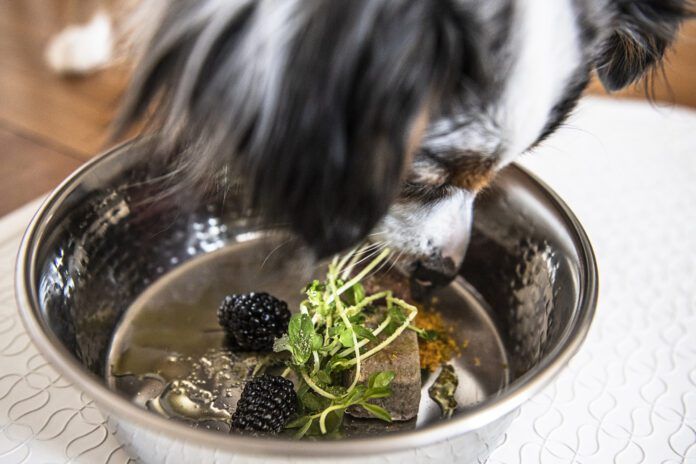
This dog’s food consists of raw rabbit meat, turmeric, Credit: Giordano Cipriani | Getty Imagessprouts, blackberries, hemp oil, and goat’s milk, among other things. You might be better off mixing a little turmeric into your dog’s regular food.
Is turmeric good for dogs? A study published in Science Direct gave it a thumbs up for use in dogs and suggests that curcumin offers a complementary anti-inflammatory support for OA (osteoarthritis) treatment in dogs.
To continue reading this article or issue you must be a paid member.

Join Whole Dog Journal

Get full access to Whole-Dog-Journal.com – more than 4,000 articles – for just $20.
Join today and save 30% off our full price.
Already a member?
| Forgot your password? | Activate Web Access

Can Dogs Eat Salt? Understanding Sodium and Safety

0
Excessive salt is bad for dogs, and you should be wary when you share salty foods with them.
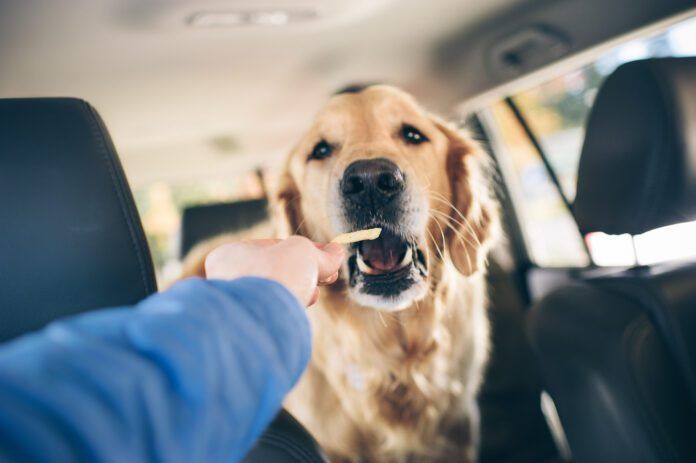
French fries are usually loaded with salt, so sharing them with your dog is not a good idea.

When it comes to salt, our dogs aren’t that much different from us. Just as we need sodium in our diets for maintaining a balance of body fluids, allowing nerves and muscles to function properly, and regulating blood pressure, so do our dogs.

However, the line between necessary and dangerous salt levels is particularly thin for canines. “While salt is a normal part of any diet in small amounts, excessive salt can be very dangerous for dogs,” according to Michael Hyder, medical director, VEG ER for Pets in Palo Alto, Calif.

What Do Low-Sodium Labels Mean?

The real issue isn’t salt itself, but the excess of it. It’s important for owners to note that when choosing commercial products: “While there are definitions established by the U.S. Food and Drug Administration regarding sodium for human foods, there are none for pet foods or pet treats. Therefore, pet treats or foods that claim to be ‘low sodium’ may or may not actually be low enough in sodium for your pet,” according to experts at Tufts University Cummings School of Veterinary Medicine.

Salt Toxicity: The Symptoms of Salt Poisoning

Excessive salt intake can cause a condition called hypernatremia, or salt poisoning, which occurs when the sodium levels in the bloodstream become too high. This can disrupt cellular function and affect major organs, especially the brain.

Symptoms of salt toxicity in dogs may include the following, according to Dr. Hyder:

  • Vomiting
  • Diarrhea
  • Excessive thirst or urination
  • Lethargy or confusion
  • Muscle tremors
  • Seizures
  • In severe cases, coma or death

Understanding the Danger of Salt

Understanding the fine line between the sodium required for healthy bodily functions and the toxic levels found in many human foods is the key to keeping your canine companion safe.

“The total amount of daily salt that is safe for dogs is based on their weight, underlying health problems, and complicating factors like access to water, so this will vary from one dog to another,” according to Dr. Amy Fox, a New York-based veterinarian. “In general, serious signs of toxicity will occur when dogs ingest about 2 grams of salt per kilogram [or about 2.2 pounds] of body weight, but at lower doses, toxicity can occur if any complicating factors are present. A gram of salt is about 1/6 of a teaspoon.

“Foods that are very salty should be avoided for all dogs, and especially for dogs with health problems like heart disease and kidney disease,” says Dr. Fox. “Salt can be a serious problem when dogs ingest large amounts of it accidentally in food, inedible items like homemade play dough—or salt dough—or if they ingest forms of salt that contain other ingredients besides sodium and chloride, such as ice melt, which may be toxic.”

What To Do If Your Dog Consumes Salt?

Your dog just scarfed down a bunch of french fries! Now what?

“If you suspect your dog has eaten a salty food or product, especially something like rock salt, salt dough, or brine,” Dr. Hyder says it’s important to act quickly.

  1. Do not induce vomiting at home, unless specifically instructed by a veterinarian.
  2. Call your veterinarian or a pet poison hotline right away. (You can reach the ASPCA Animal Poison Control Center at 888-426-4435.)
  3. Monitor your dog for signs of toxicity, especially neurological symptoms or extreme thirst.

Understanding sodium is about balance. One key to prevention is ensuring your dog always has fresh, unrestricted access to water—a critical defense mechanism that helps the body process and excrete excess sodium safely.

Think You Know Your Salt?

Do you know the answers to common questions about sodium? As a dog owner, it’s important that you do. As a fun to test (or improve)  your knowledge, take the “Are You Sodium Savy Quiz,” compiled by Tufts University Cummings School of Veterinary Medicine.


The Best Cognitive Dog Toys

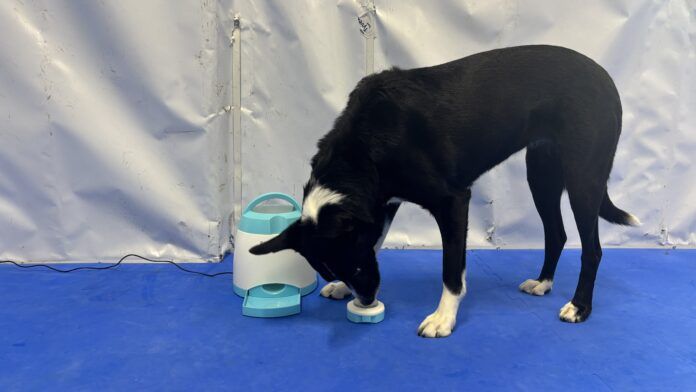
The best cognitive dog toys combine an engaging puzzle with toughness.
The best cognitive dog toys encourage your dog to think while stimulating natural canine behaviors. Credit: Jae Thomas
Whether you have a high-energy dog who needs a little extra daily activity or an older dog who needs low-impact mental stimulation, cognitive dog toys are a great way to work your dog’s brain indoors.
To continue reading this article or issue you must be a paid member.

Join Whole Dog Journal

Get full access to Whole-Dog-Journal.com – more than 4,000 articles – for just $20.
Join today and save 30% off our full price.
Already a member?
| Forgot your password? | Activate Web Access

The Why and How of a Dog Swollen Cheek Gland

0
A dog's swollen cheek gland is usually a salivary gland, and needs treatment.
If your dog has a swollen cheek or infected salivary exam, your veterinarian will start with a thorough exam of the mouth area, inside and out.

A swollen salivary gland can cause swelling and possibly discomfort in a variety of locations around your dog’s head and neck. Treatment often requires surgery to remove the damaged gland, but dogs usually do well once they have healed.


Dog Salivary Glands

Dogs have eight salivary glands arranged in pairs with four on each side of their faces. The sublingual glands are under the tongue, the parotid glands are at the base of each ear, the zygomatic glands are under the eyes, and the mandibular glands are at the back of the lower jaw.

The purpose of these glands is to produce saliva that lubricates the mouth and throat and starts the digestive process.

Causes of a Swollen Salivary Gland

Salivary glands can become swollen if they are damaged. Damage to a gland causes saliva to leak out and pool in the surrounding tissues, which irritates those tissues and can then cause more damage to the gland. This cycle will continue indefinitely, and the swelling gets worse over time.

Often, we don’t know why or how a salivary gland has been damaged, but potential causes include:

  • Bite wounds
  • Trauma from chewing on sticks or other sharp objects
  • Choke collars
  • Trauma from being jerked by the neck
  • Trauma from stretching or twisting the neck abruptly
  • Bacterial infection (often from a wound, but possibly blood-borne)
  • Sialoliths, or stones forming within the gland
  • Salivary gland tumors (benign or cancerous)

Swollen Salivary Gland Symptoms

Swelling is the most common symptom for all salivary gland ailments. The location of the swelling will vary based on which gland(s) is affected. Sublingual glands cause swelling within the mouth and throat, the zygomatic glands cause swelling on the cheek under the eye, and the parotid and mandibular glands cause swelling around the lower jaw and upper neck.

Severe swelling of the sublingual, parotid, or submandibular glands may block your dog’s throat and cause difficulty swallowing or breathing. These symptoms are an emergency and require immediate veterinary care.

Sialocele or salivary mucocele is the swelling and pooled saliva from a damaged salivary gland. Swelling is usually the only symptom, and the area is soft to the touch and not painful.

Sialadenitis is inflammation and infection of the salivary gland. A dog with sialadenitis may be painful, have trouble eating and drinking, and drool excessively.

Sialoliths are calcified stones that can form within the salivary glands and then block salivary ducts. These stones are painful and may also cause difficulty eating and drinking.

Salivary gland tumors can be benign or malignant. Sublingual gland tumors are the most likely to be cancerous, although this cancer is not common. A dog with a salivary gland tumor may be painful, drool excessively, or experience weight loss.

Your veterinarian will make a diagnosis based on:

  • How your dog’s swelling feels upon palpation
  • Any other symptoms of illness that are present
  • Fine-needle aspirate of the swelling
  • Bloodwork
  • X-rays of the head and neck

Treatment

The primary treatment for a dog salivary gland infection or swollen cheek gland is surgery to remove the damaged gland. Draining the swollen area can provide temporary relief, but the swelling almost always returns. Your dog will also receive antibiotics if she has an infection.

Most vets recommend a referral to a specialist for surgery. This is because there are many nerves, blood vessels, and muscles around each of the salivary glands, and removal is a delicate procedure that requires expertise and specialized equipment.

The surgeon may place a drain in the surgical site to allow drainage of all fluids in the area for a few days after surgery. This can be messy but speeds up the healing process and decreases the risk of infection.

Most dogs have an excellent prognosis and thrive after surgery.

Best Allergy Supplement Ingredients for Dogs

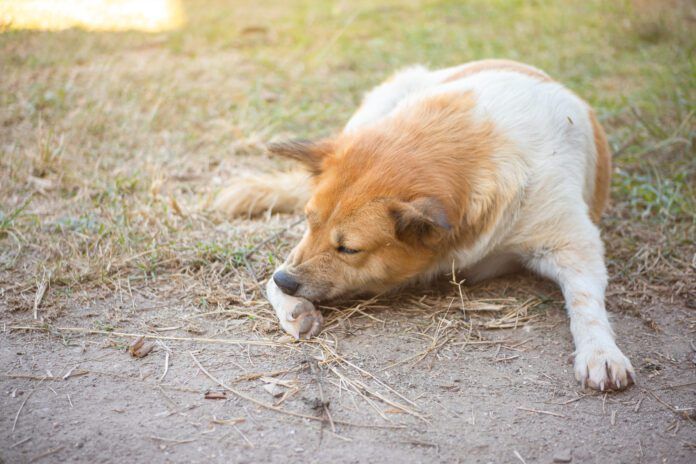
A brown and white dog aggressively chewing at his paw.
: Allergies are as frustrating for your dog as they are for you. Working with your veterinarian to get the them under control can help you find relief.. Credit: Suphameth Jaruthaninphong | Getty Photos

Just like humans, dogs can suffer from allergies that cause discomfort, itching, and even chronic health issues if not addressed properly. Dog allergies are surprisingly common and can stem from a wide range of environmental, contact, and dietary triggers. Fortunately, with the right combination of veterinary care, medications, and supportive supplements, many dogs can live comfortable, itch-free lives. Understanding the causes and symptoms of canine allergies, your treatment options, and the available supplements and functional ingredients is the first step toward getting your dog’s allergies under control.

What Are Dog Allergies?

To start, it is important to understand what an allergy is. An allergy occurs when your dog’s immune system overreacts to a substance, called an allergen, what is typically harmless. When exposed to the allergen, the immune system releases chemicals to attack it, causing an inflammatory reaction in your dog that can present as itchiness, skin rashes, ear infections, footpad irritation, and more. Allergies in dogs can be triggered by a variety of factors, but there are four main types of allergies commonly observed in dogs:

Environmental Allergies (Atopy) are triggered by allergens such as pollen, grasses, mold, dust mites, and more. Environmental allergies are common in dogs, with estimates that between 10% to 15% of dogs are affected by them. Dogs with atopy often have seasonal symptoms that worsen during certain times of the year, often during spring and summer when pollen levels are highest.

Flea Allergy Dermatitis (FAD) is caused by an allergic reaction to flea saliva and is one of the most common allergic skin diseases in dogs. It’s responsible for the vast majority of allergic skin diseases where fleas are prevalent. It does not require an infestation for dogs to exhibit symptoms and even a single flea bite can trigger intense itching in sensitive dogs. Proper preventative flea and tick medication is important for keeping these pesky parasites from setting up shop on your pet.

Contact Allergies occur when a dog’s skin reacts to substances it touches, such as shampoos, cleaning agents, or adhesives. My dog is allergic to the adhesives in medical tape and will have an almost immediate reaction when exposed. If you notice a substance is causing a reaction on your pet, immediately stop its use and avoid exposing your pet to other similar products.

Food Allergies are a reaction to a substance, most often to a protein, in a dog’s diet. Proteins in animal products are the most common allergens for dogs, including beef, dairy, chicken, lamb, and egg. Food allergies often result in itchy skin and digestive issues, such as chronic vomiting and diarrhea. If you suspect food allergies in your pet, talk to your vet about a diet change or running an elimination diet trial to identify the allergen.

Dog allergy symptoms can manifest differently depending on both the type of allergen and the individual dog’s sensitivity. However, the most common signs of allergies in dogs include excessive itching and scratching of the paws, ears, and belly, licking or chewing of the paws, red, inflamed, or irritated skin, chronic ear infections, watery eyes or nasal discharge, and digestive issues. If you notice any combination of these symptoms that persist for linger than a few days, it is best to schedule an appointment with your veterinarian. Chronic allergies can worsen over time and may lead to secondary infections if left untreated.

How to Diagnose Allergies in Dogs

Diagnosing allergies in dogs can be a challenge since many symptoms often overlap with other conditions. Depending on the suspected allergy type, diagnostic testing may include skin scrapings and cytology to rule out mites or bacterial/fungal infections, an elimination diet trial to rule out food allergens, or allergy testing using blood tests or intradermal skin tests to help pinpoint potential environmental allergens. A proper diagnosis allows for more targeted treatment for your pet.

Treatment depends largely on the underlying cause of your dog’s allergy and its severity. While some allergies cannot be completely cures, symptoms can often be managed effectively through a combination of medications, environmental changes, supplements, and supportive care.

Allergy Medicines for Dogs

Over-the-counter antihistamines like Benadryl may be used under veterinary guidance. These may help to reduce itching and inflammation by blocking histamine release, although their effectiveness varies from dog to dog. For more severe allergic reactions, your veterinarian may prescribe corticosteroids such as prednisone or hydrocortisone to quickly reduce inflammation and itching.

While these medications can be effective, they are typically only for short-term use due to potential side effects like increased thirst, urination, and immune suppression. Medications such as Apoquel and Cytopoint injections work to improve the symptoms of allergies in dogs by interfering with the inflammation pathways of the immune system responsible for causing itchiness. These medications often offer fast-acting, long-term relief for dogs with chronic allergies.

Best Allergy Supplement Ingredients for Dogs

In addition to prescribed treatments, many pet owners look for supplements to support their dog’s health. These supplements are not a replacement for veterinary care for dogs with severe allergies, but they can help support your dog’s immune system, reduce inflammation, and improve skin health, and they may be enough to help pets with mild allergy symptoms.

Omega-3 fatty acids—particularly EPA and DHA—help reduce inflammation, support healthy skin, and strengthen the skin barrier. Fish oil supplements like salmon or sardines are commonly recommended for dogs with allergies. Marine microalgal oil also has a wonderful omega fatty acid profile and is growing in the pet space.

Quercetin, often referred to as “nature’s Benadryl,” is a natural flavonoid with anti-inflammatory and antihistamine properties. It can help to reduce itching and swelling without the drowsiness associated with typical antihistamine medications.

Turmeric, which contains the compound curcumin, is a powerful anti-inflammatory and antioxidant. This can help soothe inflammation associated with allergies. However, be careful when adding it to things like a Kong or Toppl, as it can stain couches, clothing, and carpeting yellow if your dog decides to enjoy their turmeric treat in a less-than-ideal location.

Bovine colostrum may also help, as it contains immune-modulating compounds that may help to reduce allergic reactions. It supports healthy immune balance and hay help dogs develop a higher tolerance to allergens over time.

Probiotics support gut health, which is closely linked to immune function. Look for Lactobacillus and Bifidobacterium strains, which have been shown to support digestive and immune health. A balanced gut microbiome can help to reduce allergic responses, especially in dogs with food sensitivities or digestive issues. For dogs with food allergies or sensitivities, digestive enzymes cay also helps to break down proteins and carbohydrates more efficiently, reducing the risk of immune reactions to undigested material.

When choosing an allergy supplement, it is important to read ingredient labels carefully. Look for high-quality, evidence-backed ingredients that target inflammation, skin health, and immune balance. Some ingredients to look for include, omega-3 fatty acids (EPA and DHA), quercetin, probiotics, colostrum, vitamin E, zinc, turmeric or curcumin, and flaxseed oil. Always consult your veterinarian before adding a new supplement, especially if your dog is on other medications.

Dog allergies can be frustrating for both dogs and their owners, but with proper diagnosis, treatment, and support, many dogs can live comfortably. Managing allergies often requires a multi-faceted approach that includes identifying the allergen, prescription medications for immediate relief, and dietary supplements for long-term support. By working with your vet and finding a high-quality supplement, you can help your dog find lasting relief and a healthier, happier life.

Does My Dog Have Eye Melanoma?

Dog eye melanoma is something that only an optometrist can diagnose.
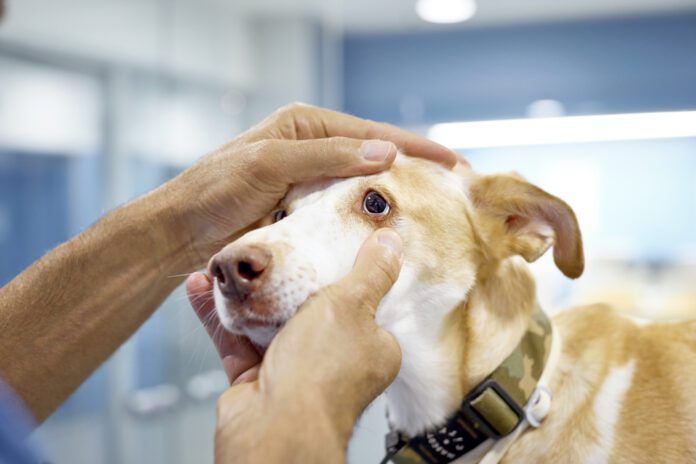
If you see something in your dog’s eye, a trip to the veterinarian is in order. If it turns out to be melanoma, the sooner it’s diagnosed, the better. Credit: Morsa Images | Getty Images

Even the idea that your dog may have melanoma is upsetting. Symptoms of melanoma in your dog’s eye may begin like any eye problem with signs of pain, like squinting, tearing, or rubbing the face. You may notice redness in your dog’s eye or suspect vision loss.

If you also see discoloration in your dog’s iris, a growth along the scleral/corneal junction, or a dark spot near his eye, it could be early-stage dog melanoma. If so, don’t wait. See your veterinarian for a diagnosis to determine if it’s malignant or benign.

Melanoma in a Dog’s Eye

Melanomas result from tumors of the melanocytes, the cells that produce pigment. In the eye, that means cells from the uvea (the iris, ciliary body, and choroid) or cells from the limbus (border between the cornea and the sclera). Much less common are small melanomas on the eyelid or the conjunctiva. Uveal melanomas are the most common eye tumor in dogs.

Fortunately, over 80% of these ocular melanomas are benign, and that designation means few will metastasize to other locations in your dog’s body. Unfortunately, these tumors, especially the uveal ones, even though benign, can expand locally and cause visual problems, including secondary glaucoma or blindness.

What Does Melanoma Look Like in a Dog’s Eye?

Early on, uveal tumors are flat, black or brown masses on the iris. They can be difficult to distinguish from iris nevi or freckles on the iris at this early stage. (Eventually, these become slightly raised if they are melanomas.)

A veterinary ophthalmologist using transillumination (a diagnostic test that involves shining a bright light through the tissues) can usually tell them apart at this early stage. Your veterinarian can track these discolorations. If there is growth, it is a uveal melanoma. Taking photos to track changes is ideal. That is the best way to catch malignant melanomas early on.

What Dogs Are at Increased Risk for Melanoma?

Labrador Retrievers, Golden Retrievers, and German Shepherd Dogs have increased risk for uveal melanomas, but these tumors can appear in any breed and either sex. Most dogs are older, with 9 years being the median age. Cocker Spaniels, Poodle mixes, and Poodles have an increased risk of eyelid melanomas.

How Is Dog Eye Melanoma Diagnosed?

A diagnosis of ocular melanomas depends primarily on observation. Examination by a veterinary ophthalmologist can often give you a definitive diagnosis. A slit lamp and/or gonioscope provide more accuracy on location and stage than a simple ophthalmoscope. Lymph node aspirates may be recommended to look for any metastasis as well as X-rays of the chest. Intraocular pressure will be measured to check for glaucoma. Ocular ultrasound can be helpful.

Some melanomas may cause uveitis (a serious inflammation) of the eye or even glaucoma. Those situations become emergencies. Glaucoma is a serious side effect that often shows up even from the benign version of this cancer. The eye will often be red, though the cornea may be opaque. Glaucoma is extremely painful. It can sometimes be managed medically if caught early, but if it is secondary to cancer, the ideal option is enucleation (removal of the eye).

Treatment for Melanoma in a Dog’s Eye

Treatment varies with the extent of the melanoma and whether it appears to be malignant. The goal of treatment is to preserve as much vision as possible and relieve pain.

Laser is often the first treatment of choice. This can be used on all the various ocular melanomas from eyelids to iris. This should only be done by an experienced veterinarian to prevent any side effects and preserve as much vision as possible. Cryotherapy may also be used for small or external melanomas such as eyelid growths.

The melanoma vaccine (approved for oral melanomas) has not been tested or shown to be effective for ocular melanomas at this time.

The primary method of treatment currently is surgery. With the possible exception of eyelid growths, intraocular surgery should be done by a veterinary ophthalmologist. Surgery most often means removal of the eye itself. Enucleation can often be done by your regular veterinarian. Obviously, this means total loss of vision, but dogs tend to adapt to loss of an eye quickly, especially if the other eye is normal.

A friend’s Australian Shepherd had to have an eye removed. She felt much better afterward, presumably because the pain was gone. She became more active, her appetite improved, and she was happy to participate in her favorite dog sports. She continues to participate in performance events, including Barn Hunt, scent work, and Rally.

A study out of Iran offers a new potential treatment and hope for dogs with malignant ocular melanomas. This was only one case, but the results are positive. Electrochemotherapy was done following surgical removal of a malignant mass. It can be difficult to get clear margins with the limited space in the ocular orbit. Electrochemotherapy uses electronic fields with chemotherapy drugs to increase the effectiveness of the chemotherapy. Again, only one dog, but as of seven months post op, the dog was doing great and had no signs of recurrence. This study also fits the One Health aspect of veterinary medicine as this technique may offer a new treatment plan for people with ocular melanomas.

Can Melanoma Be Prevented in a Dog?

Can you prevent this cancer? Not really. For the breeds that appear to have a genetic predisposition, avoiding using any dog with an ocular melanoma for breeding would be ideal, or at a minimum, don’t double up on dogs with the problem. With a tumor that shows up later in life, many dogs will have already been bred before the tumor becomes obvious.

A genetic test may one day be possible. Fourteen genes have been identified in people that can differentiate between benign and malignant ocular melanomas. Out of those 14, four have been noted in a limited canine study. These could be genetic markers for the future. If studies bear this out, genetic testing might be recommended for dogs at risk, both as pets and as potential breeding dogs.

While there does not seem to be a connection between UV light exposure and ocular melanomas at this time, keeping your dog out of bright sunlight makes sense for other potential ocular health problems such as pannus.

Puppy Barking: Why it Happens and How To Help Your Puppy Settle

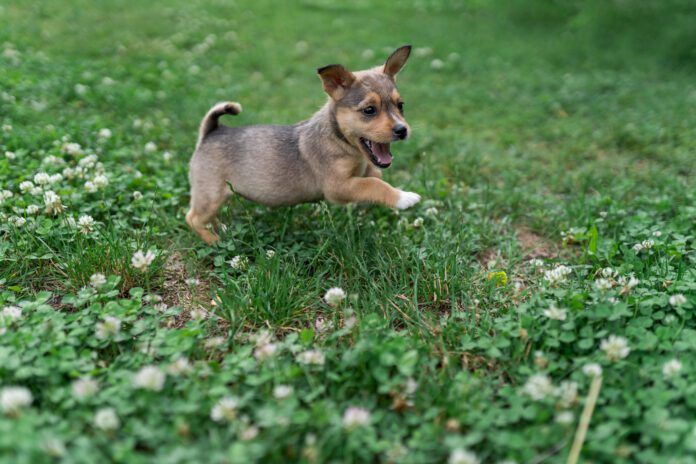
A small brown puppy frolicking in the grass.
Barking is normal for puppies but there are some things you can do to keep the behavior from becoming a nuisance. Credit: Jecapix | Getty Images

Do you have a new puppy who won’t stop barking? Although some barking is completely normal for most breeds and breed types, when puppy barking becomes excessive it’s important to understand why your puppy is barking and how to reduce barking the right way.

To continue reading this article or issue you must be a paid member.

Join Whole Dog Journal

Get full access to Whole-Dog-Journal.com – more than 4,000 articles – for just $20.
Join today and save 30% off our full price.
Already a member?
| Forgot your password? | Activate Web Access

Can Dogs Have a Chicken Allergy?

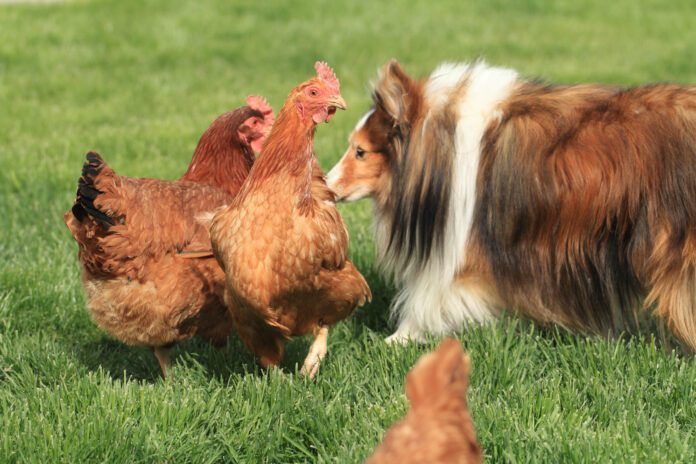
A border collie investigates two alarmed looking chicken hens.
Dogs allergic to chicken in their food can hang out with their feathered friends but not eat the chickens. Credit: Angela Medler | Getty Images

Chicken is one of the most widely used proteins in commercial dog foods, treats, and supplements, which makes it both widely consumed and one of the most common food allergies in dogs.

To continue reading this article or issue you must be a paid member.

Join Whole Dog Journal

Get full access to Whole-Dog-Journal.com – more than 4,000 articles – for just $20.
Join today and save 30% off our full price.
Already a member?
| Forgot your password? | Activate Web Access

The Best Dog Ramps

The best dog ramps offer a gentle incline, traction, and stability.
The best dog ramps offer gentle inclines, good traction, and enough support to stay stable while in use. Credit: Jae Thomas

My dog’s veterinary physical therapist has always told me that it’s better to teach a dog to use a ramp before they need it, not when they need it. Getting one of the best dog ramps before your dog needs it will ensure they can hop in and out of the car, on and off the bed, and more for a long time to come.

Dog ramps are ideal for young puppies with open growth plates, injured dogs who need to reduce joint strain, aging pups who are losing mobility, small dogs who can’t reach tall places, long-backed dogs who are prone to injuries, and dogs who are too big for their owners to safely lift.

But before you buy a dog ramp, there are some safety measures to take. Here’s how to pick the best dog ramp for your dog.

Traits We Want in the Best Dog Ramps

Length: Longer dog ramps have gentler inclines so, generally, the longer the better. A good rule of thumb is to select a ramp that will offer between 18 and 27 degrees of incline, based on the height you need.

Width: The width of a dog ramp should be at least a few inches wider than the widest part of your dog’s shoulders and hips. This ensures they feel comfortable walking up and down it normally and don’t need to squish their gait to fit.

Weight support: A ramp that doesn’t support your dog’s weight will be wobbly, unstable, and could collapse under them, potentially causing injury and/or an aversion to using the ramp. Ensure you choose a ramp that offers enough weight support for your dog’s size.

Surface material: Dog ramps should have lots of traction. A slippery dog ramp will likely cause injury, negating the injury prevention perks of using a ramp regularly. Choose an option with rubber, textured carpet, or other grippy surfaces.

Portability (for dog ramps for cars): If you’re using a dog ramp for your car, it should be portable and light enough to easily unfold, fold, and load back in the car.

The Best Dog Ramps

Whole Dog Journal RatingProduct and MakerPriceNotes
EveryYay Portable Pet Ramp$133This ramp is the longest we tested, which allows for a large variety of gentle angles. Intended for loading in and out of the back of the car, this is a wide, sturdy option for medium and large breed dogs.
PetSafe Happy Ride Foldable Dog Car Ramp$60The PetSafe Happy Ride ramp is lighter and more portable than the EveryYay ramp but it’s a bit shorter and narrower, so very large dog breeds may have trouble using it. However, it’s narrow enough to use as a dog ramp for side doors, as long as the floor height isn’t above 24 inches.
Frisco Plastic Easy Step Cat & Dog Stair$46Though the carpet top piece isn’t the best quality, this budget-friendly step is a great middle ground between no assistance and a full ramp. It’s also deep enough for most medium and large dogs to use comfortably.
DoggoRamps Large Bed Ramp$425It can be difficult to find indoor ramps that are both long enough and wide enough for large dogs. The DoggoRamps Large Bed Ramp is ideal for big dog owners, as it is 70 inches long, 18 inches wide, and holds up to 200 pounds. It also includes a rail that will keep your dog feeling secure as they get on and off the bed.
EveryYay Rise & Climb Indoor Pet Ramp$183This carpet-lined pick is a good indoor ramp for assisting small dogs onto couches and other low furniture. Because it is not that long, it’s not the best option for steeper furniture.
Doggo Ramps Step-Ramp$150Though impeccably well made, the Doggo Ramps step ramp was a bit too shallow for my medium-sized tester dogs but it could be a good choice for households with active small or toy breeds.

Best Dog Ramp for Cars: EveryYay Portable Pet Ramp

The Everyyay portable ramp is the best overall dog ramp of those reviewed although it is not compact.
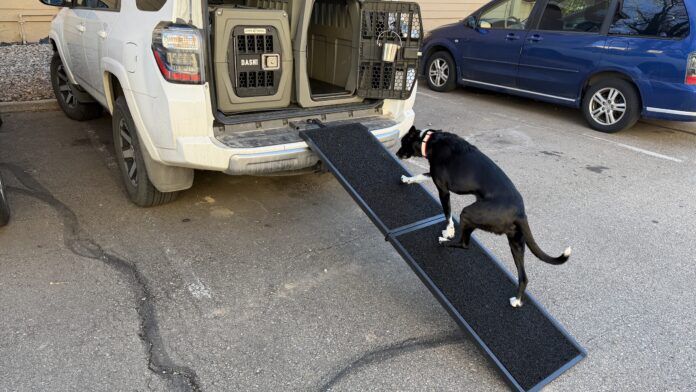
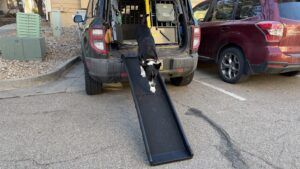
Although it may be a bit heavy for some, the EveryYay Portable Pet Ramp is a sturdy, functional option for dogs of all sizes. Credit: Jae Thomas

The EveryYay Portable Pet Ramp is long, sturdy, portable, and wide enough for even large dogs. Longer ramps provide a gentler incline for dogs and this 72-inch-long dog car ramp is long enough to reach into tall SUVs and trucks without making a steep, unstable angle for your dog.

I love that this ramp has a safety tether that you can clip onto the rear latch hook of an SUV or hatchback vehicle. That extra layer of safety means you don’t have to worry about the ramp slipping out from underneath your dog (especially important for the safety of injured dogs or senior dogs).

This ramp folds in half and locks for storage, has a carrying handle, and weighs 17.6 pounds. It’s not the most lightweight dog car ramp, so folks who aren’t able to lift much weight may reconsider this as their top option. However, what it lacks in lightweight design, it makes up for in sturdiness, width, and length. It’s long enough, wide enough, and has a large enough weight capacity (200 pounds) for most dogs.

My tester dogs also appreciated the surface on this ramp, which is a mix between carpet and plastic. It was overall very grippy and didn’t cause slipping.

Because of its width, this ramp does not fit as a dog car ramp for side doors in most vehicles.

Best Dog Ramp for Smaller Vehicles: PetSafe Happy Ride Foldable Dog Car Ramp

The Petsafe dog car ramp is a good choice for hatchbacks and sedans.
The PetSafe Happy Ride Foldable Dog Car Ramp is lightweight and portable but may be too short for taller vehicles. Credit: Jae Thomas

The PetSafe Happy Ride Foldable Dog Car Ramp is a good pick for lower-to-the-ground vehicles like sedans, hatchbacks, and some mid-size SUVs. The shorter 62-inch length makes this ramp too steep for most full sized SUVs and trucks, even if you are using it to load your dog in and out of the back of the car.

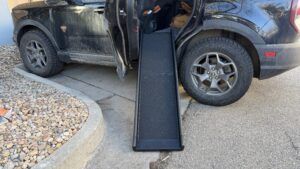
This ramp works safely for heights up to 24 inches. If your car falls within that height range, this is also a good pick for a dog ramp for side doors. It’s narrow enough to sit on the seat in most vehicles, even if you don’t have a ton of door clearance.

Long pet ramps may be too long for some cars and some doors.
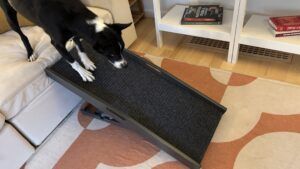
This ramp was slightly too steep to use in the side door of our Ford Bronco Sport but would be a good side door option for lower hatchbacks and sedans. Credit: Jae Thomas

The surface on this ramp isn’t as supportive as some of the other options since it’s harder and thinner. It has a sandpaper-like quality and if the ramp is set at too steep an angle, dogs tend to splay their toes for traction when going down. We didn’t have any issues with our tester dogs going up this ramp.

This ramp is also a good option as a dog ramp for stairs. Just set it over short sets of stairs indoors or outdoors if you have a senior or injured dog who needs help navigating steps. It’s sturdy, only weighs 10 pounds, and is easy to fold, unfold, and move around.

Best Dog Ramp for Couches: Frisco Plastic Easy Step Cat & Dog Stair

The best dog ramps for couches are substantially different from those for cars.
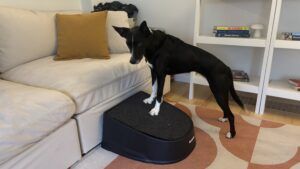
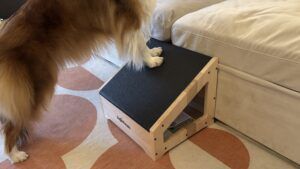
If your dog just needs a bit of help to reach the couch, the Frisco Plastic Easy Step Cat & Dog Ramp is a good choice. Credit: Jae Thomas

If your dog is fairly active and just needs a boost up to their favorite spot on the couch, the Frisco Plastic Easy Step Cat & Dog Ramp is a good option. It’s deep enough for most dogs to use it comfortably, though it does have a 50-pound weight limit. With shallower steps, my tester dogs tended to put their front paws on it, then jump onto the furniture over the step, negating the use of the step to help their rear ends.

The carpet piece on the top of this step is removable and machine washable for easy cleaning, though it isn’t the best quality and had frayed edges straight out of the box.

If your dog doesn’t need a full ramp, or if you have a very small dog who just needs help with getting onto tall couches or chairs, this is the way to go.

Best Indoor Dog Ramp for Large Dogs: DoggoRamps Large Bed Ramp

The Doggo ramp large ramp is a long stirdy ramp that works for large dogs.
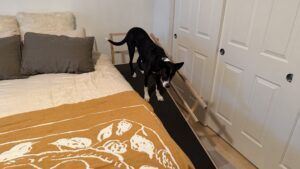
When it comes to indoor dog ramps, the DoggoRamps Large Bed Ramp is sturdy enough and wide enough for dogs up to 200 pounds. Credit: Jae Thomas

The DoggoRamps Large Bed Ramp is the best option for helping big dogs on and off the bed. It offers 70 inches of walkway space, an 18-inches width, and holds dogs up to 200 pounds. It can be used for beds from 20 inches up to 35 inches tall and the long length provides a gentle incline for older dogs.

This ramp features safety rails at the top and on one side, so your dog doesn’t feel insecure while going up and down. The Pawgrip surface is rubbery and offers secure grip, even for large, heavy dogs. There was a small nick in the rubbery surface of my tester unit, likely from transit, but if your dog has very long nails, it could also damage the surface.

This ramp is impeccably handmade of real wood and comes in five different finishes so you can match the furniture in your bedroom. It’s pricey, but is a sturdy, high-quality bed ramp option for large dogs, short and heavy breeds (like Bulldogs and Basset Hounds), or for households with multiple dogs.

My tester dogs took to this ramp easily because of the sturdy base and wide, grippy surface. It also comes with a safety rope to keep it from sliding away from the bed.

Best Indoor Dog Ramp for Small Dogs: EveryYay Rise & Climb Indoor Pet Ramp

Short compact and easy to store dog ramps work best from short furniture and for small dogs.
The EveryYay Rise & Climb Indoor Pet Ramp is easy to store but works best for small dogs and shorter furniture. Credit: Jae Thomas

The EveryYay Rise & Climb Indoor Pet Ramp is a good option for smaller dogs needing to get on and off of couches and other furniture inside. It’s collapsible, so it easily fits under the bed, under the couch, or in the closet when not in use. It also locks into a folded position for easier storage.

The length of this ramp is only about 40 inches, so it’s best suited for the three lower height settings to make the incline easier on your dog, though it technically can be used at a fourth height of 24 inches. The textured carpet on this ramp is grippy enough for small and light dogs (think dogs under 40 pounds). With larger, heavier dogs, we noticed some paw splaying and a bit more slippage due to the extra weight.

Other Dog Ramps We Tested

Doggo Ramps Step-Ramp

The Doggo Ramps Step-Ramp is well made but awkward to use.
The Doggo Ramps Step-Ramp is well made but its size makes it awkward for many dogs to use. Credit: Jae Thomas

The Doggo Ramps Step-Ramp is beautifully made with real wood, handles for carrying, a storage cubby compartment, and a rubbery surface that offers good traction for dogs. However, I found this ramp to be a bit awkwardly sized. It requires a six inch jump up and down it, but is also only 14 inches deep, so it’s not quite big enough for dogs over about 20 pounds, depending on their height and length.

This could still be a good option for homes with fairly active small dogs if you’re looking to reduce the strain on their back caused by full height jumping (especially for the long/low breeds like Dachshunds and Corgis). Or, if you’re limited on space and need something compact, this is could be an option if your dog is on the smaller side.

The Best Dry Dog Foods: 2026 Top Picks

40
Knowing which dry dog food is best for your dog depends on your dog's size, age, and sensitivities.
With so many dry dog foods on the market, how do you choose which one is right for your dog? Credit: Pavel Herasimau | Getty Images

Deciding what dog food to buy for your pet is something many pet owners struggle with. Today’s shoppers are overwhelmed with myriad options, each with their own flashy packaging, added ingredients for health, and claims for why they are different from all the other brands on the shelves.

On top of that, every dog is their own individual. From palatability to food intolerances, not every diet is going to work well for every dog. So how do you decide?

Many people find themselves reaching for a familiar brand, as brand trust is a huge component in the pet market. When we buy a dog food, we are placing an immense amount of trust in whatever brand we select to provide a safe and healthy product for our beloved companion(s).

Many people continue to feed the same brand the dog’s breeder or the shelter recommended while others turn to their veterinarian for advice when they want to switch up their dog’s diet. Any of these approaches might lead to a perfectly suitable food that both you and your pup are happy with. However, they can just as easily result in a diet that does not necessarily fit well with your dog’s individual needs.

The reality is that there is no single “best” dry dog food for all dogs. Nutritional needs vary based on life stage, activity level, metabolism, breed size, body condition, and health history. Your dog’s needs are also likely to change during their lifetime, so if you notice issues arising, a change in diet may be a good starting place. Finding the best food for your dog requires looking beyond marketing claims and understanding what actually matters in dry food formulation. We hope that the process we used (see “How To Pick the Best Dry Dog Food for Your Dog” below) to select our top recommended dry dog foods can help you in this process!

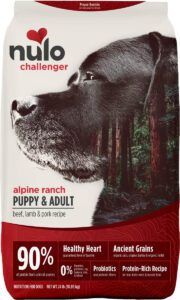
Best All Life Stages/Puppy Dry Dog Food: Nulo Challenger High-Protein Kibble Alpine Ranch Beef, Lamb & Pork Recipe

Nulo Challenger Alpine Ranch Adult Dog Food Packaging.

Things we like:

  • Named meats are the first six ingredients
  • Inclusion of probiotics
  • Many nutrients on the guaranteed analysis including EPA and DHA (especially beneficial for puppies) and taurine

First 10 ingredients: Deboned Beef, Deboned Lamb, Salmon Meal, Turkey Meal, Deboned Pork, Chicken Meal, Organic Oats, Organic Barley, Chicken Fat, Organic Millet

  • Protein: Min 35%
  • Fat: Min 8%
  • Calories: 438 Kcal/cup
  • Cost: $4.42/lb

Runners Up:

Price/lb: $3.17
Buy Now
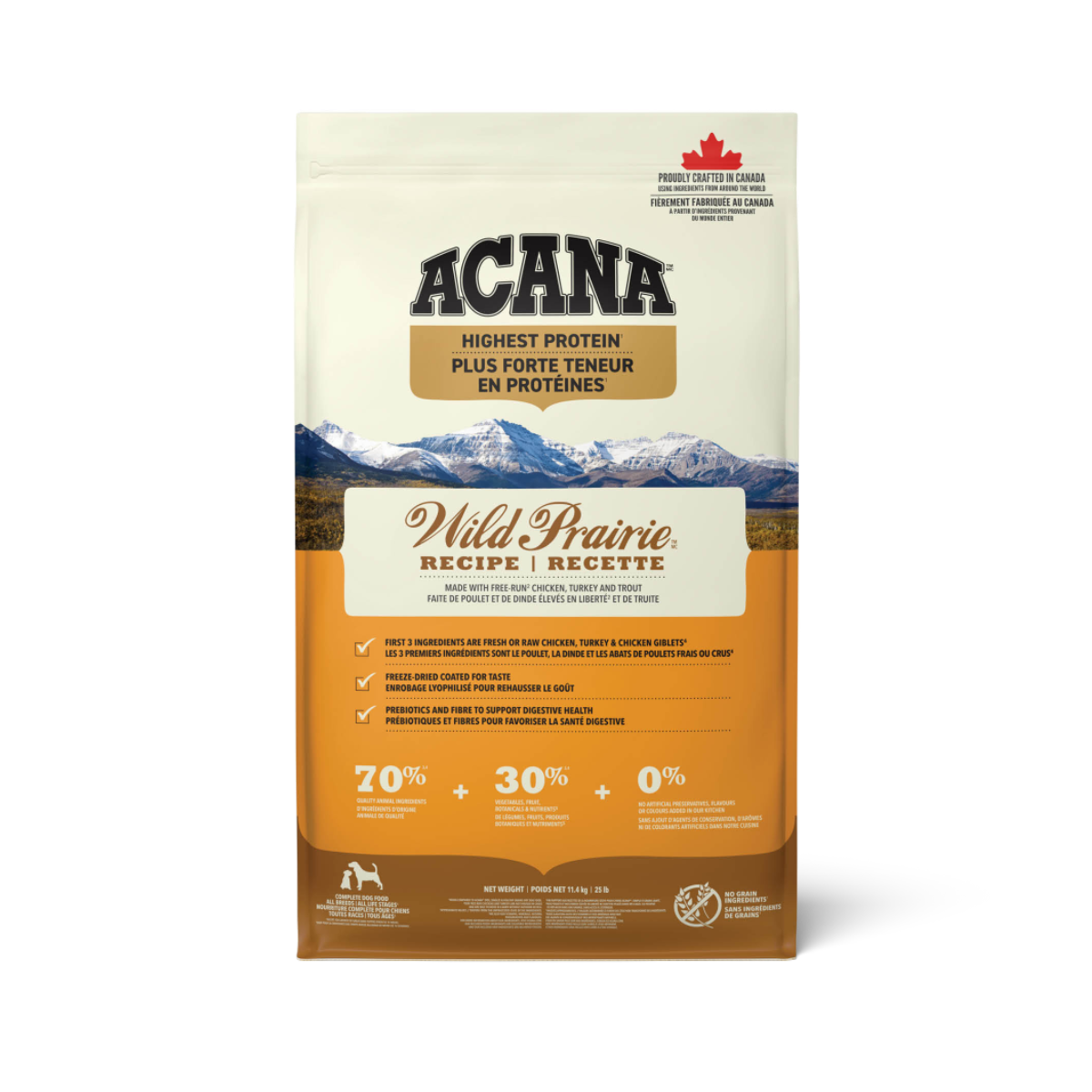
Ingredients: Fresh chicken, raw turkey, fresh chicken giblets (liver, heart, gizzard), chicken meal, herring meal, turkey meal... View all
Price/lb: $1.85
Buy Now
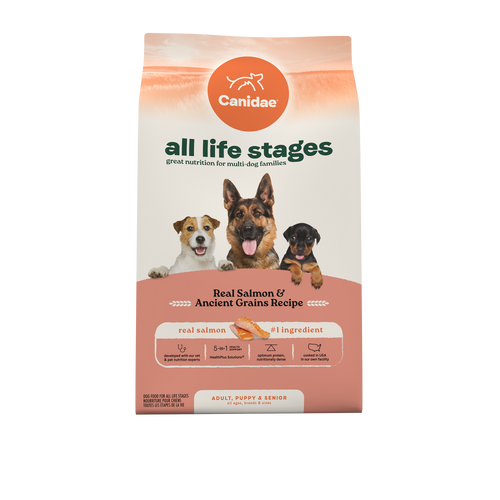
Ingredients: Salmon, Chicken meal, oatmeal, barley, whole grain sorghum, millet, brown rice, white rice... View all

Every complete and balanced dry dog food must carry a nutritional adequacy statement referencing standards set forth by the Association of American Feed Control Officials (AAFCO). This statement indicates whether the product is formulated for growth, growth and reproduction, adult maintenance, or all-life stages. Foods labeled for growth, growth and reproduction, or all life stages meet the higher nutritional demands of puppies and pregnant/nursing females, including higher levels of protein, fat, calcium, and phosphorus. An all life stages diet is safe for adults but may provide more calories than some sedentary dogs require. 
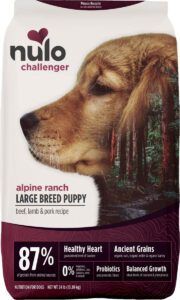

Best Dry Dog Food For Large Breed Puppies: Nulo Challenger High-Protein Kibble for Large Breed Puppy Alpine Ranch Beef, Lamb & Pork

Nulo Challenger Hight Protein Alpine Ranch kibble packaging

Things we like:

  • Named meats are the first six ingredients
  • Inclusion of probiotics
  • Many nutrients on the guaranteed analysis including EPA and DHA (especially beneficial for puppies) and taurine

First 10 ingredients: Deboned Beef, Deboned Lamb, Salmon Meal, Turkey Meal, Deboned Pork, Chicken Meal, Organic Oats, Organic Barley, Chicken Fat, Organic Millet

  • Protein: Min 32%
  • Fat: Min 14%
  • Calories: 410 Kcal/cup
  • Cost: $4.42/lb

Large-breed puppies, in particular, require carefully controlled calcium and phosphorus levels to support proper skeletal development, so look for product labeled formulated for growth including growth of large breed dogs to ensure proper growth of dogs expected to be 70 pounds or larger.
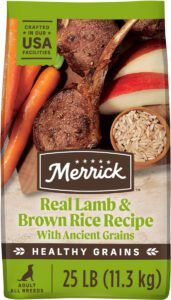

Best Adult Maintenance Dry Dog Food: Merrick Healthy Grains Real Lamb & Brown Rice Recipe

Things we like:

  • Named meats are four of the first 10 ingredients
  • 85% animal ingredients
  • Added probiotics and glucosamine

First 10 ingredients: Deboned Lamb, Chicken Meal, Brown Rice, Barley, Oatmeal, Lamb Meal, Chicken Fat, Salmon Meal, Quinoa, Natural Flavor

  • Protein: Min 25%
  • Fat: Min 16%
  • Calories: 442Kcal/cup
  • Cost: $3.08/lb

Runners Up:

Price/lb: $4.25
Buy Now
Ingredients: Deboned Chicken, Chicken Meal, Turkey Meal, Oats, Barley, Tapioca, Chicken Fat (preserved with Mixed Tocopherols), Quinoa... View all
Default Dog Food
Price/lb: $2.14
Buy Now
Ingredients: Beef, Turkey, turkey meal, beef meal, pearled barley, rye flour, millet, oat groats... View all

Adult maintenance dry foods are formulated specifically to meet the needs of mature dogs whose growth phases are complete and nutrient requirements are lower. These formulas often contain slightly lower levels of protein and fat, making them less energy dense than diets designed for growth but some adult maintenance foods are still relatively high in protein or fat, so it is important to look beyond the label claim and review the guaranteed analysis and calorie content.

For less active or overweight adult dogs, choosing a formula with moderate protein levels and controlled fat can help maintain an ideal body condition. Comparing calories per cup is particularly helpful when looking for a diet that fits your dog’s energy needs, as you still want to feed them enough bulk to help them feel satisfied.
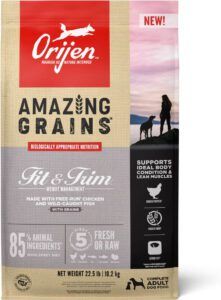

Best High Protein Dry Dog Food: Orijen Amazing Grains Fit & Trim

Orijen Amazing Grains Fit and Trim dog food kibble.

Things we like:

  • Named meats are the first seven ingredients
  • 85% animal ingredients
  • Added probiotics and glucosamine

First 10 ingredients: Chicken, Chicken Giblets (Liver, Heart, Gizzard), Cod, Whole Herring, Turkey Giblets (Liver, Heart, Gizzard), Dehydrated Chicken Liver, Dehydrated Sardine, Oat Groats, Millet, Eggs

  • Protein: Min 42%
  • Fat: Min 13%
  • Calories: 411Kcal/cup
  • Cost: $4.76/lb

Runners Up:

Price/lb: $4.23
Buy Now
Ingredients: Deboned beef, deboned lamb, deboned wild boar, deboned pork, deboned bison, beef liver, pork liver, pork meal... View all
Price/lb: $5.50
Buy Now
Ingredients: Deboned Turkey, Turkey Meal, Chicken Meal, Dried Ground Potatoes, Lentils, Peas, Chicken Fat, Dried Plain Beet Pulp... View all

While there is not an established maximum protein value for dog food, dogs can eat and thrive on foods that contain significantly more protein than the minimum required amount. This high level of protein is not necessary for dogs and foods with high levels of protein tend to be considerably more expensive than their lower-protein counterparts. That being said, some dogs, such as working dogs or canine athletes involved in endurance activities, may do better on high protein foods to support their higher metabolism and muscle mass.
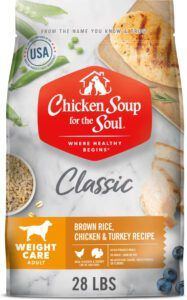

Best Low Fat Dry Dog Food: Chicken Soup for the Soul Classic Weight Care Brown Rice, Chicken & Turkey Recipe

Chicken Soup for the Soul Weight Care Brown Rice Chicken and Turkey Recipe dog food packaging.

Things we like:

  • Named meats are 4 of the 5 first ingredients
  • Guaranteed omega fatty acids
  • Added L-carnitine for healthy fat metabolism and muscle maintenance

First 10 ingredients: Whole Grain Brown Rice, Chicken, Turkey, Chicken Meal, Turkey Meal, Cracked Pearled Barley, Peas, Oatmeal, White Rice, Faba Beans

  • Protein: Min 21%
  • Fat: Min 6%
  • Calories: 328Kcal/cup
  • Cost: $2.07/lb

Runners up:

Price/lb: $2.50
Buy Now
Ingredients: Rice, Chicken Meal, Chicken, Turkey, Peas, Pea Flour, Tomato Pomace, Chicken Fat (Preserved with Mixed Tocopherols)... View all
Price/oz: $0.37
Buy Now
Ingredients: Whitefish, Potatoes, Chicken Broth, Water, Chicken Liver, Chicken, Pea Flour, Dried Egg Product... View all

The AAFCO minimum amount of crude fat that must be in dog food is 4.95% as-fed for an adult maintenance food and 7.65% as fed for puppy foods. Low fat dry dog foods are typically selected for dogs that are sedentary, diabetic, or overweight, those that have or are prone to pancreatitis, or those recovering from medical conditions.

Our selections fall above the required minimum fat level for adult maintenance dry dog food but are not appropriate for puppies. Low-fat options make up for the reduced fat in the formula by increasing the concentration of one of the other macronutrients: carbohydrates, protein, or both. This is where you should take your own dog’s biological needs into account when choosing a low fat dog food—does your pup do better on a higher-protein or higher-carbohydrate food?
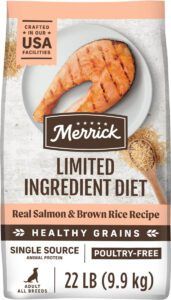

Best Limited Ingredient Dry Dog Food: Merrick Limited Ingredient Diet Real Salmon & Brown Rice Recipe

Merrick Healthy Grains Real Lamb and Brown Rice recipe dog food packaging.

Things we like:

  • Single protein source
  • Poultry-, lamb-, and beef-free for dogs with protein sensitivities
  • Added L-carnitine for healthy fat metabolism and muscle maintenance

First 10 ingredients: Deboned Salmon, Salmon Meal, Brown Rice, Oatmeal, Barley, Sweet Potatoes, Canola Oil, Potato Protein, Natural Flavor, Flaxseed

  • Protein: Min 21%
  • Fat: Min 14%
  • Calories: 462Kcal/cup
  • Cost: $3.45/lb

Runners Up:

Price/lb: $4.25
Buy Now
Ingredients: Salmon Meal, Salmon, Peas, Tapioca, Canola Oil (preserved with Mixed Tocopherols and Citric Acid), Montmorillonite Clay, Natural Flavor, Potassium Chloride... View all
Price/lb: $3.60
Buy Now
Ingredients: Burbank Potato, Norkotah Potato, Ocean Fish Meal, Tomato Pomace, Chicken Fat (preserved with mixed tocopherols), Dicalcium Phosphate, Choline Chloride, Calcium Propionate... View all

While there is no official regulatory definition of a “limited ingredient” diet, these formulas generally feature a reduced number of primary protein and carbohydrate sources. Some manufacturers use just 5-6 major ingredients for their foods while others contain 10-12 or more.

Limited ingredient dry dog foods are typically chosen for dogs with suspected food sensitivities or when conducting an elimination diet. The goal is to simplify the diet, making it easier to identify and avoid ingredients that may trigger digestive upset or immune responses. Fewer major ingredients can help clarify which components are well-tolerated, so we tried to select diets with as few major ingredients as possible.
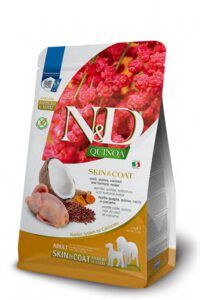

Best Grain-Free Dry Dog Food: Farmina N&D Quinoa Skin & Coat Quail Medium & Maxi

Famina N&D Skin and Coat grain free dog food packaging.

Things we like:

  • Animal proteins are 3 of the first 5 ingredients
  • Alternative poultry protein
  • Added L-carnitine, glucosamine, and omega fatty acids

First 10 ingredients: Quail, Dehydrated Quail, Pea Starch, Sweet Potatoes, Hydrolyzed Pork Liver, Chicken Fat, Herring Oil, Quinoa Seed, Natural Flavors, Flaxseed

  • Protein: Min 23%
  • Fat: Min 12%
  • Calories: 369Kcal/cup
  • Cost: $6.49/lb

Runners Up:

Price/lb: $4.62
Buy Now
Ingredients: Deboned Duck, Chicken Meal, Menhaden Fish Meal, Turkey Meal, Peas, Sweet Potatoes, Chicken Fat (Preserved With Mixed Tocopherols), Tapioca Starch... View all
Price/lb: $3.41
Buy Now
Ingredients: Salmon, Salmon Meal, Sardine Meal, Lentils, Sweet Potatoes, Peas, Dried Yeast, Canola Oil... View all

Grain-free dry dog foods remain a popular choice among pet parents, though their rise in popularity has been accompanied by ever-evolving research and discussion. Because kibble production requires starch for structure, grain-free formulas replace traditional grains with alternative carbohydrate sources such as peas, lentils, chickpeas, potatoes, and sweet potatoes.

Since U.S. Food and Drug Administration’s (FDA) advisory warning of a possible link between grain-free foods and dietary-induced dilated cardiomyopathy (DCM), grain-free diets have been steeped in controversy. While no definitive causal link has been established, some experts continue to examine the role of heavy legume inclusion and amino balance in these cases. Current understanding suggests that while grain-free diets are not inherently harmful, they are not inherently superior either. They may be appropriate for dogs with confirmed grain sensitivities, though true grain allergies in dogs are uncommon.

Pet food manufacturers will often use a high inclusion of legumes as they can serve as both a carbohydrate source as well as an inexpensive source of protein in dog diets. However, the amino acid profiles of plant proteins are often not as optimal for dogs compared to animal-based proteins. When evaluating grain-free options, we advise that animal proteins remain the primary ingredients and that special attention be paid to identify ingredient splitting to try to minimize the impact that legumes play in the diet.
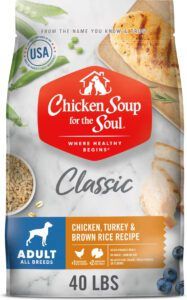

Best Budget-Friendly Dry Dog Food: Chicken Soup for the Soul Classic Large Breed Adult Chicken, Turkey & Brown Rice Recipe

Chicken Soup for the Soil Chicken, Turkey, and Brown Rice adult dry dog food.

Things we like:

  • First 4 ingredients are named animal protein sources
  • No corn, wheat, or soy
  • No byproduct meals

First 10 ingredients: Chicken, Turkey, Chicken Meal, Turkey Meal, Cracked Pearled Barley, Whole Grain Brown Rice, Peas, Oatmeal, White Rice, Faba Beans

  • Protein: Min 23%
  • Fat: Min 12%
  • Calories: 374Kcal/cup
  • Cost: $1.85/lb

Runners Up:

Price/lb: $1.97
Buy Now
Ingredients: Deboned Chicken, Chicken Meal, Oatmeal, Barley, Brown Rice, Peas, Dried Plain Beet Pulp, Chicken Fat... View all

Our budget-friendly foods are not the least expensive on the market, but that is because the least expensive diets available do not meet many of the requirements needed to be on the WDJ approved dry dog food list. The cheapest foods on the market tend to be heavy in legume usage and often contain unnamed animal protein and fat sources, such as “meat and bone meal,” “animal by-product meal,” and “animal fat.” Because of this, we tried to balance quality and price to provide you with budget-friendly foods we feel good about recommending.
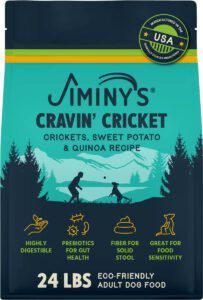

Best Alternative Protein Dry Dog Food: Jiminy’s Cravin’ Cricket

Jiminy's Craving Crickets alternative protein dog food packaging.

Things we like:

  • Insect meal as primary protein source
  • Low reliance on legumes

First 10 ingredients: Dried Crickets, Oats, Sweet Potato, Brown Rice, Chickpeas, Potato Protein, Quinoa, Dried Yeast, Sunflower Oil, Peas

  • Protein: Min 25%
  • Fat: Min 14%
  • Calories: 407Kcal/cup
  • Cost: $4.12/lb

Runners Up:

Price/oz: $0.31
Buy Now
Ingredients: Vegetable Broth, Potatoes, Ground Brown Rice, Ground Barley, Oats, Potato Protein, Carrots, Canola Oil (Preserved With Mixed Tocopherols)... View all
Default Dog Food
Price/lb: $3.76
Buy Now
Ingredients: Organic peas, organic barley, organic oats, lentils, organic sunflower oil (preserved with mixed tocopherols), potatoes, quinoa, organic flaxseed... View all

Alternative protein dry dog foods in this article encompass vegetarian, vegan, and insect-based formulations. These diets may be selected for dogs with multiple confirmed animal protein allergies or for owners who have ethical or environmental concerns about traditional animal agriculture. At present, most alternative protein dog foods are formulated for adult maintenance and are not appropriate for growing puppies.


How To Pick the Best Dry Dog Food for Your Dog

When picking a dog food, the logical starting point is to evaluate the manufacturer behind the product to see if they align with your values and expectations. With hundreds of pet food companies and thousands of dry formulas available, quality standards differ widely. Responsible companies invest in qualified nutrition expertise, maintain strong quality control standards, and are transparent about ingredient sourcing and manufacturing practices. Some conduct feeding trials to validate their formulas, while others rely solely on computer formulation and chemical analysis to meet nutrient standards. While ingredient lists are important, the company’s commitment to formulation integrity and safety is equally critical.

Once you have found the manufacturers you align with, your options will be significantly narrowed. You can then begin to select the best candidates for dry foods for your specific dog, such as a diet for active dogs, seniors, large-breed puppies, those with sensitive stomachs, etc. that also fits well with your budget. When selecting any diet, you should keep the following considerations in mind:

  • When shopping for any food, our preference is always for a product that contains meat and/or meat meal in the top two ingredients. Meat ingredients in the top five or more ingredient spots are even better.
  • We prefer legumes (chickpeas, lentils, peas) to be used in minor roles and not have their impact in the diet minimized through ingredient splitting.
  • If the food you are selecting contains functional ingredients meant to convey a health benefit, such as added omega fatty acids, probiotics, glucosamine, additional vitamins, etc., look for the levels on the guaranteed analysis. This indicates they have been tested for and are present and verifiable in the formula.

    Search Our Dry Dog Food Database

    If you’re trying to find the ideal dry food for your dog, we suggest checking out our list of Approved Dry Dog Foods (available to WDJ subscribers). This year, we not only updated our list to include more than 1,200 individual dry dog foods, but we also enhanced the database itself. You can now compare specific products, save your favorites, and share your search results with others along with filtering your search by company, ingredients, price range, and other criteria.

    When selecting the best diet for your dog, keep in mind that there is no one-size-fits-all recommendation for dog food. Feed each dog the food that suits them best and consult your veterinarian or a nutritionist if you have any questions.


    Dog Tremors with Muscle Spasms: What They Mean and How to Help

    0
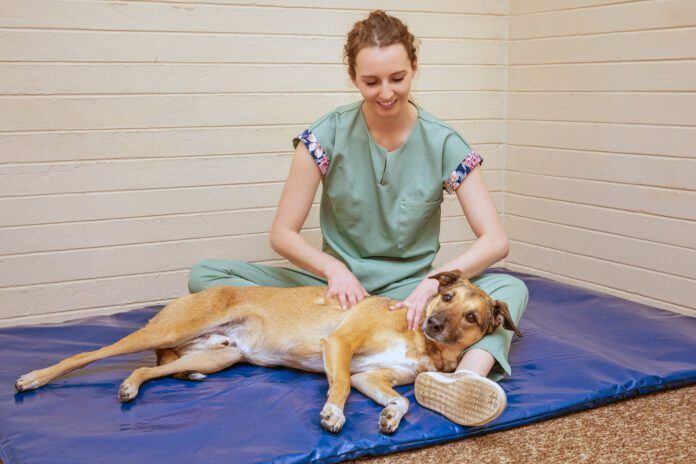
    Canine massage can help a dog experiencing muscle spasms and tremors.
    Massage and gentle stretching may be helpful for a dog experiencing muscles spasm or twitching. Credit: Katja Forster | Getty Images
    What Dog Tremors Look Like

    There is a wide range in how dog tremors appear. Your dog might have just a small twitch in one spot, or the spasms could be widespread and affect a large area of her body. These twitches can be slow or fast, and your dog might not seem to notice them or might be upset and painful or unable to move normally.

    Mild tremors that don’t bother your dog are usually nothing to worry about, but tremors that persist, worsen over time, or bother your dog could be more serious. Dog tremors are an emergency if your dog is lethargic, vomiting, nonresponsive, or recently had puppies.

    A muscle cramp—the severe painful tightening (contraction) of the muscle—is a severe muscle spasm. Your dog may even cry out in pain. Cramps are often due to overuse of muscle, an electrolyte imbalance, or dehydration. As above, if the cramp doesn’t subside quickly or if the dog is lethargic, vomiting, nonresponse, or recently had puppies, contact your veterinarian.

    If you have any concerns, take a video of what your dog is doing. A clear video in good lighting is extremely useful for your veterinarian to observe exactly what you saw and can help in figuring out why it is happening.

    Why Is My Dog Twitching or Shaking?

    Twitching, tremors, and spasms are involuntary movements of your dog’s muscles. There are many different causes for them, but the result is that muscle fibers contract erratically on their own.

    Reasons why your dog might have tremors or muscle spasms include:

    • Shivering due to cold
    • Shaking or shivering due to anxiety or stress
    • Moving during a dream
    • Muscle fatigue after exercise
    • Pain
    • Dehydration
    • Overexcitement
    • Toxin ingestion
    • Low blood glucose (hypoglycemia)
    • Low blood calcium (hypocalcemia)
    • Idiopathic tremors (unknown cause)

    Age Matters: Puppy vs Senior Dog Tremors

    Puppies sometimes have muscle spasms while sleeping. This is because their nervous system and muscles are still developing. If your puppy is otherwise happy and healthy, there is usually nothing to worry about.

    Senior dogs get fatigued more quickly than young adult dogs, partly because they tend to have less muscle as they age. Your senior dog might have mild muscle tremors after exercise that did not affect her when she was younger.

    Toxins That Can Cause Dog Tremors

    Many toxins can cause tremors. If your dog has or may have consumed any of these items and is showing muscle spasms, call your veterinarian or a pet poison hotline immediately:

    • Alcohol
    • Caffeine
    • Chocolate
    • Flea or tick medication overdose
    • Insecticides
    • Marijuana
    • Certain wild mushrooms
    • Pesticides and rodenticides
    • Raisins or grapes
    • Xylitol or birch sugar

    Do not wait to see if the tremors go away. With possible toxin ingestion, things can quickly become life-threatening.

    Low Bood Calcium (Hypoglycemia)

    Low blood sugar is most common in toy-breed puppies and diabetic dogs. If your tiny puppy is shaking, offer her a snack or rub some honey on her gums.

    If your adult dog shows any other signs of illness that could be related to diabetes, offer her a snack and have her seen by a veterinarian.

    Low Blood Calcium (Hypocalcemia)

    Low blood calcium is most common in female dogs who have recently whelped a litter. If your dam is showing tremors and difficulty moving after giving birth, contact your veterinarian immediately. This is an emergency.

    Idiopathic Tremors

    Sometimes we can’t figure out why a dog has periodic twitching.

    Dobermans, Boxers, Bulldogs, and Beagles seem predisposed to a mild head tremor that will go away if you distract your dog with attention, a treat, or a toy.

    Shaker syndrome” is an odd condition where small, often white dogs periodically have mild full-body tremors. It is usually managed with medication.

    How Dog Muscle Spasms Are Treated

    If your dog has a mild tremor but otherwise seems fine, encourage her to gently stretch the muscles in the area by luring her nose with a treat. You can also place a warm compress over the area to soothe the muscles if she has been exercising or gently massage the area if she enjoys that.

    For persistent or severe tremors, schedule a vet visit. Take notes on any trends you noticed when or why your dog has spasms. Bring videos if possible.

    Diagnostics can include bloodwork, urinalysis, and imaging such as X-rays or ultrasound. In more severe cases, you might go to a neurologist for an MRI or cerebral spinal fluid analysis.

    Dog muscle spasm treatment will depend on why your dog is experiencing muscle spasms. Some of the options that might be appropriate for your dog include:

    • Warm her if she is cold
    • Cool her with ice packs if she is overheated or has an acute muscle injury, as directed by your vet
    • Massage and gentle stretching
    • Intravenous fluids for dehydration
    • Medicated fluids or injections to correct electrolyte and vitamin imbalances
    • Pain medication
    • Muscle relaxants
    • Anxiety medication
    • Insulin therapy for diabetic dogs

    Note: Never give human medications without veterinary guidance. Many are unsafe for dogs.

    Is My Dog Having Seizures or Muscle Spasms?

    This can be difficult to determine. Seizures are caused by abnormal electrical activity in the brain, whereas muscle spasms are caused by a misfire within the muscle fibers themselves.

    Grand mal (tonic-clonic) seizures affect the entire body and cause your dog to lose consciousness. Focal seizures only impact part of your dog’s body and can be more difficult to identify.

    If you’re not sure what you’re seeing, treat it as urgent. Keep your dog safe and away from stairs and contact your veterinarian with a video of the episode.