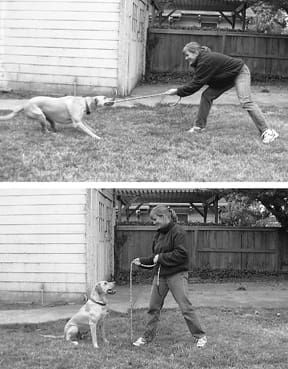
Some trainers say you shouldn’t play tug with your dog. Not me! Those of you who enjoy this energy-eating aerobic activity with your dog will be pleased to know that I personally think it’s a fine game to play, as long as you’re using appropriate tug toys and playing with rules.
Tug, in case you’ve never had the pleasure of playing, is a fun and exciting game, in which you hold one end of a tug object while your dog pulls with all his might on the other end. Variations include dog-dog tug, tug human around on a wheeled object (such as an office chair), and self-tug (in which the dog tugs an object such as a Kong on a rope that is secured to a sturdy post or tree).
Arguments against tug
Here are a few of the reasons you may have heard for not playing tug with your dog, followed by my responses:
Reason: It encourages your dog to be dominant.
Response: It has nothing to do with dominance; it has to do with play and exercise. As with many other doggie games, you can easily create a structure that reminds your dog that you control the good stuff – in this case, the tug toy – which enhances your high-ranking position in the social structure, rather than undermining it.
Reason: It encourages your dog to be aggressive.
Response: Dogs can become very aroused playing tug. You can easily prevent this by stopping the game whenever your dog begins to become overexcited. Use a phrase such as “That’s all!” as you stop the game, and you will soon have a cue you can use in any situation where you want your dog to stop what he’s doing and calm down.
Reason: It teaches your dog to put his teeth on your clothes and skin.
Response: Dogs can make poor decisions about where to put their teeth when they’re engaged in a rousing game of tug. You can use this perfect opportunity to decrease the likelihood that your dog will bite in play by teaching him that teeth on human skin makes the fun stop. If you say something cheerfully (such as “Too bad!”) and call a short time-out anytime your dog’s teeth stray into forbidden territory, it will teach him to keep his teeth to himself.
Arguments for tug
And now, my far more numerous reasons for playing tug with your dog:
• It’s great exercise. It’s a lovely indoor activity, perfect for relieving pent-up energy for a dog who’s shut in on a stormy day, or a sub-zero winter week. A low-key version of the game is also useful for occupying a dog who’s on physical restriction following surgery or an injury.
• It can be used to teach retrieve. A dog who is less-than-enthusiastic about putting retrieve objects in his mouth can sometimes be motivated to do so by encouraging him to play tug. When he gets aroused about tugging, you take advantage of his enthusiasm to shape the retrieve.
• It can be used to teach recalls. Is your dog less-than-sterling about coming when called? Get him hooked on tug – then stick a tug toy in your pocket when you go hiking. When he’s a short distance from you, call him, show him the toy, and watch him beeline back to you for a tug session. Stick the toy back in your pocket (or pack), let him wander off a bit again, and repeat.
Stop before he’s tired of tugging, so he’s always strongly motivated to return. Practice this with your dog on a long line at first, to be sure it will work! (See “Long Distance Information,” WDJ February 2001.)
• It’s a useful distracter. Lucy, our new Cardigan Corgi, used to take delight in tormenting our Scottie, who hikes with me on a long line because his recall is not reliable. The long blue leash snaking through the grass would catch Lucy’s eye, and she’d latch onto it and drag poor Dubhy around.
A tug toy was perfect for redirecting her desire to grab and pull his leash. (I may, however, teach her to grab his leash and bring Dubhy back to me on those occasions when the recall doesn’t work!)
• It can be a stress reliever. Many dogs develop a very positive association with the tug game.
One of my clients discovered a great application for tug while trying to do counter-conditioning and desensitization (CC&D) exercises in public with her dog- and people-reactive Briard. When the stimulus (a dog and/or person) occasionally and unexpectedly presented itself too closely, Jobie was too stressed to take treats. Terry discovered she could whip out a toy for a gentle game of tug, use her dog’s positive association with the tug game to reduce his stress enough to the point he would eat treats and then resume the CC&D.
• It’s great for teaching self control. As discussed in “arguments against,” tug is a perfect activity for teaching your dog to control his energy and mouth placement, by teaching an “All done” cue to end the game, and using a “Too bad!” time-out when canine teeth touch human skin or clothing.
• It can be a “legal” outlet for roughhousing. There is often at least one family member – usually male – who delights in playing rough physical games with the dog. Physical games that encourage body-slamming and mouthing do tend to reinforce inappropriate behaviors. Convince your roughhousing humans to play tug by the rules, and they’ll help you reinforce desirable behaviors instead, while fulfilling their need to get physical with the dog.
• It can build relationships. Doing things that your dog loves helps build a strong bond between you two. Playing tug with a dog who loves it can reinforce his focus on you, and his interest and pleasure in playing and training with you. While food rewards are an important part of positive training, life rewards – activities that are meaningful and reinforcing to the dog – strengthen the relationship and give you options for using other rewards in addition to treats.
Rules of the game
These are general guidelines for making tug a positive training/relationship experience. The calmer and better-behaved your dog is, the less necessary it is to follow the rules strictly. The more rowdy and out of control your dog, the more closely you will want to adhere to them. By the way, don’t be alarmed by your dog’s growls during tug – it’s all part of the game. As long as his other behaviors are appropriate, let him growl his heart out!
• Rule #1: You start the game. Keep the tug toy put away, and get it out when you want to play. It’s perfectly okay to get it out when you know he is in the mood, but it’s your choice to start the game. You control the good stuff.
• Rule #2: No grabbing. Hold up the toy. If your dog grabs or leaps for it, say “Oops!” and hide it behind your back. Then offer it again. When he is no longer keeping or grabbing, say “Take it!” and offer his end to him. Then give him the cue to “Tug!” or “Pull!” and the game is on. You control the good stuff and allow him to have it out of the goodness of your heart.
• Rule #3: You win most of the time. “Winning” means you have the toy and your dog doesn’t. At first, you may need to offer him an irresistible treat as you say, “Give!” He’ll have to drop the toy to eat the treat, and you’ve won! As soon as he devours the treat, say “Take it!” again and offer him his end of the toy. Now he got two rewards for letting go of it – he got the treat, and he gets the toy back again! At least, he gets his end of the toy back. Practice the “Give” part of the game numerous times during each play session. Eventually you will be able to fade the use of the treat, as he realizes that the reward for “Give!” is more tug.
• Rule #4: Use time-outs as needed. If your dog gets too aroused and/or is putting his mouth on you or your clothing, use a “Too bad, time out!” when his arousal level starts to escalate to an unacceptable level, or the instant his teeth touch forbidden surfaces. Put the toy high on a shelf and sit down for a few minutes. Then you can, if you want, retrieve the toy and play again.
If you have a dog who allows his teeth to stray into forbidden territory frequently by creeping his jaws up the length of the toy, use a tug object with a clear demarcation near his end of the toy – a change in texture or material – and do a time-out immediately anytime his teeth cross that line. You control the good stuff, and his inappropriate behavior makes the good stuff go away.
• Rule #5: Supervise children. Very young children should not play tug with your dog unless and until the dog is impeccable about his self-control, and then only under direct supervision. Middle to older children can play with moderate supervision if they can be relied on to play by the rules, and if your dog is under reasonable self-control and not likely to get into trouble. Children can control the good stuff too!
• Rule #6: You end the game. You get to decide when tug is over, not your dog. End the game with a “Give, all done!” cue and put the toy away on a high shelf or in a secure drawer. It’ll be there, ready and waiting, when you decide to play tug again. You control the good stuff.
Variations on the theme
The most common style of tug consists of a dog on one end of the toy, a human on the other. You don’t have to stop there, however. If you have two compatible dogs who love to tug you can give them each one end of a toy and let them go at it with each other.
The key word here is compatible. Because tug does create a certain level of arousal, dogs who are prone to getting into fights should not be encouraged to tug together. Don’t equate growling and snarling with fights, however – a lot of that will go on when compatible dogs play tug together.
If you have two dogs who can tug together, try a threesome! Find a tug toy with one handle for the human and two ends for the dogs – a game the whole family can play!
At the other end of the spectrum, you can teach your dog to play tug by himself. You can run a rope through a Kong and knot it so the knot is inside the Kong, and then tie the other end of the rope to something sturdy. Encourage your dog to pick up the Kong and pull on the rope.
There are also a number of toys on the market that are made with elastic bands inside, meant to encourage a tug-loving dog to pull harder and longer, even when there is just a tree or a post, not another playmate, on the other end of the toy. Of course, you lose the relationship value of tug with this variation of the game, but you might increase the exercise benefits!
-Pat Miller, CPDT, is WDJ’s Training Editor. She is also author of The Power of Positive Dog Training, and Positive Perspectives: Love Your Dog, Train Your Dog.
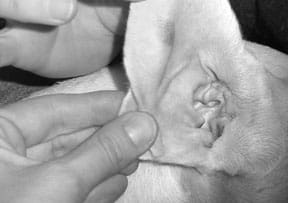
1. Frequently inspect your dog’s ears. Take a peek in there at least once a day. Investigate any abnormality quickly; ear problems can become dramatically painful with rapidity.
2. Solving chronic ear problems requires a body-wide treatment, including improvements to diet. Start with a thorough physical at your holistic veterinarian’s office.
3. While holistic home care is best for preventing ear problems, quick conventional veterinary diagnosis – and sometimes, treatment – may be needed to effectively treat a serious problem.
In many ways it could be said that a dog “leads with its ears.” A dog’s ears are right up front, one of the most noticeable parts of his anatomy, and they are a conspicuous visual reminder that demonstrates and carries much of his character and personality. From the veterinary standpoint, the ears are a good place to begin a physical exam to check for both specific and general diseases.
The shape of the ear is characteristic of the breed, and there are many types of outer ears: large and drooping, as in the Bloodhound or Cocker Spaniel; erect and mobile, as in the German Shepherd or Border Collie; or small and button-like as in a Bulldog or Chinese Shar Pei.
The way a dog carries his ears gives us an insight into how he is feeling physically and emotionally, and the “posture” of the ears is a language unto itself. In other words, by observing the carriage of a dog’s ears, we are given a way to “hear” what he is trying to tell us. In addition, abnormal carriage of the ears may indicate disease or nerve damage, and abnormal ear size (for the breed) may be an indication of multiple genetic defects.
The ear can be divided into four parts: ear flap (auricle or pinna); external ear canal (external auditory meatus); middle ear; and internal (inner) ear. The pinnae are highly mobile and can be controlled independently. More than a dozen separate muscles control the movement of the ear, and the entire area is richly supplied with blood vessels and nerves.
The pinna of the external ear is a funnel-like plate of cartilage that receives air vibrations and transmits them via the ear canal to the eardrum (tympanic membrane).
The ear canal is lined with both apocrine (ceruminous) and sebaceous glands which, in the normal animal, produce a protective coating of earwax (cerumen). In chronic otitis the sebaceous glands become fewer than normal, and the apocrine glands increase in number, in size, and in their production of secretions.
Note that the dog’s ear canal is considerably longer than its human counterpart, and after extending downward, it makes a sharp turn inward toward the eardrum. Thus, complete examination of the ear canal requires an otoscope with special (long and thin) cones. Few dogs tolerate anything being poked into the external ear canal, and dogs with painful ears (from infections or foreign bodies) almost never allow adequate examination without anesthesia.
The eardrum separates the external ear from the middle ear, and it is the area where vibrations sent from the external ear are focused and amplified. There are three small bones within the middle ear – the malleus, incus, and stapes – that transmit the vibrations from the eardrum to the inner ear.
The inner ear consists of two main parts: the cochlea (end organ for hearing) and the vestibule and semicircular canals (end organ for balance). All these can be thought of as a series of tunnels or canals within the temporal bone. Inside the cochlea are specialized hair cells that pick up auditory vibrations and synapse directly with the auditory nerve.
Equilibrium is controlled by electrical impulses that are registered on hair cells located in the three semicircular canals. These signals transmit the current status of the body (head) in relation to the horizon (gravity).
The ear has two functions – hearing and balance – and either function can be disturbed by disease, old age, or nerve disruption from a number of causes.
What a Dog Hears
Hearing can be visualized as waves of energy traveling along molecules in the air, transformed into mechanical energy at the ear drum, then amplified by small bones and finally transformed into the electrical impulses in the auditory nerve – resulting in what the brain registers as hearing.
Dogs have a much different range of hearing than ours, extending into a considerably higher frequency than we can hear. Sound frequency, the number of sound wave cycles every second, is measured in Hertz (Hz). The higher the frequency, the more sound waves per second, the higher-pitched the sound. Humans hear best at around 2,000 Hz; dogs hear best at 8,000 Hz – perhaps the reason they respond better to high pitched cues.
Dog Ears According to Traditional Chinese Medicine
While Western medicine views the ears from the functional standpoint of hearing and balance, Traditional Chinese Medicine believes that the ears are connected to the Kidney Organ system. Poor hearing, common in the elderly patient, is thought to be a consequence of weakened Kidney Jing. (Jing is best translated as the essence or the substance that underlies all organic life.)
Thus, acupuncture practitioners will often treat hearing problems by needling acu-points related to the Kidney. In addition, both the Triple Burner and Gall Bladder meridians pass through the ears and are said to control them, so points related to these meridians may be added to an acupuncturist’s therapeutic protocol.
A system of “auricular acupuncture” has been developed that relies on needles inserted into specific parts of the ear to treat other anatomical parts of the body.
Mild Solutions for the Basically Healthy Ear
1: Squirt about a teaspoon of hydrogen peroxide (the 3% type) in each ear. Let the dog shake and wipe off the excess.
2: Mix 1 cup water, ½ teaspoon sea salt, 1 teaspoon tincture of calendula, if desired. Warm to 101 degrees F. Gently flush using an ear syringe.
3: Mix 3 drops white vinegar with enough pure water to fill a one-ounce dropper bottle. Warm the solution to 101 degrees. Add about six drops per ear. Note: This should feel good. If the ear is inflamed, it may hurt. If pain is evident, dilute with water by half. If the dog still objects, use the calendula formula above.
4: For an acidophilus treatment, start by cleaning the dog’s ears. Mix the contents of one capsule of powdered acidophilus into an ounce of pure water, or use dilute a small amount of liquid acidophilus with water. Pour this solution into the ear. Allow the dog to shake his head, but leave the residue in the ear. Since the ear canal is not a normal habitat for them, the acidophilus organisms will eventually die. (The acidophilus organisms compete with other yeasts, and eventually kill them.) This treatment can be repeated periodically.
5: Almost any herb with antimicrobial, anti-inflammatory, and/ or immune-boosting activity can be used for the main part of an herbal wash, but mullein, marshmallow root, calendula, chamomile, lavender, and Oregon grape root are excellent choices. Use the active part of the herb (for example: marshmallow root, mullein flower, which can be harvested along with the mature cob) and cover several ounces of this with pure, organic almond or olive oil. Let this mixture sit for several days. Strain it, and use the strained oil, several drops per ear.
Herbal mixtures may contain one herb or several. For additional antibiotic activity, you can add a clove or two of garlic to the original mixture. If inflammation or swelling is present, mix with equal amounts of distilled liquid witch hazel. Add several drops of liquid vitamin E per ounce of fluid as a preservative and keep in a cool, dark place. Make and use a fresh mixture after a week or two.
6: To treat a mite infestation, use a simple soothing oil applied directly in the ear canal. Repeat every three days for four to six weeks. Mullein has insecticide activity and can be added to the oil mixture; other herbs may also be helpful, including: yellow dock (Rumex crispus), thyme (Thymus vulgaris), rue (Ruta graveolens), or rosemary (Rosemarinus officinalis). The high sulfur content in garlic may be helpful in killing mites.
There are dozens of commercial ear care products, many of which are “natural.” My favorite has long been Halo’s Ear Wash product – several herbs in a witch hazel base. I’ve heard good things about DermaPet’s Ear/Skin Cleanser, which is a two percent vinegar, two percent boric acid solution. Animals’ Apawthecary has a nice product (Herbal Ear Rinse) which contains cider vinegar, aloe vera juice, vegetable glycerin, witch hazel, organic goldenseal root, calendula flowers, and olive leaf.
Natural Ear Care for Dogs At Home
There are numerous methods of natural care that the dog owner can use to keep her dog’s ears and hearing healthy:
Food for Ears
When we put together a diet to aid in the prevention and treatment of problems located in or around a dog’s ears, it is important to remember that many ear infections are associated with allergies. Choose high-quality foods that do not contain artificial preservatives, flavorings, or food colorings. Consider making a home-prepared diet, or if this is not feasible for you, move up to a higher-quality diet.
If your dog experiences chronic ear infections – and especially if the infections are associated with obvious symptoms of allergies, consider performing a food-elimination trial to investigate particular foods as a potential cause of the allergies.
Antioxidants are crucial for the effectiveness of the immune system, and they will aid circulatory and nerve health in the area of the ears. Consider supplementing your dog’s diet with antioxidants such as vitamins A and E, Coenzyme Q-10, or any number of the culinary herbs, including rosemary (Rosmarinus officinalis), thyme (Thymus vulgaris), and oregano (Origanum vulgare). Ginkgo (Ginkgo biloba), is high in antioxidant activity and has specific beneficial effects to the ear.
Zinc quickens the immune response; vitamin C is needed for proper immune function. Vitamin B complex is essential for healing and has been shown in humans to reduce ear pressure. Potassium helps maintain nervous system health and nerve impulse transmission. In humans, manganese deficiency has been linked to ear disorders.
Ear infections may be linked to hypothyroidism, so you may want to have your dog’s thyroid checked. If the test results suggest hypothyroidism, add to the diet one of the seaweed herbs such as bladderwack (Fucus vesiculosus), dulse (Palmaria palmate), or kelp (Laminaria spp.). Siberian ginseng (Eleutherococcus senticosus) is a good, non-specific herb that offers whole-body adaptogenic qualities that strengthen and balance all organ systems.
Your holistic practitioner can be of invaluable help in this area of supplements. She can help you select foods or products that contain the needed supplements, and she can help you calculate dosages that are appropriate for the weight of your dog and his current condition. (Preventative dosages, for example, are much less than those used to treat an ongoing disease.)
Most importantly, she can help you select a product and dosage protocol that provides enough of the supplement without creating imbalances and/or potentially toxic levels of any one supplement.
It’s very typical for a client to bring me a shopping bag full of supplements. When we read the labels and calculate the dosages, we invariably find duplications of many of the supplements. We almost always toss out about half of the supplements in the bag, and we’re still able to provide all the necessary supplements in appropriate dosages.
Ear Washes
There are several natural solutions that can be used periodically to “wash” or “irrigate” a dog’s ears – to help maintain the normal flora of the ear, and thus help prevent ear diseases. Pour several teaspoons of the solution into your dog’s ear, gently massage around the base of the ear, and then (after he shakes his head) wipe off the excess fluids with a clean cloth.
How often you use an ear wash depends on the environment of your dog’s ear. Long, floppy ears tend to trap moisture, which provides an ideal growing place for microorganisms; small, upright ears that allow plenty of air circulation tend to stay cleaner and infection-free.
To prevent disease from occurring in the floppy-eared dogs, you may need to wash once a week; once a month is probably plenty for a prick-eared dog. When you treat disease, begin with treatments three or four times a day and taper off as the disease resolves.
General rules for ear washes: One of our goals is to keep excess wax and oil from building up and obstructing the ear canal – a simple saline mixture or dilute vinegar wash may be adequate for this. Herbal preparations often have many simultaneous benefits: they ease pain and are calming, many are anti-inflammatory, and most are antimicrobial, typically effective against a wide range of bacteria, yeasts, and fungi.
One of the most common pathogens found in chronic ear infections is a yeast, Malassezia pachydermatis (syn. Pityro-sporum canis). This yeast is one of those oddball bugs; low numbers are normally found in healthy ears, but they can become pathogenic (cause disease) under certain conditions.
The idea is to keep the numbers of Malassezia down, and there are several ways to do this. An acid environment discourages their growth – occasionally use a dilute vinegar wash. Bacteria thrive in an oily, waxy environment, so keep the ear canal clear of excess wax and oil buildup. Many herbs have anti-yeast properties (See herbal section for more information). Acidophilus directly competes with yeasts, and an occasional lactobacillus “ear irrigation” will keep the yeast numbers down.
Ear Massage
There’s almost nothing that will endear you more to your dog than a daily ear massage. (Well OK, a timely food dish may be a little more endearing.) It’s not just that dogs love the ear massage, you’ll be helping improve blood and nerve supply to the region and, according to auricular acupuncture theory, you’ll be enhancing all the Organ systems of the body simultaneously.
A good ear rub is easy to master, too. Simply rub gently around the entire base of the ear. Hold the base of the ear with one hand, take the earflap between fingers and thumb of the other hand, and rub in a circular fashion – from the base of the ear to its tip. Gently stretch the ear from base to tip. Try this on yourself to see how good it feels, and to sense how energizing it is.
Holistic and Alternative Medicines for Ears
Acupuncture
Two aspects of acupuncture are worth mentioning here: 1) auricular acupuncture – inserting needles into the pinna of the ear to treat conditions of the entire body, including the ear, and 2) acupuncture used to treat ear conditions such as infections and hearing loss.
Auricular acupuncture is a recent addition to the classical acupuncture that has been used for centuries, and its methods have not been as well defined as the classic system. In addition, because there are so many anatomic expressions of a dog’s ear, it has been difficult to define the precise locations for insertion of the needles. Observations do show, however, that dogs and humans have similar reflex responses – a sudden jerk of the head or a grimace – when needles are placed in certain ear locations. These can be effective diagnostic clues.
Traditional Chinese Medicine considers the ears to be an important crossroad of the principle Yin and Yang meridians of the arms and limbs, and the earflap is thought to interconnect with all the internal organs and systems.
For conditions of the ear, most acupuncturists will use local and general tonifying and immune-balancing points. Kidney, Triple Heater (TH), and Gall Bladder (GB) meridian points may be added, depending on the symptoms. TH-5 and GB-20 have been used to stimulate declining hearing.
Homeopathy
Homeopathic remedies are directed toward the general and specific symptoms. Specific symptoms would include the appearance and type of ear discharge, along with other noticeable symptoms such as vesicular skin irritations, red eyes, or gastrointestinal problems. General symptoms would include symptoms such as the time of day when the irritation seems worst and the patient’s general emotional attitude during and before a disease condition exists.
Check with your homeopathic practitioner for specific remedies, potencies, and frequency of use, since these depend on the acuteness and/or severity of the disease, the age and general condition of the animal, etc. Homeopathic remedies should not be relied upon to work quickly, and their effectiveness is often dependent on the skill and experience of the practitioner.
Herbs
There are many herbs that are excellent for preventing and/or treating ear conditions. Herbs that have antimicrobial activity typically act against a broad spectrum of microbes – bacteria, yeast, and fungi. Many are also calming, anti-inflammatory, and act to ease pain. Some herbs taken internally enhance the immune system, and their anti-microbial activity may enhance other treatments, but the real benefit of herbal remedies is their use in solutions that are used directly in the ear canal. Some examples of ear-important herbs include:
The flowering tops of mullein (Verbascum thapsus) have antimicrobial properties with a special application for infections of ears, and they appear to have a calming and soothing effect. In addition, the seeds contain rotenone, an insecticidal agent. The most common way to use the flowers is in the form of an oil infusion.
Oregon grape root (Mahonia spp.) is especially useful for treatment of problems related to the ears, eyes, and mucous membranes of the vaginal and urinary tract. Oregon grape root has antimicrobial activity against bacterial, fungal, and yeast infections. For ear infections or ear mites, an oil infusion of fresh or dried roots can be made, and a clove of garlic can be added if desired.
Marshmallow root (Althaea officinalis) is good medicine for alleviating irritations, thanks to its high content of soothing and protective mucilaginous compounds. It is a good herb to consider when treating skin conditions, urinary tract problems, upper respiratory and gastrointestinal disease, as well as for ear conditions.
Marshmallow root has antimicrobial and immune-enhancing properties, and animal studies have shown that it is active against Pseudomonas aeruginosa, Proteus vulgaris, and Staphylococcus aureus, all of which can create especially nasty and chronic ear infections
Witch hazel (Hamamelis virginiana) is an herb with strong astringent properties, and at the same time it seems to be soothing to external tissues. It is thus an excellent choice for the inflamed ear canal that may have become swollen. It has also been used externally to treat earflap hematomas.
Any of the herbs above can be used individually or in combination; garlic can be added if desired.
Ginkgo (Ginkgo biloba) is the world’s most-used treatment for memory loss and degenerative diseases of the brain and central nervous system. It stimulates circulation and has an affinity for the ears, where it is used in human medicine to enhance hearing and to reduce ringing in the ears (tinnitus). It is taken orally. For animals, use the dosage listed on the package, adjusted for the weight of the animal.
Chiropractic
Chiropractic may enhance hearing and the success of other therapies aimed at curing ear diseases. In 1895, D.D. Palmer, one of the founders of early chiropractic in this country, claims to have cured a person of his chronic deafness by one simple adjustment of the patient’s neck. The re-adjusting of misaligned vertebrae may enhance blood and nervous supply to the ear and surrounding areas. Moreover, ear infections often cause tenseness around the neck and jaw, and the resultant tension may eventually twist the vertebrae out of alignment, causing further pain and discomfort.
Ear Diseases and Therapies for Dogs
Otitis Externa
Dogs with ear infections typically shake their heads and dig at their ears, and they may roll along the ground to relieve the itch. A whiff of the ear canal usually reveals the source of the itching, and the odor can vary from foul and rank to sweet and fruity. There may be a visible discharge, varying from clear and serous to purulent (pus-filled) to black and corrosive. The character of the discharge is an important consideration when using homeopathic remedies.
Ear infections can be caused by a number of microorganisms (bacteria, yeasts, and fungi), parasites (mites), and foreign bodies (foxtails, etc.). There are often predisposing factors to instigate the infection, including long, pendulous ear flaps that trap moisture and heat and help provide an ideal environment for bugs to grow; allergies; and accumulation of ear wax and oils in the ear canal creates an environment that encourages Malassezia yeast to grow; secondhand smoke (a higher number of ear infections in children are seen in households where there are smokers, and I would bet that it’s true for dogs, too).
Finally, some chronic diseases (for example, hypothyroidism, hyperadreno-corticism, and again, allergies) apparently predispose dogs to an increased frequency of ear infections. Interestingly, pet dander is one of the most common allergens thought to precipitate otitis in humans.
Otitis externa almost always tends to become chronic, recurring time after time, no matter what conventional Western medicines are used. The bottom line is this: otitis externa is not, generally speaking, a one-time occurrence. In almost every case there is an underlying condition that must be addressed in order to control the otitis.
Conventional therapy includes removal of any foreign body present; cleaning the ear canal; then the use of antibiotics, steroids, decongestants, and antihistamines. Surgery and even hearing aids have been used to counteract hearing loss.
After a thorough inspection of the entire ear canal, cleansing, and removal of foreign bodies, most of the conventional therapies listed above are just what we try to avoid with holistic medicine. In most cases, treatment can be accomplished with any of the alternative medicines – which often are more effective than the Western medicines anyway.
However, it must be remembered that alternative medicines typically take some time to work, and severe cases of otitis externa can penetrate the eardrum and progress into otitis media/interna – which can ultimately lead to permanent hearing loss. Judicious use of antibiotics may be indicated; always check with your veterinarian – and get a second opinion if you think it’s necessary.
My caveat for the use of antibiotics is to make absolutely certain that the antibiotics being prescribed will be effective against the organisms causing the infection. Never use a antibiotic randomly; have a culture and sensitivity run before any antibiotic therapy, or at the very least, make sure your vet has looked at a swab of the ear under the microscope. Most of the bugs can be identified fairly accurately with simple stains that most vets have in their clinics.
Holistic therapy includes a focus on prevention rather than cure. Moreover, if disease is present, holistic medicine uses the whole-body approach (nutrition, recognizing and treating other diseases, etc.) as well as specific medicines – homeopathic, acupuncture, herbal washes, etc. – used to alleviate symptoms or applied directly to the ears.
Otitis Media and Otitis Interna
Be suspicious of otitis media or otitis interna if your dog has difficulty balancing, stumbles and falls, staggers or trips when first getting up, or if he tends to circle in one direction.
These two diseases are nothing to mess with. Most cases of otitis media and interna are the result of an extension of otitis externa through the eardrum. Their presence indicates a good possibility that the eardrum is broken and that the infection is severe and has been ongoing for some time.
If you see any of the symptoms that indicate a lack of balance (such as staggering or falling), see a veterinarian for an accurate diagnosis. You may need antibiotics to get ahead of this disease process.
Mites
Ear mites (Otodectes cyanotis) can occur in dogs, although not as often as in cats. Ear mites are small parasites that roam freely in the ear, and they can drive a dog crazy. (Think about the noise you might hear as dozens of little buggers crawled around in your ear, and you’ll be sympathetic.) The mite-infested ear typically has a dry, crumbly, blackish (like coffee grounds) exudate that can be seen in the ear canal; the mites are (barely) visible to the naked eye.
Mites are generally easy to treat – oils cover the breathing apparatus of the adults and eventually kill them. Some herbal remedies have anti-parasitic activity (Mullein, for example) and can be added to an oil-based treatment.
The life cycle of the mite is three weeks, so treatments should extend through at least this three-week period. Usually dogs acquire their ear mites from cats, so if there are any cats in the family, treat them at the same time you are treating the dog. Puppies seem to be more susceptible than adult dogs, suggesting an immune component to the disease; consider enhancing the immune system if mites are detected.
Auricular Hematomas
The etiology of these often large, blood filled blebs, located between the skin and ear cartilage, is often unknown. [Editor’s note: That wasn’t a typo: A “bleb” is “an elevation of the skin filled with serous fluid.”] Sometimes hematomas will develop when a dog has been shaking his head hard or often – probably due to one of the interior ear problems discussed here. The dog shakes his head so hard that small blood vessels in the ear flaps burst, causing a bleb.
Conventional treatment consists of lancing and drainage, perhaps injections of steroids, and possibly surgery to enhance drainage and healing. About 50 percent of all hematomas recur after the first conventional treatment, and about 30 percent recur after being treated the second time.
Yarrow, used as a tea internally and externally as an oil-based ointment, may be helpful in helping to maintain arterial integrity. Witch hazel, applied topically, may also be of benefit.
Foreign Bodies
When a foreign body has gotten in a dog’s ear, it is almost always in one ear only. The dog will generally hold his head to one side (with the affected ear held down), cry and dig at the ear, and rub it against the ground. The symptoms usually come on acutely, and they can be quite dramatic.
The only way to know if there is a foreign body inside the ear canal is to look down into its depths with a special instrument. My experience has been that this almost invariably requires anesthesia. With proper chemical restraint, it is easy to find a foreign body and remove it, and to cleanse the ears thoroughly and treat them with a soothing herb while we’re there.
Hearing Loss and Deafness
There are a number of factors involved in hearing loss and deafness: infections; trauma and loud noises; many drugs; old age; genetic susceptibility; neural damage; etc. The most common form of hearing loss is called “conductive” hearing loss and it is caused by a blockage of the ear canal – from foreign bodies, infections, or an excessive buildup of cerumen (earwax).
Exposure to loud noises can cause “sensory” hearing loss, and this loss becomes progressively worse as the exposure continues over time. Dogs who are subjected to loud rock or rap music (and no animal should suffer this kind of torture!) will gradually lose their hearing, and the loss can be permanent. Quick impact, high-level noise such as gunshots can also cause hearing loss, and it has been recommended that hunting dogs wear ear plugs, much as the hunter does.
There are many drugs that can cause hearing loss, including aminoglycoside anti-biotics such as gentamycin and amikacin; loop diuretics such as furosemide (Lasix); several anti-cancer drugs; and even high doses of aspirin. Be sure to check with your vet before any drugs are used – to be sure they will not cause hearing loss (and to be sure your vet has actually read the package insert for the drug ).
Diseases such as diabetes, kidney failure, and hypothyroidism may be associated with hearing loss.
As a dog ages, much like his human counterpart, his hearing diminishes. The first signs of hearing loss may be a hesitation to obey commands, or a reluctance to go into strange territory. Old age hearing loss is usually a slow, progressive change, and you may be able to slow it somewhat with good nutrition, antioxidants, and adding some ginkgo to the diet.
An old dog may initially lose only the ability to hear certain frequencies (usually in the upper ranges), so speaking to him in low tones may be helpful. Some people have found that percussive sounds such as clapping can be heard by fairly deaf dogs, so they clap to draw the dog’s attention to hand signals. Realize, too, that hearing loss can create behavioral changes – some old dogs can be startled easily and may snap or bite when surprised.
“Neural” hearing loss is the least common form, and it can be caused by head trauma, blood clots or ruptured blood vessels, or brain tumors.
There is a test called the BAER (Brain Auditory Evoked Response) test that will accurately record hearing loss, and it can be used to detect partial loss, unilateral hearing loss, and total, bilateral deafness. This test is especially beneficial for testing puppies of breeds known to have a high incidence of deafness. Check with your veterinarian for more information.
Dr. Randy Kidd earned his DVM degree from Ohio State University and his Ph.D. in Pathology/Clinical Pathology from Kansas State University. A past president of the American Holistic Veterinary Medical Association, he’s author of Dr. Kidd’s Guide to Herbal Dog Care and Dr. Kidd’s Guide to Herbal Cat Care.
Every day the already dazzling array of options for caring for your dog grows even more. There are myriad modalities in the realm of holistic care, including complementary and alternative options, as well as conventional veterinary medicine, with its low- and high-tech diagnostic and treatment procedures. Which way do you go when your dog has a health concern?
Choosing caregivers
There are a number of ways to integrate holistic and conventional care for your dog. Some veterinarians practice “integrative medicine,” using both holistic modalities and conventional care, in a fully equipped clinic. This situation is the easiest to manage because you are only working with one practitioner. “Unfortunately, some practitioners with [full] clinics are sometimes more conventional that you would hope,” says holistic veterinarian Eugene Aversa, DVM, of Santa Fe, New Mexico.
There are an increasing number of veterinary practices that include vets who practice conventional veterinary medicine and some who use holistic therapies. While you may work directly with two or more vets, these integrated clinics simplify sharing information between the vets. They facilitate active involvement of all parties in the care of your dog.
Unfortunately, these clinics tend to be the exception and not the rule. If you aren’t lucky enough to live close to such a clinic, it’s best to form your own team of veterinarians who are willing to work together. If you are already working with a veterinarian, and you have a strong relationship, open a dialogue with him or her about bringing another practitioner into the mix.
“The thing to do is find a [conventional] veterinarian who’s open minded to holistic and complementary approaches – more and more are,” says Allen Schoen, DVM, who practices integrative holistic animal health care in Sherman, Connecticut. Keep in mind that it is just as important that your holistic veterinarian is open to conventional diagnostic procedures and treatments if you decide to pursue them.
Regardless of whether your primary veterinarian is holistically oriented or very conventional, know his or her limitations regarding care for your dog. What are the clinic hours – is there any availability for emergencies? Does your veterinarian have surgery facilities? What about access to labs and other diagnostic procedures?
How some choose
For Janine Adams, of St. Louis, Missouri, her first call is almost always to holistic veterinarian, Dr. W. Konrad Kruesi. “Unless it’s a life-threatening emergency, I always try to contact Dr. Kruesi before I do anything,” she says. A holistic practitioner based in North Clarendon, Vermont, Dr. Kruesi provides Adams with critical initial guidance on what diagnostic tests to ask for, what treatments to consider immediately, and which to forego.
Adams second call is to her local, conventional veterinarian, Dr. Patrick Tate. He acts as the eyes, ears, nose, and hands for Dr. Kruesi, and runs blood work and any other diagnostic tests that might be necessary. Adams says, “I’m fortunate that both of my vets are very open and willing to work with each other within these parameters.”
After a thorough exam and necessary diagnostic tests at Dr. Tate’s clinic, Adams shares all of the results with Dr. Kruesi. He then formulates the holistically oriented treatment.
Lauren McCall, of Portland, Oregon, usually opts for a trip to her conventional veterinarian for diagnosis and treatment recommendations. Then, depending on the situation, may choose to go with the allopathic recommendations or consult a holistic veterinarian.
“While I generally think holistically, I’m not opposed to a short, sharp shock [with medication] to get the situation under control, then treat the issue holistically,” explains McCall.
When her Bernese Mountain Dog, Byron, was recently diagnosed with cancer, this was the exact approach McCall used. First she took Byron to her conventional veterinarian, who used standard conventional methods for diagnosing the tumor. Then she consulted with a veterinary oncologist to determine the optimal treatment plan for Byron. The tumor was surgically removed, and Byron’s diet was changed and supplemented. However, McCall opted not to pursue further conventional treatments.
“The oncologist wasn’t sure that chemotherapy would be of much benefit to Byron, and it would likely be very difficult for him physically and emotionally. We decided to consult with a holistic veterinarian and pursue an alternate treatment in an attempt to prevent the recurrence of the cancer,” she explains. So far, six months after diagnosis, he remains cancer-free.
In Connecticut, Dr. Schoen focuses on complementary and alternative modalities, but he requires that all of his clients also have a conventional primary care veterinarian. “Whenever possible, I like to have a ‘Western’ diagnosis for a client,” says Schoen. With that, he can then help the client explore the options of conventional versus complementary treatments, including the risks and benefits of each.
Dr. Schoen believes it is crucial to remain unattached to any particular modality or therapy, as he quips, “Don’t let your dogma kill my karma.” Instead, he always asks himself, what’s best to help this animal?
New Mexico’s Dr. Aversa also looks for a conventional diagnosis with a patient, to determine the best course of treatment in any particular situation. “Most of the time it’s pretty clear which road to take,” he explains. Just because you get a Western diagnosis, he says, doesn’t mean you have to use the conventional treatment.
Dr. Aversa may opt for a completely holistic regime, including homeopathy, nutrition, and chiropractic care, or, if appropriate, focus more on a conventional treatment, although he nearly always adds in some level of holistic therapy as support.
Chronic health conditions
When Janine Adams’ late Poodle, Kramer, developed several autoimmune conditions, her conventional veterinarian was running out of options and recommended that she seek advice from a holistic practitioner. After some exploration, she began working with Dr. Kruesi.
Many dog owners converted to holistic care after dealing with chronic health conditions, for which their conventional medical practitioners had no answers. Or, side effects from the allopathic treatments were too detrimental.
For instance, in the case of allergies, Dr. Schoen is likely to try natural approaches first, such as diet changes and supplementation, rather than the conventional allergy treatments including steroids and antihistamines. “Although, each animal is different and each client is different,” he says.
While many chronic health conditions can be successfully treated with holistic or alternative care, Dr. Aversa says, “there are plenty of instances where chronic disease or circumstances require conventional care.”
This is the case with my dogs. Both have Addison’s disease, an autoimmune condition that destroys the adrenal gland, rendering it unable to produce certain hormones. Booker requires conventional medication, as well as regular blood tests, to stay alive. At the same time, he’s received acupuncture, chiropractic adjustments, herbs, nutritional supplements, homeopathic remedies, and other holistic treatments over the years to improve his health.
By combining conventional and holistic approaches, Booker’s medications have been reduced to less than one-third the normal dose for a dog his size. And he’s a happier, healthier dog than if he were just receiving treatments from one side or the other.
Acute crises
“In a true emergency, you shouldn’t be putzing around with remedies at home,” says Dr. Aversa. It’s better to have a veterinarian, holistic or conventional, look at the animal, to ensure you aren’t dealing with a life-threatening condition.
When Adams’ dog, Kramer, developed bloat she rushed him to the emergency clinic. At the clinic, they took X-rays and were successful in decompressing his stomach. He was kept under observation for the night, and released the next day.
In the morning, Adams consulted with Dr. Kruesi. He provided valuable advice to aid Kramer in a swift recovery, and also helped Adams and her husband decide against prophylactic gastropexy surgery (stomach tacking) to prevent torsion in the event of a future bloat episode.
Communication
Some people may be reluctant to tell their conventional veterinarian that they want to (or are already) consulting with a holistic veterinarian. And the opposite may be true as well, for those using a holistic practition-er who are interested in pursuing a conventional Western diagnosis or treatment protocol.
“It can be hard to stand up to an authority figure, but we are our animals’ advocates,” explains Adams. “Besides, when you are up front with your conventional veterinarian about how you prefer to treat your animals, you have the opportunity to inform and educate him or her – helping him or her understand another way of thinking.”
When Adams moved back to St. Louis after a four year absence, she had completely changed the way she cared for her dogs. She contacted her former veterinarian, Dr. Tate, and explained to him that she now considered holistic veterinarian Dr. Kruesi to be the “primary” veterinarian for her dogs, though she needed a local veterinarian in St. Louis to provide physical exams and lab tests and any other services her dogs may need. Not only did Dr. Tate accept the parameters, he has referred clients to Dr. Kruesi. Not all doctors would be so accepting and accommodating.
The most important thing to remember is be informed in advance. This way you can make the best decision possible at the time. Know you have options – and, know your options!
In some dog-related circles, the question of surgical sterilization, otherwise known as spaying (females) and neutering (males), is sure to spark hot debate. Humane associations and shelters are vocal proponents of sterilization for population control, a stand that makes sense considering they’re often the ones who deal firsthand with the tragic consequences of unplanned breeding. But some breeders – an even a few holistic veterinarians – are challenging the need for what they see as knee-jerk spay and neuter policies.
Many breeders, protective of their livelihood, resist any legislative attempts to limit the number of puppies they can legally produce or to mandate sterilization of any dogs. We won’t discuss this position further here.
Our concern today has to do with the assertions of some – voiced publicly by just one veterinarian we know of – that sterilization is wrongly touted as a health and behavior boon for dogs. In fact, the allegation goes, it may even be a threat to their well-being.
We Spay/Neuter for Population Control
Sterilization keeps dogs from breeding indiscriminately. It is de riguer for dogs adopted from shelters to be sterilized before release (or a sizable deposit is taken, refundable when proof of surgery is provided). Humane societies in this country are unanimous in their recommendations for sterilization of companion animals.
According to the Humane Society of the United States, 6 to 8 million dogs and cats enter shelters each year, and at least half of them are euthanized. The organization also calculates that a fertile dog can produce two litters of 6 to 10 pups in a year; that means that the female and her offspring can, theoretically, produce 67,000 unwanted dogs over a span of six years.
By all accounts, widespread sterilization programs have been pivotal to reducing pet overpopulation in the last few decades.
Health Benefits of Sterilization
Many veterinarians and dog experts recommend sterilization for another reason: the health of the dog.
“As far as disease is concerned, it certainly reduces the risks of mammary tumors and ovarian cancer,” says Richard Bowen, DVM, Ph.D, a professor at the Animal Reproduction and Biotechnology Laboratory of Colorado State University. “Anything associated with an active reproductive tract will be eliminated, and that’s a big deal.”
“If you neuter a female dog prior to puberty, she has an almost zero risk of developing breast cancer,” concurs Dr. Olson. Texas A&M’s College of Veterinary Medicine reports that intact female dogs have seven times the risk of developing mammary tumors than do females sterilized early in life.
Male dogs, too, may benefit, with the risk of testicular cancer eliminated – and rates of prostatic cancer reduced.
From a behavioral standpoint, sterilization is widely believed to reduce aggression toward other dogs, territorialism, and roaming, which can in turn protect dogs from the risk of injury associated with those behaviors, such as fights and getting hit by cars. Neutered males, particularly males who were neutered before puberty, are less likely to exhibit inappropriate urine-marking.
Finally, some veterinarians and veterinary behaviorists say that intact, nonbreeding animals suffer stress caused by hormonal drives that are not met.
A Professional Opinion on Spay/Neuter
Myrna Milani, DVM, is the author of seven books on canine and feline health and behavior. The veterinarian, based in Charlestown, New Hampshire, has researched and lectured about spaying and neutering, and doesn’t buy into the “PR campaign,” as she calls it, that responsible owners must sterilize their pets.
“When all of the responsible people neuter their dogs, who’s left breeding?” she asks, answering, “The irresponsible ones.”
Dr. Milani feels it’s unfair that owners are frowned upon if they opt to control breeding by carefully supervising their dogs instead of sterilizing them.
“It is really funny that we’ve equated responsibility with neutering, when in reality you could almost make a case for it being the opposite,” she says. The decision to not sterilize but carefully supervise a dog is “very mature, it takes a tremendous amount of commitment, and it requires a tremendous knowledge of and respect for that dog,” she says.
One reason sterilization is so popular in the United States is that few owners can claim that level of care, says Patty Olson, DVM, Ph.D., a diplomate of the American College of Theriogenologists. She cites Sweden as an example of a society where owner responsibility outweighs sterilization as the preferred choice of birth control.
“In Sweden, 93 percent of dogs are intact,” she says. “They don’t neuter. They have some pretty amazing ordinances by which dogs are controlled, there are very significant fines, and they do seem to have more responsibility. What we’ve had to do in the U.S. was institute something because of, if you will, irresponsibility.”
Sterilization Could Solve Temperament Issues
Beyond the issue of birth control is that of personality. Conventional wisdom has it that sterilized dogs make better pets, are less aggressive, and exhibit fewer behavioral problems.
“Neutering reduces aggression,” says Richard Bowen, DVM, Ph.D, a professor at the Animal Reproduction and Biotechnology Laboratory of Colorado State University. “The earlier you can neuter, the fewer aggression problems you’ll have. Roaming around, urine-marking, sexual behavior toward people and other animals . . . Most of those behaviors are dramatically decreased.”
A study by Sherman et al., published in Applied Animal Behaviour Science (April 1996), found that in cases of non-household aggression where neutering and a head halter were the suggested as remedies, 52 percent of owners reported improvement. An earlier study by Heidenberger and Unshelm, published in 1990 in Tierarztliche Praxis (Feb. 18:69-75), found that behavioral problems in most cases were reduced or eliminated after neutering, with 74 percent of the male dogs showing improvement.
Again, Dr. Milani dissents. Dr. Milani says that most of the dogs she treats for aggression or dominance problems are already sterilized.
“I can count on one hand the intact dogs I’ve seen with behavioral problems in the last 10 years,” she says. “If I have a client who has an (intact) male dog who’s aggressive, I do not recommend they get the dog neutered until after they have a behavior modification program up and running, because otherwise it might make the dog’s behavior worse.”
Dr. Milani says she suspects a “placebo effect” may be occurring: “Somebody has convinced (the owners) that it’s these testicles that are causing the dog’s problem. As soon as they’re out of there, the owner relaxes; and because the owner relaxes, that take the pressure off the dog, so the behavior improves.”
Further, Dr. Milani also believes that sterilization – particularly pediatric sterilization, which is done on very young puppies — may actually cause behavior problems.
“One of the reasons why people are shying away from early neutering of females for behavioral reasons is this condition known as androgenized or masculinized females,” she says. This describes a female pup, born into a predominantly male litter, whose body is awash in testosterone. “So you can actually have a female pup that’s more male than female. If they go through a heat or two, you get that softening effect of the female hormones. Whereas if you neuter them, they’re kind of in a no-man’s land,” she explains.
According to Dr. Milani, these pups have a very difficult time bonding with humans or other dogs and tend to be very aggressive and unpredictable. “I don’t know much in the way of studies…but I think they never make it into the studies because they don’t live that long,” she concludes.
Allegations of Health Risks from Spay/Neuter
Even ardent supporters of sterilization admit that the practice poses health risks. Some of the major concerns include:
• Urinary incontinence. Studies estimate that more than 20 percent of all spayed females will develop incontinence during their lifetimes. Incontinence can develop shortly after surgery or many years later.
• Cardiac tumors. A study by Ware and Hopper (Journal of Veterinary Internal Medicine, March/April 1999) examined over 700,000 dogs’ records between 1982 and 1995 and concluded that neutering appeared to increase the risk of cardiac tumors, especially hemangiosarcoma, in both male and female dogs. According to the study, the relative risk for spayed females was more than four times that for intact females. The risk for castrated males was slightly greater than that for intact males.
• Delay in growth-plate closure. Sterilization, particularly early sterilization, causes the growth plates of the bones to close later. There are fears that this delay can increase the likelihood of fractures.
• Osteosarcoma. In addition to the growth-plate issue, there is growing concern that the lack of sex hormones in a sterilized dog can foster the rise of bone cancer. A 2002 study at the University of Purdue of 683 Rottweilers – a breed known to be at high risk of bone sarcoma – concluded that the risk for bone sarcoma was significantly influenced by the dogs’ ages at sterilization. According to the study, “Exposure to endogenous sex hormones appears to be protective, as suggested by the high risk for bone sarcoma in male and female dogs that undergo gonadectomy within the first year of life.”
The Purdue study quoted data from a 1998 study (Ru G., Terracini B., Glickman L. T.: Host related risk factors for canine osteosarcoma) that found neutered dogs were at 2.2 times greater risk of osteosarcoma than sexually intact dogs.
• Unknow side effects. Dr. Milani also fears that denying the dog the presence of reproductive hormones may have effects that we haven’t yet calculated or considered.
“We know reproductive hormones affect the whole body. If the reason for (an animal’s) physical existence is reproduction, it makes sense that everything evolved to support than function,” she says. Dr. Milani is concerned about cutting off the potential effects those hormones may have on the growing animal, in terms of both physical and brain development.
Not Much Supporting Research
Of the concerns listed above, Dr. Olson and Dr. Bowen acknowledged that increased urinary incontinence is a well-known and well-documented side effect of sterilization in females. But both expressed doubt that the growth-plate issue is a cause for concern.
“That sounds bogus to me,” says Dr. Bowen. “Yes, if you do castration before growth plate closure, it will delay (the closure) so the animals will be slightly larger. But it’s a minor change. For example, one study showed that if a bitch is not spayed, the growth plates close at 42 weeks; if she was spayed at 7 weeks, the closure occurred at 60 weeks.”
“It’s something they determine in millimeters in X-rays – it’s minuscule,” agrees Dr. Olson.
Neither was convinced you could draw a compelling link between the growth-plate closure issue and subsequent problems such as fractures. We were unable to find any veterinarian who was familiar with the data about cardiac tumors and sterilization.
Timing of Sterilization Surgery
Once upon a time, conventional wisdom had it that it was best to allow a female to have one heat before sterilization. However, over the last 10 years there’s been an increasing move to neuter animals at a much younger age – between 6 and 14 weeks – in a procedure called pediatric neutering.
“Out here(on the East Coast, it’s not uncommon for a puppy to show up at a shelter, be taken away from the mother, vaccinated, spayed, and be in a new home by eight weeks of age,” says Dr. Milani. “In terms of animal health, I have concerns about sterilization at any age and these are multiplied a thousandfold when we’re talking about very young animals.”
A number of studies on pups sterilized at two months of age or earlier have showed no serious side effects. However, a study by Spain, Scarlett, and Houpt, published in the February 1, 2004, edition of the Journal of the American Veterinary Association, suggested that pediatric sterilization may have negative effects on females.
“Because early-age gonadectomy appears to offer more benefits than risks for male dogs, animal shelters can safely gonadectomize male dogs at a young age and veterinary practitioners should consider recommending routine gonadectomy for client-owned male dogs before the traditional age of six to eight months,” wrote the authors.
“For female dogs, however, increased urinary incontinence suggests that delaying gonadectomy until at least three months of age may be beneficial.”
What’s Best for Your Dog?
Unfortunately, there’s no easy answer here, and the final decision is a very individual one. The bottom line is that sterilization is a surgical procedure that fundamentally alters your dog’s physiology, and as such carries some risks. However, it’s also an undeniably effective form of birth and population control, and one that enables owners to be more relaxed about their dogs in sexually mixed company.
We’ve spent enough time in shelters to be gravely concerned with the issue of dog overpopulation. However, we also advocate strong owner responsibility and care, and are very sensitive to issues that might compromise the health of our canine companions.
If you choose not to sterilize your companion dog (or choose to delay his or her sterilization until well after puberty), it is imperative that you ensure that he or she is contained in a safe, secure environment and is never – repeat, never – given an opportunity to engage in unwanted breeding. That means keeping females in heat in the house or in a secure kennel during estrus; ensuring that intact males are not physically capable of breaking out of your yard and have no chance of dashing for freedom through an open door; leashing your dogs at all times when outside the home, kennel, or yard; and taking any other precautions necessary to minimize risk. If you cannot guarantee constant vigilance by both you and other family members, you should have your dog surgically sterilized.
If, in contrast, you are concerned about the potential risks outlined above, you may wish to wait until your dog is at least six months old (or, for females, has gone through at least her first estrus) before the surgery. Doing so would give the secondary sexual hormones an opportunity to work their “magic” on the dog’s physiology, potentially protecting the dog (to an as-yet unknown extent) against the development of urinary incontinence, cardiac tumors, osteosarcoma, and other issues concerning the bone growth plates. Of course, you must be hypervigilant against unwanted breeding until the dog is sterilized.
C.C. Holland is a freelance writer in Oakland, California, and regular contributor to WDJ.
1. Eyes respond well to natural health prevention methods, so keep them healthy with nutrition, exercise, care of the immune system, and avoidance of toxins and stressors.
2. Use alternative therapies – by themselves or in combination with conventional medicine – to treat short- or long-term eye problems.
The dog’s eye is pretty much a garden-variety mammalian eye, with some notable adaptations that have evolved over the millennia. It is a globe with two fluid-filled chambers (anterior and posterior). The chambers are separated by the lens, the structure that helps focus light beams onto the rear part of the eye, the retina. The eye’s outer, clear surface, the cornea, offers protection to the inner eye and helps the lens focus light onto the rear of the eyeball, the retina.
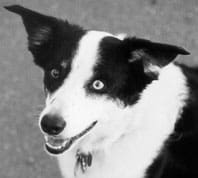
Looking into the healthy dog’s eye, you’ll see a dark center (pupil) surrounded by a colored ring known as the iris, and outside the iris is the white sclera. The iris is some shade of brown in most dogs, but some dogs have one or two blue eyes. Attached to the iris are muscles that function to open or close the lens, letting in more or less light, depending on the available light.
Dogs have a prominent third eyelid (nictitating membrane) located at the bottom of the inner part of the eye, between the lower eyelid and the globe of the eye. The third eyelid is thought to offer protection for the eyeball and to help in removing foreign bodies. Third eyelids are normally concealed beneath the lower eyelids, but one or both may become prominent with certain diseases, for several hours after general anesthetic, and with irritation from a foreign body.
Dogs have upper and lower eyelids, and irritations or scratches may arise when the hairs on these lids project toward the eyeball – a condition either genetic or a result of a wound that scarred the lid. The muscles surrounding the eyeballs (the orbicularis oculi) move the eye’s globe so it can be directed toward what the dog wants to see.
The Function of A Dog’s Eye
While the human has evolved as a diurnal (active in the daytime) species, dogs initially evolved as nocturnal or crepuscular (active at dawn and dusk) predator species. As a result, we humans have great visual acuity, color perception, and depth perception, but we do not see well in the dark.
Dogs, in contrast, have well-developed night vision and their sight is well adapted to detect movement. There is some trade-off between visual acuity (the ability to see detail) and the ability to see in the dark. The dog’s visual acuity has been estimated at six times poorer than an average human; admittedly, this is a bit of a guesstimate (how do you get a dog to read an eye chart?).
Compared to the human eye, the dog has a larger lens and a correspondingly larger corneal surface, enhancing its ability to capture light and thus see in reduced lighting conditions. In addition, behind the dog’s retina is a reflective surface, the tapetum, which further enhances low-light vision. The eerie glow you see when a beam of light hits your dog’s eyes at night is the reflection from the tapetal surface of his eye. The tapetum is also easy to see during a routine eye exam using an ophthalmoscope.
Much like the human retina, the dog’s retina is lined with rods (the sensing cells adapted to work best in low light and used for motion detection) and cones (cells that work best in mid to high levels of light, with the ability to detect color). The proportion of rods to cones is much higher in dogs than humans, thus the enhanced night vision in dogs.
In addition, dogs only have two types of cones (dichromat), whereas humans have three types (trichromat). This expansion of cone-cell types allows the human to see a wider spectrum of color; the dog’s world probably consists of yellows, blues, and grays, while the human color range expands into the reds and greens.
A dog’s lateral eye placement allows better wide-angle vision but hinders depth perception and close-up viewing because there is minimal visual overlap between the two eyes (called binocular convergence). Thus, your dog can easily snag a ball moving sideways but may have trouble catching a ball tossed right at his nose.
Specialized eye exams can detect the focal point of the lens – whether it is right on the retina (normal or emmetropia), in front of (myopia or nearsightedness), or behind it (hyperopia or farsightedness). At one time it was assumed all dogs were myopic, but judging from new information on these evaluations, most dogs are likely very near normal (emmetropic). Some breeds, however, are especially prone to being myopic. (Of the examined dogs, the breeds that had a higher incidence of myopia included German Shepherds, Rottweilers, and Schnauzers.)
As a person ages, his lenses “harden” and may eventually develop cataracts. As the lens hardens, its ability to bend (or “refract”) the incoming light to focus it on the retina diminishes, so the person’s visual acuity is diminished over the years and the person typically becomes myopic. Dogs, too, experience this hardening of the lens (see information on cataracts below), and conventional medicine often recommends surgically removing them. However, recent information indicates that after surgery, without the refractive ability of the lens, dogs become terribly hyperopic. Recent advances have produced intraocular prosthetic lenses that help correct for this loss of focusing ability.
The Other Senses in Dogs
Dogs “see” with much more than their eyes; in fact, in comparison to humans, dogs rely far less on their vision. While the dog’s visual perceptions are relatively fuzzy and less colorful compared to ours, the canine nose and ears provide him with profoundly more sensation than do ours. Dogs may smell us long before they see us, and they can hear sounds that don’t even touch our zone of hearing. (More about these senses/organs in later articles.)
In addition to these differences between species, though, we have to consider that the dog’s (and our) eyes are backed up with a myriad of body senses that add to what they actually see. Animals “see” with their entire bodies, a sense that is augmented in haired areas of the body – the “feeler” whiskers on the snout, for example.
Watch dogs at play and it is quite apparent they have an incredible sense of balance. We know that diminished vision (or dizziness) adversely affects this ability to orient the body to the horizon. The sense of balance is enhanced by the nerve endings on the pads of the feet, the joints, and the nerves throughout the spine. All these send kinesthetic information back to the brain, which the animal then processes into information that gives him the current balance status.
There are even more, often subtle, ways of “seeing” that we know little about. What is it, for example, that a dog “sees” in an individual that makes him growl in distrust? Do some (or all) dogs see auras? How is it that the pineal gland, located deep inside the brain, “sees” nature’s cyclic differences in light patterns to trigger reproductive and sleep patterns?
An Alternate Look at Canine Eyes
We can describe the eye in terms of anatomy and physiology. But there are other ways of understanding the eye, and in terms of natural health, these ways may be even more important than the mechanistic descriptions.
Traditionally, the eye has been seen as the portal to the animal’s spirit or soul, and in all cultures there is an abundance of folklore about the eyes: about the connections between eyes and the gods, the relationship of the eyes and the sun or moon or other natural phenomena, and about the eyes as they signify the well being of the animal and of the species.
Many holistic health practitioners also consider the eyes to be sentinels – expressing on the outside the current inner health status of the animal. A healthy animal has eyes that literally shine – giving off a radiant vitality that speaks of whole-body health. A common comment I get from clients after we’ve taken their dog’s pain away with chiropractic and acupuncture is, “I’m not sure he’s walking a whole lot better, but his eyes have their old gleam back.” And, I’ve had clients say, “Doc, you’ve given me my dog back. I can see his old self in his eyes.”
In contrast, a sick animal often mirrors his illness through his eyes. Obvious symptoms include eye discharges or color changes. Reddened eyes, for example, can indicate any number of inner diseases, and severe liver disease may change the normally white sclera to a yellowish tinge. An animal who is sick oftentimes has eyes that have simply lost their luster, seem to be darker or greyer, and/or have lost their ability to mirror vital energy.
Chinese medicine gives another perspective on the eyes. In Chinese medicine the Liver organ system opens into the eyes, and the state of all the “organs” is reflected in the eyes because the pure Jing Qi (activated source of life) of all the organs “pours through the eyes.”
The general appearance of the eyes is especially important for perceiving the animal’s spirit (its Shen). Lively eyes indicate that the Jing (source of life) is uninjured. Stiff, “wooden,” inflexible eyes show a condition that is considered “deficient.” If the whites of the eyes are red, it is a sign of an excess (or “heat”) condition, caused by either “external influences” or an “excess of heat” from an organ, usually the liver.
Additionally, some methods use the eyes specifically as an aid to diagnosis. Iridology, for example, claims to be able to diagnose diseases by observing the iris. According to this method, areas of the iris are correlated to organs and areas of the body. When there is a disease within the body, it will be reflected as a change in color or shape in the corresponding area of the iris.
Finally, the time comes at the end of an animal’s life when all vitality seems to be drained, when the eyes seem to be emptied of nearly all of their normal energetics. It’s as if the eyes are telling us it is now time to go on to another life – and veterinarians I know use this eye-sensitive way to help clients decide when it’s time for euthanasia.
Natural Eye Care for Dogs
You can care for your dog’s eyes naturally. As with any organ system, preventing diseases is always much easier than trying to cure them after the fact.
• Exercise and the eyes. Whole-body exercise is a prime component of any program of natural eye care. The eye’s structures are extremely sensitive to oxidative stress and to other toxins. Exercise is our first line of defense and perhaps our most natural antioxidant, helping move oxygen through all the eye’s structures and helping eliminate a buildup of toxins.
For healthy body, mind, spirit, and eyes, walk with your dog for at least 20 minutes a day, and (if your vet has checked him out as basically healthy) occasionally give him some anaerobic exercise by tossing the ball or letting him take a good swim.
• Food for the eyes. Nutrition is equally important as exercise, and there are some general eye-care nutrients as well as some that have specific healing qualities for eyes.
Good food for the eyes includes a healthy dose of antioxidants such as vitamins B, C, and E; beta-carotene (and other carotenes such as lutein); co-enzyme Q10; and alpha-lipoic acid. Antioxidants are abundant in green leafy vegetables and other highly colored foods such corn, squash, and egg yolks, and many herbs (including the common culinary ones) are high in antioxidant activity. Zinc, selenium, and magnesium are also important “eye nutrients.” Water is a critical eye nutrient because the membranes of the eye are susceptible to drying when the animal is dehydrated.
Lutein and alpha-lipoic acid have been mentioned in recent human medicine literature as being especially beneficial for eyes, with the usual caveat that results are still preliminary.
• Immune system care. Many holistic practitioners feel there is a connection between many (if not all) chronic eye conditions and an imbalanced immune system. In addition to the antioxidants mentioned above, herbs such as echinacea (Echinacea spp.) and Siberian ginseng (Eleutherococcus senticosus) can enhance and rebalance the immune system.
To improve eye conditions, try to avoid anything that compromises the immune system: excess stress; food additives such as synthetic preservatives and artificial flavors and colorings; environmental toxins such as pesticides and herbicides; and the excess use of vaccines.
Since the liver is a major detoxifying organ and (according to Chinese medicine) directly connected to the eyes, it is important to keep it healthy. Nutrients such as the B-vitamins, choline, and inositol enhance liver function. Herbs that are beneficial to the liver include milk thistle (Silybum marianum), turmeric (Curcuma domestica), and dandelion root (Taraxacum officinale).
Practitioners of Chinese medicine believe that anger and depression adversely affect the liver and these emotions also stress the immune system. If a dog is angry (for constantly being left home alone, for example) or depressed (possibly from the recent loss of one of his companions), consider flower essences or aromatherapy for their remedial effects on the emotions.
• Eye massage. One way to ease eye tensions and to improve circulation to the eye is to give your dog a massage. Use your fingertips to make a circular motion that begins at the corner of the eye and moves clockwise around the bony structures surrounding the eye. Let your fingers gently dip into tissues surrounding the eye; located here is the Orbicularis oculi, the muscle mass responsible for rotating and turning the eyes.
Concentrate on the corners of the eye (both lateral and medial). Do this circular massage several times, first clockwise, then counter-clockwise – as long as your dog enjoys it. Then, gently lay your fingers over the eye and very gently add pressure to the eyelid. (Practice on yourself first to see how much pressure is comfortable.) This very simple massage not only is relaxing and rejuvenating to the eyes, it stimulates several key acupuncture points.
A continuation of the eye massage is to massage areas that contain key eye-related acupuncture points and “trigger points” (areas that are sore when the associated organ is affected). Give your dog a general neck massage along the sides (from the mastoid bone to the sternum) and upper part of the dog’s neck (from the base of the skull to the shoulders); massage deeply around the upper shoulders; and also massage along the muscles where the two jaw bones attach.
Make a Natural Eye Wash for Your Dog
For mild eye irritation caused by dust or other irritants, make a simple, soothing salt solution, or brew this herbal bath made from eyebright (Euphrasia officinalis). Mix ¼ teaspoon of sea salt into a cup of distilled or filtered water. For the herbal eye wash, use one teaspoon of the herb in a cup of water, boil, strain, and add ¼ teaspoon of sea salt into this cup of brew.
Use a clean cloth or gauze soaked in the solution to clean away crusts and secretions from the eyes and lids, or place several drops directly into the eye. This solution can be used frequently as an eye wash and for its soothing properties, and it can be used to remove simple intruders such as dust or airborne irritants. After the eyes are clean, add a drop of soothing, fresh, pure almond oil to each eye. (Make sure the oil used is not essential or aromatherapy oils.)
Holistic Medicines for Dog Eyes
As a general rule holistic medicines function extremely well for treating chronic ocular problems, and western medicines may be more appropriate for some of the acute or traumatic conditions.
Cataracts are an example of a condition that typically arises slowly and gradually, over time. Preventing their occurrence with holistic methods (nutrition, herbs, and food supplements) is the best course of action. Once they have developed, western medicine might recommend cataract surgery to remove them. But I personally would use this only as a last resort, considering holistic options first, whenever possible.
On the other hand, if a dog has just been kicked in the eye by a mule and there is immediate swelling and perhaps blood, I’d make a quick trip to the best eye specialist I could find.
A red eye (conjunctivitis) might be an example of a case that is in the gray zone – whether you should consider western medicine, alternative therapies, or consult a veterinary ophthalmologist will depend on the severity of the case, whether it came about acutely or over time, and your own gut feelings for what you feel would be the right way to proceed.
Conventional Western medicine tends to be fast-acting, but typically addresses conditions only at their surface, palliating symptoms with little concern for the underlying cause, which results in a lack of deep healing. Alternative medicines are, as a general rule, slower to act, perhaps because they tend to delve deeper into the cause of the condition. While adverse side effects can occur with any medicine (or almost any substance, for that matter), they occur far less frequently with alternative medicines. Some of us feel that many of the conventional Western medical methods actually create long-term, chronic problems.
Acupuncture has been successfully used to treat many eye conditions. Keratitis, chronic conjunctivitis, and all sorts of eye irritations typically respond favorably to acupuncture, and cataracts or even blindness may respond.
A typical acupuncture approach to eye conditions might seem strange to a western-trained practitioner. Chinese medicine visualizes the eyes as connected to the Liver (an “organ system” concept that correlates somewhat, but not entirely, to Western medicine’s understanding of the form and function of the liver).
An acupuncturist might therefore diagnose a condition of conjunctivitis as an example of excess/heat of the Liver, and her needling points would be positioned to bring the Liver back into balance and to further bring the whole body back to a state of harmony of Yin and Yang.
Many healing herbs can be applied topically to the eyes and have proved to be successful for treating all kinds of eye conditions. In addition, herbs can be taken internally for their nutrient value – vitamins, minerals, and antioxidants.
Some herbs, notably bilberry (Vaccinium myrtillus) and eyebright (Euphrasia officinalis) are reputed to have a direct effect on the eyes when taken internally. In addition, many herbs enhance liver function and the immune system, the other important components of overall eye care. [Editor’s note: Dr. Kidd’s book, Dr. Kidd’s Guide to Herbal Dog Care, contains much more information on herbs for dogs.]
At first glance it may seem that chiropractic adjustments would have no effect on the eyes. But the eyes are, after all, connected directly to the brain. Trigger points along the neck muscles may refer to conditions occurring in or around the eyes, and these trigger points may be due to underlying misalignments of vertebrae. So, in addition to massage, chiropractic adjustments may alleviate these trigger points and concurrently help eye conditions.
Common eye diseases, diagnoses, and natural treatments Following are brief discussions of the diagnoses and treatment protocol a holistic practitioner might use for the most common eye diseases of dogs: eye irritants, conjunctivitis and keratitis, cataracts, and dry eyes. Remember that every case presents its individual problems and solutions, and that there is no one-treatment/dosage-fits-all in holistic medicine. Remember too that holistic medicine (at least as I define it) includes the possibility that we may use some of conventional Western medicine’s methods as well those normally considered alternative.
All the treatments listed below assume that, along with these treatments, we will also be doing some or all of the above mentioned therapies: periodic cleansing and soothing eye washes; nutrient and herbal support; massage; exercise; enhancing the immune system and avoiding anything that might diminish its abilities; and giving attention to the liver as it is associated with the eyes.
Finally, I absolutely recommend that you immediately see a veterinarian (who may want to refer you to a Board Certified Ophthalmologist) whenever the eye symptoms have a sudden onset; you see blood, either around the eye or within the globe itself; the eyeball itself appears swollen or the eyelids are severely swollen; and the pain or irritation is driving your dog nuts.
• Eye irritations. Intruders into the eye can be almost anything from dust particles, pollen, irritating chemicals (pesticides, herbicides, etc.), and smoke to larger splinters, thorns, or plant awns (such as foxtails). A common, temporary intruder, especially for inquisitive puppies, is a cat’s claw. The extent of the damage caused by these intruders depends on whether they have scratched or ulcerated the cornea and on the amount of pain or irritation they produce.
Signs that your dog has acquired an eye irritant include tearing and redness; whining, scratching at the eye(s), rubbing on the floor; swelling of tissues surrounding the eye(s); prominence of the third eyelid(s); and if the condition has been ongoing for a while, a mucoid (gunky) or purulent (pus-containing) discharge.
If only one eye is affected, the irritant is likely limited to that eye (think foreign body such as a fox tail here, or irritation from a scratch). If both eyes are affected, it is likely from an environmental irritant, but with bilateral involvement we also have to consider the possibility of generalized disease.
Removal of the irritant is, of course, the first step. For dust particles and mild chemical irritants, the eye wash listed earlier will probably suffice. Larger particles may need to be removed mechanically and this often requires anesthesia. It always surprised me the number of seemingly huge foreign bodies (oftentimes foxtails) I removed from behind the third eyelid when I was managing an emergency clinic in California. These are typically hidden from view and require anesthesia to remove.
If the redness and irritation persist after you’ve washed out the irritant, there may be a scratch on the cornea. Have your vet stain it to be sure, and use the follow-up treatment that is appropriate for the extent of the damage.
• Conjunctivitis and keratitis. Conjunctivitis is inflammation of the membrane that lines your dog’s eyelids and the front of the sclera; keratitis is inflammation of the cornea. The presence of either of these diseases may indicate a generalized disease or one limited to the eyes, and their symptoms are much the same as those that occur with irritants (perhaps without the intense pain). Conjunctivitis and/or keratitis can be caused by any number of infectious agents – bacterial, viral, or fungal.
Some herbs have antibiotic activity, and herbal medicines are typically effective against a broad range of potential pathogens. For mild conjunctivitis, a soothing tea with additional antimicrobial activity can be brewed using one or more of the following herbs: chamomile (Matricaria chamomilla), calendula (Calendula officinalis), elder flowers (Sambuscus nigra), or Oregon grape root (Mahonia spp).
Strain the brew and soak a clean cloth or gauze to be used as a compress over the eye, or put several drops directly into the eye several times a day.
In Chinese medicine the most common cause of conjunctivitis is Liver Heat. Acupuncture can be used to “calm” the heat and restore immune system balance.
• Cataracts. A cataract is a spot on the lens (or over the entire lens) that has lost its transparency. When a dog’s pupils appear blue or gray in normal light, he likely has cataracts. (A scar on the cornea – from an old, healed wound, for example – may also appear as a gray or blue spot. Your vet can tell whether you are dealing with an old scar or cataracts.) Cataracts develop gradually, typically over several years.
In humans almost everyone over the age of 65 has some degree of opacity, and after 75, cataracts are common. Cataracts usually occur in both eyes, are painless, and almost never cause total blindness. While they are commonly a factor of old age, cataracts may also be caused (or precipitated) by trauma, chemicals (especially steroids), X-rays, and high blood sugar as observed with diabetes mellitus.
Conventional therapy consists of removing the lens surgically, but cataracts are an example of a condition that may respond very well to alternative therapies.
Nutrition is especially helpful, concentrating on antioxidants: alpha-lipoic acid, Coenzyme Q10, and lutein (the carotenoid that is concentrated in the pupil), have all been mentioned as especially important here. In addition, vitamins A, C, and E are important, as is zinc and the B vitamins. Make sure the dog drinks plenty of water, to prevent the membranes of the eye from dehydration.
Good herbs to add to the diet include eyebright and bilberry, and any others with antioxidant activity. (Almost all the common culinary herbs have significant antioxidant activity, making them a good nutritional supplement for their medicinal quality as well as for their ability to stimulate the aging appetite.)
Acupuncture might be helpful for improving circulation to the head, immune-system function, and to promote healing.
• Dry eyes and arthritis. Tears are not just water. They have three separate components: oil (from the Meibomian glands in the eyelids); mucus (from goblet cells deep inside the eyelids); and watery tears (from the lachrymal glands located in the conjunctiva of the eyelid). Tears wash away intruders and lubricate the eyes and lids.
Dry eyes can be caused by eye diseases or systemic conditions, and evidence is mounting that common causes are related to other chronic and immune-mediated medical conditions such as arthritis, diabetes, and systemic lupus. Many medications, such as antihistamines, antidepressants, diuretics, gastrointestinal medications, and cold remedies, can also cause dry eyes.
Symptoms of dry eyes – the result of corneal drying and possible ulcerations – include redness, pain and itching, and even excessive tearing at times. Diagnosis of dry eyes is confirmed by a test called a Shirmer test which uses a test strip of paper placed on the lower lid to measure the production of tears.
Conventional treatment consists of restoring the tear film with artificial tears. There are three types of artificial tears: preserved (with benzalkonium chloride or EDTA), transiently preserved, and nonpreserved. Preserved tears, while perhaps the safest in avoiding potential contamination, can be irritating to some patients. Transiently preserved tears are more cost-effective while being minimally irritating. Nonpreserved tears are meant for single-dose administration and are the most expensive.
Similasan eyedrops, a homeopathic herbal preparation containing apis, euphrasia, and sabadilla, can be substituted for the other artificial tear preparations.
Nutritional support is especially important for treating dry eyes. Antioxidants are very helpful. Be sure to include vitamin A or other carotenoids (those with a vitamin A deficiency often have dry eyes, skin, and hair); B vitamins; zinc; magnesium (dilates the small blood vessels that bring blood to the tear glands); and calcium. Again, make sure the dog drinks plenty of water.
Since there is good evidence of a connection between dry eye and arthritis, when treating dry eye, many holistic practitioners add supplemental therapies for arthritis from the outset, such as glucosamine and chondroitin sulfate.
Veterinary Ophthalmology
Board Certified Veterinary Ophthalmologists are veterinarians who have taken extra training in the specialty of ophthalmology, and their expertise is invaluable in many instances. They are especially helpful for treating severe emergencies and for providing specific diagnoses of problem cases. They see enough cases that their diagnostic and treatment capabilities far exceed those of the general practitioner veterinarian. (I saw quite a few traumatic eye cases when I ran an emergency clinic, but I still felt more comfortable when the ophthalmologist had re-checked my diagnosis and treatment.)
While most ophthalmologists may have not had training or experience in alternative medicines, their initial input is often invaluable, and I’ve generally found this group to be accepting of alternative methods. If you are concerned about your dog’s progress, or if you have any questions, have your vet refer you to a Board Certified Veterinary Ophthalmologist – they can be found in most large cities and almost all veterinary schools.
Dr. Randy Kidd earned his DVM degree from Ohio State University and his Ph.D. in Pathology/Clinical Pathology from Kansas State University. A past president of the American Holistic Veterinary Medical Association, he’s author of Dr. Kidd’s Guide to Herbal Dog Care and Dr. Kidd’s Guide to Herbal Cat Care.
We hear about a lot of amazing people who are doing great deeds for and with dogs – people involved with rescuing and fostering dogs, search and rescue, training service or therapy dogs, etc. We also know that dog lovers are asked, frequently, to donate money to these and many other animal-oriented good causes. But because our primary mission is to provide our readers with information they can use to benefit their own dogs, we don’t often highlight these admirable canine-oriented social services in the pages of Whole Dog Journal.
We’re making an exception for the Pet Fund, largely because it’s possible (but we hope it doesn’t happen) that the organization could provide you or someone you know with a lifesaving service someday.
Saving lives In its simplest description, the Pet Fund pays for urgent veterinary care for pets whose owners cannot afford it.
The people behind the Pet Fund deplore the fact that dogs (and other pets) are sometimes euthanized, relinquished to shelters, or suffer without medical care because their owners cannot afford expensive surgery or emergency vet visits. Pet insurance programs are available, but often even these programs cannot cover the total cost of necessary medical care. The Pet Fund can, for a limited number of qualified owners, step in and make a huge difference, sometimes with only a modest grant.
Here’s how it works. Either a participating veterinarian or an individual contacts the Pet Fund. The veterinarian discusses her diagnosis, prognosis, and recommended treatment of the animal needing assistance with a Pet Fund staff member. Depending on the level of funding available and the urgency of the needed treatment, the Pet Fund staff decides whether or not to fund the animal’s care, based on several factors.
The decision is based on the stated financial need of the owner, the opinion of the treating vet as to the medical necessity and urgency of the treatment needed, and the demonstrated capability of the animal owners to be responsible for their animals.
According to Karen Leslie, Executive Director of the Pet Fund, “The owner’s responsibility is crucial, since we will not fund treatment for animals whose owners do not seem to be able to care for the animals’ basic needs now or in the future. One of the greatest benefits of the Pet Fund is keeping animals out of shelters, so giving funds to irresponsible owners would not accomplish this goal. There is a significant difference between pet owners who are responsible but have incurred financial difficulties and irresponsible owners who view their animals as objects and unnecessary expenses.”
If the funding needed for a particular course of treatment is available and approved after the consultation with the veterinarian, the Pet Fund staff informs the vet of the level of funding that will be granted. (Funds are dispersed only to treating veterinarians, never to individuals.) The most urgent cases are funded first, with other less urgent requests put on a waiting list for available funding.
The people behind the Pet Fund are clear that its intent is not to grant funds for any “heroic” lifesaving measures which would cause unnecessary suffering to animals, nor to fund basic medical care, such as vaccinations, spay and neuter surgeries, or routine veterinary care. “We feel it is the responsibility of all pet owners to budget for these expenses,” says Leslie. “The Pet Fund can best serve in urgent situations where serious medical treatment is needed beyond routine care.”
Other goals Recognizing that preventive care could help many pet owners avoid many future medical problems for their companion animals, the Pet Fund provides information about available products, services, and healthy pet practices on its Web site. Information about pet insurance plans and financial services (such as savings plans and debt counseling agencies) is also made available to interested pet owners.
“If we do not provide a way for the pet owner to develop financial freedom, we have not totally remedied the situation or accomplished our goal,” says Leslie. “It’s a large part of our objective to ensure that our clients provide a more secure future for their companion animals by developing their resources in order to become independent and stable. The Pet Fund therefore truly benefits both animals and people.”
At this point, most of the Pet Fund’s grants fall into the $500 range, making up the difference between the cost of an animal’s treatment and what each client is able to pay. The grants have provided assistance to hundreds of companion animal owners; we think helping the Pet Fund reach its goal of helping thousands of animals is a great idea.
“Is he something special, or just a mutt?” the man asked, as I passed him on the trail. Trigger, my 65-pound Australian Shepherd mix stood beside me with tail wagging, ready, as always, to meet this inquisitive stranger with the blunt question of parentage.
As one of the first people to hike in a national park with a service dog, I was very aware that Trigger and I had the responsibility to set a good example and to educate people about service dogs in national parks. Often when we stepped off the trail for a break or to let people pass, we got questions and I always took the time to answer them as accurately as possible. A lot of questions were about service dogs:
• What kind of service does he perform? (This, as he stands there wearing a pack!)
• Did he go to service dog school?
• Where do you get a pack dog?
While many dogs are trained by professionals and there are schools for the most common functions that dogs perform (such as guide and sound alert), many more dogs are trained by owners to perform the services necessary to meet their own specific needs. When I adopted Trigger I didn’t know he was to become my service/pack dog. But as our relationship developed and his training progressed, I also learned that I qualified under the Americans With Disabilities Act to declare him as my service/pack dog. This made it possible for me to take him into national parks and other places where dogs as pets are not allowed.
Defining Disabled
If you hike with a service dog, one personal question that you should be prepared to deal with is obvious: Why do you need a service dog? The details and nature of your response may depend on who is asking and why.
Many people do not understand how an individual can hike five or six miles over mountainous terrain and be disabled. When I meet people in high mountain camps or on the trail, I tell them about the ADA, which mandates a much more user-friendly (though relatively untested) definition of disability than that of the federal government for a Social Security disability grant. The ADA uses the terms “restriction,” “limitation,” and “impairment” all interchangeably with the word “disabled.”
I have hiked and backpacked all my life, but I am now substantially limited in what I can carry. The purpose of the ADA is to ensure that people with limitations are not denied full and equal enjoyment of the “goods, services, facilities, privileges, advantages, or accommodations” offered by a place of public service. While the ADA does not require you to show proof of your restriction, I inform park superintendents that I qualify under the ADA for pack-carrying assistance, so they can notify their rangers of this policy exception.
Enhancing the Outdoor Experience for You and Your Dog
If you are an experienced outdoor person and you have a sturdy, well-behaved dog, he has the potential to be of substantial help to you. I used to backpack, but now I am retired, and only able to continue hiking with pack-carrying assistance. Now I like to hike between established camps where meals and primitive shelter are provided.
Well before each trip, Trigger and I start to condition ourselves to carry more weight and hike farther. The maximum pack weight recommended for a dog is 25 percent of its body weight, but that doesn’t mean that every dog will carry that much. Trigger weighs a slender 65 to 70 pounds, but he doesn’t want to carry 15 pounds. He willingly carries about 13 pounds after several months of gradual conditioning. Most of the time, Trigger only carries about seven or eight pounds on a day trip in the winter, and less in the summer. Trigger carries all the water we drink in a day, so his load lightens as we travel.
Some people think that dogs should be banned from public land because they may jump on people, bark at or chase animals, and are generally disruptive or incompatible with nature. I have to agree that I have seen my share of dogs who are out of bounds and out of control, but contrary to what people may think, a well-trained dog is neither disruptive nor incompatible with nature. Animals aren’t any more afraid of a dog than they are of a person, unless they are being stalked or chased.
Trail training would not be complete without careful desensitization to lots of distractions – people, other dogs, bicycles, horses, and mules. I attended canine agility meets and horse shows at fairgrounds, to give him exposure and training to reinforce his steady behavior around livestock and in distracting environments.
Early in his training, when Trigger was tempted to chase a squirrel, I used a long distance “sit” in place rather than a recall to keep him from chasing anything that he saw. Better to use an immobilizing command, such as “sit” or “down” than an active behavior such as “come!” when his predatory reflexes are tempted. I used a dragline for backup to have him sit in place. Then he could be rewarded for a steady response.
One afternoon in the campground on the North Rim of the Grand Canyon Trigger appeared to be asleep. Then all of a sudden he was on his feet with his eyes riveted on a tree. Clinging to the opposite side of the tree was a Kaibab squirrel peeking around the tree trunk at him.
The squirrel could certainly have run away or climbed the tree if he wanted to. Trigger could have barked and scared him away. But it was as if time was suspended as two very alert and curious animals contemplated each other. The squirrel was focusing all of his attention on Trigger; and I had the extended opportunity to observe a friendly natural encounter. Trigger is always pointing things out to me, and it’s fun to see nature through the eyes of a dog.
There was one animal that we were instructed to avoid: the pack mule.
Over the years, mules have become a part of the wilderness experience. Visitors have come to depend on them as a means of transportation, and park staff depend on them as beasts of burden. They are essential for getting food and supplies up to the high camps. The mules are steady and dependable for what they do. The problem is, most of them have never seen dogs.
When hiking in the Grand Canyon, I was instructed to get Trigger off the trail and hide him when I saw mules coming. Once, when we saw the mules coming there was no place for both of us to get off the trail. The only possible place for him to go was down into a steep ravine between two legs of a tight switchback. I couldn’t go down there with him, but I tied his leash to his pack and sent him down, putting him on a “down stay” with a hand signal. The mules, not more than 10 feet above, surrounded him as they made their way around the switchback. He didn’t move until I called him up.
Future of Dog Packing
Is there a future for dog packing in the national parks? There could be, if people traveling with dogs in national parks show consideration and respect for other visitors. At this time, only dogs performing a needed function to compensate for a physical (or mental) limitation of its handler can accompany its person on trails in national parks.
If there were an organization to promote dog packing, could the members reach consensus on what they want? What is their part of the bargain? What kind of privileges would they like to earn? Hiking with a dog (as a pet) in a national park should definitely be an earned privilege, not a right. Dog owners need to take more responsibility for their dogs’ supervision and control, especially in high-use areas.
A lot of people would like to see some kind of special permit for those of us who hike with our dogs. But even so, dog packing under the ADA is a very controversial and contentious subject. Understandably, there is a serious concern that the open nature of the ADA will encourage abuse within it. Along with every right, there is the responsibility to act with respect and consideration for those we meet, and for those who are likely to be most impacted by one’s actions.
If dog owners want to access the back country of national parks, we have to actively educate ourselves and others about canine trail manners, and regulate dog packing so as to minimize the risk of losing what freedoms we still have. Many other users of public lands have organizations to promote their interests. Dog owners do not have any real national voice, but there are a lot of dog owners who would like to be considered as fair share users of public lands.
Last month, author Lexiann Grant discussed the benefits of touching for dogs and humans (“Pet the Dog“). I was graphically reminded of those benefits recently when our beloved 15-year-old Pomeranian, Dusty, succumbed to an ulcerated cornea and eventual rupture of his left eye. This is an extremely painful condition, and given his failing ability to use his hind legs, refusal to eat, and signs of obvious depression, we sadly opted for euthanasia.
We spent our last afternoon together sitting in the sun, on the grass lawn of our new farm in Maryland. As I stroked Dusty’s soft golden fur and massaged his limbs and frame, I could see the tension leave his small, frail body. His pain seemed to fade at my touching; he stretched out on the grass with a sigh, more relaxed than he had been since his eye ruptured three days earlier. I could feel my own tension lessen as well, as I savored what I knew were my last moments with this gallant little boy who had shown me that small dogs could be every bit as big in heart and mind as their larger brothers.
I’m grateful that our dogs enjoy being touched, and that we can share the gifts that such healing contact offers. But not all dogs like – or even tolerate – being touched. Fortunately, a dog’s negative association with touching can often be changed through the use of counter-conditioning and desensitization (CC&D).
Classical v. Operant Conditioning in Dog Training
A negative reaction to being touched is usually a classically conditioned response. With classical conditioning, the environment acts on the dog. That is, the dog’s brain contains a pre-programmed message that says, “Touch is BAD!” – and when the dog feels your touch he reacts, without stopping to think. The negative message could be a result of harsh handling and punishment, pain from a prior injury, or simply a lack of adequate handling and socialization when he was a pup.
This is very different from operant conditioning, where the dog acts on the environment. For example, if you say, “Sit!” the dog thinks, “Ah, I know what that means – if I put my bottom on the ground I might get a cookie!” and so he chooses to sit in order to make a good thing happen. When your dog reacts to your touch with distaste, perhaps even aggression, he’s not choosing to react that way, it just happens, thanks to that pre-programmed message in his brain.
The most effective and successful way to change your dog’s response to your touch is through counter-conditioning, which reprograms the message at a low level of stimulus that he can at least tolerate – perhaps briefly and softly touching his head. Then we use desensitization to help him accept the touching at gradually increasing levels of intensity – touching more of his body, or touching with more pressure, or for longer periods of time.
It’s almost magical to watch an effective CC&D program in progress. Some behavior changes I’ve seen as a result of this kind of behavior modification have been nothing short of miraculous, such as one family’s Chow mix and newly adopted Chow who wanted to tear each other to shreds, but became fast friends within three weeks when the owners implemented a CC&D program.
Reprogramming Touch Sensitivity in Dogs
Perhaps your dog will tolerate a light touch on the top of his head, and a gentle scratch under his chin, but he becomes very tense if you do more than that, and any efforts to touch his legs and feet or his hindquarters and tail elicit serious warnings about forthcoming aggression. You believe him, and wisely don’t press the issue, but that means even simple but necessary procedures such as nail trimmings and baths are stressful and potentially dangerous.
The first step in your program is to have a complete and thorough veterinary exam, and an adjunct visit to a chiropractor if indicated. Pain is a huge contributor to aggression – if he’s hurting, all the CC&D in the world won’t change his opinion of being touched – it hurts!
Of course, if the whole point is that your dog doesn’t tolerate being touched, how do make him submit to a vet exam before you work on the problem?
Unfortuntely, it’s a necessary evil, so spend a week (or a few weeks) acclimating your dog to a comfortable cloth muzzle. Lend muzzle-wearing a very positive association by pairing its presence and application with wonderful treats. Then muzzle him before the vet or vet tech begins to examine him, in order to keep everyone safe.
Ask your whether using a sedative would help make the experience less traumatic. You might also consider products such as herbal calming agents, Rescue Remedy, and DAP (Dog Appeasing Pheremones, sold as “Comfort Zone“).
With a clean bill of health, you’re ready to begin. You’ll need a large supply of absolutely scrumptious treats – canned chicken, rinsed and drained, is my favorite for CC&D purposes; most dogs totally love it. Pick a comfortable spot on a bed that your dog loves, or lay down a cushion or a soft thick blanket for the two of you to sit on. Attach a leash to your dog’s collar so you don’t have to grab to keep him with you.
The sequence of the next part is very important. You will touch your dog’s head first, very briefly – say for one second – then feed him a tiny bit of chicken. The touch must come first because you want him to understand that the touch makes the chicken happen. If you feed chicken first, then touch, he won’t make that connection.
Keep repeating this step until your touch causes him to look at you with a smiling face as if he’s saying, “Alright – you touched me. Yay! Where’s My Chicken?” You want the “Where’s My Chicken?” (WMC?) response to happen reliably several times in a row before you proceed to the next step.
Good job! You’ve accomplished the first tiny step on a long road; he thinks being touched softly and briefly on the head is a wonderful thing. Now you must decide whether to stop the session – ending on a high note – or continue on because you both are having a wonderful time and don’t want the session to end. If you’re unsure how much longer he will work with you, it’s better to stop sooner, while you’re ahead, than to push it too far and suffer a setback.
If you proceed, the next step might be to touch him on the head, still very gently, but for two seconds. You may lose the WMC? response at first as he adjusts to the increased time, but it will probably return quickly. Continue to increase the time, very gradually, so you don’t lose the progress you’ve made. As your touches get longer, feed him several treats in rapid succession while you are touching. Remember to stop the treats when the touch stops.
Be sure to end the session before one or both of you gets bored, tired, stressed, or frustrated. You can always do another session later that day or the next. If you sense that he’s getting restless, stop the session, feed him a few extra tidbits for being a wonderful boy, and release him with an “All done!” cue. Next time, stop a little sooner – you don’t even want him to think about getting restless.
Session #2 – Taking the Next Step
When you start up again with your next session, back up a little. If you ended with five-second gentle touches on your dog’s head, start with three-second touches. You’ll be able to progress more quickly back up to five seconds, but be sure to start within his comfort level and warm up to the place where you ended.
When he has a positive association with gentle touching up to perhaps 10 seconds, you can increase the intensity of a different stimulus – the amount of pressure. Each time you raise the bar for a new stimulus, lower it for the others – in this case you might go back to two or three seconds, with a slightly stronger pressure when you touch. Work to get that positive “Where’s My Chicken?” response with the new amount of pressure at each length of time before you increase the time again.
When he’s responding happily to a moderate amount of touch pressure at 10-15 seconds, you can increase the intensity of the third stimulus in the touch package – the position of your hand. Up until now you’ve been touching him in his most accepting spot – the top of his head. Now you’re going to begin to move your hand to more sensitive places – again reducing the intensity of the other two stimuli – time and pressure.
Perhaps you’ll try ears first. Returning to a very gentle touch, stroke one ear for one to two seconds, then feed some chicken. Repeat this until you’re getting his WMC? response to the ear-stroking, then do the same with the other ear. Gradually increase the length of time you stroke each ear gently, and when you’re getting positive responses to 10-second ear stroking, it’s time to increase the pressure. Shorten your ear strokes back to one to three seconds, but stroke the ear a bit more firmly.
Remember to be very generous with your chicken bits, feeding a morsel or two every time you stroke the ear, and several morsels as the touches get longer. When he’s happy to have you stroke both ears firmly for 10-15 seconds or longer, you can move to a new spot.
Don’t forget to reduce the other stimuli each time you move to a new touching place. After the ears, you might run your hand down the back of his neck, gently and briefly. Treat! You should find that as you work toward various new spots around your dog’s legs and body, he’ll accept new touches more quickly in many places. Adjust your pace to his behavior. If he’s giving you WMC? responses very quickly, you can progress more rapidly in your program. If he seems slower to respond, you’re probably working on or near a very sensitive place, and you need to slow the program down. He’ll tell you how slowly or quickly you can progress. Listen to him. Attempts to force him to accept your touching will backfire, big-time.
Petting Sensitive Spots
Many dogs, even those who are comfortable being touched elsewhere, are tense about having their feet handled. Take extra care as you begin to move down his legs. A few extra days – or weeks – now will pay you jackpots in the long run, when you can finally clip his nails without a violent struggle. Spend lots of time massaging the areas where your dog has come to enjoy being touched, and occasionally work on the more sensitive spots. In addition to the chicken, soothing massage sends a very positive association to the message that you are reprogramming in his brain.
It’s critically important to avoid triggering the negative associations outside your CC&D sessions. If you forget about his sensitivities and grab him during a “real-life” moment you may set your program back. It won’t hurt to skip one or two nail-trimming sessions while you work to get him to accept foot-handling without a fight.
Make sure that others are aware of the importance of respecting your CC&D program too. There’s nothing like having a friend or family member think it’s funny to see your dog’s negative reaction when they play “grab your paws” – thereby undoing all the good work you’ve done. Grrrr! I’ve been known to banish human acquaintances from my household for less!
Factors for Ease of Touch Conditioning
How quickly you complete your CC&D program depends on several factors:
• Your dog’s age, and how long he has been displaying a negative response to being touched.
• The intensity of his negative association with touch.
• The cause of his sensitivity. Prior harsh handling is likely to be more difficult to overcome than lack of handling, since he has a negative association with the human presence as well as the sensitivity to touch itself.
• Status of physical contributors to the sensitivity. If your dog has a grass allergy that causes inflammation in his pads, for example, your constant struggle to reduce the discomfort in his feet will slow your CC&D progress.
• Your commitment to implementing the program on a daily basis. Several short sessions a day are generally more effective than one long daily session.
• Your skill at reading your dog’s comfort level and moving the program forward at an appropriate pace without triggering negative reactions.
Success!
The success rate for touch CC&D programs is high. Unlike modification programs for things like dog reactivity, where it’s difficult to control all the variables, you can manage the factors of a touch modification program with relative ease. Chances are good that even if you don’t achieve 100 percent positive association with touching every part of your dog’s body, you can accomplish a positive response for much of it, with agreeable acceptance for the highly sensitive parts.
Just ask our three-year-old Scottish Terrier. When we found him as a stray in Chattanooga as a six-month-old pup, his feet were raw and bloody, he had sores and scabs all over his body from a generalized dermatitis, and his ears were badly infected, all from a severe grass allergy – not uncommon to Scotties. He could barely tolerate being brushed, treating those infected ears was a real challenge, and touching his sore paws was out of the question.
Today, although he’s still a little sensitive about his paws, he adores being touched elsewhere – there’s nothing he loves more than lying on my lap, stretched out flat on his back for tummy rubs, and having the rest of his body brushed and massaged. We’re still working on feet – it was 18 months before I could clip all his nails in one sitting – and his first instinct is to pull away when I touch them – but then he relaxes and enjoys a little foot massage as well.
And for me – there’s nothing like a Scotty body in my lap to help ease the tensions of a busy day, and soften the grief of losing a beloved companion.
Pat Miller, CPDT, is WDJ‘s Training Editor. She is also author of The Power of Positive Dog Training, and Positive Perspectives: Love Your Dog, Train Your Dog.
• Use a glucosamine supplement early in your dog’s life to prevent osteoarthritis.
• For lower-cost products, buy supplements that contain only glucosamine; the other ingredients in a combination product are what drives the price up.
• Compare the price of products using the cost of a daily dose; some are more concentrated than others, so you feed less on a daily basis.
My Border Terrier, Dash, and I have been enthusiastic agility partners for about four years. It’s difficult to imagine anything more fun than stepping up to the start line at an agility trial and getting ready to rocket around the course with her! Of course, my friends who work with their dogs in flyball, herding, freestyle, obedience, earthdog, lure coursing, hunting, search and rescue, and more, all feel the same way about their dog activity (or activities) of choice.
It can take years to train a dog and to prepare his body for the physical challenges of competition in these sports. Once he’s ready to compete, the goal becomes preservation of his fitness and soundness (physical and mental), so that you both can enjoy your activities for as long as possible. Preventing injury and, as much as possible, the breakdown of structural integrity that accompanies advancing age is a huge challenge.
In recent years, one kind of nutritional supplement in particular has been embraced by competitive dog owners and veterinarians for its ability to meet that challenge. Glycosaminoglycans (GAGs) are the most popular form of joint treatment for both dogs and people. GAGs are supplements – reproductions of chemicals found naturally in the body. Because glucosamine exists naturally in healthy joint cartilage, the idea behind taking a supplemental dose of glucosamine is that it will slow or reverse the destruction of cartilage as a body ages.
Glucosamine is the best known and most commonly used supplement for prevention of lameness due to osteoarthritis (a.k.a. degenerative joint disease) – a disorder of the joints characterized by progressive deterioration of the articular cartilage. It is currently offered in two forms: hydrochloride (HCI) and as a sulfate. Experts say both seem to perform equally well.
Your Dog’s Joints Health
For the active dog, mobility is all about the health of the cartilage that forms the protective cushion between a dog’s bones where they meet at the joint. Cartilage provides a spongy, watery pad where the shoulder, hip, knee, elbow, wrist, and other bones come together, acting as a shock absorber between the bones when they are in motion. Like a fluid pillow full of thick liquid wedged between the bones, cartilage consumes the force of the concussion generated during movement.
Cartilage does not have a blood supply; it relies on the motion of the joint to pump nutritive liquid in and out, pulling needed nourishment into the tissue. With age, cartilage can become drier, thinner, and less effective at cushioning the bones in the joint.
Joint problems occur when the rate at which joint cartilage degrades exceeds the rate at which the dog’s body replenishes it. When the supply of cartilage is inadequate for the needs of the joint, bone rubs against bone, inflaming the bone itself and the surrounding nerves, and producing pain and lack of mobility.
Cartilage is a very dynamic substance, constantly turning over and renewing itself, especially in young dogs. So, proper nourishment of the cartilage tissue is important at all stages of an active dog’s life, not just when visible signs of joint degeneration appear.
Many factors can contribute to the net loss of cartilage in a dog’s joints. Hip dysplasia (an improperly formed ball and socket joint in the hip) and osteochondrosis (poor structural integrity, sometimes due to poor breeding) top the list of hereditary conditions. Injuries to the joint as a result of a dislocation, torn ligaments, or even the trauma of surgery may cause cartilage deterioration. Bone “spurs,” or the excessive growth of bone material in the joint, inflame the joint and break down healthy cartilage. Inflammatory and degenerative joint diseases, like Lyme disease, can affect dogs of all ages. And of course, osteoarthritis – the slowly progressing erosion of cartilage due to age or excessive use of the joint – has become one of the most frequently diagnosed health problems in older and highly active mature dogs.
Athletic Dogs, Arthritic Dogs
Glucosamine supplementation for the arthritic dog is “an absolute must,” says Dr. Bessent. Unfortunately, when signs of joint disease become visible, some inherent damage, such as the accumulation of calcium deposits, has already occurred. Glucosamine does not cure joint disease by reversing existing damage. Rather, it constantly aids in the replenishment of cartilage that decreases irritation, inflammation, and pain.
Remember that nutritional supplements act more slowly than pharmaceutical pain relievers. It may take as long as 30 days to see marked improvements in your dog’s condition using glucosamine. And, just as it takes a while for your dog to improve, it also takes a while for the beneficial effects of glucosamine to fade once supplementation is discontinued. Don’t declare your dog cured because he seems much better even after missing a few days of glucosamine supplementation. Plan on a lifetime maintenance program.
I’m committed to the addition of glucosamine supplementation to my dogs’ diets, in concert with their bimonthly chiropractic adjustments and fresh food meals. I’m now more confident that I’m doing my best to successfully work against the effects of years of high-energy activities on my dogs’ mobility, and giving them every opportunity to stay at the top of their game for a long time.
Fight the onset of joint degradation in your active, high-energy dog by putting into practice the following:
■ Provide a daily glucosamine source beginning at 1-2 years old.
■ Provide regular chiropractic adjustments to maintain structural integrity.
■ Consider acupuncture, massage therapy, and other holistic practices, especially to support speedy recovery from slight to serious injuries.
■ Exercise your dog regularly to maintain range of motion.
■ Feed your dog a healthy diet filled with high quality nutrients.
The Arthritis Symptom-Relief Strategy
A conventional treatment for the discomfort of joint pain in dogs is the administration of pain-relieving non-steroidal anti-inflammatory drugs (NSAIDs), including aspirin, as well as Rimadyl, Deramaxx, and EtoGesic. These pharmaceuticals temporarily relieve pain but may also produce significant, unwanted side effects ranging from gastric upset and bleeding to liver damage and seizures. All of the NSAIDs have been plagued by reports of serious health problems resulting from their use. But they continue to find a following among veterinarians and dog owners who value their potent and fast-acting pain relief.
Unfortunately, many people do not understand that pain relief drugs may mask escalating joint problems. These products do nothing to heal or stabilize the joint’s destruction; as soon as the drugs are discontinued, the dog again experiences all of the discomfort associated with joint deterioration.
Your Role in Your Dog’s Joint Health
Joint cartilage contains an element called glucosamine, an essential building block of healthy cartilage tissue and a key ingredient in cartilage metabolism. A naturally occurring compound in many mammals’ bodies, glucosamine is composed of a sugar and an amino acid, which the body uses in the creation and repair of cartilage. Glucosamine molecules have low compressibility rates, which makes them excellent shock absorbers. These molecules also attract and hold water, which makes them great lubricants.
As joints degrade, a vicious cycle begins. When cartilage suffers damage, the joint area becomes inflamed, thereby releasing enzymes into the joint. These enzymes further break down the cartilage and thin the joint lubricating fluid. The absence of healthy cartilage and the thinning of protective joint fluids make joints more susceptible to injury over time. More injuries add to the cycle of joint deterioration.
A “nutraceutical” or nutritional supplement rather than a drug, glucosamine is extracted from shellfish shells (although there is also a corn-derived version on the market). Available in several chemical forms, including glucosamine hydrochloride and glucosamine sulfate, glucosamine helps to improve joint health by supplementing the nourishment of the cartilage with more glucosamine than the body produces itself.
Therefore, adding glucosamine in the form of supplementation essentially tips the balance in favor of the creation of healthy cartilage, and halts the cycle of net cartilage loss due to overuse, injury, or joint disease. The goal is to provide the tissue with plenty of the component the body uses to produce healthy cartilage cells that quickly replace damaged or lost cells. Glucosamine performs this work by creating an environment that supports cell formation and the thickening of joint fluids.
“Every active dog should be on a glucosamine source,” asserts Dr. Chris Bessent, a Wisconsin-based veterinarian specializing in natural treatment methods for performance horses and dogs. She explains that most athletic dogs have healthy joints that have not sustained damage yet. But, active dogs regularly “push the envelope,” causing some joint inflammation that can develop into early joint breakdown. Dr. Bessent refers to mature, athletic dogs that show the generalized, early signs of joint deterioration as “dogs running on four low tires.” Supplementing with glucosamine, she believes, “pumps up the tires” again.
Dr. Bessent recommends taking a proactive approach to joint maintenance and injury prevention starting when an athletic dog is one to two years old. This is a far-sighted approach that may not be appreciated by most dog owners, especially when they see the price tag on some glucosamine supplements.
Selling people on the value of preventive maintenance is difficult, unless they have had a dog with a promising competitive career cut short by osteoarthritis. This is the point at which most veterinarians will mention glucosamine to their clients, but much of the damage has already occurred. However, even in late-stage osteoarthritis, the supplement may improve matters enough to make it worthwhile.
Choosing a Good Arthritis Supplement for Your Dog
The pet supply marketplace overflows with all sorts of glucosamine supplements, many containing ingredients that reportedly enhance the positive effects of glucosamine. These supplements come in a variety of forms and dosages, and pricing runs all over the map. For example, a well-known supplement called “InflamAway”, which contains yucca and garlic in addition to glucosamine, has a suggested dose of one 1500mg tablet per 40 lbs. of body weight. This does not deliver 1500mg of glucosamine to your dog. A call to the company revealed one 1500mg tablet contains only 100mg of glucosamine. It is important to note here that GAGs are sold as “dietary supplements” rather than as medicines, and are not regulated by the FDA. This puts dosage and exact ingredient labelling up for discrepancies. Just about every pet supplement manufacturer offers at least one glucosamine product, so buyer beware!
Also, many manufacturers add “synergistic” ingredients to the supplement including vitamins C, D, and E; manganese; Omega-3 and Omega-6 fatty acids; and herbs like yucca and alfalfa. Many supplements also contain chondroitin sulfate, which some medical professionals believe aids in holding fluids in the cartilage. Several manufacturers also offer chondroitin sulfate as a stand-alone product of equal importance to glucosamine.
Dr. Bessent has used both glucosamine and chondroitin in her practice for years, and has experienced “huge” clinical successes using glucosamine, and “some” clinical improvement using chondroitin. According to Dr. Bessent, the glucosamine molecules are smaller and probably have a better absorption rate than chondroitin.
Dr. Bessent says that the base product, glucosamine, is really inexpensive – a fact that won’t be apparent as you start shopping; many of the products on the market are quite expensive. However, the most expensive supplements tend to be the combination products. Shop around and chose reasonably priced combination products if you think the added ingredients are appropriate for your dog, but look for pure glucosamine if prevention of joint deterioration is your goal. “The glucosamine is the important part of the compound,” asserts Dr. Bessent.
Although, ironically, it’s no guarantee, make sure the manufacturer provides a “guaranteed analysis” of the amount of glucosamine in each dosage.
The results of tests of glucosamine and glucosamine-combination products conducted by ConsumerLab.com, a firm that provides independent test results and information to help consumers and healthcare professionals evaluate health, wellness, and nutrition products, were released in November 2003. Of 49 products they tested, four contained much less chondroitin than the products’ “guaranteed analysis” stated. Shockingly, two pet supplements contained no chondroitin whatsoever – None! Zip! Zilch! – despite the labels claiming contents of 87.5 to 750 mg of chondroitin content.
Our recommendation is to look for a product with a guaranteed analysis, and then to contact the company and ask for proof of third-party testing or verification of the analysis. Additionally, we recommend starting your dog off on a single-substance supplement to clearly gauge its effects, then trying one with added ingredients later.
Contraindicated Supplement Labelling
In cases where dogs have medical conditions that preclude supplementation with glucosamine, chondroitin provides a treatment alternative. Most commonly, these conditions are as follows:
• Dogs having trouble with bleeding – Glucosamine may increase blood clotting times in dogs, so dogs with bleeding problems should not take glucosamine.
• Dogs diagnosed with diabetes or at risk for diabetes – Glucosamine is sugar-based and is not appropriate for diabetic animals.
Again, when choosing a chondroitin supplement, look for a product with a guaranteed analysis; then, contact the company and ask if they have third-party testing or verification of the analysis. This sort of reporting sounds extreme, but for a pricey supplement, given for a long time, it’s necessary to make sure you get your money’s worth.
Glucosamine Delivery and Dosage for Dogs
There are several common delivery methods used for glucosamine supplementation: pills and capsules, powder, liquid, and intramuscular injection. Dr. Bessent deems all of these methods acceptable.
When an owner plans to use an oral glucosamine supplement, Dr. Bessent recommends a dosage level higher than she would use in an injection to accommodate some of the degradation that takes place in the dog’s stomach during digestion. Intramuscular injection gets the glucosamine into the bloodstream without traveling through the “acid pit” of the stomach, so she administers lower dosages of the injectable products. Pills and capsules that degrade properly in the stomach offer the same bioavailability as powders and liquids. Dr. Bessent recommends administering oral glucosamine supplements in the following daily dosages:
Use chondroitin supplements in the following daily dosages:
• Dogs less than 80 pounds: 900 mg
• Dogs more than 80 pounds: 1,800 mg
Dr. Bessent says she has been impressed recently with clinical results using d-acetyl glucosamine, a form of glucosamine given by injection. This supplement is not produced by pet supplement manufacturers and cannot be ordered from a catalog, but must be compounded by a veterinary pharmacist.
For many years Dr. Bessent has relied on Vita-Flex, an oral glucosamine supplement in powder form that she advises her clients to add to their horses’ and dogs’ food. For dog owners, check out the equine section of the Vita-Flex Web site, where the pricing is more attractive than for most “pet” supplements.
When determining the cost of glucosamine supplements, consider the following:
• Compare the cost per daily dosage of each product, not the cost per ounce or tablet. The milligrams of glucosamine per ounce or per pill vary by product, so calculate the cost of the appropriate daily dosage of each product for your dog’s weight to find the true cost of administering it.
• Make sure the dosage amount you must give your dog each day is reasonable. Some products require giving a large dog as many as eight capsules 2-3 times a day. Who wants to do that?
For Dash and her younger brother, I currently use Platinum Performance Plus as their daily, all-purpose supplement. A high quality wellness and performance product, the Plus formula adds a joint support component in the form of glucosamine sulfate at 500 mg per tablespoon.
Other reputable GAG products are Drs. Foster & Smith’s “Joint Care”, which adds only vitamin C to its glucosamine-chondroitin formula, and the products sold by Bronson Vitamins because of their straightforward dosage statements.
Fifteen-pound Dash’s daily dose of Platinum Performance Plus (about two teaspoons) contains about 330 mg of glucosamine. I plan to either supplement this dosage with Vita-Flex to adjust her to the daily 500 mg level recommended by Dr. Bessent, or use the original Platinum Performance formula and add all of her glucosamine from Vita-Flex.
Lorie Long is a freelance writer and agility competitor from Virginia.
1. If you live in an area where skunks are a hazard, buy and keep Nature’s Miracle Skunk Odor Remover on hand. It’s amazing.
2. For dealing with other odors, dog-related or not, give Petrotech Odor Eliminator a try.
We had not planned to review products that promise to remove skunk scent, but then, are skunk/dog conflicts ever planned? No, this was an emergency, and we dealt with it by running out the door to our local pet supply store and buying every odor-eliminating product on the shelves.
As I mentioned in my editorial, I promised my brother that I would dog-sit his darling Hannah while he and his girlfriend vacationed. It became quickly apparent to me that Hannah had been more closely acquainted with a skunk than is wise. My brother hadn’t mentioned this to me, probably because he is completely without a sense of smell – a result, our mother always told us, of his many ear infections as a baby.
I work at home, in a little office built into the ground-floor basement. It works for me and the many test and model dogs who come and go, because they can lay around my feet or zip out into the backyard for a wild romp any time they like. I leave the door open when I’m working, but after Hannah got here, I had to open the window and put a big fan in it, too. Pee-yew!
Keith had brought one of Hannah’s beds with her, but it was too stinky to bring inside. I hung it over a fence in my backyard to deal with later. Unfortunately, because Hannah had arrived at night, I couldn’t do anything about her stench until the next morning.
How I Tested The De-Skunking Products I Found
I’ve read accounts of double-blind lab tests of odor-removing products, complete with control groups. My test was going to be much less controlled! I had just one stinky dog on my hands, not a whole pack of them! Plus, there were only three products indicated for removing skunk-smell on the shelves of a local PETCO; I bought all three.
As I rode my bike back from PETCO, I made my plan. I would put each product on one third of Hannah – front, middle, and back end. I’d delineate the lines of demarcation with a Sharpie permanent marker. And I’d enlist my family and the neighbors who were still speaking to me to come over and “Smell the dog now!”
I changed my plan slightly when the first product I opened turned out to smell disgusting – easily as repulsive as the skunk. I put the top back on, and quickly checked the scent of the other two; they were inoffensive. I changed my battle plan to include just the other two products, one for Hannah’s front half and one for the back half.
So, I didn’t test De-Skunk, the product that smelled bad. To be specific, it has a super strong, sickly sweet, but bad chemical smell. The directions indicate that the product is supposed to be used promptly after the dog has been sprayed by a skunk – a caveat not made by the makers of the other products I tested. The dog is wetted with warm water, and then the thick, goopy product is applied much like shampoo. The directions suggest leaving it on for at least three to five minutes, rinsing well, and then repeating the process at least once more, or until the skunk odor is gone.
The label doesn’t explain how it works, although a review of the ingredients (water, nonionic emulsifiers, citric acid, propylene glycol, pine oil extract, isoparafinic solvent, polyquaternium 10, fragrance) suggests it acts as a solvent, deodorant, and astringent.
The maker, Synergy Labs of Fort Lauderdale, Florida, suggests following De-Skunk with a shampoo and conditioner. It’s just as well I skipped testing this product, because the next two products I used were much simpler.
Enzyme-Based Odor Removers for Skunk Spray
We’ve found enzyme-based odor removers to be safe, nontoxic, and effective for use in removing pet “accidents.” For skunk scent, the products are applied directly to the dog’s dry coat and allowed to dry.
The most effective enzyme-based product I tried, hands-down, was Nature’s Miracle Skunk Odor Remover. I used it on Hannah’s back half, pouring the clear, watery liquid directly from the bottle onto her coat and rubbing it in well with my hands.
Nature’s Miracle smells like rubbing alcohol, not surprisingly, since this is its second ingredient (after water). It also has a slight perfumey fragrance. The only other ingredients are “Nature’s Enzymes,” and natural citrus scent. It was easy to saturate Hannah’s coat with the product, and despite the alcohol, it didn’t sting my eyes or skin, nor did it seem to bother Hannah in any way.
After Hannah dried, I could not detect any skunk odor on her back half at all. That is a miracle! She smelled like a fairly clean dog, and her coat was nice and soft.
On Hannah’s front half, I used a product called Pet Odor Eliminator, made by Beaumont Products, Inc., of Kennesaw, Georgia. It came in a spray bottle, which made it easy to apply around her face (holding the bottle very close to her skin, to avoid getting into her eyes). But to really wet her shoulders and chest, I took the top off and poured the watery liquid over her, while rubbing it into her coat.
I was not crazy about the smell of Pet Odor Eliminator, which has a stronger perfumey odor than the Nature’s Miracle product. However, this odor faded quite a bit as Hannah dried, along with the skunk odor, which was vastly reduced – but not completely gone.
I asked three “sniff test” volunteers which half of Hannah smelled better, and each said her back half was odorless, but that they could still detect faint traces of skunk odor on her front half. Still, it was an amazing improvement. You had to really lean into Hannah’s fur and sniff hard to pick up the scent, whereas before she was treated, you could smell her from 20 feet away.
The label of this product does not list all its ingredients, only its active ingredient, “100% natural vegetable enzyme complex.”
Further Deodorization
That night, as usual, Hannah slept in my office, and when I entered it the next morning, it still smelled a little. It was probably from two nights before, when she was still covered in skunk and got the scent on the dog bed that was in there.
That morning, I happened to go to my local health food store, looking for a dog shampoo that I love the smell of (CloudStar’s Buddy Wash). On the shelf next to the shampoo was another enzymatic odor-removing product, PureAyre Odor Eliminator. Its label promised it eliminated all odors instantly, even skunk, and was child- and pet-safe. Its ingredients were listed as distilled water and plant enzymes. I bought it, too.
Back home, I decided to use this product on the bed that Hannah had slept on the night she was still skunky. I sprayed a generous amount on the bed, and rubbed it well into the fabric with my fingers. This product has a mild peppermint fragrance, and it definitely improved the smell of the dog bed once it dried.
I kept sniffing Hannah, too. Back end? Odorless. Front end? Well, still a little skunky. I decided to soak her front end again, this time with the PureAyre product.
Interestingly, when I first sprayed the watery liquid on her, it seemed to bring on the skunk smell again, and this persisted until she was completely dry. Then she smelled fine, skunk-free.
Of course, this was a slightly less vigorous test of the product than the other two received, since Hannah had already been treated once, and the bed received only a secondhand skunking. Still, I suspect that all three enzyme-based products are fairly similarly effective, with Nature’s Miracle having an edge over the other two for some reason. Nature’s Miracle is also the only product of the four I bought that says on the label, “Guaranteed or your money back!” You gotta love that.
Another Product That Kills Odor
At this point, I remembered that someone had sent me an odor-removing product once upon a time (I hadn’t been able to think through the skunk smell!). After some digging, I found the product, Petrotech Odor Eliminator, distributed by SeaYu Enterprises, Inc., of San Francisco.
This product is radically different from the others I tried. SeaYu’s Web site explains, “When Petrotech is sprayed on an odor source, it shears the hydrocarbon chain (of the odor source) and then encapsulates the odor source; this immediately eliminates the odor. Once Petrotech encapsulates the odor source, it becomes a microbial-food source for the indigenous bacteria in the environment, which accelerates the biodegradability of the odor source.”
I still have no clue as to what is in it. But it’s supposed to be safe for pets and humans, and the label indicates, “Satisfaction guaranteed! Or your money back!” And it says it works on skunk spray.
Only Hannah’s bed from home was still skunky. I sprayed its cover fairly liberally, and rubbed the soapy-feeling liquid into the fabric with my hands. As the bed dried, I also misted my office carpet. Fairly quickly, my office actually did smell less . . . doggie.
Now I was intrigued. I walked around my house, spraying smelly things: a pair of running shoes, the inside of my car, the compost bucket, and even the outdoor garbage can. Each thing I misted immediately smelled less.
Incredulous, I went back to Hannah’s bed. Whoops! It still smelled skunky, although much less so. SeaYu’s Web site explains, “In order to eliminate the odor, Petrotech must be sprayed directly onto the odor source.” My theory is that the skunk smell on the bed from home had saturated not just the cover, but the whole bed.
I didn’t experiment further, however, leaving the bed outside for the rest of Hannah’s stay. Given its other successes, I’ll try Petrotech for other uses, and will report on it more thoroughly when we cover general-purpose pet odor removers.
To provide the best experiences, we use technologies like cookies to store and/or access device information. Consenting to these technologies will allow us to process data such as browsing behavior or unique IDs on this site. Not consenting or withdrawing consent, may adversely affect certain features and functions.
Functional
Always active
The technical storage or access is strictly necessary for the legitimate purpose of enabling the use of a specific service explicitly requested by the subscriber or user, or for the sole purpose of carrying out the transmission of a communication over an electronic communications network.
Preferences
The technical storage or access is necessary for the legitimate purpose of storing preferences that are not requested by the subscriber or user.
Statistics
The technical storage or access that is used exclusively for statistical purposes.The technical storage or access that is used exclusively for anonymous statistical purposes. Without a subpoena, voluntary compliance on the part of your Internet Service Provider, or additional records from a third party, information stored or retrieved for this purpose alone cannot usually be used to identify you.
Marketing
The technical storage or access is required to create user profiles to send advertising, or to track the user on a website or across several websites for similar marketing purposes.
This website uses cookies and other tracking technologies to offer you a better experience, personalize content and ads, and analyze our site traffic. Before proceeding, you agree to our Terms and that you’ve read our Privacy Policy. Update Settings
Functional
Always active
The technical storage or access is strictly necessary for the legitimate purpose of enabling the use of a specific service explicitly requested by the subscriber or user, or for the sole purpose of carrying out the transmission of a communication over an electronic communications network.
Preferences
The technical storage or access is necessary for the legitimate purpose of storing preferences that are not requested by the subscriber or user.
Statistics
The technical storage or access that is used exclusively for statistical purposes.The technical storage or access that is used exclusively for anonymous statistical purposes. Without a subpoena, voluntary compliance on the part of your Internet Service Provider, or additional records from a third party, information stored or retrieved for this purpose alone cannot usually be used to identify you.
Marketing
The technical storage or access is required to create user profiles to send advertising, or to track the user on a website or across several websites for similar marketing purposes.