Home Blog Page 292

Remedial House Training for Dogs

Remedial house training for dogs can help, but health issues may be the cause of the problem.

[Updated July 6, 2018]

REMEDIAL HOUSE TRAINING FOR DOGS: OVERVIEW

1. Start with a thorough veterinary examination, to make sure your dog does not have a medical excuse for her incontinence.

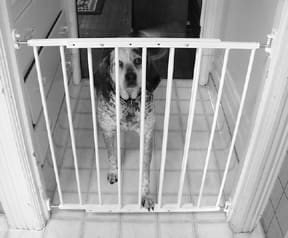
2. Invest in a large enough crate, X-pen, or baby gates to confine your dog to a safe zone when she is not being supervised.

3. Don’t let your “supervision” get lax. No exceptions.

4. On a regular schedule, take your dog to the area where you want her to eliminate. When she goes, praise and reward her copiously.

5. Do not punish your dog for “accidents.” No exceptions.

Meet “Mollie,” a three-and-a-half-year-old terrier who lives in Aptos, California. (Her name has been changed to protect the guilty!) Mollie is a great dog, except for one not-so-small issue: Mollie is not housetrained. She does not know when or where she is supposed to go. Left to her own devices, Mollie would eliminate in the living room, the bedroom, on top of a pile of clean laundry, and, yes, even in her own crate.

Mollie’s housetraining issues, however extreme, are easily explained. The first several years of Mollie’s life were spent in a poorly run breeding kennel. She was not only never formally housetrained, but also forced to urinate and defecate regularly in her living space. In addition, Mollie also developed an infection that made it impossible for her to hold it, even when she was crated.
Remedial Housetraining

By the time she came to live in her current home, her lack of inhibition was cemented, and housetraining has been her number one problem behavior.

Mollie is not a bad dog; in all other ways she is a wonderful companion! And she is not alone in her problem; many adult dogs are not fully housetrained. Fortunately, there is hope for Mollie and other dogs like her. Adult dogs, even dogs whose histories have stacked the odds against them, can learn an appropriate place and time to go!

Understanding Remedial House Training for Dogs

Of course, not all dogs with housetraining problems come from kennels or shelters. Adult dogs can have a variety of explanations for their housetraining failures. Even dogs who have been in stable homes since puppyhood can have trouble with housetraining.

Some of the most common reasons that dogs fail to learn when and where to eliminate include:

Having a medical problem. If you have a dog that was reliably housetrained and suddenly has housetraining problems, consider the possibility of a medical issue. Infections, certain illnesses, and some medications can all contribute to house-soiling.

Not truly understanding the “house” rules. For example, a dog may understand that he needs to go outside and will do so when he has free access (such as a doggy door), but not understand that he needs to hold it when he does not have free access.

Not having generalized the rules from one place to another. A dog may have been house-trained in a previous home, but not know the same rules apply in a new home. Or, a dog may know to go outside at his house, but not understand that he also needs to go outside when visiting a friend’s house or staying in a hotel.

Being asked to “hold it” for too long. Some dogs can easily go all day without eliminating. For other dogs, holding it all day is very difficult or even impossible. This can be especially true for dogs who are small, young, elderly, or who have a medical problem.

Having learned that eliminating in their living space is acceptable.Like Mollie, dogs that have spent much of their lives in kennels often lose their natural inhibition about eliminating where they eat and sleep. In addition, dogs with a history of “accidents” in the home because of an illness, poor management, or other factors may simply learn that it is less stressful to go inside than to try to “hold it.”

Is It a Housetraining Problem? Or Something Else?

When talking about housetraining for adult dogs, it’s important to understand that not all house soiling is a housetraining problem. Other physical and behavior issues can contribute to or cause a dog to eliminate in the house. If you suspect your dog may have any of these issues, please consult with a behavior counselor or qualified trainer.

Submissive or excitement urination. Dogs who leak urine during greetings, when meeting new people, when you first come home, or during play may be exhibiting submissive or excitement urination. This is a confidence issue (and is often outgrown as a young dog matures), not a housetraining issue!

Marking. When we think about territory marking, most of us think only about male dogs. But male and female dogs can mark territory with both urine and feces, outside and indoors.

Separation anxiety. Dogs suffering from separation anxiety may eliminate shortly after you leave your home, often within just a few minutes. (If you are not sure the accidents are happening shortly after you leave, try returning home after a half hour to find out.) Consult with a behavior professional to help you resolve your dog’s separation anxiety.

Fears and phobias. Thunderstorms, fireworks, and other fear-inducing noises can cause some dogs to urinate or defecate in the home.

Health issues. Any onset of house-soiling behavior in a previously housetrained dog, urination during sleep, or other loss of bladder and bowel control should be evaluated by a veterinarian. Urinary tract infections, certain illnesses, and some medications can contribute to house-soiling problems.

How to Teach Your Dog Where to “Go”

Housetraining is not a single behavior. Rather, it is a whole series of interrelated behaviors.

For a dog to be fully housetrained, he needs to understand where he should go as well as where he shouldn’t. He needs to learn to “hold it” (sometimes for hours) until he is in an appropriate place. He needs to be able to communicate his need to go in a way his people will understand and respond expediently. And he needs to generalize these behaviors to all indoor (and some outdoor) situations. For any adult dog with a history of housetraining issues, it can also mean unlearning past behaviors.

If this sounds like a lot of learning on your dog’s part (as well as training on your part), don’t despair. These simple steps can help you teach your dog the skills he needs to become a full-fledged, housetrained dog.

First, supervise your dog at all times when he is inside, except when he is crated or otherwise confined. This is the key to success. You must supervise your dog inside your home at all times to prevent accidents. The more consistent you can be, the faster your dog will succeed.

Note that in this case, “supervise” means much more than having your dog with you in the same room. It means keeping your attention focused on the dog so as to prevent any opportunity for the dog to make a mistake, or, at the very least, to be able to interrupt him “midstream” – a good opportunity to rush him outside and then praise him for going in the “right” place (more on this below).

The best way to accomplish this when you are not actually looking at the dog or playing with him, is often referred to as the “umbilical cord” method. If you are watching TV, working on your computer, washing dishes, or otherwise occupied, clip a leash onto your dog’s collar, and tie the other end around your waist or belt loop. It should be long enough to allow him to sit or lay at your feet, but short enough to prevent him from making a move to eliminate without your knowledge.

When you are neither actively watching your dog nor physically linked to him by a short leash, he should be confined, as described below.

Properly Confining Your Dog for House Training

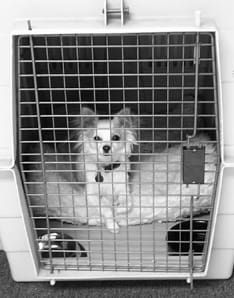
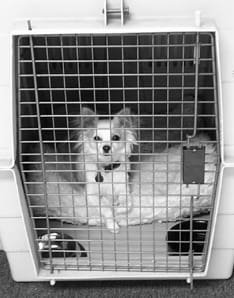
• Confine your dog when you can’t supervise him. When you cannot actively supervise your dog, leave him confined in a crate, X-pen, or other small secure space. Because dogs are not as likely to soil where they eat or sleep, a sleeping area like a crate is ideal.

• If your dog regularly eliminates in his crate or other confined space, and your veterinarian has ruled out all health problems as the cause, try changing your confinement area. If you have been using a crate, for example, change to an X-pen in a different part of the house. Start by feeding your dog in her new confinement space and leaving her alone there for only short periods.

If your dog has been eliminating on her bedding, change the type of bedding you use, too. If she’s been sleeping (and eliminating!) on a blanket, switch to a flat thick bed of newspaper, or a fleece pad. The idea is to create a new “living space” with no former associations for your dog as a place to eliminate. Continue to use the crate as a living space for longer periods until you have established the new confinement area as a living space.

• Set up a routine. You’ve probably heard this before: what goes in on schedule, comes out on schedule. Establish regular feeding, sleeping, and waking times. Take your dog out, at minimum, upon waking, after eating and drinking, before leaving home, immediately after play, when you first arrive home, and before bedtime.

• Teach your dog where to go! This is an important and often overlooked step. Pick a spot that you regularly take your dog to; don’t just put him outside, go with him. When your dog goes in the appropriate spot, immediately reward the behavior with praise and a treat. A dog who is rewarded for going in a specific spot will be more motivated to go in that place and may also begin asking to go to the place (offering the behavior!) because it earns rewards.
Remedial Housetraining

• Read your dog’s signals. Look for clues in his behavior that tell you he needs to go outside. Dogs won’t always go to the back door. Some common signs include acting restless, “bugging” you, pacing, and just before the act, circling. But sometimes the behavior is more obscure, so be observant. (One of my dogs licked the cat’s ears when she needed to go outside – a behavior I assume she learned because we always paid attention to her when she paid attention to the cat.)

In addition, try to anticipate your dog’s needs. Does he always need to go outside immediately after waking? When someone comes to the door? After playing?

• When accidents happen, don’t punish! If you actually catch your dog in the act – and I mean midstream, not one second after – it’s okay to interrupt with a clap or noise and then rush the dog outside. Be sure to reward your dog when he finishes up outside. If you discover the act afterward, even immediately afterward, don’t punish your dog. It really won’t help, and could set back the process by making your dog afraid to go in front of you. Simply clean up the accident well with an enzyme neutralizing cleaner. (See “Housetraining Puppies” for a review of the best enzyme-based cleaning agents.)

• Gradually expand the “safe” zone. Once you have established a routine wherein your dog is supervised or confined, goes outside on a schedule, and avoids accidents for a month or longer, begin cautiously increasing your dog’s freedom. For example, if your dog’s confined space is a small X-pen in the kitchen, you might begin by expanding the size of the pen. Once he proves himself reliable in the slightly larger space, leave him confined to the kitchen.

Gradually increase his space until he is reliable within your entire home. If problems arise (remember that mistakes are part of the learning process), simply back up to the last reliable step and take it slower. Taking it too slowly is much better than rushing the process, especially with a dog that has a history of housetraining issues.

Patience Pays Off

The most frequent question I have been asked about house-training an adult dog (and puppies, too) is, “How long will it take?” The answer is, “It depends.” It depends on the dog, the situation, and you. There is no magic formula or specific amount of time.

I have noticed that often people want it to take a lot less time than is realistic. (I think we’ve all heard stories of the dog that was housetrained in a week and wish that could be our dog.) Think about all of the steps the dog needs to learn – to go in a specific place, to hold it for a period of time, to ask when he needs to go out, to apply these rules to all inside areas. Be patient! This is a lot for a dog to learn. Plan on a few months at minimum, and a year or more for a dog with a longer history of housetraining issues.

Of course, that doesn’t mean you have to deal with your dog actually eliminating in the house for months! Remember the first two steps: supervise and confine. With diligence, you can establish a routine that will help you avoid most accidents within a few weeks, if not sooner.

Remember Mollie? After a few short months, Mollie was 100 percent reliable in her X-pen (remember, this is a dog who would eliminate in her crate!) and when supervised by her people. She’s still not ready to be left unsupervised (and with her history, it may take longer than most for her to be ready), but Mollie is certainly well on her way to becoming fully housetrained. Patience does pay off!

Mardi Richmond is a writer and trainer who lives in Santa Cruz, California, with two wonderful dogs and one human partner. She is the coauthor of Ruffing It: The Complete Guide to Camping with Dogs.

Your Dog’s Mouth

Pokey and I are on the floor, man and beast in a playful tussle. I poke, scratch, pull, and tug on the genial Lab-mix, using my fingers and arms. I fake a left jab and poke him with my right hand. His only recourse is to duck and jump, first in retreat, then, with lips drawn in a mock snarl, pouncing on me and mouthing my hands and shirt. Fortunately, Pokey came from a family of nine puppies, cared for by seven home-schooled kids, so he was well socialized as a puppy and knows how to mouth-play without biting too hard.

A dog’s mouth is his most intimate connection to the outside world, his gateway for primary contact. He uses his mouth for sustenance, investigation, and communication. He uses his jaws as a tool; they can carry, crush, slice, gnaw, grind, or, as in Pokey’s case, gently grab and render my “superior” hands helpless.

The mouth is also the beginning point for the dog’s harvest of life-sustaining nutrients. The initial identification of immune-stimulating substances contained in whatever the dog ingests starts in the mouth. The tonsils, lying deep in the mouth, are a prominent site of lymph tissue, and the mouth is lined with other lymphoid elements – all of which transport immune-sensing information to the rest of the body.

It is important to keep this “gateway” function of the mouth in mind as we consider how to best deliver remedies to enhance the innate immune system’s ability to respond. Herbs that contact the mouth’s lymphoid tissues (that is, herbal remedies not encased within capsules) have the advantage of stimulating this early alert, immune-enhancing lymphoid tissue.

But from the perspective of a veterinarian, a dog’s mouth is mostly a primary site of disease. Periodontitis (inflammation of the tissues surrounding a tooth) and dental calculus (an accumulation of mineral salts on teeth) are respectively the number one and number two problems seen in dogs over seven years of age. Periodontal disease is present in an estimated 50 to 80 percent of all dogs.

Furthermore, there is evidence that periodontitis also predisposes animals to a number of diseases such as heart disease, diabetes, and even respiratory disease. At least one (human) study has indicated that poor oral health is a stronger predictor of heart disease than markers such as fibrino-gen (a clotting factor and indicator of inflammation), low HDL (good) cholesterol, or high triglycerides.

In addition, endotoxins have been isolated from calculus residues on the teeth of dogs, and there is anecdotal evidence (perhaps related to the endotoxins) that dental disease may also be responsible for (or at least increase the likelihood of) other chronic diseases such as arthritis.

Unfortunately, when it comes to pointing the finger at who or what is to be blamed for much of our pets’ dental problems, “We have met the enemy, and they are us.” We have created at least a two-fold problem.

First, we have bred dogs for cuteness; many of the toy breeds have jaws too small to accommodate all their teeth. This forces teeth to grow abnormally and the resulting misalignments and malocclusions create foci for future calculus buildup. Second, our commercial foods don’t provide the tooth-cleansing effects of pulling meat and other soft tissues off raw bones, as well as time-consuming gnawing on raw hide and bones.

The canine mouth
The dog’s teeth and gums are the most important considerations in the mouth, both because the incidence of disease of the teeth and gums is so high, and because their influence on overall health and disease is so profound. However, I’ll briefly mention other structures of the oral cavity and oropharynx (an ill-defined area that includes the posterior part of the oral cavity and the pharynx) and give a brief list of potential problems that may occur in them.

The oral cavity is an open-ended tube that functions in prehension (the act of seizing or grasping), mastication (chewing), fluid intake, taste, and swallowing.

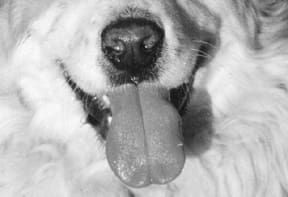
The relative size of the dewlap and amount of flesh associated with a dog’s lips are characteristic of the individual breed. Facial expressions are controlled by the lip muscles,which are innervated by the facial nerve. Several cranial nerves innervate the dog’s fleshy and highly active tongue, providing muscular control and sensory innervation from the taste buds – round, prominent structures on the posterior portion of the upper surface of the tongue.

Salivary glands open into the oral cavity; saliva provides an acid medium along with bacterial-fighting substances that help to keep any disease process from proliferating in the mouth.

The palate forms the dorsal roof of the oral cavity, separating it from the nasal cavity. The caudal (rear-most) part of the palate is the soft palate, a mobile structure that functions during swallowing to restrict access of the food bolus into the nasal area. The epiglottis is a cartilaginous structure that moves to open the trachea (wind pipe) during inspiration; during swallowing, the epiglottis moves to restrict the opening to the trachea.

The palatine tonsils are elliptically-shaped lymph nodes lying on the lateral walls of the oropharynx within crypts formed by folds of the pharyngeal wall. In the dog they are normally visible, and in puppies they may stand out of their crypts.

The right and left condyles (rounded projections on a bone) of the mandible (lower jaw) articulates with the temporal bone of the skull at the temporomandibular joint (TMJ). Omnivorous animals classically have a large condyle that permits up and down and lateral movement. In the carnivorous dog, which has smaller condyles with only limited lateral movement, the TMJ is limited largely to hinge-like movements.

Canine dental structures
A dog’s deciduous (baby) teeth erupt between two weeks and eight weeks after birth. From two to six months of age, the baby teeth shed as the permanent or adult teeth erupt. Eruption time varies according to breed; the larger the breed, the earlier the eruption sequence. Dogs seldom show signs related to teething; the most frequent problem encountered is retained deciduous teeth. Retained baby teeth need to be removed to prevent buildup of calculus on them, and anesthesia may be required for the process.

Eruption and full growth of the crown of all the permanent teeth is complete in most dogs by 10 to 12 months; however, the tooth roots (especially of the canine tooth) may not be fully developed until as late as 30 months of age. (This is a consideration if a young dog fractures a tooth.)

Most dogs exhibit a so-called “scissor bite” wherein the maxillary (upper) canine tooth (“fang”) fits behind the mandibular (lower) canine tooth, and this lower canine fits between the upper canine and the upper lateral incisor (front teeth). Breed selection, however, has resulted in major variations in normal occlusion in the dog. Maloccluded teeth (teeth that don’t align properly into the scissor bite) are relatively common in toy breeds and in dogs with pronounced over- or under-bites. Dogs with malocclusion are more prone to calculus buildup.

The dental unit consists of the teeth and their supporting tissues, the periodontium. The latter consists of the gingiva (gums), the supporting bony portion of the tooth’s root structures, and the periodontal ligament.

The teeth vary in size, shape, and number of roots, depending upon location and function. A tooth consists of a mass of dentin surrounding the innermost pulpal tissues. The root portion of the dentin is covered with cementum; the crown portion with enamel. Enamel provides resistance to wear and protects underlying dentinal tissue from damage or caries (cavities). Penetration or removal of the enamel exposes the nerve endings located in the dentin.

Around the circumference of each tooth is a one- to two-millimeter deep gingival sulcus (groove or furrow) between the gingiva and enamel surface of the tooth. The sulcus is the site where food particles and other debris most frequently accumulate, leading to inflammation of the gums and eventual calculus buildup.

Diseases of the mouth
Dental calculus buildup and the resultant peridontitis is the most significant disease condition of the mouth, both in terms of numbers and potential for severe long-term disease; this process is dealt with below. Other diseases of the oral cavity include:

Stomatitis – Infections anywhere within the oral cavity. These can be caused by any number of microorganisms and are often induced by trauma or injuries.

Glossitis – Infection of the tongue. Also commonly due to injuries, ingestion of caustics, licking sharp objects, or biting into electrical cords.

Ulcers – These can occur anywhere in the mouth, but they are more common on the gums opposite heavy accumulations of calculus. They are often related to an immune deficiency, so treatment should include herbs or other alternative medicines to restore balance to the immune system.

Hyperplasia of the gingiva – Most commonly due to periodontal disease. (See also epulis.)

Epulis – A nonspecific term applied to benign, tumor-like masses of the gingiva. These may occur in any animal, but some breeds (Boxers, for example) seem to have a high incidence, indicating the possibility of genetic involvement.

Lip-fold dermatitis – Inflammation at the fold of lips, between the upper and lower lips. This condition is oftentimes secondary to periodontal inflammation, but may also be due to toxic materials leaching out of plastic food and water dishes. Switch to glass, porcelain, or stainless steel dishes.

Neoplasia – Cancers of the mouth can be aggressive, but initially they are difficult to differentiate from the benign epulis. If you see a growth in the mouth, get an accurate diagnosis via a biopsy, fast.

Temporomandibular Joint (TMJ) problems – The joint may be subluxated, a condition that may be exacerbated by calculus buildup. The pain of subluxation can lead to symptoms similar to those of oral disease – refusal to eat, slobbering, painful to the touch, etc. If your dog exhibits these signs, consider having a veterinary chiropractor check him out; deep massage often returns the TMJ to normal function (providing the calculus has been removed).

Secondary conditions – Oral lesions may occur as a secondary problem, related to diseases such as uremia and diabetes.

Treating oral diseases
Conventional treatment for most of these diseases consists of antibiotics, possibly along with glucocorticoids and/or antihist-amines. My experience would indicate that alternate therapies almost always work as well as, or better than, any conventional treatment I once used.

I think the most important component for oral health (after teeth cleaning) is the immune system. Consider herbs (such as echinacea) and other herbal medicines, which can be used internally to enhance the whole body immune system, or they can be used as a tea or tincture as a mouthwash. (See herbal section below).

Nutritional support is almost as important. Add therapeutic levels (check with your holistic vet for correct dosages) of vitamins A, C, and E, and herbal and other antioxidants such as coenzyme Q10, thyme, goldenseal, or myrrh. Acupuncture and/or homeopathy can be added if necessary; I have both to be helpful when treating oral cancers.

Periodontal disease
Periodontal disease is the general term used to denote diseases of the periodontium, and it includes gingivitis, periodontitis, and periodontal abscess. Periodontal disease is by far the most common oral disease found in all species and is arguably the most common disease condition seen in small animal practice. As previously mentioned, it is found in 50-80 percent of all dogs and its incidence approaches 95 percent in animals over two years of age. The severity of periodontal disease correlates with the quantity of plaque and calculus present on the teeth as well as with the age of the animal.

Plaque is a soft colorless coating found on tooth surfaces, from the crown extending deep down into the sulcus. Plaque is not readily seen by the naked eye unless it is either naturally stained by dietary constituents or is extremely thick. It can, however, be demonstrated by plaque-disclosing dyes.

Contrary to popular belief, plaque is not a food residue. Its formation begins with adhesion of bacteria onto a thin film of an acidic glycoprotein that precipitates from the saliva onto the enamel surfaces of the teeth. Unless it is removed, plaque formation is extensive after a day or two – further reason for daily brushings.

The accumulation of plaque is enhanced by the presence of surface irregularities, the most common of which is calculus. Brushing with a stiff-bristled toothbrush can scratch the tooth’s surfaces, and scratches may occur when metal scrapers are used to remove calculus – thus the importance of dental polishing after every dental cleaning procedure.

Calculus is a mass of calcium salts precipitated from saliva. Calculus is easily seen and appears as varying amounts of off-white, yellow, or brown crusty material on the teeth – often concentrated at the tooth-gingival interface. Calculus acts as a focal point that attracts and retains plaque, a characteristic that is even more important in the creation of disease than is its function as a mechanical irritant. It has also been shown that endotoxins from the bacteria found in plaque may be found in calculus.

Calculus is not seen to any great degree in animals younger than nine months of age.

Gingivitis is inflammation of the gingiva or gum. The first noticeable sign of gingivitis is a noticeably darker red color where the tooth meets the gum line. This early inflammation may lead to excessive growth of the gingiva, and as the gingiva grows, it tends to move away from its once-firm contact with the tooth. A blunt-tipped probe into the sulcus is diagnostic; the probe will normally penetrate one to three millimeters. Any deeper penetration indicates gingivitis. For most dogs, a complete oral examination, including probing the sulcus of all teeth, requires anesthesia or at least sedation.

The treatment for gingivitis is the removal of bacterial plaque from the surfaces of the teeth (tooth brushing) on a consistent basis. Conventional treatments might include chlorhexidine gluconate which, when applied to teeth, effectively treats established gingivitis; other antibiotics such as clindamycin, tetracycline, and metronidazole have also been used for treatment. However, plaque and gingivitis rapidly return when treatment is discontinued, and all these products carry with them the usual concerns about antibiotic use. We cannot expect any long-term results without consistent tooth brushing.

Clinical signs
There are several symptoms that may lead to the diagnosis of a problem in the dog’s mouth, including a change in eating habits, pawing at the mouth, abnormal salivation, oral hypersensitivity, facial swelling, draining tracts, obvious blood or bloody (or brown-colored) saliva, sneezing and nasal discharge, abnormal behavior (some dogs, especially old and cranky ones, can become even crankier when their teeth hurt), and eye changes (infections around the upper teeth or upper jaw area often cause swellings around the eyes).

Facial swelling is a common symptom of almost any disease of the oral cavity, and a thorough exam of the entire mouth and its structures is indicated whenever a facial swelling is noticed.

While all the above symptoms can be significant, the first and most important tip-off to dental or other oral problems is halitosis (bad breath.) A healthy dog’s breath does not smell bad; anytime your dog’s breath has an off odor, be suspicious of dental or oral problems. (Some digestive or metabolic upsets can cause off odors, but these are less common.)

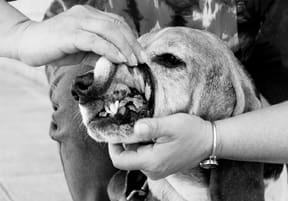
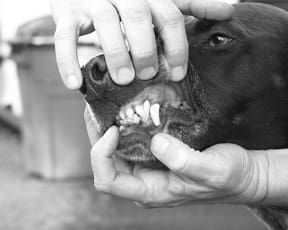
Plaque is difficult to see without staining aids, but calculus is easy to spot; it’s the chalky or crusty-looking, off-white or brown stuff on the surface of the teeth, and it is often associated with a reddened gum line.

One of the problems with diagnosing tooth conditions is that, oftentimes after an initial painful period, the pain and any other associated symptoms go away but the condition remains. This is a further reason for a complete inspection of all the far reaches of the oral and oropharyngeal cavities.

Holistic dental care
For humans, ideal dental care consists of twice daily tooth brushing, rinsing with a mouthwash, tongue cleaning, irrigation, and the addition of supplements that support oral health. For our dogs, most of these are impossible, so we rely on daily brushing, food supplements that support oral health, at least several times a week chewing on hard food (foods designed to clean teeth and/or bones), and periodic professional cleanings.

Nutrition – Two aspects of a dog’s diet are very important for maintaining dental and oral health: The dentrifice (cleaning) activity of the diet, and supplements that can help maintain healthy teeth and gums.

Many people promote diets that include raw bone – both in the form of recreational chew bones and in raw bone that is consumed – crediting both the mechanical action of chewing the bones and the nutritional benefit of a fresh, natural calcium supplement. (For more on this topic, see “Bones of Contention,” September 2000 and “Dem Bones,” August 2003.) Others prefer to give their dogs rawhide or other chews for their dentifrice action. (For selection tips, see “What Choosy Chewers Choose,” May 2003.)

There are a number of nutritional supplements that can contribute to oral health. In all cases, check with your holistic veterinarian for proper dosages and for the length of time to continue the doses. All doses depend on the severity of the disease and on the size of the dog. Larger, therapeutic doses may used for the short term; maintenance doses may be given over longer periods.

Vitamins A, C, and E can be given for their antioxidant activity; vitamin C also helps aid healing. Vitamin A can be given at doses from 5,000 to 10,000 IU per day. Vitamin C (crystalline ascorbic acid) can be given from 250 milligrams to several grams daily. Vitamin E can be given from 200 up to 2,000 IU daily. I repeat: Discuss this supplementation with your vet.

Coenzyme Q10 is a potent antioxidant that reduces damage to cells, and has been shown to be especially beneficial for reducing gingival inflammation and periodontal pocket depth in humans. The typical recommended dosage is 0.25 to 1.0 mg per pound of body weight per day.

Bioflavinoids, especially rutin and hesperidin, are required for the formation of collagen, the protein building block for gum tissue, cartilage, and bone. They also play an important role in maintaining a competent immune system. These are available within the formula of some toothpastes, or they may be added to your dog’s diet as a supplement, from 50 to 500 mg daily.

Herbs – Almost any herb or herbal combination that has antibiotic, vulnerary (wound healing), or astringent activity can be useful in helping to fend off oral disease; the key is to find herbs with a taste your dog doesn’t hate. I look at herbal teas as a mouthwash substitute for dogs. It’s true you can’t get a dog to swoosh the fluid around in the mouth and then spit it out. But if we use teas that can be swallowed, just the contact of the tea with the oral cavity and teeth can be beneficial.

Green tea is known to be especially beneficial for preventing oral and dental problems. (In humans green tea has been shown to help prevent cavities, and there is some evidence that it may reverse the progress of oral cancers.) First, try the brewed green tea, straight, in your dog’s water dish. If he rejects that, try adding a little meat broth as flavoring.

For drinking teas, also consider calendula (Calendula officinalis), chamomile (Anthemus nobile or Matricaria chamomilla), thyme (Thymus vulgaris), and yarrow (Achillea millefolium). Any of these will help prevent oral disease, and chances are good that your dog will eventually begin to like their taste.

For treatment of oral lesions, a strong herbal tea or tincture can be simply squirted into the mouth. Or you can make a slurry (some herbal product, boiled with a small amount of water, just enough to make into a slurry) and apply it directly to the lesions.

Herbs to consider for treatment include barberry (Berberis vulgaris), red root (Ceanothus americanus), agrimony (Agrimonia eupatoria), myrrh (Commiphora myrha), and goldenseal (Hydrastis can-adensis). Unfortunately, many of these herbs are not especially tasty.

Acupuncture – Acupuncture can be an effective means of treating some oral disease. Most of the treatment protocols call for treating through the Large Intestine, Stomach, and Small Intestine meridians, with points along the Conception Vessel and Governing Vessel also commonly included.

Homeopathy – Many homeopathic remedies are used for tooth problems, but most of these are related to specific types of tooth pain that only someone who can speak can describe. Fragaria (wood-strawberry) is a special case remedy that has been used by some homeopaths to help enhance the removal of and to prevent the buildup of calculus – always with the caveat that the only true way to prevent calculus is to keep plaque off the teeth.

Some homeopathic vets report that they have seen calculus disappear in animals when they use a constitutional remedy for other conditions. I have not personally witnessed this, but I have treated animals that were able to go much longer between professional cleanings while we were using the dog’s constitutional remedy – after we had initially cleaned the teeth.

However, I have had reasonably good success using homeopathy for treating oral cancers. By that I mean that the rare successes I have had almost all came from homeopathic treatments – always relying on finding the animal’s constitutional remedy. (For more on homeopathy, see “Tiny Doses, Huge Effects,” June 2000.)

Also With This Article
Click here to view “Dog Teeth Cleaning: Don’t Deny Dental Health”
Click here to view “Oral Diseases in Dog”
Click here to view “Clean Teeth, Healthy Dog”

-Dr. Randy Kidd earned his DVM degree from Ohio State University and his Ph.D. in Pathology/Clinical Pathology from Kansas State University. A past president of the American Holistic Veterinary Medical Association, he’s author of Dr. Kidd’s Guide to Herbal Dog Care and Dr. Kidd’s Guide to Herbal Cat Care.

Download the Full December 2004 Issue PDF

...
To continue reading this article or issue you must be a paid member.

Join Whole Dog Journal

Get full access to Whole-Dog-Journal.com – more than 4,000 articles – for just $20.
Join today and save 30% off our full price.
Already a member?
| Forgot your password? | Activate Web Access

Canine Musical Freestyle

MUSICAL FREESTYLE FOR DOGS OVERVIEW

What you can do…

– Attend an event where freestyle will be demonstrated so you can see for yourself how much fun the participants – human AND canine – have with the sport.

– Buy a book or videotape that teaches you some of the basics, so you can start introducing some moves to your dog.

– Join a freestyle training club for advice, support, inspiration, and further education.

– Consider the sport even if you or your dog are less than athletic; even individuals in wheelchairs can participate! And many older enthusiasts find it irresistible.

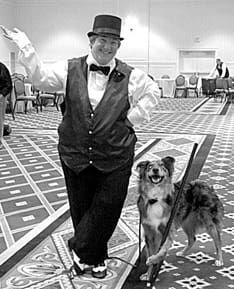
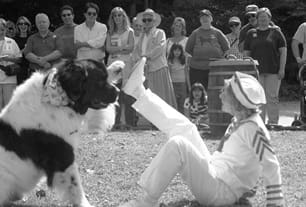
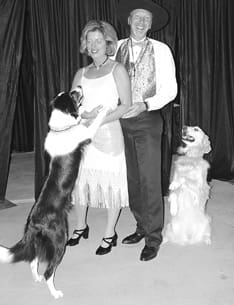
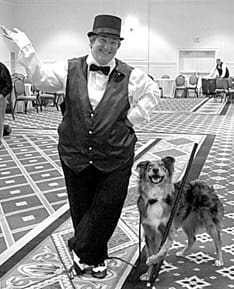
Dance fever is sweeping through the canine community. Dogs are spinning and twirling to country western, rock ‘n roll, movie theme songs, and more. What’s driving these dogs (and their handlers!) to move to the beat? It’s none other than the tail wagging sport of canine musical freestyle.

Musical freestyle is a choreographed routine performed by handlers and their dogs. A relatively new addition to the dog sport world, freestyle came onto the scene less than 20 years ago. According to a few sources, freestyle seemed to pop up simultaneously in several countries, the way dog sports often do.

Canine Musical Freestyle

Today, freestyle is an established sport today, but it continues to evolve and grow. The sport’s early beginnings may have been rooted in formal heeling. But musical freestyle has moved beyond heeling routines into a true crowd-pleasing performance sport that incorporates a variety of trick-like movements such as spinning, backing up, weaving through legs, and jumping over arms.

Freestyle is About Relationships!

We’ve all seen a couple on the dance floor that rivet an audience. When partners dance – really dance! – it isn’t just the footwork or the fancy moves that fascinate; it’s their connection, chemistry, and relationship. In musical freestyle, where the dance partners are dog and handler, the relationship and the chemistry are also key.

“I first saw freestyle on TV, watching a performance of Mary Ray and her Border Collies from England. I was moved to tears,” says Nacina Dawn, a freestyle enthusiast from Valley Ford, California. Dawn says that the relationship aspect is what first drew her to the sport. Dawn was so inspired by the bond she witnessed between Ray and her dogs that she had to try freestyle. Today, Dawn dances with her seven-year-old Golden Retriever, Candy, and chairs the Gold Coast Freestyle Guild, a division of the Canine Freestyle Federation (CFF).

Kris Hurley, a freestyler from Edmond, Oklahoma, agrees. “I think the most wonderful thing about freestyle is the relationship it builds between you and your dog,” she says. “The next best thing might be the relationship between you and other freestylers!”

Hurley, who has participated in musical freestyle since 1996, is a founding member of the Musical Dog Sport Association (MDSA), an organization that promotes the sport. She also teaches through Freestyle Dogs of Oklahoma, and dances with her three dogs, Maggie, Nellie, and Roxie.

Unlike other dog sports, where the course or expected performance is essentially the same for each team, the focus of freestyle is the individuality of routines. Each team determines the music, moves, and interactions that will highlight the physical ability and personality of each team member. This aspect of freestyle readily lends itself to building on both the dog and the handler’s strengths – and thus on strengthening their relationship.

While the relationship-building aspect of freestyle is part of what makes it so attractive, the obvious joy – and just plain fun – of dancing with your dog cannot be overlooked.

“Although I participate in conformation and agility, my dogs and I have found canine freestyle to be the most joyous!” says Dawn. She explains that while the focus of freestyle is the bond, there is simply a large dose of “let’s have FUN!” thrown into the mix.

Any Dog Can Freestyle

So far, we’ve got a relationship-building sport that is a whole lot of fun. Is there more reason to take a closer look at this sport? Definitely!

“I think the flexibility of freestyle results in the sport having a little something for everyone,” says Hurley. For example, Hurley began musical freestyle when her dog, Maggie, was already nine years old.

“Maggie had stopped really enjoying obedience, and although she liked agility, the running and jumping were difficult for her,” says Hurley. “She seemed to like the change that freestyle offered – more fun, less stress.”

Now, at an amazing 17 years of age, Maggie is still doing freestyle demos and loving it. “She’s not as quick or precise as she once was, but there is a spring in her step and a sparkle in her eye when she’s doing her routine that just makes me smile. I think freestyle has enabled her to maintain physical strength and flexibility, which has helped her as she enjoys her senior years.”

Dawn agrees and points to two of her freestyle colleagues as examples. “Judy Gamet, of dogscandance.com, dances with an 11-year-old rescue Rottweiler who has one artificial hip and one severely dysplastic hip,” says Dawn. “Margine Webb dances with her 14-year-old Chesapeake Bay Retriever who is deaf and has arthritis. Freestyle has conditioned them and increased their strength, flexibility, agility, and confidence.”

But freestyle isn’t just for older dogs or dogs with disabilities, either. Hurley does both competitions and demonstrations with her four-year-old Pug-mix, Roxie, and her eight-year-old Toy Manchester Terrier, Nellie. Dawn has earned a beginner’s freestyle title with Candy. Plus, freestyle has some distinct advantages for puppies and younger dogs.

“Freestyle can be a great activity to teach the dogs to ‘learn how to learn,'” says Hurley. “Many puppies don’t have the attention span for the precision required in obedience, or shouldn’t be really jumping until after they grow. But you can train many of the freestyle behaviors at a very young age. Learning the process of learning is a skill that will carry over into whatever other activities they may want to do as an older dog – in addition to freestyle.”

Hurley also points out that the same flexibility applies to the human side of the team. “I have a student in one of my classes who is 70 years old and is training a dog for the first time. Again, because freestyle routines can be tailored to the participants’ physical characteristics, any age, shape, size, speed, or skill can be successful in freestyle. While there may be certain moves that a dog or handler can’t do, it would not preclude them from participating in freestyle.”

Dance Illusions

Canine Musical Freestyle

Both Dawn and Hurley also assured me that the people involved in freestyle don’t have to be able to “dance,” at least not in the traditional sense, to participate in this sport. As someone who is investigating freestyle as a potential new activity for my slightly senior dogs, this has been my biggest concern!

“Although a sense of musicality can be helpful, I definitely don’t feel that being a good dancer is a requirement. It’s all about presenting an illusion of dance,” says Hurley. She explains that by adding simple gestures that match the feeling of the music, the teams appear to be dancing though there is not a formal dance step anywhere in the routine.

For example, thumbs hooked through belt-loops with a small hitch-step to a country song, or a quick head-snap and hands clapped above the head to start a tango, create the illusion of dance.

According to Hurley, one of the philosophies that MDSA promotes is that the music selected should match the natural rhythm of both the dog and the handler. “When the music selected is a good match, the team almost naturally moves in time with the music,” says Hurley.

Dawn agrees, noting that the various freestyle organizations put different emphasis on the handler movements.

“CFF does not require an athletic ‘dance’ performance by the handler,” she says. “Handlers showcase all of the beautiful qualities and strengths their dogs possess. For example, a friend of mine who no longer is able to compete in other dog sports due to an injury, stands in one area and ‘conducts’ her dog in the space around her.”

In the Spotlight

While anyone can enjoy freestyle in their living room, if you have a desire to perform, either through demonstrations or in competition, a sense of showmanship and enjoying the spotlight is very helpful. For some people and dogs, being in the spotlight presents a challenge.

“The biggest challenge I had when starting was Candy’s shyness,” says Dawn. “But with a combination of clicker training and freestyle classes, she now has more confidence and grace than any dog I have ever had. My dogs and I love freestyle for the relaxed, happy, and fun way we can express to the audience our loving relationship.”

Hurley says that another challenge many people face is that freestyle involves two entirely different skill sets – the actual training process and the creative process used to develop a routine.

“Sometimes people who are amazing dog trainers struggle with the creative process – hearing the music, visualizing a routine, etc.,” says Hurley. “And many of the creative people sometimes struggle with the details and structure needed to train the moves. Bringing the two components together can often be the biggest – and most rewarding – challenge.”

Hurley notes that her biggest personal challenge has been getting past the need to have everything perfect in both training and competition. “In training, I’ve tried to change this by focusing on the positives. Clicker training has been a real blessing. It has really changed my way of thinking. I’m not looking for errors, but focusing on the good stuff.”

Moving to the Music

The first step in developing a musical freestyle routine is picking the music. The primary consideration is how well it fits the natural movement of the dog and handler; its rhythm needs to complement the dog’s and the handler’s rhythm, too. The music should also highlight the personality of the team. Music can create a mood that reflects the seriousness, power, or playfulness of the team. Or it can conjure an atmosphere of romance or joy.

“You also must pick a song that you really like,” says Dawn, “because during training and practice, it will be played over and over.”

Uncommon Moves

Once you have a music choice, the moves in a routine are designed to complement the music. The moves used in freestyle can be quite varied, depending on if the routine is being developed for competition, demonstration, or just for fun.

“The only move I consider to be a ‘required’ move is attention,” says Hurley. She defines attention in this context as “being focused and engaged with the handler,” not necessarily the “look straight at me and don’t look away” attention that is often associated with traditional obedience.

The need for focus and attention is in part because it is considered a demonstration of the bond between the handler and dog, but also because it is necessary for the dog to see the handler’s cues within the routine. Hurley notes that “attention” is not really an indication of the true bond between a dog and handler, but rather is a way to present that connection to the audience.

Other movements, however, are commonly incorporated into freestyle routines. Traditional heelwork, for example, is often at the foundation of a dance. Heelwork includes right and left side heeling, turns with the dog in the heel position, and right and left side finishes.

Backing up is another common movement in freestyle routines. Backing can be done with the dog in the right or left side heel position, with the dog in front of the handler, or with the dog backing away from the handler.

Sidestepping or lateral moves are often incorporated. Lateral movements can be done in conjunction with the handler’s movements, in a right or left side heel position. Sidestepping can also be done with the dog moving away from the handler, or with the dog moving in front of the handler.

Circles can be incorporated where the dog circles the handler or another object. Spins, where the dog turns in a 360-degree circle independent of the handler, are also popular in freestyle routines.

Other more advanced moves include a dog weaving between the handler’s legs. This can be done as a figure 8, as a moving weave through the legs, or when a dog simply goes through the handler’s legs. Teams can also incorporate tricks such as rolling over, crawling, or jumping. Distance-work (when a dog does any of these movements away from the handler) is also considered to be advanced.

Hurley emphasizes that you don’t have to do anything that isn’t comfortable for the dog. “If there is a move or type of move that doesn’t work well for my dogs, or that they don’t like, then I don’t have to do them,” says Hurley. This takes the stress and frustration out of training; the pressure to make a dog do something specific is completely removed.

“Quite often, the moves incorporated into the routine are moves the dogs do naturally during play. And because I’m not worrying about something going wrong or or my dog just not getting a certain move at a certain time, I’m more relaxed and we can enjoy the interaction and time working together.”

Showing Off Your Moves

Canine Musical Freestyle

It is important to note that in a freestyle competition, certain movements may be required at each level, depending on the organization. For example, in CFF (the organization Dawn is involved with), a beginning routine is done on-lead, and should include specific elements of heeling, working in front, turns or pivots, and spins or circles.

There are four levels of competition in CFF, and in the most advanced level, the routine is done off-leash and includes distance work, lateral movements, and backing up. All levels can also incorporate movements like weaving through legs, crawling, rolling over, and jumping over arms or legs. Even in competition, however, the required elements allow for a great deal of flexibility and creativity.

Plus, there are quite a few different organizations that promote freestyle, and each has its own unique philosophy. By investigating the different avenues for competition, a team is sure to find a match that will work for them. And for demonstration, exhibition, or “just for fun” freestyle routines, of course, anything goes.

Unexpected Benefits of Musical Freestyle for Dogs

If competing is not your thing, Dawn emphasizes, you can take your dance “on the road” in a variety of other ways. “Thrill your friends, bring cheer to those confined to hospitals or nursing homes, or promote responsible pet guardianship to children at schools,” she suggests.

“Although we enjoy competing, the majority of our performances are ‘dancing for a cause’ such as Northern California Golden Retriever Rescue, animal shelters, humane societies, rescue benefits, and various canine sporting events,” says Dawn. “Candy is also a registered therapy dog through the Delta Pet Partners and performs at hospitals and nursing homes.”

Hurley echoes the sentiment that competition isn’t the only venue for freestyle. “Since I’ve come from a competitive background, freestyle competitions seemed like a logical choice. However, I’m finding that I am beginning to enjoy the demonstrations more than the competitions.

“Freestyle is a great way to show what you can accomplish with positive training methods. And since several of us perform with rescue dogs, it really helps show what great dogs rescues can be,” she adds.

Hurley says she has also performed for community events like the Alzheimer’s Walk and for senior and children’s groups. “You get to have fun with your dog AND make people smile. It doesn’t get much better than that.”

Getting Started in Musical Freestyle

Kris Hurley, freestyle competitor, teacher, and founding member of the Musical Dog Sport Association, suggests that the first step for people interested in musical freestyle is to seek knowledge. “There are so many wonderful resources available to freestylers – e-mail discussion groups, training videos, competition videos, seminars, workshops, and classes. All these resources can really help a team get started,” says Hurley. “Since seminars and classes are becoming popular, some people think they need a class or seminar to get started. I think it is important to remember that many of the top freestylers trained on their own.”

If you haven’t yet seen musical freestyle in action, you might want to visit the Musical Dog Sport Association’s Web site where you can view a short video of Hurley and her dog Maggie performing to “Hang ‘Em High.” The Web site also has videos of other members, including a well-known musical freestyle routine (thanks to e-mail and the Internet), Carolyn Scott and Rookie dancing to “You’re the One That I Want” from the movie, Grease.

Mardi Richmond is a writer and trainer who shares life with her human partner and two wonderful dogs in Santa Cruz, California. She is the co-author of Ruffing It: The Complete Guide to Camping with Dogs.
The Canine Sense of Smell

The canine sense of smell is more than a hundred times more powerful that a humans.

[Updated December 3, 2018]

When I watch our dog, Pokey, nose his way over the prairie and through the woods around our homestead, I sometimes try to imagine what he is smelling. It’s an impossible assignment. The canine sense of smell and his repertoire of scents is, after all, at least hundreds of times and perhaps more than a million times more acute and more expansive than mine.

I watch as he trots ahead, nose just above the grasses, head ever on the swivel, left to right and up to down – air-sniffing, selecting scents, veering to wherever the pleasures of his nose takes him. Suddenly he stops, noses into a clump of grass, snorts, burrows his nose deeper into some fragrance I will never know, an odor that recalls some aromatic memory, perhaps a primitive recollection from even before he was born. He digs into the memory of odor. Digs with his paws for a while, snorts, then decides it is a lingering smell no longer worthy of his work. He rises up, glances my way … and then lifts his leg and marks this location for any who might follow.

The dog sense of smell is the primary means of interpreting the world.

The Canine Nose

The dog’s nose consists of a bony nasal cavity that is divided into two separate chambers by a bony and cartilaginous nasal septum. Within each of the cavities are the turbinate bones (conchae) and the paranasal sinuses.

The turbinate bones form into several scrolls of moveable cartilage and bony tissue that is lined with ciliated epithelial cells. The turbinate bones are a veritable maze of structure, and locating a foreign body hidden in their depths can be an extremely frustrating undertaking – a procedure that almost always requires general anesthesia.

The nose opens to the exterior via two external “nares” or nostrils and the ethmoid bone marks the posterior aspect of the nose.

The paranasal sinuses are extensions of the nasal cavity and various diseases or tumors may impair their drainage (especially of the frontal sinuses). When the dog sniffs, there is forced inspiration and the nostrils are dilated. The inspired air is warmed and humidified as it passes through the turbinates, and the mucus layer that lines the air passages serves as a filter to trap bacteria and particulate matter.

The dog collects scents by air-scenting (sniffing volatile oils that are traveling in the air) and sniffing the ground. A dog’s nose is ideally made for sniffing – the outer nares are mobile and allow for expansion on inspiration and contraction to prevent the entry of unwanted objects. When a dog sniffs, he inhales the scented chemicals into his nasal cavities, where they are trapped in mucus and processed by the sensory cells. Expiration forces air out the side of the nares so that its exit doesn’t interfere with odors still in the air or on the ground.

Several cilia extend from each of the sensory cells into the nasal cavity, and each of these cilia contains many scent receptors. After the cell receptors trap the smells, each cell has several (10 to 100) axons that deliver their messages back through the ethmoid bone directly to the olfactory bulb of the brain.

Once in the olfactory bulb, scents are transported to the frontal cortex for recognition as well as to other regions of the brain that include the brain’s centers for emotions, memory, and pleasure. There are many interconnections between all these centers, with the result that a simple smell, detected by a dog, likely has an entire set of meanings, memories, and emotional ties that only that dog can know and interpret.

Much of the deeper work of trying to understand the sense of smell has been done on humans; how do you ask a dog what he feels or remembers when he smells a certain odor? But we do know that dogs have much more surface area within their nasal cavities, and this area is well supplied with sensory cells – estimates of the total number of these cells vary and depend on the breed, but they have been cited as somewhere between 125 million and several times that. (This compares with estimates of human numbers that are in the 5- to 10-million-cell range.)

In addition, the dog has devoted a tremendous amount of his brain tissue to olfactory cells. (Some estimates allocate one-third of the dog’s brain to the chore of scenting.) All this adds up to a canine scenter that has thousands to millions of times the ability of his human counterpart.

We also know that we can use the dog’s incredible sense of smell to benefit mankind in ways we are only beginning to imagine. Today’s working scent dogs are involved in search and rescue (some dogs can follow a trail that is more than a week old), finding cadavers (dogs have even detected drowned people in a depth of 80+ feet of water), detecting explosives, firearms, and drugs, and even scenting tumors in human patients. Early work has begun to use dogs to test the breath of humans – to help diagnose internal diseases before they become evident with other methods.

Jacobson’s Organ

Inside the nasal cavity and opening into the upper part of the mouth is the final piece of the dog’s scent-related puzzle, the remarkable Jacobson’s Organ. Jacobson’s Organ is a “sense of smell” receptor that is actually not receptive to ordinary odors. Rather, the scenting nerve cells of the organ are quite different from those in normal olfactory tissue in that they respond to a range of substances that have large molecules, but often no detectable odor.

The sensory cells of Jacobson’s Organ (which anatomists claim are unlike any other nerve cells) communicate not with the olfactory bulbs and cortex, but with the accessory bulbs and the part of the brain that coordinates mating and other basic emotions. In fact, recent evidence suggests that the two separate but parallel systems of odor detection cooperate in surprising ways to produce novel sensibilities not achievable by either of them on their own.

The primary function of the Organ is to detect pheromones, which then provides both sexes with information as to the availability of the opposite sex for breeding. Additionally the Organ is apparently able to detect other, normally undetectable, odors – odors that may enhance the newborn’s ability to find its own dam, for example. Search and rescue dog handlers notice that many of their dogs lick the air, as if to give additional input into their “scents-ability.”

Animals enhance the sex-detection ability of the Organ with what is called the “flehmen” reaction or “flared face.” When exposed to the urine of an animal in heat, a male will typically throw back his head and raise or curl his upper lip – both of these help to open the entry slits into Jacobson’s Organ.

Horses, deer, and goats are the masters of this reaction, and many dogs can produce a rather pronounced flehmen when the time is right. Interestingly, although just a few years ago it was thought that Jacobson’s Organ did not exist in humans, a recent anatomical study of 400 human subjects confirmed both its presence and the fact that its nervous connections are capable of sending functional messages to the brain. Apparently, as much as some folks would like to deny it, we humans are indeed sexual animals, just like the rest of nature.

For Animals, Smelling is More Than Just Scent

The nose and the sense of smell are vastly expanded by Jacobson’s Organ, but an animal’s ability to smell extends into many other realms as well. Since smelling is hooked into the most primitive areas of an animal’s brain, there is reason to believe that smell is also linked to sensations created long before the animal was actually born.

We know, for example, that animals (and humans) prefer to mingle with the scent of members within their own pack or herd (or, in the case of humans, in their own culture), and horses and dogs can detect the human scent of fear. Also, shortly after birth, mothers are able to pick out their own offspring by smell, and puppies quickly learn the smell of their mother’s milk . . . and before long, the smell of a preferred teat.

We know that certain scents may be linked with memories of past events, and even with positive or negative emotions. The fragrance of cookies baking, for ex-ample, may remind us of the good times we had at grandma’s house, many years ago. Throughout our lifetime, then, the smell of fresh-baked cookies may evoke a positive feeling. It’s not easy to correlate long-lasting emotions to past events in dogs, but it is certainly something to consider when we are dealing with a behavior problem that we can’t explain physically; could it be related to some household odor that was associated with a bad experience in the dog’s past?

In traditional Chinese medicine, the nose – along with the throat and vocal cords – are all considered to be intimately connected to the function of the Lungs. Many nose and throat disorders are therefore treated through the Lung Meridian.

Nose Nutrition

In addition to the normally recommended wholesome diet for dogs, a few nutrients may be especially beneficial for the nose and its ability to smell. Vitamin A seems to be directly involved in the sensory cells’ ability to receive and activate the energy of odorant molecules. Glutamate has been proposed as the olfactory cell neurotransmitter (at least in turtles, toads, and rats). While these may prove to be helpful for smelling (especially in the older dog), no definitive studies have yet been done to ascertain proper dosages (or definite benefits) for dogs.

Remember that, as an animal ages, he loses some or all of his ability to smell. Older animals may need to be tempted to eat, and some seem to find spicy foods more palatable. Try several culinary herbs to see if your dog prefers any of them – most of the culinary herbs are high in nutrients and antioxidant, anti-aging activity.

A canine's sense of smell is part of a dog's social cues and their primary means of understanding the world.

In my opinion, the best “nutrition” we can give to a dog’s nose is a daily dose of natural odorants, generated from the fields and woodlands out of doors – the perfect way to build up the reserve of sensory cells and brain connections related to smelling.

Disease Etiologies

Viral infection is the most common cause of acute rhinitis or sinusitis in dogs, with canine distemper, adenovirus types 1 and 2, and parainfluenza the most frequently incriminated.

While primary bacterial sinusitis or rhinitis (inflammation of the mucus membranes of the nose – from the Greek “rhis,” meaning nose) is extremely rare in dogs, secondary bacterial infections are a frequent complication of viral infections.

Allergic sinusitis or rhinitis may occur seasonally in association with pollen production, or it may be the result of household and environmental irritants such as cigarette smoke, housedust, mold, irritant gasses, excess or abnormal odors (perfumes and perfumed air fresheners, for example), and exposure to toxic chemicals such as pesticides and herbicides.

If rhinitis becomes chronic, consider a persistent secondary bacterial infection after a viral infection, trauma, or presence of a foreign body, or the possibility of a tumor or fungal infection. Rhinitis or sinusitis may also result when a tooth root abscess extends into the maxillary region.

In the course of a normal smelling adventure, a dog will inhale a variety of foreign bodies, most of which are too small to worry about or are immediately sneezed out. Occasionally a dog may, however, inhale a splinter or a plant awn or some other small particle that remains lodged in the nasal cavity, causing local irritation and infection. Finally, both fungal and neoplastic disease may center in the nasal cavities, generally producing chronic symptoms.

Clinical Signs of Rhinitis

Acute rhinitis is characterized by one or more of the following: nasal discharge, sneezing, pawing at the face, respiratory stertor (snoring or sonorous breathing), open-mouthed breathing, or other signs of inspiratory difficulty. Tearing (lacrimation) and red eyes (conjunctivitis) often accompany upper respiratory inflammation.

There is often a nasal discharge that may be serous (resembling serum or watery in appearance), catarrhal (discharge created by the inflammation of a mucus membrane), purulent (containing pus or white blood cells), or hemorrhagic (bloody), depending on the degree of mucosal damage and on the increased amount of normal (or abnormal) secretions. The amount of discharge may also reflect decreased “grooming” of the nostrils with the tongue when the dog is ill.

Sneezing, in an attempt to clear the upper airways of discharge, is seen most frequently in acute rhinitis; as the disease progresses to a more chronic form, the sneezing becomes intermittent. The presence of a foreign body is suggested by frantic sneezing; an acute, one-sided nasal discharge (especially if it is bloody or tinged with blood); and possibly accompanied by pawing at the face or rubbing one side of the face against the ground. Neoplastic or fungal disease is suggested by a chronic nasal discharge that was initially unilateral but becomes bilateral or that changes in character over time (say, from serous to blood-tinged).

Pure sinusitis is not very common in dogs; sinus infections are generally associated with diseases of the nasal cavity. Epistaxis (bloody nose) is a rare occurrence in dogs and may be the result of recent trauma or the presence of a nasal foreign body or tumor.

Conventional Treatment for Nose Problems in Dogs

Since the primary etiologies of rhinitis and sinusitis are viral, supportive therapy may be the only conventional treatment available … and to be fair, most cases of rhinitis and sinusitis will resolve themselves with nothing more than supportive care.

Make sure your dog continues to eat and drink when he’s suffering from any sort of nasal problem; remember that most of a dog’s ability to “taste” food resides in her nose, and if she can’t smell the food, she may not want to eat it. Furthermore, even a mild fever will quickly dehydrate a sick animal, and if you can’t get her to drink at home, consider a trip to the vet for fluids.

Foreign bodies will need to be removed, most often under general anesthetic. Tumors of the nasal cavities can be nasty and will require the full concentration of a holistic veterinarian.

Alternative Therapies

Acupuncture treatments will most often be aimed at enhancing the immune function, and since the nose is connected through the Lungs, will often include treating the Lungs.

The Lung Meridian begins at the forward point of the shoulder and proceeds downward around the upper arm, extending along the medial aspect of the foreleg to end at the medial aspect of the first (inner) phalanx.

To help alleviate conditions involving the nose, massaging both forelegs from the shoulder down to the toes will stimulate all the Lung points and important immune-balancing points (LI-4 and LI-11). In addition, a massage of the neck and upper back, from the base of the head (at the occipital bone) back to the shoulder blades, will stimulate points along the Bladder Meridian that are correlated to the Lungs (Bl-13, at the third intercostal space, is the Lung association point, and Bl-9 at the base of the occipital bone, indicated for headache, neck pain, and nasal congestion).

LI-20, located just lateral to and slightly below the nasal ala (the fleshy part of the nostril), is specific for rhinitis, epistaxis, and facial paralysis. Sometimes stimulation of this point will cause an intense outflow of gunk from the nasal cavities, much like an artificial “nose-blowing.” Most dogs seem to tolerate needles in this point, but I’ve not had much luck trying to stimulate it with a finger (acupressure).

Everyone should learn one particular nose-related acupuncture point, GV-26, the point located on the lip at the center of the nose, just below the fleshy part of the nose. GV-26 is the most important point for acute emergencies such as shock, collapse, heatstroke, cardiac arrest, coma, severe bronchitis, or acute epileptic attacks. If a newborn puppy is not breathing properly or a dog is not recovering from anesthesia, this is the point to stimulate.

If you don’t have acupuncture needles, use whatever sharp object is at hand – a safety pin, knitting needle, your fingernail, whatever is available. For emergencies use strong stimulation – the “hen pecking” technique is appropriate here, rapidly jabbing the sharp object straight into the acu-point, about ¼ to ½ inch into the skin – much like a hen would peck at grain on the ground.

Homeopathic remedies can often be very useful, especially for the acute sinusitis or rhinitis, and the analysis of nasal symptoms can sometimes lead to a remedy that offers a cure for the totality of the patient’s symptoms. The problem is that nasal symptoms can also be extremely confusing in the initial case-taking.

To get some perspective on the magnitude of remedies listed for the nose, using the classical repertory, Kent’s Repertorium Generale, edited by J. Kunzli, there are 24 pages of remedies dealing with the nose alone. If we were to use nasal “discharges” as our key symptom, we would need to wade through almost four pages of remedies, each one applied to one of the 56 descriptive terms used to describe a specific type of discharge.

Additionally, when an animal is being treated with homeopathic remedies, external symptoms may be the last ones to clear up. Nasal symptoms are thus not the most reliable to monitor when you’re trying to decide which direction the case is taking.

The canine sense of smell plays a role in everything a dog does.

Given all this, I still rely heavily on Aconite (30c, three times, the doses given 12 hours apart) when treating almost any acute nasal infection. My approach is to give the aconite at the first signs of rhinitis or sinusitis (or actually, almost any acute disease), wait a few days to monitor results, then (if any more treatment is needed) decide on which remedy to follow up with, depending on the specific signs seen.

Homeopathic remedies have shown some success when treating nasal tumors, and if a tumor is diagnosed in your dog, it is certainly worthwhile to consult with a holistic veterinarian who has experience treating them homeopathically.

Herbal Medicines for Nasal Health in Dogs

Herbs that may be helpful for treating rhinitis and/or sinusitis include a mixture of two or more of the following:

Elder flower (Sambucus nigra). Has anti-catarrhal effects and is tonifying to mucus membranes

Goldenseal (Hydrastis canadensis) or Oregon grape root (Berberis aquifolium). Antibacterial and antiviral

Goldenrod (Solidago virgauria). Anti-inflammatory and anti-catarrhal

Peppermint (Mentha piperita). Decongestant

Yarrow (Achillea millefolium). Especially beneficial if the disease has become chronic and is accompanied by fever

Echinacea (Echinacea spp.). Aids the immune system

Mix the herbs chosen in equal amounts and brew a mild tea from the mixture. Cool and pour the tea over the dog’s food – about 1/4 cup of tea per 20 pounds of dog, one to three times daily. Alternatively, sprinkle the mixed herbs (fresh or dry) on the dog’s food – about a teaspoon of herbs per 20 pounds of dog, two to three times daily.

Aromatherapy

Aromatherapy is directly applied through the animal’s ability to sense odors that in turn are directed to various parts of the brain. The effects on the brain centers depends on the flower essence used, and an entire repertory has been developed to help the practitioner and a dog’s caretaker decide which aroma may be beneficial for the condition.

While the development of aromatherapy treatments for animals remain a work in progress, recent studies using electro-encephalograms (EEGs) confirm that at least some of the aromas do affect brain centers just as they are supposed to.

One study in particular shows that rosemary depresses alpha-activity (i.e., acts as a stimulant) and ylang ylang enhances it (providing relaxation) – just as the aromatherapy “textbooks” say they should. In aromatherapy, rosemary is used as a stimulant and ylang ylang is a soothing, relaxing aroma. In addition, one trial demonstrated that kenneled dogs bark less when they are exposed to the soothing aroma of lavender.

Flower Essences

Flower essences can help alleviate any emotional upset that may come along with problems that involve the nose, and there are some essences that may speed up the healing process. Crab apple is good for general detoxification, and cedar may be helpful whenever environmental or chemical toxicants are involved. Salvia supports an immune system under stress.

Dog Noses & Sense of Smell: Summary

The dog’s nose may be his most powerful organ and it is certainly one of the most dynamic of all animal systems, with activities that range from basic smell detection, to sensing fear, to memory, to emotions, to mate- and pack-selection, on to a genetic history carried from one generation to the next. Fortunately, disease doesn’t often waylay its functional capability, and fortunately again, most of the diseases of the nose are easily treated naturally.

What You Can Do

1. A runny nose should always warrant further inspection and monitoring. Consult your holistic veterinarian if symptoms persist.

2. If your dog comes in from a walk outside and has an acute attack of sneezing that doesn’t resolve within 20 minutes or so, take him right to your veterinarian. He probably has inhaled a foxtail or other plant awn, and will need anesthesia to remove it.

Want more cool facts about dogs’ sense of smell? Click here!

Dr. Randy Kidd earned his DVM degree from Ohio State University and his Ph.D. in Pathology/Clinical Pathology from Kansas State University. A past president of the American Holistic Veterinary Medical Association, he’s author of Dr. Kidd’s Guide to Herbal Dog Care and Dr. Kidd’s Guide to Herbal Cat Care.

How to Socialize Your New Puppy

I just completed a private consultation with a client whose under-socialized Australian Shepherd recently bit their 6-year-old daughter in the face, and nipped a friend of their 9-year-old son. I’m cursing a world that allows this to happen.

This well-meaning family adopted Blue from a shelter when he was 16 weeks old. He was “shy,” they said – he hid under a chair in the get-acquainted room when they met him. He had been at the shelter for two months – half his life. According to his paperwork he was the last of a litter of six and was timid when initially assessed.

Socialize Your New Puppy

In fact, all the pups were timid, but he was the worst – which was why he was the last one left when the Petersons went to the shelter to adopt last February. He was the only puppy in the shelter at the time, so they decided to take him despite his shyness. He’d come around, they thought, with love and attention.

Nature versus nurture
What they didn’t know was that at 16 weeks, Blue was reaching the end of a pup’s most important socialization period – the time in his life when he learns what is safe and good, and what is scary. In the wild, the lessons learned during the first few months of a pup’s life are critical to his survival. As he ventures out of his den he learns to be bold where it counts – pouncing on prey, for example – and cautious where prudent. Pups who don’t learn to avoid poisonous snakes, rushing floodwaters, and precipitous cliffs don’t live to pass on their genes!

During this period, puppies who live with humans need to learn that the world is a good and safe place. Their general assumption then becomes that people and other animals, places, and things are okay unless proven otherwise.

In contrast, puppies who are not socialized tend to be suspicious of everything except for a very narrow range of experiences they encounter in their very limited environment – a basement or backyard, for example. The rest of the world terrifies them, and any positive exposures they get later in life must struggle against this early, very strong programming.

A genetically sound pup has a better chance of recovering, at least to some degree, from a poor start in life. A pup who inherited poor genes for temperament and wasn’t well socialized early is often a lost cause – or, at least, a huge challenge for someone who is well-prepared, educated, and equipped to deal with him or her.

The fact that Blue and all his siblings were deemed to be “shy” when they were dropped off at the shelter indicated that they hadn’t received adequate early socialization. Most shelters aren’t ideal environments for remedial socialization, so by the time Blue was finally adopted, he was woefully behind in his “life is good” lessons – the lessons that, once missed, are very difficult (if not impossible) to make up.

The Petersons also didn’t know that if they wanted to try to make up for lost time they had to immediately start super-socializing their new pup. By the time they brought Blue to me he was 11 months old, and the prognosis for successful behavior modification was dismal.

This dog’s future is unknown. The Petersons want to try, and I will certainly try to help them, but they are facing a huge challenge. When children are involved and at risk, the tolerance for error is low and rightly so. I’m hoping to be pleasantly surprised by the outcome of this case.

Every dog is a product of the influence of his genes and his environment. If a pup comes from parents who have very genetically sound temperaments, then the pup can get by with an average amount of socialization – or even less. However, if Mom and Pop are genetically unstable, Pup needs to be ultra-socialized if he is to become a safe and friendly member of society.

The problem is, it’s pretty hard to tell the difference. If you adopt a pup from a shelter, you rarely get to meet the parents. Even if you buy from a breeder, you can’t tell if Mom and Dad are friendly because they’re genetically sound or because they were exceptionally well socialized. How do you know whether to give your new pup average socialization or the ultra package? You don’t.

The answer to this conundrum is to socialize the heck out of every single puppy. Then you don’t risk finding out later that you had a pup who needed an extra boost in the social department – you already gave it to him!

Early socialization
The best socialization programs begin while pups are still with their dams. A good breeder begins handling her pups gently and early, just as their eyes begin to open, giving them a positive association with human touch. As they get a little older (5-6 weeks) they should start meeting more humans – all shapes, colors, ages, and sizes – who feed them treats and pet them gently. The breeder will need to supervise these interactions closely, as rough handling at this stage can have the opposite effect, teaching the pups that humans aren’t safe to be around.

The mother dog’s attitude is important at this stage, too. If she is aggressive toward humans, or even just stressed about her pups being handled, the pups can register her attitude and learn this inappropriate behavior. If Mom is calm and relaxed around humans, pups are more likely to be, too.

By the time a pup is weaned at 7-8 weeks, he should already have a positive worldview programmed into his little puppy brain. When you select your pup from a litter, whether you’re at a breeder’s home or a shelter – or picking one from a box of free puppies on a street corner – choose wisely. Resist the temptation to rescue the pup who hides in the corner. Select, instead, the pup who is outgoing without being overbearing – the one who seems to have a cheerful, “Life is good!” attitude. Otherwise you risk finding yourself in the Peterson’s shoes, with an 11-month-old dog who is biting children in the face.

Okay, you’ve adopted a friendly pup with a sound temperament. Good for you! That doesn’t mean your job is done, however. You must continue your pup’s socialization lessons assiduously until he is 16 weeks old, and then maintain his positive association to the world throughout his life. If you take an 8-week-old well-socialized pup and stick him in your backyard with no outside exposure, the odds are good that you will end up with a problem.

The health dilemma
Puppy owners are often counseled by their veterinarians to keep their baby dogs cloistered safely at home until they are fully immunized at age 4-6 months. Looking at the situation purely from a physical health perspective, this makes good sense. You certainly don’t want to risk exposing your pup to nasty distemper or parvo bugs.

From a mental health perspective, however, it’s horrible advice. You only have two to three more months to give your pup an unshakable faith in the goodness of the world. You cannot afford to wait until those shots are done. During this period, you want to give your pup at least 100 new positive exposures and experiences, to “vaccinate” him against the possibility that he will feel compelled to bite someone, someday (see “100 Exposures In 100 Days” sidebar). It’s not a guarantee against biting, but it’s by far your best chance of ending up with an adult dog who is friendly and safe.

Fear periods
At one time in the last several decades, much ado was made about a pup’s “critical fear periods.” Behaviorists attempted to pinpoint those periods of time in puppyhood during which a “bad experience” would scar a pup’s psyche for life. More recently, we have come to realize that, although pups do seem to go through periods during which they are more fearful than others, that time can vary from one pup to the next. Rather than wrapping your pup in cotton wool for a designated period, it makes more sense to watch him closely and ensure that he has mostly good experiences, especially if he seems to be going through a cautious stage.

Even if something does frighten him, it’s not the end of the world – you can set up a counter-conditioning and desensitization (CC&D) program to restore a positive association with that particular stimulus, and your pup should recover nicely.

Lifetime socialization
Now your pup is 16 weeks old. You’ve reached the end of that magic socialization window, your “100 exposures” list is all checked off, and your pup loves the world. Are you done? Hardly.

Like your training efforts, which continue on into adulthood and throughout your dog’s entire life, you are never done with socialization. You’ve laid a very solid foundation; that’s something to be proud of.

Much of that will be lost, however, if you toss your four-month-old pup into the backyard and cease all exposure. He still needs to meet and greet people, go places with you, and continue to share your world and your experiences, if you want him to continue to be the happy, friendly puppy he is today. And, of course, that’s what you want!

-Pat Miller, CPDT, is WDJ’s Training Editor. She is also author of “The Power of Positive Dog Training,” and “Positive Perspectives: Love Your Dog, Train Your Dog.”

Download the Full November 2004 Issue PDF

To continue reading this article or issue you must be a paid member.

Join Whole Dog Journal

Get full access to Whole-Dog-Journal.com – more than 4,000 articles – for just $20.
Join today and save 30% off our full price.
Already a member?
| Forgot your password? | Activate Web Access

Anesthesia-Free Teeth Cleaning For Your Dog

1

[Updated December 18, 2018]

ANESTHESIA-FREE TEETH CLEANING OVERVIEW

1. If your dog’s teeth are tartar-encrusted, or if his gumline looks inflamed, schedule an exam with your vet. Make sure she is aware of all of your dog’s health issues, and ask for her treatment recommendations.

2. If your dog’s teeth need cleaning, but he has health problems that put him at risk for complications during anesthesia, ask your vet whether she will perform an anesthesia-free teeth cleaning. If she declines, make it clear that you will seek the services of a veterinarian who will provide the service.

3. This is not the time for bargainhunting. Whether or not anesthesia is used, be prepared to pay for appropriate supportive measures as needed: blood tests, IV fluids, antibiotics, and/or pain-relieving drugs. Any or all of these may be needed to maximize the safety and effectiveness of the procedure.

Most of us have seen signs or advertisements for “anesthesia-free teeth cleaning” for dogs and cats. To most people, this sounds like a good idea, especially if you have a really old dog, a dog with a heart condition, or any other dog you’d hesitate to put through general anesthesia.

The procedure can be a terrific service for some dogs, but only if rendered under the direct supervision of a veterinarian, if not by a veterinarian. Unfortunately, some vets don’t offer the service – often, because they don’t believe it’s necessary. This pretty much guarantees that some pet owners will seek out non-veterinary technicians who perform the procedure – illegally – in grooming shops or pet supply stores.

Anesthesia-Free Teeth Cleaning

We suggest that dog owners who are concerned about the risks of anesthesia ask their own trusted veterinarians to provide dental cleanings without anesthesia – and to seek out another veterinarian who does provide the service if their own veterinarian does not or will not. Here’s why:

Teeth Cleanliness Means Dog Healthiness

Tartar-encrusted teeth are not just unattractive; they are absolutely dangerous to a dog’s health.

Just as with humans, tartar or calculus forms on a dog’s teeth when plaque – a combination of salivary proteins and bacteria – accumulates on the teeth and is not brushed or mechanically scraped away by vigorous chewing. And just as with humans, some dogs seem more prone to tartar accumulation than others. Some of this may be due to an inherited trait; it’s also thought that the chemistry in some dogs’ saliva seems to promote tartar formation.

However it happens to accumulate, the mineralized concretion acts as a trap for even more plaque deposits. Soon, the gums become inflamed by the plaque, and bacterial infections may develop. Yes, the dog will have bad breath and unsightly red gums. He may experience pain when he’s eating his food, playing with toys, or during recreational chewing. Chronic mouth pain can cause behavioral changes, including crankiness and sudden onset of “bad moods.” But even more serious dangers are lurking unseen.

When plaque deposits begin to form in proximity to and then, gradually, under the dog’s gums, the immuno-inflammatory response begins to cause destruction of the structures that hold the dog’s teeth in place: the cementum (the calcified tissue that covers the root surfaces), periodontal ligament (connective tissue that helps anchor the teeth), and alveolar bone (the bone that surrounds the roots of the teeth). As these structures are damaged in the inflammatory response “crossfire,” the teeth can become loose and even fall out.

A more serious danger is the bacterial infection and resultant inflammation in the gums, which can send bacteria through the dog’s bloodstream, where it can wreak havoc with the heart, lungs, kidney, and liver. Dogs with chronic health problems that affect these organs and dogs with immune-mediated disease are at special risk of experiencing complications due to periodontal disease. For this reason alone, owners of these dogs should be the most proactive in keeping their dogs’ teeth clean.

Fears Around Teeth Cleaning with Anesthesia

People whose dogs are in poor health, however, are often the most reluctant to schedule a teeth-cleaning. Most frequently, they cite the effects of anesthesia on their dogs’ already compromised health as their biggest concern. In many cases, though, there are more serious things they should be concerned about, because the fact is that the vast majority of dogs, even old ones, come through the anesthetic experience without peril, as long as the veterinarian provides appropriate supportive care. (See “What You Should Know Before Your Dog Receives Anesthesia,” WDJ November 2002, for a detailed article about the safest anesthesia protocols and how to insist on them for your dog.)

Far more perilous than properly administered anesthesia are the risks posed by dental “technicians” who are not well trained or are inexperienced, and who are working without the benefit of veterinary support or supervision.

Undoubtedly, some of the people who provide “anesthesia-free teeth cleaning” services outside of veterinarians’ offices are well-educated and experienced. Some may be former (human) dental hygienists or licensed veterinary healthcare technicians. Some do a terrific job.

But the fact is, no matter how talented or experienced or well-educated they are, if they are not working with a vet who will perform a complete physical examination of the dog before the procedure and provide care afterward (if needed), they are performing veterinary medicine without a license. And because their services are illegal, it’s not possible for a consumer to confirm their credentials or even have legal recourse if they injure or harm a client’s dog.

The Best Candidates for Anesthesia-Free Teeth Cleaning

Fortunately, some veterinarians now offer anesthesia-free dental cleanings in their clinics, in recognition of the fact that some dogs may be adversely affected by anesthesia, and yet would benefit from dental care. The best candidates include dogs with tartar-encrusted teeth who exhibit any of the following:

• Poor kidney and/or liver function (detected with a blood test)

• Congenital heart defects (including murmurs), impaired heart function (such as congestive heart failure) or arrhythmia

• A recent injury or infection of any kind (even skin infections, including “hot spots,” are good cause to delay scheduling any procedure that requires anesthesia)

• A history of seizures (some preanesthetic sedatives can lower the seizure threshold)

If your dog has one of the conditions listed here, or another health problem that concerns your veterinarian, he may be a good candidate for anesthesia-free teeth cleaning. But you should understand that the procedure is not a walk in the park; it can be hard on the dog, and the cleaning is necessarily less thorough than one conducted with the dog asleep.

“It’s so much easier to do a good job on a dog who is asleep,” says Jenny Taylor, DVM, founder and co-owner of Creature Comfort Holistic Veterinary Center in Oakland, California. “You get a vastly more thorough examination and a much better cleaning when the dog is unconscious.”

To do a good cleaning, the veterinarian or technician will need to spend long moments on each tooth – the cute ones in the front and the difficult-to-reach ones in the back. The outer surfaces (closest to the lips) are the easiest to reach and are always the most tartar-encrusted, but even the surfaces on the inside of the dogs’ teeth (closest to the tongue) should be examined and cleaned. This is tough to accomplish with even the most compliant dog.

Anesthesia-Free Teeth Cleaning

Also, working without anesthesia may require the vet or technician to work without the benefit of the fastest and most effective tool in the teeth-cleaning arsenal: the ultrasonic scaler. Few dogs will sit still in the face of its noise and vibration, so the vet frequently can use only hand-held scalers. It can be difficult to manipulate the sharp tools with the required force to remove stubborn calculus without causing inadvertent injury to the dog’s gums, tongue, or lips, especially if he’s wiggling.

Finally, there is the dog’s experience to consider. A few happy-go-lucky dogs will comply with any procedure dreamed up by humans, as long as they get kisses and treats. But for some dogs, it’s torture. “People need to understand that working in the mouth can be a traumatic experience for some dogs,” warns Dr. Taylor. “We do a lot of things to keep the dog as comfortable as possible, but the procedure can cause some discomfort. Some dogs can tolerate a little pain and not hold it against anyone. But others can get upset no matter how tactful we are.”

For all of these reasons, even veterinarians who perform anesthesia-free teeth cleaning for certain dogs may promote an anesthetized procedure to the owners of dogs who are not at any special risk of complications from anesthesia. “Sometimes an anesthetized procedure is the kindest, safest thing for the dog,” says Dr. Taylor. “You have to consider each dog’s case individually and weigh all the factors: health, age, condition of the teeth, and temperament.”

Don’t Neglect Your Dog’s Teeth

In the best of all possible worlds, dog owners would provide appropriate home care to prevent their dogs from developing tartar buildup and gingivitis. (Some dogs go through their entire lives with sparkling white teeth, with absolutely no effort on their lucky owners’ part; we’re not talking about them!) For dogs who develop tartar buildup very quickly, daily brushing can go a long way to reduce (although, probably not eliminate) the need for professional cleanings.

For people who have concerns about professional teeth cleaning with anesthesia, then, prevention should be key. Maintaining your young, healthy dog’s mouth is largely a matter of daily discipline.

If your dog has already developed tartar accumulations, though, don’t despair. But don’t delay taking action, either, because tartar leads to gum disease which leads to systemic disease. Recent human health studies, in fact, have suggested that there may be a link between periodontal disease, heart disease, and other health conditions, and that gum disease may be a more serious risk factor for heart disease than hypertension, smoking, cholesterol, gender, and age. So get that dog to your vet’s office and map out a management strategy. It might take just one cleaning to get your dog back on a healthy track, enabling you to maintain his pearly whites thereafter.

Don’t Clean Without a Vet!

But in case we haven’t already said it clearly enough, don’t just have a groomer or technician clean your dog’s teeth in the back room of a pet supply store. A veterinarian should examine your dog before his teeth-cleaning appointment, and may want to give you antibiotics to give the dog a few days before the cleaning takes place and for a few days afterward. Even if a dog owner sought out a technician who was not working under a veterinarian’s supervision, this one thing could make the difference between life and death for some dogs.

Another reason why a vet exam is critical: She may judge your dog to be a poor candidate for any sort of teeth-cleaning, with or without anesthesia. If your dog has advanced periodontal and/or active infection in his gums, any sort of cleaning may be temporarily out of the question. He’ll need antibiotics to get the infection under control before dental work should proceed.

And if your vet judges your at-risk dog to be very near the end of his life, if he is very ill, or if the amount of gingivitis (inflammation of the gums) is relatively minor considering the amount of tartar present, she may suggest not cleaning the dog’s teeth after all. In these cases, often the vet will opt to treat the dog with an occasional dose of antibiotics to reduce the bacterial burden, and monitor the response. If the dog improves sufficiently, she may proceed with an abbreviated, gentle cleaning.

Dr. Taylor began offering anesthesia-free dental cleaning in her practice specifically to ensure that her clients who were worried about anesthesia wouldn’t just sneak off to a back-room technician for their dog’s dental care. “I want my clients to discuss their fears with me, so I can help them understand all of the ramifications of their decisions, and help them plan the most effective and safest course of treatment for their dogs,” she says. “If they really want the anesthesia-free service, I’m happy to provide it – along with any other needed support. This may include antibiotics, but it also includes flower essences, aromatherapy, and maybe even acupuncture to help reduce the stress of the cleaning.”

It’s a model we wish all veterinarians would emulate.

Unless They Work With a Vet, They Work Without a Net

In the United States, only licensed veterinarians, or certain healthcare workers who are under the direct supervision of a veterinarian, may legally clean your dog’s teeth. (“Healthcare workers” include licensed, certified, or registered veterinary technicians, veterinary assistants with advanced dental training, dentists, or registered dental hygienists; “under the direct supervision of a veterinarian” means with a vet in the same building, who will examine the dog and check the tech’s work.)

Some technicians allege that this is a matter of veterinarians protecting their revenue. They claim that teeth cleaning isn’t rocket science, and that an experienced technician can do as good a job or better than most vets. The vastly lower price they charge for the service, they say, encourages more pet owners to have their pets’ teeth cleaned more frequently. This is all true.

But because of the risks of harm that can be done by an unskilled or poorly educated technician – or even a skilled one without veterinary backup or supervision – we suggest making sure your dog’s teeth are cleaned in a veterinary clinic.

Inexperienced technicians, especially working on a wideawake dog, might not notice dental problems that need professional veterinary dental care, such as a fractured or loose tooth, extra or retained teeth that are causing orthodontic problems, or advanced periodontal disease. Dogs with the latter condition (especially small and tiny dogs) risk jaw fractures caused by weakened, diseased bone.

There are also plenty of non-dental health problems that a non-veterinarian may fail to notice, such as early signs of oral tumors, enlarged lymph nodes, or certain odors in the dog’s breath that can indicate other disease processes (sweet, fruity breath can indicate diabetes, and the odor of urea can indicate kidney failure). A vet can take a tissue biopsy or pull a sample for a blood or urine test if she notices one of these signs, thus diagnosing serious health problems in their earliest stages; of course, a technician working without a vet cannot.

The most likely problem that can be caused by a technician who has no veterinary supervision, however, is infection. Teethcleaning unleashes a storm of bacteria into the mouth and into the bloodstream. For dogs with cardiac problems and many other illnesses, this can be fatal – if not countered with preemptive as well as postoperative antibiotics, which are legally available only with a veterinarian’s prescription.

Recently, Oakland, California, veterinarian Jenny Taylor had a client bring her dog in for an emergency visit, admitting she had recently had her dog’s teeth cleaned by a technician, who suggested she get the dog to a vet for antibiotics immediately.

“I would have preferred that the tech had declined to clean the dog’s teeth until the owner got the dog on antibiotics,” Dr. Taylor says ruefully. “But at least the tech was competent enough to recognize a case where the dog really needed to get prompt follow-up care from a vet. By insisting the client follow up with a vet, he took the risk that the vet would report him; some might have just risked the dog’s health and kept their mouths shut.”

Nancy Kerns is Editor of WDJ.

To Respectfully Disagree

0

Last month, a reader or two chastised me about not giving props to New York shelter operator Sue Sternberg. We had run an article about minimum mental health guidelines for shelter dogs, and a few people felt it was unfair that Sue’s name had not been mentioned as an early and ardent contributor to that cause. I extended my apologies – Sternberg’s work in that area is well known – and added that I respected her work.

In doing so I apparently stepped on the third rail of the dog world!

The moment the September issue was put online (this generally occurs a week or two before the printed version appears in your mailboxes), I was receiving scathing letters about the other thing Sternberg is known for: the temperament tests she developed and promotes. These tests are intended to help shelter workers decide (in the common event of having more dogs than space, staff, and funding to care for them) which dogs are most likely to succeed in adoptive homes, and which should be euthanized as unadoptable or overly difficult to rehabilitate.

Judging from the letters I have received, some of you strongly believe that no dogs should be euthanized by shelters. Some of you believe that even if some dogs must be euthanized in shelters, they shouldn’t be selected using Sternberg’s criteria. Of course those opinions, and others, are perfectly valid.

However, the anger and hatred expressed in some of the letters I have received actually shocked me. One of the letters I received referred to “atrocities” and the “reign of terror that Sue Sternberg carries out…” My expression of respect for Sternberg was deemed “unconscionable and certainly out of character for your publication…” In fact, several people thought it warranted the immediate termination of their subscriptions!

Personally, I think it’s reasonable to have respect for someone even if I don’t agree with everything they espouse. (In fact, I can’t think of a single trainer or veterinarian with whom I agree about everything.) I also think it’s relatively rare to find a topic, person, or company that deserves unadulterated opprobrium.

Keep this in mind when you read about disasters in dog food manufacturing (in this month’s issue). There have been a few famous incidents in which improperly processed foods actually killed dogs – and probably many more that nobody ever knew about in which dogs were made very ill. (We published an article in the July 2000 issue about a dog who was made ill from food containing aflatoxin, a toxin excreted by mold that grows on grain. It doesn’t smell bad, nor will the food necessarily look moldy, so a dog will keep eating it – and getting sicker.)

My take-home point in this article is that owners need to be aware that it’s possible for a dog’s food to make him sick, so if he does get sick, they stop feeding him whatever they were feeding him, investigate, and make sure it’s safe before feeding the same type of food again.

Believe me; I’m not an industry apologist. But my point is certainly not to condemn the pet food industry, or put any company that has ever had a manufacturing accident out of business. I’m sure that the company executives, like Sue Sternberg, actually like dogs and would like to see as many of them as possible living long, happy, and healthy lives.


-Nancy Kerns

How to Keep a Dog Calm After Surgery

We recently had our new Cardigan Welsh Corgi spayed. When we picked Lucy up from the vet hospital, we were handed an instruction sheet that included the dreaded phrase, “Restrict activity for 10 to 14 days.” In the few short weeks that this little dynamo had been a member of the Miller family, I had already realized how difficult it would be to keep Lucy under wraps.

We were lucky that it was only 10 to 14 days. Many canine injuries and ailments require much longer incarceration. Our 75-pound Cattle Dog mix had knee surgery (a tibial plateau leveling osteotomy – TPLO) several years ago. We had to keep Tucker quiet for a full six weeks following his operation! Fortunately, he was older and more settled than our adolescent Corgi, and our vet supplied us with tranquilizers to keep him quiet for the first few days, but it was still a large-scale challenge.

What do you do when your vet tells you your dog can’t run around for a period of time? You get creative. You can, of course, arm yourself with an endless supply of stuffed Kongs and other such interactive toys, but even those get old after a while.

You can, and should, use calming massage techniques to help your dog adjust to confinement, but that’s rarely enough.

You can beg your vet for tranquilizers (for the dog, not for you!) and she may give you a few to get you through the first critical days of a leg repair or other major surgery, but probably not enough to get you off the hook.

Eventually, you’re likely to have to do something to tire your dog out. The good news is that mental gymnastics can be just as tiring for a dog as physical exercise, and if can keep your dog’s brain occupied, you can make it through the torture of “restricted activity.”

Practice Free-Shaping Behavior Training With Your Dog

Canine incarceration is the perfect opportunity to introduce your dog to some free shaping exercises. Shaping is the process of taking a complex behavior and breaking it into little pieces, then marking and rewarding each piece until you work up to the whole behavior.

With free shaping, you do no luring whatsoever. You simply take a behavior that the dog offers you and gradually shape it into something by marking (generally with an audible marker such as a click! of a clicker or an exclamation such as “Yes!”) and rewarding increasingly large, intense, or extended examples of the behavior. You can use this method to mark any behavior your dog happens to engage in – a sneeze, a blink, a yawn, putting his ears up or down – and put it on cue.

Free shaping has several benefits in addition to exercising your dog’s brain. It teaches you to be patient, gives you a real opportunity to watch your dog think and solve problems, and it encourages your dog to offer behaviors.

You have to be a bit of a student of animal behavior to appreciate free shaping. I never introduce it in my “basic good manners classes,” since most dog owners need to be committed to training beyond basics in order to have the patience and understanding to do this. If you are a Whole Dog Journal reader, you probably are committed, so let’s get started!

Shaping Exercises to Try with Movement-Restricted Dogs

Here is a good exercise for dogs who are on total restriction. Your goal is to get your dog to offer one of these behaviors on cue – Nose Lick, Head Turn, Ear Flick, or Paw Lift – without any luring or prompting on your part. Here’s how:

• Sit on a chair with your dog in front of you. If he wants to jump on you, put him on a tether and sit just beyond his reach.

• Wait for him to offer one of the four behaviors.

• When he does, click (or use some other reward marker, such as a mouth click or the word “Yes!”), and then quickly give him a treat. Once you have clicked and treated one of the four behaviors, stay with that one; don’t click and treat randomly for any of the other four.

• Wait for him to repeat the chosen behavior. When he does, click and treat.

• Keep doing this until you see him start to offer the chosen behavior deliberately, in order to make you click and treat.

• Put the behavior on an “intermittent schedule of reinforcement.” That is, click and treat most head turns, but occasionally skip one, then click (and treat) the next offered one. Gradually make your schedule longer and more random by skipping just one more frequently, and sometimes skipping two, then four, then one, then none, then three – so your dog never knows when the next one is coming.

This makes the behavior very durable – resistant to extinction. Like playing a slot machine, your dog will keep offering the behavior because he knows it’ll pay off one of these times! It’s important to put the behavior on an intermittent schedule before raising the shaping criteria so he doesn’t give up when you are no longer clicking each try.

• Decide if the behavior is fine as it is, or if you want to shape it into something bigger. A Paw Lift, for example, can be shaped into Paw On Your Knee, Shake, High Five, or even Salute. Head Turn can be shaped into a Spin. Ear Flick could become Injured Ear, while Nose Lick might become Stick Out Your Tongue.

• Determine the “average” response your dog is giving you. If you want to shape Head Turn into Spin, envision a 360-degree circle around your dog. Perhaps your dog is offering head turns anywhere from 5 degrees to 75 degrees, but the average is 45 degrees. Now you are going to click and treat only those head turns of 45 degrees or better.

Over time, your dog’s average will move up as you click only the better attempts. When that happens, raise your criteria again – perhaps it was a range of 30-95 degrees, and now you’ll click only those head turns that reach 60 degrees or better. Keep raising the criteria – gradually, so you don’t lose your dog’s interest – until you have a complete Spin.

• Now give it a name (Spin!) and start using the verbal cue just before your dog offers the behavior. Eventually you will be able to elicit a Spin with the verbal cue – all by free shaping.

You can figure out how to do this with the other three behaviors. If your dog has to be kept confined for a long period, you might have time to teach all four, one after the other. Lucky you!

Games to Play with Movement-Restricted Dogs

There are a number of other low-activity games you can play with your shut-in dog, such as:

Targeting/object discrimination. Teach your dog to “Target” on cue by giving him a click and treat every time he touches his nose to a designated spot, such as the palm of your hand or the end of a target stick. As soon as he can do that easily, add the cue “Touch!” just before his nose touches your hand (or the stick).

When he will target on cue, transfer the targeting behavior to an object, by holding the object in your hand and asking him to “Touch.” When he’s targeting well to the object, give it a name: “Bell, Touch!” or “Ball, Touch!” When he knows the names of several different objects, you can have him pick out the one you ask for.

Take It. This behavior is a piece of the retrieve, but you can do it without the run-after-and-retrieve part. It’s also useful for teaching your dog to pick up dropped items and carry things for you. Just show your dog something you know he’ll want – like a treat or a favorite toy – and ask him to “Take It!” Odds are he will, happily. When he’s good at taking his favorite things, try a slightly less-beloved toy, and work your way down to non-toy objects. Click and treat each “Take It!” When he’s good at “Take It!” you can gradually extend the amount of time before you click and you’ll begin teaching him to “Hold It!”

Give. This is also part of the retrieve, and is useful for getting your dog to let go of “forbidden objects” without a fuss. Give your dog something he’s allowed to have and that he likes a lot, like his favorite toy. Then offer him a handful of yummy treats and say “Give!” When he drops the object to eat the treats, pay them out slowly and pick up the object with your other hand while he’s occupied eating. Then, when he looks up, say “Take It!” and give him back the object. Double bonus – he gets the yummy treats and he gets his toy back!

Practice this until he’ll give up the object on cue. Next time he gets his chompers on a forbidden object, play the “Give” game and he’ll give it up without playing keep-away. (Note: If your dog is a resource guarder, this may not be a safe game to play. In that case, you’ll need to modify the resource guarding behavior first.

Leave It. This game teaches your dog to take his attention away from something before he has it in his mouth.

Start with a “forbidden object” that you can hide under your shoe, such as a cube of freeze-dried liver. Show it to your dog, say “Leave It!” and place it securely under your foot so he knows it’s there but can’t get it. Let him dig, chew, and claw at your foot to his heart’s content (wear sturdy shoes!) until he loses interest. The instant he looks away, click and treat. As long as he’s not trying to get the liver, keep clicking and treating. This is called “differential reinforcement for any other behavior” (DRO) – you are rewarding any behavior other than trying to get the treat.

When he’s leaving your foot alone, uncover the liver cube slightly, and continue your DRO. If he tries to get the treat, just quietly (but quickly!) cover it back up with your foot and wait for him to remove his attention again.

When he’ll reliably leave liver on the floor and he’s ready for more strenuous activities, generalize the behavior to other situations by using a leash to gently restrain him from real-life temptations while using DRO to reward him as soon as he removes his attention from the cookie in the toddler’s hand, the ham sandwich on the coffee table, or the dog on leash on the other side of the street.

Puzzle Games. There are a number of interactive toys on the market that require your dog to think and perform a mechanical puzzle-solving skill. Unlike stuffed Kongs and Buster Cubes, your dog will need your active participation with these games. As soon as he solves the puzzle, he’ll need you to put the toy back together so he can do it again. They are great fun, and one more way to encourage your dog to quietly think and tire his brain.

Tug. Gentle games of Tug, with strict rules, may be a useful way to burn off some incarceration energy. (See “Tug o’ War is a Fun Game to Play with Your Dog.”) Check with your veterinarian first to be sure this won’t be a problem for your dog’s particular condition.

Benefits of Giving Your Dog Down Time

There are lots of other low-activity exercises and games you can play with your dog to help pass the long hours and days of restricted activity. It’s a great time to work on counter-conditioning and desensitization if he’s at all touchy about nail trimming, grooming, or any other handling procedures (see “When Your Dog Hates Being Touched.”)

You can also spend this time transforming him into a tricks champion, teach him ‘Possum, Relax, Rest Your Head, Crawl, Reverse, Speak, Count, Nod, Shake Your Head, Kisses, Hugs . . . the list is virtually endless. If the two of you put your minds to it, at the end of a six-week lay-up, or even a shorter bout of nasty weather that keeps you shut indoors, you and your dog should be very well educated!

How to Shape Your Dog’s Behavior: Cardboard Box Edition

I first heard about this brain-teasing, free shaping exercise from Deb Jones, PhD, a wonderful positive trainer in Stow, Ohio.

Have your clicker ready. You are going to click and treat your dog for any behavior related to the box. With no preconceived idea about what behavior you want, set a cardboard box on the floor in front of your dog. Many dogs will sniff a new object with interest – click and treat when he does. Then watch him closely, and continue to click and treat any box-related behavior. See what your dog will give you!

If you’re not getting a lot of box behavior, click and treat even tiny movements – looking at the box, moving toward, or even looking in the general direction of the box.

Be careful you don’t cheat! It’s tempting to “help” your dog by pointing toward the box, or moving around it. Don’t! You can help by looking at the box instead of looking at your dog, and you can stand on the opposite side of the box, but anything more than that is too much. Remember, you want your dog to learn to think – and he won’t learn if you hold his paw and show him what to do; he’ll just wait for you to bail him out.

“Crossover dogs” (dogs whose early training was force-based, and whose later training was reward-based) can be particularly slow to offer behaviors because, when they were subject to punishment for doing the “wrong” thing, they learned it’s easiest to stay out of trouble by doing nothing. Free shaping exercises are great for helping crossover dogs get over that inhibition – providing you don’t help them too much, but rather take your time and let them think things out for themselves.

When your dog offers a lot of box-related behavior, then you can decide to shape it into something “official” if you like. If you are more of a type-A, goal-oriented kind of person, this may help you make more sense of the Box game. Be willing to think outside the box, though – there are lots of behaviors your dog can do beyond just jumping in and sitting in it – although, if it doesn’t interfere with whatever physical condition your dog is recovering from, it sure is cute!

KEEPING DOGS INACTIVE AFTER SURGERY: OVERVIEW

1. Teach your dog some of the basics, like sit, down, stay, and targeting, before a lay-up, so he’s prepared to play more advanced stationary games with you.

2. When you know in advance your dog will be on restriction, stock up on puzzles and other inter-active toys well ahead of time so you’re not scrambling to find them at the last minute.

3. Install a good foundation of loose-leash walking so you can take your dog for walks when he’s ready for limited exercise, without worrying that it will be a big struggle. (See “Loose Leash Walking: Training Your Dog Not to Pull.”)

Pat Miller, CBCC-KA, CPDT-KA, is WDJ’s Training Editor. She is also author of The Power of Positive Dog Training, and Positive Perspectives: Love Your Dog, Train Your Dog.

Thanks to Sandi Thompson of Sirius Puppy Training in Berkeley, CA, for demonstrating for us.

Dry Dog Food Can Expire and Make Your Dog Sick

13

[Updated January 28, 2019]

The idea is shocking to many dog owners: Their dog’s food can make him sick? Of course it can – all foods, whether intended for humans or pets, can be dangerous if they were improperly manufactured or stored. It’s interesting, however, how few people suspect their dog’s food when he becomes ill, especially if they have been feeding the same food for years and years.

It’s nice that some companies have engendered such loyalty – to be held above suspicion in the face of evidence to the contrary! – but the fact is, manufacturing accidents can and do happen.

Far more frequently, though, foods can become harmful to your dog’s health due to poor handling or storage practices.

If you are aware of the potential dangers of tainted dog food, and know how to prevent them or rapidly respond to them, your dog should be safe from harm.

Dog Food Manufacturing Problems

Despite the fact that we’ve all heard horror stories about glass shards found in jars of baby food or deep-fried rodents in an order of takeout chicken, few people seem to be aware that their dog’s food could contain hazards, too. But accidents do happen. Every pet food maker has war stories to tell about disasters they averted (sometimes at great cost) and smaller-scale quality-control failures that cost them clients. A partial list of the most common things that can go wrong in the production of dog food include:

• Spoiled or tainted ingredients are used, including rancid fats, spoiled proteins, and/or moldy grains. Some molds excrete toxins (collectively called mycotoxins); some mycotoxins, such as vomitoxin, can make dogs very ill. Others, such as aflatoxin, can kill. (See “Hidden Killers in Dog Food,” WDJ July 2000.)

• Ingredients are included in excessive (toxic) amounts, including vitamin/mineral premixes, preservatives, coloring agents

• Ingredients that are not supposed to be in a formula are included by error (this is dangerous to a dog with a severe allergy to an ingredient that is not on the product label)

• Foreign object contamination: plastic, glass, metal, rodents, insects, pesticides, cleaning agents

• The food doesn’t “cook” at adequate temperatures to result in a complete bacterial kill

• The plant’s equipment is not cleaned adequately or frequently enough, resulting in contaminated product

• An inadequately dried dry food, resulting in the growth of mold in the bags.

Even so, dog owners should understand that manufacturers are highly motivated to produce the best, most consistent products possible. Problems that escape detection until they end up in a dog’s bowl somewhere are the stuff of manufacturers’ nightmares. This is especially true for companies who aim their efforts at the top end of the pet food market. Failure to deliver a less-than-perfectly manufactured product is especially wounding to those who have spent fortunes on “human grade” ingredients and whose literature promises the best results.

And, fortunately, most of the potential manufacturing problems are prevented or corrected and kept from harming dogs by the manufacturers’ mile-long list of hazard analysis and quality control procedures. Frankly, inspections of manufacturing plants by state officials are infrequent, but it behooves plant operators (especially facilities that manufacture high-quality, high-priced foods) to pursue certification by more stringent inspectors, such as the American Institute of Baking.

However, if you are aware that problems with dog food production can and do occur, you can take steps that may prevent those problems from inflicting harm to your dog.

Look for Fresh Products

We’ve said this before but it bears repeating: When buying naturally preserved foods (like the kind we recommend in WDJ), look for products bearing “best if used by” dates that are at least a year away. Most dog food manufacturers use “best by” dates that are 18 to 24 months from product manufacture. You (and your dog!) want fresher products than that.

Some companies print dates of manufacture on the label, in addition to the “best if used by” dates and their coded information; we love that. And don’t buy food that is close to its “best if used by” date.

If the Food Doesn’t Look Right, It Probably Isn’t

First and foremost, it’s important to withhold any food from your dog that doesn’t look right. The presence of foreign objects, a coating of powdery or hairy mold, and even a significant deviation from the food’s usual color can signify something amiss with the food’s production.

If you see anything unusual about your dog’s regular food, call the maker’s toll-free number, printed on the bag or can of most commercial foods, and talk to a representative about it. (If the package does not list a phone number for the maker, call the retailer that sold you the food and enlist his help in reaching the manufacturer. Usually, the retailer will have a number for his salesperson, who will work quickly to put you in touch with his employer.)

The company should be able to provide an explanation and offer remediation. First, though, they will need to confirm that you do, in fact, have some of their food. To do this, they will need information from the product label so they can determine when and where the food was made. For this reason, you must have and keep the bag or can until you have fed all the product it contains.

The importance of this cannot be overstated. “Without the date-code information (from the label), the manufacturer is totally blind,” says Russell Armstrong, president and co-founder of VeRus Pet Foods, of Abingdon, Maryland. In fact, he adds, every food maker has had the experience of trying to deal with a dog owner who insists their pet became ill after eating the company’s food, but who can provide no proof of ever having purchased it.

If, in contrast, an owner is able to provide a food maker with the date-code information from the food in question, the maker can check its database for any other reports of problems with that batch. If an investigation is needed, the maker can even go to its storehouse of samples from that batch and have them examined and/or tested for the irregularity seen by the dog owner.

“I require my manufacturers to pull samples from every 1,000 pounds of product,” says Frank Cook, vice president of Natural Balance Pet Foods Inc., of Pacoima, California. “Usually, for our products, our co-packer (contracted manufacturer) runs about 80,000 pounds (in a batch). I have them pull two samples every 1,000 pounds. One is tested, and one is shelved for the lifespan of the product. Should there be any problem with that product down the road, we always have a sample to test.”

Often, in the case of a foreign object in the food or food that is suspected in making a dog ill, the maker will ask the consumer to send the remainder of the product back to the company for testing and analysis. This needs to be done, but the consumer should be a little cautious, warns Armstrong. “I think it’s important to send the manufacturer some of the food – or the foreign object, if that’s what the trouble is. But you should realize that once you send it away, you don’t have it anymore, and if a legal problem arises, you are going to wish you had your evidence back,” says Armstrong.

His recommendation is to send just some of the suspect food back to the maker. In the case of a foreign object, take pictures or other documentation. “That way, if the manufacturer fails to test it, or reports that everything was perfectly fine, and you are skeptical or concerned whether you are getting the right answer, at least you have some product that you could send out for testing yourself,” Armstrong advises.

Armstrong takes the approach that well-informed customers are the happiest and safest customers, so he encourages owners to let the company know about any anomaly seen in VeRus’ products. In the best case scenario, he says, a call to the maker will calm the consumer’s fears and educate them a little more about their dog’s food.

“Even small things are worth a call to the maker,” he says. “For example, if you notice discoloration in the product – it could be indicative of mold or rancidity, or it could be something innocuous. A change from winter wheat to summer wheat (or vice versa) can cause minor coloration changes; switching from dark meat to white meat can cause a kibble to change in color. Even changing the die on the extruder that shapes the food can make the appearance of the kibble change in size and color. Manufacturers should be able to give answers to those sorts of questions easily,” he says.

Ceasing to feed the suspect food and contacting the manufacturer can also help the maker identify a lethal problem more quickly, potentially saving dogs’ lives. L. Phillips Brown, DVM, technical advisor for Newman’s Own Organics, of Aptos, California, says that all reputable pet food makers maintain a database of information about every report made by a client.

As the keeper of the “adverse events” database for Newman’s Own Organics, Dr. Brown is in the perfect position to detect any trend that developed with a defective product, and take immediate action to analyze the problem. “The faster people contact us and let us know about problems, the quicker we could solve them, if need be,” he says.

If the Dog Food Doesn’t Smell Right…

If a food looks fine but smells bad when you open it – and, especially, if your dog seems reluctant or slow to dig into it – it’s likely that the food’s preservative and antioxidant agents have not performed as well as they should. The fats in the food may be rancid, making it unappealing, but not necessarily unhealthful. Oxidation of the fats in a food can result in a chemical chain reaction that leads to a rapid spreading of free radicals (peroxidation or auto-oxidation). The absorption of essential fatty acids and fat-soluble vitamins is significantly reduced in oxidized foods – defeating the purpose of buying that costly nutritious diet!

If a food is giving off a strong, chemical or rancid odor, it’s probably not dangerous to feed to your dog, but it’s certainly not what the manufacturer intended. “If it doesn’t smell right, you shouldn’t feed it,” advises Armstrong. “My experience is, if a food is rancid, a dog won’t eat it, even if he’s a real chow hound.”

Armstrong and several other pet food company executives admit that all makers of naturally preserved foods struggle with the task of preventing rancidity and oxidation in their products. “The one downside of natural preservation systems is that sometimes shelf life is shortened,” says Dr. Brown. “Still, it’s better than putting chemicals and artificial preservatives into our animals’ tissues.”

“In my opinion, the good food makers are all using natural preservatives, not BHA, BHT, or ethoxyquin. It is harder to preserve your food with natural preservatives, however; and it is more expensive,” agrees Cook. “But there are a number of reasons for rancidity besides the failure of the manufacturer to get enough vitamin A or C in there. I’d guess that 99 percent is a storage issue. It could be a problem at the distribution level, such as improper stock rotation. It could be improper storage at the retail level, or, most likely, a problem in your home storage method.”

Proper Kibble Storage is Important

Plastic Containers

The best way to store dry dog food is in its original bag, which is placed in a clean, airtight container to prevent insect or rodent contamination. Many people like to dump food out of the bag into another container. If you feel you must, make sure you buy a container made of FDA-approved food-grade plastic. All other plastic containers can leach the vitamin C out of the food into the plastic, speeding oxidation of the food and reducing its nutrient content.

No matter what type of preservatives are used in your dog’s food, it can quickly turn rancid if exposed to oxygen and hot temperatures. Every dog owner should know proper food storage procedures, but very few take the time to locate (or allocate) a storage space in their homes that won’t expose the food to dangerously high temperatures. Dog food is supposed to be stored “in a cool, dry place.” That’s not the garage, in many parts of the country.

“Where I live in southern California, my garage gets up to 110 degrees,” says Cook. “Put that food into a plastic container out in the garage and you are just asking for trouble.”

Plastic containers seem to be the bane of dog food manufacturers. Every representative we spoke to had horror stories that shared elements of plastic storage containers and sick dogs. They recognize that storing the food and scooping from the bag can be a hassle, especially with big bags, but suggest that the bag is the best, safest place for the food.

“Dog food bags were designed to prevent anything from either entering into the food or exiting from the food,” explains Armstrong. “And the wrong type of plastic can actually speed the decay of the food. Some plastics can actually absorb much of the vitamin C out of the food; it leaches out and is sucked right into the plastic material. This, of course, affects the shelf life of the food; with the low levels of antioxidant vitamin C, the fat starts to oxidize and this accelerates the spoilage. It’s kind of like when you put tomato sauce in a plastic storage container, and you see the red residue in the plastic even after you wash it. That tells you the plastic is not ‘food-quality.’ ”

Cook emphasizes the hazard of unwashed plastic containers. “Many people dump new, fresh food on top of the remnants of old, rancid food. Those remnants of oxidizing old food can speed the oxidation of the new food,” he warns. Cook also prefers that owners keep dry food in its original bag, but if they have a food-grade plastic container, he recommends that they wash it out well and allow it to dry thoroughly before putting fresh food in it.

According to Armstrong, metal containers (such as trash cans) don’t necessarily cause spoilage, but they can affect the taste of the food. “It’s always best to leave the food in the bag, even if you keep the bag in a metal can to prevent rodents from getting in it,” he says. Plus, this solution keeps the date-code information handy. “If your dog has any sort of health problem while eating that food, you can quickly find the information the manufacturer will need to know to help identify the problem,” Armstrong advises.

What to Expect from the Pet Food Maker

“Honesty.” That’s what Armstrong says is what an informed consumer should expect from a company to whom they are reporting an adverse health event possibly linked to its food. “The company should be as straightforward with the dog owner as possible. If they have received other reports similar to the one the consumer is making, they should tell the owner about the other reports,” he says. Comparing information may help the owners’ veterinarians treat affected dogs.

In return, however, Armstrong expects the consumer to be able to report critical data about the food in question. “First, we need the date code from the bag of food,” he says. “If it’s a date code we’ve had any complaints about, we’ll let them know. Next, we’ll want to know where they bought the food – which store exactly, so we will be able to contact that store and alert them to possible problems. We’ll also need to know how long they’ve had the food, how much they have fed to their dog, and what the dog’s symptoms are. If they took their dog to the veterinarian, I need to know the vet’s name and phone number because I need to contact them.”

After gathering all the needed information, and asking for some of the suspect food (if needed), Armstrong tells the dog’s owner what he is going to do about the problem. “I let them know we’re going to send the food out for testing with the comparative product samples, and that I’ll let them know what the findings were. If they would like to return that bag to their retailer and exchange it, I encourage them to do so, but I ask them to please retain some of the product and the date-code information.”

Sometimes the problem is obvious, and tests are not needed to identify the cause of distress in the dogs that ate affected product. This was the case in one of the largest adverse events in the pet food industry, the Nature’s Recipe vomitoxin affair in 1995. Frank Cook, now vice president at Natural Balance Pet Foods, Inc., was then the vice president of Nature’s Recipe. “We identified the problem immediately,” he says. “It wasn’t difficult to recognize it as vomitoxin (a toxin excreted by a mold growing on grain) because vomitoxin makes the dog vomit. And our consumers were all saying, ‘Hey, my dog is throwing up!’ ”

Cook and the other executives at the company announced a massive recall of the food – some 16,000 tons of food that were scattered all over the U.S., Asia, and Europe, at a total cost of over $20 million dollars. They also hired a public relations firm (actually, the same outfit that helped Johnson & Johnson get through the Tylenol tampering murders in the early 1980s) to help them handle the resolution of the problem. The PR firm suggested that Nature’s Recipe should vigorously protect its good name by rushing uncontaminated product to every consumer who might possess affected product. “Every time someone called in with a complaint, we FedExed them a fresh bag the very next day,” says Cook. “It was very costly, and the event set the company on its heels, but it survived, and I think the reason it did was because we reacted so rapidly.”

Cook wryly admits that being an executive at the company during the event wasn’t the high point of his career, but adds, “We learned so much – and the whole industry learned with us. We learned a lot about the value of customer service, and how people will stick with you if you make things right as quickly as possible.”

The incident is undoubtedly why Cook is such a stickler for pulling so many samples from his current company’s production line, and why Natural Balance’s date-codes include a time of day in addition to the date. “If you pull a sample only from the beginning, middle, and end of a run, there is a lot of room for error in between,” he points out.

Cook also imposes stringent rules for the manufacture of his company’s product on his co-packers (manufacturers hired to produce his products). “My products don’t leave the manufacturing plant until the results of all the tests are in, to ensure there was no fat rancidity and the product meets all our specifications. I don’t think a lot of companies go that far, but having been on the other side of the fence, I wouldn’t do it any other way,” he says.

Repeated Mistakes in Kibble Manufacturing

There’s a big difference between a company whose products are frequently problematic and one that has suffered a one-time adverse event, no matter how tragic. We propose that the victim of a single event disaster may well be in the best position to learn every possible technique to prevent further accidents, and should not necessarily be punished by consumers, especially if the remediation efforts were swift, sincere, and generous.

In contrast, we’ve heard of companies that ship products with the same problems with their products year after year, and that offer little if any remediation to customers who complain. If we bought a bag of expensive, premium food and it was moldy, we’d expect an immediate replacement and an explanation. If, some months later, this happened again, we’d probably switch brands for good.

DOG FOOD GONE BAD: OVERVIEW

1. Buy fresh food. Check the “best if used by” date on the bag.

2. Visually inspect the food – it shouldn’t be dusty or moldy. Smell it – it shouldn’t smell rancid. Discuss any irregularity with the maker before you decide whether to feed it.

3. Store dry food in its original bag, in a cool, dry place. Ideally, keep the bag in an airtight container.

4. If your dog has an adverse health event that could possibly be related to the food, withdraw the food immediately. Contact the manufacturer and report the event as well as the product’s date-code. If the symptoms are serious, get your dog to a vet, fast, and put your vet in contact with the manufacturer.

5. Pay attention if your dog is reluctant or slow to eat his food. It may be rancid or oxidized.

Are Canine Calming Formulas All Safe?

Based on the number and variety of herbal “calming formulas” I see in pet stores, there must be a lot of stressed-out pooches out there. Or maybe it’s just that the pet product industry is tapping into the frustrations of consumers who cannot tolerate their high-energy dogs. Regardless, there are more herbal calming formulas for dogs lining pet store shelves than ever before.

But are these products really effective? Are they safe?

The good news is that most of the herbal calming products found at reputable pet supply stores are very safe. Most contain what herbalists like myself consider to be the old calmative standards: valerian root, passionflower, skullcap, chamomile, and other herbs that have been widely used in animals for many years with few, if any, adverse effects.

Some products also contain natural calming agents that are not herbs, such as NaturVet’s “Calming Moments” chewable tablets, a product that combines chamomile and passionflower (Passiflora incarnata) with L-tryptophan (a safe and naturally occurring amino acid).

Common sense dictates that if your dog already receives pharmaceutical drugs that affect central nervous system functions (such as anticonvulsants or antidepressants), or if he is scheduled for any type of anesthesia within the next day or two, herbal calming formulas are best avoided, as they may interact with those types of drugs.

But are they effective?
The question of efficacy is not as easy to answer. Despite the apparent safety of most herbal calming products, questions remain as to whether many of them contain enough active ingredients to actually do the job of bringing about a more restful state. Many contain so many “inactive” ingredients, such as grain byproducts, binders, and flavoring agents, that the active (and usually more expensive) herbal components of the product are present in only minute amounts.

In a way this is good; calmative herbs are much weaker in effect than conventional sedative drugs, and are therefore generally much safer and forgiving to the uninformed user. In fact, in my experiences as a consultant to more than 200 veterinarians over the past 10 years, I have yet to see any serious adverse effects from the use of valerian, skullcap, passionflower, oat flower, or even kava kava in dogs.

None of this is to say that herbal calming formulas are ineffective. To the contrary, even some of the most dilute formulas can be quite effective at taking the edge off exciting events. Some dogs respond quite well to very small doses of calmative herbs.

There are literally hundreds of studies documenting the gentle sedative activities of dozens of calmative herbs. Most of these activities are attributed to plant chemistries that interact with the body to mildly alter various nervous system functions.

However, the efficacy of an herbal calming formula is influenced by several other factors as well. While quality, composition, and concentration of active ingredients all factor into the equation, we also must consider the physical and behavioral nature of the recipient dog, the causes of his anxiety, and the context in which a product is used as important aspects of how an herbal calming formula will act within the body.

Choosing the best product
So, you are probably wondering: Which herb works best? What form of product is best? How much should I give?

While each is a valid question, the question “Which product is most appropriate for my individual?” is the most important. And in finding an answer that works for you and your dog, you should think along four lines:

• Each and every herb has its own range of special attributes and medicinal properties that makes it unique.

Not all calmative herbs are alike. Some, such as chamomile, lemon balm (Melissa officinalis), and valerian are especially well suited to calming a nervous stomach. Skullcap (Scutellaria laterifolia), an herb that many of my veterinarian friends use for treatment of canine epilepsy, is better suited to cases of nervous jitteriness, muscle twitching, or hypersensitivity to touch.

Passionflower can be used in a manner similar to that of skullcap, but it’s better than skullcap when dealing with emotional upset, such as separation anxiety or fear aggression that is associated with jealousy of another animal.

• No single herb will work effectively in each and every animal, because no two dogs are alike. One herb will work well for calming dog “A,” but actually aggravate the emotional condition of dog “B.”

Eastern and Western herbalists regard valerian as a “hot” herb, known to warm the body and “heat the constitution” of the animal. When given to a dog with a hot temperament, or one who is chronically hot, itching for no apparent reason, or displaying a bright fire-red tongue, valerian can actually make the dog even more hot and irritable. Consider this before purchasing a product like Veterinarian’s Best “Travel Calm Formula,” which contains two “hot” herbs: valerian root and ginger. Both of these are great herbs for alleviating travel-induced anxiety and nausea, but they may not be the best choices for hot-natured dogs.

Some formulas balance the heating effects of valerian or other warming herbs by combining them with an assortment of other “cooler” calmatives such as passionflower, oat flower, and skullcap.

• In weighing the choices of which form of product (i.e., tablet, liquid, powder, etc.) to buy, there are two primary considerations. You want a product that is easy to administer, and one that offers optimum availability of active components.

Obviously, if you must chase your dog and force-feed him a vile-tasting product, you will be working against the goal of calming him. And if you are feeding him a product he relishes because of all of the dried meats, grains, and flavoring agents it contains, you might have to feed your dog large amounts before it has any effect.

My preference, of course, is biased by the fact that I own a company that produces a sweet-tasting, alcohol-free tincture blend that I feel offers optimum potency and acceptable palatability in most dogs.

Regardless of which type of product you prefer, follow the manufacturer’s recommendations for how much to administer.

• If it sounds too good to be true, it probably is. Buyer beware.

I strongly believe in herbal medicine, but even I think it’s wise to be a little bit skeptical of extraordinary claims made by manufacturers. And if a calming formula contains an ingredient you don’t recognize, don’t buy it – at least not until you do some research into exactly what the stuff is.

Also With This Article

Click here to view “Calmative Herbs for Canine Panic Attack Occurrences”