

Home Search
allergies/feed/rss2/Rawhide%20chews%20are%20potentially%20dangerous%20because%20they%20can%20be%20a%20choking%20hazard%20or%20cause%20gastrointestinal%20obstructions%20if%20your%20dog%20manages%20to%20chew%20off%20a%20piece%20that%20is%20small%20enough%20to%20swallow,%20but%20too%20large%20to%20pass%20unimpeded.%20In%20addition,%20some%20rawhide%20chews%20are%20hard%20enough%20to%20break%20or%20damage%20teeth. - search results
If you're not happy with the results, please do another search

Whole Dog Journal’s Free Guide on Dry Dog Food
The food you give your dog plays a critical role in his well-being, both on a daily basis and long-term. He needs a diet with the right nutrients to keep him active, happy, and healthy. And make no mistake: Not all dog foods are created equal. Since 1998, The Whole Dog Journal has been proving that much in an annual review and ratings of dry dog foods.

Don’t Be Loyal
For about 18 months, I’ve been reading everything I can get my hands on about canine dilated cardiomyopathy (DCM). I started right after the...
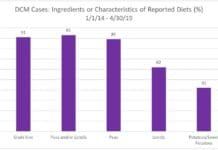
Update on grain-free diets and DCM cases in dogs
On June 27, 2019, the United States Food and Drug Administration (FDA) released an update to two previous advisories regarding dog food and dogs...

10 Human Foods for Dogs
There are foods people designate strictly for human consumption which our dogs could (and arguably should) be eating regularly too. Yogurt and eggs top that list. Raw honey is a well-known and tasty way to treat canine ailments like kennel cough and topical wounds. And do you personally know a dog who can resist a scoop of peanut butter when presented with one? These are the more widely accepted human foods for dogs, but there are plenty of other great foods to taste-test with your dog.

Fresh Dog Food: A Review of Refrigerated Dog Food Sold in Stores
Today, more and more passionate, educated, dog-loving entrepreneurs are turning their attention to improving the health of their dogs and innovating new ways to feed quality dog foods. As they do, it's getting more and more difficult to slot the resulting products into categories for review. This is just one of the reasons we've never before reviewed dog foods in this category - for short, we'll call it fresh cooked foods." When you start drilling down into how all these products are made

Training Your Dog to ‘Wait’ and ‘Stay’
can save your dog's life.
Thanks to Morgan Macy, training assistant at The Canine Connection in Chico, CA, for demonstrating these techniques.üStart teaching the food bowl wait" with the food bowl held high. Look for your dog to shift her eyes from the bowl to your face.üClick (or use another marker) to indicate she's doing it right
Thanks to Morgan Macy, training assistant at The Canine Connection in Chico, CA, for demonstrating these techniques.üStart teaching the food bowl wait" with the food bowl held high. Look for your dog to shift her eyes from the bowl to your face.üClick (or use another marker) to indicate she's doing it right
Freeze-Dried Raw Dog Foods: What You Need To Know
Most of the ingredients in freeze-dried diets are raw and/or very lightly processed. All the freeze-dried raw diets we reviewed are grain-free not because we think grains are inappropriate in these foods; it's the food manufacturers who seem to have decided that raw feeders won't buy a product that contains any grain. Many people who feed home-prepared or commercial raw diets to their dogs when they are home replace this diet with a freeze-dried raw food when they travel, or when the dog is left with a sitter who doesn't want to deal with a fresh or frozen raw diet.

Switch Your Dog’s Food Up
I almost never feed my dogs the same food from bag to bag or can to can. I switch foods constantly, rotating among brands, varieties within brands, and forms of food (wet, dry, frozen, dehydrated, home-prepared). All the foods I feed are good ones, I tell my friends and acquaintances; I would never feed just one!

Train Your Dog to Accept Hugs
The process of teaching a dog to tolerate hugging involves either classical conditioning (giving a puppy a positive association with something she doesn't already have an opinion of), or classical counter-conditioning (giving a dog a new association with something she already has a negative opinion of). Either way, the process is similar, but it may go slower if you are working to change an existing opinion rather than simply installing one where none previously exists.

Why Dogs Bark and How to Stop Them
Barking is a natural, normal canine behavior. If you have a dog, you need to understand and accept that sometimes dogs bark! Dogs bark for a variety of reasons. How you work to manage and modify your dog's barking will depend, at least in part, on what motivates him to bark.Step one of any good dog barking modification program is minimizing your dog's need and opportunity to bark. Exercise, an important element of many good behavior modification programs, is useful here as well. A tired dog has less energy, hence less need to bark, and a well-exercised dog tends to be emotionally healthier as well.

Fear Aggression in Dogs
Fear-related aggression most frequently appears between the ages of eight to 18 months, as a young dog reaches maturity. This may be because increased boldness tends to come with maturity. But it's also likely because, over time, aggressive responses are reinforced; the scary stimulus (most often a human, when we're talking about aggression issues) backs off. Initially, a fearful pup generally tries to hide from scary humans by moving away, perhaps crawling under a chair.
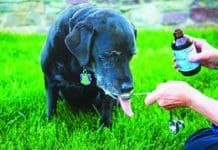
Vitamin D for Dogs
Vitamin D deficiencies in dogs can cause health problems over time, but so can an oversupply. Because vitamin D is fat soluble, it accumulates in body fat. Overdoses can be toxic and even fatal, but some vitamin D is necessary to a dog's health. Vitamin D will aid in the absorption of calcium and phosphate, increases bone cell activity, influences the formation and growth of long bones, and speeds the healing of fractures. Adequate D levels may help prevent heart disease, joint inflammation, skin and coat problems, cancer, vision problems, depression, mental illness, infections, inflammatory bowel disease, dental problems, hyperparathyroidism, and kidney disease.