Subscribe

The best in health, wellness, and positive training from America’s leading dog experts

Home Blog Page 60

Valley Fever in Dogs

Valley fever is a fungal disease that can sicken dogs and humans alike.
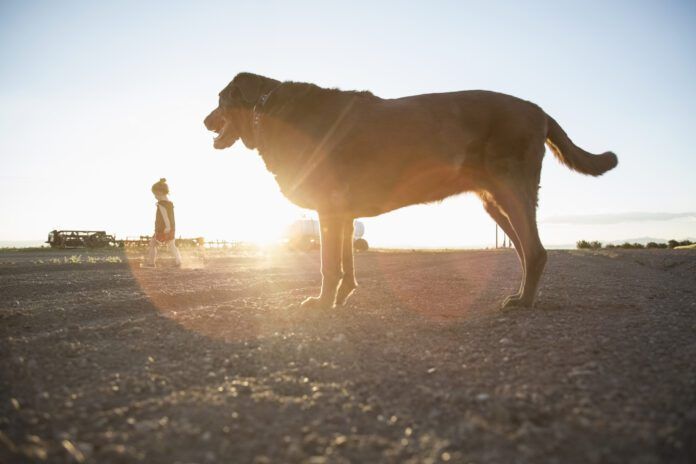
The fungal spores that cause Valley fever are released from soil that has been disturbed; dogs or humans who inhale that dust may contract the disease. According to the California Department of Public Health, cases of Valley fever (in humans) have risen drastically in the past two decades, with between 7,000 and 9,000 cases reported annually in the past few years. Photo by Maisie Paterson, Getty Images.

Valley fever is the common name of a medical condition called coccidioidomycosis (pronounced cock-sid-ee-oy-doh-my-KOH-sis) that can affect dogs and humans alike. The illness is also known as San Joaquin Valley Fever (named for the southern half of California’s Central Valley), desert fever, and desert rheumatism. Valley fever is caused by the inhalation of a species of fungus called Coccidioides that thrives in the soil of semi-arid regions with warm winters. Most dogs who develop symptoms of Valley fever will have the pulmonary form of coccidioidomycosis, presenting with a cough, fever, decreased appetite, and weight loss. However, if the Valle​y fever fungus infection spreads to other parts of the body, dogs can have other signs of illness, such as:​​​​

  • Pain and/or s​welling in joints and limbs
  • Limping (lameness) or difficulty walking
  • Back or neck pain
  • Neurologic signs, including seizures, changes in vision, and loss of muscle control
  • Lumps and bumps under the skin
  • Swollen lymph nodes around the jaw, in front of the shoulder blades, or behind the back legs
  • Skin wounds that drain fluid
  • Swelling and redness of the eye and surrounding skin with pain and cloudiness

How Dogs Get Valley Fever

The Coccidioides fungus grows in the soil of semi-arid regions with warm winters, and can be found as much as 12 inches below the soil surface. This fungus is found primarily in the southwestern United States, including California, Arizona, Nevada, Utah, New Mexico, and Texas, though there have been reports of the fungus being found in south-central Washington state. (It’s so prevalent in California’s Central Valley, that the California Department of Public Health maintains a Valley Fever web page with case rates and other information about its risks.) Internationally, it is endemic to areas of Mexico and several Central and South American countries.

The growth of the Coccidioides fungus is accelerated after a period of rainfall, when microscopic spores called arthroconidia develop on strands of the fungus. Once the soil dries out in the summer, these spores are released into the air – especially if the dried soil is disturbed by natural forces, such as a windstorm or an earthquake, by digging in the soil (as with farming, gardening, landscaping, or during construction), or by off-road vehicles.

Dogs, humans, and many other species of animals can contract Valley fever by inhaling these microscopic arthroconidia. In most cases, the fungal spores remain in the lungs and do not spread to other areas of the body. But if they enter the bloodstream or the lymphatic system, they can spread to any other area of the body, including the brain, bones, joints, skin, lymph nodes, and visceral organs.

Information About Valley Fever in Dogs

-About 40% of dogs exposed to the Coccidioides fungus will become ill.

-Most dogs who become ill with Valley fever have the pulmonary form of the disease, which has a good prognosis if identified and treated promptly.

-Diagnosis of Valley fever is not always straightforward and may require a treatment trial with antifungal medications.

-Antifungal medications have side effects and periodic monitoring of kidney values or liver enzymes will be necessary.

-A small percentage of dogs exposed to the Coccidioides fungus will develop a latent infection. These dogs may take up to three years following exposure to show symptoms of Valley fever. If your dog is ill, be sure to tell your veterinarian about your dog’s travel history and places your dog has previously lived.

Symptoms of Valley Fever in Dogs

Most dogs who develop symptoms of Valley fever will have the pulmonary form of coccidioidomycosis. In these cases, the Coccidioides fungus is contained within the lungs and does not spread to other areas of the body. Some of these dogs may also develop a fever, have a decreased appetite, and experience weight loss.

A small percentage of symptomatic dogs may develop disseminated coccidioidomycosis. This is a condition in which the fungal spores enter the bloodstream or the lymphatic system and spread to other areas of the body. The symptoms a dog with disseminated coccidioidomycosis will experience will vary depending on which parts of the body have been infected.

Dogs with disseminated Valley fever may experience neck or back pain, joint pain, nodules on the skin, and swelling of the eyes and altered vision. If the fungus has spread to the brain, then changes in walking, balance, or behavior may occur. Open skin sores that drain fluid (known as draining tracts) may occur over areas of soft tissue, joints, or bones where the fungus is residing.

Disseminated coccidioidomycosis can also cause fevers that come and go, decreased appetite, and weight loss. Other symptoms associated with specific organ dysfunction may arise if the fungal spores have spread to organs such as the heart, liver, kidneys, and pancreas.

About 40% of dogs exposed to the Coccidioides fungus will develop a cough about one to four weeks after inhaling the fungal spores. A small percentage of dogs may develop a latent infection, remaining symptom free for up to three years after exposure to the Coccidioides fungus before developing a cough or other symptoms.

The majority of dogs exposed to the Coccidioides fungus are asymptomatic, meaning they do not develop symptoms of Valley fever. About 60% of dogs exposed to the Coccidioides fungus will remain asymptomatic.

Diagnosis of Valley Fever

Diagnosing coccidioidomycosis in any animal, including dogs and humans, can be challenging. As of this writing, there is no single test that can definitively diagnose Valley fever. A diagnosis is made by correlating symptoms with possible exposure to the fungal spores, imaging (such as radiographs, CT, or MRI), antibody titer testing, and cytology of affected bodily fluids.

A dog with Valley fever may have thoracic radiographs (chest x-rays) that show an infiltrative pattern to the lungs and enlarged lymph nodes in the chest. But this type of appearance on radiographs is not specifically indicative of Valley fever. Other diseases, such as metastatic cancer, can have the same appearance on radiographs.

There are many different diseases that can cause coughing in dogs, so thoracic radiographs will be necessary to eliminate other possible causes for your dog’s cough. These causes include (but are not limited to) pneumonia, bronchitis, collapsing trachea, and congestive heart failure, all of which have a different appearance on radiographs than Valley fever.

A computed tomography (CT) scan may be more sensitive at detecting spherules within the lungs. This can help differentiate Valley fever from other causes of an infiltrative pattern on radiographs. If a dog that is suspected to have Valley fever is exhibiting neurologic signs, then magnetic resonance imaging (MRI) may show the presence of fungal spherules (regenerating structures that produce more fungal spores) in the brain.

Antibody titer testing may be helpful in determining if a dog has Valley fever. A high antibody titer for the Coccidioides fungus in a dog showing symptoms of Valley fever is supportive of a diagnosis of coccidioidomycosis. However, some dogs may not develop antibodies for several weeks after becoming ill, so a negative antibody titer does not rule out Valley fever.

Cytology (examination of cells under a microscope) of the patient’s bodily fluids (exudates) may reveal the presence of fungal spores. If your dog is coughing, a procedure called a transtracheal wash can be used to recover fluid from the lower airway for analysis. Fluid from draining tracts of the skin can also be analyzed for the presence of spores. If a spherule has not yet ruptured and released spores, then a cytology test may be negative even if a dog has Valley fever.

Sometimes a treatment can be used as a diagnostic tool. If a dog responds to a specific treatment, then that may be supportive of a diagnosis. A treatment trial with antifungal drugs may be used as a diagnostic tool if:

  • the dog is exhibiting the symptoms of coccidioidomycosis
  • the dog lives, has lived, or has traveled to a geographic area known to be endemic for the Coccidioides fungus
  • tests for Valley fever have been negative
  • other causes of the dog’s symptoms have been ruled out
  • the dog’s symptoms have not responded to other treatment regimens

Treatment of Valley Fever

Coccidioidomycosis is treated with a lengthy course of antifungal drugs. These medications include amphotericin B or one of the “azole” class of antifungal drugs: ketoconazole, itraconazole, fluconazole, or posaconazole. Sometimes a combination of an azole drug with anti-fungal drug called terbinafine is used.

Amphotericin B is only available as an injectable drug, not an oral medication. The most common side effect of this medication is kidney damage. This damage is often reversible but may take several months after discontinuing amphotericin B for the kidneys to recover.

The azole class of medications can cause liver damage. Like amphotericin B, this damage is often reversible once the medication is discontinued. Elevated liver enzymes can also be observed in dogs taking terbinafine.

Dogs receiving amphotericin B will need to have their kidney values closely monitored. Liver enzymes will need to be periodically monitored in dogs receiving terbinafine or one of the azole class of drugs.

Treatment for the pulmonary form of coccidioidomycosis typically requires being on antifungal medications for three to six months. The response to treatment is usually good and most dogs with the pulmonary form will make a complete recovery.

Dogs who have disseminated coccidioidomycosis will likely require treatment for a year or more. Some dogs with this form of the disease may require treatment for the remainder of their lives. A small number of these dogs do not recover from their illness while some recover but have lifelong effects depending on where the fungal spores spread in their bodies.

How to prevent Valley Fever in dogs

If you live in an area endemic to Valley fever, then exposure to the Coccidioides fungus is unavoidable. But there are things you can do to minimize the risk of your dog becoming ill with Valley fever:

  • Avoid outdoor activity during or just after dust storms and in the days following an earthquake
  • Avoid walking near construction sites or other areas where the soil is being mechanically disturbed
  • Do not allow your dog to dig in desert soil
  • Plant ground cover on your property that reduces dust circulation, such as grass or gravel

Although dogs can develop Valley fever at any time of year, the number of cases reported in both humans and animals is highest from mid-summer to late autumn.

A vaccine for coccidioidomycosis is currently under development and has shown promise in preventing Valley fever in dogs.

 

Download The Full March 2024 Issue PDF

  • If Your Dog Won’t Eat
  • Carpet Cleaners
  • All About Dog Dentals
  • How to Get Pups to Sleep
  • Smart Collars
  • Dog Training for Kids
  • Hygromas
  • Looking for Dr. Perfect
  • Teach Your Dog to Relax
  • Vaccine Reactions
To continue reading this article or issue you must be a paid member.

Join Whole Dog Journal

Get full access to Whole-Dog-Journal.com – more than 4,000 articles – for just $20.
Join today and save 30% off our full price.
Already a member?
| Forgot your password? | Activate Web Access

How Often Do You Walk Your Dog?

19
Walking your dog at least once a day has health benefits for both the dog and their owner.
We all know that taking our dogs for at least one walk every day would increase our dogs’ and our own health and happiness of our dogs. But how many of us walk our dogs regularly? Photo by Olga Pankova, Getty Images

I read an article in the Washington Post the other day about walking your dog. The gist of the article was that failing to take your dog on walks can be detrimental to your dog’s physical and emotional well being.

I agree – and I suspect the majority of dog owners don’t walk their dogs regularly.

I’m not judging anyone. Even I, a dedicated dog owner who strongly believes in the benefits of dog walking, who loves going for walks with my dogs, who lives in a beautiful area for walking, who is healthy and has healthy dogs  . . . even I often fail to walk my dogs.

I was a lot better about walking my dogs regularly when 8-year-old Woody was young and needed daily exercise in order to behave well at home. When he was a youngster, he needed double-digit miles per week of off-leash running if I didn’t want the house to be chewed apart. Today, though, he’s perfectly behaved whether we get out for walks or not.

Two-year-old Boone has been lower-maintenance. He would love more walks than he gets, but he doesn’t fall apart behaviorally if he doesn’t get them.

I do have the advantage of living on two completely fenced acres, and my dogs can run and play outside any time they want. They do play daily chase games and do a few laps of the property every day – but the overall mileage of those activities isn’t anything like a walk. And the stimulation they get from exploring our property isn’t nearly as enriching as going someplace else and sniffing new places and seeing new things.

Is it the fact that I live in a rural area? I feel like it’s far more common for people who live in urban and suburban areas to walk their dogs daily than for us rural dwellers?

Does the number of dogs that a person owns affect how often they get walked? I wonder if owning more than one dog decreases or increases the number of walks the dogs receive.

What about you guys? How often do you walk your dogs, and what factors affect your dog-walking habits?

How to Comfort a Dog in Heat

The best way to comfort a dog in heat is to not have her go through the cycle.
Many intact female dogs feel grumpy and out-of-sorts during their heat cycles. Be especially patient with them at this time! Photo by Albina Gavrilovic, Getty Images.

Intact (unspayed) female dogs typically have two heat cycles per year, driven by rising and falling levels of estrogen and progesterone. These changes in hormone levels can change how your dog feels physically and emotionally. In the days leading up to the start of her heat cycle, a female dog may start to act skittish and startle easily. She may start to act clingy and always want to have you in sight. Her appetite may decrease and she may become less active.

Comfort a dog in heat by giving your dog a little extra attention during her heat cycle. Make sure she continues to eat but don’t force her to eat more than she wants. Let her sleep if she needs it and keep noisy distractions to a minimum.

Once her heat cycle has started, your dog will begin spotting blood from her vulva. She may spend a lot of time licking her vulva to keep that area clean. Dogs with thick fur may require your assistance with keeping the fur around the vulva free of discharge.

You can help support her by making sure that her bedding is always clean. Consider laying an absorbent pad (like a pee pad) on top of her bedding to absorb discharge from her vulva. Dogs who experience moderate to heavy discharge may benefit from wearing a sanitary diaper until the amount of discharge begins to decrease.

How to prevent unwanted pregnancy during your dog’s heat cycle

A dog’s heat cycle typically lasts about two to three weeks. There are two phases to a dog’s heat cycle. Intact male dogs will be attracted to her during both phases, but she will become receptive to mating and can become pregnant during the second phase.

If you do not want your dog to become pregnant, do not leave her unattended outside during the second phase of her heat cycle. Avoid off-leash walks and dog parks. And most importantly, do not let her out in the fenced-in yard without direct supervision. A fence is no match for an intact male dog who wants to mate with your female dog!

Since her outdoor activities will likely be curtailed during her heat cycle to prevent mating, she will need additional indoor activities to keep her occupied. Consider getting her an interactive puzzle toy to provide her with both mental stimulation and physical activity. Play indoor games of fetch or hide training treats inside boxes or blocks that she can search for and find.

The best way to provide comfort to a dog in heat is to not have her go through a heat cycle at all! Having your dog spayed eliminates the risk of developing pyometra (a life-threatening infection of the uterus) and minimizes the risk of developing mammary cancer. Talk to your veterinarian about the best time to spay your dog.

What Is a Dog Training Platform?

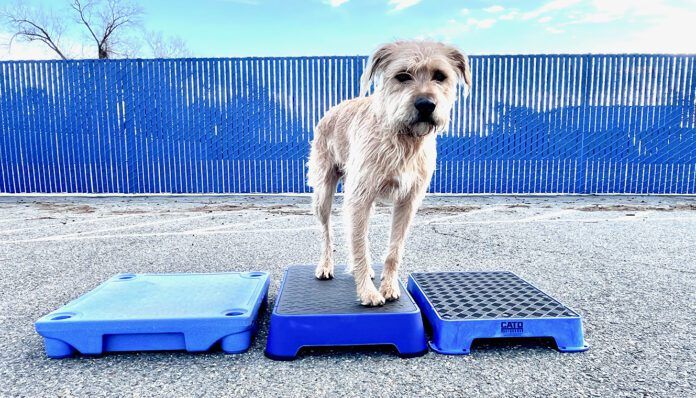
A dog training platform is used to train a dog to stay.
Handy humans can build a box or platform for training your dog, but the ones that are designed and made specifically for dog training are strong, splinter-free, secure and level, weather-resistant, and non-slip.

Many trainers use a platform or a box, also called a “place board,” to help a dog understand the concept of remaining in a designated spot. In the beginning stage of training, the dog is encouraged to step onto the platform or box, either with a food lure or toy, and reinforced whenever his feet come into contact with the platform. Reinforcement stops or is withheld when the dog steps off the platform. The difference in the sensations of stepping or being on and stepping or being off the platform helps create bright-line criteria – for both the handler and the dog – of what will be reinforced and what will not.

Most dogs quickly start volunteering to step onto the dog training platform more frequently and remaining there for longer periods of duration – which the handler continues to reinforce with food treats. Then the handler can start using cues and reinforcement to shape the specific behaviors she wants from the dog.

Behaviors that can be easily taught using a dog training place board include:

  • Stand/Stay
  • Sit/Stay
  • Down/Stay
  • Back Up (dog is encouraged to step onto the platform with his back feet only)
  • “Front” (a behavior that is used in obedience competition, requiring the dog to come directly to the handler and sit very straight close to and in front of the handler)
  • “Return to Heel” (again, used in obedience competitions, requiring the dog to leave the front position, walk clockwise around/behind the handler to a position at the handler’s left side, i.e., the “heel” position)
  • “Side” or “Swing Finish” (another obedience move where the dog pivots counter-clockwise from a front position to the heel position on the handler’s left side)

To start teaching each of these behaviors, the platform is placed in the goal location (relative to the handler) and the dog is lured or shaped into the desired position, and reinforced for reaching that location, going to the location on cue, remaining in that location on cue, and eventually, going to and remaining in a certain position in that location on cue.

Denise Fenzi, founder of Fenzi Dog Sports Academy, an online school dedicated to providing high-quality instruction for competitive dog sports, frequently uses platforms when training her dogs. “I use them because it’s black and white for the dog,” she says. “It’s easier at first for them to learn Stay by staying on the platform as opposed to staying in an undefined spot on the ground. The same attribute makes place boards hard to beat for teaching the dog precision work – where the dog needs to be in a very specific position.”

Fenzi has another tip about using platforms to work on the “Stay” behavior. She often “sends” her dogs to a place board from a distance, rather than positioning them on the platform and then walking away. This way, the act of walking away doesn’t predict a recall or draw the dog off the platform to follow the handler.

Dog Training Platforms for Fitness

A arrangement of three dog training platforms viewed from the top down.
From left to right: Blue-9’s KLIMB, Huntmark’s Dog Training Place Board, and Cato Outdoors’ Cato Board. All three feature non-slip surfaces and can be used and stored outdoors.

You can also use a dog training platform to lead your dog through exercises that will build his fitness, coordination, and flexibility. Veterinary physical therapy or fitness instructors often use dog training platforms to encourage the dog to step up and down and to perform certain stretches in a slow, controlled manner.

Cato Outdoors, maker of the Cato Board dog training platform, has a collection of videos that show you how a platform can be used for dog fitness exercises here.

Best Dog Training Platforms

There are three companies that make place boards for dog training:

Blue-9 is the maker of a platform it calls the KLIMB, a 24” by 24” training platform that can be used without legs for a height of 4 inches, with optional short legs (set of four sold separately) for a height of 6 inches, or with the standard (included) legs for a height of 12 inches. KLIMBS can be attached to other Klimbs to create larger platforms, and can even be stacked securely to create taller platforms. $160.  Blue-9 offers a very good (and free!) guide to teaching your dog to use a platform. It can be downloaded from the Blue-9 Resource Library; click on KLIMB Training Quick Start Guide.

The Klimbs dog training platform offers optional legs to adjust platform height.
Used without legs, the KLIMB platform is 4 inches tall. It comes with a set of legs that make the platform 12 inches tall; an optional set of legs can be purchased to make it 6 inches tall.


Whole Dog Journal is reader-supported. If you purchase through links on our site we may earn a commission. Whole Dog Journal does not accept money for its food and product reviews.

The next two dog training platforms are rectangular, which helps dogs hold their position (being narrower, it’s harder for a dog to turn around while staying on the board):

Cato Outdoors makes the Cato Board, which comes in two sizes, 11 different colors, and can be ordered with either a rubber non-slip surface or an artificial turf surface. The original board measures 24” by 16”, is 3.5 inches tall, weighs 7.7 lbs, and costs $79. Very large or long dogs might be better served by the Cato Board XL, which is 36” by 12” inches and 3.5 inches tall; it sells for $95.

Huntmark’s Dog Training Place Board is available in dark blue or “optic yellow.” It measures 28” by 18” and is 4.5 inches high. It can support up to 200 pounds, and has non-skid rubber feet and a raised rubber traction surface. It weighs 8 lbs 11 oz. $86.

Is Coconut Water Good for Dogs?

0
Coconut water is good for dogs in the right circumstances and small amounts.
Though you can tap a coconut to extract the liquid inside to enjoy with or serve to your dog, most people buy coconut water in stores. It can be a sweet treat for your dog, but check with your vet first if your dog has kidney disease. Photo by ThamKC, Getty Images.

Dogs can have coconut water and they usually enjoy it because of its sweet taste. However, it shouldn’t replace plain water as your dog’s primary source of hydration though it can safely be offered in small amounts or added to food or water. Coconut water can help dogs recover from vigorous exercise, especially in hot weather, and it is said to aid digestion. As with any new food, start slowly and monitor your dog’s response. 

There are many brands of coconut water, but plain coconut water that has nothing added is the safest for dogs, as some products contain added sugar, fruit purees, or other ingredients that contribute to weight gain. Check labels to be sure the brand you’re looking at does not contain harmful ingredients like xylitol, which is toxic to dogs.

While figures vary, the average cup (245 grams) of 100% coconut water with nothing added contains about 45 calories, 40 to 65 milligrams (mg) of sodium, 10.4 grams of carbohydrates, 9.6 grams of sugar, 0.5 grams of protein, 24 mg of vitamin C, 400 to 600 mg of potassium, and 0.5 mg of manganese. Magnesium, calcium, iron, phosphorus, zinc, and copper are also present in small amounts. Plain coconut water contains zero fat or fiber. Its sodium and potassium are electrolytes, which are minerals that carry an electric charge. They help regulate hydration, maintain pH balance, transmit nerve impulses, and facilitate muscle responses.

If your dog has been diagnosed with kidney disease, consult with your veterinarian before offering coconut water. In some cases, kidney disease depletes potassium so it’s a helpful supplement, but in other cases, coconut water’s extra potassium may be detrimental.

In addition to the water it contains, fresh coconut meat can be a tasty treat for you and your dog to enjoy together. Just be careful when you open the coconut; the husk and shell of the coconut are potential choking hazards. Dogs can also eat dried coconut in small amounts as a treat, but just as with coconut water, check the ingredients for added sugar, which your dog does not need.

Dog Heartworm Symptoms and Prevention

The symptoms of heartworms in dogs start small but get increasingly serious without treatment.
A sunrise hike is fun for dogs and owners, but since it’s also a prime mosquito bite time, be sure your dog is on a heartworm preventative. Credit: Justin Paget | Getty Images

Heartworm in dogs is deadly and spread by the bite of a mosquito infected with Dirofilaria immitis, which is a parasitic roundworm that migrates to the heart and lungs. Early on, symptoms of heartworm infection are difficult to notice. As the disease progresses, your dog will find it difficult to breathe, as his lungs and heart struggle against the heartworm invasion to support his life.


Symptoms of Heartworm in Dogs

The symptoms seen in a dog with heartworm vary with the stage of disease and the severity of the infection. Early on, your dog may not show any signs of heartworm disease. As the disease progresses, signs related to your dog’s heart and lungs will become apparent and deadly.

The symptoms of heartworm often develop like this:

  1. Lethargy: Your lively, athletic dog may simply have less “get up and go.”
  2. Persistent Cough: Next, a mild cough without any nasal or ocular discharge may appear.
  3. Loss of Appetite: The cough is often accompanied by weight loss and a decrease in appetite.
  4. Severe Weight Loss: Heart failure progresses and weight loss becomes severe (called cardiac cachexia).
  5. Swollen Abdomen: You might notice a distended abdomen as fluid backs up from the stressed heart.
  6. Worsening Cough: The cough will become more frequent, and exercise intolerance will be more pronounced.
  7. Difficulty Breathing: The dog begins to struggle to breathe as the heart and lungs try to get oxygen out to all his tissues.

In rare cases, a large number of heartworms will disrupt blood flow within the heart causing a cardiac crisis known as caval syndrome. Characterized by symptoms including collapse, pale gums, rapid heart rate, and fast, irregular breathing, caval syndrome requires urgent surgical intervention to remove the worms. The surgery is risky and the prognosis for dogs with caval syndrome is extremely guarded.

Heartworm can be treated, but damage already done to the heart tends to remain. Treatment is not without risk but without treatment, your dog will die of heart failure. Clearly, this is a disease it is best to prevent.

How Do Dogs Get Heartworm?

When an infected mosquito bites a dog, it injects an immature heartworm stage called microfilaria into the dog’s bloodstream. The microfilaria eventually develop into mature heartworms (they look like long, white worms) that usually reside in the dog’s heart.

Heartworms are found in every state, and the Companion Animal Parasite Council tracks where they are. You can track forecasts for heartworm infections here.

Heartworm Prevention

Start prevention following an annual screening test to verify your dog does not have heartworm already. The FDA-approved heartworm preventives are ivermectin, milbemycin oxime, moxidectin, and selamectin. These are all noted by the American Heartworm Society aseffective and safe medications when used as directed. Most of these are given as monthly oral doses. Treatment is recommended year-round.

Note: Some dogs (mainly collies, herding breeds, and mixes with these breeds) react to ivermectin due to a genetic defect known as MDR1. Options without ivermectin are best for those dogs, although the dosage in most monthly preventives is low enough to avoid toxicity.

How to Do CPR On a Dog

Knowing how to do CPR on a dog can help to save a furry friendly member of your family.
Our dogs are family members, so knowing CPR, rescue breathing, and other life-saving techniques is important. Credit: Klaus Vedfelt | Getty Images

If your dog is not breathing, knowing what to do and how to do it before you encounter such a situation could truly mean the difference between life and death. Rescue breathing is a critical part of CPR (cardiopulmonary resuscitation) for dogs.


Dog owners who know how to perform rescue breathing, or CPR on a small dog versus CPR on a large dog, very well may save their own dog’s life. The Cornell University College of Veterinary Medicine’s Baker Institute of Animal Health has produced an outstanding graphic that should be on every dog owner’s refrigerator. ProCPR placed an excellent video on how to give CPR to your animal.

What If It Happens at Home?

Can you do it? You have nothing to lose by trying. A study published in Frontiers in Veterinary Science showed that mouth-to-nose rescue breathing was better than nothing and certainly worth a try if your dog is not breathing.

Furthermore, the veterinary CPR guidelines (RECOVER Initiative) state, “It is reasonable to recommend mouth-to-snout rescue breathing for dogs and cats with respiratory arrest or with cardiopulmonary arrest in a 30:2 ratio with chest compressions when endotracheal intubation is not available.”

What does this mean? Well, “30:2” means for every 30 chest compressions you give 2 breaths. You should be giving approximately 100 to 120 chest compressions (2 compressions every second) and approximately 10 breaths per minute (1 breath every 6 seconds).

Mouth-to-nose rescue breathing is not perfect. Some of the problems that arise are gas distention of the stomach, regurgitation of stomach contents, and ineffective breaths.

To administer breaths as effectively as possible, extend the head and neck as much as possible and seal the dog’s lips as tightly closed as you can to prevent air from escaping. You must blow with enough sustained vigor to see the dog’s chest rise and fall. This tells you the lungs have expanded.

Note: If the dog is choking, you need to perform the Heimlich Maneuver on your dog to clear the airway.

CPR on Big Dogs

For chest compressions in big dogs, with one hand on top of the other and the dog on his side, push hard on the lower rib cage behind the front legs. You must push hard enough to compress the rib cage to effectively push blood through the heart.

CPR on Small Dogs

For chest compressions in a small dog, it is sometimes better to use your thumbs. With the dog on his side, one hand grabs the dog’s top line, the other hand grabs the lower chest. With your thumbs facing each other and flat against the ribs behind the elbow start compressions, again with enough pressure to compress the rib cage.

Rescue breathing and chest compressions must be continued until either the dog starts breathing on its own or you arrive at the veterinary emergency center and the professionals take over.

If your dog goes into cardiac and/or respiratory arrest at the veterinary clinic, an endotracheal tube will be inserted into the trachea and rescue breathing will be administered using 100% oxygen. This is obviously the ideal situation, and the most effective way to provide rescue breathing during CPR. Performing CPR while you’re on route to the veterinary clinic is critical. Call ahead to be sure they’re open and available.

The Giardia Parasite in Dogs

Giardia in dogs is a protozoal infection associated with drinking unsafe water.
The incidence of giardia is long associated with dogs drinking water while hiking in wooded areas, but it is common in city dogs as well. Credit: Mikromano | Getty Images

The protozoal parasite giardia in dogs can be a minor nuisance or a royal pain to treat and totally clear. Symptoms of giardia in dogs include diarrhea, maldigestion, and malabsorption. Diarrhea is often intermittent, based on the parasite’s life cycle. Giardia is contagious in dogs as long as giardia cysts remain in the feces. It can be difficult to clear the infection.

Diagnosis of Giardia in Dogs

Stools from dogs with giardia may be soft or watery or appear slightly green. Occasionally, blood or mucus may be noticed. Healthy adult dogs seem to be somewhat naturally resistant, while puppies may fail to thrive.

Diagnosis of giardia is generally by a fresh fecal exam or sending samples off to check for giardia antigens. Due to the intermittent shedding, the diagnosis can be missed, especially by fresh smears only.

Giardia Treatment

There is no FDA-approved treatment for giardia in dogs. Metronidazole and febendazole are often used off-label separately or together.

A dog may need repeated giardia treatments to totally clear the infection as some resistance appears to be developing. Symptomatic treatment for giardia diarrhea includes adding fiber to your dog’s diet until his stools are normal. Follow-up veterinary fecal checks for giardia are critical to ensure you have rid the dog of the giardia parasite.

Giardia Is Contagious

As long as viable giardia cysts are passed in the stools, your dog will remain contagious to other dogs and to a lesser extent to people. Assume that during the time your dog is being treated, he is contagious.

Clean up poop immediately and consider having any dog or puppy who is infected use a separate area for elimination. It can be worthwhile to check all dogs in the household if you are having trouble clearing an infection as some adults will be asymptomatic carriers.

Reinfection with Giardia

One of the problems with gaining control of a giardia infection is cleaning the environment to prevent reinfection. Bleach and Parvasol can be used to clean bedding and floors. Steam clean carpets. Bathe your dog to remove any fecal material or cysts on his coat.

Unfortunately, giardia cysts can survive outdoors for months in a moist environment. Direct sunlight and dry conditions will kill cysts. It can be difficult to clear giardia from shelters and sites like daycares once it gains a foothold.

Also known as “beaver fever,” giardia in dogs has been associated with dogs drinking water out on hikes in the woods, but it is common in urban dogs as well with municipal water systems taking the blame.

Do You Know Your Dog’s Normal Heart Rate?

0
A female doctor checks a puppies heart rate during a visit.
Place the stethoscope on the dog’s lower chest, behind his left elbow, to listen for his heart rate. Credit: AquaArts Studio | Getty Images

Learning your dog’s normal vitals – temperature, pulse, and respiration – is useful for detecting health problems or tracking your dog’s response to medication. It is also good information to provide when calling your veterinarian or an emergency clinic to make an urgent appointment for your dog. And, with the crunch on emergency clinics, the more information you can provide over the phone, the more efficient your veterinary visit will be.

Normal Heart Rate for Dogs

The normal heart rate for dogs is 70 to 120 beats per minute. This is what is called a “resting” heart rate, which is how fast your dog’s heart beats when he is just hanging out. Stress and exercise will both cause the heart to beat faster.

Large dogs tend to have a heart rate on the lower end, while small dogs have a faster resting heart rate. Your dog’s fitness also will impact his resting heart rate. Extremely fit, athletic dogs tend to have a slower resting heart rate. Obesity increases the heart rate and the chance of heart disease in dogs.

You can evaluate the heart rate for dogs a couple of different ways. A stethoscope is fantastic, but you probably don’t have one lying around (you can purchase one for less than $25). Instead, try placing your hand over the lower left side of your dog’s chest just under his left elbow to feel his heartbeat. This may be difficult in chubby dogs. Count the number of beats that you feel in 15 seconds, then multiply that number by 4 to get the beats per minute.

You also can feel your dog’s pulse. The inside of the thigh is a great spot to feel a dog’s pulse, or you may be able to feel it on the back of his carpus (wrist).

A heart rate that is abnormally too high or too low should cause you to seek veterinary attention.

Normal Dog Respiration Rate

The normal dog respiration rate is 15 to 30 breaths per minute. Once again, these number are for a “resting” rate. Exercise and stress can cause your dog to pant more rapidly.

To evaluate your dog’s respiration rate, wait until he settles on his own in a position of his choice. Then watch as his sides expand and contract with each breath. Each in and out counts as one breath. Count the number of breaths he takes in 15 seconds, then multiply that number by 4 to get the breaths per minute.

If your dog is panting, wait until he stops panting to count his respiration rate.

Normal Dog Temperature

The normal dog temperature is 100°F to 102.5°F. Knowing his normal body temperature will help you gauge if he has a fever. The most accurate way to take a dog’s temperature is with a rectal thermometer. I recommend buying a digital thermometer (they are much faster than mercury thermometers, plus safer if broken) and clearly labeling it for dog use only so it isn’t confused with your human thermometer.

An Open Letter to Craigslist and Facebook:

11
Puppies await adoption in shelter.
Listings for puppies from unscrupulous breeders are a frequent site on Facebook and Craigslist are a frequent site in spite of being prohibited by those platforms. Credit: Manuel Schafer | Getty Images

Dear Craigslist and Facebook,

Please stop helping people sell dogs on your sites. Oh, I know, you say you don’t allow these sales – that these activities are prohibited by your terms of service – but you do absolutely nothing of value to stop them. Backyard breeders wouldn’t be able to succeed without you!


Facebook, when I search your site for “puppies for sale,” I do get a warning page that says, “Are you sure you want to continue? This search may be associated with posts that encourage harmful behavior to animals. Animal abuse and the sale of live animals between private individuals is not allowed on Facebook.”

A Facebook warning message detailing that live animal trading is not allowed.
If you search for puppy breeders on Facebook, you may get a pop-up that looks like this…


But the two options from that page are “Continue” or “Learn more” – and if I click on “Continue,” I am served up a variety of pages from which I can shop for puppies! That’s an incredibly useless warning.


A Facebook listing showing puppies for sale.
… but it’s completely toothless, because if you click “Continue,” you will be served up pages for any number of puppy breeders.


Craigslist, I know that you allow other users to monitor and “flag” posts from breeders, but seriously, that’s a joke. It would take an army of volunteers working around the clock to flag the ads for puppies appearing in the hundreds of local craigslist pages in the U.S. Also, each ad needs to be flagged numerous times before it gets removed; why not just remove the entire “pets” category?!

I’ve seen it mentioned on other forums that the “pets” page on craigslist can be used for good, to help people rehome individual animals. Unfortunately, that’s just not how the page is used by the vast majority of users, despite the fact that everyone who sells puppies now asks for a “rehoming” fee. Give me a break: These pages are a cesspool of ads for breeders, plain and simple.

A Craigslist advertisement showing a wide list of puppies and kittens for sale.
There are far more ads for puppies for sale on craigslist than ads for individual animals that truly need to be “rehomed.”

Note that I’m not against breeding altogether – but breeders who are truly responsible produce such a small number of puppies that they have long waiting lists of buyers; they don’t have to advertise to find homes for the far-too-many pups they force their females to churn out.

Also, I would guess that almost every dog or puppy who gets sold through craigslist or Facebook ends up reproducing. Most states have legislation requiring that shelters and rescues adopt out only animals who have been spayed or neutered. There is no such requirement for buying a puppy from a breeder someone finds on Facebook or craigslist, and these surgeries are expensive. Also, the people who go puppy shopping through these sites are largely inexperienced owners who don’t know how to responsibly shop for a dog; they probably aren’t aware of how much spay/neuter surgery will cost, or when it should be performed – and don’t know how to prevent their new dog from reproducing in the absence of such surgery!

Are there “good” breeders advertising their wares on Facebook and craigslist? I don’t know anyone who would answer “yes” to this question. These are people who are straight-up using their pets for income. While some have improved their “professionalism” to the extent that they can take decent pictures of their merchandise, many more show puppies growing up in squalid, dirty environments to mothers that look unhealthy and unloved.

A Belgian Shepard with a litter of puppies in a kennel surrounded by cinderblocks.
This is not how quality breeders house their mothers and puppies, but you’ll see lots of pictures of puppies being raised in squalid conditions like this on craigslist.


And if you need even one more reason to stop the flow of income to craigslist and Facebook breeders, please go visit any “open admission” municipal shelter near you – not a pretty, well-funded “limited admission” shelter, but the kind that is legally required to take in all the unwanted dogs in an area. Ask how many kennels they have (what number of dogs the facility was designed to hold) – and how many they are actually holding. (Hint: It’s gotten really bad in the past few years since covid; every shelter in the country is screaming about too many dogs and not enough adopters, which is what makes these ads for backyard breeders on your sites just that much more galling.)

PLEASE, shelter and rescue workers and volunteers are BEGGING you: Put an end to these ads. Ban these pages. Without free advertising and a ready market for their puppies, people will be forced to slow or stop breeding (after a glut of surrendered puppies and breeding animals end up in the shelter, of course).

PS: If for some reason, you just can’t bring yourself to cut off these loathsome users, here’s another idea: Charge a pretty penny for the ads, and then donate the income to nonprofit spay/neuter providers. If there were free spay/neuter surgery available to anyone who wanted it for the dogs they bought from an ad they saw on Craigslist or Facebook, there would be MANY fewer dogs being given away, abandoned on the streets, and surrendered to shelters.

Do Dogs Really Watch TV?

Some dogs do watch TV and react to whatever they see on the screen.
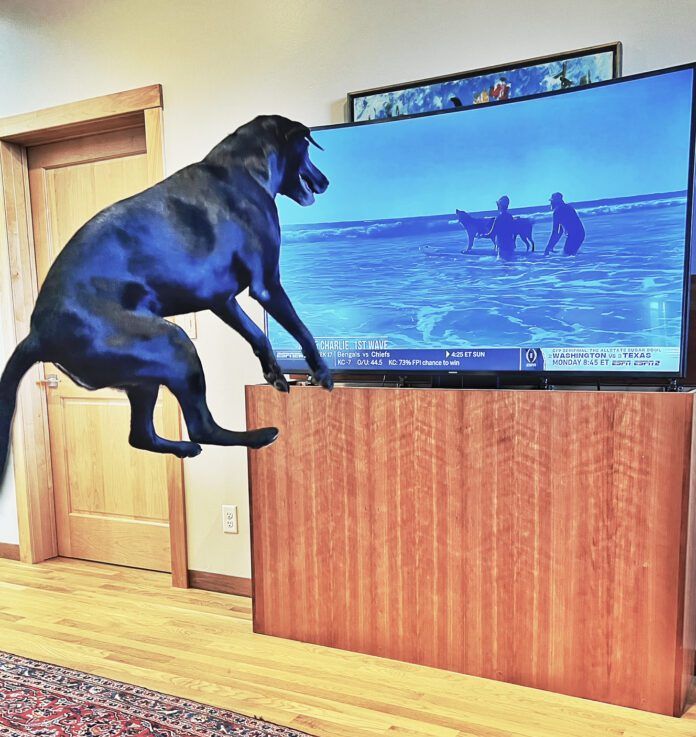
The author's Lab, Blue Sapphire, ignores humans who appear on TV, but gets very excited when she sees dogs on the screen, especially if the dogs are doing something active. Her owners sometimes turn the TV off or change the channel if dogs appear in a commercial, at least until it’s over! Photo by Stephen S. Nagy

Dogs’ vision is a little different from ours. Their eyes have more rods than cones, so they are more sensitive to motion and have better night vision than humans. Dogs experience colors differently, too. They are more likely to notice the contrast between blue, green, and yellow objects, while red and white are less interesting to them. Despite these differences between dogs’ vision and ours, many dogs watch TV and recognize things that are of interest to them.

What do dogs like to watch on TV? There are lots of things on TV that we watch and dogs ignore, but most dogs recognize and will pay attention to other animals on the screen. For some dogs, this attention will be momentary and be limited to animals – especially dogs – who are running, barking, or engaged in activity, but other dogs will watch any animal doing anything on TV. If a program or commercial features high-pitched sounds, whistles, squeaky toys, or barks, it’s more likely to trigger a response.

Why do some dogs watch TV and others don’t? Young dogs, dogs with little TV experience, or dogs with strong prey drives may act as though animals on television are there in the same room with them, perhaps behind the TV, while some dogs realize right away that the images aren’t real. The fact that televised animals don’t smell like anything probably makes them less interesting, as dogs depend as much on their amazing sense of smell as their vision.

Your dog may have already demonstrated that televised animals are fascinating, but if that hasn’t happened yet, pay attention when pet food ads, commercials featuring dogs, or nature programs come on. If their colors are mostly blues, greens, or yellows, the action should capture your dog’s attention. Look for focusing eyes, alert expressions, changes in posture, head tilts, tail wags, or expressive sounds like growls, barks, or whines. You’ll be able to see whether your dog is interested, enjoying herself, uncomfortable, or indifferent.

Should you leave the TV on for your dog?

That depends on your dog and the programs. Some veterinarians discourage the practice because they have seen dogs who have injured themselves while chasing something on the screen or dogs who have been frightened, confused, or stressed by sights and sounds. Action movies may interest dogs because of their motion, but dogs are less likely to enjoy explosions, fireworks, arguments, or gunfire. Make it easy for your dog to stay or leave the TV area while you’re away. Behavioral experts remind dog owners that televisions can’t substitute for human companionship, but familiar sights and sounds may help dogs relax or entertain themselves during the day.

There is even a TV channel for dogs. As the DogTV  website explains, “We’ve worked with experts like Professor Nicholas Dodman at Tufts University, Niwako Ogata of Purdue University, and organizations like the Center for Canine Behavior Studies to learn from their observations.” The channel’s colors and high number of frames per second coordinate with canine vision, and its offerings range from stress-reducing scenes of dogs relaxing to dogs enjoying more stimulating activities, such as surfing at the beach.