Home Blog

Why Does My Dog Show His Belly?

A dog shws it's belly when it feels relaxed and wants to show it.
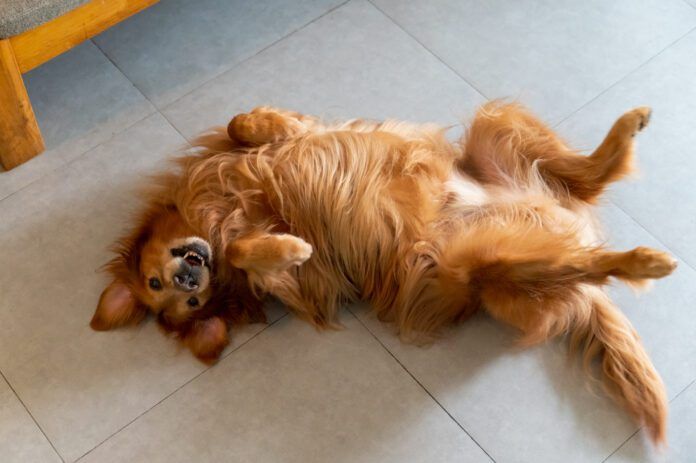
This dog’s happy face and relaxed body show a desire for human contact and maybe a belly rub. Credit: Chendongshan | Getty Images

Dogs go belly up for many reasons, not the least of which is when they roll in the grass or snow or even on the floor to scratch their back. Obviously that activity will have a different look than other belly-up reasons. Let’s explore them together.

It’s pretty easy to know your dog is feeling happy and playful when he’s looking up at you with a doggy smile and joyfully rolling around on his back, possibly kicking out, and enjoying the back scratching. He’s happy, loose, and wiggly, and seeking connection with you.

My dogs have different ways of looking for a connection with a belly rub. Keric, the Caucasian Shepherd, will plop on his side and then roll on his back while stretching his legs out above him parallel to the floor, head tilted to the side while grinning. Meridiana, the Chow Chow, will suddenly drop to the floor and flip on her back, rolling back and forth with a huge grin while grunting and groaning. Both dogs also use this action as an invitation to play with the other, while inviting their human (me!) to participate initially by getting the party started with a hearty belly rub.

Dog Showing Belly Means Discomfort

Dogs can also go belly-up in what some trainers refer to as a “tap out.” A tap out is a stop signal. It means please don’t go further. The dog is saying he is not comfortable with your proximity. It’s a dog request to please not hurt them or make them feel even more stressed.  Think of the frightened puppy meeting a big dominant dog for the first time. The puppy is scared and feels vulnerable. His ears are probably back, and he stays still, not playfully rolling about. It’s a belly-up position showing submission.

Tap Out vs. Belly Rub Request

These are distinct differences in the body language of a tap out versus a belly rub request.

When dogs are doing a tap out, their body language is more of what some might call submissive. Their front legs may be tight up on their chest. Their mouths will look tight.  Their tails will likely be tucked or hugging the line of their body.  Their ears will likely be back. Their body will be notably rigid.

Now if a dog is truly inviting a belly rub, they will exhibit more of what we consider a dog-feeling-safe body language. That includes a more rounded and relaxed looking position with legs stretched out versus rigidly tight. Their mouths will look relaxed, and their tongue may be hanging out. Their eyes will be much softer looking. Their body will look more stretched than poised. They will be more likely to lean into touch than shrink away from such.

Learn to Read Belly Up in Dogs

Tap outs don’t look friendly to the professionally educated eye but because of a lack of education on the subject to dog parents, there is unfortunately an assumption that any belly-up position by a dog is an invitation to rub said belly. This is not true. Many dog bites can be prevented by learning more about what a relaxed position inviting physical contact looks like versus a request for safety and some personal space.

Remember, while dogs may want to be close to a human for comfort, they may not want to be touched in that context so placing themselves next to a human is not an invitation to touch. What you must look at is the whole context. If a dog does place himself next to you, even if this is your own dog, looking at the context that includes body language so that you are respectful of their body autonomy will go a long way toward having earned that dog’s trust moving forward.  When we know more, we do better.

How To Train a Dog to Take Treats Nicely

Knowing how to train a dog to take treats nicely can prevent the dreaded treat shark and nipped fingers.
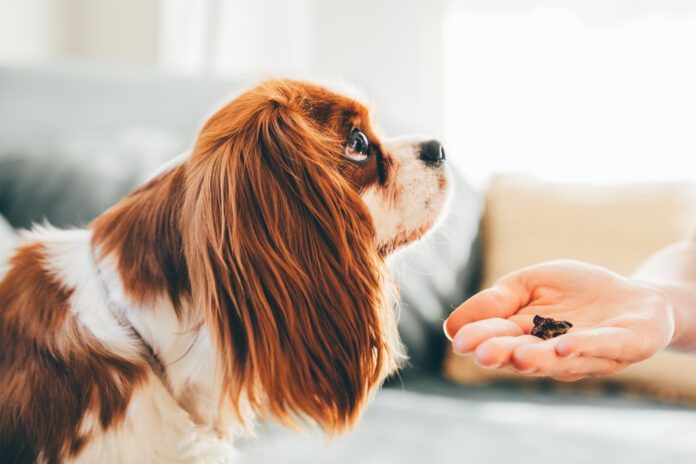
Zen Cookie Training begins with teaching the dog that in order to get a treat, they need to wait politely for it. No grabbing allowed! Credit: Maria Korneeva | Getty Images

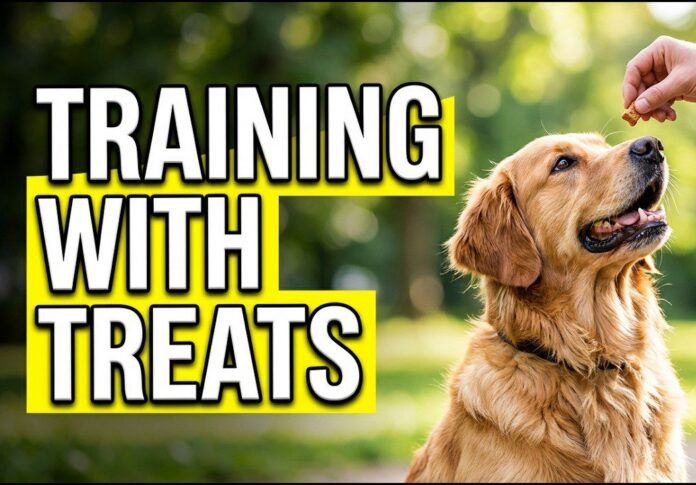
Training with treats is great—right up until the moment your dog seems to become a starving land shark and you encounter teeth as you deliver the treats. Ouch!

Sound familiar?

Why Dogs Snatch Treats from Your Hand

Dogs who take treats roughly, or who have what trainers call a “hard mouth,” aren’t doing so maliciously. It’s more likely that they lack impulse control and are simply reacting to wanting something in the moment.

How To Teach Your Dog to Take Treats Nicely

Here are some tips to help save your fingers and teach your dog to take treats gently.

Practice Impulse Control

Helping your dog manage his desire for instant gratification will prove beneficial in many situations. The following methods will help your dog learn to control himself around food.

Zen Cookie Training is a great way to get started. This teaches your dog that to get the treat, he must leave the treat.

To begin, close a low-value treat up tight in your hand and present your fist. Ignore your dog’s efforts to lick, paw and otherwise get you to open your hand. Watch for the moment where he stops actively trying to get the treat. (Even if the pause seems to be him thinking, “What the heck, this is weird!”) Mark his lack of pursuit with a “Yes!”, “Good!”, or a click if you use a clicker. Then present the treat in your flat palm at his chin and invite him to “get it.”

Build up to watching your dog intentionally pause or even lean away from the food before you mark. If your dog attempts to snatch the cookie during your delivery, say nothing, close your first and try again.

As your dog gets good at the game, start presenting the cookie in an open palm, closing your fist if he reaches for the cookie without being invited. You can even work up to your dog both backing away from the treat and offering a moment of eye contact before releasing him to the treat.

Pro Tip: Don’t think of this as a formal “leave it” behavior. This technique works best when the cookie itself is the cue. We want the presence of food to mean, “be patient,” not you hearing you say, “leave it.”

Working on impulse control in other settings can also be helpful, as it disrupts the habit of “act first, think later.” Teaching your dog to pause at the door, hold a sit-stay while you place the bowl on the floor or to relax on a mat can help reinforce the general idea that, “rushing gets me the opposite of what I want.”

Pay Attention to How You Deliver Treats

Presentation and timing matter, especially if your dog is still learning impulse control. Pinching the treat between two fingers is like dangling a worm in front of a fish—it makes it more likely your dog will want to snap-and-grab the treat. Similarly, if you’re slow to deliver the treat, an excited dog is likely to jump for the food and catch your fingers in the process.

What to try: Instead of pinching the treat between two fingers, place the treat at the edge of your palm, secure it with the inside edge of your thumb and quickly present the treat below the dog’s chin.

Use Lower Value Treats

Like people, dogs have preferences. Treats with an especially meaty small, or treats that don’t come out that often can be especially exciting, and that excitement can lead to a hard mouth.

What to try: Experiment with different treats to find what your dog is willing to work for, but that doesn’t send her into as much of a food frenzy. Some dogs will work for a piece of kibble. Other dogs prefer to train for novel treats.

Treats don’t need to say “dog treat” on the package. Design a taste test to see where different treats rank. For example, if you line up a piece of kibble, a dry Cheerio and a small piece of carrot on the floor, does your dog eat them all?  If so, in what order? Run the test a few times to see if the suggested ranking holds up. The last-to-be-eaten item is on your dog’s lower-value-treat list.

Be Aware of Your Dog’s Emotional State

Dogs often take treats roughly when they’re overly excited and at risk of going over-threshold. “Over-threshold” is when the brain is flooded with adrenaline and cortisol, and the part of the brain that controls learning temporarily goes offline. A dog can’t make good choices when he’s over-threshold.

My dog Saber came to me as a “fence fighter” in his first home. While we don’t have dogs as fence neighbors, we pass dogs behind fences on walks. With a lot of work, we can usually pass calm dogs behind fences without incident. But sometimes, when I reward him for not trying to throw himself at the fence, he’s much more intense with the treats and I feel his teeth.

Competition can also increase your dog’s tendency to snap for treats, especially in mixed company when everybody wants their fair share of the resource. Teaching impulse control around food is especially important in multiple-dog households.

What to do: If you notice your dog starting to take treats with a harder mouth, recognize it as a sign that your dog might be struggling and take action to help him deescalate. If you’re training or playing, take a break. If you’re on a walk, make a point to move farther away from things in the environment to which your dog might react.

Manage the Situation When Necessary

Sometimes we just need to avoid the challenging behavior. For those moments, delivering lickable treats from a tube or the end of a wooden spoon, or even dropping the treat on the floor works to save your fingers. Some people wear gloves. These management tactics won’t actively teach your dog to be gentle, but they can minimize our discomfort in the moment.

As with any training, it’s important to be patient, be consistent and keep things positive. With practice, even the sharkiest canine companion can learn to take treats in a more civilized manner. Happy training!

Active Dog Nutrition: What to Feed a High-Energy Dog

0

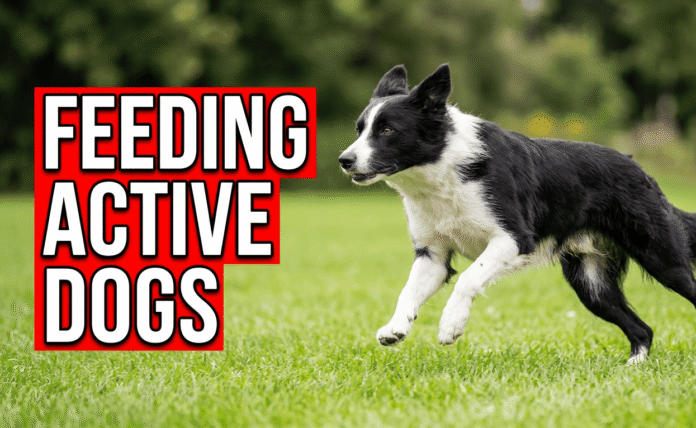
A dog that runs agility, hunts, or works in the field burns through calories in a way the average pet never does, and feeding them well takes more than a bigger scoop. Companion animal nutritionist Dr. Mary Cope, PhD, breaks down what changes and why.

Whole Dog Journal executive editor Kate O’Connor talked it through with Dr. Cope, from calories and fat to hydration and heat safety.

What counts as an active dog

Nutritionally, Dr. Cope defines an active dog as one that consistently burns more energy than an average pet, usually a dog doing sports like agility, hunting, field work, herding, or dock diving more than a few times a week. Normal daily walks don’t put a dog in this category. The trigger is often simple: the dog starts expending more than it takes in.

How the needs change

Calorie needs rise first, which usually shows up as a dog getting a little ribby. Because fat packs more than double the calories of protein or carbohydrate, Dr. Cope says fat is the efficient lever to pull first. Protein rises modestly to support muscle maintenance and recovery, and she likes to see ingredients that support joints and muscle function too.

More food, or a different diet?

For a moderately active dog, feeding a bit more of a complete and balanced diet may be all it takes. Very active and working dogs often do better on a performance formula built for higher energy density, so you feed a smaller volume while keeping the nutrient-to-calorie balance right. That also solves a common problem: some hard-working dogs simply get full before they can eat enough of a regular food.

What to look for in a food

Start with complete and balanced from a reputable manufacturer, appropriate for the dog’s life stage. For truly active dogs, Dr. Cope looks for higher calorie density with adequate protein (around 30%) and a moderate-to-high fat level (roughly 20-25%). Then watch how the dog actually does on it, energy, body condition, muscle tone, stool quality, and recovery, and transition gradually, ideally starting with a smaller bag in case it doesn’t suit your dog.

Supplements and hydration

Most active dogs get what they need from a complete and balanced diet, though some in intense activities benefit from targeted omega-3s for joint health. Hydration matters for every dog, Dr. Cope stresses: water is the most important nutrient, and dogs cool themselves by panting, so water loss climbs during exercise. She also flags a real safety point, in extreme heat and humidity, evaporative cooling stops working, so be cautious even with casual walks. Keep fresh water available throughout, and be careful about letting bloat-prone dogs chug it.

The one thing to watch

If you track nothing else, track body condition. An active dog should be lean and muscular, and Dr. Cope says body and muscle condition tell you whether the calories are right. Ribs too prominent, slow recovery, or dropping performance point to too few calories; gaining fat despite the activity means too many. Regular weigh-ins are the most valuable tool you have.

The takeaway

Feeding an active dog is really about matching fuel to the work and watching the dog in front of you. Watch the full interview above, and fine-tune with your own veterinarian.

How to Choose the Best Dog Multivitamin for Your Dog’s Needs

The best dog multivitamins can improve a dogs food and provide more nutritionally complete meals.
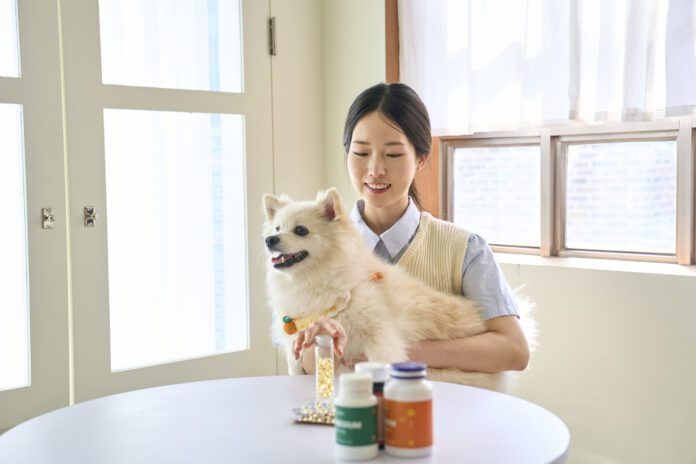
If your dog is eating a quality food, chances are good that he doesn’t need one supplement, let alone several. Credit: Plan shooting 2/Imazins | Getty Images

Daily dog vitamins are not necessary for most healthy dogs. Why? Because they get them in their food!

To continue reading this article or issue you must be a paid member.

Join Whole Dog Journal

Get full access to Whole-Dog-Journal.com – more than 4,000 articles – for just $20.
Join today and save 30% off our full price.
Already a member?
| Forgot your password? | Activate Web Access

Why Is My Dog So Clingy All of a Sudden? Causes and What To Do

0
Why does a male dog become clingy all of a sudden? It can be due to a number of factors.
Sudden clinginess can be caused by boredom but it may also be a sign of stress or pain. Credit: Mary Schwager

When one of my dogs, Macy, was about a year old, she abruptly developed a bizarre behavior: she’d wedge herself between my legs, peer out, and wouldn’t move.

I thought, “Why is my dog so clingy all of a sudden?

It turns out a suddenly clingy dog is fairly common; the key is that the dog’s behavior changes seemingly out of nowhere and they act like they can’t relax until they’re next to you.

Sometimes they seek extreme physical contact like jumping into your lap, sitting at your feet, or not moving from your side; some call it Velcro-dog behavior. Other times, you may observe dog anxiety symptoms like whining and barking for attention.

“You always want to really pay attention to any sudden behavior changes,” says veterinarian Danielle Clem, senior hospital director at the San Diego Humane Society.

Experts say if your pup starts unexpectedly acting differently, put on your pet detective hat, because it’s important to identify the clingy dog causes.

What Sudden Clinginess in Dogs Can Mean

Sudden dog clingy behavior could point to stress, a change in habit, a health issue, or learned attention-seeking.

“You don’t want to reinforce that behavior,” Dr. Clem says. “It’s okay if a dog wants companionship; that closeness is fine, but when it’s suddenly much more than normal for that dog, or if it becomes a nuisance type behavior, then that’s when we need to look a little deeper and figure out, ‘Hey, what can we do to make this dog feel more comfortable and also allow us to feel comfortable in our own environment?’”

Some common clues can help you identify the causes of clingy dog behavior.

Common Reasons Your Dog May Suddenly Be Clingy

Anxiety, boredom, or routine-related changes are some typical reasons a dog may start acting clingy.

“Maybe the routine has changed, suddenly the head of the household got a new job, and they’re home less often, or there’s some sort of change, and the pet is trying to adapt; perhaps there’s less opportunity for enrichment,” Dr. Clem says.

Some say male dogs are more clingy and more attached to their pet parents than females, but no scientific evidence supports that.

Research does show that uneasiness, agitation, and fear can drive sudden clingy behavior, and recognizing what came just before your pooch started clinging to you can help reveal what’s causing it.

“A lot of times it could be something that precipitated that behavior change, like the Fourth of July; there were fireworks and the dog is still a little anxious because of something that terrified them,” Dr. Clem says. “Even if there’s a lot of construction going on in your home, or you’ve got new people coming by the house.”

New people coming to our place seemed to trigger Macy’s behavior of hiding between my legs and it soon became a recurring pattern.

“I would associate that with the event,” Dr. Clem says. “There might be some sort of stimulus that is causing that fear or anxiety, and it’s great if you can identify what that is,” Dr. Clem says.

But clingy dog stress and anxiety are different from separation anxiety.

Could Clinginess Be Separation Anxiety?

Dog separation anxiety signs are recognizable by their intensity and timing. The dog’s anxiety symptoms appear around the time you leave and typically after you’ve left.

“You may come back to find evidence of destruction,” Dr. Clem says. “You may have heard from a neighbor that the dog was barking the whole time you were gone. They might urinate in the home. Sometimes they try to escape and may cause damage. So those more extreme signs of anxiety when you’re not around would be more associated with a true separation anxiety.”

Health problems can also cause separation anxiety and clingy dog behavior.

Health Problems That Can Cause Clinginess in Dogs

Sensory decline, age-related changes, and illness can contribute to a sudden shift in behavior.

“Pain can manifest in many different ways,” Dr. Clem says. “Sometimes that clingy behavior might be a pain response, or the dog trying to let us know, ‘I’m not feeling well.’”

Infections, tooth pain, and even arthritis can be culprits. Also, as your dog gets older, their bodies change, and they may develop senior-dog clinginess.

“Age changes happen more gradually over time, but that is a possibility, especially if you’re noticing more gradual changes and the dog is older,” Dr. Clem says. “They can have a little bit of cognitive decline, and even hearing or vision loss can also manifest as a little bit more clinginess.”

If your dog doesn’t have a health problem causing the clinginess, you can take steps at home to help your dog be less velcroed to you.

What You Can Do About Clingy Dog Behavior at Home

Practical steps like maintaining routine, increasing exercise, adding mental stimulation, and rewarding calm independence can help create some boundaries between you and your dog.

“Reinforce the behavior you want to see,” Dr. Clem says. “You want to really encourage the pet to relax and find comfort by themselves for a little while and praise them when they are able to relax away from you, for example on a dog bed nearby, but not necessarily right in your lap.”

Though it’s easy to give in when your dog demands attention by pawing at you, barking, or whining, resist. If you cave, you reward that behavior.

“I do that with my dog when she does that attention-seeking barking, and that’s not how I would prefer her to do that,” Dr. Clem says. “So, I have to completely ignore her and turn my whole body away from her until she settles, and then that’s when I start to give her that attention.”

You can always seek help from a positive-reinforcement, pain-free trainer or behaviorist.

When To Call The Vet

In some cases, you may need to contact your veterinarian, especially if the sudden clinginess is severe or accompanied by other medical symptoms.

Here are concerns to watch for:

  • Changes in urinating and defecating
  • Changes in appetite
  • Changes in activity levels
  • Signs of pain (limping, whimpering, crying)
  • Nausea or vomiting
  • The dog just isn’t acting like themself

“You are the pet’s best advocate, and even if you can’t pinpoint what is wrong with your pet, simply just knowing that they are not themselves is significant,” Dr. Clem says. “You could also just start with an exam, then your veterinarian can try to pinpoint what may have changed or where they might need to look a little bit deeper to figure out what’s going on.”

If your dog doesn’t have a medical condition causing the clingy behavior and it appears stress-or anxiety-related, like fear of thunderstorms or fireworks, your veterinarian may be able to prescribe medications that may help take the edge off.

“There are some things that we can do to mitigate the fear and anxiety surrounding those events, especially if we know that they’re going to occur,” Dr. Clem says. “We can provide that pet with some short-term anxiety medication just for that day or that weekend to help them.”

Why Is My Dog So Clingy?

If you found yourself reading this article after searching “Why is my dog so clingy?” online, the key is to address sudden behavior changes early and find the best remedy so your dog is comfortable.

For Macy, we now give her extra reassurance when someone comes over that no one will take her from us or hurt her.

Even if you have to consult a trainer, behaviorist, or veterinarian, the team approach and collaboration can be win-win for your dog in the end.

Best Winter Boots for Dogs

2
The best winter dog boots protect your dog's delicate paws during cold winters.
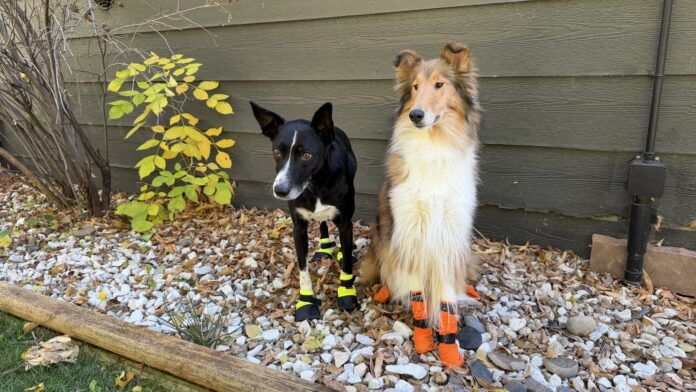
When picking the right winter boots for your dog, look for options that fit well and offer the right amount of grip and insulation for their intended use. Credit: Jae Thomas

Whether you live in a city that uses a lot of salt on its sidewalks in the winter or you just have a dog who gets cold feet in the snow, the best dog winter boots can help protect your pup’s paws.

Whole Dog Journal is reader-supported. If you purchase through links on our site we may earn a commission. Whole Dog Journal does not accept money for its food and product reviews.

Does My Dog Actually Need Winter Boots?

Not all dogs need winter boots, but they are helpful in a variety of situations:

  • Ice and salt: Dog boots with thick soles can help prevent chemical burns caused by walking on ice treated with salt or ice melt.
  • Freezing temperatures: Dog boots can help dogs who have little or no hair on their feet stay warm and extend the amount of time you can walk or exercise them in the winter.
  • Snow: For dogs with long coats, boots can help prevent snowballs from gathering in their hair.

Traits We Want in Dog Winter Boots

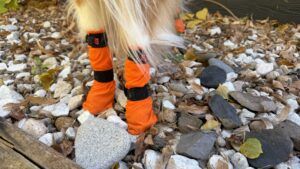
Fit and comfort: The best winter boots for your dog are ones that fit well, stay on, and are comfortable to wear while your dog is walking or running. Highly active dogs who need boots that move with them and stay on will likely do better with a sock-style bootie. Dogs who need additional traction and move at a slower pace will do well with a shoe style with a rubber sole.

Regardless of the style of boot, make sure you measure your dog’s paws before purchasing. Front paws are often larger than back paws so the best size for your dog’s front paws might be different than the best size for their back paws. If that is the case with your dog, you might want to choose a dog boot option that comes in sets of two rather than sets of four.

Also, if the brand you’re looking at doesn’t have a size that’s almost exactly your dog’s paw measurement, you might want to choose a different brand, as some have more variety in their sizing.

Insulation: For dogs who get cold feet in the snow or freezing temperatures, choose a boot option that has insulation in them to keep your dog’s paws warm.

Waterproofing: If you live in an area that gets a lot of rain or heavy, wet snow in the winter, opt for boots that are completely waterproof rather than water resistant. If the snow in your area is dry rather than wet, water-resistant boots will usually be fine, especially for short outings.

Traction: For older pups or dogs with injuries or disabilities who need help with traction in the snow and ice, choose an option that has a thick rubber sole, rather than a sock-style choice without a separate sole.

Read on for the best dog winter boots tested for Whole Dog Journal.

Whole Dog Journal RatingProduct and MakerPriceNotes
Canada Pooch Soft Shield Dog Boots$60-70 for four based on sizeSoft, flexible, insulated boots that will keep your dog’s feet warm in extreme temperatures and on snow and ice.
Wilderdog Dog Booties$36 for fourA sock-style bootie with a rubber bottom for extra grip and traction.
Non-stop Dogwear Contact Bootie High Dog Boots$25 for fourA thin, sock-style dog boot that stays on incredibly well, even if your dog is running and playing at high speeds.
Ruffwear Polar Trex Dog Boots$47 per pairAn insulated dog boot with grippy rubber soles that will protect your dog’s feet from sharp ice, cold pavement, and salt or de-icer.

Best Dog Winter Boots: Canada Pooch Soft Shield Dog Boots

The canada pooch soft shield boots are our picks for the best dog boots overall.
The Canada Pooch Soft Shield Boots offer a great balance between flexibility and protection. Credit: Jae Thomas

The Canada Pooch Soft Shield Dog Boots check all the boxes for a dog winter boot: they’re insulated with a fleece lining, flexible, easy to put on and take off, and stay on decently well if sized properly. They’re also water resistant and have rubber grips on the bottoms for extra traction.

These soft boots are heftier than some of the other sock-style dog booties on this list and will keep your dog’s feet warmer in freezing temperatures. These are an especially good choice for small breeds and breeds with short, single coats or low body fat who may get uncomfortably cold in extreme temperatures.

Though they come in a variety of sizes, multiple sizes are often out of stock on Amazon, so you may need to purchase them directly from Canada Pooch, which means paying for shipping that would take longer to arrive than an Amazon order.

Runner-up for Best Dog Winter Boots: Wilderdog Dog Booties

Wilder dog provides an excellent pair of winter dog booties.
The Wilderdog Booties are a bit boxy but are easy to use and provide good grip. Credit: Jae Thomas

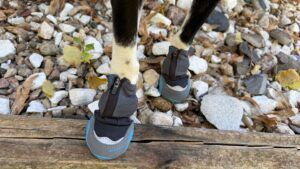
The Wilderdog Dog Booties feature all the pros of a sock-style dog boot—easy to get on and off, comfortable, and they stay on well—with a grippy rubber bottom that adds extra protection and traction. Though they don’t have insulation (extremely sensitive paws may do better with the Canada Pooch Soft Shield Boots or the Ruffwear Polar Trex), they offer a physical barrier between your dog’s paw pads and the ground and are grippy enough for mildly icy conditions.

I wish that the shape of these boots was more contoured to dogs’ paws as they are a bit boxy with extra fabric at the corners. However, it didn’t seem to bother our tester dogs. These boots only come in 3 sizes, so dogs that are between sizes may want to size down or opt for the Non-stop Dogwear Contact High boots as they come in more sizes.

Best Winter Dog Boots That Actually Stay On: Non-stop Dogwear Contact Bootie High Dog Boots

Nonstop Dogwear provides a fitted pair of winter dog boots.
When it comes to dog boots that won’t go flying at the first sign of the zoomies, the Non-stop Dogwear Contact Bootie are our top choice. High Dog Boots Credit: Jae Thomas

These sock-style booties are some of the few that I’ve found that actually stay on my dogs when they’re running at full speed, hiking, and rolling in the snow in the winter. The Non-stop Dogwear Contact Bootie High Dog Boots are soft and flexible with elastic and Velcro-like closures that cinch the boot to your dog’s foot but are more flexible than traditional Velcro closures. The higher-profile design definitely helps keep them on, too.

These dog boots are best suited for quick walks in cold weather, hikes, runs, or as dog snow boots for skijoring in dry, powdery snow. They’re also great at keeping the feathers on long-haired breeds clean in wet grass or light rain. However, they’re not completely waterproof and your dog’s feet will get wet if they’re splashing through puddles, or trekking through soggy, wet snow. They also don’t have any grip, so they don’t add any additional traction on slippery surfaces. It’s also worth noting that since they’re fabric with no sole, they’ll see more wear faster than other options.

Despite some of the minor drawbacks, these boots are my go-to option for preventing snowballs on my Rough Collie’s feet and legs and she seems most comfortable running and hiking in them compared to other options. They also stay on the best for highly active dogs of the dog boots I’ve tested.

Best Winter Dog Boots for Salt and Ice: Ruffwear Polar Trex Dog Boots

Ruffwear provides a comfortable pair of waterproof dog boots.
The waterproof Ruffwear Polar Trex Dog Boots offer good paw protection and traction on icy surfaces. Credit: Jae Thomas

If your main concern in the winter is protecting your dog’s paws from de-icer and adding additional traction on ice and slippery, wet surfaces, the Ruffwear Polar Trex Dog Boots

are a good option. These anti-slip dog boots have a structured Vibram rubber sole to protect your pup’s paws. They’re waterproof, feature a small amount of insulation, and have a zip-up gaiter upper that’s meant to keep snow out—though during testing, the gaiter was too loose on my dogs to adequately keep snow out.

These boots need to be sized correctly if you want them to stay on properly. Luckily, they come in sets of two, so you can buy a larger size for your dog’s front paws and a smaller one for their back paws, since most dogs have larger front paws.

Ruffwear has also recently introduced a new version of these boots with improved traction, fit, and an updated gaiter closure.

Winter Dog Boot FAQ
  • How do I measure my dog for winter boots? To measure your dog for winter boots, you’ll need to measure the widest part of your dog’s paw while they’re standing and putting weight on it. Front paws are often slightly bigger than rear paws, so measure both to ensure a proper fit. Place your dog’s paw on a sheet of paper and use a pencil to mark each side. Then, use a tape measurer or ruler to check the exact measurement.
  • Why do dogs need winter boots? Dogs need winter boots if they’re prone to cold feet in freezing temperatures, to help reduce snowballs, and to protect their paw pads from ice and salt.
  • How do I train my dog to wear boots? When it comes to teaching your dog to wear boots, start slow with just one boot at a time. Reward your dog with a tasty treat as you put their boot on. Take them to play in the yard or for a quick leashed walk with the boot on. As they get comfortable, you can increase the length of time they wear the boot and add on additional boots.
  • How do I stop my dog from losing their boots?To stop your dog from losing their boots, ensure you purchase the correct size. A boot that is too big will often slide off while your dog walks or runs. Ensure the boot is tightened properly before heading out on a walk. Sock-style boots typically stay on better than options with grippy soles.

How to Calm a Dog for Grooming: Simple Tips for Nervous Dogs

Dogs need to be groomed. A lot of dogs hate grooming, and how to calm a dog for grrooming is an important life skill.
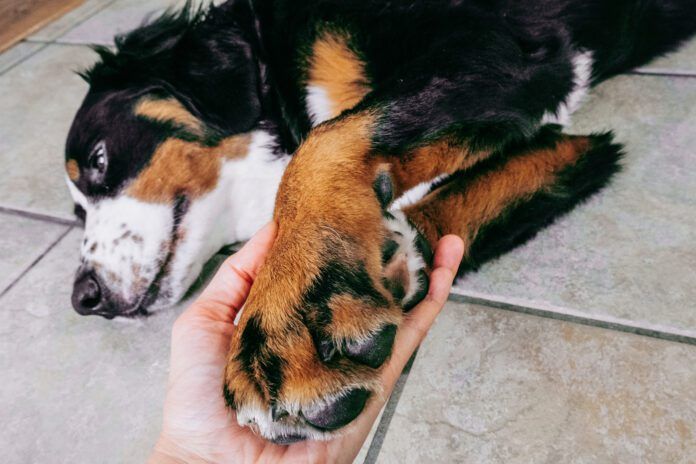
Many dogs become nervous at the idea of being groomed, so start by getting him used to having different parts of his body touched, like his paws, and rewarding him. Credit: MilkyWay | Getty Images

Grooming an anxious dog is challenging. You know the dog must be groomed, but if grooming is stressful for the dog, it’s going to be even worse for you. You don’t want to damage the relationship you have with your dog by forcing him to be groomed. I get it. I have been there. It’s hard for dog parents to see their dogs feeling anxious about something that can help them feel better overall.

To continue reading this article or issue you must be a paid member.

Join Whole Dog Journal

Get full access to Whole-Dog-Journal.com – more than 4,000 articles – for just $20.
Join today and save 30% off our full price.
Already a member?
| Forgot your password? | Activate Web Access

Shipping Your Dog by Air

0
Shipping a dog by air is no one's favorite way for their dog to travel. However, sometimes there's no getting around it.
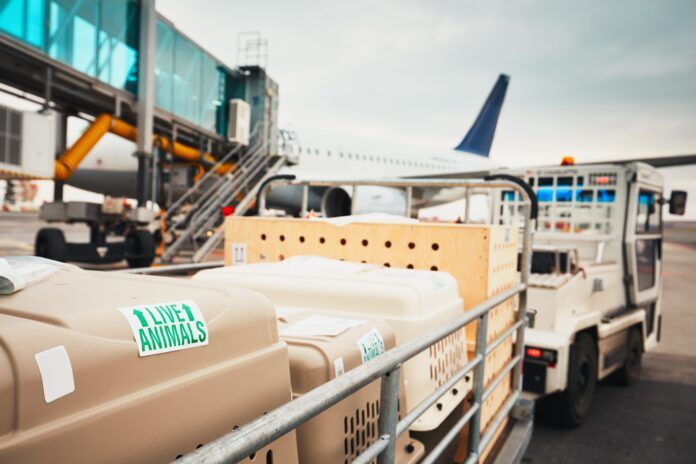
Shipping a dog by air requires careful consideration and planning. Credit: Chalabala | Getty Images

Let’s say you’re winging off to London or Paris or Singapore for several months and want to take your dog along. That’s not a concern if your pup is a legal service dog trained to assist you for a physical, sensory, psychiatric, or intellectual disability: these dogs are allowed by law to ride in the plane’s cabin with their human caretaker, at no extra charge.

That’s not the case, however, for your family pet.

Understanding Dog Shipping

When it comes to shipping a dog by air, one of the most important steps in making arrangements is checking directly with the specific airline you plan to fly with about their requirements. Don’t rely on what you read on the internet: even reliable sources like the Department of Transportation may not have the most current information. Also, these requirements can change quickly and may be very different from airline to airline.

Generally, if you’re flying internationally on a commercial airline, your dog must be small enough to fit in a carrier that can slip under your seat. Some countries—such as South Africa, the UK, and Australia—forbid pets from arriving inside the passenger cabin; if you’re flying to one of these countries, your dog may need to be shipped with a pet transport company.

In fact, it was only recently that most U.S. carriers prohibited dogs from flying in their cargo holds on international flights, although many permit this on domestic flights. A number of non-domestic airlines such as Lufthansa, however, continue to allow dogs in the animal hold on international flights—so again, reach out to your carrier.

How Your Dog Can Fly

There are three ways you can ship your dog by air: they can travel with you in the cabin or as cargo if permitted; you can have your dog shipped through a licensed commercial pet shipper; or you can book your dog as manifest cargo with the same airline but on a separate flight.

So, what about the animal cargo hold? Back when these holds were dank, dark, unpressurized places with no ventilation, heating, or air conditioning, the idea of shipping your dog by air was enough to give any caretaker nightmares. Despite what some people think, however, that scenario is simply not true today.

The animal cargo hold is fully pressurized and climate-controlled, with the same heating and cooling as the cabin; further, pilots can monitor and adjust those systems anytime during the flight. Carriers can, however, apply “seasonal embargoes” that prohibit your dog being shipped as cargo if there’s a chance they will experience temperatures above 85 °F or below 45 °F for more than four hours, or more than 45 minutes during boarding and deplaning.

Risks in the Cargo Hold

While there are always risks in flying your dog—as is true for any of us, human or animal—data reveals that the risk is infinitesimally small. That’s not to say that there’s no risk whatsoever to dogs flying as cargo.

One is related to flat-nosed (brachycephalic) breeds such as Pugs, Bulldogs, Boston Terriers, Pekinese, and Boxers. In fact, many carriers will not allow them to fly in the animal hold at all. Even under everyday circumstances, these breeds are physiologically more prone to respiratory problems due to their anatomy and can also be more vulnerable to changes in air quality and temperature in a plane’s animal hold.

Perhaps the greatest danger comes from pet caretakers trying to do the right thing by sedating their dog before a flight. The American Veterinary Medical Association, the International Animal Transportation Association, and the US Department of Transportation all strongly advise against giving your dog any sedation before a flight. Not only do tranquilizers lower blood pressure, they also suppress the central nervous system and can increase the possibility of heart or respiratory problems. A study from 1995 (Tennyson, A.V. Air transport of sedated pets may be fatal. Journal of the American Veterinary Medical Association, 1995) which is still widely referenced by veterinary experts found that oversedation is the most frequent cause of animal deaths during air transport: from 1990 to 1995, almost half the animal deaths on airlines resulted from sedation.

Age, Weight, and Crate Size Limits

To fly in most passenger cabins, dogs must be at least eight weeks old. Size restrictions vary, but most major airlines limit the combined weight of the dog and carrier to not over 20 pounds. To fit under the seat, carriers should be no more than 19 inches long, 13 inches wide, and 9 inches high; your dog must be able to stand up, turn around, and lie down inside the zipped carrier.

If your dog is flying in a plane’s cargo/live animal hold, crates must meet International Air Transport Association (IATA) guidelines and airline-specific standards. Again, contact the particular carrier for their requirements, but as a rule they will follow IATA standards.

Import and Veterinary Requirements for Shipping a Dog Internationally

International pet travel arrangements can often take up to six months, so communicate with your destination country’s embassy to determine their entry constraints. If your endpoint is at high risk for rabies, there likely will be additional restrictions; also, certain EU countries may require a rabies titer test. For entry into the UK and EU, your dog must also carry an ISO-compliant microchip.

The USDA’s Animal and Plant Health Inspection Service (APHIS) Form 7001 is one of the most common forms linked to pet travel. This form must be completed by your veterinarian and certifies that your dog is healthy and fit enough for travel. However, each air carrier sets independent transport rules . . . one more reason to talk directly to the airline.

Preparing Your Dog for Travel

Before your trip, do everything you can to minimize your dog’s stress, starting with allowing at least a month for them to become familiar with the carrier or crate. Leave the door open, with a comfortable blanket or crate pad inside. Try feeding your dog inside the carrier to help create a positive association.

Talk with your veterinarian about how long before the flight you can feed your dog, and how much. Make sure the crate or carrier has room for a water bowl, and that your dog has access to water during the flight.

Ensure your pup has a collar with ID tags, as well as an internationally-compliant microchip. Carry a current photograph of your dog. Put your name and phone number inside the carrier and attach a tag showing your destination address. Pack a leash, medications, and emergency information such as contact information for your vet and an emergency veterinary hospital at your destination.

Very few studies have been done on the effects of air travel on the welfare of dogs; much of the available information is based anecdotes and practical experience, rather than research. However, we do know that a dog’s stress level during travel is directly related to the caretaker’s anxiety. After thousands of years of domestication, dogs have become exceptionally attuned to human emotional states, to the point that they often mirror those conditions. Experts also know that about ten percent of dogs experience significant distress during air travel, evidenced by panting, trembling, and whining. Some of this, of course, is caused by unfamiliar sounds, vibrations and airplane movement, and unaccustomed confinement, all of which trigger the release of stress hormones like cortisol and adrenaline. One way to reduce that anxiety is to book a nonstop flight and avoid layovers and busy holidays.

Clearly, more research is badly needed, especially considering the extensive availability of air travel today, and the increasing number of caretakers who travel—whether by air or land—with their dogs by their sides.

If you are considering shipping your dog via a ground transport service, see “Hitting the Road: How to Choose a Dog Ground Transport Service.”

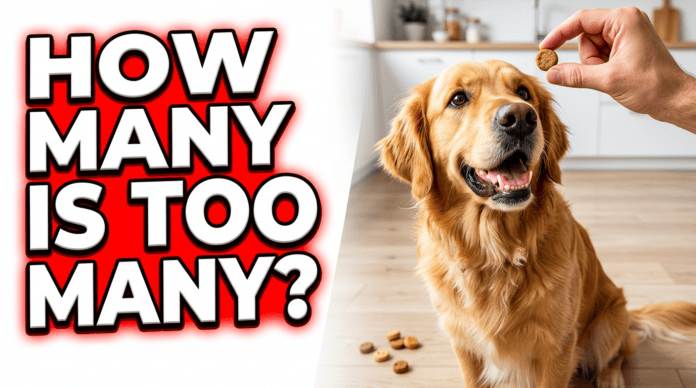
Dog Treats: How Many Are Too Many, What to Pick, and What to Avoid

0

Treats are one of the great joys of having a dog, and one of the easiest ways to throw off a dog’s diet without meaning to. Companion animal nutritionist Dr. Mary Cope, PhD, lays out how to treat well without overdoing it.

Whole Dog Journal executive editor Kate O’Connor talked it through with Dr. Cope, from portions to picks to the foods worth avoiding.

How many treats is too many?

Dr. Cope starts with the rule nutritionists and vets lean on: treats should make up no more than 10% of a dog’s daily calories, with the other 90% coming from a complete and balanced diet. Go past that and you risk unbalancing the diet, diluting important nutrients, and contributing to weight gain.

What to look for in a treat

Match the treat to your dog’s size (a small dog needs genuinely tiny treats), and look for whole or high-quality ingredients, moderate-to-low calories so you can give more, and something easy to digest. If you’re buying rather than making them, choose a reputable manufacturer.

When a treat should be complete and balanced

It depends on how many you give. Dr. Cope trains her dogs heavily, so she reaches for a nutritionally complete and balanced freeze-dried treat that won’t throw off their day (and doesn’t leave greasy pockets). For the occasional reward on a walk, she’s less concerned about complete and balanced, and she’s a fan of using plain kibble as treats, especially for puppies, as a bonding tool.

Human foods that make good treats

Plenty of whole foods work for both dogs and people: carrots, green beans, peas, blueberries, apple slices, and plain boiled, unseasoned chicken, which she likes for being low in fat. For an easy, low-calorie pocket treat, she points to plain Cheerios.

What to avoid

Dr. Cope’s keep-away list includes chocolate and cocoa, xylitol (also labeled birch sugar, and found in some sugar-free products, gum, and toothpaste), grapes and raisins, onions and garlic in real amounts, macadamia nuts, and alcohol. She also steers owners away from very high-fat foods like bacon, which can trigger pancreatitis, and from high-sugar treats as a regular thing.

A smarter way to spoil your dog

Her biggest point: owners overestimate how big a treat needs to be and underestimate the calories. A small dog’s whole treat allowance might be 20 calories, and one bakery-style cookie can blow past it. Most dogs would rather get five tiny treats than one big one, so break treats small and keep low-calorie options on hand.

The takeaway

Treats are part of the fun, but the best gift you can give a dog is a long, healthy life. Watch the full interview above, and tailor the specifics to your own dog with your veterinarian.

Dog Dermatitis at Home: What You Can Do Before the Vet Visit

Dog dermatitis causes excessive itching. You can treat dog dermatitis at home to help relieve the condition.
Depending on the cause, a persistently itchy dog can be helped by something as a soothing bath with the right ingredients.

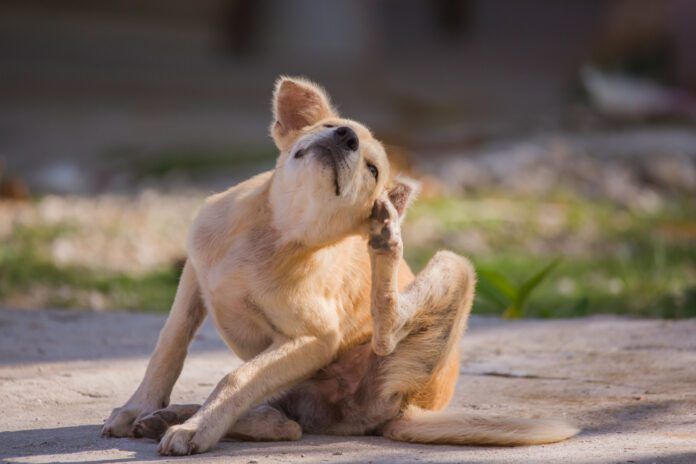
If your dog is repeatedly scratching himself, things are only going to worsen without help. You need to start by figuring out why your dog is itching and chewing on his skin. You’re probably seeing red and inflamed skin—a condition known as dermatitis—on your dog. You need to start by ruling out fleas, the most common cause of scratching and itching, and then offer soothing, healing topical care, which we will discuss here.

To continue reading this article or issue you must be a paid member.

Join Whole Dog Journal

Get full access to Whole-Dog-Journal.com – more than 4,000 articles – for just $20.
Join today and save 30% off our full price.
Already a member?
| Forgot your password? | Activate Web Access

What Does It Mean When My Dog Smacks His Lips? Common Causes and What to Do

Why do dogs smack their lips? It can be due to one of a number of reasons.
Dogs often smack their lips when anticipating a tasty treat, but the behavior can also come from things like anxiety, nausea, and mouth pain. Credit: knape | Getty Images

When my dogs smack and lick their lips, it’s often the warm-up act before gooey saliva leaks from their mouths and pools on the floor. As a dog mom to two food-motivated Labradors, I watch for slippery spots in the kitchen.

That familiar rhythmic dog lip-smacking echoed in my car just the other night as I pulled away from a drive-thru with delicious-smelling French fries. One of my Labs put his head right next to mine, and the dog was licking his lips and drooling down my arm as though he was practicing how he’d eat them.

Social media is filled with dog lovers equally entertained by this pooch phenomenon.

The lip-smacking noise has become so popular that it even has an internet slang name: “mlem,” which refers to the sounds of dogs licking their lips, which some say makes fabulous ASMR relaxation videos.

But dog lip smacking isn’t always adorable, relaxing, or about food for your pooch. Twice, my (never a dull moment) Labs have started smacking their lips nonstop for reasons that sent us to the emergency animal hospital.

​Sometimes lip smacking signals a problem—and food, the smell of food, or the hope of food wasn’t the cause. That’s why it’s important to figure out your dog’s lip licking meaning, which depends on the context and frequency of their lip smacking.

What Does It Mean When My Dog Smacks His Lips?

So, what does it mean when my dog smacks his lips? The best clues are to notice what’s happening around your dog, how long the behavior lasts, and whether the lip smacking is paired with other behaviors.

Your Dog Sees or Smells Food

Most of the time, especially with an “I’ll do anything for food kinda breed,” a dog licking their lips is normal, especially around mealtime or if you’re filling their bowl. It could mean they’re anticipating dinner.

“If your dog is in the kitchen and you’re making something that smells really good, they may actually start drooling and licking their lips,” says Dr. Lori Teller, a veterinarian and clinical professor at Texas A&M University. “Sometimes it’s just like the lip-licking, lip-smacking emoji that you may use when somebody sends you a picture of a yummy meal.”

But what if your dog is smacking their lips after eating? Dr. Teller says not to worry. “They may also lick their lips or smack their lips just to get crumbs or water droplets off—normal hygiene.”

Sometimes a dog smacks his lips and swallows because saliva has built up in their mouth. “A lot of times when they’re doing lip-smacking behavior, there’s also excessive saliva production, and that makes them swallow,” Dr. Teller explains. “Sometimes they may drool; sometimes they’ll swallow that excess saliva instead of it drooling out.”

Your Dog is Feeling Nauseous

A dog licking lips and drooling around a tempting meal is easy to understand, but if your dog licks or smacks their lips persistently, without food motivation, it could signal a problem.

If your dog keeps smacking his lips, watch him closely; look for clues to help identify the cause.

“If the behavior is repetitive, accompanied by inappetence, vomiting, pawing, or excessive drooling, then a veterinary visit is recommended,” says Dr. Carly Fox, a senior veterinarian in the Emergency and Critical Care Service at the Schwarzman Animal Medical Center in New York City.

One of the top reasons a dog may continually smack their lips is due to nausea.

That was the culprit with one of my Labs, Macy. It all started after a swim at a lake. She began licking her lips repeatedly and frantically. We couldn’t get her to stop, so I took her to the animal hospital.

X-rays revealed sand in Macy’s stomach. She likely ingested it after her rubber ball got stuck in the sand and she obsessively attempted to dig it out.

The veterinarian attributed her lip licking to nausea, gave her medications, and luckily, the sand situation passed without long-term complications.

Dogs with GI upset or motion sickness may also smack their lips as a precursor to hearing another sound: that dreaded toilet-plunger noise.

Your Dog is Stressed or Anxious

Anxiety and stress can also cause a dog to smack their lips. Additionally, dogs may use lip smacking and lip licking as a calming or soothing signal.

Perhaps your dog is triggered by common situations that make some pups nervous, like visitors, loud noises, or unfamiliar environments like the animal hospital.

​“A lot of times we’ll see this with dogs in the exam room who are anxious or nervous about visiting the veterinarian, and they’ll lip smack in front of us,” Dr. Teller says. “Dogs with thunderstorm anxiety or changes in routine that are stressing them can also cause some lip smacking.”

​If your dog is smacking his lips when nervous and/or showing other signs of being uneasy, like yawning, chat with your veterinarian about ways to help alleviate that stress and make them more comfortable.

There’s Something Stuck in Your Dog’s Mouth

If your dog is smacking their lips and pawing their mouth, that’s a big clue they may have something stuck in there that they’re trying to get out.

​Sometimes they may also drool or rub their face on the furniture or ground.

​Food, bone fragments, and debris like sticks they were chewing on can become lodged in their mouth— even bee stingers. That’s what caused Labrador ER visit number two. This time it was Daisy’s turn.

My dogs got swarmed by bees when one of them stuck their nose in a hive on the ground along a wooded trail. After a pure debacle, we made it home, and Daisy started smacking her lips. Even though I gave the dogs Benadryl, panic set in. Was she having trouble breathing due to an allergic reaction? We raced to the animal hospital.

Turns out she had bee stingers lodged in her gums. The vet tech pulled them right out. Daisy was fine, but they could have caused an infection if we hadn’t removed them.

If you suspect something is stuck in your dog’s mouth, contact your veterinarian. Don’t reach into a distressed dog’s mouth or pull on an object you can’t remove safely.

Your Dog Has Dental or Mouth Pain

Tooth problems, gum disease, and other painful mouth conditions can also lead to lip smacking. Watch for bad breath, difficulty chewing, chewing on one side, drooling, or a change in appetite.

“If the dog has some kind of mouth pain, maybe a bad tooth, or something stuck in the top of their mouth, or somewhere between a couple of teeth, those kinds of things can occasionally cause lip smacking,” Dr. Teller says.

These types of cases call for medical attention.

When Dog Lip Smacking Is More Concerning

If it’s clear that the anticipation of food or a stressful situation isn’t causing your dog’s lip smacking, and if the behavior is new or keeps happening, call your vet, especially if the lip smacking is combined with any of these signs or symptoms:

  • Vomiting
  • Diarrhea
  • Lethargy
  • Not eating
  • Distress
  • Having trouble breathing
  • Sudden behavior changes

Repeated lip movements can also occur during a seizure. “Rarely, dogs who have facial seizures can repetitively and involuntarily lick/smack their lips during an episode,” Dr. Fox says. “These dogs are typically mentally altered as well.”

Identifying Dog Smacking Lips Causes

To identify the cause of your dog’s lip smacking, try tracking the trigger:

  • Observe timing, frequency, and what’s happening in the dog’s environment when they start lip smacking
  • Take videos to show your veterinarian
  • Keep a lip-smacking log
  • Offer water if they seem thirsty
  • Check the dog’s mouth if it’s safe to do so

If lip smacking is new, note when it starts, how often it happens, and what your dog was doing just before they started. Does it happen near food? After a car ride? During a certain event?

​When it comes to lip smacking, context is your best clue for figuring out what your dog’s lip licking means.

​The cause of a dog’s lip smacking depends on the full picture. A few lip-licks as dinner is served may be nothing unusual. Persistent smacking, especially with drooling, pawing at the mouth, or a change in your dog’s behavior, deserves a closer look.


Dog Training Rewards: Timing, Markers, and Fading Treats

0

Rewards are what make dog training work, and they’re also the source of the question trainers hear most: won’t I always need treats? Certified dog trainer Jae Thomas has a clear answer, and a method behind it.

Whole Dog Journal executive editor Kate O’Connor sat down with Jae Thomas, a WDJ contributor, to talk through how to use training rewards well.

Why rewards matter

At the simplest level, Jae says, a reward increases the chance a behavior happens again, and pairing it with a marker gives the dog immediate feedback about what they did right. Rewards aren’t only food, either: toy play, praise, and environmental rewards all count, and the right one depends on the dog and the skill.

Picking the right reward

Finding what motivates your dog is more art than science. Some dogs are food motivated, some will spit out food for a toy, and a treat can even be too high value, so exciting that a dog can’t think about the task. Jae suggests mapping your dog’s low-, medium-, and high-value rewards, and saving the best stuff for harder, more distracting situations.

Markers, and why “yes” comes first

A marker, a clicker or a word like “yes,” tells the dog the exact moment they got it right, and it has to be conditioned so the dog knows the marker means a reward is coming. A common mistake, Jae says, is rewarding without marking, which leaves the dog guessing what they’re being paid for.

Reward timing

Timing is the other art. Reward too early and you capture a half-finished behavior; reward too late and the dog has already broken position or offered something else. Jae explains high rate of reinforcement for distractible dogs and variable reinforcement, varying how many treats come per rep, which she calls the scientifically strongest way to build a behavior.

Will you always need treats?

Her honest answer: if you haven’t faded food properly or proofed the skill, yes. Even highly trained dogs need skills maintained and rewarded sometimes. But once a behavior is reliable across different places and distractions, you can start to wean off.

How to fade food the right way

Jae fades food with variable reinforcement, gradually adding reps with no cookie as the dog keeps succeeding, and backing up if the dog starts to fail (which she treats as the handler’s fault, not the dog’s). The same approach works for toys, though in sports like agility you never fully stop reinforcing; you just ask for longer behavior chains before the payoff.

The takeaway

Used well, treats aren’t a crutch; they’re how dogs learn, and a plan for fading them is part of the training. Watch the full interview above for Jae’s full breakdown.