Home Blog Page 3

Best Dog Ear Protection: Products to Safeguard Your Dog’s Hearing from Fireworks, Thunder, and Loud Noise

Dog hearing protection can protect a dog's hearing in loud environments.
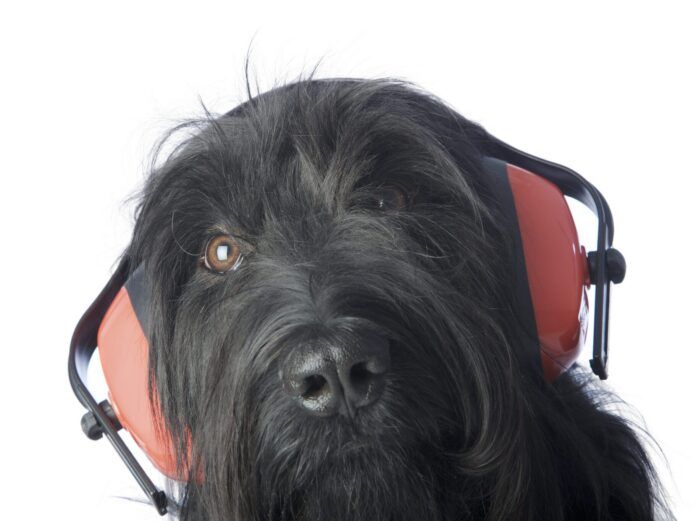
Earmuff style dog ear protectors typically provide good sound protection but may not work for dogs with long, floppy ears. Credit: Christoph Rosenberger | Getty Images

Humans who live or work in noisy environments often suffer hearing loss—and the same is true for dogs. Even worse, loud noises such as fireworks, thunderstorms, gunfire, aircraft engines, power tools, construction equipment, motorcycles, and grooming salon dryers can traumatize noise-sensitive dogs by creating stress levels that damage their health and happiness. Noise protection products help both humans and dogs reduce their exposure to potentially damaging sounds.

Whole Dog Journal is reader-supported. If you purchase through links on our site we may earn a commission. Whole Dog Journal does not accept money for its food and product reviews.

When Dogs May Need Ear Protection

The simplest canine ear protectors are stretchy fabric wraps that help dampen loud noises and provide enough compression to have a calming effect. They are popular in grooming salons because they keep ears safely out of the way during haircuts, help dogs relax (or at least feel less stressed), and provide some protection from a grooming salon’s loud sounds, such as barking, blow dryers, and noisy conversations.

Soft compression wraps work well in the right situations but they don’t reduce sound levels the way acoustic foam and fitted ear cups do. Dogs regularly exposed to gunfire, aircraft, machinery, and other intense noises need products that are specifically designed for hearing protection.

Sound is measured in decibels, abbreviated dB, which are logarithmic units that quantify sound intensity. Each 10-decibel increase represents a 10-fold increase in sound intensity and is perceived as about twice as loud to the human ear. Common reference points include:

  • Quiet room: 30–40 dB
  • Moderate rainfall: ~50 dB
  • Normal conversation: ~60 dB
  • Vacuum cleaner, busy traffic, or normal TV audio: ~70 dB
  • Traffic noise: ~80 dB
  • Power tools: ~90 dB
  • Threshold where long or repeated exposure can cause permanent hearing loss: ~85 dB
  • Lawnmowers, power tools, hairdryers, and motorcycles: ~ 90 to 100 dB
  • Music concerts, car horns, and squeaky toys held close to the ear: 110 to 120 dB
  • Jet engine taking off or firearms (the threshold of pain): 140 dB
ProductMaterialsType of Ear CoverBest Suited ForPrice
ZOHAN DG02 Dog Ear MuffsDurable ABS outer shells; padded/sound-dampening material inside ear cups; adjustable fabric/Velcro straps; plastic-free headband designPassive over-ear hard-shell muffs; ear cups fit over the ears and are held by an adjustable triangular strap systemFireworks, thunderstorms, vacuum cleaners, travel, grooming, other loud environments; useful when a conventional earmuff-style barrier is wantedAbout $35–$45
DerYEP Dog Earmuffs for Hearing ProtectionABS ear-cup shells, thick acoustic foam/sponge, soft ear-pad material, adjustable elastic/fabric strapsPassive over-ear hard-shell muffs, similar in principle to human hearing protectorsLoud environments: fireworks, thunderstorms, shooting/ranges, helicopters, machinery, travel, other high-noise settings. Manufacturer cites 29-dB NRR at 250–2,000 HzAbout $45–$50
Rex Specs Ear ProLightweight 4-way-stretch fabric surrounding acoustically engineered sound-absorbing foam padsSoft, hood-style passive hearing protector; stretches over the dog's head and holds foam pads against/around the ears rather than using rigid cupsWorking, military, hunting and service dogs; gunfire, machinery, motorcycles, other sustained loud environments; fireworks and thunderstorms. Low-profile design is useful for active dogs and can integrate with goggles/muzzlesAbout $93
PAWNIX Noise-Cancelling HeadphonesSoft 4-way-stretch fabric, substantial sound-dampening foam, electronic speakers/microphones and ANC module; Velcro collar attachmentFull-head padded headset with passive insulation plus electronic active noise cancellation (ANC)Fireworks, thunderstorms, airplanes, concerts, sporting events and other sustained noise; notable because it combines physical sound attenuation with active electronic noise cancellation$200
Happy HoodieElastic, two-ply fabricCompression ear wrapVeterinary exams, car rides, vacuum cleaners, and thunderstorms; best for noise anxiety rather than sound protectionAbout $12-$16

Earmuff Style Dog Ear Protector: ZOHAN DG02 Dog Ear Muffs

These soft gel ear pads are made with a durable ABS (Acrylonitrile Butadiene Styrene, a thermoplastic polymer) shell and lightweight materials. The product does not use hard plastic clips that break or pinch hair, and its fast-release strap and adjustment band simplify fitting.

The Zohan DG02 comes in three colors (black, pink, or blue) and four sizes to fit most breeds. For best results, measure your dog’s head circumference behind or over the ears, then measure the top of the head from one ear to the other. That measurement is called the Interaural size range.

  • Size Small (S) fits Chihuahuas and Pomeranians (head circumference 10-14 inches, top interaural 2.3 to 4.1 inches, weight 5 to 20 pounds).
  • Size Medium (M) fits French Bulldogs, Shetland Sheepdogs, and Beagles (head circumference 14 to 18 inches, top interaural 3 to 5 inches), weight 20 to 40 pounds.
  • Size Medium Plus (M+) fits Border Collies and Pit Bull Terriers (head circumference 16 to 20 inches, top interaural 3.1 to 5.1 inches, weight 30 to 65 pounds)
  • Size Large fits Labrador and Golden Retrievers (head circumference 18-22 inches, interaural 3.3 to 5.3 inches, weight 40-75+ pounds).

Refer to the weight range for breeds with similar head sizes but different body weights.

This style is not recommended for dogs with very long ears, such as Basset Hounds, Cocker Spaniels, or Beagles.

According to the manufacturer, Zohan earmuffs are scratch-resistant for standing up to pawing and chewing; impact-proof for staying intact during play or travel; long-lasting to maintains shape after repeated use, and perfect for high-stimulation environments like thunder, fireworks, air travel and noisy city walks. “We strive to make every product the best it can be and ensure all dogs are satisfied. While our dog earmuffs are designed to fit most breeds, we understand every pup is unique. If the fit isn’t perfect for your dog, contact customer support for assistance, refund, or replacement.”

ANSI-Standard Tested Dog Ear Protector: DerYEP Dog Earmuffs for Hearing Protection

DerYEP Dog Earmuffs are over-the-ear hearing protectors that use rigid ear cups, sound-absorbing foam, and cushioned seals to reduce the amount of noise reaching the ears.

The outer ear cups are made of durable ABS plastic. Inside, thick acoustic foam helps absorb sound, while soft, elastic foam padding around the cups creates a close seal around the dog’s ears. Adjustable elastic straps hold the two cups in position on either side of the dog’s head. The earmuffs are available in four colors (white, blue, pink, and red) and in four sizes. Proper sizing is important because gaps between the cushions and the dog’s head can substantially reduce their effectiveness.

  • Small (S) for head circumference of 9 to 13 inches ($44)
  • Medium (M) for head circumferences of 13 to 17 inches ($44)
  • Large (L) for head circumferences of 40 to 70 inches ($54)
  • Extra Large (XL) for head circumferences of 20 to 24 inches ($65)

The manufacturer reports a Noise Reduction Rating (NRR) of 29 dB over frequencies from 250 to 2,000 Hz, tested according to ANSI S3.19. This makes derYEP one of the relatively few canine hearing protectors marketed with a specific noise-reduction rating and test standard. The earmuffs are passive hearing protection—they use physical barriers and acoustic foam rather than electronic active noise cancellation.

DerYEP recommends that dogs be gradually conditioned to wearing earmuffs before they are needed by first allowing the dog to investigate them, then introducing short wearing sessions with rewards and gradually increasing the duration.

Ear Protector for Working Dogs: Rex Specs Ear Pro

The Rex Specs Ear Pro by Zeteo Tech was developed to protect military working dogs from hearing loss caused by noise exposure. In sound booth tests at 95 decibels and low frequencies of 20 to 120 Hertz, the Ear Pro reduced exposure by 18 to 24 dB, with effectiveness increasing at higher frequencies. The Rex Specs Ear Pro is not an active noise-cancelling headphone; it offers passive hearing protection.

The Ear Pro resembles a thick fitted hood that holds acoustic foam over the dog’s ears while distributing pressure around the head. This low-profile protector stays close to the head and can be worn with goggles and other working-dog equipment such as muzzles. The Ear Pro is appropriate for working dogs exposed to machinery, gunshots, aircraft, and other high-noise environments, and it provides ear protection from fireworks and thunderstorms.

The Ear Pro fits over the dog’s head without needing adjustments and its low frequency blocking foam remains effective even if the product slightly shifts. The Ear Pro is available in two colors (black and coyote tan) and three sizes and costs $93.

  • Size 2: Beagles, Shiba Inu, Shetland Sheepdogs, Whippets (head circumference 13-15 inches)
  • Size 3: Border Collies, Australian Shepherds, Belgian Malinois, German Shorthaired Pointers (head circumference 15-17.5 inches)
  • Size 4: Labrador Retrievers, Golden Retrievers, German Shepherds (head circumference 17.5-21 inches)

Dog Ear Protector with Active Noise Cancellation: PAWNIX Noise-Cancelling Headphones

The PAWNIX headphones are different from other dog earmuffs because they combine electronic active noise cancellation with passive sound attenuation. According to the manufacturer, the headphones’ microphones detect incoming sound and their electronics generate an opposing signal, like that used in human noise-canceling headphones. In addition, sound-absorbing foam surrounds the dog’s ears and Bluetooth 5.0 can play music or other audio.

The volume on the headset is controlled by a paired device, such as a cell phone or tablet. The headphones do not go above 50 decibels because a limiter controls their volume. The cost for all sizes is $200, and replacement electronic modules cost $125. PAWNIX headphones are available in gray, blue, pink, and red.

For correct sizing, measure the vertical head circumference from brow to jaw, the neck circumference under the jaw, and the distance between the ears over the top of the dog’s head.

  • Size Extra Small (XS), which is made to order, fits Yorkies, Chihuahuas, Maltese, and Pomeranians with vertical head circumference of 8 to 11.5 inches, neck 8 to 11 inches, and between ears measurement 2.5 to 5 inches
  • Size Small (S) fits Shih Tzus, Lasa Apsos, Havanese, Corgis, and Jack Russells with a vertical head circumference of 11.5 to 14.25 inches, neck circumference 10 to 13 inches, and between ears measurement 3 to 5 inches
  • Size Medium (M) fits Bichons, Terriers, Beagles, Cavaliers, small Doodles, and Shepherds with a vertical head circumference of 14.25 to 19 inches, neck circumference 13 to 19 inches, and between ears measurement of 4 to 6.5 inches
  • Size Large (L) fits Labradors, Bulldogs, Malinois, and German Shepherds measuring 19 to 22 inches vertical head circumference, neck circumference 18 to 23 inches, and between ears 5 to 7 inches
  • Extra Large (XL) headphones are made to order for Bernese Mountain Dogs, Great Danes, and other dogs with a vertical head circumference of 22 to 28 inches, neck circumference of 23 to 30 inches, and between ears measurement of 5 to 8 inches

Dog Ear Protector for Noise Anxiety: Happy Hoodie

Examples of compression ear wraps include the Happy Hoodie, which is made of soft, elastic, two-ply fabric. The Happy Hoodie’s wide fabric band proved so effective at relieving anxiety in grooming salons that it is widely used to help calm pets during veterinary exams, car rides, encounters with vacuum cleaners, and stormy weather. The Happy Hoodie is considered a useful first option for dogs whose primary problem is noise anxiety rather than hazardous occupational noise exposure.

Dogs usually adapt quickly to simple ear protectors like the Happy Hoodie, while more elaborate ear protectors can require conditioning sessions that let a dog gradually become used to wearing them.

Why Does My Dog Eat Poop?

Why do dogs eat poop? The causes may be instinctual, boredom, or even based in fear of punishment.
Why our dogs act like finding a pile of poop is like discovering gold is hard to pinpoint, but the solution is solid: management and training. Credit: Deb Perry | Getty Images

Watching your dog eat poop can leave you distressed, and, frankly, disgusted. However, while grotesque to us, eating feces isn’t unusual. The reasons run across a spectrum of possibilities, including instincts, anxiety, boredom, and poor training.

To continue reading this article or issue you must be a paid member.

Join Whole Dog Journal

Get full access to Whole-Dog-Journal.com – more than 4,000 articles – for just $20.
Join today and save 30% off our full price.
Already a member?
| Forgot your password? | Activate Web Access

Best Dog Jackets for Winter

0
The best winter jackets for dogs fit well, and are compatible with your gear.
It’s important to pick a winter jacket that not only fits well but also matches how much extra warmth your dog really needs. Credit: Jae Thomas

Some dogs love sitting out in the cold, while others would rather be bundled up during the colder months. You may want to opt for one of the best dog jackets for winter if your pup is one of the latter.

Read on for the best dog winter coats and jackets, hands-on tested by Whole Dog Journal.

Whole Dog Journal is reader-supported. If you purchase through links on our site we may earn a commission. Whole Dog Journal does not accept money for its food and product reviews.

Does My Dog Actually Need a Winter Jacket?

Not all dogs need winter coats. Double-coated breeds like Huskies, Malamutes, and Samoyeds are well-suited to cold winter weather. Breeds like these with thick coats would likely overheat with the addition of a winter jacket and are often perfectly happy sitting in the snow or hanging out in the cold.

However, the following types of dogs can benefit from a winter jacket to stay warm in cooler weather:

  • Very small breeds like Chihuahuas
  • Young puppies and elderly dogs, as they both may struggle with temperature regulation
  • Dogs with low body fat (think Greyhounds and other sighthounds)
  • Dogs with thin, single coats like (i.e. bully breed mixes, Dobermans, and German Shorthaired Pointers)
  • Hairless breeds, like American Hairless Terriers and Xoloitzcuintles

Traits We Want in a Dog Jacket for Winter

Fit and comfort: A dog winter jacket should be snug enough that it retains your dog’s body heat and keeps them warm but loose enough to allow correct range of motion. Ideally, the front of a dog jacket should be cut high enough to allow your dog to extend their front legs. Any straps or buckles that help keep the jacket in place should be loose enough or placed in a way to not cause discomfort. There should be enough sizes that the jacket is comfortable on both small dogs and large breeds.

Insulation: Dog jacket insulation is getting better and better with each passing year. Outdoor-focused dog brands are using high-quality insulation in their dog coats (some even using materials like Primaloft, found in human insulated jackets). Many brands also supply measurements for the amount of insulation in each jacket, so you can see which options are warmer than others.

However, just because a jacket offers a ton of insulation doesn’t mean it’s the best for your dog. If your dog is using a jacket during active pursuits like hiking or jogging, they may overheat with a coat that’s too insulated. On the flip side, if your dog is only going for short walks and they’re prone to shivering, a dog coat with more insulation may be a better choice. The best winter jacket for your dog will depend on their activity level, the average climate in your area, and how cold your dog gets.

Waterproofing: Whether you want a dog jacket with waterproofing or water resistance will depend on the area you live in and what other kind of dog gear you have. If you already have a dog raincoat, you may not need a waterproof dog coat. However, if it rains and snows frequently in the winter and you still want to be able to take your dog out on walks, a waterproof insulated dog jacket is the way to go.

Bonus features: Holes for harnesses, built-in harnesses, reflectivity, and handy stuff sacks for storage are among the fun extra features you might find in one of the best dog jackets for winter.

Read on for the best dog winter coats we tested.

Whole Dog Journal RatingProduct and MakerPriceNotes
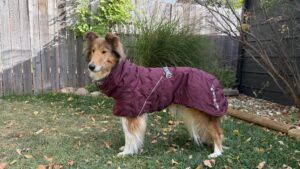
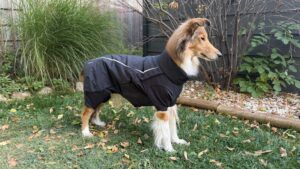
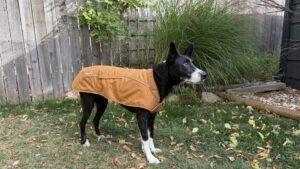
Non-stop Dogwear Glacier Jacket 3.0$119.99With waterproofing ratings, breathability ratings, and high-quality Primaloft insulation, the specs on this dog coat would be impressive on a human coat. It comes in14 different sizes and has one of the most non-restrictive fits of any of the dog jackets we tested.
Ruffwear Overcoat Fuse Insulated Vest$99.99This option is a harness and insulated dog jacket in one and durable enough for outdoor adventures, rain or shine.
Ruffwear Climate Changer Fleece Jacket$69.99This mid-layer is a great choice for camping, hiking, and more mild fall and early spring weather. It’s comfortable, moves with your dog’s body, and adds just the right amount of warmth.
Hurtta Extreme Warmer III Dog & Cat SnowsuitStarting at $105.95If you live in an area where the temperature regularly drops into the negatives, the Hurtta Extreme Warmer III is the warmest dog winter jacket on this list. It has reflective lining, a thermal “hood” that keeps cold air out and covers your dog’s neck and ears, and a comfortable, ergonomic fit.
Ruffwear Powder Hound Waterpoof Insulated Coverall$139.99Snow dogs, this one’s for you. If you have a pup who likes to frolic in the snow but gets too cold, this full-body snowsuit will repel snow while keeping your best buddy warm. It features sleeves and a full chest and belly panel to lock in heat and lock out snow and moisture.
Frisco Mid-Heavyweight Love Insulated Dog & Cat CoatStarting at $15.99This budget-friendly option is surprisingly thick and warm for the price. It’s best suited for low-impact activities like quick potty breaks and short cold-weather walks.

Best Dog Winter Coat: Non-stop Dogwear Glacier Jacket 3.0

The non-stop glacier jacket was the best of the jackets we tested.
The Non-stop Dogwear Glacier Jacket 3.0 was our favorite of the jackets we tested. The quality is impressive and it offers both warmth and breathability. Credit: Jae Thomas

The Non-stop Dogwear Glacier Jacket 3.0 is a human-quality jacket—but for dogs. This jacket is one of the most technical on the market: It features Primaloft Black insulation, a 20,000mm waterproofing rating, and a 20,000 g/m2/24hrs breathability rating.

A 20,000mm waterproofing rating is akin to top-performing human raincoats, and will keep your dog dry in heavy, prolonged downpours, wet snow, and high-intensity activities. The breathability rating means that 20,000 grams of water vapor can pass through a one-square-meter section of the fabric over 24 hours. This means the fabric of this coat allows sweat to escape while also keeping moisture out, which will keep your dog dry and comfortable even during demanding activities like alpine hiking, skijoring, or canicross.

This jacket is warm, but thanks to the breathability of the material, it’s not so warm that your dog will overheat, provided you’re using it during cold weather. It also features a leash portal, so it’s compatible with harnesses.

This dog winter coat has a comfortable and customizable fit (it has multiple cinches to adjust to your dog’s body), and it comes in 14 different sizes, so it fits extra small breeds all the way up to giant breeds.

Best Budget Dog Winter Jacket: Frisco Mid-Heavyweight Love Insulated Dog & Cat Coat

Frisco was our picke for the best budget dog winter coat.
When it comes to warmth on a budget, the Frisco Mid-Heavyweight Love Insulated Dog & Cat Coat is a solid option. Credit: Jae Thomas

The Frisco Mid-Heavyweight Love Insulated Dog & Cat Coat is surprisingly warm for the low price. It features a fleece lining as well as polyester insulation and would be a great choice for pups who just need to stay warm on short walks or potty breaks. It doesn’t have a harness portal, so it’s best suited for dogs who typically walk on a collar and leash.

I’ve found that most of the budget-friendly dog coats don’t have great mobility in the front and this one is no exception. The thick cut at the front of your dog’s shoulder allows for extra warmth but doesn’t allow for full range of motion in the front. It also runs a little small, so sizing up will help with this issue. This coat is best suited for short outings in cold weather—choose a more ergonomically-designed jacket if you’re planning on using it for running, hiking, or long winter walks.

Best Mid-Weight Dog Jacket: Ruffwear Climate Changer Fleece Jacket

The Ruffwear Climate Changer is one of the best dog winter jackets for physical exercise in cold conditions.
The Ruffwear Climate Changer Fleece Jacket is a great option for situations where a dog needs some extra warmth without needing a heavy coat. It also works well as an underlayer. Credit: Jae Thomas

I’ve had a version of the Ruffwear Climate Changer Fleece Jacket for years, and just recently upgraded to the newest model. This dog fleece has been my go-to for fall/winter camping trips and dry-weather winter hiking.

My Border Collie mix, Miso, has a short, single coat and tends to get chilly when stationary during the colder months. This fleece offers her the perfect amount of warmth on hikes so that she doesn’t overheat but still stays comfortable when we stop for a break or for lunch. I also put this jacket on her as an extra layer in addition to her dog sleeping bag when we camp during the fall and early spring.

The Climate Chnager is harness compatible and features a harness hole that you can run a leash through.

Best Dog Coat for Extreme Cold: Hurtta Extreme Warmer III Dog & Cat Snowsuit

The best winter dog jacket for extreme cold comes from Hurtta.
With a thermal hood and reflective lining, the Hurtta Extreme Warmer III Dog & Cat Snowsuit is warmest of the jackets we tested. Credit: Jae Thomas

The Hurtta Extreme Warmer III Dog & Cat Snowsuit is the jacket I pull out when we have temperatures in the negatives here in Colorado in the winter. The best part of this jacket is that the inside is reflective, so it reflects all your dog’s body heat back onto them, in addition to retaining it via insulation. It comes in nine different sizes, so you can find a custom fit for your pup, and it features reflective elements, a soft, comfortable material, and elastic cinches that allow you to adjust the back length, neck, and shoulder fit.

This jacket also features a high neck that provides extra warmth and protects your dog’s head from snow and rain. This is one of the only hoods on a jacket that my dogs tolerate, since it sits snugly against their heads instead of hanging down low over their eyes. This dog jacket also comes with a harness hole.

Best Dog Jacket for Snow: Ruffwear Powder Hound Waterproof Insulated Coverall

Ruffwear provides insulated coveralls to keep dogs warm and dry in wet weather.
When it comes to keeping a dog dry in the snow, the Ruffwear Powder Hound Waterproof Insulated Coverall is a good choice. Credit: Jae Thomas

If you have a dog who’s very sensitive to the cold and snow and could use extra warmth, the Ruffwear Powder Hound Waterproof Insulated Coverall is a good option. This full-body, harness-compatible dog snowsuit has four sleeves in addition to the insulated body, so small dogs and thin-haired dogs stay toasty when playing in the snow. It features a waterproof rating of 10,000mm and has 250g of polyester insulation in it.

Because it’s a full-body snowsuit, the sizing matters more than an option without legs, so double check your dog’s measurements before ordering. It’s helpful to size up if your dog is between sizes so you have enough back length to keep their rear end warm and the rear leg sleeves fit properly.

Best Dog Winter Jacket with a Harness: Ruffwear Overcoat Fuse Insulated Vest

The fuse insulated vest provides combines jacket and vest.
Not only is the Ruffwear Overcoat Fuse Insulated Vest durable enough to handle outdoor adventures, it also offers a built-in harness for those that don’t want to layer their dog’s gear. Credit: Jae Thomas

If you normally walk your dog on a harness, but don’t love the idea of layering multiple pieces of gear, the Ruffwear Overcoat Fuse Insulated Vest solves that problem. This insulated dog jacket features a built-in harness and is ideal for dogs who are active outdoors. It features front and back attachment points, an abrasion and weather-resistant outer material, fleece lining, reflective piping, and 120g of polyester insulation for warmth.


Winter Jackets for Dogs FAQ

  • How should dog jackets fit?

A dog winter jacket should be snug enough that it retains your dog’s body heat and keeps them warm but still allows correct range of motion. The best dog winter jackets feature high cut shoulders to give your dog full range of motion while walking, running, and hiking. You should be able to slide at least two fingers under any straps or buckles used to keep the coat on your dog.

  • How should you measure your dog for a jacket?

Don’t rely on weight or breed recommendations for dog jackets. The best way to ensure a dog jacket will fit your dog is to use a soft measuring tape to measure the base of their neck, the deepest part of their chest, and the length of their back from their withers (shoulders) to the base of their tail.

Snuffle Mats and Lick Mats: Benefits, Picks, and How to Use Them

Why sniffing and licking are good for dogs

Sniffing is how dogs read the world, and Jae explains that a good sniffing session is real mental stimulation: a dog works to process the scents, and its breathing picks up, so there’s a little physical workout in it too. Licking does something different. The repetitive motion is calming and helps release feel-good endorphins, which makes a lick mat a useful way to bring a high-energy dog down before a nap or bedtime.

How snuffle mats and lick mats work

A snuffle mat is a piece of fabric with lots of folds or pockets where you hide dry food, so the dog has to forage it out with its nose. A lick mat has a textured surface you spread wet or sticky food across, like canned food or peanut butter, so the dog has to work it out of the nooks and crannies. Lick mats can also be frozen to stretch the time even further, which helps dogs that inhale their meals.

What to look for when you buy one

For snuffle mats, Jae looks for plenty of hiding spots (ideally enough to hold a whole meal, not just a few treats), durable construction without small rippable pieces that could be a choking hazard for shredders, and machine washability so cleanup is easy. For lick mats, she says dishwasher safe matters even more, since food gets stuck in the fine texture and the mats need cleaning between uses, especially with raw food.

Jae’s favorite mats

She points to a couple of shaggy, high-pile snuffle mats she rates for keeping dogs busy, including a large one that occupies her dog for 20 to 30 minutes, and to a budget silicone lick mat she’s used for years alongside a softer one made for anxious or easily frustrated dogs. She also keeps suction-cup lick mats on hand for bath time and grooming. The specific brands she names are in the video.

What food to use, and keeping it diet-friendly

Snuffle mats work with regular kibble or dry treats; lick mats are for softened kibble, wet or raw food, peanut butter, or yogurt. To avoid overfeeding, Jae’s simplest rule is to use the dog’s own meals for enrichment, or to trim the next meal a little if she’s added something extra.

The takeaway

Snuffle mats and lick mats are an easy way to give your dog mental work and a calmer evening using food you already have. Watch the full interview above for Jae’s specific picks and how she uses each one.

How to Relieve Gas in Dogs at Home

Relieving excessive gas in dogs is a matter of identifying the causes and taking action to remedy them.
Usually, canine flatulence is related to the dog’s diet. In other cases, like in brachycephalic dogs, it’s anatomy or taking in too much air when they eat. Credit: Willee Cole | Getty Images

When it’s clear that someone in the room passed gas—and especially if it’s a strong odor—it’s a standard joke to blame the dog. And sometimes it truly IS the dog. While any dog can occasionally pass gas, if it is a frequent occurrence you might want to investigate the situation, especially if there’s also diarrhea. Frequent gas with diarrhea or gas that seems to appear suddenly in the dog are both signals to schedule a veterinary visit.

Causes of Gas in Dogs

My daughter’s lovely Belgian Tervuren would literally clear a room at times with her flatulence. It took some research, but eventually the culprit was found: potato! Researching to find a potato-free diet took some time, but once changed over, she was gas-free. It also meant, however, that if she had a gastrointestinal upset, mashed potatoes were not an option.

My daughter’s dog was not an isolated incident. Dogs with food sensitivities can create some noxious gas due to interactions in their intestinal tract. Overweight dogs and dogs who don’t get enough exercise may also pass extra gas.

Brachycephalic dogs, like Pugs, Bulldogs, and Boxers, tend to gulp in extra air when they breathe. Once it goes in, that air must go back out and, as it travels the gastrointestinal tract, it picks up noxious odors. The same scenario with extra air intake can occur with dogs that are fast eaters and gulp their food. There isn’t much you can do about your brachycephalic dog, since the cause is part of their anatomy. You can check to see if he is rapidly wolfing down his food, however, and if he is, consider implementing a remedy to slow his food intake.

Home Remedies for Gas in Dogs

Dogs who do eat in no-time-flat can be slowed down. You can try one of the many slow feeders on the market. It will take some experimentation to see which one works for your dog, but these bowls do work.

Some people find success by adding some clean large rocks to the food dish, but you need to be certain the rocks are big enough that your dog won’t swallow one by mistake.

A snuffle mat works well for dry food because your dog needs to hunt for the kibble, not gobble it all down in a few bites. Most dogs enjoy snuffle mats.

If you have several dogs, sometimes just separating dogs for meals will help, as submissive dogs may feel the urge to eat fast and the dominant dogs may try to eat as quickly as possible to get another dog’s dinner.

Tips for Controlling Flatulence in Dogs

Overweight dogs: Dogs who are overweight and do not get enough exercise need a weight-loss diet and an exercise plan. Remember, slow but sure is the way to go with both. Adding fiber to the diet may help, but it can add to the problem for some dogs. Trying some plain canned pumpkin is worth it, though, as it is an easy fix if it works. Remember: You want plain canned pumpkin without any additives.

Food sensitivities: While the potato sensitivity we mentioned above was a little odd, it’s a lesson that means you may need to do an elimination diet.

Many dogs can’t dairy. If that’s your dog, it means no more yogurt or ice cream treats. Cheese can be a factor as well (many of us use string cheese to train with!). The upside is that dairy products are obvious and reasonably easy to work around. Other ingredients may take more sleuthing and some major diet adjustments.

Hopefully, if your dog has a food sensitivity you can quickly identify it. Keep note of any unusual or extra treats that precede a gas attack. Then try to avoid the offending ingredient.

Consider probiotics: Probiotics help some dogs. Forti Flora from Purina and Royal Canin’s Probiotic have worked well in my experience.

Figuring what’s causing your dog’s gas takes determination and attention to detail. But, with any luck, you can figure out at least part of the why behind your dog’s gas and arrange to avoid the inciting factors.

And, as we stated at the start, consider a veterinary check if your dog also has diarrhea or any other symptoms.

Video: Wet food or dry food: which is better for your dog?

0

Wet or dry is one of the most common dog food questions, and the honest answer isn’t one or the other. It depends on your dog, and on a few things worth knowing before you shop.

In our new video, companion animal nutritionist Dr. Mary Cope, PhD, talks with executive editor Kate O’Connor about:

  • Where dry food wins: cost, convenience, storage, and calorie control
  • Where wet food wins: moisture, palatability, and dogs with dental issues
  • When she’d steer you toward one over the other
  • The real nutritional differences in moisture, carbs, and meat
  • A simple trick for getting a picky dog to eat
  • What to check on the label before you buy either one

Video: The Easiest Way To Tire Out Your Dog Indoors

0

A snuffle mat or a lick mat can turn a cup of kibble into 20 minutes of quiet, and give a restless dog something better to do than pester you.

In our new video, certified dog trainer Jae Thomas talks with executive editor Kate O’Connor about:

  • Why sniffing is mental exercise and licking helps an anxious dog calm down
  • How snuffle mats and lick mats each work, and which food goes on which
  • What to look for when you buy one, from hiding spots to easy cleanup
  • The snuffle mats and lick mats Jae actually uses with her own dogs
  • How to use them for enrichment without overfeeding your dog

Why a Dog Has Raised Hackles

A dogs hackles are raised-hair stands on end-when they are alarmed by something.
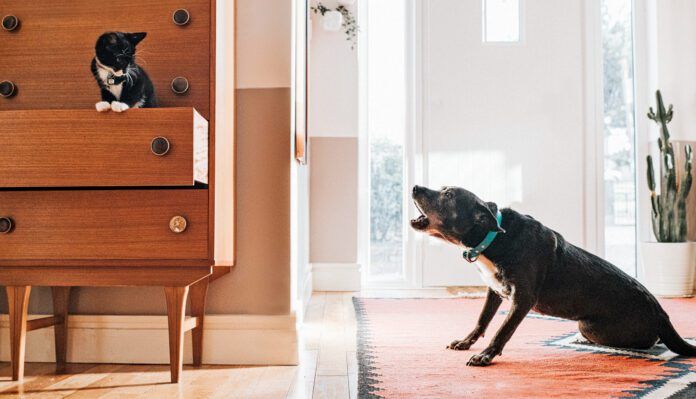
This dog’s hackles are slightly raised because he clearly thinks the cat is not in her proper place. Credit: Catherine Falls Commercial | Getty Images

Most dog lovers think raised back hair is a sign of aggression.  That is not necessarily the case. The context of the environment as well as the dog’s body language and micro facial expressions must be taken into consideration to determine what is happening when it comes to raised hackles.

This nervous-system response, technically called “piloerection,” can also be caused by excitement, stress, fear, and even curiosity. Of course, it also happens when a dog feels defensive, which is where the typical expectation comes from.

Dogs do involuntarily experience piloerection when feeling defensive. It’s an autonomic response that creates the illusion of looking bigger, the body’s attempt to appear more threatening to adequately defend oneself against a threat, whether perceived or actual.

Because of that involuntary and often defensive response, seeing one’s dog with their hair standing up on end can be worrisome to the average dog person. What must be considered, however, is the whole picture.

Common Reasons for Raised Hair on a Dog

The most common reasons that a dog may have their hackles raised include:

  1. Aggression: No dog is inherently aggressive. It’s not a personality trait. It’s an action. An aggression action is a response to something that causes a dog to feel threatened. Body-language signals can help a dog parent to identify this reason include barking, a stiff posture with forward head position, a raised high stiff tail. Aggression responses can be either offensive or defensive so the mouth itself will look slightly different with one versus the other. Regardless, either or all the above indicates a willingness to defend oneself, which is the important part of this equation.
  2. Fear: A fearful piloerection response in dogs can include some of the above body language but instead of a stiff raised tail, the tail body language is more likely to be tucked underneath the dog’s body, and the body positioning may look more backward than forward. Both are technically an aggressive response but for different reasons.
  3. Anxiety or Stress: A dog who is feeling anxious can display some actions from both the above categories but without an aggressive response. You may simply see pacing and whining as well as some displacement gestures, such as out of context self-grooming or suddenly having an intense need to scratch oneself.
  4. Curiosity: An example of this category could include a dog seeing something novel in the environment. Their hackles will raise up, but they will be willing to investigate the new thing. They may hesitantly approach the new thing in a curved manner, with their tail low and hesitant, possibly also wagging at body level with a slightly anxious look of such, while sniffing the ground. This is normal.
  5. Excitement: I have several clients with dogs who get raised hackles when I arrive for our sessions because they are excited and happy to see me. With this reason behind piloerection in dogs, you will see obvious signs of happiness such as loose wiggly body language, an enthusiastically wagging tail, and a bouncy manner along with an open, relaxed mouth.

What You Should Know About Dog Raised Hackles

The bottom line is that it’s crucial to look at the context so that you can make a better determination of the reason behind your dog’s hair suddenly standing up. Knowing your own individual dog and learning to recognize their typical body-language signals—including raised hair on their backs—will help you make better decisions on whether you remove them from the situation or not.

If you are truly dealing with aggression issues in your dog, seek out the help of a competent dog trainer and talk with your veterinarian about possible medication.

If your dog is easily becomes afraid, this may mean you should work more on her socialization skills by getting her out for walks in different places and maybe taking her into a store that allows dogs. Again, the help of a dog trainer who is educated in dealing with these types of dogs will be money well spent.

Dog Vaccines Explained: Core Shots, Boosters, and Titers

0

Vaccines are one of the few things every dog owner deals with, and one of the topics owners ask about most. Which shots does a dog actually need? How often? And what if your dog had a bad reaction last time?

Whole Dog Journal executive editor Kate O’Connor put those questions to veterinarian Eileen Fatcheric, DVM, a 1988 graduate of Cornell University’s College of Veterinary Medicine who now practices in Syracuse, New York.

Core vaccines vs. lifestyle vaccines

Core vaccines are recommended for every dog, whatever the dog’s lifestyle. For years that meant distemper-parvo and rabies. Dr. Fatcheric explains that leptospirosis has now joined the core list, and why: lepto is a bacterial disease spread through wildlife urine, and it can pass from dogs to people.

Other vaccines depend on where your dog goes and what it does. The Lyme vaccine makes sense for dogs exposed to ticks in long grass or wooded areas, alongside tick prevention. Kennel cough (Bordetella) is for dogs who spend time indoors with other dogs at groomers, daycare, or boarding. Canine influenza is becoming more common for dogs who travel.

The puppy schedule, and why it takes several shots

Puppies typically start the distemper-parvo series at 6 to 8 weeks and get a booster every 3 to 4 weeks until at least 16 weeks old. Dr. Fatcheric explains how antibodies from the mother’s milk interfere with early vaccines, and why the repeat doses are designed to cover the gap. She also warns owners against keeping puppies locked away until the series is done, since that is the prime window for socialization.

Boosters for adult dogs

Lepto, Lyme, kennel cough, and influenza are generally boosted every year. Rabies is good for one year after the first shot, then typically three years after the booster, though rules vary by state. Distemper-parvo is commonly given every three years after the first annual booster.

Titers and when to skip a vaccine

For owners who want to avoid unnecessary shots, a titer test measures a dog’s antibody level to distemper and parvo. Dr. Fatcheric explains what the results mean and the main argument against relying on them.

She also covers the situations where she would delay or avoid a vaccine: a past anaphylactic reaction, milder reactions that can be managed with pretreatment, and dogs with immune-mediated disease. For dogs who can’t be vaccinated, she talks through how to reduce exposure risk, and what to expect with rabies laws.

The takeaway

Every dog’s needs are a little different. Watch the full interview above, then bring your questions to your own veterinarian.

Why Does My Dog Keep Stretching?

A dog may keep stretching to the point it may seem strange.
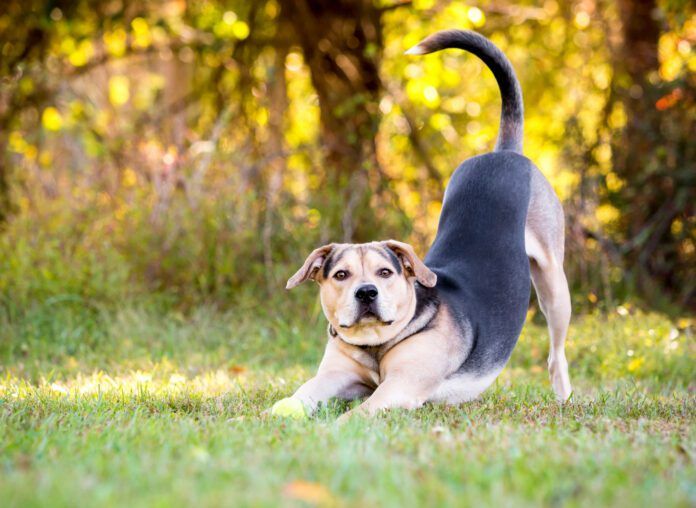
A dog who stretches comfortably into a play bow generally has a bright expression and may even wag his tail in anticipation of fun to come. Credit: Mary Swift | Getty Images

Like you, your dog probably stretches—and keeps stretching—throughout the day. She might stretch first thing in the morning, or bow low, paws wide with a wagging tail and wide eyes when she’s ready to play.

In general, dogs stretch for a variety of reasons, which usually fall into four main categories:

  • Post-rest wake-up: Boosting blood flow after a nap or long sleep.
  • Pre-exercise warmup: Lengthening muscles before a walk, hike, or run.
  • Social interaction: The classic play bow, which expresses an invitation to interact.
  • Discomfort or pain: Signaling physical stiffness, abdominal distress, or joint issues.

While not all stretches serve the same purpose, most of the time, stretching is a normal part of your dog’s life, says Ali Smith, a Maryland-based dog trainer and behavioral consultant. “Dogs have just spent time resting, so stretching helps wake up the muscles and get everything moving again. It’s no different than us stretching when we get out of bed in the morning. You’ll often see a big stretch and a good yawn after a nap, or just before heading out for a walk when excitement levels start to rise.”

Stretch vs. Play Bow: What’s the Difference?

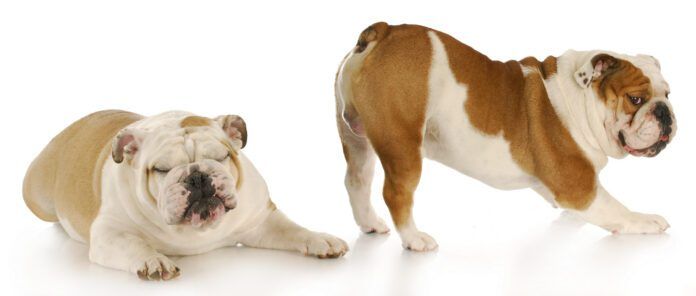
A dog’s play bow is a variation of a stretch. While a play bow also features a dog lowering her front end while keeping her rear end elevated, it is typically accompanied by a wagging tail, loose body language, and direct eye contact. It acts as a clear signal to other dogs—and humans—that whatever happens next is intended to be fun.

How do you tell the difference?

“This is one of my favorite questions because they look remarkably similar. The important part is context,” says Smith. She says that a functional stretch is generally about the dog’s own body. Once finished, the dog simply moves on with her day. “A play bow is communication.”

Emotional and Behavioral Resets

Beyond loosening muscles or signaling playtime, stretching can also serve as an emotional release. Rather than addressing a physical need, a stretch can act as a displacement behavior when a dog is processing excitement, mild frustration, or environmental changes.

“Dogs have lots of little reset behaviors that we humans tend to be ignorant of,” says Smith. “They shake off after something exciting, yawn when they’re conflicted, sniff the ground when they’re unsure, and stretching can fit into that same category.”

“I often see dogs stretch during training if they’re feeling overwhelmed coupled with a yawn, or after working through something challenging. It doesn’t necessarily mean they’re distressed. It can simply be their way of releasing a bit of tension before carrying on.”

When to Worry About Dog Stretching

Beyond behavioral resets, stretching can be sign of pain. Distinguishing between an aging dog warming up stiff joints and a dog in acute pain, for example, can be tricky, but veterinary science uses body language as a critical diagnostic tool.

To help veterinarians and dog owners evaluate discomfort, institutions like  Colorado State University and the University of Glasgow developed objective canine pain scales. These frameworks analyze specific postural shifts—such as rigid stretching, arched backs, and abdominal guarding—as primary indicators of moderate to severe pain.

The key is to know the difference between a normal play bow and what veterinarians call the prayer position. In medical terms, it’s referred to as a visceral pain stance. In the prayer position, a dog lowers her chest and front legs to the ground while keeping her rear elevated. It’s like a play bow but is rigid and without any playful body language.

How to Spot Stretching From Pain

While most stretches are innocuous, a stretch can sometimes signal acute stiffness or severe internal distress. As your dog’s primary caregiver, it’s up to you to distinguish between an aging dog warming up stiff joints and a dog in medical trouble.

According to the Merck Veterinary Manual, clinical signs that may suggest the presence of abdominal pain or discomfort include the prayer position where a dog lowers his chest and forelegs close to the floor while keeping his hindquarters elevated. Dogs instinctively assume this posture because extending the abdomen helps relieve pressure on inflamed internal organs, such as the stomach or pancreas.

Common medical causes for the prayer position include:

  • Abdominal pain: Conditions such as acute pancreatitis, bloat, gastroenteritis, or a swallowed object cause severe abdominal discomfort that a dog tries to ease by holding this pose.
  • Gastrointestinal issues: Inflammatory bowel disease, stomach ulcers, or intestinal blockages.
  • Musculoskeletal problems: Spinal issues, neck pain, or joint pain in the front limbs can lead to a similar rigid stance.
  • Systemic or neurological conditions: Severe internal inflammation or organ distress.

When Is It Time for a Vet Visit?

As normal as a stretch usually is, a sudden shift in frequency or posture can be red flags. You should seek veterinary assessment if you notice:

  • Stretching is sudden, frequent, or repetitive.
  • A held prayer position where your dog seems unable to settle.
  • Accompanying symptoms such as vomiting, lethargy, panting, an arched back, a guarded/painful belly, or a sudden loss of appetite.

“If the stretching is new, excessive, or accompanied by changes in appetite, energy levels, movement, vomiting, diarrhea, or signs that the dog seems uncomfortable, that’s where I’d stop thinking behavior and encourage a veterinary assessment,” Smith says. “Pain can look like a behavior problem before it looks like a medical one.”

While it’s important to know your dog’s habits and routines, so you can note changes, stretching, on its own, is usually just stretching. As Smith says, dogs aren’t always secretly communicating complex messages every time they do something normal.

How to Handle a Dog’s Diarrhea at Home

home remedies for dog diarrhea come in many forms from routine to esoteric.
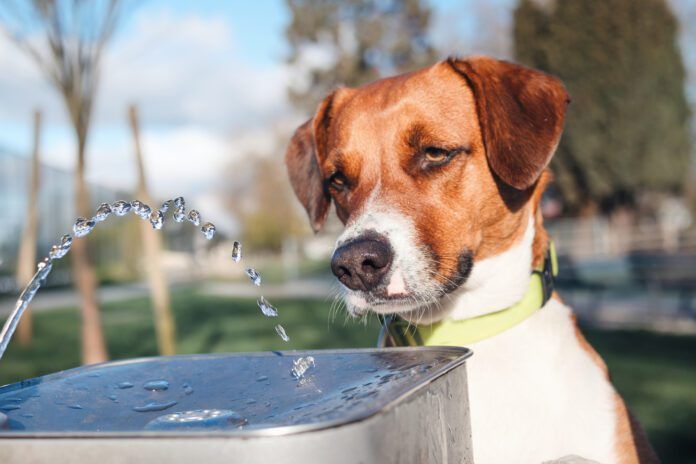
A dog battling diarrhea needs plenty of fresh water to combat the dehydration, but reconsider allowing him to drink from a public fountain, not matter how attractive he finds the spout. Credit: Petra Richli | Getty Images

We’re talking about mild diarrhea in your dog in this article. If your dog has bloody diarrhea, is also vomiting, won’t eat or drink, or has had diarrhea more than 24 to 48 hours, it is not a mild case of diarrhea. You need to contact your veterinarian.

To continue reading this article or issue you must be a paid member.

Join Whole Dog Journal

Get full access to Whole-Dog-Journal.com – more than 4,000 articles – for just $20.
Join today and save 30% off our full price.
Already a member?
| Forgot your password? | Activate Web Access

Video: Which vaccines does your dog actually need?

0

Most dog owners follow whatever vaccine schedule their vet hands them. Knowing why each shot is on that list makes it a lot easier to ask the right questions.

In our new video interview, veterinarian Eileen Fatcheric, DVM, talks with executive editor Kate O’Connor about:

  • The core vaccines every dog needs, and a recent addition to that list
  • Lyme, kennel cough, and flu vaccines, and which dogs they’re for
  • Why puppies need a series of shots, and why you shouldn’t keep your puppy home until it’s done
  • How often adult dogs need boosters
  • Whether titer testing can help you avoid overvaccinating
  • When a dog should delay or skip a vaccine