Most dog lovers think raised back hair is a sign of aggression. That is not necessarily the case. The context of the environment as well as the dog’s body language and micro facial expressions must be taken into consideration to determine what is happening when it comes to raised hackles.
This nervous-system response, technically called “piloerection,” can also be caused by excitement, stress, fear, and even curiosity. Of course, it also happens when a dog feels defensive, which is where the typical expectation comes from.
Dogs do involuntarily experience piloerection when feeling defensive. It’s an autonomic response that creates the illusion of looking bigger, the body’s attempt to appear more threatening to adequately defend oneself against a threat, whether perceived or actual.
Because of that involuntary and often defensive response, seeing one’s dog with their hair standing up on end can be worrisome to the average dog person. What must be considered, however, is the whole picture.
Common Reasons for Raised Hair on a Dog
The most common reasons that a dog may have their hackles raised include:
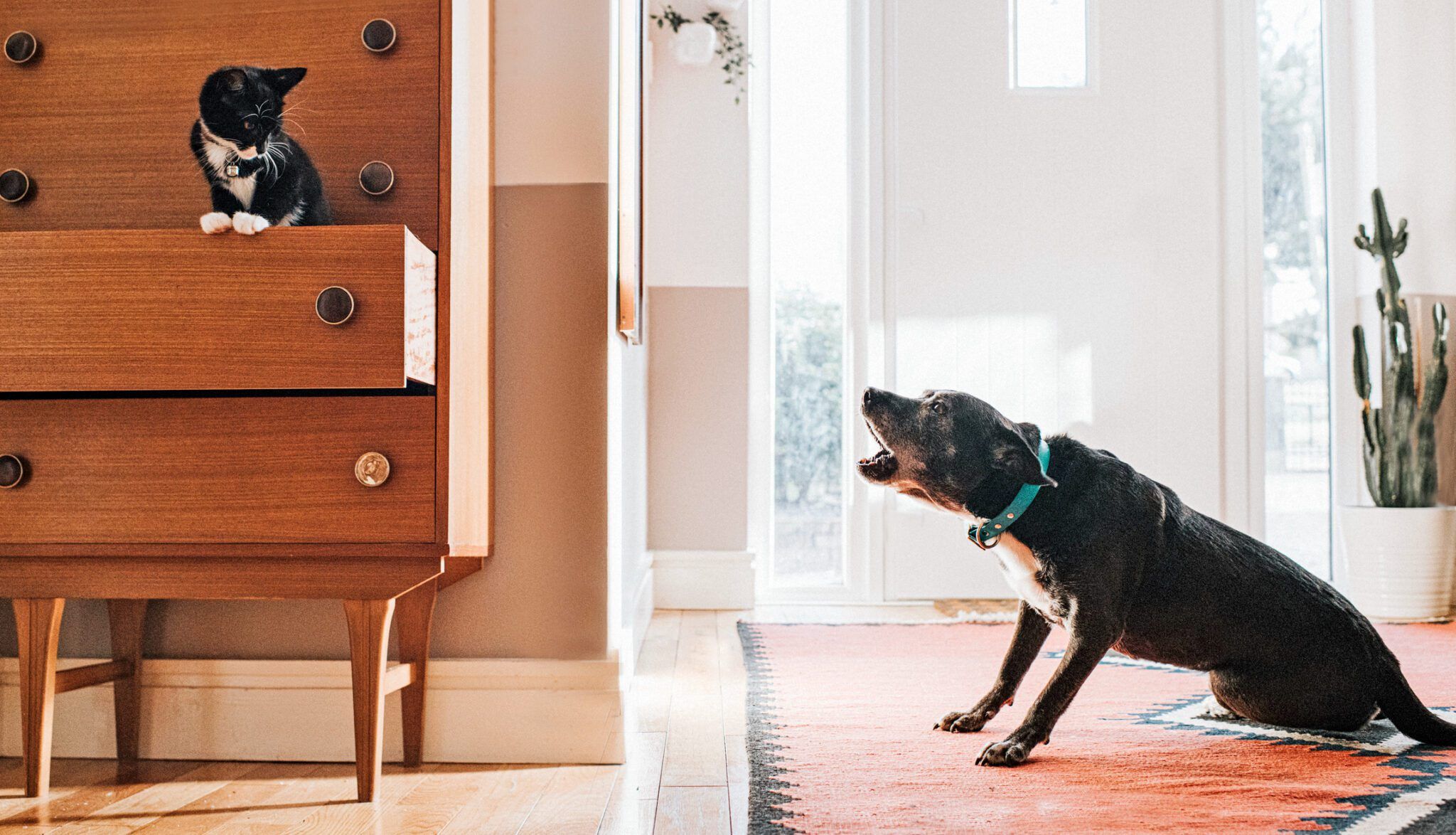
- Aggression: No dog is inherently aggressive. It’s not a personality trait. It’s an action. An aggression action is a response to something that causes a dog to feel threatened. Body-language signals can help a dog parent to identify this reason include barking, a stiff posture with forward head position, a raised high stiff tail. Aggression responses can be either offensive or defensive so the mouth itself will look slightly different with one versus the other. Regardless, either or all the above indicates a willingness to defend oneself, which is the important part of this equation.
- Fear: A fearful piloerection response in dogs can include some of the above body language but instead of a stiff raised tail, the tail body language is more likely to be tucked underneath the dog’s body, and the body positioning may look more backward than forward. Both are technically an aggressive response but for different reasons.
- Anxiety or Stress: A dog who is feeling anxious can display some actions from both the above categories but without an aggressive response. You may simply see pacing and whining as well as some displacement gestures, such as out of context self-grooming or suddenly having an intense need to scratch oneself.
- Curiosity: An example of this category could include a dog seeing something novel in the environment. Their hackles will raise up, but they will be willing to investigate the new thing. They may hesitantly approach the new thing in a curved manner, with their tail low and hesitant, possibly also wagging at body level with a slightly anxious look of such, while sniffing the ground. This is normal.
- Excitement: I have several clients with dogs who get raised hackles when I arrive for our sessions because they are excited and happy to see me. With this reason behind piloerection in dogs, you will see obvious signs of happiness such as loose wiggly body language, an enthusiastically wagging tail, and a bouncy manner along with an open, relaxed mouth.
What You Should Know About Dog Raised Hackles
The bottom line is that it’s crucial to look at the context so that you can make a better determination of the reason behind your dog’s hair suddenly standing up. Knowing your own individual dog and learning to recognize their typical body-language signals—including raised hair on their backs—will help you make better decisions on whether you remove them from the situation or not.
If you are truly dealing with aggression issues in your dog, seek out the help of a competent dog trainer and talk with your veterinarian about possible medication.
If your dog is easily becomes afraid, this may mean you should work more on her socialization skills by getting her out for walks in different places and maybe taking her into a store that allows dogs. Again, the help of a dog trainer who is educated in dealing with these types of dogs will be money well spent.