Subscribe

The best in health, wellness, and positive training from America’s leading dog experts

Home Blog Page 61

Apple Cider Vinegar for Dogs

apple cider vinegar for dogs

Browsing through internet postings about the benefits of apple cider vinegar for dogs will likely give you pause. Some laud it as a wonder product for everything, including curing cancer! Then you find the naysayers, who cite the FDA’s stand that apple cider vinegar has no nutrients. Of course, you already realize the truth is somewhere between.

It won’t cure cancer, but some research shows it shrinking tumors. Apple cider vinegar will not cure diabetes, either, although it’s been shown to help with blood sugar control.

The FDA is correct: Apple cider vinegar (ACV) contains only trace amounts of vitamins and minerals, except potassium. ACV has 11 grams of potassium in a tablespoon. But despite not being packed with essential nutrients, ACV does have health benefits for people and animals. The strong antioxidant and antibacterial qualities of apple cider vinegar is enough reason to include it in your dog’s care regimen.

Apple cider vinegar is made from just apples and water, making it completely safe for dogs. It is slightly acidic, with a pH of 3.1 to 5, which gives it properties that can soothe a dog’s overly alkalized digestive tract. Add a teaspoon of ACV to your dog’s water bowl and see if he’ll drink it!

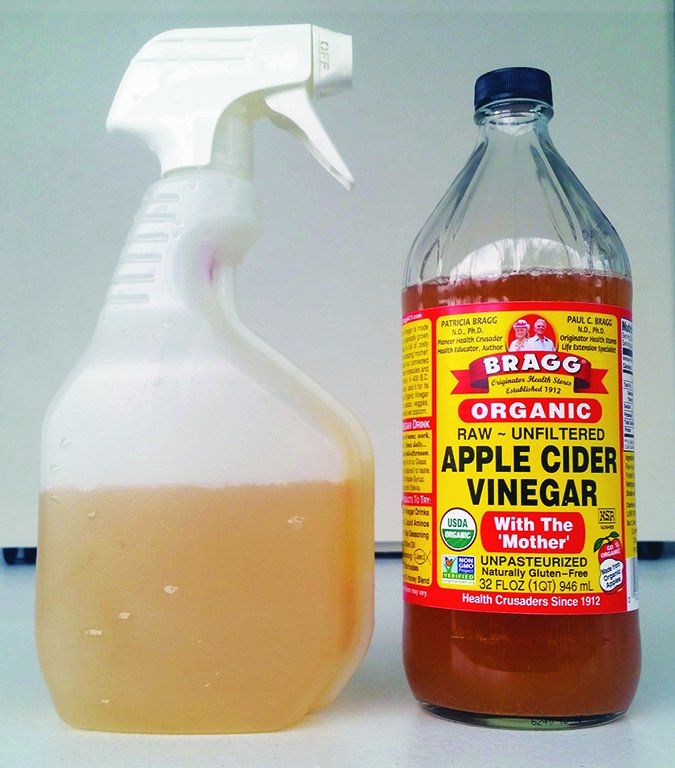
For topical use, create an apple cider vinegar rinse for after your dog’s bath, as a remedy for irritated skin or a dry coat (1 cup ACV per 2-4 cups water). It’s common for dogs to get yeast infections in their paws; soaking your dog’s paws in ACV will relieve that too. When diluted and added to a spray bottle, apple cider vinegar is a strong disinfectant and even works as a mild flea repellent. See more ways you can use apple cider vinegar for dogs below.

11 Ways Dog Lovers Can Use ACV

So, how much can apple cider vinegar benefit your dog? Quite a bit, actually, provided you are sensible about your expectations. Apple cider vinegar may help dogs with:

1. Itchy, flaking skin and dull coats

2. Relief from hot spots

3. Repelling fleas

4. Keeping a dog’s ears clean, lessening the chance of infection

5. Improving digestion by balancing pH levels in a dog’s body

6. Ridding itchy paws and skin of bacteria

7. Relieving muscle soreness in older or active dogs

8. Rinsing soap residue or offensive odors from your dog’s coat

9. Preventing urinary tract infections (UTIs)

10. Helping relieve bladder stones in dogs

11. Fighting yeast infections on dogs’ paws

12. Diluting pet stains and odors in the home

Apple cider vinegar is made from apples/apple pectin. All vinegars are made from a liquid containing sugar, so apple vinegar begins as water and apples. When exposed to air, yeasts can grow, which cause the sugar to ferment and become alcohol. As it continues to ferment, natural (or added) acetic acid bacteria turn the alcohol into acetic acid, which is the main component of vinegar. Acetic acid is what gives vinegar its taste, smell and benefits. The word “vinegar” means “sour wine,” and indeed, red wine vinegar is simply red wine that’s been acetified.

Apple Cider Vinegar for Dogs: Proper Dosage

You’re familiar with apple cider vinegar as an ingredient in recipes, like salad dressings, dips, and drinks. It’s a healthy choice.

Although research on apple cider vinegar’s benefits is minimal, the test of time has made it a viable alternative for a number of everyday physical complaints and problems. Most experts agree that its documented human benefits also help dogs.

As is often the case, the exact dosage isn’t cast in stone, and you may need to experiment. Some people add it to food, at a rate of 1 teaspoon to 1 tablespoon for a 50-pound dog. Never feed straight apple cider vinegar. If you don’t see the desired benefit within 30 days of feeding apple cider vinegar, chances are it’s not working for that problem.

Many dog owners add it to the dog’s water bowl, but start with a small amount – a tablespoon in a big bowl of water, perhaps – and watch to make sure your dog still drinks the water readily before increasing the amount. However, when you add anything to water, be make sure you make a second bowl of plain water available, too. The last thing you want to do is curb your dog’s daily water intake.

That said, dogs who are used to the taste of apple cider vinegar in their water often find it easier to adjust to new water tastes, such as when traveling.

Apple cider vinegar helps digestion by increasing the stomach’s acid levels, which results in better absorption and fewer gastrointestinal symptoms like burps and gas. Apple cider vinegar promotes the growth of beneficial bacteria in the dog’s digestive tract. Some dog owners mix it into plain yogurt.

Research shows it lowers post-meal glucose levels in humans, and it can relieve constipation. Of course, that means overdo it and you may face a messy outcome.

A dose of apple cider vinegar can help with minor bladder inflammation, too, but it won’t cure an actual urinary tract infection. That needs immediate veterinary attention.

Since apple cider vinegar has antimicrobial properties, mainly antibacterial, it may interrupt the development of some infections. Feeding it may help combat teary eye stains.

Be careful, though. You can feed too much apple cider vinegar. The first early symptom is usually vomiting. If you ignore that, you may eventually find increased tooth decay and decreased bone health. It can also irritate the mouth and linings of the esophagus.

ACV is a Safe, Reliable Disinfectant

Vinegar is a well-known cleaner and mild disinfectant. (Some people won’t use anything but white vinegar to clean their windows.) Apple cider vinegar’s cleansing and disinfecting qualities can be good for your dog, too. (If you’ve never used it before or your dog is the “sensitive” sort, do a 24-hour spot test before applying it to the dog’s entire body. Signs of allergy would include vomiting, reddish skin, and/or itching and scratching.)

Diluted 50-50 with water and applied using a sprayer or a sponge, an apple cider vinegar rinse will remove leftover soap residue after a bath, help alleviate dandruff and itchy skin and leave the coat shiny and soft. To use it as a dandruff preventative, rub the diluted solution into the dog’s skin just prior to giving him a bath (never do this without having done the 24-hour spot test), then wash it off in the bath.

If you’re like most of us and prefer to minimize your dog’s exposure to chemicals, apple cider vinegar might be the answer for a natural flea and/or flying insect repellent. While it’s not the answer for a flea infestation, it does a good job combatting small incidences, such as added protection on a walk during heavy bug season.

Apple cider vinegar has a cooling sensation, making it a good choice for small topical problems, like burns, bruises, and hot spots. Be careful, though. If the wound is at all open or raw, apple cider vinegar will sting!

It’s especially useful to minimize itchy feet and ears. Thoroughly soak the dog’s paws in a vinegar-water mix. Use cotton swab or gauze pads soaked in the mixture to clean ears.

A massage with a diluted ACV mix will go a long way toward relieving strained muscles from overactivity. Warm the solution slightly for added benefit.

Although you may read articles to the contrary, apple cider vinegar is not a strong choice for treating lice, fungus, warts, or ear infections. Your best bet in these situations is a veterinarian.

Since ACV is a great deodorizer and safe for your dog, you can use it to disinfect dog toys and bedding. Spray it anywhere you need odor control and/or a gentle disinfectant.

What Kind of Vinegar Is Best for Dogs?

Like most things nowadays, the choices for vinegar border on over-whelming. You’ll see words like raw, natural, unpasteurized, organic, and unfiltered. There are also white vinegars, balsamic vinegars, and wine vinegars. We’re looking at apple cider vinegar, which is usually an amber color (light or dark) and made from apples.

For health uses, choose raw, unpasteurized apple cider vinegar, preferably in a glass bottle. Why?

“Raw” or “unfiltered” apple cider has the “mother” in it, which is the name of the brown stuff at the bottom of the bottle. These are fermentation leftovers, and they include all the good live bacteria and enzymes that give the product its health benefits. Of course, if you’re using this vinegar for cleaning, you want to strain this out before you use it. (Can’t stand the look of the debris in the bottom? Then look for “filtered” apple cider vinegar, which was strained to remove the debris.)

“Unpasteurized” is recommended because the process of pasteurization can kill the good bacteria we want. If you’re willing to spend the extra buck or two, choose an organic apple cider vinegar. No reason not to avoid pesticides when you can, especially if your dog is going to eat the product.

Glass containers do not pose the risk (as plastic bottles can) of harmful chemicals leaching into the product.

Apple Cider Vinegar Controversy

In a past Whole Dog Journal article, we discussed some of controversies surrounding apple cider vinegar.

Not everyone agrees that apple cider vinegar should be given to dogs. Pat McKay, canine nutritionist and author of the natural diet book, Reigning Cats and Dogs, doesn’t like cider vinegar, and she doesn’t mince words; she calls it poison.

“I believe Peter J. D’Amado is on the right track in his book, Eat Right for Your Type,” she says. “Each of the human blood types has an ideal diet, and the diet recommended for type O most closely resembles the meat-based diet on which dogs evolved. D’Amado warns that cider vinegar is very damaging to this type, and I agree with him. I happen to be a type O, and apple cider vinegar has always made me feel miserable. I never knew why until I read his book. I believe dogs have a similar reaction because even small quantities of vinegar can throw their bodies’ pH out of balance.”

Marina Zacharias, pet nutritionist and publisher of Natural Rearing newsletter, shares McKay’s concern about pH levels. She recommends that owners have their dogs’ blood and urine tested before adding cider vinegar to their daily diet.

“If a dog’s system is too alkaline,” she says, “cider vinegar will help, but by itself it may not correct the problem and the dog will need additional support. If the dog’s system is too acidic, which is a condition called acidosis, the result can be stress on the pancreas and adrenal organs, which are important regulators of blood pH levels. The symptoms of acidosis range from diarrhea or constipation to low blood pressure, hard stools, and sensitivity of the teeth and mouth. Often we see acidosis in combination with other conditions, such as kidney, liver, and adrenal problems. In certain cases, adding vinegar to a dog’s food could aggravate an already-existing problem in the body.”

Are adverse side effects likely? If a dog is allergic to vinegar, he might vomit, scratch furiously, or have a similarly obvious reaction. Although there is much debate on this issue, some believe that vinegar may worsen chronic ear infections. Long-term use of ACV on dogs who are sensitive to it has been associated with tooth decay and bone deterioration. Too much could also inflame a dog’s mouth and esophagus.

“You have to apply common sense,” says Sue Ann Lesser, DVM. “Most dogs are notoriously over-alkaline, and cider vinegar will help them. If a dog’s system is overly acidic, you’ll see clinical signs, such as obvious symptoms of illness. I know quite a few dogs that take cider vinegar according to the directions in Wendy Volhard’s book, and I don’t know of any that have had bad results.”

In her book The Holistic Guide for a Healthy Dog, author Wendy Volhard recommends using pH paper strips to check the dog’s first morning urine. “If it reads anywhere from 6.2 to 6.5, your dog’s system is exactly where it should be,” and no ACV is needed, she says. “But if it is 7.5 or higher, the diet you are feeding is too alkaline, and apple cider vinegar will reestablish the correct balance.”

Volhard recommends 1 teaspoon to 1 tablespoon twice daily for a 50-pound dog.

Cynthia Foley is a freelance writer in upstate New York. She competes with her Papillons in dog agility.

Dog Nosebleed

Dog nosebleeds have many causes as dogs greet the world nose first.
Dogs like to sniff, and if they manage to breathe in some debris, a dog nosebleed could results. Credit: Mint Images | Getty Images

Nosebleeds in a dog have many possible causes, just as they do in people. Some nosebleeds are simple: A dog nose bleeding on only one side is often due to trauma, such as the dog running into something, even if the trauma involved both sides. Other nosebleeds are complex: A nosebleed accompanied by difficulty breathing or heavy breathing may indicate cancer.

In addition, an intense sneezing fit can cause a minor nosebleed. This is generally both nostrils and stops fairly quickly without any care. A nasal polyp can cause sneezing.

Why Would a Dog’s Nose Bleed on One Side?

If your dog has had trauma such as from running into something, he may end up with a nosebleed, which may be a one-sided nosebleed. Obviously, when there is trauma and damage, like a swollen muzzle, injured eye, bloody mouth, or missing tooth, you should contact your veterinarian. Otherwise, most dog nosebleeds can be handled with cold compresses or an ice pack on the top of the muzzle. Note: The medical term for a nosebleed is epistaxis.

One-Sided Bloody Nose With Heavy Breathing

The major concern with a nosebleed on one side is nasal cancer that has not spread to the full nose yet. Sometimes you can spot a growth from just looking at your dog’s nose or you might see a swollen area on the muzzle. That area may or may not be painful. Often these dogs will have some labored or heavy breathing (since only one side of their nose is functional) along with their nosebleed. Caught early, nasal cancers can sometimes be successfully treated with surgery and/or radiation.

Heavy Nosebleeds in Dogs

If your dog has a heavy nosebleed, the first possibility to consider is a foreign body. Your dog may have been sniffing heavily and snorted up a pill or some plant material or another irritant. The irritation may damage small blood vessels and lead to a bloody nose.

Some dogs will then sneeze this out, but your dog may require sedation to remove the offending material. If you live in foxtail country, you definitely want a thorough exam and removal.

When are Bloody Noses an Emergency in Dogs?

A somewhat unusual cause of nosebleeds in dogs is a clotting disorder. A simple sneeze can lead to a heavy bleed in these cases since the clotting factors are low in number or already used up. This type of nosebleed usually will not stop with simple first-aid, such as the cold compresses, and should be considered an emergency. Treatment for the primary cause of the clotting problems is essential.

Tick Paralysis In Dogs

2
Tick paralysis in dogs is caused by a neurotoxin injected by a feeding tick.
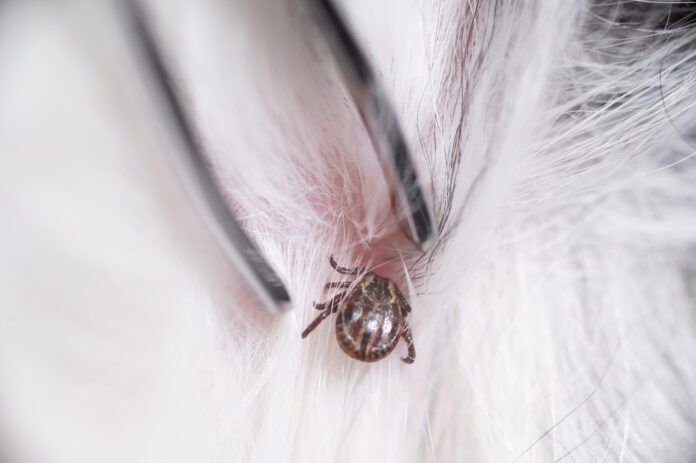
Every dog owner should learn what ticks look like and how to carefully remove them. If you grab tweezers, you need to be very careful to get the tick’s entire body, including the head. That’s why tick-removal tools are a better choice. Credit: Aitor Diago | Getty Images

Tick paralysis is a very frightening (and potentially fatal) problem seen in dogs. The cause is the injection of a neurotoxin into the bloodstream of your dog by a feeding female tick. Luckily, most ticks do not carry this neurotoxin. In North America, the tick species most commonly involved—the Rocky Mountain wood tick and American dog tick—belong to the genera Dermacentor and Ixodes.

Tick paralysis in dogs starts five to nine days after the tick attaches and feeds. If the ticks transmitting the neurotoxin are not removed, your dog will eventually die due to respiratory failure. Fortunately, improvement is typically rapid after removal of the tick.

Signs of Tick Paralysis in Dogs

  • Weakness starting in rear legs and moving forward
  • Eventual paralysis in all four legs
  • Respiration becomes affected when the muscles of the chest are affected
  • Rarely are the muscles of the head involved

Your dog’s pain sensation are not affected, which can differentiate this from other paralytic conditions in dogs, along with the rapid spread up your dog’s body.

Treating Tick Paralysis in Dogs

Treatment is simple but must be complete and immediate. The longer you wait, your dog’s recovery can be months, if at all.

Get immediate veterinary help. All ticks must be carefully removed from your dog ASAP. Once that is done, there is no more neurotoxin being injected into your dog. Most dogs show full recovery in hours. It’s almost miraculous! I have treated one dog for tick paralysis, a Yorkie on Long Island. I looked like a true heroine when I pulled a fat tick off this collapsed dog and, within an hour, she was up and pretty much back to normal.

However, studies show many dogs do become seriously ill or die, so take tick paralysis in dogs very seriously.

Tick Prevention

No one can predict which ticks might have this deadly neurotoxin, which means you need to practice excellent tick control. Oral and topical monthly preventives are excellent but not all of them do a rapid kill or prevent a quick bite and feed. The best preventives currently for repelling ticks and preventing attachment are K9 Advantix II, Vectra 3D, and Seresto.

Even with the best preventives, it pays to do a careful tick search on your dog after hiking in fields and woods. A lint roller will catch many ticks (even small nymphs) before they attach to the skin. Running a blow dryer over long coated dogs can help you to find any wandering ticks in that long hair.

Thankfully, tick paralysis is not common in North America, but it is a dramatic and potentially fatal tick related problem.

When Can Puppies Be Around Other Dogs?

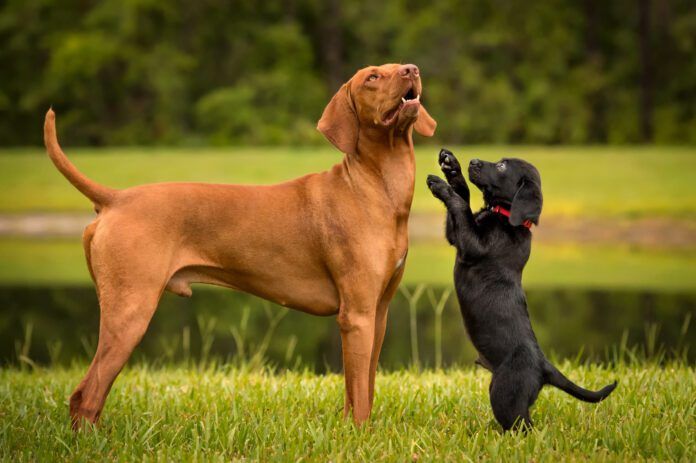
Puppies can be around other dogs at around 8 or 10 weeks old.
Socializing your puppy is important for his development, but it’s up to you to ensure his interactions are all positive and safe. Credit: Hilary Kladke | Getty Images

Socializing puppies is a buzzword phrase that has a lot of merit. If you have a new puppy, hopefully, your puppy stays with his mom until at least 8 weeks of age or older. Many breeders now keep pups until 10 weeks old or so. It’s even better if your pup has littermates because these early interactions set the stage for many behaviors and function as puppy’s first classroom. Play fights with littermates help pups learn bite inhibition, and moms often reinforce that, too.

Some families are fortunate to have a dog who wants to be an “aunt” or “uncle.” These dogs seem to genuinely enjoy interacting with puppies. They play with, engage, and as needed, discipline their young charges. This might happen before you bring your pup home, or you might have a dog yourself who takes on this role.

Once home, you need to let your puppy settle in. Be careful with children and your new puppy. Resist the urge to invite all your friends and their dogs over to meet the new kid on the block. Let your pup have a week or so to adjust, then choose your exposures carefully.

Puppy Shots Before Socializing

Your pup should be started on his vaccination schedule designed to protect him as his maternal immunity wears off. That doesn’t mean he can’t meet people and dogs until he has all his shots, but I do suggest he have at least one set of parvo/distemper. He does not have to have finished his whole series.

Be selective about your socializing puppies. Choose dogs you know are healthy, well cared for, and who enjoy puppies. A friend’s puppy of about the same age/size is usually ideal.

Monitor Puppy Socializing

Don’t add your pup into a group of puppies that are established friends or littermates unless you are there and observant. You will need to advocate for your pup. Sometimes a puppy is happiest sitting on your lap and observing. Don’t let him be bullied, but don’t push him into something he isn’t ready for either. If he’s hesitant and would rather stay with you, listen to him.

Until fully vaccinated, a puppy is best off avoiding places where lots of dogs of unknown health hang out, like dog parks. Visit the yards of friends who have healthy, vaccinated pets. Go for walks with your puppy and vary the places you go. A puppy foundation class is a great idea, but stick to classes where vaccinations are verified.

Slow Puppy Socialization

Remember that not all dogs are social butterflies. Your goal is a dog who is tolerant of other dogs. Your dog doesn’t need doggy friends and, in fact, may prefer to just hang with you, and that’s just fine.

Signs of a Torn ACL in Dogs

The best way to avoid an ACL injury is to keep your dog fit and in shape.
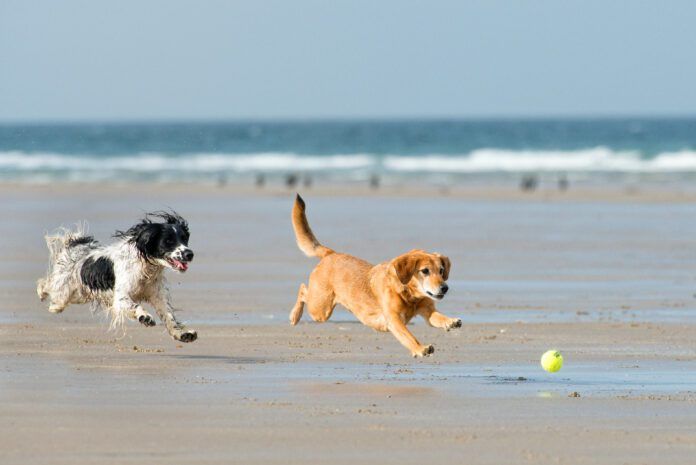
A torn ACL or CCL can happen to any dog, but the odds are in your dog’s favor if you keep him trim and active. Hint: Chasing balls is a canine favorite pastime. Credit: dageldog | Getty Images

ACL (anterior cruciate ligament) injury is the most common cause of hindlimb lameness in a dog. The injury may involve partial tearing of the ligament or complete rupture. The ACL is a ligament in the dog’s knee (also called his stifle) that stabilizes the knee during movement.

A dog with an ACL injury may present as chronic, intermittent lameness or as an acute, severe lameness. Note: Technically, in dogs, the appropriate term for this ligament is CCL (cranial cruciate ligament), but because humans are so used to the term “ACL” veterinarians often use CCL and ACL interchangeably.

Signs of an Acute Torn ACL

The most common cause for acute ACL rupture in an otherwise sound dog is trauma. This usually happens in young, athletic, large-breed dogs during exercise or play.

The signs of an acute ACL rupture are quite classic. Usually, the dog is running and playing and suddenly gives a yelp and becomes completely non-weight bearing on a hind leg. The dog often continues to move around but will hike up or hang the affected limb and run on three legs.

After 24 hours or so, most of these dogs start touching their toes to the ground when walking, Many dogs will bear at least some weight intermittently after 48 to 72 hours or so. With an acute ACL injury, there will be no doubt that the dog has suffered a serious, sudden injury.

Chronic Torn ACL

The chronic form of a torn ACL is usually due to the degeneration of the ligament over time. This may have a conformational and/or genetic component but is always exacerbated by obesity. A chronically degenerate ligament with partial tearing may suddenly rupture at any time, presenting as acute on chronic disease.

Signs of chronic ACL injury include intermittent hindlimb lameness that may temporarily resolve with rest and anti-inflammatory medication. It is most common in overweight dogs, as the excess weight puts added stress on the ligaments. It frequently affects both hind limbs, so the dog may have alternating hindlimb lameness or be simultaneously lame on both.

These dogs may have thigh muscle atrophy, decreased range of motion in their knees, pain on full extension of the knee, difficulty rising, and “sloppy sits,” as it is usually not possible for them to comfortably sit squarely on both hind limbs.

Diagnosis and Treatment

If you think your dog may be suffering from an ACL injury, whether acute or chronic, see your veterinarian as soon as possible for diagnosis confirmation and treatment options. ACL injuries frequently lead to arthritis, which is a chronic, painful, debilitating disease with no cure. The sooner medical attention is sought for ACL injury in dogs, the better the outcome.

Why Today’s Diets Include So Many Carbohydrates

The Dog Diet Answer Book from Whole Dog Journal

Once the level of nutrients needed for health were agreed upon, manufacturers could use the least costly ingredients to provide those nutrients listed. Meat by-products – such as fat, organ meats, rice meal, and bone – are readily available and cheap. They can provide the bulk of the essential nutrients in the profile. When meat by-products are mixed with grain by-products such as cornmeal, corn gluten, wheat gluten, pearled barley, and rice meal, a few extra nutrients, fiber, and volume are gained at a low cost. The goal is to keep the cost down but not to dilute the needed amounts of healthy protein, fat, vitamins, and minerals too much in the recipe. Grain by-products provide a cheap source of energy and fiber and bring the cost of the food way down. That’s why the carbohydrate percentage is much higher today than it was in the ancestral diet.

So if grain is good for us, why wouldn’t grain by-products be good for our pets? After all, the proto-dog certainly developed the ability to better digest carbohydrates, and our domesticated predators that evolved to eat protein and fat have tolerated the higher amounts of carbohydrates we have served them.

However, today’s dog faces high incidences of obesity, diabetes, and cancer. Could these issues be due to more calories, higher fat content, and more carbs in today’s diets? With all the variables, it may be impossible to scientifically prove that the ingredients in today’s commercial dog food cause harm, but my experience has been that when dogs are fed moister, higher-protein, and higher-fat choices, many look and feel much better.

To learn more about feeding your dog a complete diet for a happier, healthier, and longer life, purchase The Dog Diet Answer Book from Whole Dog Journal.

6 Household Items Toxic to Dogs

0
Dog Dangers eBook from Whole Dog Journal

This probably goes without saying, but always keep potentially harmful items in closets, drawers, or cabinets that your dog can’t open, not on a table or countertop or in a bag left on the floor. Make sure your kids understand these rules. And always supervise your dog’s play indoors and out. A curious puppy or dog can quickly find a way into even items that seem harmless — but can actually be quite harmful to pets. Here’s a rundown of common things you might have in your home.

  1. Xylitol. It’s a low-calorie sweetener that is derived from birch trees. It was first created in Finland during World War II, when sugar supplies were interrupted. Xylitol has a lot of dental benefits for humans, including the prevention of cavities, dental plaque, dry mouth, and bad breath. It also has the unique ability to remineralize tooth enamel. You can find xylitol in candy, nasal sprays, mouthwash, gum and as an artificial sweetener. Dogs, however, should not consume xylitol. In dogs, xylitol causes a rapid drop in blood sugar. This can cause seizures in dogs, which sometimes lead to death.
  2. Chocolate. While the rule that the darker the chocolate, the healthier it is may be true for people, the opposite is true for dogs. Chocolate’s problem ingredients are theobromine and caffeine, which dogs absorb through their gastrointestinal tracts too fast and put damaging stress on the liver. In dark chocolate, these naturally occuring ingredients are more concentrated and are likely to lead to serious problems, death included. Note: Cocoa powder, in some cases, can be as concentrated as dark or baking chocolate. Even cocoa bean shell mulch, a popular garden product, can be toxic when swallowed by chocolate-craving chow hounds.
  3. Grapes and Raisins. The toxicity of grapes to dogs is still not really understood by scientists. Reactions vary from dog to dog. Some dogs can eat grapes regularly and never have problems. Accidentally eating a few grapes probably won’t affect a dog of any size. But when ingested in siginificant quantities – as little as 2.5 ounces – this fruit can cause kidney failure.
  4. Onions. Onions and their cousins, garlic, are rich in a compound called thiosulphate, which is toxic to dogs. Being much more thiosulphate-potent than garlic, onions pose a threat to dogs if they eat just a single serving – about one good-sized onion. Thiosulphate causes hemolytic anemia (“Heinz factor”) in dogs, a condition that bursts red blood cells. Symptoms of hemolytic anemia can develop in a range of time – generally within a few hours, but can also be after a few days. Signs of hemolytic anemia include depression, weakness, no interest in food, vomiting and diarrhea. In a progressed case, the dog’s urine will become red from dam-aged blood cells. As oxygen-carrying red blood cells die off and leave the dog’s body, the dog becomes suffocated.
  5. Garlic. Garlic is a tricky one because when used topically and sprinkled over food, it is great for dogs. It fights ear infections, internal infections, boosts immune systems and lowers blood sugar. But it also contains thiosulphate. Many holistic veterinarians and health care experts believe that feeding doses up to 1 small clove of garlic per 20 pounds of body weight per day are not likely to pose problems for dogs. When uses topically for wounds or ear infections, it is harm-less. If your dog were to eat a whole head of garlic, on the other hand, refer to the earlier section on onions.
  6. Macadamia Nuts. The good news is that we have no documented cases of macadamia nut poisoning that has led to death. It alleviates after it passes through the dog – in around 12 to 36 hours. The bad news is symptoms are dramatic. Hind-end weakness, lethargy, depression, vomiting, and diarrhea all come after eating as little as 1 gram of macadamia nuts per pound of a dog’s body weight.

For a more comprehensive guide on keeping your dog safe, download Dog Dangers now.

A Strong Recall Is Critical for Your Dog’s Water Play

0
Dog Dangers eBook from Whole Dog Journal

No matter how strong your dog’s recall may be (and we recommend it be quite strong if you’re considering letting your dog off-leash at the beach, lake, or river), it’s important to remember that the excitement of being in the water, coupled with the potential desire to swim out for a toy or chase a flock of ducks, could result in his recall falling on deaf ears.

Prior to fun water play, consider brushing up on your dog’s recall with the following:

Remember that coming when called is a skill that requires maintenance for the life of your dog. It’s easy to find yourself feeling “too busy” to train, but designating just 10 minutes a day to recall training can go a long way toward bolstering the skill.

Make sure your training includes teaching your dog to purposefully turn away from distractions in favor of coming to you. Avoid static recalls where the dog sits and waits as you leave, then call him to you. A “real life” recall rarely looks like that.

Reward generously every time your dog comes to you. Really invest quality time in the process of rewarding your dog. Combine genuine praise with the types of petting, play, and treats your dog loves best. Imagine that the process of rewarding your dog is the like making a deposit in the bank. You want to make hefty deposits because challenging recalls (especially away from distractions) are expensive. Make sure you can afford it!

Consider working your dog on a long line when you first get to the water and aren’t sure how your land training will carry over. Long lines are also a good alternative when local laws prohibit off-leash dogs.

If you’re struggling with teaching a reliable recall, consult a qualified trainer who can help you use positive reinforcement methods to strengthen your dog’s ability to come when called.

For a more comprehensive guide on keeping your dog safe, download Dog Dangers now.

Rules for the Game of Tug

0
Dog Bites eBook from Whole Dog Journal

A couple of decades ago, when positive reinforcement-based training was in its infancy, we were quite sensitive to criticism from the dog training community about this new “permissive” style of dog training. When we began encouraging people to play tug with their dogs, conscious of the fear that it would cause aggression, we created a detailed set of rules for playing tug, including the caveat that the human had to always “win” the game by gaining possession of the tug toy. As the passage of time supported our contention that tug does not cause aggression, we have softened those rules considerably. Here are the simplified tug rules that I now play by:

  1. Dog needs to sit politely and wait for the invitation to tug. If he leaps and grabs for the toy before being invited to do so (I use the cue “Tug!”) – I whisk the toy away and hide it behind my back. (In the language of behavior modification, this is called “negative punishment” – the dog’s behavior makes the good thing go away.
  2. When he remains sitting politely until invited to tug, we play. (This is “positive reinforcement” – the dog’s behavior makes a good thing happen.)
  3. If dog’s teeth leave the toy and touch human skin or clothing, the game stops with an “Oops!” (no-reward marker) and the toy goes away (negative punishment). Just for a moment – and then we can play again. (If he persistently mouths skin or clothing and/or mouthing escalates with tug play, that’s another behavioral issue; I would stop playing tug until the mouthing is under better control.)
  4. That’s it! I don’t care who “wins.” We can alternate! I really don’t care who initiates play; he can bring me the toy and ask me to play, or I can pick up the toy and start the game. There’s just one last really important rule: Go out and have some fun!

To find out how to manage stressors and prevent your dog from biting, download Dog Bites today.

Counter-Conditioning and Desensitization for Reducing Dog Reactivity

Dog Bites eBook from Whole Dog Journal

Counter-conditioning involves changing your dog’s association with a scary or arousing stimulus from negative to positive. Desensitization is starting with a very low-level intensity of aversive stimulus until the dog habituates to (or changes his association with) the aversive, and then gradually increasing the strength until the dog is comfortable with the stimulus at full intensity. The easiest way to give most dogs a positive association and to help them become comfortable with a stimulus is with very high-value, really yummy treats. I like to use chicken — canned, baked, or boiled; most dogs love chicken. Here’s how the CC&D process works.

  1. Determine the distance at which your dog can be in the presence of another dog and be alert or wary but not extremely fearful or aroused. This is called the threshold distance.
  2. With you holding your dog on leash, have a helper present a neutral dog at threshold distance X. (Alternatively, station yourself and your dog at a location where people pass by with their dogs on leash at thresh-old distance X.) The instant your dog sees the other dog, start feeding bits of chicken, non-stop.
  3. After several seconds, have the helper remove the dog, and stop feeding chicken to your dog.
  4. Keep repeating steps 1-3 until the presentation of the dog at that distance consistently causes your dog to look at you with a happy smile and a “Yay! Where’s my chicken?” expression. This is a conditioned emotional response (CER) — your dog’s association with the other dog at threshold distance X is now positive instead of negative.
  5. Now you need to increase the intensity of the other-dog stimulus. You can do that by decreasing distance by several inches; by increasing the amount of time the neutral dog stays in sight; by increasing movement of the other dog at distance X; by increasing the number of dogs (two or three dogs, instead of one); or increasing the visual “threat” (a large dog instead of a small one, or allowing the neutral dog to make brief eye contact). I’d suggest decreasing distance first in small increments by moving the reactive dog closer to the location where the neutral dog will appear, achieving the CER at each new distance.
  6. Then return to distance X and add intensity of the neutral dog, gradually decreasing distance and at-taining CERs along the way, until your dog is delighted to have the neutral dog reasonably close.
  7. Now, back to distance X, increase intensity again, by having your helper move more quickly with the neutral dog, have the dog do more vigorous behaviors — roll over, catch a ball, etc.
  8. Repeat until you have the CER, then gradually in-crease the length of time you have your dog in the presence of the increased-intensity neutral dog, until he’s happy (but not aroused) to have it present continuously.
  9. Begin decreasing distance in small increments, moving the dog closer to the stimulus, obtaining the CER consistently at each new distance.
  10. When your dog is happy to have the higher intensity neutral dog stimulus close to him, you’re ready for the final phase. Return to distance X and obtain your CER there, with a full intensity neutral dog — zigzagging toward him, then approaching head-on. Gradually decrease distance until your dog is happy to be in the presence of other dog, regardless of that dog’s behavior. He now thinks the other dog is a very good thing, as a reliable predictor of very yummy treats.

To find out how to manage stressors and prevent your dog from biting, download Dog Bites today.

Give Your Dog a Second Chance for a First Class Life

0
Do Over Dogs Book from Whole Dog Journal
Excerpted from Pat Miller’s Do Over Dogs: Give Your Dog a Second Chance for a First Class Life

You have adopted your Do-Over Dog, brought him home, helped him adjust to the new changes in his world, instituted necessary management procedures, and started on an appropriate training program. In the best of all worlds, that would be all you’d need. But most Do-Over Dogs were in shelters for a reason. There are often behavior challenges that go beyond the simple need for basic good manners training.

Pre-owned dogs are more often than not surrendered to or left unclaimed at shelters and rescue facilities because of one or more difficult behaviors that the prior owner wouldn’t, or couldn’t, manage or modify. Even when the reason for surrender is “moving” or “landlord issues,” there is often some underlying behavior challenge that prompted the owner to give his dog up rather than make the effort to find new living arrangements that could include the dog.

Some of the problem behaviors are “minor,” relatively insignificant, easy to manage or modify, and/or not even a problem at all for you. People have different tolerance levels for different dog behaviors and what may seem perfectly normal and acceptable to you may have been a deal-breaker for the prior owner. Some behaviors are major, requiring a long-term strong commitment to management and/or modification. Perhaps you were informed about difficult behaviors before you made the decision to adopt – and perhaps you’ve discovered one or more behavior challenges after the fact. Perhaps you’re still discovering.

I cannot give you a timetable or predict how long it will take for you to resolve your dog’s problem behaviors. There are many variables that enter into the equation, including your dog’s past history (which you may have little or no knowledge of), what his behavior issues are, how strong the genetic influence, how long he’s been practicing inappropriate behaviors, and how successful they’ve been for him, as well as your own skill and commitment to applying management and modification protocols and the resources you have at your disposal. Many canine behavior problems are related at least in part to stress – the more stress, the greater the likelihood of significant problems. Most Do-Over Dogs have had more than their share of stress in their lives and behaviors that may have been mildly inappropriate at one time may have intensified with several rehomings or in a stressful shelter/kennel environment.

For more additional information and advice on the best ways to bring a new dog into your life – especially a stray, a rescue or a rehomed dog, buy Pat Miller’s Do Over Dogs, Give Your Dog a Second Chance for a First Class Life from Whole Dog Journal.

The Basics of Successful Housetraining

0
Do Over Dogs Book from Whole Dog Journal
Excerpted from Pat Miller’s Do Over Dogs: Give Your Dog a Second Chance for a First Class Life

Do-Over Dogs are frequently not housetrained or poorly housetrained at best. This is especially true of dogs who have been rescued from puppy mill or hoarder situations. Housesoiling is a common reason why people give up their dogs. In addition, a Do-Over Dog who was housetrained previously may, due to the stress of a new environment, regress and make mistakes in his new home. So even if your new dog comes with an assurance he is housetrained, be wary and ready to treat him like a new puppy in the regard.

The basics

Poop and pee outside, not inside. It seems like such a simple concept, and indeed, many dogs are easily housetrained. But not all. We adopted our Scorgidoodle, Bonnie, from the Humane Society here in Hagerstown when she was about six months old. She was surrendered to the shelter because her owners couldn’t housetrain her. Now age four, she’s reasonably reliably with her housetraining, but she’ll never be one of those dogs you’ll fine waiting at the door with legs crossed if an emergency keeps you away from home for ten hours.

The basic premise of successful housetraining is: Take your dog out more often than he has to go, and supervise and manage to prevent accidents. For young puppies, that means outside every hour on the hour during the day, and crated or otherwise confined at night, where you can hear him if he wakes up and says he has to go out. As a pup matures, a general rule of thumb is that he can “hold it” for one hour more than his age in months. That is, a three-month-old pup might be able to go for four hours – up to a maximum of about eight hours on a regular for an adult dog. Remember, though, that it’s a general rule – there are certainly normal three-month-old puppies who can only hold it for two to three hours and adult dogs who can’t go longer than three or four. There are also canine saints who will maintain their housetraining when left alone for 10 or even 12 hours – but even with those I don’t recommend them to do so routinely.

For more ways to train any dog, buy Pat Miller’s Do Over Dogs, Give Your Dog a Second Chance for a First Class Life from Whole Dog Journal.