
To continue reading this article or issue you must be a paid member. Sign in

Join Whole Dog Journal
Get full access to Whole-Dog-Journal.com – more than 4,000 articles – for just $20.
Join today and save 30% off our full price.

Subscribe
The best in health, wellness, and positive training from America’s leading dog experts
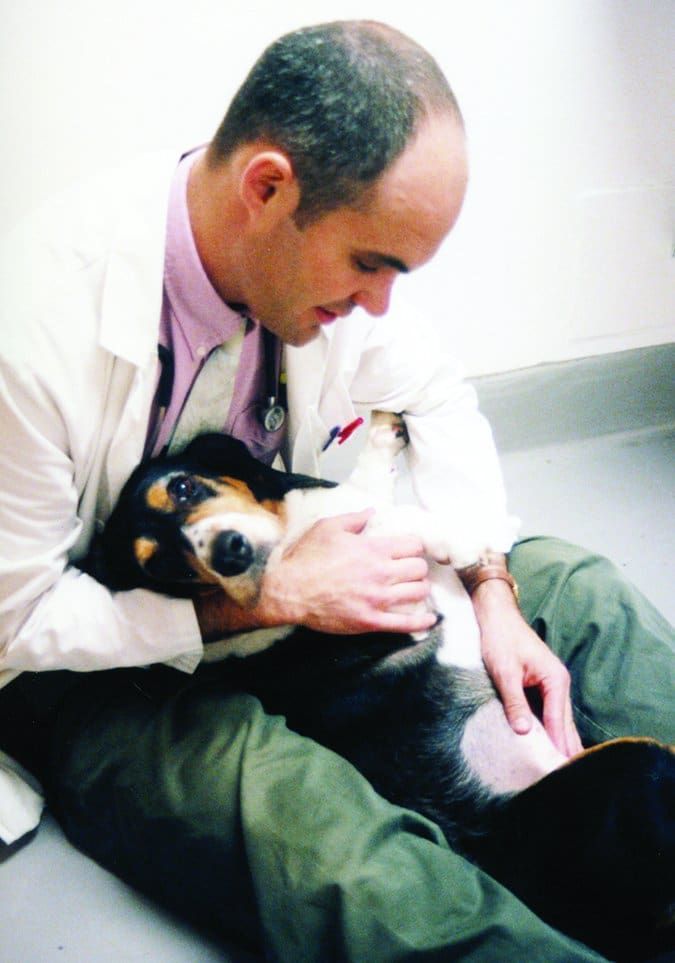
When we talk about dogs, invariably we talk about dog people. The human desire to group things that interest us and build commonality among kindred spirits is hardwired- as is our tendency to segregate and highlight differences. As a result, dog people may identify as belonging to as many different canine communities as there are breeds. And within those “tribes,” we have mores, and values, and politics – and not all of them are compatible.
I belong to a tribe that is somewhat beleaguered these days: I breed and show purebred dogs. I screen my homes carefully. I have long legal contracts that require any dog of my breeding to be returned to me if he or she is no longer wanted, regardless of reason or age or health condition. And, of course, I require that all puppies that I sell as companions be spayed and neutered.
But in recent years, my attitude on that last score has begun to change, in large part due to new information about the potential for adverse effects of spay and neuter surgeries. My contracts still require those lovely and loved companions to be altered, and in more than a decade I have never had any reproduce (at least as far as I know!). But the details regarding when I want spay/neuter surgery done on my puppies have changed, and likely will continue to evolve.
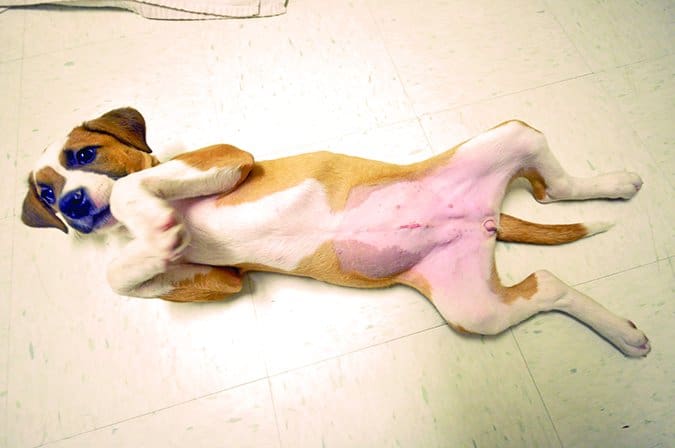
Broaching the subject of delayed spay/neuter – and in the case of some males, perhaps not neutering at all – is the doggie equivalent of discussing Clinton versus Trump at the Christmas dinner table, which gives me pause, because I let that happen last month, with predictably disastrous results. It has the potential of making people angry, threatened, bewildered, regretful – maybe even a combination of all those. That’s not my intent.
What I want to do, though, is open up dialogue on a subject that for a long time has been presented as black and white.
While no one questions the importance of spay/neuter as a tool to stem animal overpopulation, the questions on the table are: Does one size fit all? Should committed, responsible people review the facts and scientific literature to make an individualized decision for their particular dog? Is it always necessary to remove testes in a male dog and ovaries in a female dog in order to render them sterile, or are there other options? What are the real risks of keeping a dog intact for some period of time, balanced against a growing body of evidence showing that early spay/neuter might be implicated in a number of orthopedic, oncological, and even behavioral problems?
So many questions, and unfortunately, no clear-cut answers.
The American embrace of spay/neuter evolved in concert with human population trends. The post-World War II “baby boom” and economic expansion saw families increasingly bringing dogs and cats into their households – and the animals reproduced even more prolifically than the families themselves.
As cities (and later, rural communities) began to employ and then depend on animal shelters to deal with stray and unwanted pets, the population of animals concentrated in those facilities, leading to routine killing of excess dogs and cats. Spay/neuter was embraced enthusiastically by shelter workers and rescue volunteers alike as an effective tool for helping control the population of unwanted animals and reducing euthanasia. By the 1970s, the veterinary culture had also embraced surgical sterilization for population control.
This is in contrast to attitudes elsewhere in the world, particularly in many parts of Europe, where unaltered dogs are common. In Norway, it is illegal to spay or neuter a dog without a valid medical reason. The rationale is that it is morally wrong to surgically alter a dog for human whim or convenience, which puts spay/neuter on a par with ear cropping and tail docking.
Over the decades, as animal sheltering has increased in visibility and animal rescue has become more popular, spay/neuter has hardened into an almost militant social policy. Today, it’s widely a cultural norm for dogs to lack any physical signs of sexual maturation. I’ve had puppy buyers balk at the idea of a female’s silhouette being made “unsightly” by visible nipples, and I had a co-worker who almost threw up at the idea of testicles on a male dog. “Rubbing on my couch – ugh!” she proclaimed.
And, oftentimes, what we don’t know, we fear. “The average person has never seen a dog in heat, never seen dogs mating, never watched a female give birth, never watched her raise her puppies,” one veterinarian reminded me.
Population control – specifically, as a tool to reduce the mass killing in our nation’s animal shelters – has always been the overarching goal of spay/neuter campaigns. Other benefits of sterilization surgery have been enthusiastically promoted by veterinarians and the shelter community alike.
For example, spaying prevents pyometra, which affects a full quarter of all intact females by age 10. And in males, neutering removes the possibility of testicular cancer as well as reduces the risk of prostate enlargement and infection later in life. Neutering is also believed to reduce hormone-related behaviors such as leg lifting, humping, and male-on-male aggression.
The universal recommendation that dogs and cats of both genders undergo sterilization surgery at six months of age came from the handy benchmark of the average age that most females come into heat. Those involved in animal sheltering have been the most vocal proponents of even earlier sterilization, now commonly referred to as pediatric spay/neuter. Shelter medicine experts point out that pediatric spay/neuter surgical procedures are easier and faster; and with shorter surgery and anesthesia times, the incidence of postoperative complications is low, and recovery very quick.
Prior to widespread acceptance of this practice, shelters often allowed adoption of intact pets, and held a deposit from pet adopters, returning the money only when the owner showed proof that the pet had been sterilized. However, some owners failed to comply, giving up the deposits, and others complied only after the pet had an accidental litter. Pediatric surgery closed this loophole; indisputably, the biggest benefit of pediatric spay/neuter is populational. With this tool, shelters can prevent every animal leaving the shelter from ever reproducing.
Shelter workers and veterinarians who offer pediatric spay/neuter are understandably fans of the practice, citing those quick recovery times for young animals. The biggest long-term health benefit of pediatric sterilization, however, is usually identified as the prevention of mammary cancer in females.
As with a number of other canine healthcare practices, in recent years, the conventions of spay/neuter surgery are being questioned by some canine health experts and dogs owners – particularly those with a “holistic dog” mind set, many of whom are accustomed to questioning the status quo.
Most of these owners also research what is in their dogs’ food and their veterinarians’ vaccine syringes; they want to do what’s healthiest, what’s most natural, for their dogs, even if it challenges – or upends – the conventional wisdom. But this topic could be the third rail of dogdom: the assumption that we should automatically and unquestionably spay and neuter all our companion dogs.
Some of these owners, influenced by the opinions of a few canine health experts, are beginning to question the validity of many long-held beliefs about the medical and behavioral benefits of spay/neuter. A growing number (particularly those in performance eventing, who are closely attuned to changes and weaknesses in their dogs’ bodies) are contemplating delayed spay/neuter, and – increasingly, in the case of males – even dispensing with it altogether.
One of the most vocal opponents to today’s spay/neuter conventions is Chris Zink, DVM, PhD, DACVP, DACVSMR, of Ellicott City, Maryland. Dr. Zink’s interest in the subject was promoted by her work with performance dogs, who compete in high-impact, physically demanding sports like agility. Many, if not most, of these dogs are sterilized.
In 2005, Dr. Zink first published an article, “Early Spay-Neuter Considerations for the Canine Athlete,” which lists studies that highlight the risks of early spay/neuter. One orthopedic issue she mentions (and one that I have seen time and again) is the elongated “look” that results from prematurely shutting off the sex hormones that govern the closing of the growth plates. These longer, lighter limbs, and narrow chests and skulls aren’t just a cosmetic concern: A 2002 study published in Cancer Epidemiology, Biomarkers & Prevention showed that this lengthening of the long bones creates a significantly higher risk of osteosarcoma, or bone cancer, in dogs altered at younger than one year.
The list of problems that Dr. Zink associates with early spay/neuter continues: greater risk of hemangiosarcoma, mast cell cancer, lymphoma, and bladder cancer; higher incidence of hip dysplasia in dogs spayed or neutered at six months of age; significantly higher prevalence of cranial cruciate ligament (CCL) injury; heightened risk of urinary incontinence in females that are spayed early, as well as some cases in males; greater likelihood of hypothyroidism in spayed and neutered dogs; higher incidence of infectious diseases in dogs spayed and neutered at 24 weeks or less; higher incidence of adverse reactions to vaccines in altered dogs; and increased risk of prostate cancer in neutered males.
It’s a long list, and it grows as Dr. Zink adds other studies that support the view that on balance, early spay/neuter is “not more healthy” than waiting until a dog is sexually mature before he or she is altered.
Health is not the only area where Dr. Zink questions the benefits of early spay/neuter; she is currently co-authoring a study that analyzes how spay/neuter affected 26 different behavioral components in 15,000 dogs. “The fact of the matter is, spay or neuter doesn’t improve their behavior in any way,” she says. “[Intact dogs] are not more aggressive to dogs or strangers.”
To say Dr. Zink’s position on the importance of avoiding early spay/neuter is controversial is perhaps an understatement; it does, after all, contradict the position held by most general-practice veterinarians. Critiques and rebuttals to each of her bullet points are all over the Internet; one person who read an early draft of this article called her a “zealot.” And for every study she cites, a Google search will undoubtedly turn up another that says the opposite.
But to me, that just reinforces the importance of keeping an open mind: With so many differing viewpoints, how do we know who is right? “It doesn’t matter if we all don’t do the ‘right’ thing,” goes one of my favorite lines about following the lemmings when you breed dogs. “It just matters that we don’t all do the same thing.” I think that applies to early spay/neuter, too.
When I changed my attitudes about annual vaccination and about feeding raw versus kibble, it was easy to get caught up in the battle of facts and statistics that both sides drummed up. In the end, the tool I used to make my decisions about “what is best” for my dogs was common sense. I stepped back and asked: Does it make sense to feed a dog a diet of processed foods whose protein sources are not fit for human consumption? Does it make sense to overload a dog’s immune system with yearly vaccines for some diseases that are not prevalent or ultimately life-threatening?
And for early spay/neuter, I asked myself: Does it make sense to think that you can remove a puppy’s major reproductive organs – and all the hormones that go with it – and not expect there to be some biological ramifications? For me, what has been missing from the spay/neuter discussion has been the question of holism, which can’t be answered by citing JAVMA papers or orchestrating double-blind studies.
Myrna Milani, DVM, of TippingPoint Animal Behavior Consulting Services in Charlestown, New Hampshire, thinks back to the zeal with which she approached spay/neuter during the 1970s. “I could have won the Golden Gonad Award – there wasn’t a pair of testicles or ovaries that was safe from me,” she says. “Then I woke up one day and thought, ‘My God, what have I done?’ As a woman who went through puberty, who menstruated, who had sex, who had children, who was going through menopause, how in the world could I have been so naïve as to say that all ovaries did was affect reproduction? That they did not affect the entire body?
“Dogs are like us: We have testosterone and estrogen receptors all over our bodies – they are in our brains, lungs, bones . . . They affect learning, they affect memory,” Dr. Milani says. If we remove the organs that produce most of the body’s testosterone and estrogen before those hormones have an opportunity to exert their influence on the dog, we’re going to have to deal with the consequences down the road, she warns.
The two biggest health benefits cited for spaying females before their first heat is reduced risk of mammary-cancer rates and the elimination of pyometra. Personally, unless a female is being used for breeding, I can’t find a justification for keeping her unspayed indefinitely. For me, the question is not whether to spay, but when to.
In terms of my own puppy buyers, I have encouraged them to allow their female puppies to go through one heat cycle before spaying – provided they know what they are getting into (see “Keeping Intact Dogs“) and can house a female pup securely for that three-week period. Though there are no studies to confirm this, anecdotal evidence suggests that allowing the body to go through a heat allows the genitalia to mature normally, avoiding or resolving inverted vulvas that can lead to incontinence. It also permits the maturation of estrogen receptors, which might also play a role in incontinence, a known risk of spay surgery, and beyond.
A study published in the Journal of the National Institutes of Cancer in 1969, “Factors Influencing Canine Mammary Cancer Development and Post-Surgical Survival Rates,” is the most commonly cited reference regarding the correlation between spaying and mammary cancer in dogs. It says that females spayed before their first heat have an almost zero chance of developing mammary cancer; after the first heat, that risk rises to 8 percent, and 26 percent after the second heat. Beyond that point, the study says, the protective aspect of spaying (as regards mammary cancer) is negligible.
Though that study is almost universally quoted when supporting early spay, it’s also been criticized as poorly designed. Even so, I always thought that an 8 percent increased risk of mammary cancer was a chance was worth taking, if allowing the dog to mature sexually helped prevent other issues such as other cancers and various orthopedic concerns. Mammary cancer isn’t the only thing female dogs can die from; it is one concern among many.
Since our experience colors things, my attitude also likely has to do with the fact that I have not had much experience with mammary cancer in my intact females or those of fellow breeders. That is not to say that it won’t happen – and as soon as you say, “Not me!” it usually does – but for the moment, cancers like lymphoma and hemangiosarcoma are anecdotally more prevalent, even among the retired breeding bitches I know.
Both Dr. Zink and Dr. Milani think that in the case of females, spaying after the second heat (which is likely to be more regular and normal than the first heat) is ideal. Milani points to a 1991 study in the American Journal of Epidemiology that showed that the risk of mammary cancer was significantly reduced in females who were spayed at or before 2½ years old, and who had been thin at nine to 12 months of age.
When it comes time to do the spay surgery at whatever age, Dr. Zink advocates removing just the uterus and leaving the ovaries intact. In this way, there is no risk of pyometra, the female will not go into heat and be attractive to males, she cannot get pregnant – and she retains her hormone-producing ovaries. She cautions, however, that the veterinarian performing the surgery needs to be sure that the entire uterus is removed, because dogs can develop stump pyometras, which are just as life-threatening.
While performing a tubal ligation, or “tube tying,” is certainly an option, it is somewhat impractical, as removal of the uterus at a later date still would be necessary to eliminate the risk of pyometra.
What are the proven risks or benefits of removing a dog’s uterus but leaving the ovaries intact? No one can say for sure; it simply has not been done enough. Would those hormone-producing ovaries continue to raise the risk for mammary cancer? Or, conversely, being unable to “communicate” with the uterus that they know is supposed to be there, would the ovaries eventually stop working, as they do with women after hysterectomies? Again, no one knows for sure.
In many respects, delaying neutering in males is a little easier: The health ramifications, while still present, are not as dire as for females.
Testicular cancer is still a concern, but is easily detectable, Dr. Zink says. “You just watch for it by examining the testicles regularly. If you see one testicle is larger, it usually means there’s a tumor there, but it is almost always benign. However, at that point you would have the testicles removed.”
A bigger problem, in my experience, is prostatitis in intact males, especially older ones who are sexually stimulated by intact females in the household. If a prostate infection develops, and leads to an abscess, it can be difficult to diagnose. I almost lost an unneutered older male to an abscess that had thankfully not yet gone into sepsis -but I have friends with dogs who were not as lucky.
Because of health considerations, my puppy contracts currently ask that male puppies not be neutered before 12 months, and ideally at 18 months. Some people are willing to wait, but most aren’t, and that’s okay with me; I tell them to hang on for as long as they can.
However, if their male dog will be taken to visit dog parks on a regular basis, then I tell them to neuter before he really begins to elicit a response from the neutered adult males there – usually by 10 months of age. If not, one day when his hormonal signature becomes a threat, the neutered dogs will go for him (though he will be blamed, because he is the intact one), and his happy-go-lucky attitude toward other dogs might change forever. And that’s just not worth an extra couple of months of testosterone in my book.
The people who have my males are responsible caretakers who don’t permit them to roam and who don’t have unspayed females in the household. Frankly, I’m okay with ultra-responsible people leaving these males dogs intact as Mother Nature made them, for life. But for males who are at risk of being inadvertently bred – or whose breeders require in their contracts that they be sterilized – Dr. Zink recommends vasectomy. This renders the male unable to reproduce, but allows him to continue to produce testosterone.
While a male with a vasectomy won’t be able to sire puppies, he likely will have difficulty fitting into some social situations, such as dog parks. A vasectomized dog still has his testicles and appears to be entire, and “lots of dog parks won’t let you bring a dog in if it is intact,” warns Dr. Zink. And because such dogs still produce testosterone, “and neutered dogs tend to be aggressive toward intact dogs” (not, as many believe, the other way around) the snipped males at the run will be just as snarky, because their noses will alert them to a vasectomized dog’s unchanged testosterone levels.
As for dogs with retained testicles, “a study has been done that showed for every 100 dogs with retained testicles who live to be 10, 12 of them will get cancer of the testicle, though it is almost always benign,” Dr. Zink says. Because this does not happen until the dog is older – around age seven or later – she recommends keeping dogs with retained testicles intact until they are three or four, then removing the retained testicle and vasectomizing the other.
Of course, most shelters and rescues require spay/neuter surgery on every dog they place, and adopters are rarely permitted to dictate the timing of the surgery (though, presumably, most never ask). For many who rescue and rehome dogs, this entire discussion is moot; they are understandably more committed to saving unwanted dogs’ lives than optimizing the lives of dogs obtained at puppyhood from a breeder.
Among my fellow breeders, the idea of delaying spay/neuter is no longer a hot button. Not everyone does it, but pretty much everyone respects your right to take a different approach – as long as the owners are responsible, and capable of preventing their animals from accidental breedings and of providing the scrupulous medical care and attention needed to detect signs of health problems, such as mammary or testicular cancer, that can occur in intact dogs and those who were sterilized later in life.
And that brings us to the uncomfortable realization that spay/neuter also has much to do with issues of socio-economics and class. Cultural attitudes, knowledge base and lifestyle can vary dramatically, depending on where you live. That isn’t to say that one category of owner is “better” than the other, just that they are different, and they come with different risk levels. Many rescuers or breeders feel their adopters or puppy people can’t handle the very serious responsibility of deferring spay/neuter to a later date. Still others see the subject as a Pandora’s box: If social attitudes soften and spay/neuter loses its sense of urgency, could it set back all the hard work done by committed rescuers?
Cultural attitudes aside, there is a pragmatic problem to taking an alternative approach to spay/neuter, such as removing only the female’s uterus or performing a vasectomy on a male dog: many vets are not open to it. Author, blogger, and veterinarian Patty Khuly, of Sunset Animal Clinic in Miami, Florida, says she gets a few emails a week asking for help in finding a vet capable of and willing to perform the alternative procedures. Dr. Khuly responds by advising the emailers how to talk to their vets. “I tell them to explain that [the procedures] are described in surgery textbooks. Be thoughtful about why you want it done. Say, ‘I know you think this is weird, but I have thought about it quite a bit. There are vets doing it across country, though there are not many of them. I’ve been told it’s easier to do than a [conventional] spay/neuter.’ The vet might be curious enough to attempt it.”
While conventional spay/neuter practices and schedules will likely be the norm for the foreseeable future, as with every other important decision that you must make about your dog’s care and feeding, it’s important to inform yourself about the advantages and disadvantages of early, adult, or no spay/neuter surgery – and then make a decision that is right for you and your individual dog. Once that choice is made – no matter what choice it is – take responsibility for the consequences.
Denise Flaim of Revodana Ridgebacks in Long Island, New York, shares her home with three intact Ridgebacks, three 8-year-old children, and a very patient husband.

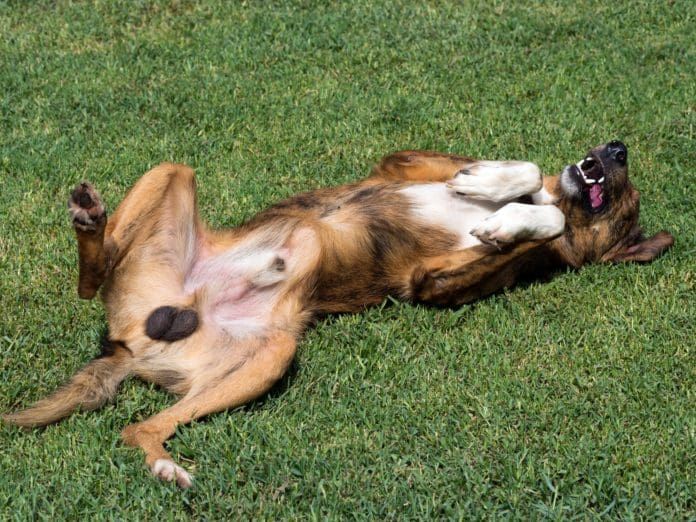
If you decide to delay spaying or neutering your dog, for whatever length of time or whatever reason, here is something else to consider- Some people just may not be cut out to deal with an intact male or female dog in their household. Here are some caveats and considerations:
Female dogs do not get menstrual periods like humans, as some people mistakenly believe; they come into “heat,” or “season,” once or twice a year – the three to four days in their cycle when their unfertilized eggs ripen. (Though both biological processes involve bleeding, it’s inaccurate to compare a woman’s monthly cycle, which is an infertile time, to the heat in the female dog, which is quite the opposite. Dogs get pregnant while bleeding.) Some dogs cycle every six months; more primitive breeds, such as Basenjis or Tibetan Mastiffs, come into heat only once a year.
Get more facts on dogs in heat at Dogster.com.
A dog will begin her heat cycle after about 6 months of age. Some females will show physical signs of readiness – their discharge will lighten in color, and they will “flag,” or lift their tail up and to the side. Others will show no behavioral changes; still others will “stand” and accept a suitor at any time in their cycle, even days before or after they are fertile. If you cannot be absolutely certain of identifying the signs of heat in your female, and securing her during this time, spay her. Intact males are frighteningly persistent in reaching the object of their desires; they will hurl themselves through glass windows, and might even attempt (and succeed) at breeding a female through the wires of a crate.

You cannot leave a female in heat unattended for one moment outside, not even in a fenced yard. Whether or not she is in that narrow window of time when she can get pregnant, she might attract a male, and they might breed anyway. There is no way to predict how a male dog will act when a nearby female is in heat. Though dogs have been mating for millennia, it is not a process that is without risk of physical harm to one or both dogs.
If there are stray dogs where you live, walking a female in heat is asking for trouble. Ideally, have a secure, fenced area where your female can do her business, always supervised by you. If you must take her out in public to walk her, carry an umbrella that you can open to ward off unwelcome males, but know that you still might not be able to keep them apart.
Dogs stay in heat about three weeks, but the female will neither bleed heavily nor bleed every day. Nonetheless, to protect your carpets and furniture, it is smart to invest in “bitch’s britches,” which are dog-proportioned panties that can be fitted with a disposable sanitary napkin.
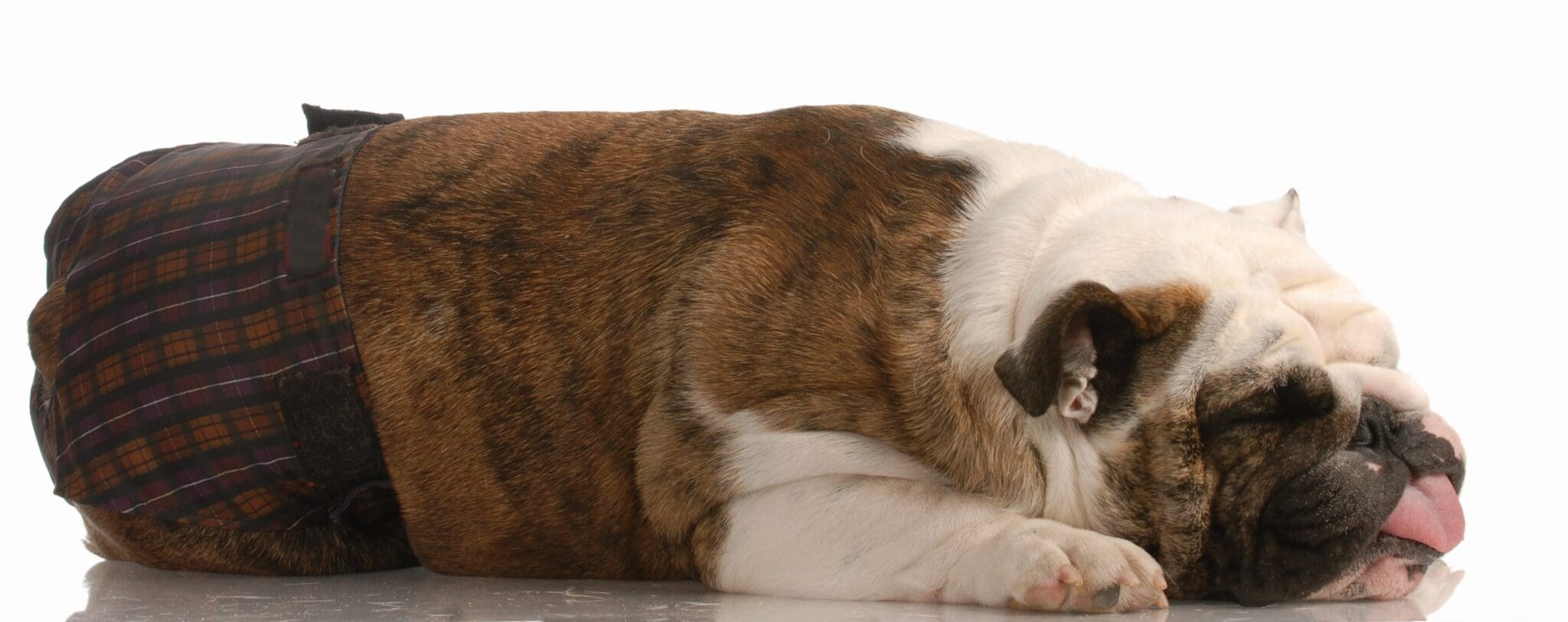
If you have an unneutered male dog in your household, and you want to let your female go through one or more heat cycles before spaying her, the smartest and safest thing is to remove one of them for the duration of the female’s heat. It is difficult to describe the stress, restlessness, and sheer loss of sanity that a male dog can exhibit in the face of a female in standing season. It will be close to unbearable for you, to say nothing of him. Plan a vacation for one of them, ideally the male. (And if you plan to use a boarding kennel, females in heat will be too big a disruption there in the event other unneutered dogs are there, too.)
Once your female has started her heat, don’t change course. Many veterinarians are reluctant to spay females in the middle of estrus; the uterus, preparing for pregnancy, is very vascular, and the risk of internal bleeding is higher. Instead, schedule spay surgery at a hormonally “quiet” time, ideally midway between heats. Depending on the individual dog, unneutered males can be trained through consistency and positive reinforcement not to urine-mark in the house. Ditto for discouraging “humping.” Do not tolerate these behaviors at any time.
As with unspayed females, unneutered male dog behavior must be under your control and supervision at all times. It is the height of irresponsibility to allow them to wander. Unlike females, unneutered males can procreate all the time, and they can create a neighborhood population explosion in no time at all.
Remember that in the larger world outside your door, intact dogs are the minority. By choosing to have an unneutered male (in particular, because he is visually easy to identify), you restrict your options and access to different environments, including dog runs and doggie day care. You will likely be required to explain and defend your decision not to neuter your dog; be prepared, be polite, and have a very thick skin.
So, a couple of weeks ago I wrote about going to the grocery store late one Sunday evening and being completely bummed about a couple who was selling puppies (who looked too young, and not well cared for) in front of the market. I thought about all the things I should do and say at that time – though at the time, I did nothing. I was too tired and hungry and it was rainy and late . . . But the memory of those chilled puppies, numbed by the intake of too much stimulation, has stayed with me.

Last Saturday I had a redemption round. Every month I present an orientation to prospective volunteers at my local shelter. In the middle of my talk, an elderly woman knocked on the glass door of the shelter. I opened it to tell her that the shelter wasn’t actually open yet, and she said, “I just wanted to let you know that some fool is selling puppies in the parking lot of Tractor Supply.” I thanked her – and then had about two hours, while busy with the volunteers, to wonder if the guy would still be there in a couple of hours, and what (and how!) I would say to him it if he was still there.
On weekends in my small town, the animal control officer is called out only for life-threatening emergencies. It’s a two-hour minimum overtime call, and a costly part of the city’s animal control budget. No one considers an illegal puppy sale an emergency worthy of two hours of officer overtime, and the police don’t do this kind of call, either. On a weekday, they would notify the animal control officer instead. If the puppies’ lives were immediately endangered, it might constitute an emergency. As it was, though, it was just the kind of situation that called for an assertive citizen interaction. Which I both hoped to be capable of, given so much mental preparation, and hoped that I wouldn’t HAVE to do; I hoped he’d be gone if I went there when I was done at the shelter.
Well, dang, he was still there hours later when I pulled into the Tractor Supply parking lot, just half a mile from the shelter. Thanks to my preparation, as well as the comments from the blog a few weeks ago, this is what I did:
To this, he replied, fairly calm, “I have the manager’s permission. I don’t see what the problem is.”
He replied, getting annoyed now, “I don’t see how that’s my problem. I have permission.”
And then I went to buy my chicken scratch, and when I went out to the parking lot, thank goodness, the guy was gone! (Thank goodness because calling the police on a Saturday was a bluff; they wouldn’t have come.)
I’m sad that I had the opportunity to practice “what should I do” so soon, and sadder to learn that the guy did NOT take the pups to the shelter, but glad that I tried to get the guy to do the right thing.

Cowboys are typically laconic, but I never forgot the one-word summation of the well-known reined cowhorse trainer in reference to a colt I was working with many years ago. He watched closely as I put the colt through his paces: walk, trot, lope, reverse directions, and smoothly slide to a stop. I was pleased with the colt’s work that day; he was willing yet relaxed, engaged, and seemed appreciative of the strokes I gave his glistening coat as we walked over to the rail to talk to my trainer acquaintance. “What did you think of him?” I asked. The far more experienced horseman squinted and paused before he responded. “Useful,” he drawled. I must have looked disappointed, because after a moment, the trainer elaborated. “Yep, he looks useful . . . . That’s a damn fine colt.”

288
After more exposure to the trainer (as a participant or spectator in an occasional training clinic) I gradually realized that “useful” was one of his highest compliments – and I embraced the word. What a good goal it is to strive to be useful! (And in contrast, can you imagine anything more insulting than to be deemed “useless”?)
Above all else with WDJ, being useful is our objective. We’re trying to present you with clear, accessible instruction and enough in-depth information about any given topic to enable you to make sound decisions about your dog’s health and training. And if I do say so myself, this issue hits the target.
– In “Gear of the Year,” a number of our regular contributors offer information about some of the training and dog-care tools they use the most and like the best.
– In “Positively Winning,” author/trainer Stephanie Colman discusses how owners and trainers keep their dogs enthusiastic and precise in the obedience ring – where no treats, toys, or praise is allowed. If you’ve ever wondered when and how you can reduce the number of treats you need to give your dog without losing his enthusiasm, read this!
– Infectious canine hepatitis made a comeback in the United States in 2012, necessitating a review of vaccination protocols. In “An Old Infectious Disease Is New Again,” on page 12, Denise Flaim tells you what you need to do to ensure that your dog is protected.
WDJ’s Training Editor, Pat Miller, explains how training and managing large and giant breeds differs from training smaller dogs in “Going Big.” She also discusses the responsibilities that are unique to the owners of large dogs.
– Trainer Nannette Morgan found herself in need of specialized equipment and knowledge to help her care for her dogs while recovering from her own major surgery. In “Dog Care When You’re Down,” she shares her tips for making sure that she and her dogs didn’t just survive her convalescence, but thrived.
Useful? I hope so. Of course, I’m not wishing major surgery on any of you! But hang onto the issue; even if information about worthwhile products, show ring competition, puppy vaccines, giant breeds, or temporary disability is not useful to you right now, if you own dogs long enough, all of those articles should be useful to you at some point. At least, that’s our goal.
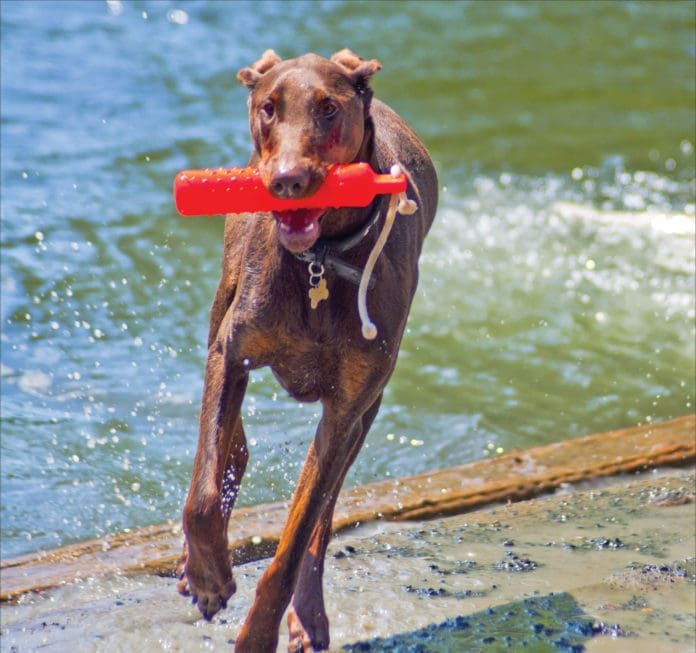
Researchers at Texas Tech University found that many popular “bumpers” (items used for training retrievers) and other plastic toys exude BPA and phthalates when subjected to conditions that simulate chewing by a dog.
We first alerted readers to the danger presented to dogs by these chemicals in an April 2008 article, “Why Vinyl Stinks: The Dangers of Vinyl Dog Toys.” Author Susan Weinstein explained that many “plastic” products contain additives that can be harmful to humans and animals in high-enough amounts. Bisphenol-A (usually abbreviated to BPA), an endocrine disrupter, is the best known of these plastic additives. But there are similar dangers posed by less-well-known chemicals called “phthalates.” These additives are used to make plastic materials flexible.
Philip N. Smith, PhD, a toxicologist at The Institute of Environmental and Human Health at Texas Tech, is co-author of an as-yet unpublished study (“Factors affecting leaching rates of phthalates and bisphenol A from canine training devices”), which was presented in November 2012 at the Society of Environmental Toxicology and Chemistry conference in Long Beach, California. Dr. Smith became interested in chemical exposures from bumpers after using them to train his own dogs. “I have two Labs and they’re often carrying a bumper around,” says Smith. “I became curious about what sort of chemical exposure dogs who chew them may be exposed to.”
The researchers, led by Kimberly Wooten, a graduate student in environmental toxicology at Texas Tech, looked at factors that affected the amounts of BPA and phthalates that could leach from plastic bumpers. They compared the amounts of BPA and a variety of phthalates that leached out of bumpers that were made by two different (unidentified) companies; bumpers of different colors (orange and white); and plastic products that were brand-new, some that had been “aged” by storage outdoors for a month, and some that were subjected to simulated chewing. The products were bathed in artificial saliva (similar to what is used in the testing of children’s products) and then the fluid was examined for BPA and phthalates.
BPA and at least five different phthalates – benzyl butyl phthalate (BBP), dibutyl phthalate (DBP), diethylhexyl phthalate (DEHP), diethyl phthalate (DEP), and dimethyl phthalate (DMP) – were found to have leached into the artificial saliva in varying amounts.
“Some of the analytes were found in very low concentrations; others were found in the low parts per million range,” says Dr. Smith. However, he warned against any attempt to quantify a specific exposure risk from this study. “To determine how much of these substances were actually getting into a dog, you’d have to give them to dogs to chew and then test their blood. We plan to continue this line of research if we can get it funded, but finding funding for studies like this is difficult,” Dr. Smith said.
The study has not yet been published or peer-reviewed. But preliminary results indicate that many plastic pet toys and training tools can expose dogs to endocrine-disrupting chemicals, and that certain storage conditions and usage can increase concentrations of these chemicals that leach into canine saliva. “Consumer education about potential risk from plastic chewing or retrieving products seems to be warranted,” he says.
Broad observations from the study included:
– There were color effects (the color of the products seemed to affect the amount of chemicals leached) but they were not consistent.
– Products that were aged outdoors (exposed to sunlight and increased temperatures) leached more phthalates than new products.
– Products that were physically manipulated in a manner similar to chewing leached greater concentrations of phthalates than the new products.
We asked Dr. Smith to explain why new vinyl products, which often have a strong “plastic” smell, leached lower concentrations of BPA and phthalates than older products. “We looked at only six phthalates and BPA,” he responded. “It’s possible that some of the lighter phthalates, the ones that are more likely to volatilize, are released in greater concentrations in new products.” The phthalates the researchers looked for, however, are among the ones commonly cited as hazardous to humans and other animals; each has been banned in the European Union for use in children’s toys and childcare products.
Plastic retrieve items can be found in every pet supply store and catalog; safe, nontoxic alternatives are harder to find but are available. Our favorites are made by Katie’s Bumpers, which makes a wide variety of bumpers and tug toys out of rugged firehose material. Katie’s Bumpers also offers a plastic bumper made of phthalate-free, recyclable #4 plastic. For more information about these bumpers, see katiesbumpers.com or call the company at (303) 642-0544.
– Nancy Kerns
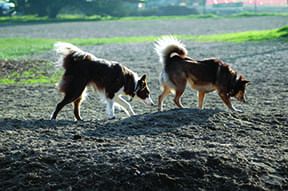
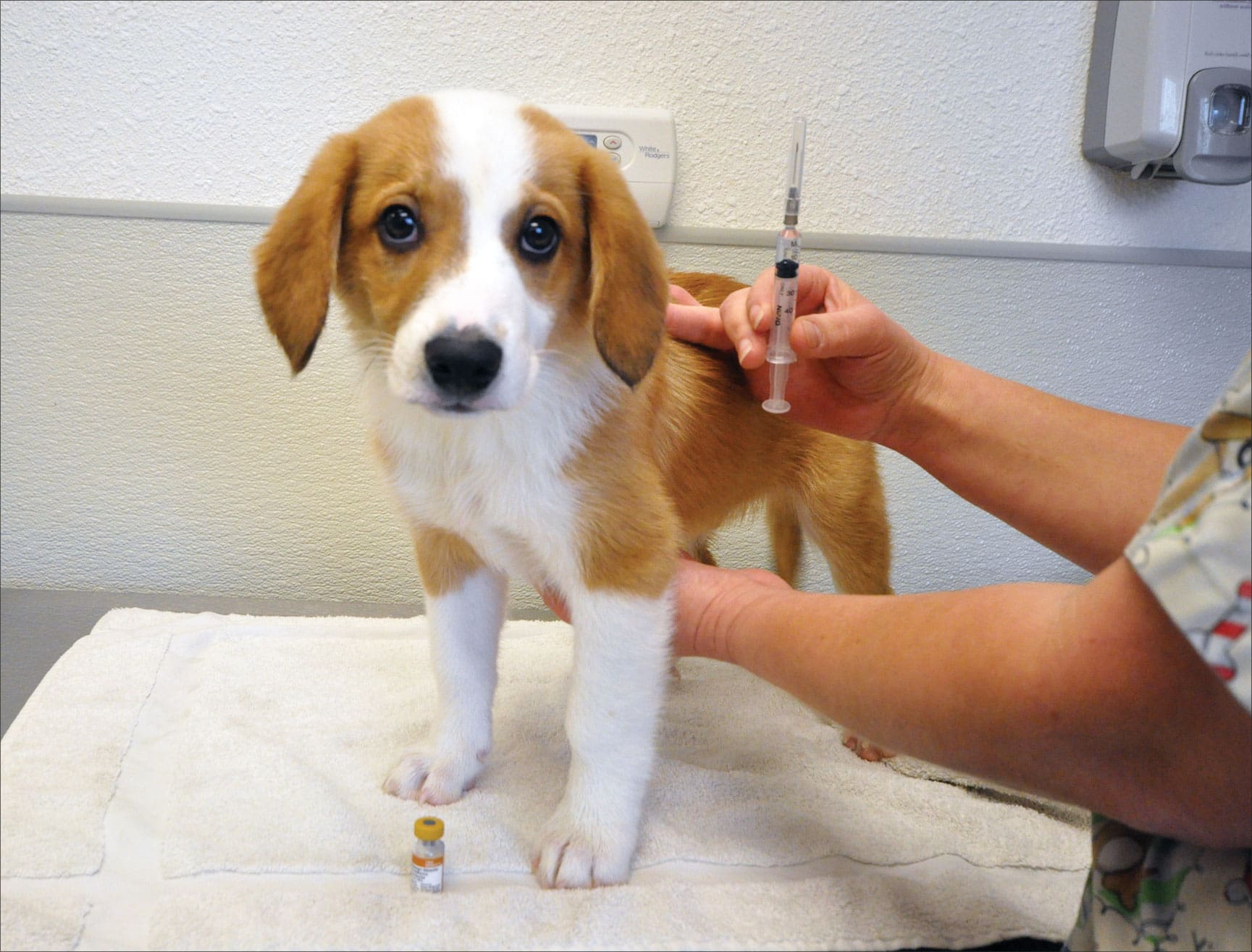
It’s baaaaack. News that infectious canine hepatitis surfaced in New England this summer is not exactly on par with the possessed television sets and otherworldly bedroom-closet portals in the 1980s horror flick “Poltergeist.” But the fact that the disease – formally known as canine adenovirus-1, or CAV-1 – has materialized in the United States is likely to induce goosebumps in those who have opted to not vaccinate against it, thinking it was essentially obliterated in the American dog population.
288
And for a long while, it probably was. While commonplace in the early to mid-20th century, this virus – which attacks the liver and kidneys – had been rare for decades in the United States. Indeed, it is highly unlikely that most middle-aged veterinarians have ever encountered the disease, making its reappearance all the more problematic in terms of being correctly diagnosed.
Epidemiologists have long known that infectious canine hepatitis persists in the Mexican dog population, and about a decade ago, there were several confirmed cases in San Diego, California, believed to have originated from dogs brought across the border. The disease is also known to exist among wild canids in Canada, and the November 2012 issue of the Canadian Veterinary Journal cited a case of an 11-week-old Alaskan Husky who had been kept outdoors in the Yukon, where infectious canine hepatitis is considered endemic in the wildlife; on postmortem, the puppy tested positive for CAV-1. As for this summer’s New England outbreak, the prime suspect was a red fox, which presumably brought the disease from the north.
Catherine Ford of Omega Rhodesian Ridgebacks in Brookline, New Hampshire, believes her two 3½-month-old puppies contracted infectious canine hepatitis while attending a puppy party at a Massachusetts farm this August. Eight of Ford’s puppies from that litter attended the party; four had been vaccinated for canine hepatitis, and four had not. Two of the unvaccinated puppies – Ford’s pick of the litter, Zima, and her brother Dhahabu, who went to his new home soon after – became symptomatic three weeks after romping in the farm fields.
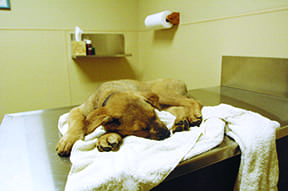
Symptoms of infectious canine hepatitis include fever, listlessness, and loss of appetite. When Zima started to refuse food, Ford’s vet thought it was a reaction to the antibiotics she had been given for a suspected urinary tract infection. When Zima worsened, the vet was concerned that she might have leptospirosis, and even suggested her illness might be a result of being raw-fed. By the time Ford took her to an emergency clinic at 1 a.m., Zima was beyond hope.
“It was very fast – 24 hours from ‘I don’t want to eat my breakfast’ to dead,” Ford says. “Before that, the puppies played, they ate, they were acting normally. That was what was so incredibly difficult to accept.”
Titers showed antibodies to CAV-1, and a necropsy confirmed the diagnosis. That left Ford – whose puppy vaccination protocol did not include canine adenovirus – to scramble.
“I’m in a precarious position with all my dogs,” she says. “When we got the diagnosis, we brought all our dogs in to get vaccinated.” A year-and-a-half-old dog who lives nearby and spent some time with Zima when she was incubating the virus is not symptomatic, but urinalysis showed he is shedding the virus. That means he was infected by canine hepatitis, but survived it, and his kidneys could continue to shed the virus for up to six months.
The Disease
Ronald Schultz, PhD, Diplomate ACVIM (American College of Veterinary Internal Medicine), is professor and chair of the Department of Pathobiological Sciences at the University of Wisconsin-Madison School of Veterinary Medicine. He’s also the person who confirmed Zima’s cause of death. Dr. Schultz thinks this canine hepatitis outbreak is a very valid concern.
288
“This is the reason I’ve tried to really emphasize the importance of canine adenovirus being a core vaccine, because we have the disease in Mexico, and we know we have the disease in wildlife species in Canada,” he says. “If it’s in the wildlife in Massachusetts, then unfortunately it’s probably elsewhere.” Any wild canid (such as coyotes), or mink, skunk, raccoon, fox, or bear could transmit the disease. “We do have a lot of potential wildlife reservoirs – something we have to be concerned about.”
Dr. Schultz says it is difficult to determine how many cases have gone unrecognized.
“There are many vets who wouldn’t recognize a case,” he says, adding that when he lectures to veterinarians, he asks how many have seen a patient with infectious canine hepatitis, or think they could recognize one. “It would be the gray hairs like me – or no hairs at all – who raise their hands.”
Because the disease is so rare in the American domestic dog population, many vets simply don’t have it on their radar screens. “When you’re looking for something and you know what it is, you find it,” Dr. Schultz says. But with canine hepatitis, “we’ve pretty much come to the conclusion that it couldn’t be that. That’s just human nature. I think there could have been some cases that have been missed, no question about it.”
Dr. Schultz describes infectious canine hepatitis as “just as virulent as parvovirus or canine distemper,” and notes that it causes some similar clinical signs. It is up to 50 percent fatal in puppies under five months of age, and will also infect and cause disease in older dogs who are susceptible. “This virus is very stable in the environment, but not as stable as parovirus,” he says. “When it infects, it has the ability to remain persistent and be shed in urine for months.”
Like parvovirus and distemper, canine hepatitis can be supported with intervention and palliative care like intravenous fluids for hydration. But unlike parvovirus, which affects the intestinal tract, canine hepatitis devastates the kidneys and liver, which, once damaged, severely curtail survivability.
Vaccination Picture
There are two strains of adenovirus that are a concern in dogs. Canine adenovirus type 1, or CAV-1, produces the infectious canine hepatitis described in this article. The other, CAV-2, affects the respiratory system and is a common cause of kennel cough. A vaccine for CAV-1 fell out of use in the 1970s because one out of 500 vaccinated dogs developed “blue eye,” an occular discoloration that resulted from a hypersensitivity to the vaccine. Today, the CAV-2 vaccine is used instead of CAV-1 because it is closely enough related to CAV-1 to cross-protect against it, and it does not produce this side effect.
In its 2011 revised canine vaccine guidelines, the American Animal Hospital Association (AAHA) classifies CAV-2 as a “core” vaccine, or one for which every dog should be vaccinated.
“Puppies should be vaccinated every 3 to 4 weeks between the ages of 6 and 16 weeks (e.g., at 6, 10, and 14 weeks, or 8, 12, and 16 weeks),” the guidelines say, although they go on to note that “one dose is considered protective and acceptable,” provided that there is no interfering maternal immunity.
To minimize this risk of maternal antibody interference with vaccination, the AAHA guidelines say the final dose of the initial series should be administered between 14 and 16 weeks of age.
AAHA recommends that a booster be given no later than one year after the completion of the initial puppy series.
Beyond that, AAHA recommends that dogs be revaccinated every three years, although it notes that “among healthy dogs, all commercially available MLV CAV-2 vaccines are expected to induce a sustained protective immune response lasting at least seven years.”
Dr. Schultz thinks dogs should be vaccinated according to the AAHA guidelines, which he helped draft. But other experts have reservations about giving the three-way parvovirus/distemper/adenovirus vaccine to young puppies.
Many holistic-minded dog owners follow the minimal vaccination protocol recommended by well-known veterinary hematology and vaccine expert W. Jean Dodds, DVM, which excludes the CAV-2 vaccine. In light of the disease’s reappearance, Dr. Dodds says she has been mulling over what the appropriate response should be. For the moment, she has not changed her protocol, other than to note that there has been a clinical outbreak of the disease in the Northeast, and that owners in that part of the country might factor the outbreak into their decision-making.
Dr. Dodds is reluctant to start reflexively recommending a three-way vaccine because when the CAV-2 vaccine is administered to puppies at the same time as the distemper vaccine, and both vaccine viruses replicate in the body simultaneously, immunosuppression can occur. This hiccup of the immune system starts about three days after vaccination and can continue for up to 10 days afterward. For that week-long span, the puppy is immunologically vulnerable, with a compromised immune system.
“This immunosuppressive effect does not occur when adult dogs are vaccinated with CAV-2,” Dr. Dodds says, because by then the dog likely has immunity to distemper, and both vaccine viruses must be replicating at the same time for the immunosuppression to occur. One option she is considering is giving CAV-2 at the one-year mark, in two doses three weeks apart.
This, however, does not protect puppies from canine hepatitis. For his part, Dr. Schultz thinks the risks of immunosuppression are minimal. “If those puppies are not in an [at-risk] environment like a shelter” – or they don’t already have a disease such as pyoderma or demodectic mange – the immunosuppression goes unnoticed, he says. “It is transient, and only occurs when an animal has no interfering antibodies to one or the other, so both viruses replicate together. It doesn’t lead to clinically significant events in the majority of dogs.”
Dr. Dodds counters that cases of immunosuppression from vaccination can go unreported and undiagnosed, just as many vaccine reactions do. “If you asked 100 vets if they’ve seen a vaccine reaction, maybe one would say yes, when we know it is much more,” she says, stressing that the same could be true of awareness of vaccine-induced immunosuppression. She adds that the immunosuppression risk occurs at a time when puppies are particularly vulnerable. “If you take tissue immunity and you suppress it for 10 days at a time when the animal is undergoing new stresses – new home, new food, new everything – it sets the animal up to be susceptible to other stressors,” she says. “This is a critical period, in my view.”
Other Options
For puppies, the best option, of course, would simply be to vaccinate with CAV-2 some time after a parvovirus-distemper vaccination is administered. The problem? A single CAV-2 vaccine is not commercially available, and likely won’t be.
Dr. Schultz notes that there are several ways to get around the immunosuppression problem created when the adenovirus and distemper vaccine viruses are replicating at the same time. None is perfect, and owners will have to consider their individual animals and their risk factors before arriving at a decision that is best for them.
Options include:
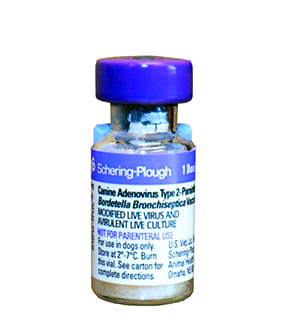
– Give a bivalent (two-way) vaccine containing parvo-virus and distemper, and then give the CAV-2 vaccine intranasally.
288
Since CAV-2 is part of the kennel-cough complex, it is available as an intransal vaccine along with B bronchiseptica (Bb) and canine parainfluena (CPI). Because it triggers a different immune response, the intranasal vaccine does not cause immunosuppression, Dr. Schultz says, even if the distemper/parvovirus vaccine is injected at the same time.
Dr. Schultz says he has recommended this approach to those who have administered the distemper/parvovirus vaccine because he was always concerned about susceptibility to adenovirus. “I generally like to wait until after the last dose with distemper-parvovirus, which is 14 to 16 weeks.” He adds that CAV-2 can cause severe respiratory disease, and is worth vaccinating against in its own right.
Downside: Many vets dislike administering the intranasal vaccine, as many dogs don’t find having liquid shot up their noses to be particularly pleasurable. Also, because many vets routinely give three-way vaccines that contain CAV-2, the intranasal vaccine they stock more than likely does not contain it.
– Give an initial parvovirus-distemper vaccine, then administer a three-way vaccine containing CAV-2 once the dog has developed immunity to distemper.
The trick with this approach is determining when the dog has mounted immunity to distemper. Both Drs. Dodds and Schultz recommend waiting until 12 to 16 weeks, a time when distemper immunity has been achieved by the majority of puppies.
Dr. Schultz says once immunity to distemper has been demonstrated after vaccination by a simple titer, or blood test, then the dog could receive the three-way vaccine. “The dog isn’t going to get immunosuppression because he has already developed distemper immunity,” he explains.
Dr. Dodds sees two possibilities for adapting her vaccine protocol to encompass infectious canine hepatitis without risking immunosuppression: Give a two-way vaccine (parvovirus-distemper) at 9 and 14 weeks, then give the first three-way vaccine containing canine hepatitis at 17 weeks, with a final dose at 24 weeks. Or give the two-way at 9 weeks and 12 weeks, and then give the three-way at 15 and 18 weeks.
288
Both scenarios not only try to avoid immunosuppression, but also seek to give parvovirus at or shortly after 14 weeks, as studies show that many puppies are not protected against parvovirus before that age, despite having been vaccinated for it.
Downside: Waiting until the third installment of the initial vaccine series leaves the puppy susceptible to infectious canine hepatitis in the interim.
– Administer a recombinant three-way vaccine, as opposed to a modified live-virus, or MLV, vaccine.
A recombinant vaccine is sort of a middle ground between a MLV vaccine, which replicates a milder form of the disease in the dog, and a killed vaccine, which doesn’t cause any disease in the dog but which contains preservatives called adjuvants, thought to trigger adverse reactions in some dogs. A recombinant vaccine does not cause immunosuppression when distemper and canine hepatitis are administered together.
“A recombinant vaccine is as efficacious as a MLV vaccine, and as safe as a killed vaccine,” Dr. Schultz says, noting that the Recombitek C3 vaccine contains parovirus, distemper, and adenovirus. In addition to not causing immunosuppression, Dr. Schultz says the vaccine’s distemper component “will immunize at an earlier age than any MLV distemper vaccines.”
That said, Dr. Schultz notes that the three-way recombinant vaccine does not immunize for parvovirus quite as early as some of the other MLV vaccines, so it is not suitable for puppies that are at high risk for exposure to that disease. One option, he says, “is to do a recombinant vaccine at six or eight weeks or whenever you start, then follow up with a traditional MLV combination that contains adenovirus as well as parvovirus.” Because distemper immunity will likely be achieved, “that adenovirus is going to replicate alone, so you won’t get suppression, and that parvovirus will very likely induce immunity.”
Downside: The less effective parvo-virus response is a concern for those with dogs from high-risk parvovirus environment such as shelters. Also, many vets do not normally stock the recombinant vaccine.
In the end, there is no perfect solution. “People need to choose the devil that they prefer,” Dr. Dodds says. “One hundred times they might be fine – and then one time they might not.”
The Good News
If you have never vaccinated your adult dog for canine hepatitis, the first thing is not to panic. The good news is that many dogs, especially those who have been exposed to many other dogs, are probably already immune.
“Once a dog gets out with other dogs, it’s not uncommon for CAV-2 to naturally infect and immunize without causing disease,” explains Dr. Schultz, referring to the respiratory form of the virus. Because CAV-2 immunity also covers CAV-1, those dogs are naturally protected against both. “There is a great deal of natural immunization that has gone on.”
For example, show dogs who are not vaccinated for CAV-1 will very likely become naturally immunized against it when CAV-2 infects them, as respiratory viruses are common in that kind of environment. (Indeed, many consider a case of kennel cough contracted at a show or other doggie event to be the equivalent of the old-fashioned “chicken-pox party” – catch it on purpose and become immune.)
Similarly, if a stray dog comes in contact with canine hepatitis at a shelter, “many of those already came across CAV-2 and are already immune, where they might not be immune to, say, parvovirus,” Dr. Schultz explains.
The “best bet,” he says, if dogs have not been given a CAV-2 vaccine, is to have them titered to see if they have immunity to CAV-1, and to vaccinate if they do not.
Dr. Schultz points out that while renewed concern about canine hepatitis is important in light of these outbreaks, other diseases still pose an arguably greater threat. “I think I’d like my protection against parvovirus, considering how stable and resistant it is in the environment,” he says. “It is in every state in the United States. Some shelters all over the country have parvovirus cases constantly – and the same thing with distemper.”
In short, while the recent news about canine hepatitis should be cause for concern, there is no reason to panic. Even with the documented outbreak this summer, Dr. Schultz doesn’t think the disease will become prevalent, because of the one-two punch of natural and artificial immunity that is already working in the American dog population – and has been for many, many years.
“We’ve got a little bit of nature on our side, and a little bit of vaccine on our side,” he concludes. And, hopefully, that should keep this scary movie from turning into a multi-sequel blockbuster.
Denise Flaim of Revodana Ridgebacks in Long Island, New York, shares her home with a trio of Ridgebacks, three 8-year-olds, and a very patient husband.
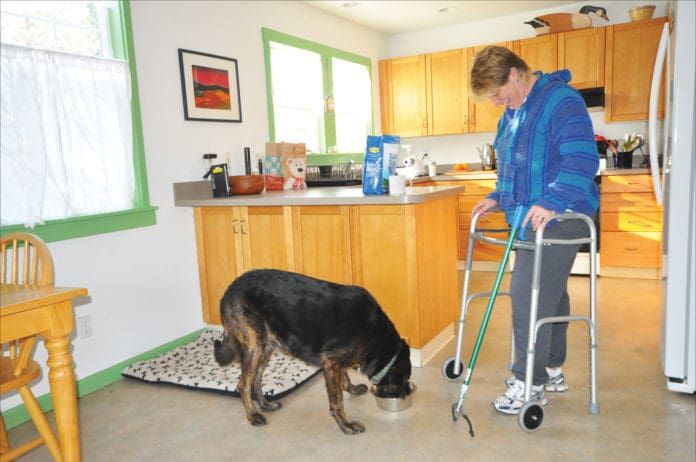
No one likes to think about having major surgery. The thought of being temporarily disabled is scary enough, but when you factor in caring for your dog or dogs by yourself afterward, the fears multiply. Don’t worry! The following tips will help you navigate your recovery with ease while taking care of your canine companions. (The tips can easily be applied to caring for other pets as well.)
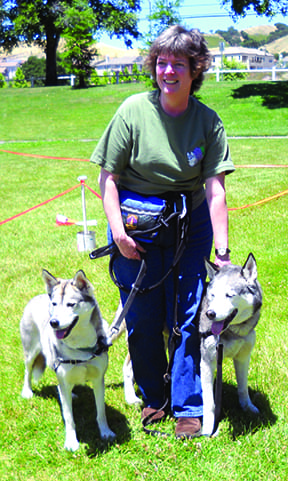
All of my suggestions are grounded in real-world experience. I was diagnosed with degenerative joint disease in both hips about three years ago. I was on a daily protocol of palliative measures until it became too much to bear the pain and restricted range of movement caused by this disease. At least I had (and needed) time to research a place for me and my two Siberian Huskies to stay before and after my surgery.
Fortunately, I have good friends who also have Siberians; they hosted my dogs for the two days I was in the hospital and then all three of us for a few more days, while I recuperated before transitioning to home. Having these details worked out way in advance allowed me to concentrate on the next vital challenge: preparing my house for our return in such a way that would take into consideration my post-surgery restrictions.
Walk On
I was lucky; I saved some equipment that my mother used following surgery she had a few years ago. I initially kept the tools because I wanted to use them with clients who were training their dogs to do hospital and nursing home visits. Little did I dream that years down the road I would be using these tools.
The first tool was a walker, which I would need (as my mom did) to move around the house after my surgery. My older dog Binks was used to seeing the walker because “Grandma” would come over with it when she baby-sat her “grand-dog.” My young girl Cricket was not used to it; she’s almost always a little wary around novel items. The saving grace is that she’s also curious.
I got the walker out and used it around the house a few times during the week before my surgery. It didn’t take that much time for her to get used to it, though if your dog is very wary or frightened of new things, I would suggest renting or buying a walker at least a couple of weeks before it is needed so that you can desensitize and counter-condition your dog to it.
Start acclimating your dog to the walker by positioning it in a highly trafficked location in your house, and placing super yummy treats near it. The next step is to touch it or lean on it while feeding high value treats to your furry friend. Allow it to creak or rattle in a natural manner, but don’t try to purposely frighten your dog with it! As long as your dog seems to accept it, increase your interaction with it until you are actually using the walker to move around the house, dropping tasty treats on the floor behind you while you walk with it. I recommend dropping them behind rather than in front of you; the last thing you need to have happen is for your dog to block your forward access and cause you to trip and fall. This is especially important if you have very small dogs.
After a few games of Hansel and Gretel (and the trail of breadcrumbs), your dog should associate the funny two-wheeled and tennis ball-covered appendage with good things. Using the walker prior to surgery will also give you the opportunity to see if any dog items such as beds and crates are in the path of your walker and will need to be moved to another location during your recuperation.
Note: If you have a ball-crazy dog, and your walker’s legs are covered with tennis balls, you may want to remove them or replace those rear walker legs with some other tip-protectors. Most drugstores sell handicap assistance accessories or you can go online to find them. Physical therapy practices can also give you a list of local medical supply stores where alternatives can be purchased.
Whatever Grabs You

Grabbing tools may appear to our dogs as an alien arm with a weird opposable thumb or a threatening weapon. But they are very useful for picking up tissues, clothes, and other personal items from floors or lightweight cooking items and supplies from shelves. I found one to be super helpful for picking up metal dog bowls from the floor, filling them with food, and then replacing them on the floor in my dogs’ eating places – especially after I strained my back and could not bend over without spasms overtaking me.
It’s very important to get used to using one of these tools a few weeks before your surgery, not only to get your furry friends used to it but also so you can develop the habit of using it. It’s so easy to forget your bending restrictions and suddenly lunge over to pick up that food bowl from the floor. If your body gets used to using this tool over a couple of weeks, it will be second nature to you by the time you have to depend on its daily use.
Poker anyone?
I’m actually talking about the wrought iron fire poker – not the card game! While the grabber is a great tool for picking up many things, it doesn’t do a great job of lifting anything heavy. I have a two-quart flat-backed water bucket outside for my dogs’ additional drinking needs. The grabber can’t lift or maneuver anything that heavy. That is when I spied the little hook extension on my fireplace poker. Voila! It worked perfectly to pick up the bucket so I could re-fill it and put it back down outside. If you don’t have a fireplace poker, an umbrella with a j-style handle will work well, as will the handle of a cane.
Yes I “Can”

The food bowl scenario was pretty easy to resolve. Picking up my dogs’ water bowls to clean and then fill presented another challenge. Their usual water bowl was a four-quart stainless steel bowl with sloped sides. There was no way the grabber was going to pick that up so that I could clean it and refill it. One thing that could help was to substitute their other smaller straight-sided stainless steel kennel bowl for their regular one, which solved the problem.
Now, how to fill it? Enter the garden-variety (literally) watering can with narrow spout. The narrow spout is very important. This allows you to stand up fairly straight and just tip your wrist slightly so that the stream of water goes directly down into the water bowl from a height of about 3 feet. This is by far my favorite use of an ordinary household item to solve my daily dog care challenges.
Believe in the Easter Bunny

I found that Easter baskets are the perfect shape and size for carrying dog food bowls, grooming items, or supplements from one area of the house to the other. Long, narrow basket handles are perfect for holding onto while you hold onto your walker arms. Plus, you can carry multiple items at once reducing the need to make many trips from one area of the house to the other end.
Those are the major things I found to be useful when I had my first hip replacement surgery. Before I have my next one, I plan to teach Cricket how to take off compression stockings; none of the dressing tools are really helpful with that!
Other preparations
In addition to gaining experience with the tools described above, it’s invaluable to prepare your home in other ways for your brief (we hope) disability.
For example, make sure you have an adequate supply of your dogs’ kibble or canned food, and place it in a location that makes it as easy as possible to retrieve and put in their bowls. If you feed a home-made diet, make sure to prepare (and freeze) enough for several weeks, as you may be tired and not up to extensive food preparation – yours or your dogs’! I feed mostly a dry food so I made sure that the week before my surgery I stocked up with a large enough bag to last a few weeks post-surgery. I also stocked up on treats, as well as my food and sundry items.
You may also want to have your dogs groomed before your big event; you will be in no position to do this for some time afterward.
I have medium-sized dogs so I don’t need to pick them up for any reason, but if you have tiny dogs, training them to jump up on a chair or sofa so that you can reach them without bending over can be very helpful.
Another thing to consider before your surgery is your dog’s response to common cues and his behavior in general. If he is rusty in responding to your cues to sit, leave it, or down, practice now so that he is up to speed well before your disability; this will pay off in spades for your recovery and his ease to acclimating to the temporary disruption of your normal life. If you don’t have the time for this or it’s beyond your capabilities, enlist the help of a good positive reinforcement-based trainer to help you polish your dog’s rough behavioral edges.
Getting help
If you have very small, senior, or couch-potato dogs, they may be perfectly happy to keep you company in your newly less-active life. But if your dogs are young and/or highly active, they may be unable to adjust to a suddenly sedentary schedule. Do all of you a favor and find, interview, and get your dogs accustomed to going out with a professional dog walker or enlist the help of trusted dog-savvy friends to help out. Do this far enough in advance of your surgery so you have time to find another person if the first one doesn’t work out! And then schedule the person for as many walks as your dogs will need in order to reliably stay calm at home.
If you are unable to allow your dog to potty outside in your fenced yard, your new dog-walker or trusted friends may be able to help by taking your dog out to potty and then cleaning up after her.
Stress reduction
Doing all of the pre-op preparations above helped to de-stress me before my surgery. I’m very much an independent type of person, so having to rely on others was difficult for me.
The only thing that I needed to have help with was someone to walk my dogs. As soon as I was able, I started picking up after my dogs in the yard, using the long-handled pooper scooper set I started using after my back strain. And soon enough, because I hadn’t hurt myself by overdoing household and dog-care tasks, I recovered – and improved on! – my previous mobility. It was a relief to be self-sufficient again.
[Updated November 16, 2017]
1. Commit to giving your little dog a bigger life by providing him with good manners training that makes him welcome anywhere dogs are allowed.
2. Respect your little dog’s needs and preferences; don’t coerce him just because he’s little and easily overpowered.
3. Protect your little dog appropriately from unwanted attention and potential threats.
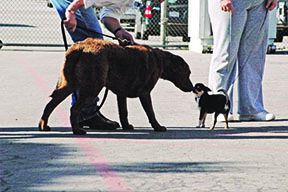
A long time ago, I was a “big dog person.” For the first three decades of my life, I looked disdainfully down on yappy little foo-foo dogs and the people who owned them. Then I fell in love with and adopted Dusty, an 8-pound Pomeranian, and my whole perspective shifted, as did some of my long-held paradigms on small dog behavior, training, and management. I came to appreciate the behavior of owners who snatched their tiny toy breeds off the floor at the approach of a bigger dog. I was constantly worried for my little dog’s safety. I was certain one of our bigger dogs would play with him too roughly and crush him. Or worse – some unknown dog could kill him with a grab-and-shake move. And it was so easy to pick him up and carry him that I did it frequently. The concept of having an “arm-dog” began to make perfect sense to me.
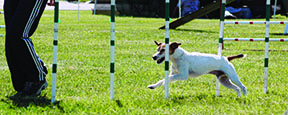
Today, I’m keenly aware that some little dogs – and their owners – play right into the small dog stereotype. Many small dogs I see in public are ill-mannered with humans, reactive toward other dogs, and yappy. Lots of little dogs strain on their leashes, don’t come when called, and think “sit” is something their owners do so the human can bend over and pet them.
But it doesn’t have to be this way. Every little dog is as capable of learning basic and advanced training behaviors as big dogs – and it’s just as important for their long-term well being and safety. Dusty had his AKC Companion Dog degree, and was well on his way to Companion Dog Excellent before bad hips curtailed his jumping and cut his show career short.
If you doubt a little dog’s ability to learn, just watch any canine competition. You’ll be amazed by the number of diminutive canines who compete successfully in obedience, agility, rally, flyball, canine freestyle, nose work and more. (In fact, every flyball competitor wants a little dog on her team, because the jump heights for the whole team are set at the proper height for the smallest dog in the group!)
Positive training techniques are equally effective for all sizes of dogs; all dogs learn in a similar fashion. That said, some minor modifications to training and management can make the relationship-building and training process more successful for little dogs. Whether your goal is a well-mannered family companion, competition titles, or both, if you keep the following concepts and tips in mind you and your little dog can be more successful and have more fun playing the training game together.
But before I describe these tips, let’s define some terms.
Let’s arbitrarily define “little dog” as one that weighs 25 pounds or less. This encompasses a wide range of breeds, from the tiny, truly fragile 2-pound teacup Yorkie to the short and sturdy 20- to 25-pound Scottish Terrier. It includes dogs with such varied personalities as the independent and pugnacious Jack Russell Terrier, the more dignified and amiable Pug, the independent and aloof Basenji, the energetic and responsive Toy Poodle, and the relatively phlegmatic French Bulldog, to name just a few. That doesn’t even take into consideration the infinite combinations of small mixed-breed dogs or the wide range of individual personalities within a given breed.
A Pomeranian once seemed quite small to me, but recent decades have seen a proliferation of smaller and smaller dogs – the so-called “teacup” breeds. At a local humane society “Bark In The Park” fund-raising event recently, a couple walked past my booth with a pair of tiny Yorkies in their arms. The male, the “larger” of the two, was three pounds at full maturity. The female was a mere two pounds. They made Scooter, my current Pomeranian, who tips the scales at a whopping 12 pounds, look quite massive by comparison!
Next, let’s define “training.” Owners of larger dogs are likely to understand training as encompassing everything including polite “good manners” behaviors in the house, coming when called, walking nicely on leash, and calmly greeting new people and other dogs. But owners of small dogs might have no behavior expectations of their little companions beyond potty training – and maybe not even that! After all, jumping up is much easier to accept from a 5-pound dog than 50-pound one, so lots of little dog owners don’t bother to teach a polite greeting.
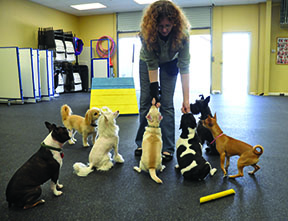
In my opinion, all dogs, even tiny ones, should be trained to exhibit all the same good manners behaviors as larger dogs, such as sitting politely to greet visitors, or asking permission for sofa privileges. For optimum quality of life and his relationship with you, it’s every bit as important for the little dog to be trained as the large one.
There are a number of advantages to sharing your life with a little dog:
1. They take up less room! You can have several in the same amount of space as one Great Dane. They share your bed without hogging it. They sit on your lap and still leave room for the newspaper.
2. They don’t eat as much, so they are less expensive to feed.
3. You can get by with smaller backyards, and often (though not always) lower fences.
4. Little dog poops are tiny and inoffensive, even in the house – you can pick up their mini-feces with a tissue and flush them down the toilet. And it’s easier to train a little dog than a Mastiff to use a litterbox, if that suits your lifestyle.
5. You are much less likely to worry about counter-surfing.
6. Your little dog is less likely to knock over your 93-year-old Great Aunt Helen when she comes to visit (although a little dog can run under her feet and trip her up).
7. The little dog is highly portable; you can fit him under an airline seat, in your shopping cart, or in a doggie backpack. You can still drive a sports car!
8. Finally, your little dog is less intimidating to people who are fearful of dogs, and more acceptable to landlords, hotels, motels, outdoor cafes, and other public places.
Of course, there are also some disadvantages.
– Little dogs do break more easily, especially those with very fine bones, such as Chihuahuas and Italian Greyhounds.
– Because of their small size, they can be mistakenly perceived as good pets for children. Some of them can be, but they’re not automatically the right choice for small humans – it depends on the individual dog, a good socialization program, and the child’s ability to be gentle with and careful around a tiny dog.
– Their reputation
as yappy and snappy ankle-biters is not entirely undeserved; they can become defensively aggressive if they feel threatened – and it’s easy to feel threatened when you are surrounded by human and canine giants who are anywhere from 10 to 100-plus times your size. Because the dogs are small, their owners tend to be permissive and overprotective, overlooking and excusing behaviors that larger dogs could never get away with.
Fortunately, training is not any more difficult to accomplish with a small dog than with a big one, with the following adjustments:
1. Minimize Your Inner Primate. Primate body language (such as a direct approach, looming over the dog, eye contact, assertive gestures and voice) is intimidating to any dog who has not learned to read and interpret “human.” It’s even more so to the little dog. The smaller the canine, the more threatening our natural human body language can be. When you are training your little dog, at least until he learns to read and trust you, conscientiously use soft eye contact; make your gestures and voice small and soft rather than large and effusive; turn slightly sideways to him; and squat instead of looming over your dog to interact with him.
2. Use Tiny Treats. I constantly remind dog owners to use small (pea-sized) pieces of food treats and perhaps incorporate some of his regular food into his portion of treats. When you use training treats with your little dog the treats must be very tiny – perhaps the size of a quarter of a pea! Also, you may need to reduce or even eliminate some of his meals, based on how many treats you feed him during training. Otherwise you’re likely to fill him up far too quickly, and pack on the pounds, as well.
3. Make Yourself Smaller. If you always train your little dog standing up, you are guaranteed to end up with a sore back. Exercises like luring the down and practicing puppy push-ups (sit-down, sit-down, sit-down) can be especially backbreaking. In the beginning, sit on the floor with your dog to save your back, and to make yourself less intimidating to him. You can also work with your little dog while you sit on a stool or chair, or you can put him on a raised surface where he is comfortable, such as a table, sofa, or bed.
4. Use Reach-Extending Tools. You also need to train standing up – at least some of the time. Your dog needs to learn to walk politely with you; even a little dog can damage his throat if he constantly strains at the leash. The better his leash manners are, the more fun it will be to take him places, and the less likely he’ll become an arm-dog. Teach him to target and then use your target stick to help him learn to walk with you, without having to bend over. Simply put the target stick where you want him to be. You can also smash a soft treat onto the end of the stick for delivery to your little dog without having to bend over, or just drop treats on the floor. Another trip to your chiropractor averted!
5. Take Advantage of little dog Training Tools. Little dogs need lightweight collars and leashes. It’s easy to underestimate the impact of a standard-weight leather leash if it accidentally bumps into your dog’s face, or, worse, if you drop your end and it falls on him. His training tools and toys should be scaled appropriately to his size. Fortunately, pet suppliers have gotten wonderfully creative with little dog products like toy-dog-size tennis balls and squeaky toys, and narrow, lightweight nylon leashes.
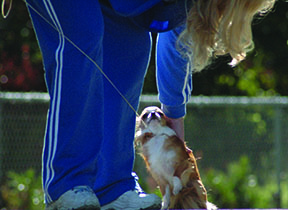
6. Teach Your little dog A “Pick-Up Warning” Cue. Of course you’re going to pick him up sometimes – it’s what we little dog owners do. You can minimize pick-up stress for your dog by using a “pick-up warning” cue. Choose your cue (I use “Okay!” for Scooter) and use it every time you pick him up. Place your hands around him as if you’re going to pick him up, give your cue, and then put a little pressure under him but don’t pick him up yet. This gives him time to realize you are picking him up, so he isn’t startled. When you can see he’s aware of the pending lift, go ahead and pick him up. Eventually the cue itself will be enough to prepare him. When I put my hands on Scooter and say “Okay!” he actually boosts himself off the ground a little, into my hands.
7. Respect His Needs and Preferences. Owners of little dogs often complain that they can’t train their dogs to lie down. Think of it from the dog’s perspective: he’s already tiny and vulnerable; well, he’s even more so when he’s lying down. Plus, lots of small dogs are sensitive to cold, and to hard or rough surfaces. Try teaching him to lie down on a soft, raised surface, where he’ll be more comfortable and feel less threatened. The raised surface gives you the added advantage of being able to move your lure below “ground level” to maximize the “down” potential.
8. Allow Him to Say “No.” One of the reasons “arm-dogs” have a reputation for being snappy is that they are often forced to greet people while restrained in their human’s arms. If they are at all fearful or feel threatened in any way, they cannot escape – whereas a dog on the ground, on or off leash, can move away or duck behind his owner to escape unwanted attentions. Ask your potential greeters to kneel down, make themselves small, and let your little dog approach them. If he chooses not to greet, don’t force him.
Housetraining small dogs is sometimes difficult — but not because they are any less capable than bigger dogs of learning where and when it’s appropriate or inappropriate to go potty. If your little dog’s housetraining is giving you headaches, it may be because:
Little dog signals are harder to see. If a Bloodhound sits and stares at your face and drools in your lap while you are reading the paper, sending “I have to pee” signals, you probably notice. If a Cavalier King Charles Spaniel sits and stares your ankle, it’s easy to miss.
Big dog owners have more reason to be motivated. A tiny Chihuahua puddle behind the guest bed may not be discovered for weeks or months (or maybe never). The Great Pyrenees lake in the kitchen is impossible to miss. It’s a simple matter to pick up a teeny terrier turd, toss it in the toilet and dismiss the mistake. A moist, massive Mastiff mound is an entirely different matter.
Little dogs may have smaller holding capacities. Although you would expect their organ capacity to be proportionate to their size and intake, bottom line is that some of them do seem to need to go out on a more frequent potty schedule.
Little dog owners are more likely to supervise less, and use crates that are too large (in which the teeny Toy puppy can poop and pee in one end and sleep and play happily in the other) or not crate at all. “A little pup can’t possibly be as much trouble as a big one, can he? (wrong!), and besides, we want Shrimp to sleep with us!” Later, maybe, but not until he’s house-trained!
Little dog owners are more likely to paper-train and continue to rely on paper-training, sending a mixed message about inside-elimination versus outside-elimination.
Little dogs are more likely to have had their den-soiling inhibitions damaged prior to purchase or adoption by the owner as a result of over-crating and dirty puppy mill conditions. If a dog is required to live in his own excrement and urine, he comes to think that living in filth is normal, and he won’t make an effort to “hold it” until he has access to a more suitable environment. This makes housetraining very difficult. Little dogs, by virtue of their size, are more popular as pet store and puppy mill breeds – both environments where they are more likely to be over-crated.
The answer to housetraining the little dog is scrupulous management. Constant supervision, through the appropriate use of leashes, crates, tethers, direct supervision, and regular trips to the outdoor bathroom spot — every hour on the hour, at first, if necessary. Pay close attention so you don’t miss your dog’s signals. All the other regular housetraining tips also apply, of course – feed regular meals instead of free-choice feeding; pick up water before bedtime, switch to a different kind of crate substrate if necessary, and clean soiled spots with enzyme-based cleaners meant for animal messes.
Keep in mind that managing your small dog (like every dog) is just as important as training him. If his potty-training isn’t rock-solid, keep him out of situations when he’s likely to “make a mistake.” Prevent him from being rewarded by the behaviors you don’t want, and consistently and generously reward the behaviors you do want, with treats, attention, toys, or a nap on the sofa.
This means turning your back on the jumper and petting him (and/or giving a treat) only when he sits – and making sure guests do the same. He will soon learn to sit for attention. Be sure to pay attention to him when he does!
It also means body-blocking your dog when you see the “sofa gleam” in his eye – by moving into the open sofa space and/or not making your lap available – until he sits, and then inviting him up (assuming he is allowed up). Be sure to notice when he sits (as small as he is, it’s easy to overlook him when he’s sitting politely), and invite him up as his reward.
Every little dog also needs to be well-socialized. Treat him like a dog! From early puppyhood, make sure that he has lots of positive experiences with other dogs, to help dispel the aggressive “arm-dog” image of the angry Pomeranian nestled in the ample and befurred bosom of the wealthy dowager.
Your little dog needs to have his feet on the ground a good part of the time so he can learn to go up and down stairs, get into cars, and walk on grass, dirt, gravel, carpeting, wood, and tile floors. Take him hiking. Dusty could easily hold his own on an all-day wilderness hike with the rest of our pack.
Have him meet lots of friendly people – all ages, shapes, sizes, and races – armed with lots of tasty treats in lots of controlled circumstances. A good rule of thumb for socialization is to expose your pup to at least 100 different kinds of settings and types of people in his first four months of life. At the same time, of course, protect him from dangerous situations, such as encounters with larger dogs who truly could hurt him. (See “Conditioning Confidence in Your Dog or Puppy,” WDJ June 2009.)
One of the reasons little dogs sometimes have attitudes about big dogs is that owners tend to panic when they see a big dog approaching. The owner’s stress transmits to the little dog, who then becomes anxious himself. If you grab your dog every time another dog approaches, it can be even more stressful for him and increase the potential for a confrontation.
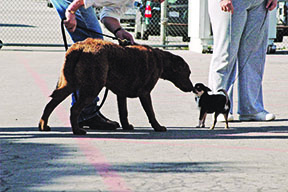
Little dogs sometimes do get savaged by big dogs because their owners forget to think or to anticipate and avoid hazards to their little companions. “Be smart” means don’t take your little dog places that you know are frequented by large, uncontrolled dogs. Use your local dog park only if there is a separate fenced area for little dogs.
If you’re walking your dog on the street and you see someone approaching with a large dog, take evasive action – calmly cross the street while you practice good heeling so you can pass at a safe distance. Be on guard even at canine competition events, where you might think your dog is safe. He’s not. There are multiple stories of little dogs being attacked, injured, or even killed, by larger dogs at canine competitions.
If you see a loose dog approaching, look for an escape route – a place of business or fenced yard you can step into for safety. Toss a handful of tasty treats away from you to slow down the approaching dog and give you and your little guy time to escape. Carry an aversive spray, a pop-open umbrella, or marine air horn that can thwart a persistent canine visitor. (Be sure to give your own dog a positive classical association with the aversive first, so you don’t scare the stuffing out of him if you have to use it.)
Only as a last resort should you pick your dog up; doing so also puts you at risk for injury if the approaching dog is intent on mayhem. Not that the risk of injury would stop any of us “little dog people” from protecting our beloved little ones. Our own safety is often the last thing we think about when our canine family members are threatened. Their diminutive size only heightens the protective instinct that motivates us to risk life and limb for them.
During his 14 years with us, Dusty convinced me that he was much sturdier than I imagined, and that he was every bit a Real Dog in his little dog body. Go ahead, big dog people, scoff at us if you want. It’s only a matter of time before you meet the little dog who steals your heart the way Dusty stole mine.
Pat Miller, CBCC-KA, CPDT-KA, is WDJ’s Training Editor. She lives in Fairplay, Maryland, site of her Peaceable Paws training center, where she offers dog training classes and courses for trainers. Pat is also author of many books on positive training.
[Updated January 9, 2019]
Most dog owners are aware that Collies and other herding breeds may be sensitive to ivermectin, used for heartworm prevention and to treat certain parasites. But did you know that these dogs can also be sensitive to a number of other drugs, and that other breeds can also be affected?
It’s been known since 1983 that ivermectin can cause neurologic toxicity in some, but not all, Collies. In affected dogs, toxicity is caused by doses of ivermectin that are 1/200th of the dose needed to cause toxicity in normal dogs. Symptoms of neurologic toxicity can include uncoordination or loss of balance (ataxia), depression, disorientation, excess salivation, pupil dilation, nystagmus (abnormal movement of the eyes), blindness, tremors, recumbency (inability to get up), coma, respiratory compromise, and even death.
But the next big accomplishment in gaining an understanding of exactly what was responsible for the toxic effects of ivermectin in some dogs came in 2001, when Katrina Mealey, DVM, PhD, DACVIM, DACVCP, at Washington State University College of Veterinary Medicine, identified a mutation in the MDR1 gene that causes ivermectin sensitivity. The discovery led to WSU’s development of a test that can detect the mutant gene, so that dogs who are susceptible to this toxicity can be identified.
Dogs can have either two copies of the defective gene (homozygous, double recessive), or one defective gene and one normal gene (heterozygous). Dogs with two copies will be most severely affected. Dogs with one copy are less sensitive (able to tolerate a higher dose before adverse effects are seen), but they are more sensitive than normal dogs.
Further research revealed that dogs with the MDR1 mutation are sensitive to a number of different drugs, not just ivermectin. Melissa Best, DVM, who went to veterinary school at WSU, explains, “MDR stands for ‘multidrug resistance.’ The protein encoded by this gene is P-glycoprotein (PGP) and is an important protein for keeping potential neurotoxins from entering the brain. The MDR1 mutation means that this protein is improperly coded and cannot do its job.”
The MDR1 mutation allows drugs to build to toxic levels in the brain, and is now referred to as “multidrug sensitivity.” Toxicity may occur from a single high dose or frequent low doses of problem drugs. Topical application of certain drugs can also cause toxicity, and the effects may last longer, but it generally takes higher doses.
The discoverer of the mutation of the MDR1 gene and establishment of testing procedures, WSU is the sole patent holder for the test to detect the mutant gene. The test requires only a simple, non-invasive cheek swab that you can collect yourself and send to WSU’s Veterinary Clinical Pharmacology Laboratory (VCPL). The test costs $70, with a discount for more than four dogs. It can be performed on any dog, including mixed breeds, at any age after weaning. The test will identify whether a dog has one or two copies of the defective gene. It takes about two weeks to get results.
All heartworm preventive medications can affect dogs with the MDR1 mutation, including ivermectin (Heartgard), milbemycin (Interceptor, Sentinel), selamectin (Revolution), and moxidectin (ProHeart, Advantage Multi). The very low doses used for heartworm prevention, however, should not cause any harm, even to dogs with two copies of the defective gene.
“I don’t know of any homeopathic or naturopathic alternatives to these drugs, particularly for heartworm,” says Dr. Best. “While I am very pro-holistic care, the risk of death from heartworms is greater than the risk of the drugs (especially at the low doses used for prevention). I recommend using commercial heartworm preventatives under the direction of a veterinarian.”
The higher doses of these medications that are used to treat demodectic mange, sarcoptic mange, ear mites, and other parasites, however, should be avoided in all affected dogs. Generic ivermectin preparations such as Ivomec 1% solution should not be given to affected dogs, as the potential for toxicity from the wrong dosage is too great (the instructions on many websites result in dosages at least 10 times too high). Long-acting injectable products such as ProHeart 6 may also be problematic for affected dogs.
Toxicity can also occur from eating the manure of other animals, such as horses or sheep, after they are treated for parasites with products containing ivermectin. Pesticides with ivermectin used to treat a home or yard may cause toxicity if an affected dog is exposed to the area afterward.
Ivermectin has the most potential for toxicity. Dogs with normal MDR1 genes can usually tolerate oral dosages as high as 2,500 mcg/kg of body weight before signs of toxicity are seen, while dogs with two copies of the defective MDR1 gene can tolerate only up to 100 mcg/kg of oral ivermectin. No toxicity was seen when affected dogs were given 28 to 35.5 mcg/kg monthly for one year. (For comparison, Heartgard contains 6 to 12 mcg/kg.)
Toxicity has been seen in affected dogs receiving oral doses that were 30 times the heartworm preventive dose of moxidectin and 10 times the regular dose of milbemycin. Selamectin caused toxicity at 2.5 times the recommended dose when that amount was given orally, but higher doses are tolerated when the product is applied topically, as directed.
Other avermectins can also cause toxicity, including doramectin (Dectomax), eprinomectin (Eprinex), and abamectin.
Spinosad, a flea-control medication included in Comfortis, Trifexis, and other products, increases the risk of neurological toxicity even in normal dogs when combined with high doses of ivermectin (and possibly other drugs) used to treat parasites. While theoretically safe, use caution when combining Heartgard or other ivermectin heartworm preventive drugs with products containing spinosad for affected dogs. Do not combine high doses of ivermectin with spinosad for any dog.
Some additional drugs are known to cause problems for dogs with the MDR1 mutation, while others are suspected to be problematic. A few drugs affected by PGP appear to be safe to use in normal doses. “There are many known drugs which are pumped out of the brain by p-glycoprotein,” says Dr. Best. “However, not all seem to cause toxicity in mutant dogs. Clearly more research is needed to understand the mechanisms at work.”
Drugs that are known to affect or may affect dogs with the MDR1 mutation include some used to treat cancer, pain, parasites, bacterial infections, diarrhea, vomiting, and anxiety, as well as pre-anesthetic drugs. In addition to ivermectin, the most commonly used problem drugs are acepromazine (Ace), butorphanol (Torbutrol, Torbugesic), and loperamide (Imodium). Most of these drugs require a prescription, but loperamide, an anti-diarrheal medication, is available in over-the-counter preparations.
Ideally, only dogs with no copies of the MDR1 mutation would be used for breeding. This may not be feasible or even optimal in some cases, however, particularly in heavily affected breeds, where the rest of the gene pool would be too limited, which leads to other problems. Any dog with the mutation may pass it along to their offspring, but dogs with just one copy of the mutation can also produce normal puppies, particularly when bred to dogs that do not carry the mutation at all. In this way, the population of affected dogs can be reduced through subsequent generations.
Even if you don’t plan to breed, all dogs from affected breeds should be tested for the MDR1 gene for their own protection. Mixed-breed dogs from affected breeds or whose parentage is unknown should also be tested, as it’s impossible to tell for sure just by looking at a dog what its ancestry might be.
Before the genetic test became available, vets often repeated the adage, “White feet, don’t treat!” as a reminder that such dogs might be at risk, since many herding breeds and mixes have white feet. This is not reliable, however, as some dogs with white feet may have normal genes, and dogs with non-white feet may be affected by the mutation. Dr. Mealy recommends testing all mixed-breed dogs with unknown breed status, as one exposure to a drug to which they are sensitive could be fatal.
“The biggest problem I have seen with MDR1 mutants is accidental exposure by owners who were unaware of the problem,” says Dr. Best. “I have seen several dogs die from this problem after being exposed to ivermectin products.
“The worse case that I saw where the dog survived was an Australian Shepherd from Montana who became exposed after licking up a dollop of dewormer that had dropped out of a horse’s mouth when the owner was deworming it. The dog was flown on a private jet to WSU, with a private vet tech hired to breathe for the dog, as he was severely affected by the time he had been brought to his veterinarian (within hours of exposure to the drug).
“That patient was on a ventilator for nearly two weeks and eventually made a full recovery, however the bill was well over $10,000 and not everyone can fly a dog to a referral center on a private jet! I have also seen dogs become affected who ate horse manure after the horses had been dewormed with Ivermectin.”
If tests show that your dog is affected by the MDR1 mutation, or if your dog could be affected and has not been tested, make sure that your vet is aware of potential drug sensitivity. You may want to give your vet a copy of the list of drugs from the VCPL website to include in your dog’s file. Be sure to remind your vet of the situation any time that your dog needs to be anesthetized or sedated so that the wrong medications will not be given.
If you use any drug that might cause toxicity, start with low doses and gradually increase the amount that is given over a few days as long as no adverse side effects are seen. Continue to monitor your dog closely for signs of toxicity, particularly when the drug is given daily, as chronic toxicity caused by cumulative effects could develop.
If your dog shows signs of toxicity after applying a topical product, immediately bathe your dog with soap to remove as much of the product from the skin as possible.
If your dog ingests a topical product or if you see signs of toxicity after giving oral medication, contact your vet immediately. If ingestion was recent, your vet may induce vomiting and give activated charcoal. Further supportive care, including IV fluids and ventilation, may be needed if signs are severe. Dogs may recover if supportive care can be offered for long enough, but it can take days or weeks before enough of the drug breaks down on its own. “Sadly,” says Dr. Best, “Because we have no way to get the neurotoxic drugs out once they are in the brain, most dogs are not able to be saved once we recognize a toxicity problem.”
Mary Straus is the owner of DogAware.com. She and her Norwich Terrier, Ella, live in the San Francisco Bay Area.
It’s that time of year again: making a list and checking it twice. Many of us include animal-related charities on our gift list. But how do you choose which ones to support? There is no shortage of good causes. Here are some guidelines for how to evaluate an organization as a potential recipient of your hard-earned dollars.
It may seem obvious but the first thing to contemplate is whether the cause – and the approach to it – is something you believe in and are passionate about. There are so many pleas for funding that sometimes we can get caught up in the immediate emotional moment, especially when faced with horrific images or stories; that can be an effective tactic to raising money. We hope to purge the haunting images of abused, neglected dogs in dire circumstances by sending off a check. But how do you know whether your check will actually alleviate any animal suffering?
Research, Research, and More Research
Think about your specific goals for your contribution. For example, let’s say you want to contribute to an organization that addresses pet overpopulation. There is a wide spectrum of approaches to this very issue, so you should think hard about how you would like to see the problem addressed. You could contribute to the actual costs of spay and neuter programs, or rescue organizations, or education programs!
When you’ve found the type of cause(s) near and dear to your heart, obtain as much information as you can about the organizations you might support. A charity’s website is a good place to start. Read about the organization’s goals, accomplishments, and challenges. Look for its mission statement; it should be a concise and vivid expression of the group’s purpose, and provide an overview. Who’s running the show? Review the credentials of the key staff members and board members; if it’s a 501(c)(3) organization and thus able to receive tax-deductible charitable contributions, there must be a board of directors.
Next, look at how the organization determines the need for its services and programs. Does it have targeted goals? Who benefits? How are these goals monitored and evaluated? How does the organization report results (short-term and long-term)? Are reports clear, understandable, and supported? Do they reflect the stated mission? How do they share the results of your donation?
Ideally this information will be readily available; if not, ask for it. Most organizations are more than willing to discuss their programs. That said, I recently crossed a couple charities off my list of prospects when I called for more information and the individuals I spoke with weren’t able to answer my questions and no one returned my call as promised. An important hallmark of a good charitable organization is its transparency in all aspects of its operations (not to mention good donor relations).
Follow the Money
Next, as much as you may hate this idea, it’s important to take a look at any charity’s financial reports. Many organizations post their financial information on their websites. If the organization is exempt from income tax, they are required to annually file Form 990 (see side bar) with the Internal Revenue Service. These forms are open to public inspection and must be made available to potential donors upon request. If the organization is not required to file Form 990 – and thus is not a registered 501 (c) (3) non-profit – request copies of their financial reports. A good organization will be able to provide some sort of financial report – an accounting of its income and expenses. If an organization can’t or won’t share these with you, then don’t share your money with them – they can’t account for it.
A good guideline to look for among efficient charities is an expenditure of 65-75 percent (or more) directly on a charity’s programs and 25-35 percent (or less) on fundraising and administration expenses. While successful organizations should allocate the majority of funds to providing programs and services, remember when reviewing salaries that they still need to recruit and retain talented people while attempting to keep administrative costs reasonable. When reviewing fundraising expenses, keep in mind that it costs money to raise money, but this should not be the reason for the existence of the organization.
Examine the details of the fundraising ratio: the amount raised compared to the amount expended. Consider that ratios can be higher than ideal due to special circumstances such as being a new organization (and thus having higher expenses than an established entity) or advancing a new cause. A group with a high fundraising ratio may actually have increased revenue (spends more to make more), which in turn allows it to do more.
Large organizations are sometimes criticized for their lobbying, fundraising, and administrative expenses. They often defend this by saying that because they are large and receive bigger revenues, they can spend a lot of money and as a result can accomplish the large goals that smaller organizations don’t have the resources to tackle. Again, compare your goals to theirs. It’s a mismatch if, for example, it’s most important to you to increase the adoption of homeless pets, and the organization spends a relatively small amount on its “boots on the ground” programs in favor of legislative reforms.
If possible, review the financials for a minimum of the past three years. Look for organizations that are able to grow their revenue at least at the rate of inflation, continue to invest in programs, and save money for a rainy day.
Many Giving Options
Donations can be made to anyone or any type of organization you desire: individuals, private organizations, for-profit organizations, or not-for-profits. If you want the donation to be tax deductible, however, verify that the organization has been designated as a 501(c)(3), proving it is organized and operated for charitable purposes. This is the U.S. Internal Revenue Code for tax-exempt status and is regulated by the U.S. Department of the Treasury through the IRS. It allows for the federal tax exemption of non-profit organizations, specifically those that are considered public charities (receiving most of their income from the public or the government), private foundations (receiving most of their income from investments and endowments and using that money to award grants to other groups), or private operating foundations (donating most of their assets directly to the causes rather than awarding grants to other charities).
To qualify, an entity must be organized and operated exclusively for religious, charitable, scientific, testing for public safety, literary or educational purposes, or to foster national or international amateur sports competition, or for the prevention of cruelty to children or animals.
Be aware that some organizations doing “charitable” work may not have obtained not-for-profit status for any number of reasons; it doesn’t necessarily mean that the group doesn’t have a worthy cause. Ask the same questions you would of a not-for-profit and then make your decision. Understand, however, that donations made to individuals or to any organization that is not registered as a not-for-profit are not tax-deductible.
Charity Navigator (charitynavigator.com), GuideStar (guidestar.com), and the Better Business Bureau’s Wise Giving Alliance (bbb.org/us/Wise-Giving) are great resources for helping donors make informed decisions; they do a lot of the legwork by evaluating and reporting on major charitable programs and often offer downloads of the charities’ relevant documents (such as the 990 forms).
Big, national charities may be the most persistent in asking for help, but consider local organizations working to effect change in your own backyard, such as shelters and rescues. These organizations often struggle with small budgets, and can make even small donations go a long way.
What if you want your money to go toward a specific program or even a specific dog? If there’s a particular disease that has touched your dog’s life, consider donating to university research programs targeting that disease; these programs are often the first to find new treatments and cures.
While the IRS does not allow tax deductions for donations made for a specific person, there are organizations that are set up to help direct funds to individual dogs. One such organization, Magic Bullet Fund, allows for tax-deductible contributions to be made to a specific dog battling cancer that has registered with them. Donations made for a dog’s treatment are held in reserve for that dog; the funds are redistributed to the General Fund if they cannot be used.
If you have a substantial amount to give, meet with the organization in person to direct how you want your donation to be used. You may be able to create and fund a specific program or even specific research. Providing for your favorite animal-related charity in your trust or will is another option.
Donor Beware
It’s not a good practice to give out your personal information to any organization representative who calls you, comes to your door, or approaches you on the street, soliciting a donation. If it’s a cause you’re interested in, contact the organization directly. This ensures you are dealing with the organization itself and not a fraudulent entity posing as a charity; and if you do decide to donate, you’ve eliminated a possible middleman and all of the contribution will go directly to the organization. Do not give cash.
It has become common practice in modern fundraising for charities to share, swap and sell their donor lists. If you don’t want your name on these mailing lists, request that your information not be shared.
Research to see if the organization has been mentioned in any news reports that might link them to questionable practices; also research individual executives. The organization itself might not be addressing any of these issues, but negative publicity is difficult to hide in these days of information-sharing.
If you donate over time, be sure to periodically evaluate whether or not the organization is still in line with your interests; missions can shift over time and you may want reconsider. I had to do this when I learned that one of the advisory board members of a charity that I had donated to regularly supported an industry that was in direct opposition to what I thought the organization stood for. I asked a representative of the charity for an explanation of this contradiction, but the rep either couldn’t or wouldn’t even try to explain. I concluded that the advisory board member probably donated a lot of money to the charity – a lot more than I ever could – and that the group had more interest in him than in small donors like me.
I continued to receive solicitation calls even though I had informed the organization that I would no longer donate to the charity as long as that person was still on the charity’s advisory board. One phone solicitor told me that I should overlook my concern because of all the good things the organization did. After I politely informed the caller that this incongruency made me suspect the group’s true mission, I was removed from all of its solicitation lists. Don’t be afraid to ask the hard questions!
Which leads me to charities you may fund inadvertently. I was dismayed to learn that one of the dog product suppliers I used to purchase from gave a portion of their proceeds to an organization that tested on animals (including dogs).
I nicknamed this “stinkwashing” (inspired by the “pinkwashing” term coined by the Breast Action Fund for the hypocrisy of the actions of companies and organizations that claim to care about breast cancer and promote a pink ribbon product but at the same time produce, manufacture, and/or sell products that are linked to the disease). Now I’m always suspicious of generalized statements about “proceeds of this sale will be donated to…” Are these companies in line with your personal values? What is the company doing to ensure that its donations (from the sale of products to you) are not linked to programs that are detrimental to dogs or animals? If you can’t tell or don’t know what the organization does, reconsider your purchase.
More than Money
What about the multitude of us that have no funds to spare in these difficult economic times? Don’t feel guilt – it has no useful purpose. And don’t let a lack of financial resources hinder your generosity. Many organizations need your non-monetary donations as well. Shelters and rescues often have holiday wish lists for items that you may be able to spare without spending a penny. Bedding and towels are common needs, as are “safe dog toys” (ones without parts that can be chewed off), crates, and collars and leashes that can be given to adopters.
And if you’ve got some time, consider volunteering for your favorite local organization. You could walk or bathe homeless pets, help with a shelter’s laundry, or perhaps donate your skills at website design or even something as mundane as data entry. While you might not get a tax deduction, the benefit to a cash-strapped, understaffed shelter or local rescue can be priceless.
Barbara Dobbins is a San Francisco Bay Area dog trainer on hiatus. When she’s done paying for her dog’s cancer treatments, she will donate to canine cancer research.