Home Blog Page 242

Fitness Together

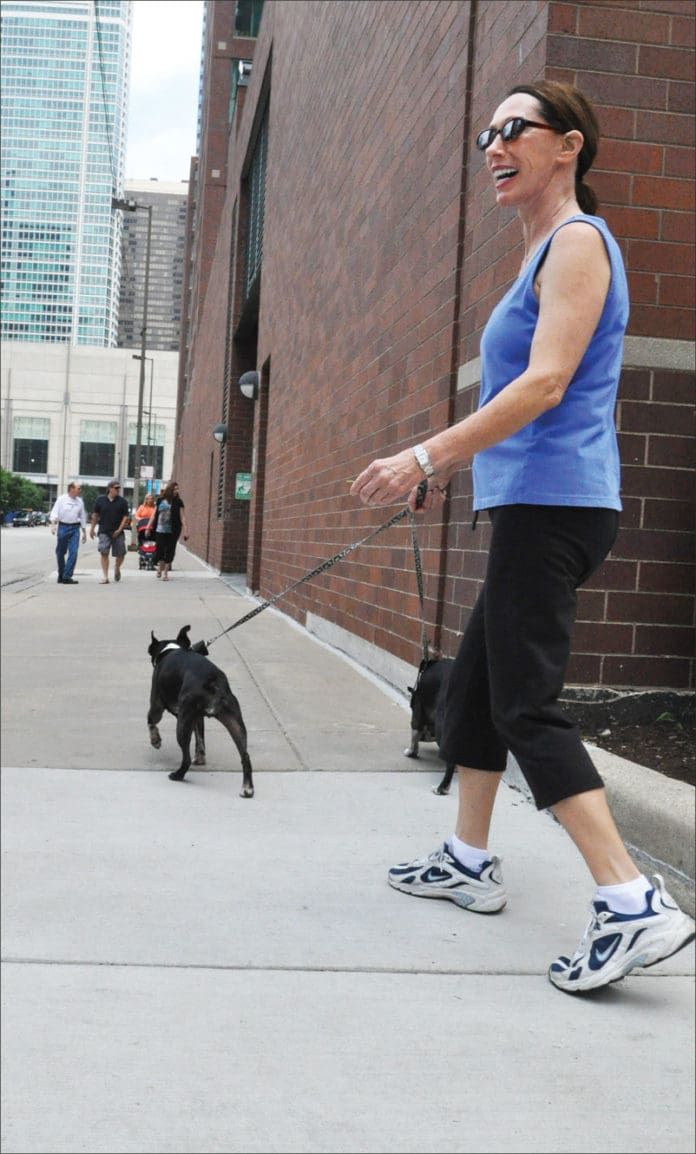
I confess: I have a hard time fitting in enough exercise for myself and my dog. Nothing earth-shattering about this admission; I think not getting enough exercise is a universal condition. Even though my dog and I walk daily, life and age just keep creeping up, making it harder and harder for me to stay fit. And, my high-energy herding dog seems to always need just a little more in the way of activity than I have time and energy to provide.

You can imagine how I feel if I try to sneak out of the house and head off to the gym without her. That look! You probably know the one: perked up ears, soft eyes, and the head tilt that asks, “Can’t I please come?” Of course, just heading out for a regular walk isn’t really the answer either; dog walks are not always the best exercise. On our daily walks, my dog enjoys sniffing and checking p-mail. We both stop and talk to neighbors. I admire the gardens while she checks out the squirrels. She probably fares a little better than I do exercise-wise because she inevitably talks me into chucking the ball at the park or snapping the leash off for a little wave-chasing at the beach. But both of us could use more.

So when I recently heard about a movement to turn dog walks into a more gym-like workout, I thought, what a great idea!

Dogs Make Great Personal Trainers!

This is not news for those who hike or run with their dogs. But you don’t have to be a serious athlete to gain the benefit of dog as personal trainer. Dogs can be terrific fitness partners for all activity levels. They seldom cancel last minute, and are not likely to let you cancel either. Dogs thrive on routine, so if you get distracted or procrastinate, your dog will likely remind you when it is time to get moving.

For both of you, working out together may bring significant health benefits such as a lower risk of heart disease, diabetes, arthritis, and other chronic conditions. You may sleep better, your weight may improve, and your stress levels may go down. The extra activity and mental stimulation may also help your dog relax and behave better, too.


Since you won’t be splitting your energy between the gym and your dog, workout walks may lead to more together time, more activity overall for your dog, and greater opportunities for practicing basic skills.

Get your Dog Involved in Workouts


One of the great things about the workout walk is that it really doesn’t take a lot of training for your dog. However, there are a few basics that will help you get the most from your exercise time together.

If your dog has enjoyed leisurely walks, complete with lots of stopping and sniffing, you can insure the success of your workout by taking the time to teach your dog that the workout walk is a different activity. It may take your dog a few sessions to learn the new rules. Take your time at first and focus on your dog’s skills (instead of on the exercising) and you will both get more out of the workout down the line.

Consider also that some of your walks may be workout walks, but other walks may remain casual, full of sniffing and exploring. How will your dog know which is which?

In our household, we have found it helpful to use a cue to let our dog know which type of walk is afoot. We may take a sniffing and potty walk in the morning, and a workout walk in the afternoon, and some of our walks are a combo of both. If we say, “Your choice!” and head out in a leisurely fashion, our dog knows she can weigh in on which path we follow and sniff and explore to her heart’s content. If we say, “Let’s walk!” and step off at a fast stride and with purpose, she knows we will be moving quickly, and the sniffing will need to wait until we take a break. By cueing our dog at the start of the walk, or when we are switching walking modes within a walk, we help her understand what is expected.

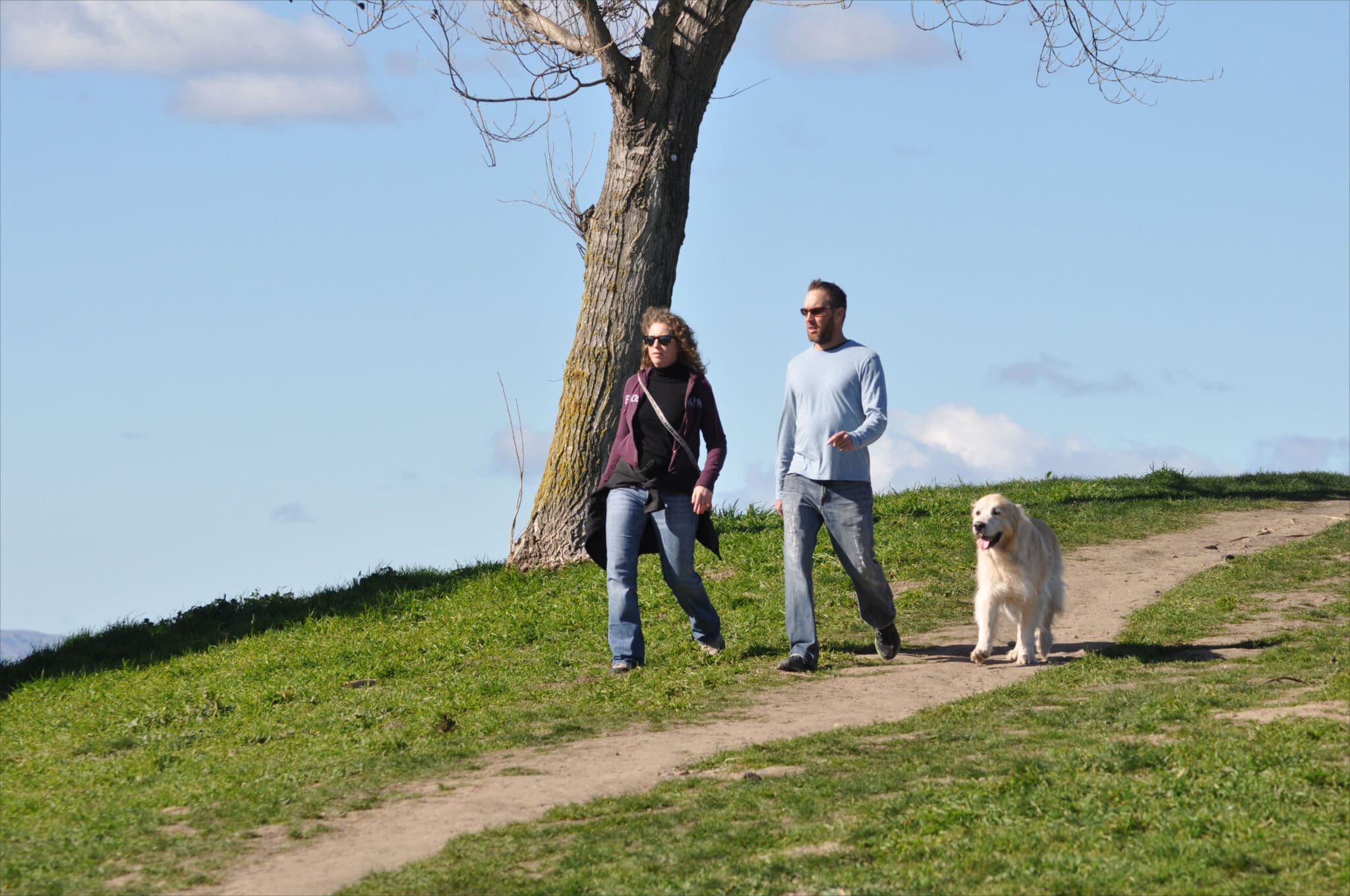
dog exercising

Learn to Move Together

A great skill for a dog to attain for a workout walk is the ability to move in tandem with you. When we are out for a stroll with our dogs, a lot of us are pretty happy with them walking in front, behind, or even off to the side as long as the leash is loose and they are not pulling us off our feet. However, when you are walking, jogging, or running with your dog for a workout, having him walk close to you in the “shoulder at knee” heel position can be a great advantage. Your dog can see where you are going and can move, turn, or change speeds more easily. The heel position sets you up to move as one. It also helps reduce the possibility of tripping over each other.

If your dog doesn’t know this behavior, you will need to teach it to him before you head out on your exercise walks. Start in a quiet environment where your dog will not be tempted by great smells or other distractions. Teach your dog where you would like him to be by stepping out ahead of your dog and encouraging him to follow. As your dog catches up, click and treat when his shoulder is in line with your leg. Then, while he is focused on the treat, quickly step off again and repeat. Once your dog gets the idea, add in a few steps before you click and treat.

Expect that your dog will have a harder time once you start to walk together away from your low distraction environment. Great smells on a walk, for example, may be some of the toughest distractions your dog will have to deal with. Try keeping the leash a little shorter than you might normally to prevent your dog digging into a great smell or moving out ahead. But if your dog does move ahead of you, simply back up or turn the other direction (with a very gentle pressure on the leash) until your dog returns to your side, then click and treat and move forward again. If your dog lags behind, make a fun or exciting noise to get his attention, then click and treat when he catches up.

Once your dog has the idea, try using the great smells on a walk as the reward. Ask your dog to “Let’s walk,” and move together quickly (travel just a few feet for a novice dogs and as much as a few blocks for experienced dogs). Then give the cue to “Go sniff!” as a reward.

Tip:If your dog doesn’t have a lot of experience moving quickly or running with you, he or she may, at first, get overexcited and jump up or playfully grab at you when you move quickly – especially young dogs and herding dogs! To eliminate this problem from the start, at first take just one or two quick steps, click (or use another “reward marker” such as the word “Yes!”) while your dog’s feet are on the ground, and follow by giving him a treat low – at his chest height. Gradually add in more steps and faster speeds as your dog gets the concept of moving with you without jumping up.

Stay for the Stretch!

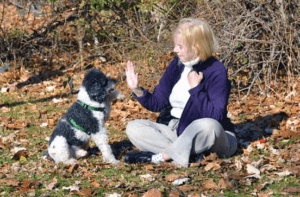
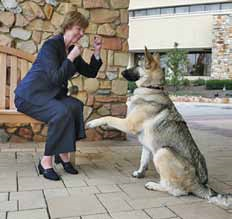
Another important skill for your dog to have for workout walks is the ability to wait in one spot while you do an activity without him (for example, a down stay while you do a few quick calf-stretches or knee lifts). Pick a position your dog will find comfortable in most situations (it can be a stand, sit or down) and practice at home first while you do exercise-like behaviors.

For example, if the position you choose is a sit, have your dog sit while you raise your arms over your head, bend over and touch your toes, or jump up and down. Gradually build up your dog’s ability to wait quietly while you do several activities over the course of one to two minutes. Don’t expect, when you are on your workout walks, that your dog will hold a position in public for more than a minute or two. It is much harder out in the world than at home! Besides, you’ll both be happier if your dog is moving more than staying.

Put the Work Into the Workout

Walking is one of the best forms of exercise there is, but for workout walks to be a fitness building experience, you will need to do more than just a regular walk at your regular pace. As with any workout, aiming for a variety of aerobic activity, some strength building, and some flexibility exercises will give you a well-rounded fitness routine.

Keep in mind that most health experts recommend that we exercise at a moderate intensity. What does that mean? For the human half of the team, a good rule of thumb is that if you can talk while you walk, you are moving at about the right pace. However, each of us is an individual, so you may want to talk with your health care provider or fitness trainer to develop your personal goals.

There are several strategies for turning a basic dog walk into a fitness-building workout. A great idea is to vary your approach and try for one or more of the below suggestions on different days of the week.

Step up the pace. Perhaps this is obvious – but it is also one of the best strategies for building fitness. When you head out for a walk, warm up for the first 5 to 10 minutes, and then challenge yourself to move at a quicker pace than you normally would.

Go long. Increasing distance is another great strategy. Make some days your long walk days, and increase your normal distance or time.

Try intervals. Interval training is when you take small chunks of time – say 30 seconds to several minutes – and work out at a higher intensity, followed by a rest cycle. So, for example, on a walk, you could walk fast or even jog for one block getting your heart rate up, and the next two blocks walk at a normal speed to let your heart rate recover (go back to normal).

Climb to new heights. Walking hills (assuming your knees and back can handle it!) are a great way to add difficulty to your workout and also some strength training for your legs.

Throw in some strength training and stretching. While out on your walk, at a park or other quiet location, give your dog a sniff break or ask for a stay while you do some calisthenics, stretching or strength building exercises. Try squats, lunges, calf-raises. Add in some vertical push-ups off of a building or pole and some leg-lifts and tricep dips on a park bench for a full body workout.

These are tips that will get both you and your dog moving in a fitness direction, but it may not sound like much fun for your canine pal. In order to make it a positive experience for you both, add in some fun time.

Let’s Play!

Remember the workout walk is for your dog too! It is important to reward dogs – especially when they are just learning about workout walks – but too many treats when your dog is exercising may be counter productive (and might cause a tummy ache!). So consider using very small treats, and instead, adding in more play time. Playtime rewards during a workout walk might include brief games of tug or a short chase game.

In addition, adding play to a workout walk might just increase your fitness! Don’t take a break from exercising while your dog runs in the park, for example; join in the fun. Try the following games to keep you moving and your dog having fun:

Ball racing wind sprints. If your dog loves to chase a ball or toy, don’t just stand there while he runs. You can have your dog wait while you toss the ball, then race together to see who gets there first.

If your dog needs more exercise than you (mine does!), toss the ball in one direction and then instead of standing still waiting for your dog to come back to you, run the other way. When your dog catches up, repeat in the opposite direction. If you aren’t into running, try doing other exercises, such as squats or jumping jacks while your dog chases the ball.

Raise your heart rate Frisbee. Have you ever seen those Frisbee dog demonstrations? If you have, you’ve also seen just how quickly the handlers are moving! You, too, can turn a relaxed game of Frisbee into a heart rate booster.

Try using two flying discs. (The soft type stuff into a fanny pack easily and can be brought out at good times during your workout walk. For the safest and most-throwable discs, see WDJ’s review of flying toys for dogs in the August 2012 issue.) As soon as your dog catches the first, ask for a drop and toss the second. While your dog is racing after the second Frisbee, you race to collect the first. Continue on in this manner until you both collapse into a happy puddle! I guarantee that this game is fun as well as heart-pumping!

Tug for your upper body. If your dog enjoys tug games, consider incorporating them into your workout too. Even a small dog can add some gentle resistance and help with upper body strengthening. You can also try tug-stay-run games to add more movement for you both.

When You Want More Than a Walk…

For many of us, a walking workout offers a simple and easy way to add fitness building into our time with our dogs. But options for getting active with your dog abound. If you and your dog enjoy the outdoors, hiking, skijoring and canoeing are all fun and dog-friendly choices. Into training and dog sports? Agility can be a great workout for both dog and handler. Sprinting around a course will get your heart rate up, and the competitive aspect can be a great fitness motivator.

For a lower-impact sport, musical freestyle can get your body moving. How about canine boot camp classes? In these classes, you and your dog engage in a full hour of fitness together. Or how about Doga, the yoga classes where downward dog takes on a whole new meaning?

However, if (like me), you struggle to get enough exercise, yet you want to add fitness into something you already do every day, the workout walk can’t be beat. It is a fun and interesting way to exercise, and most dogs won’t let you forget when it is time to go out and get active!

Mardi Richmond, MA, CPDT-KA, is a trainer and a professional writer who specializes in health and dog-related topics. She enjoys getting active with her dog Chance, who won’t ever let her hang out on the couch for long.

Beware of Dangerous Dog Laws

Anyone who has ever been bitten (or owned a dog who has been bitten) by a dog, or owned a dog who bit someone (human or canine) – or even just had a good look into a dog’s mouth! – understands that dogs have the potential to harm others. The vast majority of dogs are not dangerous. But, because of the minority who are, there are hundreds of laws, varying state by state and community by community, that attempt to define what dangerous dogs are, and address the consequences of a “dangerous dog” designation to the dogs’ owners and the dogs themselves.

288

Some of these laws are well-written and appropriately enforced, helping protect the community at large from truly dangerous dogs – laws that impose reasonable restrictions on the care and keeping of those dogs – while giving good dogs (and their owners) caught in bad circumstances a chance to redeem themselves. (See the California statutes, as a good example, in the “A look at one state’s dangerous dog laws” section under the “table of contents.”)

In contrast, poorly crafted laws put good dogs at risk and/or fail to protect anyone from dogs who pose a serious threat to other humans or dogs who cross their paths. Poorly crafted and overzealously enforced laws may unfairly, sometimes arbitrarily, set up dogs to fail and burden their owners with sanctions so onerous that they have no choice but to give up, even euthanize, their dogs.

Do you know what kind of laws govern the area where you and your dogs live? You should. Because whether you and your dog got attacked by a stray dog on the street who had a past history of the same behavior, or your dog accidentally nipped a neighbor’s child who was holding your dog’s tennis ball in the air above your dog’s head, the “dangerous dog” laws in your area might have consequences that range from inconvenient to deadly (such as forced euthanasia for the offending dog).

Experts discuss dangerous dog laws
I interviewed two animal professionals who are familiar with different aspects of dangerous dog laws.

The first is an attorney licensed to practice in Virginia, Maryland, the District of Columbia, and Washington State. Heidi Meinzer has been practicing law since 2000, and began practicing animal law in 2010. Heidi represents companion animal owners, trainers, veterinarians, pet care industry companies, and rescues. In March of 2013 she opened her own law firm in Alexandria, Virginia in order to focus her practice on animal law issues. Heidi says, “I have the greatest second job anyone could ask for, as an assistant dog trainer with Fur-Get Me Not, an award winning dog training facility in Arlington, Virginia.” (See http://meinzerlaw.com and http://petlawblog.com for information about Heidi’s practice.)

Paul Miller is a lifetime animal welfare professional, with more than 30 years of experience working at and with humane societies and animal care and control agencies. (Full disclosure, he is also my husband!) Miller began his animal protection career at the Humane Society of Carroll County (Maryland), did undercover investigative work for the Humane Society of the United States (dogfighting, cockfighting, and livestock transport), and has worked at shelters in Arizona, California, Tennessee, and most recently, back in Maryland. His experience with dangerous dog laws is primarily on the enforcement end, which gives him a different perspective from Meinzer’s.

Q. Heidi, what led you to include a focus on animal law in your law practice?

Meinzer: Five years ago, I adopted a beautiful German Shepherd-mix puppy, Sophie. She struggled during fear periods through puppyhood, and around the time she turned two, our older and steadfast Golden Retriever passed away, leaving Sophie to fend for herself. Sophie began showing reactivity to dogs and strangers, leading me to work with several renowned trainers in the Washington, DC, Metro area. Sophie opened my eyes to the world of dog training and behavior, and introduced me to many wonderful professionals.

At about the same time, local rescues involved in a heartbreaking hoarding case in rural Virginia asked me to help them with their efforts to prosecute the hoarder for animal neglect. All of these circumstances made me realize that I could merge my love of dogs and other animals with my legal profession.

Q. Paul, how did you come to be knowledgeable about dangerous dog laws?

Miller: Thirty years experience in enforcement of animal control laws around the country. Most recently, in my positions as director of Chattanooga’s (Tennessee) municipal animal control program and then as executive director of Washington County’s (Maryland) humane society (with an animal contract), I played a significant role in getting modern dangerous dog laws passed in those two communities.

Q. In general, what do you think of the concept of dangerous dog laws?

Meinzer: When I first became aware of Virginia’s dangerous dog law, my gut reaction was that the law was overly harsh. In addition, some provisions of dangerous dog laws can be very onerous and lead to such a financial burden that some owners agree to the dangerous designation when they may in fact have a winnable case, or may even choose to surrender or euthanize their companions. However, I now believe that well-crafted dangerous dog laws with strong procedural protections can serve to balance the rights of dog bite victims and dog owners.

Miller: Unfortunately these laws are a necessity, due to the many dog owners who fail to socialize, train, and/or properly manage their dogs. Without this valuable tool, which gives us the ability to hold the owner responsible for the actions of the dog, it is likely we would have even more severe attacks on humans and other animals.

Q. Heidi, based on your experience with the laws in your area, what do you think of the enforcement/implementation of dangerous dog laws from a defense attorney perspective?

Meinzer: This really varies by state, and then by each locality within each state. Virginia has a statewide dangerous dog statute that cannot be changed on the local level, so the law itself is uniform across all jurisdictions. That said, enforcement and implementation can and does still vary, within the local jurisdictions in Virginia. By contrast, Maryland localities have considerable discretion with their dangerous dog laws. So the local laws themselves, as well as enforcement and implementation, vary tremendously locality by locality.

In some ways, Virginia’s system is preferable, so that at the very least each locality is governed by a uniform law. However, you lose the benefit of flexibility that you have when a state allows localities to pass their own ordinances. For instance, Washington County, Maryland, passed an ordinance that allows for a “potentially dangerous” designation in which dog owners could “work off” the designation by focusing on training and behavior issues with their dogs. This is something that is missing from Virginia’s statute – but that some creative Virginia prosecutors still accomplish through prosecutorial discretion.

Q. Paul, what, if any, are the negatives about these laws, from an enforcement perspective?

Miller: There are several things:
A lot can depend on the training, experience, and knowledge of the investigating officer in regards to canine and human behavior, so application and enforcement can be uneven, even within the same jurisdiction.

Some of the laws aren’t as well-written as others. Definition of terms such as “provocation” may be poorly worded or absent altogether, which can leave it up to the individual officer’s discretion to define and interpret the law.

Dangerous dog laws tend to be reactive rather than proactive – responding to a problem rather than teaching the owner a better way to handle and train his dog. The owner often gives up the dangerous dog only to acquire another dog, and repeat the mistakes that caused the first one to be designated as dangerous.

It makes the dog the victim, when in reality most were just dogs being dogs. Once a dog is designated as dangerous, most laws do not contain a provision to allow for rehabilitative effort and eventual removal of the designation.

A dangerous dog designation can impact on an owner’s ability to get homeowner’s or renter’s insurance, forcing them to rehome or euthanize the dog.

Q. Heidi, what are the most important things for a dog owner to know about dangerous dog laws?

Meinzer: The consequences of dangerous dog laws are often substantial. During the pendency of the case, your dog may be seized and detained at the local pound. If your dog is deemed dangerous, you may have to keep him muzzled in public, hang signs on your property, register with a statewide dangerous dog statute, make potentially expensive changes to your home environment, carry considerable liability insurance that can be quite costly, and comply with a variety of other requirements.

You may be liable for more than just the consequences of dangerous dog laws. Civil liability to the victim is a totally separate matter. Additionally, other laws – such as leash laws or running at large laws – often come into play.

Circumstances leading up to dangerous dog designations often could have been avoided. Not all dog bites are avoidable. But I have seen several cases that would not have occurred if only, for instance, the owner had kept the dog on a leash in a public area.

Q. Heidi, what are the most important things for a dog owner to know about dangerous dog laws?

Meinzer: The consequences of dangerous dog laws are often substantial. During the pendency of the case, your dog may be seized and detained at the local pound. If your dog is deemed dangerous, you may have to keep him muzzled in public, hang signs on your property, register with a statewide dangerous dog statute, make potentially expensive changes to your home environment, carry considerable liability insurance that can be quite costly, and comply with a variety of other requirements.

You may be liable for more than just the consequences of dangerous dog laws. Civil liability to the victim is a totally separate matter. Additionally, other laws – such as leash laws or running at large laws – often come into play.

Circumstances leading up to dangerous dog designations often could have been avoided. Not all dog bites are avoidable. But I have seen several cases that would not have occurred if only, for instance, the owner had kept the dog on a leash in a public area.

Q. What should an owner do to avoid coming into conflict with local dangerous dog laws?

Meinzer: Be a responsible dog owner, plain and simple. The most common factors in dog bite cases include: (1) dogs who are not neutered; (2) dogs who are chained or tethered; (3) selective breeding; (4) dogs suffering from abuse or neglect; and (5) inadequate socialization, training, and supervision. Consider what these factors mean to you as a dog owner.

Get to know as much about your dog as possible before you adopt – and research all that you can about the breeder, rescue, or shelter where you plan to get your dog. Neuter your dog. Keep your dog on leash any time your dog is not in a fully enclosed area, and do not leave her chained or tethered. Properly socialize and train your dog right away. Proactively get a professional opinion from a good trainer and/or behaviorist about any red flags about your dog’s behavior, and address those issues immediately.

Do everything you can to enrich your dog’s world and foster a positive relationship and bond with her. And always take care when interacting with dogs and people wherever you are, including in your own home. If your dog shows any hesitation when meeting another dog or a person, do not force her to interact. Be your dog’s advocate and kindly tell the person that your dog needs space. As another example, set up supervised play dates with people who you know well and who have dogs who are appropriate playmates for your dog instead of going to places like dog parks where the situation is much less under your control.

Miller: I’d suggest making sure your dogs are well socialized; lack of socialization/fearfulness is one of the most common causes of dog bites. Your dogs should also be trained to respond with appropriate and acceptable behavior at home and in public, and well-managed – kept safely confined at home and on-leash in public (unless in designated off-leash areas). Dogs whose owners respect and obey local animal control ordinances are much less likely to get into trouble.

Q. What do you suggest an owner do if her dog is designated as “dangerous” by a local animal law enforcement agency?

Meinzer: Get professional help right away. Contact an attorney who understands not only the law, but also dog behavior. And contact an experienced trainer who can assess your dog’s behavior and point you in the right direction. Evaluate what actions you can take to ensure the safety of your dog and the public, such as desensitizing your dog to a muzzle and walking your dog with proper equipment such as a double leash system with a martingale collar and a front clip harness. Also consider changes to your home environment – such as adding a second storm door or putting up a visible fence – to ensure that your dog will be safely confined on your property.

All of these changes may help convince local animal control officers to allow you to keep your dog at home pending the outcome of dangerous dog proceedings. If your dog is designated as dangerous at the end of the proceedings, make sure that you understand exactly what is expected of you and comply with those requirements. Depending on the applicable laws, failure to comply often can lead to criminal charges against you and the possible euthanasia of your dog.

Miller: I agree. Seek legal counsel, and have your dog evaluated by a qualified/competent animal behavior professional.

Q. Does society have a realistic or appropriate perspective on dogs who bite?

Meinzer: It seems the pendulum swings drastically in opposite directions regarding dog bites. Some people do not take dog bites and incidents seriously enough. Other times, dog bites are overly dramatized. There’s no doubt that the number of dog bite insurance claims is rising, leading many states to consider dog bite liability and insurance laws in a whole new light. Trainers can take action by educating legislators about dog bites so that new laws will actually serve to reduce the number and severity of dog bites.

Miller: I don’t think so. In general the public has limited knowledge of how to develop good behavior in a dog, and/or how to appropriately change or manage unacceptable or undesirable behaviors. They often don’t even recognize or are in denial about the precursor behaviors that are leading up to the incident that’s going to get their dog (and them) in trouble. In most of the media reports on dog-related fatalities, for example, the dog owner claims the dog had never shown any previous danger signs for aggression. In reality, there were likely lots of signals that just were ignored or not recognized by the owner as warning signs. On the other hand, some people seriously overreact to normal dog behavior – owners get sued for a minor nip that, 30 years ago, no one would have thought twice about.

Q. Anything else you would like to say about dangerous dog laws?

Meinzer: As society evolves, we put more and more pressure and expectations on our dogs. We need to realize that this only increases our responsibilities. Build that bond with your dog, and be your dog’s advocate any time your dog seems to be uncomfortable. Accept your dog for who she is, and don’t set goals and expectations based on what you want. Rather, set goals and expectations based on your dog’s needs and desires.

Miller: Dangerous dog laws and other appropriate animal control ordinances should incorporate, whenever possible, an educational component that will help resolve the problem. I have always advocated for a two-tier dangerous dog law. Level One, sometimes called “Potentially Dangerous,” would address the onset of inappropriate behavior prior to a bite or attack, often during a dog’s adolescence, and require the owner to attend training classes or private behavior consults. If, after successful completion of the training requirement and passage of a certain period of time (perhaps 18 months), during which there are no more reported offenses, the designation of Potentially Dangerous could be lifted. Level Two, called “Dangerous” or “Vicious” would address dog behavior that results in serious injury or death to victims.

Some jurisdictions have a “dog school” for animal control violations – like traffic school for traffic violation – that educate owners and allow violations to be removed from their dogs’ records. These are wonderful programs. Whenever possible, the goal should be education, rehabilitation, and helping owners succeed with their dogs, not the imposition of burdensome penalties just for the sake of enforcement.

Pat Miller, CBCC-KA, CPDT-KA, CDBC, is WDJ’s Training Editor. She lives in Fairplay, Maryland, site of her Peaceable Paws training center, where she offers dog training classes and courses for trainers. See page 24 for more information.

The Pavlov Dog Monitor Application

0

I was dismayed to open the link to what sounded like an interesting new dog training product – the Pavlov Dog Monitor from the Apple App Store. The application is intended for pets at home barking and suffering with separation anxiety problems as a result of their owners being gone for long workdays.

http://www.prweb.com/releases/2013/3/prweb10511153.htm

My BS radar went on high alert when I saw this comment early in the text:

“Even shock collars have not produced the positive results we are looking for,” stated Phillip Angert, Owner/Inventor at Cheviot Hills, LLC.

Gee, what a surprise that shock collars haven’t produced positive results. Not! Because hey, getting shocked is the last thing a stressed dog needs to reduce his anxiety about being left alone.

The radar went to Code Red as I continued to read. The next-best last thing the stressed dog needs may be the very thing this product promises – a recording of his owner’s voice saying “Bad Dog!” when he barks. (It also says, “Good Dog!” when he’s quiet.)

Verbally reprimanding an anxious dog, if it has any effect at all, is likely to add stress, creating more anxiety, not less. And by the way, if saying “Bad Dog!” was all that was needed to stop a dog’s barking there would be a heckuva lot fewer barking dogs in this world…

The article also says, “As the pet begins to understand the philosophy behind the application, additional greetings are introduced to the program.” Wow. The world has just begun to accept that dogs have much greater cognitive abilities than we’ve given them credit for in the past. Now they understand philosophy? Holy cow, Batman!

They apparently beta tested the product on an “n” of 1 – a Border Terrier puppy who reportedly went from “a barking city dog with neighbors complaining all the time, to a calm puppy with a cured separation anxiety problem.” Pardon my (radar alert) skepticism.

Another bit of behavior reality: “Bad Dog!” has meaning because the owner is there, glaring at the dog, threatening (or delivering) some other negative consequence in association with the phrase. “Good Dog!” is reassuring and rewarding to dogs because it’s generally associated with some positive consequence – an owner’s smiling face, a scratch behind the ear, or even a cookie. When there is repeatedly no consequence for a conditioned punisher – or a conditioned reinforcer – both phrases will quickly become irrelevant to most dogs, and lose any effectiveness they might initially have because of their past association with good stuff or bad stuff. 

Some people, especially those engaged in the eternal quest for the quick fix, are going to buy this product. I predict great disappointment. Sorry, Apple, this one’s rotten to the core.

Pat Miller, CBCC-KA, CPDT-KA, CDBC, is WDJ’s Training Editor. She lives in Fairplay, Maryland, site of her Peaceable Paws training center, where she offers dog training classes and courses for trainers. Pat is also author of many books on positive training. See www.peaceablepaws.com. For more information.

Download the Full March 2013 Issue PDF

...
To continue reading this article or issue you must be a paid member.

Join Whole Dog Journal

Get full access to Whole-Dog-Journal.com – more than 4,000 articles – for just $20.
Join today and save 30% off our full price.
Already a member?
| Forgot your password? | Activate Web Access

Vaccine Titer Tests: What They Can and Can’t Do

0

One of the tests I asked for at Otto’s annual wellness exam last week was a vaccine titer test. These blood tests are able to detect antibodies that the dog has produced in response to a vaccination. Such positive results can confirm that the dog responded in the desired manner to the vaccination and is now protected against the diseases he was vaccinated for.

However, many of us owners who ask (and pay) for titer tests year after year are not doing this to assure themselves that their dogs are protected against disease. In my case (and that of many of my friends), we are paying $50 to $100 a year for the test to prove to our veterinarians that our dogs are adequately protected against disease – to ward off the overzealous promotion of what we know to be unneeded (and thus excessive) vaccinations. Because once we have the first positive titer test results, it’s almost certain that he is protected for life from the diseases he was vaccinated for. The only exceptions to this are rare.

I adopted Otto from a shelter in June 2008. He was picked up as a stray two months prior, and was estimated to be about 7-8 months old. During his two-month stay in the shelter, he had received four combination vaccinations (for distemper, adenovirus Type-2, coronavirus, parainfluenza, and parvovirus); another vaccination for adenovirus type 2 (combined with parainfluenza and bordetella); and a rabies vaccine. The only vaccines he’s received since then are rabies vaccines: a 3-year vaccine given in April 2009, and another one given in late March 2012.

I brought Otto to a local veterinarian in spring of 2010 for a heartworm test and wellness exam. The vet was adamant that Otto also needed “booster” vaccines. The vet had been recommended to me as the best one in my town, so this was a bit discouraging. (So-called “boosters” do not, in fact, “boost” immunity. If the dog has wither circulating antibodies against disease OR immune “memory cells” — cell-mediated immunity that has developed following a vaccine against or infection from the disease — he’s got as much immunity as he CAN have against those diseases.) I asked the veterinarian if he would be content with the results of a vaccine titer test; if the test showed that Otto still had circulating antibodies to the vaccines he had received at the shelter, would he be satisfied that Otto did not need further vaccines? He said he would. So I paid for a titer test, which came back, as I expected, with a nice healthy positive result.

In spring 2011, however, I received a postcard from that veterinarian’s office suggesting that Otto was not just “due” but “OVERDUE” for a laundry list of vaccines. So this was going to be an annual argument, it looked like. I strongly believe in annual wellness examinations and blood tests, but I don’t think my healthy dog need to be vaccinated with anything but the state-required rabies vaccine again. I decided to seek out a new veterinarian – someone younger and, I hoped, more comfortable with the idea that Otto’s previous vaccinations and apparent good health meant he wouldn’t need further vaccinations for years, if ever!

I found a highly recommended veterinarian the next town over, a college town with a lot of progressive, younger doctors. He agreed that Otto was probably protected by his previous vaccines – but wanted to repeat the titer test to “prove” this. I figured if it helped him feel more comfortable NOT recommending further vaccines, it would be a small price to pay to have access to this larger, better equipped, more modern clinic. We ran another titer test; nice and positive. Otto and later Tito saw the same vet later in the year for unrelated issues, and I was mostly pleased with those experiences.

In spring 2012, when I made an appointment at this clinic for Otto’s annual wellness visit and a heartworm test, despite requesting the vet who saw Otto the previous year, I was given an appointment with one of the (older) practice owners. And she wanted to talk to me about vaccines. She felt strongly that a positive result to a titer test was not enough to prove that Otto was protected against disease. She told me that dogs whose titer tests reveal circulating antibodies may lack cell-mediated immunity (adequate T-cells) and be unable to defend themselves against illness. I have heard that, I responded, “but isn’t that rare?” She agreed that it was. “And can’t dogs with past positive titer tests be protected by cell-mediated immunity even if their later titer tests don’t show any circulating antibodies?” I asked. She agreed that this can be true – that previously vaccinated dogs may lack circulating antibodies, but retain immune memory cells that will “remember” experiencing a disease antigen, and mount a vigorous immune response if challenged with disease. But she wanted to stress that there are rare cases where dogs with nice high levels of circulating antibodies but a dysfunctional cell-mediated immune response failed to respond properly to a disease challenge. So her takeaway point was this: You should vaccinate your dog again, regardless of titer test results.

Back to the drawing board — looking for a new vet.

I recently found a young doctor at a clinic in my town. Before I made an appointment for Otto’s annual wellness exam and heartworm test, I asked the practice receptionist if I could have some time to talk to the vet and find out whether he was comfortable with the idea that Otto was not in need of any vaccinations. Later, talking to the vet on the phone, he said he would be willing to accept this – but would feel most comfortable with a current titer test showing a positive antibody result. Well, beggars can’t be choosers. I agreed, and the test came back positive. So far, so good.

It might seem crazy, paying as much as $100 for an unnecessary test annually in an attempt to prove that my dog doesn’t need a $20 vaccination. But I need a local vet who will work with me, happily, without feeling that “overdue vaccines” are putting my dog at risk. I spent 14 years with another dog whose severe allergies may well have been caused and worsened by the completely unnecessary annual vaccines I didn’t know enough to refuse in his first five or six years. I’m not going to risk putting another dog through years of suffering like that to save a few bucks. If the titer test is the price of a good local vet’s cooperation, I’m willing to pay it.

For a very thorough article on canine vaccinations and titer tests, see “Beware of Over-Vaccinating Your Dog“.

Pet health insurance

0

I took Otto and Tito to the veterinarian yesterday for wellness exams (and heartworm tests and blood tests) and spent $500. I had priced things beforehand, and knew what I was in for, but it’s still quite a bite.

I strongly believe in the value of annual wellness checks. It’s a perfect opportunity for the vet to find things that we owners wouldn’t necessarily notice, such as the beginning of a mass growing on the roof of our dog’s mouth, say, or a swollen abdomen. Routine blood chemistry, blood cell counts, and heartworm tests (where heartworm is a threat) are also valuable early-detection tools for any number of budding health problems; even if they don’t reveal problems, the “normal” values result may serve as a useful baseline down the road if problems do develop. It’s also a good time to ask the vet about low-priority things that you have been wondering about. Be sure to let the receptionist know when you book the appointment that you need a little extra time to have a number of questions answered or things looked at, so the vet has time to talk – and then prepare to pay for that time.

Health insurance plans vary, but many pay for – or at least discount the price of – regular wellness visits. I’ve priced these plans, but have blanched at the monthly cost of covering two dogs and two cats. By the time I pay, completely out of pocket, for the wellness visits and the various things that come up in a multi-pet family, that I would pay less annually for insurance and co-pays, but I just haven’t been able to make myself sign up yet. I’ll kick myself, I know, if Otto needs costly care – if he tore an ACL or got cancer, for example — but right now I just keep crossing my fingers and paying for things out of pocket. 

How about you? Are your dogs insured? Have you found insurance to help keep costs down? If you haven’t gotten health insurance for your dogs yet, why not?

Resource Guarding

1

Ever had a dog who won’t give you his bone or chew toy if you try to take it from him? Or one who gets uncomfortable or growls if you get close to him when he’s eating his dog food? Or snaps at you if he’s on the sofa and you want him off? Or lifts his lip in a snarl if your friend tries to get close to you?

Answer yes to any of the above, and you’ve successfully diagnosed your dog as having a guarding issue. The catch-all, technical term is “resource-guarding,” and can include guarding of dog food bowls (or food), place (dog crate, dog bed, sofa, etc.) items (rawhide, bones, balls, tissues, etc.) and less commonly, people.

Resource-guarding simply means that a dog gets uncomfortable when we (or other humans) are around him when he had “his stuff.” He’s nervous that we’re going to take it away, so he tries to warn us off in a variety of ways, ranging from simply consuming his food faster, to an all-out bite.

For more advice on how to recognize the signs of resource-guarding and ways to reduce, eliminate and prevent it, purchase and download the ebook from Whole Dog Journal, Resource Guarding.

No more noise, no more fun

0

One of my favorite things about my dog, Otto, is that he loves and apparently cherishes his squeaky toys. Unlike dogs I’ve known who feel that the only good squeaker is a dead squeaker, Otto has had squeaky toys that have lasted for years with nary a squeak-ending puncture. Sadly, this trend seems to have ended.

It started with a soft rubber pig that made a realistic, low grunty sound – not incidentally the noise-making toy that created more excitement from Otto than any toy ever had. Otto would do anything for that toy, including a long, arduous chain of behaviors, in order to earn a minute of blissed-out noise-making with that toy. But a moment’s inattention led to the toy getting stolen away by Diamond, my former foster dog, who very quickly chewed the pig’s nose off – and with it, the ability of the toy to make noise. When Otto discovered the theft, and attempted to make the pig grunt, he seemed genuinely puzzled by the “whoosh, whoosh” noise it made instead. He would make the noise, put the toy down, look at the toy carefully, nose it around on the ground, pick it up again, whoosh whoosh, again and again. He was disappointed — nowhere near as excited or as motivated by the toy as he had been before. As soon as the novel “Grunt, grunt” noise was done, so was he.

The toy was such a motivator for him, I took a long drive out of my way to return to the only store where I had ever seen the toy sold, and bought him another one. By this time, Diamond was placed in his new home, and Tito the Chihuahua isn’t a chewer, so I felt safe in handing over the new pig to Otto to enjoy. But within about two minutes, to my surprise, I heard a familiar sound: “Whoosh, whoosh.” What? I investigated and lo and behold, the pig’s nose had been chewed off, as neatly as if Diamond had done it.

A few months went by before I was anywhere near that one pet supply store again. I looked at the pig toy, and the price. Did I dare buy another one? It’s a fragile toy. But he used to treat it so gently; the first one lasted for at least six months before its rhinoplasty. I spent the money.

Sadly, the new toy quickly went the way of the previous two. It’s almost as if he can’t help himself. He loves the grunting noise, but he has to bite the nose off the toy. I won’t buy another, and it makes me almost as sad as it’s made him.

Wolves, Dogs, Differ in Ability to Digest Starches

Domestication appears to have led to genetic changes in dogs that make them able to digest starches better than wolves can, according to a paper published in Nature in January.

Kerstin Lindblad-Toh, a geneticist at Uppsala University in Sweden, led the team that looked for genetic differences between the genomes of 12 wolves from around the world and 60 dogs from 14 different breeds. They found 36 areas in the genome where dogs differed from wolves, but not from dogs of other breeds, indicating changes likely linked to domestication. Nineteen of the regions found involve the brain, and 8 of those are involved with nervous system development that could help to explain behavioral changes that make dogs friendlier, less fearful, and less aggressive toward humans.

Another 10 genes were found to help dogs digest starches and break down fats. The researchers believe that 3 genes in particular make dogs better at splitting starches into sugars and then absorbing them in the gut. Interestingly, most humans have also evolved the ability to more easily digest starches in what appears to be a case of parallel evolution. The researchers suggest that the adaptations in both species are likely linked to the development of agriculture about 10,000 years ago.

These new findings help to support the theory that dogs may have become domesticated by hanging around human settlements and scavenging their scraps and waste. The study does not rule out the possibility of earlier domestication, however, which is supported by fossil records that may go back 33,000 years, or of later interbreeding with wolves. Another scientist plans to analyze fossil DNA to try to discover when these changes first appeared. Changes in digestion may have developed after behavioral changes that could have occurred much earlier, when our human ancestors were still hunter-gatherers.

What does it mean?
In 1997, I attended a seminar at Wolf Park in Indiana, where I learned that wolves cannot digest starches very well and require a high-meat diet in order to thrive. The wolves at Wolf Park are fed primarily deer carcasses, but when those are in short supply, the wolves are given Nebraska Brand carnivore diets that are mostly meat with very little carbohydrate content, rather than dog food.

In contrast, most dogs digest starches well, as evidenced by their ability to utilize the calories and nutrients provided by dog food that is high in carbohydrates. Already, some people are claiming this study supports feeding high-carbohydrate diets to dogs, but I disagree. The study says, “Our results indicate that novel adaptations allowing the early ancestors of modern dogs to thrive on a diet rich in starch, relative to the carnivorous diet of wolves [emphasis is mine], constituted a crucial step in the early domestication of dogs.”

Since wolves consume almost no starch, a diet that is relatively rich in starch does not mean that grains and other starchy foods would (or should) make up the majority of the diet. It also does not mean that dogs require starches in their diet, and it does nothing to support feeding a highly processed diet rather than fresh foods. The parallel evolution involving starch digestion in humans and dogs could also help to explain similarities in certain diseases, including diabetes and inflammatory bowel disease, indicating that there could be drawbacks as well as advantages to eating diets that are high in starch.

The flip side is that I do think this study supports the idea that it’s acceptable to include some starch in your dog’s diet, as long as it doesn’t cause problems for an individual dog. For example, I feed my own dog a homemade diet that is high in protein, but I also include carbohydrates in the form of vegetables, fruits, and even grains (she gets a meal of cereal, yogurt, and banana for breakfast every fourth day).

I don’t believe it’s necessary or even advisable to avoid starches altogether unless you have an individual dog who reacts badly to them, and even then, she may do well with some starches, even if she has problems with others. Whole grains are high in some vitamins and minerals and provide fiber (prebiotics) that helps to support beneficial bacteria in the intestines (probiotics). Other starchy foods, such as potatoes, sweet potatoes, and bananas, also provide nutrients that may otherwise be lacking in a homemade diet.

The study also found a variation between dogs in the number of duplicate genes involved in the production of amylase, a pancreatic enzyme required for the first step of starch digestion. While wolves had 2 copies of this gene, called AMY2B (one of the three genes identified above), researchers found a range of 4 to 30 copies in the dogs they studied, indicating that some dogs (and possibly some dog breeds) are better at digesting starches than others.

As always, it’s important to do what works for your dog. If she has digestive issues when consuming a diet that is high in starch, or shows signs of inflammation, such as from allergies or arthritis, it’s worth trying a low-starch diet or even eliminating starchy foods completely to see if improvement is noted. – Mary Straus

For More Information:
“The genomic signature of dog domestication reveals adaptation to a starch-rich diet,” Nature, published online 1/23/2013
http://nature.com/nature/journal/vaop/ncurrent/full/nature11837.html
http://nature.com/news/dog-s-dinner-was-key-to-domestication-1.12280
Wolf Park, Battle Ground, IN. (765) 567-2265; http://wolfpark.org

Antifreeze Becomes Safer (Finally)
Manufacturers agree to add bittering agent to deter pets from ingesting antifreeze.

On December 13, 2012, the Consumer Specialty Products Association (CSPA) and the Humane Society Legislative Fund jointly announced that all major marketers have agreed to voluntarily add a bitter flavoring agent to all antifreeze and engine coolant products manufactured for sale in the United States to deter animals and children from ingesting them. This is great news about a change that will save many lives.

Each year, up to 90,000 pets are poisoned by ingesting antifreeze that drips onto our garage floors and driveways, or is left in open containers. Antifreeze has a sweet taste that makes it attractive to pets, livestock, wildlife, and small children. As little as one teaspoon of antifreeze can kill the average cat. The minimum lethal dose in dogs is about 2 ml (less than half a teaspoon) per pound of body weight.

Most antifreeze products are 95 percent ethylene glycol, a potent alcohol that is readily absorbed once it is ingested. Its effects start with alcohol toxicity to the central nervous system, beginning as soon as 30 minutes after ingestion and lasting up to 12 hours. Signs may include ataxia (loss of balance), disorientation, and appearing “drunk.” You may also notice increased drinking and urination. The pet may seem to recover within a few hours, only to get worse again with possible coma or seizures. If the pet survives, the next stage involves cardiopulmonary effects due to severe acidosis and electrolyte disturbances. These generally occur 12 to 24 hours after ingestion and may include rapid breathing and heart rate, depression, seizures, and/or pulmonary edema. Within 24 to 72 hours, the pet goes into kidney failure due to damage caused by calcium oxalate crystals from the breakdown of ethylene glycol in the body. Early veterinary care is essential to survival; failure to properly treat within the first several hours may lead to irreversible damage or death.

Some newer antifreeze products use 50 percent or more propylene glycol in place of ethylene glycol, making them safer than older products, but propylene glycol can still cause alcohol poisoning. Doses of more than 10 ml/kg (about 1 teaspoon per pound of body weight) are considered potentially toxic to dogs.

Seventeen states have passed legislation requiring antifreeze manufacturers to add a bittering agent to their products that makes them unpalatable to animals and children. Federal legislation had been introduced but did not progress. Denatonium benzoate, the bittering agent used, is a common ingredient in many household products and has been used in anti-nail biting formulas for decades.

Although the change takes place immediately, older products already on shelves and in cars will still be around for awhile, so continue to exercise caution regarding the products you use in your own vehicles, and to minimize exposure your pets may have to these substances. – Mary Straus

Karen Pryor: Positive Training Icon

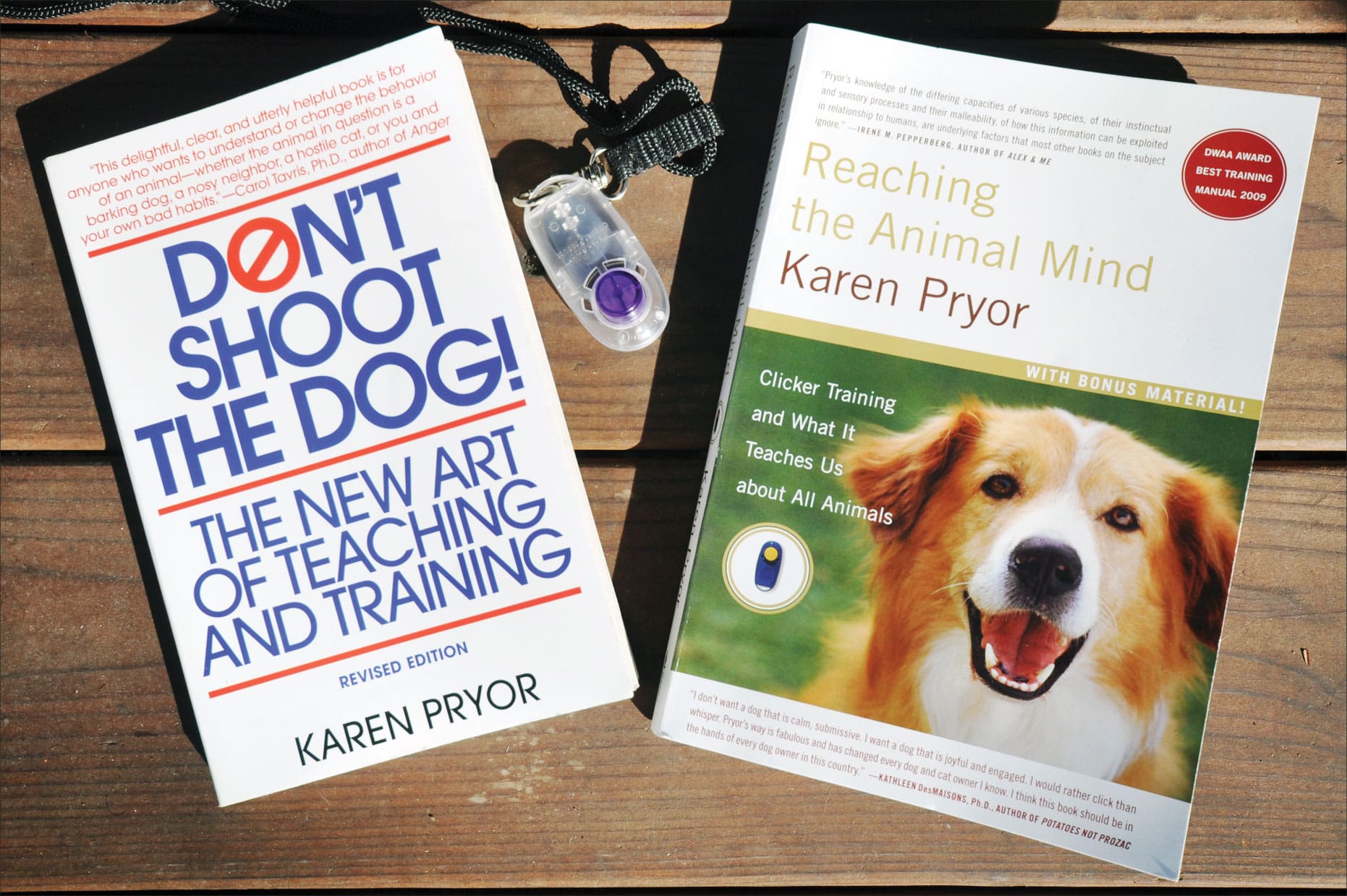
In 1985, upon publication of Don’t Shoot the Dog!: The New Art of Teaching and Training, written by the now-famous proponent of canine clicker training, Karen Pryor, some people were confused. Was it actually a dog training book? Because it talked an awful lot about changing the behavior of humans!

Karen Pryor’s books describe why and how positive reinforcement works so well to improve the behavior of any animal species. Her experiences with marine and land mammals, as well as fish, birds, and even crustaceans, are engaging and legion.

Today, Don’t Shoot the Dog! is considered a ground-breaking text. The book helped revolutionize dog training, influenced untold numbers of dog owners and trainers to change their training methods, and helped its author develop a stellar reputation in the dog world. Not bad for a book that wasn’t written solely about dog training!

“This book is about how to train anyone – human or animal, young or old, oneself or others – to do anything that can and should be done.” That is the first sentence of the book’s Foreword. Pryor wrote Don’t Shoot the Dog! in order to share what she had learned about using operant conditioning to effectively, gently, and respectfully alter the behavior of those we share our lives with, whether they are human or nonhuman animals. The book contains many tactics for  training dogs, but Pryor also explains how the techniques described in the book can be used to make bosses more courteous, children better-behaved, cats less destructive, horses more compliant, and mothers-in-law more pleasant – all through the use of well-timed positive reinforcement.

The first chapter alone succinctly and clearly explains what positive reinforcement is (and is not), and how it differs from negative reinforcement. Pryor describes how reinforcement (of both kinds) alters the behavior of people and other animals in a variety of common situations, and how every living animal can be influenced – in a force-free way – to voluntarily change its behavior. She explains both how to increase behaviors that you enjoy and appreciate, and how to eliminate behaviors that you don’t like – without shooting the dog, or other negative fallout.

Pryor didn’t originate the principles of operant conditioning and learning theory, but she has certainly thought deeply about them and put them to good and effective use, and she’s particularly gifted at explaining them in an engaging, relatable way. Her background and education have a lot do with that.

Personal History
Pryor was born in 1932. Her mother was an antiques dealer; her father was a prolific writer, authoring fiction (mostly science fiction), screenplays, syndicated newspaper columns, and more. In 1954, Karen graduated from Cornell University (where she majored in English but dabbled in biology, ornithology, botany, and entomology) and married Taylor “Tap” Pryor. Tap also graduated Cornell that year, and immediately joined the U.S. Marines; he served his final months in the military in Hawaii, and was discharged as a Captain in 1957.

The family stayed on Oahu, and Tap took graduate courses in marine biology at the University of Hawaii at Manoa. When she wasn’t taking care of their three young children, Karen also took graduate courses at the University. She followed in her father’s footsteps as an author, publishing her first book, Nursing Your Baby, in 1963. (Its fourth edition, still in print and highly praised, was revised and co-authored in 1985 with her daughter, Gale Pryor.)

1963 was also the year that Tap, by then a founding partner in Sea Life Park, an oceanarium and research facility on Oahu, asked for his wife’s help with a project at work that had gotten unexpectedly difficult: training dolphins for a dolphin show.

Years before, the scientific advisor at Sea Life Park had studied a bottlenose dolphin for early research on sonar, hiring a psychology graduate student to train the dolphin. The student, a fan of Harvard psychologist B.F. Skinner, trained the dolphin using Skinner’s theories of operant conditioning. Sea Life Park’s advisor asked the same student to write a manual on using operant conditioning to train dolphins for the Park, and the resulting manual was given to the Park’s new employees.

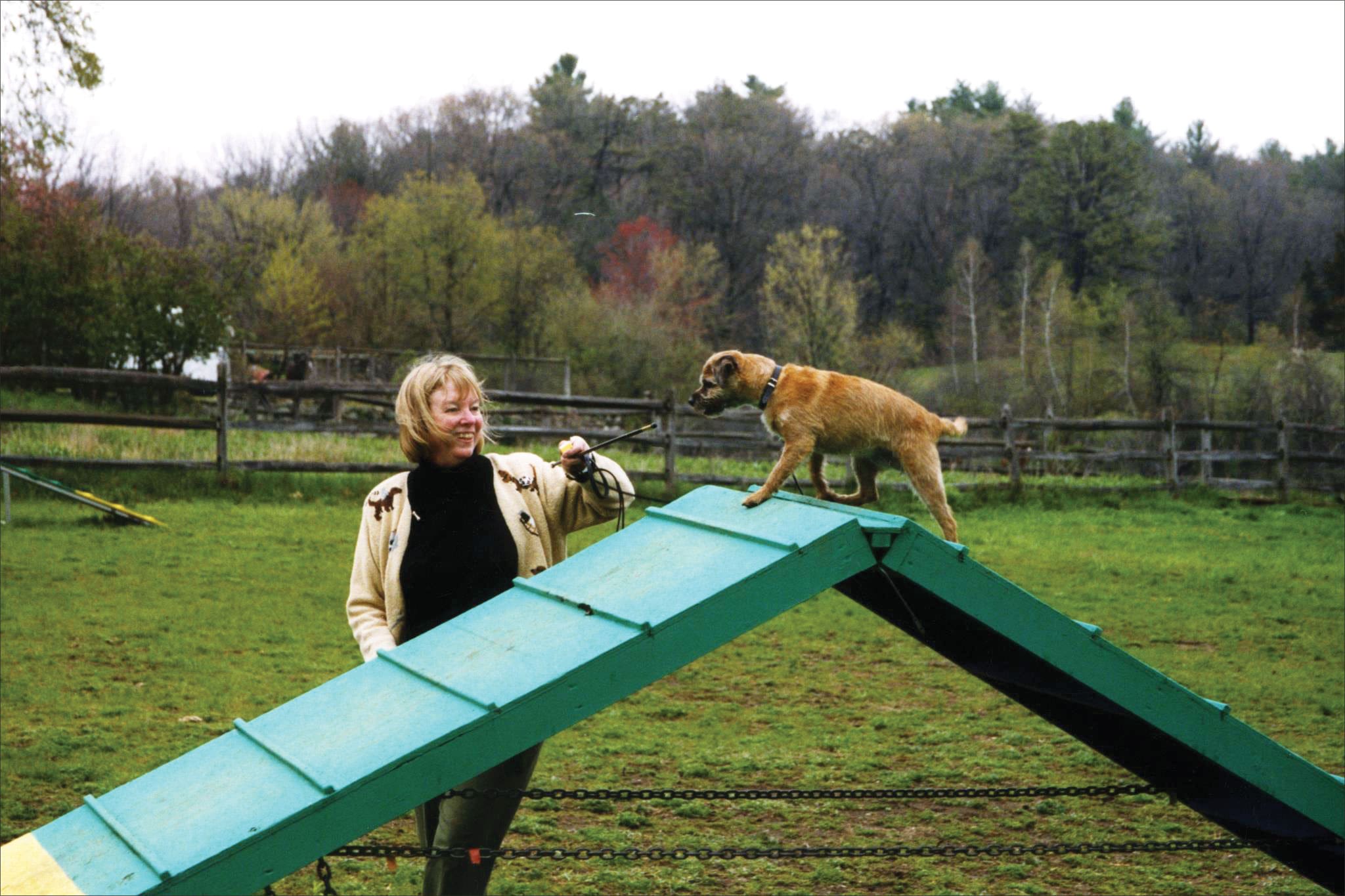
Karen Pryor works with her dog, Twitchett, using a target stick, clicker, and treats, of course! The happy, engaged expressions both trainer and trainee wear are both a goal and a side effect of training with positive reinforcement.

The problem was, the Park employees, hired to put the manual into effect with several species of wild dolphins caught in the waters just off Oahu, found the manual (as Karen describes in her 2009 book, Reaching the Animal Mind) “pretty impenetrable.” She writes, “Three months before the park was to open, there were 10 dolphins, two prospective show arenas, and no shows.” Karen, at least, had trained the family dog and a Welsh pony for her kids, then three, six, and seven. Plus, as the boss’s wife, she wouldn’t cost the as-yet-unopened business anything.

Pryor was quickly fascinated with the manual, operant conditioning, and the dolphins. She employed the techniques and her own good judgment to immediate positive effect with the dolphins, and (to make a fascinating story short) the dolphin shows opened on schedule.

Karen and her daughter Gale in a Sea life Park pool with Haole, a spinner dolphin.

Over the next nine years, Karen continued to work part-time with the trainers and marine mammals at Sea Life Park, as well as kids, ponies, and dogs at home. She also used random opportunities at the park to work any other animal she happened to come across in the research center – such as a tiny octopus and a damselfish – just to see if she could train these species with positive reinforcement, too (she could).

The Pryors divorced in 1972, and Karen left Sea Life Park. She wrote a book, Lads Before the Wind (the title was borrowed from Herman Melville, describing dolphins) recounting her incredible encounters and work with marine mammals (both at the park and those she had in the open ocean while working with marine biologists). The book also explained everything she had learned about training, and Pryor hoped that others would do as she had done: extrapolate how animal training methods could be used to positively influence the behavior of any animal, nonhuman or human – “No more choke chains or yelling at kids,” as she told an interviewer. The book was published in 1975, but was only modestly received, and generally regarded as an animal adventure story of some kind.

Pryor kept thinking about the potential for using operant conditioning in everyday life. She began to organize her thoughts into another book, which was published in 1985 as Don’t Shoot the Dog! It was a watershed event, because the book succinctly clarified the basic tenets of animal behavior and made the prospect of animal training seem not only possible, but also simple.

Versatile theories
After publication of Don’t Shoot the Dog!, Pryor began getting speaking requests from the three disparate groups who were most interested in training and animal behavior: dog trainers, marine mammal scientists, and corporate trainers. Pryor’s interest in behavior and connections with all three communities have provided her with a variety of jobs, public service, and continuing education ever since.

For example, Pryor has conducted research for the tuna industry, to learn how best to prevent incidental dolphin kills while tuna fishing. In the 1980s, she served on the Marine Mammal Commission. In 2004, she was elected to the Board of Directors of the B.F. Skinner Foundation, which publishes significant literary and scientific works in behavior analysis. She is a popular speaker (her speaking requests have increased since the publication of her latest book, Reaching the Animal Mind, in 2009); for instance, she gave the keynote address to the Southwestern Psychological Association in 2010, the same year she gave a seminar at Harvard’s Brain Research Institute.

But perhaps most significant to WDJ’s readers are her many contributions to the evolution of dog training.

Pryor founded Sunshine Books, Inc., in 1998, focusing on publishing and selling books and videos on operant conditioning and positive reinforcement; in 2002, the company was rebranded as Karen Pryor Clickertraining (KPCT). In 2003, KPCT launched ClickerExpo, a training conference presented twice a year, featuring some of the most progressive trainers in the country. Faculty members include carefully chosen, well educated trainers who possess deep experience with operant conditioning, such as Kathy Sdao, Ken Ramirez, Emma Parsons, Kay Laurence, Cecilie Koste, Michele Pouliot, and many more.

2007 saw the launch of the Karen Pryor Academy, “committed to educating, certifying, and promoting the next generation of dog trainers.” Graduates of the Academy are called “KPA Certified Training Partners (KPA CTPs)” – and to date, there are more than 500 of these graduates.

But Pryor has not abandoned her interest in using operant conditioning and positive reinforcement for “training” humans. In 2004, Pryor helped found TAGteach International, LLC, to develop and promote a clicker training-based teaching system (TAGteach™) for humans. (TAG stands for Teaching with Acoustical Guidance.) TAGteach has been used successfully to teach competitive gymnasts, competitive dancers, and Special Olympians; “TAGteachers” have used the TAG protocols to teach everything from physical rehabilitation to team sports.

Karen Pryor gives the opening talk at ClickerExpo, a twice-annual training conference (now in its tenth year).

Click On
In January, I had the privilege of interviewing Pryor at the most recent ClickerExpo, now in its 10th year. Pryor plans and hosts the ClickerExpo events and addresses the attendees on the event’s opening morning and in teaching sessions. At 80 years of age, one might expect Pryor to rest on her laurels, simply enjoying the development of the training methods she has promoted for so long. But as I learned, Pryor is still working very hard, collaborating with friends and colleagues all over the world, and continuing to monitor and study the work of other like-minded behavior analysts.

WDJ: I have to ask you to address the criticism that I hear the most about positive reinforcement-based training: “It’s all right for tricks, but what about real world training problems?”

Pryor: By which they mean that they wish you would address more things that they can’t figure out how to interrupt or stop. Real world training includes teaching my dog to do anything that is possible to teach. But most of the time, people who are hung up on this question really just mean stopping or interrupting unwanted behaviors.

WDJ: I often wonder if they don’t actually mean, “Please give me justification for the time I came unglued and hit my dog! Please tell me that this is okay!”

Pryor: Of course! And I’m full of sympathy for them. I said this morning in my talk, that I used to get impatient with my dog, too, when he was reluctant to get in the car and was taking forever to decide whether to get in. Sometimes I’d get impatient and bam, I’d just toss him in. Not to punish him, just to get going – but for him, it was very aversive. More importantly, it didn’t improve anything!

You do have to stop behavior sometimes. But that’s not a teaching moment for the animal – although it could be one for you. Is there some other way? How can you prevent the same situation in the future? People need to keep in mind that punishment rarely makes a bit of difference; what the animal learns is just that they ought to stay away for you! It’s bad for the relationship.

Fortunately, there are many other techniques to overcome all those things that you don’t want to happen, from eyeing the cheese on the coffee table to terrible aggression in the street.

Pryor and one of her pupils at Sea Life Park in the 1960s.

WDJ: Our Training Editor, Pat Miller, was a very early adopter of dog-friendly methods, and she has helped guide WDJ toward the most effective, progressive dog-friendly training. But not all dog owners are fans of these techniques. Do you get exposed to much opposition or criticism of clicker training?

Pryor: There was a little of that, maybe 10 years ago. There were people who said, “Gee whiz, I can’t give up the tools I’ve already got, so I’m going to use both” – what people called “balanced training.” But what we see now is, in general, awareness on a level that we never expected. More and more we see an amazing level of understanding of and commitment to dog-friendly training in the general public.

In general, we don’t suggest that our trainers get into arguments over training. There are plenty of people who want to use these techniques, so why would you waste your time on people who don’t want to change?

And usually, when we see people who say, “That stuff didn’t work for me,” it’s because they didn’t know how to do it right or where to begin. So we continue to work hard to find the best ways to teach owners how to make good, fast, efficient, and easy use of conditioned reinforcers to get the behavior they want with their puppies and dogs – bing, bing, bing.

Historically, perhaps there has been too much explanation. We have learned to start teaching people the little mechanical skills that will make a big difference to their success, such as carefully watching their dogs (in order to identify rewardable behaviors), and keeping their treat hands still. You have to teach people a new skill bit by bit; you can’t expect them to be ballet dancers from the start. We’ve learned to break down the process more and more, just as we do for the dogs. So we now have more effective ways of getting people into it. Very often they got stuck because they knew just a little bit, or some of what they learned was wrong.

The good news is that positive reinforcement or “clicker training” has become exponentially better understood and accepted. And I think ClickerExpo and the Karen Pryor Academy have helped, by training people to teach with the same technology, and to have them out there teaching all over the world.

WDJ: That’s so great. Do you consider this as the culmination of your life’s work? To pass the torch to so many trainers?

Pryor: Well, it is great. But I have to say that the dogs are just one part of what I do. I was really aiming at parents, and society, when I first wrote Don’t Shoot the Dog! It’s not about dogs at all – though dogs have been a gateway animal (laughs). I’m happy with the progress in this area, but I’m not through yet. We haven’t gotten yet to the school systems, or the prisons, the medical profession, the researchers in the labs. . . .

It’s not just about being nice to other beings; it’s about how to be more efficient in getting the behavior you want, whatever that might be. We are often so inefficient – and inadvertently unkind. The school system, as just one example, is full of built-in unpleasant things for the children, making things punitive rather than reinforcing what they are trying to learn. . . .

WDJ: What percentage of your time these days is spent with dog training and how much with your other work?

Pryor: I don’t do much hands-on teaching anymore. I am more interested in seeing the community grow, especially the portion of the community that works with humans, such as TAGteach.

The comparable work with teaching humans, I’d say,  is about 10 years behind the dog training – though it’s spreading. I spend a lot of time interacting with behavior analysts – people from the branch of psychology that is interested in this kind of learning.

WDJ: How many children and grandchildren do you have? Are any of them involved in this kind of work?

Pryor: I have three children and seven grandchildren. And none of them are directly involved in a career with behavior. One son is a builder and an artist. His wife is a special needs teacher, though, and she and I enjoy spending time talking about this stuff. I recently visited them; they have an 11-year-old who is good at training their family dogs, so we had some fun with that.

My daughter is a writer and an editor, married to an architect, and she does a lot of work with nonprofits; right now it’s a hospital in Uganda. She is quite a good trainer, though! My oldest son is a banker, and he and his wife run an executive placement company. I would say he’s the least infected (laughs). So, no, none of my kids are in this line of work exactly, but they are all great parents, really thoughtful, kind, attentive, and realistic, and I think it comes from being exposed to this.

Still communicating with and learning from animals in 2013.

WDJ: My son was five when I got this job, and he’s almost 21 now. I feel like WDJ and he grew up together; what I learned about dog training dove-tailed with how I wanted to raise and educate him. He’s always had to model for the magazine, and learned a lot about dog training in the process, he’s a terrific dog trainer! And now he’s working with kids in a part-time job; he’s a junior in college. But when I observed him at his job as a camp counselor last summer, I was amused to hear him speaking to one child like a dog trainer might: “Sam, sit! Sam, stay here.” He defended the tactic, though; he told me that he learned with that kid that if he used too many words, the kid couldn’t really hear him!

Pryor: That’s wonderful! In TAGteach, they have learned that you have to keep it down to five words or less! It doesn’t matter whether it’s a person or an animal. If you are using more than five words to make the “TAG point,” you lose the student.

WDJ: You seem to have a lot of great people carrying the flag of this work, both with animals and humans.

Clicking with someone everywhere she goes!

Pryor: Thanks! I do have a great staff. That’s not an accident and that’s not easy. My business partner, Aaron Clayton, has done a great job, and between us we’ve tried hard to find the right people. And the people who are coming into the dog trainer professional course – they are amazing! They are already professionals, they are trainers, they are psychologists; we’ve got PhDs going through the course! They usually have a dog-related reason to take it, and they are wonderful, creative, intelligent, professional people. And it’s a positive company, so everybody gets along well.

WDJ: That’s important to maintain. I often hear people allege that some so-called positive trainers can be very negative. . . .

Pryor: That’s a sign that someone hasn’t fully gotten the message, because learning to use positive reinforcement with a goldfish or a horse or a kid in your class is one thing, but failing to generalize it to your life means you haven’t yet gotten that far! If you’re still grumpy and complaining and suffering and yelling and whining about your life and everything in it, you haven’t learned enough yet.

WDJ: While reading your books, it strikes me again and again how these methods are so very respectful . . . .

Pryor: Yes. That’s a beautiful word.

WDJ: It’s clear how much respect that you have for the intelligence of every species you work with, and lovely to see how you don’t presume anything – you don’t seem to have expectations of the animal ahead of time, but just seem to start working with the goal of communicating with the animal.

Pryor: I think you used a very important word: expectations. We don’t have them. Instead, let’s see what happens.

I have a friend who is a psychologist/behavior analyst who works with special needs kids, and is married to a dolphin trainer. He told me once that it took him a while to realize that the overwhelming difference between them was that when his wife steps up to the dolphin pool, she has no expectations. If she gets the behavior, great. If she doesn’t get the behavior, she changes strategy. Whereas with kids, there is that perpetual leaning on them, which doesn’t help. It’s freeing to enter into a conversation with another being without expectations, and it helps in relationships, too. It helps you see the difference between what is really happening and what you thought ought to be happening.

WDJ: Speaking of relationships, why do think people seem to expect their dogs to understand what is said to them?

Pryor: I think it’s all what we call superstitious behavior; if the dog acts like he understands sometimes, then he’s expected to behave as if he understood all the time. Also, many people are completely ignorant of natural dog behavior.

WDJ: It just seems to me that people try so much more with a dog than they would ever do with another species. Why are people so comfortable physically manipulating them? I mean, no one would walk up to a zebra or an elephant and try to push its bottom onto the ground or yell “Sit! Sit! Sit!”

Pryor: (Laughing) Actually, they do! There is conventional elephant training, too, where the elephants are hit if they don’t “obey!” Well, I know what you mean. Dogs are so extremely domesticated, they put up with an awful lot from us. They tolerate almost anything we do to them, more than almost any other animals.

WDJ: The most common justifications I hear are, “If we don’t get through to this dog, he’s going to be put to sleep! And this positive stuff takes too long!”

Pryor: Again, that’s because they really don’t know how to do it. Training with positive reinforcement is actually a lot faster. It’s simple but it’s not easy. If someone doesn’t have the tools, they tend to fall back on punishment when their poorly executed positive reinforcement doesn’t work. And when you fall back on corrections, you lose the animal’s cooperation; he becomes merely compliant. An animal who gets punished will stop trying to learn, and will just try to stay out of trouble; that slows things down to zero. And that can be the reason why people complain that these methods are too slow.

WDJ: More than anything, I love the moment when a dog suddenly understands the training game and realizes that he knows how to figure out what will earn him a reward. The dog often looks so engaged and happy, as if he’s thinking, “At last! A human who makes sense!”

Pryor: I agree. For many dogs, the human world is a completely confusing, arbitrary place, but then suddenly they can control something. It’s a great moment for them, and obviously very gratifying.

WDJ: How long do you want to keep doing this? Do you anticipate retiring at some point? Is the work fulfilling enough to just keep going and going?

Celebrating her 80th birthday at ClickerExpo in May 2012.

Pryor: Well, I’m an artist and a scientist. And this is my art and my science. So why would I stop? I have already stepped back from teaching, from the company’s day-to-day operations. I think I have another book to write. I just accepted an invitation to go to China for a month in 2014. I travel a lot with my family.

It’s not a question of slowing down, but of rearranging my priorities. I’ve been getting a lot more attention from the scientific community than I’ve had for a long time, thanks to the 2009 book, Reaching the Animal Mind. That brings me speaking invitations I like to follow up on, though I can set my own pace. I don’t plan to stop, but I might change the emphasis a little bit. There is still a lot of work to do.

Nancy Kerns is WDJ’s Editor.

Your Guide to Dog Facial Expressions

Dog facial expressions include their eyes, ears, and facial muscles. Understanding them can help you build a better relationship with your dog.

There is great value in having a solid understanding of dog facial expressions and their accompanying body language and behavior. The following are some of the more common canine communications offered by those very expressive furry faces. Keep in mind, though, that when drawing conclusions about a dog’s facial expressions, it’s important to factor in the rest of the body language in order to get the whole message.

We broke down dog facial expressions by their eyes, ears, mouth, and mouth muscles.

Add this lexicon of dog facial expressions to what you already know about canine body language and you may be able to qualify as an expert dog listener. It just might have a positive influence on your relationship with your own dog. It may enable you to interpret for humans who haven’t yet learned to understand what their dogs are saying. It really is quite a useful skill to have.

Dog Facial Expressions Using Their Eyes

A dog’s eyes, like a human’s, are capable of conveying a multitude of meanings and emotions. Here are common eye expressions in dogs.

Soft Eye Contact

This is a dog who is social, confident, and friendly. The eyes are round or almond-shaped and soft, with the pupils dilated appropriately for available lighting (small pupils if light is bright, large if light is dim). Often accompanied by affiliative (distance decreasing) behavior such as a relaxed tail wag, and body curved or even wiggling.

dog with soft eye contact
Soft Eye Contact

Hard Eye Contact

This is a hard, direct stare which, if you are good at reading dogs, gives you the chills. It is not friendly. The eyes are piercing, and there is often little or no body movement. Accompanying body language is usually assertive—dog is standing tall and forward, tail erect and still or wagging stiffly. This may be part of a pre-aggression “freeze” where the dog goes completely still. If this warning is ignored, the dog is likely to bite.

dog with hard eye contact
Hard Eye Contact

Squinty Eyes

This is a sign of appeasement, which is often a good thing, if it is simply the dog’s nature to be appeasing. However, appeasement can also be a signal for fear, which is not such a good thing. If the dog is squinting and approaching, it’s a friendly, social expression, and it is probably safe to interact with him. If the dog is squinting with his body posture back and lowered, it is likely fear. If you approach, he may feel threatened, and bite.

dog squinting
Squinty Eyes

Avoiding Eye Contact

While the human species prizes direct eye contact as a measure of someone’s character and honesty, in the dog world, direct eye contact can be perceived as a threat. Often, unless a dog has been strongly reinforced for making and keeping eye contact, he will look away when you look at him. It’s a deference behavior—his way of saying he doesn’t have any desire to challenge you.

He’s doing his best to be polite and non-confrontational. Unfortunately, humans often perceive a dog as being sneaky if he won’t look them in the eye or your dog is looking sideways—a totally off-base interpretation of a very sweet canine trait. If you want your dog to make eye contact with you more, avoid body language that suggests to him he needs to defer to you, and spend lots of time reinforcing him for looking you in the eye.

dogs avoiding eye contact
Avoiding Eye Contact

Dog Whale Eye

This is a dog trainer term for when a dog shows the whites of his eyes. While it is often a warning sign and precursor to a bite, dog whale eye really just means the dog is looking sideways while his nose is pointing forward. It is often seen with resource guarding because the dog is keeping his nose pointed at the valuable resource while watching you to gauge how much of a threat you are.

Again, the rest of the dog’s body language is key to knowing when whale eye is an aggression signal and when it is not. If the body is relatively still and forward, it’s aggression. If other body signals indicate relaxation and play, then it is likely not aggression.

dog whale eye
Whale Eye
3 dogs fighting whale eye
Whale Eye

The Meaning of Dog Ear Positions

A dog’s ears can tell a lot about how they are feeling, but don’t forget to look at the other parts of their body to get the context of their emotional state.  

Ears Pricked Hard Forward

This is a dog who is aroused and alert. The ears alone don’t tell you if it’s excited-happy-aroused/alert or aggressive-aroused/alert. If the eyes are soft and the body is wiggly, it’s the former; if the eyes are hard and the body is tense, it’s the latter.

A dog’s ears are like semaphore flags—they send clear signals to anyone who knows the code. Fortunately, the dog ear code is considerably simpler than semaphore. A dog with dropped (droopy) or (heaven forbid) cropped ears can be harder to read, but the signals are still there.

dog with ears pricked hard forward
Ears Pricked Hard Forward

Ears Relaxed

For a prick-eared dog, the ears are still up and forward, but not hard forward, and may even swivel to the side. For a drop-eared dog, the ears are hanging flat against the side of the face instead of pulled forward. Relaxed ears generally mean a relaxed dog.

dog with ears relaxed
Ears Relaxed

Ears Pulled Back

Regardless of ear style, ears that are pinned back against the head can mean one of several things. It can be happy appeasement, fear, or stress. As with the squinty eyes, the rest of the dog’s body language will give you clear clues as to which it is for the dog in front of you, and you can adjust your own interaction with the dog accordingly.

dog with ears pulled back
Ears Pulled Back

Dog Facial Expressions Using Their Mouths

Dogs may smile, pant, lick or show other expressions with their mouths. Looking at your dog’s mouth and facial expressions can be one of the telltale signs as to how they are feeling.

Relaxed

Your dog’s mouth, when relaxed should closed, or slightly open. If closed and relaxed, the skin around the mouth will be wrinkle-free, with possible exceptions for the wrinkly and bracycephalic (short-faced) breeds.

dog with relaxed mouth
Relaxed Mouth

Tense

If your dog’s mouth is relaxed and open, and he slowly closes it, his body goes still, and there are lines around his mouth, he is not happy. Use caution, especially if his body also goes still. This is often part of the freeze sequence that is the precursor to a bite.

dog with tense mouth
Tense Mouth

Open, Panting

A dog can pant for several reasons. He may have just been exerting himself, and is panting to cool off. He may be overheated, in which case emergency cooling measures are called for to prevent heat stroke or even death. Or he may be stressed. Again, evaluating the rest of his body language, as well as knowing what activities he’s been recently engaged in and taking into account the ambient temperature, will help you determine which panting is happening. Also, acute stress and distress panting is often very fast and shallow, as opposed to relaxed panting which is often slower and deeper.

open mouth panting dog
Open Panting Mouth

Licking

Sometimes dogs lick to greet. Sometimes dogs do appeasement licking. Sometimes dogs lick their lips to get the last bits of flavor from the last tasty thing they ate. Sometimes dogs lick themselves persistently because of allergies or some other medical issue, or because of a canine compulsive disorder. And sometimes dogs lick their lips because they are stressed. Sometimes canine professionals have a tendency to overreact and call any lip-licking stress licking. It’s not necessarily. It might be. Let the rest of the dog’s body language help you decide if it is or it isn’t.

Yawning

Sometimes dogs yawn because they are tired. Sometimes dogs yawn because yawning is contagious. Sometimes dogs yawn because they are stressed. Again, look at the whole dog—and then decide.

dog yawning
Yawning

Commissure

This is just a fancy word for the corners of your dog’s mouth. Take note of how the commissure looks when your dog is calm and relaxed and remember it for comparison purposes. There are two significant variations on the commissure. If the corners are pulled forward and the commissure forms a “C” shape, the dog is being offensively aggressive. If the corners are pulled tightly back, forming a “V” shape, the dog is being defensively aggressive. Either way, watch out!

dog commissure
Commissure

Snarl

As clumsy as some people are at reading canine body language, this one is pretty hard to miss. When the lips curl up and all those shiny white fangs are exposed, the message is usually pretty clear. The snarl is usually accompanied by very hard eyes, while the ears may be pricked hard forward or pinned back, depending on whether the dog is being offensively or defensively aggressive.

Snarl

Facial Muscles and Dog Facial Expressions

You probably never gave much thought to the fact that a dog’s face has muscles—but of course it does. Without them, dogs would be unable to create all the adorable facial expressions that we love so much—as well as the ones that aren’t so cute. You know what the cute ones are. There are a couple of places where facial muscles create tension lines, and these are the ones you want to watch out for.

Submissive Grin

Often mistaken for a snarl, the submissive or appeasement grin is a bit of a mystery in canine communication. It is only seen very rarely in dog-dog interactions, but is not uncommon for dogs with soft, appeasing personalities to offer to humans. One theory is that the dogs are actually mimicking human smiles! At any rate, it’s a lovely behavior that can get dogs in trouble because people think they are being aggressive when they most certainly aren’t. If you’re not sure, quickly check the rest of the dog’s body language to clues as to which it really is. I say “quickly” because if it really is a snarl, prompt evasive action may be required on your part.

dog with submissive grin
Submissive Grin

Lack of Brow Lines (calm)

A calm, relaxed dog’s brow is as smooth as a baby’s bottom (again, with those wrinkly-dog exceptions).

calm dog without brow lines
Lack of Brow Lines

Mouth Lines

You can also see tension in the lines around your dog’s mouth. A relaxed dog’s lips are flat and wrinkle-free.

Want to learn more about the way dogs communicate and about dog body language? Check out these Whole Dog Journal sources:

1. The Meaning of Your Dog’s Vocalizations

2. Understanding Dog Appeasement Signals

3. Guide to Stress Signals in Dogs

4. How Dogs Interpret Your Body Language

5. Guide to Reading Canine Body Language

6. Dogs are Body Language Communicators

7. Listening to Your Dog’s Body Signals

Walking in Sunshine

0

As our lives increasingly unfold in the glow of computer screens and are signaled through the dings of iPhone texts, our connection to the outdoors may become more and more disjointed. Workdays grow longer, so our walks with our canine companions often take place before dawn or after sunset, especially in the winter months. And when we are outdoors, concern about skin cancer leads us to limit our solar exposure.

Of course, the weather isn’t always so glorious, but when it is, it benefits the whole family to get outside! Sunshine has many health benefits for dogs and their humans.

As a result, direct exposure to the full spectrum of the sun’s rays is often the exception rather than the rule, particularly for those dogs in big cities with limited access to the outdoors.

In contrast, the ancients had an intuitive understanding of the healing power of the sun. It is no coincidence, for example, that the Greek god of medicine, Asclepius, was said to be the son of Apollo, god of the sun. The Greek physician Hippocrates (he of the eponymous oath, considered the father of modern medicine) had a sunroom at his sanitorium on the island of Cos, and sunbathing was used to treat a range of ailments, from metabolic disorders to obesity. “Sol est remediorum maximum,” wrote the Roman author Pliny the Younger. “The sun is the best remedy.”

Indeed, say some veterinary experts, making sure your dog has adequate sunshine can have a positive impact on his health and well-being. Just like giving him the opportunity to have his paws grounded to Mother Earth and to get great big lungfuls of fresh air, letting him bask in the sun’s rays not only feels good,  it can also boost his mood, immune system, and his healing capabilities.

Overall Wellness
Stephen Blake, DVM, of San Diego, California, notes that sunlight has been shown to have many benefits in humans, from lowering susceptibility to colds and viruses to improving joint problems and arthritis. A 2011 study in the Journal of Epidemiology and Biostatistics, for example, found that prolonged sunlight exposure increased lymphocyte production, suggesting that it might stimulate the immune system.

“If we see these benefits in humans, maybe a certain percentage of them also apply to dogs,” Dr. Blake says, noting the many biophysical parallels between our two species. “”Lack of sunlight doesn’’t often cause acute disease, but it can cause chronic disease. It’s usually a gradual process. It’’s like not getting enough calcium; you’’ll see the results of that deficiency over time.””

Glass and plastic filter the full spectrum of light. So, while sunbathing in front of a window or patio door may feel nice to your dog, it isn’t imparting the most important health benefits that unfiltered sunlight has to offer.

Indeed, giving dogs access to sunlight just makes sense on a visceral level. Without benefit of double-blind studies or peer-reviewed journals, the late herbalist and “natural rearing” pioneer Juliette de Bairacli Levi drew that conclusion from the natural world around her.

“Without sun there can be no life,” she wrote in her book, The Complete Herbal Handbook for the Dog and Cat, first published in 1955. “”The maximum of sun for all animals should be a kennel rule, with ample shade provided too, so that the dog himself can choose his own natural sunbathing hours or seek shade, as he desires. Sunlight is not merely a tonic and restorative and a potent destroyer of bacteria; it is also a vital food.””

Feelin’ Groovy
There’s a reason why sunshine on your shoulder – or anywhere else, for that matter – makes you happy: Sunlight stimulates the production of endorphins and neuotransmitters like dopamine and serotonin, which regulate mood.

“”I think you need sunlight to feel good in your brain,”” says Ihor Basko, DVM, author of Fresh Food & Ancient Wisdom: Preparing Healthy & Balanced Meals for Your Dogs (Two Harbors Press, 2010), who practices on the sunny island of Kauai, Hawaii. “Those neurotransmitters are involved in keeping you at an even keel in terms of emotion.”

“When humans don’’t get enough sunlight, they can develop Seasonal Affective Disorder, or SAD, a mood disorder nicknamed “winter depression.” While it’s not possible to ask your dog if he’’s feeling a little blue, “how do you know that at some level he couldn’’t be happier?”” Dr. Basko asks. “”When you don’’t get enough light exposure, you could have a grumpy dog, one with a low-grade headache, who is anxious or irritable.””

Dr. Basko notes that to have sunlight exposure generate any appreciable effect and create a sustained sense of relaxed well-being, “you have to keep it going for a while to get the level up.” Taking your dog out a couple of times a week for a dose of sunshine isn’’t going to cut it; exposure needs to be regular – a lifestyle, not a quick fix.

I’’ve Got Rhythm
Light doesn’’t just signal to the brain that it’s time to secrete those happy-go-lucky neurotransmitters. “”Sunlight in general will also stimulate the pineal gland and other parts of the brain to regulate the production of melatonin,”” Dr. Basko explains. A hormone that is involved in the sleep-wake cycle, melatonin causes drowsiness and lowers body temperature. When sunlight hits a dog’s retina, it tells the pineal gland to stop making melatonin; when darkness falls, the body resumes production of the yawn-inducing hormone. Keeping this process in balance helps maintain your dog’s normal circadian rhythm – the cycle of sleep and rest, waking and activity that is his “body clock.”

Demian Dressler, DVM, author of The Dog Cancer Survival Guide (Maui Media, 2011), notes that “one of the risk factors for humans that increases cancer rates significantly is melatonin deficiency. “You need to have full darkness between 1 a.m. and 2 a.m., which is when the pineal gland is supposed to be secreting melatonin.” But if erratic exposure to sunlight upends your body clock and has you up watching reruns of “The Office” in the middle of the night, your trusty dog beside you, that’’s not good for either of you.”

“”Blue-wave light is pretty effective at suppressing melatonin levels, and where are we at night? In front of computer screens and big-screen TVs, with our dogs nearby,”” Dr. Dressler says. “”And that may be impacting cancer levels” – in both of you.”

Under My Skin
One of the biggest boons that humans get from exposure to natural sunlight is the production of vitamin D, which is synthesized in the skin.
Despite the fact that they have fur, dogs do produce vitamin D in their skin.

“Dogs just can’t make enough vitamin D for what their body needs, so they still need to get it in their diet,” explains Dr. Dressler. “Sunlight does hit their skin, and they can synthesize vitamin D. It’s just that dogs are not as efficient in converting 7-Dehydrocholesterol, which is the precursor to vitamin D, as other species.”

Regardless of just how much vitamin D sunlight imparts to your dog, what’s clear is that the vitamin plays an important role in the body’s functioning. “If you look at humans, there’s a whole variety of health issues associated with inadequate sunlight, and not just seasonal affective disorder,” Dr. Dressler says. “It’s suspected that low vitamin D is the culprit for increased rates of several kinds of cancers.”

Because it is so important in calcium absorption and bone development, vitamin D is a must for growing puppies. If a puppy does not have an adequate supply of vitamin D, which is necessary for calcium assimilation, he is at risk for the bone-weakening condition known as rickets, resulting in bowed legs and a curved spine.

Juliette de Bairacli Levi was a strong advocate of the importance of sunshine, particularly with puppies.

“Sunlight is essential to natural puppy rearing; there is no substitute for it, not electric sunlamps or anything else,” she wrote her book. “Puppies reared indoors in apartments or sometimes even below ground level in basements, as often happens in big cities in America and elsewhere, can never possess true health, and their disease resistance is very low.”

Sunning dogs should have access to water and shade, too, so they can decide when enough is enough.

Solar Healing
In many cases, the best place for convalescence is not the fluorescent-lit recovery room of your veterinarian’s office, but – weather permitting – the sunny expanses of your own backyard.

“Sunlight speeds up healing,” Dr. Basko explains. “It increases the production of endorphins, which are good for pain. Dogs can lick their wounds and sometimes make things worse. The positive emotional effect of sunlight in itself will make your dog feel better.”

Sunlight also has an important anti-bacterial role, he notes. “Sunshine can kill the extraneous yeast and bacteria that can grow in wounds. Anaerobic bacteria like the dark and damp, and sunlight helps dry out wounds and helps kill microscopic fungi.”

If your dog must be hospitalized, inquire whether the veterinary practice has full-spectrum lighting in the recovery area. These “grow lights” mimic unfiltered sunlight, and impart some of its benefits.

Let There Be Light
How much sunlight is enough for your dog to reap its health benefits? Dr. Basko recommends 20 to 30 minutes twice a day for most dogs, and 40 minutes twice a day for large breeds.

Dr. Blake points out that being outdoors is beneficial to your dog even if he is not in direct sunlight, because of light’s reflective qualities. “You can get sunlight even if you’re in shade,” he says. “It doesn’t have to beat down on you.”

And when experts advise that dogs should get out in the sunshine, they do mean out. Glass and plastic filter out ultraviolet rays, which prevents the full spectrum of light from reaching your dog. So, while sunbathing in front of the picture window or patio door may feel nice to your dog, it isn’t imparting the most important health benefits that unfiltered sunlight has to offer. “If you don’t get out in it,” Dr. Blake says simply, “you don’t benefit from it.”

The solution for housebound dogs is to replace fluorescent or incandescent bulbs with full-spectrum lighting, which is readily available at most hardware and home-improvement stores.

“Have the full-spectrum light on in an area where your dog spends a lot of time – near his food bowl, or his bed,” he suggests. And – keeping those circadian rhythms in mind – be sure to turn it off at bedtime.

Too Much of a Good Thing?
Of course, use common sense when exposing your dog to sunlight. Dogs with black fur will overheat more quickly because their dark coats absorb the heat, while white or light-skinned dogs are more prone to sunburn. Care must also be taken with brachycephalic, or short-faced breeds, which have difficulty cooling off in hot conditions.

Dr. Basko suggests consulting the UV index, an international standard that measures the strength of ultraviolet radiation from the sun on a given day. The index ranges from 1 to 11 and over, with 7 being about the median. “Anything higher than 7, and certain animals are going to be prone to skin cancer,” he says. If you live in a part of the world where the ozone layer is depleted, such as Australia, you might have to limit your dog’s exposure accordingly.

Building up antioxidants in your dog’s skin is one way to safely increase his tolerance for the sun. “You could increase your dog’s resistance to sun damage by getting antioxidants from green tea or vitamins A, C, and D,” always with a veterinarian’s supervision, Dr. Basko says. “Topically, you can also apply green tea mixed with aloe or marigold extract.” And many vegetables, including dark leafy greens, are rich in antioxidants, and “all have what you need to protect your skin.” (When feeding raw vegetables to dogs, whose digestive tract cannot break down cellulose, remember to pulverize or pulp them sufficiently so your dog’s body can utilize all their nutrients.)

Martin Goldstein, DVM, of South Salem, New York, author of The Nature of Animal Healing (Ballantine, 2000), points out that sunshine is not the main culprit in diseases such as skin cancer. It’s merely the catalyst.

“I do not believe that the sun causes problems, any more than I think shoveling snow is the cause of heart attacks. It’s not the sun, it’s the stuff that you put into your body that causes disease – the sun is just an instigator, a trigger,” he says. “Why would God make the light of his own house hurt his own children? I soak in the sun beyond what you can imagine. I love, love, love, the sun.”

Dr. Goldstein recalls the time he went to Jamaica for a restorative vacation. Eating mostly fruit and bicycling around the island, “I got to a point where I was in the Jamaican sun six to eight hours a day,” he recalls. “After two weeks, I looked 25 years younger.” But the night before he departed, he gave in to temptation and attended a Rita Marley concert. In the spirit of the occasion, he downed a number of the island’s famous cocktails – only to find the benefits of his healthful respite undone. “I woke up the next morning,” he says, “and I had puffy eyes, crows feet, and wrinkles.”

Like most things, including reggae-laced vacations, sunlight is a balancing act: Your dog needs just enough, but not too much. What he eats and his state of health count for a lot in how his body reacts to those doses of the sun’s rays. But it’s important that your dog get some exposure, ideally every day. “If we didn’t have the sun, we’d be dead,” Dr. Blake concludes. “The importance of sunlight has been ignored because you can’t patent it and sell it on TV.”

And that’s the wonderful thing about the healing power of the sun: Just walk out the door, and there it is, free for the taking – provided, of course, the weather gods comply.

Back to the Basics
Sunshine seems such a simple requirement for a healthy life for your dog. But there are other obvious ways for our dogs to connect with the world around them – and us– that we sometimes forget.

Dirt on his paws. How often do your bare feet make contact with the earth? While dogs don’t wear shoes (at least not most of the time), the increasing amounts of time they spent in buildings and on artificial surfaces cuts into this vital connection with Mother Earth, too. Putting paw to earth reconnects your dog with the earth’s ground energy – also known as “earthing” – and, its proponents say, rebalances the body.

Fresh air. Oxygen is oxygen, right? Well, not really. Our increasingly airtight homes and workspaces can trap toxins, mold, microbes, and other microscopic nasties. Your dog’s lungs will benefit from access to fresh outdoor air in all but the most polluted environments. And to keep the air quality in your home the best it can be, open windows often and air out your house daily, if only for five minutes.

Fresh water. Dogs should have unlimited fresh water available all the time, to keep their bodies well hydrated. Plan ahead if you are traveling or out for the day, and bring water and a bowl for your dog. Offer the best-quality water you can; if you don’t drink the tap water in your home, don’t offer it to your dog, either. And if your dog is raw fed, don’t panic if he drinks only sparingly: Raw-fed dogs get a lot of hydration compared to their kibble-fed brethren, and will head to the water bowl much less frequently.

Real food. Most of us slip up and have a Twinkie (or a Milkbone) every now and then. But as with humans, dogs benefit from diets that are as natural and unprocessed as possible. Raw-food diets are the most bioavailable in this regard, but not everyone will choose to take the route, for a variety of reasons. If that’s the case, consider home cooking (like a home-prepared raw diet, this gives you total control over the sourcing of your dog’s food, an important consideration in this age of commercial dog-food scares). Or research canned or dry food for brands with the highest-quality ingredients.

Sunbathing with a friend builds bonds, too.

Companionship. Dogs, of course, provide unparalleled companionship for humans, and the psychological and even physical benefits to our species have been well documented. But as pack animals, dogs need their social needs met, too. If you have a single-dog household, arrange regular playdates for your dog. Getting involved in canine sports like agility or canine freestyle (also known as doggie dancing) is one way for you to build your bond with your dog, and satisfy another basic need, which is . . .

Exercise. We know what a regular exercise regimen does for our well-being, and the same applies to our dogs. Keeping your dog’s body moving will improve mood, keep weight in check, reduce anxiety and expends energy that might otherwise be directed at the legs of your antique sofa. And remember that exercise can be mental, too: Toys that engage your dog’s problem-solving skills will give her brain a workout, too.