Subscribe

The best in health, wellness, and positive training from America’s leading dog experts

Home Blog Page 259

Doggie Daycare Can Be a Wonderful Experience: But is it For Every Dog?

DOGGIE DAYCARE OVERVIEW

1. Research your community’s daycare options well and be willing to travel a reasonable distance so you can make the best choice possible of your dog’s daycare provider.

2. Interview your prospective providers thoroughly to ensure you cover all the important questions about service and safety.

3. Ask or at least three references. Ask the references some of the questions you asked the provider in the interview, and see if the answers match.

4. Trust your instincts. If you’re not completely comfortable with the answers to your questions and observations about the facility, look elsewhere.

5. Ask to observe the doggie daycare operation in action. Watch for several hours. Look for the use of punishment tools such as spray bottles and penny cans, or inappropriate playmate matchups that would rule out use of the facility for your dog.


The term “doggie daycare” has become a panacea in recent years for all manner of canine behavioral ills. Does your dog engage in destructive chewing? Nuisance barking? Rude greetings? Poor canine social skills? Mouthing and biting? Separation anxiety? Just send him to doggie daycare, and all will be well. You hope.

I’ll admit I’m as guilty as the next trainer of suggesting a daycare solution for a huge percentage of my behavior consult clients. The fact is, many of today’s canine companions suffer from a significant lack of exercise, stimulation, and social time with their own kind. A good daycare provider can go a long way toward meeting those needs. But daycare is not the one-size-fits-all answer that we would like it to be; there are many factors to take into consideration before enrolling your dog in your friendly neighborhood doggie hangout.

ls Dog Daycare Just What It Sounds Like?

Anything you can observe about daycare for children can be said about dog daycare. Both types of daycare are intended to be a safe place for the family member to spend the day socializing, taking part in some enriching activities, exercising in a space and with toys that exceed the offerings at home, and learning and/or practicing some basic manners.

A dog’s schedule in a daycare facility may resemble that of a daycare child and include unstructured play in a large group; structured play in smaller groups (fetch, playing on agility equipment); snack time (food-stuffed Kongs or chewing time in a crate or individual kennel); and nap or “quiet time” (perhaps also in crates or kennels).

“Parents” of both types of daycare attendees have the same goals: to bring home a family member who is healthy, happy, and tired. Their concerns are similar, too: An injury that leads to a medical bill; an experience that instills fear or anxiety; and the emergence of unwanted behaviors (such as biting, aggression, bad manners).

Daycare facilities range from fantastic to downright funky to absolutely horrifying. Sometimes the attractiveness of the facility is proportional to the cost of care, with large or extravagantly equipped daycare costing a lot more than smaller, bare-bones sites. Exceptions to this rule are common in urban centers; however, in places where demand is high, even a crowded and shabby daycare may be able to charge premium fees for care.

Which Dogs Shouldn’t Go to Doggie Daycare

Not all dogs are appropriate daycare candidates. Just because they are a social species doesn’t mean all dogs get along with each other. Humans are a social species and we certainly don’t all get along! It’s important that you honestly evaluate your dog’s personality and behavior to determine if he has the potential to do well at daycare. If he plays well with others, is comfortable and confident in public, and doesn’t mind being separated from you, then daycare may be a fine choice. If any of those are questionable, proceed with care.

If your dog doesn’t enjoy interacting with other dogs, he’ll likely find daycare a very unpleasant experience, and his dislike of dogs will probably get worse.

When the planets are aligned just so – with a well-managed, highly trained staff and a perfect set of playmates – some dogs who are mildly fearful of other dogs may develop greater social skills and ease around their own kind. But many a dog-fearful dog has become reactive-aggressive as a result of being forced into proximity with other canines. Total immersion in dogdom is not an appropriate behavior modification or management plan for a dog who is intimidated by his own kind. Many dogs simply become less dog-playful as they mature, and a day at doggie daycare is not the fun party for them we imagine it is. Of course, geriatric dogs and those with medical conditions should not be asked to endure the rough-and-tumble play of dogs at a daycare center.
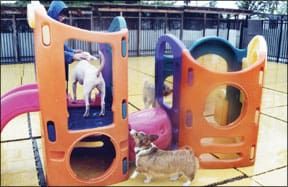
Doggie Daycare

Undersocialized dogs who are environmentally fearful and/or afraid of humans also do not belong at puppy playschool. While a dog who was rescued from a puppy mill or a hoarder may feel more comfortable in the presence of a group of dogs because that’s what he knows, he can be difficult, perhaps even dangerous, for staff to handle. If something should happen – he escapes, or is injured and in need of treatment – the situation goes from bad to worse. The escapee will be impossible to catch, and is likely to head out in a beeline for parts unknown. A fearful dog who must be cornered and restrained by strangers for treatment in an already high-stress environment is very likely to bite, perhaps with alarming ferocity as he struggles to protect himself from what he may perceive as his impending death.

A canine bully or any dog who is otherwise offensively aggressive toward other dogs is also not an appropriate daycare attendee. Don’t think sending him to daycare will teach him how to play well with others. It’s more likely to do the exact opposite! He’ll find it quite reinforcing to have the opportunity to practice his inappropriate bullying or aggressive behavior – and behaviors that are reinforced invariably increase and strengthen.
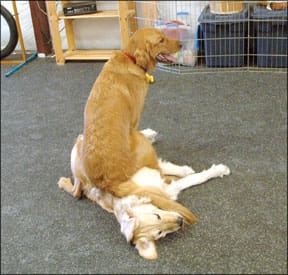
Doggie Daycare

Finally, dogs who suffer from separation anxiety are often horrible candidates for daycare. (For more about separation anxiety, see “How to Manage Separation Anxiety in Dogs,” July 2008.) Owners of dogs with separation anxiety often hope their dogs will relax in the company of other dogs and humans, and trainers often suggest daycare as a solution for the dog who is vocal or destructive when left alone. But if your dog is at the extreme end of the separation-distress/anxiety continuum, sending him to daycare doesn’t make him any happier, and only makes those who have to spend the day with him (canine and human) stressed as well. True separation anxiety – in which the dog has a panic attack if separated from the one human he has super-bonded to – is not eased by the presence of other dogs or humans. Less severe manifestations of isolation/separation distress may be alleviated by a daycare provider. Be honest with your prospective provider about your dog’s separation-related behavior, and see if she’s willing to give it a try. Be ready to celebrate if it works, and look for another solution if it doesn’t.

Perfect Doggie Daycare Candidates

In contrast, if your dog loves to play with others, doesn’t have significant medical problems that would preclude active play, and has energy to spare, he’s the ideal candidate for doggie daycare. This professional service, offered by a high-quality provider, is the perfect answer to many a dog owner’s prayers.

Perhaps you have a friendly, active young dog, and you just don’t have the time you would like to devote to his exercise and social exposure. You come home exhausted from a grueling day at work and he greets you with a huge grin on his face, his wagging tail clearly begging for a hike in the woods or an extended session of ball-retrieve. If you don’t exercise him you risk the emergence of inappropriate behaviors such as chewing, but you are just too tired, and you have to work on a project, due tomorrow. Daycare, even one or two times a week, can be the perfect outlet for his boundless energy, give him the social and dog-play time he covets, and relieve you of the oppressive guilt of not being able to take him for that hike.
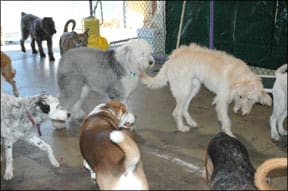
Doggie Daycare

You may not know whether your dog is an appropriate daycare candidate until you show up for your interview and the staff assesses your dog. Note: if the facility you’re considering accepts your dog without an assessment, look for another provider. Even if your dog passes the assessment, daycare staff may advise you after a visit or two that your dog is stressed and not enjoying his play experience there. If that’s the case, you remove him from daycare, and/or inquire about possible behavior modification programs to help him have more fun at dog play.

Be Choosy When Picking a Doggie Daycare Center

One of the pitfalls of suggesting daycare to clients is the dearth of high-quality providers in most areas. If you are considering sending your canine pal off to a professional dog-sitting facility for the day, you want to be confident that he’ll be as safe and happy in their hands as he is in yours. You should see each prospective provider’s facility (preferably when dogs are present), and talk to its manager and staff.

You may need to make an appointment in order to get the best tour of a daycare facility. There are times (especially in the morning during peak drop-off hours and in the afternoon during peak pick-up hours) when it will be extremely difficult to spare a staff member to show you around. Call ahead and ask when it would be best to see the facility.

As you visit facilities and interview managers and staff, observe the dogs that are present in the daycare centers. They should appear happy, not stressed. Staff should also appear happy, not stressed, and be interacting with the dogs. The environment should be calm and controlled, not chaotic, and your take-away impression should be one of professional competence as well as genuine caring for dogs. Trust your instincts. If anything doesn’t seem right, don’t leave your dog there. If staff says you cannot observe the dogs, we suggest walking away. (See “No Viewing ‘For the Dogs’ Safety?’ ” next page.)

One of the most important things to ask about is the dog to staff ratio. This can range from 10 dogs or fewer per staff person to as many as 20 or more dogs per caretaker. “Obviously, the fewer dogs per person, the more closely supervised your dog is likely to be, and the less likely any canines are to get into trouble,” says Robin Bennett, one-time co-owner of All About Dogs Daycare in Woodbridge, Virginia.

Cost is also an important factor, but don’t select your provider by cost alone; neither the lowest-priced nor the highest-priced facility may be suitable for your dog. Depending on where you live and the specifics of the facility, cost per day can range from a few dollars to $40 or more per day. Facility specifics vary. “The daycare may be operated out of a private home or a multi-staffed, full-service facility,” says Bennett. “Multi-staffed facilities are naturally costlier, but can offer a much wider range of services to meet the needs of individual dogs.”
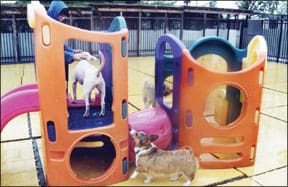
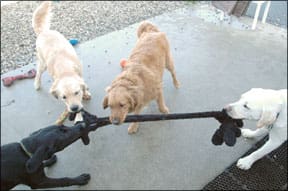
Doggie Daycare

Speaking of services: In a full-service facility, trained staff members keep the dogs busy with indoor or outdoor play, or even, in some cases, happily munching snacks and watching movies made just for the entertainment of dogs. Activities might include hide and seek, tag, or anything that canine minds can come up with. Many facilities provide a variety of toys and balls to enjoy, and some even have swimming pools! Some also offer training, from good manners to agility and more. Good daycare centers also include rest time so dogs don’t get over-stimulated by having too much fun.
Other things to ask about include:

  • What is the assessment process? If they don’t assess, run away fast. If they do, be sure you’re comfortable with the things they tell you they will be doing with your dog, before you let them do it.
  • What vaccinations do they require? Make sure you’re comfortable with the requirements. Don’t compromise your dog’s physical health by over-vaccinating or administering unnecessary shots just to satisfy daycare. If they ask for vaccinations you’d prefer not to give your dog, see if they’ll accept a letter from your veterinarian stating that in her opinion your dog is adequately protected.
  • How do they determine appropriate play groups? Your Maltese should not be in a play group with a Great Dane, or vice versa. In a recent tragedy, a 5-pound Pomeranian was killed at a daycare center when left unattended with a 60-pound dog. (Attended or not, these two dogs should not have been in the same playgroup!) Nor should a body-slamming adult Labrador be playing with a space-sensitive Border Collie puppy. If you get the proper answer (play style, size, and age) make sure your observations of the groups playing support their answer.

“To minimize risk of injury, dogs should be separated based on play style, size, and age,” says Bennett. “Keep in mind that accidents and injuries can happen in all facilities. Dog daycare is like a child’s playground, and by allowing dogs to play together there is a risk of injury. Collars can present a hazard during dog play, but dogs without collars have no visible identification. Discuss this conundrum with your potential provider to see how they handle it, and be sure you are comfortable that escape risks are minimal at the facility. You should see multiple doors within the facility to the playrooms and secure high fences around outdoor play yards.”

  • Do they feed the dogs treats? If so, are the treats a type and quality that is compatible with your dog’s diet – especially if he has allergies or you are committed to high quality foods? Can you provide your own treats to give him, and if you do, can they ensure he gets your treat and not the others? If you ask them to refrain from feeding treats, or limit the amount, will they?
  • What kind of dog handling and behavior training does the staff receive? What training books and authors do they recommend? What tools do they use? Staff members should be reading books by the growing list of positive, science-based author-trainers. If dominance-based television celebrities are held in high regard, run away fast.
  • How frequent are serious incidents, requiring staff intervention,  of inappropriate behavior  between dogs? These should be rare. If they happen more than a few times a year, the facility has a serious problem.
  • How do they deal with incidents involving inappropriate behavior between dogs? Incidents should be defused by separating dogs calmly, only using physical tools such as water, loud noises, blankets, and boards if absolutely necessary. Squirt bottles and noise aversives should not be routine management tools. Verbal and physical punishments, including shock collars, are totally and completely unacceptable. There should be planned debriefings after an incident occurs to determine what went wrong and prevent a recurrence. Solutions include putting dogs in different play groups, or asking offenders not to return unless and until adequate behavior modification has been implemented.
  • What if a dog is injured? Do they have a regular consulting veterinarian who is available during all daycare business hours? If not, is there an emergency clinic available? Will they transport to your veterinarian if that’s your preference? Who pays the vet bill?
    The provider should notify you immediately if your dog is seriously injured, either by another dog or some other physical mishap, and honor your preference for veterinary care if at all possible. There are reasonable arguments on both sides of the “who pays” question, but you should be aware in advance of their policies so you’re not surprised.
  • Has a dog ever escaped? If so, how did it happen, and what have they done to prevent future escapes?
  • Has any staff ever been bitten by a dog? If so, what were the circumstances? Was the bite reported to authorities? (In many jurisdictions, all dog bites are technically required to be reported, but often are not unless they are serious enough to require medical attention.) If your dog bites and is reported, he will likely have to be quarantined for a period of time (often 10 days) and the incident may trigger “dangerous dog” legal proceedings. Bites can happen. But if the facility you’re considering has a history of lots of dog bites, there’s a serious problem.

The Scoop on Doggie Daycare Cleanliess

One of the challenges inherent in operating a doggie daycare center is that dogs poop and pee – and the more a facility feels like a dog hangout rather than a home, the less inhibited most dogs are about pooping and peeing there. You may wonder if sending your dog to daycare will damage the housetraining habits you’ve worked so hard to install. It depends, in large part, on the sanitation standards of the facility. The better the
facility, the more attention they pay to cleanliness.

For cleaning purposes, daycare floor surfaces are usually bare concrete or covered with rubber mats of some kind, or occasionally vinyl. Most homes don’t have floors of cement or rubber, so unless you’re a rare exception, your dog isn’t likely to start having accidents
in your home on your carpeted or hardwood floors even if he occasionally eliminates in the daycare center. More importantly, a good facility provides adequate outside time, either in supervised exercise areas or via on-leash walks, to minimize the number of
accidents indoors. Indoor grass litter boxes can offer appropriate indoor potty areas for those days when inclement weather precludes outdoor time.

A significant part of the “eliminate here” invitation at a daycare center is the

lingering odor of past feces and urine deposits. For those inevitable indoor accidents, a good daycare provider has on-the-spot cleaning protocols, so staff immediately removes any waste and cleans the area thoroughly with an enzymatic cleaner designed to counteract pet waste. If your cleaning procedures in your own home are equally rigorous, the absence of elimination reminders in your house also minimizes the potential for
a breakdown in your dog’s housetraining manners.

Bedding at a daycare center inevitably becomes soiled from time to time as well. Cleaning protocols should dictate immediate removal and daily washing of dirty bedding so those odors don’t linger to suggest to canine clients that random elimination is welcome. Fresh bedding should be provided every day even if it wasn’t soiled the day before.

In fact, aside from the pungent scent of a just-happened “oops,” unpleasant odors in a
high-quality daycare facility should be virtually non-existent, just as in a well-run boarding facility. In your mission to find a top-notch daycare for your dog, if your nose can discern the musty, lingering smell of inadequate sanitation practices, keep on looking.

No Viewing “For the Dogs’ Safety”?

– Nancy Kerns

In the San Francisco Bay Area, like other urban centers with high dog populations, there are dozens of dog daycare facilities. Many of the businesses are high-volume facilities, with more than 100 dogs “enrolled” in daycare on any given day.

A few years ago, I made it a point to try to see as many of the daycare facilities as possible. Some were built with lobby-type areas from which a visitor could view the entire
facility. At one, there was sufficient staff on hand to allow a front-desk person to give me a quick tour of the behind-the-scenes boarding and “napping” areas. A few were more
private, permitting very limited viewing of the main daycare area only. At the most private one I saw (from the outside), a sign at the front entrance indicated that a look inside is possible by appointment only; the business’ website further explained that “for the safety of the dogs, certain areas are restricted.” Not even the enrolled dogs’ owners are allowed to view some areas, and the hours during which owners may drop off and pick up dogs are restricted!

The usual explanation for a “no-viewing” policy is that the sight of visitors can cause the dogs to get excited. It’s true that at the daycare facilities where a visitor can view the dogs at play, there are always at least a few dogs who do react to the appearance of a stranger (or their owners). On the other hand, at the facilities with (what seemed to me to be) an adequate staff-dog ratio and/or dogs separated into small groups of 10 or fewer, this didn’t seem like much ofa problem. A dog or two barked; a handler spoke to them or redirected their attention; and that was that.

I don’t think it’s a coincidence that the “no visitors” or “limited access” facilities are also the highest-volume businesses I saw. By standing on my tip-toes on the stoop of the
business that allowed no pre-arranged visitors, I could see over a fence for a limited view of one play yard; it contained at least 40 dogs. I could see two handlers in the area with the dogs at that time, but it’s possible there were more handlers present in areas I couldn’t see.

In my opinion, having this many dogs in a relatively small space is potentially dangerous, and puts the dogs (and employees) at risk. That doesn’t mean that it can’t be done; I worry that it can’t be done without incident — or without the regular use of aversive training methods to keep any misbehavior from cropping up, (Which could be, I worry, the real reason why some daycare providers never permit viewing or unscheduled owner visits.)

Few Daycare Options?

If you don’t live in a relatively affluent urban area, daycare providers can be hard to find. Word of mouth is a powerful tool; ask all your dog-owning friends and your dog-care professionals if they can refer you to a good facility. Search the Internet, starting with the website for the Pet Care Services Association at petcareservices.org or (877) 570-7788. You can also check with the Better Business Bureau and your local Animal Control agency, to see if there have been complaints or problems with the providers you’re considering. If choices in your community are limited, you’re better off passing up the daycare opportunity than choosing to leave your dog in the hands of a sub-standard care-provider.

Other alternatives to professional daycare include arranging play dates with dogs your dog already knows and loves; using social media to connect with other owners in your area who may be looking for dog-play opportunities; asking your dog-care professionals (trainer, vet, groomer) if they have clients who may be interested in having their dogs play with yours; and asking friends, family members, and neighbors who have dogs of their own if they might be up for small-scale daycare duty.

A fairly new service on the dog scene is Sniffspot – an online resource where you can find privately-owned fenced spaces that are available to rent at a reasonable rate – very useful if neither you nor any of your dog-friends have fenced yards.

The benefits of dog play are numerous, and it’s well worth the effort to find a professional facility that can help your dog be as happy, well-rounded, and well-exercised as he deserves to be. If no daycare facilities exist in your area and you happen to have the skills and interest, you could think about starting one yourself!


(Destructive Chewing #2) Simple Ways to Prevent and Cure Destructive Chewing

0

One of the basic tenets of positive dog training is that it’s much easier to teach the dog what to do rather than what not to do. If you program your dog’s chew preferences early in life by consistently directing his attention – and teeth – to appropriate objects and preventing his access to inappropriate ones, you won’t have to constantly tell him he’s chewing on the wrong things.

Interactive toys can help here too. A stuffed Kong suspended just out of your dog’s reach can keep him occupied and work off excess energy as he jumps and grabs at the tempting prize. Instead of giving him his bowl of food in the morning, fill the Buster Cube with his kibbles and make him work for his meal by pushing cube around to make the food fall out. He won’t have the time, energy, or desire to shred your grandmother’s antique afghan if he’s out “hunting” for his breakfast!

For more details and advice on ways to prevent and cure destructive chewing habits, purchase Whole Dog Journal’s ebook,

For more details and advice on ways to prevent and cure destructive chewing habits, purchase Whole Dog Journal’s ebook, Simple Ways to Prevent and Cure Destructive Chewing.

Shelter Sadness

0

I spent a half day at my local shelter recently, working with a half-dozen large, adolescent dogs who have been languishing there for two or more months. Not one of these dogs knew the cue “sit” but they were friendly and healthy and in need of homes.

Being at the shelter for even just a few hours a week can get me down. I’m hopeful for the animals there – especially the ones who just learned to sit and lie down on cue, and sit politely by their doors. No, it’s humanity I sometimes get depressed about. This morning’s depression came after the following:

As I toured through the kennels with the shelter’s veterinary technician, looking for a dog to feature as the “Adoptable Pet of the Week” for our local newspaper, we came across two German Shepherd-crosses, probably siblings, lying entangled in each other’s legs. The tech explained that they were two of three dogs who were picked up as a little tight-knit pack by the county animal control officer, and that the older dog had an implanted microchip. The shelter staff called the owner, who came to pick up the implanted dog (paying a fine, of course), but who claimed not to know the other two dogs.

A woman with a little boy, perhaps three years old, was sitting and petting a dog in one of the outdoor runs. When she saw me working with one of the dogs, she asked “Are you a trainer?” I hesitated – I’m not a trainer – but for her purposes, I guessed, I could be. “Yes,” I said. “Can I help you?” She said, “Well, this dog, he’s got so many bad habits. He play bites sometimes, too hard. And he knocks my son over.”

I said, “Well, we have a lot of really nice dogs inside. Perhaps you should consider one of the older and smaller dogs.”

She responded, “Well, this dog – he used to be my dog. I got him from here when he was a puppy. I brought him back about a month ago. But I’m so upset that he’s still here; no one has adopted him!”

I was sort of stunned. Then it occurred to me that even if she surrendered him, she came back; she must actually care about the dog. I said, “Are you thinking about taking him home again? I could recommend a training class . . .”

She said, “No, he’s trained, he can sit and all that, it’s just that he chews everything, and knocks my son over, and he barks if he’s left alone.” She hesitated, and then said, “Maybe we should just get a new puppy.”

Later, I saw the vet tech in the parking lot with a middle-aged man and what looked to be a very senior Airedale. The dog was emaciated, three-legged lame, and covered with matted dreadlocks. My first thought was that the man had rescued the dog. No, said the tech told me later; the man brought the dog in for euthanasia. He said the dog didn’t get along with his other dogs.

I know that shelter staffers have to deal with irresponsible and ill-informed pet owners every day, and I bless them for their hard work. I know that I couldn’t do it with a smile on my face.

Download the Full October 2010 Issue PDF

...
To continue reading this article or issue you must be a paid member.

Join Whole Dog Journal

Get full access to Whole-Dog-Journal.com – more than 4,000 articles – for just $20.
Join today and save 30% off our full price.
Already a member?
| Forgot your password? | Activate Web Access

Understanding Aggression in Dogs

[Updated October 18, 2018]

Aggression. It’s a natural, normal dog behavior, but it’s also a scary word that evokes images of maulings and dog-related fatalities. The term “aggression” actually encompasses a long continuum of behaviors, some of them very appropriate and critically important to successful canine communication. If your dog has ever displayed the slightest sign of aggressive behavior, it is incumbent on you as a responsible owner to learn as much as possible about the causes of – and of course, solutions for – canine aggression.

Canine Aggression

Photo by Penelope Brown

The Scope of Aggressive Dog Behaviors

The broad spectrum of “aggressive behaviors” is technically called “agonistic behavior” and is defined in ethology as, “pertaining to the range of activities associated with aggressive encounters between members of the same species or social group, including threat, attack, appeasement, or retreat.” So, while a growl-lunge-bite sequence would be easily recognized by most people as aggression, more subtle agonistic behaviors such as a freeze, a hard stare, or even a lack of eye contact, may go unnoticed (and unaddressed).

Aggression is probably the most common behavioral problem in dogs seen by behavior professionals and the most dangerous one seen in companion dogs. While the number of dog-related fatalities (about 30 per year in the U.S.) pales in comparison to accidental death by other means, the number of annual reported bites is staggering. According to the Dog Bite Law website: “The most recent official survey, conducted more than a decade ago, determined there were 4.7 million dog bite victims annually in the U.S. A more recent study showed that 1,000 Americans per day are treated in emergency rooms as a result of dog bites. Dog bite losses exceed $1 billion per year, with over $300 million paid by homeowners insurance.”

Cultural Shifts and Dog Aggression

In my opinion, our culture has become oversensitized to dog bites. Once upon a time, if a kid was bitten by a neighbor’s dog, his mom generally asked the kid what he was doing to the dog that he shouldn’t have been. Today she reaches for the phone to call her attorney, or, if it’s her dog, dialing up a behavior professional, or worse, dropping the dog off at her local shelter. We’ve turned into a nation of aggress-a-phobes.

Behavior professionals mull over the causes of what looks to be a huge and growing problem. Theories about the contributing factors abound:

  • The population shift away from rural living and toward urban and suburban homes may have lessened our general understanding of animal behavior.
  • This lack of understanding manifests as inappropriate human behavior toward dogs, which triggers more aggressive behavior, as well as a lower tolerance for bites – even minor ones.
  • A more responsible dog-owning population keeps dogs at home, rather than letting them wander, and as a result dogs may be less socialized – and more likely to bite (see “Light Bite,” WDJ June 2010).
  • There has been an increase in popularity of dog breeds that contribute to our cultural sensitization – large, powerful breeds who can do serious damage if they bite, such as Pit Bulls and Rottweilers – as well as breeds who are sensitive to violations of their personal space and have a lower tolerance for inappropriate human behavior, such as Border Collies and Australian Shepherds.
  • Finally, the appropriately diligent efforts of animal control authorities to quarantine dogs who bite (for rabies control purposes) and craft dangerous dog laws (for public safety purposes) have probably fueled the alarmist reactions to even minor dog bites.

I’m not saying aggression isn’t a serious behavior. But there’s aggression, and then there’s serious aggression. In a perfect world, all humans would recognize and take appropriate action at the lower levels of agonistic behavior. If that happened, we would rarely see serious aggression – in fact we’d rarely see any bites at all. Until that time, we can only work, one dog and one human at a time, to expand human understanding of canine aggression.

Stress in Dogs

Across the board, with one tiny exception so rare it’s barely worth mentioning, aggression is caused by stress. Whatever “classification” of aggression an owner or behavior professional chooses to use, the underlying cause of the aggression is stress. There is usually a triggering stressor; when a dog bites a child, it’s a good bet that child was a stressor for him – but there is also a background noise of other stressors that pushed the dog over his bite threshold with that child on that particular day. These may be stressors that we don’t even notice. And because cortisol, a stress hormone that plays a role in aggression, can stay in the system for at least two days, they can be stressors that occurred yesterday, or even the day before!

Think of it as canine road rage. In humans, road rage might look like this:

  • Stressor #1: Our subject jumps out of bed in the morning realizing that his alarm didn’t go off and he’s late for work.
  • Stressor #2: He dashes through a cold shower because his hot water heater is on the blink.
  • Stressor #3: As he hurries out the door his eye falls on the foreclosure notice that arrived in yesterday’s mail because his mortgage payment is overdue.
  • Stressor #4: He jumps in his car, starts the engine and sees that his gas gauge is on “E.” He’s already late and now he has to stop to get gas.
  • Stressor #5: As he pulls onto the freeway his cell phone dings to remind him of an important meeting in 15 minutes – and his commute is 25 minutes.
  • Stressor #6: He remembers that his boss warned him that if he’s late for one more important meeting he’ll be fired. If he speeds, maybe he can make it.
  • Stressor #7: Traffic is a little slow, but if he uses the commute lane, maybe he can make it. Just as he starts to pull into the lane a car cuts him off and then pokes along in front of him below the speed limit. It’s the last straw. Over threshold, he reaches under his seat pulls out his loaded .357 and . . .

In dog, canine road rage might look like this:

  • Stressor #1: The dog has a little isolation distress, usually mitigated by the presence of his canine sibling, but today his brother got dropped off at the vet hospital when his humans went off to work, so he’s all alone.
  • Stressor #2: A UPS delivery arrives, and dog has a “thing” about delivery people.
  • Stressor #3: Just before noon a thunderstorm passes through. The dog is thunder-sensitive, and owner didn’t give him his thunder medication this morning.
  • Stressor #4: Pet walker is supposed to arrive at 1 pm, but is late and doesn’t get there until 2:30. Dog is stressed by change in routine and by urgency of a very full bladder by the time the walker arrives.
  • Stressor #5: Humans arrive home at their normal time but they are stressed because there are dinner guests due at 7 pm and they have to get ready. Dog is stressed by his humans’ stress, and the fact that they rush though his evening routine, feeding him hurriedly and skipping his walk to the dog park for exercise.
  • Stressor #6: Visitors arrive, and while the dog is fine with adult visitors, he is not especially fond of children, and there are four in this family. All through dinner, the dog hears the high-pitched children’s voices laughing and arguing, and he occasionally sees them staring at him.
  • Stressor #7: After dinner the kids are running around the house. The dog tries to stay out of their way, but eventually one corners him in the kitchen. Over threshold, he pulls out his loaded mouth and . . .

Stress is an emotional and physiological response to a stimulus. The foundational underpinning of aggression is based on classical conditioning; your dog’s emotional and physical response to a stimulus that causes him stress: fear, pain, anger, and/or some other strong emotion. He can’t help his emotional response any more than you can when faced with something that scares or hurts you.

Aggression also has an operant component; your dog learns that he can deliberately act to make scary stressors go away. When he growls, barks, and lunges, perceived bad things tend to leave – so his aggressive behavior is negatively reinforced (dog’s behavior makes a bad thing go away), and increases over time.

Aggressive Dog Behavior

Dog Aggression is NOT Dominance

There’s a widespread misconception held by many dog owners, perpetuated by unfortunate television drama, that aggression is all about dominance, and that the appropriate response to any display of aggression is to force the dog into submission. This couldn’t be further from the truth. In fact, a very mild, easily resolvable display of aggressive behavior can quickly become a significant behavior problem if the dog’s human responds with aggression.

The concept of dominance in a social group has been so widely misunderstood and distorted that many knowledgeable behavior professionals hesitate to even use the term. In fact, dominance has little to do with aggression, and a lot to do with access to desired resources: the concept of dominance strictly refers to an interaction or a series of interactions between two individuals in which there is an outcome in favor of one member of the pair.

That outcome is largely determined by a submissive or yielding response from one of the individuals and not through overt conflict or escalated aggression. Someone who is truly higher ranking in social status doesn’t need to resort to aggression to get what he wants. Violent behavior between group members is inappropriate and unacceptable in social interactions. These precepts hold true for social groups of all species, including humans.

Using violent behavior against a dog who is aggressive adds additional stress to his stress load. With force, you may be able to suppress his aggressive behavior in that moment. However, your actions will increase the probability of his future aggression – and possibly more intense aggression. There are far more appropriate and effective ways to manage and modify aggressive behavior than aggressing back.

Aggression-Modifying Action Plan

So what do you do when your dog exhibits aggressive behavior? Remember that stress, not any desire to take over the world, causes aggression to erupt. The first thing to do is educate yourself about dog body language so you can be aware of your dog’s more subtle agonistic behaviors. (See “Signs Your Dog Has Stress,” June 2006.) Then be aware of your dog’s stressors and stress levels, and avoid putting him in situations where he may be compelled to bite. When you do see stress signals, even subtle ones, remove him from the immediate proximity of the stressor to help him cope with the situation.

When you’ve identified something that appears to be a stressor for him, figure out how to remove it as a stressor in his life. If it’s something you can get rid of, simply get rid of it. If you can manage it, by removing the dog from the environment when you know the stressor will be present, do it. If it’s too present in his world to get rid of or manage, take steps to change his opinion of that stressor through counter-conditioning, or change his behavior in the presence of that stressor through operant conditioning.

Canine Aggression

There are bound to be some low-level stressors that he’ll just have to live with. As long as they aren’t significant enough to put him near or over his bite threshold, he can live with some stressors. We all have some stress in our lives!

Here are some examples:

  • Get rid of it: Anything aversive that causes unnecessary pain or stress, including shock, choke, and prong collars; penny cans; or throw chains. Even head halters, considered by many to be positive training tools, are aversive to some dogs.
  • Manage it: So, your dog isn’t fond of small children and there are none in your life and he doesn’t encounter them regularly in your neighborhood. Even so, you can manage him the one time each year your sister comes to visit with your young niece and nephew, by keeping him in another part of the house when the kids are awake and about.
  • Change his association: Convince him that something that stresses him is actually very wonderful by pairing it consistently with something else wonderful. If your dog is stressed by men with beards, you can convince him that men with beards always make chicken happen, by having a bearded man appear, and feeding bits of chicken to your dog, over and over and over again, until he wants furry-faced men to appear so he can have more chicken.

The key to successful counter-conditioning, as this process is called, is to always keep the dog below threshold; you want him a little aware of and worried about the aversive stimulus, but not quaking in fear or barking and lunging.

  • Teach him a new behavior: Perhaps your dog becomes highly aroused by visitors coming to the door. He’s not fearful or aggressive, but the high arousal is a stressor. You can teach him that the doorbell is his cue to run get in his crate, where he’ll receive a stuffed Kong or other doggie delectable. (See “Unwanted Barking at the Front Door,” February 2010.) Or you can teach him that visitors toss toys for him to chase if he sits politely when the door opens.
  • Live with it: So you’re a little (or a lot!) stressed because your work isn’t going well, or the school just notified you that your teen-age daughter has been skipping school. While I encourage you for your own well-being to take steps to reduce your own stress as much as possible, this is one your dog can live with, especially if you remember that when you are stressed, it pushes your dog a little closer to his own bite threshold.

When Your Dog Does Bite

What if you misjudge a situation and something happens that puts your dog over threshold and causes him to display seriously aggressive behavior, perhaps even bite? First, don’t panic. All dogs can bite, and the fact that yours has doesn’t make him a Cujo. You will need to:

  • Move him away from the scene. Stash him in another room, stick him in your car for a moment, or hand his leash to someone he knows who is not at risk for being bitten and have them take him away.
  • Apologize. A good apology is, “Oh, I am so sorry you were bitten! (or your dog was bitten, or your child was bitten).
  • Examine the bite site. Take a couple of quick photos if you can. If the bite broke skin, offer first aid (if you have it). If the injuries are serious, make sure that the victim has a way to access medical care.
  • If it’s clear that your dog was the sole offender, you may want to offer to pay for medical or veterinary care. A pre-emptive discussion with your attorney about this possibility is a good idea, to prevent yourself from taking on more liability than is appropriate, while still doing the ethical and reasonable thing. If it’s unclear who “started it,” be wary of immediately accepting responsibility for the incident.
  • Prepare for a visit from animal control. In most of the country, if a dog bite breaks human skin, the dog must be quarantined for at least 10 days. Have your current rabies certificate handy – they will ask to see it; a rabies tag isn’t enough.

In many jurisdictions you may be able to quarantine your dog in your own home. If not, find out if your dog can be kept at a vet hospital for the required period; it’s usually a safer, less stressful place than a shelter.

If animal control insists on taking your dog away for quarantine, do not sign anything until you have read it carefully and are sure you understand it. Some dog owners have unknowingly and tragically signed their dogs over for euthanasia when they thought they were just agreeing to quarantine.

  • Prepare for “dangerous dog” legal proceedings. Depending on the laws in your area, your dog may be declared “potentially dangerous” for acting aggressively, or “dangerous” for actually biting someone. It’s good to read your local ordinance now, even if your dog never bites anyone, and for sure after a bite happens. If your dog is designated dangerous or you do get called to a hearing of some kind in relation to your dog’s aggressive behavior, you’d be wise to involve your attorney.

Bite Prevention

Basic training and early socialization can go a long way toward inoculating your dog against future aggression. Your observational skills and ability to mitigate stressful situations for your dog are excellent booster shots. At the point, however, when you become aware that your dog’s behaviors are inappropriate, traveling along that continuum of agonistic behavior verging on overt aggression, and are resistant to your efforts to manage and modify them, it’s time to call for help.

Remember that a good behavior professional won’t come riding in like a white knight, push your dog around a little, and declare him cured. A good behavior modification protocol is not dramatic, but rather a slow, low-key program that will help your dog learn to better cope with his world.

Your behavior professional won’t need to see the actual aggressive behavior; she will trust your description of your dog’s reaction to the stressors in his world, and help you figure out how to keep him far below his bite threshold. Like most behaviors, aggression is far easier to modify sooner, before your dog has had time to practice and get good at it.

Counter-Conditioning for Aggressive Dogs

This technique involves changing your dog’s association with a scary or arousing stimulus from negative to positive. The easiest way to give most dogs a positive association is with extremely high-value, really yummy treats. I like to use chicken – canned, baked, or boiled, since most dogs love chicken and it’s a low-fat food. Here’s how the process works:

1. Determine the distance at which your dog can be in the presence of the stimulus and be alert or wary but not extremely fearful or aroused. This is called the “threshold distance.”
2. With you holding your dog on leash, have a helper present the stimulus at threshold distance X. The instant your dog sees the stimulus, start feeding him bits of chicken, non-stop. (Note: If your dog is too excited to eat the chicken, then you have the stimulus too close. Back it way up until your dog is calm enough to take the chicken, but still notices the stimulus.)
3. After several seconds, have the helper remove the stimulus from your dog’s sight, and stop feeding the chicken to your dog.
4. Keep repeating those first steps until the presentation of the stimulus at that distance consistently causes your dog to look at you with a happy smile and a “Yay! Where’s my chicken?” expression. This is a “conditioned emotional response” (CER). Now your dog’s association with the stimulus at threshold distance X is positive instead of negative.
5. Next you will increase the intensity of the stimulus. You can do that by decreasing the distance between your dog and the stimulus; by increasing the movement of the stimulus at distance X (if the stimulus is a child, for example, ask the child to skip or swing her arms); by increasing the number of stimuli (two or three children, instead of one); increasing the visual “threat” (a tall stranger instead of a short one, or a man with a beard instead of a clean-shaven man); or by increasing the volume (if it’s a stimulus that makes noise, such as a vacuum cleaner).

I’d suggest decreasing distance first in small increments by moving the dog closer to the location where the stimulus will appear, with your dog achieving the intended CER at each new distance, until your dog is happy to be very near to the non-moving stimulus, perhaps even sniffing or targeting to it.

6. Then return to distance X and add intensity of your stimulus (move the vacuum a little; have two children instead of one; have the man put on a hat, or a backpack), gradually decreasing distance and attaining CERs along the way, until your dog is delighted to have the moderately intense stimulus in close proximity.
7. Now, back to distance X. Increase intensity again, by having your helper turn the vacuum on briefly (while you feed treats the instant it’s on). Then turn it off and stop the treats. (Or turn up the volume, or add more children, etc.)
8. Repeat until you have the CER, then gradually increase the length of time you have your dog in the presence of the increased-intensity stimulus, until he’s happy (but not aroused) to have it present continuously.
9. Begin decreasing distance in small increments, moving the dog closer to the stimulus, consistently obtaining the desired CER from the dog at each new distance.
10. When your dog is happy to have the higher-intensity stimulus close to him, he’s ready for the final phase.
11. Return to distance X and obtain your dog’s CER there, with a full intensity stimulus – a running, moving vacuum; multiple children laughing and playing; a tall man with a beard wearing a hat, sunglasses, and a backpack. Gradually decrease the distance until your dog is happy to be near the full-intensity stimulus. He now thinks the stimulus is a very good thing, a reliable predictor of very yummy treats. In the case of a human stimulus, you can gradually work up to actual interaction with the human(s) at this stage, by having the person(s) drop treats as they walk by, then letting your dog take treats from their fingers – without direct eye contact, and eventually working up to normal interaction.

The more complex the stimulus and more intense the fear or arousal response, the more challenging it is to modify the behavior. Anxieties and phobias generally require a great commitment to a long and in-depth modification program.

Pat Miller, CPDT-KA, CDBC, is WDJ‘s Training Editor. Miller lives in Fairplay, Maryland, site of her Peaceable Paws training center. Pat is also author of several books on positive training, including her latest: Do Over Dogs: Give Your Dog a Second Chance for a First Class Life

Getting the Most Out of Puppy Kindergarten

[Updated November 16, 2017]

PUPPY TRAINING CLASS: OVERVIEW

1. Bring your “A” game to puppy class. Get a good night’s sleep before a morning class, get up early for coffee — whatever it takes!

2. Try not to get caught up in conversation with other puppy owners during class. You need to pay attention to the instructor — and your own puppy!

3. Practice daily at home, so you and your puppy have mastered each week’s material and are ready to learn new skills when you come to class.

You’ve got a new puppy and are about to start puppy classes (or are planning ahead for your new pup – even better!). You know good puppy classes are an integral part of helping you and your dog invest in a long and harmonious future. Congratulations!

Puppy Kindergarten

Once you’ve selected a class that meets your needs (see “How to find the Best Dog Trainer for Your Dog,” for help selecting the right class for you and your dog) and you’ve signed up to ensure your place in class – you are all set, right? Wrong!

Puppy classes aren’t magic. Just signing up, paying, and attending aren’t enough. You have to train and practice and build your relationship with your puppy. It will last a lifetime and the effort you put in now will pay off multifold. But keep in mind that the bad habits that you and your puppy develop now will also give you payback many times over! So let’s assume you have really committed yourself to rearing a puppy well, and talk about how to get the most out of your puppy classes.

Paying Attention in Puppy Class

In today’s economy, most of us want to be sure we get the most bang for our bucks and that’s true for the cost of puppy classes. Carefully select your class in advance. Of course, we want you to find an experienced positive trainer. But you also need to find a class in a location that’s convenient enough and offered at a time of day to ensure that you’ll actually attend. If the class that you want is offered only at 7 pm on a weeknight or 8 am on Saturday morning, and you are usually tired at these times, you may have to look for another option – or plan to have an espresso early enough before class to get you there and keep you alert.

Alertness is critical in any educational setting. If you are too tired to be attentive to what the instructor is saying, or to cheerfully interact with your dog (who, thanks to the many distractions in class, may be at his worst), you won’t get as much out of the class as you could.

Does this sound easy? It’s not! It’s difficult to pay attention to two things at once (your puppy and the instructor) while surrounded by other cute and active puppies and their owners. And if you happen to be seated next to an especially gabby owner, or excitable puppy, it can be even more difficult. If you are talking to someone, you can’t properly hear the instructor or attend to your puppy. If you are watching your puppy play with another pup, you can’t pay attention to the instructor. You paid for the information being provided. Don’t waste these critical puppy-rearing moments (or your money) by failing to focus.

I don’t need to mention that mobile phones should never be present in class, do I?

At the same time that you are listening to the instructor and watching her demonstrations, it’s essential that you are also aware of what your pup is doing. These are golden opportunities for you to reinforce behaviors you like, such as looking calmly at the other pups and people in class, and especially, for “checking in” with you with eye contact. You may also have to distract your puppy and prevent her from practicing behaviors you don’t want, such as barking, whining, pulling on the leash to go visiting, chewing the leash, chewing on the mat, pawing at you, mugging you for treats, or mouthing you.

Treats are Your Greatest Tool for Cooperation

Speaking of treats, it’s vitally important that you bring an ample and varied supply to class. You don’t want to run out before the end of class, or to have to scrimp on reinforcement because you are afraid you are going to run out. It’s best if you have at least three or four types of treats in your bait bag; this keeps your puppy guessing what delicious treat might be next, and keeps him from getting tired of (and undermotivated by) any one type of treat.

Puppy Class

Ideally, you should include treats of a varying level of interest to your puppy, too: treats he likes, treats he’s crazy about, and some treats he’d stand on his head for! Use the highest-value treats for rewarding the most difficult behaviors you ask your pup to perform, new behaviors, or for “easy” behaviors performed against a backdrop of distractions. You may have to try a lot of different types of treats at home in order to identify treats of these varying levels of “value” to your dog.

The treats you bring to class should also be tiny! – especially if you have a small dog. That’s because you’ll be feeding a lot of them in class, and you don’t want him to fill up too soon, so pre-cut those treats into pieces the size of a pea or smaller. It also helps to bring your pup in on an empty or near-empty stomach so if class is scheduled around your pup’s meal time, feed only half the usual meal and bring the balance as healthy, delectable treats for class. Consider using cut-up pieces of boiled lean chicken, turkey, beef, or pork.

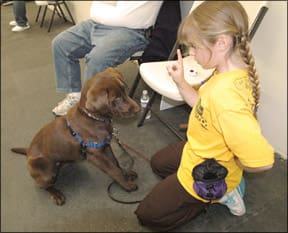
You need to deliver those treats to your puppy quickly so you want the treats easily accessible to you. I suggest using a “bait bag” or treat pouch to keep the treats handy; there are lots of great ones on the market. Other good treat holders are fanny packs, carpenter aprons, and loose vest pockets. Ziploc bags are horrid! Just about as hard to use as jeans pockets.

Being a Good Puppy Class Student

In class, during practice times, PRACTICE! When the instructor comes around to see how you and your puppy are doing, make sure you take the opportunity to demonstrate the behavior you are supposed to be practicing at that moment. Generally, the instructor circulates to every dog/handler team and watches for a repetition or two, gives some feedback, and moves on. If you haven’t been able to get your pup to perform the behavior yet, don’t just say that; show the instructor how you’ve been going about it so she can see what’s wrong and show you a different way to do it. Everyone should get pretty equal time by the end of each class and no one should monopolize the instructor. So play fair!

Usually there are question periods during each class. Help use the class time well by preparing a priority question or two in advance. What are you most stuck on or confused about? Ask the question as concisely as possible. This is not the time for a long story about your pup’s adorable antics at home. Your classmates have also paid for class and it’s their time, too. Use it constructively. If your issue is something unique to your household or situation, ask if you can speak to the trainer about it before or after class or perhaps email or telephone for a brief discussion. Classes are for general topics and issues.

Training The Family Dog

It’s helpful when your entire family participates in training the family dog, and when all of you use the same cues to elicit the various behaviors you learn in class. It follows, then, that it’s also helpful for the most interested family members to attend training class. That can include kids, but make sure you bring only those kids whose attention spans are long enough and behavior is good enough, so that they don’t disrupt the class. Or bring a second adult or responsible teen who can take the kids out of class as needed for breaks.

Practice What You Learn

I can’t stress this enough: Practice, practice, practice every single day!

Practice is rather like preparing the ground before transplanting a plant. It would be a shame to put a lovely purchased plant into soil that hasn’t been prepared in advance; it won’t be as successful as the plant that gets thoughtful fertilizing, watering, and of course is a good match for the soil and sun in the first place.

Between classes, it’s all up to you. Practice teaching your dog the behaviors you’ve learned in class many times a day – every day – in short, positive sessions. Puppies have short attention spans, so practice for a total of at least 15 to 45 minutes a day, in at least three sessions sprinkled throughout the day. Short and more-frequent sessions are better than fewer, longer ones; three 5- to 10-minute sessions provide better training than a single 15- to 30-minute session.

“Capture” and reward behaviors whenever you can. Is your puppy running to greet you? Super! Label it “Rover, come!” and reward her lavishly when she gets to you. Walking down the hallway with the puppy at your side? Label it “heel” (or whatever you’ll call nice, loose leash walking) and reward it! Keep working on your puppy’s name recognition, too, by brightly saying her name and rewarding her interest and attention with a delicious treat, a few moments of the kind of petting she likes best (belly rubs, neck massage, a nice scratching session at the top of her tail), and/or warm praise.

Use your everyday routines to remind you to practice with your puppy. Going to the end of the driveway to get the mail from the box? Bring your puppy on her leash.

That means an opportunity to sit nicely for attaching her leash and for opening the door. It also gives you the opportunity to reward her for reorienting (eye contact to you) after you’ve both stepped through the doorway. Then she gets to practice nice walking with you all the way to the mail box and back (with some cued sits, downs, eye contact, etc. along the way). When you get back to your door, you have another chance to have your puppy sit to await the cue to go through the door. And then she can offer a polite sit on the other side of the door before you let her free in the house again.

Wasn’t that a lovely little training session? Look at all the things it included as well as some nice exposure to a brief trip outdoors where the pup may have seen pedestrians, vehicles, birds, squirrels, airplanes overhead, etc. to give you a chance to reward her for calmly noticing things and turning her attention back to you. Playing with your dog in your fenced yard? Ask for some sits, downs, come, and some eye contact! Your dog’s reward might be a chance to chase a ball or chase you!

Most puppy training classes give the participants written homework to help them focus and remember. Use it. Don’t pull it out the night before class (or the hour before) and try to “cram” – that’s not how you’ll get the habits installed in your puppy. Practice every day in multiple short sessions.

If your puppy class doesn’t include everything you wished it did (and what class ever does?), read up on those other things and work on them yourself.

The class should teach you the principles of positive training with your puppy. Start applying them to behaviors beyond those taught in class! Puppies are like little sponges and learn so easily once we learn how to be clear with them and make it all fun.

Use your class time well and use your home time even more wisely. It’s an investment in your future with your dog. Unlike many of today’s investments, this is one almost guaranteed to bring rich returns for life.

The Value of Training in Everyday Life

Training starts the moment you bring your pup into your car to head home with you. How will your pup travel? Has the puppy ever been in a car before? How will you make this first car trip as safe and comfortable as possible?

Then there are all the rules the puppy has to learn about living with a human family in a human’s house: when and where it’s okay to potty, what furniture is off-limits, what a puppy is allowed to chew on and what she is forbidden to investigate with her mouth, how much and what times of day vocalizing is acceptable — it’s endless.

My point is this: Puppies are always learning. We consciously teach them what to do and what not to do only some of the time. In order to be as successful as possible in teaching your little pup to grow tip into a good canine citizen, you’ll need to make the most of every opportunity for your puppy to do the things you want him to do — and give him few or no opportunities to practice naughty behaviors. This means training whenever you can, and managing his environment carefully when you can’t be there to train.

Caryl-Rose Pofcher is a dog trainer based in Amherst, MA. As well as running her own dog training business, My Dog, LLC, she also trains for her local shelter, Dakin Pioneer Valley Humane Society, and for the Collared Scholar dog training center. See “Resources,” for contact information.

Has Your Senior Dog Started to Lose His Hearing?

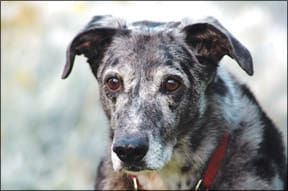
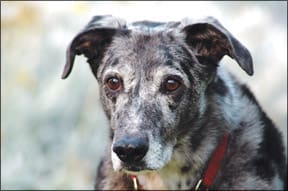
If we’re fortunate enough to have them live to old age, at some point, most of our canine companions begin to lose their hearing and may eventually be, for all intents and purposes, deaf. It’s painful to watch a beloved dog become less and less responsive to his environment because he’s unaware of what’s going on around him, and even more so when it limits your ability to communicate with him. The thought of a hearing-impaired dog wandering off and not being able to hear your calls is frightening. Here are five things you can do if your dog’s hearing isn’t what it used to be:

Senior Dogs and Hearing

1) Purchase a disaster whistle and condition it as a recall cue, by pairing its sound with high-value treats. The Storm Whistle, reported to be twice as loud as any other mouth-blown whistle in the world, is available in stores, catalogues, and from stormwhistles.com (314-436-3332). We used a Storm Whistle as our recall signal when our aging Kelpie, Katie, lost her hearing; it worked like a dream. Instead of having to walk the fenced backyard looking for her, we could just blow the whistle, and she’d come trundling out from behind the garage. Blow the whistle, and give your dog a high-value treat until your dog gets the whistle-equals-food association. Then you should be good to go.
By the way, you might want to first try the whistle outside, and cover your ears or use earplugs. It’s really loud.

2) Use hand signals. Every time our dogs reach the old-age-can’t-hear stage I appreciate having taught them basic hand signals as well as verbal cues. Since dogs communicate primarily through body language, hand signals are easy to teach, especially if you do it when your dog can still hear well. (See “What’s Your Sign?” in the February 2009 issue of WDJ.) As your dog ages, it’s a great opportunity to expand your visual cue vocabulary. Some owners use American Sign Language (ASL) to communicate with their hearing-impaired dogs.

3) Run interference at home. This is all about management. If you have a multi-dog household, one or more of your other dogs make take offense when your geriatric pal doesn’t respond quickly enough to their signals – because he doesn’t hear them, and therefore doesn’t look and notice their body language. Manage your household to prevent encounters that cause tension due to his lack of hearing and subsequent lack of response. This often includes keeping potential problem dogs separated when you are not home. (See “Peace in the Pack,” July 2002.)

4) Run interference in the real world. There are many situations outside your home where your increasingly hearing-impaired dog may run into trouble. If you’ve been casual about letting her be off-leash near traffic, tighten up the reins. She may no longer be able to hear oncoming cars, and a misstep could be deadly. Same thing if you hike on bike paths and sidewalks; you may not be aware of the extent to which she has relied on her hearing to move out of the way of approaching bikes, skateboards, and joggers. She may also need help around other non-family dogs, since she can’t hear them coming either. You could try scheduling supervised play dates with a small circle of appropriate canine friends instead of trips to the dog park, where you have little to no control over her dog encounters.

5) Make reasonable accommodations and give her the benefit of the doubt. Keep in mind that she’s not ignoring you; she can’t hear you! It’s easy to get cross when your dog doesn’t respond to your cues. Condition her to an unexpected touch from behind (touch makes chicken happen!) so you can let her know you’re there and need her to move – or go around her. And if you feel yourself becoming annoyed with your dog, take a deep breath and remember that she probably didn’t hear you. Heck, if it’s age-related hearing loss she could be losing her vision too, so she may not even see as well as you think. Don’t be annoyed if she doesn’t move out of your path as quickly as she once did, or she fails to come flying to your call. She’s doing the best she can; be patient with her.

Pat Miller, CPDT-KA, CDBC, is WDJ’s Training Editor. Miller lives in Fairplay, Maryland, site of her Peaceable Paws training center. Pat is also author of several books on positive training. See page 24 for more information.

Bone Marrow Transplants Offer a Promising Treatment for Canine Lymphoma

0

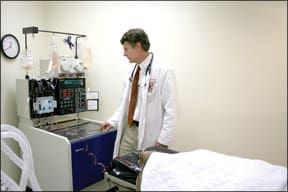
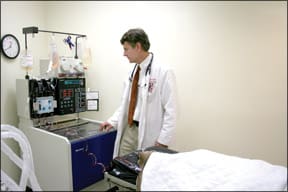
Exciting news regarding bone marrow transplants for dogs with lymphoma has recently emerged. North Carolina State University’s College of Veterinary Medicine in Raleigh is the first university in the world to open a canine clinical bone marrow transplant (BMT) unit. Dr. Steven Suter, assistant professor of veterinary oncology at NCSU, is about to perform his

Bone Marrow Transplants

Photo by David Hunt

288

30th transplant, all done over the past two years.

Lymphoma, also called lymphosarcoma, is one of the most common cancers to occur in dogs. While it used to be considered a disease of middle-aged and older dogs, those demographics have changed in the past 5 to 10 years, with more and more young dogs being diagnosed. Golden Retrievers have a particularly high risk for this type of cancer.

Lymphoma affects the lymph system, which is spread throughout the body, so surgery cannot be used to eradicate this form of cancer. Without treatment, most dogs die within two months of diagnosis. While chemotherapy can extend the life of dogs with lymphoma for up to two years, fewer than 2 percent of dogs are cured.

“The success rate for bone marrow transplants in people with lymphoma is 50 to 66 percent, and the hope is that dogs will respond similarly,” says Dr. Suter. Of the dogs who have received transplants at NC State in the past two years, 70 percent are still alive, but it’s still early days for many. Full results will not be known for a couple of years, but it is expected that even those dogs who are not completely cured will likely remain in remission for much longer than would have been the case without the transplant.

What the process entails
This is not actually a new technology, as bone marrow transplant protocols for people were originally developed in the 1970s from research done on dogs. The same leukophoresis machines used to harvest healthy stem cells from people can be used without modification for dogs.

“The dogs need to be in either complete remission or very close to complete remission to undergo the BMT procedure,” says Dr. Suter. “So, they all have to receive chemotherapy to get them to that point. Once in remission, they can have a BMT at any time afterward.”

The transplant procedure requires several days of preparation, starting with twice-daily injections of a drug called Neupogen, designed to drive healthy stem cells from the bone marrow into the bloodstream where they can be harvested. An ultra-low-fat diet is fed during this time, as lipids in the blood make stem cell extraction more difficult.

A week later, the dog is placed on a leukaphoresis machine that harvests stem cells from the blood. This process takes about six hours. The following day, the dog receives full body radiation to kill the cancer cells in his bone marrow. Immediately afterward, the stem cells that were harvested the day before are infused back into the bloodstream. The entire process is done under sedation or anesthesia and is painless for the dog.

Following the procedure, the dog is kept at the facility in an isolation ward for about two weeks to give the immune system time to recover as the stem cells start to regenerate. Vomiting and diarrhea due to the radiation are common during this time; drugs are given to combat these side effects. Antibiotics are given before and after the procedure to reduce the chances of bacteria entering the bloodstream and to help fight any infection while the immune system is suppressed. Blood transfusions may be needed due to internal bleeding from loss of platelets that are created by the bone marrow.

For most dogs, no special care is needed after they return home. Hair loss and tiredness are the primary side effects at this time. Dogs will experience bouts of fatigue but should return to normal within four to six weeks.

Promising, not guaranteed
Not all dogs who receive a bone marrow transplant will be cured. While there is no way to know when a dog is completely cancer-free, most relapses so far have occurred in the first four months following the transplant. Dogs who make it beyond this point are more likely to be cured or remain cancer-free for two years or more.

The cost of a bone marrow transplant at NCSU runs from $13,000 to $17,000, averaging about $14,500. This includes everything except intensive ICU care, blood transfusions, and additional diagnostics that may be needed in some cases. There are additional monitoring costs after your dog returns home. Pet insurance may cover some of the cost of bone marrow transplants depending on the company and plan.

Stem cell extraction from bone marrow is more difficult with small dogs. “The smallest dog we’ve transplanted thus far was a 12.5-kg French bulldog (27.5 pounds),” says Dr. Suter. “We are getting ready to transplant an 11-kg (24 pounds) Shih Tzu in a few weeks. Probably about the lowest we can go is around 8 kg (or about 18-20 lbs).”

Dogs with serious health problems such as kidney or heart disease, or conditions that make infections more likely, such as diabetes or Cushing’s disease, do not qualify for the transplant procedure, as the risk would be too great.

Five private facilities in the U.S. are gearing up to offer bone marrow transplants for dogs. Eight transplants have been done by Edmund Sullivan, DVM, in Bellingham, Washington, beginning in 2004, but most of these clinics are just beginning to do or have not yet done their first procedures. There is some concern that it is too soon to be marketing bone marrow transplants so widely, before enough is known about the success rate and how to treat and prevent potential side effects. The five facilities are:

  • Bellingham Veterinary in Bellingham, Washington
  • Gulf Coast Veterinary Specialists in Houston, Texas
  • VCA West Los Angeles Animal Hospital in Los Angeles, California
  • Veterinary Specialty Hospital in San Diego, California
  • Veterinary Specialty Center of the Hudson Valley in Wappingers Falls, New York

– Mary Straus

It’s Not Your Imagination: Dogs Do Mimic Their Owners

Behavioral scientists have long questioned whether dogs are capable of mimicking each other or people. A recent study published in the Proceedings of the Royal Society B: Biological Sciences has shown that dogs are not only capable of mimicking their owners, they do so automatically. In fact, their drive to copy our head and hand (paw) movements is so strong that they tend to do so even when it is not in their best interests.

Dogs Mimic Their Owners

288

Friederike Range and her colleagues at the University of Vienna Department of Cognitive Biology tested 10 adult dogs of various breeds and their owners. They began by training the dogs to open a sliding door both by using their heads and by using their paws. The dogs then watched their owners perform the same task, opening the door either by hand, or by getting down on the floor and using their heads.

Half of the dogs were then rewarded when they copied their owners; the other half received a reward when they did the opposite. All of the dogs tended to copy their owners, even when it meant they were not rewarded.

Later, when the dogs who had to learn to do the opposite of what their owners did then were asked to copy their owners, they made more mistakes than the first group, suggesting that imitative behavior is the result of developmental interactions rather than simply evolution. In other words, copying people is a learned behavior, not an instinctual one.

While both human and non-human primates, as well as certain species of birds, are known to automatically imitate each other, the phenomenon of copying another species is thought to be rare or even unique. This is undoubtedly due to the special relationship that dogs have evolved with humans.

Knowing that dogs imitate us could facilitate certain types of training. There are several delightful videos making the rounds that show groups of dogs performing tasks such as putting up Christmas decorations and enjoying a picnic at the beach. These dogs were trained in Hungary by clicker trainers who use what they call the “Mirror Method” of training. For example, when they want their dogs to sit, the trainers will crouch down themselves.

– Mary Straus

Carbohydrates and Your Dog’s Digestive System

6
Carbohydrates provide a critical part of a dog's diet.

Grain-free dry dog food has become wildly popular in the past few years. More and more companies are rolling out a grain-free kibble, as demand for this type of food keeps growing. Why are they so popular?

We’ve found that many dog owners who feed grain-free foods don’t know why they are spending a small fortune on these foods. Or, we should say, they often have their reason, but only rarely are the reasons valid!

As the most common example, some people say they’ve switched to grain-free foods “because dogs don’t need carbs.” Well, they are partly right; dogs don’t require carbohydrates in their diet. But grain-free dry dog foods do contain carbs! In fact, many grain-free foods contain a fair amount of carbohydrates in the form of potatoes, sweet potatoes, tapioca, or peas.

Grain-free foods perform really well when fed to some dogs, but may be inappropriate for others, for example, when a high-fat or high-protein diet is contraindicated. Dogster.com explains the different kinds of grains in relation to dogs’ diets here.

Our philosophy is this: owners should feed their dogs the diets that work best for their individual animals, and develop an accurate understanding of why those diets work well. In an effort to support that suggestion, let’s look at grain, carbs, and how these can be used (or not!) to best meet the nutritional needs of your dog.

What are Carbs?

Carbohydrates are used by dogs as a source of glucose. As such, carbs provide energy, a source of heat when metabolized, and products that can be used as building blocks for other nutrients.

Carbohydrates can be divided into two categories: simple and complex.

Simple carbohydrates, such as fructose, sucrose, and lactose, require little or no digestive breakdown and are readily absorbed from the small intestine and converted into glucose. These are found in table sugar, honey, and fruits, as just a few examples.

Complex carbohydrates are further categorized as either starches or fibers, and are digested more slowly than simple carbohydrates. Starches require additional breakdown by enzymes, produced by the pancreas and intestinal wall, before they are absorbed and utilized by the dog. Starches are contained in grains; vegetables such as potatoes and peas; and beans.

Fiber is resistant to enzymatic digestion; some fibers are fermented by intestinal microbes. Dietary fiber is found only in plant foods: fruits, vegetables, nuts, and grains, and comes from the portion of plants that is not digested by enzymes in the intestinal tract.

The glycemic index (GI) – the rate at which carbohydrates are absorbed into the bloodstream – is, in general, lower for foods containing complex carbohydrates than simple carbohydrates, but there are exceptions. A number of factors influence a food’s GI, including processing, type of starch, fiber content, ripeness (of fruit), fat or acid content, preparation, and how each individual’s body processes food, including how much the food is chewed, and how quickly it is swallowed. For example, foods such as carrots, bananas, watermelon, and whole wheat bread might have a high GI, but contain relatively little carbohydrate, with the end result being they have little effect on blood sugar levels.

Common carbohydrate sources used in canine diets include grains, fruits, vegetables, and a few other interesting foodstuffs.

“Whole” grains, which contain the entire grain kernel (the bran, germ, and endosperm), are good quality carb sources. Examples include whole wheat, bulgur, oatmeal, corn/cornmeal, brown rice, buckwheat, barley, rye, amaranth, millet, quinoa, and triticale.

When you find these ingredients in a kibble (or canned food), they will be cooked and therefore readily digestible. For home-prepared diets, it’s essential to cook these grains well, often soaking overnight, to increase digestibility. Whole grains pack a pretty powerful wallop in terms of good stuff such as dietary fiber, B vitamins, and important minerals such as iron, selenium, and magnesium.

Of lesser value are “refined” grains, which have been milled, a process that removes the bran and germ. Milling also removes dietary fiber, iron, and many B vitamins, so refined grains provide little nutrition but still contain the same number of calories. The dog’s body processes refined grains quickly, resulting in a more immediate impact on blood glucose levels. Examples of refined grain products are white flour, degermed cornmeal, white rice, and pasta (semolina).

There might be medical reasons to feed refined grains to a dog (due to their ease of digestibility), but our preference for healthy dogs is to stay away from refined products, particularly in significant quantities. Vegetables and fruits are also common sources of carbohydrates. Tapioca, potatoes, sweet potatoes, and taro, among others, contain starch, and are typically higher in carbohydrate, but are also healthful sources of calories in moderation. When feeding those kinds of vegetables in a home-prepared diet for your dog, you’ll want to cook them. To help with digestibility, most other vegetables should either be cooked or if served raw, finely ground. Fruits and vegetables are a fabulous source of naturally occurring antioxidants.

Other good-quality carbohydrate-containing foods include legumes (beans), dairy products (e.g., milk, cheese, cream cheese, cottage cheese, ricotta cheese, yogurt), some organ meats, oysters, and mussels.

Then there are the “empty” carbs – ingredients that offer little or no nutrition for the dog, but provide some other service. Fiber helps regulate the transit time of the bowel contents and form of the stool. Common sources of this type of fiber include soybean hulls; wheat, rice, or oat bran; beet pulp; and pea fiber.

Why Should Dogs Eat Carbs?

As we mentioned before, dogs have no nutritional requirement for dietary carbohydrates. They can get everything they need from a diet that contains only protein and fat. Energy metabolism in the dog can be based on fat oxidation and the breakdown of protein to produce glucose.

There are two main reasons why we feed carbs to dogs. The first reason is because we can. Dogs can utilize just about anything we feed them; their digestive tracts are extremely versatile. The second reason is economic; fat and protein sources are much more expensive than carbohydrates.

People often point fingers at the pet food industry, accusing it of using grains to nutritionally short-change our pets in favor of profits. But humans have fed grains and other carbohydrate sources to their dogs as long as we’ve had leftovers. Animal protein and fat has always been at a premium! And our dogs have always gotten only as much of the meat (and bones, fat, hooves, connective tissue, and organs) as we felt we could spare.

Also, it’s obviously quite possible to make adequate diets for dogs that are quite high in inexpensive grains – the majority of the global pet food industry is devoted to this very endeavor. If these foods were as nutritionally inadequate as many industry critics make them out to be, we wouldn’t have a pet overpopulation problem, if you know what we mean! Many carbs contain a slew of vitamins, phytochemicals, minerals, trace elements, dietary fiber, and even some fatty acids and protein. And many dogs do just fine on these diets.

Structurally, carbohydrates (starches in particular) are essential to dry pet food processing; commercial extruded pet foods use starches to give the food structure and texture. Even some canned dog foods contain a carbohydrate source. Gums and gelling agents are often used to solidify canned food and absorb water in high-moisture foods to eliminate “free” water in the container. Guar gum is one agent used that is derived from the ground endosperm of the guar plant; it is used as an emulsifier, thickener, and stabilizer in canned foods.

In addition to keeping kibble together, carbohydrate-rich ingredients are included in many commercial dog foods because of their relatively low cost, caloric contribution (4 calories/gram) and ease of sourcing. This helps keep the price of the food attractive to cost-conscious dog owners.

Bargain hunters aren’t the only ones whose dogs can benefit from diets that contain carbs. According to Susan G. Wynn, DVM, CVA, CVCH, AHG, “While dogs do not require the carbohydrates found in grains or potatoes or any other food, there are some instances where a dog still might derive benefit from them being there.”

Dr. Wynn recently completed a residency in nutrition at the University of Tennessee’s College of Veterinary Medicine, and in addition to private practice, lectures internationally on the topic of clinical nutrition and holistic medicine. She is also a fan of properly formulated carb- and/or grain-containing diets for dogs – except when contraindicated by an individual dog’s medical needs – because both carbs and grains offer certain benefits.

“For instance,” she says, “grains contain certain fibers that are beneficial for the growth of probiotic bacteria in the gut, and they also contain various required vitamins and minerals.”

Dr. Wynn also points out that grains, which have a lower fat content than meat, can be used in some cases as a “place-holder” in a home-prepared diet to help fill up a dog whose weight needs better control.

Sorting Out Carbohydrate Facts From Fiction

Misconceptions abound regarding carbohydrate-containing foods, especially grains, in the canine diet. Dr. Wynn addresses a few of these in her “Pet Health and Nutrition” blog, which we’ve borrowed from here:

“Dogs have a shorter GI tract than people, so they can’t digest grains unless they are partially digested first.”

Fact: Decades of research have proven that dogs digest grains and carbohydrates quite well. More specifically, Dr. Wynn points out that although dogs lack salivary amylase, they
tend not to chew their food; they’re gulpers, so why would they benefit from an oral digestive enzyme? She explains that dogs, like humans, manufacture potent pancreatic amylase and “brush border” enzymes to digest carbs, with most digestion occurring in the first part of the small intestine.

There’s also a belief that a dog’s stomach is acidic and that dogs retain food in their stomachs longer than people, so a meat based diet is more appropriate (protein is initially digested in the stomach). Dr. Wynn points out that the pH range of the dog’s stomach is quite similar to that of humans: it ranges from 1.08 to 5.5 in dogs, and in humans, from 1.0 to 4.0. The main difference is that the dog is actually more alkaline at times. It’s true, she says, that dogs can’t digest cellulose – a single structural carbohydrate used by plants to form things like stalks, seed coats, and vegetable structure – but neither can humans (only some herbivores, such as cows, can). This is why to derive the most benefit from grains and vegetables, we cook or finely grind them first.

“Feeding carbohydrates places stress on the pancreas.”

Fact: The job of the pancreas is to produce enzymes to digest fats, proteins, and starches. During pancreatic inflammation (e.g., pancreatitis), those enzymes are released and cause inflammation and damage to the pancreas and surrounding organs and tissues. To suppress production of the enzymes, veterinarians suggest that you reduce the fat in the dog’s diet and feed a diet that is high in carbohydrates. Dr. Wynn cautions
that casually feeding digestive enzymes daily as a supplement can downregulate the pancreas’ own production of proteases — not necessarily a good thing.

“Grains cause allergies.”

Fact: Dogs can become allergic to certain foods if they have the genetic predisposition to develop food allergies. In a review of seven studies, Dr. Wynn found that dogs are most
commonly allergic to the following foods (in descending order): beef, dairy, wheat, egg, chicken, lamb/mutton, soy, pork, rabbit, and fish. In her personal experience she has seen higher numbers of corn allergy but emphasizes that grains do not constitute the majority of allergy offenders.

Too Much?

Note that some pet food companies take this approach to an extreme, formulating foods that contain more than 50 percent carbohydrates (and low-quality sources at that!). These foods may also contain 15 percent (or more) crude fiber.

According to Small Animal Clinical Nutrition (published by Mark Morris Institute and often considered the bible of pet nutrition), “a small amount of fiber (less than 5 percent) that contains both rapidly and slowly fermentable fibers is recommended in foods for healthy pets.” The text goes on to say that, “Excess fiber may have undesirable effects. For instance, certain fiber types decrease mineral absorption. The effects on mineral absorption vary by type of fiber and the mineral. More rapidly fermentable fibers (e.g., pectins and guar gum) appear to decrease availability of some minerals, whereas fibers that contain more cellulose have little effect on mineral absorption.

“Excess fiber can dilute the energy and nutrient content of the food to such an extent that an animal may have difficulty eating enough of the food to meet its needs.”

How can you tell whether a food contains “too much” total carbohydrate? For that matter, how can you tell at all how much carbohydrate a food contains? The guaranteed minimum percentages of protein and fat, and the maximum percentages of fiber and moisture, are required by law to appear on a pet food label. But only particularly interested owners are apt to learn the approximate carb content of a food; you’d have to either call the pet food maker and ask for this information, or do some math.

To roughly calculate the percentage of carbohydrate in a food, look at the guaranteed analysis on the label, and subtract the amount of protein, fat, moisture, and ash from 100 percent; the carb content is what’s left over. (You may have to contact the company to get the food’s ash content; it’s not required on the label, either.)

“Ideal” Carbohydrate Amounts Vary by Dog

Ultimately, it will be up to your dog – and your observation skills – to determine what constitutes “too much” and “too little” carbohydrate in his diet; there is no such thing as an “ideal” percentage of carbs in a canine diet. It totally depends on the dog, say Sean Delaney, DVM, MS, DACVN, and Sally Perea, DVM, MS, DACVN, veterinary nutritionists with Natura Pet Products. Drs. Delaney and Perea agree that some dogs do well on lower carbohydrate foods and others do not; it depends on the individual

Dr. Wynn adds, “Different dogs digest grains in different ways. Some dogs have excellent stool quality when there are grains in the diet, and others don’t. As a species, the domestic dog does not have a single, consistent nutrient profile requirement.”

Given that there is no commonly accepted ideal for the carb content of canine diets, there aren’t standards for what is considered low, moderate, or high carb levels, either. Drs. Delaney and Perea say they classify carbohydrate content in dog food as “low” when less than 20 to 25 percent of the calories in the diet are from carbohydrates. They’d classify as “moderate” foods with 25 to 40 percent (and even as much as 60 percent) of their calories attributable to carbohydrate.

All three veterinarians advise that for dogs known to be fat intolerant or who suffer from diseases like hypertriglyceridemia (high blood fat levels) and pancreatitis, very low carbohydrate diets might need to be avoided because of their traditionally higher fat content. For those requiring lower fat diets, adjusting the amount of food containing dietary carbohydrate upward is usually necessary.

Delaney and Perea agree that feeding whole grains, for example, might not be optimal for every pet, since whole grains provide a significant amount of dietary fiber, which may or may not be desirable for a certain dog. But feeding fiber-containing foods is beneficial in the management of many large bowel diseases and some small bowel diseases. Fibrous foods have the ability to delay gastric emptying, slow small bowel transit time, bind toxins and irritating bile acids, and normalize gut motility.

For the gestating/lactating female, it is recommended to supply food containing readily digestible carbohydrates and starches. The book Small Animal Clinical Nutrition notes, “Gestation and lactation increase the need for glucose to support fetal growth and lactose synthesis in milk. Fetal abnormalities, embryo resorption, ketosis, and reduced milk production are possible adverse effects of providing inadequate carbohydrates during gestation and lactation.”

When to Limit Carbs for Your Dog

There are times, however, when carbohydrate sources (including grains) in an individual dog’s diet are contraindicated. Dr. Wynn has seen some dogs thrive when switched from a high-carb or even a moderate-carb food, to a low-carb food.

“In the case of animals with chronic conditions of many types, the central problem may be a sick gut. We used to (and still do) call this a leaky gut, but more recently gastroenterologists have come to agree that the condition exists, and call it a hyperpermeable gut. Chronic inflammation of the gut may appear due to food allergy or less well understood inflammatory processes like inflammatory bowel disease. Even a transient gastroenteritis or antibiotic therapy can lead to inflammation of the gut lining.”

What’s all this got to do with carbohydrates? Dr. Wynn explains that chronic inflammation in the gut erodes the most superficial layers of the mucosal lining. This is the location of the cells that actively secrete enzymes and other products that aid in normal digestion, absorption, and even immunity.

When the most superficial layer of the gut is eroded away due to inflammation, it is possible that mature digestive enzymes  are lost. Disaccharides – a product of digestion of complex carbohydrates in the stomach and upper intestine – flow down into the small intestine where enzymes usually further digest them into an easily absorbed form. If the disaccharide form remains, it is not absorbed and pulls water into the intestine, resulting in loose stool or diarrhea.

The problem is compounded the longer it exists, with carbohydrate malabsorption leading to increased bacterial fermentation, causing gas and discomfort. Bacterial overgrowth can itself lead to diarrhea.

If amidst all this, the dog is switched to a grain-free or low carbohydrate diet, he just might eventually improve. Dr. Wynn’s caution is that grains often get the blame, when, in fact, it was outside insult to the gut that was most likely at the root of the problem. “While allergy may or may not be a component of the reaction seen when grains are fed to these animals, the carbohydrate overload seems to be a bigger problem,” she says.

“The good news is this: these ‘allergies’ aren’t permanent, unless the patient has a genetic disaccharidase deficiency (which is very uncommon in dogs and cats). In general, balancing the bacterial populations with probiotics, changing the diet so that it contains lower carbohydrate levels and sometimes different proteins, and addressing the cause of the initial bowel inflammation is all that is needed.

“Whether or not the owner wants to go back to feeding a diet higher in carbohydrates depends on other factors, like owner philosophy, financial capacity to buy the more expensive meat products, and whether the dog has a weight problem. Temporary carbohydrate intolerance is different from real food allergies,” says Dr. Wynn.

Low-carbohydrate diets are sometimes recommended for dogs with diabetes and cancer. Clinical trials run by Gregory Ogilvie, DVM, DACVIM, suggest that a low-carbohydrate, high-fat diet containing fish oil and arginine accelerated time to remission in lymphoma patients and may extend the disease-free interval. But if the canine cancer patient is obese, Dr. Wynn adds, a slightly different approach might be needed; her preference is to opt for a lower fat protein, such as tofu, often along with a small amount of a starch, plenty of vegetables, supplemented with the appropriate vitamins and minerals.

Gluten-induced enteropathy or celiac disease, a genetic, chronic inflammatory disease of the small intestine, affects humans. An analogous disorder has been identified in some lines of Irish Setters and is suspected to affect other breeds as well, although not studied. Affected animals develop small bowel diarrhea, weight loss, and poor condition after being fed a diet that includes gluten, a protein substance found in some grains, including wheat, barley, rye, and triticale; whether oats are contraindicated is debatable.

In the Irish Setters studied, gluten-sensitive enteropathy was found to be a familial (genetic) condition and began to manifest itself at roughly 4 to 6 months of age. Feeding a gluten-free diet resolved the symptoms. A few gluten-free sources of carbohydrate include potato, rice, soy, amaranth, quinoa, and buckwheat.

Methods for Considering Carb Content in Your Dog’s Diet

Few dog food labels list the food’s carbohydrate content (it’s not legally required to be on the label). If it’s not there, Drs. Delaney and Perea suggest calling the pet food company and asking for the food’s “caloric distribution.” This will tell you the percentage of the calories in the food that are attributable to its protein, its fat sources, and its carbohydrates. That is, if the company’s representatives are able or authorized to give you this information. (The range of professionalism among pet food company customer service representatives is astounding.)

To roughly calculate the percentage of carbohydrate in a food, look at the guaranteed analysis on the label, and subtract the protein, fat, moisture, and ash content from 100 percent. (You may have to contact the manufacturer or look at its website to get the ash content; it’s not required on the label.) The remainder is an approximate percentage of carbs in the diet, and includes the food’s crude fiber.

The maximum amount of crude fiber — the insoluble portion of the food’s fiber, with no nutritional value — is required on pet food labels. Some foods have similar total carbohydrates, but divergent crude fiber percentages. A relatively high crude fiber percentage might signal low-quality fiber sources (the infamous “fillers”), or indicate the food maker’s intent to provide so-called “satisfying, but low-calorie fiber” — or both.

– Nancy Kerns

Since Drs. Delaney and Perea were the veterinary nutritionists who recommended asking about the “caloric distribution” of various foods, and they work for Natura Pet Products, it was not surprising that when we called the Natura customer service line and asked for the caloric distribution of its grain-free Evo Turkey & Chicken Formula dry dog food, we promptly received that information: calories from protein: 39.5%; calories from fat: 502%; calories from carbohydrates: 10.4%.

Note that some companies cannot or simply do offer this information for their foods.

100% Nutritional contents
– 42% protein
– 22% fat
– 10% moisture
– 11.7% ash
= 14.3% carb

Next, we wanted to calculate the percentage of carbohydrate in the same food. The label doesn’t list ash, so we had to look that up on the Natura website. Then, using the rest of the info from the product label, we subtracted the percentage of protein, fat, moisture and ash from 100 percent. The remainder is the approximate amount of carbohydrate in the food.

It’s interesting to compare the amount of carbs in foods meant for different purposes; it’s also interesting to compare the percentage of a food’s crude fiber to its carb content. Using the same rough method as above, we calculated the percentage of carbohydrates
in foods with a range of carb content. The first two are grain-free.

ADULT DOG DRY FOOD APPROXIMATE CARB % % CRUDE FIBER
Evo (grain free, turkey & chicken) 14.3 2.5
Blue Buffalo (grain free, chicken) 32.0 6.5
Castor & Pollux Ultramix 41.9 3.0
Mulligan Stew (fish recipe) 46.0 8.0
Hill’s r/d (prescription weight loss, low calorie) 46.7 11.9
Avo Derm (large breed, chicken & brown rice) 47.5 3.5
Purina Veterinary Diets OM (prescription weight loss) 47.7 16.0
Eukanuba Naturally Wild (salmon & rice) 48.0 4.0
Hill’s Nature’s Best (chicken & brown rice) 50.5 3.5
Eukanuba Weight Control 54.7 4.0

An Individual Decision

Dr. Wynn doesn’t approve of diets formulated with high concentrations of carbohydrates simply to limit the cost of feeding the dog. But she does believe that there is no reason to expressly avoid carbs unless an individual dog has a specific intolerance to them or some condition that requires the use of a diet that is low in carbohydrates.

Remember that “the best diet” is an individual matter. Your friend’s strategy for feeding her Golden Retriever won’t necessarily be the best for your Golden. Read labels, understand what you’re feeding, research the manufacturer if feeding a commercial product, and feed the highest quality food that your budget can handle. Like everything we do with our dogs, pay attention to what your dog’s telling you, and after you pick up the food bowl each day, let your dog and his health determine what’s best for him.

Thanks to Dr. Wynn for allowing WDJ to borrow from her Pet Health and Nutrition blog.

SHOULD DOGS EAT CARBS? OVERVIEW

1. “Listen” to your dog! Skin, coat, eyes, stool, regurgitation/vomiting, energy, behavior, and urinalysis/bloodwork are all indicators of whether what you’re feeding is working.

2. Don’t banish carbohydrates from your dog’s diet without understanding why you’re doing so.

3. When feeding carbs, feed high quality sources such as whole grains, fruits, and vegetables.

4. If and when you make a dietary change, document it well: make a list of what was in the previous food, what’s in the new one, and compare.

Freeland writer Lisa Rodier is K9 Nosework enthusiast who lives in Kingston, Rhode Island, with her husband and their Bouvier, Atle.

Was Your Dog Sprayed by a Skunk? Here’s How To Get That Smell Out!

0

[Updated May 12, 2017]

Skunks, skunks, skunks! Half a dozen of my friends have reported skunk/dog encounters in the past WEEK! These usually happen late at night, when the dog goes out for his last potty of the night before bedtime . . . and suddenly the whole family is wide, wide awake and facing an odoriferous emergency. What to do?

First, and most important: DO NOT BATHE THE DOG! Or pour tomato juice on him, or any of the other home remedies you’ve heard about. But DO check your cupboards for a quart of hydrogen peroxide (it’s usually found in most medicine cabinets in a pint size. If you have two pints, or one pint and a small dog, you’re in luck.).

You’ll want to do this as quickly as possible – both because it works best on the fresh, unoxidized compounds in the skunk “spray”, and because you’ll be suffering in the meantime. If the dog has been bathed, or even just rinsed with water, it’s not quite as effective as it would have been with fresh skunk spray. If the spray is fresh, it’s like magic, but it’s actually just good science.

Mix your quart of regular 3% hydrogen peroxide in a bowl or bucket with 1/4 cup of baking soda. This will start fizzing and bubbling (which is why one can’t pre-make the formula and store it in a bottle). Add about a teaspoon of liquid soap or dishwashing liquid; it helps distribute the stuff around the dog’s hair. Wet the dog thoroughly with the mixture, sponging carefully around the face. Most dogs’ faces will be badly skunked, so you really want to wet the face, but don’t get it in their eyes or nose, because it stings.

You’ll notice an immediate cessation of the skunk smell. Skunk spray contains a substance known as a “thiol” – an organosulfur compound that contains a sulfur-hydrogen bond. Many thiols have a repulsive and potent odor (at least to humans); thiols are said to be detectable by the human nose at concentrations of only 10 parts per billion. But the compounds can be immediately altered into odor-free neutral substances by making oxygen molecules (provided by the fresh hydrogen peroxide/baking soda mix) bond with and chemically alter the thiols.

After the dog is thoroughly wetted with the mixture, and every trace of the scent is gone, then rinse the dog with water, or bathe him with water and shampoo, to rinse off the mixture (which can irritate and dry his skin if left on).

I’ve used the mixture on my dog Otto twice; both events happened last year at about this time. He’s gotten a lot smarter, and now recognizes skunks as bad mojo; he won’t chase or approach them any more! But his Jack Russell Terrier “cousin” (my sister’s dog), has been skunked at least once annually for each of his 14 years. Owners of this type of dog are well-advised to buy quarts of hydrogen peroxide and keep them on hand at all times!

Download the Full September 2010 Issue PDF

...
To continue reading this article or issue you must be a paid member.

Join Whole Dog Journal

Get full access to Whole-Dog-Journal.com – more than 4,000 articles – for just $20.
Join today and save 30% off our full price.
Already a member?
| Forgot your password? | Activate Web Access