Home Blog Page 312

Benefits of Vitamin C to Your Dog

Vitamin C for your dog offers many potential benefits.

For humans, a source of vitamin C in the diet is literally necessary for survival. Early sailors deprived of fresh foods for extended lengths of time often suffered from “scurvy,” a nasty affliction characterized by bleeding gums, loss of teeth, a weakened condition, and sometimes death. It wasn’t until the late eighteenth century that Captain James Cook, the first European to visit the Hawaiian Islands, taught the British Admiralty how to prevent scurvy by adding fresh fruit or lime juice to its sailors’ daily ration of rum (thus earning them the nickname of “Limeys” that endures to this day).

In the early 1900s, ascorbic acid was isolated and identified as the nutrient that prevented scurvy. Humans, it was discovered, are among the few animals that cannot manufacture vitamin C in their own bodies, and must obtain it from an outside source (fresh fruits, vegetables, or vitamin C pills) on a regular basis in order to avoid illness.

Dogs, however, can produce vitamin C in their bodies, and because of this ability, nutritionists have long considered it unnecessary to add C to a dog’s diet. Until recently, few dog food makers added vitamin C to their products – or if they do, it was for the preservative action of the vitamin, rather than its nutritive value.

husky puppy

Vitamin C Benefits Sick and Stressed Dogs

This may be appropriate when dealing with healthy unstressed animals, but recent clinical observations indicate that when dogs are sick or stressed, they can rapidly deplete their bodies’ output of vitamin C. A 1942 study noted that dogs with skin diseases usually have very low amounts of vitamin C in their blood.

Other researchers have found the blood levels of vitamin C to be low – and even non-existent – in dogs with fevers and dogs who have exercised to their limits (sled dogs after a race, for example, or hunting dogs in the middle of hunting season).

Stress is the best-known cause of vitamin C depletion in dogs. Physical stress comes in many forms: gestation, lactation, growth, hard work (dogs used for herding, hunting, tracking, etc.), vaccinations, injuries, tail-docking or ear cropping, or illness. Emotional stress, whether caused by relocation, weaning, or demanding training, can also deplete this reserve. In fact, researchers can measure the level of stress a dog experiences by measuring the degree of depletion of the vitamin in the dog’s blood.

Conversely, many studies have found that dogs (as well as humans) that are supplemented with vitamin C show greater resistance to disease, and a better ability to recover from injuries or illness.

How Vitamin C Affects Dogs

Wendell O. Belfield, DVM, is perhaps the world’s best-known and most ardent advocate of vitamin C supplementation for dogs. In his book, “How to Have a Healthier Dog,” Belfield describes how he first came to experiment with (and appreciate) the power of vitamin C in his veterinary practice.

Following a particularly heartbreaking episode, where he was unable to save the life of a beloved family dog that had distemper, he began researching viral diseases. In the course of his studies, he came across an article about a doctor who used massive doses of vitamin C to successfully treat viral diseases such as polio and hepatitis in the 1940s. Belfield began wondering whether C could be used to combat canine viral diseases.

One day in 1965, another client came to Belfield’s office with a dog that was suffering from distemper. Belfield decided to try an injection of vitamin C on the dog, and it responded dramatically, surviving what he had been taught in veterinary school was a fatal disease for which there is no successful treatments.

Following this success, Belfield began experimenting with vitamin C treatments for all kinds of conditions in dogs. His trials and studies have convinced him of the tremendous power that the vitamin holds for dogs.

According to the “Encylcopedia of Nutritional Supplements,” by Michael T. Murray (1996, Prima Publishing), vitamin C improves immune function by enhancing white blood cell function and activity. It also increases the blood levels of interferon (the body’s natural antiviral and anticancer compound) and antibodies (proteins that bind to and destroy foreign material such as bacteria, viruses, and toxins).

Vitamin C is commercially available by itself or combined with other nutrients in a number of forms. See Which Form of Vitamin C is the Best?, below, for information about your options.

Antioxidants and Bioflavonoids

Vitamin C acts in the body as an antioxidant. Oxidation is the chemical reaction of oxygen combining with another substance, and oxidation of food by an animal is a natural process which provides both the heat and the energy needed to keep the body running. Too much or too little oxygen in the system, however, can create toxic by-products called free radicals, which can damage cell structure, impair immunity, and alter DNA codes.

As an antioxidant, vitamin C acts as both an oxygen interceptor (thus protecting the cells from being destroyed or altered by oxidation) and as a scavenger of free radicals. It not only prevents oxidation, but will, for instance, return oxidized vitamin E back to its original state by stealing an oxygen molecule away from the E molecule. Thus vitamin C is a restorative substance that inhibits tissue and collagen degeneration by working in conjunction with the other vitamins and minerals that protect the body and its systems.

As a demonstration of the antioxidant powers of vitamin C, try the following: Dissolve a 1000 milligram tablet of the ascorbic acid form in a large bowl of water. Take some lettuce that has been in the refrigerator a little too long and is getting slightly brown around the edges. Dunk the lettuce in the water for several minutes, then drain it and notice the change. The lettuce should be crisper, fresher and some or all of the brown tinge will be gone. You have just reversed the effects of oxidation! Apple or potato slices can also be dunked in vitamin C solutions to prevent browning. (Antibrowning agents sold for home canning are usually ascorbic acid powder.)

Many types of vitamin C sold also contain bioflavonoids, which are naturally-occurring plant pigments which the body can use to manufacture other nutrients. Beta-carotene, for example, is the bioflavonoid used by the body to manufacture vitamin A. Hesperidin, rutin, acerola, rose hips, citrus bioflavonoids, and bioflavonoid complex are all bioflavonoids commonly used in vitamin C products.

Occasionally supplementing your dog’s diet with grated carrots or apples, or offering him any other fresh fruit he finds palatable are great ways to enhance his bioflavonoid intake. Fresh, ripe melons and peaches are two fruits that many dogs enjoy.

Ways to Use Vitamin C on Dogs

Time and further studies are bearing out Belfield’s findings. Today, vitamin C is routinely prescribed by holistic veterinarians for a number of illnesses, including cancer, kennel cough and other respiratory infections, abscesses, and other bacterial infections. Due to its important role in maintaining the health of collagen, it appears to be especially helpful for slowing – and some say, reversing – degenerative joint disease, hip dysplasia, and spinal disorders.

The use of vitamin C as a preventative and immune booster are also celebrated. Some veterinarians suggest giving C to dogs before and after vaccination, to dogs that have been exposed to contagious diseases, to pregnant and lactating dogs, and for healthy teeth and gums.

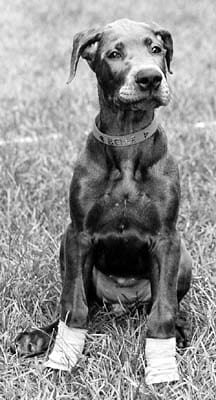
According to Belfield, young dogs and old dogs can benefit the most from routine vitamin C supplements. Due to the extensive stresses faced by puppies and young dogs, such as numerous vaccinations, surgical procedures on dewclaws, tails, and ears, and the demands of rapid growth, he suggests that all young dogs receive C.

As they get old, dogs become less proficient at producing their own supply of vitamin C, and more in need of antioxidants. Administering vitamin C to even very old and feeble dogs, says Belfield, can reinvigorate and strengthen them.

Vitamin C Dosage for Dogs

The average dog normally produces about 18 milligrams of vitamin C per pound of body weight per day. Therefore, for a dog that is free of clinically significant symptoms but is experiencing unusual stress, supplementation with about that much C per day appears be a conservative maintenance dosage. (About 500 milligrams for a 28-lb. dog daily.) To increase absorption, veterinarians recommend splitting the total daily dosage into several feedings during the day.

However, many holistic veterinarians routinely suggest maintenance doses that are three to four times that amount. They explain that modern, domestic dogs need more vitamin C than the theoretical “natural” dog, since their bodies must deal with so many challenges: stress, pollution, chemicals and pesticides, and poor diets, to name a few.

Too much vitamin C, especially if given in one dose, will cause diarrhea in dogs. What amount is too much varies from dog to dog, so, when administering the maximum amount of C for a therapeutic (not just maintenance) dose, many veterinarians will suggest that you increase the dose in 100-500 milligram-per-day increments until the dog develops diarrhea, then reduce his daily dose to the previous day’s dose. (This is often referred to as dosing to “bowel tolerance.”)

Individuals dogs may be more or less tolerant of vitamin C supplements, and their tolerance may change with environmental conditions. For instance, a dog that is experiencing great stress may tolerate 4,000 milligrams without diarrhea, but develop the condition as the stress is removed. The owner’s awareness of the quality of the dog’s stool is critical to appropriate dosing.

The type of illness being treated should also be considered when determining the dose. Some guidelines published by holistic veterinarians include:

Richard Pitcairn, DVM, “Dr. Pitcairn’s Complete Guide to Natural Health for Dogs and Cats.” Pitcairn suggests giving 100-500 milligrams (based on the dog’s size) of vitamin C daily to dogs that are exposed to unusually high amounts of pollutants.

Cheryl Schwartz, DVM, “Four Paws, Five Directions: A Guide to Chinese Medicine for Cats and dogs.” Schwartz suggests giving vitamin C to dogs with a variety of illnesses, including upper respiratory conditions (small dogs, 125 to 500 mg. twice daily; medium dogs, 250-1,500 mg. twice daily; large dogs, 500-1,500 mg. twice daily), arthritis (to bowel tolerance), infected ears (small dogs, 250-500 mg. twice daily; large dogs, 500-1,000 mg. twice daily), and skin allergies (small dogs, 125 mg. twice daily; medium and large dogs, up to 750 mg. twice daily).

It’s important to remember that a healthy, happy dog with a quality diet and little stress probably has no need of supplementation with vitamin C. However, if stress, illness, or age causes a dog’s need for vitamin C to outstrip his ability to produce it, supplementing him with C is a sensible choice.

What Form of Vitamin C is the Best?

Assuming you have a dog that would benefit from vitamin C supplementation, what options are there? Many vitamin C supplements labeled and sold specifically for dogs use ascorbic acid, the only naturally occurring form of vitamin C.

Unfortunately, among all the vitamin C supplements on the market, ascorbic acid has the poorest absorption rate by the body. However, the salt forms of vitamin C, known as ascorbates, are easily absorbed in the intestinal tract of humans, dogs, and other mammals.

Don’t like the idea of a vitamin C supplement for your dog? You can find a great list of whole food sources of vitamin C here.

As the information below explains in detail, for dogs, the sodium ascorbate form of vitamin C appears to be the best choices in terms of cost, bioavailability, and effectiveness. Before you start shopping for a vitamin C supplement, it is important to be aware of the differences between the various forms.

Ascorbic Acid

This is the naturally occurring form of vitamin C. A tarttasting organic acid (pH 2.5-3.0) in crystalline form, this is the form of vitamin C most frequently used in vitamin C pills for humans. When given in high concentrations or in single large doses, however, ascorbic acid is not efficiently absorbed by dogs or humans and can cause diarrhea. Using smaller doses several times a day can alleviate this symptom. Most dogs find powdered forms of ascorbic acid to be unpalatable due to its tartness.

Ascorbyl Palmitate

Although vitamin C is considered a water-soluble vitamin, an oil-soluble form called ascorbyl palmitate is also available, and is thought to act synergistically with other antioxidants (see, Antioxidant and Bioflavonoids, above). Although oral administration of this form is three times more efficient than the ascorbic acid form, ascorbyl palmitate costs about six times as much as ascorbic acid.

Calcium Ascorbate

Vitamin C can also come in the form of salts called mineral ascorbates (compounds formed by replacing all or part of the hydrogen ions of an acid with one or more metallic ions). These forms of vitamin C – known as calcium ascorbate and sodium ascorbate – are easily absorbed anywhere in the human intestinal tract and in that of most mammals. These are thought to be the most gentle (buffered) forms of vitamin C and cause the fewest side effects such as diarrhea or heartburn.

Calcium ascorbate, a pH-neutral, slightly bitter powder, is one commercially available mineral ascorbate. Many health practitioners are of the opinion that calcium ascorbate gives the best results in the relief of arthritic symptoms. It is also considered by holistic veterinarians to be the most beneficial form of vitamin C for use in horses.

Ester C Calcium Ascorbate

Most of the results which have been published regarding the use of vitamin C in horses and dogs have been in trials using a patented form of C known as Ester C calcium ascorbate. Like the pure forms of calcium and sodium ascorbate, Ester-C is nonacidic with a neutral pH and does not cause gastrointestinal upset. This product is the result of a unique method of manufacturing mineral ascorbates, which yields what are called metabolites as well as the minerals and the ascorbates. Thus, Ester C calcium ascorbate is a combination of calcium, ascorbate, and metabolites (including a substance known as threonate).

Pure calcium ascorbate is simply calcium and ascorbate. Pure sodium ascorbate is sodium and ascorbate. When these and all other forms of vitamin C are processed in the body, metabolites (including threonate) are naturally occurring products. The patent holder of the Ester C brand, Intercal Corporation, claims the presence of metabolites, especially threonate, in their product before intake into the body increases cellular absorption and longevity of vitamin C in the bloodstream.

However, these observations were made when the product was compared to ascorbic acid. The company has not released results of studies (if there are any) comparing Ester C directly to the pure forms of calcium and sodium ascorbate.

Sodium Ascorbate

Another readily available and easily absorbed salt is sodium ascorbate, a pH-neutral granular powder with a slightly saline taste. Sodium ascorbate is easily absorbed by the body, and studies have also shown that it stays in the system twice as long as the acid form. Sodium ascorbate is the only form of vitamin C approved by the FDA for intravenous injection in humans. It is also the preferred form for oral megadoses in humans because it does not irritate the intestinal tract and the excess is easily eliminated without harm to the kidneys.

Dr. Wendell Belfield, the leading advocate of vitamin C supplements for dogs, vastly prefers using this form of the vitamin for dogs. Belfield says his own tests have proven it to be the most effective form; he manufactures and markets C supplements for pets (Mega C Plus and Mega C Drops, which utilize sodium ascorbate.

Choose the purest product at the best price:

Once you decide on which form of vitamin C you want, the least expensive sources are usually mail-order distributors that sell vitamins for human consumption. Here are some tips for comparing product content and price:

1) For the best price on the active ingredient, purchase “pure” vitamin C products. Skip products with added ingredients such as bioflavonoids and vegetable fillers. Bioflavonoids may be listed as bioflavonoid complex, rutin, hesperidin, rose hips, and acerola (see Antioxidants and Bioflavonoids, above).

2) Look for product listed as USP pure. USP stands for United States Pharmacopoeia. This refers to a list of standards established by the Food and Drug Administration that governs methods of manufacture and degree of purity for products that are designated as pharmaceutical grade.

3) For ease in feeding dogs, use a powder or crystal form. On average, one teaspoon of pure powder or crystals contains five grams (5,000 milligrams) of vitamin C, so an average maintenance dose for a healthy dog will be 1/8 – 1/4 of a teaspoon. Tablets are sometimes less expensive, but you will have to grind them up or find a way to get your dog to swallow them.

4) To compare prices you need a standard unit to compare. This can be difficult, since manufacturers sometimes use different units of measure, but grams are the most common. You’ll have to do some converting to be able to compare prices, and obviously, this will only be applicable to the pure forms of the vitamin (those not mixed with any other nutrients or fillers).

Moving On After Losing an Older Dog

48

The occasion of getting a new puppy or dog should be just as joyous as bringing a much-wanted and long-anticipated baby into the world. In the best of possible worlds, the dog’s new family is welcoming, loving, and eager to learn as much as possible about and share as much as possible with the latest addition to the family. The transition almost always goes smoothly when the family is experienced with dogs, and already knows about providing healthful diets and gentle teaching for their canine companions. Every so often, however, I meet very knowledgeable and caring dog people who experience undue conflict and tumult while they are getting used to their new dogs. When I know that the people involved know how to properly take care of a dog – that the problem is not simply a lack of knowledge about how to help the new dog succeed in the household – I suspect that the problem is not with the new dog. Often, I’ve found, the issue is actually one that was never resolved concerning the family’s last dog.

The Last Dog Was the “Best”

old corgi

Usually, we expect to outlive our dogs. Though we don’t generally think about it when we bring home a new puppy, we know that he’ll eventually grow into an adult, and then a senior dog. By the time his muzzle and legs turn white and he moves a little slower, our feelings for him will be without compare. After a lifetime together, he will become “the best dog” we’ve ever known. By the time our old dogs pass away, most of us have forgotten that there ever was a time when our “best dogs” weren’t perfect companions. We forget the trying days of puppyhood, when a few of our favorite possessions get chewed up, and when accidents happen on our rugs. We forget about how much time it took us to habituate the young dog to riding peacefully in our cars and playing non-destructively in our gardens. What we tend to remember is how wonderfully behaved our old friend was, how easy it was to spend time with him, how he always knew how to make us happy. So when we get a new dog or puppy, it’s difficult not to make comparisons. But these comparisons will interfere with binding a relationship and honoring the gifts this new soul brings into our lives. Remember, it will take some time for the newcomer to walk in the idealized old dog’s footprints.

Avoiding Comparisons Between Pets

To avoid comparisons, some people choose a dog who is totally unlike the previous pet so they will not be constantly reminded of their loss. Others prefer to have one who resembles their previous dog because the look makes them feel warm inside. Whatever you choose to do, be open and honest with your new dog. Tell him each and every day how special he is and how honored you are to be his person. Let him know about the dog who died; tell him that your tears may flow sometimes with memories but that does not mean you will not be able to appreciate the gifts he has brought to share with you.

Unfinished Mourning

Another mistake people make is to obtain a dog before having completed the mourning process for their old dog. Sometimes people have difficulty with the mourning process. They cannot let go of the memories and are devastated by the loss. Bach Flower remedies can help the bereaved in these cases. Talking and being with people who understand can also help the process; professional grief counselors and pet grief support groups can work miracles. However, no one should ever be rushed through this process. Some well-meaning friends may say “It’s time to move on, you’ve got to get on with your life, get over it – he was just a dog, why not just get another dog,” etc. A person in this position should pay no attention to these types of comments. Some of us love our dogs very deeply, and we bond with them in special, unique ways. For us, dogs are not replaceable. We need time and understanding to heal from the loss before we will be ready to love another dog. It’s very important that no one be allowed to force a new dog on someone else. A spouse, friend or well-meaning relative may try to buy a puppy to “help you forget.” They should be politely told that we will never forget and we do not want to forget. We will remember our lost dog all of our lives and eventually, we will remember him or her with great joy. Then, when the time is right, we would like the luxury of being chosen by our next dog!

Case in Point

Once a woman came to my puppy teaching class with an eight-week-old terrier-mix puppy. She said she wanted help with what she characterized as “all the usual puppy problems,” but from the very first puppy class, I could tell she was dealing with more than “all the usual puppy problems.” She seemed very detached from her puppy. She never made eye contact with him and almost seemed afraid of him. The puppy, too, seemed to be having trouble with the relationship. He made a few attempts to engage her, and then gave up and decided it was more fun to play with the other puppies. I just figured they were getting used to each other and after a week of working with her puppy things would improve. Boy, was I wrong! When she came back the following week, it was evident to the whole class that something was not right. As she entered the teaching center, the puppy strained to get away from her and wanted nothing to do with her. She actually seemed relieved that the puppy had the other dogs to play with. She was content to totally ignore him during the entire class. As I worked with the class, I surreptitiously watched her and her puppy, and thought about how I could best help the emotionally distant duo. As the session ended, I asked the woman if she could stay after class for a few minutes. I told her that I thought she had chosen a wonderful puppy. He was cute, funny, playful, and had the potential to be a great companion dog. He was very smart, very social, and really wanted to be friends with everyone. I then asked her how she felt about the pup. Her response was unemotional and non-committal. She said she liked the dog well enough but he was simply not the same as her dog who had died. Immediately the picture was clear to me. She was comparing the puppy to a deceased dog who had lived with her a very long time. Plus, she had not chosen to get the puppy. Her dog had been dead less than a month when her husband brought home the pup “to help her get over the loss.” She wanted to like the puppy, but felt guilty, as if she were betraying the memory of her former dog. Every time she looked at the new puppy she remembered the other dog and could not shake her feelings of sadness and guilt. We sat and talked for a while. I asked her to tell me a little about her old dog and she cried and reminisced about him. I could tell that they had loved each other deeply. After our talk, she said she felt a little better. I then told her not to worry about the homework assignment I had given the rest of the class because I had a different and special assignment for her.

Healing Ceremony

I told her to go home and light candles and incense in memory of her dog. Then I wanted her to curl up somewhere comfortable with her puppy and tell him all about her old dog. I wanted her to tell the puppy several of the memories that made her cry and several memories that made her laugh. She was to share as much of the joy and sorrow she had shared with her old dog with this brand new little dog. I told her she might feel foolish doing this but it was important. It was immediately evident the next week when they returned to class that a miracle had happened. They came in and were bonded with each other. You could see it in their faces. The two of them actually looked physically different. Everyone in the class remarked about the change. They proceeded to become the best students in class, due to a powerful connection between them. Their love for each other was evident in every interaction they shared. After class, the woman came up to me and hugged me and thanked me for the advice I had given her. She said she went home and did everything I had suggested. She said she didn’t feel silly, and that she had laughed and cried buckets of tears. Afterward, as she hugged and kissed her puppy, she realized for the first time how adorable his face was. Nothing has been the same since then!

You’ll Be Ready Only When You’re Ready

Some people get very stuck in the mourning process. They cannot get over the loss and vow they will never have another dog. They say the heartache of losing a dog is just too much to bear and they never want to go through that kind of pain again. When I hear people talk that way, it hurts me to think of all the devotion, joy, and love their dog gave to them and all they can remember is the pain of the final moments. After all, in the grand scheme of things, death is just a brief moment. It shouldn’t erase the wonder of a lifetime of giving. It seems to me, the greatest honor we can pay a deceased pet is to mourn the pet, heal during the process, and then be ready to love and learn from another dog. This says that having a dog is a worthwhile experience. The pain of losing this dog should not overshadow the joy of having a dog in our life. When a dog leaves this life, allow yourself the time and luxury of a mourning period. There is no manual to tell you how to mourn or how long. You will mourn until you are finished with the process. When you find you are laughing or smiling at the memories of your deceased pet instead of crying at the mere thought of him, when you’re looking in pet shop windows and in the pet column in the classified ads, stopping to look at the free puppies in front of the supermarket, or just feeling that there is now room in your heart to love a new four-legged wonder, then you are healed. If you let your new dog share your truth, your love, and your heart, you’ll find that he’ll very quickly become your new “best dog.” Linda Goodman operates PORGIE Teaching Center in Riverside, CA.

Fighting Cases of Heartworm in Dogs

Heartworms are horrible. No arguments there. Anyone who has ever known or had an infected dog knows how slowly but surely the parasites can sap the animal’s strength and vitality. Going through the treatment to kill the heartworm is no walk in the park either. The “cure” is quite capable of killing the dog in the process of trying to save its life.

But some people just don’t like the idea of giving the dog the chemical preventatives that can keep the pooch safe from infestation. And some dogs are sensitive to the drugs, reacting to each dose with vomiting, diarrhea, and other symptoms.

Heartworm is one of those health issues where an aggressive approach – traditional or alternative – is needed to save the dog. But the most effective approach to prevention and/or treatment combines the best of both veterinary worlds.

Preventing Heartworm

Elaborate Life
The life cycle of this insidious killer is complex, requiring two hosts – a dog and a mosquito. The heartworm’s life starts out in a dog, shifts to a mosquito for a short time, and then ends back in a dog. It’s a fascinating and deadly journey.

Living in a dog’s pulmonary arteries, adult female worms mate with males. Shortly thereafter, the females produce thousands of infinitesimally small “babies,” each less than 1/800 of an inch.

At this stage, the baby heartworms are called microfilariae (from the Greek word mikros, small, and Latin filum, thread). The microfilariae can circulate in the dog’s bloodstream for as long as two years. Scientists do not attribute any particular health problems to the presence of the microfilariae, even though the density of the microfilariae can increase over time if the parents are allowed to thrive. Veterinarians can see as many as 10-15 microfilariae in a single drop of blood from an infested dog; if you do the math, it works out to about 200,000 microfilariae circulating through an average 50-pound dog.

As ominous as this sounds, without a mosquito to carry them off to their next life stage, these microfilariae cannot develop further. If you could keep mosquitoes away from the dog for the rest of his life, the heartworm would progress no further.

Unfortunately, the world is full of mosquitoes. When one bites an infected dog, it can’t help but to ingest a couple of microfilariae with its blood meal. Inside the mosquito, the microfilariae continue their development, shortening and thickening into the first of several larval forms. It takes them two to three weeks to molt twice (going through what are called the L1 and L2 stages) and reach a form (L3) that will carry them back out of the mosquito into another dog. They can not develop further without another dog.

The larvae then move to the mosquito’s mouth, positioning themselves for their next move. When the mosquito bites another dog, the larvae are deposited onto the dog’s skin. After the mosquito withdraws, the larvae crawl into the tiny bite wound, and take up residence in the dog’s subcutaneous tissues.

The (L3) larvae spend the first week or two molting again, before taking a form (L4) that will enable them to migrate through the dog’s subcutaneous and muscle tissue. They take another 40 to 60 days journeying toward the dog’s upper abdomen and thoracic cavity. When they get about 1/10 of an inch long, they penetrate the dog’s veins and make their way to the right side of the heart, where they become full-fledged adults.

Up until this stage, a newly-infected dog shows no sign of disease. It’s only after the worms grow to adult sizes that the dog’s disease process starts. It can take a minimum of six months to more than a year from when he is first bitten by the infected mosquito for the dog to show visible signs of the infection.

Adults Only
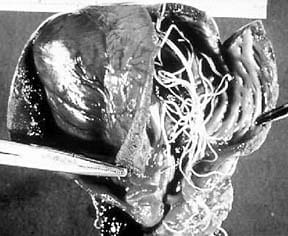
Once they are adults, heartworms are restricted by their size from circulating everywhere through the dog’s circulatory system, but they still get around. Their preferred site is the right heart and pulmonary arteries, but they can also lodge in the veins of the liver and veins entering the heart. Very occasionally, they take up residence in other sites, such as the eye, the cerebral arteries, or the systemic arteries in the rear legs. (Worms in those sites must be treated surgically.) As they feed on nutrients they draw from the dog’s blood and tissue, they can grow to an astonishing 14 inches. Physically, their most damaging activity is the obstruction and interference with the performance of the heart valves and pulmonary arteries.

If the dog is host to enough worms, they can cause what is known as Caval Syndrome. By literally packing the right side of the heart, they cause an increase in the venous pressure in the liver, which damages the liver tissue. The liver dysfunction, in turn, changes the quality of the red blood cells the body produces, leading to a number of blood disorders. Eventually the system fails, manifesting itself in a sudden and dramatic collapse of the dog. Oddly, not all dogs with untreated heartworm develop Caval Syndrome, and the ones that do are usually younger, from three to five years.

How much damage the worms do depends on several factors, most importantly, the number of adult worms in the dog’s body and the dog’s activity level. Sedentary dogs with 25 or fewer worms may never show signs of the disease. Active dogs with the same number, or dogs that host 50-100 worms will exhibit moderate to severe heartworm disease.

Interestingly, the immune systems of some dogs are able to wage war, to a limited extent, on the heartworm cycle. An immune mediated response is thought to be responsible for some dogs ability to remove microfilariae from their circulatory system. Though the dog’s system has not displayed the ability to damage or dislodge adult worms, an otherwise very healthy dog may be able to outlive the worms, which can survive in the heart for five to seven years.

Pet Detecting
The tests that can detect canine heartworm have increased in sophistication. Nevertheless, it takes two tests to make an accurate diagnosis.

The earliest test used for this purpose, called a Knott’s test or a Filter test, consists of a simple examination of the dog’s blood under a microscope, and is still used today to detect the presence of the microfilariae. If these are seen, it indicates the dog currently hosts an adult population of the worms.

But a dog with no visible (through a microscope) microfilariae can still have heartworms. This condition is called “occult dirofilariasis,” and it could mean:

• He is hosting a population of adults that are all male or all female, and thus, not producing any babies.

• He is hosting a population of adults that have been rendered sterile through the use of Ivermectin or other preventative drugs, and thus are not producing any babies.

• He is hosting a reproducing adult population, but his immune system is successfully waging a war on the circulating microfilariae, efficiently removing them from his blood.

• The heartworms he is hosting are not yet adults. The second blood test used to diagnose heartworm infestation zeroes in on the adult population. The earliest test used for this purpose worked by detecting the antigens (foreign proteins) shed by adult heartworms. The problem was, it could only indicate whether adults had ever been in the dog’s system. It would detect antigens even if the worms were dead and gone.

The adult detection test used today has a similar fault. It detects only the antigens produced by live, adult females, so it can miss all-male adult infestations, or juvenile females. If the dog was bitten by an infected mosquito only in the last six months, the test will not detect the juveniles.

Traditional Treatments
The traditional path to full treatment is long and arduous – but far preferable to the longer and more arduous death by heartworm. Because the heartworm lives in the dog in three distinctly different forms – microfilariae, larvae, and adult worm – three different drugs, administered in separate stages, have to be employed to rid the dog of the invader.

The first step is to get rid of the adults, which cause the most damage. Just a couple of years ago, there was only one option for this treatment, an intravenous injection of an arsenic-based drug called Caparsolate. The treatment is essentially chemotherapy, the administration of a deadly drug that is supposed to be deadlier to the parasite than it is to the patient. The drug required two injections of the drug for two days, and each injection was a hold-your-breath endeavor. Caparsolate had to be injected directly into the dog’s veins, and if even a minute amount came in contact with muscle or other tissue, it caused horrible wounds accompanied by massive tissue sloughing.

In 1995, a company called Rhone-Merieaux introduced Immiticide, a much better drug, and it quickly replaced Caparsolate as the treatment of choice. Another deadly and powerful drug, it, too, presents veterinarians with some challenges, but compared to the alternative, most veterinarians feel it is light years better. The current maker of Immiticide is Merial Limited, a company that was born of a merger between Rhone-Merieaux and Merck, and is based in Iselin, New Jersey.

The two injections that are required for a complete Immiticide treatment are usually administered 24 hours apart, in a very specific site rarely used for injections: deep in the back muscles located above the L3 and L5 lumbar vertebrae. Immiticide does not cause tissue sloughing, but many dogs exhibit irritation at the injection site, including pain, swelling, and reluctance to move.

The dog’s post-treatment symptoms are similar with both the old and the new treatment. The drugs kill the worms, leaving the dog’s body to carry the dead and decaying worms out of its circulatory system. The dead worms are carried in the bloodstream to the lungs, where they are gradually reabsorbed. Depending on the dog’s health and the total number of worms in his system, this can be a mild or a violent process. The dogs usually cough, gag, and vomit, experience fever and lung congestion, and are understandably depressed and lethargic.

Both treatments require the dog to be kept as quiet as possible (preferably caged) for the first few days. All increases in heart rate and respiration force a greater amount of dead worm fragments into circulation. If too many particles flood into the lungs at once, they can block the blood vessels to the lungs and cause death. Following a treatment with Caparsolate, veterinarians recommend the dog be kept physically restricted for one to two months. This restriction is shorter following Immiticide treatment.

Ten to 20 percent of dogs with a high worm burden will die as a result of the Immiticide treatment. (The number seems grim until you consider that even without treatment, dogs with that level of infestation suffer a much slower, progressively debilitating death.) If a heart X-ray, antigen test, or the dog’s symptoms suggest that the infestation is very severe, the dogs can undergo a modified treatment protocol, consisting of a single injection, which kills the weaker worms, followed by two more injections a month later. The cost for the entire treatment depends largely on how the dog reacts to the drugs and to the death of the worms. For most lightly infested dogs, the experience totals a week or two of discomfort with no further veterinary treatment required. Under these circumstances, the bill from the veterinary hospital would average $400-600. A dog that experienced difficulties, however, may required extended veterinary care, including administrations of fluids, steroids to reduce any fever or inflammation and help quell the coughing, and supportive therapies for the liver. In this case, the bill can easily reach upwards of $1,500.

Both the Immiticide and the Caparsolate treatments are contraindicated (not recommended) for the most severely infested dogs with Caval syndrome. After the adults are killed, the next step in traditional treatment is to kill any microfilariae that are still in circulation. Since the microfilariae cannot mature without an intermediate host (time spent in a mosquito), you’d think you could skip this step. But you have to administer yet another drug to kill any larvae that may have been deposited on the dog in the last 60 days, and the drugs used for that purpose also kill the microfilariae at a dangerous rate. (A too-sudden die-off of the microfilariae can cause shock and subsequent death of the dog.) The drug used to kill the microfilariae, dithiazanine iodide, is given orally until the microfilariae are absent from the blood, usually one to two weeks.

Final Step – Should Have Been the First
It’s only at this point that you can administer the final treatment – the one the dog should have received before he ever came in contact with mosquitoes. The drugs used halt the development of any larvae present in the dog’s tissues. They comprise the “preventative” action that should be used for the rest of the dog’s life. Each drug costs about $30-40 for a six-month supply. Currently there are three types of drugs available for preventing heartworm development in dogs. The first drug used to prevent larval development was diethylcarbamazine (DEC), marketed as Filaribits, Dec-acide, Caricide, and Hetrazan. DEC is still used, but it must be given to dogs daily throughout the mosquito season, since it kills only the L3 larvae which have not yet taken L4 form, a process the larvae undergo within the first 36 hours on the dog.

Today, DEC is used less frequently than the newer, once-a-month products Interceptor, HeartGard-30, and Sentinel. Interceptor was the first of the monthly preventatives, introduced to the market in 1993 by Novartis Animal Health. The active ingredient in this drug is milbemycin oxime, which kills the L3 and L4 stage heartworms as well as other intestinal parasites such as hookworm, whipworm, and roundworm.

Novartis also makes Program, an oral insect development inhibitor (IDI) made available in 1994 for the purpose of killing fleas. In 1997, the company brought out a combination of lufenuron and milbemycin oxime that they call Sentinel.

Perhaps the best known monthly preventative, however, is HeartGard-30. An Ivermectin-based drug, HeartGard received an early reputation for being poorly tolerated by Collies and other particularly chemical-sensitive dogs. Recent dosages seem to have corrected the problems, which usually manifested as vomiting, diarrhea, depression, and/or a lack of appetite.

HeartGard, Sentinel, and Interceptor are approved only for use as anti-larval drugs, but each has been used on dogs hosting a population of adult heartworms with mixed results. The danger is that these drugs can kill the population of microfilariae so rapidly that embolism (an obstruction of the arteries) occurs. Also, while neither drug has demonstrated an ability to kill the adults worms, it may have a sterilizing effect on them, keeping them from producing any more microfilariae. With only a light infestation, protected from further infestation by the anti-larval drugs, a dog could conceivably outlive the heartworms.

Alternative Approaches
So far, we have discussed only the traditional veterinary approach to heartworm prevention and treatment. Due to the seriousness of the disease, most holistic practitioners recommend that their clients use the traditional drugs. Some use herbal or homeopathic remedies to support and help the dog’s body deal with the chemical treatments. Some, however, use only alternative methods to protect their own dogs’ health, and most are happy to help and support a client who wants to do the same. But the completely drug-free approach requires a huge commitment from dog owners, and unless owners devote themselves completely to the task of building and maintaining their dogs’ immune systems, they may find their dogs infected after all.

WDJ interviewed three holistic veterinarians with a wide range of experiences with non-traditional and traditional heartworm prevention and treatment. All three agree that keeping the dog healthy in order to boost his own immune system response to heartworm infections is critical (for more information about this process, see Dr. Christina Chambreau’s article, “Five Steps to Fitness,” in the April 1998 issue of WDJ). But each has taken a very different approach to the heartworm problem.

California veterinarian Nancy Scanlan says she is lucky; none of her clients have ever had a heartworm positive dog. There is heartworm in California, however, and she advises most of her clients to use the traditional drugs for preventing infection. However, she suggests also using herbal, homeopathic, and nutritional supplements to help the body detoxify after preventative use.

Representing the middle ground, Indiana veterinarian Carolyn Blakey supports those of her clients who use traditional drugs as well as those who take a completely alternative approach to prevention and treatment. She has seen success with both approaches, she says, attributing that achievement to the homeopathic remedies and nutritional supplements she administers to improve the dogs’ circulatory function.

And on the far left, Texas veterinarian William Falconer says he provides a fully homeopathic alternative to the traditional drugs for heartworm. This means a totally unique constitutional remedy tailored to each individual dog, an approach he claims has enjoyed 100 percent success.

We’ll describe each practitioner’s approach in the next issue.

-By Nancy Kerns

We would like to thank Nancy Scanlan, DVM, of Sherman Oaks, CA, William Falconer, DVM, of Austin TX, and Carolyn Blakey, DVM, of Richmond, IN for their help with this article.

The Canine Cancer Crisis

6

They are among the words you least want to hear: Your dog has cancer. But the odds are you will hear them someday, especially if you have more than one dog in your lifetime. One in four dogs get cancer; half of the dogs over 10 years of age die from or with it.

Much of what is known about canine cancer closely parallels what is known about cancer in humans. Dogs are at risk of the same types of cancer afflicting humans, and treating canine cancer successfully is dependent upon the same variables found in human cancer treatment: the type of cancer, the wisdom of the attending doctor in choosing the most effective course of treatment, the availability of advanced medical techniques, and the willingness and ability to pay for them.

There are other similarities. Statistically speaking, cancer is a disease of middle and old age. Certain cancers are largely preventable with prudent lifestyle choices. Early detection is almost always a critical factor. Cancer is hereditary, sometimes running in canine families. Variables like nutrition and toxic exposure seem to play a prominent role.

And always there is a highly individual response to disease. For some dogs, the immune system rallies, and the treatments seem magically precise. For many, if not most, treatment becomes a holding pattern, an evolving equation of modulated therapy versus quality of life. For still others, hope fades as quickly as the once-playful antics of a dog’s life.

Detecting Cancer Early is Key to Survival

Just as with humans, early detection offers by far the most realistic hope for your dog’s survival, particularly for those cancers which aggressively metastasize. Make it a regular practice to examine your dog’s body for unexplained swelling or lumps. Tumors developing in the upper layers of skin are the most common types of cancer in dogs.

Many early warning signs of cancer, however, are more subtle. While many of these signs – behavioral changes, loss of appetite, increased water consumption, persistent wheezing or coughing – are universal and require only basic observational skills on the part of the owner, other signs require a more sophisticated knowledge of your own pet.

Cancers are often traced to the site of earlier injuries, traumas, wounds, or fractures, so knowledge and examination of these injury sites can be helpful.

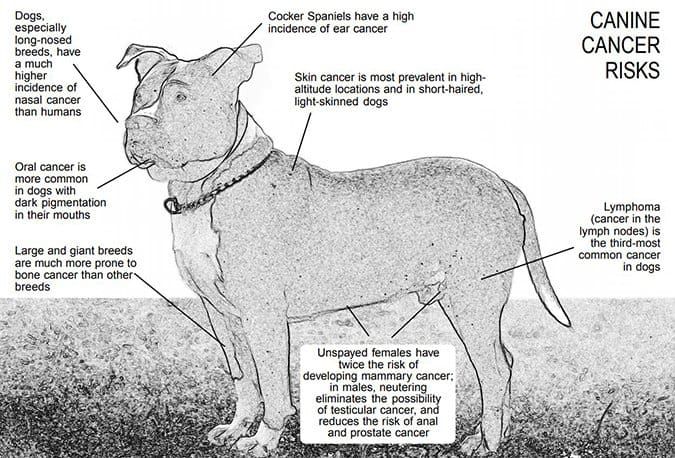
Dogs with long snouts and dogs who live on commercial farms, exposed throughout their lives to herbicides and pesticides, are more prone to nasal cancer.

However, dogs in general have a higher incidence of nasal cancer than humans. This, as they say, is a lifestyle issue; a dog keeps his nose to the ground, sniffing up whatever carcinogens happen to be present.

Oral melanoma, the fourth most common type of canine cancer, is much more common in dogs with dark pigmentation in their mouths. If you own such a dog, you need to be especially alert to unexplained oral swellings or signs of dental disease.

Mast cell tumors are common, but far more common in short-nosed breeds like boxers and Boston Terriers. Large and giant breeds are at much higher risk of developing bone cancer, particularly in the long bones of the legs. Cocker spaniels are prone to an otherwise rare type of ear cancer. Skin cancer is prevalent where ultraviolet light is strong, and particularly for short-haired, fair-skinned breeds like Boxers.

Before buying a certain type of dog, you should ask several breeders about the prevalence of cancer in that breed, and in that particular canine family. Heredity is a major determining factor in cancer; it is thought that boxers, for example, are more prone to cancer than any other bred. These statistics should not necessarily make you shy away from that breed, but inform your level of vigilance.

You should also be aware that, as in humans, there are cancer-causing genes, called oncogenes, which are more prevalent in one family than another. As dogs age, they are increasingly prone to both growths on the skin, and to fatty deposits just under it. Most often these growths are benign, but even a veterinarian can’t reliably tell just by looking. It is crucial to aspirate (withdraw cells via a thin needle) and, if necessary, biopsy (analyze the tissue sample under a microscope) these growths upon detection.

Even benign growths should be monitored closely; they have the potential to become cancerous. In addition, a dog might have a number of seemingly identical growths, of which only one is malignant.

As your dog ages, the likelihood increases that your dog will get cancer in any of one hundred different forms. Simple awareness, clearly, can go a long ways toward providing a happy outcome.

Diagnosing Cancer in Dogs

Approximately one in four dogs will get cancer; nearly half of all dogs reaching 10 years of age will die of it. Although we don’t know, in any given dog, precisely what factors caused a particular type of cancer, we do know that cancers seem to derive, over time, from an immune system stressed by toxins, injuries, poor nutrition – and probably stress itself.

If cancer is suspected, your veterinarian will order a series of tests leading to a diagnosis. These tests might include, depending on the cancer in question, aspiration, biopsy, blood tests, urine tests, x-rays, and ultrasound.

In some cases, your veterinarian might recommend exploratory surgery, or even one of the advanced, accurate, and expensive scanning technologies available to human patients.

When a cancer is present, however your veterinarian has arrived at the diagnosis, he or she should present you with a realistic prognosis. This process, called staging, identifies both the extent of the cancer’s spread (metastasis), and determines the treatment options available.

Common Canine Cancers:

Lymphoma

Lymphoma, also known as Lymphosarcoma, is a cancer of the blood cells and tissues associated with the lymphatic system. Generally afflicting middle-aged and older dogs, it is a cancer whose most common type (other forms originate in the gastrointestinal tract, chest, skin, or bone marrow) involves multiple external lymph nodes.

Frequently examine your dog’s body for abnormalities; it is of particular importance here, as lymphoma is the third most common cancer diagnosed in dogs. It is usually a simple matter to locate swollen lymph nodes at the base of the jaws, in the rear legs behind the knee, armpits, groin, and in front of the shoulder blades.

While true cures, for all practical purposes, remain out of reach, lymphoma responds exceptionally well to chemotherapy; what constitutes an acceptable quality of life, however, will sooner or later be the overriding issue for you as a dog owner.

Osteosarcoma

This aggressively malignant bone cancer most often strikes large or giant breeds, typically in the long bones of the legs. It tends to spread to the lungs very early in the course of the disease, and accounts for some 80 percent of the primary bone cancers found in dogs. The median age at diagnosis is seven years. In addition to targeting large dogs (only five percent of cases occur in dogs less than 25 pounds), osteosarcoma has also been linked to dogs with previously broken bones, and with hairline fractures occurring when bone growth was incomplete.

Initially, osteosarcoma might be labeled a mere sprain, but persistent symptoms later lead to a correct diagnosis, which is invariably grave. While new techniques are emerging, amputation is still the therapy of choice, since it removes both the primary cancer site and the primary source of pain. With amputation alone, however, only 10 percent of patients survive a year. When chemotherapy is applied, the one-year survival increases to 50 percent.

Skin Tumors

Dogs are prone to a great many classifiable lumps, cysts, growths, deposits, and tumors, the majority of which prove benign; some 20 percent are malignant or, rarely, become malignant over time. Because these growths are a normal part of the aging process, it is important to keep an eye on them, and bring them to your veterinarian’s attention.

The three most common types are called histiocytomas, or button tumors; lipomas, or fatty tumors; and mast cell tumors, which are by far the most serious.

Fatty tumors, to which breeds like the Labrador Retriever are prone, are unsightly but not dangerous in most cases. Most dogs, if they get any at all, will have more than one. Most veterinarians aren’t eager to remove them unless they inhibit the dog’s quality of life – they can reach the size of baseballs – by growing in an armpit or the crook of a knee.

Histiocytomas are referred to by what they resemble on the skin – raised, red, and often angry-looking “buttons” of rough tissue. Appearing in a spot where a dog is forced to leave them alone, they sometimes disappear without treatment. However, dog owners should never wait for the situation to resolve itself. Again, tumors cannot be safely identified by sight alone, even by experienced veterinarians.

It is the nature of mast cell tumors that they are very difficult to remove surgically, and surgery is the standard protocol. For this reason, veterinarians often recommend radiation and/or chemotherapy in conjunction with surgery, depending on the tumor’s appearance when the dog is brought in. In its early stage, this cancer is of uniform appearance (in medical terminology, “well-differentiated”), and can often be successfully excised. Otherwise, it is known for metastasizing to almost any part of the body.

Mammary Cancer

The risks of this largely preventable cancer are directly correlated with whether, and when, a female dog has been spayed. (While extremely rare, this cancer also occurs in males). For those dogs not intended to be bred, owners can virtually eliminate the risks of mammary cancer by spaying prior to the female dog’s first heat.

Mammary cancer, like most canine cancers, is closely associated with age. The average age of onset is ten years, and probably half of all cases are benign. And even for malignancies – almost alone among the serious dog cancers – this one has a significant rate of cure, but only when caught early, and the tumor is still localized. When the cancer has spread, the treatment goal hinges on quality of life issues, rather than possible cures.

Oral Melanoma

There may very well be a lifestyle link with this common and often grave cancer.

According to the most prevalent theory, carcinogens lodge on a dog’s coat, and are absorbed into oral tissues as a dog grooms. Even long-banned chemicals like DDT remain in the environment. Airborne carcinogens, in particular, settle to the ground; many of us fertilize our lawns, or spray pesticides in our gardens.

Because dogs spend their lives at toxicity’s ground zero, the potential for cell-altering damage is high. Fortunately, a major positive benefit of the growing emphasis on canine dental care is that this type of cancer can be diagnosed early.

Unless complete surgical removal is possible (and only follow-up x-rays will reveal if the cancer has metastasized), the options, once again, will be limited to a patient’s quality of life.

Preventing Cancer in Dogs

Of course, there is no magical diet, supplement, or vaccine that prevents cancer. But, as a dog owner, you can make some relatively simple choices to improve the odds.

As already mentioned, early spaying enormously reduces the risk of mammary cancer in females. Dogs spayed prior to initial estrus carry only half the risk of those spayed after the first but prior to the second heat cycle. Dogs spayed as young adults, or never spayed at all, have a risk factor increased by several hundred percent.

In male dogs, testicular cancer is common; neutering, obviously, eliminates that risk, and reduces the risk of both cancerous and non-cancerous prostate conditions, as well as anal cancer. (For show dogs and other unneutered males, fortunately, canine testicular cancer rarely spreads, and therefore has a relatively high rate of cure.)

Pale-skinned dogs have a higher risk of skin cancer. A striking example of this risk is the Dalmatian, a breed currently high in popularity. Cancer is known to surround – but not enter – a Dalmatian’s black spots. If you own a fair-skinned, short-haired breed, it would be best to limit your dog’s sun exposure, especially at the times of day when the sun’s rays are the most direct.

Moving beyond these few proven risk factors, however, takes us into the realm of nutrition and environment, where the human experience may or may not apply to our dogs as well. However, common sense – and growing clinical evidence – tells us that it does.

Environment

It isn’t any secret that the fewer environmental toxins our dogs are exposed to, the better. Long-term toxic exposure can destroy a dog’s liver, and weaken the immune system, which is the first and last line of defense against cancer.

Limiting your dog’s exposure to toxins is harder than you might think, however. After all, our dogs spend their lives on the earth’s most toxic layer, the ground, and in contact with the toxin-covered surfaces in our homes: carpets which have been cleaned with potentially harmful chemicals, floors which have been sprayed with ant and roach killer, garage floors which have absorbed all sorts of toxins.

Then there are all the chemicals we pour onto our dogs, most notably, flea-killing chemicals of every description: powders, sprays, shampoos, dips, and ointments.

The Prevention/Nutrition Link

Free radicals are active chemical substances which react with and alter our body’s cells. Those most capable of damage are associated with food additives, pesticides, air pollution, and radiation. It is thought that these damaged cells can “lose” their genetic programming, which limits and controls cell replication. Cancer, by definition, is uncontrolled cell growth. As is by now well-known, there is strong evidence that antioxidants (such as vitamins A, C, E and many other nutrients) help to neutralize free radicals absorbed from our environment. In theory, neutralizing free radicals could be a potent cancer preventative.

All of us “get cancer”; we probably have cancerous cells present in our bodies at all times. A properly functioning immune system will detect these cells and eliminate these cells before “cancer” takes hold. Cancer kills us when our immune system fails.

For dogs, and dog owners, the best possible advice suggests maintaining our immune systems at optimum levels through nutrition, weight control, and regular exercise.

Dr. R. H. Anderson, an holistic veterinarian in Dallas, Oregon, suggests a health-building and disease-preventing protocol for all his clients, and as a result, says very few of the clients who have followed the protocol end up developing cancer. “I have my clients work up to feeding their dogs at least a 50 percent natural diet. I clean up the dogs’ livers, and I make sure their immune systems are functioning normally. Every dog is different, but these three things seem to work pretty well.”

Cancer Treatments for Dogs: Traditional, Holistic, and Experimental

In the next issue of WDJ, we’ll examine the world of canine cancer treatments – conventional and unorthodox – as well as describe the most promising developments in cancer research.

Knowledge of the latest treatments is helpful, but it doesn’t alter cancer’s basic conundrum: What is the best outcome for my dog, and how do we get there?

Many holistic veterinarians believe that some conventional cancer treatments are pointless, inhumane, and often counterproductive. Many mainstream veterinarians roll their eyes at the very suggestion that alternative therapies are effective – or even more effective – than modern drug and radiation therapies.

While no one can give any definitive answers – every dog is different – in our next issue, we will tell you about the best treatment options available today, and what those options will look like in the future.

Roger Govier, a freelance writer and frequent contributor to WDJ, lives in San Francisco, California.

Acupressure Techniques for Treating Dog Pain

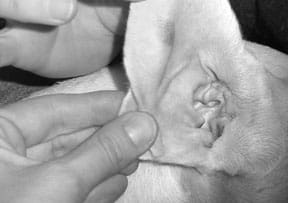
A woman wakes up one morning and goes into the kitchen to make some coffee and let out her dog. When he sees her, he rises from his bed and begins to yawn and stretch. He interrupts himself, though, with a yelp of alarm and a fit of head shaking. When the woman calls his name, he stops, and walks to her holding his head at an angle. “Oh, honey, is it your ears again?” the woman asks. She gently lifts one of the dog’s ear flaps, and confirms her suspicion. The interior of the dog’s ears are red, inflamed, and sour-smelling.

For many people, this episode would be followed with a trip to the veterinarian and a treatment of an antibiotic, to kill the bacteria that has infected the dog’s ears. Some people become accustomed to taking the trip to the veterinary clinic several times a year, because their dog’s condition is something that spontaneously recurs again and again.

In this case, however, the woman takes a couple of deep breaths and begins to touch the dog’s head and ears. She applies pressure to specific areas on the back of the dog’s neck, the top of his front leg, and a spot on the outside of his ear. Within several minutes, the dog takes several deep breaths and lowers his head. When the woman rises, and opens the door to let her dog outside, he trots outdoors with his head held normally, temporarily relieved of the pain of his inflamed ear.

Helping The Body Heal Itself
The dog hasn’t been cured by this application of acupressure, the use of pressure on specific locations on a human’s or animal’s body. But the touch has prompted the dog’s body to release its own store of pain-killing chemicals into the bloodstream, giving him temporary relief from the ear infection. Additional help from an experienced acupuncturist can affect the workings of the dog’s entire body, including its metabolism, circulatory system, internal organs, and the very life force of the dog. Bringing his body into a balanced state, say practitioners of this ancient medicine, will enable him to fight the infection on his own.

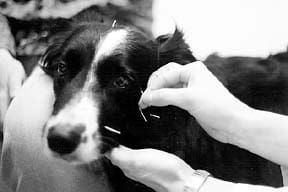
More and more people, veterinarians included, are beginning to discover the benefits of these healing practices which have been used and trusted for over 4000 years. Acupressure, probably the oldest form of Chinese medicine, is the application of pressure, usually by the fingers, thumbs, and hands, to specific points on the body to stimulate the body’s own healing ability. Acupuncture, fully developed by 400 BC, uses needles that penetrate the skin to prompt the same acupoints on a deeper level. Even though the explanations of how they work may require the mind to stretch, the truth is, these methods work well, work consistently, and many times, even work when conventional treatments have failed to cure.

One of the best things about acupressure is that all dog owners can use it to increase their dogs’ health and well-being. It is also invaluable in times of crisis, and can increase your awareness of your dog’s body.

According to historical accounts, acupressure and acupuncture was first used on horses and other livestock, probably because of the indispensable nature of animals at that time. The healing methods that evolved in China are based on an entirely different view of the body and its workings than those we are familiar with in the western world. Contemporary Western medicine sees the body as an amalgamation of individual parts that can be looked at and also healed as separate and distinct pieces. We have specialists for every part of the body who have amassed enormous knowledge about how each part works both in health and disease, and how each responds to treatment.

This medical model has brought about spectacular advances – such as antibiotics, vaccines, and laser surgery. But because modern medicine sees the body much like a machine made up of specialized parts, doctors usually go to the site of the symptom and either “fix” it with drugs (like antibiotics), replace the damaged part (as with a hip replacement), or just cut it out (like an appendix or tonsils).

Although many of these procedures produce amazing results, cures for conditions that affect the body in less specific ways (like Pre-Menstrual Syndrome and migraines, for instance) remain elusive. Many times, if thae cause of dysfunction doesn’t originate from a specific place in the body, doctors are unable to cure the symptoms. The same often holds true for modern veterinary medicine. Think of the mild but persistent lamenesses that have plagued dogs you have known. Their problems often go undiagnosed regardless of how many tests the veterinarian runs. If a defective or diseased body part cannot be pinpointed, modern veterinary science is unable to recommend any “cures” except rest and painkilling or anti-inflammatory medications.

The Chinese view of the body is more holistic. It sees the body – canine or human – as an intricate system where all the elements are intimately intertwined. Chinese medical practitioners address symptoms as signposts leading the healer to an imbalance of the system at large. They seek to find and heal the root cause of the symptom, not the symptom itself.

Instead of seeing the body like a machine, practitioners of Traditional Chinese Medicine (TCM) view the body more like a lush garden where the whole is seen as a complex and interdependent ecosystem. If you douse aphid-infested plants in the garden with poisonous chemical insecticides, the whole garden will need to heal from the effects to the soil. Similarly, if you address an allergy problem with steroids as a long-term solution, you may cause a loss of bone calcium in your dog, resulting in bone weakness and even fracture, causing a whole new problem for the body to deal with.

Chi is the Key
TCM looks at the body as a whole and uses methods that treat the system as an entire network of linked components, not individual parts. Central to this view of health and healing is the concept of energy, called “chi” (chee). By energy, we mean the life force that flows through all of us, glowing bright when we are healthiest and happiest and dimming when we are sick. Look in the sparkling eye of a fit, healthy dog and compare it to the eye of a dog in pain. Chi twinkles in the first and fades in the second.

Practitioners of TCM hold that the entire universe is suffused with chi, and that it is chi that animates the dense physical matter of all living things. Although chi infuses every cell of our bodies, it is concentrated in set pathways, called “meridians,” which pass like rivers throughout our bodies. Each meridian has a route through the body. It also has a certain quality, purpose, and energetic task to perform in the body. The tasks relate to functions in the physical, emotional, and spiritual body. For instance, the heart meridian governs the workings of not only the physical heart, but also the emotions of love and joy and the quality of spirit.

Energetic Irrigation
In the perfectly balanced body, all of the energy pathways (meridians) conduct the flow of energy in an unimpeded manner, like a newly built and spotlessly clean irrigation system feeding water and nutrients to the garden. However, most of us have parts of our energy system that have become blocked or congested from emotional (internal) or environmental (external) stresses. When a dog loses a close buddy, or begins a new and challenging training schedule, for instance, he needs special care like rest, proper nutrition, and gentle attention, to allow his body, mind, and soul to adjust. Without this care, the body’s energy can stagnate, clog, or diminish.

Acupuncture and acupressure seeks to rebalance the body by realigning the energetic “irrigation system” so that the chi may flow smoothly. In a sick dog, like the one described at the beginning of this article, the energy flow is definitely not moving in a normal, health-producing manner. Touching specific acupressure points stimulates the release of the dog’s own internal chemicals which naturally rebalances the body and helps it return to proper function.

Traditional Chinese doctors were once paid only for maintenance visits because their primary role was to help the client remain healthy. Should the patient become sick, the doctor was obligated to provide free care. TCM was best utilized in a preventative manner, instead of a curative one, and can be used in a similar manner to keep your dog well.

I suggest using both the Eastern and Western systems for what they each do best. Western medicine is remarkable for severe problems like life-threatening accidents and disease. Regular acupressure and other tools of TCM can build health, improve performance, and prevent illness.

-By Susan Tenney

Author Susan Tenney, CMT, lives in Sonoma County, CA. She is a regular contributor to The Whole Horse Journal.

Best Dog Winter Coats

1

The weather is just starting to turn brisk, but many short-haired dogs are already shivering. The time to order your dog’s winter coat is now, so you have a cozy coat standing by for the season of the most serious cold snaps. Whole Dog Journal tested a number of dog-warming coats, sweaters, blankets, what have you – for warmth, fit, and ease of application. We also washed and dried the blankets per the manufacturers’ recommendations.

To test how the coats fit and stayed in place, we put them on dogs and threw balls for them so that they’d run and jump.

A significant part of our test concerned how easy it was to put the coats on and adjust them for fit. Since we used a variety of test dogs (including a number of shelter dogs) with a range of responses to “dressing up,” we quickly came to appreciate the designs could be put on easily.

We didn’t concern ourselves with waterproof coats; for most of us, the real concern is keeping our dogs warm, and these features were mutually exclusive in all the designs we found. Besides, based on our own experiences with wet clothing of different fabric types, we are certain that all but one or two of the coats would keep a dog warm even if wet. In the text below, we’ve noted which of the blankets may not perform well when wet.

Interestingly, some of the best coats we were able to find came from equine, rather than canine catalogs; several manufacturers of equine apparel have customized their most successful designs for dogs. These coats were among the easiest to put on and offered the most adjustability. Maybe it’s because horse owners would never buy a blanket that required them to lift and manipulate a horse’s limbs through leg holes…

Also With This Article
Click here to view the products reviewed.

-By Amber Heintzberger, Maureen Gallatin, and Nancy Kerns

Quiet Barking in Your Neighborhood

2

What can you do if the dog whose barking is driving you insane is not your dog?

Besides leaving a copy of the foregoing articles on the dog-owner’s front porch (maybe they’ll take the hint and train their dog not to bark), you might consider the practical and legal remedies offered by attorney Mary Randolph, author of Dog Law. This outstanding book, published by legal self-help specialist Nolo Press, of Berkeley, CA, covers all legal aspects of owning dogs.

The following is an excerpt from the chapter in Dog Law that deals with barking dogs. The tips contained in the excerpt will be enough to guide most people with nuisance barkers in their neighborhood through an amicable and effective resolution to their problem. However, if you are embroiled in a serious conflict with the balky owner of a problem barker, WDJ strongly encourages you to consider buying Dog Law and reading the entire chapter.

Probably the most common complaint about dogs is the noise they make. The good news for neighbors is that usually problems can be resolved without resorting to legal means, through informal negotiation or mediation. And if that fails, there is almost always a law against noisy nuisance dogs.

If you can’t get these laws enforced to your satisfaction, you can sue the dog owner to get the nuisance stopped and to recover money damages. But substituting a major hassle with expensive lawyers for a small one with a bad-mannered spaniel isn’t much progress. Lawsuits are especially undesirable when the other party is a neighbor – after all, you’ll still be next door to each other no matter who wins.

Below, we discuss the most promising ways to resolve neighborhood dog disputes out of court and stay on relatively good terms with the neighbors.

Confront Your Neighbor About the Barking

The obvious first step – asking the dog’s owner to stop the noise – is either ignored or botched by a surprising number of people. Perhaps it’s not all that surprising approaching someone with a complaint can be unpleasant and in some cases intimidating.

However, talking to your neighbor calmly and reasonably is an essential first step. Even if you do eventually end up in court, a judge isn’t likely to be too sympathetic if you didn’t make at least some effort to work things out first. So it’s a no-lose situation, and if you approach it with a modicum of tact, you may be pleasantly surprised by the neighbor’s willingness to work toward a solution.

Sometimes owners are blissfully unaware that there’s a problem. If a dog barks for hours every day – but only when it’s left alone – the owner may not know that a neighbor is being driven crazy by a dog the owner thinks is quiet and well-mannered. Even if you’re sure the neighbor does know about the dog’s antisocial behavior, it may be better to proceed as though she doesn’t.

Here are some suggestions on how to get the most from your negotiations:

– Write a friendly note or call to arrange a convenient time to talk. Don’t blunder up some rainy evening when the neighbor is trying to drag groceries and kids in the house after work.
– If you think it’s appropriate, take a little something to the meeting to break the ice – some vegetables from your garden, perhaps.
– Don’t threaten legal action (or illegal action!). There will be time to discuss legal remedies if relations deteriorate.
– Offer positive suggestions. Once you have established some rapport, you may want to suggest, tactfully, that the owner get help with the dog. Try saying something like, “You know, my friend Tom had the same problem with his dog, and since he’s been taking the dog to ABC Obedience School classes, he and his neighbors are much happier.” Of course, if you make suggestions too early in the process, the neighbor may resent your “interference.”
– Try to agree on specific actions to alleviate the problem. For example, that the dog is kept inside between 10 p.m. and 8 a.m.
– After you agree on a plan, set a date to talk again in a couple of weeks. If your next meeting is already arranged, it will be easier for you to talk again. It won’t look like you’re badgering your neighbor, but will show that you’re serious about getting the problem solved.

If the situation improves, make a point to say thanks. Not only is it the nice thing to do, it will also encourage more progress.

Mediation: Getting Another Person to Help

If talking to your neighbor directly doesn’t work, or you’re convinced it’s hopeless, consider getting some help from a mediator. A mediator won’t make a decision for you, but will help you and your neighbor agree on a resolution of the problem.

Mediators, both professional and volunteers, are trained to listen to both sides, identify problems, keep everyone focused on the real problems and suggest compromises. Going through the process helps both people feel they’ve been heard (a more constructive version of the satisfaction of “having your day in court”) and often puts people on better terms.

Mediation provides a safe, structured way for neighbors to talk. They meet informally with one or more mediators, and first agree on ground rules – basic guidelines, such as no name-calling or interrupting. Then, each person briefly states a view of the problem. The mediator may summarize the problem and its history before moving on to discuss possible solutions.

Unlike a lawsuit, mediation is not an adversarial process. You do not go to mediation to argue your side. No judge-like person makes a decision for you. So there is nothing to gain from the lying and manipulation common to the courtroom. People can become amazingly cooperative when they realize it’s in their power – and no one else’s – to resolve their problem.

When two people do agree on how to alleviate the problem, it’s best to put the agreement in writing, which helps clarify everyone’s expectations. And it’s invaluable if later memories grow fuzzy, as they almost always do, about who agreed to do what.

The best place to look for a free mediator for this kind of dispute is a community mediation group. Many cities have such groups, which usually train volunteers to mediate disputes in their neighborhoods.

Other places that may be able to refer you to a mediation service include the small claims court clerk’s office, the local district attorney’s office, radio or television stations that offer help with consumer problems, or state or local bar associations.

State and Local Laws on Nuisance Dogs

If the situation doesn’t improve after your efforts to work something out, it’s time to check your local laws and see what your legal options are. Armed with this knowledge, you’ll be better prepared to approach your neighbor again or go to animal control authorities, the police or a small claims court.

In some places, barking dogs are covered by a specific state or local ordinance. If there’s no law aimed specifically at dogs, a general nuisance or noise ordinance will make the owner responsible. Local law may forbid loud noise after 10 p.m., for example, or prohibit any “unreasonable” noise. And someone who allows a dog to bark, after numerous warnings from police, may be arrested for disturbing the peace.

To find out what the law is where you live, go to a law library and check the state statutes and city or count), ordinances yourself. Look in the index under “noise,” “dogs,” “animals” or “nuisance.” If you don’t have access to a law library, you can probably find out about local laws by calling the local animal control agency or city attorney.

Animal Control Authorities and Nuisance Dogs

If your efforts at working something out with your neighbor haven’t succeeded, talk to the animal control department in your city or county. The people there are likely to be more receptive than the police or other municipal officials.

When you call, don’t just make your complaint and hang up. If it’s really a persistent problem, you need to be persistent, too. Ask the person you talk to – and write down his name, so you won’t have to explain your problem every time you call – about the department’s procedures. Find out what the department will do, and when. For example, the department may need to receive a certain number of complaints about a barking dog within a certain time before it will act.

Some cities have set up special programs to handle dog complaints. The animal control department establishes a simple procedure for making a complaint, and follows up promptly – and repeatedly, if necessary. This is a great idea, for two main reasons. First, it gives a specific city official or department – usually the health, police or public safety department – responsibility for the problem. If it’s not clear who’s primarily responsible, someone with a complaint is likely to get shuffled from department to department.

Calling the Police on a Barking Dog

The police aren’t very interested in barking dog problems, and you can’t much blame them. Unless you live in an exceptionally quiet and peaceful place, police have lots more serious problems on their hands. Another reason to avoid the police, except as a last resort, is that summoning a police cruiser to a neighbor’s house obviously will not improve your already strained relations. But if none of the options already discussed works, and the relationship with your neighbor is shot anyway, you might as well give the police a try. The police may be your only choice, too, if you don’t know who owns the offending dog, as can happen on crowded city blocks where you just can’t tell whose dog is making the noise.

The police have the power to enforce local noise laws and laws that prohibit disturbing the peace. As when you’re dealing with animal control people, don’t be afraid to ask the police exactly what you and other neighbors must do to get them to take action. You may well have to make more than one call or written complaint.

Small Claims Court for Nuisance Dogs

If nothing you’ve tried helps, you can sue the owner of a barking dog, on the ground that the dog is a nuisance that interferes with your use and enjoyment of your home. The least painful route is through small claims court. Small claims court procedures are simple and designed to be used without a lawyer. In some states, including California, lawyers are barred from small claims court. Even if they aren’t banned, you will rarely see one there because most people find it too expensive to hire them. Fees in small claims court are also low, and the process is relatively fast – which means you’ll get to court in a few weeks or months, not years.

Winning a lawsuit in small claims court can get you money (and satisfaction), but probably nothing else. In most states, small claims court judges only have the power to order someone to pay money. They can’t give you what you really want – a court order telling your neighbor to make the problematic pooch be quiet.

Still, making your neighbor fork over some money may be even more effective than a simple court order in convincing your neighbor to clean up his (or his dog’s) act. And you can keep going back to court and asking for more as long as the nuisance continues.

If you absolutely must have a court order telling the neighbor to stop (the technical term for this kind of order is an injunction), you may have to go to “regular” court (often called circuit, superior or district court) instead of small claims court. For that, you’ll probably need a lawyer, though you can bring a straightforward nuisance suit yourself, if you’re willing to spend some hours in the law library finding out how to draw up the papers and submit them to the court.

Reprinted with permission of Nolo Press. For information about suing in small claims or regular court, see the rest of Chapter 7 of Dog Law.

Digestive Disorders and Blue-Green Algae

We bought Belle as a puppy from a friend, Linda, who is also a very good and conscientious breeder. A couple of Linda’s dogs were notorious for eating sticks and/or other assorted objects. Belle’s mother, in fact, had to have a quarter and a dime surgically removed from her stomach. We like to call that the “not-so cost-effective money retrieval” system! (Linda is also an accountant.)

So, when Belle started finding assorted objects to munch on as well, we joked about it. But we stopped laughing in July of 1996, when she swallowed (whole) a pair of my nephew’s underpants. Later on the same day she ate them, she stood in front of my husband, looking a little green around the gills, and threw them up in one big burp! All the time she was growing, Belle had eaten some pretty nasty things, but this took the cake!

Belle also exhibited a few other strange symptoms. For one, she was a habitual “paw licker,” and would develop “lick granulomas” – not to mention drive me crazy – if I didn’t watch her carefully. And while her appetite for weird things was strong, she was a disinterested eater of dog food. Since coming to us at seven weeks, she had never eaten her dog food with a good appetite; I almost had to force-feed her at times.

I wasn’t really prompted to look further into these conditions, however, until the underwear incident. Shortly afterward, she started to lose weight. When her weight loss reached 15 pounds, I panicked and scheduled an appointment with a veterinarian I sometimes use in Andover, Massechusetts. An endoscopy revealed a blockage that called for immediate surgery. Inside her stomach, they found a hunk of “mixed materials” – a combination of plastic Nylabone, cloth, and other unidentifiable stuff.

After surgery, she recovered fairly well, but still was not eating right. She gained about 10 pounds, but was still all bones. I took her to my regular veterinarian, Dr. Eric Bloomfield of the Northside Animal Hospital, here in Manchester.

Supplement improves situation
Dr. Bloomfield took a look at Belle, listened to her history, and heard me cry for about 10 minutes about not wanting to lose her. Then he left the room and came back with a container of green powder. He said, “Don’t laugh and don’t be afraid. This stuff will help your dog, if you use it!” In the container was Super Blue Green AlgaeTM (Aphanizomenon flos-aquae).

I was sceptical, but Dr. Bloomfield was so serious, I decided to give it a try, thinking all the while, “Yuck, if I don’t like the look of it, how will I get Belle to eat it?” I disguised it in several ways, rolling it up in raw hamburger or cheese.

One day, about a week and a half after giving her the SBGA daily, I heard the sound of a bowl being banged in the kitchen. I usually tune out that sound, as our resident “pork chop” Molly, the Pointer, likes to eat ‘round the clock, and that’s how she says she’s hungry. But there was Molly at my feet! I ran into the kitchen, and who should I behold but Belle, standing in front of her dish, whacking it with her paw!

After placing two cups of dry food in front of Belle (whose motto has always been, “What me? Eat dry food? Never!”), I went into shock when she finished it in four minutes flat.

That was the beginning of a new and improved Belle. Within two weeks she gained another 10 pounds, and almost completely stopped eating “bad” things. About five weeks after starting her on the algae, she weighed 115 pounds, ate three meals a day because she asked for it, and has since had very few episodes of chewing or eating inappropriate items. (The exception has been when she’s experiencing a false pregnancy, then I have to double the SBGA I feed her.) She looks great, her coat is now a shiny, deep steel blue, with no more “brown out.” She also lost her skittishness and is more outgoing. She only licks her paws excessively when she’s stressed; otherwise, that behavior is gone.

I did test the algae several times by removing it from Belle’s diet. Each time her consumption of food decreased within four to seven days. She is now on a maintenance dose, getting 1/3 teaspoon of the algae per meal, and she’s doing great.

Of course, since Belle’s success, I started giving the algae to Molly (the Pointer). Molly has chronic pain from a torn ligament, and I had been giving her ascriptin and phenylbutazone for treatment. She couldn’t play with the big dogs due to pain, nor could she chase Frisbees, her favorite sport.

Within a month or so, the pain eased to the point where I was able to wean her off the ascriptin and bute. She now plays with the Danes on a limited basis every day. She is stiff but doing well, with no limping. All my dogs have lovely coats and surprisingly, since the cats have started eating it, we have had a drastic reduction in our flea problem at home. Coincidence? Who knows? But I’m no fool; I’ll continue with what works.

Not a cure-all
Dr. Bloomfield explained it to me this way: Algae is not a cure-all, but it does supply raw trace minerals, enzymes, and amino acids, the building blocks upon which bodies build and repair themselves. Nutritionists tell us that the soil that has been intensively farmed for the last 40 years or so has become relatively depleted of trace minerals. For our dogs, who should be eating raw food anyway, this lack of nutrients in farm-grown food (and in the meat-producing animals that eat farm-grown grains) manifests itself in a wide range of symptoms. Many veterinarians speculate that many symptoms signal a nutritional deficiency of one or more kinds.

SBGA grows naturally in Klamath Lake in Oregon, and is harvested and freeze dried immediately. Representatives for Cell Tech, of Klamath Falls, Oregon, the company that manufactures the algae that I use, claim that Cell Tech is the only company that produces the algae in such a way that its elements, minerals, and nutrients are not damaged. (See “Super Supplements” and “Multi-Level Marketing Mysteries.”)

Recently Cell Tech announced the publication of an independent study of SBGA and its effects on the immune system, especially on the activity of the body’s killer cells (the ones which search out and destroy cells such as cancers). The study was conducted by researchers from Magill University at the Royal Victoria Hospital in Montreal. They found that eating SBGA triggered the release of a significant number of killer cells from the bloodstream into the tissues, a more effective position from which to launch an attack on abnormal cells such as cancer or virally infected cells.

Again, I don’t know for a fact whether these claims are valid or not. All I know is that the algae made a world of difference to my dogs, especially Belle. I wouldn’t dream of doing without it.

By Lyn Richards

Lyn Richards is a dog trainer and Great Dane breeder who lives in Manchester, NH.

Holistic Treatments for Osteosarcoma in Dogs

[Updated January 28, 2019]

The date was Friday the 13th, so I guess I should have expected something unpleasant to happen, but the news from our family veterinarian that our 10-year-old Belgian Shepherd had, “at the most about six months to live,” came as a bolt from the blue. We had noticed a lump on Jet’s left front leg just above the knee joint for a couple of months, but he hadn’t appeared to be lame on the leg, and the area wasn’t hot to the touch or painful on palpation.

Since Jet is an active dog, always an eager participant in the rough and tumble of life with three other dogs on our horse ranch, I assumed he’d knocked it, and that the lump would simply go down as it healed. When I noticed it was actually increasing in size I took him to the vet to determine the cause – still thinking it was something minor, as Jet was otherwise very healthy and cheerful.

Not so, according to our veterinarian. He sadly informed me that it was osteosarcoma, a particularly aggressive form of bone cancer, and that there was nothing we could do but control the pain (which is usually quite severe) and wait for the disease to take its course.

belgian shepherd with osteosarcoma

The veterinarian took x-rays of the leg, which revealed a large mass entwined around the bone tissue at the lower (distal) end of the long bone in the leg. This type of cancer is common in older, large dogs – and there was no doubt that this was what we were dealing with. It was a textbook case.

The veterinarian predicted the cancer would continue to grow rapidly, causing increasing levels of pain as it interfered with the bone and surrounding tissues. Then it would burst through the bone casing, and finally begin to cause an increasingly suppurating, spreading wound on the outside of the leg. He also suggested there was also a strong possibility that the cancer would spread to other parts of the body.

Sometimes in these cases surgical amputation of the whole leg from the shoulder is performed, but the doctor felt the likelihood of the cancer spreading was fairly high, and that amputation was not really a viable option. When I asked about holistic treatments, our veterinarian (who is of the conventional school, but usually puts up with my “alternative bent”), was of the opinion that “anti-oxidants couldn’t hurt.” He couldn’t offer anything other than treating the symptoms pharmaceutically until the inevitable occurred.

Accepting My Dog’s Cancer

My first reaction was initially disbelief, then despair as I visualized losing a very good old friend to a horrible disease. It didn’t help that I’d been to the funeral of another (human) friend the day before, who’d also been the victim of cancer. In a daze, I accepted a bottle of pills from the veterinarian (I still don’t know what they were for!), and left. Driving home, I couldn’t look at Jet’s cheerful furry face in the rear view mirror without tears welling up in my eyes.

By the next morning I’d decided that this wasn’t going to be the way it was at all! I’ve been a firm believer in the alternative therapies for many years, and so I hit the textbooks and the Internet, and started phoning friends for suggestions. I’d worked with a professional herbalist in another state, Robert McDowell, who treats humans, horses, and (I suddenly remembered) dogs, so I emailed him with an outline of Jet’s case.

A friend told us of an veterinarian who used alternative methods and who had successfully treated their Bull Terrier for skin cancer using Chinese herbs. I called the veterinarian, only to be told I should bring Jet to the clinic immediately to amputate the leg. His opinion: “There’s no magic cure for bone cancer – his only chance is amputation, and if you don’t do it immediately, his chances of surviving will decrease rapidly.”

What a dilemma! We hated the idea of amputating his front leg – he’s a very active dog – and his age and somewhat skittish temperament meant the surgery and recovery would be a major trauma for him, with no guarantee of success.

However, the alternative seemed to be losing him very quickly to cancer. To exacerbate the dilemma, by this time Jet was starting to show some discomfort with the leg, favoring it slightly when he walked, and shifting his weight off it when sitting.

The same day, Robert McDowell replied to my email message, saying he had made up an herbal remedy containing equisetum (horsetail), pine bark extract (a really strong antioxidant), comfrey (for bone healing), and yarrow (for its general healing properties), and that it was already in the mail. We were to give Jet 10 drops of this mix twice a day, and McDowell expressed his hope that we could “buy him some time.”

Well, the offer was the most positive thing we’d heard so far, so we nervously decided against the amputation, and to “wait and see” with the herbs. At the same time I started Jet on antioxidant tablets (a mixture of Vitamin E, C, and A, and garlic) , figuring that if they didn’t help him, they surely couldn’t hurt.

Alternative Medicine to Treat Cancer

After we’d been using the herbal mix for about a week, we heard about another veterinarian who used alternative methods and who lived quite close, and I decided it was worth covering all the bases and giving him a call. Dr. Marcel Christiaan runs a mixed practice in the foothills near Perth (Western Australia) and came highly recommended by friends who had taken their cats to him for a variety of complaints, which Christiaan had treated with a mix of conventional and alternative therapies.

Jet took to Dr. Christiaan immediately. Since he’s usually very reserved and nervous with strangers (particularly veterinarians!), this was remarkable. Christiaan agreed with the original diagnosis – he had no doubt that we were dealing with osteosarcoma. He also agreed the condition was advanced. The mass had probably already created its own blood supply, he said, making it very hard to treat.

He also added that he would not recommend amputation in this type of deep-shouldered dog, because the loss of one foreleg would put such pressure on the other leg that he would develop severe arthritis in the joints, and have to be put down anyway. So much for that option.

I explained we had Jet on a mix prepared by McDowell, what it contained, and that we also had him on extra antioxidants and garlic. His opinion was that we doing all the right things, but that he’d like to give Jet equisetum intravenously to make sure he had a sufficient dose, as sometimes the juices in a dog’s digestive tract can interfere with the action of herbs. He’d been using equisetum on cats with feline leukemia with a high rate of success, even with cats that had been in the last stages of the disease, and he felt it was certainly worth a try with Jet. He gave Jet the first dose that day, and booked him in for three more injections over the next week, resulting in a fairly large dose over a short period of time.

Christiaan explained that the herbs and anti-oxidants would strengthen and support Jet’s immune system, and that if the immune system could fight the cancerous cells, then over the next two months we should see some improvement in Jet’s comfort levels. If that occurred, then a remodeling of the bone at the site of the cancer would begin. He stressed that there were no guarantees, but commented as I was leaving, “Jet certainly doesn’t want to give up, so why should we?” Feeling tentatively heartened, we decided simply to take it one day at a time.

Following the last injection a week later, Christiaan asked me to bring Jet back for a checkup in three weeks, and to monitor any changes in his leg but not to limit his exercise as he would do that for himself.

Over the next three weeks, Jet’s energy levels were even greater than usual, his coat gleamed, and his eyes shone. His lameness had decreased, but the lump seemed to be spreading outward – sort of flattening. Suspecting that this probably meant the cancer was still growing; it was with some trepidation that I took Jet back for his check-up.

Dr. Christiaan allayed my fears, saying that Jet was certainly more comfortable on the leg, and that the bone felt as though there could be remodeling beginning to occur! He decided Jet didn’t need another equisetum injection, advised that we continue with McDowell’s herbal drops, the antioxidants, and the garlic, and asked me to bring him back in another six weeks.

About two weeks later, my partner Ron took the dogs for their customary morning walk, only to return ten minutes later with Jet absolutely hobbling lame on his bad leg. Thinking the worst, I called Dr. Christiaan, and his immediate reaction was, “Oh no, I was really hoping that wasn’t going to happen!” Apparently as the bone tissue is remodeling it becomes weak in places, and he suspected Jet had simply landed the wrong way on the leg and fractured the bone.

Dr. Christiaan felt that it was probably only a hairline fracture that would heal rapidly – considering the herbs we had been feeding him – and suggested we give him a crushed aspirin for the pain. If Jet wasn’t noticeably more comfortable in four or five days we were to take him in to the clinic to reconsider the options. When asked whether we should bandage the leg for support, Christiaan said the new bone growth needed to have weight brought to bear on it for healthy growth, and a support bandage would be counterproductive.

We administered the aspirin, and sympathized seriously with Jet over his pain for the first day (he was miserable and very depressed), and were delighted to see that he was markedly better the next morning.

The night before, I’d emailed McDowell to tell him of our setback, and he recommended wrapping the leg with comfrey leaves, which I duly did using a loose-fitting bandage. He also sent another herbal remedy containing additional comfrey, white willow bark and devil’s claw (as anti-inflammatory agents); guiacum (as a lubricant); and Bach Rescue Remedy (for shock). We were to add this to Jet’s usual drops.

Within a week, Jet was completely sound on the leg – which was absolutely remarkable considering the level of pain and lameness he exhibited initially.

Success from Alternative Medicine

Jet’s next check-up (six weeks after his initial visit to Dr. Christiaan) revealed that the bone was still remodeling healthy tissue at the cancer site, and Christiaan was delighted with his progress. He said to continue the herbal drops and antioxidants, and to bring him back in three months, which we did for another positive outcome! Christiaan commented, “You can usually tell whether an animal has the will to live, and there was no way that this one was giving up! He saw it all as a minor inconvenience, really, and once we’d helped his immune system along a little – he did all the rest himself.”

McDowell has also been delighted with continuing positive progress reports. It’s been nine months since the initial diagnosis, and Jet’s still going strong. He still has a bump on his leg where the bone continues to remodel, but has nothing else to show for his close call. In his daily life Jet has never been healthier or more active. His coat is absolutely gleaming, his appetite is voracious, his energy level is higher than when he was a two-year-old, his eyes are bright, and his attitude is overwhelmingly positive. We realize that the situation could change at any time, but are simply delighted that with the help of some dedicated professionals, we’ve been able to buy a good friend some more time with us.

Di Rowling is a freelance writer who lives near Perth, Western Australia. 

Dog Answers from Veterinary Experts

0
dog ear infection

Ear Infections
I have a seven month old Labrador Retriever who has been suffering with a bad yeast infection in his left ear for at least three months now. The vet has tried several medications and has sent a sample to the lab to verify that in fact it is just yeast. The infection will go away but then returns. Can you suggest any natural remedies for prevention?

-Pat Alvarez


West Palm Beach, FL

WDJ asked homeopathic veterinarian William Falconer of Austin, Texas, to answer this question. Dr. Falconer has practiced veterinary medicine for 18 years, the last 12 with an exclusively holistic practice.

Remember, if you ask a homeopath about how to treat a given condition, you won’t get simple answer. I practice veterinary homeopathy, so my first answer is always. It is a constitutional problem in the dog. In this particular case, I would add that this is not a disease caused by yeast. If yeast is present, it is because the environment of this dog’s ear is calling out for it: OK, you can move in now! The problem lies with the dog’s lack of resistance to the yeast.

As the dog’s owner has seen, conventional medicine doesn’t have a lot to offer in this situation. Conventional medicine palliates the symptoms, but doesn’t do anything for the dog’s constitutional health. In other words, while the dog is treated, the thing goes away, but it returns shortly after treatment stops.

Unfortunately, most conventional practitioners fail to see it quite this way. Instead, they change the medication in this case, the yeast-killing medication or increase the dosage. In my experience, if you keep doing that, the disease only grows worse. If the problem has only been in one ear, it will move to the second ear, and the dog will start to exhibit other symptoms, like itchy feet or skin eruptions. And if his veterinarians keep palliating these symptoms and they will, because conventional medicine sees those as new diseases, and treats them with more drugs the end result will be something far more serious.

As I said before, the real problem is that the dog has a problem at the level of his basic vital life force. A dog who is not healthy tells you so with symptoms: itchiness, body odor, excessive shedding, bad breath, frequent eye discharges, etc. These are all signs of chronic disease.

In homeopathy, the first step is to conduct a thorough health intake. I would ask a lot of questions about the dog’s obvious symptoms, as well as his appetite, thirst, stools, behaviors, when his symptoms are better or worse, past illnesses, temperature preferences, etc.

Armed with all this information, a homeopath selects a specific remedy for that individual that reflects their health status and the pattern of symptoms they are and have been displaying. I would prescribe one or a series of remedies until I’ve gotten this unwound and the dog is truly cured.

In the case of this particular dog, I don’t think it would take that long, because he is so young; the disease hasn’t yet had time to get deeply lodged. If this dog started with ear problems when it was four months, and didn’t come to a homeopath until it was two years old, and the disease had progressed into skin problems and itchy feet and so on, it would be much harder to treat. But the young are very responsive; we typically give one high-potency remedy, watch them over a span of a few weeks, have a follow-up and another dose of something if it is needed, and we often have the animal well in short order.

Once the dog is treated and is well again, thought should be given as to how to prevent future onslaughts of this or other disease states. Because this dog is so young, I would suspect the problem was either an inherited weakness, or, more likely, that the early puppyhood vaccines really stirred up chronic disease in this dog. Why do holistic practitioners always point a finger at vaccinations? Dramatic allergic reactions are the result of an immune system run amok.

What do we do to young puppies that addresses their immune systems? Vaccination! And we do it so often, and with so many viruses in combination! I’ll bet if the dog’s owner looks at the dog’s records, she will see that the problem with the dog’s ears began within a month of one of the vaccination visits. I would suggest supporting the dog’s health by discontinuing the vaccinations and feeding the dog a wholesome diet.

Let me caution you about the very commonly prescribed practice of using ear cleaners. Most ear cleaners on the market (with the exception of Halo’s earwash) contain drying agents, usually acids like salicylic acid and malic acid. Conventional veterinarians almost always prescribe these drying earwashes in addition to antibiotics and steroids. But drying a discharge is, once again, palliating or suppressing a symptom. That ear has a discharge because that dog is trying to get well. And if you go in and suppress, in essence, saying, “No, you may not have a discharge, the disease will come out somewhere else typically, in a more and more serious form.

You have to look beyond the symptom, which is an attempt at healing. When it repeats, it is a sign that the dog can’t heal it alone, so we give help with a carefully chosen course of remedies.

What about natural ear cleaners? My caution stands. Even natural products like tea tree oil or grapefruit extract-based products work on the germ-killing theory. But it’s palliation all over again: you’ll kill the yeast for a while, but when you stop using the drops, lo and behold the yeast will come back. There is no use in substituting a natural palliative agent for a non-natural one! the disease that needs to be cured is not at the level of the ear its at the level of the vital force.

I might add that homeopathic medicine may palliate as well! This is common with the combination remedies, but could even happen with a single remedy that’s not accurately assessed. The key is, if repeating the remedy improves the symptoms, but just until the remedy is discontinued, you are palliating. A cure means the symptoms go away permanently and the overall health is improved long-term.

That said, I can add that if the dog swims a lot, you can use a little dilute vinegar (a tablespoon of white vinegar to one cup of water) to flush out the dog’s ears after a swim. (Let him shake his head afterward and blot the excess moisture out with a towel or tissue.) The vinegar solution changes the pH in the ears, making them less hospitable to yeast and bacteria. This is not something I would do for all swimming dogs, only if the dog was having trouble with his ears.

———-

Old Dog’s Heart Trouble
What do your holistic veterinarians have to say about dilated cardiomyopathy in dogs? I feel I can’t trust my veterinarian; he gave my dog a death sentence.

-Walter Klink
Johnstown, PA


Holistic veterinarian Carolyn Blakey, of Westside Animal Clinic in Richmond, Indiana, answers this question.

Unless your dog is in a really advanced state of disease, I wouldn’t accept the death sentence. Some dogs live a long time with this condition. You do have to recognize the heart is enlarged and it is not operating as efficiently as it used to. But there are a number of drugs and natural treatments that can improve the situation dramatically.

This disease is usually seen in older dogs; essentially, it’s caused by an old heart wearing out. The heart can no longer work efficiently, so the blood pressure drops. Lower blood pressure makes the dog retain fluids; very often these dogs will cough, because there is fluid in their lungs, or they may develop a pot belly, because their abdomens are full of fluids. Of course, the dog will act tired, because his heart cannot supply all his muscles with an adequate supply of blood.

If the disease is very advanced, the dog may also have a bluish tongue, because of the lack of oxygen in the blood. When the dog has reached that point, he’s in trouble. Pneumonia may not be far behind.

There are two types of drugs that are commonly used to treat this condition. First, a diuretic is given to help the body get rid of the excess fluid. The most commonly prescribed diuretic is Furosemide. The second type of drug is given to help the heart beat stronger. These drugs include Lanoxin, Digitalis, and Enacard. Both of these types of drugs are helpful; most heart patients benefit from them.

There are a few dietary changes you can try. First, I would feed this dog fresh food. At a minimum, get away from the grocery-store foods, which are very salty. A good quality, low-salt diet will help a lot.

I would also supplement the dog with Coenzyme Q10. This nutritional enzyme is expensive, but readily available in many dosage levels at health food or drug stores. CoQ10 is a very, very safe enzyme that dogs (and humans) have in our systems, and it seems to particularly help the cardiovascular system. It will help your dog’s heart and blood vessels. (It is also a nice antioxidant, said to be very helpful with gingivitis. It also has an anti-cancer reputation.)

I would give the dog about 10 mg. once or twice a day if he is very small, like a Chihuahua, up to a 100-200 mg. once or twice a day for a very big dog. All the heart patients I have put on CoQ10 do better; it’s the best treatment I can recommend.

Some dogs respond well to natural diuretics, such as the herb burdock. You can feed it dried; dose it according to your dog’s weight, adjusted from the recommended human dosage. Be conservative when using the tincture form; a little goes a long way. But Furosemide is OK, it’s been around a long time and it does a good job.

Your dog may also benefit from homeopathy. It might be worth it to try a low-potency, multi-symptom homeopathic remedy, the kind that is available over the counter. Or talk to a homeopath and get some in-depth support for the animal.

Herbal Remedies for Common Canine Ailments

Good holistic health care fulfills the needs of the whole animal being, physically, mentally, and emotionally. A sound, well balanced diet (along with fresh, clean water), appropriate exercise, and proper behavioral education just about covers the bases.

Or does it? Health is individual. Many people consider their animals to be healthy as long as they aren’t sick, but to me, a healthy dog is happy and expressive, exuding resilience. Whether our animal companion denotes health with a gleaming eye, a flashing coat, and an athletic leap for a Frisbee, or a half cocked ear, sly grin, and thumping tail from the Barcalounger, we can best ascertain the level of our friends’ health by observing over time what’s normal for each unique individual.

Healthy animals can and do get sick occasionally. Sometimes a “tincture of time” is the best remedy, as the dog’s body fights off an invading bacteria or virus and the “illness” resolves with the passing of time. Occasionally, you’ll need veterinary help for a pet’s acute or severe problem. But in other times, a minimal treatment provides a sufficient level of care to boost the healing response. That’s where herbal treatments shine.

Herbal Remedies

Why should dogs have herbs?
Plants provide vital natural sources of vitamins, minerals, and trace elements that many of today’s commercial diets just don’t provide, what with poor-quality and over-processed ingredients. And in our increasingly urbanized environment, many dogs don’t have the opportunity to forage and ingest healing plants they instinctively seek out when feeling distressed.

From herbal treatments, animals can derive not only nutritional benefits, but also gentle, non-invasive medicinal therapy. Herbal medicine works by strengthening the body’s physiological systems, rather than treating only individual presenting symptoms. Because our culture is so accustomed to the methods of reactive, allopathic medicine, it’s easy to view herbal remedies as simply replacements for pharmaceutical drugs, but this is a mistake. Herbs aren’t a quick fix in the way drugs often are. Instead, they are usually gentler and slower-acting.

Below, we describe several common canine health problems that can often be quickly and easily remedied with herbal treatments. Even though herbs often serve as the raw material for refined and standardized prescription drugs, you’ll find some variance in the relative strength of plant materials, as well as products prepared in the same manner from different lots of herbs. For that reason, your approach to using herbs should be flexible. Monitor your dog’s behavior and symptoms, and be prepared to increase or decrease the amount you use accordingly.

There may not be one right method of herbal administration for your dog (or you!) but with patience, you may find the right combination of herbal treatments that will support growing wellness in your animal companion.

Arthritis
Just as in people, arthritis is probably the most common chronic health condition in older dogs. It is characterized by chronic inflammation and calcium deposits in the joints, leading to stiffness, swelling, and pain.

A classic herb tea for arthritis uses equal parts alfalfa, burdock, and white willow. The first two are excellent detoxifiers, and white willow is an effective anti-inflammatory and pain relieving agent. In addition, alfalfa is full of nutrients. This is best administered as a tea, mixed in with the dog’s food or water. The liquid has a pleasant taste, but if a dog refuses it, squirt a teaspoon of the mixture into his mouth two or three times a day.

Given that it is such a common condition, it’s a cinch that a number of herbal treatments have been recommended by veterinarians and herbalists. Dr. Richard Pitcairn, a well-known holistic veterinarian and author of “Natural Health for Dogs & Cats”, suggests adding one to three tablespoons of alfalfa to the daily diet, or using the herb in a tea. Juliette de Bairacli Levy, author of “The Complete Herbal Handbook for the Dog and Cat,” suggests feeding raw comfrey and chopped parsley in the dog’s food, and rosemary or nettles tea.

Herbalist Diane Stein, author of “The Natural Remedy Book for Dogs & Cats,” recommends feeding garlic to reduce arthritic symptoms. She suggests other herbs can be used for specific properties, according to their role in the individual’s arthritis. Yucca can be used for its steroid and pain-relief properties. Licorice root can display anti-inflammatory action. Horsetail grass contains silica and aids calcium absorption. For pain relief, Stein recommends valerian root, skullcap, St. John’s Wort, chickweed, or feverfew.

Diarrhea/Gastritis
Diarrhea is a symptom rather than a disease. Diarrhea with no other symptom in an adult dog can be safely allowed to continue for a day or two, as the process works to rid the body of causative agents. However, a dog with diarrhea accompanied by abdominal distention, projectile vomiting, dehydration, fever, or respiratory symptoms, should be seen by a veterinarian as quickly as possible. If the stool contains blood or is black and tarry, there may be intestinal tract bleeding; seek immediate veterinary attention. Puppies suffering from diarrhea also need expert attention – dehydration can quickly result in death to vulnerable pups.

Diarrhea can be caused by many agents or conditions. Toxins from flea collars or dips can cause diarrhea and vomiting. In this case, wash the dog with soap and water and remove the collar.

Sometimes animals eat plants that cause diarrhea to rid their bodies of wastes. Once the animal has removed the causative factor from its system, or toxin been removed, the diarrhea usually stops.

Diarrhea is often the result of your dog eating something laden with bacteria, such as spoiled food or dead animals. If you know your dog has eaten something he shouldn’t have, and suspect that as the main cause of his diarrhea, your first treatment should be to withhold his regular food until the diarrhea has run its course. Then give him one half to one teaspoon of slippery elm syrup or powder mixed with honey or water, three times a day for three days.

Unbeknownst to many people, the same bacteria that necessitates the use of water filters or purification tablets in the mountains (giardia) can cause diarrhea in dogs. If your dog has had the opportunity to drink from rivers or streams that may be infected by giardia, or if you are traveling far from home and the water may contain unfamiliar bacteria, goldenseal can be used to combat the resultant diarrhea.

Ear Infections
Head shaking, pawing, or scratching at the ears, a foul odor, brown discharge, and redness or swelling inside the ear flap all indicate infection. The causative agents may be a foreign body (tick, foxtail), bacterial or fungal infection, or even ear mites (these are usually not common to dogs, but are contagious to those dogs living closely with infected cats). A veterinarian’s inspection with an otoscope, and perhaps a slide prepared with a smear of the dog’s offending ear exudate will offer clues as to the source of his discomfort and subsequent treatment. Foreign bodies may require removal by your veterinarian.

Many flap-eared dogs have hair growing in the ear canals. Trimming this hair will help air flow and facilitate drying after bathing or swimming. A clothespin can be used periodically to hold back the ears of long-haired dogs (take care to close the pin on the long hair, not the tender ear flaps) to expose the insides of the ears to air and help heal infections.

To clean ears, make a solution of half witch hazel, half water, or half hydrogen peroxide and half water, wiping out the ear canal gently with cotton balls.

Mullein and garlic ear oil, readily available from health food stores, works well to clear up infections and reduce excessive ear wax. Clean the ear canal of discharge and wax daily before administering. This is especially useful when the infection is caused by yeast or fungus that is proliferating in the presence of chronic wetness inside the ears. Make sure you refrigerate garlic oil after it has been opened. Botulism spores can proliferate in garlic oil at room temperatures.

Another approach, recommended by Wendy Volhard and Kerry Brown, DVM, co-authors of “The Holistic Guide for a Healthy Dog,” is to use a mixture of echinacea and goldenseal as a tincture after cleaning the ears. That mixture, as well as grapefruit extract, has anti-fungal properties that can help eliminate stubborn infections. Each of these are slightly caustic, so dilute the mixtures if the ears are inflamed.

Flea Allergy Dermatitis
The misery induced by flea infestations peaks with the mercury – summer is high season in the flea world. Incessant itching, scratching, and resultant “hot spots” can drive your dog and you crazy. If your dog has fleas, keep in mind that probably only one tenth of the fleas present are on the animal – the rest are in the carpet, in the upholstery, and in the yard, breeding more fleas. (To get the situation under control, see “Flee, Evil Fleas.”)

The itching, scratching, and resultant damage to the skin and coat caused by irritating flea bites are easily treated with a soothing tea comprised of equal amounts of fresh or dried calendula, nettle, red clover, rosemary, and yarrow brewed as a strong infusion that steeps for eight hours or so. If the herbs are fresh, use as much as a handful for each cup of water. Use one to two tablespoons of each dried herb per cup of water. Apply the cool tea to the affected area with a cloth or just pour it on directly as a rinse, repeating the application every few hours. This tea is so cooling and so healing that it reduces inflammation right away.

Comfrey can also help soothe skin problems of all sorts. The fresh or dried herb, or a comfrey tea or tincture can be added to the dog’s food; the latter liquid forms can also be applied to the skin.

Also With This Article
Click here to view “The Right Herbal Remedy for Your Dog”

-By Susan Eskew

Susan Eskew, a freelance writer, and her veterinarian husband live in Crested Butte, CO, where they share a curious passion for Chihuahuas.

Are Premium Dog Foods Worth It?

0


Choosing the right food for your dog is an important task, with both short-and long-term consequences. Many veterinarians have come to believe that the best foods for a dog are those that are closest to his ancestral diet: raw meat, in all different cuts and varieties, and a sprinkling of herbal or vegetable matter. But for many of us, providing that kind of diet is inconvenient, time-consuming and expensive. So, for those of us who have gotten used to the ease of feeding dried dog food out of a bag, WDJ can help you become an informed consumer.

This article is confined to a discussion of so-called “premium” dog foods, a classification we’ve established that includes those foods that are priced at $1 dollar per pound and up, and supposedly contain ingredients that surpass in quality the lower-priced brands. Our analysis found that there are big differences in the premium category. High prices don’t necessarily mean high nutritional value. And some so-called “premium” vendors still use artificial preservatives and coloring. Still, we found some very good buys at acceptable prices!

Why quality is important

Not all dried foods are created equal. Experts in canine nutrition, like experts in human nutrition, differ in opinion about what is best, and accordingly, there are dog foods of every conceivable combination on the market. How do you choose? Informed decisions rest on several factors, including the food content’s type, quality, and digestibility. Cost, too, plays a role. Dog foods with good quality ingredients are simply more expensive than foods containing only by-products.

How can you determine whether the ingredients are of the best quality? Admittedly, it’s hard, since the regulations that dictate what food products may and may not go into dog food have largely been made up by the pet food makers. Practically no food item or by-product is too disgusting, diseased, or rotten to be passed over for the manufacture of dog food. Condemned parts and animals that are rejected for human foods are often re-routed to pet food manufacturers.

In fact, there is a phrase, “4D,” for the types of meat that make their way from human food manufacturers to the pet food makers. It means, any meat that is dead, dying, diseased, or disabled. Even animals that have died and have begun to decompose are used. “Meat and bone meal” sounds innocuous, but it is primarily composed of meat that is too far gone to be considered for inclusion into pet foods that call for “meat.” Instead, it is sterilized and rendered, to be born anew as “meat and bone meal,” a major component of many pet foods.

What kind of nutrients, if any, can possibly survive such a journey? Not many, but don’t worry, they’ll add protein from cheaper sources, like corn gluten, soybean meal, and rice gluten, and then “fortify” it with vitamins and minerals, preserve it with artificial preservatives, make it better looking to the owner with artificial colors, and spray on a last-minute coating of vegetable oil to encourage dogs to eat it.

Fresh, wholesome meat and whole grains contain all the nutrients that dogs need, but it’s very hard to find dog foods that contain those things and nothing else. Pet food makers argue that it’s very hard to make a pet food with just those things and get pet owners to pay for it; the price would be too exorbitant. Some have started to move toward less-chemical laden foods with higher quality ingredients, but the shift in consciousness required is so huge, that these efforts are regarded by many holistic veterinary practitioners as next to useless. (See, for example, Dr. Christina Chambreau’s assessment of even the “premium” commercial dog foods.)

You’ve got to start somewhere
Here’s where WDJ draws the line. While some admirable souls in the trenches of holistic medicine insist that only raw meat will do, we recognize that many readers want to feed dried foods – and that some guidance may be helpful. At a minimum, WDJ recommends that you reject any dog food containing any of the following, each of which has been implicated in canine health disorders:

• Artificial color.

• Artificial preservatives like BHA, BHT, potassium sorbate, sodium nitrate (used for dual purposes, preservative and coloring) and especially, ethoxyquin.

• Sugars and sweeteners like corn syrup, sucrose, and ammoniated glycyrrhizin (added to attract dogs to otherwise unappealing fare).

• Anything with the term “flavor” in the ingredients list (like sugar, this indicates the contents doesn’t have enough of its own good flavor – not the hallmark of quality ingredients).

• Propylene glycol, which is used to keep certain foods moist.

• Foods with corn (one of the least expensive grains available to food makers) and/or corn by-products listed more than once in the first five ingredients.

Consider, too, the types of meat in the food. If a food has one or more questionable source of protein (see the link for “What’s in the Bag: A glossary of dog food ingredients.”), it should be rejected. Foods that have whole meat (listed simply as lamb, chicken, beef, etc.) in the top three ingredients are recommended.

Look for whole foods like rice, wheat, and eggs, and foods that are kept fresh with natural preservatives like vitamin C and E (often listed as mixed-tocopherols).

Also, look for something called AAFCO approval; it’s not a very tough standard, but it’s the only one for dog food there is (the standard is fully explained in “Who’s in charge here?”).

And – we can dream on, because we have yet to see a food that offers it – if you were ever to find a dog food that offered certified organic meats, grains, and vegetables, we’d suggest you buy a lifetime supply and put it in a refrigerated vault.

Test your knowledge
Below, you’ll find a list of 13 dogs foods commonly known to the average dog owner. With the exception of Kibbles ‘N Bits, they are considered “premium” foods by the pet superstores (and priced accordingly), and a few are what must be considered “superpremium,” formulated and marketed toward those looking for the very best. Kibbles ‘N Bits represents the high end of low-cost foods, and we’ve included it for comparison purposes.

We suggest you look over the ingredients (we’ve listed the first 10 ingredients only) and nutrition information. Then, though you’ll probably be able to take on this task when you’re done comparing) we’ll tell you which ones we like, which ones we don’t, and why.

You’ll notice four basic values are also presented for each food: the minimum percentage of crude protein and crude fat, and the maximum percentage of crude fiber and moisture. Federal law requires that these values are printed on all dog food labels.

The percentage of protein in a food must always be viewed in context with the actual protein sources in the food. It’s possible for the manufacturers to “load” a food with crude proteins that are virtually indigestible, and thus, useless to the dog. If the protein level of a certain food is higher than average, look for its source in the list of ingredients. Rich in essential amino acids, meats are considered the best source of protein.

The amount of protein and fat a food has should be roughly proportional, since there are metabolic interactions between the two. The more protein a food has, the more fat it should have.

The amount of crude fiber and moisture in each dog food is expressed on the product labels and in our chart on the next page as a maximum percentage. Crude fiber is basically the indigestible matter in the food. Moisture is the amount of water in the food; all foods need a certain amount of moisture to be palatable.

We’ve arranged our sampling of dry dog foods in the chart below according to their price per pound, since the cost of the food affects and informs most dog owners more than any other factor.

Each brand of food is packaged in a variety of sizes; we’ve selected similar weights to compare prices. Just as when buying human food in bulk, these dog foods are less expensive if bought in larger amounts.

Where possible, we sampled the same type of food, choosing each company’s lamb-based product, so you could compare differing but equivalent formulations. Again, before you make buying decisions, review the terms defined on the next page. Your opinion of some foods may change when you learn the meaning of some common phrases on dog food labels. For instance, why is the word “Formula” in so many dog food titles? As you’ll find, it means that the ingredient or combination of ingredients named in the title constitute anywhere from 25 percent to 94 percent of the contents. Unfortunately, there’s no way to know whether the total is closer to 25 or 94 percent.

WDJ Recommends:

CALIFORNIA NATURAL
This food is our clear-cut winner, based on small and simple list of top quality ingredients. In fact, its advertising boasts the irrefutable fact that California Natural has the shortest list of ingredients in the industry. This food contains no artificial preservatives, colors, or flavors, and is affordable to boot. It can be found in selected health food stores and independent pet stores. to find a dealer near you, call (800) 532-7261.

FLINT RIVER
Another top-quality food with less than the top price. At risk of limiting their sales, the maker of this food does not make it available to pet store shoppers. Instead, it must be ordered directly from a company representative and is shipped directly to you from the factory, ensuring the ultimate in freshness. The manufacturer claims their ingredients are all human-grade foods. For information, call (408) 464-1178.

PETSMART LIFESPAN
It doesn’t take a brain surgeon to pick the most expensive food or the one with the highest protein levels as a candidate for quality ingredients. The maker claims the chicken used is human-quality and free of growth hormones. So far, so good. But why so much corn? To locate a local distributor, call (800) 874-3221.

Not Recommended

KIBBLES ‘N BITS
It’s not fair to compare this with the rest; it’s not considered a premium food. But after the product was called a “winner” in Consumer Reports February 1998 issue for being the unanimous favorite of their panel of test dogs, we had to comment. In a taste test of people on the street, who wouldn’t choose a sugar-filled candy bar over a nutritionally complete granola bar? It sure doesn’t mean you ought to feed that person candy bars from now on.

Kibbles ‘N Bits is the canine equivalent of Twinkies. The ingredients are led off with corn, and each of the animal-protein ingredients are very low quality: beef and bone meal, animal fat, animal digest. Water and corn syrup also appear in the top 10 ingredients, explaining the high moisture content; propylene glycol keeps it sealed in.

BREEDER’S CHOICE AVO-DERM
A much healthier concoction, but we’re not crazy about two things. First, this was the only dried dog food we could find that opted not to pursue feeding trials approved by AAFCO. Instead, its manufacturer sought the lesser AAFCO approval and had its nutrient requirements verified in the lab only. That, and its scarcity of animal proteins (it does contain fish meal, fairly low on its contents list), make us wonder about its palatability. This lack of meat could be used as a tool to market this food to owners of dogs with meat allergies, but interestingly, its packaging makes no note of this absence. To its credit, the food contains no artificial colors, flavors, or preservatives.

WALTHAM LAMB MEAL & RICE
Despite its high price, often indicating quality ingredients, this food features a nutritionally empty vegetable filler (beet pulp), two questionable meat sources (lamb digest and animal fat), and salt (another taste-tempting ingredient) in the top 10. Topped off with not one but three artificial preservatives – on behalf of our dogs, we’ll decline.

Also With This Article
Click here to view “Fresh Dog Food: A Review of Refrigerated Dog Food Sold in Stores”
Click here to view “Buying the Best Canned Dog Food”
Click here to view “Canned Dog Food or Dry Dog Food? We’ll Help Break it Down”

-By Nancy Kerns