Prenatal vitamins for dogs are generally not needed, but you do want to check with your veterinarian about vitamin B9 to ensure a healthy litter of puppies. Jaromir Chalabala / EyeEm
The best prenatal vitamins for dogs are found in quality dog food. Supplementing pre-natal vitamins for dogs is not generally needed, if your dog is in good shape and eating a food that states it is balanced and complete for ALL life stages. That food is where the best prenatal vitamins for dogs are found. Foods marked for “all life stages” include nutrients required for a healthy pregnancy and lactation.
The one exception to this rule is folic acid, or folate, which is vitamin B9. Discuss with your veterinarian supplementing vitamin B9 to your pregnant dog. Not every pregnant dog needs this vitamin added to her diet, but it is a dog pregnancy vitamin that needs to be considered.
This vitamin has been shown to decrease the incidence of cleft palates, especially in brachycephalic (short-muzzled) dogs. Any breed can have cleft palates, however, so it won’t hurt any pregnant dog. It is also associated with the formation of the neural tube, which is the embryonic brain and spinal cord.
The recommended dose of vitamin B9 for pregnant dogs is 5 milligrams, and it should start when the dog you plan to breed goes into heat and continue throughout the pregnancy. This is a water-soluble vitamin, so it is fairly safe, as any excess vitamin will simply be urinated out. Do not supplement with a human prenatal vitamin. Work with your veterinarian to find a quality veterinary source of this vitamin for your pregnant dog.
Your girl will need an increase in her food for the last trimester, but you don’t want her fat. As her abdomen fills with a uterus full of puppies, she may do best during those final weeks with multiple small meals, especially if she has a large litter.
Research has looked at adding some omega fatty acids (specifically EPA and DHA) to improve vision, the ability to learn (easier to train), and memory in puppies. But, again, it’s unwise to add these to your pregnant dog’s diet without checking with your veterinarian or a veterinary nutritionist. You don’t want to throw her diet out of nutritional balance, and too many fatty acids can have side effects, including gastrointestinal upset.
This dog stare is soft, an adoring stare. She’s relaxed and calm. She likes you! That’s a good thing. Photo by Getty Images.
Students sometimes ask, “What does it mean when your dog stares at you?” It’s a good question. It could mean that the dog’s stare is attentive and loving and your dog is waiting to do something with you. But not every dog stare is friendly. A dog stare can also be creepy, a warning to you that she’s unhappy. The only way to interpret your dog’s stare is to look at the rest of her body language.
Why Does Your Dog Stare at You?
If your dog’s stare is accompanied by wiggly, happy body movements, she probably wants to do something fun. If the dog’s stare is creepy, more of a glare, be careful. A dog’s stare with a tense body and lowered head may be a warning that she’s unhappy. Understanding why your dog stares at you requires that you learn to read her body language.
Recognizing an Adoring Dog Stare
If your dog’s stare is soft and relaxed, she’s probably just gazing at you adoringly, happy to be hanging out with her favorite human. This is a good look, and not one you need to do anything about other than reciprocate with your own soft eye contact while you tell her how much you love her. If you want to divert the adoring stare, give her a food toy, like a stuffed Kong, a snuffle mat, or one a food puzzle toy.
Signs of a Happy Dog Stare
A dog with an anticipatory stare is telling you that she’s eagerly waiting to engage with you. “Let’s do stuff!” Your dog’s body is tense, but a happy tension. She’s a coiled spring, waiting to leap into action when you grab her toy, Frisbee, or ball; pick up her leash; or open the door to let her outside. This is also the stare you’re likely to see if you’ve reinforced your dog’s eye contact during training. You can return this stare with happy eye contact of your own.
Dog Stares That Communicate
This is another good stare. Your dog is trying to tell you something. Maybe she needs to go to the bathroom. Maybe someone is hurt or in trouble. There is some urgency in this stare, and some excited body language, and your dog may be insistent. If you try to get her to do something else she’s likely to look at you with a “No, that’s not what I wanted” look. For this one, you’ll need to watch her body language and try to figure out what she is telling you.
The Hard Dog Stare: When Your Dog Staring at You Becomes a Problem
This stare is actually creepy—not to mention, the one you never want to see. Use extreme caution if you see her glaring at your with a tense body. You might also see some of these other body language warning signals: a stiff tail (wagging or not), still body, closed mouth, dilated (wide) pupils, a lowered head, ears pricked hard forward or pinned backward, and body position shifted forward or back. This is an “agonistic warning,” meaning your dog is telling you in no uncertain terms to back off. She’s not happy. You might see it if she’s guarding a valuable resource, or otherwise feels trapped, cornered, or threatened in some way.
If this happens, look away from her and slowly turn to the side. When she relaxes, slowly move away. Do not approach or confront her. When the crisis has been averted, figure out why she felt threatened by you, and implement a behavior modification and management program to prevent future incidents. If you need help with this, contact a qualified, experienced, force-free training professional.
Whichever stare your dog is giving you, it means something, so pay attention!
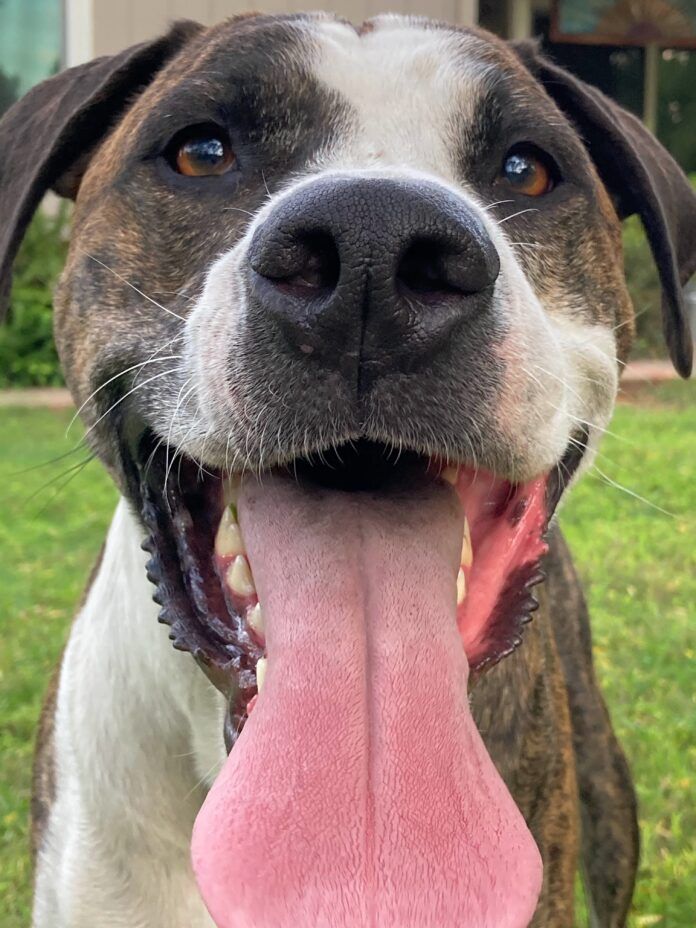
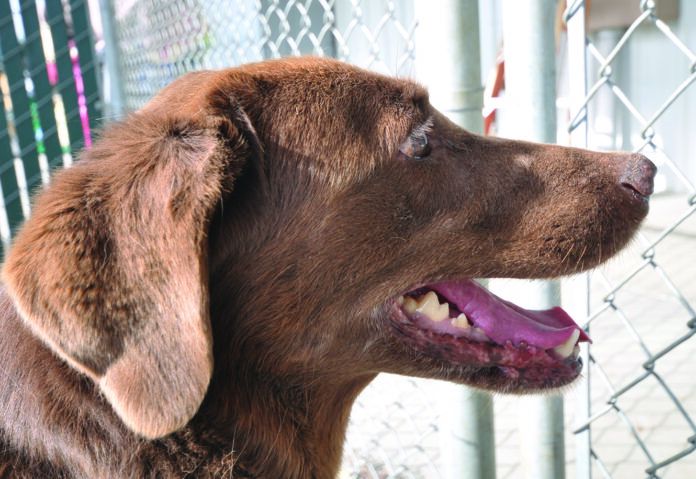
Panting is to be expected if your dog has been running, working, or playing hard; the action helps the dog cool down from the inside out. As you can see here, when the dog is hot, his tongue flattens into a wider and longer shape, increasing its cooling capability. Photo by Nancy Kerns.
Dogs pant for several reasons, the main one being to cool themselves. Dogs can’t perspire the way humans do, though they do have sweat glands in their ears and paw pads. Panting, however, is their major cooling mechanism. When they are hot, rapid breathing releases heat and water from the moist surfaces of their lungs, tongue, and mouth. The cycle of inhaling and exhaling increases the evaporation of water from the respiratory system, which cools them from the inside out. This is normal panting, however excessive panting in dogs can indicate a health issue that needs to be investigated.
Running, jumping, chasing balls, and playing hard will cause a healthy dog to pant, and that’s normal. So will taking a slow walk on a hot day! Deep, fast, heavy breaths are familiar signs of heat dispersal, and they correlate with the dog’s activity level and the ambient air temperature.
That said, there are a few other conditions that can also make a dog pant:
Excitement. Rapid, shallow breathing is a typical response when dogs are aroused and interested in what’s happening now, such as when seeing other dogs, meeting new people, or anticipating the delivery of food or a treat.
Stress. Dogs pant when they experience anxiety, worry, nervousness, or fear. Stress signals include yawning, whining, wide eyes, dilated pupils, lip licking, drooling, a crouched posture, looking away, or other signs of discomfort.
Medication. Some prescription drugs, such as prednisone and other steroids, can cause side effects of heavy breathing or panting.
How to calm a panting dog
Dogs take between 10 and 30 breaths per minute, depending on their size and physical condition. Study your dog’s breathing patterns so you can recognize changes that require attention. In general:
Keep water handy. Panting results in the evaporation of water from the dog’s body, which can cause dehydration, so provide a constant supply of clean water whenever your dog is playing, running hard, or just out for a stroll if the weather is hot.
Change your dog’s mindset (and perhaps location). If your dog is panting more from stress than excitement, move to a more comfortable location and find ways to prevent your dog’s stress from escalating. Attention training is helpful here: Practice saying your dog’s name and rewarding her for looking at you or coming when called. Practicing and rewarding familiar behaviors can help shift your dog’s focus away from whatever is causing stress and excessive panting.
Pharmaceutical help. Noise phobias are a type of stress that often worsens as a dog ages. Noise phobias can be treated pharmaceutically on an as-needed basis, such as for fireworks and thunder, or with longer-acting anxiety products. These treatments are best used before phobias develop into a major problem; talk to your veterinarian. See “Medications for Anxiety,” WDJ March 2022.
Medical emergencies: When to call a vet about your dog’s panting
Call a veterinarian immediately if you notice any of the following symptoms:
Your dog’s breathing changes suddenly, the panting is constant and intense, and/or the dog’s breathing sounds raspier, louder, or harsher than normal.
Your panting dog loses his balance, becomes weak or uncoordinated, collapses, drools excessively, has a bright red tongue, and seems disoriented. These are all signs of dangerous heat stress.
Your dog’s temperature is above 104ºF. If possible, test with a rectal thermometer.
Your dog’s tongue or gums appear blue, purple, or white. These are signs that he isn’t getting enough oxygen.
Your dog is a nursing mother. Deep, intense, heavy panting may be a symptom of eclampsia, also called milk fever, which is a dangerous condition caused by a drop in blood calcium levels.
Panting and other health problems
Panting can be a symptom of other problems that may require attention even though they aren’t medical emergencies. Be familiar with your panting dog’s symptoms so you can discuss them with your veterinarian.
Consider pain and/or stress as a cause when it’s not hot, the dogs have not been active, and only one dog is panting. Photo by Nancy Kerns.
Physical discomfort, nausea, and other physical symptoms can trigger panting, which is often the first pain symptom to manifest, occurring before more obvious pain indicators, such as whining or limping.
Laryngeal paralysis is the result of a vocal cord dysfunction. Coughing, especially after exercise or exertion, is the most frequently reported symptom, followed by noisy breathing, exercise intolerance, excessive panting, and a change in the sound of the dog’s bark (dysphonia).
Some chronic diseases cause excessive panting, such as heart failure, which contributes to breathing difficulties, reduced exercise tolerance, and coughing. Cushing’s syndrome, which occurs when a dog’s adrenal glands produce too much cortisol, can also cause excessive panting. So can respiratory disorders such as pneumonia and lung tumors. Follow your veterinarian’s advice regarding exercise and other activities if your dog has a chronic illness.
Panting and Heat Stroke
Overheated dogs become dehydrated, restless, and unresponsive as they attempt to cool themselves by panting. Heat stroke symptoms can include drooling, vomiting, diarrhea, a racing heart, and physical collapse. Overweight or obese dogs, long-haired dogs, dogs with dark or heavy coats, brachycephalic breeds, and dogs with laryngeal paralysis are at a higher than average risk of heat stroke.
Brachycephalic (short-nosed or flat-faced) dogs such as Pugs, Boston Terriers, Boxers, French Bulldogs, and English Bulldogs have narrow nostrils and smaller airways than other dogs, and this predisposes them to heatstroke because they cannot pant sufficiently to cool themselves. They often make abnormal snorting sounds while panting because of a long soft palate or excessive tissue in the throat that obstructs the airway. It’s even more important to keep these dogs cool and listen for changes in their panting and breathing patterns.
If you think your dog is overheating, don’t just offer water to drink. If a tub or stream is available, you can submerge your dog in cool (not cold) water. Applying cool, wet towels to his chest, neck, head, groin, and feet, and continually replacing or re-wetting the towels (because they warm up quickly) is the next-best method of cooling him. Pouring water over his body using a watering can or bowl isn’t much help; it won’t get the cooling water on his skin (especially on his groin and tummy). You can use an outdoor hose, but check to make sure the water’s temperature is cool, rather than hot from sun exposure or uncomfortably cold. Keep your dog in the shade and out of direct sunlight; if you’re indoors or in your car, run the air conditioner, and/or use a portable battery-powered fan to increase airflow.
Heat stroke can be fatal. If your dog shows any symptoms of heat stroke, contact your vet or emergency clinic at once. For more information, see “Avoiding Heat Stroke in Dogs,” July 2019.
Abnormal panting deserves attention!
Even if everything else about your dog appears to be normal, call your veterinarian if you observe abnormal panting whose causes you can’t explain. The early diagnosis of underlying conditions that contribute to excessive panting improves the odds of successful treatment.
Don't put a gift box of chocolates under the Christmas tree, or anywhere else that you dog can reach them.The aroma will draw most dogs to them, and the more expensive the chocolate, the higher the theobromine content is likely to be. Photo by Emma Farrer, Getty Images.
Most people are aware that chocolate is toxic to dogs. But how much is dangerous? How worried should we be if our dog eats our chocolate?
The chemicals in chocolate that are toxic to dogs are theobromine and caffeine. They cause similar symptoms, though the effects of theobromine last significantly longer. Because the effects and treatment for both are similar and theobromine is far more problematic, for the sake of simplicity we can limit this discussion to the theobromine in chocolate.
Symptoms of chocolate poisoning in dogs
The most common signs of toxicity from theobromine are vomiting, diarrhea, increased thirst, panting or restlessness, excessive urination, and racing heart rate. In severe cases, symptoms can include muscle tremors, seizures, and heart failure.
How much chocolate is toxic to dogs?
For dogs, the toxic dose of theobromine starts at 9 milligrams (mg) per pound of the dog’s body weight; this enough to cause mild signs of toxicity. At 18 mg of theobromine per pound of the dog’s body weight, severe toxicity occurs.
Dark chocolate contains far more theobromine than milk chocolate – and the darker the chocolate, the greater the theobromine content. Baker’s chocolate is by far the most toxic to dogs; fortunately, it’s also the least palatable, though some dogs will still give it a try. It contains up to 450 mg of theobromine per ounce of chocolate.
An 85% dark chocolate contains about 230 mg of theobromine per ounce. Milk chocolate contains no more than 60 mg per ounce, and chocolate baked goods are significantly lower still.
It’s not difficult to calculate the amount of theobromine that should concern you. Let’s use a 30-pound dog as an example. For the dose that would cause mild toxicity, multiply the dog’s 30 pounds by 9 mg; it would take about 270 mg of theobromine to see the onset of mild toxicity. For the amount of theobromine that would cause severe toxicity, multiply the dog’s weight (30) by 18 mg; an intake of 540 mg of theobromine would be highly toxic.
Now let’s look at some chocolates. A standard milk chocolate candy bar weighs 1.55 ounces. Multiply 1.55 ounces by 60 mg of theobromine (the amount that’s found in milk chocolate); that candy bar contains 93 mg of theobromine – nowhere close to the 270 mg of theobromine that would cause mild symptoms. Whew!
But if the same-sized candy bar was dark chocolate, your dog would have consumed about 357 mg of theobromine, which is in the dangerous range. The same amount of Baker’s chocolate is the worst-case scenario, containing just under 700 mg of toxic theobromine.
How Much Chocolate is Toxic to Dogs: Theobromine Toxic Dosages
Dog’s weight (lbs)
mg theobromine that causes mild symptoms
mg theobromine that causes severe symptoms
5
45 mg
90 mg
Baker’s chocolate contains 450 mg theobromine per oz of chocolate
85% dark chocolate contains 230 mg theobromine per oz of chocolate
Milk chocolate contains 60 mg theobromine per oz of chocolate
You can almost always prevent serious problems caused by your dog’s chocolate consumption by simply inducing your dog to vomit – if you have discovered the theft quickly enough. If you catch your dog eating the chocolate, or are fairly certain she just ate it, calculate whether she’s consumed enough theobromine to justify making her vomit. If the dose approaches or exceeds 9 mg of theobromine per pound of your dog’s body weight, go find your bottle of 3% hydrogen peroxide. The solution works as a direct irritant to the dog’s gastric lining; dogs usually vomit fairly quickly after administration.
When calculating how much chocolate your dog ate, remember that it’s just the chocolate that’s toxic. The cream filling or nuts may add to your pup’s stomach upset, but not to the toxicity caused by the theobromine.
How to Induce Vomiting in Dog Who Ate Chocolate
The dose of 3% hydrogen peroxide is small: 1 teaspoon per 5 pounds of the dog’s body weight, with a maximum of 3 tablespoons. There are 3 teaspoons per tablespoon, so the maximum dose for dogs who weigh more than 45 lbs is 3 tablespoons.
If the peroxide works its magic, your dog should vomit within two to five minutes of receiving the first dose. You’re hoping for a significant amount of chocolate vomit, so keep your dog away from carpets! If your dog vomits an amount that appears comparable to the missing chocolate, she’s almost certainly going to be fine.
If she doesn’t vomit within five minutes, it’s okay to re-dose. Then stop; do not administer more than the suggested dose, but put in a call to your veterinarian or emergency clinic.
When it’s time to get to the vet after your dog eats chocolates
Chocolate consumption can often be managed at home. There are, however, situations where medical intervention is prudent:
If your dog eats a toxic dose of chocolate and does not successfully vomit it back up.
If your dog ate a large amount – or an unknown but potentially large amount – of Baker’s or 85% dark chocolate (better safe than sorry).
If your dog shows signs of chocolate toxicity: agitation, tremors, seizures, vomiting, and diarrhea.
Any of the above scenarios warrant a trip to the veterinarian. It can take days to recover from theobromine toxicity, but fortunately, with early intervention and proper veterinary care when needed, dogs usually recover uneventfully.
Mites come in all shapes and sizes but, practically speaking, three types of mites are the most common in dogs: the skin mites Sarcoptes and Demodex and the ear mite Otodectes.
What Types of Skin Mites Can Dogs Get?
An infection of Sarcoptes mites causes sarcoptic mange. Of the three types of mite infections, this is the most difficult to definitively diagnose, despite the dramatic symptoms. What do Sarcoptes mites look like on a dog? Dogs with sarcoptic mange are typically extremely itchy and exhibit scaly skin and severe hair loss.
Like Sarcoptes, Demodex mites cause scaly skin and hair loss on a dog and are also quite itchy, although usually less itchy than Sarcoptes.
Ear mites, Otodectes, reside almost exclusively in the dog’s ear canal. They cause itchiness in the dog’s ear and a foul odor.
What Are the First Signs of Mites on a Dog?
Mites cause intense itching and therefore scratching, which causes inflammation and skin infections. So, the earliest signs of mites on a dog include:
Itching
Scratching
Inflamed skin
Hair loss
Red, bumpy rash
Scabs
Crusty skin, especially on ear tips
Foul odor (ear mites)
Mites can be anywhere on your dog, but the most likely spots are ears, elbows, hocks and the underside of the chest and face.
Diagnosing Sarcoptes Mites on a Dog
Even when a dog is severely infected with Sarcoptes, veterinarians may perform multiple skin scrapes, but it rarely works. That’s because sarcoptic mites tend to burrow deeply into the skin.
A simple test veterinarians often utilize (and that you can try at home) is to vigorously rub the flap of your dog’s ear. If he reacts by enthusiastically scratching with his hind leg—a behavior known as the pinnal-pedal refles—it’s almost certainly an infection with Sarcoptes.
Sarcoptes mites are contagious to both dogs and other mammals. They are spreading in wildlife, which means your dog could pick them up if he investigates an infected area. These mites may even bite you. The good news is they won’t set up residence on your body. They’ll just visit for a quick bite to eat.
Diagnosing Demodex Mites on a Dog
The second type of skin mite you’ll see on a dog, Demodex, is relatively easy to diagnose with a skin scrape and is not contagious. Demodectic mange (the term for hair loss and irritated skin caused by an infection with Demodex) is most common in dogs under the age of 2.
Many people are horrified to learn that while Demodex is not contagious, they may already have the mites living on their pets’ or their own skin. The immune systems of most dogs (and humans) prevent mite populations from ballooning to the point that they cause unwelcome symptoms. This is why the mite is most commonly found on dogs who are chronically unwell or on young dogs with underdeveloped immune systems.
Diagnosing Ear Mites on Dogs
Ear mites, Otodectes, can cause extreme itchiness, but in this case, the itch is in the dog’s ear. The most common signs are persistent head shaking and ear scratching. Most dogs also develop a foul odor in the ear. Like Sarcoptes, ear mites are very contagious and all pets in the household should be treated.
How to Get Rid of Mites on Dogs
It is easy to find home remedies for dog mites online; most commonly cited remedies involve apple cider vinegar, olive oil, and aloe vera. I understand the desire to keep treatments natural, but I would be doing a disservice to recommend any of them.
I have never seen a dog successfully treated for mites with a home remedy, and I have treated a plethora of home-remedy failures. It’s also important to note that the signs of mites are like other skin diseases such as bacterial infections, so it would be wise to schedule a visit to your veterinarian, so your vet can diagnose and appropriately treat your dog’s itchy, irritated skin.
The easiest and least costly treatment to eliminate mites from your dog’s skin or ears would be a therapeutic trial using a flea and tick preventative that is also effective against all three forms of mange. These products require a veterinary prescription, but most veterinarians will OK a request for a standard anti-parasitic treatment if your dog has an ongoing relationship with their clinic. As a bonus, these products will work well for the less-common mites as well.
Effectiveness against mange is not on the label, but these products are routinely used by veterinarians for that purpose. This is very good news, since before the advent of these monthly treatments, dogs with skin mange were often subjected to repeated toxic and foul-smelling dips.
Remember that mites are contagious, so every pet should be treated. Puppies, older dogs, neglected dogs, and immune-compromised dogs are most likely to be at risk.
Wash all dog and human bedding and thoroughly vacuum and clean the house to remove mites. Throw the vacuum bag away so the mites don’t escape and crawl back into your house.
No Veterinary Diagnosis on Dog Mites Is Risky
You may want to try to save money and ask your veterinarian for the mite treatment without an appointment. That’s understandable, and this path will successfully treat a mite infestation in your dog, if your home diagnosis is incorrect! If it’s not, you’re still going to have an itchy dog on your hands and will have spent money on a treatment that won’t work.
The second option is to go straight to your veterinarian and get a definitive diagnosis. A key factor in deciding which path to take is your dog’s level of discomfort. If he’s relatively comfortable, there’s really no reason not to try a monthly parasite preventative first (i.e., Bravecto or NexGard) as they are considered safe and have the added benefit of protecting your dog against fleas and ticks.
If you do decide to try a monthly preventative, consider treating all the dogs in your home since, without a definitive diagnosis, you won’t know whether you’re dealing with a contagious infestation.
The other day the New York Times published an excerpt from canine behavioral researcher and author Alexandra Horowitz’s newest and most excellent book, The Year of the Puppy: How Dogs Become Themselves, (Viking, 2022). The excerpt was about canine adolescence, a period of a dog’s life that Horowitz calls “woefully understudied by researchers and often completely ignored by dog people.” I was thrilled to read this, because often, owners are unprepared for this phase and shocked by the changing moods and needs of their new dog.
Perhaps because of the greater emphasis on the changing nutritional needs of a growing and then adult dog, it seems like the whole world divides the stages in dog lives into two, and perhaps three major categories, each with specific challenges. There’s puppyhood, when we are carefully managing the puppy’s diet (so as to provide him with precise nutrition for a just-right rate of growth, neither too fast nor too slow), as well as managing the puppy’s environment and setting behavioral expectations. Usually, folks then skip right to adulthood, when dogs are frequently switched to “adult maintenance” diets and expected to have achieved a certain standard of civilized behavior. Sometimes, the nutritional and medical needs of the senior dog are also given separate consideration.
But few people talk about the phase of a dog’s life that humans find the most challenging and frustrating: the “teenager” phase, when the behaviors that our adorable puppies have been performing on cue for months suddenly seem to be missing from our adolescent dogs’ memory; when the dog who, since adoption, has cheerfully greeted humans of every size, shape, and color begins barking, growling, or even lunging at strangers; and when so-called “nuisance” behaviors like escaping confinement, barking, fence-fighting, and chewing furniture start emerging.
It’s no coincidence that more dogs are surrendered to shelters at this phase of a dog’s life than any other. People who were prepared for this phase sometimes find themselves wondering if they made a big mistake in adopting; people who spontaneously brought a puppy home without preparation often bail on their responsibility for the dog’s well-being at this time. The dog is no longer cute and easy; without good management and training, he can seriously disrupt people’s lives, even cost them a marriage or housing!
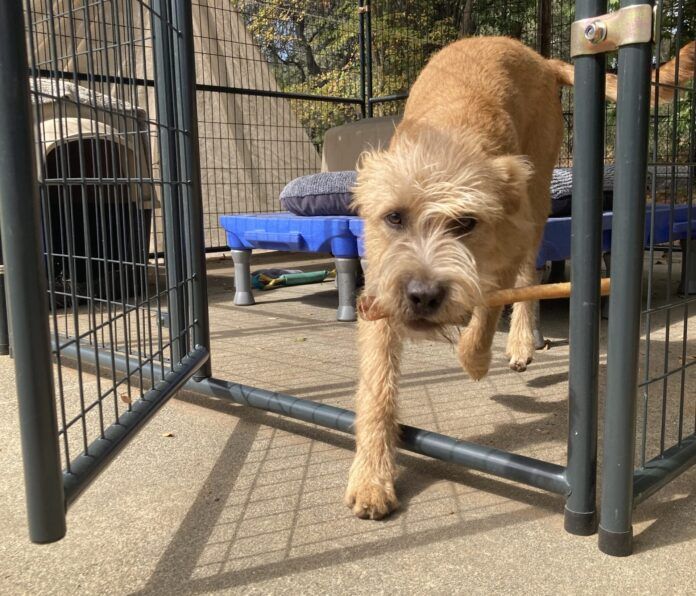
My foster-fail puppy Boone is right there: 9 months old, gangly as all-get out – and no longer the pudgy puppy who was content in confinement as long as he had something to chew on. Now he knows there is a whole world of action and fun he’s missing out on when he’s been left in my office or the outdoor dog pen while I go on a bike ride, and he objects! If he sees so much as my bike helmet come out of the closet before I’ve put him in temporary safe custody, he’s learned to be wary of being lured into said enclosures. Or rather, he’ll go, while looking for the fresh bone I took out of the freezer that I generally lock him up with – but he’s not past trying to dash out the door with the bone if I’m inattentive while leaving the enclosure myself. That’s not a witless puppy’s move, nor a responsible adult dog tactic; that’s a teenager’s ill-advised stratagem!
Fortunately, WDJ has plenty of articles we’ve published in the past about this fraught phase of a dog’s life – or, I should say, the fraught phase in the dog/human relationship (dogs probably don’t perceive the phase as a problem; it’s their owners that do). I’ve been reviewing them myself, and they are extremely informative. If you have a dog in the adolescent phase – approximately, between about 6 months and 2 years old – you might want to read some of these helpful and encouraging articles. If you can continue to guide your dog through this developmental phase with patience, humor, and understanding, you’ll end up with the best dog ever. I know, because I’ve done it at least twice so far, and I couldn’t love the results any more.
Is mango good for dogs? This luscious powerhouse contains vitamins A,C, B, and E, plus lots of fiber. When they are ripe, it’s hard to beat their healthy and sweet appeal. The best part is you can feel free to share some mango chunks with your dog – as long as you prepare it properly.
Don’t feed the whole mango to your dog
This healthy snack needs to be prepared for your dog pretty much the same way as you would for yourself: carefully peeled, pit removed, and cut into bite-sized chunks. The peel and pit especially present choking hazards to those dogs who scarf down their food. One-inch cubes are suitable for larger dogs, whereas smaller dogs should be fed chunks half that size.
Keep in mind that there is a lot of fiber and sugar in this fruit, so go easy at first and don’t overdo it (besides, that means there’s more mango for you!). Feeding one-quarter of a cup of mango chunks is a safe amount for most dogs, but you should scale down the amount for toy breeds.
Can dogs eat dried or frozen mangoes?
Like a lot of tropical fruits, the mango is best enjoyed at the peak of ripeness. The timing can be tricky, however, so on a hot day, a good substitute can be frozen mango chunks found in the freezer section of your grocery store. This is a fun outdoor activity for a mouthy dog when the temperatures rise. Dried mangos (or any dried fruits, for that matter) should not be fed to dogs, as they are extremely high in sugar.
If you have a dog with a health condition that requires a special diet, it’s important to refrain from providing treats (even healthy treats like mangos) without first seeking your veterinarian’s approval.
Puppies who contract parvovirus don’t get just a little sick; their loss of energy and appetite are dramatic. They quickly become dangerously dehydrated (due to vomiting and diarrhea) and are in evident pain from the inflammation in their digestive tract. Photo by Cavanigerman/ Dreamstime.com
Canine parvovirus type 2 (also known as CPV, CPV2, or just “parvo”) has been sickening and killing dogs and puppies since 1976, the year it first emerged in dogs. The illness caused by the virus, characterized by severe vomiting, bloody diarrhea, and lethargy, first affected dogs in Europe. Within two years, however, the virus had spread throughout the world. Uncountable thousands of puppies and dogs who were infected with parvovirus died before the parvovirus vaccine was developed that could prevent the disease.
The market introduction of the parvo vaccine in 1979 and release of an improved vaccine in 1981 relieved dog owners worldwide; finally, there was protection available to prevent the deadly disease. But puppies and dogs who are exposed to the virus before being fully immunized against it still run a strong risk of becoming infected and fatally ill.
Parvo symptoms
The signature symptom of parvo in dogs is severe gastroenteritis (inflammation in the stomach and intestines), which causes vomiting and diarrhea that is often profuse, liquid, bloody, and foul-smelling, and a loss of appetite. Affected dogs and puppies will exhibit extreme lethargy (lack of energy and enthusiasm).
Parvo in puppies usually hits hard and fast. Puppies with parvo are not likely to be acting fine except for diarrhea. They usually look pretty pathetic, sad, and act like they feel awful. They frequently have fevers and abdominal pain. They quickly become dehydrated and sometimes anemic, which makes them sicker and weaker. The younger the puppy, the harder it hits. By the time they are presented to a veterinary hospital, many puppies are in shock (a life-threatening emergency where blood flow is impeded, leading to organ shutdown and death).
Unvaccinated adult dogs can get parvo, too. But because adult dogs have stronger immunity and better mechanisms to fight dehydration and shock, they usually recover more quickly and generally have a better prognosis than puppies, although it can still be fatal.
How do dogs get parvo?
In order to contract parvovirus, an unprotected dog or puppy has to come into contact with feces from an infected dog. The virus gets into the dog through the nose and mouth; a puppy or dog can get it from sniffing, licking, or eating the feces of an infected dog – or just stepping in it and then licking their paws.
The virus is very hardy. It can live for months to years in the environment, which means contaminated surfaces, bowls, and toys are threats. Many disinfectants are ineffective against parvovirus, but diluted bleach kills the virus if left on the infected items for at least 10 minutes.
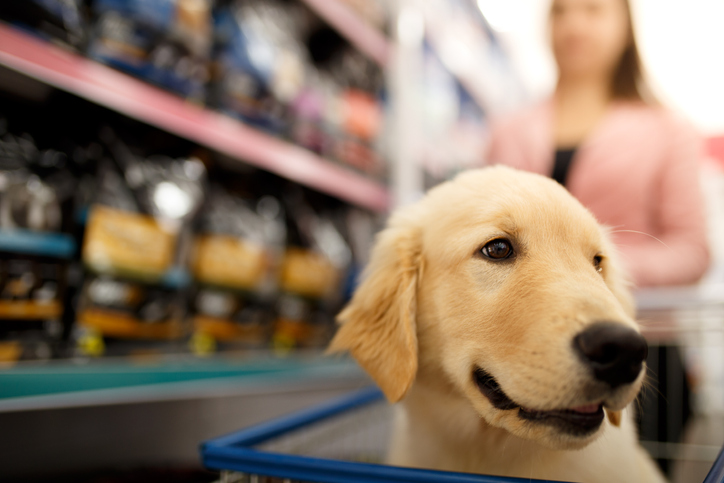
It’s a common practice to put a puppy in a shopping cart when taking her to a pet supply store, in an effort to keep her from walking on the potentially virus-contaminated store floor. The reality is, though, that the floor is probably cleaned more often than those carts; if a sick puppy with vomit or diarrhea on her paw was in that cart before your pup, your puppy could be at risk. It’s safer to just keep those not-yet-fully vaccinated puppies out of the store altogether. Photo by Capuski, Getty Images.
Stages of parvo
An unvaccinated or incompletely immunized dog or puppy will experience a predictable series of symptoms after being exposed to parvovirus.
Exposure (Infection)
The time from the first stage – exposure (infection) – to the onset of clinical signs is the incubation period. With parvovirus, the incubation period is about seven to 14 days. This long incubation period means when you buy or adopt a new puppy, if he’s been exposed to parvovirus, he may seem perfectly healthy and show no signs of illness for up to 14 days.
Incubation Period
Though your dog may seem perfectly well, during the incubation period, the virus is rapidly multiplying and spreading. It attacks the bone marrow, the lining of the intestines, and sometimes even the heart muscle. When the puppy starts showing signs of the disease, take the puppy to a veterinary hospital, where a test for the virus will be done to confirm the diagnosis. The test can be run in the hospital, so you will have results right away.
Illness
If your puppy tests positive, your veterinarian will run additional tests that help dictate treatment and predict prognosis. After discussing test results, treatment options, and prognosis, treatment begins.
Recovery
The final stage of parvo is recovery. Full recovery once your puppy is out of the hospital and out of danger usually takes a week or so, starting with small, frequent, highly digestible meals, gradually returning to his regular diet and schedule.
Treatment for parvovirus
Treatment for parvo consists of supportive care while the immune system fights off the virus. During this time, the owner must monitor the dog carefully and report any worsening symptoms, such as vomiting, depression, or increasingly liquid diarrhea.
The most important aspect of treatment is fluid therapy; this rehydrates the patient, corrects dangerous electrolyte imbalances, and treats shock. The most severely affected patients will always require at least initial admittance to the hospital for intravenous fluid administration.
Once the initial crisis has been corrected, fluid therapy in some form remains an important aspect of ongoing daily treatment until the vomiting and diarrhea stops, but may be administered under the skin (subcutaneously). The profuse watery diarrhea caused by parvovirus will continue to cause life-threatening dehydration until it resolves, and this can take several days.
Antibiotics are another important aspect of parvo treatment. Puppies frequently die from sepsis, a life-threatening condition caused by bacteria spread throughout the body. Parvovirus damages the intestines, and bacteria from the intestines can “leak” into the bloodstream, ending up everywhere in the body. Preventing sepsis and/or aggressively treating it are critical to a successful outcome.
Pain medication and anti-vomiting medications (antiemetics) are important both for your puppy’s comfort and for shortening overall treatment time. The sooner the puppy can tolerate oral liquids and food, the shorter the healing time will be. Getting nutrients into the gut as early as possible is so important to a good outcome that feeding tubes are recommended for pups who don’t feel well enough to eat on their own yet.
Common complicating medical issues that must be monitored for and corrected include low blood sugar, low potassium, and low albumin (a circulating protein important for fluid balance in the body).
Outpatient treatment for parvovirus
Many puppies with parvo require aggressive treatment for five to seven days or even longer. While inpatient treatment is still considered the gold standard of care, a lengthy hospital stay like that can be costly. It is unfortunately out of the financial realm of possibility for many puppy owners, which is why some veterinarians offer outpatient parvo puppy treatment.
To qualify for outpatient treatment, a puppy must be early in the course of the disease, only mildly to moderately dehydrated, and still alert and responsive. Puppies who are further into the disease when presented, already super sick and maybe septic will not do well as outpatients. The puppy must also have an owner who is willing and able to invest the time and energy necessary for the intensive nursing care these pups require.
Regardless, though, treatment for all puppies should start with hospitalization for intravenous fluids to restore hydration and correct any blood sugar and electrolyte abnormalities. Antiemetics and antibiotics will be given by injection. The outpatient puppy can usually be released to home after four to six hours of this initial treatment.
While individual veterinary protocols will vary, they all require a once-daily visit to the veterinary hospital so the pup’s condition can be evaluated by a veterinary professional and testing for complicating issues can be performed. Daily fluids and electrolytes can be given subcutaneously. Assuming vomiting is controlled, oral treatments for low sugar and low potassium and any other necessary medications can be administered by the owner at home. The owner can also start oral nutrition, with veterinary guidance, as soon as possible.
Puppies who decline in any way, continue to vomit, remain dehydrated, or refuse to eat should be disqualified from the outpatient protocol. If this pup is to survive, bumping him back up to the gold standard of inpatient care and treatment will be necessary.
If your puppy thrives as a parvo outpatient with guidance from your veterinarian – as well as your dedication and excellent care – congratulations! You have likely saved yourself thousands of dollars and your puppy’s life.
How to prevent parvo
The parvovirus vaccine is the mainstay of prevention of this disease. It is highly effective against the virus. It is rare for an appropriately vaccinated dog or puppy to come down with parvo.
Puppies should be vaccinated every three to four weeks, starting at 6 to 8 weeks of age until they reach 16 to 20 weeks of age. As young adults, a booster is recommended initially annually, then every three years.
Additional preventive measures you can take to prevent parvovirus include:
If possible, get a puppy from a vaccinated mom. She will give her pups temporary immunity through her colostrum (first milk).
Limit your pup’s exposure until fully vaccinated. This does not mean keeping him in a bubble; that would make him miss out on critical socialization and confidence-building opportunities when they are the most important (see companion post, “Balancing Dual Threats”).
Just use common sense; avoid areas where unvaccinated dogs are likely to be, such as strays, and watch where your puppy is sniffing, since the virus is found in feces. Pick the puppy up and don’t allow him to touch the floor in high-risk environments, like the veterinarian’s waiting room or at highly trafficked pet supply store or public park.
The bottom line on parvo? There’s good news and bad news. The bad news: Without treatment, almost all infected puppies will die. The good news: With treatment – even outpatient treatment – most puppies will survive. Survival rates are as high as 90% for inpatients, and more than 80% for outpatient puppies.
The best news of all? Parvovirus is easily prevented by vaccination.
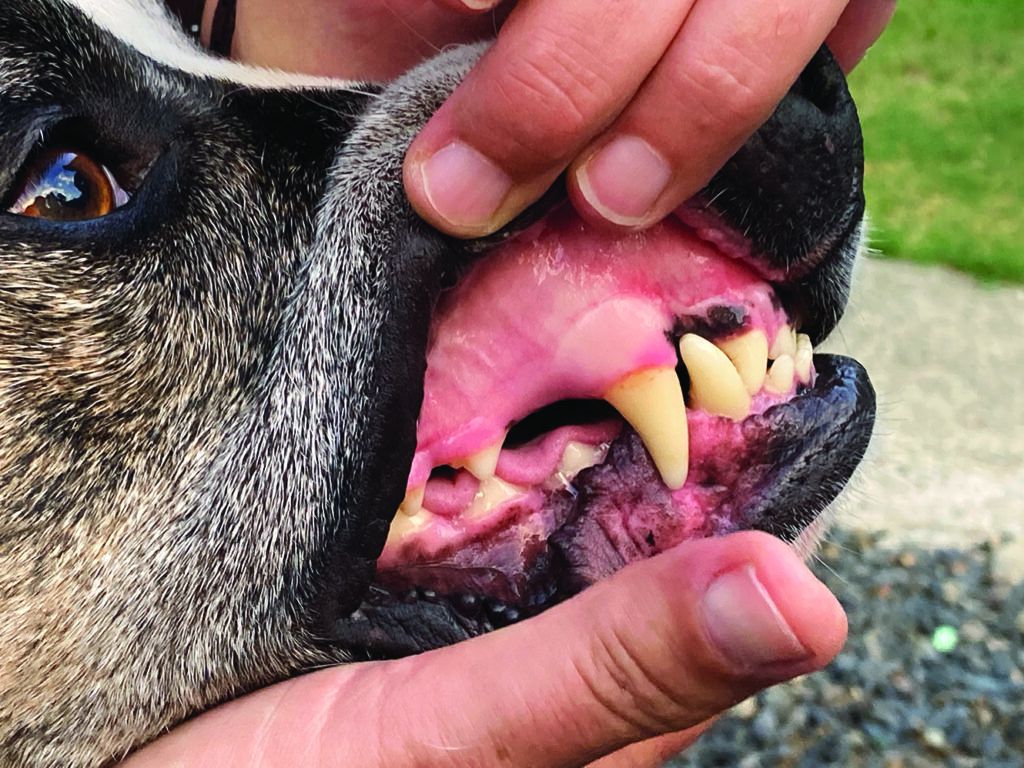
Did you know that the color and condition of your dog’s gums can give you important clues about her health? Paying attention to these indicators can help you recognize and respond to a variety of canine health problems.
Identify What’s Normal and “Healthy” For Your Dog’s Gums
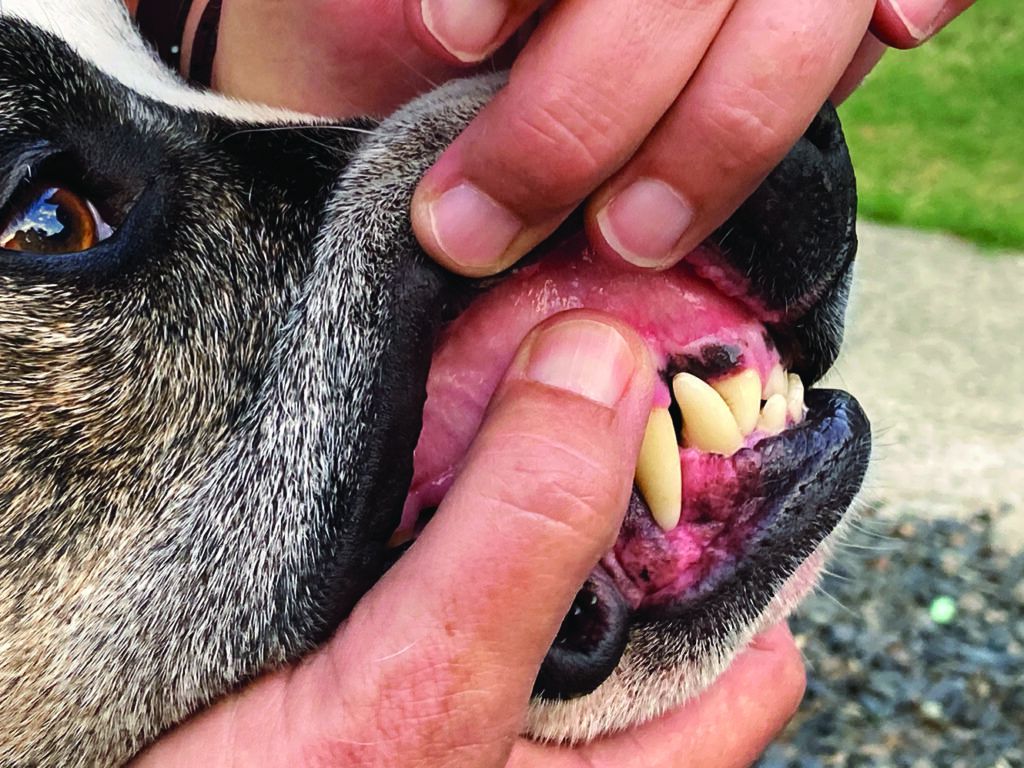
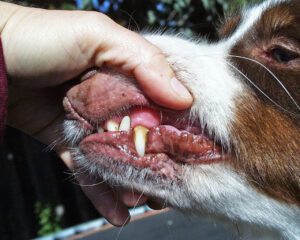
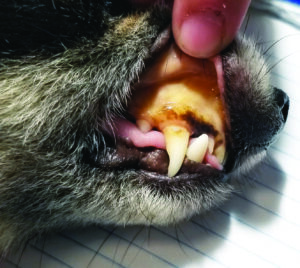
Regularly check your dog’s gums to understand what’s normal for them and to detect any gum issues when they arise. Lift your dog’s upper lip and check the gum above a canine tooth. This color is your dog’s gum-health baseline, so check it often.
What Color Should Dog Gums Be?
Most healthy dogs have pink gums, but some breeds naturally have dark or black pigment in their gums or the roof of the mouth. The pink of healthy gums is often described as light, powdery, bubblegum, or the color of cooked shrimp.
If your dog’s gums are naturally black, dark, or heavily pigmented, color changes will be harder to detect. Instead, check your dog’s inner eyelids by gently pulling the eyelid down so you can see the color of the eyelid tissue.
You can check your dog’s hydration level by running your finger over the gums, which should be slick, smooth, slippery, or wet, not dry, tacky, or sticky.
Check The Capillary Refill Time Of Your Dog’s Gums
The capillary refill time (CRT) of your dog’s gums can detect illness or dehydration.
To check your dog’s CRT, gently press the gum with an index finger. When you release the pressure, the gum will be white or pale pink, and its normal color should return in 1.5 seconds or less. This return to natural color after you press on the gum is called the capillary refill time.
A slow CRT, such as 2 seconds or more, can reflect dehydration, poor circulation, low blood pressure, or shock. Shock is the most serious of these conditions. If dehydration symptoms are minor, increase your dog’s water consumption. Serious dehydration requires medical treatment such as subcutaneous fluids.
All of the following are serious conditions that require medical attention:
Blue gums reflect a lack of oxygen in the dog’s blood supply (cyanosis). Pneumonia, congestive heart failure, pulmonary thromboembolism, choking, hypothermia, and other health emergencies can cause this discoloration. A dog with blue gums needs immediate medical attention.
Pale pink or white gums are a danger sign, reflecting acute blood loss or diseases that cause anemia.
Bright cherry red gums can indicate overheating or heat stroke, carbon monoxide poisoning, elevated blood pressure, or exposure to toxins. All of these require medical attention. For heat stroke, in addition to contacting your veterinarian, act fast to drizzle cool water over the dog, offer water to drink, wet the paws with cold water, and drape a cool wet towel around the head.
Slightly red gums can reflect topical irritation, such as that seen in the aftermath of enthusiastically chewing a new toy, or a mouth infection such as gingivitis. These aren’t medical emergencies, but monitor the symptom and check with your veterinarian if it continues.
Bleeding gums, especially after brushing or vigorous chewing, could result from gingivitis, growths in the mouth, or sensitivity. Emergency treatment may be needed If bleeding lasts more than 10 minutes.
Yellow gums can reflect liver problems, anemia, and/or the destruction of red blood cells.
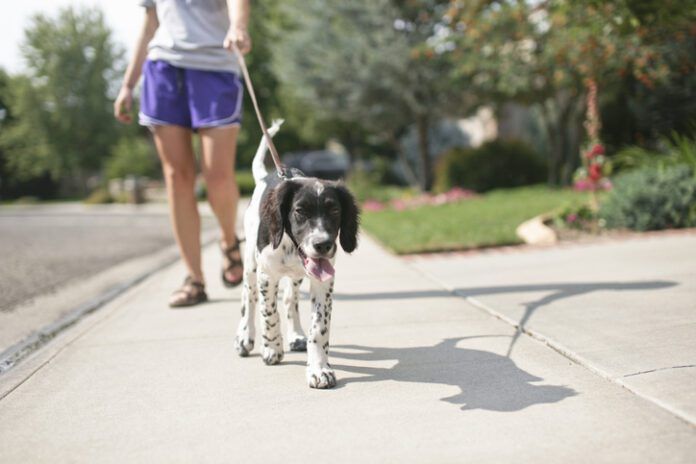
You don't have to keep puppies at home until they are fully vaccinated, but they shouldn't be taken to or walked in high-traffic areas until they are fully immunized, either. Public sidewalks in neighborhoods with lots of dogs are too risky for a puppy who is less than 20 weeks and not yet fully vaccinated. Photo by Glasshouse Images / Getty Images.
Puppies who are born to mothers who have been vaccinated against parvovirus and who have had an ample opportunity to nurse in the first day or two after birth will receive infection-fighting antibodies from their mothers. This “passive immune transfer” of maternally derived antibodies should protect them in the first few weeks after birth from an unlucky encounter with the parvovirus antigen.
These maternal antibodies gradually fade from the puppy’s system over the first few months of his life, and as they do so, they leave him vulnerable – unprotected from any viral antigens. That’s why we administer vaccinations to puppies starting at around 6 weeks of age; it’s an attempt to prompt his immune system to develop its own protective, virus-fighting antibodies as soon as his body is capable of doing so, and at the time his maternally derived antibodies ceased to protect him.
What happens if we administer his vaccinations when there are maternal antibodies still circulating in his system? Those antibodies will quickly recognize and neutralize the disease antigens in the vaccination – zap! The puppy’s immune system won’t be able to develop an adequate supply of its own antibodies from the very brief exposure it might have had to the antigens present in the vaccine because of what’s called “maternal antibody interference.”
The potential of this interference is why we vaccinate puppies several times over the first few months of their lives – because the maternal antibodies he may possess are capable of neutralizing the first few vaccinations he receives. And since the fading of the maternal antibodies happens at a variable time in each puppy – anywhere between 4 weeks and about 18 weeks of age – we vaccinate the pup several times, a few weeks apart. Repeat vaccinations are meant to reduce the window of opportunity between the degradation of the maternally derived antibodies and the development of his own vaccine-induced antibodies for viruses to infect him.
Read our companion article, “What is Parvovirus in Dogs,” to learn more about parvovirus, a deadly illness among puppies that can be prevented with the highly effective parvovirus vaccine.
Keep Him At Home?
It used to be standard veterinary advice to keep puppies at home until they had received a vaccination after they were 18 to 20 weeks old (the “last of their puppy shots”). This advice was meant to prevent them from having any chance of coming into contact with the most common and dangerous viruses during a potential gap in antibody protection.
That’s a very safe recommendation as far as disease prevention goes – but, according to veterinary behavior experts, a downright disaster for the puppy’s social development. According to a position paper issued by the American Veterinary Society of Animal Behavior (AVSAB), protecting the puppy’s behavioral health by properly socializing her before she is “fully vaccinated” should be the higher priority. The position paper says:
“The primary and most important time for puppy socialization is the first three months of life. During this time puppies should be exposed to as many new people, animals, stimuli, and environments as can be achieved safely and without causing over-stimulation manifested as excessive fear, withdrawal or avoidance behavior. For this reason, the AVSAB believes that it should be the standard of care for puppies to receive such socialization before they are fully vaccinated.
“Behavioral problems are the greatest threat to the owner-dog bond. In fact, behavioral problems are the number one cause of relinquishment to shelters. Behavioral issues, not infectious diseases, are the number one cause of death for dogs under three years of age.
“While puppies’ immune systems are still developing during these early months, the combination of maternal immunity, primary vaccination, and appropriate care makes the risk of infection relatively small compared to the chance of death from a behavior problem.”
Today, we know how to help the puppies develop healthy behavioral skills and keep their exposure to disease antigens minimal. We do this by using carefully selected environments – such as private homes and well-managed, clean dog training centers – to expose vaccinated puppies (who may or may not have complete immunization, depending on their own immune development) to other humans, vaccinated dogs, and similarly well-managed puppies. We also vaccinate puppies at appropriate intervals until they are after the age of 20 weeks. This “safe socialization” should only minimally increase the puppy’s risk of viral infection, but will be highly protective of his healthy behavioral development.
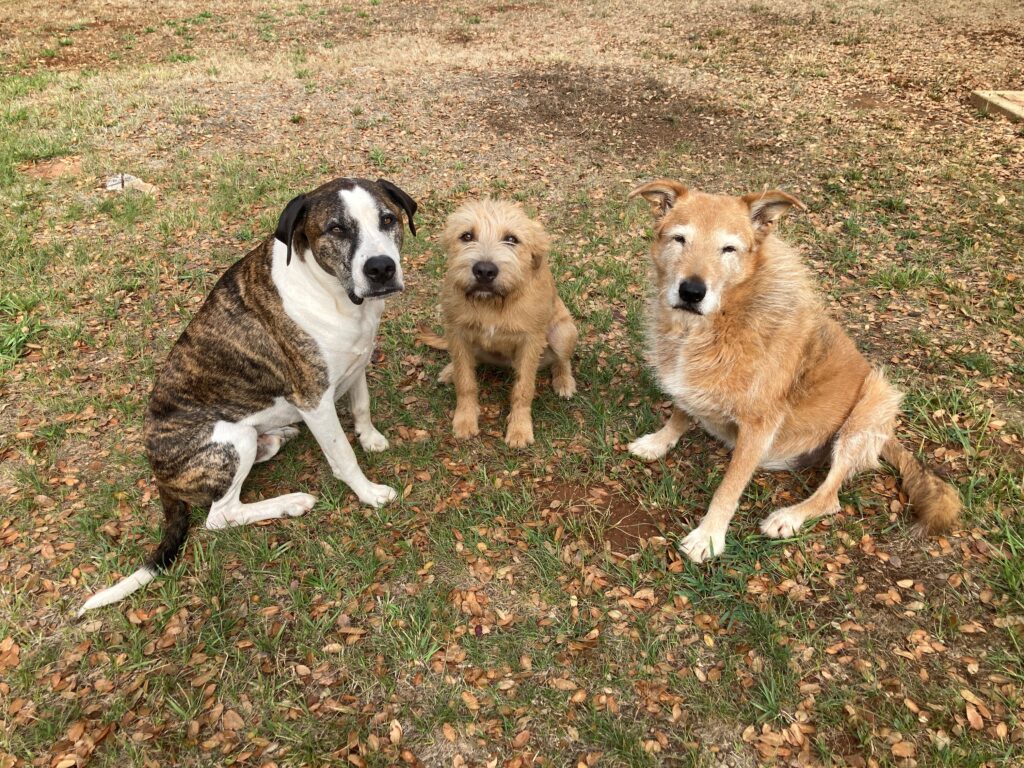
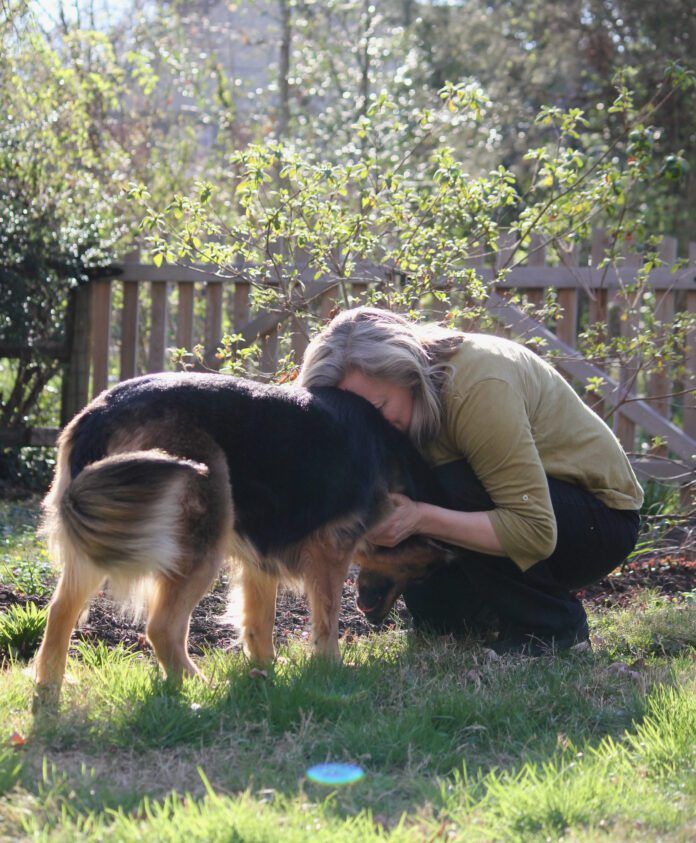
Photo by Kathy Callahan. This piece is in honor of the Callahan family’s dog Nala, who passed away at 13 years of age last summer.
So that you don’t have regrets later, here’s a quick public service announcement: Remember to appreciate your no-trouble-at-all dog! Sometimes our most naturally easy dogs end up being a little bit ignored precisely because they are wonderful to live with. Is that happening at your house?
Just yesterday I had yet another client articulate their ah-ha moment: “Oh my gosh, I’m feeling so guilty since we got the new puppy. Now that we’re working so hard training and entertaining the puppy, I’m realizing that it has been years since our good old boy has had a bully stick! And sure, we used to train with him – he loved it – but that just dwindled away because he’s really so easy to have around…”
I hear it all the time. So do your future self a favor and remember to appreciate that gift of a soul lying sweetly at your feet, day after day.
Just because you don’t need to give her a stuffed Toppl to keep her from destroying the house doesn’t mean she wouldn’t enjoy one.
Just because she doesn’t need a three-mile walk to be civilized for the day doesn’t mean she wouldn’t love that.
Just because she doesn’t jump all over you and you never need to ask her to sit, doesn’t mean she wouldn’t have an amazing time training and learning tricks with you.
Just because she isn’t pawing at you and getting constantly underfoot to make you sit and snuggle with her doesn’t mean she isn’t quietly wishing you’d get down and cuddle with her…
It’s not all about the “problem dog”
Most dog trainers have a story about the difficult dog who landed them on the road to this profession. The more issues there are, the more tools you need at your disposal. The result? You dive into training and enrichment, and end up super bonded to that challenging dog because that’s what extra time and engagement will do to a relationship.
So what of our dear, easy friends? The ones who’ll spend years just calmly hanging out in the house, demanding nothing? The ones watching us head out to a training class with our “difficult” dog, treat pouch in hand? This is just a little nudge to remember that each dog’s life is short, and while you may have many dogs in your lifetime, your dog just has this lifetime, and you.
A dozen years from now, you’ll be glad if you made sure to end every day with a little special time alone with that one no-trouble-at-all friend, gazing into her eyes and telling her you’re so very glad she’s here.
Learn how to identify the best canned dog foods that are available at your local pet supply store – and to choose the ones that are right for your dog.
To build the list, we start by looking for companies who make products that meet our selection criteria:
Good canned dog foods should have an animal protein source or sources in at least one of the top two spots on the list of ingredients. Water or broth may also be first or second on the list, as water is often added as necessary for processing. But the animal proteins should appear immediately after that. The amino acid profiles offered by animal proteins suit dogs better than the amino acid profiles from peas, potatoes, corn, soy, etc.
Canned food is a particularly good way to buy and store meat for your dog. It’s shelf-stable and can last for years; you don’t have to use it quickly (except after opening the can) or keep it cold (except after opening).
We look for whole, named sources of animal protein. “Whole” means meat, rather than meat-by-products, and “named” means you want to see “beef,” “chicken,” “lamb,” etc., rather than “meat.”
If plant proteins are present in the food, we’d like to see them play a minor role, appearing lower on the ingredient list – lower than the fifth or sixth position.
When vegetables, fruits, grains, and/or other carbohydrate sources are used, we’d like to see them present whole as opposed to a “fraction” or by-product. For example, we’d rather see “whole brown rice” than “rice flour.” By-products and fractions are often ingredients that are waste from human food manufacturing; they’ve already been processed, shipped, and stored before they will be mixed and processed again, losing vitamins along the way.
But honestly, we’d rather see simple, meat-heavy formulas without too many carb sources in canned foods. Carbs can be delivered to dog much less expensively through dry foods and/or fresh foods.
There are some attributes we don’t want to see in canned dog foods, too. We won’t accept any products with unnamed meats or fat sources (i.e., “meat,” “meat by-products,” “poultry,” “poultry by-products,” or “animal fat”).
We also don’t want to see any artificial colors, flavors, or preservatives. None of these are needed (or common, thankfully) in canned food.
If this all sounds very basic so far – it is! But if you look at the ingredients of all the canned dog foods in your local pet supply store – or, in particular, the products sold in grocery stores or big-box stores – very few of the biggest name canned foods you will find will meet these very minimal characteristics of good-quality dog foods.
If you do look at the database – or go to the company websites and look at ingredient lists – you’ll notice that the foods on our list vary quite a bit in ingredient quality. But remember that even the lowest-quality food on our list is better than most products that are not on our list.
Keep in mind that quality is linked to price, and that price will, to a certain extent, indicate better-quality ingredients. It definitely helps identify more ethical ingredients, such as certified organic ingredients, wild-caught fish, grass-fed meats, and cage-free poultry.
In some cases, high prices correlate to products that are made in human-food manufacturing facilities, which means that all of the ingredients in them are “food grade” (legally human-edible), not “feed grade” (only for use in animal feed). All of the products being made in human-food manufacturing facilities are packaged in the lined cardboard cartons called Tetra-Paks – but be aware that not all foods packed in Tetra-Paks were made in a human-food manufacturing facility. Sadly, imitators abound wherever an advantage can be found.
You may be surprised to see some large companies that have historically made “mainstream” products (of generally lower quality) on our list. Some of the largest pet food makers have caught on that there is a market for high-end products, even in mass-market retail outlets.
You might also notice the return of a few companies that were previously on our “Approved Canned Foods” lists but that we had removed due to their inclusion animal plasma, an ingredient that we had a bad feeling about, especially after the bovine spongiform encephalopathy (BSE) crises in past years (which were caused by the use of brain and spinal cord tissues in animal feed).
This high-protein ingredient, harvested at beef and pork slaughter plants, has given us pause for ages – and recently, it’s begun to appear in more and more products. Porcine plasma has long been used by Nature’s Logic, which is the only company on our list that uses feeding trials to prove the nutritional adequacy of its foods (which costs a lot of money). While we liked everything else about Nature’s Logic’s products, its inclusion of plasma kept us away for years.
Our conversion to approval of this ingredient was slow, recent, and based on a very thorough presentation by a plasma-industry representative on the product’s safety and benefits. Most notably, the addition of animal plasma products in dog foods has been shown improve immune-system function.
YOUR MISSION: TO SELECT A CANNED DOG FOOD THAT SUITS YOUR DOG
We did our job; we’ve given you a list of foods that are far better than most. Now your task is to find foods that are appropriate for and “perform well” in your dog. Let’s define those:
“Appropriate for your dog” means that you need to read the ingredients label to make sure you are not buying a food that contains any ingredients he’s allergic to or intolerant of. In order to do that, you have to keep track of what you have been feeding him and how he’s responded to it.
It also means that you need to have an idea of how much protein and fat – or at least calories – your dog needs. Canned foods, being full of meat (we hope), tend to be very high in protein and fat. Many canned foods contain way too much fat, especially for overweight dogs or dogs who are prone to pancreatitis. You need to check the “guaranteed analysis” to make sure that you don’t choose a food that, for example, contains twice as much fat as your dog has been eating.
And finally, “appropriate” means you have chosen a food that is formulated for dogs of your dog’s life stage. You have to find the teeny, tiny print on the label that indicates whether it’s been formulated to be “complete and balanced” for “dogs of all life stages” or just “adult maintenance,” a standard that allows for less protein, fat, calcium, phosphorus, and a few vitamins. Puppies need to eat foods that are formulated for “growth” or for dogs “of all life stages,” a term that encompasses the puppy/growth requirements.
“Performs well” in your dog means that the product doesn’t upset your dog’s stomach, causing vomiting, diarrhea, or constipation. You want to improve or maintain your dog’s smooth digestion, build a nice stool (not too hard and not too soft), and reduce or eliminate excessive gas. The food should maintain or improve his health, skin, coat, appetite, and energy; neither make your dog fat nor thin; and, if he’s a puppy, provide for an appropriate rate of growth (not too fast, not too slow). As a bonus, your dog should like the taste and be glad to get it!
How the heck are you supposed to find the foods that perform like this in your dog? Well, like everything: It takes a little bit of economics (you can only buy what’s in your budget) and a little bit of science (keep track of what you are feeding and observe and record the results).
To provide the best experiences, we use technologies like cookies to store and/or access device information. Consenting to these technologies will allow us to process data such as browsing behavior or unique IDs on this site. Not consenting or withdrawing consent, may adversely affect certain features and functions.
Functional
Always active
The technical storage or access is strictly necessary for the legitimate purpose of enabling the use of a specific service explicitly requested by the subscriber or user, or for the sole purpose of carrying out the transmission of a communication over an electronic communications network.
Preferences
The technical storage or access is necessary for the legitimate purpose of storing preferences that are not requested by the subscriber or user.
Statistics
The technical storage or access that is used exclusively for statistical purposes.The technical storage or access that is used exclusively for anonymous statistical purposes. Without a subpoena, voluntary compliance on the part of your Internet Service Provider, or additional records from a third party, information stored or retrieved for this purpose alone cannot usually be used to identify you.
Marketing
The technical storage or access is required to create user profiles to send advertising, or to track the user on a website or across several websites for similar marketing purposes.
This website uses cookies and other tracking technologies to offer you a better experience, personalize content and ads, and analyze our site traffic. Before proceeding, you agree to our Terms and that you’ve read our Privacy Policy. Update Settings
Functional
Always active
The technical storage or access is strictly necessary for the legitimate purpose of enabling the use of a specific service explicitly requested by the subscriber or user, or for the sole purpose of carrying out the transmission of a communication over an electronic communications network.
Preferences
The technical storage or access is necessary for the legitimate purpose of storing preferences that are not requested by the subscriber or user.
Statistics
The technical storage or access that is used exclusively for statistical purposes.The technical storage or access that is used exclusively for anonymous statistical purposes. Without a subpoena, voluntary compliance on the part of your Internet Service Provider, or additional records from a third party, information stored or retrieved for this purpose alone cannot usually be used to identify you.
Marketing
The technical storage or access is required to create user profiles to send advertising, or to track the user on a website or across several websites for similar marketing purposes.