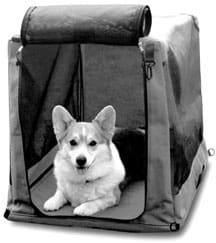
The crate has long been proven to be an invaluable in-home dog behavior management tool. It is also extremely useful on the road. For a long time, the only downside of crates has been that they are big, heavy, and awkward to lug around. A crate big enough for a Labrador Retriever, Rottweiler or (imagine) Great Dane won’t even fit in most cars – which is one reason why a lot of big-dog owners drive vans and SUVs!
Take heart, compact car owners, and any of the rest of you who are tired of struggling with unwieldy plastic crates: the era of portable crates has arrived! There now are a number of brands of lightweight cloth-and-mesh crates to select from — crates that fold up into tidy packages that you can carry with your little finger and stash in your trunk or behind a seat. WDJ reviewed portable crates a couple of years ago, but there are some newcomers on the market and some innovations to the old-timers, so we thought we’d check them out again.
As much as we love portable crates, we need to start with this caveat: Portable crates are not for any dog who is unaccustomed to being crated. Of necessity, the materials that portable crates are constructed from are less sturdy than those of regular crates – which is why they are light and collapsible. They simply won’t withstand the teeth and claws of a dog determined to escape his crate. Use portable crates only with dogs who readily and comfortably accept crate confinement.
We evaluated three brands of portable crates using the following five criteria: Sturdiness, ease of setup, portability, cost, and aesthetics. Of course, we don’t expect them to be as sturdy as a standard crate, but they do need to stand up to the rigors of traveling. Ease of set-up is important, as we are often in a rush to get our act together when we arrive at a show grounds, or cranky and short-tempered after driving all day.
Of course, portable crates should be easy to move and carry, both assembled and collapsed. Cost is always a factor in our product review process, though we are always willing to pay a reasonable amount more for good quality, if necessary. Aesthetics are important for portable crates, especially since they are big, visible, and often end up sitting in the middle of our living space. If we have to look at it constantly, we’d like it to be attractive!
By the way, our test dogs did not discriminate – they voluntarily entered and slept in each of the three crates we tested with equal frequency.
WDJ’s Top Pick: Cabana Crate
Made by Doggone Good!, San Jose, CA; (800) 660-2665; www.doggonegood.com
The Cabana Crate was our top pick two years ago, and it’s our top pick again. This well-made rectangular crate has an attractive Cordura floor and trim, with nylon mesh sides. The Cordura is available in your choice of four vibrant colors and the mesh can be ordered in one of three colors. It is the fastest and easiest of the three crates to set up and take down, and has a nylon handle for easy carrying, or D-rings for an over-the-shoulder strap. (The D-rings also double as attachment points for clip-on accessories, mentioned below.)
The biggest design change since our previous review is the incorporation of spring-loaded brace poles, which make set-up a breeze. Simply unfold the two ends of the crate, and insert the two brace poles through the open crate door into the holes provided for that purpose. It takes less than a minute, with virtually no effort. A child or senior citizen could set this crate up with ease.
The Cabana frame is lightweight aluminum – sturdy and light; easy to carry either set up or collapsed. Although it is more expensive than our “Not Recommended” crate, it is comparable in price to its closest competitor, the Cool-Crate” that we have listed in the “WDJ Approves” category, and it is more attractive and far easier to set up.
The Cabana comes in five sizes, from Small (24x18x19, 5 pounds, $119) to Extra Large (42x30x33, 10 pounds, $199). Doggone Good also sells a wide variety of accessories, many of which are so clever and well-made that you may have a difficult time deciding which ones you can live without. These include a fleece crate mat with rubber backing ($9-23, depending on size), a carrying bag that can hold one or two crates ($45-58), a zippered mesh storage bag that clips onto the outside of the crate to hold treats, toys, or grooming supplies ($13.50), and clip-on vinyl food/water cups ($5).
In our book there is simply no contest – we pick the Cabana Crate every time.
The Cool Crate has a number of excellent features that put it a close second to the Cabana. It is an aesthetically pleasing arched-shaped crate with very sturdy stainless steel wire supports. The arch-shaped ribs are sewn into the fabric; the straight ribs that stretch the crate lengthwise are inserted into slender pockets, kind of like tent poles.
The crate fabric is PVC coated polyester yarn, advertised as flame resistant and good for blocking UV rays of the sun. (Don’t take this to mean you should set your crate up in full sun – your dogs can easily still get too hot!) While the cloth shouldn’t be expected to hold up to the abuse of a dog who scratches or paws (this dog should be in a solid crate under supervision), we will note that this fabric is stronger and thicker than the mesh of the other two crates we tested.
Our only real complaint with the Cool Crate is that it is a serious challenge to assemble. The straight steel supports were unbelievably difficult to insert in the sleeves provided for that purpose the first few times, so much so that we kept thinking we were trying to put them into the wrong places. Although these tight little sleeves have stretched out a bit and are somewhat easier to deal with each use, this crate is still far more difficult to set up than the Cabana.
Other than that, the Cool Crate is solid, sturdy, attractive, easy to move either assembled or collapsed. The Cool Crate is available in a wider range of sizes than the Cabana – a total of 10 sizes, from Mini (20x16x16, 2 pounds, $90) to Super Giant (54x32x40; 11 pounds, $280). We do consider this crate to be a reasonable choice, especially if you have a dog who is too large for the largest-sized Cabana.
Not Recommended: Canine Collapsible Crates
Made by Timbercreek Acres, Cincinnati, OH; (513) 648-0055; www.timbercreekacres.com
This is one of those cases where we would willingly pay more for the better quality product. While this crate is by far the least expensive of the crates we tested, ranging in price from $50 for the Small (12x13x20, 2.5 pounds) to $135 for the Large (30x26x40, 8 pounds), in our opinion, it’s far flimsier than the other crates we tested.
The frame is made of several pieces of PVC pipe and various elbows, T’s and bars. It is by far the most complicated of the three crates to construct, and when completed, it is not terribly stable.
With only one top brace and movable elbows and T’s, we found it difficult to move when assembled – the brace slides and the elbows twist. The instructions suggest gluing the frame together, which then, of course, reduces its collapsibility. If you leave the top pole unglued, according to the instructions, the crate will still supposedly collapse, but not, it seems, to the degree the others do.
The mesh material (available in three colors) fits very loosely on the frame.
Recently, I had the great fortune to meet Dr. Ian Billinghurst, who may be described as the modern father of the “bones and raw food” diet for dogs. Dr. Billinghurst was kind enough to take time away from a vacation in San Francisco to talk over lunch. I had a lot of questions for the Australian veterinarian, given that I had just finished editing the article about feeding bones that appears on the previous pages. Dr. Billinghurst was patient, helpful, and full of encouragement for me and all other dog owners who are “sitting on the fence” of the bones issue.
Dr. Billinghurst, I have to ask you about the fear of feeding bones. It seems this is one of the major problems that people have with the BARF diet.
If anyone is afraid to feed their dog bones, then they should grind the bones. No one should turn his back on BARF because they are afraid of bones. It is far better to have the bones crushed up and mixed in with the meat, than have the dog go back to dry dog food. Grinding them into little bits is the perfect compromise.
I often see people discussing grinders on the BARF discussion lists. Do you have a favorite model of grinder or method of grinding?
Actually, when we feed ground bones, we have the meat and bones ground for us at our butcher’s shop. The most important thing is to keep grinding the meaty bones until the bone fragments are tiny and absolutely harmless.
But then you must lose the benefits to the teeth? Because the dog isn’t having to chew and grind the food himself?
Surprisingly enough, no. There is no doubt that the physical action of the bones scraping the teeth is important. However, it has been my observation that the dogs who are fed BARF-type diets – where all the bones are fed ground up – so there is no chance of physical cleaning by the bones, and there is no addition of grains or processed food, have tartar-free teeth with no periodontal disease. I have also seen reports from long-term raw feeding at zoos – where the meat and the bones are fed in a ground up state – which support this view. It would appear that it’s not just the physical chewing action that is responsible; there is some biological action at work as well.
I think I’ve heard that it has to do with enzymes in the saliva?
That might have something to do with it. I’m not aware of any studies that have been done on this. We have to speculate: It definitely relates to a low-sugar diet. I suspect it is also related to the absence of artificial calcium. Loads of soluble calcium – as found in processed foods – may well be one of the most important contributors to dental calculus. The BARF diet also contribute in a major way to strong local immunity in the mouth. The presence or absence of periodontal disease also involves the pH produced in the mouth by the diet. In other words, mouth health depends on a complex of factors – the healthy factors stemming from an evolutionary diet.
What kind of bones do you like to feed most?
We feed mostly chicken. That is, wings and necks, and a lot of backs. We steer clear of thighs, mostly because they are more expensive and because they have a very high meat-to-bone ratio; it’s more meat than you need to feed. The ratio of meat to bone in chicken wings and necks is perfect. But I always tell people to look for young chickens and young animals in general. Young animals have had less time to store toxins in their bones, and the bones are softer and therefore safer. However, we feed bones from lamb and pork and beef as well. Variety is important.
Is it true that it’s not necessarily the bone, but the food that the bone comes wrapped in, that is beneficial to the dog?
It is a nonsense to attempt to make that distinction. It has to be the lot. It’s both the bone and the meat and the soft tissues it comes wrapped in and the vegetables and eggs and kelp and other fresh foods that make the dog healthy. But, I agree with you about the value of the soft tissues, For example, the cartilage that the dogs consume with the bones is a major contributor to health. Cartilage has anti-cancer properties, as well as beneficial effects on arthritis. There are all sorts of expensive supplements being produced for dogs that contain glucosamine and chondroitin. They are being used to either prevent or treat those diseases; it’s just another example of something that bones have been doing for so long that we have not been aware of.
I often have people say to me, “You can’t feed a dog like a wolf; dogs are not wolves!” Have we manipulated the dog so much that the “wolf diet” is no longer appropriate?
That’s a myth that was designed to sell dog food! It’s true that we have changed the appearance and mindset of the dog over thousands of years. But commercial foods have only been around for, maybe, 7-10 dog generations. It’s a biological impossibility for the dog’s digestive system – the dog’s basic physiology – to have been altered to such a degree in such a short period of time that it cannot deal with real food. The truth is, the dog is having major problems dealing with processed foods. That is why we see so much degenerative disease in modern dogs.
When the dog food industry tries to sell you that sort of nonsense, you have to ask yourself, “What did people feed their dogs before there was dog food?” And, more importantly, “What were dogs like before the advent of the commercial dog food industry?” Dogs were doing fine before the dog food industry came along. There is epidemiological evidence showing that prior to “dog food,” there were occasional instances of a limited number of diseases due to nutritional deficiencies or excesses. These were diseases that are simple to diagnose and simple to fix. Today we have a vast number of exceedingly complex degenerative diseases that are difficult to diagnose, difficult to treat, and very dangerous to the dog. These modern degenerative diseases, which are a direct result of a lifetime being fed cooked and processed foods, are exceedingly common.
We have paid an enormous price for exchanging an ad hoc, home-produced, human-type diet for the commercial, “scientific” diet. These modern diets are cooked and totally lacking in the protective nutrients. They are almost always based on cooked grain. That is, full of starch, a carbohydrate that is totally inappropriate for dogs. These foods either totally lack essential fatty acids, or have excessive Omega 6 fatty acids. Any fatty acids that are present are heat-damaged fatty acids. At best these damaged fatty acids are useless, and at worst, highly toxic. In combination, these problems are a potent recipe for diabetes, arthritis, auto-immune disease, renal failure, and the enormous levels of cancer currently seen in pet animals. We know that cancer is due to mutations; the question is, what’s causing the mutations? I suggest most strongly it is the biologically inappropriate commercial food.
As long as we’re trading pet peeves . . . Consider the nutritionists who say that dog owners are not smart enough to figure out how to feed their dogs a complete and balanced diet. We somehow manage to feed our kids – not to mention ourselves!
Feeding our pets is simple. All we have to do is figure out what dogs and cats ate in the wild, and mimic that, using foods that are available to us today. Dog food manufacturers believe it is hard because they make it hard on themselves! They attempt to make a product suitable for feeding dogs and cats from totally inappropriate foods. Their job is not only hard, it is impossible!
Are you aware of any large clinical trials for studying the benefits of BARF over commercial pet food?
Not as yet. It would not pay the pet food companies to undertake such trials for obvious reasons. However, I am aware of thousands of small, in-home trials! These consistently demonstrate that when pets are switched from commercial food to BARF, their health improves dramatically.
There are plans afoot to unify raw feeders – including the raw food manufacturers – as members of a world-wide BARF organization. This will enable us to gather data from our members – the troops in the trenches. We are going to ask them to do blood work pre- and post-BARF. We will ask them to gather any radiographic results, we want to know what sorts of foods they are feeding and what kinds of dogs are being fed BARF. We want to gather sound, verifiable, scientific data to back what we’re saying. The data is available. All we have to do is talk to our members. There are lots of people doing this and they have exceptionally healthy dogs.
However, as more people adopt this method of feeding, there is going to be less and less disease for the vets to treat. This has the potential to make large numbers of vets redundant. This would not be a good outcome for pet owners because there will always be some problems that only a vet can fix. The solution is for the veterinary profession to switch to preventative mode. That is, change their emphasis from diagnosis and treatment to spending more time assessing and preventing problems, in much the same way that dentists have gone from “drill and fill” to adopting a more preventative approach. It should be noted at this point that when the dentists made this switch, they increased their incomes dramatically.
That is why it is important that BARFers with (apparently) healthy dogs make it their habit to visit their vets, often, for checkups and blood tests. It is important that their own vets draw the blood and interpret the results. This way the vets can not only remain solvent, but also, they will see the improvements for themselves. What better way can their be for BARFers to earn their vet’s support? And at the same time, we are gathering invaluable data.
Are you aware of any cases of dogs dying from impactions or intestinal perforations?
We see intestinal perforations almost never. The ones I have seen have always involved cooked bones. I have seen one case in the last five years. We saved her. She had eaten a cooked T-bone which became lodged in her esophagus above her heart. If she had not been panicked into swallowing it by her owner, she would have chewed it up just fine. Large bowel impactions are relatively common – one every couple of months. These almost always involve either cooked bones or old dogs or both. These do not involve fatalities, just enemas – an unpleasant job for the vet and the patient.
Bones caught in the mouth – both cooked and raw – are relatively common, maybe one every three or four months. No fatalities here, of course. Often we do not even charge for removing them. In our practice, large numbers of our patients are fed raw bones at least three or four times weekly. This should give readers an appreciation of how rare these problems are. Well worth any small risk – in my opinion. We encourage owners of dogs that have had impactions to only feed ground soft bones in small amounts with plenty of healthy oils and vegetables. We never discourage people from feeding raw bones.
One of my own clients had his dog die shortly after being fed a chicken wing. We took radiographs and there they were: you could see fragmented bits of bones sitting in the dog’s stomach. Did the chicken wing kill the dog? There was no evidence to suggest that. The autopsy certainly did not support that view. However, after closely questioning the owner, I suspect that what actually killed the dog was an anaphylactic reaction to one of the new combined flea, tick, de-worming products that had also been given just a few minutes before the dog’s death.
Another person rang me to tell me her puppy had died shortly after chewing a chicken neck, and that the vet who had attended the puppy told her that the bones that the puppy had eaten had pierced its lungs and killed it. I asked, “Was a necropsy performed? Were radiographs taken?” The answer was no to both questions! I then asked, “So how does this vet know that the wing had pierced the lung?” She said, “I don’t know.”
I suggested that she go back and ask a few more questions. It turns out that the vet had just made up that explanation, based on what he assumed had happened. An autopsy returned an open verdict with cause of death unknown. The point is, sudden deaths are not uncommon in the veterinary world. It is easy to make bones the scapegoat. Not only that, many needless operations are performed because a radiograph – taken for some other problem – revealed the presence of bones in the intestinal tract: a normal piece of feces with pieces of bone in it, happily working its way through the dog’s system. Also, I am aware that there are some vets who say, “I see X number of these perforation/impaction/fatalities due to bones every week.” They say these things with the best of intentions, but they are not necessarily telling the truth. Their good intention is that they assume they would see X number of cases if a lot of people fed bones. And they are trying to discourage this in a misguided attempt to do what they think is in the dog’s best interest.
However, the facts are that I rarely see these problems in my practice – and, more than any other vet, my clients feed whole raw bones! Furthermore, there are thousands of us who have always fed our dogs this way, and we’re not experiencing problems, only fantastic health.
Dr. Billinghurst, thank you so much for taking time out to talk to us. Our readers are certain to benefit from the information you’ve shared with us, and we look forward to presenting more information about BARF diets in time.
You’re welcome. In the meantime, I invite WDJ readers who BARF-feed their dogs to register with us for our planned study.
Last month, we looked at how homeopathy works to help a patient’s body heal itself. In this article, we’ll explore how you can use homeopathic remedies to help your dog – and suggest when your dog would be better off in the care of a veterinary homeopath.
In the hands of a skilled practitioner, homeopathy can bring amazing cures of deep-seated illness. But it can also be used by the layperson to treat minor acute problems.
What kinds of ailments can you tackle at home? “You can always treat injuries,” says veterinary homeopath and author Richard Pitcairn, DVM. The best candidates for at-home treatment include bite and puncture wounds, insect bites and bee stings, minor burns, and digestive upsets. Homeopathic remedies can also be extremely helpful if your dog has an emergency (shock or collapse, for instance) if given while you are on your way to seek veterinary help.
But don’t try to treat an illness or injury that seems serious or life-threatening, or is interfering with your animal’s eating, cautions Don Hamilton, author of Homeopathic Care for Cats and Dogs: Small Doses for Small Animals. Specifically, Hamilton says, veterinary assistance is required if your dog refuses to eat for more than two days, has difficulty breathing, vomits more than once every few hours, has diarrhea or is weak or listless for more than two days, is unable to urinate or defecate, or has any condition that is worsening.
A good rule of thumb, Hamilton says, is that you can safely treat a problem of “short duration, where the animal is generally relatively bright and alert.”
Articles on homeopathy often recommend stocking up on a few major remedies, and suggest one remedy for each ailment. This approach is simple and convenient, but it ignores the reality of how homeopathy works.
Homeopathy treats individuals, not symptoms. So for an upset stomach caused by food or garbage poisoning, Hamilton’s book lists five separate remedies; for bites and stings, he lists seven. He then tells you how to decide which one is right for your dog. This article can help you understand what you can and can’t treat, but to choose the right remedy in each situation you’ll need to consult a reference work (see “Resources for Further Information”) or a trained veterinary homeopath.
How remedies work
As you prepare to treat your dog homeopathically, keep in mind that these remedies are very different from the allopathic, or Western, medicines you’ve always used. First, they’re given one at a time; every remedy you give “cancels out” the previous one. Also, when you administer the medicine, you must wait and observe your dog’s response rather than blindly giving dose after dose for a predetermined period of time. When you see improvement, you generally decrease the potency or stop giving the remedy. Despite the common claims that you cannot possibly make a person or animal ill with homeopathic remedies, many homeopaths feel that if you overdose your patient, you will begin to cause him harm.
A second key difference is that the potency level of a homeopathic remedy is not analogous to the strength of a Western medicine. With allopathic drugs, two 50-mg. tablets equal one 100-mg. tablet. But in homeopathy, two 6C doses do not equal one 12C, since the numeral and letter combination stand for how many times the remedy has been diluted, and the greater numbers represent greater dilution. (It’s one of the apparent paradoxes of homeopathy: that the more a remedy has been diluted, the more powerful effect it can have on your dog.)
Finally, homeopathic remedies have special storage and handling requirements, since they can be “antidoted” or neutralized by a variety of forces. Homeopaths recommend that all homeopathic remedies are stored away from exposure to sunlight, electromagnetic fields, and the strong odors caused by camphor, mothballs, mint, and spices. Even food particles in the mouth can antidote remedies, they say, so withhold food and treats for 15 to 30 minutes before administration.
How to use the remedies
You can find remedies at your local health food store or order them by mail. They most commonly come in the form of small pellets. How many pellets should you give? Hamilton offers this guideline: for small dogs, two to three; for medium dogs, three to four; and for large dogs, four to six. For particularly weak animals (who should be treated only under a veterinarian’s supervision), the pellets can be diluted in filtered or spring water and dripped with an eyedropper into the dog’s mouth. Remedies are also available in liquid form.
The next question is how strong a potency to use. Your lowest choice will probably be 6X, and veterinary homeopaths agree that home prescribers should not go above 30C. “If there is any question about the correctness of the remedy, it is best to start with a low potency,” Hamilton stresses. (Professionals typically use potencies ranging from 6C to 1M, reports veterinary homeopath Christina Chambreau, DVM, of Baltimore, Maryland.)
Once you’ve given the remedy, should you repeat it, and if so, how often? “Waiting is almost always preferable to repeating or changing the remedy,” Hamilton advises. “It may take time for the body to respond.” Higher-potency remedies are usually given only once if there’s improvement, but lower potencies often require some repetition. The goal is to keep the animal improving by giving an additional dose when it seems likely the previous one is about to wear off. If the symptoms worsen, it’s likely that the potency you’ve given is too high, or that it’s the wrong remedy altogether.
“The main factor,” Hamilton writes, “is that your patient should be improving in all aspects, especially her behavior . . . . As she improves, reduce the frequency of administration until you can stop the remedy . . . . You will usually know within two or three doses if your companion is responding . . . Don’t repeat the remedy more than a few times if you are not seeing a good response.” If you have any doubt about whether you’re on the right track at any point, seek professional homeopathic attention.
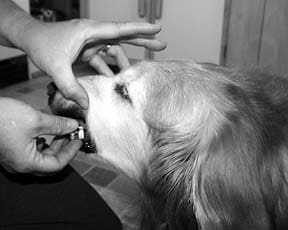
The remedy should be placed directly in your dog’s mouth. Homeopathic pellets are sweet-tasting, and most animals accept them quite readily. Your dog does not need to swallow the pellets as long as contact is made with the gums. Most homeopaths advise that you try to avoid handling the pellets, as contact with your skin may neutralize them as well. Some pellets come in containers designed for direct administration from the bottle cap into the mouth; you can also pour the pellets onto a fold of paper and slide them into your dog’s mouth.
Since homeopathy works by effecting change in the vital force, most homeopaths recommend that it is not combined with other modalities that also alter the vital force. Acupuncture and most herbs shouldn’t, therefore, be used concomitantly with homeopathy. Holistic therapies that can safely be used alongside homeopathy include Bach flower remedies, chiropractic, massage, and nutritional therapies. Most veterinary homeopaths believe acupressure is also acceptable. A natural, healthful diet is essential to success, they agree.
A risk-free system?
If you’re going to treat your dog at home, you need to understand that this system of healing is very powerful. The common belief that homeopathy is absolutely safe is absolutely untrue, homeopaths warn.
According to Dr. Pitcairn, the highest risk comes when a patient receives a remedy that’s very close to the correct one but is still off base – and novices are more likely to miss the mark altogether. “If you have some knowledge and you use medicines that are similar to the case, especially if they’re used inappropriately, like repeating them, you can cause serious reactions, even life-threatening ones,” Pitcairn says.
More commonly, the home practitioner ends up complicating his dog’s condition by treating it unsuccessfully before deciding professional help is required. This muddied-waters predicament is familiar to homeopathic veterinarians and points up the need to restrict your at-home prescribing to the simplest, most straightforward complaints.
Homeopaths speak regretfully of the fact that homeopathic treatment is often a last-ditch, desperate attempt to save an animal who is deathly ill and has already been subjected to virtually every other treatment available. The case is then difficult to sort out – and the animal’s vital force has been weakened. Worst, Pitcairn says, are “cases that have been through the hands of what are called eclectic practitioners . . . where they’ve used homeopathy, acupuncture, herbs, Prednisone, antibiotics, all together in the same animal.” Homeopathy can still sometimes help such an animal, but the task is far more difficult and success less likely.
Even when homeopathy cannot cure an animal, it can still help by ameliorating his overall well-being during the time he does have left. “If the quality of life improves, even if the quantity of life doesn’t, haven’t I helped?” asks homeopathic veterinarian Christine Crosley.
Homeopathy can also be used in a preventive way. “It should be primary treatment,” says Dr. Pitcairn, “so that when you get a young animal, you start out treating the signs of chronic disease which are so prevalent now in young animals and eliminating them before they get established and cause damage to the body.” The majority of puppies and kittens born today “already show signs of chronic disease that are inherited,” Pitcairn says – something that wasn’t the case 20 or 30 years ago.
The health problems induced by over-vaccination and poor-quality commercial diets are compounded by the short generation time of animals, Pitcairn explains, allowing quick deterioration within the species. But with early homeopathic treatment of chronic illness – manifested as skin disorders, ear and eye discharges, inflamed gums, and the like – the trend can be reversed.
“Homeopathy should be primary care and it should also be used as a preventive program,” Pitcairn says. “If that’s done, and if people look at the vaccine question and don’t overdo that, and they get [the animals] on good food, then they’ll have healthy animals, and the next generation will be healthier yet.”
I used to show my dogs in competitive obedience. In the beginning, the opportunity to earn obedience titles and show off my dog’s training appealed to me greatly. But as I evolved toward positive training methods and a more fulfilling relationship with my dogs, the military precision of the show ring lost its charm. I realized that it made no sense to have a relationship with my canine pals based on warm interaction and communication outside the ring, only to march in cold silence next to my dogs inside the ring. I stopped showing and turned my efforts toward family dog training and activities that were more fun and flexible, like agility and canine freestyle.
I’m not alone; lots of people have dropped out of competitive obedience events for similar reasons. But finally someone has done something to bring me and those like me back into the ring.
A Need for Competitive Obedience
Charles (Bud) Kramer is a long-time dog sport enthusiast who was instrumental in the introduction and promotion of canine agility in this country in the early 1980s. On December 5, 1998, he was munching a sandwich in his Kansas State University office while reading a dog magazine. The author of the article was fussing about the fact that fewer new dog owners interested in performance activities were pursuing competitive obedience. Traditional obedience was failing to win new followers because dog owners were increasingly drawn to other canine sports.
As Kramer thought about (and agreed with) the article, he speculated that the rigid format of competitive obedience was largely responsible for the decline in participation.
Rather than dismissing the issue, he did something about it! He invented Rally Style Obedience, a canine sport so new that there haven’t even been any official competitions yet. But there will be soon. Kramer has been in negotiations with the American Kennel Club, and it is anticipated that this sport will be available as an AKC non-regular class at dog shows in the fall of this year. While the AKC events will be restricted to purebred dogs only, there is nothing to prevent 4-H groups, mixed breed dog clubs, humane societies and other organizations from offering Rally Obedience competitions for all dogs. Want to get in on the ground floor of this exciting new activity? Read on.
Rally Excitement
Rally Style Obedience was created to provide a forum for obedience training that emphasizes fun and excitement for the dog, handler and spectator, by allowing for a more natural approach to the performance. Most of us talk to our dogs when we train. We work as partners, as a team. We praise and reward our dogs when they do well, and encourage them when they are unsure of themselves. The competition format for Rally Obedience closely mimics the real human/canine relationship by allowing natural interaction between handler and dog even in the ring.
“It was pretty simple,” says Kramer. “It took 10 minutes to come up with the idea, and another 18 months to put it all together. I just took all of the elements that make agility so popular – the fact that you can talk to your dog; that it’s fast moving and done on a continuous course without pauses for judges’ instructions and scoring; and that the course is variable, with different course outlines and variations in exercises. By the time I finished my sandwich the concept had gelled.”
The name “Rally” comes from the use of directional signs rather than a judge’s commands to prompt the handler/dog team to perform the next exercise, similar to the popular sport of Road Rally for cars.
The course designer selects from 45 different approved Rally exercises and creates a course using 25 to 28 of them. For readers familiar with equestrian sports, this is something like a Grand Prix jumper course. Like riders of Grand Prix jumpers, Rally handlers have the opportunity to walk the course before the class starts, to plan their strategy.
Seven of the Rally exercises may be used more than once in any given course, the rest cannot be repeated. Each directional sign gives instructions for that exercise, and when handler and dog have completed the exercise they move on to the next station.
For example:
• Sign #1: Fast Pace (dog and handle move at a faster-than-normal pace to the next sign)
• Sign #2: Slow Pace (dog and handler drop to a slower-than-normal pace and continue to the next sign)
• Sign #3: Normal Pace (dog and handler proceed to the next sign at a normal pace)
• Sign #4: About Turn Right (dog and handler make a 180 degree turn to the right and proceed back in the direction from which they just came)
• Sign #5: Right Turn (dog and handler make a 90 degree turn to the right)
• Sign #6: Spiral Left, Dog Inside (dog and handler make an increasingly large spiral around four orange cones, with the dog on the inside of the spiral) . . . and so on, until the course is completed.
There are two levels of performance. Level One (entry level) is done on leash. Level Two is off-leash, with more challenging exercises included on the course. Both levels are made up of exercises similar to those found in the Novice level of obedience competition. Kramer anticipates that down the road there may be additional levels that incorporate more advanced exercises from Open and Utility obedience classes.
Judging the Rally Course
Like competition obedience, the dog and handler team enters the Rally course with a perfect score of 200, and points are deducted as either member of the team makes mistakes. However, the similarity ends there.
The Rally handler may repeat verbal and hand signal cues without penalty, and may follow a cue with praise or encouragement. (In the obedience ring this would constitute a significant penalty.) The handler may continue to encourage and praise the dog throughout each exercise, and while the exercise must be performed satisfactorily, the dog’s attitude, attention and response are considered more important in scoring than is exact precision. Ongoing verbal reassurance is also allowed to help prevent a dog from making an error, for example, during the heeling and stay exercises.
The judge follows the dog and handler around the course, marking point deductions for minor to major errors. In order to earn a qualifying score, the team must receive at least 170 points and successfully complete each of the exercises on the course. Point deductions of one-half to three points are subtracted for most errors. If more than five points total are subtracted for any particular exercise, the team does not qualify. Major errors that would result in an automatic non-qualifying score include:
• Failure of the dog to remain in position on a stay exercise
• Failure of the dog to come when called in the recall and “front” exercises
• Knocking over a cone or being on the wrong side of a cone in the spiral and figure-8 exercises
• Failure of the dog to jump over the jumps during the jumping exercises
• Heeling performance in between exercises is also judged, but of course, talking and praise are allowed here too.
Can’t you just imagine it? You’re smiling, laughing, talking to your dog in the show ring, in an excited, happy voice, praising her for doing well. She prances by your side, eyes bright, tail wagging. You and your dog are winning titles and ribbons, and having fun doing it naturally; showing the whole world that the two of you enjoy being together, working, playing, communicating as friends and partners. What a concept!
Pat Miller, CBCC-KA, CPDT-KA, is a freelance author and a professional dog trainer in Fairplay, Maryland.
Let’s be clear: In most cases, vaccines are miraculous, life-saving agents. The diseases they (usually) prevent in our dogs range from always fatal (such as rabies) to serious and sometimes fatal (such as distemper, parvovirus, leptospirosis) to the rarely fatal (such as bordetella and coronavirus). And even diseases that are not fatal can cause all sorts of grief for both the dog in question and his owner (and the owner’s pocketbook). Dog lovers the world over are eternally grateful for the gifts that modern vaccines have conferred upon our canine companions.
However, as with most medical breakthroughs, a long period of adjustment and modulation often follows the introduction of a powerful new therapy, as treatments are refined and researchers and practitioners learn how to best use their new tools. The strength of the radiation routinely used for x-rays, for example, is far lower today than it was when the diagnostic technique was first incorporated into hospitals. Birth control pills contain far lower levels of hormones today than they did 10, 20, and 30 years ago, without any loss of effectiveness. Due to new (and growing) concerns over antibiotic-resistant bacteria, doctors no longer gleefully prescribe antibiotics for every single infection (or suspected infection) a person may have.
There are parallel truths for veterinary medicine, as well. Initially hailed as miracle cures for flea infestation (and thereby, for its related diseases), organophosphorus and carbamate insecticides have proved to be fairly toxic, especially at the high relatively concentrations used in early flea control products. Most veterinarians prescribe lower doses of corticosteroids than they once did, due to the numerous side effects now known to be caused by these powerful medicines. And so on.
A growing number of veterinarians are concerned about modern vaccine use, and, from a medical history perspective, this concern is right on time. Veterinary vaccines have been around long enough that their use is considered absolutely routine and expected – so much so that few pet owners balk at the administration of annual vaccinations. Unfortunately, it could be that this overwhelming acceptance of the “standard” vaccine protocols recommended by the veterinary colleges has actually played a part in the increasing frequency of vaccine-associated disease.
A short history
Most dog owners are unaware that the practice of annual administration of most vaccines is, for the most part, based on vaccine manufacturers’ recommendations. Few studies have been conducted to determine how long vaccines are usually effective; after all, why should a company that makes its money by selling vaccines try to determine how many years a dog owner can safely NOT vaccinate?
Veterinarians, who are supposed to have our dogs’ best interests at heart, also have to make a living, and selling vaccination services traditionally represent a healthy share of a vet’s income. To be fair, the “annual vaccination visit” also provides vets with an indisputably valuable tool: The perceived need for yearly shots has provided the strongest tool for compelling dog owners to come to the clinic and allow veterinarians to examine their clients each year – one of the best ways to ensure prompt diagnosis and treatment of disease. And, for many years, most veterinarians found vaccinations to be relatively safe.
But as vaccine use has become more prevalent, so have vaccine-related problems, both acute and chronic. As is often the case, the so-called “alternative” or “holistic” veterinarians were among the first to sound the alarm, and implicate vaccinations in the etiology of disease. The veterinary establishment paid little attention to these claims until respected researchers began to confirm some of those suspicions.
In 1983, W. Jean Dodds, DVM, a veterinarian with a referral practice in hematology and immunology in Santa Monica, California, suggested that autoimmune disease was occurring in certain susceptible animals as the result of over-vaccination. Dr. Dodds’ subsequent research has suggested that the onset of immune-related problems in dogs often coincides with the administration of vaccines.
Defining over-vaccination
Few – if any – veterinarians advocate never vaccinating dogs. For individual dogs and the canine population at large, the benefits of vaccination clearly outweigh its dangers. But the goal is a healthy middle ground: enough vaccinations to confer adequate protection from disease, and not so much immune-system manipulation as to cause health problems. As such, defining and quantifying over-vaccination is the task for veterinary researchers and dog owners alike.
The practice of annual vaccination against all diseases is the first casualty in the war against over-vaccination. A 1992 article in Kirk’s Current Veterinary Therapy by Tom R. Phillips, DVM, and Ronald D. Schultz, Ph.D., professor and chair of the Department of Pathobiological Sciences at the University of Wisconsin School of Veterinary Medicine, called the practice of annual vaccine boosters one of “questionable efficacy,” and suggested that there is no immunologic requirement for annual revaccination. The veterinary establishment is slowly beginning to agree.
For example, Colorado State University’s Veterinary Teaching Hospital recently published new vaccine protocols for dogs and cats. Specifically, the hospital no longer recommends yearly boosters for dogs, but suggests the standard series of three rounds of vaccines for puppies (parvovirus, adenovirus 2, parainfluenza and distemper, with rabies after 16 weeks of age), booster shots one year later, and then every three years thereafter.
The Colorado State Veterinary Medicine Biomedical Sciences website comments, “Our adoption of this routine vaccination program is based on the lack of scientific evidence to support the current practice of annual vaccination, and increasing documentation showing that over-vaccinating has been associated with harmful side effects. Of particular note in this regard has been the association of autoimmune hemolytic anemia with vaccination in dogs and vaccine-associated sarcomas in cats – both of which are often fatal.”
Vulnerable dogs
One of the most important avenues of research in vaccine technology concerns those dogs that are especially prone to vaccine-related problems. Obliviously, problems are more likely to crop up when dogs with immune system vulnerabilities are vaccinated. Dogs should not be vaccinated if they are sick (especially if they are feverish, since fever inhibits the body’s response to vaccines) or elderly (a condition that is relative from breed to breed, but includes animals whose immune systems are losing strength).
Similarly, dogs should not be vaccinated if they suffer from immune system problems – diseases due to overactive immune systems (such as allergies), autoimmune disorders (where the body’s protectors are attacking the body’s own cells), or immune-deficient disorders where the protective responses are either underactive or failed. (For a complete discussion of these classes of disorders, see “When They Are Not Immune,” WDJ January 2000.)
In addition, certain breeds of dogs – or, in some cases, certain families of dogs – seem to be at increased risk for adverse reactions to vaccines. According to Dr. Dodds, Akitas and Weimaraners are prone to specific problems with vaccines, as are dogs with certain coat color dilutions, including double-dilute Shetland Sheepdogs, harlequin Great Danes, and albinos.
Sensitive individuals can crop up in any breed or color, however. Owners should consult a knowledgeable veterinarian (or veterinary immunology specialist) before revaccinating any dog who has had a reaction to a vaccine.
Balancing act
So how do you vaccinate your dogs enough, but not too much?
The best tool currently available for achieving this end is called a vaccine titer test. A vaccine titer test (also known as an antibody titer test) measures the levels of a specific antibody in a dog’s blood. Antibodies are protective substances produced by an animal in response to stimulation by an antigen – in this case, a disease antigen that is engineered by humans to produce this protective antibody response: a vaccine. Antibody titer tests will also detect antibodies produced by the dog’s body if he has successfully withstood exposure to the disease in question.
Please note that the phrase “titer test” is frequently misused; many dog owners assume it refers only to antibody titer tests. But titer tests can also be used to detect disease antigens; these are generally referred to as “disease titers,” and are used to identify diseases when other signs of disease are confusing or undetectable.
To conduct a vaccine titer test, your veterinarian draws some of your dog’s blood and sends it to a veterinary school diagnostic laboratory or to a commercial lab. Costs vary widely, depending on the lab that tests the blood and the veterinarian who draws the blood and helps interpret the results.
Lab fees range from $15 to $40 per titer test, with a separate test conducted for each vaccine. Some veterinarians (especially if they are hostile to the idea of vaccine reduction or concern) charge a prohibitive price for drawing blood and arranging the tests. Others (especially if they are interested in reducing the use of vaccines) will charge nothing, or just a nominal fee for the blood handling, as part of their standard health examinations. Depending upon the lab and the specific test required, the results may be returned in as little as one day or as much as two weeks.
When the results are in…
Here’s where things get complicated. There are a number of methods that labs use to test antibody titers, but the basic process involves repeatedly testing greater and greater dilutions of the blood to determine the highest dilution that still causes a positive reaction. The results of a vaccine titer test are expressed in a ratio (for example, 1:5); 1 is always the first number. In this example, it means that the blood can be diluted to – at most – one part of blood to five parts saline and still cause a positive reaction. The higher the second number is (indicating a more highly diluted and positively reacting sample), the more antibody is present in the dog’s blood. Interestingly, antibody titers tend to be higher in dogs that have withstood exposure to a disease than in unexposed but vaccinated dogs. In other words, a dog who survived distemper will usually have a higher distemper antibody titer than a dog who never had the disease but was vaccinated against it.
Different labs, different methodologies
Our first complication? Because there are several techniques by which measure antibody titers, the values are different at every lab and can have different meanings. That makes it much more difficult to interpret the results, since you cannot compare values from one lab to another, says Edward Dubovi, MS, Ph.D., director of virology at the Cornell College of Veterinary Medicine Diagnostic Laboratory.
For example, Cornell’s 1:128 may be another lab’s 1:16. Of course, the labs send along interpretative data along with this score, indicating exactly where on the scale your dog’s vaccine titer falls, based on the standards and methods the laboratory has established. Most labs include a high and low range of values that they have seen result in protection from that disease.
No guarantee of “protection”
But for our next, and more complex complication, dig this: there is no ideal value that is guaranteed to confer protection from disease. According to Dr. Wynn, antibody levels may suggest, but not conclusively prove, how much immunity that a pet carries against a specific disease. For many diseases, antibodies are the prime source of protection against disease, and a high level suggests that an animal may adequately respond when exposed and be protected against the agent causing disease.
Conversely, low levels indicate that the pet may be vulnerable to contracting the disease in question. But antibodies (also known as humoral immunity) are only one of the body’s lines of defense against disease; the body is also defended by agents of cellular immunity, also known as T lymphocytes. (For more information about the intricate makeup of the immune system, see “Looking for Immunity,” WDJ December 1999.)
So, a dog with a low antibody titer but a fabulous T-cell army may well be adequately protected from the disease in question, while a dog with a high antibody titer but ineffective cellular immunity may be vulnerable.
In addition, it can’t be stated often enough that every animal is an individual, and each individual’s immune response to the same amount and schedule of vaccines will be different. A perfect illustration of this was provided to use recently, when a reader called the WDJ editorial office to discuss her dogs’ antibody titer results.
The reader explained that she owns two dogs, brothers from the same litter. She has had the dogs vaccinated at precisely the same time and with the same vaccines throughout their lives. One of the dogs has suffered numerous though minor health problems, and exhibited a reaction to his last vaccine a year ago, so the owner decided to have both dogs’ antibody titers tested before revaccinating them this year.
Interestingly, the sickly dog who had suffered a vaccine reaction last year had a quite high titer; the “healthy” dog exhibited a very low titer. Now what do I do? the owner wondered. Good question.
Researchers have yet to agree on what values can safely be considered “protective,” though some conservative lines in the sand have been drawn. “We’re in a very inexact science,” says Dr. Dubovi. ”We’re trying to provide something that people are comfortable with as a concept and not put any animals at risk.”
However, “Current thinking in immunology says that any positive titer means they have memory,” says Dr. Wynn. Dr. Dubovi concurs. “The feeling out there among people who do this type of stuff is that any positive value that you can come up with probably will prevent the development of significant clinical disease.”
Informed decisions
Though your knowledgeable and sympathetic veterinarian can help inform their dog-owner clients, the decision to revaccinate against specific diseases rests in the owners’ hands; they have to decide for themselves whether or not their dog’ titers indicate “adequate protection.”
This can be an easy decision when the previously vaccinated dog is young, vibrantly healthy, and possessed of a nice high antibody titer; this dog’s owner will likely feel quite confident is skipping Skippy’s boosters that year. It might be wise for the owner of a sickly dog with a nice high antibody titer to also skip the boosters, at least until the dog is in better health or has lower titers, in order to prevent vaccine-triggered immune system mayhem. The decision is more difficult when the dog’s health is poor and the titer is low.
“When [titer values] come back not sufficient, you do have to make a decision about whether it’s worth vaccinating,” says Dr. Wynn, who has been using vaccine titer tests in her practice for several years. Most of the time, Dr. Wynn finds positive test results in vaccinated dogs. But one dog, a Doberman, kept showing low parvovirus titers. Dr. Wynn recommended revaccinating the dog, then testing again in a month. The owner agreed. However, upon retesting – and in spite of revaccinating – the Doberman still didn’t show a sufficient immune response. “After you test them that way, actually challenge them with a vaccine, and go back and check that titer, if they’re not making a response to a vaccine there’s no point in continuing to stick them with the same vaccine,” says Dr. Wynn.
Dr. Herman has had similar experiences in her practice. “My gut feeling is – when I’ve picked the brains of immunologists because I’ve been concerned about this – that if the body recognizes the disease even if it’s positive at a 1:10 [a low positive], it’s probably how that animal responds protectively to the disease challenge,” she says.
And, if it’s any comfort, consider that vaccination is, in itself, never guaranteed to protect a dog from disease. There are numerous reasons why vaccines fail to stimulate a vigorous antibody response in any given dog, and NO vaccines protect 100 percent of all dogs.
To the future
To be sure, vaccine titer testing has made a name for itself in the ongoing vaccine debate, and the tool is already being utilized by owners to make informed decisions about re-vaccination. But the full potential of this testing is yet to come. Definitive protective values are still fuzzy, its use in clinical practice isn’t widespread, and more studies are needed.
One step forward is the large-scale study (discussed in the July 2000 issue of WDJ) conducted by Lisa Twark, DVM, and Dr. W. Jean Dodds, of the serum antibody titers for parvovirus and distemper. The study is ongoing, but initial results indicate that annual vaccination for parvovirus and distemper is unnecessary to protect most dogs.
Another step forward is the VAX program at the Cornell Diagnostic Lab that started up in March 1999 in response to increased interest in vaccine titer testing. The program provides vaccine titer testing to interested veterinarians who pay a one-time fee to enroll their practice; individual test fees are separate. Test results are sent to the veterinarian, and recorded by the lab with the hope of accumulating data on individual dogs to determine changes in immunity, if any, over several years.
Hopefully, as more veterinarians become aware of the risks of over-vaccination, they will begin to encourage their clients to order vaccine antibody titer tests. As more data gets added to the studies, we’ll learn more about the ideal administration schedule for all the vaccines currently available. And who knows? What we learn about safe vaccination schedules for animals may well contribute to increasing the safety and effectiveness of human vaccination programs.
Virginia Parker Guidry is a frequent contributor to WDJ. A freelance writer, she lives in San Diego.
For those of you just coming on board: In the July 2000 issue, we published an article called “Hidden Killer in Dog Food.” The article was inspired by a “case history” we received from a reader who had been through a harrowing experience with her dog. It took the reader several months – and a small fortune – to determine that the sudden onset of very strange and serious neurological problems with her dog was caused by a naturally occurring toxin in her dog’s food.
As we stated in that article, a number of toxins can arise in dry dog food during its production, storage, and transportation. Most of the toxins are produced by various molds that grow in the food, or in certain ingredients of the food, and are referred to generally as “mycotoxins.”
Some mycotoxins are highly dangerous to dogs; “aflatoxin,” the substance that made our reader’s dog ill, is one of these. Aflatoxin generally causes neurological problems in its victims, and it can kill dogs (and it has), though some dogs are more sensitive to the substance than others. It should be noted that aflatoxin is already present in the raw foodstuffs before they are made into food; dog food manufacturers generally test for the presence of aflatoxin in the foodstuffs they receive prior to making them into food.
“Vomitoxin” is another, more common mycotoxin. As the name suggests, it tends to cause digestive disturbances, and while it can kill vulnerable individuals, it usually only makes them sick for a short period of time following consumption.
Neither of these mycotoxins are necessarily visible or easily detected by smelling the food.
Visible Mold is Another Matter
Recently, we’ve had the unfortunate opportunity to learn that there are other molds that can grow on dog foods without being toxic. We say “unfortunate” because just as our article about mold and mycotoxins was being read by thousands of subscribers, a mold problem had raised its ugly head in the products made and marketed by at least two dog food companies: Natura Pet Products and Natural Balance. We heard the names of a few other foods as well, from one person apiece, which would seem to confirm what we stated in the July article: Under the “right” conditions, any dry dog food can mold, whether it is naturally or artificially preserved.
We need to stress this: Just because a food is moldy, doesn’t mean it contains mycotoxins or is toxic. However, ingesting the moldy food can cause temporary stomach upset in some dogs; other dogs seem to handle it without incident. Certain dogs who are allergic to molds may have an allergic response. But these responses are nowhere near as dramatic or dangerous as a brush with mycotoxins like aflatoxin or vomitoxin.
Prevent Mycotoxin Poisoning AND Problems with Mold
We’ve updated the following list of recommendations concerning dry dog food, mold, and mycotoxins:
• Check the date of manufacture on the food you buy. Try to buy foods that are as fresh as possible.
• If you discover mold on the food you buy, return the remaining product to the store where you bought it and ask for a replacement. If the store management is unwilling to replace your food, contact the food maker. They will undoubtedly wish to make things right and replace the food.
• Purchase smaller bags of food so you don’t have to store it for long.
• Keep your dog’s food in a dry place with a cool, stable temperature. Temperature swings from hot to cold can cause moisture to develop in a food bag or plastic tub. Moisture, especially in combination with heat, can trigger the growth of molds, and toxins may develop in the food.
• Experts suggest that you do NOT dump dry food out of the bag into a plastic container, as moisture and mold can accumulate on the plastic over time. And old kibble on the bottom of the barrel is more likely to mold and infect the newer food.
• Never feed your dog food that has gotten moldy or smells “off.” Never pressure your dog to eat food that he refuses, especially if he vomits after eating some of it.
• If your dog develops strange behaviors or signs of illness soon after eating – or shortly after you start feeding him from a new bag of food – immediately discontinue feeding him that food. Return the food to the store where you purchased it.
Inquiries About Foods
But we had dozens of reports about Natura’s Innova and California Natural, and a few reports about Natural Balance’s Ultra Premium food – all three of which, not incidently, we have included on our past lists of “Top 10 Dry Dog Foods.” All over the country, dog owners were ripping open bags of these foods, and discovering kibble that was covered with a powdery whitish or greenish mold. Some of these people were terrified by the fact that in their bags, the mold was not discovered until they were halfway into the bags; their dogs had eaten some of the moldy food. Suddenly we were getting inundated with calls and letters regarding these moldy foods: Were they dangerous?
Natural Balance Responds
We turned to the companies themselves. We had an immediate response from Frank Coch, the Executive Vice President of Sales and Marketing for Natural Balance, who flatly stated that yes, indeed, they had some problems with mold on their food in May and June.
Coch stated that the problem originated at the plant that made the food, and was caused by an overly high moisture content in some of the food. When the moisture in a dry food exceeds 10 percent, he told us, mold can develop on the food in the bag, especially in warm weather conditions. “It can – and does – happen to any and every food occasionally,” Coch said.
Coch also stated that their tests indicated that the mold was not toxic, but it was unpalatable and unattractive cosmetically.
“What have you done about the problem?” we wanted to know. Coch stated that, fortunately, they had discovered the problem fairly early on, and had been able to isolate the problem to certain production runs and to pull most of the affected bags off the shelves before too many consumers had taken the food home. People who did purchase the moldy food were encouraged to return it for a new bag of food.
Most importantly, Coch said, Natural Balance had moved production of the food to a new manufacturing plant in another state. “We’re selling a high quality natural product, and if the manufacturer can’t do it right, we have to find someone who will,” he said.
We asked Coch whether this was a difficult decision to make; surely there were financial repercussions of such a move? “In that particular matter,” Coch responded, “we had to do the fastest thing possible, and that was to get the food into proper production so it didn’t happen again. The financial side of it we’ll address later.”
Our next question prompted an unexpected level of candor. “How is it,” we asked, “that you had the instinct to deal with this so quickly and with such force?” Coch responded, “Well, let’s see. About four or five years ago, when I was a vice president at Nature’s Recipe, we had a $20 million recall due to a problem with vomitoxin. That was probably the most serious recall I’ve ever seen in the pet food business – and I guess it taught me a few things.”
According to Coch, the problem with Nature’s Recipe bloomed into a bigger problem than it should have, as the company investigated the cause and extent of the problem, and, Coch says, released several different versions of the event to those who inquired. Coch admitted that it looked bad, even though it was not meant as a cover-up or a denial. “We thought at first that it was an isolated problem, and that we had it taken care of. And then it turns out that it was a global problem. We thought we had the problem solved, and then came to find out that, ‘Oh, guess what guys? It wasn’t just that run; it was the last 50 runs.’ It was a nightmare.”
While Natural Balance is not nearly as big as Nature’s Recipe was at the time of the vomitoxin incident (it has since been acquired by Heinz), and while the scale and seriousness of the current mold incident is not nearly as extensive, Coch says it’s just as unacceptable. “We (Natural Balance) are making a top quality food, and we want it to be the healthiest food possible. We ascertained that the plant that was making the food for us didn’t have the capability of correcting the problem, so we pulled out of there,” he says.
Natura’s Response…
At our request, Natura sent us a statement in response to our questions about the incidents of mold in their Innova and California Natural foods, and indicated their willingness to answer more of our questions. Unfortunately, this communication occurred on the very eve of publication. We hope to include their answers to our follow-up questions in the next issue.
We have some concerns, since we have learned that at the time of the mold incident, Natura’s foods and those made by Natural Balance were being made by the same manufacturing plant in New York. The powers-that-be at Natural Balance decided that the manufacturer could not remedy the problem to their satisfaction. We are eager to learn how (or if) that manufacturer satisfied the powers-that-be at Natura that the moisture problem was resolved.
I own a beautiful German Shepherd named Xeus. He comes from very well-known, healthy, wonderful lines. Xeus is sound, has personality galore and a wonderful temperament – he’s just an all-around great German Shepherd. One Saturday in late June 1999, a really nice, hot summer day, my entire family was hanging out in our back yard, enjoying our pool, as we watched Xeus enjoy his kiddie pool. All of a sudden, Xeus jumped out of his wading pool and made a bee-line for the house. I watched him go in, thinking he was just looking for another toy to bring out, but he didn’t come back out. After a minute or two I went in to see what he was doing, and I found him hiding in a corner of the bathroom, shaking like a leaf. I immediately assumed he had gotten stung by a bee, because chasing and eating bees is one of his favorite hobbies. I checked him over, but found nothing.
I tried to coax Xeus into coming back outside but he would have no part of it, so I figured he just got spooked by something and I would leave him inside until he was ready to come out. He has a dog door so he can come and go freely. However Xeus refused to come out the entire day. I kept going into the house to check on him, and though he wasn’t displaying any symptoms that made me feel it was necessary to rush him off to an emergency vet – this was a Saturday, after all – he was not himself and had me worried.
That night and the next morning Xeus seemed better. He woke up happy, anyway. The first sign that something was still wrong with him, however, was the fact that he refused to go out into the backyard to relieve himself. With some encouragement, he did go out into the front yard with me, but he ran right back into the house as soon as he had gone to the bathroom. I became convinced that whatever was wrong with him had something to do with the backyard – something spooked him when he weren’t looking, I thought. Inside, Xeus seemed better, and his temperature was normal.
As the day progressed and Xeus was still behaving strangely, I called my vet’s office and asked if I could bring Xeus in. My regular veterinarian was on vacation, but his partner examined Xeus, and took a blood and urine sample, but found nothing amiss. After hearing my story, the veterinarian was convinced something had spooked Xeus and he’d probably be fine in a day or two. Feeling somewhat silly, I took my German Shepherd home.
When we got home, I fed Xeus his usual bowl of kibble. It sounds crazy, but about 20 minutes after he ate, he got all weird again, shaking, hiding in a corner, almost like he was in a pre-seizure mode. I immediately brought him back to the vet’s office, but of course the trembling subsided and he just seemed very, very nervous. This time, the vet was more concerned – and I was scared to death! I was certain Xeus was having some kind of pre-seizure activity, and the vet thought the same. He suggested giving Xeus some Phenobarbital, but I have some knowledge about epilepsy and knew that unless we absolutely were sure that Xeus had epilepsy, I did not want to start messing with anti-seizure medications. Instead, we agreed to consult a specialist in neurology the next day.
Bringing in specialists
First thing on Monday morning I contacted a specialist and got an appointment to see a neurologist – three hours from my house! The neurologist did not feel Xeus had any kind of neurological disorder, and he sent me back to the veterinarian’s office with a list of two things to check for: a whipworm test and a bile acid test. Both were done, and both came back negative.
However, Xeus’ symptoms and total change of personality continued. He seemed to be really bothered by light, and would hold his urine all day, not going outside until the sun went down. He spent all day planted in a quiet corner, or with his head under the couch, and he had totally lost all his play drive. There was definitely something wrong, but what?
We made an appointment with another specialist who tested Xeus for all kinds of things, from tick-borne diseases to autoimmune diseases, to having all kinds of radiographs and ultrasounds, to continued blood work, but everything kept coming back normal.
Owner’s observations
In the meantime, I started to notice that Xeus’ worst clinical signs took place 20 to 30 minutes after he ate. I also noticed that he was his best when he had to fast for the tests. When I asked the vets if they thought Xeus’ food could be involved, they all thought that this was highly unlikely, since he had been eating the same brand of food for at least six months before this happened, without any problems. I had been very happy with the food and regarded it highly; in fact, it was a food that made WDJ’s “Top 10” list. Nevertheless, I decided on my own to change his food. It couldn’t hurt! I found a brand of food that had a totally different list of ingredients and began feeding it to Xeus. While I waited to see if there was a difference in his behavior, I got the idea of having his food tested. For what? I didn’t know! It just seemed like a good idea, although I admittedly did not know what kinds of things might be wrong with dog food!
I called my state health department to ask where I could have Xeus’ food tested. About this time, my regular veterinarian returned from vacation and I spoke with him, catching him up on all of the details of Xeus’ case. He suggested that I ask the lab to test the food for mycotoxins, explaining they were toxic substances that could grow in moldy food that can cause problems in some animals.
The State Department of Health referred me to the State Department of Agriculture, and I quickly found an interested person there. They actually sent a representative to my house and gathered up the dry dog food, the canned dog food, and even the biscuits Xeus had been eating. It was all very clinical and I felt confident in their work.
As we waited for the results to come back on the food, the veterinarians kept conducting tests on Xeus, to no avail. I, too, continued to examine my poor dog, and started to notice little strange things. For instance, the whites of his eyes seemed very yellowish to me. Also, I noticed that if I could coax him outside, he would still chase a ball if I threw it into the shade, but if I threw it into a sunny area, he would just stand there. His pattern of urine elimination seemed different than before, too. He would hold his urine all day, and then pee prodigiously at night. What these things meant, I had no idea.
Days crept by. Although Xeus seemed incrementally better, he was still not anything like his old playful, carefree self. My vet had scheduled an MRI and considered a spinal tap, but we kept postponing those tests as Xeus held his ground. He didn’t get any worse, but his improvement – if you could call it that – was so slow that it was almost imperceptible.
Given all the normal test results, one of the specialists we had consulted was beginning to think that Xeus’ problem was behavioral after all. He gave me a referral to a behavioral specialist, who sent me a long form to fill out, detailing all of Xeus’ behavior history. I wasn’t happy about all this, because I knew the change in my dog had happened literally in one day, and that nothing noticeable happened to Xeus that day! It wasn’t as if he had been attacked, or had run away, or had a trauma with fireworks or anything out of the ordinary.
Toxins in the food
Then the breakthrough came. The results of the food tests came back from the State Department of Agriculture. The canned food was fine, the biscuits were fine, but the dry food was found to contain a mold-based toxin called aflatoxin. I called my veterinarian with the news, but he was able to tell me little about mycotoxins – except that this indeed could have caused Xeus’ strange symptoms.
According to the results from the State Department of Agriculture, the level of aflatoxin found in Xeus’ food was 40 parts per billion (40ppb), double the amount generally considered to be tolerated by dogs. Needless to say, I was thrilled to have discovered the first possible explanation for Xeus’ problems, but it took several months’ worth of detective work before I was able to learn much more about this insidious toxin. I found it very, very difficult to find information regarding mold toxins in dog food.
Xeus slowly returned to normal as I spent my entire summer and fall researching the topic. I posted messages on the animal nutrition boards and the German Shepherd boards on America Online, and looked up everything I could about aflatoxins.
I found lots of information about the effects of toxin on livestock – this is apparently a much bigger and well-documented problem in livestock feeds – but the only reports I could find about aflatoxins in dog food were all related to cases where aflatoxin poisoning affected large numbers of dogs at once. There were a lot of reports about a case in 1998 where 25 dogs in the southern US died from aflatoxin poisoning. But I couldn’t find any documentation on sporadic incidents. I tried calling toxicologists at veterinary hospitals but they didn’t even have the correct documentation regarding aflatoxin in dog foods.
Finally, I called as many dog food companies as I could and spoke directly with their nutritionists. I explained what happened, and they were quite interested. Several food makers sent me information on who, what, and where to call for more information.
I was also given a number of Alltech, Inc., a Kentucky company that makes chemicals that helps preserve foods and eliminate toxins in animals feeds and Bingo! I finally got some answers. Alltech actually publishes a highly specialized newsletter for the feed industry called Mycotoxin Monthly, and several of their back issues were published on the Internet, including one that discussed mycotoxins and companion animals (see www.alltech-bio.com, click on “Technical Publications,” and look for the Mycotoxin Monthly).
Toxins you should know
I learned that aflatoxin is just one of more than 200 mold toxins commonly found in animal feeds. It affects different species of animals and animals of varying ages in different ways at different levels; dogs are more affected than cats, for example, and old and young animals are more seriously affected than middle-aged animals. However, one common theme is that aflatoxin affects the liver of all of its victims. Even though my veterinarians had conducted liver tests on Xeus, the specific damage caused by aflatoxin had gone unnoticed; I’m told this is rather common, unless one is looking for this exact effect. The most common signs of aflatoxin poisoning are lethargy, vomiting, heart problems, liver damage, and yellow discoloration of the skin and hair.
While some mold-originated toxins cause feed refusal and severe vomiting (such as one common mycotoxin known appropriately enough as “vomitoxin”), I discovered that many of the mold toxins found in animal food go unnoticed because the dog will continue to eat normally. Often the food will probably not even have a noticeably different odor. Indeed, Xeus had eaten the food with the same appetite he had always had, he never vomited and he never had diarrhea. But I did notice his worst neurological signs were always after he ate.
I also learned that aflatoxins often cause light sensitivity, neurological disorders, and can even kill a dog if the levels are high enough. While some dogs can tolerate a certain amount of the toxin, other dogs are highly sensitive to substance at any level.
Dog food manufacturers are constantly studying aflatoxin and other mold toxins and looking for new ways to try to eliminate this problem in all animal feeds. “Nearly all ingredients used in pet food, particularly corn and soybean meal, can be highly contaminated by aflatoxin, a potent carcinogen and immune system suppressant,” according the Mycotoxin Monthly. (Xeus’ food, incidentally, did not contain corn.) Most feed ingredients are tested individually – the grains, the meats, the fats – and the food is tested again after being mixed. The food manufacturers must concern themselves with testing for the molds at every level of production, how the food is packaged and transported, and even how it is stored in the pet stores. Anytime that moisture and/or heat (the combination of the two is the worst) can affect foods, molds can grow and produce their deadly toxins.
However, other foods that people feed to their dogs can also be infected with mycotoxins. Mycotoxin Monthly quotes Dr. John Richard of Romer Laboratories as saying he has heard of cases of mycotoxicosis in dogs who have eaten moldy walnuts, bread, or cream cheese.
While all breeds of dog are equally affected by mycotoxins, certain factors can influence the susceptibility of individual dogs. According to Mycotoxin Monthly, dogs in poor health are more likely to be affected, as are dogs with marginal nutrient deficiencies. Dogs that are already suffering from drug interactions or heat or environmental stress are more likely to have problems following mycotoxin exposure. And, obviously, dogs who were exposed to higher amounts of mycotoxins, or exposed for a longer period of time, are more likely to develop signs of poisoning.
Little-known problem
One thing that really bothers me is that, despite the ample opportunity for problems of this kind to crop up in pet foods, there was so little information available about the dangers of mold poisoning and prevention for the average dog owner. Never in my life had anyone warned me about the effects of mold toxins in dog foods, whereas the livestock people deal with this all the time and are constantly made aware of this problem. Livestock producers even have kits that they can use to check the feed before they give it to an entire herd of animals.
In my case, our bag of food was new; it had been open for just two weeks. I had bought the bag in early June 1999, and it had a “freshness date” of April 2000. Unlike many people, I always keep my dog food in a cool, dry place, but I didn’t know that preventing mold growth is why all bags recommend that you store the food in this way.
In a sense, we were lucky. As far as we know, Xeus had been exposed to the aflatoxin for just two weeks, and the amount in the food was not fatally high. However, there is a chance his immune system was affected. I do take special precautions now, minimizing his vaccinations, for instance. Instead of using all the regular booster shots, we have titer tests done to try to determine how necessary each vaccine might be.
Also, I now feed Xeus a dog food that comes directly from the plant to my home, to help ensure freshness. I buy smaller bags, and I supplement his kibble with a wet food mix that I cook. I have never used chemicals on our property, and I do not use any chemicals on his body. The only thing I still continue to use is heartworm preventative, since heartworm is deeply entrenched in the part of New York where I live.
If your dog has a major personality change, and the vets can’t find the problem, please consider having your dog’s food checked by either a veterinary college that has a toxicology lab, or your State Department of Agriculture. You will need a referral from your veterinarian, but ruling out the food is a must when trying to get to the bottom of a hard-to-diagnose illness.
Author’s note: I would like to thank all the vets and staff at Aqueduct Animal Hospital for their care, concern, and help. Thanks, too, to my friends on the German Shepherd message boards on America Online for their invaluable help and encouragement as I went through this crisis with Xeus.
One of the greatest concerns many people have about switching their dogs to a raw diet is the fear of bacterial infection, either in themselves or their pets. News reports of people dying from E. coli and salmonella poisoning have no doubt fanned the flames of that fear. But most people who have successfully transitioned their dogs to a raw diet report no problems are delighted with their dogs’ health and appearance. The secret, advocates say, is in good food handling practices. Dog owners who neglect safe handling techniques are certainly more at risk of infection from any pathogens (a list of the usual suspects is discussed in great detail in “What Evil Lurks Within,” page 9) that happen to be present in raw meat. This is especially true of children, whose immune systems are immature and inexperienced, and people with compromised immune systems. But keeping your meat safe and your kitchen clean is not exactly rocket science, folks! Anyone can learn to do it. Keep it cool
Perhaps the most critical factor in handling raw meat is attention to refrigeration. Keeping foods refrigerated slows the growth of any organisms that happen to be present. “Huge numbers of bacteria can result from providing pathogenic bacteria ideal reproductive temperatures for only short time periods,” Dr. Dunn says. “Generally, as long as some moisture is present, and the temperature range is 50 to 90 degrees, pathogenic food-borne bacteria have a reproductive bonanza.” This means that frozen meat should always be defrosted in the refrigerator – NOT on the counter or in your sink. Defrosting at room temperature means that the outside sections of the meat are at an unsafe temperature while the inside sections are still defrosting. Read and follow the safe handling instructions on the meat’s label. Refrigerate or freeze raw food if you don’t plan to feed it immediately. Vegetable mixtures can be refrigerated for three to five days, but meat mixtures probably shouldn’t be refrigerated for more than 48 hours. “Safe length of storage time is highly variable because time, temperature, type of organism, moisture levels and numbers of organisms originally present all interact to impact the safety of each food item,” Dr. Dunn says. Larry A. Bernstein, VMD, is the owner of Natural Holistic Pet Care in North Miami Beach, Florida, and a passionate advocate of diets built on feeding raw meat. Dr. Bernstein recommends that all meats are kept frozen following purchase, and thawed on the day they are fed to the dog. Freezing is said to have a detrimental effect on the nutritional quality of meat, but the difference is not significant. And freezing is less detrimental to nutritional quality than the heat from cooking. “Feeding food fresh is great,” Dr. Bernstein says, “but if feeding it after it has been frozen allows you the flexibility to feed raw food diets more often, then the benefits far outweigh any deterioration that might happen in the freezer.” When thawing meats in the refrigerator, put them on the bottom shelf or drawer, so that any blood or juices don’t drip on any other food in the refrigerator. Many dog owners are under the impression that freezing can kill any potentially harmful organism that may be present in the meat. According to Dr. Dunn, “Freezing is not very effective in killing any pathogenic bacteria already present on the food product. Freezing will only impede any further growth of those bacteria already present. Parasites, if present, must be frozen at temperatures so low that household freezers probably will have no effect on killing any parasites such as Trichinella.” Keep it clean Safe handling practices recommended by experts include washing hands before and after touching raw meat; careful cleansing and disinfecting of dishes, utensils, cutting boards, grinders, and other equipment used in meat preparation; and proper storage of prepared food. “Almost all foods we purchase from the grocery store have bacteria present on or in them,” says T. J. Dunn Jr., DVM, director of veterinary services for PetFoodDirect.com and ThePetCenter.com. “Only specific strains of specific bacteria have the potential to cause disease and then only when their numbers develop to fairly high levels. If pathogenic bacteria are present when the consumer purchased the food and the consumer ignores safe handling procedures, those organisms may proliferate to a point where their numbers may cause disease in humans. The organisms may proliferate on utensils, containers, cutting boards, washcloths, anywhere there is organic material upon which to grow.” Thorough cleaning with hot, soapy water is the best way to prevent problems. It’s a good idea to use a disinfectant for items that are porous or difficult to clean, including cutting boards and food grinders. Dr. Bernstein recommends using a disinfectant compound or a little bleach in dishwater, or running items through a dishwasher. “And there are some new [disinfectant] wipes for the kitchen that we use to wipe down the cutting board,” he says. Be careful with knives, as well, Dr. Bernstein says. “You really need to clean them off well. You don’t want to put good knives in the dishwasher, but you want to soak them in something.” Be aware that chopped or ground meat is more likely to become contaminated than whole pieces of meat. That’s because bacteria such as E. coli generally contaminate the surfaces of a food product. Mixing, chopping and combining other ingredients can distribute the organisms throughout the food. Under certain temperature or moisture conditions, this could enhance the organism’s proliferation in the food. “I don’t recommend chopped or ground meat unless it’s done fresh – you grind it at home,” Dr. Bernstein says. “Grinding expands the surface area so there’s more room for bacteria to grow, and there’s more oxidation of the meat. When oxygen gets in contact with the meat, it causes deterioration, so the more you open up the surface area, the more you speed up the deterioration. So feed meat in chunks, little cubes, or cut it up and freeze it. And if you’re going to grind it, grind it right before you feed it.” Whose hands should stay off? If you want to be really careful, shouldn’t you wear rubber or plastic gloves when handling raw meat? Maybe, maybe not. If you have a cut or sore on your hands that’s open to infection, gloves could certainly be a good idea. Ditto for people with compromised immune systems. In general, though, healthy people don’t need to go to such extremes, Dr. Bernstein says. When raw meats are being handled and/or fed to the dog, a couple of types of people deserve special consideration: people who have any sort of immuno-suppressed condition and children (especially infants and toddlers). Since these people are at greater risk of infection with any pathogens, they must be prevented from coming into contact with the dog’s raw food and dirty dishes. This entails “following the trail” of any potentially harmful organisms far beyond casual cleaning. For instance, if you have a toddler in the house, it’s not enough to prevent her from touching the dog’s food bowl; you have to imagine that a dog who just finished eating a meal that contained raw meat might immediately drink from his water bowl, potentially transferring a certain amount of the theoretic pathogen to the water. Toddlers should be prevented from having any sort of contact with the dog’s water bowl, too. Some people feel that’s going a bit bit overboard. Nancy O. Johnson of Vancouver, British Columbia, suffers from a compromised immune system herself but says she doesn’t take any extraordinary precautions when it comes to feeding a raw diet to Harpo, her Chinese Crested. “I buy only from reputable butchers, and I wash everything with soap and water, although I use the dishwasher on occasion. Neither I nor my dogs have ever had a problem related to feeding raw meat.” But others say, “Better safe than sorry!” Among the safety precautions taken by Joanne Nash of Los Altos, California, are using separate cutting boards for the dogs’ raw food and for anything she and her husband eat. “We use antibacterial dishwashing detergent for all dishes, cutting boards and so on, with separate sponges for dogs and people. We always wash the dog bowls after a raw meat and bones meal. And I use disposable plastic gloves when I am preparing a batch of meat and vegetable mix. I’m also more conscientious about washing my hands after I’ve been mixing or feeding the raw food.” Cleaning the meat What about disinfecting the meat itself? A number of sources suggest using grapefruit seed extract (known for its disinfectant qualities) or food-grade hydrogen peroxide to kill bacteria before serving meat. It can’t hurt, but it’s not really necessary, say raw-diet advocates. “Over the years, people have advocated using grapefruit seed extract (GSE) or food grade hydrogen peroxide to sterilize or decontaminate the meat – you marinate it before you feed it,” Dr. Bernstein says. “I think you’re dealing with personal preference here. We’ve fed our dogs raw foods for years and hundreds if not thousands of patients have done it, and some use GSE or peroxide and some don’t, and across the board, I really can’t think of a problem.” Betty Lewis of Amherst, New Hampshire, occasionally sprays her counters and cutting boards with a dilution of grapefruit seed extract, but she doesn’t use the product on the meat itself. “Dr. Ian Billinghurst (a well-known proponent of raw diets for pets) feels that dogs are capable of dealing with a fair amount of bacteria that is normally present in their environment,” Lewis says. “If we sterilize their food, we do them a disservice by not fostering this natural capability. Then, if they’re exposed to a larger than normal amount of bacteria, they may not be able to overcome it.” Nash had trouble finding grapefruit seed extract or food-grade hydrogen peroxide when she first starting feeding raw food to her Cavaliers and Dalmatians. Determined to feed her dogs raw meat anyway, she experimented with another method of disinfection: Dipping raw meat in boiling water.This was so messy and time-consuming, Nash says, she gave up the practice after the first few times – and has had no problems with her dogs. Whether you detoxify meat is strictly a matter of personal preference, Dr. Bernstein says. “There’s a certain fear factor involved, so if you’re nervous, go ahead and use the grapefruit seed extract or the hydrogen peroxide. I usually recommend that with poultry anyway; for some reason I’m more cautious with poultry. If you’re really scared about feeding raw meat or if your animal is reticent to eat it, cook it a little bit. After you become a little less fearful, cook it a little less. After a while you find that it’s not worth bothering to cook it because they love it the other way, and then you’re well on your way.” Shelter from the stuff? All of these safety procedures help protect us from illness, but what about our dogs? They’re the ones eating the raw diet. What kind of protection do they need? Not as much as you might think. “I don’t have much concern about the dogs getting sick (from eating raw meat),” says Richard H. Pitcairn, DVM, Ph.D., of the Animal Natural Health Center in Eugene, Oregon and author of Natural Health for Dogs and Cats, one of the earliest books advocating a raw diet for pets. “Dogs are carnivores and they have experience for millennia eating raw animals. I haven’t seen any problem myself in my practice.” Pitcairn explains that dogs have much stronger stomach acids than people do, so they are far more capable of battling any pathogens that may be present in the meat. Their intestinal tracts are also quite a bit shorter than ours, giving bacteria less of an opportunity to take hold and flourish. “I think dogs are quite well adapted to handling meat; in the natural state dogs will eat meat that’s decayed,” Dr. Pitcairn says. “They bury it and dig it up days later, stuff that would probably kill us.” “The potential for disease is related directly to the individual idiosyncrasies of the organism, the numbers and types of organisms impacting the individual, and the individual’s physical state of health,” says Dr. Dunn. For example, he explains, a free-roaming dog that is accustomed to scavenging meals is usually more acclimated to the presence of potentially pathogenic bacteria in its digestive system than, say, an apartment-dwelling Poodle. That’s why it’s important to introduce a raw diet gradually, over a period of five to seven days. Don’t follow the example of one of Dr. Bernstein’s clients, who introduced her 18-year-old dog to a raw diet by giving him four different kinds of meat in large quantities. “The dog did get diarrhea, but that’s because the owner wasn’t being sensible or moderate,” Dr. Bernstein says. “I think that’s the only case where I’ve seen an older dog have a negative reaction, and we can understand why that happened.” Dogs that shouldn’t eat raw Can dogs with impaired immune systems eat a raw diet? Many holistic veterinarians believe that a raw diet can benefit the immune system, but they caution that such a dog should only eat a raw diet under veterinary supervision. Animals that are weak or predisposed to illness might have problems, especially if there’s an overwhelming bacteria load in the meat, Dr. Bernstein says. A veterinarian who has experience with raw feeding should help the owner supervise this dog’s diet. Dr. Bernstein finds that feeding raw foods can be very beneficial to such an animal, but stresses that in such a case, you have to be even more careful with the cuts of meat, the quality, and the freshness. Puppies, too, should be introduced gradually to a raw diet. Wait until they’re weaned, and then start mixing in small quantities of meat gradually. “Until they’re six or eight weeks old, I don’t think their guts are really competent to handle large quantities of meat, so I would be most cautious with a young animal,” Dr. Bernstein says. “After about eight weeks, it’s probably pretty safe.” Naturally, experiences vary. Australian Cattle Dog breeder Deb Casey of Dallas, Texas, starts feeding a raw diet to her puppies when they are four weeks old. “The puppies are the best I have ever raised,” she says. “They do not smell like dog food, and the poop is very small and firm.” Ruth Beetow of Springville, New York, also feeds a raw diet to her Norwich and West Highland White Terrier puppies and has never had a problem. According to Dr. Dunn, when problems arise with raw diets, it’s usually due to improper handling procedures on the part of the consumer. Good sanitation, in combination with modern processing methods and regulations, are the key to successful raw feeding.
Holistic veterinarians have long decried the annual vaccination schedule recommended by many conventionally trained veterinarians for all dogs. Many holistic veterinarians suspect that many of the complex ailments that plague our modern dogs – from allergies to digestive problems to aggressive behavior and so on – have their roots in immune system problems brought on by excessive and unnecessary vaccination.
However, many of us are convinced by our veterinarians that our dogs won’t be safe unless they receive these boosters every year. Fortunately, a recent study indicates that most dogs retain humoral antibody protection from past vaccinations for longer than previously thought.
The Journal of American Veterinary Medical Association (JAVMA) will shortly be publishing the results of a research study, conducted by Lisa Twark, DVM, and W. Jean Dodds, DVM, of Hemopet and Antech Diagnostics, that examined the serum antibody titers of 1441 healthy dogs brought to veterinary clinics for routine health checkups and/or revaccination. The titer tests were conducted at a time when most dogs would typically be given annual booster vaccines.
It was the authors’ intention that those results could be used by veterinarians as a guide for advising their clients about the necessity of annual revaccination of dogs against canine parvovirus (CPV) and canine distemper virus (CDV).
A very high percentage of the dogs had adequate titers – more than 95 percent for CPV and more than 97 percent for CDV– indicating that annual vaccination for CPV and CDV is unnecessary in most cases.
The CPV vaccination history was available for 444 dogs, and the CDV vaccination history was available for 433 dogs; the interval between the dogs’ last vaccination and serum antibody measurement ranged from one month to six years, with the majority (60 percent) being between one to two years. Age, breed (purebred or mixed breed), and sex of the dogs were not significantly associated with the adequacy of serum CPV or CDV antibody titers. The authors commented that in the presence of adequate serum antibody titers, there is little reason to introduce unnecessary antigen, adjuvant, and preservative, as well as to increase the risk of adverse events and client costs associated with administering booster vaccines.
Source: Journal of the American Veterinary Medical Association
Pet health insurance offered to employees The national unemployment rate is at an historic low, and employers are looking for creative ways they can attract and retain quality employees. While on-site child care centers or gym memberships increase some employees’ loyalty to their companies, dog owners might get more excited about a new perk being offered to some employees: pet health insurance.
Veterinary Pet Insurance Inc., of Anaheim, California, has sold individual pet policies since 1982, but group plans for employers only began to take off in 1999, according to Rebecca Lewis, VPI vice president for marketing and communications. VPI offers a typical indemnity plan, with average premiums of $200 a year and a $40 deductible.
As great as this sounds for employees who can use some help with their dogs’ medical bills, the plans are not without the usual catches. Just as with human health insurance policies, you end up paying quite a bit more if you sign up for a plan that will cover extensive care for serious or long-term medical conditions such as diabetes or cancer treatment. Nevertheless, having an employer’s help with the monthly payments is welcome relief for many dog owners.
A slightly different type of health plan is offered to employers by Pet Assure, of Dover, New Jersey. Described as an “HMO for pets,” the plan lacks a traditional deductible and co-pay structure. Instead, members – or, in this case, the members’ employers – pay a small fee, generally taken as a small monthly payroll deduction and receive a 25 percent discount at network providers. Pet Assure enrolls all pets, regardless of age, infirmity, or species.
Source: Associated Press
New law makes airlines’ animal safety records available to consumers On April 5, President Clinton signed a comprehensive aviation bill that carried a provision to require airlines to begin reporting any incidents of animals being lost, injured, or killed during transport. The Department of Transportation (DOT) will begin to tally such incident reports, and make the results available to consumers, as well as notify the United States Department of Agriculture. In addition, the DOT will begin working with air carriers to improve employee training on air transport of animals.
According to the Air Transport Association, more than 500,000 animals are transported each year. The ATA has estimated that perhaps one percent of those animals encounter problems of some level of seriousness. Undoubtedly, that number will rise now that incident reporting is mandatory. Following publication of WDJ’s article on air transportation safety for dogs (“Leaving on a Jet Plane?” March 1999), WDJ received a number of letters from concerned airline employees who warned that flying is often dangerous for dogs.
Source: Journal of the American Veterinary Medical Association
Adverse effects of arthritis drug spur changes in labeling, marketing Each year, the FDA’s Center for Veterinary Medicine compiles and releases information about adverse drug experience (ADE) reports received from veterinarians and consumers. On December 1, 1999, the Center released figures for 1998, which indicated that one medication intended for use on arthritic dogs, Rimadyl (carprofen), was responsible for 39 percent of all the ADE reports made in 1998, “considerably more than that received for other drugs,” according to the CVM.
A recent “Update on rimadyl” released by the Center explained that for any one ADE report, there is no absolute certainty that the suspected drug caused the effect, and that the adverse effects seen in Rimadyl’s ADE reports were “consistent with those expected for NSAIDs (nonsteroidal antiinflammatory drugs)” which typically involve the gastrointestinal system, renal/urinary system, hematopietic (blood) system, neurological system, and the liver. Approximately 13 percent of the 1998 Rimadyl ADE reports involved the death of the dog.
Based on the ADE reports received since Rimadyl was marketed, a number of actions have been taken to update the safety information that veterinarians receive when they purchase the product, so they are well-prepared to discuss the risk and benefits of the drug with dog owners. At the CVM’s request, Pfizer also developed and distributed an information sheet to be given to owners at the time Rimadyl is dispensed. The CVM also insisted on “death” being added to the list of possible adverse reactions that appear on the drug label and in the advertising for the drug (a move that caused Pfizer to pull all of its television ads for the product).
Rimadyl has made a positive change in the lives of many arthritic dogs, but WDJ encourages dog owners to use medications cautiously and to try to use minimal dosages whenever possible. If you give your dog Rimadyl, you should immediately discontinue use of the drug and contact your veterinarian if your dog displays any of the following common adverse reactions:
• loss of appetite or loss of thirst
• unusual pattern of urination, blood in the urine, sweet-smelling urine, an overabundance of urine, urine accidents in the house
• staggering, stumbling, weakness or partial paralysis, full paralysis, seizures, dizziness, loss of balance
• jaundice (yellowing of the skin, mucus membranes and whites of the eyes).
Some dog flea-control products poison cats If you use “spot-on” flea-control chemicals that contain permethrin on your dog, watch out – you just might end up poisoning your cat.
The American Veterinary Medical Association (AVMA) has reported adverse reactions by cats to concentrated, spot-on flea and tick products that contain permethrin and are intended for dogs. The AVMA has sent a letter to the EPA asking for the requirement that such products include a warning label that alerts pet owners to the dangers of incidental but potentially fatal exposure of the product to cats.
Any cat that has close contact with dogs that have been treated with the products can develop signs of toxicosis, says the AVMA, including seizures, depression, labored breathing, or discoordination.
Your cat can be exposed to enough permethrin to become ill if he and your dog so much as sleep in the same place (and not necessarily at the same time), such as your sofa or bed.
Cats are far more sensitive to organophosphates than most other animals. There are some flea-control products labeled for use on cats that contain permethrin, but these products generally contain less than 0.1% permethrin. A typical dog’s flea-control product may contain as much as 45-60 % permethrin, so the risk of unintentional high exposure to a cat roommate is high.
For decades, the standard in the veterinary profession was to spay female dogs and cats at the age of six months, and neuter males at nine months. This standard has contributed significantly to the tragedy of pet overpopulation, since most cats and many dogs have reached physiological sexual maturity by that time. Fortunately, the standard is changing.
Female dogs can come in season (and get pregnant) prior to age six months. A dog’s estrus cycle can be messy, leaving spots of blood on carpets and furniture, and a dog in heat can be a real nuisance. Every unsterilized male dog for miles around will make supercanine efforts to reach her. Packs of eager would-be lovers congregate in the street, fighting among themselves and threatening passers-by.
Having a fence adequate to keeping your female dog confined is not always sufficient to keep amorous suitors out. Determined male dogs have been known to scale tall fences in a single bound, tear boards off of fences with their bare paws, and even crash through plate glass windows to get to the objects of their desire. Even the most careful dog owner can be surprised 63 days later, when Virtuous Violet presents a litter of puppies sired by the athletic Adonis who managed to breach the back yard defenses and claim his prize while family members were all at work or at school.
Male dogs can reach sexual maturity and begin exhibiting unacceptable behaviors such as fighting and uncontrollable leg lifting well before nine months of age. Once Fido has started fighting with other male dogs you have a significant behavior problem on your hands; it can be very difficult, sometimes impossible, to convince him to stop.
Shelter statistics convincing
Twenty-five years ago, when I had just started working in the Customer Service Department at the Marin Humane Society in Novato, California, we sometimes took in as many as four to six litters of puppies on a single summer Saturday. We had nowhere near enough room for that many baby dogs – only a small percentage of them had the good fortune to eventually find homes. On the shelter forms that owners filled out when they gave up an animal was a blank for “Reason For Surrender.” All too often, the reason given was that “Violet got pregnant before we could get her spayed.”
Shelters have been working diligently for decades to solve the problem of pet overpopulation, promoting spay/neuter practices and responsible pet ownership in their communities, and requiring adopters to sign sterilization contracts as part of the adoption process (contracts that are notoriously difficult to enforce).
A 1987 survey conducted by the American Humane Association (AHA) concluded that less than 60 percent of adopted puppies and kittens were spayed or neutered after being adopted. Profoundly disturbed to realize that their own adoption programs were contributing to the overpopulation problem, many shelters redoubled their efforts to encourage compliance with their adoption contracts. A handful of shelters (including the one I worked for) succeeded in attaining compliance rates in the upper 90th percentile by committing significant staff and volunteer time and resources to pre-sterilization of dogs and cats six months and older, follow-up phone calls to adopters of puppies and kittens, citations for violations of local or state laws requiring sterilization of shelter adoptees, and “repossession” programs – the actual impoundment of animals for the purpose of spay/neuter surgery. (Most impounded animals were returned to their owners once the surgery was completed.)
Despite these aggressive programs, a 1993 survey from AHA found that many shelters still hovered in the 50-60 percent compliance range; an unacceptable failure rate of 40-50 percent, for shelters that were collectively euthanizing 10 to 12 million unwanted animals each year.
The surveys revealed, however, that a significant contributor to that high failure rate stemmed from the adoption of puppies and kittens who were too young to be sterilized prior to adoption. For a long time, however, a solution to that problem hovered on the horizon: lowering the accepted age of spay/neuter to seven to eight weeks. Drastic? Perhaps, from the conventional perspective. But the ongoing euthanasia of as many as 18 million companion animals a year called for drastic measures.
A historical perspective
Where did the tradition of six- and nine-month spay/neuters come from anyway? Not from any scientific basis, says Joan Freed, DVM, a free-lance veterinarian in the San Francisco Bay area whose specialty is prepubescent spay/neuter.
“In the 1930s and 1940s when the ages became standardized,” says Dr. Freed, “the spay ‘hook’ (a surgical tool that resembles a crochet hook and enables a veterinarian to more easily snag the elusive uterus) had not yet been invented, and it was difficult to find the uterine horn on a young kitten or puppy. After the first heat the uterus was enlarged and easier to find. Even after the spay hook was invented, tradition continued to dictate the accepted ages of six and nine months for sterilization of females and males, respectively.”
One theory was that if the animals didn’t reach sexual maturity prior to sterilization their growth would be stunted, and they could potentially suffer serious health and developmental problems (such as urinary blockages) due to the lack of hormones. This theory was never scientifically tested. In fact, studies conducted in the early 1990s proved just the opposite. Dr. Freed obtained her veterinary degree from the University of Florida College of Veterinary Medicine in 1982, and is a strong advocate of prepubescent sterilization. (Author note: I prefer the terms “pediatric,” “prepubescent” or “juvenile” spay/neuter to “early” spay/neuter, since “early” implies that we are doing it too soon. In fact, it is not “early” spay/neuter, it is “on-time” spay/neuter!) Dr. Freed has worked with animal shelters for almost a decade, beginning at Alachua County Animal Services in Gainesville, Florida in 1990. Her experiences with shelter animals headed for the euthanasia room have fueled her intensity as an advocate for juvenile spay/neuter.
“I’m so gung ho on it, it’s just obnoxious. But it’s so much easier on the animals,” she insists. “The surgery is so much easier.”
Some of the most significant research in the field of spay/neuter ages was conducted by two of her colleagues at the University of Florida, Mark Blomberg, DVM, and Kathy Salmari, DVM. Drs. Blomberg and Salmari conducted two separate studies, one with dogs, one with cats. The kittens and puppies were divided into three groups: those spayed or neutered at age seven weeks, seven months, and a control group that wasn’t sterilized. Results of the studies showed no differences in physiological or behavioral development between those animals sterilized at age seven weeks and those done at seven months. Of special significance was the finding that there was no difference in urethral pressure between any of the groups, implying that juvenile spay/neuter is not a contributing factor to urinary blockages.
There were some measurable physiological differences. The control group (intact) animals tended to weigh less than their sterilized counterparts, confirming conventional wisdom’s insistence that sterilized animals tend to “get fat.” (You can control this effect with relative ease by providing your sterilized dog with more exercise and/or fewer calories.) The growth plates in the legs of the sterilized animals closed later than those of the intact animals due to the absence of sex hormones that, among other things, promote growth plate closure. This means that the sterilized animals actually grow taller than their intact compadres, by an almost imperceptible few millimeters – the exact opposite result of the “stunted growth” fears.
Behavioral differences between neutered and unneutered male dogs are well known. Intact males are far more likely to roam, fight, (and risk injury and exposure to diseases such as parvovirus and distemper, not to mention impoundment by animal control), lift their legs obsessively, and bite than are their neutered brothers. Neutering earlier, rather than later, is likely to forestall unacceptable behaviors that can be extremely difficult to resolve once they are established.
Anecdotal evidence
The concept of prepubescent spay/neuter first came to the attention of much of the animal protection world when Leo L. Lieberman, DVM, published an article promoting the practice in the September, 1987 issue of the Journal of the American Veterinary Medical Associationm (JAVMA). According to the article, several shelters had been performing juvenile spay/neuter for quite some time.
The SPCA in Medford, Oregon, reportedly sterilized 8,000 puppies and kittens at 6 to 12 weeks of age from 1974 through 1980, without any adverse effects reported by their owners. During this period the shelter documented a 68 percent decrease in euthanasia, from 14,332 animals in 1973, to 9,750 in 1979. The Vancouver, BC SPCA began doing juvenile spay/neuter as early as 1976, and the municipal animal shelter in Memphis, Tennessee, began a similar program in 1987 following the publication of Lieberman’s article.
In February of 1988, Cornell University’s College of Veterinary Medicine Animal Health Newsletter supported Lieberman’s position. Citing the static figures of animal euthanasia in animal shelters, the newsletter’s cover story stated ” . . . it might be well for animal lovers to get behind the trend toward early neutering.” The ball was rolling. Pediatric spay/neuter became a hot topic at national animal protection conferences, and more and more shelters began lowering the age at which they sterilized their adoption animals.
The bandwagon rolls forward
A 1992 study conducted by the Massachusetts SPCA found that while 73 percent and 87 percent, respectively, of all dogs and cats in homes had been neutered, 20 percent of all neutered animals had been allowed to reproduce prior to neutering – a practice that definitely contributes to the overpopulation problem.
In 1992, AHA issued a policy statement in strong support of prepubescent spay/neuter, reassuring shelters that were fence-sitting on the issue. The number of shelters performing sterilization of young kittens and puppies began to steadily increase. That same year, the July-August issue of Pet Veterinarian published the results of a non-scientific survey they had conducted, indicating that 65 percent of their veterinarian readers believed that pediatric neutering was a good idea for animal shelters, and that 40 percent of veterinary readers had themselves performed sterilization surgery on animals 6 to 12 weeks of age. Even private veterinarians were climbing on the pediatric spay/neuter bandwagon.
The January 1993 issue of California Veterinarian focused on “early” spay/neuter, with articles that overwhelmingly supported the practice – including one from the prestigious UC Davis Department of Veterinary Surgery proposing a prepubertal spay/neuter program at the Davis Veterinary School. In 1999, the American Veterinary Medical Association (AVMA ) finally caught the pediatric spay/neuter train, and passed a resolution and issued a public position statement supporting prepubertal spay/neuter.
Best for your dog?
It’s all well and good to agree that pediatric spay/neuter is an important part of the solution to the pet overpopulation problem. It’s something else entirely to look at the bright ball of fur pushing her Buster Cube around your living room, and imagine her sliced open on the surgery table. Isn’t surgery incredibly stressful on such tiny babies?
“There are some concerns that are easily addressed with changes in protocols,” says Dr. Freed. “In general, however, prepubertal surgery is much easier on the animals. They heal much more quickly because they are in a rapid stage of growth. When we neuter a male puppy we can’t even see the incision eight hours later. Kittens and puppies wake up after surgery, bouncing, eating and playing with an abundance of energy, as if nothing even happened. Older animals are still groggy hours after the babies are fully recovered.” (Note: Dogs who are spayed at age six months or later generally have visible or palpable spay scars for the remainder of their lives, so a vet can usually tell if a dog has already been spayed. Many veterinarians now tattoo a tiny dot or letter “S” on a female puppy’s abdomen during surgery since the spay scar will not be visible when she grows up.)
“There are three things to be aware of,” Dr. Freed continues. “Babies can’t regulate their body temperature well, until around the age of four months. Prior to that we must help them maintain their body temperatures or they can become hypothermic. We need to surgically prep and moisten the smallest area possible, and during recovery use a warm water blanket or Thermal BarrierTM heating pad type product designed for animal surgeries.”
The second medical consideration, says Freed, has to do with the overnight fast that veterinarians typically require before surgery. “Kittens and puppies are also at risk for hypoglycemia, so we don’t fast them overnight like we do with adults. They can eat up to an hour before surgery, and again as soon as they are fully awake.”
The third concern is for a young animal’s less-developed immune system being challenged by the stress of surgery. For shelter animals, this is in addition to the considerable stress created by the shelter environment itself.
“I am aware that some other shelter vets have reported problems with disease following surgeries,” says Dr. Freed, “but this has not been my experience. Naturally, we must adhere to common sense sterile surgical procedures. When I neuter two puppies from a litter of five and the neutered puppies break with kennel cough, invariably so do the three puppies who did not undergo surgery. The sterilized puppies seem to have no more difficulty recovering from the URI than do their unsterilized littermates.” Bottom line? “I have spayed and neutered some 7,000 puppies,” Dr. Freed continues, “and not had one serious post-surgical problem. Not one.”
Breeders should neuter early
Pediatric spay/neuter is not just for shelter puppies. It is also the perfect solution for dog breeders, who have previously had no real control over whether their “pet quality” pups were actually sterilized. A responsible breeder requires spaying and neutering in the sales contract when selling a pet puppy, but, like shelter adoption contracts, these are extremely difficult to enforce. By having puppies spayed and neutered before selling them, a breeder can know for certain that none of her dogs’ offspring will contribute to the pet overpopulation tragedy.
There is no question that responsible dog owners will spay and neuter their pets. The only question is “When?”
When arguing for pediatric spay/neuter, Dr. Freed answers that question with a question of her own: “Of course you are going to sterilize – the sooner the better. Why make it any more difficult on your dog?”
-By Pat Miller
Author Pat Miller, CBCC-KA, CPDT-KA, is WDJ’s Training Editor. She and her husband Paul live in Fairplay, Maryland, site of her Peaceable Paws training center, where Pat offers dog-training classes and courses for trainers.
Whole Dog Journal unabashedly supports the positive efforts of animal protection workers around the country to reduce the euthanasia of unwanted animal companions, including the proactive approach of shelters to spay and neuter dogs at a relatively early age, before they have had a chance to make more puppies.
However, many holistic veterinary practitioners regard prepubescent spay/neuter surgery as potentially harmful to young pups. We’ll describe their concerns — but we’ll also offer some holistic remedies that can counter the potentially deleterious effects of surgery. It is our opinion that a committed, responsible owner who takes scrupulous care of his or her dog can take either path – to seek out early sterilization or to wait a few months before altering the dog – without adding to the dog’s health problems or the world’s dog problem.
Opposed to early surgery
Sandra Priest, DVM, owner of Four Winds Holistic Animal Services in Knoxville, Tennessee, has had a holistic small animal practice for eight years. And she has serious concerns about surgical sterilization for young puppies. She advises her clients to spay and neuter their dogs between the ages of six to 12 months.
“I’m not arguing that animal overpopulation is not a real problem,” says Dr. Priest, “but I have concerns about early spay/neuter on several levels. First, I worry about exposing a puppy’s extremely immature system to anesthesia protocols and pre-anesthetic medications. As they age, the immune system becomes more competent and mature, more able to withstand the rigors of surgery. Second, I believe that the loss of the trophic (beneficial, nourishing) effects of the sex hormones on maturation and development has a significant impact. There are complex feedback loops in the endocrine system that involve the sex hormones. Not only do I believe that the cosmetic effect – the loss of masculine and feminine appearance – is regrettable, I am convinced that there are important benefits in allowing an animal’s systems – the urinary tract for example – to have some maturity before spaying and neutering. Finally, we don’t know the long term effects of early sterilization on a dog’s health and longevity, and we won’t know that for at least 10 or 15 more years.”
True to her holistic philosophies, Dr. Priest refuses to categorically rule out the possibility that a patient might someday be appropriate for early surgery.
“Holistic medicine emphasizes individual treatment plans,” she reminds us. “People who seek holistic care are, for the most part, those who have gone the extra mile and are very responsible. I can’t think of a situation where I would recommend early spay/neuter, but I try not to get locked in to a position – it limits my ability to be flexible. In my practice I have no reason to recommend early spay/neuter, so I don’t.”
And what about animal shelters, who may deal with a clientele somewhat less responsible than hers? After thoughtful consideration, Dr. Priest holds steadfast to her personal and professional ethics.
“As a veterinarian, I took an oath to improve animals’ health,” she replies. “For me to do something I believe to be deleterious to an animal’s health would be ethically incorrect.”
Important hormones Dr. Ihor Basko, of All Creatures Great and Small Veterinary Services in Kapaa, Hawaii, shares Dr. Priest’s concerns about the effects of prepubescent sterilization for puppies. “For my clients, I do not believe in this procedure at an early age,” he says. “I love my clients’ animals like my own, and I would never recommend this for their cat or dog, or even a bunny. The animals are still growing, and their hormones have not yet developed because their sexual organs start to develop at a later age.”
Biochemically speaking, Dr. Basko tells us, “hormones work together in the body. Not just in the sexual organs, but also in the brain, adrenal glands and fat cells. Hormones help the body grow and develop, metabolize food, especially fat and protein, stimulate bone growth, support hair and skin integrity, affect body shape and size, behavior, and a lot more.”
He disputes those who quote research that indicates nothing bad happens to animals sterilized at an early age. “I am not the only veterinarian who thinks this way. Most, if not all veterinarians who have been in practice over 20 years, will agree from experience – in the patients we have seen – that dogs spayed early were more prone to obesity, hypothyroidism, incontinence, skin and behavioral problems. Males castrated early were more prone to obesity, hypothyroidism, perianal hernias, early back pain, knee injuries and skin problems. Not only is this detrimental to the animal’s health, but it is also costly to the owner who must pay to treat these ailments.”
Dr. Basko’s observations are shared by other holistic practitioners, however, these negative effects have not been observed in scientific studies. Several studies have failed to find any significant differences in animals sterilized at an early age (such as seven weeks) and animals that were sterilized later (at seven months, for instance). Critics of the pediatric procedure argue that it’s possible that not enough long-term studies have been conducted to prove there are no long-term effects of early surgery.
Herbal help If and when a practitioner feels that a lack of hormones has caused a health problem in a dog, there are a number of herbal remedies that can help. According to CJ Puotinen, author of The Encyclopedia of Natural Pet Care (Keats, 1998), in healthy spayed animals, the adrenal glands and the liver take over the ovaries’ biological function by producing small amounts of estrogen. Puotinen says that a natural diet and the use of herbs and supplements that support the adrenal gland, the liver, and overall hormone balance can be used instead of artificial hormone replacement therapy, with better effects. Tinctures made from fresh hops, for instance, can be used for female hormone regulation. Chasteberry or vitex (Vitex agnus castus) stimulates the pituitary gland, which helps (among other functions) regulates and normalizes hormone production in the female. Powdered dong quai (Angelica sinensis), fed in capsules, also can help regulate hormone production through its action on the liver and endocrine system.
A well-balanced, natural raw diet, says Puotinen, will prevent common problems in your sterilized pet. She suggests feeding a good multiple vitamin and comprehensive mineral and trace element supplement, in addition to a glandular/organ supplement, to provide the building blocks of natural hormones that the dog needs.
Traditional Chinese angle Dr. Basko also explains how, from the standpoint of traditional Chinese medicine, early spay/neuter causes a disturbance in the chi (also spelled qi), the essential life energy that flows through the body.
“The ‘essence’ – mine, yours, our pets’ – is stored in the Kidney Meridian and connecting meridians, including those that govern the sex organs. The essence is your ‘fire’ for life, and it’s the energy that nourishes the body. This energy is classified as yang, and the yang energy comes from the cosmos, the planets, the stars and the sun. Kidney yang is the energy that is created by the development of the kidneys, the sexual organs and the adrenal glands. This is the driving force that regulates growth, replication, passion or emotion.” Dr. Basko feels that performing surgery and removing parts of the dog’s reproductive system at an early age alters and reduces the normal Kidney yang radically.
Cheryl Schwartz, another veterinarian with years of study and practice of Traditional Chinese medicine on animals, is also strongly opposed to the practice of pediatric sterilization surgery. Dr. Schwartz feels that routine spaying and neutering dogs is a necessity for population control, as well as a procedure that improves the lives of the individuals by reducing aggression between males, and preventing the heavy toll that pregnancy takes on a female. However, she feels that the pediatric surgery is harmful.
“I’m seeing problems with adult dogs in my practice that were sterilized as very young puppies – especially dogs that lack control over their urination and dogs with chronic upper respiratory infections. I’m afraid we might get the population under control, but be left with a population of chronically ill animals.”
Even surgery performed on older animals can take a toll, says Schwartz. In her book Four Paws, Five Directions: A Guide to Chinese Medicine for Dogs and Cats (1996, Celestial Arts), Dr. Schwartz describes home care that can help counter these effects, typically what she would term “stagnation of the circulation” or a disruption in the liver blood stores.
After spay or neuter surgery, she says, if a dog acts fatigued or lethargic after surgery (and a veterinary examination rules out any obvious cause), or becomes disobedient and willful in the weeks after surgery, Dr. Schwartz would suspect that the animal’s liver and his or her “liver qi” is stagnated from the surgery. She suggests that such a dog is treated with a lot of exercise to smooth out the qi flow.
In addition, Dr. Schwartz recommends nourishing the blood and the qi with tonifying and blood-building foods. Proteins such as small amounts of beef, lamb, or chicken liver may be helpful, as well as lean muscle meat from beef, rabbit, or the white meat of chicken. Digestive enzymes can be used to help the liver digest fats. And grains such as wheat, millet, and brown rice, and vegetables such as carrots, celery, broccoli, spinach, and chard can be added to the diet to help build the blood. Finally, Dr. Schwartz says, dry foods should be minimized until the condition improves, since the condition is already what she terms a “dry” condition.
Sometimes necessary Given the dark picture that Dr. Basko paints of prepubescent sterilization, it’s surprising to find that there are, in fact, times when he would recommend it. Those times coincide with a lot of the circumstances that shelter workers encounter on a daily basis.
“Without any reservations, I would always recommend this early sterilization to any animal owner who is a ‘jerk’ – the ones who keep letting their animals have litter after litter, then drown the puppies in the lake. Or they let their puppies run around in the street, dump them at Safeway – you get the picture. These people are the primary culprits in the overpopulation of cats and dogs.
“The benefits of early spay/neuter are that the ‘unconscious’ or lazy or non-caring animal owners will not have the opportunity to ‘forget’ to spay or neuter, and this will prevent the births of a lot more animals that would be subject to abuse, malnutrition, neglect, pain and torture,” says Basko. “Spaying and neutering animals young is the politically and environmentally correct way to go – there is no doubt about it. Later, when more and more people become more responsible pet owners, then maybe things can change.”
This said, Dr. Basko adds that this rarely comes up among his own clientele. “In general, the people who come to seek my advice and pay for it – the people who are interested in holistic medicine and take care of their pets – are capable of keeping their animals from reproducing” until their animals are old enough to be sterilized. “Most of my clients are well above average in terms of animal care.”
These motivated, educated people are also the sort who might provide the best home for a sterilized young animal from a shelter.
Ten years ago, a new dog training tool hit the market. Known generically as the head halter (or head collar), it is a device similar to the halter commonly used on horses. It provides a greatly increased degree of control over the dog who is dedicated to pulling on the collar and leash, without the punishment or pain factors associated with choke chains and prong collars.
The head halter has a strap that goes around the dog’s nose, and another that clasps around his neck, just behind the ears. The leash attaches to a ring below the dog’s chin. Just like with halters on horses, bulls and other large animals, it works on the principle that where the nose goes, the body must follow. Rather than pulling against the dog’s whole weight on a collar that rests just above his powerful shoulders, we simply put gentle pressure on the halter to turn the dog’s head toward us. Almost like magic, the rest of the dog follows. It seemed like the answer to our leash-walking prayers.
The new tool was welcomed with open arms by many trainers. Indeed, some trainers started issuing halters to every canine student, and the first-night-of-class ritual was amended to include head collar fitting, just as many compulsion-based classes begin with choke chain or prong collar fitting.
Even from the beginning, however, some professionals were more cautious in their embrace of the new invention. The halter had a place in the positive trainer’s toolbox, they conceded, but with a relatively limited application. Predictably, now that positive trainers have had a decade to gain practical experience with the collar, it is becoming clear that the more conservative trainers were right. The head halter is the perfect tool for the right applications, but it is not the easy answer to every dog’s leash-walking needs. In fact for some dogs, rather than being a positive experience, wearing the head collar can be downright aversive. Here’s a look at the good, the bad, and the ugly of head halters.
The good
All of the positive things we initially loved about head halters are still true, to a degree. Because it doesn’t take great strength to use them, they can facilitate the control of a large or unmanageable dog, especially by children, seniors, and people with physical disabilities. When used properly, the head collar does not depend on the infliction of pain to bring the dog under control. And for some dogs, the head halter has a wonderfully calming effect within moments of being placed on the dog’s head. In the right circumstances, the collar can be a lifesaver. Dogs who might otherwise end up at animal shelters can be walked and enjoyed by their previously frustrated owners.
The halter is particularly appropriate for restraining and retraining dogs with aggression problems, especially dogs who lunge at people or other dogs. The halter provides the positive, non-punitive control that is vital for modifying aggressive behavior – when we want to change the dog’s perception of a stimulus from negative to positive.
With a dog-aggressive dog, for example, if you jerk on a choke chain when your dog barks or growls at another dog, you inadvertently inflict pain, increase his stress, and reinforce his belief that having other dogs around is a bad thing. A head halter can gently restrain or turn him away from the negative stimulus (the other dog) so he can be rewarded for good behavior (turning away). If we can make good things happen in the presence of other dogs, we can eventually convince him that having other dogs around is a good thing too. The head halter is exceedingly effective at this.
When used properly, to elicit non-pulling behavior so that loose-leash walking behavior can be rewarded, the head collar can be an effective tool for teaching a determined puller not to pull on the leash. “Properly” means that the dog is frequently rewarded with tasty treats and other positive reinforcement (toys, petting and praise, for dogs that enjoy this) whenever the leash is loose, until he realizes that it is more rewarding to walk near his handler without pulling than it is to constantly strain at the end of the leash. Simply relying on the head collar to control the dog, without rewarding the dog for loose-leash walking, is not proper use of the collar.
The bad
Trainers on the Association of Pet Dog Trainers (APDT) e-mail list recently compared notes about head halter experiences. While most of the trainers used them on occasion and felt there were appropriate applications for head halters, they also agreed that the tool could be misused. Here are some of their concerns:
• Some dogs hate them. Trainers who are familiar with behavior science understand that anything the dog doesn’t like is an aversive. Just because we like the halter (or petting, or praise, or treats) doesn’t mean the dog does. If a dog reacts violently to the halter, it may mean that you didn’t take the time to properly acclimate him to it. If you start over and work with him more slowly you may succeed in getting him to accept it.
However, while most dogs can eventually be conditioned to accept the halter, it may take more time and energy than it is worth, and some never do accept it. If the dog continues to fight, or acts very bothered or depressed when the halter is on, then it is very much an aversive for him, and not a positive training tool at all. Put it away and find a different positive tool for that dog.
• Head halters can come off. Some brands are more prone to this than others (see sidebar, below). This is disconcerting enough when you are using the halter for a simple pulling problem, but it is a disaster if you’re dealing with aggression. Imagine having your collar pop off your dog as he lunges for a child walking by.
Many trainers now recommend using two leashes (or a “European” leash, with snaps on both ends); one attached to the halter and one to the regular collar, to guard against this. For some owners who already have difficulty handling one leash, this may be too much of a challenge.
• The halter can be difficult to put on. Especially with a very active dog (the kind who is most likely to need a halter), it can sometimes take two people – one to lure the nose into the loop with a treat, the other to snap or buckle the collar behind the dog’s ears. Many seniors, children and others who could otherwise benefit from the collar’s good points are physically unable to manage the complexity of the process. It helps to properly condition the dog to the haltering procedure, but sometimes it doesn’t help enough.
• The halter looks like a muzzle. As the general public has more exposure to head halters this misconception is diminishing, but it is still a negative for many dog owners that their canine pal is perceived as wearing a muzzle.
• Halter straps can rub. If the halter is not fitted well or the dog has sensitive skin, nylon straps can rub the skin raw. This can often be mitigated by gluing moleskin on the insides of the straps.
• It’s an extra piece of equipment. One of the beautiful things about positive reinforcement training is that the dog wears his regular “clothes” during training. It doesn’t require any special equipment. When we add a special collar, we run the risk of teaching the dog that he must behave when the halter is on, but not when it is off. Compulsion trainers frequently encounter this phenomenon with the choke chain; the dog is great when the chain is on, but does whatever he wants when it is removed.
• Some dogs are hard to fit. Although some of head halter companies produce their halters in a variety of size and shapes, some dogs, especially those with flat faces like Boxers and Boston Terriers, can be very difficult to fit properly. The nose strap tends to rest against the eyes, which most dogs understandably find very irritating.
The ugly
By far the most valid concern, and the one that is hardest to resolve, is that the halter, if misused, may cause damage to the spine. One of the complaints about choke chains is their very real potential for causing serious damage to a dog’s trachea, even when it is used properly. If the head halter is used properly the chance of injury is so low as to be nonexistent, but if an owner jerks on the head halter or allows the dog to hit the end of the leash at full charge, the halter can snap the dog’s head sideways, risking damage to the spine.
While we could find no documentation of any such injuries, the rumors exist, and we can certainly see the potential. This was one of the reasons that the Gentle Leader was originally distributed only through trainers and veterinarians, not pet stores. However, Premier Pet Products, the distributor of the Gentle Leader, recently announced their decision to offer the product through pet stores as well, and the Halti has always been sold through regular commercial pet retail outlets.
Ultimately, any training tool can be misused. We still applaud the head halter as a positive training tool, as do most of the APDT trainers who participated in the on-line head halter discussion. We also suggest that trainers and owners familiarize themselves with all of the possible negatives that accompany the halter, and make careful, educated decisions about its use.
To provide the best experiences, we use technologies like cookies to store and/or access device information. Consenting to these technologies will allow us to process data such as browsing behavior or unique IDs on this site. Not consenting or withdrawing consent, may adversely affect certain features and functions.
Functional
Always active
The technical storage or access is strictly necessary for the legitimate purpose of enabling the use of a specific service explicitly requested by the subscriber or user, or for the sole purpose of carrying out the transmission of a communication over an electronic communications network.
Preferences
The technical storage or access is necessary for the legitimate purpose of storing preferences that are not requested by the subscriber or user.
Statistics
The technical storage or access that is used exclusively for statistical purposes.The technical storage or access that is used exclusively for anonymous statistical purposes. Without a subpoena, voluntary compliance on the part of your Internet Service Provider, or additional records from a third party, information stored or retrieved for this purpose alone cannot usually be used to identify you.
Marketing
The technical storage or access is required to create user profiles to send advertising, or to track the user on a website or across several websites for similar marketing purposes.
This website uses cookies and other tracking technologies to offer you a better experience, personalize content and ads, and analyze our site traffic. Before proceeding, you agree to our Terms and that you’ve read our Privacy Policy. Update Settings
Functional
Always active
The technical storage or access is strictly necessary for the legitimate purpose of enabling the use of a specific service explicitly requested by the subscriber or user, or for the sole purpose of carrying out the transmission of a communication over an electronic communications network.
Preferences
The technical storage or access is necessary for the legitimate purpose of storing preferences that are not requested by the subscriber or user.
Statistics
The technical storage or access that is used exclusively for statistical purposes.The technical storage or access that is used exclusively for anonymous statistical purposes. Without a subpoena, voluntary compliance on the part of your Internet Service Provider, or additional records from a third party, information stored or retrieved for this purpose alone cannot usually be used to identify you.
Marketing
The technical storage or access is required to create user profiles to send advertising, or to track the user on a website or across several websites for similar marketing purposes.