Home Blog Page 297

Teach Your Dog to Focus On Cue!

One of the first things I teach people to teach their dogs in my basic “Good Manners” class is to respond to their names. We can’t teach our dogs anything, I tell my students, unless we have their attention.

Getting a dog’s attention is not enough, however; to be truly successful in training you must be able to keep a dog’s attention once you have it. And this is best accomplished by convincing her that it’s in her best interest to offer attention of her own accord.

If you’ve ever watched an obedience competition and marveled at the dogs who gaze intently at their handlers’ faces throughout the entire test, never once breaking eye contact, you know exactly what we’re talking about. It speaks volumes about the relationship between dog and owner to have that kind of communication . . . or does it?

The old way
When I first trained my dogs seriously for obedience competition, I was disillusioned to discover exactly how that kind of attention was accomplished. My dogs and I learned two approaches: a force-based way and the hot dog way.

The force-based way was pretty brutal at times. The other students and I would stand with our dogs in the heel position, each of us exhorting our own dog to “Watch me!” while training assistants, otherwise known as “distractions,” would move amongst us, doing everything they could think of to get our dogs to look away: calling, clapping, whistling, offering hot dogs. If our dog took her eyes off us to look at a distraction, we were to say “Watch me!” and give a severe yank on the choke chain. Our dogs soon realized the price they paid for looking away, and kept their eyes glued on us from fear of the painful consequence of doing otherwise.

The hot dog way was more fun for all concerned. We humans would stuff our cheeks full of hot dog pieces (make mine a veggie dog!), which we would occasionally spit toward our canine partners as we heeled merrily around the training ring. Never knowing when the next hot dog “penny” might coming flying through the air, our dogs kept their eyes riveted on our faces. It was more eye-to-lip contact than eye-to-eye contact, actually, but it kept them oriented toward us as the obedience genre expected, and sufficed to earn us high scores in the competitive obedience ring.

I much preferred the far more benign hot dog method, of course – and I’m sure my dogs did, too – but it still left something to be desired in terms of positive training and relationship. My dogs looked at my face because they recognized that hot dogs appeared from that location, but I’m not sure they realized it was their intent gaze that made the hot dogs appear.

At the time, I didn’t know that teaching dogs how to “make” us give them a reward for their behavior was a desirable goal. I had been taught the luring technique as a way to elicit the desired behavior; I was as yet unfamiliar with the concept of teaching dogs to think from an operant conditioning perspective.

Modern methods
Today’s positive trainers have a much more sophisticated approach to teaching the “Watch me!” exercise. We want the dog to actually think, and understand that looking at her handler attentively makes good stuff happen, regardless of where the treats happen to be.

To that end, in the first session of my classes I have the owners come without their dogs, and I explain that when they arrive with their dogs the next week they will stand quietly, just holding their dogs’ leashes and not asking for any behavior or soliciting attention. The instant their dogs look at them – or even look in their general direction – they are to click! a clicker and give their dogs a treat. They are to continue clicking and handing over treats at a high rate of reinforcement as long as the dogs keep looking at them. If a dog looks away, her handler should stop the flow of treats, and wait for the dog to pay attention again. The intent of this exercise is to teach the dogs that voluntary attention is a highly rewardable behavior.

It takes only about five minutes for most or all of the dogs to be intently focused on their personal click-and-treat dispensers. Then the students can begin to ask their dogs for other behaviors, such as sit, stand, and down. I tell the owners to use their dogs’ names for brief lapses of attention, but to continue to look for opportunities to click! and reward voluntary attention.

As the dogs progress, I add distractions to the attention exercise, but rather than deliberately luring the dogs’ attention away so the owner can punish them, I introduce distractions at a low level so the dogs can succeed in remaining focused on their owners and get rewarded for that behavior. They learn that keeping their attention on their owners even in the face of increasingly tempting distractions is highly rewarded.

“He’s just looking at the food!”
At some point during the six weeks of my “basic” class, some owners point out that their dogs are orienting on their treats – on bait bags, treat pockets, or treats they hold in their hands – rather than really making eye contact. I have them work on this in my “intermediate” class by making the treats the distraction.

The owner starts by holding a treat up to her face to encourage eye contact. When the dog looks at her, she clicks! and gives the dog the treat. Then she moves the treat a few inches to the side of her face, and waits. Sooner or later the dog, who is watching the treat intently, will glance toward the owner’s face as if to ask why the click! is not forthcoming. At that instant the owner clicks! and feeds the dog the treat. She repeats this until the dog is looking at her face quickly, and for increasingly long periods (up to several seconds) to elicit the click! and treat.

Then she moves the treat a few inches farther from her face and continues the game. At this point she also adds the “Watch!” or “Pay attention!” cue that she will use to get the dog to maintain eye contact from then on. It is important to click! consistently before the dog breaks eye contact while gradually lengthening the contact time, so the dog comes to understand that “Watch!” means “maintain eye contact until released.”

Eventually, the treat can be anywhere, while the dog’s gaze remains riveted to the owner’s face for long periods. Voila! Now this dog/owner team can go into the obedience or Rally ring and achieve the kind of attention that spectators and other competitors envy. And this is accomplished not because the dog is waiting for a hot dog to shoot out of the handler’s mouth, or avoiding a punishing jerk on the collar. It happens because the dog truly understands and happily performs the desired and rewardable behavior of maintaining eye contact and attention, even while in perfect heel position.

For “regular” dogs, too!
Treats need not be the only reward for paying attention. If your Border Collie is obsessed with her tennis ball (and what self-respecting Border Collie isn’t?), teach her that eye contact, not bumping you with her nose or jumping up on you, is what makes you throw the ball. You can also teach your dog that sitting quietly near you and staring at you will earn her a chance to go play outside, go for a walk, or play a game with you.

Even though this skill is critical for competitors in the show ring, it’s also a valuable behavior for “regular” dogs and owners.

A good “attention” cue can keep your reactive dog focused on you while other dogs (or other reaction-eliciting stimuli) pass nearby. It can also keep your dog away from the Arrowroot biscuit in the nearby toddler’s hand, or from the pile of unidentifiable rotting carcass on the side of the hiking trail.

Also, if you have visions of fame and fortune, it can keep her attentive to you when you make your grand debut on the PetStarz stage in front of a huge live audience. But whether you make it to Hollywood or not, the two of you will be stars in your own right if you can perfect the “Pay Attention” game and apply it to everyday life.


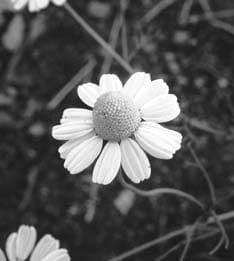
The Calming Herb Chamomile

CHAMOMILE FOR DOGS OVERVIEW

– Use a chamomile glycerin-based tincture for dogs who vomit when they get overexcited. – A combination of cooled chamomile tea and saline solution can be used as an anti-inflammatory and antimicrobial eyewash for dogs with conjunctivitis. – Look for chamomile products made from organic plants – or grow and prepare your own! With hundreds of trendy herb products lining the shelves of pet shops and health food stores these days, it is easy to forget that many of the most useful herbal remedies for pets are already in the kitchen. Many of the herbs we use every day in cooking or in a tasty cup of tea are also very medicinal. In fact, virtually every home spice cabinet contains remedies for upset tummies, nervousness, sore gums, itchy skin, or even intestinal worms. All we have to do is recognize them and remember they are there. Chamomile is just one example. One of the safest and most versatile herbal pet remedies around, chamomile has a broad range of scientifically proven uses. Among the herb’s attributes are anti-spasmodic, carminative (gas relieving), anti-inflammatory, sedative, antimicrobial, digestive, vulnerary (wound healing), tonic (strengthens body functions and/or structures), and antihelmintic (worm-expelling) activities, all of which can be safely and effectively applied to dogs, cats, and most other types of animals.

Calm the Nerves and Stomach

Chamomile delivers reliable antispasmodic, carminative, and mild sedative effects to the digestive system, making it useful in cases of indigestion, gas, or vomiting. I find the tea or tincture especially effective when used in dogs who are prone to stomach upset during episodes of hyper-excitability. You know, the “nervous stomach” types who get gas, a gurgling tummy, or end up vomiting whenever meal time is followed by an exciting event. For these pups, a sweet-tasting, glycerin-based tincture can be squirted directly into the mouth. One milliliter (about ¼ tsp.) per 30 pounds of the dog’s body weight fed once every two or three hours should do the trick. Alternately, a strong infusion of cooled chamomile tea can be used, but you will need to feed more – perhaps a full tablespoon every couple of hours until digestive upset subsides. Brew the tea on the very strong side: 4 tea bags, or 2 tablespoons of bulk chamomile flowers packed in a tea ball, to each cup of boiling water. Sweeten with a little honey if necessary, and allow the tea to steep until it has completely cooled before using. Unused portions can be stored for up to four days in the refrigerator. If you don’t see results after two feedings, don’t be afraid to increase the frequency of the feeding to once per hour. Chamomile is safe enough to be used fairly liberally. Why does chamomile work so well against stomach upset? The answer is somewhat of a mystery, although scientists have identified several chemical constituents of chamomile that are known to have powerful medicinal qualities. Among these constituents is a complex assortment of volatile oils (i.e., apigenenin, chamazulene, and its precursor, matricin) and various flavonoid constituents are known to be strong antispasmodic agents. In the digestive tract, these chemicals serve to ease nervous spasm, help expel gas, and aid in the production of bile (thus improving digestion). Many of these same components have also been shown to reduce inflammation throughout the intestinal tract, making chamomile useful for various forms of inflammatory bowel disease as well.

Clear Skin and Eyes

For itchy, inflamed skin, including flea bites, contact allergies, or minor bacterial or fungal infections, the same (but unsweetened) cooled tea can be used as a soothing, healing, antimicrobial skin rinse. Apply by soaking your companion’s coat and skin with the tea, and allow her to drip dry. For added itch-relieving and healing effects, peppermint tea, aloe vera juice, or calendula tea can be combined with chamomile tea in equal proportions. If raw, open patches of skin are visible, certified organic goldenseal root (Hydrastis canadensis) tincture can be added for an even stronger antibacterial effect. Add the tincture, which is available at any health food store, to the rinse at a ratio of ¼ tsp. per cup of tea. However, be aware that goldenseal can temporarily stain your companion’s coat yellow. For conjunctivitis, whether it is from bacterial infection or just airborne irritants or allergies, the cooled infusion can be carefully strained through a paper coffee filter and diluted with saline solution (the stuff made for contact lens care) at a ratio of 1 part tea to 3 parts saline; the end product should be transparent and light yellow. This inflammatory/antimicrobial eyewash can be liberally applied into the eyes with a dropper, twice or three times per day until inflammation subsides. If stronger antibacterial activity is desired, try adding 5-10 drops of goldenseal tincture to each ounce of the eyewash. However, if inflammation persists or worsens after a few days, or if pus, severe swelling, or damage to the eye or eyelid is apparent, consult a veterinarian.

Heart and Reproductive Tonic

Chamomile has also been shown to have tonic (strengthening) effects on smooth muscle tissues throughout the body, including those of the heart, bladder, and especially the uterus. For dogs with functional deficiencies of the heart, chamomile extract can be combined with hawthorn (Crataegus sp.) extract and/or garlic for use as a daily heart tonic. Chamomile also combines well with raspberry leaf or nettle leaf for use as a pre-pregnancy, tissue-strengthening tonic for the uterus. See a holistic veterinarian to find out if such a formula is appropriate for your companion.

A Natural De-Wormer

Chamomile’s usefulness in expelling worms is often overlooked in favor of stronger, antihelmintic herbs such as wormwood, black walnut hulls, or garlic. However, while chamomile may not act as quickly, it is relatively nontoxic and can be used over extended periods. It serves well as an added measure against worms. And, when added to antihelmintic herbs such as wormwood (Artemesia absinthe) and garlic powder, chamomile offers anti-inflammatory activities that can help minimize the side effects of parasites that have already wreaked havoc upon intestinal mucosa – especially when the soothing, lubricating properties of marshmallow root are added to the regimen as well.

Worm Prevention Regimen

Combine the following alcohol-free tinctures: – 2 parts marshmallow root – 3 parts chamomile Squirt this directly into the mouth, once or twice daily, between meals. Also, add to each cup of food, at each meal: – A pinch of granulated garlic – 1 tablespoon of ground, fresh, raw pumpkin seeds (these can be bought at the health food store and ground at home with a coffee grinder or mortar & pestle)

Chamomile Safety for Dogs

While the uterotonic activity of chamomile is very subtle, its use in pregnant animals should be limited to tea forms of the herb (which are less potent than tinctures). Like all herbs that constrict uterine tissues, high concentration chamomile extracts may act as an abortifacient if used in excessive amounts during early pregnancy. Furthermore, studies suggest that excessive use of chamomile during pregnancy may increase fetus reabsorption and inhibit fetus growth in some animals. Therefore, common sense dictates that chamomile is best reserved for only occasional use during pregnancy. Although chamomile is without doubt one of the safest herbs in existence, some animals (and humans) are allergic to it. Always check for sensitivity before feeding this herb, especially if your companion is already prone to hay fever or other plant allergies. Apply a small amount of the preparation to your dog’s skin. If no redness or other reactions are observed within a couple of hours, feed just a drop or two and watch for anything out of the ordinary.

Grow Your Own Chamomile

Chamomile is easy to grow in all climates, and once established, its promiscuous, free-seeding character yields abundant growth year after year. In fact, if left to its unruly ways, it will likely find its way out of the flower beds and into the pathways and beyond. Chamomile blooms continuously throughout the growing season. The flowers can be plucked off at any time and dried indoors, on a piece of clean paper or a non-metallic screen. Fresh flowers are useful, too, and in fact are a stronger option for use in skin rinses and against intestinal parasites. However, the dried flowers have a much more pleasant flavor.

Download the Full January 2004 Issue

0
To continue reading this article or issue you must be a paid member.

Join Whole Dog Journal

Get full access to Whole-Dog-Journal.com – more than 4,000 articles – for just $20.
Join today and save 30% off our full price.
Already a member?
| Forgot your password? | Activate Web Access

What’s Your Dog’s Complete Blood Count (CBC) Diagnosis?

5

CANINE COMPLETE BLOOD COUNT OVERVIEW

1. Don’t hesitate to authorize repeated CBC tests. This will help track your dog’s response to disease and treatment. The cellular composition of a dog’s blood changes rapidly, so sequential tests will reveal more and more about his condition.

2. If your veterinarian has already gone beyond early screening for disease, and still needs definitive answers, insist that CBC tests are read at a commercial veterinary laboratory or vet college.

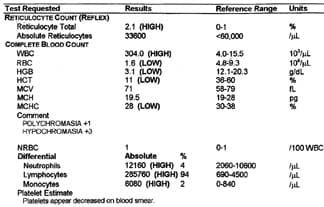
The complete blood count (CBC) is perhaps the most basic of all the diagnostic tools available. To do CBCs in-house, it takes only a few drops of blood from the patient, some specialized instruments that most veterinary clinics have on hand, and a modicum of practitioner skill.

I look at the CBC as the “great divider,” providing veterinarians with answers that help split our first impressions into either/or diagnostic scenarios. Sequential CBCs can often give us a handle on the progression of the disease and a reasonable assessment of prognosis. The CBC is also one of the easiest of the specialized diagnostic tools to interpret – but, as is true of every diagnostic or treatment tool, it is not without pitfalls if we don’t understand its limitations (see “What the CBC Can’t Do,” end of article).

Complete Blood Count Details

The CBC uses the various cellular components of the blood to help define the animal’s current state of health or disease. Leukocytes (white blood cells or WBCs) and erythrocytes (red blood cells or RBCs) are counted, and their total numbers, compared to normal values, are assessed. Thrombocytes (platelets) may also be counted, or they may be evaluated on the blood film and an estimate made for whether there are adequate numbers or not.

To start, a drop of blood is placed on a microscope slide and spread into a thin film. The film (or blood smear) is stained with a variety of substances that help accentuate cell structures for easy identification. Using the microscope, one hundred white cells are identified, and the percentage of each cell type is recorded. This percentage is multiplied by the total number of WBCs, and this absolute value of the cell type is compared to normal values.

It is a simple task to separate the major cell types of the blood into fractions because their relative mass differs substantially. In a tube that has been centrifuged (or left to settle for a few minutes), the red cells are found at the bottom of the tube, and the combination of white cells and platelets form a thin cap atop the red cells. The fluid portion (plasma or serum) makes up the remaining 50 – 60 percent of the volume of the blood. The plasma contains the enzymes and proteins that are evaluated in blood chemistry analyses, along with clotting and immune system factors and other components.

A quick look at the blood-filled centrifugation tube used for determining the hematocrit (also known as the packed cell volume or PCV) will also reveal dramatic increases in white blood cells, when the white “cap” atop the RBCs is more than a few millimeters deep. A look at the tube can also tell us if the serum is lipemic (contains excess fat, usually due to a non-fasting sample), or if there is serious liver damage (indicated by the yellowish tint that bilirubin imparts) or RBC breakdown in the blood (indicated by reddish serum).

Other red cell indices include MCV (mean corpuscular volume), MCH (mean corpuscular hemoglobin), and MCHC (mean corpuscular hemoglobin concentration). When using manual methods for CBC analyses, these indices are calculated from directly determined measurements (PCV, red cell count, and hemoglobin). Automated counters determine cell numbers, cell size (MCV), and hemoglobin concentration, and mathematically calculate the PCV, MCHC, and MCH. These red cell indices are used as an aid in categorizing or classifying anemias, and they can be helpful for monitoring the progress of the condition.

Bone marrow is the starting ground for all blood cells, so when we can’t find a reason for the lack of any one cell line, we may refer to a bone marrow analysis. For example, when a patient has a nonregenerative anemia with no apparent cause, we will need to take a bone marrow sample, stain and identify the cells, and see if there is an identifiable problem somewhere along the normal progression of cell production.

Red Blood Cell Abnormalities

The normal PCV in the adult dog is 37 – 55 percent, and the normal RBC count is 5.5 – 8.5 million cells per microliter of blood. Values that are significantly higher or lower than these send practitioners looking for further clues in certain directions, to wit:

• Fewer than normal RBCs
Low numbers of RBCs or a decreased (or low) PCV indicate anemia. Arbitrarily the severity of the anemia is indicated by the following PCV ranges:

Mild: 30 – 37 percent
Moderate: 20 – 29 percent
Severe: 13 – 20 percent, and
Very severe: less than 13 percent.

Transfusions are usually necessary when the PCV is less than 13 percent, but the severity of clinical signs is often directly correlated to the rapidity of onset of the anemia. That is, if the anemia has developed gradually, the animal may be better able to adapt to the loss of red cells than if there was sudden and massive blood loss.

With anemia, the first step is to determine whether it is regenerative or nonregenerative. Under normal conditions it takes about seven days for the bone marrow to produce a new supply of red cells. But when the marrow is forced to work faster than normal, it tends to send new, not-quite-mature red cells into the blood stream. These immature red cells are called “reticulocytes” or “polychromatic cells,” and they can be seen and counted on blood films by using special stains.

After we give the bone marrow some lag-time to respond (three to four days), a regenerative anemia will have adequate reticulocyte response; nonregenerative anemias will not. Healthy dogs have the capacity to produce a hefty reticulocyte response; in severe anemia, 20-50 percent of their red cells may be reticulocytes.

When an anemia is nonregenerative after three to five days, we may want to look into the cause by evaluating the bone marrow. But often we can get diagnostic clues just by looking at the morphology of the RBCs on a smear and linking their appearance to the most likely causes (see table below).

For example, when there is considerable variability with the RBCs’ size (aniso-cytosis), we can assume the bone marrow is producing young cells, as it should in regenerative anemia. (Younger RBCs are larger than more mature ones.) The presence of high numbers of spherocytes (RBCs that are smaller and rounder than normal) indicates the probability of an immune-system disorder that is attacking the RBCs. “Heinz bodies” indicate an oxidative, toxin-produced change within the RBC.

And of course, a definitive diagnosis is possible when we observe parasites on the blood film, including Haemobartonella canis, Babesia canis, Ehrlichia canis, Histoplasma capsulatum, Dipetalonema reconditum, and Dirofilaria immitis (heartworm).

• More than normal RBCs
An elevated PCV value (polycythemia) is most often the result of dehydration, although sometimes splenic contraction (from fear or excitement) may also cause an increased value. Increased plasma proteins also indicate dehydration, and the protein levels will return to normal upon rehydration.

Polycythemia may also occur when the body is asking for more oxygenation capacity – living at high altitudes, for example, or as a secondary condition related to lung disease. And, there are some rare neoplastic conditions that cause persistently elevated PCVs.

What White Blood Cells Do

Leukocytes (WBCs) are the body’s cellular line of defense, providing a formidable, first-line armamentarium for tracking, isolating, killing, and removing all sorts of invaders, so the WBC portion of the CBC is commonly used to detect and monitor inflammatory processes. WBCs also hold the key for creating and maintaining the body’s immune system function.

The WBCs include the following cell types: neutrophils, band cells (immature neutrophils), lymphocytes, monocytes, eosinophils, and basophils.

We first look at total response (total numbers of WBCs per microliter of blood), and then evaluate the current number values of each of the individual cell lines compared to normal values. Finally, we use these values to help give us the diagnostic category we will be working with to develop our therapeutic protocol.

Normal WBC values (including all white cell types) are 5,500 – 16,900 per microliter.

Neutrophils are usually the most prevalent WBC; in a healthy animal they comprise about 60 to 70 percent of the white cells. Typically, then, when we have increased WBCs, most of the increase will be due to neutrophils.

Neutrophils are thought of as the primary infection fighters of the body. They are attracted to pathogenic invaders – they actually have the capability to move toward the intruders – and they are able to engulf, kill, and remove all sorts of invaders. Normal neutrophil values are 3,000 – 12,000 per microliter. Neutrophils have a short life span (a few hours), so an evaluation of them is indeed a quick snapshot. However, since their turnover rate is so rapid, they offer a good monitoring tool for prognosis.

Bands are immature neutrophils, and they are released from the bone marrow whenever there is an increased need somewhere in the body. Normal band values are 0.0 – 299 per microliter.

Within hours, neutrophils respond to a wide variety of stimuli (including infections, tissue necrosis, and immune-mediated diseases) with the inflammatory response. The neutrophil response we observe in the blood represents a dynamic balance between the demand for WBCs at the site of the inflammation and the rate of bone marrow release.

As an example, a severe infection may initially deplete all the available WBCs, resulting in a decreased circulating number (neutropenia). Within hours, however, the bone marrow releases extra neutrophils, and within days is able to produce huge numbers of cells. As the bone marrow responds, it also releases increasing numbers of immature neutrophils (band cells). This process is referred to as leukocytosis with a left shift. So long as the production of cells stays ahead of the demand, there will be an orderly progression from a few immature forms to increasing percentages of more mature cells.

The magnitude of the neutrophilic response is an approximate reflection of the magnitude of the inflammatory response. Further, a localized inflammation, pyometra for example, elicits a greater neutrophil response than generalized inflammation. Some bacteria (pyogenic or fever-inducing bacteria, for example) stimulate a more intense neutrophil response than other types. Dogs have a tremendous capacity for neutrophilic response, and values of 50,000 per microliter or higher are not uncommon with these conditions.

The severity of the inflammatory process is reflected by the degree of the left shift – that is, when the number of band cells and even more immature cells increases greatly, we can assume there is a severe ongoing inflammatory response.

Lymphocytes are associated with immune function. They can become stimulated (reactive) with exposure to antigens (including those found in vaccines), and they carry a long-term memory that gives the immune system its capacity to respond to the antigens the body has been exposed to over a lifetime. Lymphocytes are also the cells most often involved in canine cancers. The normal values for lymphocytes are 1,000 – 4,900 per microliter.

Monocytes are thought of as the scavengers of the bloodstream, mopping up and eliminating the cells and debris of inflammation and infection. The normal values for monocytes are 100 – 1,400 per microliter.

Eosinophils respond to antigen stimulation as seen in many hypersensitive reactions. The normal values for eosinophils are 100 – 1,490 per microliter.

Basophils are a rare cellular component of blood. The “normal” value would be 0.

White Blood Cell Abnormalities

Values of any WBCs that are significantly higher or lower than normal values send practitioners looking for further clues in the following directions:

• More than normal WBCs
An elevation of total white cell numbers (leukocytosis) is usually from an increase in neutrophils, and it can be caused by several things:

Physiologic leukocytosis: Defined by an increase in mature neutrophils and sometimes lymphocyte numbers. It is epinephrine-induced and often due to the fear and struggling that occurs during restraint necessary for blood collection.

Corticosteroid-induced leukocytosis: Typically characterized by increased neutrophils (neutrophilia), decreased lymphocytes (lymphopenia), increased monocytes (monocytosis), and fewer eosinophils (eosinopenia). This reaction can be induced by exogenous (drug-induced) or endogenous (stress-related) factors. Note: These are specific and predictable alterations to the animal’s blood-borne line of defense, changes that occur whenever we choose to use corticosteroid therapy (or whenever the animal undergoes chronic or severe stress). These alterations are only a portion of the dramatic effects corticosteroid therapy has on the body, and to my mind represent one more reason to be very cautious when using this class of drugs.

• Fewer than normal neutrophils
Reduced numbers of neutrophils (neutropenia) can occur whenever there is an overwhelming bacterial infection and the increased tissue demand results in a depletion of the available neutrophils in the marrow. There are also several rather uncommon conditions in which the bone marrow is not capable of producing neutrophils in a normal manner, resulting in reduced numbers in the blood.

• More than normal lymphocytes
Lymphocytosis (increased numbers) may occur temporarily after vaccination or with increased exercise or anxiety. Lymphocytes may also increase with autoimmune disease and lymphosarcoma (cancer).

• Fewer than normal lymphocytes
Lymphopenia (decreased numbers) commonly occurs with excess glucocorticoids, whether they be from endogenous sources (stress, debilitating disease, surgery, shock, trauma, or exposure to heat or cold), or from exogenous sources (such as glucocorticoid therapy). Viral infections such as canine distemper, infectious canine hepatitis, parvovirus, and coronaviral enteritis also cause lymphopenia.

In addition, lymphopenia is expected in acute severe disease, and the return of the lymphocytes into the normal range is a good prognostic sign of decreasing stress. Finally, lymphocytes may be depleted with repeated drainage into a body cavity (chylothorax or protein losing enteropathies as examples).

• More than normal monocytes
Monocytosis (increased numbers) occurs along with inflammation and tissue necrosis, or glucocorticoid therapy.

• More than normal eosinophils
Conditions that typically cause eosinophilia (increased numbers) include parasitism and hypersensitivity reactions. Eosinophilia is also associated with carcinoma, lymphosarcoma, and other specific diseases such as eosinophilic enterocolitis or pneumonitis.

• Fewer than normal eosinophils
Eosinopenia (decreased numbers) occurs with an excess of either endogenous or exogenous corticosteroids, but since eosinophil numbers are so low in normal blood, this phenomena is rarely noticed.

• More than normal basophils
The number of basophils may increase (basophilia) with heartworm or hookworm infestation and with hypersensitivity reactions. With all these there is usually a concurrent eosinophilia. Hypothyroidism occasionally produces basophilia.

All About Thrombocytes

Thrombocytes (also known as platelets) are responsible for adequate clotting of the blood, and platelet problems are the most common cause of bleeding. Estimates of normal values can be done by an experienced technician by simply observing adequate numbers scattered throughout the blood film. Normal platelet values range from 200,000 – 500,000 per microliter.

• Fewer than normal thrombocytes
Severe thrombocytopenia is defined as fewer than 20,000 platelets per microliter, and it is at this value where we begin to see nose bleeding and hemorrhages into the skin and gut. Causes of thrombocytopenia include immune mediated diseases, improper production by the bone marrow, and consumption of platelets during intravascular coagulation (disseminated intravascular coagulation or DIC).

• Larger than normal thrombocytes
Large platelets indicate the possibility of immature cells being released by the bone marrow – perhaps due to increased need in the body.

Detecting Leukemia with the CBC

Leukemia is a progressive, malignant disease of the WBC or RBC bloodforming organs, with neoplastic cells evident in the peripheral blood and bone marrow. Leukemia is generally recognized by diagnosing high numbers of immature (blast) cells in the peripheral blood. Any of the cell lines may be involved, but the most common cell type is the lymphocyte (lymphocytic leukemia). Most cases of leukemia demonstrate elevated numbers of the involved cell type; rarely, the absolute numbers seen are actually decreased from normal.

Since dogs have such a dramatic capacity to elevate leukocyte numbers, it is often difficult to differentiate between leukemia and what is termed a leukemoid reaction – a strong and persistent leukocytosis without the presence of blast cells.

The most common neoplasia of the blood system of dogs is canine malignant lymphoma (lymphosarcoma, lymphocytic leukemia), with a reported incidence of 24:100,000. This is a progressive disease characterized by neoplastic transformation of lymphoid cells. The neoplasia may originate in either solid lymph organs (lymphosarcoma) or in the bone marrow (lymphocytic leukemia). Diagnosis is made, depending on the origin of the disease, by observing many swollen lymph nodes that can be huge, or by finding large numbers of abnormal lymphocytes on a blood film.

What the CBC Can’t Do

The first and foremost limitation that dog owners should recognize is that the CBC is only a snapshot of what is going on in the inner animal; it does not provide us a story with a beginning, middle, and end. To really know how a disease is progressing, we will need perhaps several progressive “snapshots,” each one giving us a better insight into the whole story of the dog’s ongoing health status.

We don’t often come up with a definitive diagnosis using only a CBC. Usually, it tells us how the body is responding or has responded to a generalized condition. For example, increased neutrophils (one of the white blood cells) indicate an inflammatory response. But the CBC does not tell us where in the body the inflammation is located or what has caused the inflammation, and it almost never helps us differentiate between specific diseases.

Another example: A decreased PCV (low numbers of red blood cells or RBCs) tells us only that we are dealing with anemia; it does not tell us whether the anemia is from poor production of RBCs or from blood loss. And, if the anemia is from blood loss, we still need to determine whether this is the result of a bleeding wound, blood loss into the intestine or other body cavity, parasitic infestation, immunologic conditions that directly attack red blood cells, or any other causes. Thus a CBC tells us only how the blood cells are responding to generalized diseases or conditions. It will not tell us anything about which specific organ system is affected; blood chemistries or other alternative diagnostic methods are needed for this step – to my way of thinking, a vital step for developing a holistic protocol for healing.

And, as with any diagnostic tool, the CBC needs to be interpreted in the context of the whole patient – relying on whole-body signs and symptoms – to put together the whole of the diagnosis. Again, as a holistic practitioner, I think veterinarians have the best chance for success when we combine several diagnostic methods, both Western and alternative.

There are a few variables that have a slight effect on the “normal ranges” of CBC parameters – for example, the dog’s age, sex, breed, and pregnancy status – and we need to keep these in mind when we interpret CBCs. But, for the most part, the normal ranges are well established, and these will remain basically the same between labs. Quality control is not as much a problem as it is for blood chemistries, but there are still some considerations to keep in mind (see below ).

Choose the Best Lab for the Job

Canine and human blood cells don’t all look the same on a stained blood smear, and technicians trained with human blood may not identify some cell lines as accurately as a veterinary technician would. Differentiating between monocytes and reactive lymphocytes seems to be a persistent problem, as does identifying immature neutrophils. Technicians trained in human medicine may not have the experience to identify specific canine diseases.

Further, the in-house stains commonly used by most vets are not as good as the stains used in commercial labs for identification of some cells or structures. Reticulocytes are RNA-rich cells that indicate the degree of response the animal is mounting to anemia. Special stains are needed to properly count the number of reticulocytes; poor staining technique (and/or poor technician training) may miss the presence of reticulocytes or miscount them.

Ultimately, quality control depends on the skills of the examiner, and some veterinarians (and/or the technicians in their hospitals) enjoy the art-forms of working with a microscope and using the methods required for counting, staining, and identifying blood cells, and they thus have developed the necessary skills to accurately assess CBCs. Other practitioners don’t have the requisite interest, and they either send their CBCs out, or the CBC becomes a neglected area in their diagnostic arsenal.

For the most part, these quality control issues are not critical – until we have gone beyond early screening and have reached a state in our diagnostic efforts where we need specific, definitive answers. At this stage, it is probably worthwhile to insist that the samples be read at a commercial veterinary laboratory or at the nearest veterinary college.

CBC Summary

The CBC is a quick and easy way to obtain information that helps separate diseases into categories, and provides some information as to the severity of the disease. Sequential CBCs can give us a reasonable idea for the progression and prognosis of the disease. As with all other tools in the practitioner’s tool kit, the CBC is only as good as the “practitioner-operator,” and good practitioners understand the tool’s limitations as well as its value.

Dr. Randy Kidd earned his DVM degree from Ohio State University and his Ph.D. in Pathology/Clinical Pathology from Kansas State University. A past president of the American Holistic Veterinary Medical Association, he’s author of Dr. Kidd’s Guide to Herbal Dog Care and Dr. Kidd’s Guide to Herbal Cat Care.


Dog Appeasing Pheromone to Calm Anxious Canine

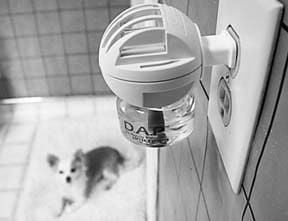
Early this winter, I decided to test the new behavior modification product on the market. It’s essentially an atomizer, similar to room deodorizers that are plugged into electrical outlets, but this product emits a substance dubbed “dog appeasing pheromone” (“DAP” for short) that is supposed to reduce any dog’s stress. The product is sold as the “Comfort ZoneTM Canine Behavior Modification Plug-In,” under the Farnam Pet Products banner.

According to its maker, DAP is supposed to mimic a natural stress-reducing hormone produced by mother dogs while nursing their puppies. It purportedly stops or reduces stress-related barking, urination and defecation, whimpering and whining, anxiety, fear, chewing, and other stress-related behaviors.

One plug-in unit is supposed to dispense enough of the DAP substance to “cover” 500-650 square feet for about four weeks. It has been used in Europe for some time, reportedly with positive results. Recently approved for use in this country, it is reputedly safe for dogs and puppies, and is not supposed to affect humans. Another variety, for stressed-out cats, is sold as “Feliway.” Both are available from pet supply catalogs, ranging in price from $20 – $25 per unit, with refills costing $10 – $15.

Putting DAP to the test
I wondered if the Comfort Zone would help my Scottish Terrier, Dubhy, who gets over-aroused in the presence of some dogs, and who had gotten into a couple of scuffles over his food bowl with my Kelpie, Katie. I also wondered if it would have any effect on the other three dogs in my home.

I plugged in the diffuser unit in my office, where the dogs and I spend our daytime hours. Within three weeks I noticed a marked reduction in Dubhy’s resource-guarding. Katie could watch him eat, and then lick his bowl clean when he was done, with no apparent tension on the Scottie’s part. In the past, he had guarded even his empty bowl.

I also noticed a reduction in his arousal around other dogs at my training center. In addition, he does less arousal barking in the backyard, and comes to me more readily when I call him away from stimuli that cause the arousal barking.

It also seemed to help my Cattle Dog-mix’s thunder phobia. We already give Tucker melatonin for storms, which improves his behavior from panicked to merely tense. At first, I thought the DAP wasn’t affecting Tucker’s storm-related anxiety. For weeks, there appeared to be no change in his behavior when storms occurred.

But about six weeks after I introduced the Comfort Zone, while working in my office during an unusually violent storm, I looked down to see Tucker, curled up, sound asleep on the dog bed under my desk. That behavior has continued since; he seeks out the spot under my desk during storms, but no longer trembles or shows the other signs of serious storm phobia that he used to display.

The product has not, however, reduced Katie’s typical herding dog’s control-freak behavior that compels her to stop our other dogs from playing in the house. Two out of three’s not bad!

Positive reports
A recent survey of trainers and dog owners on several e-mail lists found similarly positive results among a large percentage of Comfort Zone users. Here are some of their comments:

“I have been using a DAP diffuser for the last two months. My Dalmatian was beginning to show mild signs of anxiety/stress when we left him alone. The very first time I used it I found a remarkable change in his demeanor when we came home. We also continue to use management, and have had no further problems with him getting stressed when we leave.”

-Patricia Ellis
Milwaukee, Wisconsin

“In a nutshell: I think it’s a great aid to a program of management. Some recent successes [I’ve witnessed] include a pair of Wheaton Terriers who were extremely reactive about the door; a Jack Russell Terrier adjusting to a baby; and a dog who had been on medication for years. Coupled with about six months of effort on his owners’ part and a DAP diffuser, the latter dog is now on medication only for ‘hard times’ like the Fourth of July, Halloween, and New Year’s Eve.”

-Elaine Allison, CPDT
Canine’s Best Behavior
Los Angeles, California

“I have had very good results with DAP for a variety of anxiety-related problems in dogs (noise phobia, separation anxiety, aggression, fearful behaviors.”

-Lore I. Haug, DVM, MS, DACVB
College Station, Texas

“We started using the Comfort Zone a few months ago for two of our dogs: Trixie, a Giant Schnauzer with mild thunderstorm phobia; and Lucas, a Lab/Pit Bull mix, with severe thunderstorm phobia and mild separation anxiety. In less than a week, Trixie and Lucas were much calmer.

In addition, all of the other things we were using to try to modify Lucas’ behavior began to work! We were already giving him herbs for anxiety, vitamin supplements, acupuncture, massage, and more. Even with all that, his storm-related and separation anxiety was causing grand mal seizures.

Today, Lucas is doing great. He hasn’t had a seizure in two months. He has learned how to play ball and play with our other dogs, is relaxed when we leave home, and even tolerated a recent thunderstorm with very little anxiety. We are very pleased with Comfort Zone.”

-Megan Rollins
The Pawsative Connection
Chattanooga, Tennessee

“I have two clients who have used the Comfort Zone with great results. One has a bitch in false pregnancy, who started having aggression issues. The owner put the DAP unit at the gate she uses to divide the dogs, and reports that they no longer display any barrier aggression.

The other client has a dog who would drool in excess while crated. About two weeks after she started using the Comfort Zone, the dog stopped drooling when crated.”

-Cheri Spaulding, Rock Nest Kennels
St. Johnsbury Center, Vermont

Negative marks
Lest you get your hopes up that the Holy Grail of dog behavior modification has been discovered, please note that it doesn’t appear to work for all dogs and behaviors.

Like my own personal experience with Katie’s incessant herding dog behavior, a number of owners and trainers also reported a disappointing lack of behavior change after introducing the Comfort Zone. Here are some of their comments:

“I tried using DAP in the house to see if it might help the foster dogs coming in, and perhaps ease the resident dogs’ stress and adjustment that always accompanies a new dog in the house. I did not observe any effect on behavior, and did not purchase any more after the second refill.”

-Vicki Magnus
Waldorf, Maryland

“I tried Comfort Zone for both a mildly whiny dog during separation and for a hyperkinetic dog and saw no effect whatsoever. I was disappointed, because the comments I had read on some training lists were so positive. My conclusion was that it had no measurable effects. Possibly my test dogs ages (seven and up) may have been a factor.

-Carole Lawson
Classic Academy of Canine Learning Cleveland, Ohio

(Author’s note: Tucker, our Cattle Dog mix whose thunder phobia has eased significantly, is nine years old.)

“I advised two of my clients to try Comfort Zone. One client has a German Shorthaired Pointer who is very ‘busy,’ always in movement, and doesn’t settle until about 8pm. We tried Comfort Zone on this dog for over a month with no results at all. I was very disappointed. The second dog is a Beagle/Jack Russell mix with severe separation anxiety. We tried Comfort Zone for at least two months and it actually seemed to make the dog worse; greater anxiety and more destruction noticed. Again, disappointed.

-Bernadette Ball
Strickly Dogs
Cincinnati, Ohio

Making matters worse?
The trainer quoted above was not the only one who noted a deterioration of a dog’s behavior when exposed to DAP. One of my good friends has a mature yellow Labrador Retriever with an insatiable desire to eat paper, leather, and other inappropriate objects. We eagerly subjected her to Comfort Zone, only to have her pica behavior worsen.

While clearly not a panacea for all dogs, DAP seems to have a positive effect on enough dogs to make it a worthwhile adjunct to a behavior modification program. Of 42 responses to our survey question, 64.3 percent (27) reported positive results; 30.9 percent (13) reported no observable behavior change; and 4.8 percent (2) reported negative results. Not a scientific study, to be sure, but fairly convincing anecdotal evidence.

One has to wonder about the two dogs whose behavior deteriorated in the presence of DAP. Perhaps a negative association with those early nursing pheromones? Who knows? Maybe they had “Mommy Dearest” type puppyhoods!


Canine Immune System Boosters

by Shannon Wilkinson

What does the first milk from a cow have to do with improving the health of dogs? According to anecdotal and scientific evidence, much more than you might imagine.

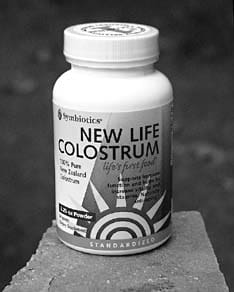
Colostrum, the protein-rich yellowish-fluid produced in lactation by mammals the first few days after birth, is Mother Nature’s first superfood.

It is not only nutritious, but also contains immune and growth factors, enzymes, proteins, and many other beneficial substances.

Research shows that newborns aren’t the only ones that are helped by colostrum. Bovine colostrum isn’t species specific, so dogs (and other mammals) can benefit from it, too. Claims abound for bovine colostrum’s ability to treat allergies, bacterial, or viral infections; autoimmune diseases; digestive problems; and even cancer. But is it all hype?

“It’s not a cure-all,” says Dr. Stephen Blake, a veterinarian with a holistic practice in San Diego. Rather, he explains, it’s a great tool to have in your medicine chest to help animals when they get into trouble. That being said, he has seen dramatic changes for the better in ill animals once they start taking colostrum.

Benefits of colostrum
Bovine colostrum has a long history as a nutritional supplement, particularly with the Indian Ayurvedic tradition. Interest in colostrum as a nutritional supplement or treatment for medical conditions has increased over the last few decades, particularly as technology has improved the ability to process and preserve it.

In humans, much of the maternal antibody protection is passed through the placenta during gestation, rather than through colostrum. This makes human colostrum an important, but not vital part of the neonate’s first hours. In contrast, there is no transmission of antibodies through the placenta with cows and other hooved animals. Nature has solved this problem by making bovine colostrum even richer in antibodies and other immune system enhancers to protect the newborn calf.

Bovine colostrum contains more than 250 beneficial substances, from simple nutritional elements such as protein, fats, vitamins, and minerals, to more complex material such as lactoferrin, transfer factors, growth factors, and immunoglobulins or antibodies.

“Colostrum’s intrinsic value is that the ingredients are all together in a nice package,” says Dr. Blake. “It is a natural whole food that is greater than the sum of its parts.”

Using colostrum
Colostrum is the first product Dr. Blake reaches for when a dog presents with gastrointestinal problems such as diarrhea. “In my experience, 95 percent of all diarrheas will resolve using colostrum rather than antibiotics,” says Dr. Blake. In addition to resolving the immediate problem, the colostrum may actually help heal the intestinal tract and keep it healthy.

This was precisely the experience of Chancey Marie, a 10-year-old Great Dane who had suffered from irritable bowel syndrome for years. About two years ago, her guardian, Cathy Cunningham, owner of VIP Pet Food Delivery in Oregon, started giving Chancey Marie colostrum. Within weeks her previously frequent diarrhea had decreased significantly. In addition, Chancey Marie, no youngster (particularly for a giant breed), is now full of energy. She even enjoys going jogging for a few miles with Cunningham’s husband several times a week.

Dr. Blake also finds colostrum useful for treating immune problems, whether they are caused by an underactive immune system leaving a dog open to infection, or a hyperactive immune system causing autoimmune diseases. “The proline-rich polypeptides help balance the thymus gland,” he explains. Since the thymus gland is chiefly responsible for directing the activity of the entire immune system, a balanced thymus gland can translate to a balanced immune system.

Problems with joints and connective tissue, such as hip dysplasia, degenerative arthritis, or cruciate ligament issues, have also improved with colostrum supplementation. “Without growth factors, all the chondroitin in the world won’t help,” explains Dr. Blake. “If the body can’t replicate cells, then it can’t heal. The growth factors in colostrum can facilitate the body’s own regenerative processes and even better utilize supplements such as chondroitin and glucosamine.”

Side effects
Generally speaking, Dr. Blake recommends colostrum for every sick animal, regardless of illness, and every geriatric animal under his care. Some animals, particularly those who are very ill with chronic disease, are started on no more than a pinch of colostrum. He will then work very slowly to increase the dose to his normal levels of about one-quarter to one-third of a teaspoon per 25 lbs. of bodyweight.

Most dogs like the flavor of colostrum; it’s reminiscent of powdered milk, making it easy to administer. Many times, a dog will lick the powder right up, says Blake, although mixing it in food or “pilling” with the capsules are effective alternatives.

Side effects are quite rare, assures Dr. Blake, although problems with colostrum can include diarrhea or vomiting. If these symptoms do occur, he suggests stopping the colostrum, then restarting it more slowly and in much smaller amounts. He says that some animals may also experience a “healing crisis,” with symptoms getting worse before getting better. As with side effects, the best treatment in these instances is to simply stop the supplement and then restart it in smaller amounts.

It’s important to give colostrum ample time to work. While some people might see nearly immediate improvement, this isn’t always the case, particularly with chronic illness. Allow at least one month for every year the dog has been unwell, and that often begins at birth, suggests Dr. Blake.

Topical wonders
Colostrum also really performs as a topical. It can be applied as a paste to virtually any skin problem such as abscesses, wounds, or surgical incisions. Following her positive experiences with using colostrum for her old Great Dane, Cathy Cunningham didn’t hesitate to reach for the colostrum when her four-year-old Dane developed a rash on her belly. “It resembled ringworm,” Cunningham says, but a paste of colostrum and Oxy Drops [a commercial liquid antibacterial agent] cleared the rash up in a matter of days, never to return.

My own Great Dane, five-year-old Booker, has had hot spots from time to time that worsen with chewing and biting. Sometimes the sores last for weeks, require shaving, and keep us all up due to Booker’s chewing and licking of the inflamed areas. After hearing about colostrum from a number of my holistically oriented friends, I decided to try it on Booker’s newest hot spot. I applied the paste before bedtime. When we got up in the morning, there was no sign of the red, oozy sore that he had the night before. Plus, it has worked every time it has been applied since then.

Part greater than the sum?
While Dr. Blake believes in and promotes whole colostrum supplements, some other practitioners attribute its effects to one specific component present in colostrum: transfer factor.

Transfer factors were originally discovered more than 50 years ago by Dr. H. Sherwood Lawrence, while he was researching tuberculosis. He discovered a molecule in white blood cells that could transfer immunity from the donor to the recipient.

In the 1980s researchers found this same transfer factor molecule in bovine colostrum. Since that time, transfer factors have been isolated in other substances, including the yolk of chicken eggs.

To harness the potential of this isolate, a network marketing company called 4Life Research, of Sandy, Utah, licensed a patented way to extract the raw transfer factors from bovine colostrum collected from two certified organic dairy herds. The extract is then dehydrated and packaged into a variety of forms. The product, called Transfer Factor™, is available as a supplement specifically for humans, dogs, cats, and horses.

According to company literature, the concentrated extract from colostrum is a more potent way to provide this key molecule. One capsule of Transfer Factor contains as much transfer factor as 90 capsules of some brands of colostrum supplements. (Remember, some veterinarians, such as Dr. Blake, prefer to administer colostrum in its whole form, without a concentration of any component.)

Though the product is taken orally, the transfer factor molecules don’t need to be digested to work, explains Bill Burlingame, DVM, of Marysville, Washington. “They are simply absorbed through the mucous membranes of the oral cavity or small intestine.”

Multiple products
The 4Life company includes transfer factor in a number of supplements, from the original Transfer Factor to combination products developed specifically for different health concerns and species, such as Transfer Factor Cardio™ and Canine Complete™.

The 4Life animal formulas are a combination of a line of nutritionals developed by Joe Ramaekers, DVM, which have been combined with Transfer Factor to create new products.

“The synergism between the complete supplement and the effect of Transfer Factor is what really works,” says Burlingame. In order to patent the blend, he explains, it was first shown how animals responded to the supplement blend without Transfer Factor, then how animals responded to Transfer Factor alone, and finally how animals responded to the combination. The result, he says, was more than just A plus B.

One of his favorite products (especially for use with cancer patients, he says) is Transfer Factor Plus™; the “plus” is a combination of potent immune stimulants, including Maitake and Shiitake mushrooms, Cordyceps sinensis (a Chinese herb), inositol hexaphosphate (IP6), beta-glucans, beta-sistosterol, and mannans (from aloe).

Five years ago, when Dr. Burlingame started using Transfer Factor and Transfer Factor Plus™ in his veterinary practice, he didn’t always get the results he hoped for. Since then, he says, he’s discovered that for maximum benefit, Transfer Factor needs to be started early and at high enough doses.

“It’s a numbers game when you’re dealing with bacteria and viruses,” he says. It is crucial to get high enough numbers of transfer factors into the system to combat the high levels of bacteria or viruses. Since using the Canine Complete Transfer Factor supplement, he sees more positive responses.

How to administer
Colostrum and transfer factor supplements are used for a wide variety of health issues, from gastric distress to cancer, allergies, and autoimmune diseases. Many of their uses overlap, and some people have found success with one product but not the other.

Dr. Burlingame uses Transfer Factor in many of the same situations where Dr. Blake chooses colostrum, such as viral or bacterial infections and immune disease.

Recently, Dr. Burlingame had a four-month-old puppy come into to his clinic. The puppy had bloody diarrhea and all the symptoms of parvovirus. In addition to the typical antibiotics, antiemetics, and IV fluids, he gave the puppy 1,400 mgs per day of Transfer Factor. The puppy was home in three days. “I wish I had this a long time ago,” he says.

According to Dr. Burlingame, Transfer Factor usually takes about 48 to 72 hours to educate the immune system. He looks for a regression in symptoms, particularly in the case of infections, within the first 48 to 72 hours. He says he will often see an improvement or increase in white blood cell counts in that time frame as well. And, overall, the patient will begin to feel and therefore act better.

With longer-term treatment, particularly using the Canine Complete product, Dr. Burlingame has found that many dogs can do well on reduced amounts of other supplements and medications they must take.

He also has had success using Canine Complete with more chronic immune system problems such as allergies. He feels that this product ensures an allergic dog has the nutrients necessary to function properly, as well as helps modulate the immune response.

Burlingame says that, like colostrum, Transfer Factor is a safe product and side effects are rare. In addition, because the Transfer Factor molecule is absorbed in the mucosa rather than digested, even very ill animals, particularly those with impaired digestion, can benefit quickly from being given the product.

Burlingame usually recommends that guardians use Canine Complete, as the best all-around supplement containing Transfer Factor for dogs.

Although he highly recommends Transfer Factor for dogs with autoimmune disease, Burlingame suggests that the Transfer Factor Plus product is contraindicated for these dogs; the “Plus” ingredients, including several potent immune stimulants, could possibly overstimulate an already overactive immune system.

Shannon Wilkinson is a TTouch practitioner who lives with two dogs, two cats, and a husband in Portland, Oregon.

Canine Athletic Competition and Sports Psychology

0

[Updated February 5, 2019]

Whether you and your dog are road-seasoned competitors in canine sports, just “playing around” in novice dog shows, or simply striving to train your dog to stop embarrassing you in public, you can improve your mutual performance and your relationship by learning and practicing basic sports psychology techniques.

When we work with our dogs, we communicate our wishes to them largely through our body language, posture, facial expressions, and tone of voice.

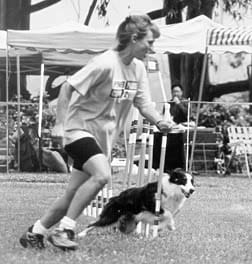
Agility dogs

Stress can vastly alter how our “messages” come across to our dogs. When we are nervous about going into the show ring or anxious about passing another leashed dog on the sidewalk, we are likely to inadvertently “tell” our dogs all sorts of things that we really don’t mean to or want to, such as, “Oh my God this is scary!” or “I feel like I’m going to be sick!”

Sports psychology techniques teach us how to get our brains and bodies under control, so our physical language exudes a relaxed confidence – which is enormously relaxing and confidence-boosting to our dogs, who operate best when they know they can trust a competent leader.

If I do say so myself, I’m sort of a “poster child” for the benefits of sports psychology, since I was absolutely stuck at a certain level of competence at agility with my two Border Terriers.

Sport Psychology for Dogs: What Brought Me Here

For me, it’s hard to imagine anything more fun than a weekend of dog agility competition with my agility partner, Dash. And, from watching the enthusiastic competitors at herding trials, obedience trials, flyball events, tracking exercises, freestyle performances, and other types of dog sports, I think most participants would agree with me about their chosen sports.

It’s also difficult to imagine an undertaking more holistic than dog sports such as agility. The effective combination of mind, body, and emotion, in the dog and handler individually and as a member of the team, holds the key to success. All elements are connected and interrelated to achieve peak performance.

Dash, my five-year-old Border Terrier and three-year agility competitor, and I earned the novice and intermediate qualifications necessary to propel us into competition at the highest levels of difficulty. Remember that line about being careful what you wish for?

Joking aside, as an aware and responsible handler, I created a regimen of training and healthcare to support the demands of high-level competition. I feed Dash a homemade, fresh food diet and augment her food with nutritional and herbal supplements that promote joint health, heart health, and strengthen her immune system.

Dash also receives regular chiropractic adjustments to prevent injury, and enjoys a superficial massage from me after competitions. These modalities increase the flow of blood and energy throughout her system after taxing it by jumping, turning, and racing through the agility courses. I combine training, resting, and fun in a mix that keeps her motivated but not tired.

Personally, I focus on eating and resting well, and shed a few pounds to make running the courses easier. In essence, I put together a well-thought-out plan to support our athletic endeavors.

When Progress Stops, Seek Outside Assistance

As new entrants into advanced levels of competition, we struggled with the issues of courses more difficult to navigate and faster time requirements, and our progress stalled. I made embarrassing mistakes at trials and Dash became frustrated with our clumsy runs. We qualified occasionally, but disappointment and frustration were settling in.

I wasn’t sure what piece of the holistic puzzle we were suddenly missing, so I began to carefully watch the top competitors at each trial and try to figure it out. Advanced agility competition presents only the slightest chance of redeeming a run after making even a small mistake of any kind. So I knew that competitors who qualified consistently were not just good at making up for errors made during a run. They were just plain good.

One of the first things I noticed about these top competitors was that their dogs were not faster than Dash at her best and the handlers themselves were not quicker than me when I ran in good form.

As I got to know some of my fellow competitors, I discovered that many had limited access to agility practice equipment and did not receive regular lessons from national level instructors. They had to juggle work, family, and travel, and some wore knee braces, had bad backs, or suffered from weak ankles or sore hips. Several were significantly older than me, and I have to look backward to see 50. Some of their dogs were rescued from abusive homes, so their intense agility preparation program as puppies was nonexistent.

My hopes of identifying any sort of “disadvantaged circumstances” as the root cause of our slow progress quickly vanished!

The Key to Dog Sport Success

The next thing I noticed was that these highly successful competitors were more poised, more focused, and more relaxed than most competitors. They rarely complained about the course, the weather, the footing, the judge, or whether Mercury was retrograde. And they spent more time interacting with their dogs than socializing with the other competitors at the trials.

I began to suspect that they had mastered the art of sports psychology, or tapping into the power of programming their minds to reach their highest potential of performance and to capture that level of performance from their dogs. By observing and talking with these competitors, and reading about the new concepts of sports psychology, a missing piece of the holistic puzzle for Dash and me has gradually taken shape.

Programming Dogs for Success

Agility enthusiasts are embracing the sport psychology techniques presented in books like the one written by Jane Savoie, an award-winning equestrian competitor. In That Winning Feeling, Savoie explains how the subconscious mind cannot distinguish between the real and the imagined. The subconscious mind reacts to information provided by the conscious mind and attempts to accommodate what the conscious mind sets forth as a goal or as reality, whether positive or negative.

For instance, my unconsciously controlled fear responses, like tight muscles and dilated pupils, kick in when I watch a horror movie, even though my conscious mind knows it’s not real. But the biochemical responses my body produces, as a reaction to my feelings of fear, are very real, and they cascade into a corresponding physical response that can impact my behavior and performance.

After viewing the movie, I probably will be much more hesitant to enter a dark room alone for a couple of days. And, if entering dark rooms alone is required in my life, I have just degraded my performance by induging in the negative imaging in the movie.

Savoie suggests that when we carry negative images of a particular activity (like a poor agility run) in our conscious mind, our unconscious mind believes those images to be reality, or a real goal of the conscious mind. The belief of the unconscious mind can provide desired or undesired cascades into conscious behavior.

Savoie also states that achieving peak performance results from mastering acquired skills, not from relying on genetic gifts. She believes that persistence, not talent, lies at the root of competitive athletic success.

Top competitors have learned to use the power of positive imaging and other precepts of sports psychology to their advantage in the agility ring and in many other competitive dog sports. Let’s take a look at some of their proven techniques:

• Banish negative visual images. One fellow agility competitor refuses to wear any of the popular, humorous agility T-shirts that read “Double Q Challenged” (Double Q refers to qualifying in both a regular and a jumpers-with-weaves run on the same day in an American Kennel Club agility trial) or “My Dog Needs a Faster Handler.” Her T-shirts read “Agility: an Army of Two” or “Agility: Fun on the Run” or, my favorite, “Agility Forever, Housework Whenever.” Don’t you get different feelings about agility just by reading each of these phrases?

• Banish negative verbal input. A national level agility competitor often walks the course carrying a CD player and wearing headphones. I asked him if he was listening to motivational messages. He replied that the CD player was empty. He uses the headphones to block out all of the negative conversation that takes place among competitors while they are walking the course. He doesn’t want to overhear folks talking about it being a course that favors big dogs, or requires unfair maneuvers, or has a particular “crash and burn” zone. He wants to focus on the challenges of the course and prepare his handling strategy.

This competitor also eliminates all negative words and phrases from his agility vocabulary. He replaces works like “try” and “hope” and “if” with “when” and “will.” He no longer “hopes to win if he’s lucky” but instead “he and his dog will do their best and put winning well within reach.” His agility “challenges” are defined by others as agility “problems.”

I have come to think of my course handling challenges as agility “obstacles” that I need to negotiate just like the A-frame and the weave poles are agility obstacles that Dash has to negotiate. And I remind myself to do so with the enthusiasm and confidence that Dash demonstrates when faced with her course (I discovered that my dog is a great role model, too).

• Learn relaxation and positive imaging skills. Practice deep-breathing exercises and muscle relaxation techniques to clear your head. Then paint mental images of successful agility runs, tracking tests, or obedience work on that blank canvas. Never paint mistakes or apprehensions. Mentally rehearse a successful performance several times, and then rehearse the especially critical parts again and again. Even visualize stepping up to receive your ribbon. Show your unconscious mind your conscious goals.

• Be prepared. There’s no substitute for training and practice, which provides the foundation for your positive images and confidence. Meet the basic needs of both you and your dog: rest, eat right, and find moments of mental and emotional serenity.

• Set training and competition goals. Make them realistic, but a stretch. Currently, my competition goal is consistency, not winning. But we’re almost ready to set our sights on regularly qualifying, the next step up for us from consistent performances with minimal mistakes.

I have also experimented with using a mantra, or a word or phrase repeated over and over to program my thoughts. When I notice that I’m over-managing Dash on the course I repeat the word “effortless” or “dancing” again and again before I enter the ring. I want the run to appear “effortless” to an observer, like Dash and I are dancing, and not like I have to work so hard. Somehow, the mantra settles me down and our runs become much smoother.

Dash and I submit to the natural cycle of agility to reduce stress and provide temporary relief from goal-driven thinking. The trials occur predominantly in the spring and fall. I keep Dash tuned up during our competitive seasons, train and practice skills during the winter, and work very little agility in the summer. Late in the spring I look forward to our coming rest, and, by the end of the summer, we’re both ready to go again.

• Learn to fake it. Even if you feel out-of-sorts, apprehensive, or worried, behave as though you feel rested, prepared, relaxed, and confident. The behavior alone triggers the unconsciously supportive responses that the actual feelings trigger. When you’re upset, direct your facial muscles to smile and see how long it takes your mood to change.

At our last trial the weave pole entries were very difficult to accomplish, but it was too late to go home and practice more tough entries. In our first run I panicked and “micro-managed” Dash’s weave pole entry, which she promptly fumbled. Before our second run I told myself repeatedly that her weave poles entries were always impeccable. During the run I directed her to the weave poles, let her find her own way in, and she aced it.

• Stay flexible and use rituals sparingly. Some competitors rely on a series of rituals, or repetitive behaviors, to calm their nerves and focus their thoughts before a competition. They might play with a specific toy with their dog, offer a particularly tasty treat, approach and enter the ring, ask for a down, then turn to run the course.

However, I have witnessed their panic when they discover they have left the tasty treat back in the tent. Keep your options open. A top competitor I know “doodles” before she enters the ring. She asks her dog for a series of random “tricks” to focus their attention, but never relies on an established sequence of behaviors or rewards.

• Get the most out of every competition. Besides running your event, observe and study the best competitors. It’s a real education. Pick a couple of role models and talk with them about training and handling techniques. Solicit feedback on your performances from trusted competitors.

Don’t forget to look for ways to enhance the bond with your dog while you’re spending the day together, fully focused on each other. The measure of the day’s success does not hinge on the ribbons. If you enjoyed yourself, and your dog is happy, it was a good day.

• Don’t totally disconnect from negative feelings. Suppressing negative feelings does not resolve them. Just deal with them after the competition, not during the performance. Need some worry time? Schedule it into your day, worry for about 20 minutes well before the competition, and then forget it until the next scheduled worry session.

Negative thoughts disrupt the smoothness of physical actions you have practiced and that have become familiar to you and your dog. Practiced actions are the most efficient actions and are your finely tuned route to success in competition. Don’t undermine your long hours of practice with negative thoughts right before the event.

• Bounce back. Developing the ability to rebound from setbacks is much more useful than working to eradicate failure, an impossible mission.

My friend’s Corgi unexpectedly runs off course in a trial and refuses to be caught. He loves agility but occasionally gets “the zoomies,” which my friend finds very discouraging (and expensive). Once close to leaving the sport, she sought out training options and worked them hard. The zoomies have dramatically decreased and she has become a testament to the power of persistence and creative training. And she has many more alternatives in her training tool bag than most, because she had to work through a lot of them to succeed.

Don’t turn against yourself or your dog. You are the only two beings who can secure your success!

• Find the humor. At a recent trial a competitor, who works with a breed that does not traditionally excel in agility, had a terrible run. Not only did he and the dog make several serious mistakes, but the competitor tripped over a large panel jump, sent it sprawling in all directions, and landed on top of the pieces. He got up and completed the run. We all had a chuckle from the sidelines. When he exited the ring I heard him say to another competitor, “Even THAT was better than sitting at home!”

Evaluating Your Dog Sport Performance

If improved performance does not follow your mastery of the skills taught by sports psychologists, examine your motivations. If you don’t love the game more than the win, you may have established a pattern that undermines your enjoyment of the sport and your overall performance.

A competitor I know recently left agility. The sport did not appear to energize either her or her dog, but she was determined to own the first dog of that breed to achieve an advanced agility title. Her motivation impeded her success, rather than contributed to it, and she finally agreed that she should find another method of bonding with and enjoying her dog.

An agility instructor recently told participants in a seminar I attended that just stepping up to the agility start line with our dogs puts us in the top one percent of dog owners, win or lose, for we had cultivated a relationship few people experience with their dogs. And we were willing and happy to play our game together and in public!

I treasure that thought and use it to help me focus my thoughts and keep a smile on my face at a trial. His words always run quickly through my mind in that split second, right on the start line, just before I turn to Dash, catch her eye, and say “Ready? Let’s GO!”

Sports Psychology Techniques for Training “Ordinary” Dogs

One of the most ubiquitous sports psychology techniques used by human athletes is visualizing – mentally practicing – an ideal performance of some kind. While you don’t need to have competitive goals of any kind, you must have a behavioral goal for your dog to reap the benefits of this powerful tool.

Say your dog is a strong puller on leash, and it’s often a real struggle to walk him without getting dragged down the sidewalk. You should, of course, consult a professional positive trainer to help you develop a step-by-step program to help your dog learn more appropriate on-leash skills. But it will also help if you frequently mentally rehearse taking a calm, quiet, controlled walk with your dog. Imagine the picture down to the smallest details: Your erect but relaxed posture, your hands closed gently yet securely on the leash, your comfortable and purposeful stride, a smile on your face as you greet passersby and they murmur words of admiration for your dog. And the dog! Trotting on a loose leash by your side; glancing up to you every few feet for direction and affirmation; and his eyes, ears, and tail all expressing a contented trust in you and your leadership.

Once you have thoroughly visualized a picture of you and your dog at your mutual best, walk yourself through this vision for at least a full minute at least a couple times a day. Then, silly as it might seem, practice acting out your part of the picture – in the privacy of your own bedroom, at least at first! It helps if you have a full-length mirror you can use to assess your current posture and expression, and make adjustments so you start to resemble the person in your idealized picture!

Once you feel that you can inhabit the picture fairly accurately, practice this posture and movement around your dog. Try to adopt the same at-ease and self-assured stance and manner with your dog at all times.

If you go through with this, you’ll notice two important things. First, your dog’s behavior will start to improve. Whether or not we notice it, dogs look to us for clues about how they should act, and the cooler you look and sound, the cooler they’ll become. Really. Second, you’ll start to become more conscious of the moments when you aren’t acting “right” – when your responses to your dog become frantic or your voice becomes shrill. And noticing this is the first step toward stopping it.

SPORT PSYCHOLOGY FOR DOGS: OVERVIEW

1. Set and then visualize specific goals for your dog’s behavior. Wanting him to “be good” is too vague. For example: “I want my dog to be calm and friendly when greeting people, without jumping on them.” Or, “I want my dog to be able to walk by other dogs on leash as if he doesn’t even see them.”

2. Practice brushing off your dog’s (and your own) mistakes cheerfully. Don’t fixate on them.

Lorie Long is a freelance writer living in Oriental, North Carolina, with two Border Terriers, Dash and Chase. All three are addicted to agility.

Download the Full December 2003 Issue

1
To continue reading this article or issue you must be a paid member.

Join Whole Dog Journal

Get full access to Whole-Dog-Journal.com – more than 4,000 articles – for just $20.
Join today and save 30% off our full price.
Already a member?
| Forgot your password? | Activate Web Access

Playing With Your Dog Increases Socialization and Relationships

[Updated February 5, 2019]

When Dusty, our elderly Pomeranian, comes in for his dinner, his tiny feet (slower now than they once were) do a little tap-dance in anticipation of his forthcoming food bowl. I get down on my hands and knees and play patty-paws with the 14-year-old – a game we have shared since he was a youngster. His eyes light up, he tucks his tail and he races gleefully around the room in a mad rush. I smile to see my aging pal’s inner puppy emerge, and reassure myself that there’s a lot of life still left in the furry old guy.

Playing does that. It reminds you – and your dog – of the joys in life; it makes your eyes light up and your tail tuck with glee; it keeps both of you active and young; and it strengthens that all-important bond that is so critical to your lifelong relationship.

Finally, play, and the resulting “feel good” mental response that comes with it, can add an important element of fun to your training program. If training isn’t fun for you and your dog, one or both of you will lose interest, and the end result will be that the program – and the relationship – are both at risk for failure.

Playtime for Dogs 101

Different dogs have different play styles. If I tried to play patty-paws with our Australian Kelpie, she would slink away in horror. Her idea of a rousing good time is to help me bring the horses in for their evening grain. Our Cattle Dog mix, Tucker, would rather fetch a stick or a tennis ball, or go jump in the neighbor’s pond. Our Scottish Terrier’s response to the paws activity would be a bored “Whatever . . . ” but he’d be delighted to engage in a game of “Let’s roust critters out of the drainage pipe!”

If you want to play with your dog, it’s important to understand his personal play style. Some dogs are happy to engage in a variety of games, others are pretty well fixed on just one or two. Let’s look at several different play styles, the dos and don’ts for each and some tips to help you determine the best way to play with your dog.

People-Oriented Play

These are games for dogs like Dusty, who want to engage with you. The toy, working, herding, and sporting dogs, bred to have close relationships with humans, are high on the list of people-oriented players. Chase, hide-and-seek, and tug of war are great games for people-oriented dogs.

Be sure and establish clear cues and rules for these games; they have the potential to be problematic if you don’t communicate well. You can be a little physical, as long as the dog doesn’t get “mouthy” or use the game as an excuse for body-slamming. Keep your physical contact at a low enough level that it doesn’t elicit aggressive responses. If your dog puts his mouth on your skin or clothing, you should immediately but cheerfully exclaim, “Oops!” or “Too Bad!,” and end the game.

One of Tucker’s favorite people-games is what my husband and I affectionately call “Growly butt scratch.” As the name implies, Tucker gets quite vocal when his rump is scratched, and will even swing his head around and bump his nose on your hand. He never bites, and his growl is a play growl. Nonetheless, this can startle unsuspecting visitors when they innocently reach down to scratch his offered hindquarters! If your dog has any similar games, it’s a good idea to pre-warn visitors.

Note: Some dog owners make the mistake of getting physical with a dog’s head – grabbing the cheeks, pushing and slapping at the face, and encouraging the dog to growl and bite back. This is a very bad idea, because it may encourage the dog to react aggressively when someone reaches for them – a response that could get them in serious trouble if someone misreads their intent even though they are “just” being playfully aggressive. The line between play aggression and real aggression can be fairly blurry, and if the dog crosses over the line to serious aggression, he’s in even deeper trouble.

Object-Oriented Play

These are activities for dogs whose idea of a really good time is to fetch a tennis ball, plush toy, or stick until they keel over from exhaustion. Lots of these dogs will also play with objects with other dogs, teasing a canine pal into a blood-pumping game of “Neener-Neener, I’ve Got the Toy,” which can morph into a canine version of tug of war when the teasee catches up to the teaser.

Some object-oriented dogs will even play by themselves, tossing a toy into the air and chasing or catching it, over and over. I know of at least one industrious Border Collie (and I’m sure there are more) who entertains herself by carrying a tennis ball to the head of a flight of stairs and pushing it off so she can chase it down the stairs and carry it back up, again and again.

Many of the herding, working, and sporting breeds are fond of object-oriented play. Games you can play with these dogs include fetch, find it, tug of war, and put it away. Be careful with this group; they sometimes don’t know when to quit. I had to carry my first Australian Kelpie back to the car on two different occasions – both long hikes – before I realized I had to stop throwing her ball for her when I thought she’d had enough; she would never stop on her own.

Speaking of stop, it’s a good idea to teach your object player an “All done!” cue, or they may bug you mercilessly to keep playing. I do that by saying “All done!,” and putting the ball immediately and firmly away in a closet or drawer.

Task-Oriented Play

These games are for dogs who need to do something meaningful. Terriers are great at this kind of play, as are the herding breeds, many of the working breeds, and some of the hounds. These dogs tend to take their play seriously; once engaged, it can be hard to turn them off.

Terriers can get quite excited about games like “dig it” and “let’s look for a small rodent.” They also excel at complex behavior tricks. The scent hounds, of course, are virtuosos at “find it”; they are limited only by your creativity. Herding dogs top the class at puzzle-solving and anything that resembles herding.

It’s easy to get caught up in the task-oriented dog’s intensity about their “jobs.” When you are using tasks as play, be sure to remember to keep it fun!

You’ve probably noticed that there’s a fair amount of overlap among these groups. Since our goal is to play with our dogs, we want all our games to be “people play,” at least to some degree. “Object play” often spills over into “task play.” In fact, while your dog may have a preferred play style, lots of dogs are perfectly willing to play whatever game you offer. You may have to help your dog develop his play skills in his non-native style, but he may surprise you with his heretofore hidden play talents.

Teaching Playfulness to a Dog

One of the saddest things about a dog who has never had a real relationship with humans is he may not know how to play. Backyard dogs and dogs who are institutionalized from early in life (puppy mill and poorly socialized kennel breeders, dogs who grow up in shelters without adequate stimulation) may not have had the opportunity to learn how to engage playfully with people. Many of them don’t even know how to play with other dogs! In fact, if you try to play with a dog like this you are more likely to scare him. You think you are acting playful and silly, but he just sees you as a human acting weird, and weird equals dangerous.

How do you teach a dog to play? If you’re starting with a new pup, you’re lucky; with puppies, it’s pretty easy. Puppies are born to play! When they do silly, puppy things (non-destructive, non-dangerous behaviors that don’t undermine your good manners training), reward and reinforce them. Instead of always quashing your baby dog’s puppyness, direct it into acceptable outlets and encourage it.

For example, rather than reprimanding your pup for picking up stuff in his mouth, puppy-proof your house, and encourage him to include you when he plays with his toys. If he manages to pick up a forbidden object, invite him to bring it to you, praise him, and trade it for a treat. Bingo! You’ll have a pup who brings things to you. Don’t worry about making him give you the toy; if you get grabby he’ll learn to play keep-away – not a good game! Instead, trade him for a treat, or a toy of equal or greater value.

Starting from early on, show him a toy, hide it in plain view and tell him to “find it!” As he gets the idea, hide the toy in less obvious places. Teach him to find your hiding kids and you’ll have a game the whole family can play, as well as a useful skill in case your kids, heaven forbid, should ever go missing.

When his behavior suggests an undesirable game he’d like to play, figure out how to direct it into a more acceptable activity. Is he digging holes in the backyard? Build him a digging box, bury his toys and bones, and help him dig them up. Eventually you can add a “dig it!” cue and teach him to dig at whatever spot you indicate.

Games for Adolescent Dogs

If you’re starting with an adolescent canine companion, you still have plenty of puppy energy to play with, although you may have to work a little harder to get him to play with you, now that he’s discovered the rest of the world. Start with games that appeal to him.

If he won’t chase things that you throw for him (balls, sticks, etc.), start by tossing yummy, high-value treats, one at a time. Toss one to your right, then one to your left, so he has to come back toward you each time.

When he realizes that delectable yummies are flying from your fingers and is enthusiastically pursuing the tossed goodies, add a cue before you launch, like “Get it!” Remember, you are playing, so any cues you use should be uttered in cheerful, we’re-having-a-wonderful-time play voice. The length of time you play each session will depend on your dog. Always stop while he is eagerly participating, before his interest and enthusiasm flags.

The next step is to stuff a yummy treat in a treat-holding toy, such as a Kong or Goodie Gripper toy, available from most pet supply stores and catalogs. Show your dog the toy with the treat in it, and toss it a very short distance. Let him get the treats out of the holes, then show him another food-stuffed toy, and toss it a short distance, so he leaves the one he has for the fresh one. Remember to keep it fun, with lots of happy praise.

While he is emptying the new toy, retrieve the first one, and stuff it again. When he’s ready, toss it a short distance. Keep swapping, restuffing, and tossing toys. When it’s clear that your dog enjoys this game, add your cue. As he gets good at running after the stuffed toy for short tosses, gradually increase the distance of your tosses. Chances are he will start bringing the first toy at least part of the way back to you, for which, of course, you will tell him he is absolutely brilliant and wonderful.

From there, your dog should be well sold on the fetch game, and can graduate to non-treat toys.

Stodgy Adult Dog Doesn’t Like to Play?

With seemingly non-playful adult dogs, follow the same, gradual steps for teaching play. Look for behaviors that lend themselves to games, and reward and reinforce your dog any time he does them. Encourage puppy-like behavior. Start small, and don’t overwhelm him. If your dog is intimidated by large displays of enthusiasm, keep your reinforcements small but sincere.

For the greatest success, remember to reward your dog with something that he loves. If you do it well, eventually the game will become its own reward. Then you’ll have a wonderful training tool that will allow you to reduce your dependence on food rewards.

For example, if your dog has learned to love playing tug, whip out your tug toy after a great stretch of heeling, and play the game as his reward. If he’s a tennis ball nut, throw his ball as his reward for a super recall, or for a dynamite distance down. Suddenly your entire training program becomes a game!

If you aren’t letting your inner child out to play on a regular basis with your dog’s inner puppy, you’re missing out on one of the greatest joys of sharing your life with a canine companion.

Games You Should NOT Play With Your Dog

A few canine games have high potential for reinforcing undesirable behaviors. While some dogs manage to play these games without apparent ill effect, the risks are great enough that we strongly suggest you avoid them, and thus avoid the risks altogether. After-the-fact behavior modification may be time-intensive and ineffective. Here are a few games we suggest you and your dog pass on:

Rough physical games. In addition to the notrecommended face-grab game (described in the text above), some owners like their dogs to get very physical in play, encouraging behavior such as mutual body-slamming and jumping up on humans. The problem is, it’s very difficult for a dog to distinguish between ready-andable play partners and frail and frightened ones.

It’s best to redirect high-contact physical activities to acceptable games such as tug of war (with rules). If you must teach your dog to jump up on you, or into your arms (we’ll admit this trick is cute), be sure to teach her that she can do it only when you give her some obscure verbal cue or hand signal that your grandmother is never likely to accidentally exhibit.

■ Chasing laser lights.It is entertaining to watch a dog chase a laser light beam with frenetic intensity, but BEWARE! The dog who most delights in chasing a laser light is the very dog who is most likely to turn the game into an obsessive/compulsive behavior known as shadow chasing. Shadow-chasers become fixated on any movement of light, and compulsively chase any light, reflections, or shadows that happen to cross their vision.

Obsessive/compulsive behaviors are frightening in their intensity, and difficult to resolve once they occur. Be smart and avoid this game – and any others that elicit intense, compulsive responses.

■ High-energy indoor games. In general, indoor games should consist of activities that require the dog to use his brain, not his brawn. Games that involve mad dashes around furniture, bouncing soccer balls off noses, and burrowing for hidden treasures, are best suited for the great outdoors – not just because they can cause damage to family heirlooms, but also because, in general, encouraging your dog to be calm and self-controlled inside the house is a better idea.

If you live in an apartment with no yard and the only way to exercise your high-energy dog is with indoor play, keep the games very structured. For example, roll a ball down stairs or a hallway, don’t throw it; require your dog to “Wait!” before you release her to pursue the prey; and have her sit and politely drop the ball into your hand when she brings it back. Ask for another “Wait!” before you roll it again. Practice some “moving downs” while she is on her way to the ball, and on her way back.

PLAYING WITH YOUR DOG: OVERVIEW

1. If you don’t already know how your dog likes to play, observe him to figure out how you can best arouse his interest. Select games that are likely to appeal to his natural play style.

2. If your dog has any tendency toward an obsessive/compulsive disorder (OCD), cancel any game that triggers his obsession. For example, chasing a laser light has set many a predisposed dog on the path to OCD.

Pat Miller, WDJ’s Training Editor, is a Certified Pet Dog Trainer, and president of the Board of Directors of the Association of Pet Dog Trainers. She is also the author of The Power of Positive Dog Training and Positive Perspectives: Love Your Dog, Train Your Dog.

Safe Canine Weight Loss Tips

1

by C.C. Holland

Does your dog waddle when he walks? When he lies around the house, does he cover more floor space than your area rug? Does he have four legs – and two chins?

If so, you may have an obese dog. But despite the inclination to view fat dogs as happy or jolly, it’s no laughing matter.

Recent studies indicate that up to 40 percent of dogs in the United States may be obese. The risks associated with canine obesity include musculoskeletal disorders such as osteoarthritis, compromised immune function, problems during surgical procedures, delayed wound healing, skin infections, and diabetes.

For these reasons, it’s a good idea to get Fido back into shape. Improved health, quality of life, and longevity are some of the benefits of keeping your canine companion trim. Last year, the Purina Pet Institute completed a 14-year study that found that dogs who consumed 25 percent fewer calories than their litter-mates during their lifetimes maintained a lean or “ideal” body condition and lived longer – nearly two years longer, on average.

First: Is your dog fat?
Charts and tables might give you a general idea of your dog’s recommended weight range, but due to the variations found between male and female dogs and even within breeds, it’s not an exact science. If you have a mixed-breed dog, weight charts may be of no help.

Instead, most veterinarians and nutritionists advocate using a hands-on approach to assessing body condition (see sidebar). A healthy dog will have a waist when viewed from above, have a tucked stomach when viewed from the side, and will have ribs that are easily felt through a very thin layer of flesh. If any of these hallmarks are absent, your dog may be slightly overweight. If all are missing, and if you notice fleshy deposits over the chest, spine, and base of the tail, your dog is obese.

Causes of obesity
As with humans, there are many factors that cause or contribute to weight gain. A variety of medical conditions can predispose your pet to excess weight. For example, hip dysplasia, osteoarthritis, or ligament injuries can limit your dog’s activity and contribute to weight gain. Metabolic diseases such as diabetes or hypothyroidism can also cause obesity. The first step in treating any overweight dog should be a trip to the veterinarian, to rule out these possible disease-related causes.

Some breeds are predisposed to pack on the pounds. Among these are Labrador Retrievers, Beagles, Basset Hounds, Dachshunds, Cocker Spaniels, Cairn Terriers, Cavalier King Charles Spaniels, and Shetland Sheepdogs. If you own one of these dogs, you will probably need to be more vigilant than the average owner to make sure your dog doesn’t put on extra weight.

In addition, when an animal is spayed or neutered, its energy needs decrease by about 25 percent, according to information provided by Ohio State University’s College of Veterinary Medicine. Many people believe that altered pets “automatically” become overweight. The truth is, the dog’s food ration should be decreased following neuter or spay surgery, as his or her body adjusts to lower hormone levels.

Age can also add weight. As body metabolism slows and older dogs are less active, lean body mass can decline and extra fat can creep in.

But by far the biggest reason dogs get fat is the same that humans do: they simply take in more calories than they burn. And for that, you can blame yourself.

“We are facing an epidemic of canine obesity,” said Dr. Nancy Peters, a veterinarian in private practice in Apex, North Carolina, who participated in a recent weight-management study by Purina Pet Products and North Carolina State University College of Veterinary Medicine. “And it is largely due to consistent owner behaviors, not the dog’s. We mean well, but we may not be doing what’s best for our pets.”

Feeding over-large portions and not providing enough exercise are the biggest culprits. But dogs who “scrounge” for extra food – the cat’s food, cat poop, dead things in the yard, stuff from the garbage, or compost heaps – can maintain bulk even when their “official” rations keep decreasing.

Also, dogs are quick to learn behaviors that reward them with tasty treats – and we’re not talking about the types of behaviors that the person tries to teach the dog; we’re talking about the behaviors the dog learns to “trick” the person into feeding him. Many people seem unable to resist large, pleading eyes watching them eat, and slip the dog morsels from their plates. Some dogs learn to pose and beg in front of the dog-cookie jar, causing their owners to say, “Aw! So cute!” and hand over a biscuit.

But while the equation of too many calories + too little exercise = overweight dogs seems simple, it can be anything but. Tony Buffington, DVM, dipl. ACVN, is a professor of clinical sciences at Ohio State University College of Veterinary Medicine, where he and his colleagues have developed an obesity therapy program for cats and dogs. He says weight management sounds like an easy issue, but plenty of other factors complicate things. For one: stress.

“There’s some evidence to support the link between stress and eating,” he says, drawing a parallel to how some humans respond to stress by chowing down. Also, a sense of power plays a part: “I think that animals’ perceptions of control of their environment also modulate their energy balance. We don’t have any idea to what extent we manipulate those perceptions and how that affects weight loss.”

In some cases, owners get some psychological benefits from poor feeding habits. For example, the owner who constantly spoils her dog with treats may enjoy a sense of bonding and closeness with her pet that she fears would be lost with a stricter feeding regimen.

On the other side of the coin, owner inattention can also result in a portly pooch. The owner who doesn’t have the time or the inclination to measure food might simply dump it into a bowl and refill it whenever it’s empty. If the same owner doesn’t pay much attention to exercise or interacting with the dog, the pet may simply eat too much out of boredom.

Trimming the fat
The good news: The dangers posed by obesity can be removed simply by shedding a few of your pup’s pounds.

“In most cases, a 20 percent weight loss will take even grossly obese animals out of the high-risk category for obesity-related diseases,” says Dr. Buffington.

To start your dog back on the road to slimness, start by aiming for a 10 percent weight loss – or a rate of about 1 percent of his body weight per week. A slow approach is recommended both because it allows for a more gradual change in feeding, and because studies show that rapid weight loss can increase a loss of lean body mass, which in turn can contribute to weight regain. (Lean body mass, which includes organs, are the primary drivers of basal metabolism and burn energy at far higher levels than fat mass does. Reducing the amount of lean tissue can create diminished energy requirements, so a dog can regain weight even if he’s eating less.) In other words, forget the idea of crash diets for your dog; slow and steady wins this race.

The first step: weigh your dog. Next, calculate how much your dog actually eats. Begin by listing all the food your dog gets every day, including treats and table scraps, and add up the total calorie count. Some commercial foods carry calorie information on the label; for others, you may need to take the initiative and contact the manufacturer for more details.

Make sure you take portion size into account. If the recommended ration of your kibble is two standard cups a day, but if you’re using a 16-ounce Big Gulp container to measure out the food, you’re actually feeding your dog twice the allowance – and twice the calories.

To calculate calories in non-packaged foods, such as peanut butter, table scraps, and so forth, Dr. Buffington recommends visiting the USDA’s National Nutrient Database for Standard Reference (see www.nal.usda.gov/fnic/foodcomp/Data/SR16/sr16.html), or using one of the various food-value books on the market today. An excellent reference is Bowes and Church’s Food Values of Portions Commonly Used, by Jean Pennington, et al. (At $50, this is a costly book, but useful for researching dietary concerns for your whole family. A paperback version is due out in early 2004.)

Once you have arrived at the total calories ingested by your dog, it’s time to calculate how much weight your dog should be losing – and how many calories to subtract from his diet. Again, if your dog is overweight, you should aim for a 10 percent weight loss overall, at a rate of about 1 percent per week.

If you’re inclined to pull out your calculators, here’s how the math works: If you have a 100-pound dog, a 1-percent weight loss would be 1 pound per week. One pound is equal to 3,500 calories. Thus, you’ll need to reduce his food intake by 3,500 calories per week, or about 500 calories per day.

For a 50-pound dog, the goal is to lose ½ pound per week, which means trimming weekly 1,750 calories (or 250 calories per day).

Or, there’s an easier method. Dr. Buffington uses a general rule of thumb: “Multiply your dog’s current weight by 5, and subtract that number from its current (daily) calorie intake.” In the example above, then, the 100-pound dog should have 5 x 100 calories, or 500, subtracted from his daily diet – the same figure you arrive at by doing the complicated math.

Make dietary changes
You can begin feeding at the new levels either by reducing the total amount of food you give your dog or by changing his diet. For example, you can replace high-calorie snacks with lighter fare (such as carrots, apple slices, or broccoli); reduce or eliminate table scraps; feed mini-meals throughout the day rather than two main meals (this can help reduce begging); or switch to a lower-calorie food formulated for weight loss.

Switching your dog to diet food is not a requirement, says Dr. Buffington: “Most people could feed less of the same food and they’d be fine,” he says. But he warns that cutting back too far can lead to problems. “In some animals, you’ll get to the point with the amount you’re feeding so little that they actually become at risk for nutrient depletion, especially in older or sedentary animals. So cutting back too much can be risky,” he says.

If you’re concerned about this, talk to your veterinarian. In cases like these, Dr. Buffington says, owners might be told to feed a puppy formulation, which is more nutrient-dense. And if you prepare your dog’s meals yourself, Dr. Buffington strongly encourages consulting a nutritionist and including a vitamin/mineral supplement.

If you do decide to try a commercial, low-calorie canine diet, you’ll notice that some tout their low-fat formulations; others trumpet high-protein, high-fat, low-carbohydrate combinations. Dr. Buffington says the last thing you need to worry about is whether your pet should be on the South Beach diet or the Atkins plan.

“It’s completely irrelevant to the health aspects of obesity therapy,” he says. “The relative percentages of carbohydrates to fats to proteins in diet are pretty meaningless.”

Pay attention to how much weight your dog is losing. If the weight loss is greater than two percent in a week, you may be cutting back too drastically; if it’s less than one percent, you may need to trim back further. Slow is the name of the game – remember, your pet didn’t add all the weight overnight, so don’t look for a quick fix.

Add in exercise
Exercise can be an important adjunct to nutrition in promoting weight loss. Which one plays a more important role in the slim-down program depends in part on the owner, says Dr. Buffington.

“The most important thing is what the client wants to do the most, because that’s what they’re most likely to do,” he says. “If you want your dog to lose weight, the animal needs to have a negative calorie balance of 5 calories per pound of body weight per day. You can either take 5 calories out of his bowl, exercise 5 calories out of him, or any combination of the two.”

If your dog was only slightly overweight to begin with, you can increase your dog’s exercise from the get-go. Add in a short walk each day. If he’s young and not prone to joint problems, increase the intensity of his exercise as he loses weight, by playing fetch in a hilly area. Feed your dog part of his rations in Kongs or other stuffable toys, so he has to expend energy while eating.

If your dog is quite obese, exercise should be introduced gradually. Too much activity can be dangerous to a very fat dog. Ohio State’s obesity-therapy guidelines suggest setting a goal to increase the pet’s activity by 1 minute a day until a goal of 10 minutes a day is reached. Once that level is attained, the duration can again be slowly increased.

Work for the long-term
The goal in an obesity therapy program is not primarily to lose weight; it’s to keep weight off. That means you’ll need to keep an eye on your dog’s waistline for the rest of his life. (Ideally, weigh your dog at least once a month, rather than waiting to notice physical signs that the dog has gotten fat.)

As your dog ages and his metabolism slows, he may require fewer calories to maintain his weight. If you notice weight gain, adjust his food accordingly, and if you’re concerned about him not getting adequate nutritional support, see your veterinarian. On the flip side, if he’s losing weight, that could signal an underlying illness. Consult your veterinarian before you increase his rations.

And don’t forget daily walks and games of fetch as part of his weight-management routine. Your aging dog may not appear as interested in exercise – but don’t let that keep you from giving it to him.

“Older animals are less spontaneously active, but they’ll participate if they’re invited to be active,” says Dr. Buffington. “Young dogs will often come to you with their leashes in their mouths. Older dog won’t necessarily do that. But if you bring the leash to an older dog, he’ll undoubtedly get up and head out the door.”

Reality check
Finally, suggests Dr. Buffington, if you think your dog is carrying a bit of an extra load, don’t panic and put him on a starvation diet.

“I’m not promoting overweight, but the truth is, the health risks of obesity in dogs and cats are lower than those in people,” says Dr. Buffington. He worries about people who get “overscientific and underemotional” about slimming their dogs. After all, food and bonding often go hand-in-hand, he says. “I would rather see an owner with a really happy dog who’s slightly overweight than one who destroys her relationship with the dog to give it six more months of life.”

-C.C. Holland, a frequent contributor to WDJ, is a freelance writer from Oakland, California.

Download the Full November 2003 Issue

0
To continue reading this article or issue you must be a paid member.

Join Whole Dog Journal

Get full access to Whole-Dog-Journal.com – more than 4,000 articles – for just $20.
Join today and save 30% off our full price.
Already a member?
| Forgot your password? | Activate Web Access

Old Dog

0

I haven’t talked about my senior dog, Rupert, for a while. He’s living with my dad out in the country, but I get to see him about once a month. He’s completely happy living with my dad, and far more comfortable there than at my house.

Rupe likes to follow his favorite people like a shadow, which has gotten somewhat problematic in his creaky old age. Our last visit to the Veterinary Medical Teaching Hospital at the University of California at Davis pinpointed the source of Rupert’s declining mobility as his knees, whose ligaments were frankly described as “blown out.” At 14 years old, with cardiac arrhythmia, high blood pressure, and failing kidneys, he’s not a candidate for surgery. As my dad says, “Once he gets up, he gets around. Just like me!”

When I first sent Rupe to stay with my dad, I saw it as a temporary deal. My mom had just passed away, and I knew my dad would benefit from Rupert’s constant offer of love and attention. But Rupe has benefitted from the arrangement as well.

At my house, my office is down a flight of stairs, and I’m up and down the stairs all day. This left poor Rupie either standing and staring, disconsolate, at my office door (he’s also pretty deaf, and his vision is not all that great, either), staggering up the stairs, or coming down them in a more or less controlled fall.

My dad’s house doesn’t have even a single step. Plus, my dad is retired, which gives him lots of time to pet a deserving dog. Plus, when Rupe goes outside, there are sticks absolutely everywhere – not a surprise, as my dad lives in the woods, but it makes Rupie’s heart sing to find crunchable toys everywhere he turns.

Rupert is happy to see me when I show up at my dad’s house for a visit, and he whimpers excitedly as he greets me, tail wagging and eyes shining. But I notice that he doesn’t follow me every time I go outside; he only makes the effort to get up and go out when Dad goes out. And at bedtime, he sleeps at the foot of my dad’s bed, not on my sleeping bag with me on the floor of the living room, like he used to when we would visit.

On the other hand, Dad says that Rupe would absolutely not allow him to undertake all the grooming that I perform on the furry old dog every time I’m there. I give Rupe a bath, pick the foxtails out from between his toes, clean his ears, cut his nails, and check the current size and location of all his fatty tumors. He looks like a star when I’m done, and smells and feels so good I can’t help but kiss his shining head again and again.

I don’t know if Rupert will make it through one more winter; we’ll see. For now, he’s in the best possible place, and even though I miss him, I’m happy he’s happy.


-Nancy Kerns