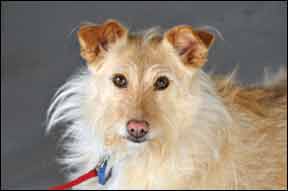
Dog nails aren’t supposed to fall off, thought first-time dog owner Terrie Huberman some 18 months ago. That’s when she first realized that finding one of her Pug-Poodle mix’s nails on the floor of her Sherman Oaks, California, apartment wasn’t an isolated incident.
“My nails could do what?!” SLO is a painful condition that can cause your dog to limp, or to resist having to exercise at all, especially on hard surfaces.
It all started when, after coming in from a walk, Terrie picked up what would turn out to be the keratin shell from one of Bonzo’s claws. At the time she thought it was something he’d tracked in from outside. Only later did she learn the shell was a telltale sign of Symmetrical Lupoid Onychodystrophy, SLO for short.
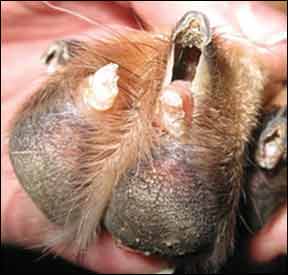
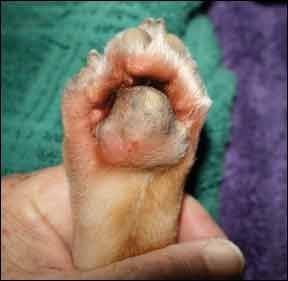
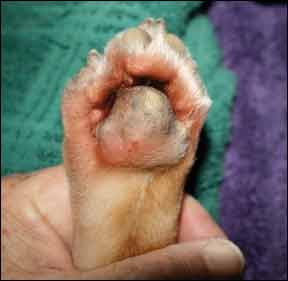
SLO is an inflammation of the nail matrix where the nail is formed. The pattern of inflammation is similar to lupus, giving the condition its “lupoid” designation. The inflammatory reaction at the nail matrix results in abnormal nail development and growth, resulting in compromised claws that lift, separate, and often fall off. Flare-ups are painful and many owners first notice a problem when the dog begins favoring or nursing an affected foot.
While SLO can affect all breeds of dogs, some vets report seeing far more cases among certain breeds. “When I think of SLO, I think of German Shepherds, Miniature Schnauzers, Rottweilers, and Corgis,” says holistic veterinary practitioner Frank Bousaid, DVM, of Harmony Animal Wellness Center in Monroe, Washington. “In the German Shepherd, it seems to be worse, with more toes involved, in males than females.” His experience supports further anecdotal evidence found online, which cites German Shepherd Dogs as being predisposed to the condition.
A dog’s claw is made up of three distinct layers. The visible outer portion that must be routinely trimmed is hard, dead material. The innermost layer – the “quick” – is comprised of nerves and the blood supply; this is what bleeds when the nail is trimmed too short. Initial nail growth occurs at the root, located deep in the toe. In dogs with SLO, damage takes place at the root level about three to four months before the nail becomes visible. When affected nails emerge, they are misshapen and can also be hollow, soft or brittle, or discolored.
Onset is typically acute, with one or two claws initially being affected. “One of the hallmarks of SLO is multiple claw lesions,” says Alexander Werner, VMD, Diplomate of the American College of Dermatology. “If I had a case that came in with a single digit where the claw was abnormal, Lupoid Onychodystrophy would not be high on my list. SLO by definition affects multiple nails.”
Both vets agree the condition is relatively rare. As a veterinary dermatologist, Dr. Werner estimates he treats fewer than 10 patients per year.
Diagnosis Achieving a definitive diagnosis can be tricky because it requires a biopsy of the nail matrix, which must be accomplished by removing a piece of the third phalanx – the last part of the toe. This surgical procedure, much like a de-clawing of a cat, has a painful recovery and results in a malformation of any nail growth that follows (since the nail matrix has been surgically altered). For owners looking for an absolute diagnosis, dogs with affected dew claws are considered the best candidates for biopsy.
Due to the highly invasive nature of the biopsy, vets often make an initial diagnosis based on the characteristics of the disease, or, because treatment is well tolerated by most dogs, many vets will begin treatment on the suspicion of SLO, watching for signs of improvement.
Treatment Both traditional and holistic practitioners agree on the core treatment protocol for SLO. High-dose essential fatty acids (EFAs), specifically omega-3 and omega-6, along with a generally well-tolerated antibiotic such as tetracycline or doxycycline is the most common approach. Antibiotics are used to try to save affected nails while preventing nail bed infections, which can get into the bone and lead to the loss of the toe. Nail bed infections also affect circulation to the feet. EFAs are used for their anti-inflammatory properties.
SLO almost always affects more than one nail. German Shepherd Dogs are the most commonly affected, but a dog of any breed can develop the condition.
“In SLO, there is an unexplained inflammatory process that is happening at the cuticle level,” explains Dr. Bousaid. “There’s an infiltrate of inflammatory cells into the nail bed. That’s the immune-mediated part; this huge attack by the immune system on the nail bed. Omega-3s and omega-6s act as an anti-inflammatory to help calm down the overactivity.”
When it comes to EFAs, Dr. Bousaid strongly recommends salmon oil dispensed in free-fluid form rather than processed and encapsulated for convenience. “I like salmon oil specifically; I think it’s the gold standard of fish oils in dogs,” he says, noting that salmon oil has an ideal ratio of omega-3 to omega-6 for dogs. He recommends clients stay away from cod liver oil , which is frequently manufactured in China and can be months or years old by the time it’s purchased and consumed in the U.S. He does not recommend the use of flaxseed oil, which is often popular with vegetarian clients looking to avoid animal products. He cautions that Omega-3s and omega-6s from non-animal sources such as flaxseed oil are poorly utilized by dogs.
In addition to antibiotics and high-dose fatty acids, Dr. Bousaid also incorporates vitamin B (specifically niacinamide, not niacin or nicotinic acid), vitamin E, and plain gelatin.
“Vitamin B serves as a natural free radical scavenger for anything that’s collagen based – skin, nails, etc.,” he says. “It has to do with the development of the dermal layer and aids in the foundational structure of the nail. I use vitamin B for its nail-strengthening properties. It aids in the development of the nail matrix that will harden and become part of the nail. Vitamin E also helps the nail matrix, playing a role in healthy nail formation.” It’s believed that the fatty acids and vitamins work in tandem. Fatty acids help reduce inflammation and vitamins B and E serve as tools to help rebuild the nail.
Long-Term Challenge One challenge with treatment is that much of the disease activity takes place before nail growth is even visible. Additionally, the disease is often cyclical, so many vets opt for lengthy treatment plans.
Bonzo’s nails responded well to treatment, but it took a year of taking antibiotics in addition to an EFA supplement and vitamin E. His owner will continue the dietary supplements for life, in hopes of warding off future SLO attacks.
“I usually follow a treatment protocol of four to eight weeks,” says Dr. Werner. “The four weeks is just to make sure things are going well and to see that we’re starting to get some good re-growth of lost nails and no additional nail loss. At eight weeks we’ll get a sense of how well the nails are doing. This disease can wax and wane and I want to make sure we’re not in a waning phase before I withdraw a drug that might be helpful. Because the therapy is so well tolerated, inexpensive, and benign for long-term use, I usually go six months before thinking of changing the therapy.”
Many vets, especially those who rarely encounter cases of SLO, will prescribe a steroid such as prednisone in an attempt to reduce inflammation. Both Dr. Werner and Dr. Bousaid consider this ill-advised, noting the host of secondary problems that can arise from steroid use.
“In situations where a vet has prescribed steroids to treat suspected or confirmed SLO, a referral to an animal dermatologist is very important,” says Dr. Werner. “One of the reasons people see dermatologists is to get dogs off steroids for skin conditions. I think steroids are overkill; you may produce a lot of systemic problems by using a potent medication that may or may not be necessary. I think it’s pulling out a big gun when you need a sharp shooter.” Steroid use can result in increased thirst, appetite, weight gain, and muscle loss, and can have negative effects on the liver.
“In extreme cases, short-term steroid use may be needed, but given a choice, it’s best to use something else,” cautions Dr. Werner.
Prognosis While not curable, most dogs tolerate treatment well and once it stimulates new nail growth, antibiotics can often be eliminated from a maintenance regimen of EFAs and vitamins. when flare-ups occur, booties or restricted activity are recommended to help protect the affected claws. Many patients report success with bathing the feet in a saline or diluted antiseptic solution after walks.
“I don’t think it’s curable, but it’s controllable and most dogs do very well,” says Dr. Werner.
Such is the case with Bonzo. One year into treatment, the veterinarian successfully dropped antibiotics from Bonzo’s treatment plan; Terrie continues to give Bonzo EFAs and vitamin E daily. An energetic bundle of youthful energy, his quality of life remains unaffected, except for occasional flare-ups, which fortunately are nowhere near as involved as the initial presentation of the disease.
“His nails are looking much better,” she says. “The SLO is totally manageable now. When he has a flare-up, mostly in the summer, we avoid going hiking. I feel like it has stabilized, and I’m not nearly as panicked about it.”
– If you find yourself getting frustrated during training, stop. Don’t risk taking it out on the dog.
– Take time to evaluate the situation. Use management to prevent unwanted behavior as you decide what to do next.
– Consider seeking outside help from a professional, positive trainer.
– Try to think of ways to vent frustration that don’t involve your dog.
Some people grit their teeth or hold their breath. Others clench their fists or rattle off a string of expletives that would make Pacino blush. When the frustration of daily life comes to a boil, people respond in myriad ways.
Dog training comes with many opportunities for human frustration. You wanted a dog. You didn’t realize that “dog” was potentially code for “eats everything in sight, jumps on the kids, barks like a jackhammer, and if given the chance, leads you on a wild goose chase around the neighborhood as your recall word falls on deaf ears.”
Training a dog, regardless of the method used, is bound to bring about moments of frustration. Addressing unwanted behavior can take time, and today’s modern family often finds spare time to be in limited supply. In the midst of juggling busy personal and professional lives, it’s easy to suddenly find yourself at the end of your rope when it comes to dog training.
The problem with frustration is that, when left unchecked, it can lead to an emotional outburst. Ever lash out with harsh words directed at your kids or spouse after a particularly challenging day at work? We are only human. It happens. In dog training, these emotional outbursts often manifest in strong verbal reprimands, leash pops, and other physical corrections.
Interacting with your dog in an angry or physically forceful way carries the substantial risk of damaging the dog-owner relationship. It can also create an anxious dog, or one who “shuts down” when uncertain what to do. In extreme cases it can become abusive. Additionally, there’s a dirty little secret about losing one’s temper and responding to the dog in a vindictive manner: behaving this way can be rewarding.
How can something as unpleasant as yelling at or jerking the dog’s leash be rewarding? After all, very few of us feel good about losing our temper and resorting to violence (no matter how mild). But even a moment of lashing out (verbally or physically) serves to vent our frustration, and worse, it can alter the dog’s behavior. Pain or fear may temporarily suppress the dog’s unwanted behavior. In the moment, this can feel like a “win” for the handler . . . but this sort of emotional outburst on the part of the handler generally doesn’t result in a lasting behavior change in the dog.
How to Get Past Frustration During Training
It’s infinitely easier to teach a dog what you want as opposed to what you don’t. That’s why positive reinforcement training can be so effective. It’s built on a foundation of recognizing and rewarding correct behavior – not waiting for the dog to make a mistake. It’s proactive, not reactive.
I freely admit to having moments of frustration while training. Despite the years of effort I have put into building strong, trusting, positive reinforcement-based relationships with my dogs, I still sometimes find myself gritting my teeth when things aren’t going as I’d hoped and my dog can’t seem to correctly perform a behavior we’ve spent generous amounts of time training.
The trick lies in learning to manage the frustration in ways that don’t involve taking it out on the dog. The following strategies can prove helpful:
Relax and remember to breathe. Sounds easy enough, but frustration and stress can inhibit our breathing, which affects our body language – something our dogs are keenly aware of. By concentrating on slow, deep breathing, you take in more oxygen, and the shoulders, neck, and upper chest muscles are used less in the breathing process. This helps relax your body posture, which sends a different picture to your dog.
Pay attention to your dog’s behavior. Dogs often respond to stress with one of many fine-tuned signals. Yawning, lip licking, sniffing the ground, and averting their gaze are behaviors dogs use with each other to reduce stress and defuse potential conflict. If you notice your dog engaging in these behaviors during training, take note. He may be aware of your rising stress level even before you are. These signals can be a sign your dog is attempting to self-soothe in the presence of a stressed handler.
It’s okay to stop. When things aren’t going well, sometimes the best thing to do is call it quits for the day. People often feel the need to end on success, and keep training as things start falling apart. According to legendary animal trainer Bob Bailey, whether or not you end a training session on success does not affect the animal’s ability to successfully learn the task at hand.
“Ending a training session on a ‘high note’ is of little significance in itself,” says Bailey. “This assumes that the session more or less randomly ends with a success or a failure.” However, he cautions against creating training scenarios where the dog consistently fails and then shuts down – a poor precedent for the dog.
Remember how patient and forgiving your dog is of you. That’s advice from professional trainer BK Grice of Muncie, Indiana. “Take some time to just hang out with your dog. Break off training and share an ice cream together. Remember that there may be other dogs in your life, but there will only be one Rex or Lassie. When you’ve calmed down, look at what you were doing and see if you can make some changes.
Take notes. In her book, Tales of Two Species: Essays on Loving and Living with Dogs, Patricia McConnell talks about the importance of being patient, and recognizing that training takes time. In an example of teaching impulse control to dogs, she writes, “It takes growing humans about 20 years to learn to control their emotions … so be patient with your dogs, and think in terms of months and years when training, not days and weeks.”
In an age when popular media aims to convince dog owners that behavior dramatically changes in the course of an hour, this reminder is a refreshing dose of eye-opening honesty that should be considered.
Feeling like your dog’s behavior is not improving can be a major source of frustration for people. Often, he is getting better, but owners who are deeply embroiled within a training program might have difficulty recognizing the incremental changes.
“I often get clients who call me to talk about how they aren’t progressing in their training programs. Then I go out and find a dog who is so much improved, it’s amazing,” says Louise Kerr of Elite Pet Care & Education in New South Wales, Australia. “Clients often cannot see the small changes.”
Learning to recognize and appreciate the “baby steps” along the way to complete problem solving can be a valuable tool in reducing human frustration. Organized trainers routinely keep training logs and journals that document results of each training session. Analyzing the data offers concrete information about a dog’s rate of progress, and helps trainers fine-tune training programs when necessary.
Styles of record-keeping are as varied as the trainers using them. Sometimes I keep track of how many times we practiced something and how often my dog was correct. Other times I jot notes about what issues I discovered during the training session, which directs my focus for the next session.
Even something as simple as a happy or sad face drawn on the calendar – denoting an overall “good” or “bad” day in training – can prove helpful. When working to modify problem behavior, it’s easy to forget where you started. A quick glance at the ratio of happy to sad faces on the calendar can provide the confidence boost you need to keep pushing forward with what feels like a slow-moving or stalled training program.
The Magic of Behavior Management
Many of the routine problems clients ask trainers about can be prevented with management: not letting the dog practice the unwanted behavior in the first place. If your dog is reactive to people and dogs walking past his territory, he shouldn’t have unsupervised access to the front room of the home, where he perches atop the sofa, ready to sound the alarm at the first sign of passersby. Nor should he be unsupervised in the backyard where he launches himself at the fence. Of course, you need to spend time teaching an alternative behavior, but if you aren’t prepared to actively train, the next best thing is to prevent what you don’t want.
“When possible, don’t let the dog make the mistake in the first place,” says trainer Gail Rhyno of Prince Edward Island, Canada. “I didn’t get this right away, and looking back, I likely could’ve prevented a few behaviors from becoming problems in the first place. Much of my frustration appears when I’m not training – when I’m tired and I don’t have a plan. The unwanted behavior would happen and I wouldn’t have a response ready and the frustration wells up; I’d feel like all the work I’d done the days before was wasted.”
As an example, Rhyno says, “With my little dog – who’s on high alert all the time – I make sure I’m ready, or I don’t put her in the situation to make mistakes. I don’t have to take her out into the yard every time I go. I don’t have to go to the places in town that I know are full of things that will set her off. I can put her on-leash in the house so that when guests enter, she doesn’t have the chance to jump of them. Things like this have really helped me get around myself. I can’t train all the time; I get tired of it, so in order to not get tired and frustrated, I have to find a way to not let my little pooch make the mistakes in the first place.”
It’s Not Personal, But You Do Need to Own It
It’s sometimes hard to not internalize your dog’s misbehavior and take his noncompliance as a personal affront. Factor in any perfectionist tendencies you may have, and it can be a real test in emotional self-control to keep from feeling like your dog is purposely pawing his nose at you when things aren’t going as planned – especially when training in a group. You’re being watched. The heat is on. “Please, for the love of dog, will you stop jumping around and just sit?!”
Emotions are tricky. We know on a logical level that noncompliance isn’t personal, but this can be tough to remember in heat of the moment. One of the greatest gifts I’ve gained in training dogs – especially my own, where the emotional involvement can intensify my perfectionist tendencies – is the ability to accept my training mistakes, recover, and move on. It’s easy to blame the dog. “He knows this,” or “He knows better,” or even, “He did it right yesterday at the park.” It’s harder to look at how our own actions likely contributed to the dog’s inability to perform to your expectations or hopes.
It’s easy to underestimate how a simple location change can affect a dog’s ability to perform correctly. Clients who primarily practice behaviors with their dog at home and during dog class often report that their dog struggles when asked to work in new, unfamiliar surroundings. This is a normal part of the training process, and why I encourage my clients to not believe their dog “knows” something until they’ve had training success in several different locations away from home. Be aware that certain environments will be more challenging than others, and gradually raise your expectations at a level that is fair and appropriate for your dog.
It’s also important to look at how your behavior might affect your dog. If you primarily lure your dog into positions like sit and down by using treats, you might believe your dog “knows” down, only to be surprised by his inability to perform correctly in the absence of the treat. Sudden behavior changes on your part – such as switching from treat to hand signal, or even changing how you present a hand signal – can reduce the dog’s ability to be correct, which can lead to frustration. Make changes like this to your training program gradually.
Finally, don’t forget that dogs can get frustrated, too. My Golden Retriever reserves a specifically pitched bark for when I suspect he feels that I’ve failed to provide clear direction while running agility. More often than not, he’s right and my body cues were incorrect. “Dang it, woman!” he seems to say. “Where exactly do you want me to go?”
We’re Only Human
Do I still get frustrated? Of course. I’m only human. I’ve been known to call my dog a creative “pet name” or two, or rattle off something to the effect of, “It’s a good thing you’re cute,” as I re-set an obedience jump bar that he just knocked down – again. My secret? I deliver my monologue in a happy, upbeat voice, and often while delivering a stream of treats or tugging with a toy. I release the necessary steam and hope my dog is none the wiser. I’m far from perfect, but this trick often helps me keep my emotions in check so I’m not as apt to unfairly direct frustration toward my dog.
I often think about something an agility judge once said during a pre-run briefing. I don’t remember her name, but her words will stay with me for as long as I choose to share my life with dogs. “Run every run like it’s your dog’s last,” she said. Powerful words. Our dogs are never with us long enough. I want to fill my memory bank with joyful interactions, not frustration-filled memories that potentially led me to treat my dog with less than the respect and compassion he deserved.
After all, as an anonymous author is widely quoted, “He is your friend, your partner, your defender, your dog. You are his life, his love, his leader. He will be yours, faithful and true, to the last beat of his heart. You owe it to him to be worthy of such devotion.”
Stephanie Colman has been training dogs in Los Angeles for 10 years. She actively competes in obedience and agility with her Golden Retriever, Quiz, and enjoys spoiling her retired Whippet, Zoie.
1. Select a menu of strategies from those offered in this article, and start working with your dog.
2. As you try them out, determine which strategies work best for the two of you, and discard the ones that don’t.
3. If you don’t seem to be making progress, seek the help of a qualified, positive behavior professional.
4. If your dog is extremely anxious and fearful, through discussion with your behavior professional and in consultation with a veterinary behaviorist, explore the use of anti-anxiety medications to help improve your dog’s quality of life.
There are a lot of things in our world that have the potential to frighten our dogs. How is it that some dogs deal with these stimuli without batting an eye, while others cower behind their owners with little or no apparent provocation? The Cowardly Lion in the Wizard of Oz seems to say it all in one simple word: “Courage!” But it’s really not so simple. Why do some dogs seem to be consistently brave, while others are timid? Even more important, absent Dorothy and a wizard, how does one go about helping their timid dog get brave?
We’ve written (a lot!) in the past about using counter-conditioning and desensitization to help dogs change their association with fear-causing stimuli in order to change their emotional response. (As just one example of step-by-step instruction for a counter-conditioning program, see “Reducing Your Dog’s Anxieties,” WDJ April 2007.) That’s still good information, and I urge you to review the article to refresh your understanding of that important behavior modification protocol. This article, however, is going to introduce you to several other complementary exercises you can do in addition to counter-conditioning, to help your timid dog learn to cope with a scary world.
Some of the exercises that follow we’ve introduced in other training contexts. Some come in the “change behavior to change emotional response” category by doing fun stuff your dog loves; some have more to do with management; and some do both. If you’ve already taught some of these to your dog it will be easy to apply them in situations where he’s acting fearful. If you haven’t already taught them, there’s no time like the present!
Note: Be vigilant and protect your dog. During the confidence-building period, you must protect your dog from becoming overwhelmed by things that scare him. If, for example, you force your timid dog to accept the attentions of bearded men while he is still fearful of them, or you stay at an event that turns out to be noisy with your noise-phobic dog, he may become sensitized to the scary stimuli, making his behavior worse, instead of better.
Basic Good Manners Training
You don’t have to do a lot of fancy stuff to help your dog become more confident in his world. Simply teaching him basic good manners – to respond appropriately to your cues – will make his environment more predictable. It builds confidence to understand what you’re asking of him, and to understand the consequences of his behavior. Of course it goes without saying that you will use positive reinforcement-based training with him so the consequences are happy ones. Nothing can destroy a timid dog’s confidence faster than the application of verbal or physical punishment; this will convince him he’s right to think the world is a scary and unpredictable place.
Combine his positive reinforcement good manners training with structure in his routine and stability in his life and you will have taken a large step toward increasing his confidence. But of course, you want to do more to help your dog get brave. Happily, you can do that simply by doing fun stuff with him, such as:
Targeting
Targeting means teaching your dog to touch a designated body part to a designated target. (For in-depth information on teaching a dog to target, see “Train Your Dog to Target,” February 2006.) That description doesn’t do it justice; targeting is tons of fun! Many dogs love targeting, partly because it’s easy to do, and partly because it pays off well – “push the button (the target spot), get a treat.”
Since dogs naturally explore the world with their noses and paws, nose and foot targeting are the two easiest. Nose-targeting draws your dog’s eye-contact and attention from a worrisome stimulus to a pleasant one, so that’s the one I find most useful for timid dogs, although foot-targeting can work too.
It’s an embarrassingly simple behavior to teach. Hold out your hand in front of your dog, at nose level or below. When he sniffs it (because he’s curious!), click your clicker (or use a verbal marker, such as a mouth click or a word) and feed him a treat. Remove your hand, then offer it again. Each time he sniffs, click and treat. If he stops sniffing (boring – I’ve already sniffed that!), rub a little tasty treat on your palm, to make your hand smell intriguing, and try again.
You’re looking for that wonderful “light bulb” moment – when he realizes he can make you click and treat by bumping his nose into your hand. His “touch” behavior becomes deliberate, rather than incidental to sniffing your hand. When you see him deliberately bumping his nose into your hand, add the “Touch!” cue as you offer your hand to him. Encourage him with praise and high-value treats. Make it a game, so he thinks it’s the most fun in the world. You want to see his eyes light up when you say “Touch,” and you want him to “bonk” his nose into your hand, hard! Start offering your hand in different places so he has to move to touch it, climb on something to touch it, jump up to touch it.
When he loves the touch game, occasionally ask him to touch twice; tell him he’s a good dog after the first one, and click and treat only the second one. Gradually decrease your rate of reinforcement, until he’ll touch several times before he gets his click and treat. Then click and treat several in a row. Mix it up, so he never knows when the click will happen – but the click and treat always happen eventually!
Now try playing touch when your dog is a little bit nervous about something. Scary man with a beard and sunglasses passing by on the sidewalk? Hold out your hand and say “Touch!” so that your dog takes his eyes – and his brain – away from the scary thing and happily bonks his nose into your hand. Click and treat. He can’t be afraid of the man and happy about touching your hand at the same time. He also can’t look at the target and stare at the scary man at the same time.
Ask him to touch several more times, until the man has passed, and then continue on your walk. If you do this every time he sees a scary man, he’ll decide that men with beards and sunglasses are good because they make the touch game happen! By changing your dog’s behavior – having him do something he loves rather than acting fearful – you can manage a scary encounter, and eventually change his emotional response to and association with something previously scary to him.
Help Raise Confident Dogs With Confidence-Building Games for Dogs
“Find It”
Like targeting, “Find it” is a behavior many dogs learn to love, and another game you can play to change your dog’s behavior in the presence of a fear-causing stimulus, eventually changing his emotional response. This is also another ridiculously easy and delightful game that any dog can play.
Start with your dog in front of you, and a handful of tasty treats behind your back. Say “Find it!” in a cheerful tone of voice and toss one treat a few feet to your left. When your dog gets to the treat, click just before he eats it. When he comes back to you say “Find it!” again and toss a second treat a few feet to your right. Click – and he eats the treat. Do this back and forth, until your dog is easily moving from one “find it” treat to the other. Then toss them farther each time until your dog happily runs back and forth.
Now if a scary skateboarder appears while you’re walking your dog around the block on his leash, play the find it game, keeping the tossed treats close to you. Your dog will take his eyes off the scary thing and switch into happy-treat mode. You’ve changed his emotions by changing his behavior.
Targeting and find it can also work to walk your timid dog past a scary, stationary object, like a manhole cover, or a noisy air-conditioning unit. Play touch and treat as you walk past, or toss find it treats on the ground ahead of you and slightly away from the scary thing, to keep him moving happily forward.
The Emergency Escape Game
An emergency escape game gives you a “run away” strategy when you know an approaching stimulus will be too much for your worried dog. However, because you’ve taught it to your dog as a fun game, he’s not running away in panic; he’s just playing one of his favorite “get brave” games that just happens to move him farther away from the scary thing.
Teach this game to your dog in a safe, comfortable environment when he’s not being afraid of something. As you are walking with him on-leash, say your “Run away!” cue, then turn around and run fast, encouraging your dog to romp with you for a squeaky toy, a ball, a handful of high value treats at the end of the run, or a rousing game of tug – whatever your dog loves most. The key to success with this exercise is convincing your dog that the “run away” cue is the predictor of wonderful fun and games. Again, you’re teaching him a new, fun behavior – “Run away!” – that you can use to change his emotional response in a scary moment.
Playtime
You can use any behavior your dog already loves – a trick, a toy, a game, anything that lights up his face – to convince him that good things happen in the presence of something scary. If he loves to roll over, ask him to do that. If he delights in snagging tossed treats out of the air, do that. High five? Crawl? Do those.
The key to making any of these games work to help your dog be brave is to be sure you keep him far enough away from the scary thing, at first, that his brain is able to click in to “play” mode. You will always be more successful if you start the games when you see low levels of stress, rather than waiting until he’s in full meltdown. (To learn to recognize how dogs show stress, see “Signs That Your Dog Has Stress,” June 2006.)
If he’s too stressed or fearful, he won’t be able to play. If he’ll start to play with you while the scary thing is at a distance, you’ll be able to move closer. If he stops playing and shuts down, you’ve come too close. Depending on your dog and how fearful he is, you may find some of these play-strategies work well enough to walk him past scary stimuli the first time you try, or you may have to work up to it.
“Get Behind”
“Get behind” is more of a management strategy. Timid dogs often try to hide when they’re afraid. If you teach your dog a cue that means “hide behind me,” your “body shield” can help him get through scary moments. To teach this behavior:
1) Have your dog in front of you, with an ample supply of small, high-value treats in your treat pouch, or in a bowl on a nearby table.
2) Say “Get behind!” and lure your dog behind you and into a sit. Click and treat.
3) Repeat several times, until he lures easily into position.
4) Now say the cue and pause, to give him a chance to think about it and respond. If he moves even slightly, click, lure him into position, and treat. A tentative movement is sometimes a question to you – “Is this what you want?” If you answer with a hearty “Click (Yes!!)” and treat, you can move the training forward more quickly.
5) Keep repeating the cue/pause, gradually reducing how much you lure, until he’s moving into position on his own when you give the cue.
Alternatively, you can shape the “get behind” behavior by clicking and treating small movements toward your final goal. (For more information about shaping, see “Fun Dog Training Techniques Using Shaping!,” March 2006.)
You can start applying this strategy in real-life situations early on in the training, even if before your dog fully grasps the concept, simply by luring him into his safe position as the scary thing passes.
“Treat and Retreat”
“Treat and retreat” is a procedure to help timid dogs get brave. Its development is attributed to two well-known trainers: Dr. Ian Dunbar, veterinary behaviorist and founder of the Association of Professional Dog Trainers, of Berkeley, California; and Suzanne Clothier, who trains in St. Johnsville, New York. While Dr. Dunbar claims credit for introducing the concept, Clothier is generally credited with popularizing the procedure under the “Treat and Retreat” appellation.
To use treat and retreat, start with your dog a safe distance from a person who worries him. Have that person toss a piece of low-value kibble over your dog’s head. Your dog will turn and walk away to get the kibble, then turn back to look at the scary person. When he turns back, have the person toss a high-value treat in front of the dog, in the approximate place the dog was originally. (You may want to use some kind of marker to help your tossing-person’s aim.)
When the dog comes forward and eats the high-value treat, have the person toss another low-value treat behind the dog, then another high-value treat in the original spot. As your dog gets more relaxed about coming forward for the high-value treat, have the tosser gradually decrease the distance, so the dog is going closer to the scary person to eat the treat. If you see increased signs of reluctance with the decreased distance, you’ve decreased the distance too quickly. Go as slowly as necessary to keep your dog happy about this game; you want him moving toward the person tossing the treats happily and voluntarily.
CAT, developed by Kellie Snider and Dr. Jesus Rosales Ruiz at the University of North Texas, uses operant conditioning and shaping (dog does deliberate behavior to operate on his environment) to convince a dog that his old behavior, in this case acting fearful, no longer works to make a scary thing go away. In the presence of a scary stimulus, the smallest sign of relaxation or confidence now makes the scary thing go away – until the dog learns that acting confident (and becoming confident as a result) is a better behavior strategy.
BAT is similar to CAT in some ways, but focuses on having your dog move away from the scary stimulus rather than having the scary thing move away from the dog. Developed by Grisha Stewart, CPDT-KA, CTP, of Seattle, Washington, BAT uses desensitization together with a functional reward for calm behavior. You begin at a distance where your dog can see the fear-causing stimulus (scary man with beard) without reacting to it. When your dog offers any form of calm body language you move away from the bearded man as the functional reward.
BAT defines “functional reward,” as “what your dog wants to happen in that moment.” In the case of a fearful dog, what the dog wants is for the scary thing to be farther away. According to Stewart, a good functional reward for a dog’s calm behavior can be to move away from the scary thing. Similar to CAT, if you teach your dog that calm behavior makes scary things get farther away, your dog will learn to be calm, confident, and not fearful in the presence of those things.
A newer version of BAT simply has you keep your dog on a long leash at a sub-threshold distance from the stimulus until he habituates to its presence, then gradually move closer as his behavior and body language tell you he ready to do so.
LAT stands for “Look At That” – a protocol developed by Leslie McDevitt, CPDT-KA, CDBC, author of Control Unleashed, at her training center outside Philadelphia, Pennsylvania. In LAT, the key is to keep your dog below threshold (quiet and calm) while teaching him to look at a scary stimulus, then rewarding him for looking at it. To train LAT, click and reward your dog the second he looks at the bearded man, as long your dog doesn’t react adversely. If your dog is too close to threshold with the scary stimulus at any distance, start with a neutral target and click as soon as he looks at it. When your dog is offering a quick glance toward the target, name it “Look!”
Your dog will quickly start to look at his scary triggers when you give the “Look!” cue, and turn back to you for a reward. If your dog does not turn quickly, he’s probably too close to or over his threshold. Increase the distance between you and the bearded man and try again. Gradually decrease distance as your dog learns to do the “Look!” game with things that are worrisome to him.
Many of the above games and strategies are compatible with each other. CAT and BAT tend to be mutually exclusive because one moves the dog away from the scary thing, while the other moves the scary thing away from the dog. Other than that, the more of the above strategies you apply, the more tools you’ll have at your disposal to help your dog cope with fear-causing stimuli in his world, and the more confident he’ll become.
Coddling and Cuddling
There is an unfortunate myth floating around in some parts of the dog training world that if you give reassurance to a fearful dog you will reinforce his fearful behavior. Therefore you must ignore your dog when he’s trembling at your feet in fear.
Hogwash. Think back in your own life to a time when you were very frightened or upset. Did it help (or would it have helped) you feel better to have someone you trusted come and put his or her arm around your and calmly reassure you that everything was going to be alright? Of course it did. Our dogs are no different.
At times when emotions run high, we are more concerned with helping our dogs get those emotions back under control than having him respond perfectly to our cues. In fact, when a dog is very afraid, the emotional part of the brain — the amygdala — takes over, and the thinking part of the brain — the cortex — doesn’t work well. The over-threshold dog isn’t even capable of connecting his behavior to reinforcement, which is why we try hard in our behavior modification protocols to keep the dog below threshold — so learning can happen. If he is shaking in fear, your calm voice and slow, gentle petting can be hugely reassuring to him; fast rubbing and an anxious tone, however, are not.
Kids and dogs. Everyone agrees they go together, but for children with autism, dogs can be far more than best friends. They can be therapists, comforters, mood stabilizers, and conversation starters. They can help wandering children stay home, help distracted children stay focused, improve a child’s communication and social skills, and help everyone in the family relax.
Wisconsin residents, Rachel and Terry, knew their daughter, Prudence, was different. Two years ago, at age four, she was diagnosed with Autism Spectrum Disorder (ASD). Prudence didn’t interact with other children, had a short attention span, struggled to express herself, was easily distracted by sounds, tastes, smells, and movement, often felt anxious, and found comfort in repetitious behaviors and language. “The autism diagnosis scared us but it made sense,” says Rachel. “We searched for anything that could help her.”
Rachel discovered Blessings Unleashed, a nonprofit organization that pairs autism service dogs (also called autism assistance dogs) with children. In early 2011, a yellow Labrador Retriever named Kaiya officially became Prudence’s service dog. According to the Americans with Disabilities Act, service dogs have been trained to do work or perform tasks that benefit individuals with disabilities and must be allowed access to businesses and organizations that serve the public.
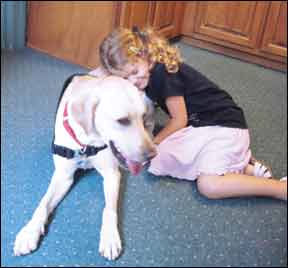
As soon as the two met, Prudence lay next to Kaiya and didn’t want to leave her side. At the family’s initial orientation at Blessings Unleashed, Prudence said without prompting, “Kaiya makes me feel better.”
Now, six months later, Rachel and Terry are amazed at how in tune Kaiya is to Prudence’s needs. “If Prudence cries or screams,” says Rachel, “Kaiya is immediately at her side to provide comfort. Kaiya sleeps on Prudence’s bed every night and we often wake to hear Prudence talking to Kaiya, which is wonderful for her speech development and pragmatic language skills. One day we went to a party where we couldn’t take Kaiya, and the experience was difficult for Prudence. As soon as we returned home she ran to the dog and said, ‘Kaiya, I wish you were at the party – I missed you so much!'”
Kaiya’s most significant impact may be her calming effect. “Prudence is much more present and less anxious with Kaiya around,” says Rachel. “We have noticed less scripted speech and more spontaneous conversation. An added benefit is the improvement we have seen in Prudence’s awareness of others. Because she’s responsible for feeding and brushing Kaiya, she has started to show a greater interest in others. She now plays with baby dolls. She feeds them, holds them, sings to them, walks them in a stroller, and puts them to bed every night. She showed little interest in this before Kaiya arrived. She also plays and talks with her little sister. We couldn’t be more thrilled with these new interests!”
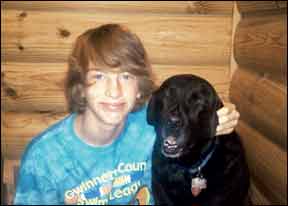
Six years ago at the Southeast Regional Facility of Canine Companions for Independence (CCI), an organization that breeds, raises, and trains service dogs for children and adults with disabilities, Xander Rousseau met his service dog for the first time. “It took three days of working with several different dogs before we had our official ‘match,’ ” recalls his mother, Adrienne Levesque, “and Xander had his heart set on a black Lab named Woody. The entire class cheered when his wish was granted.”
On their first Friday night at CCI, Woody slept in the family’s dorm room. “It was the first night in Xander’s illness history that he slept through the night,” says Levesque, who is a founding and current board member of the National Autism Association. “It was a miracle! At the conclusion of the two weeks, Xander was answering simple questions about ‘his dog’ and he hugged Woody’s trainer! Wow! In two short weeks we rejoiced over major milestones!”
For the past six years, Woody has provided Xander with constant acceptance and affection, accompanying the boy to hospitals where he underwent tests and surgeries as well as to grocery stores, Walmart, and other places that had previously been overwhelming.
“He made it possible for us to navigate a parking lot without the fear that Xander would run away. Woody visited school at the beginning of each year so that Xander could transition successfully, and he became Xander’s motivation to work hard in the various therapy programs we used.”
With Woody’s help, Xander moved from the nonverbal, self-stimulating world of rocking and moaning to a life less dominated by ASD symptoms. “Is he cured? No,” says Levesque. “We still face communication and social hardships. We still battle digestive and seizure disorders. Hopefully we will continue to prevail, battle by battle, until we can say we have completely defeated autism.”
Today 13-year-old Xander is heading into eighth grade, where he is enrolled in academically advanced classes, enjoys the swim team, and plays year-round soccer. “We rejoice over the fact that he has many friends,” says Levesque, “the best of which remains his faithful Lab, Woody.”
Autism Dogs
Although the demand for autism dogs has created many approaches to this type of therapy, the field’s established foundations focus on careful breeding, raising, training, placement, follow-up, and support for these special animals and the families who adopt them. The traits that make good service dogs are well documented and can be tested for at a young age. Because of their stable temperament and intelligence, Golden Retrievers, Labrador Retrievers, and Golden Retriever-Labrador Retriever crosses are widely used.
These dogs can be trained to go after a child who is running away and return the child to the parent, interrupt repetitious or self-harming behaviors, calm a child who is having a tantrum by crawling onto the child’s lap, alert parents if the child wakes at night, and improve the child’s verbal skills by responding to spoken commands.
At Blessings Unleashed, Kaiya was trained to lean or “snuggle” on Prudence when the girl is having a meltdown, interrupt repetitive behaviors by nudging or licking her hand to break the cycle, and to track and find her if she becomes separated from her family.
Eighteen years ago, in what she calls the “dark ages” of autism, Patty Dobbs Gross turned to Canine Companions for Independence on behalf of her son, Danny, whom the organization paired with Madison, a Golden Retriever. “Madison helped Danny grow into the emotionally balanced and socially confident young man he is today,” she says. “He is currently a graduate student at the University of Southern California’s School of Cinematic Arts.”
Madison so inspired Gross that she went on to create North Star Foundation, which during the past 10 years has placed over 100 unique assistance dogs with children who face social, emotional, and educational challenges. Her program differs from that of most service dog organizations because instead of placing trained adult dogs with children, North Star places carefully screened puppies with carefully screened families. Puppy and child grow up together, and the entire family participates in the puppy’s training.
“We educate parents carefully over a long period of time to be sure they provide the necessary supervision and training,” says Gross, “and we screen out children who lash out physically when upset. Having this happen is the only reason besides neglect for which we would remove a dog from a home; we once went to court to do this. In a service dog/child team it is very important to meet the dog’s needs as well as the child’s to keep the placement safe as well as effective. Our dogs ‘work’ for their children, not just the parents, but this is because we actually breed specifically for dogs who take a shine to children, and then we socialize them for children in general and for their own child specifically.”
Gross and her trainers use positive reinforcement training methods exclusively, so North Star dogs are never punished. Instead, they are encouraged to think and act independently.
“We strongly disapprove of programs that use ‘tether dogs’ or ‘babysitter dogs’ that are physically tied to children with autism,” she says. “That’s cruel to the dog and dangerous for both. On five separate occasions, North Star dogs have kept their children safe from wandering, once by delivering a warning bark when the child was taking off, once by nudging the child homeward, and three times by simply following the wandering child until someone noticed the team, read the dog’s collar, and notified the family. But safety is not our primary goal. Our primary focus is meeting our children’s social, emotional, and educational needs.”
Scientific Support for Autism Assistance Dogs
For years reports about the benefits of canine companionship for children with autism were considered heartwarming anecdotes of no scientific importance.
Then researchers began taking a closer look. In 2008 the Journal of Veterinary Medical Education described challenges faced by families with autistic children paired with service dogs, including public-access issues, learning to understand canine behavior, the extra work involved, training commitments, financial responsibilities, and the dog’s impact on family dynamics. “Despite the effects and consequences of these challenges,” researchers concluded, “parents overwhelmingly reported that having a service dog to keep their child safe and to provide companionship was well worth the many inconveniences of service-dog ownership.”
At Maryville College in Maryville, Tennessee, Ariane K. Schratter, PhD, Associate Professor of Psychology, developed an ongoing community-based research partnership with Wilderwood Service Dogs to study the effects of using specially trained dogs for children with autism.
“After the first year with their service dog,” says Dr. Schratter, “parents tended to report decreased problem behaviors such as aggression, fear, and arousal, and an increase in adaptive behaviors, such as eye contact, joint attention, and social inhibition. Many of the children showed improvement in their overall level of functioning.
“The dogs likely elicit positive social interactions in public, helping children with autism successfully interact with others. The dogs’ presence may also reduce physiological arousal at the root of some problem behaviors while providing clear and consistent nonverbal communication cues that children with autism can interpret, thus increasing their adaptive skills. The data suggest that the innovative use of specially trained service dogs may be an important tool for helping the social and language behaviors of children with autism.”
One of the most widely reported benefits of canine-child interaction is reduced anxiety. Now researchers think they know why dogs have such a calming effect. In September 2010, the medical journal Psychoneuroendocrinology published a study that compared levels of the stress hormone cortisol in 42 children with ASD before and during the introduction of a service dog into their families and after the dogs were removed for a short period.
“We found that the introduction of service dogs translated into a statistically significant diminished Cortisol Awakening Response (CAR),” they reported. “Before the introduction of service dogs, we measured a 58 percent increase in morning cortisol after awakening, which diminished to 10 percent when service dogs were present. The increase in morning cortisol jumped back to 48 percent once the dogs were removed from the families…. These results show that the CAR of children with autism is sensitive to the presence of service dogs, which lends support to the potential behavioral benefits of service dogs for children with autism.”
Therapy Dogs at Work
Service dogs aren’t the only four-legged therapists that help children with autism. Therapy dogs make a difference, too. Unlike service dogs, which are permanently paired with their human partners, therapy dogs belong to volunteers who take them to nursing homes, hospitals, schools, and other facilities, usually for an hour at a time. Their visits are considered Animal Assisted Activity or Animal Assisted Therapy depending on whether the visits have specific therapeutic goals and are documented.
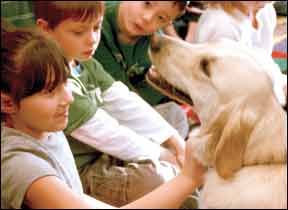
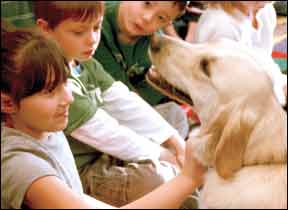
For more than 10 years, Reading Education Assistance Dogs® (therapy dogs participating in the READ® literacy program) have visited schools and libraries, where children read out loud to them.
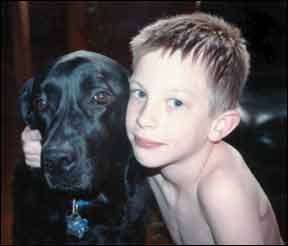
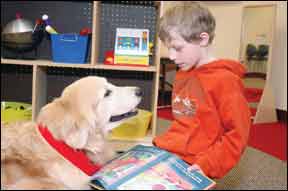
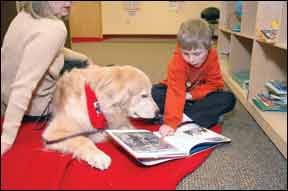
Seven-year-old Joshua (seen in the photos below) had trouble making sense of human emotions until one of his therapists started taking him to read to a dog in the READ program named Journey. “Until then,” says his mother, Ginger Rasmussen, “he was indifferent to animals, as though they were a piece of furniture or a stuffed animal. But after he began reading to Journey, he started petting his own dog and cat, started talking to them and interacting lovingly with them, and before long he began caring and asking why the baby was crying or why mom was happy. He began to feel empathy. Reading to Journey gave Josh the last piece of the puzzle to make him whole. The quiet patience of a READ dog opened a door that we thought was locked forever.”
As reported in the New York Times in November 2010, visits from therapy dogs have become part of the curriculum at the Anderson Center for Autism in Staatsburgh, New York. One nonverbal 11-year-old boy who at first hid from Shadow, a black Labrador Retriever, now asks to walk, pet, and feed her, interactions that help him communicate with teachers and fellow students.
A California teacher who brings her therapy dog to school tried for years to teach one boy to say hello and goodbye. He began greeting the dog, then the teacher, and now he says hello and goodbye to his classmates.
What Parents Need to Know About Autism Assistance Dogs
It would be wonderful if dogs improved the lives of all children with autism – and if all dogs paired with children lived happy, relaxed, fulfilling lives of their own. But service dogs aren’t for everyone, and not every child is a good match for a dog. Here are some factors for parents to consider before applying for an autism service dog.
Expense. Because of their successful fund-raising, Canine Companions for Independence and Guiding Eyes for the Blind provide service dogs to children with autism at no cost, but most service dog organizations ask families to pay part or all of the considerable cost of raising and training these special animals.
North Star asks families to raise half of a service dog’s $10,000 placement cost ($5,000). Wilderwood Service Dogs requires families to raise the full cost of each service dog ($12,000), as does Autism Service Dogs of America ($13,500). Blessings Unleashed asks families to pay the full cost of a service dog ($10,500) or companion dog ($5,500). Companion dogs provide emotional support and do not require the extensive training that service dogs receive.
When Prudence’s parents began raising money to pay for Kaiya, they reached their goal in less than two months. “Fund-raising may seem like a daunting task,” says Rachel, “but it helps to just tell your story. People often feel helpless and don’t know what to say or do for a family affected by autism. Our supporters were excited about Kaiya and most had no idea that service dogs were being utilized to help autistic people.”
Commitment. Bringing a service or companion dog into a household requires commitment. In addition to basic care, these dogs need ongoing training with the entire family, close supervision from parents, and ample play, exercise, and down time. In many ways bringing a service dog into the family is like adopting a child. Families with canine experience, a fondness for animals, and good organizing skills have a head start.
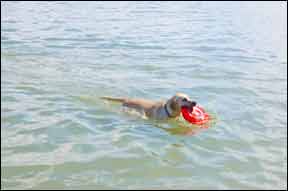
As Rachel explains, “Our responsibilities for Kaiya include working on her service dog-skills daily, keeping her well groomed, feeding her a high-quality dog food, and keeping her in peak physical condition. When Kaiya is not working it is important for her to be a regular dog, so when she is at home we make time every day for her favorite game – Frisbee! We will also have to take yearly public access tests that demonstrate Kaiya’s service dog-skills in order to be re-certified as Kaiya’s handlers. Having a service dog is definitely an added responsibility with two small children, but the rewards have been many, and we are so thankful to have Kaiya in our lives.”
The Right Child. Not every child with autism can be successfully paired with a service or companion dog, such as children who are afraid of dogs, whose uncontrolled actions may harm a dog, whose families are not able to adjust to the needs of a dog, or whose parents expect the dogs to perform magic.
As K. Burrows, C. Adams, and S. Milman reported in the Journal of Applied Animal Welfare Science in 2008, “There is a tendency for parents, especially those with little experience with dogs, to fall victim to ‘Lassie syndrome’ and the belief that real dogs are capable of the sorts of things that fictionalized dogs do, that they are capable of reasoning as humans do, and are qualified to babysit children.”
The Right Program. Researching autism dog programs can be exhausting, especially for those who are new to dogs, but informed parents are better equipped to make good decisions. The Burrows study, which examined 10 children and 11 dogs from a program that tethered dogs to children with autism, revealed problems that had not been addressed prior to the dogs’ placement.
Most of these children showed no interest in their dogs during the first six months of placement. Dogs bonded primarily with one of the parents and some showed signs of separation anxiety when forced to sleep in the child’s room at night or when sent to school without the parent. One dog was returned because it ran after another dog, dragging the child to whom it was tied. These dogs showed evidence of stress and fatigue, especially when sent to school with children because of the long hours and lack of down time, and dogs experienced stress when their child had a tantrum and aggressively struck at the dog.
Programs that emphasize family education, give parents realistic expectations, provide extensive training, follow-through, and support, select appropriate dogs for this type of work, prevent their dogs from suffering stress or abuse, and utilize positive rather than punitive training methods are most likely to generate positive results.
Freelance writer CJ Puotinen lives in Montana. She is the author of The Encyclopedia of Natural Pet Care and other books, and is a frequent contributor to WDJ.
I don’t know a single dog owner who hasn’t, at some point (or quite frequently), spent an inordinate amount of time trying to capture a stray or lost dog. I know I’ve caught more than my share in the small town, or its rural surroundings, where I’ve lived for the past five years. I’ve caught burr-covered, obviously lost hunting dogs; dogs whose injuries suggested they’d tumbled from the back of a truck; as well as some fluffy little lap-escapees who looked like they were just out for an adventure.
If the dog is wearing a collar and tags with current contact information for his owner, you’re in luck – and the rest of the information in this article isn’t relevant. But out of maybe 20 dogs I’ve scooped up in the past five years, exactly one was wearing a collar and current ID tag. It certainly seems like the people who keep collars and tags on their dogs at all times are also the ones who manage to keep them safely contained – but accidents can happen to any owner. Here’s what you should do with an unidentified dog.
1. Take him to your local shelter
Don’t panic; you don’t have to leave him there if you are concerned that your local shelter is unsafe, unclean, or poorly managed. But there are a few things you should do at the shelter (see # 2 and # 3).
If the dog has an owner who is actually trying to find the dog, the owner will most likely come to the shelter to look for the dog. Few people, except the most dedicated owners, think to read the ads in the classified section or on craigslist.
2. Ask the shelter staff to scan the dog
The dog may have an implanted microchip ID. If he does, the staff should be able to help you track down contact information for the dog’s owner.
This seems like a no-brainer, but it only recently occurred to me that my 14- or 15-year-old cat, who was a stray found by a friend and then given to me 12 long years ago, was never scanned. I actually took her to my local shelter and had her scanned just the other day; I hate to think I could have returned someone’s beloved lost cat years and years ago. I don’t know why it never occurred to me to check before. (She had no chip, thank goodness.)
3. File a “found dog” report at the shelter
If he does not have a microchip, and you don’t want to leave him at the shelter, you should at least file a “found dog” report at the shelter. This protects you in case you end up deciding to keep the dog (or you give the dog to a friend); it shows that you made a reasonable effort to find the dog’s owner. If an owner shows up some time later and wants his dog back, you’ll need to be able to prove that this attempt was made in order to protect your rights to the dog.
Some shelters take a photo of the dog for their “found dog” reports and file these online; others simply keep a binder full of the reports, sans photos, on a counter at the shelter. Few people are aware that shelters keep these reports; most people just check the shelter kennels and/or website. It’s uncommon, but reunions have been facilitated through these reports.
4. Take a photo of the dog and make a “found dog” flier
Post it in as many places as you can in the area where you found the dog. Most dog owners look at posters for lost or found pets, and many of us are more familiar with our neighbors’ pets than their owners! This way, you are recruiting a small army of people who might be able to help reunite the dog and his owner.
5. Be cautious if you take the dog home
If you bring the dog home, take immediate steps to protect your pets. Check to see if the dog is infested with fleas; if he is, you’ll want to use some sort of potent flea control product immediately, before the fleas can populate your car or home. If your dogs are not fully vaccinated, or are immune-suppressed, you may want to keep the stray dog as far from your dog as possible for at least a few days, so you can make sure he’s not sick with anything transmissible. Wash your hands well after handling the stray, and clean up his waste immediately.
You also need to protect all of your family members from being attacked by the stray, until you’re certain that no attack is forthcoming. When your own dog is great with kids, cats, and your parakeet, it’s easy to forget that other dogs may be highly predatory.
Don’t take anything for granted; be careful at feeding time, and the first time he finds a nice chew bone or toy that he likes, because he may have resource-guarding issues. Keep the dog on-leash, or control his access to certain parts of the house with baby gates until you have a chance to see what he’s like.
Researchers at Cornell University’s Animal Health Diagnostic Center have developed a new test for Lyme disease in dogs. Available as of June 15, the Lyme multiplex assay is capable of distinguishing between infection and vaccination when vaccination history is available, and between early and chronic disease stages, from a single blood sample.
Borrelia burgdorferi, the bacteria that cause Lyme disease, migrate by way of the tissues to the joints, nervous system, and organs, causing fever, pain, lameness, and sometimes kidney failure (Lyme nephropathy). By the time these clinical signs show up, the infection may have been present 6 to 8 weeks or longer. Bacteria spirochetes can persist in the body for at least a year after clinical signs are gone, while high antibodies persist for at least 17 months. All of these factors make it difficult to distinguish between dogs whose clinical signs are caused by Lyme disease, and those who may been exposed in the past but have recovered from the disease.
Older tests for Lyme disease include whole cell enzyme-linked immunoassay (ELISA), indirect fluorescent antibody (IFA), Western blot, and C6 (SNAP® and ELISA). Whole cell ELISA and IFA tests cannot distinguish between antibodies induced from infection versus vaccination, while Western blot and C6 SNAP tests do not provide quantitative results. For this reason, two separate tests (ELISA plus Western blot) were required from Cornell’s lab for diagnosis and treatment.
The new Lyme disease canine multiplex assay combines the advantages of ELISA and Western blot in a single test. In addition, by identifying three different antibodies, it is the only test that has the capability of distinguishing between early versus chronic infections. Different antibodies point toward dogs who have been vaccinated for Lyme disease, those with early infections (up to 3 to 5 months), and those with chronic infections. The test can detect disease as early as 2 to 3 weeks after exposure, compared to 4 to 6 weeks for ELISA tests and 3 to 5 weeks for C6 tests.
Cornell says that its multiplex assay has increased sensitivity and specificity compared to other tests (resulting in fewer false negative and false positive results), and provides advanced information beyond any of the current Lyme testing methods, resulting in a better definition of the dog’s infection status. The fee for the test is $36, though the cost to you will include additional fees to your vet for drawing blood and shipping.
The Lyme Quant® C6 quantitative antibody test offered by IDEXX can also distinguish between infection and vaccination and provide quantitative results from a single sample. It might have even greater specificity (fewer false positives) than the new multiplex test, which could cross-react with at least one vaccine. Vaccination information must be provided along with samples submitted for testing to Cornell’s lab, so they can take that information into account when analyzing test results. That can be problematic for rescue dogs whose vaccination history is unknown. No such cross-reaction occurs with IDEXX’s SNAP® 3Dx®, 4Dx®, or Quant C6 tests, as no currently available Lyme vaccine stimulates a C6 antibody response.
While the IDEXX Quant C6 test cannot differentiate between early versus chronic infections, it can better monitor response to treatment, by comparing pre- and post-treatment results. A unique property of the C6 antibody is that levels decline sharply after treatment. Other tests measure antibodies that can persist at high levels long after treatment, making it difficult to determine whether the spirochetes are still present.
Doxycycline is used to treat Lyme disease at a recommended dosage of 10 milligrams per kilogram of body weight twice a day for four to six weeks. A controversy exists regarding treatment of dogs who test positive for Lyme but who show no signs of disease. Early research indicated that all but about 5 to 10 percent of dogs were able to fight off infection on their own, with no signs of the disease. A more recent study of 62 Beagles infected with Lyme, however, found that 39 dogs (63 percent) showed symptoms of the disease, and almost all had synovitis (inflammation of the joint lining) at necropsy. Because of the potential for Lyme disease to cause kidney failure, and because not all disease signs are noticeable (subclinical infection), treatment in all cases is the safest option.
– Mary Straus
For more information:
Cornell University College of Veterinary Medicine, Animal Health Diagnostic Center, (607) 253-3900; ahdc.vet.cornell.edu
Corns and plantar warts may be common on human feet, but they’re rare in dogs – unless the dog is a Greyhound. This breed is prone to corns.
Chip the Greyhound had his corns “hulled” (surgically removed), but they grew right back.
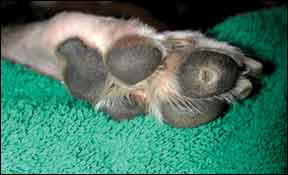
Corns are keratin calluses on the front center paw pads, such as under the second toe bone, which lacks subcutaneous tissue or padding.
A common treatment for corns is their removal with a small curette or scalpel, followed by smoothing with a pumice stone and the application of salicylic acid pads or ointments. Roberta Mikkelsen of Pearl River, New York, hoped that hulling (surgical removal) would help her Greyhound, Chip, recover from his painful corns. “This is such a common problem in the breed,” she says, “that there is an online forum where people list the things that did or didn’t help. So far there isn’t a cure.” After Chip’s corn was removed, it grew back.
According to Dr. Bob Taylor of Animal Planet’s “Emergency Vets” program, an effective treatment is to cover the corn with a small piece of duct tape that does not cover healthy paw pad skin and replace it daily or every three to five days.
Canine warts cause a thickening of the skin and tend to occur on the back or underside of the paw. “Seed warts,” which contain black dots caused by broken blood vessels within the warts, are named for their resemblance to small black seeds. Warts are believed to be caused by the papillomavirus, but despite their viral connection, they are not contagious to dogs or humans.
Warts have so many anecdotal treatments that it’s impossible to list them here. Some are one-application wonders – a single drop of essential oil, a baking soda dressing, or an herbal salve makes a wart disappear for good. Other warts are so difficult to remove that they result in toe amputations.
Any wart or corn on a dog’s paw can be painful, resulting in lameness. Long walks on concrete and other hard surfaces worsen the severity of corns, so walking on softer surfaces as much as possible and wearing well-padded booties can make a positive difference. Thera-Paw boots and slippers were designed for dogs with corns or warts.
Yikes! What happened to Fido’s nose? And what’s wrong with Fluffy’s paw pads? The possibilities are many, and a surprising number of nose and paw pad problems are related. Because illnesses in this category often have similar or identical symptoms, a veterinarian’s diagnosis can be important. The following overview will help you identify, prevent, or treat these disorders.
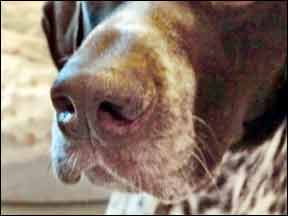
The most frequently asked questions about dogs’ noses concern color. Dogs have black or dark noses and paw pads because of melanin, a pigment that darkens skin. When melanin production slows or stops, the skin lightens uniformly or in patches.
Nasal hypopigmentation, also known as nasal depigmentation, is most commonly seen in the Golden Retriever, yellow Labrador Retriever, white German Shepherd, Poodle, Doberman Pinscher, Irish Setter, Pointer, Samoyed, Siberian Husky, Malamute, Afghan Hound, and Bernese Mountain Dog. Nose color is normal at birth but gradually fades to a light brown or whitish color.
Pigment loss on your dog’s nose is not generally a health problem, though some dogs with light noses may suffer sunburns. Using a sunscreen formulated for dogs is recommended to give a pink nose protection from the sun.
Considered harmless, hypopigmentation does not make the nose more sun-sensitive and does not require treatment. However, this cosmetic imperfection matters to breeders because the loss of nose pigment is a conformation fault in the show ring.
Vitiligo (pronounced vit-ill-EYE-go) creates white spots of varying size and location on the skin when pigment cells, or melanocytes, are destroyed, preventing melanin production. Dogs with this immune system disorder develop white spots on the nasal planum (the hairless, leathery part of the nose), muzzle, and inner lining of the cheeks and lips, as well as patches of white hair and scattered white hairs through the coat. A skin biopsy confirms the diagnosis. Vitiligo is most associated with the German Shepherd Dog, Doberman Pinscher, Belgian Tervuren, and Rottweiler. Color loss is vitiligo’s only symptom.
Dudley nose, which is named for an English town known for animals with flesh-colored noses and light eyes, is a syndrome of unknown cause that may be a form of vitiligo. A puppy’s solid black nose may gradually fade to a solid chocolate brown or liver color, or, if the nose loses all of its pigment, pale pink. Some depigmented noses spontaneously regain their dark color while others remain pale.
Snow nose is a similar condition in which the nose’s dark pigment fades during winter months (without losing all of its color) and darkens again in spring and summer. No one knows what causes it, but one theory blames increased light exposure reflected on snow and another blames cold winter temperatures.
Color Treatment
There are no proven cures for the pigment problems mentioned here, but anecdotal recommendations abound. For example, supplementing with melatonin, the hormone associated with sleep, may help with seasonal changes. Vitiligo may respond to oral doses of folic acid (1 mg twice per day for an 80-pound dog) combined with vitamin C (500 mg twice daily) and injectable vitamin B12 (50 micrograms every 14 days). Some dog owners have reported success giving blueberry extract.
Hyperkeratosis: Milo’s nose kept developing rough spots and cracking, causing the English Shepherd extreme pain. Photo courtesy of Katie Palmer.
Juliette de Bairacli Levy’s natural rearing methods have been popular since the publication of her Complete Herbal Handbook for the Dog and Cat in 1955. “I introduced seaweed to the veterinary world when a student in the early ’30s,” she said. “It was scorned then, but now it is very popular worldwide.” She credited kelp and other sea vegetables with giving dark pigment to eyes, noses, and nails, stimulating hair growth, and developing strong bones.
It’s important not to overuse kelp; it’s rich in iodine, and too much iodine can suppress thyroid function. Levy’s NR Seaweed Mineral Food contains deep-sea kelp, nettle, and cleavers or uvi ursi, herbs that are associated with thyroid, skin, coat, and kidney health. The recommended daily dose is a pinch for small dogs, 1/8 to 1/4 teaspoon for medium-size dogs, and 1/2 teaspoon for large dogs. Kelp fed by itself should be limited to half these amounts.
Pink noses exposed to sunlight may burn or blister, and they are more at risk for the development of cancer. Sunscreen can protect pink noses; see the sunscreen recommendations under Collie nose (page 18). Another option is to have a dog’s pink nose tattooed with black ink, which shields the cells below, to give the nose permanent sun protection.
Nasodigital Hyperkeratosis
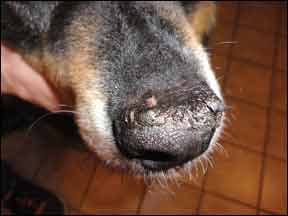
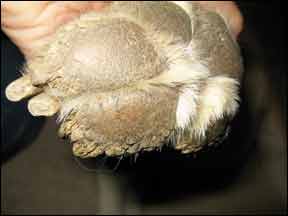
The term nasodigital refers to both nose and toes. A thickening of the outer layer of skin (hyperkeratosis) at the edges of the nose or paw pads can develop into painful cracks, fissures, erosions, and ulcers. The nasal planum, which is usually soft, shiny, and moist, becomes dry, hard, and rough, especially on the dorsum (top) of the nose.
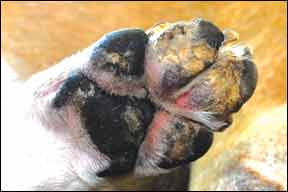
Digital hyperkeratosis, which involves the entire surface of all paw pads, is most pronounced along the edges, as excess keratin (the skin’s tough, fibrous outer covering) is worn away on the weight-bearing surfaces in the center of the pads. The keratin may have a feathery appearance. Excess keratin in hard, cracked paw pads can make walking so painful that it causes lameness.
No one knows what causes this condition, which is associated with older dogs, particularly American Cocker Spaniels, English Springer Spaniels, Beagles, and Basset Hounds. Skin pigment is not affected, and the nose retains its natural cobblestone or pebbly appearance. Secondary bacterial or yeast infections in fissures can cause inflammation and increase discomfort. Other parts of the body are not affected.
Nasodigital hyperkeratosis has no specific diagnosis; it is determined by the exclusion of other conditions that might cause similar symptoms, such as discoid lupus erythematosus or pemphigus complex diseases. Veterinarians usually prescribe topical corticosteroids and antibiotics to control secondary inflammation and infection. Other treatments involve shaving or cutting away excess keratin, which must be done with care, along with the application of wet dressings and topical ointments. Bag Balm, a lanolin-based antiseptic ointment, is a popular treatment, as are Tretinoin Gel (a natural form of vitamin A that treats acne as well as keratosis and is sold by prescription), and petroleum jelly. Foot pads can be soaked in a solution of 50-percent propylene glycol.
Two products with numerous fans among breeders, owners, trainers, and veterinarians for the treatment of dry, cracked noses are Snout Soother, which contains unrefined shea nut butter, organic hempseed oil, kukui nut oil, sweet almond oil, jojoba, candelilla wax, rosemary extract, and natural vitamin E; and Nose Butter, a blend of shea butter, vitamin E oil, and essential oils.
Nasodigital hyperkeratosis is a lifelong condition. Treatment may start with soaking and topical treatments twice a day. Once improvement is seen, ongoing treatment once or twice a week or as the growths recur is required.
When hyperkeratosis affects the paw pads, they develop an excess of crusty, feathery tissue that cracks and can cause pain, as seen in this “before” photo of Chisum, a 7-year-old Lab. Chisum’s paws responded nicely to the topical use of Bio Balm, a French ointment. Photo courtesy of Vanessa Graziano O’Grady.
Milo, an 11-year-old English Shepherd belonging to Katie Palmer in Frederick, Maryland, has lived with this condition for five years. “It started as a rough spot on his nose and continued to get worse,” says Palmer. “If I leave it alone his nose cracks open and he yelps if he bumps it. Then it starts to slough off. Putting vitamin E oil on it makes it softer and not as cracked looking. Milo was fed kibble until one and a half years ago, when I got a Bernese Mountain Dog and put both of them on a raw diet. His nose still looks pretty bad but it’s better than before. I hoped the diet change might fix it, but so far it hasn’t gone away.”
In Denver, Colorado, Vanessa Graziano O’Grady’s 7-year-old yellow Labrador Retriever, Chisum, developed hyperkeratosis when he was a year and a half. His paw pads were treated with prednisone (a corticosteroid drug that suppresses inflammation), Accutane (a prescription form of vitamin A), and Kerasolv (an ointment containing salicylic acid that is no longer available).
“No luck with any of those,” says O’Grady. “Our vet completely trimmed all the excess off and it all grew back. Then our veterinary dermatologist introduced us to Bio Balm, a French ointment that moisturizes and helps heal noses and paw pads. It’s a blend of essential oils, soy oil, and palm oil. Within two weeks of using it nightly, the excess footpad skin started crumbling in my hands and falling off! We use it every night at bedtime on the edges of each pad and it keeps his pads smooth. The dermatologist was so stunned that she asked for pictures to share with colleagues.”
Chisum’s nose was affected, too, but despite two biopsies, his dermatologist couldn’t confirm a diagnosis. “We tried long courses of tetracycline and niacinamide but they didn’t do much, and neither did prednisone,” says O’Grady. “What seems to help the most is Protopic, a prescription ointment for eczema, which we apply once or twice per day. His nose is not perfect but it seems to be holding steady and hasn’t gotten worse.”
Collie Nose
Named for the breed most associated with its symptoms, Collie nose (nasal solar dermatitis) generates crusty lesions on the nose, lips, or eyelids. Its cause is a lack of pigment and inherited hypersensitivity to sunlight. Collie nose is usually classified as a type of discoid lupus erythematosus (see below) but is sometimes considered a separate illness.
Whatever its cause, nasal solar dermatitis tends to worsen in sunny climates and can result from other skin diseases or scarring. In advanced cases, the nose may become ulcerated, bleed easily, or develop skin cancer.
For Collie nose and similar disorders, sun avoidance is the most recommended treatment. Sunscreen can be applied to the noses of outdoor dogs within an hour of sun exposure and repeated frequently. Zinc oxide and other preparations containing zinc are not recommended, as excessive zinc is toxic to dogs. Sunscreens should be fragrance-free, non-staining, and contain UVA and UVB barriers similar to SPF 15 or SPF 30. Preparations made specifically for dogs include Doggles Pet Sunscreen, Epi-Pet Sun Protector, and Vet’s Best Sun Relief Spray. Dr. Mark Macina, a dermatologist at the Animal Medical Center of New York, recommends the human product Bullfrog SunBlock, and some caregivers report good results from Water Babies Stick Sunscreen. Both are widely sold.
Discoid Lupus Erythematosus (DLE)
Systemic lupus erythematosus is an autoimmune disease that affects the entire body. Discoid lupus erythematosus (DLE), a less severe form of the illness, affects only the face, causing depigmentation of the nose followed by open sores and crusts. Australian Shepherds, Brittanies, Collies, German Shepherds, German Shorthaired Pointers, Shetland Sheepdogs, Siberian Huskies, and crosses of those breeds may be predisposed to the disease.
Crustiness around Dagr’s nose advanced into open sores and bleeding. The German Shorthaired Pointer was finally diagnosed with discoid lupus erythematosus. (DLE). Supplements and sunscreen keep the condition in check. Photo courtesy of Barbara Gordon.
There is no known cure for discoid lupus, which is the most common inflammatory disease of the nasal planum. In most cases, the nose becomes smooth and shiny rather than pebbly, it can lose pigment, and the skin of the nose becomes inflamed, crusty, atrophied, cracked, and ulcerated. DLE can affect the bridge of the nose, lip margins, the eye area, the inside of the ear flap, and in some cases the genitals. DLE can also cause inflammation of the third eyelid.
Because it’s aggravated by sunlight, discoid lupus erythematosus is usually worse in summer and is seen most often at high altitudes, where ultraviolet light exposure is highest. Veterinarians use oral and topical corticosteroid drugs to manage symptoms, and many recommend vitamin E as a supplement (400 to 800 IU given every 12 hours, two hours before or after meals) and essential fatty acids (both omega-3 and omega-6).
The combination of tetracycline (a broad-spectrum antibiotic) combined with niacinamide (a B-complex vitamin) has helped an estimated 50 to 70 percent of patients. More severe cases may require immunosuppressive drugs.
The application of sunscreen during periods of sun exposure is recommended (see Collie Nose, above, for more on sunscreen). Tattooing with permanent black ink can protect depigmented areas from sunlight, a procedure that is best done on young dogs with light pigment before lesions develop. Recently, reconstructive surgery has replaced ulcerated areas with normal skin.
Because this is an autoimmune condition, immune-enhancing supplements that strengthen or boost the immune system, such as echinacea, should be avoided, but immune-modulating supplements such as fish oil may help. Limiting vaccinations may also improve this condition, which is life-long despite periods of remission.
Barbara Gordon of Goffstown, New Hampshire, noticed crustiness around the nose of her German Shorthaired Pointer, Dagr (pronounced Dagger), during the summer of 2010. “We thought it might be a sunburn,” she says, “so we applied Bag Balm. Then in the fall it was still there, so we treated him for allergies with Benadryl. It started getting worse, with open sores and bleeding. The vet looked inside and couldn’t see anything, so she referred him for a rhinoscopy on February 1, 2011.”
Biopsies from the inside and outer edge of Dagr’s nose tested positive for discoid lupus erythematosus. The veterinarian recommended protecting Dagr’s nose with sunscreen and prescribed a daily treatment for the 55-pound dog of 500 mg niacin (vitamin B3), 1-1/2 teaspoons of the fish oil supplement Welactin, and 2 tablets doxycycline in the morning, followed by another 500 mg niacin and 1 doxycycline at night. To this regimen Gordon added Nupro, a supplement containing liver, kelp, and other nutrients, beginning with 1 ounce daily for a month and continuing with a maintenance dose of 1/2 ounce daily.
“I don’t know if stress aggravates it or not,” she says, “but the DLE flared up for a few days after we brought home a new puppy. He’s doing better now. His coat is awesome and his nose looks perfect.” Stress has been associated with the onset and flare-ups of lupus in people; it makes sense that the same would apply to dogs.
Pemphigus Foliaceus
One of several related skin disorders known as pemphigus complex, which develops when the body produces antibodies against the skin’s outer layer or epidermis, pemphigus foliaceus (PF) is the most common autoimmune disorder in dogs. It is also the most serious and has the highest fatality rate. Pemphigus foliaceus is both more common and more severe than discoid lupus.
The Akita, Chow Chow, Dachshund, Bearded Collie, Doberman Pinscher, Schipperke, Finnish Spitz, and Newfoundland are most commonly affected by pemphigus foliaceus, which usually develops on the head and feet before sometimes spreading to more of the body.
The initial symptom of PF is the formation of pustules (pus-filled blisters that look like pimples), which lead to severe crusting, scales, shallow ulcerations, and inflammation. Footpad overgrowth and cracking can result in lameness. A loss of pigment can change the color of the nose. Severe cases may produce fever and a loss of appetite. The blisters associated with pemphigus foliaceus are not always obvious, for they may rupture without being noticed. Chows and German Shepherds may be more prone to secondary bacterial infections.
Unfortunately, the treatment of pemphigus foliaceus isn’t always successful. Mild to moderate facial forms may be treated with tetracycline and niacinamide, similar to DLE, with about 30 percent of dogs responding. Prednisone is commonly prescribed for the life of the dog to control scabs and scaling, and it is often combined with antibiotics or immune-suppressing medications like azathioprine or chemotherapy drugs, all of which require careful monitoring.
Dogs on prednisone may drink more water than normal and can develop urinary incontinence. Because cortisone stimulates the appetite, they may experience metabolic changes, gain weight easily, and eventually develop diabetes. Secondary infections are common because open sores attract bacteria.
Promeris, a topical flea and tick control product, was recently linked to PF and will be removed from the market soon (see “Promeris Discontinued,” WDJ June 2011).
Julie Cassara of Rocklin, California, knows how complicated pemphigus can be. In 2008, Jack, her American Pit Bull Terrier/English Bulldog-mix, was 12 years old and in trouble. After being diagnosed with chronic renal failure and having a tooth extracted, Jack began limping. He soon developed crusty paw pad erosion, was diagnosed with pemphigus foliaceus, and was given prednisone, doxycycline, and daily foot baths in distilled white vinegar and water. “He reacted badly to the prednisone,” Cassara says. “His eyes had a glazed zombie look, he became extremely pushy with us as well as his sister, and he was relentless when it came to food.”
Three months later, the antifungal drug Flucanazole was added to his regimen. Because of Jack’s fragile health, Cassara worried about the effect of all these drugs on his organs, but their vet insisted this was the only way to treat PF.
Cassara soon transferred Jack’s care to Signe Beebe, DVM, a Sacramento veterinarian who co-wrote The Clinical Handbook of Chinese Veterinary Herbal Medicine and serves on the faculty of the Chi Institute of Chinese Medicine.
“Dr. Beebe stopped the doxycycline, weaned him off the prednisone, and started him on Chinese herbs and acupuncture,” says Cassara. “Jack never had another PF flare and he lived a wonderful life under Dr. Beebe’s care until the end of May 2010, a month before his 14th birthday, when his kidney failure progressed to the point where he lost interest in everything. We helped him to the bridge so he could pass away with the dignity he so deserved.”
Emmett, an Australian Shepherd belonging to Lisa Howard in Lewiston, Maine, was only 10 months old when he developed small scratches next to one of his nostrils. “It got all puffy,” she says, “and then the red puffiness moved to the top of his nose, grew larger, and developed blisters.” Punch biopsies, which remove small circles of skin, provided the pemphigus foliaceus diagnosis.
The initial symptoms of pemphigus foliaceus are the development of pustules on the head and/or feet, which lead to severe crusting and lameness. Conventional treatment failed to help this dog, Jack, but he improved with Chinese herbs and acupuncture. Photo courtesy Julie Cassera.
Prednisone cleared the condition, but symptoms returned when the dose was reduced, so it was increased again. Then Emmett swallowed some bone shards and developed bloody diarrhea, dehydration, anemia, elevated white blood cells, and a high liver count.
“The vet’s theory was that bone fragments damaged the lining of his prednisone-weakened intestines,” says Howard, “and that allowed bacteria into his bloodstream.”
Emmett spent two days in the hospital and after five days resumed his low dose of prednisone. That’s when the pemphigus erupted, covering his nose, eyelids, one ear, an elbow, both front legs, and the tip of his tail with swollen, red, blistery crusts and hair loss.
A canine dermatologist started Emmett on cyclosporine, a medication designed to suppress the immune system, and began weaning Emmett off the prednisone.
“He looks much better now,” says Howard. “All the blisters have gone except for those on his ear, which still have a way to go but are much improved. His hair has regrown and his energy is back to normal for a 19-month-old Aussie. Our goal is to get him down to cyclosporine only once a week.”
Other illnesses in the pemphigus complex are pemphigus vulgaris, the most severe form, which severely ulcerates the skin around the nose, mouth, anus, or vagina; pemphigus erythematosus, a milder form associated with Collies, Shetland Sheepdogs, and German Shepherds; and pemphigus vegetans, a rare and less-severe form that produces warty growths that may ulcerate. Pemphigus erythematosus so closely resembles discoid lupus erythematosus that a biopsy may be needed to confirm the diagnosis.
Other Dog Skin Conditions
A number of other conditions can affect the nose and footpads, as well as other parts of the body.
Plastic dish dermatitis occurs when the plastic chemical p-benzylhydroquinone inhibits melanin synthesis, altering a dog’s nose and lip color. In addition to losing pigment, skin damaged by plastic can become irritated or inflamed. This dermatitis can affect any dog. Switching to glass, ceramic, or stainless steel bowls prevents this condition.
Vitamin A-responsive dermatosis is a rare disease seen primarily in Cocker Spaniels and reported in Labrador Retrievers, Miniature Schnauzers, and Shar-Pei. Rather than a nutritional deficiency, this appears to be a vitamin A deficiency in the skin caused by problems with the epidermis. Scaling, a dry coat, prominent pus-filled bumps, hair loss, crusts, and waxy ears are common symptoms. The diagnosis is confirmed by a positive response to vitamin A supplementation (usually in the range of 8,000 to 20,000 IU twice daily), which must be continued for life.
Zinc-responsive skin disease, which primarily affects 1- to 3-year-old Siberian Huskies and Alaskan Malamutes, is caused by a problem with zinc absorption. Zinc supplementation is required for these dogs for life. This disorder can also be caused by diets that are high in plant phytates or calcium, which bind zinc in the digestive tract, or by zinc-deficient commercial or home-prepared diets, or by diets that are over-supplemented with vitamins and minerals, especially calcium. Great Danes, Doberman Pinschers, Beagles, German Shorthaired Pointers, Labrador Retrievers, and Rhodesian Ridgebacks are susceptible to these nutritional problems, and their symptoms usually resolve within two to six weeks of dietary correction.
Commonly affected areas include mucocutaneous junctions (where smooth skin meets haired skin, such as around the eyes and mouth), as well as the chin, ears, foot pads, genitals, and pressure points. The coat is often dry and dull. Water soaks and anti-dandruff shampoos can loosen and remove the scaling and crusting.
Nasal keratosis associated with xeromycteria results from damage to (or the absence of) the nasal gland that keeps the nasal planum moist. Without it, the nose becomes dry and may be crusty at the tip. This condition can be linked to middle ear infections and may resolve with treatment. It can also be associated with dry eyes (keratoconjunctivitis sicca) and benefit from pilocarpine therapy. Topical moisturizers such as those recommended for nasal keratosis can help alleviate symptoms.
Nasal parakeratosis of Labrador Retrievers, a rare, hereditary condition, occurs in puppies (males more than females) with lesions on the nose or paw pads developing between six months and one year of age. Topical vitamin E, petrolatum (petroleum jelly), and propylene glycol help repair the lesions.
When Emma, a young French Bulldog, developed allergies, her main symptom was red, raw, itchy feet. Homeopathic treatments and a change of diet successfully treated the condition. Photo courtesy of Martha Sloane.
Proliferative arteritis is a rare, inherited vascular disease affecting the nasal philtrum, the vertical groove between a dog’s nostrils. Large dogs such as St. Bernards, Giant Schnauzers, and Newfoundlands between three and six years of age may be predisposed to this condition, which causes ulceration and hemorrhage. The V-shaped sore doesn’t usually become painful or infected, and symptoms may wax and wane. Proliferative arteritis, a lifelong condition, is often treated with glucocorticoids, tetracycline, niacinamide, and fish oil.
Familial paw pad hyperkeratosis, which is also rare, affects some lines of French Mastiffs and Irish Terriers and is also seen in Kerry Blue Terriers, Labrador Retrievers, Golden Retrievers, and mixed breeds. Lesions develop in very young puppies, before six months of age, and affect all of the paw pads dramatically. Thickened skin that resembles horns, fast-growing nails, fissures, splits in the skin, and secondary infections can lead to lameness. This condition may be a subgroup of ichthyosis, uncommon skin disorders that cause excessive dry surface scales due to abnormal epidermal metabolism or differentiation.
Hard pad disease, which develops two weeks after a dog contracts an active distemper infection, causes thick, hornlike callusing of the nose and paw pads. This symptom usually resolves when the dog recovers from distemper.
Leishmaniasis, a worldwide zoonotic disease that arrived recently in North America, causes lesions on paw pads and other body areas. Foxhounds are most associated with leishmaniasis, but other breeds are now affected. Nearly all infected dogs develop dry, hairless skin lesions that begin around the head or paw pads before spreading.
Allergies can affect a dog’s paw pads. Emma, Martha Sloane’s French Bulldog, was four years old and living in Upper Grandview, New York, when she began to itch all over. Sloane took Emma to veterinary homeopath Stacey Hershman, DVM, of Hastings-on-Hudson, New York. Emma’s feet were so red, itchy, and painful that she was barely able to walk.
In homeopathy, treatment depends on the patient’s individual symptoms, so there is no standard treatment for any of the conditions listed here. (See “How Homeopathy Works for Your Dog,” WDJ December 2007.) Emma was treated with nutrition and a series of homeopathic remedies, and within two months her feet – and the rest of her – were completely free from allergy symptoms.
Opportunistic infections, including bacterial, yeast, and fungal infections, are a problem whenever the skin cracks or is injured. The fungal condition aspergillosis can erode nasal passages, reshaping them so the dog develops chronic nasal discharge and in some cases bleeding. Malessezia, a form of yeast that commonly causes skin infections, can produce allergy symptoms, severe itching, hair loss, and crusty skin. Bacterial infections can produce skin lesions, pustules, hair loss, itching, and dried discharge. The treatment of secondary infections depends on their correct diagnosis.
What about garden-variety tender feet? Hunting dogs, sled dogs, and other active dogs can develop sore, cut, abraded, or injured paw pads. Blends of herbs, balsams, and natural waxes can help toughen the skin to help prevent minor injuries or protect pads from winter salt and chemicals, ice build-up, snowballing, summer sand irritation, hot pavement, and rough terrain. Popular remedies include Tuf-Foot and Musher’s Secret.
There are generally six types of sounds that dogs use in order to vocally communicate with humans or with other canines. Most noises dogs make indicate some form of frustration, like when a dog whines to go outside. But dogs will also vocalize pleasure – and happy dog noises don’t always sound too friendly! Here’s a rundown of what dog sounds might mean:
1. Barking
Why do dogs bark? Dogs bark for many reasons, including alert (there’s something out there!), alarm (there’s something bad out there) boredom, demand, fear, suspicion, distress, and pleasure (play). If you know how to tell between different kinds of dog barks, you can easily understand why your dog is so vocal in the first place! Believe it or not, dogs’ vocal communication methods aren’t just for annoying neighbors – they’re for telling you something important has happened!
The bark of a distressed dog, such as a dog who suffers from isolation or separation distress or anxiety, is high-pitched and repetitive; getting higher in pitch as the dog becomes more upset. Boredom barking tends to be more of a repetitive monotone. Alert bark is likely to be a sharp, staccato sound; alarm barking adds a note of intensity to the alert.
Demand barks are sharp and persistent, and directed at the human who could/should ostensibly provide whatever the dog demands. At least, the dog thinks so. Suspicious barks are usually low in tone, and slow, while fearful barking is often low but faster. Play barking just sounds . . . playful. If you have any doubt – look to see what the dog is doing. If he’s playing, it’s probably play barking.
2. Baying
Baying is deep-throated, prolonged barking, most often heard when a dog is in pursuit of prey, but also sometimes offered by a dog who is challenging an intruder. The scent hounds are notorious for their melodic baying voices. Some people interpret dog baying a long moaning sound.
3. Growling
Growls are most often a warning that serious aggression may ensue if you persist in whatever you’re doing, or what-ever is going on around him. Rather than taking offense at your dog’s growl, heed his warning, and figure out how to make him more comfortable with the situation.
If instead of a hostile growl, your dog is grumbling lowly, he may be perfectly happy! Dogs also growl in play. It’s common for a dog to growl while playing tug – and that’s perfectly appropriate as long as the rest of his body language says he’s playing. If there’s any doubt in your mind, take a break from play to let him calm down. Some dogs also growl in pleasure. Rottweilers are notorious for “grumbling” when being petted and playing, and absent any signs of stress, this is interpreted as a “feels good” happy dog noise.
4. Howling
Howling is often triggered by a high-pitched sound; many dogs howl at the sound of fire and police sirens. (Two of my own dogs howl when our donkey brays). Some dog owners have taught their dogs to howl on cue, such as the owner howling.
Howling is generally considered to be communication between pack members: perhaps to locate another pack member, or to call the pack for hunting. Some dogs howl when they are significantly distressed – again, a common symptom of isolation and separation distress.
A whimper or a yelp is often an indication that a dog is in pain. This may happen when dogs play, if one dog bites the other dog too hard. The whimper or yelp is used to communicate the dog’s distress to a pack member (or human) when they are friendly. The other dog or human is expected to react positively to the communication. Whimpers can also indicate strong excitement such as when an owner returns at the end of a long workday. Excitement whimpering is often accompanied by licking, jumping, and barking. Dog whimpering is softer and less intense than whining. Puppy crying sounds are just little whimpers.
6. Whining
Dog whining sounds are high-pitched vocalizations, often produced nasally with the mouth closed. A dog may whine when it wants something, needs or wants to go outside, feels frustrated by leash restraint, is separated from a valued companion (human or otherwise), or just wants attention. It is usually an indication of some increased level of stress for the dog. Most often the dog crying sound is an exaggerated whine or whimper.
Speaking Words?
Some dogs are capable of replicating human speech sounds. When these sounds are selectively reinforced, dogs can appear to be speaking human words, sometimes even sentences. It is most likely that the dogs have no concept of the meaning behind the words they are “speaking” – although as we learn more about canine cognition, one can’t ever be too sure.
It’s interesting to note that one of the phrases most frequently taught to dogs by their owners is some version of, “I love you…” Youtube provides some entertaining footage of talking dogs, like this one.
Reading canine body language is important to getting the best results from training your dog. Credit: Nico De Pasquale Photography | Getty Images
Despite conventional wisdom, a wagging tail doesn’t always mean a happy dog. The following abridged guide to canine communications will help you become a skilled translator. [ See also, “Learn to Read Your Dog’s Body Signals,” here.]
Remember that breed characteristics can complicate the message; the relaxed ears and tail of an Akita (prick-eared, tail curled over the back) look very different from the relaxed ears and tail of a Golden Retriever (drop-eared; long, low tail).
Also note that if body language vacillates back and forth it can indicate ambivalence or conflict, which may precede a choice toward aggression.
Forward posture and tail above horizontal suggest this dog is curious or on alert. The halfway-recumbent ear position signals that her arousal level is not high.Forward ears, tight mouths, high tails and hard stares warn that these three junkyard dogs take their guarding job seriously.
Tail
Tucked under: Submissive/appeasing, deferent, or fearful
Low and still: Calm, relaxed
Low to medium carriage, gently waving: Relaxed, friendly
Low to medium carriage, fast wag: Submissive/appeasing or happy, friendly
High carriage, still/vibrating or fast wag: Tension, arousal, excitement; could be play arousal or aggression arousal
Don’t be fooled! This Husky’s erect tail is normal tail-carriage position for the breed. His relaxed eyes, mouth, and ears tell us he is not aroused.
Ears
Pinned back: Submissive/appeasing, deferent, or fearful
Back and relaxed: Calm, relaxed, friendly
Forward and relaxed: Aware, friendly
Pricked forward: Alert, excitement, arousal, assertive; could be play arousal or aggression arousal.
She’s the picture of appeasement: soft eyes, ears flattened, corners of mouth pulled back, body curved, and tail in neutral position.
Eyes
Averted, no eye contact: Submissive/appeasing, deferent, or fearful; may be a subtle flick of the eyes, or may turn entire head away
Squinting, or eyes closed: Submissive/appeasing, happy greeting
Soft, direct eye contact: Calm, relaxed, friendly
Eyes open wide: Confident, assertive
Hard stare: Alert, excitement, arousal; could be play aroused in play or aroused in aggression
This could be trouble; the Cavalier King Charles is giving a very tense, hard stare at the Boxer, who calmly averts his eyes to avoid triggering a confrontation. NOTE: WDJ does not condone or recommend choke collars.
Mouth
Lips pulled back: Submissive/appeasing or fearful (may also be lifted in “submissive grin” or “aggressive grin”)
Licking lips, yawning: Stressed, fearful – or tired!
Lips relaxed: Calm, relaxed, friendly
Lips puckered forward, may be lifted (snarl): Assertive, threatening.
Hair
Piloerection: Also known as “raised hackles,” this is simply a sign of arousal. While it can indicate aggression, dogs may also show piloerection when they are fearful, uncertain, or engaged in excited play.
The hair on this dog’s shoulders, back, and tail rose the moment he spotted a stray dog outside his fenced yard. This is an unconscious emotional reaction to the sight of the strange dog and does not automatically predict aggression.
Body Posture
Behind vertical, lowered; hackles may be raised: Could be submissive and/or appeasing or fearful
Vertical, full height: Confident, relaxed
Ahead of vertical, standing tall; hackles may be raised: Assertive, alert, excitement, arousal; could be play arousal or aggressive arousal
Shoulders lowered, hindquarters elevated: A play bow is a clear invitation to play; the dog is sending a message that behavior that might otherwise look like aggression is intended in play.
This Jack Russell is offering a play bow – an invitation to the Pomeranian to play. The Pomeranian is politely declining, by avoiding eye contact and hiding under the stool.
There is tension between these two (note the direct eye contact and raised tails) but it could be play tension. The Pointer’s lowered hindquarters, raised front paw, and relaxed mouth suggest that he may be about to do a play-bounce, inviting the Viszla to romp. NOTE: Shock and pinch collars are aversive, pain-causing tools – not recommended by WDJ. They are also highly dangerous hazards to safety at a dog park or anytime dogs are playing together.
Stiff movement: Tension can cause a noticeable stiffness in leg, body, and tail movements.
Anorexia
Stress causes the appetite to shut down. A dog who won’t eat moderate to high-value treats may just be distracted or simply not hungry, but refusal to eat is a common indicator of stress.
Appeasement/Deference Signals
Appeasement and deference aren’t always an indicator of stress. They are important everyday communication tools for keeping peace in social hierarchies, and are often presented in calm, stress-free interactions. They are offered in a social interaction to promote the tranquility of the group and the safety of the group’s members. When offered in conjunction with other behaviors, they can be an indicator of stress as well. Appeasement and deference signals include:
Avoidance: Dog turns away; shuts down; evades handler’s touch and treats.
Slow movement: appeasing/deferent dog appears to be moving in slow-motion
Lip-licking: appeasing/deferent dog licks at the mouth of the higher ranking member of the social group
Sitting/lying down/exposing underside: appeasing/deferent dog lowers body posture, exposing vulnerable parts
Turning head away, averting eyes: appeasing/deferent dog avoids eye contact, exposes neck
The appeasing/deferent dog in this photo shows a lowered body posture and avoids eye contact with the other dogs.
Avoidance
Dog turns away; shuts down; evades handler’s touch and treats.
Brow Ridges
Furrows or muscle ridges in the dog’s forehead and around the eyes.
Nose-licking is a common displacement behavior.
Difficulty Learning
Dogs are unable to learn well or easily when under significant stress.
Digestive Disturbances
Vomiting and diarrhea can be a sign of illness – or of stress; the digestive system reacts strongly to stress. Carsickness is often a stress reaction.
Displacement Behaviors
These are behaviors performed in an effort to resolve an internal stress conflict for the dog. They may be observed in a dog who is stressed and in isolation – for example a dog left alone in an exam room in a veterinary hospital – differentiating them from behaviors related to relationship.
Leaning/clinging: The stressed dog seeks contact with her human for reassurance.
Blinking: Eyes blink at a faster-than normal rate
Nose-Licking: Dog’s tongue flicks out once or multiple times
Chattering teeth
Scratching
Shaking off (as if wet, but dog is dry)
Yawning
Drooling
May be an indication of stress – or response to the presence of food, an indication of a mouth injury, or digestive distress.
Dog may lick or chew paws, legs, flank, tail, and genital areas, even to the point of self-mutilation.
Hyperactivity
Frantic behavior, pacing, sometimes misinterpreted as ignoring, “fooling around,” or “blowing off” owner.
Frantic, hyperactive “fooling around” behavior is a common sign of stress in dogs.
Immune System Disorders
Long-term stress weakens the immune system. Immune related problems can improve when overall levels of stress are reduced.
Lack of Attention/Focus
The brain has difficulty processing information when stressed.
“Slinking,” acting “guilty,” or “sneaky” (all misinterpretations of dog body language) can be indicators of stress.
Leaning/Clinging
The stressed dog seeks contact with human as reassurance.
Lowered Body Posture
“Slinking,” acting “guilty,” or “sneaky” (all misinterpretations of dog body language) can be indicators of stress.
Mouthing
Willingness to use mouth on human skin – can be puppy exploration or adult poor manners, but can also be an expression of stress, ranging from gentle nibbling (flea biting) to hard taking of treats, to painfully hard mouthing, snapping, or biting.
Rapid shallow or heavy breathing is normal if the dog is warm or has been exercising, otherwise can be stress-related. Stress may be external (environment) or internal (pain, other medical issues).
Obsessive-Compulsive Disorders
These include compulsive imaginary fly-snapping behavior, light- and shadow-chasing, tail-chasing, pica (eating nonfood objects), flank-sucking, self-mutilation, and more. While OCDs probably have a strong genetic component, the behavior itself is usually triggered by stress.
Panting
Rapid shallow or heavy breathing is normal if the dog is warm or has been exercising, otherwise can be stress-related. Stress may be external (environment) or internal (pain, other medical issues).
Dogs often stretch in order to relax stress-related tension in muscles.
Stretching
To relax stress-related tension in muscles. May also occur as a non-stress behavior after sleeping or staying in one place for extended period.
Stiff Movement
Tension can cause a noticeable stiffness in leg, body, and tail movements.
Tension can cause a noticeable stiffness in a dog’s leg, body, and tail movements.
Sweaty Paws
Damp footprints can be seen on floors, exam tables, rubber mats.
Trembling
May be due to stress – or cold.
Whining
High-pitched vocalization, irritating to most humans; an indication of stress. While some may interpret it as excitement, a dog who is excited to the point of whining is also stressed.
Yawning
Your dog may yawn because he’s tired – or as an appeasement signal or displacement behavior.
To provide the best experiences, we use technologies like cookies to store and/or access device information. Consenting to these technologies will allow us to process data such as browsing behavior or unique IDs on this site. Not consenting or withdrawing consent, may adversely affect certain features and functions.
Functional
Always active
The technical storage or access is strictly necessary for the legitimate purpose of enabling the use of a specific service explicitly requested by the subscriber or user, or for the sole purpose of carrying out the transmission of a communication over an electronic communications network.
Preferences
The technical storage or access is necessary for the legitimate purpose of storing preferences that are not requested by the subscriber or user.
Statistics
The technical storage or access that is used exclusively for statistical purposes.The technical storage or access that is used exclusively for anonymous statistical purposes. Without a subpoena, voluntary compliance on the part of your Internet Service Provider, or additional records from a third party, information stored or retrieved for this purpose alone cannot usually be used to identify you.
Marketing
The technical storage or access is required to create user profiles to send advertising, or to track the user on a website or across several websites for similar marketing purposes.
This website uses cookies and other tracking technologies to offer you a better experience, personalize content and ads, and analyze our site traffic. Before proceeding, you agree to our Terms and that you’ve read our Privacy Policy. Update Settings
Functional
Always active
The technical storage or access is strictly necessary for the legitimate purpose of enabling the use of a specific service explicitly requested by the subscriber or user, or for the sole purpose of carrying out the transmission of a communication over an electronic communications network.
Preferences
The technical storage or access is necessary for the legitimate purpose of storing preferences that are not requested by the subscriber or user.
Statistics
The technical storage or access that is used exclusively for statistical purposes.The technical storage or access that is used exclusively for anonymous statistical purposes. Without a subpoena, voluntary compliance on the part of your Internet Service Provider, or additional records from a third party, information stored or retrieved for this purpose alone cannot usually be used to identify you.
Marketing
The technical storage or access is required to create user profiles to send advertising, or to track the user on a website or across several websites for similar marketing purposes.