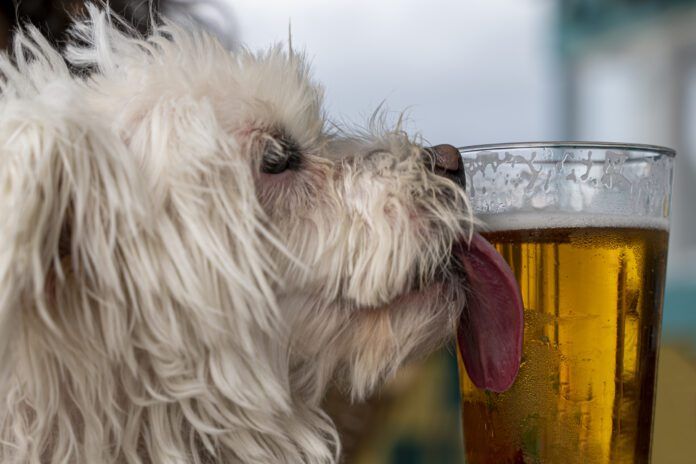
Do not share your beer with your dog, or leave glasses of beer where your dog might drink it! Alcohol is toxic for dogs. The “dog beers” marketed by Anheuser-Busch and other companies do not contain alcohol. Photo by Javier Zayas Photography/Getty Images
Ever hear of Busch Dog Brew? Created by Anheuser-Busch, Busch Dog Brew made its debut in 2020. Advertised as a way to share a cold one with your best friend, Busch Dog Brew contains pork broth, vegetables, herbs, spices, and water; in other words, it doesn’t contain any alcohol, or resemble real beer in the slightest! It’s just a beverage that your dog may enjoy, cleverly packaged to appeal to you! And, just in time for autumn, Busch has released the limited edition Pumpkin Spice Busch Dog Brew, containing pumpkin, cinnamon, ginger, turmeric, and water. Each beverage can be served in a bowl or poured over your dog’s favorite dry food. The Busch Dog Brews are available online at Shop Beer Gear. For each $10 four-pack of Dog Brew sold, the company donates $1 to the Best Friends Animal Sanctuary in Kanab, Utah.
There are a number of other, smaller companies producing their own dog-branded beverages in cute, funny, and/or punny packaging. The Good Boy Dog Beer Company was founded by Texas bar owners Megan and Steve Long when Rocky, their oldest Rottweiler, developed food sensitivities and they experimented with treats and foods that agreed with him. Their most successful creations became Good Boy Dog Beers. Their website explains, “We use all the same equipment as a brewery, we just skip the fermentation (alcohol-producing) part.”
Good Boy’s flavors and ingredients (in addition to filtered water) include Crotch Sniffin’ Ale (unsalted peanuts, unsalted almonds, whole grain oats, and cinnamon), Good Girl Dog Beer (whole bone-in chicken, turmeric, ginger, basil, carrots, and fennel), IPA Lot In The Yard (bone-in pork butt, turmeric, basil, mint, fennel, ginger, and celery), and Mailman Malt Licker (chicken, turmeric, ginger, oranges, carrots, basil, cilantro, and fennel). Good Boy beers are available online and at dog friendly restaurants, bars, pet stores, liquor stores, and grocery stores across the U.S. and Canada.
Bowser Beer for Dogs is a family-owned business that uses human-grade USDA meat to create flavorful no-alcohol brews. The beer’s 12-ounce bottles carry three flavors (beef, pork, and chicken) and contain, in addition to the meat on the label, malt extract, glucosamine HCL, and several preservatives. For special occasions you can order dog beer with labels featuring your dog’s photo. Custom orders support canine charities.
Dawg Grog Beer for Dogs was created in 2012 by craft brewer Daniel Keeton in Bend, Oregon. Dawg Grog is made from Oregon mountain water, brewers wort (malted barley water) from a local brewery, vegetarian glucosamine, and a trace mineral supplement. The vegetarian brew, bottled in half-pint (8-ounce) bottles, can be served over wet or dry food, offered by itself, or frozen into cubes as a hot-weather treat.
Beer Paws Craft Beer for Dogs contains beef, malt extract, beef liver powder, and turmeric to help promote canine joint health. Available in 12-ounce single cans and six-packs, Beer Paws may appeal to older and finicky dogs because of its intense flavor.
Make your own “dog beer”
Try making your own dog beer, which your pup will be happy to sample.
Purchase unsalted chicken or beef broth to use as a base, being sure the broth is free from onions or other ingredients not recommended for dogs, or follow this simple bone broth recipe:
Start with 3 to 4 pounds of raw or leftover bones with meat and connective tissue attached. In a large pot, slow cooker, or Instant Pot, add enough filtered water to cover the bones by 2 inches. Add 1 tablespoon cider vinegar or lemon juice. If desired, add 4 cups chopped carrots, celery, pumpkin, green beans, or other dog-friendly vegetables. Let stand for 30 minutes before cooking to enhance the release of minerals.
Stovetop:Bring to a boil, reduce heat to a bare simmer, cover with the lid slightly ajar, and cook for 24 hours (poultry bones) or 48 hours (beef or red meat bones).
Slow cooker or crock pot:On low heat setting, cook for 24 hours (poultry) or 48 hours (beef, red meat).
Oven: Bring ingredients to a boil on the stove, then transfer to a large oven-safe ceramic or metal pot with lid and bake, covered, at 150ºF for 15 to 24 hours
Instant Pot: Close lid and set to cook on low pressure for 4 hours (poultry) or 5 hours (beef or red meat). Let the pressure release naturally.
Strain broth through a mesh sieve or cheesecloth and transfer to jars for storage. Discard the layer of fat that collects at the top.
Turn your broth into “dog beer”
To 1 quart (4 cups) broth add 2 tablespoons brewer’s yeast or nutritional yeast, which will give the broth a beer-like flavor. Yeast, which is rich in B vitamins, is recommended for canine skin, hair, and digestion. Turmeric is an optional ingredient with anti-inflammatory properties; add 1/2 teaspoon ground turmeric if desired. Simmer the broth mixture over low heat for 20 minutes, then cool to room temperature.
Both broth and pretend beer will keep for a week in the refrigerator or up to 3 months in the freezer. The recommended amount to feed dogs is 1 fluid ounce (2 tablespoons) per 10 pounds of body weight once or twice daily.
Serve it with style
It’s fun to share special occasions with best friends, including the dogs in your life. Pour the pretend beer over your dog’s dinner or over ice in a bowl, or simply serve it in a mug and enjoy the celebration. Bone broth and dog beers are tasty add-ons, not meal replacements.
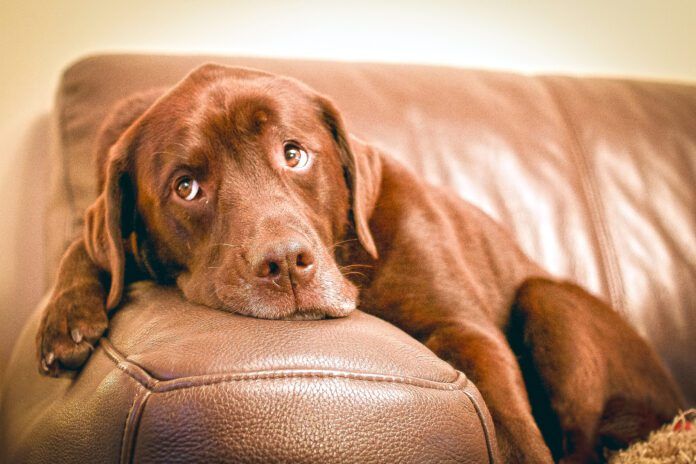
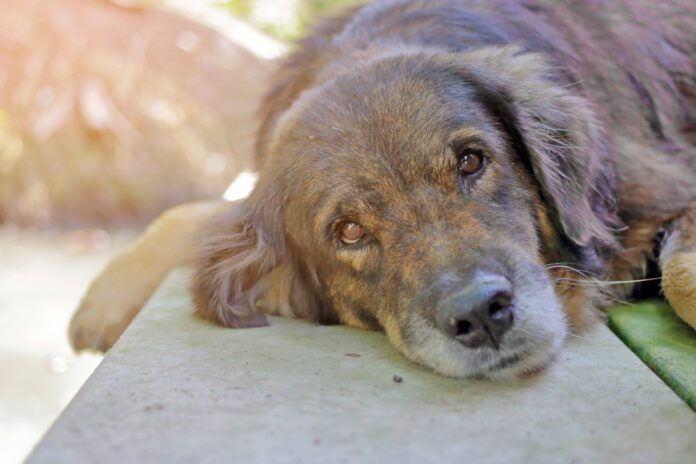
A lethargic dog just doesn’t want to get up and move, sometimes even not trying to get to his food. Mike Linnane | Getty Images
Lethargy in dogs is more than being sleepy after a long hike. That’s being tired. A lethargic dog is sluggish, sometimes not even wanting to get up to eat. A lethargic dog usually doesn’t feel well.
Lethargy in dogs may be a passing thing, like he just doesn’t feel well on that day for some minor reason, or it could be sign of underlying health problems.
Causes for Lethargy in Dogs
Causes for lethargy are many. It might be as simple as a hot, humid day that makes your Malamute want to lay around an AC vent or blowing fan and dream of snow drifts. This dog isn’t really sick, but he understandably isn’t feeling energetic either. More concerning is when your young dog is lethargic without an environmental reason.
Fever: A common cause of lethargy is a fever. Just like you when you have a fever, your dog is exhausted, grumpy, and just wants to be left alone. Take your dog’s body temperature. It’s pretty easy with modern digital devices. Normal body temperature for dogs is 101 to 102.5°F (38.3 to 39.2°C). Know your dog’s normal by taking his temperature periodically when he feels well. Some dogs naturally run a tad under or over.
Pain: Another common cause is pain. A dog in pain does not want to get up and go play fetch, although fanatic retrievers sometimes do so even in great pain. It is your responsibility as an owner to recognize pain and not push your dog. Pain could come from an injured leg or a crampy stomach. Do a gentle physical exam and note any signs of pain, which might be a subtle catch in his breath when you touch the area.
Illness: Lethargy can also reflect various illnesses. Anything that causes anemia may slow your dog down. Cardiac or respiratory problems also mean less oxygen to the tissues so less energy. A tickborne disease could be the culprit. Even scented candles can cause lethargy. Metabolic problems like liver or kidney disease can simply make a dog feel lethargic, ill, and not like playing.
What You Can Do
If your normally energetic pooch is lethargic for one day and has no other clinical signs, it may be OK to just observe him. Two days of lethargy, however, should be a cause for a veterinary visit even if you don’t notice anything else off. Remember, dogs are good at hiding physical problems.
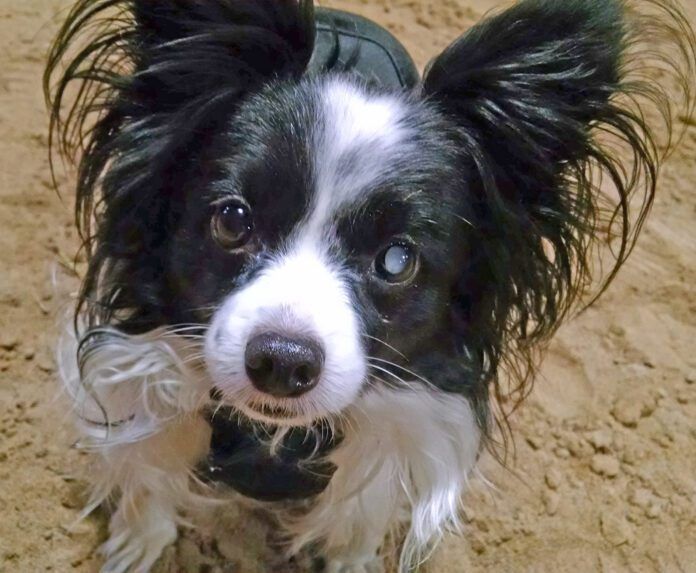
This dog’s left eye (right side in photo) developed a mature cataract inside the span of a couple of hours; that’s how fast a lens can crystallize. Photo courtesy of Dr. Eileen Fatcheric
A cataract is any opacification of the normally clear lens of the eye. The lens sits just behind the iris and is viewable through the pupil. Cataracts can develop in both old dogs (this is called senile cataracts) and young dogs (juvenile cataracts, congenital cataracts). They can develop in one eye, or both. They may develop slowly, or happen all of a sudden. Sometimes they are obvious and sometimes they are difficult to see, even for your veterinarian.
Symptoms of Cataracts in Progressively Developing Stages
Cataracts are identified by their level of development:
Stage 1 – Incipient cataracts
These are the smallest, earliest cataracts and are difficult to impossible to see with the naked eye – and sometimes even hard for your veterinarian to identify without special equipment. Incipient cataracts affect less than 15% of the lens. Sometimes the only sign of incipient cataracts is that the dog can’t seem to catch treats or balls thrown to him like he used to.
Stage 2 – Immature cataracts
These are easier to see but difficult to differentiate from lenticular or nuclear sclerosis, a normal aging cloudiness of the lens that will never result in complete blindness like cataracts do. Immature cataracts look hazy, grayish-blue. They may involve only a small portion of the lens or the entire lens. They are opaque (in contrast to nuclear sclerosis, which is merely translucent), but the density of the opacity is low enough to allow some light to get through to the retina. These dogs will likely be able to see well enough to navigate around the house without trouble, but they will not see well enough to catch treats or balls, nor to see your facial expressions, small hand movements, etc.
Stage 3 – Mature cataracts
These are impossible to miss. Mature cataracts in dogs involve the entire lens and are densely opaque, looking like a white crystal filling the entire pupil. If only one eye is affected, the dog will still be happily visual. Mature cataracts in both eyes make the dog completely blind. No light can get through these extremely dense, opacified lenses.
Stage 4 – Hypermature cataracts
This is the final stage, and the worst, as it is most likely to cause painful secondary issues within the eye. Not all cataracts will progress to the hypermature stage. The ones that do begin to shrink as they degenerate, resulting in a change in the size and/or shape of the cataract. They may leak proteinaceous fluid as the lens liquefies. The fluid released often results in severe, painful inflammation within the eye called lens-induced uveitis, which can then lead to glaucoma.
Signs of lens-induced uveitis include:
Painful eye
Red eye
Engorged blood vessels on the white of the eye
Corneal edema (bluish haze of the normally clear cornea)
Blood or pus-like material within the eye (between the cornea and the iris)
Swelling, mottling or change in color of the iris
Contracted pupil
What hypermature cataracts look like varies tremendously. They may look simply like smaller mature cataracts (the dog may even regain some vision around the edges as the cataract shrinks), the crystalline appearance may sink to only the bottom half of the lens capsule, or you may see almost like a wrinkled appearance to the cataract.
Causes of canine cataracts
The lens of the eye is made up of protein and water. Because it’s protein, the lens can be damaged, similar to any other tissue made of protein in the body, such as muscle tissue. This means that trauma to the eye (penetrating or blunt force) and/or chronic inflammation in the eye can result in cataract formation.
Cataracts can be inherited, with a genetic predisposition in certain breeds, including the Staffordshire Terrier, Boston Terrier, Australian Shepherd, and French Bulldog. Affected dogs should not be used for breeding. Genetic testing is available through the Veterinary Genetics Laboratory at the University of California, Davis, School of Veterinary Medicine.
A nutritional cause for cataracts has been identified in orphan puppies who were fed milk replacer.
Diabetes, though, may be the most common cause of cataracts in dogs. The excess sugar in diabetic dogs’ bloodstream is converted to sorbitol in the lens. The sorbitol draws water into the lens, which causes the lens to swell. This creates oxidative stress and disrupts the fibers in the lens, resulting in cataract formation. About 75-80% of dogs with diabetes will develop cataracts within the first year of their diagnosis, regardless of how well controlled their diabetes is. Diabetic cataracts tend to form quickly and frequently cause secondary issues, including lens-induced uveitis and glaucoma (increased intraocular pressure). Glaucoma in diabetic dogs is notoriously difficult to manage and often ends with surgical removal of the painful, blind eye (enucleation). Your best bet for a diabetic dog with cataracts is surgical correction as soon as possible.
Surgical Treatment for Cataracts in Dogs
There are many causes of hazy, gray/blue-appearing eyes in dogs, and not all of them are cataracts. This little dog’s left eye (right side of photo) has corneal edema and scarring after a slow-healing corneal ulcer. His right eye (left side of photo) shows nuclear sclerosis. Photo courtesy of Dr. Eileen Fatcheric
If your dog is diagnosed with cataracts, the best treatment – the gold standard of care – is having cataract surgery as soon as possible. The best outcomes with the fewest complications are achieved when surgery is performed before the cataracts become mature. Time is of the essence: If too much time passes before cataracts are diagnosed and treated with surgery, some cataracts will develop characteristics that preclude surgery from being performed at all.
As long as the dog’s retina and the rest of the eye is healthy, and the dog’s general health is good enough to withstand anesthesia, surgery is warranted.
Prior to surgery an electroretinogram will be performed to ensure that the dog has healthy retinas and will indeed be able to see after surgery. The surgery, which is performed by a board-certified veterinary ophthalmologist, is called phacoemulsification. Small incisions are made in the cornea and the lens capsule. High-frequency vibration is used to essentially pulverize the lens, which is then removed by vacuum. An artificial lens is inserted into the eye and the cornea is sutured closed. Most dogs spend three to four days in the hospital receiving critical post-op treatments and careful monitoring. At home, the dog will require continued treatment with several eye drops administered four to six times a day for several weeks.
Follow-up exams with the ophthalmologist are important to check for and treat any post-operative complications that arise. The most common post-operative complications are prolonged intraocular inflammation and glaucoma. Again, the more mature the cataract before surgery is performed, the more likely post-operative complications are.
When Cataract Surgery Is Contraindicated
Are there reasons NOT to pursue cataract surgery? There sure are. These include:
General health of the dog. Is the dog a good candidate for general anesthesia? Not always. The risk of the general anesthesia required for the procedure may be too great, especially in older dogs with heart and/or kidney issues. Does the dog have a reasonable life expectancy after surgery? This depends on the dog’s age and other factors like cancer status.
Condition of the eyes. Are the corneas healthy? This is important for a good surgical outcome and also for vision. Are the retinas healthy? If not, the dog will still be blind, or will become blind, in spite of surgery.
Ability of the dog owner to commit. Post-operative care after cataract surgery is pretty intense, with topical medications required to be administered frequently around the clock. Sometimes lifestyles or work schedules can get in the way of this.
Temperament of the dog. Let’s face it. Some dogs are going to be impossible to medicate/manage with such an intense post-operative protocol, both in the hospital and at home afterward. This is unfortunately something that must be seriously considered.
Non-Surgical Care for Cataracts
What if your dog is not a good candidate for cataract surgery?
Your veterinarian can prescribe anti-inflammatory eye drops to help prevent cataract-associated inflammatory ocular disease. Additionally, it is recommended you have your dog’s eye pressures checked for glaucoma every four to six months.
All dogs benefit from being maintained at a healthy weight, but obesity is more consequential for dogs with cataracts, because obesity predisposes dogs to diabetes and diabetes causes cataracts. Keep your dog slim!
Owners should be alert to any sign that their dog is experiencing eye pain, such as squinting, sensitivity to light, rubbing at the eye, lethargy, and inappetence. Make an appointment with your veterinarian if these signs are observed.
Finally, if your dog becomes blind from her cataracts, do everything you can to make life as easy as possible for her. This article has many helpful tips, including a recommendation to read the book, Living With Blind Dogs: A Resource Book and Training Guide for the Owners of Blind and Low-Vision Dogs, by Caroline D. Levin.
Is it Cataracts or Some Other Cause of Cloudy Eyes?
This very geriatric dog’s cloudy lenses are due to nuclear sclerosis, a natural aging change in the lens that causes translucency, not opaqueness. As such, light can still pass through to the retina and the dog is not blind. Photo courtesy of Dr. Eileen Fatcheric
To tell the difference between cataracts and other causes of cloudy eyes in dogs, we must distinguish whether the cloudiness is deep inside the eye behind the pupil, or on the outer surface of the eye or cornea.
Ocular diseases that can cause cloudy corneas in dogs include:
Glaucoma (increased intraocular pressure)
Corneal dystrophy (abnormalities of layers in the cornea resulting in corneal opacities)
Corneal ulcer (scratch or abrasion disrupting the integrity of the cornea)
Uveitis (intraocular inflammation of the middle layers of the eye including the iris)
Keratitis (inflammation of the cornea)
Dry Eye Syndrome (also known as keratoconjunctivitis sicca or KCS, decreased tear production resulting in corneal irritation)
Corneal edema (fluid accumulation within the layers of the cornea)
Cloudiness behind the pupil localizes the lesion to the lens, making the cause either cataracts or nuclear sclerosis. Immature cataracts and nuclear sclerosis can be difficult to differentiate, as they both tend to look hazy and grayish-bluish in color. Your veterinarian may be able to distinguish between the two, or can refer you to a veterinary ophthalmologist for specialized assessment.
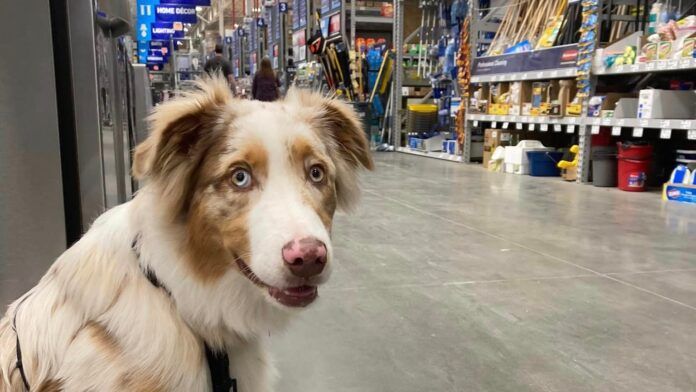
Home-improvement stores have become very popular dog-training and -socialization destinations, but they are not playgrounds! Prevent your dog from approaching others without their consent. Closely monitor your dog’s body language and interrupt any behaviors that might harm other shoppers or product displays. Photo by Brad Waggoner.
In many parts of the world, dogs are welcome everywhere; all stores are dog friendly! That isn’t the case in the United States, but a surprising number of American businesses open to the public are also open to the public’s pet dogs.
Retail stores can be terrific training areas for puppies and adult dogs, offering interesting distractions and friendly greetings in small, cozy shops or industrial warehouses.
Where can you bring your dog?
Most pet supply stores welcome well-behaved dogs. You can count on access for friendly dogs at the large chain pet supply stores, such as
Keep in mind that even if a chain describes itself as pet-friendly, decisions about canine visitors can vary by location, and store managers make final decisions about their stores’ pet policies. Also, some pet-friendly stores are located in shopping malls whose pet policies are different from those of its individual stores, so don’t assume that you and your dog will be welcome without verifying the situation first.
Depending on where you live, you may be surprised at the number and variety of stores, movie theaters, vineyards, art galleries, ballparks, craft and hobby shops, phone stores, and other establishments that welcome well-behaved dogs. Ask friends, dog trainers, and local pet supply stores for recommendations.
To find hotels, motels, and other overnight accommodations that welcome dogs, visit Bring Fido’s online directory BringFido: Pet Friendly Hotels & Dog Travel Directory , which includes dog-friendly restaurants, bars, cafes, coffee shops, and other establishments. If dogs are not allowed indoors at a restaurant, they may be accommodated in outdoor dining areas.
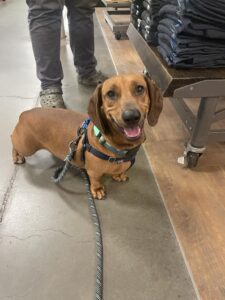
When shopping, keep your dog next to you on a short leash, rewarding him with treats or other rewards that he responds to. Photo by Caitlyn Zepeda.
Follow the rules
Does the store have a pet policy? If so, be sure to follow it. Follow unposted commonsense rules, too, such as:
Bring a healthy, clean, well-groomed dog.
Use appropriate equipment, such as a short, strong leash (no retractable leashes!) and an appropriate collar or harness.
Carry pick-up bags and cleaning wipes.
Bring one dog at a time. It’s impossible to manage two or three dogs in unpredictable situations, and that’s exactly what shopping visits can be.
Service dogs have privileges that pet dogs don’t, and it’s never OK to pretend that your dog is a service dog if that isn’t the case. The Americans with Disabilities Act (ADA) defines service dogs as dogs who are “individually trained to do work or perform tasks for an individual with a disability.” That definition does not include emotional support dogs, therapy dogs, or companion animals, so respect signs that say “Service animals only.”
Tips For a Smooth Visit With Your Dog
Taking our dogs into busy retail establishments shouldn’t be attempted casually or without preparation. Keeping your dog calm and comfortable and ensuring the comfort and safety of your fellow shoppers requires time, effort, and attention to detail. Employ these tips to ensure an uneventful visit:
Scout the location ahead of time. Is the site really appropriate for your dog? Visit the store for the first time without your dog to see whether the location is a good match to your dog’s personality and training. If it isn’t, look elsewhere.
Avoid peak shopping hours. Even a well-matched shopping environment can be challenging if it’s noisy, crowded, or overwhelming for your pup. For your dog’s initial visit, avoid grand openings, special sales, rowdy celebrations, or peak attendance hours.
Practice basic behaviors. Visiting dogs who know how to walk on a loose leash, sit, stay, and come when called are more likely to behave politely than dogs who don’t. Perfect your dog’s manners by practicing in unfamiliar environments until your dog is reliably polite in new settings and around strangers and other animals.
Know why you’re going. Do you plan to shop for something? Will you consult salespeople? If so, don’t bring your dog unless he or she can lie quietly while you transact business. If a store trip is a training opportunity, focus on the interactions you want to encourage or improve, and anticipate the steps you’ll need to take for best results.
Park where you can take your dog for a pre-shopping walk. Instead of going straight to the front door, take a stroll and give your dog time to explore, urinate, and defecate far from the entrance. Clean up after your dog and leave your pickup bag in a trash receptacle or in your car for later disposal.
Enter the store calmly. Focus your dog’s attention on you, so you can arrive quietly, without causing a disturbance.
Maintain control. Keep your dog next to you on a short leash, rewarding your dog with treats or other rewards that your dog responds to.
Respect other dogs and people. Retail stores are not puppy playgrounds. Prevent your dog from approaching others without their consent. Study your dog’s body language and interrupt any behaviors that might harm children, other pets, or product displays.
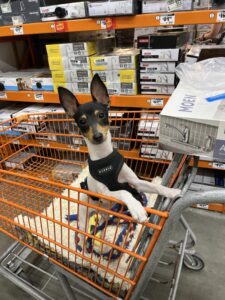
If using a cart to transport your dog in a store, provide him with a pad for comfort and safety (toes and toenails can get caught in the cart surfaces), and do not step away from the cart; a leap from that height onto a hard, slippery floor could cause a serious injury. Photo by Lesley Bowen.
Pay attention. Inattentive handlers create problems by not noticing while their dogs chew, lick, bite, or urinate on merchandise, make threatening eye contact with other dogs, or jump on people. “He’s just being friendly” is not an acceptable excuse. If you’re not able to pay attention to your dog when you visit a store, practice until responsible handling skills become second nature.
Minimize barking and other vocalizations. Polite visits are quiet, not noisy. Barking, growling, yipping, and other sound effects might be familiar and unthreatening to you, but they may annoy or frighten others. At their worst, noisy dogs are disruptive and can initiate physical confrontations.
Know where you can and can’t take your dog. Most stores do not allow dogs in food service areas because of health code regulations, and some areas may be off-limits for other reasons. Pay attention to signs that define “no pets” areas.
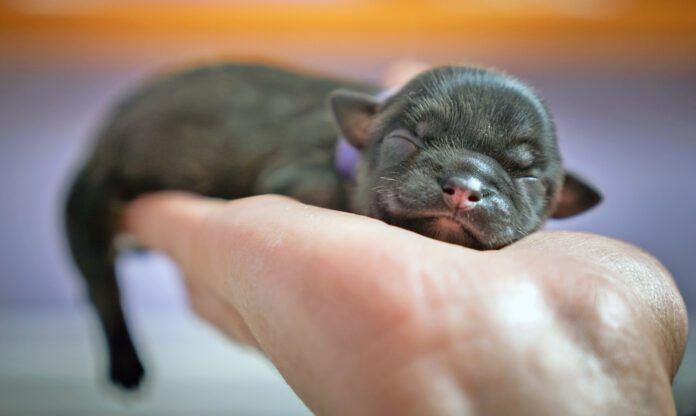
These newborn Tibetan Spaniel puppies won’t open their eyes for at least a week or two, maybe longer. Credit: Anita Kot | Getty Images
A big question with new puppy litters is when will new newborn puppies open their? Which is at about 10 to 14 days. That said, some precocious pups may have open eye slits as early as 7 days, while laggards may wait until almost 20 days. While the difference can be concerning, if there is no discharge and the eye does not appear puffy, the wide range in individual puppy eye opening is normal.
Puppy Eyes Open One Step at a Time
Puppies don’t go directly from tightly closed eyes to wide open. The eyes will first have a small slit, then gradually open to full size. You should not force the eyes open. Although uncommon, puppies can get infections in the closed eyes, which is why any abnormality should be immediately reported to your veterinarian.
Be aware that adult-dog eye color may not be discernible early on. While blue eyes are generally evident, the shades of brown aren’t clear until a few weeks down the line.
Vision vs. Open Eyes
Even when open, a pup’s eyes are not fully developed yet. Regular vision is usually complete by the age of 10 to 12 weeks. So don’t expect your 3-week-old pup to reliably track objects. That young puppy is still counting on his nose for most of his sensory input. Note: Most puppies leave mom the age of 8 weeks. Some stay even longer, like small breeds, up until 12 weeks.
Protect Puppy Eyes
It is also important to be careful about lighting, too. The puppy’s immature eyes should be protected from intense, bright lights. No bright lights where the puppies are and avoid taking any photos or videos with a flash.
If you notice any ocular discharge, especially anything purulent (like pus), your puppy should be seen by your veterinarian. If he starts to squint after having had his eyes fully open, get veterinary help.
Just like adult dogs, puppies can get corneal abrasions and irritations. Red and inflamed conjunctiva are another reason for a vet visit.
Dogs are persistently manipulated with verbal commands, equipment, and physical prompting to perform behaviors (such as pushing them into a sit) become reliant on their pet parents to do everything for them. This is equal to doing a child’s homework for him or her. A child might get better grades if an adult did his homework, but he or she would not learn the skills needed to function successfully in the world. This same concept is also true for your dog. If you have been doing his “homework” via constant reminding or demanding obedience, telling him, “No,” all the time, and/or using leash manipulations and physical prompts to keep him in line, he will not have learned the skills needed to function calmly in life.
Dogs, like children, must learn to problem-solve when life comes at them, and providing your dog a motivation to perform behaviors through rewards will help him learn those skills. In order for that to happen, however, he will need different, and well-practiced behaviors that will give him the answer to the question, “What do I do when (fill in the blank) ________?” If your dog’s current answer to that question is to spiral up and become wild, out of control, inattentive, or reactive, he has very few tools from which to choose.
When your dog has a limited number of tools, he will continue to use the ones that are the most readily available and familiar since those are the easiest to grab. If your dog’s behavior toolbox includes impulsive or reactive behaviors and little else, he has no choice but to use the tools that have served him best in the past.
For training to be effective, your dog needs to learn how to handle different situations without grabbing the old tools from his toolbox. Those old tools will always be there, but as you teach your dog that he will be rewarded for calm and relaxed behaviors, those old tools will be buried deep at the bottom of the toolbox under all the new ones, making access to them difficult and unlikely.
A Note on How Long to Train
As you train with your dog, it is important that you don’t overdo the amount of training. Science has shown that animals retain better when taught in short (five to fifteen minutes) spurts, rather than long, drawn out sessions. Dogs not only fill up on treats, they also get bored during long training sessions. If you over train, your dog will not be as excited about doing an exercise the next time. If you stop before he gets full or bored, leaving him wanting more, you will have a cooperative dog the next time you train him
If you find yourself overtraining because you are excited about your dog’s progress, simple count out 20-50 tiny treats and stop when they are gone. That will keep you on track with limiting the amount of time you train.
For more advice on training your dog, purchase Chill Out Fido! from Whole Dog Journal.
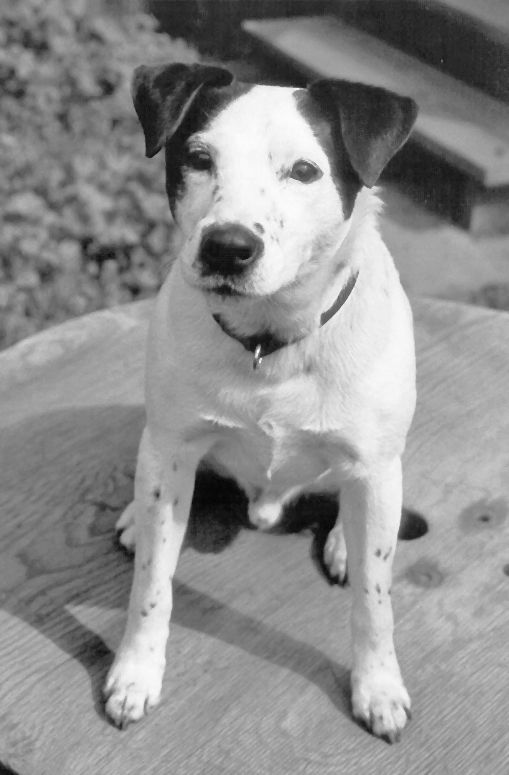
Chase was an absolutely adorable, whip-smart, and deeply troubled dog when I met him. Fortunately, he found a home with a couple who had the time and money to invest in a good trainer and a great veterinarian, who prescribed the behavior-modifying medication that helped Chase become a happy and much-loved dog. Photo by Nancy Kerns
Somehow I know only peripherally posted this meme on social media post recently:
“Raise your hand if you and your dog take the same anxiety medication!”
And then, sadly, a number of people had commented that anyone who did raise their hands should consider the possibility that they were making their dog neurotic.
Behavior-modifying drugs have come into greater use in veterinary medicine for dogs with chronic anxiety, obsessive-compulsive disorders, separation anxiety, some types of aggression, and more. But while an argument might be made that humans are prescribed drugs such as antidepressants too frequently (it’s been estimated that almost 13% of Americans take antidepressants), my experience is that these life-altering drugs are still vastly underutilized by veterinarians as a vital adjunct to a behavior-modification program.
In fact, veterinarians seem to be much more clear than doctors who prescribe drugs for human patients that behavior-altering drugs should be used only as an adjunct to behavior modification, not as a replacement. In contrast – and, again, in my experience – humans are often prescribed anti-depressant or anti-anxiety medications without any accompanying recommendations for cognitive behavioral therapy or other type of psychotherapy, where the patient might receive tips on reducing stress, avoiding triggers that increase stress, and other life-management strategies that reduce depression or anxiety.
Behavior-modifying drugs used to be highly stigmatized in our society, but as more people have found them to be helpful for coping in our modern world, they have received greater acceptance. However, their use is still fairly stigmatized by many pet owners.
I’ve been to dozens of professional dog training and veterinary medicine conferences, and every veterinary behavior expert whose presentations touched on aberrant canine behavior has promoted the efficacy of the concurrent use of behavior-modifying drugs and a behavior-modification program overseen by an educated trainer. And I’ve seen this approach work wonders.
Years ago, my son and I arranged for a “trial weekend” with a Jack Russell Terrier named Chase; Chase’s owner was advertising him on Craigslist as “free to a good home” after a relationship breakup with the usual “not enough time” justification. I knew after the first afternoon spent with Chase that he was not the right dog for our family: he wasn’t at all affiliative or particularly friendly; you couldn’t put him in a car unless he was in a crate, otherwise he would spin and scream and bite at the air – or anyone who tried to restrain him – the moment he jumped into a car; he could and did jump five-foot fences from a standstill; and he was definitely going to eat our cat if he possibly could. He was also so defensive – undoubtedly having been subjected to physical punishment – that if he perceived any threat to himself, he’d go on the offensive, growling and launching himself at whomever was near. Not a nice family dog!
But when I tried to contact the owner to let him know that at the end of the weekend, we would be bringing the dog back to him, he essentially responded, “Ha ha, no backsies!” (What he actually said was, “Oh, so sorry, you guys sounded perfect and I just moved into a new place and can’t take him back…but I would understand if you had to take him to a shelter.” WOW!)
To make a long story short, I started trying to find a new home for Chase while simultaneously trying to figure out what circumstances triggered his manic behaviors. I ultimately found him a home with a couple who were huge fans of JRTs and who were willing to do anything it might take to make Chase a happier and more pleasant dog to live with. They gave me regular updates for over a year, reporting when they found a force-free trainer, and then a behavior-savvy veterinarian who prescribed fluoxetine, better known as Prozac – and that was the magic key that finally helped Chase transform into a nice dog. Under the constant influence of that medication, he no longer perceived random human movements as potential punishments, he could hear cues for behavior as the requests that they were (as opposed to demands that he do something or else!), and he could focus and relax in the world, instead of constantly scanning his environment for things to react to.
Chase isn’t the only dog I’ve seen whose life was transformed for the better by a behavior-modifying medication, but his transformation was the most dramatic. These medications literally save the lives of humans and dogs, and should never be ridiculed or discounted in any situation where needed.
Have you known a dog whose life was improved with behavior-altering medication? Please share!
If you properly introduce your dog to her harness – or reintroduce her in a more considerate way – your dog will eventually eagerly push herself into the gear when it’s time for her to get dressed.
To teach your dog to happily help you put her harness on, it’s critical that you stop using force when it comes to putting any gear on her. Yes, most of the time, the harness ends up on the dog and she seems none the worse for wear. But she has certainly been stressed, and stress is cumulative, can cause aggression, and weakens the immune system, making the dog more susceptible to short-term illnesses such as upper respiratory infections, and long-term conditions like cancer. And routine stress degrades quality of life and can damage relationships. So why put your dog through this when there’s a much easier way?
Here’s how to put a harness on, stress free:
The harness should be adjusted as closely as possible before you put it on. Use a cloth measuring tape on your dog and then the harness, to get the measurements in the right ballpark. If you realize it needs more adjustment after you have it on your dog, remove it to complete your final adjustments.
2. If the harness has a collar section that must go over your dog’s head, hold the collar in one hand in front of your dog’s nose. Have a high-value treat in your other hand. With that hand, reach through the opening of the collar and offer the treat to your dog so she can reach and eat it easily without having to put her head through the collar. The more wary she is of the harness, the farther you should push the treat through the collar to her side.
3. Repeat multiple times with the treat at that spot until she eats it eagerly with no sign of concern.
4. Gradually, over multiple offerings, bring the treat back through the collar so she easily inserts her nose, muzzle, and finally her entire head through the collar. Voila! You’re not putting the collar on her – she’s putting it on herself! Avoid the temptation to push the harness onto her neck when she’s putting her head partway through – this needs to be all her choice.
5. If your dog is reasonably comfortable, go ahead and clip the harness straps. If need be, have someone else feed her treats to keep her happy, or use a Lick Mat or smear peanut butter or squeeze cheese on the refrigerator door to keep her happily engaged, while you close the straps. Give her extra treats and praise while you check the harness fit – but take the harness off to actually fuss with the adjustment.
How to Put On A Step-In Harness
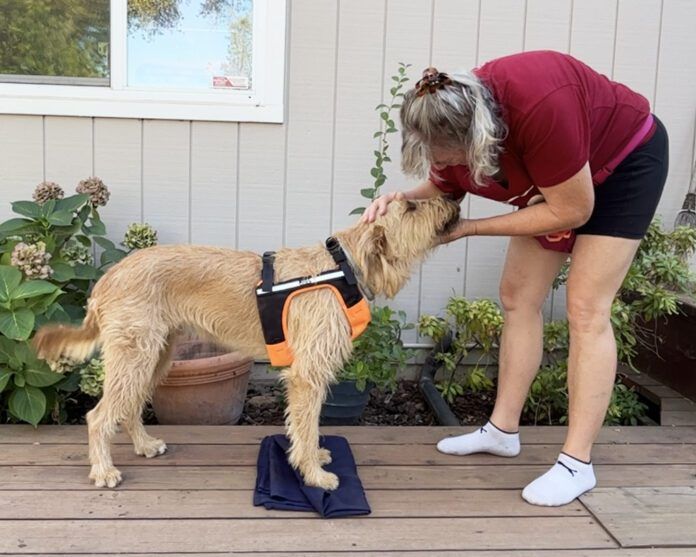
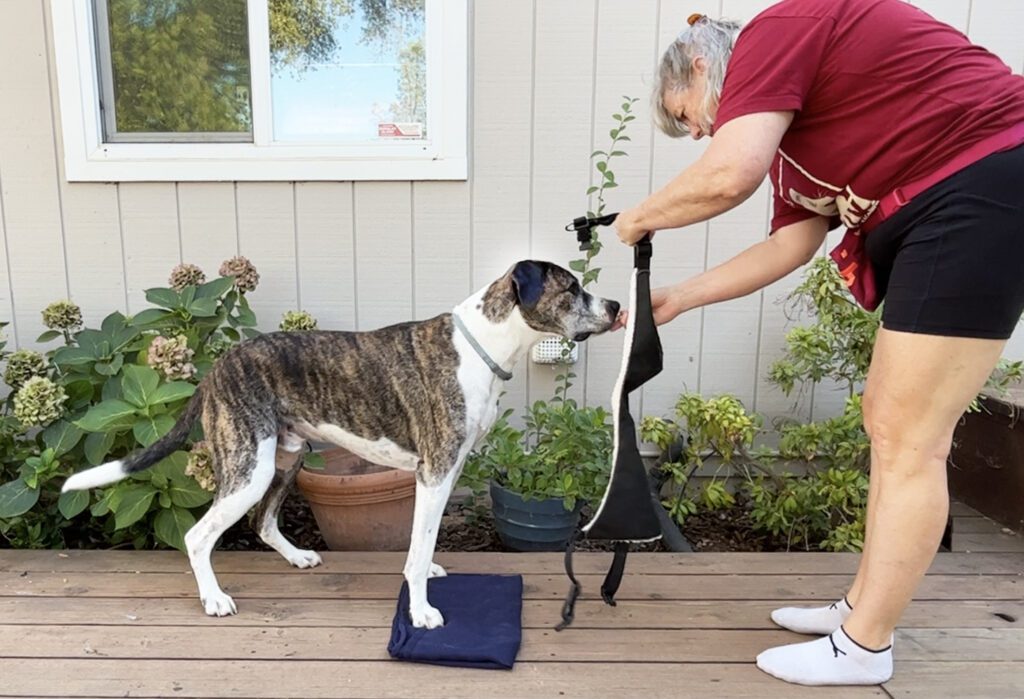
Some harnesses, particularly those car-safety harnesses intended for use with car seat belts, don’t have a collar/yoke section, but require the dog to step in or put his paws through openings; then the harness is clipped or buckled on the dog’s back. Here’s the process for teaching your dog to help you get this type of harness on:
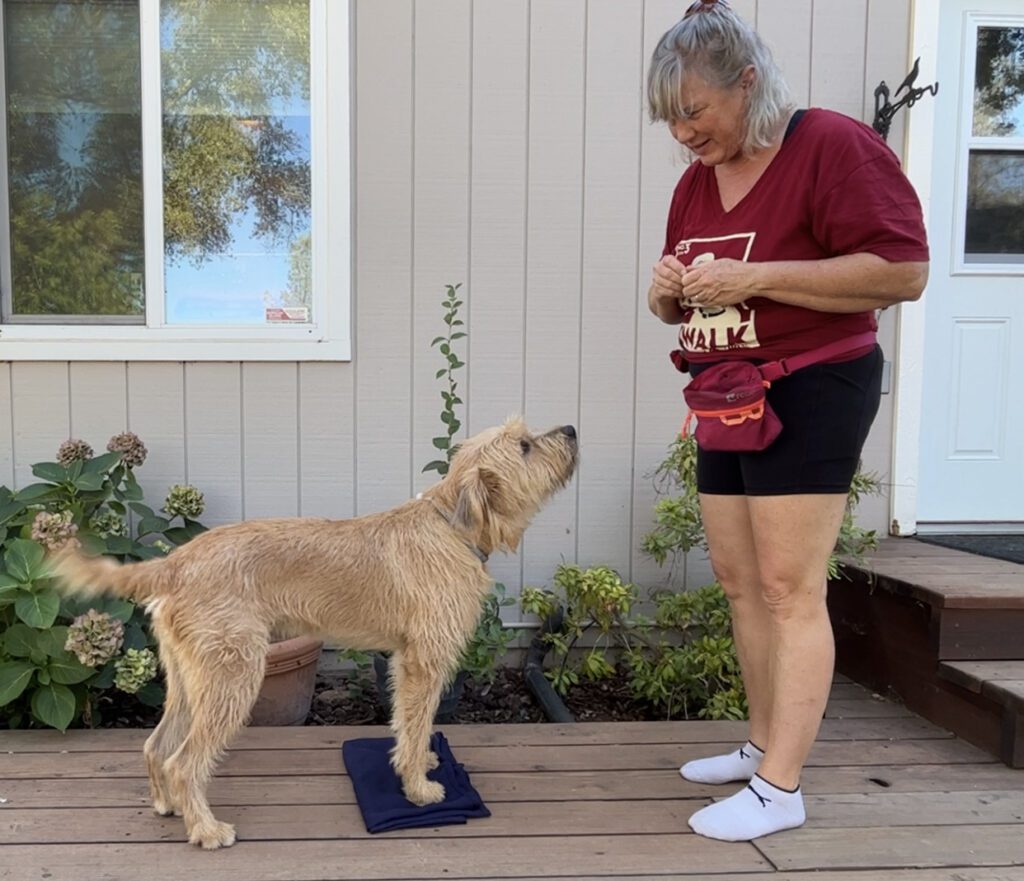
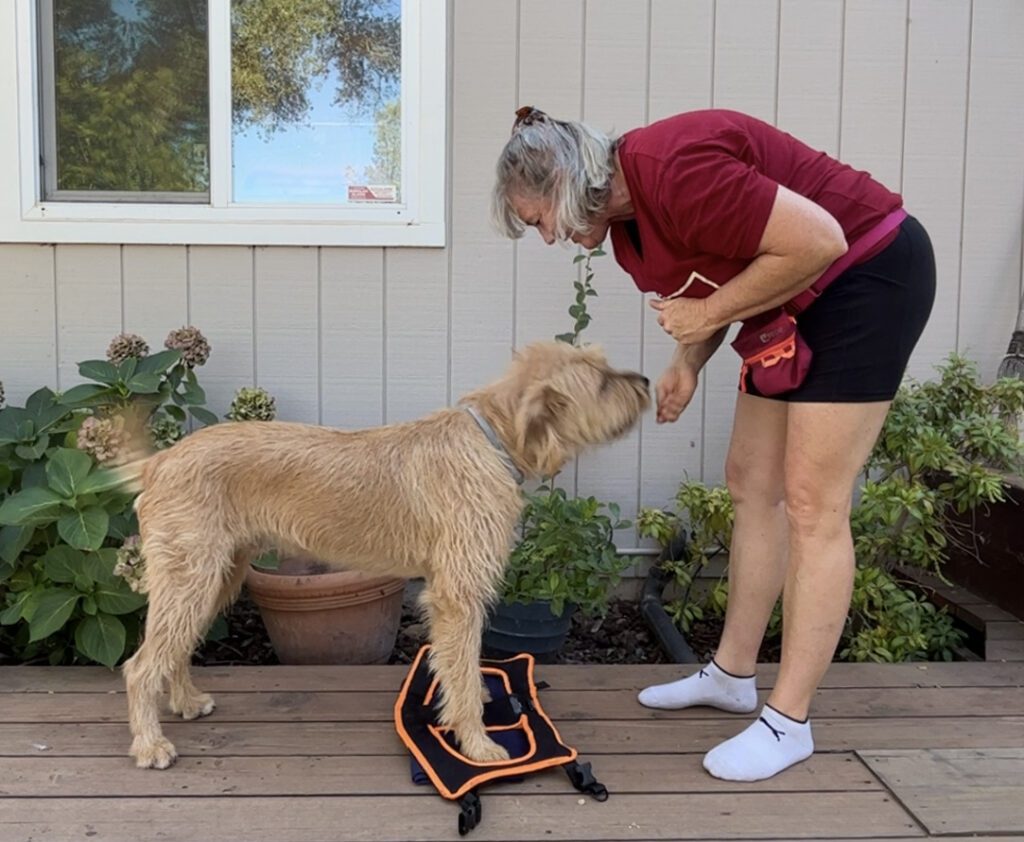
1. Teach/reinforce your dog for putting front paws on a folded blanket or low platform. Mark and treat for stepping with one paw, then both paws, onto the blanket. Shape this if necessary by marking and treating small foot movements in the vicinity of the blanket. When she does this easily, add a cue, such as, “Step in!”
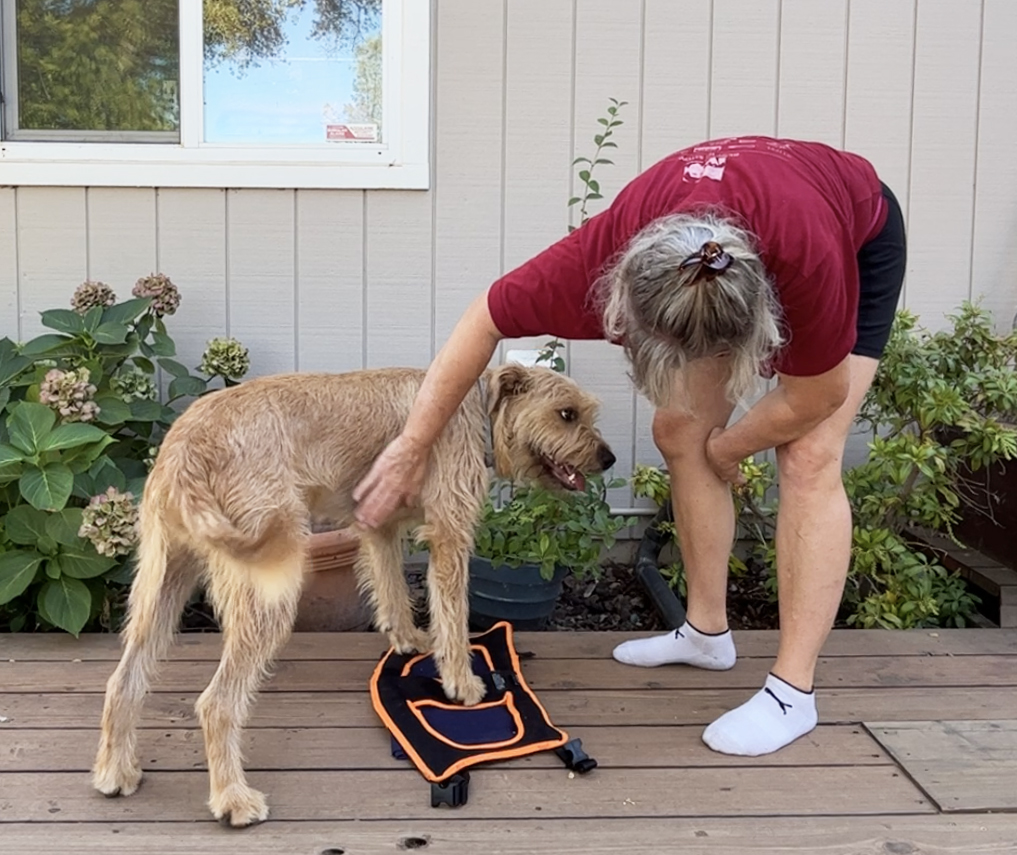
2. Place the harness on the blanket or platform spread open so her paws might land in the holes when she steps on it. Use your “Step in!” cue, and reinforce her for when she steps on the blanket; use extra high-value treats when her foot or feet land in the harness openings.
3. When she can stand with her feet in the openings, do some touch-conditioning: touch/pet and feed treats as she stands with her feet in the holes.
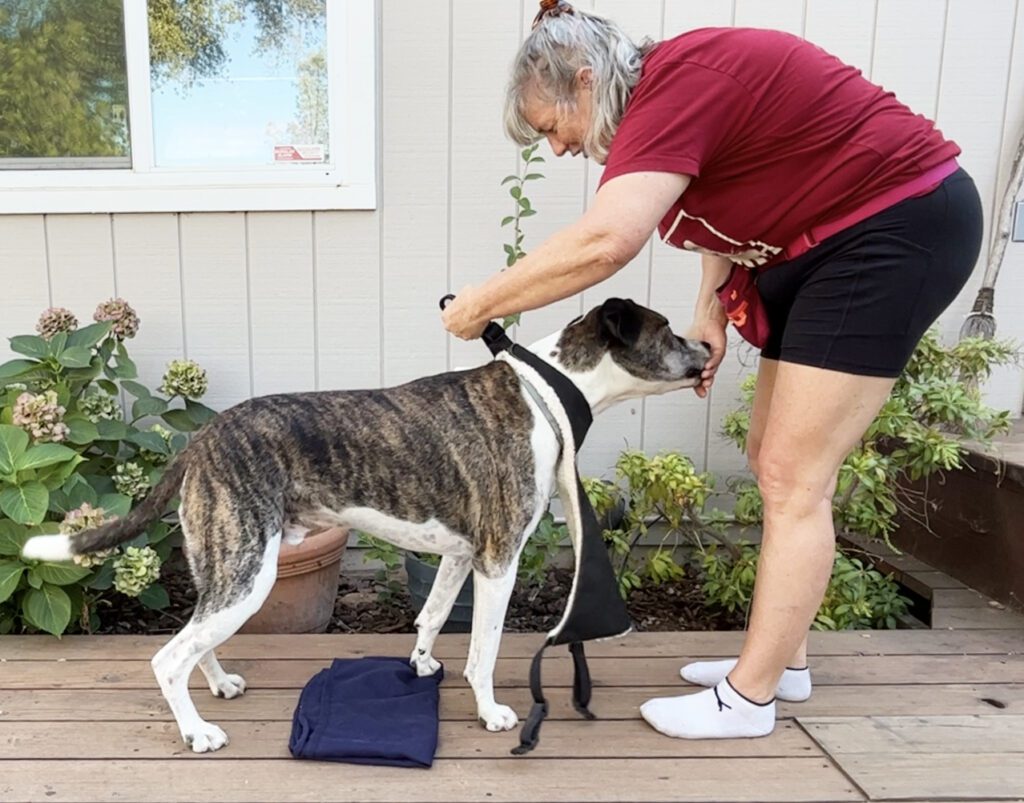
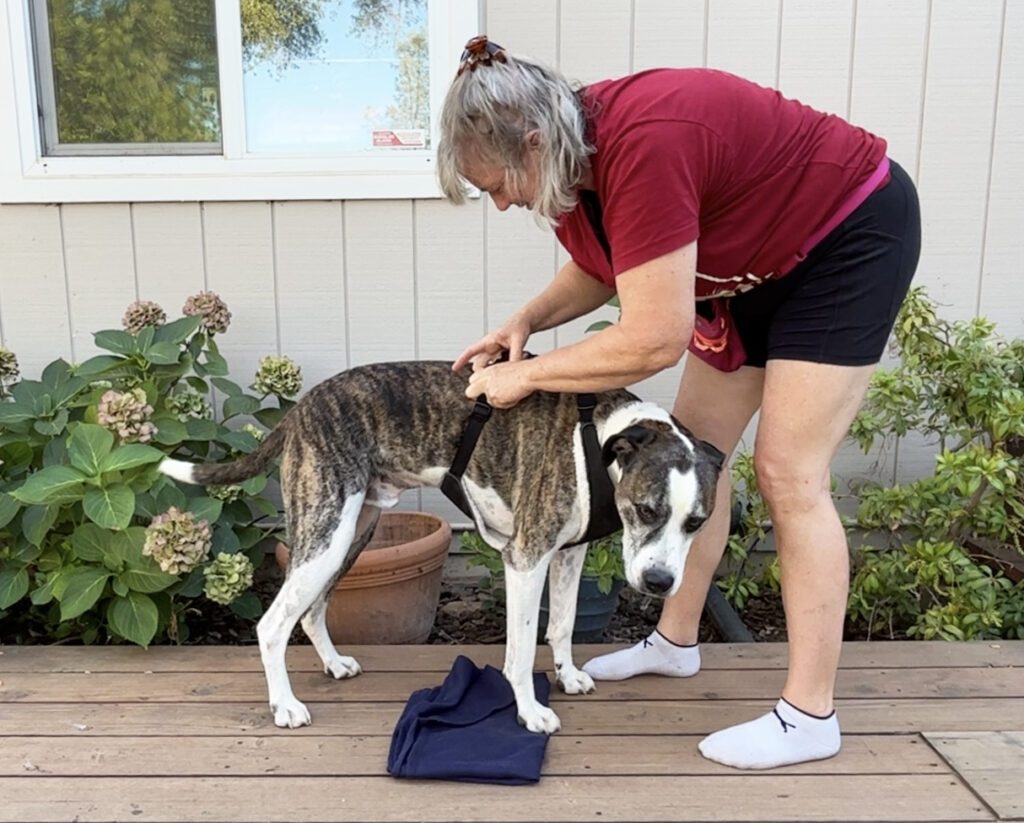
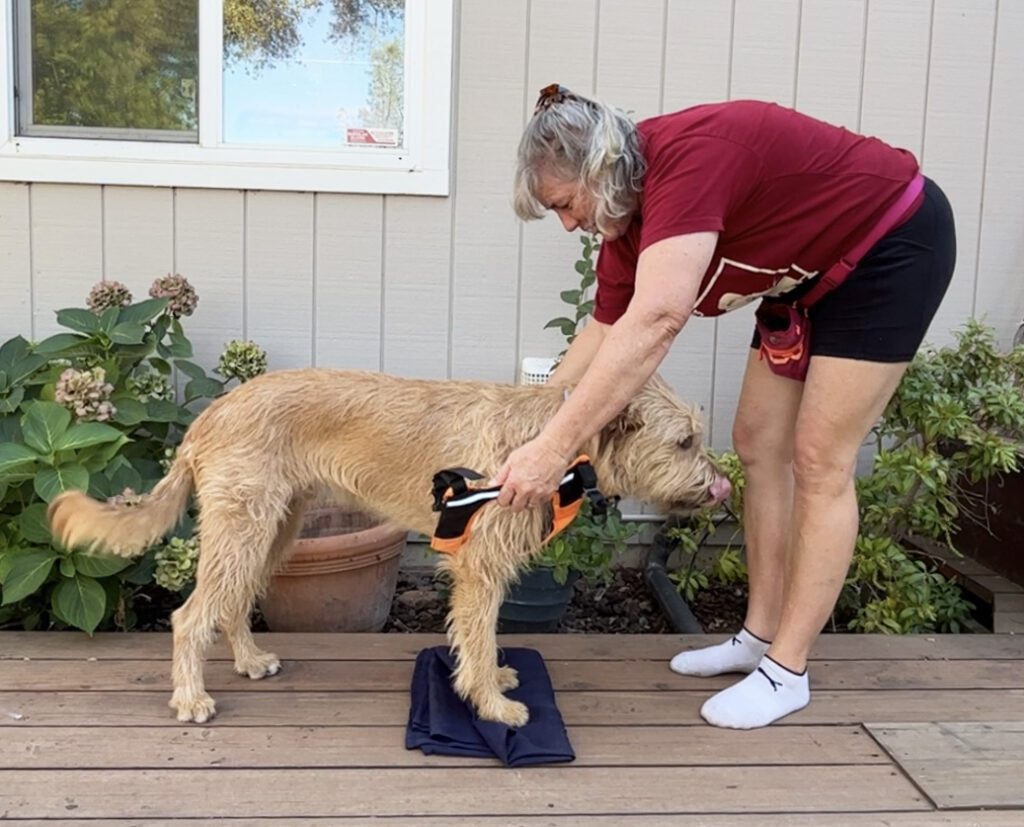
4. When she is comfortable standing and being touched, reach down and move the harness slightly. Mark and treat. Repeat numerous times, gradually moving the harness more and more until you can lift it add pressure around her body, and finally buckle or clip the straps. (Note that in this photo, the dog’s tongue-flick shows he is a little uncomfortable with this step. Take your time and keep the process fun and rewarding!) If she has trouble standing still for the lift and clip portion, have a second person feed treats while you do this, or position her in front of a non-absorbent surface (such as the refrigerator door) and smear squeeze cheese or peanut butter on the surface while you close the straps.
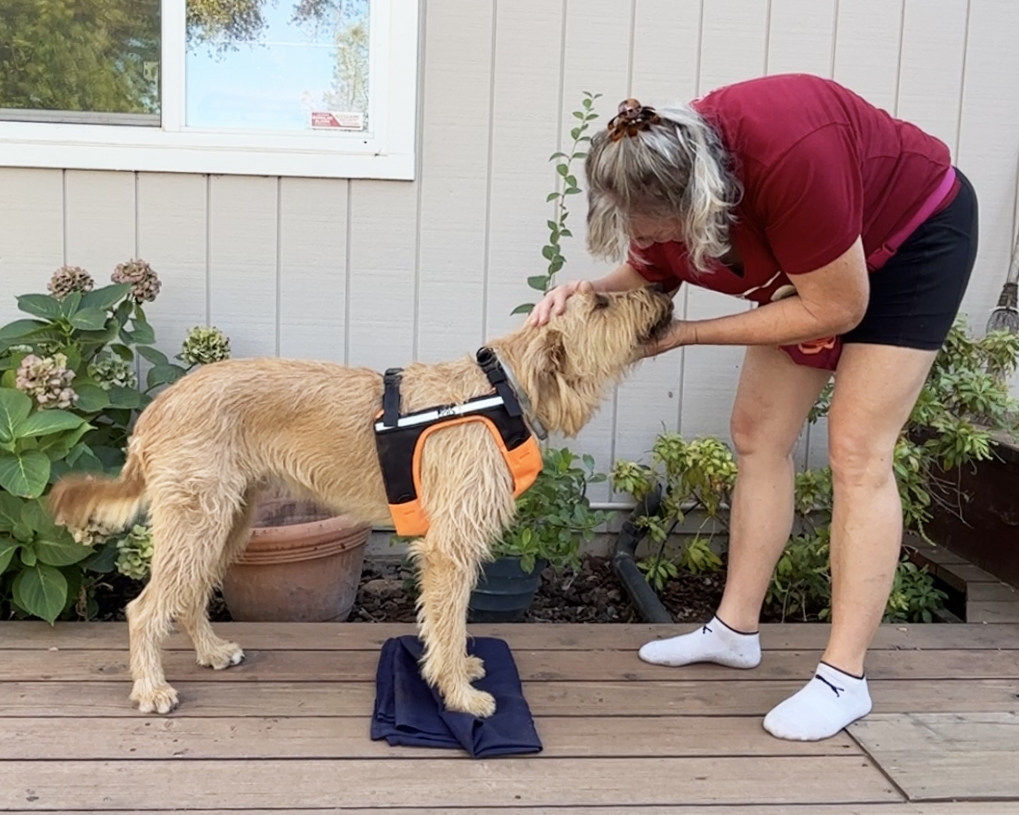
5. Once the harness is fastened, show your dog lots of love and appreciation – and reward with treats or play with a favorite toy! If adjustments need to be made to the harness for fit, take the harness off, adjust, and then put it on again.
A dog suffering from ataxia isn’t weak, but he’s uncoordinated and unable to get up or walk properly. Credit: tuaindeed | Getty Images
If your dog is simply weak or in pain, he may show signs of a wobbly gait, but that is not enough to diagnose ataxia. True ataxia is a neurological lack of balance and coordination. It’s a sensory ailment. If the vestibular system is affected (common in older dogs), your dog may circle and have a head tilt. He may have nystagmus (a funky rapid moment of the eyes). He will often be nauseous and not want to eat.
Vestibular Ataxia
The most common cause of ataxia in dogs is old-dog vestibular syndrome. Your senior dog wakes up and can’t get up. You help him up, and he circles, with his head tilted. His limbs feel strong, but they don’t seem to be “listening” to your dog. Fortunately, vestibular ataxia is usually a transient problem. With supportive care, including medications for nausea, most of these dogs will recover to close to 100% of normal. It can take days to weeks, however.
Proprioceptive Ataxia
In proprioceptive ataxia, which involves the spinal column, your dog will seem to have lost body awareness. For example, he does not seem to know where his feet are. Ataxia symptoms include:
Dragging his feet
Leaving a flipped-over paw in that position
Standing with his legs far apart
Cerebellar Ataxia
With brain involvement (cerebellar), dogs will show similar clinical signs as proprioceptive ataxia, but your dog may walk with exaggerated “goose steps” or hypermetria. He may also have head tremors.
Other possible causes for ataxia include disc disease along the spinal column and cancer in the brain or along the spine. Although less common, infections, both bacterial and viral, and genetic abnormalities can cause ataxia.
What You Should Do
If your dog is ataxic, a veterinary visit should be scheduled immediately. Even with vestibular ataxia, which usually resolves on its own, medications will help with nausea. Your veterinarian will look for pain or weakness and do a full neurologic exam.
Anti-inflammatory medications such as corticosteroids or drugs for neurologic pain such as gabapentin may help. Surgery may be needed if your dog does not respond to medical therapy.
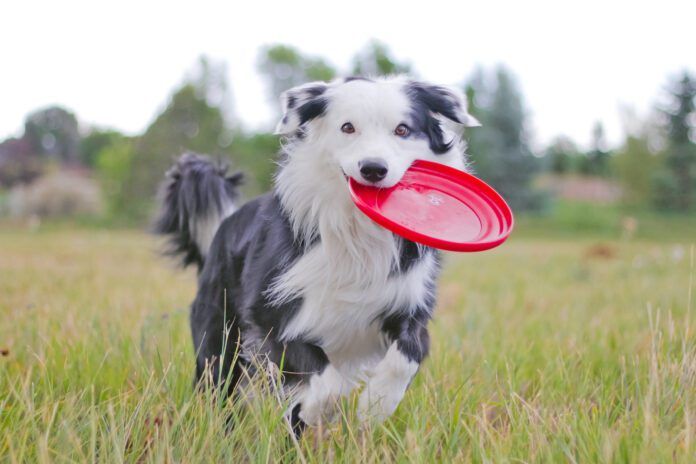
Dogs love to chase toys! You can almost see their eyes light up with excitement as they race back to you so you can throw it again! Credit: Anda Stavri Photography | Getty Images
Chase games are a fun way to play with your dog and take the edge off those high-energy adolescents! Add in some training and mental exercise, and you will have your dog snoozing in no time. Remote-controlled toys can add a level of excitement, if the toy is sturdy enough for your dog.
Best Dog Chasing Toys
Balls and flying discs are the crowd favorites that we all think of when choosing toys for our dogs. The best toy for your dog to chase is:
Safe
Durable
Floats (if using in or near water)
Attractive to your dog
Dog chase toys should be made of materials that are safe for dogs, especially if your pup is a chewer. Avoid hard, brittle plastic that could cut your dog’s gums or shatter when chomped on, and avoid thin, flimsy plastic that will break or tear easily.
Soft toys can be used for games of fetch too! Choose one that is the right size for your dog and throw it out when your dog starts to tear it up.
Balls should be safe. They should be large enough so the dog cannot accidentally try to swallow them, and they are best if they allow your dog to breathe through them. We like the Chuckit! Air Fetch Ball. Chuckit also makes a great flying disc that is soft and easy for your dog to grab.
Check out the balls from Planet Dog and flying discs and other toss-able toys from West Paw.
Remote-Control Dog Chase Toy
Some fun remote-control toys out there are now designed specifically for dogs. As with any dog toy, be sure the toy you purchase is sturdy enough for your dog’s play style. Always supervise your dog when she has access to remote controlled toys, as chewing on batteries or other electronic parts can be very dangerous.
Flirt Poles
Flirt poles aren’t just for cats! Dog flirt poles are larger and sturdier and have a ball or tug toy on the end instead of feathers or catnip mice.
These toys are fun because you control how fast and where the toy goes. Flirt poles are also a great option for dogs who tend to play keep-away instead of retrieving, as you are always connected to the toy.
Keeping Play Safe
Chase games are fun for both us and our dogs, but they can also lead to injuries. This is especially true for puppies and intense dogs who get extremely wound up when playing fetch.
Keep play fun and reduce risk of injuries by following these suggestions:
Play in an area with good footing, such as grass or packed dirt, so your dog doesn’t slip.
Make the first sessions short, even just a few minutes at a time at first, gradually increasing as your dog builds stamina.
Avoid hills and slopes, especially if the ground is wet.
For dogs who scramble and dive, hold onto the collar and don’t release until the toy has stopped moving. This eliminates the “panic” part of chasing and will reduce strain on your dog’s joints.
Quit before your dog slows down. Continuing to play until fatigued makes your dog much more susceptible to injury.
Roll balls instead of throwing to get a straighter toss without any risk of crazy bouncing.
Throw discs long and long to reduce jumping.
Tiring Your Dog Out
High-energy dogs can be difficult to tire out. Hours and hours of physical exercise start to just increase their stamina, plus may not fit into your daily schedule.
Add mental exercise to your dog’s playtime! Working his brain will wear him out much faster than physical exercise. You can do this in many ways:
Hide your dog’s toy for him to sniff and find himself.
Ask your dog to do tricks before each toss of the toy.
Use the chase toy as a reward during training sessions. Practice a new behavior, and then throw the toy for a job well done.
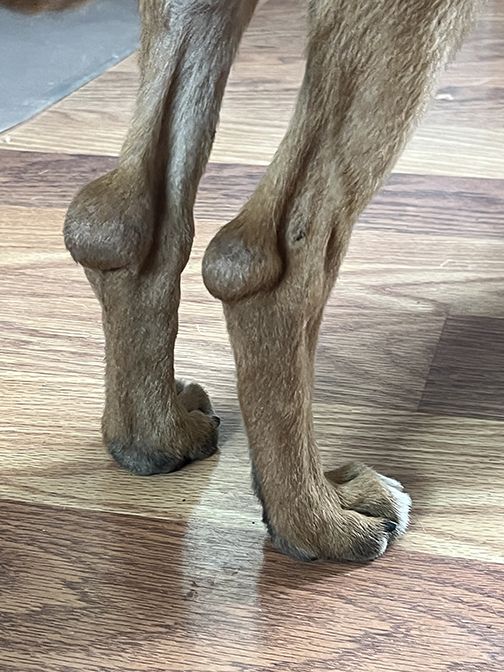
It looked like Junior had superballs stuck on the back of his hocks. In horses, we’d call this “capped hocks,” but I have never seen it in dogs, much less a puppy.
Early in July I mentioned a litter of puppies I was fostering for my local shelter, and mentioned one pup I was particularly worried about finding a home for. She was a particularly aloof, un-social pup, and I was worried that no one would want to adopt her.
As it turned out, she was the first of the four pups in her litter to get adopted – and when I heard that she had been selected by a family with kids, I was immediately suspicious that she had been chosen because she seemed to be the “quietest,” calmest pup in the group. The problem is, she’s not calm, she’s terribly shut down and avoidant of people. Taken into the “get acquainted room” at the shelter with her littermates, her MO was to sit in the corner, averting her eyes, while the three other pups jumped happily on any human visitors, begging for affection. Shoot!
I saw her photo posted on the shelter’s Facebook page as “adopted” and I wrote a note on the post for the adoptive family, letting them know I was her foster provider and if they had any questions or concerns about her behavior, to please let me know. I was concerned, but I had to stop there. I’ve had my hands absolutely full of family drama; I had to let the puppies go.
Fostering again
But the three boy pups sat and sat in the shelter. As weeks ticked by, I checked the shelter website every day and saw DOZENS of other puppies arrive on the pages of “available dogs” at the shelter – and then saw them pictured as “adopted!” on the shelter Facebook page. The pups who were all flying off the adoption shelves were all fat, chunky, Pit/Lab types who were going to be big dogs. But there were no takers on the three small, lean, leggy pups. I stopped by the shelter a few times when I had a spare hour, to bring them into the get acquainted room, let them play with toys, and remind them that if they sit politely, they get treats.
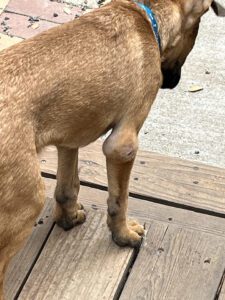
One day, in mid-August, I stopped by the shelter with my dog-loving grandson to see the pups and found one of them with a bleeding cut on his hind leg, and a big swelling on his other hind leg that looked like he had a big round liquid-filled superball on his hock. He also had a pretty deep cut on his chest. What a mess! I brought the affected pup, whom the shelter had dubbed “Junior,” into the veterinary treatment room at the shelter, and the vet tech looked him over. Separated from his brothers, we could see that he was limping on the leg with the weird round swelling, and his patella on that leg seemed to be somewhat luxated (the vet tech palpated it and it popped right back into place – hmmm). She cleaned his cuts, stapled the cut on his hind leg, and put a needle in the swelling to see what sort of liquid came out. Fortunately, it didn’t look infected, just filled with mostly clear fluid. She measured out some antibiotics and some Metacam (an anti-inflammatory and pain-relieving medicine), and (as you might have guessed), I brought the pup home with me for some rest and relief from getting beat up in the shelter pen with his brothers.
My grandson was overjoyed to get to spend time with Junior. The puppy is very sweet and smart, and absolutely remembered all of our past lessons about offering a “sit” whenever he wanted attention or a treat. He decided that Boone was his favorite dog to follow around and play and sleep with – which was great, because it gave me and my now-oldest dog Woody some time to spend together without Boone being jealous.
But the next day, both of Junior’s hocks had big swellings on them. Then they started to shrink, but a few days later, one of his elbows developed a big swelling. And a day later, his other elbow swelled, too.
The hocks started to shrink once Junior was sleeping on a thick bed in my home (not on the concrete floor of the shelter anymore), but then his elbows filled with fluid. Once I realized that this was caused by impact with the floor, I padded the floor of my office to give Junior and my dog Boone a safe “wrestling” area.
I brought him back to the shelter several times over the next two weeks for the vet tech and then the vet to see these developments, and eventually he was diagnosed with elbow hygroma – a condition that can affect more than just elbows. For reasons that are poorly understood, some dogs develop swelling over the point of bones that come into contact with hard ground. Articles about the condition always suggest that it will likely go away as long as dogs have nice thick beds to sleep on. Spending all day on the concrete floor of the shelter certainly must have caused the problem with his hocks – but it was a lot of playing with my young dog Boone in my office that was likely causing the problem with his elbows. Boone was being a great sport, “self-handicapping” himself in play by laying on the ground for wrestling matches with the pup, but the pup was doing a lot of “play bows” as he darted toward and away from Boone – with his elbows banging on the hard floor of my office. Ugh!
I pulled out every spare carpet, rug, quilt, and blanket in my house and covered my office floor with them. I also stopped the dogs from playing in the house at all – I have only one rug in one room in the house, and they always seemed to initiate play on the hard tile floor of the kitchen. I shooed them out to the lawn whenever they started wrestling. And, over a series of weeks, the swellings all subsided. Finally!
Then I got word that the second boy pup got adopted – yay!
Update about the girl pup
Then I got a message on Facebook from someone who said they adopted the autistic-seeming girl pup, and wanted to know if we could talk. I was so happy to hear from that family – only it wasn’t the family. It seems the puppy had been returned by the family, and adopted again almost immediately by the woman who contacted me. She observed that the puppy was very quiet, and looked through the shelter’s Facebook page of “adopted” photos to see if she could learn anything about who had adopted the pup previously. When she saw that the pup had been adopted by a family with kids, she surmised that the environment was likely too busy or loud for the pup – and then she saw my comment offering help and she reached out to me.
I called the adopter, and we talked for a long time. I told her about the pup’s history, and she told me about how the pup is doing now. She indicated that the pup is still very reserved with humans, much more comfortable with dogs (she owns one older dog), but that she will approach and sit for treats (brag: this is a hallmark of time with me). She told me that she has all the time and patience in the world to teach the pup that she can be trusted and she’s not going to force or push the pup in any way. I am so relieved and grateful that this pup found the right home after all!
A troubling diagnosis
Finally, all of Junior’s various swellings were nearly gone and his kneecap hadn’t luxated for weeks. It was time to start advertising for a home for him. I didn’t want to take him back to the shelter, but hoped to find someone in my social network to adopt him, so he wouldn’t have to go back on concrete! I took some cute pictures of him and asked my friends to share his information on social media.
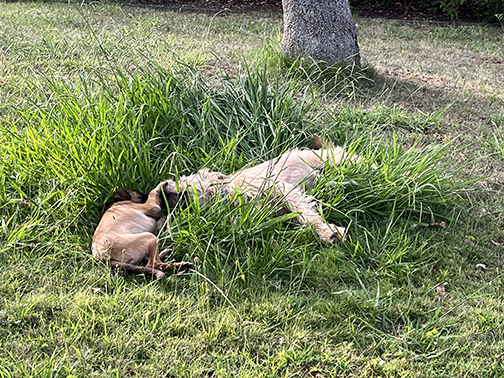
I also encouraged the two young dogs to play outside, rather than indoors on my hard kitchen floor. I might have been irritated with their choice of this muddy spot for wrestling if I hadn’t been so happy that they found a soft place!
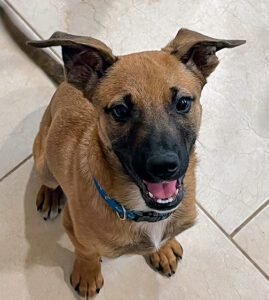
Within a week, we had a bite: A super nice family from a nearby town wanted to come meet him. They have two boys, 14 and 7, and the mom works for my friend’s dog daycare business! Hurray!! He would be able to go to work with her each day! What a lucky puppy! They came to my house to meet him, and I told them all about the issues we had been through. He also had a new cut on top of his head, which didn’t look very nice, but it was small enough that I didn’t think it needed any attention. I know they were listening to my recitation of Junior’s issues, but they were also very impressed by his now-very-solid sits and downs on cue, his recall, and even his skill at playing fetch (and bringing the toy back every time!). While he tends to jump up on people once when he’s excited, if you just pause a moment without petting or talking to him, he quickly remembers that he’s not supposed to do that and quickly plunks his butt down into a sit. He was impressive, and they were impressed! I allowed them to bring Junior home to their house to spend the rest of the weekend with them, and I was thrilled to hear at the end of the weekend that they wanted to adopt him.
However, we couldn’t go to the dog daycare with his new mom until he had received some more vaccinations (for Bordetella and influenza) and had a clear fecal test – just like all of the client dogs’ requirements. I told the family I would be happy to hold him for a few more days so I could bring him to a local vet for an appointment to get the vaccines and to bring in a stool sample. By a miracle, I was able to score an appointment with a local vet almost immediately.
But right away, this veterinarian noticed the baggy skin on Junior’s elbows, the last remnant of his hygromas – as well as his sometimes-luxated kneecap, and the cut on his head, and the remnant of the cut on his chest and the one on his hind leg. She said, “This looks a lot like Ehlers-Danlos Syndrome…”
I said, “Say what?” I have never heard of this.
Apparently, the veterinarian has a friend, someone she went to vet school with, who both has this condition and studies it at a university– that’s partly why the veterinarian recognized Ehlers-Danlos. It’s an inherited condition of connective tissue disorders resulting in defective collagen synthesis – and fragile skin, poorly healing wounds, and hypermobility of joints are all symptoms of this condition.
Uggghhhhhhh!
I asked the vet what she thought about adopting such an animal. She said, “I think everyone deserves to adopt a healthy dog…”
Of course, I think that, too – but I also didn’t want to see this pup not get a home! What if the family didn’t want to take this on?
I wrote a long email to the family explaining what the vet had said, and including some links to articles about the condition. Ehlers-Danlos Syndrome can be definitively diagnosed with a biopsy, but Junior’s symptoms are rather classic. He will require close supervision so he doesn’t play too roughly, supervision to prevent over-zealous activity that could contribute to joint luxation or skin tears, and special care of any wounds or skin tears he receives. And I told the family that I would not blame them one bit if they decided that Junior had more problems than they wanted to take on.
I was on pins and needles waiting to hear what they would decide – and also trying to figure out how on earth I was going to be able to find another home for him! My friend Leonora, who previously owned a dog with special needs, bravely declared that she would adopt him if the family would not, which made me cry, I was so touched.
Great news for Junior
Junior is such a happy, sweet, smart dog. I’m thrilled that he’s found a home with a wonderful family who appreciates what a special guy he is, and is ready to appreciate him in spite of his physical challenges.
But fortunately, the family is awesome. The dad told me that the whole family talked about it, discussed how they would have to be careful with Junior and that he might have health problems from time to time – and decided that they wanted him anyway. “We haven’t heard anything at this point that would prevent us from adopting such a sweet and wonderful boy,” he texted me. “We understand the potential complications and would like to get more information, but at this point, we all feel pretty strongly that Junior belongs in our family.”
That’s been the best news. I am so grateful that such big-hearted people are willing to give this sweet pup a tremendous opportunity for a happy, healthy life with them….
And now I have to think about whether I’m going to bring home the fourth pup in the litter, who at five months is still at the shelter – and who has big swellings on his elbows and cuts from playing with the non-related puppies he’s been housed with. Arghh!
You never know what you’re going to get when fostering for a shelter or rescue. All I know is that when this litter’s lives are all sorted out, I am going to take a break!
To provide the best experiences, we use technologies like cookies to store and/or access device information. Consenting to these technologies will allow us to process data such as browsing behavior or unique IDs on this site. Not consenting or withdrawing consent, may adversely affect certain features and functions.
Functional
Always active
The technical storage or access is strictly necessary for the legitimate purpose of enabling the use of a specific service explicitly requested by the subscriber or user, or for the sole purpose of carrying out the transmission of a communication over an electronic communications network.
Preferences
The technical storage or access is necessary for the legitimate purpose of storing preferences that are not requested by the subscriber or user.
Statistics
The technical storage or access that is used exclusively for statistical purposes.The technical storage or access that is used exclusively for anonymous statistical purposes. Without a subpoena, voluntary compliance on the part of your Internet Service Provider, or additional records from a third party, information stored or retrieved for this purpose alone cannot usually be used to identify you.
Marketing
The technical storage or access is required to create user profiles to send advertising, or to track the user on a website or across several websites for similar marketing purposes.
This website uses cookies and other tracking technologies to offer you a better experience, personalize content and ads, and analyze our site traffic. Before proceeding, you agree to our Terms and that you’ve read our Privacy Policy. Update Settings
Functional
Always active
The technical storage or access is strictly necessary for the legitimate purpose of enabling the use of a specific service explicitly requested by the subscriber or user, or for the sole purpose of carrying out the transmission of a communication over an electronic communications network.
Preferences
The technical storage or access is necessary for the legitimate purpose of storing preferences that are not requested by the subscriber or user.
Statistics
The technical storage or access that is used exclusively for statistical purposes.The technical storage or access that is used exclusively for anonymous statistical purposes. Without a subpoena, voluntary compliance on the part of your Internet Service Provider, or additional records from a third party, information stored or retrieved for this purpose alone cannot usually be used to identify you.
Marketing
The technical storage or access is required to create user profiles to send advertising, or to track the user on a website or across several websites for similar marketing purposes.