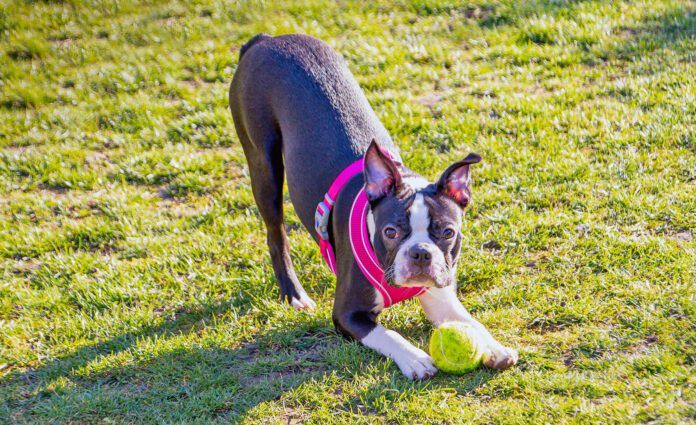
This Boston Terrier is clearly using a play bow to show her desire to play ball. Credit: CBCK-Christine | Getty Images
A play bow is one of many unique canine behaviors and gestures dogs use to communicate with each other and their humans. The classic play bow stance serves as an invitation from your pet to engage in playtime. The play bow is a distinctive posture that a dog assumes by lowering their front end while keeping their rear end raised and is often accompanied by tail wagging.
When observed during playtime, the play bow acts as a signal to other dogs, and humans, that your pet would like to engage in friendly, non-threatening, interactions. In the canine world, most communication between dogs occurs through body language, and play bowing is a prime example.
Interestingly, while many people like to compare dogs and wolves, researchers found that play bow is not used similarly by wolves. The study found that dogs use play bows after a brief pause in play while in an active play state, however, “While the relative number of play bows and total observation time was similar between dog and wolf puppies, wolves did not follow this behavioral pattern, as play bows were unsuccessful in eliciting further play activity by the partner. . . . It appears that play bows may function differently in wolf puppies.”
Engaging your dog in playful fun is a great bonding exercise for you and your dog. Throwing balls or discs can elicit the excited “play with me more!” play bow. Learning how your dog communicates can further enrich your relationship. Learn about other signs of happiness in your dog, which include play dance, excited barks, and of course happy tail wagging.
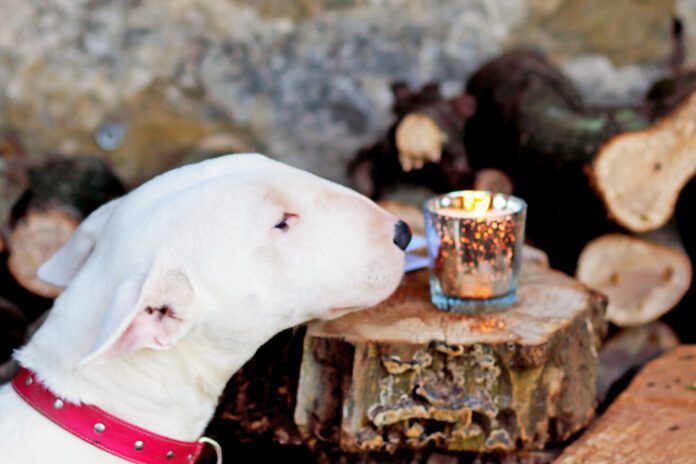
Be wary of scented candles. While they may smell good to you, the oils included could irritate your dog’s throat or cause even more worrisome problems. Chiara Benelli | Getty Photo
Bronchitis is an irritation of the bronchi, the tubes that lead into your dog’s lungs. You will most likely notice your dog is coughing, as that is the main symptom of bronchitis. Treatment includes soothing the dog’s throat, which may include a cough suppressant medication from your veterinarian and treating the cause.
Bronchitis Symptoms in Dogs
While coughing is the No. 1 symptom of bronchitis in dogs, depending on the cause of your dog’s bronchitis, she may also:
To soothe your dog’s airway, your veterinarian will prescribe treatment for the underlying cause and possibly a cough suppressant to stop that cough.
Keep your dog calm and encourage her to rest while she recovers. Heavy breathing during play and exercise can exacerbate the cough and will slow the healing process. Your veterinarian may also recommend bringing your dog in the bathroom when you shower so she can inhale the steamy air.
Other treatments will vary depending on what caused your dog’s bronchitis. Antibiotics will be prescribed for bacterial infections, while most viral infections are treated with supportive care and symptom management. Allergies can be treated with medications and/or immunotherapy. If your dog has heart failure or cancerous tumors in her lungs that are causing the cough, she will receive medications to manage those conditions.
Chronic bronchitis in dogs will require long-term vigilance. Keep your dog’s living environment free of airborne chemicals and fumes as much as possible. Use scent-free cleaning products as much as possible. Avoid spraying air fresheners. Essential oil diffusers can also be irritating for dogs with bronchitis. If anyone in your household smokes, consider quitting or at least smoke outside to limit your dog’s exposure to secondhand smoke.
One of the most obvious problems with free feeding dogs is that dogs are not big on sharing food. Credit: Vychegzhanina | Getty Images
Filling a large bowl of food for your dog to eat at will sounds convenient, but for most dogs it doesn’t work. Free feeding is problematic in that it can quickly result in obesity, which is already a huge health problem in pet dogs. A dog who is at a lean weight, is happier, healthier, and more active than his chubbier friends. But obesity is just one reason free feeding doesn’t work for dogs.
Why Free Feeding Can Be Bad for Dogs
Other problems with free feeding include:
It will take longer for you to notice appetite changes. A sudden increase or decrease in your dog’s appetite can be an early indicator of a health problem. If you feed your dog measured meals, you likely will notice if she is gulping her food down immediately and still super hungry, or if she is not finishing her meals.
Dogs don’t always share. If you have multiple dogs, one may hog the food bowl and eat too much while another may not get what she needs. This can be a problem for both dogs.
Different dogs have different needs. If you have multiple dogs, they may need to eat different foods. For example, puppies require more nutrients than the average adult dog, and dogs with some health problems may need a prescription diet. Feeding meals ensures that each dog is eating only the food he or she is supposed to eat.
Leftover food is more likely to spoil. Dry food doesn’t stay dry once you feed it. Exposure to air, your dog’s saliva, and potential spills can cause that large bowl of kibble to harbor thriving bacterial and mold colonies, which can make your dog sick.
Unless your veterinarian specifically recommends free feeding your dog, feeding measured meals is the best way to go.
How Often Should You Feed a Dog?
Puppies should eat three to four meals a day to keep their blood glucose levels stable and help support growth. Toy breed puppies in particular need frequent meals.
Senior dogs may require frequent small meals, and breaking up meals can be helpful to get your dog to take multiple medications throughout the day.
For adult dogs, there isn’t a simple answer. Historically, most veterinarians and nutrition experts recommend feeding two meals a day. This schedule is convenient for most owners and well tolerated by dogs.
Potential Benefits of Feeding a Dog Once a Day
A recent study published by the Dog Aging Project Consortium found that pet dogs who only ate once a day had fewer health problems. This was an initial finding, so more work needs to be done to determine if the once a day feeding schedule was the actual cause of better health. Talk with your veterinarian before making this change.
For now, the most important thing is to determine the amount of food your dog should eat each day, and then break it into the number of meals that works best for your schedule. Your veterinarian can guide you if your individual dog might benefit from feeding more meals or less frequent meals.
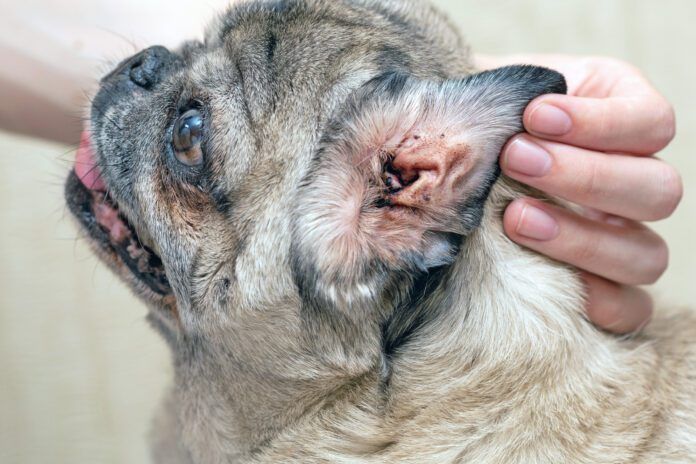
You might think the dark debris in your dog ear is ear mites, but it isn’t. It’s the damage left behind by feeding mites. Mites look like white, tiny specs and are difficult to see, unless you notice them moving. Credit: Evgenia Glinskaia | Getty Images
When you look in a dog’s ear to see ear mites, you might spot tiny white pinprick-size creatures moving around. These are mites, but they’re not easy to see. You’re more likely to notice dark debris that looks like coffee grounds. The dark specs are made of skin from mite irritation and defecation, plus added ear wax as the ears try to protect themselves.
Mites are an external parasite you would prefer to avoid. About half of the cases of ear mites in dogs are caused by Otodectes cynotis. Often these are shared by your cat or pet rabbit with your dog, especially if your cat goes outdoors, so if you suspect one pet has mites, you likely need to treat them all.
Signs of Ear Mites
The most common symptoms of ear mites are the dog shaking his head, scratching at his ears—even putting his paw into his ear—rubbing his head against the floor, ground, furniture, or you, and smelly, dirty ears. Rarely, you might notice irritated areas of the skin on the head and neck.
If your dog has secondary yeast or bacterial infections, the ear may be red and moist or have a purulent discharge.
Proper Treatment
Treatment can be straightforward, but many of the home remedies you see online may not fully address the issue, leaving you frustrated, your dog still scratching, and both of you disappointed and annoyed. Instead, if you suspect mites, take your dog to the veterinarian and get an effective medication.
To treat ear mites in dogs, ears need to be properly cleaned. If you’ve taken your dog to the vet, he will get a thorough ear cleaning that will directly remove many of the mites.
Your dog will need ear drops or ointment, especially if he has secondary bacterial or yeast infections in the ear.
The next step is often a topical medication that will attack the mites as well as fleas and ticks, such as Revolution, which requires a veterinary prescription. More than one treatment is generally required.
It is very important to treat all your pets at the same time. Otherwise, your cat may reinfest your dog or vice versa. Other dogs and rabbits can share the mites, too.
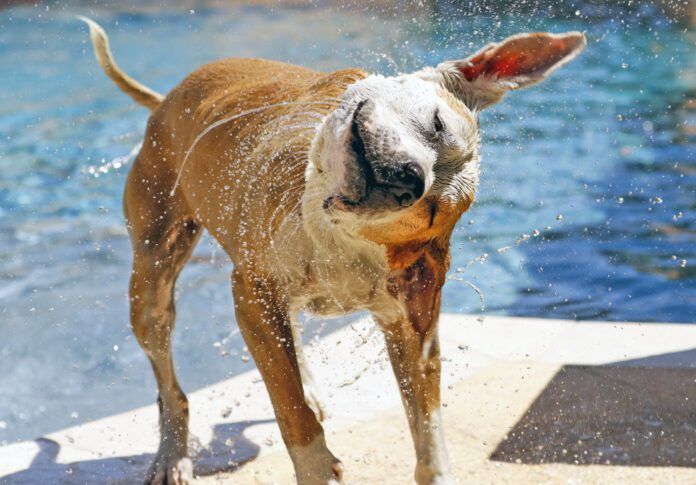
Most dogs shake the water off after getting wet, but if a dog continues to shake his head be sure to check for water in his ear. The sooner it’s removed, the better. Credit: Quicksnap Photos | Getty Images
Just like us, dogs can get water in their ears during swimming or bathing. While this isn’t a big deal, it can be uncomfortable and can increase the risk of ear infections. Water in dogs ear doesn’t need to be a problem. You can easily dry your dog’s ears out at home.
How to Get Water Out of a Dog’s Ear
If you notice your dog shaking her head or tilting it to the side after swimming or a bath, she may have water in her ear(s). Start by drying her head and the outer part of her ears with a towel so that more water doesn’t drip in.
Next, place a cotton ball inside the ear and squish the ear gently. The cotton ball will absorb the water. Repeat with several cotton balls to ensure the ear is dry. If you don’t have cotton balls handy, gauze or a clean towel can do the job in a pinch.
Extra Steps for Dogs Prone to Ear Infections
For most dogs, this will be the end of it. Your dog will shake her head and go on with her day. But if your dog is prone to ear infections, you should take some extra steps. Purchase a dog ear cleanser from your veterinarian or a pet-supply store and use that to flush and rinse the ear, following with dry cotton balls.
The ear cleanser is a worthwhile step because these products contain a drying agent that helps to reduce moisture inside the ear. Regular ear cleaning is a great way to prevent ear infections in dogs who are prone to them, especially if they enjoy swimming.
Never place anything else in your dog’s ear unless your dog has been seen by a veterinarian. While your dog’s head tilt or ear shaking may indeed be caused by water in the ears, these behaviors can also be a sign of infection. If the infection has perforated your dog’s ear drum, any product that you put in the ear can get through. Some ear medications and home remedies can be harmful if they get through the ear drum, even causing deafness.
Preventing Water in Dog’s Ear
You can prevent water in dogs ear during a bath by placing a cotton ball in each ear before you turn on the water. This method doesn’t usually work well for swimmers because the cotton balls can easily get dislodged during play, and then you will need to retrieve and dispose of them properly.
In our opinion, this is the very picture of good training: gear that simply keeps the dog and handler together, but doesn’t cause pain; a handler who is mindfully keeping the connection loose and non-coercive, and a dog who is relaxed and engaged with his handler in what appears to be a joyful mood. Photo by Photo by alexei_tm, Getty Images
The dog-training world can be a confusing jumble of words, tools, methods, and training philosophies – with a total lack of standardization and regulation. Here are our definitions for the terms you will encounter when looking for a dog trainer.
Force-Free Dog Training
Force-free trainers commit to using humane, non-coercive training tools and methods, focusing primarily on the “positive reinforcement” quadrant of operant conditioning, in which the dog’s behavior results in good/enjoyable things for the dog. (All four quadrants of operant conditioning are explained here.)
Force-free trainers take care to manage the dog’s environment well to be sure their dogs don’t get reinforced for unwanted behaviors. They may occasionally use “negative punishment,” where they take away something the dog enjoys when the dog exhibits an undesired behavior (for example, you stop petting your dog when he jumps up on you). They’re also likely to use counter-conditioning – using something wonderful to change a dog’s opinion of (association with) something from negative to positive.
Note that a trainer who is truly force-free will not use prong collars, shock collars, leash jerks, verbal or physical punishment, flooding, or “corrections” to try to change a dog’s behavior. Ever.
Balanced Dog Training
The term “balanced” has become a common euphemism for training that embraces a wide range of training methods, from positive reinforcement all the way to the most aversive tools and techniques. Balanced trainers may sometimes use treats and/or other reinforcers, but they are just as likely to use aversive tools and methods.
Recent studies tell us that positive reinforcement training generally works more quickly than a coercive approach. However, it can sometimes take longer to accomplish behavior goals using only force-free methods (especially if the dog has negative associations with things or situations that require counter-conditioning and desensitization).
In our experience, when faced with a training challenge, balanced trainers tend to resort to quick fixes that always have negative repercussions for the dog, even when it appears to achieve the training goal in the moment.
Positive Dog Training
Thanks again to the absence of standardization of dog-training terms, “positive training” can mean almost anything. There are excellent force-free trainers who call themselves “positive.” But trainers who use aversive methods have realized the marketing value of the term “positive,” and many use it in their promotional materials, even if their methods also include coercion and the infliction of pain or discomfort.
The term “force-free training” provides less wiggle room than “positive training.”
Clicker Training for Dogs
Clicker training means using a clicker or other reward “marker” (such as a tongue click, a whistle, marker word, or a thumbs-up gesture) to communicate to the dog that the behavior she just did earned a treat or other reinforcement. The marker is also called a “bridge,” because it bridges the delay between the dog’s behavior and the handler’s delivery of a reinforcer. It buys you time to get the treat to the dog so she understands it was her behavior at the time of the click that earned the reinforcement, not what she was doing several seconds later when you delivered the treat.
While the majority of clicker trainers are force-free, balanced trainers may also use clickers. A trainer who advertises clicker training may not fully embrace a force-free philosophy.
Relationship-Based Dog Training
One might think that a training program that emphasizes “relationship” would focus on humane methods that foster mutual trust, cooperation, and respect between dog and human. Indeed, many organizations and trainers who promote this method do just that.
Sadly, others do not. Some trainers perceive the ideal dog-human relationship to be one where the dog is subjugated by the human. They may talk about “relationship” on a website that promotes shock and prong collars, and methods intended to force dogs into submission rather than inviting cooperation. Use of this term should invite caution.
E-Collar Dog Training
“E-collar,” “electronic collar,” and “computer collar” are all euphemisms for “shock collar.” Trainers who use any of these terms will explain that the collars they use deliver just a “stim,” “static,” or a “tap” – not a shock. They may even try to convince you they are using positive reinforcement because they pair the shock with a treat.
What they often fail to mention is that they will readily turn up the intensity of the shock when the dog doesn’t respond to the lower levels. Don’t let these people fool you; shock collars hurt.
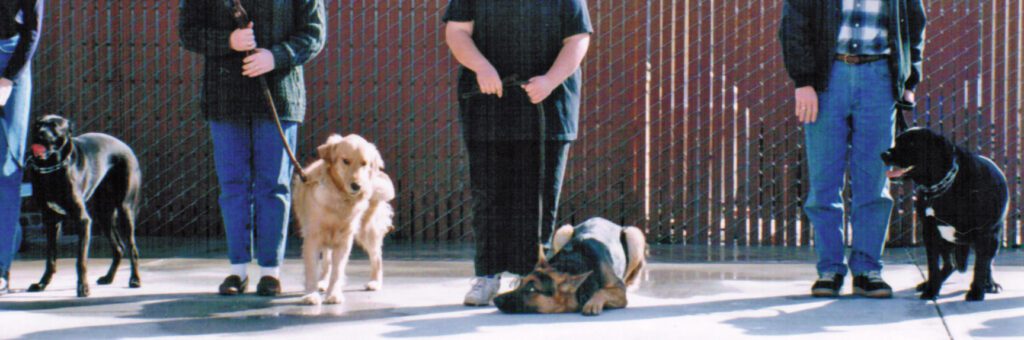
Polar opposite: This picture, taken 20 years ago at a successful dog training school, shows what old-fashioned training often looked like. Every dog is wearing either a pinch collar or choke chain (some are wearing both!). Every dog looks fearful, stressed, confused, and unhappy. Photo by Nancy Kerns
Alpha/Dominance Dog Training
This is what I politely call “old-fashioned” training, espoused by those who openly and unashamedly cling tightly to the scientifically debunked and horrendously flawed theory that dogs are pack animals, that they see us as part of their pack, and that as pack leaders we must forcefully establish dominance over our dogs using punishment (“corrections”) and intimidation. They may couch their sales pitch in pretty terms – some even claim they don’t use punishment! – but if you browse their websites you will likely see myriad photos of dogs wearing prong and shock collars.
Science-Based Dog Training
As you investigate and evaluate the training options available in your community for you and your dog, keep in mind that the best modern dog-training professionals are paying attention to behavior science. Recent studies have demonstrated clearly that coercion and intimidation-based methods have significant long-term negative consequences for a dog’s emotional and behavioral health.
True science-based trainers have taken that to heart and commit even more adamantly to force-free methods and philosophies. Trainers who still use coercive methods either aren’t keeping up on the science or are deliberately turning their backs on the evidence that current science provides.
Yes, physical punishment and intimidation can work to shut down a dog’s unwanted behaviors and to compel your dog to obey for fear of the consequences if she doesn’t. But is that what you want for your dog?
Before I knew better, I used many old-fashioned methods (though I never used prong or shock collars on my dogs). I loved my dogs, and they were very well trained. I believe and hope that they loved me too and forgave me for my inappropriate behavior. But you couldn’t pay me enough to go back to those methods today.
I like to say that we, as the supposedly more intelligent species, should be able to help our dogs cheerfully cooperate in our training efforts and happily and willingly do what we ask of them. Isn’t that what you want for your dog?
A diabetic dog needs correctly timed meals. Around 10 to 12 hours apart works best, says the Cornell Riney Canine Health Center. Credit: Domoyega | Getty Images
The primary treatment for diabetes in dogs is insulin injections, usually administered twice daily in conjunction with meals. Dog insulin is almost exactly the same molecule as porcine (pig) insulin, so that is usually what is used. Unfortunately, for dogs, there is no alternative to injectable insulin (for diabetic humans and diabetic cats, there is an alternative).
The Cost of Insulin for Dogs
Insulin is not inexpensive. The American College of Veterinary Pharmacists estimates that insulin for a large dog could run $150 per month, saying costs have tripled since 2002.
The FDA-approved insulin for dogs is Vetsulin, which comes in a 10 mL vial and require syringes specific for insulin of this strength (40 units/mL). A VetPen (insulin pen) is available with 2.7 mL cartridges.
The average cost of Vetsulin is $70/10 mL vial or $230/10 – 2.7 mL cartridges (the VetPen starter kit is about $180).
How long a vial or cartridge lasts depends on the individual patient, with larger dogs generally needing more insulin per dose. The choice of which insulin to treat a diabetic dog is determined by the dog’s veterinarian.
Do Not Swap Insulin Types
While it is possible to use an insulin labeled for humans, it isn’t likely to save you much money. Humulin-N (100 units/mL) can range in price from $100 to 170 for a 10 mL vial. Critical note: Humulin-N is a different concentration from Vetsulin and requires different syringes for administration; do not just swap insulin out without checking with your veterinarian.
A proper diabetic diet can help decrease a dog’s insulin requirements, but dogs do not go into remission based on dietary therapy alone.
What Is Diabetes?
Diabetes mellitus is a hormone deficiency that leaves a dog unable to regulate his blood glucose (sugar) properly. This can result in clinical symptoms that include increased drinking, increased urination, weight loss, cataracts, and other metabolic abnormalities that can result in severe illness and death.
The primary problem is a lack of insulin. Insulin is a hormone produced by the pancreas. Normally, the pancreas releases insulin into the bloodstream to control the use of glucose, the preferred form of fuel used by the cells of the body. Without insulin, the cells cannot access to glucose in the bloodstream, and that glucose, which comes from digested carbohydrates or released from storage within the body, builds up to abnormally high levels that can damage the dog’s other organs.
Problems that can cause a dog to walk crooked run from pain to tumor to a simple ear infection. Credit Bluecinema | Getty Images
If your dog is walking sideways all of a sudden, is walking crooked, or otherwise has recently developed an abnormal walk, your dog may be showing signs of neurological problems. Suddenly walking sideways can indicate other health issues as well, but the bottom line is that if your dog has started stumbling, dragging his feet, circling, or walking crooked, it is time for a veterinary visit.
Causes for a Dog Walking Sideways and Crooked Gaits
If your dog has always walked kind of crooked or it came on gradually in a young pup, it could indicate a bone or joint abnormality. Nutritional deficiencies can lead to weak or malformed bones, which may change how your dog walks as he grows up.
And conditions like severe hip dysplasia can be extremely uncomfortable, causing your dog to walk abnormally to relieve pain. It could even be due to weakness in the hind end.
For adult dogs who suddenly start walking crooked or gradually worsen, other conditions like neurological problems are more likely. These include:
Your veterinarian will start by doing a thorough physical exam, including feeling your dog’s legs and joints and testing some basic reflexes, such as fixing her foot if your veterinarian places it upside down. The ears will be checked for signs of infection.
Blood tests can help to reveal if your dog has an infection or organ damage that may have caused a seizure or stroke. Radiographs (X-rays) and ultrasound might be used to look for problems in your dog’s bones, heart, lungs, and abdominal organs.
If a brain issue is suspected, your dog will probably be referred to a neurologist for a full neurologic exam and advanced imaging such as an MRI. An MRI will show if there is a brain tumor and can also show signs of strokes, inflammation, trauma, or infection.
Signs of Neurological Problems in Dogs
Walking sideways is just one sign of a neurological issue in dogs. Other signs that can indicate a neurological problem include:
Stumbling
Circling
Head pressing against walls or other objects
Dragging feet
Paralysis of one or more legs
Seizures
Sudden blindness
Tremors
Head tilt or head shaking
If your dog is experiencing one or more of these symptoms, he should see his veterinarian as soon as possible.
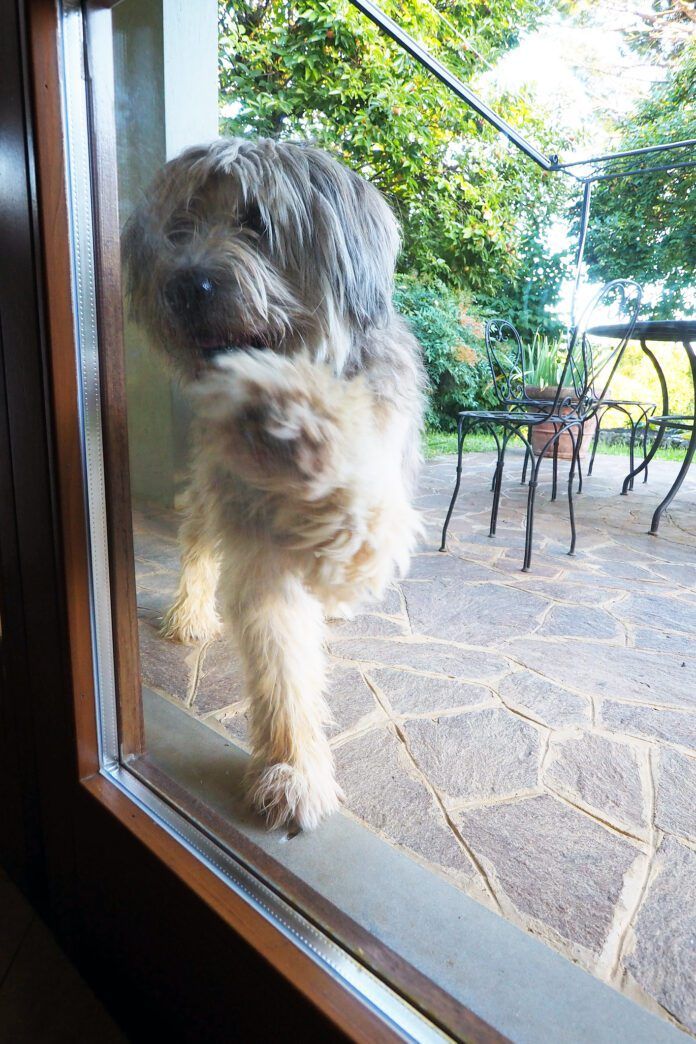
It’s obvious that dogs want in or out when they scratch at the door, and their reasons for wanting in or out are all valid. Fortunately, it’s easy to teach them a more acceptable and less damaging way to request your door-opening service.
Photo by Rosmarie Wirz, Getty Images
Dogs who scratch at the door want to go outside or want to come back inside – that much is obvious. If we can learn why he wants to go through the door, and meet those needs, we can more easily change his behavior – in this case, ceasing to scratch at the door.
Humans will always accept “I need to go to the bathroom!” as a valid reason for a dog wanting to go outside. But we often make judgments about our dogs’ other motivations for door-scratching – which isn’t quite fair!
If he’s bored or lonely, try giving him interactive toys to play with in the yard, or go out and play with him instead of expecting him to entertain himself. If he’s hot or cold, bring him inside your temperature-controlled home. If he’s stressed or anxious (whether due to scary noises, separation distress, or anything else) minimize exposure to his stressor(s) while you do behavior modification to ease his distress – and accept that he may never be a dog you can just leave outside on his own.
Teach an Alternative Behavior
Regardless of your dog’s motivation for wanting the door to be opened, it’s easy to teach him a new way to ask you for this service, such as ringing some jingly bells or pressing a touch-activated noise-making button. Just remember that door-scratching works for him because he’s learned that you come quickly because you don’t want your door scratched. You’ll need to respond just as quickly to the button or bells!
First, teach your dog how to activate the sound device by shaping him to touch it with a nose or paw. Every time he manages to trigger its noise, mark the event (with the click of a clicker or a verbal marker, such as the word “Yes!” and give him a treat. Then add a verbal cue. For example, you could say, “Door?” and encourage him to activate the noise. When he is successful at ringing the bell or pressing the button, mark (“Yes!”), open the door, and give him a couple treats outside (or inside – whatever is the opposite of where you started). Gradually, you can stop delivering treats for this behavior; getting the door-opening service is his reward!
As with all behavioral issues, management will be key to your success in dealing with this behavior. While you’re teaching your dog that a bell or button is the better communication tool, you’ll need to protect your door(s) so you don’t have to come running if he starts to scratch. Here are some management tools:
Dog scratch door protector: There are various commercial products you can use to protect your door from your dog’s claws – everything from protective tape to vinyl covers to hard plastic shields, depending on the intensity of your dog’s scratching.
Exercise pen: You can set up a temporary exercise pen around your door(s) to block your dog’s access to the door while he learns to express himself in a more acceptable way.
Avoid the trigger: You could simply choose not to leave your dog on the other side of doors while you are training him to use a more acceptable means of communication and/or helping resolve his anxiety about being left alone.
In many cases, a dog’s scratching behavior is modifiable. However, if your dog’s isolation or separation anxiety is significant, you may need to accept that you’ll always stay with him in the yard.
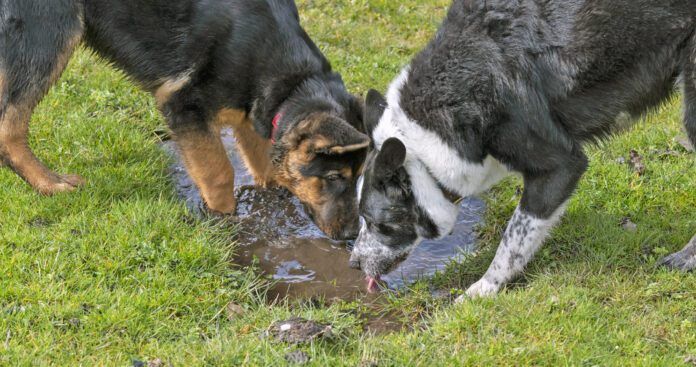
Dogs who drink from mud puddles or shared public water bowls are at a higher risk of contracting disease. Credit: R.A. Kearton| Getty Images
Your dog can get sick from drinking out of a dog-park water bowl or water fountain, although it’s rare. Dogs have strong immune systems. If your dog is healthy, and not a puppy or an old dog, he should be fine.
Water Bowl Dangers
But here’s what you need to know: Infectious and contagious diseases may be left in a water bowl by a sick dog’s saliva. Dogs also can contaminate bowls by stepping into the water with a paw that has feces on it. Your dog could contract canine flu, internal parasites, Giardia, kennel cough, salmonella, and more from a shared water source.
Other dogs or rodents can leave parasites behind. Just leaves falling into a bowl that hasn’t been cleaned for days could have bacteria that could make your dog sick. Clean water sources are important.
Leptospirosis
Natural sources of water, like ponds and puddles, can contain the bacteria that causes leptospirosis, as well as other potentially harmful organisms. Leptospirosis is spread through the urine of wildlife and, while dogs can pass it to each other, it’s not likely, unless, of course, an infected dog pees in the water bowl, which can happen.
When to Avoid Shared Bowls
We recommend you avoid allowing your dog to drink from a shared bowl but not at the expense of his health. If it’s hot, he needs to drink. Don’t dehydrate your dog in the process of trying to protect him because chances are he will be fine.
So, you don’t need to live in paralyzing fear of communal water bowls or puddles, just avoid them whenever you can. If you know your dog may need water while you’re out, bring it with you. There are many dog-friendly portable water carrying devices.
Worrisome Home Bowls
A 2011 study done by NSF, a consumer-protection group, showed that dog bowls are among the top five dirtiest objects in most homes. When NSF certified a stainless-steel bowl from the WeatherTech PetComfort Feeding Station as meeting human standards for safety, Lisa Yakas, senior certification project manager for consumer products at NSF, said: “Pet bowls, in particular, have the potential to be harmful if they are made with materials that can leach harmful chemicals into your pet’s food and water.” Clearly, your dog needs clean, fresh water, preferably in a quality stainless-steel bowl that is washed regularly.
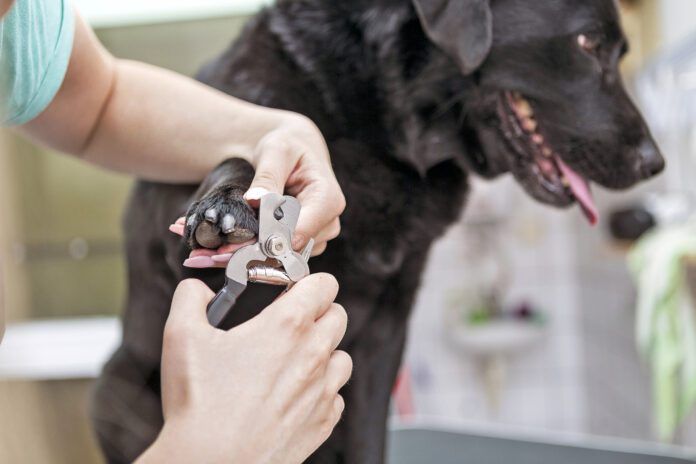
Learning to judge how far to cut back a nail is important, and black nails are especially difficult. Focus on the tapered part of the nail and err on the side of caution. Credit: Nastasic | Getty Images
Most dogs do not like having their nails trimmed, but with patience, they can learn to tolerate it. With a little practice, nail trimming can become a stress-free part of your regular grooming routine. We’ll get you started with the two primary methods for trimming nails and some tips for troubleshooting.
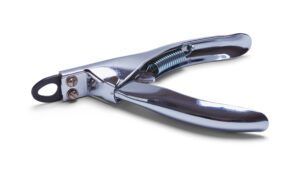
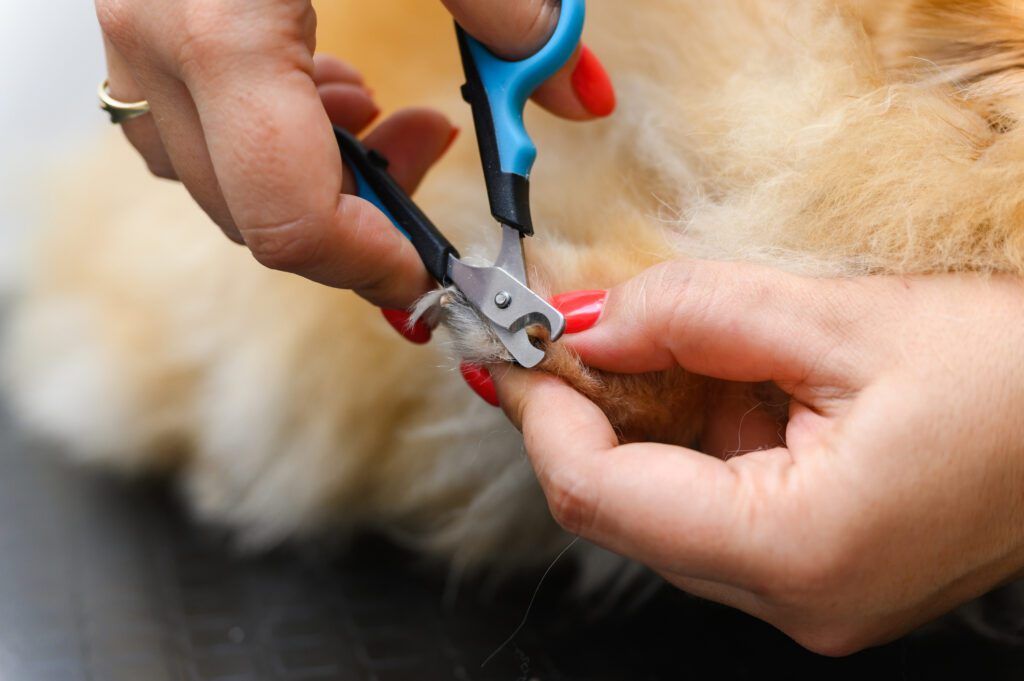
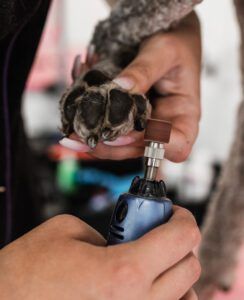
First, if you can hear the click-click of your dog’s nails when he walks across a floor, it’s time to trim his nails. The two most common tools used to shorten dog nails are clippers or nail grinders. Clippers come in several types (scissor and guillotine) and have the advantage of being quieter and less expensive. However, they can be unforgiving if the person doing the nail trim makes a mistake. Nail grinders, on the other hand, make it less likely to shorten dog nails too much—and create smoother edges—but their noise and vibration can be difficult for some dogs to tolerate.
At the end of the day, it’s all about finding which tool works best for you and your dog.
Tips for When Your Dog Won’t Let You Cut His Nails
Identify valuable rewards for your dog. Some dogs go ga-ga over peanut butter, others prefer cheese or hotdog bits. Some think playing tug or fetch is the best thing ever. Figure out what your dog LOVES and use that to pay him well at nail trim time.
Go slowly. It is far better to do one nail at a time and have your dog happy than fight through all of them.
Take just the tips. This limits any risk of hurting your dog and will help both of you get more confident. Trimming just the tips once a week will still get your dog’s nails under control over time.
If your dog suddenly flinches while grinding the nails, you probably hit the quick. Be less aggressive with the next nail.
Try different positions to see how your dog is most comfortable being still and how you can see what you are doing. Some options are standing on a secure table, lying on the couch, or lying upside down in your lap.
Get a helper to feed tiny treats or hold a spoon with peanut butter while you trim the nails.
Practice holding your dog’s feet every day for treats and teach tricks such as shake and high five.
How To Avoid Cutting a Dog’s Nail Quick
When trimming dog nails, the goal is to shorten the claw without cutting the sensitive quick in the middle. Credit: Sakurra | Getty Images
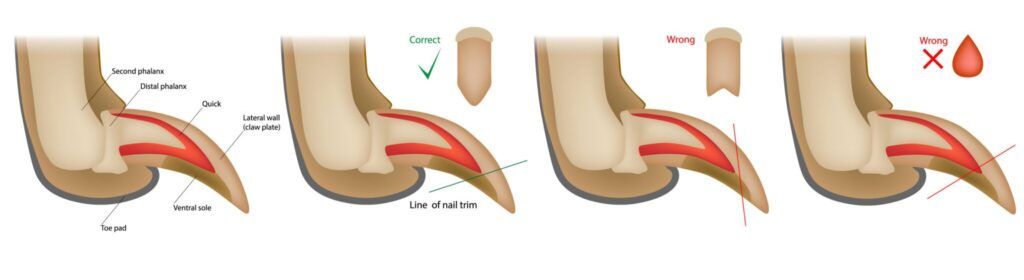
The main thing to watch out for when trimming dog nails is cutting the nail too short. Dog nails have a sensitive “quick” that, if cut, will cause pain and bleeding. The quick can vary in length—it tends to get shorter with regular nail trims—but typically does not extend much past the tapering curve at the tip of the nail.
If a dog has white nails, the quick will appear pink. However, it may be impossible to spot in black nails. Especially if you can’t see it, the best way to avoid cutting the quick is to start slowly and trim a little bit at a time. It’s better to do multiple small trims over the course of days or weeks to avoid a painful experience for your dog.
How To Cut Black Dog Nails
As noted above, it can be a challenge to avoid cutting the quick when trimming dark brown or black dog nails. Just like with lighter-colored nails, the key to cutting black dog nails safely is to start by trimming only a small amount of nail. Once the first cut is made, examine the newly trimmed nail tip.
In black dog nails, the quick typically appears grey or black while the surrounding inner layer of the nail is lighter in color. If you don’t see the quick, keep trimming very thin slices and checking the nail after each cut. Stop trimming as soon as the quick becomes visible.
If you do cut a nail too short and it starts to bleed, don’t panic. When trimming dog nails, it’s a good idea to have some styptic powder nearby. Styptic powder can be applied to the cut tip of the nail to help stop any bleeding. If the nail is still bleeding after 30 minutes, contact your vet.
How to Cut Dog Nails Using a Dog Nail Clipper
To use guillotine dog nail clippers, put the nail through the hole and squeeze the handles. This type of clipper can be good for getting through thick nails cleanly but it can be difficult to see where you are cutting. Credit: Michael Burrell | Getty Images
Before starting the nail trim, find a position that is comfortable for you and your dog. This may be putting your dog on a raised surface such as a grooming table or couch, sitting on the floor with him, or teaching him to lay flat on his side. There is no wrong way provided you can easily see (and reach) his nails and he is content.
Pick up the first paw and gently fold back any loose hair so you can clearly see the nail.
Identify where you are going to cut. For white nails, avoid the pink quick down the middle of the nail and just cut in solid white. For black nails, focus on the tapered part of the nail and not the wide base.
Clip in one smooth steady motion. Aim to cut the nail at approximately a 45-degree angle (see illustration above).
Praise and reward your dog.
Trim sharp edges if using scissor-type clippers.
Move on to the next nail.
Scissor-type dog nail clippers are easy to use but may not have enough force for thicker dog nails. Credit: O_Lypa | Getty Images
How To Trim Dog Nails with a Grinder
Nail grinders are great for preventing jagged nail edges and too-short trims but the noise and vibration can be too much for some dogs. Credit: Anna Dahlberg | Getty Images
Spend some time getting your dog used to the sound of the grinder. Give him treats while it is running, first a few feet away and then held close to his paws.
Touch the grinder to your dog’s nail and immediately praise and reward. Repeat several times so he associates the vibrating sensation with good things.
When ready to grind a nail fully, hold the grinder at a 45-degree angle to the nail. Apply light pressure so it files the nail back. Repeat on the other side of the nail to even it out.
Smooth out any rough or sharp spots so the nail tip is rounded.
Move on to the next nail (or take a break if your dog is new to this).
If your dog spends time in your garage, you need to be extra careful with what toxins he may encounter, such as antifreeze or rat poison. Lorado | Getty Images
You can give a dog activated charcoal to help with poisoning. Activated charcoal is a form of carbon that filters out toxins. It provides a surface that other substances can bind to, which how it helps in the case of toxins. Once bound to the charcoal, the toxin can’t be absorbed into the bloodstream and will pass out of the body in the feces.
Not all toxins bind well to activated charcoal, however. For example, acetaminophen (Tylenol) and digoxin (a heart-failure drug) bind well, but alcohol and ethylene glycol, such as is found in antifreeze, do not. It is often used when dogs ingest rat poison, which is common.
The first step if your dog ingests a potentially toxic substance is to call an animal poison-control center. Yes, there is a charge, but the staff are extremely well educated in poisons. Even veterinarians sometimes call these centers, so don’t be surprised if your own veterinarian recommends you contact a center.
The veterinarians and veterinary technicians staffing the poison-control center can tell you if giving activated charcoal makes sense. In some cases, it may be contraindicated, for example, if your dog is at risk of aspiration pneumonia. Call:
Giving activated charcoal is a challenge, which is a strong reason you may want to hustle to your veterinary clinic for help. It should ideally be given within an hour of ingesting the toxin. If your dog is already showing signs of poisoning such as tremors, it is too late as the toxin has already been absorbed.
The recommended dose of activated charcoal for your dog is about 1 gram per kilogram of body weight. It is messy to administer. While it can be given in powder or capsules, human studies show that it is most effective if given as a suspension (crushed and mixed with water). If you are lucky, your dog will eat it mixed with some very wet dog food (add water and make a slurry). In some cases, the veterinary clinic may decide to administer it to your dog via a tube directly to your dog’s stomach.
Some versions of activated charcoal come with a cathartic (laxative) such as sorbitol (a sugar alcohol). This type of activated charcoal should only be used for one dose, and your dog’s electrolytes and hydration status will need to be monitored.
To provide the best experiences, we use technologies like cookies to store and/or access device information. Consenting to these technologies will allow us to process data such as browsing behavior or unique IDs on this site. Not consenting or withdrawing consent, may adversely affect certain features and functions.
Functional
Always active
The technical storage or access is strictly necessary for the legitimate purpose of enabling the use of a specific service explicitly requested by the subscriber or user, or for the sole purpose of carrying out the transmission of a communication over an electronic communications network.
Preferences
The technical storage or access is necessary for the legitimate purpose of storing preferences that are not requested by the subscriber or user.
Statistics
The technical storage or access that is used exclusively for statistical purposes.The technical storage or access that is used exclusively for anonymous statistical purposes. Without a subpoena, voluntary compliance on the part of your Internet Service Provider, or additional records from a third party, information stored or retrieved for this purpose alone cannot usually be used to identify you.
Marketing
The technical storage or access is required to create user profiles to send advertising, or to track the user on a website or across several websites for similar marketing purposes.
This website uses cookies and other tracking technologies to offer you a better experience, personalize content and ads, and analyze our site traffic. Before proceeding, you agree to our Terms and that you’ve read our Privacy Policy. Update Settings
Functional
Always active
The technical storage or access is strictly necessary for the legitimate purpose of enabling the use of a specific service explicitly requested by the subscriber or user, or for the sole purpose of carrying out the transmission of a communication over an electronic communications network.
Preferences
The technical storage or access is necessary for the legitimate purpose of storing preferences that are not requested by the subscriber or user.
Statistics
The technical storage or access that is used exclusively for statistical purposes.The technical storage or access that is used exclusively for anonymous statistical purposes. Without a subpoena, voluntary compliance on the part of your Internet Service Provider, or additional records from a third party, information stored or retrieved for this purpose alone cannot usually be used to identify you.
Marketing
The technical storage or access is required to create user profiles to send advertising, or to track the user on a website or across several websites for similar marketing purposes.