Home Blog Page 289

Utilize Feeding Time as Training Time

[Updated August 18, 2017]

USING MEAL TIME FOR TRAINING OVERVIEW

  • Take advantage of mealtimes to train and reinforce appropriate behavior and give your dog a good association with your presence at his bowl.
  • Make sure all family members and visitors understand the importance of positive food bowl associations.
  • Carefully manage conflict around food bowls to avoid fighting between dogs or aggression toward humans.

You may think of it simply as a convenient vessel, useful for keeping your dog’s food gathered in one place, off the floor. Your dog probably has a very different perspective. For him, the bowl is likely to be a high value object of great import, especially if he’s a hearty eater. In this magical dish, one or more times a day FOOD appears.

Mealtime carries great significance for most dogs. It can be fraught with excitement, arousal, and stress. A wise dog owner understands the importance of mealtime and uses it to her advantage.
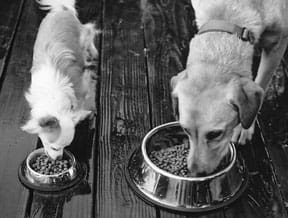
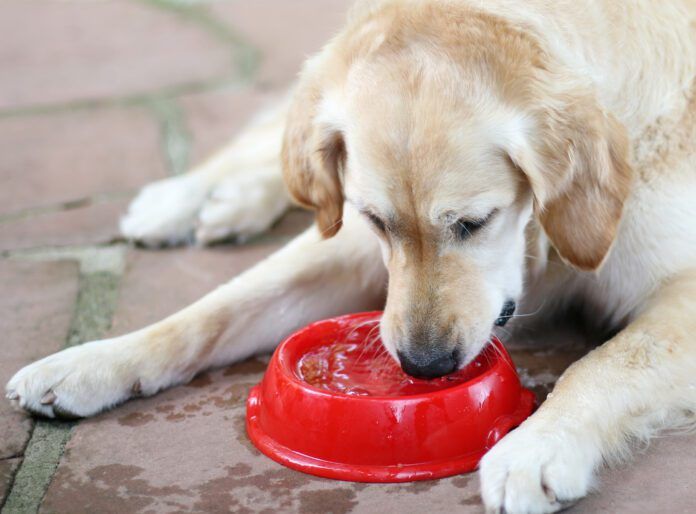
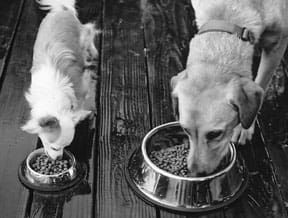
DOG EATING FROM BOWL

Your dog’s feeding ritual can be used to reinforce good manners, practice deference exercises, and encourage a positive association with food, food bowls, feeding, and the presence of humans in the vicinity of his hallowed feeding vessel.

If you just dump food in his bowl and depositing it on the floor, you miss a golden training opportunity – and you might actually reinforce undesirable behaviors.

Meals are the Best for Training “Wait”

Mealtime is a perfect opportunity for twice daily “Wait” training sessions, using two principles of operant conditioning: positive reinforcement and negative punishment. Positive reinforcement (dog’s behavior makes a good thing happen) occurs each time you say “Yes!” and feed a tidbit. Negative punishment (dog’s behavior makes a good thing go away) happens every time he gets up and you put the bowl back on the counter or lift it out of his reach.

1. Have your dog sit at his designated dinner spot. Tell him “Wait!” If he remains seated, say “Yes!” and feed him one tidbit from his bowl (which you have placed on a counter).

2. With your dog still sitting, say “Wait!” and lift his bowl off the counter. If he remains seated, say “Yes!” and feed him a morsel (positive reinforcement). If he gets up, say “Oops!” and place the bowl back on the counter (negative punishment). Repeat until he stays seated when you pick up his bowl.

3. With your dog still sitting, say “Wait!” Lower the bowl halfway toward the floor, one to two feet in front of him. If he remains seated, say “Yes!” and feed him a tidbit from the bowl. Raise the bowl several inches and repeat a number of times until you’re sure he’ll remain seated. If he gets up say “Oops!” and raise the bowl above the level of his head. Try again, and don’t lower it quite so far this time.

4. With your dog still sitting, repeat the “Wait” exercise until you can lower the bowl all the way to the floor without him getting up. When he’ll hold his sit with the bowl on the floor, tell him “Okay!” or “Get it!” and encourage him to eat.

Practice your dog’s “Wait” training every time you feed him. You’ll teach him a useful good manners behavior, and remind him at every meal that you’re the benevolent leader, controlling the good stuff, but happily sharing with him as long as he offers a deference behavior (sit) and minds his manners.

Meals VS. Free Feeding

I cringe internally when a client tells me she free-feeds her dog – that is, keeps the bowl on the floor filled with kibble all the time. I’m a strong believer in feeding meals for a number of reasons, in addition to the medical fact that a dog’s digestive system is designed more to gorge than to graze. There are numerous advantages to feeding your dog specific amounts of food at specific times:

• You can monitor intake. If you feed meals, you’ll know the instant Buster goes off his feed – sometimes the first sign that he’s not feeling well. If you just keep the bowl topped off, it may be a day or two before you realize he’s not eating.
• You minimize your dog’s opportunities to guard his food. If there’s always food in the bowl, your dog might just decide he needs to protect his valuable resource and the territory around it. If the food bowl is picked up when it’s empty, the feeding zone becomes more neutral.
• You can utilize feeding time as training time. Teach him good manners and impulse control by reinforcing a “Sit/Wait” behavior while you place the bowl on the floor, then give him the cue to eat (see “Wait Training” sidebar).
• You can take advantage of feeding time to reinforce your role as the higher-ranking member of your social group. You can’t be the “alpha dog” – your dog knows you’re not a dog – but you are a member of his social group. The leader controls the “good stuff,” and dinner is definitely “good stuff.” If food is available all the time, your dog controls it. If you, as benevolent leader, choose to share some of your food with him out of the goodness of your heart, and he performs a deference behavior such as sit or down to get you to share, you’re reinforcing a healthy relationship.
• You know when he’s full, and when he’s empty. Your training sessions are more likely to be successful if you train when your dog’s stomach is empty rather than full.
• You can use his meals as training treats. This is particularly useful for building a relationship with a dog who’s not convinced he needs you. If all good things, including meals, come directly from your hand, he’s more likely to decide you’re important in his life.
• You can control your dog’s weight. Is he looking a tad too prosperous? Cut back a few calories from his portions. Looking a little ribby? Add an extra half-cup to his bowl.
• You may spark his appetite. People with fussy eaters often make the mistake of leaving food out constantly. The dog grazes all day and never gets hungry, thus never gets eager for food. Offering food, leaving it down for 10-15 minutes, then picking it up, can teach a picky eater to take advantage when he can, or wait for the next meal.

If you have multiple dogs, free-feeding can be even more problematic. One dog may eat more than his share and plump up, while another dog goes hungry. You’re even less likely to notice if one dog is off his feed, since the other is still eating and the food’s still disappearing. Tensions may escalate around the bowl, and fights can occur.

Of course, there are plenty of dogs who can share food resources amicably. Yours might share nicely, but you still miss out on all the other benefits of meals.

The Dog Feeding Ritual

There was a time when trainers recommended following routines that supported the status of the higher-ranking dog in the pack. Feed the “alpha dog” first, they said, and move on down the line. That thinking has changed.

Since I’m the highest-ranking member of the social group in my home, I get to make the rules, and I can decide if the rules change. Today, I might choose to feed a lower-ranking dog first, and move up the line. Or start in the middle, and move toward the ends. Or randomly select appropriate behaviors to reinforce with the food bowl. Of course, since we now know that pack hierarchy is more fluid than once thought, I might be guessing wrong about which dog has the highest rank on any given day, but that doesn’t matter. I’m still the leader, and I get to decide with whom I share food, and when.

In my canine group, Katie the crazy Kelpie often obsesses about Tucker moving toward his food bowl. She’ll stand behind him and bite his hocks if he moves. To help him out, I may invite Katie to eat first so Tucker can walk to his bowl without torment.

Lucy, the year-old impetuous Corgi, is convinced she should always eat first, and can barely contain herself if I feed someone else before her. So, of course, I do, so she can practice her self-control lessons. If she waits calmly on her mat, she may be next. If she’s dancing and whining for her breakfast, her bowl is slow to arrive.

Katie, 13 and arthritic, and Tucker, who has bad knees, are no longer required to sit and wait for their bowls, but Lucy and Dubhy, the five-year-old Scottie, are still reminded each meal that good manners and deference behaviors make food happen.

You get to decide what your particular mealtime rules are, but in general, chaos is not acceptable, and calm is good. Perhaps all dogs go to their respective place mats and wait for dinner to arrive. Maybe they just have to sit, lie down, or stand around quietly to make food happen. Whatever your desired doggie dinner behavior, you can reinforce acceptable behaviors by continuing with your meal preparations when dogs are calm. If dogs get too excited, take a seat and read a magazine until calm returns, then continue on.

When Dusty the intrepid Pomeranian was still with us, he was convinced that barking made food happen. This is a classic example of “superstitious behavior,” where a dog believes that because a particular behavior – such as barking – occurred prior to an event of significance, that behavior can positively influence future outcomes, even though the two aren’t really connected.

In Dusty’s case we had to convince him that barking made food preparation stop, and quiet made food happen. We weren’t entirely successful; ultimately we simply resorted to an outcome wherein barking made Dusty end up outside, and quiet brought him back in to eat.

When Dogs Fight Over Food

Food guarding is a natural, adaptive survival behavior for dogs. In the wild, if a dog doesn’t lay claim to his valuable resources and defend that claim, he will likely starve to death. Wild canids who successfully defend their claims live to pass their genes on to their puppies.

While guarding from humans is a dangerous and unacceptable behavior, dogs should be able to reasonably protect their food from their canine peers. “Reasonably” means appropriate use of body language signals – some posturing, a glare or two, maybe even a raised lip. It doesn’t mean launching, lunging, biting, fighting, and/or causing punctures and lacerations.

If your multi-dog household erupts into all-out war during meals, it’s time for a serious management plan. Depending on the intensity of the conflict, you can:

• Feed in opposite corners of the room and play referee – making sure one dog doesn’t approach or threaten another, and picking up bowls when dinner’s over to remove the high-value, guardable object.
• Feed in opposite corners of the room and put all dogs on tethers to ensure they don’t threaten each other.
• Feed in different rooms with closed doors or baby gates in between to prevent conflict.
• Feed in crates, far enough apart that guarding isn’t an issue.

You may also want to try to modify the behavior. This is best done with the guarder tethered, and a second person handling the other dog so the interaction is controlled, while working your way through the following series of modification exercises.

Warning Signs of Dog Distress Over Food

It’s important that you recognize subtle signs of food bowl-related stress in your dog, as these are the precursors to more obvious signs of aggression. The sooner you can recognize your dog’s discomfort, the earlier you can intervene, prevent aggression from happening, and be more successful at modifying the behavior. Here are some subtle signs to watch for:

■ As you approach your dog at his bowl he stops eating and freezes, with his muzzle still buried in his food.

■ As you approach he gives you a “whale eye” – with his nose still in his bowl, he rolls his eyes at you so you can see the whites around the edges.

■ As you approach he eats faster.

■ As you approach he blocks you with his body and keeps eating, or tries to push the food bowl away from you.

Growling, snapping, lunging, and actually biting are more obvious signs of food-guarding. Some dogs will leap to the obvious signs without giving you more subtle warnings. Punishing subtle warning signs will make him less comfortable, and may suppress those signs so he jumps right to lunging and biting. Remember that your goal is to make him comfortable with you approaching his food. You can best accomplish this through a systematic program that changes his association with your presence at his bowl from “Uh-oh, she might steal my food,” to “Yay! More chicken!”

Modifying Guarding Behavior:

Series #1

• Step 1: With you standing next to Guarder, have the other person walk Dog #2 into the far side of the room on a leash. The instant Guarder notices the other dog, start feeding Guarder scrumptious treats, such as tidbits of chicken. When the other dog leaves, the chicken stops. You may want to have your “other person” feed treats to Dog #2 as well, to keep her attention focused on her handler, away from Guarder.

• Step 2: Repeat Step 1 numerous times, until the presence of Dog #2 causes Guarder to look happily to you for bits of chicken.

• Step 3: Gradually bring Dog #2 closer, watching for any stress/warning signs from Guarder (see “Warning Signs of Stress” sidebar).

• Step 4: Work at each new distance until you get a consistent “Where’s my chicken?” response from Guarder, then decrease the distance another increment.

Series #2

When Dog #2 can come close – say, within five feet of the end of Guarder’s tether – without eliciting stress/aggression signals from Guarder, go back and repeat Steps 1 through 4 with Guarder’s empty food bowl on the floor next to him.

Series #3

When Dog #2 can come close with the empty food bowl on the floor, repeat Steps 1 through 4, but this time drop the bits of chicken into Guarder’s empty bowl instead of hand feeding them.

Series #4

When Dog #2 can come close with chicken bits dropping into the bowl, repeat Steps 1 through 4, but this time start with some of Guarder’s regular food in the bowl on the floor, adding bits of chicken as Dog #2 approaches.

If you’ve done your work well, by the time you reach the end of Series 4, Guarder should understand that when Dog #2 approaches, it makes good stuff happen. Continue to referee off-leash interactions at feeding time, watching for the recurrence of stress signals from Guarder that may indicate more practice sessions are needed.

As with all aggressive behaviors, if you feel the risk to your safety (or your other dog’s safety) is high, or your modification work doesn’t improve the behavior, we recommend seeking the assistance of a qualified trainer/behavior professional.

Guarding from Humans

Dogs who guard their food from humans are a significant threat. If the only thing the dog guards is his food bowl, manage the behavior by feeding him in a separate room, with the door closed, and inviting him out before you go in to pick up the empty bowl. If he generalizes his guarding to other high-value objects, the risk increases by leaps and bounds, especially if you can’t predict what he may decide is valuable to him.

If you have a puppy, start early by associating your presence near his bowl with good stuff; drop yummy tidbits into his bowl as he’s eating, so he doesn’t feel threatened by your presence. Don’t allow family members to tease or torment him at the food bowl, and if he does exhibit signs of guarding, don’t punish! Punishment will only convince him that you’re a threat to his food – you have to work harder to convince him you’re not (see “Eliminate Aggressive Dog Guarding Behaviors,” WDJ September 2001).

Jean Donaldson’s excellent book, Mine!, offers a step-by-step program for modifying food-bowl guarding, but again, we advise you to heed the warning: If you feel the risk to your safety is high, or your modification work doesn’t improve the behavior, we recommend seeking the assistance of a qualified trainer/behavior professional.

Pat Miller, CBCC-KA, CPDT-KA, is WDJ’s Training Editor. She is also author of The Power of Positive Dog Training, and Positive Perspectives: Love Your Dog, Train Your Dog. Miller lives in Hagerstown, Maryland, site of her Peaceable Paws training center.

Caring For Your Pregnant Dog

0

by Randy Kidd, DVM, PhD Given the incredibly intricate and complex series of events that need to occur to produce living puppies, it is almost miraculous that any pups are ever born, but they are. And, more often than not, nature doesn’t seem to have many problems with the process. Following are some explanations for what goes on during and immediately after pregnancy. The length of pregnancy in dogs is a remarkably consistent 64 to 66 days – if we measure from the surge of luteinizing hormone (LH) that triggers ovulation. However, most pregnancies are not monitored by measuring blood hormonal levels, and if we start counting the days from a single mating, pregnancy may vary from 56 to 72 days – 63 days is the traditionally accepted norm.


Pregnancy can be diagnosed by manual palpation between days 20 and 35, but this method relies on the skill and experience of the one doing the palpation and his or her ability to discern discrete uterine enlargements (fetuses) from other lumps that occur in the abdominal cavity – the bladder, kidneys, and fecal accumulations in the colon, for example. After day 25, ultrasound is effective. Your veterinarian can take a blood sample and run an in-office test (serum relaxin assay) after day 30 to confirm pregnancy. Relaxin is a hormone that facilitates the birth process by causing a softening and lengthening of the cervix and the pubic symphysis (the area where the pubic bones come together). Relaxin also inhibits contractions of the uterus and may play a role in the timing of delivery. Toward the end of pregnancy the female will begin to produce milk (usually at about day 45), and many will begin to make a “nest.” During the 24 hours just prior to parturition (also known as whelping), a female’s progesterone level usually falls below the level required to support pregnancy (2 ng/ml), and this drop is responsible for a rectal temperature drop, to a mean of 98.8°F (range 98.1-100.0°F). Many breeders use this fall in temperature to predict whelping. Environment’s importance during pregnancy There are at least three outside variables that influence the intended outcome of healthy pups – variables that the bitch’s caretaker can influence: nutrition, nurturing, and paying attention to the healthy history of the parents. Nutrition is especially important. There are many studies that demonstrate the necessity of adequate basic nutrition during pregnancy, and studies that prove that inadequate nutrition results in smaller, less healthy offspring who have a propensity for developing a variety of diseases later in life. During the first four weeks of pregnancy, the fetuses don’t have a lot of weight gain; the mother’s caloric intake should be monitored to keep her from gaining weight during early pregnancy. The Association of American Feed Control Officials (AAFCO) recommends a minimum of 22 percent protein and 8 percent fat in the diets of pregnant and lactating females, especially during the last half of pregnancy. (Comparable figures for the “adult maintenance” diet are 18 percent protein and 5 percent fat.) According to AAFCO, pregnant females have the same needs for vitamins and minerals that adult dogs require for maintenance. Finally, and perhaps most importantly, implicit in any list of nutrient requirements is the absolute need to balance the nutrients. This is the biggest problem I see in the homemade diets used by my clients. For one reason or the other – usually it is something like, “Well, he just doesn’t like the veggies!” – folks will eliminate an important component of the diet, and by doing so, their home-prepared diet is no longer adequately balanced. Scientifically backed evidence for the importance of nurturing during pregnancy is a bit more difficult to come by, but we do know that there are some negative factors that adversely affect the health of the dam’s offspring. We know, for example, that excess stress (or the use of therapeutic corticosteroids) has a negative effect on the uterine environment; too much stress during development can produce puppies that are difficult to socialize, and too heavy a load of corticosteroids can actually cause abortion. We also know that moderate exercise during pregnancy is good for the development of healthy neonates. And, for the good of the neonates (and the bitch) it just makes sense that we try to provide a calm, loving, and healthy environment during the entire development period of the puppies. Every bit as interesting, from the holistic standpoint, is that recent studies have proven the importance of maintaining optimal health in the dam. It has been shown that a number of disease states can be transferred directly from the dam (or from several generations back), without being genetically transferred. “Prenatal programming” has been shown to occur in a variety of animals, including humans, and it involves the passing on of several diseases. During fetal development, there are critical periods of vulnerability to “suboptimal” conditions, and if the bitch is living under one of these conditions, the likelihood of passing on disease to her offspring is increased. But even more interestingly, the likelihood of problems being passed on to future generations – grand-puppies, great-grand-puppies, etc. – may also be enhanced. Conditions in the dam that result in proven problems for future generations include obesity or malnourishment, excess stress (or exposure to corticosteroids), diabetes, and asthma. It has recently been shown (in humans) that exposure to secondhand smoke may create an added propensity for asthma in the grandkids of the smoker – whether or not they, or their mothers, were smokers themselves. This is ongoing and fascinating research, and it lends credibility to the folks who want to raise puppies naturally, for the sake of many future generations. It’s my guess that we’ll continue to find connections to the health of the dam during pregnancy and the health of many future generations of her puppies. This puts me in mind of the Native American understanding that we need to be concerned about seven generations back and seven generations forward. Labor and delivery During the 6 to 24 hours before birth of the first pup, behavior changes in the bitch may include becoming reclusive, intermittently digging and nesting, panting and shivering, refusing to eat, and/or vomiting. Her vaginal discharge is clear and watery. This phase of normal labor, termed Stage I, is characterized by muscular contractions of the uterus that increase in frequency and strength, and dilation of the cervix. Stage II labor is marked by visible abdominal contractions that reinforce the efforts of the uterus in delivering the pups. Puppies may be born one at a time with a period of rest between each puppy, or several may be born relatively quickly. Pups may be delivered within intact membranes or attached to ruptured membranes. Membranes and placenta are typically eaten by the bitch; vomiting of placental material is common. We once thought that it was important for the bitch to eat her placenta, a rich source of nutrients and a source of the hormone oxytocin, which is necessary to help expel the placentas and to instigate milk flow. Later we learned that oxytocin is destroyed in the stomach, and most of the stimulation for oxytocin release comes from nursing puppies. Overly aggressive or overly concerned mothers may puncture the abdominal wall while attempting to chew through the umbilical cord. Calming flower essences or homeopathic remedies may be helpful here. Severed umbilical cords can be painted with tincture of iodine to help prevent infection. Vaginal discharge during active labor can be clear to hemorrhagic (bloody), or green (uteroverdin or biliverdin is a green pigment that comes from the breakdown of hemoglobin in the blood of the placenta). The interval between puppies (whether singletons or several-in-a-row) is generally less than 30 minutes, but it can vary from 15 minutes to several hours. Typically the bitch will continue to nest between deliveries and may nurse and groom puppies intermittently. Panting and trembling are common, and most laboring bitches refuse food. A litter of 6 to 8 pups can require 4 to 18 hours or more; however, a normal and healthy delivery is typically associated with shorter total delivery time and shorter intervals between puppies. Uterine inertia is treated by administering oxytocin and/or calcium-containing fluids; alternately homeopathic or herbal remedies or acupuncture treatments may be used to hasten a slow delivery. During Stage III labor, the remaining placentas are passed. Most bitches vacillate between Stage II and III until the delivery is complete – that is, puppies and placentas are usually delivered alternately, with no set pattern of delivery. Preventing problems Encourage your pregnant female to deliver in a familiar area where she will not be disturbed. Unfamiliar surroundings or strangers may impede delivery, interfere with milk letdown, or adversely affect her maternal instincts. This is especially true with young or primiparous animals (bearing or having borne but one litter). A nervous dam may ignore the neonates or give them excess attention. A dam’s apprehension or nervousness may subside in a few hours, but in the meantime the pups must receive colostrum and be kept warm. It is normal for a female to have a reddish-brown to black odorless discharge (called lochia) for a few days to several weeks after giving birth. Some folks may want to have their vet palpate or X-ray the female to ensure that all pups have been delivered. The neonates should be weighed accurately (cooking or postal scales that weigh in ounces are effective) as soon as they are dry and then daily for the first week. Any weight loss after the first 24 hours could indicate a serious problem – supplemental feeding, assisting the bitch with nursing, or evaluation for possible infection or other problems may be indicated. Although times may vary, obvious mammary development usually occurs by day 45 of pregnancy, and obvious milk secretion normally begins at or after parturition. Suckling induces the release of hormones necessary for inducing lactation, including oxytocin and prolactin. Lactation lasts about six weeks, with the dam encouraging weaning beginning at about week four or five. Producing milk increases the bitch’s caloric needs three to four times. During the last few weeks of lactation, she may also need calcium supplementation, which can be provided with cottage cheese or yogurt or a balanced vitamin/mineral supplement.


Colostrum is the milk secreted during the first few hours after birth. It is nutrient-rich, and contains whatever immunoglobulins the bitch is carrying at the time. It is thus the source of the puppies’ immunity to infectious disease for the first several weeks of life. For this reason, it is very important to insure that all pups receive an initial feeding of colostrum within a few hours after birth. Also, the production of colostrum may last for a few days, but the pup’s ability to absorb it may only be hours long. Feedings will begin at every few hours, throughout the day and night, and gradually decrease in frequency. By the third week, pups should be introduced to a supplemental food source. If they are going to be fed commercial food, their first “mash” should be a mixture of milk replacer, puppy food, and water, blended into the consistency of human infant cereal. In the same time frame, people who feed their dogs a home-prepared diet will start offering the pups raw, meaty bones to lick and chew. (See “Raw-Fed Puppies,” WDJ December 2003.) Problems of pregnancy, labor, and lactation The most important cause of abortion in dogs is brucellosis, which has been discussed in past installments. Other causes of abortion run the gamut and include a variety of infectious agents, an improper uterine environment (inadequate nutritional level, for example), and trauma. False pregnancy (pseudopregnancy, pseudocyesis) is a fairly common occurrence in dogs, making intact and even some spayed females look and act like they are pregnant when they are not. These females may exhibit mammary development and even produce milk, and may demonstrate “mothering” behaviors such as nesting and treating toys as if they were living pups. Most vets recommend no treatment because the condition usually resolves itself in one to three weeks; the only drug currently approved for treatment of false pregnancy (the progestin, megestrol acetate) may cause pyometra. If the mammary glands seem painful, alternating cold and warm compresses may alleviate the discomfort. For the overly anxious bitch, consider herbal tranquilizers, homeopathic remedies, and/or calming flower essences. Dystocia is the term used to describe abnormal labor or parturition. It can be caused by uterine inertia, pelvic canal abnormalities, oversized or poorly aligned fetuses, or any combination of these. Uterine inertia that develops after the delivery of one or more neonates (secondary inertia) is the most common cause of dystocia. Treatments include calcium and oxytocin. Note that it is important that the timing and dosage of these drugs is critical to their success. Alternative treatments include homeopathic remedies and acupuncture. Neonatal deaths are not uncommon for puppies kept under even the most stringent levels of care; reported average neonatal mortalities range from 15 to 25 percent. The most common metabolic disease of the postpartum bitch is eclampsia; common inflammatory diseases include metritis (often from a retained placenta or fetus) and mastitis. Eclampsia (also known as puerperal hypocalcemia, postpartum hypocalcemia, periparturient hypocalcemia, and puerperal tetany) is an acute, life-threatening condition seen at peak lactation, two to three weeks after whelping. Small breed bitches with large litters are most often affected. Hypocalcemia may also occur during parturition and may be a cause of dystocia. Supplementation with oral calcium during pregnancy may actually predispose to eclampsia during peak lactation; excessive calcium intake during pregnancy causes a down-regulation of the calcium regulatory system, which can subsequently produce clinical hypocalcemia when calcium demand is high. The typical bitch affected with eclampsia has been healthy during early lactation, and the neonates have been thriving. Early clinical signs of eclampsia include panting and restlessness. Mild tremors, twitching, muscle spasms, and gait changes (stiffness and ataxia) result from increased neuromuscular excitability. Behavioral changes such as aggression, whining, salivation, pacing, hypersensitivity to stimuli, and disorientation are frequently seen. Bitches may become hyperthermic from panting and tremors, and increased heart rates, excessive drinking and urinating, and vomiting may occur. Severe tremors, tetany, generalized seizure activity, and finally coma and death may occur. Eclampsia can be difficult to differentiate from other diseases (such as hypoglycemia, epilepsy, encephalitis, or toxicosis), so whenever the bitch appears to be having nervous system symptoms, alert your vet. Intravenous calcium therapy should produce muscular relaxation and clinical improvement within 15 minutes. Follow-up treatments will likely include more calcium administered subcutaneously, and then oral calcium and vitamin D supplementation. Once a bitch has eclampsia, she is likely to have it again in subsequent pregnancies. Prevention consists of an appropriate diet during pregnancy and lactation – that is, a high-quality, nutritionally balanced diet with no additional calcium supplementation. Food and water should be provided without limit during lactation, and puppies should be supplemented with milk replacer early in lactation and with solid food after three to four weeks of age. Calcium supplements may be appropriate for the bitch during peak milk production, especially for one with a history of eclampsia. Homeopathic veterinarians have reported some success preventing eclampsia by using a low potency of one of the calcium salts during the later stages of pregnancy and up through lactation. Corticosteroids lower serum calcium, and may interfere with calcium intestinal absorption and increase urinary calcium loss. Thus, for several reasons they are contraindicated at any time during pregnancy and lactation. Mastitis is inflammation of the mammary gland(s) associated with bacterial infection. It may be localized in one gland or within multiple glands, and is caused by a number of bacteria, commonly E. coli or staphylococcal species. Conventional treatment consists of antibiotics; realize that whatever antibiotics used will appear in the milk and be ingested by the puppies. Alternative treatments include acupuncture, homeopathic, and herbal remedies. (Homeopathic remedies and acupuncture have both been shown to be effective when treating dairy cows, a species where mastitis is very common.) Prolonged delivery, dystocia, and/or retained fetuses or placentas may lead to metritis, infection of the uterus. There is usually a purulent discharge from the vagina, and a variety of bacteria have been isolated from infections. Affected bitches are usually depressed, feverish, and lethargic, and they may refuse to eat. Pups may also show signs of restlessness, and they may cry incessantly. Metritis can lead to severe systemic illness that requires stabilization of the bitch with fluids along with antibiotics and other supportive care. Pyometra is a hormonally mediated disorder characterized by cystic growth of endometrial tissue with secondary bacterial infection. It is reported primarily in older bitches, more than five years old, and it typically occurs four to six weeks after estrus. It is often associated with the administration of long-lasting progestational compounds that are used to delay or suppress estrus, or to the administration of estrogens meant to cause abortion in mismated bitches. Infections after breeding may also be a cause. Symptoms are variable and may include lethargy, refusal to eat, dehydration, and excessive drinking and urinating. Sometimes the cervix is open during the infection, and in this case there will be a mucopurulent vaginal discharge; if the cervix is closed, there will be no discharge. Only about 20 percent of affected bitches run a fever, but some go into shock. The results of a complete blood count can vary. The kidneys may indicate temporary signs of failure. Ultrasound or radiography will confirm the condition. Pyometra is common enough that it should be considered any time an illness exists in an intact female, especially if the illness occurs about a month after estrus or after employing hormone treatments. Ovariohysterectomy is the treatment of choice; medical management is possible, but it may prove to be difficult and costly. Mammary tumors are a common occurrence in female dogs – about three times more common than in women. They comprise about 50 percent of all tumors that occur in female dogs. The exact mechanism of their causation is unknown, but hormones may play an important role. Obesity has been implicated as a contributing factor. Mammary tumors are most frequent in intact bitches. Ovariectomy before the first estrus reduces the risk of mammary tumors to 0.5 percent of the risk in intact bitches; ovariectomy after one estrus reduces the risk to 8 percent of that in intact females. It is assumed that neutering the bitch after maturity leaves her with the same risk as intact bitches, and although it is often recommended to spay the bitch at the time of tumor removal, the true impact of this recommendation is unknown. More than 50 percent of canine mammary tumors are benign. However, since it is often difficult to determine the degree of malignancy of a mammary tumor, from a practical view, all of them should be treated as potentially malignant. Surgical excision is the treatment of choice. Attempts at chemotherapy have not proven to be consistently helpful. Alternative remedies such as acupuncture and/or homeopathy have also been used, with variable success. Prognosis depends on several factors, including the size of the tumor, its spread to other tissues, and the potential for malignancy. Most mammary tumors that are going to cause death do so within a year. Since mammary tumors can be life-threatening, and since they are fairly effectively prevented by early spaying, this is one more reason to have your female dog spayed at an early age. Alternative therapies Acupuncture, homeopathic, and herbal remedies have been used for thousands of years to enhance pregnancy, ease the birthing process, stimulate lactation, and treat diseases of the female reproductive tract, the pregnant female, and the pups. Historically, many herbs have been used to cause abortion, so it is important to check with a holistic practitioner before using any remedy, natural or otherwise, during pregnancy. Perhaps the Big Momma of all alternative remedies for pregnant females is the homeopathic remedy, pulsatilla. Practitioners use it to prevent premature birth, ease birthing, calm mothers during whelping, help pass placentas, and instigate lactation. I’ve been so impressed with it I routinely recommend it for all mothers – dogs, cats, horses, donkeys, pigs, etc. – at a medium potency of perhaps 30c three times, 12 hours apart, beginning shortly after birth or during birth if there is any difficulty encountered. -Dr. Randy Kidd earned his DVM degree from Ohio State University and his PhD in Pathology/Clinical Pathology from Kansas State University. A past president of the American Holistic Veterinary Medical Association, he’s author of Dr. Kidd’s Guide to Herbal Dog Care and Dr. Kidd’s Guide to Herbal Cat Care.

Download the Full July 2005 Issue PDF

To continue reading this article or issue you must be a paid member.

Join Whole Dog Journal

Get full access to Whole-Dog-Journal.com – more than 4,000 articles – for just $20.
Join today and save 30% off our full price.
Already a member?
| Forgot your password? | Activate Web Access

Watch Out for a Misdiagnosis of Chronic Kidney Disease in Dogs

This is a quiz. When a laboratory test performed on your dog’s blood shows elevated blood urea nitrogen (BUN) and creatinine levels that indicate kidney problems, the most likely cause is:

A) chronic renal failure (CRF)
B) a bacterial infection
C) a tick-borne disease
D) an endocrine imbalance
E) a urinary tract infection

If you guessed A, you’re not alone. For many conventional veterinarians, this one’s a no-brainer. When BUN and creatinine levels are higher than normal, many American vets assume the cause is chronic renal failure (CRF), and often all they prescribe is a low-protein dog food (see “When to Say No to Low Protein“).


But the patient may not have chronic renal failure at all. Instead, a bacterial infection like leptospirosis, a tick-borne disease like ehrlichiosis, an endocrine imbalance like Addison’s or Cushing’s disease, or a urinary tract infection may cause the elevated readings.

If that’s the case, time is of the essence. Your dog may need medical treatment RIGHT NOW, and every moment you lose to a misdiagnosis can cost him his life.

“Dogs that suddenly go into kidney failure may have an acute disease that is curable,” says San Francisco Bay Area canine health researcher Mary Straus. “I hear over and over again about dogs being diagnosed with chronic kidney failure and given nothing but a bag of k/d to take home when in fact they had a serious but treatable illness that caused elevated kidney values. If these dogs had been diagnosed early enough, their veterinarians could have given them appropriate treatment, and their lives might have been saved.”

Acute Renal Failure in Dogs

Unlike chronic renal failure, which is a progressive illness that can take years to develop, acute renal failure is a crisis involving the sudden loss of kidney function. It can be caused by a number of health disorders, such as infection, toxins or chemicals (including many medications), and any illness that damages the kidneys or interferes with kidney function.

The most common cause of acute renal failure is exposure to a toxin, such as antifreeze, rat poison, certain antibiotics, heavy metals, nonsteroidal anti-inflammatory drugs (NSAIDs), or ingesting large amounts of grapes or raisins.

Be sure to report any such exposure, or the possibility of exposure, to your veterinarian. The fast and accurate identification of a toxin your dog ingested can make the difference between life and death. It is also important to consider all drugs that your dog is currently taking, and check the package inserts to see if renal failure is a possible side effect. “Some dogs on NSAIDs develop symptoms of kidney failure without their vets realizing that the drugs should be stopped,” says Straus.

Bacterial infection, such as from leptospirosis, can also cause acute renal failure. This type of infection will not show up on a urinalysis or urine culture. But it’s still a good idea to do a urinalysis and culture for all dogs with elevated creatinine and BUN levels, says Straus.

“Urinary tract infection can cause elevated kidney values if the infection ascends into the kidneys,” she says. “Infections are also common in dogs with chronic renal failure. A urine culture should be done to rule out infection, as approximately 20 percent of urinary tract infections will not show up on a urinalysis alone.

“Any time a dog, especially one that’s young or middle-aged, becomes acutely ill or suddenly develops signs of kidney failure, you have to look for the cause. It can be something the dog may have gotten into, a drug he’s taking, a simple infection, or an unsuspected illness. It probably isn’t chronic renal failure, as the symptoms of that disease develop slowly.”

When Leptospirosis Looks Like Kidney Failure

In the fall of 2003, Texas resident Lew Olson’s 15-month-old Rottweiler, Bean, became listless, lost his appetite, urinated often, and had a constant craving for water.

“I took him for routine tests, which included a complete blood panel and urinalysis,” Olson says. “Because Bean already had kidney problems, as soon as the tests showed that his kidney values were suddenly quite high, our veterinarian assumed that he would soon die from chronic renal failure and that nothing could be done to save him.”

Luckily for Bean, Olson refused to accept this diagnosis. While she searched frantically for answers, Bean began to dehydrate. He lay curled in a ball and had a slight fever. “That’s when we started IV fluid therapy,” she says. “We also ran a series of lab tests that included a tick disease panel and fungal panels. All came back negative.”

Olson searched the Internet for any illness she could find that matched her dog’s symptoms. “One thing started popping up over and over, and that was leptospirosis. However, all the sites I found talked about elevated liver enzymes, which did not show up on Bean’s blood panel results.”

Then eight-year-old Striker, another of her 16 Rottweilers, became sick with the same symptoms. “I went back to researching leptospirosis and found that there are nine different strains, two of which do not affect the liver but have a delayed reaction in attacking the kidneys.”

Olson quickly asked for blood titer tests for leptospirosis. “The test takes several days,” she says, “so we went ahead and started both dogs on penicillin, which is the treatment of choice for lepto. We also continued the IV therapy, as keeping an affected dog hydrated is paramount in treatment.”

Both Bean and Striker tested positive for leptospirosis. “My veterinarian was shocked,” Olson says, “but I was relieved to know that we now had a diagnosis and a protocol for treatment.”

Olson posted her dogs’ story online to help others understand leptospirosis. “Most veterinarians are familiar with the two most common forms of this disease,” she explains, “but the newer strains are often missed and simply seen as CRF.”

Olson receives e-mail messages every week from people whose dogs are diagnosed with CRF but show symptoms suggesting leptospirosis. “At least 50 percent of these dogs test positive for lepto,” she says, “and many are saved. Lepto is becoming an epidemic, but few veterinarians recognize it or call it anything other than CRF. I know of cases in almost every part of the United States and some in Canada. It’s a shame because of all the illnesses that are confused with chronic renal failure, lepto is the easiest to treat if it’s caught in time.”

Leptospirosis is spread by squirrels, rats, and other wild and domestic animals, usually through contact with infected urine. One strain, Leptospira canicola, used to be called “lamp-post disease” because city dogs, especially males, were said to infect themselves by sniffing around lamp posts soaked with the urine of infected dogs.

Dogs can also be exposed by drinking stagnant water containing infected urine or through close contact with an infected animal. Males, because of their personal habits, and dogs with immune system disorders are most at risk. Surprisingly, younger dogs are more likely to be infected than older dogs, though dogs of all ages and either sex can get the disease.

Leptospirosis is most common in the spring and fall or any rainy season. Leptospira bacteria cannot survive when temperatures are below freezing or above about 80oF. The incubation period is 4 to 12 days.

Symptoms vary depending on the infected animal’s age and condition as well as the strain involved. Leptospirosis can generate fever, dehydration, loss of appetite, vomiting, thirst, rapid weight loss, fetid breath, red eyes, tenderness or pain in the abdomen or joints, lack of energy, and depression. Some strains produce elevated liver enzymes and possibly symptoms of jaundice. Progressive kidney failure accompanies the infection, but kidney function can return to normal soon after recovery. Severe leptospiremia produces fevers up to 104o to 105o F, shivering, shock, and death.

Because the leptospirosis titer test is time-consuming and may not be accurate, especially during initial infection, most experts recommend immediately treating the disease based on its symptoms and verifying the diagnosis when results are available. Most dogs show some but not all of the symptoms listed above. Some show only increased drinking and urination, combined with low urine specific gravity. Because leptospirosis is far more common than most people and vets realize, whenever symptoms of kidney disease develop suddenly, presumptive treatment for lepto may be a good idea.

Leptospirosis was once called “lamp-post disease” because dogs contracted it through contact (sniffing) the urine of an infected dog. Recently, new strains of the disease have appeared – strains that may not be detected by standard tests.

Treatment includes intravenous fluids to prevent dehydration and keep the kidneys functioning well. Both of Lew Olson’s dogs were on IV therapy for five to seven days. Penicillin is generally recommended for three weeks, followed by two to three weeks of doxycycline, an antibiotic that stops infecting bacteria from being shed and transmitted in the dog’s urine.

Leptospirosis vaccines are available, but they do not cover all strains, and protection only lasts a few months. Even recently vaccinated dogs can become infected with leptospirosis.

Ehrlichiosis Can Look Like Kidney Failure

Last winter in Washington, DC, Amy Mall’s four-year-old mixed breed, Louie, started showing minor symptoms.

“One was that he needed to go out a little earlier in the morning,” Mall recalls. “I completely ignored this. Then he started getting very picky about food. This was a 75-pound powerhouse who ate everything in sight. I called my vet and said he was acting finicky, and she said to just keep trying new things, and if he wouldn’t eat anything at all to bring him in.

“One morning I saw him shivering, and I took him to the vet straight away. She did blood tests and called me to say his kidneys were failing. She sold me a bag of k/d dog food and said there was nothing else to do for him. Luckily, she also said that if I really wanted to, I could go see a specialist.”

The next day, the specialist put Louie on antibiotics and tested him for possible illnesses. The test for ehrlichia, a tick-borne infection, came back positive.

“I wish the first vet had known that picky eating was a possible symptom,” says Mall, “or asked me if I had noticed any other changes, like his needing to go out earlier in the morning. I kick myself for not being more assertive, but I just didn’t know. I’m lucky to have access to a specialist, but I think most of my vet’s clients would have just taken the k/d and watched their dogs die. Unfortunately, my dog died, too, as I did not catch the ehrlichia early enough.”

Courtney Alieksaites of Dallas, Texas, was more fortunate. Last November, her Miniature Dachshund puppy, Napoleon, developed a high fever and was hunched over in pain. “He was diagnosed with a fever of unknown origin, treated with antibiotics, and kept on intravenous fluids for three days,” she says. “Finally, the fever broke, and he got better.”

In February, the same symptoms returned, though less severely. When Napoleon arrived at the clinic, a new veterinarian reviewed his chart and on the basis of previous blood tests prescribed a low-protein food.

Napoleon, a Miniature Dachshund puppy, was misdiagnosed with chronic renal failure. After his owner insisted on a test for a tick-borne disease, Napoleon was correctly diagnosed and successfully treated for ehrlichiosis.

“I was trying to make sense of this,” says Alieksaites, “so I went online and started asking questions. When I described Napoleon’s symptoms, several people suggested that we have him tested for ehrlichia. The test came back positive. I’m so glad I persevered and looked for answers that went beyond chronic renal failure and k/d dog food. We go to a different clinic now, and since Napoleon was treated for ehrlichia, he’s been back to his favorite activities, which are eating all his favorite foods and snuggling on my pillow.”

Of the diseases transmitted by tick bites, ehrlichiosis is the most likely to be confused with chronic renal failure. It is caused by Ehrlichia, a member of the rickettsiaceae family of organisms similar to bacteria. Dogs can become infected with several species of Ehrlichia, but E. canis is the most common and causes the most severe illness.

The disease was not well understood until ehrlichiosis infected hundreds of military dogs returning from Vietnam, giving it the names “tracker dog disease” and “tropical canine pancytopenia.” German Shepherd Dogs and Doberman Pinschers seem particularly vulnerable. Dogs testing positive for E. canis have been identified throughout the U.S., with most concentrated where the brown dog tick is common, such as in the Southwest and along the Gulf coast.

Eight to 20 days after a bite from an infecting tick, a dog experiences the acute phase of ehrlichiosis, which produces fever, swollen lymph nodes, breathing problems, weight loss, bleeding disorders, and in some cases, neurological disturbances. Symptoms can be obvious or so mild that they go unnoticed. This phase usually lasts two to four weeks.

In the subclinical phase of infection, the organism remains present without causing obvious symptoms. If their immune systems are strong enough, dogs may be able to keep the organism in check for months or years before stress, illness, or treatment with steroids weakens the immune system, allowing the infection to become active again. When that happens, dogs enter the chronic stage of infection.

Mild chronic ehrlichiosis causes weight loss and indistinct, elusive indications of illness. Severe chronic ehrlichiosis causes anemia, decreased platelets resulting in bleeding episodes, limping or lameness, eye hemorrhage, neurological problems, swollen legs, severe weight loss, and, eventually, bone marrow failure, an inability to manufacture the blood cells needed to sustain life.

Ehrlichiosis is difficult to diagnose in its earliest stages because antibody tests typically come back negative. It takes the immune system two to three weeks to respond and develop antibodies, which is why a diagnosis made soon after a tick bite can’t be confirmed until the test is repeated weeks later. When tick disease is suspected, presumptive treatment to see if the dog improves can confirm that the treatment is appropriate.

Dogs experiencing severe anemia or bleeding problems may require a blood transfusion. Doxycycline is the drug of treatment, but another tetracycline drug may be used for dogs unable to tolerate doxycycline. Conservative treatment lasts for 10 to 30 days, but veterinarians working in the field prefer to treat with 5 mg doxycycline per pound of body weight every 12 hours for two months, as this protocol results in fewer recurrences of the disease.

“It is very dangerous to give steroids to a dog with tick disease,” says Mary Straus, “because steroids suppress the immune system and make the dog more vulnerable to the infection. Steroids are sometimes used when immune mediated hemolytic anemia is present, but they must be given concurrently with antibiotics. If a dog develops symptoms of kidney disease following any treatment with corticosteroids, tick disease should be suspected.”

Because tick-borne diseases imitate many illnesses, it’s a good idea to test for them whenever treatment for what seems to be the causative factor is ineffective.

Four-year-old Louis succumbed to ehrlichiosis. Initially diagnosed with kidney disease, he received treatment for the tick-borne disease too late to save his life.

It Might Be Addison’s Disease

Two years ago, a three-year-old Nova Scotia Duck Tolling Retriever belonging to William Smith in California (names have been changed) showed elevated BUN on routine blood work.

Two months earlier, Dux’s diet had been switched from commercial food to a home-prepared raw diet. Smith was told to reduce the diet’s protein levels, which he did, but Dux began to experience lethargy, loss of appetite, severe weight loss, and, eventually, vomiting. Repeat blood work showed even higher BUN, along with elevated phosphorus and potassium.

Dux was treated by three veterinarians, all of whom disapproved of his diet. “The holistic vet said to add more vegetables to his food so that he wouldn’t eat so much protein,” says Smith. “The conventional veterinarian didn’t like the raw diet at all and blamed Dux’s elevated BUN count on his new food. The third vet said to stay with conventional Western medicine until his condition stabilized.”

But what was Dux’s condition? Only after Smith pushed for a definite diagnosis and insisted on an ACTH Stimulation test, based on Dux’s elevated potassium and low sodium/potassium ratio, did he learn that his dog had Addison’s disease, not chronic renal failure.

In canine Addison’s disease (hypo-adrenocorticism), the dog’s adrenal glands produce too little cortisol. Its main symptoms include loss of appetite, weight loss, lack of energy, weakness, vomiting, diarrhea, and dehydration. Some cases involve blood in the stool or vomit, excessive thirst or urination, hair loss, and shaking or tremors. Most dogs show only some of these symptoms, which may come and go over time. Eventually, the dog may collapse in shock with what is called an Addisonian crisis, which is fatal without treatment.

An estimated 70 to 85 percent of dogs with canine Addison’s Disease are female, and most are between four and seven years old. Great Danes, Labrador Retrievers, Nova Scotia Duck Tolling Retrievers, Portuguese Water Spaniels, Rottweilers, Standard Poodles, West Highland White Terriers, and Wheaten Terriers seem to be affected more than other breeds. However, dogs of either sex and of all breeds and ages can develop Addison’s disease.

Addison’s is treated with hormone medication that supplies what the adrenal glands can no longer produce.

When Cushing’s Disease Looks Like Kidney Failure

Canine Cushing’s disease, or hyperadrenocorticism, is often mistaken for the aging process because it usually occurs in older dogs who lose their hair, gain weight, urinate in the house, and seem to experience neurological changes.

Cushing’s disease is the opposite of Addison’s, for here the body produces too much cortisol. The underlying cause is usually a pituitary or adrenal tumor, although veterinary treatment with steroid drugs can cause similar symptoms.

The average canine Cushing’s patient is 10 years old and spayed or neutered. While all breeds are at risk, Poodles, Beagles, Boston Terriers, Boxers, Cocker Spaniels, Dachshunds, German Shepherd Dogs, Golden Retrievers, Labrador Retrievers, Australian Shepherds, and small Terriers are most susceptible.

Increased or excessive water consumption and urination, urinary accidents in house-trained dogs, increased or excessive appetite, a sagging or bloated appearance, lethargy, hind-leg weakness, excessive panting, hair loss or a dull, dry coat, and easily damaged skin are a few of the most common symptoms. Treatment depends on the underlying cause of the illness as well as the patient’s overall health.

Elevated BUN Levels Might Not Be Anything At All

Some dogs are diagnosed with kidney disease based on nothing other than a slightly elevated BUN. Mildly elevated BUN can be caused by a recent meal or by minor dehydration. If your dog’s creatinine and urine specific gravity are normal, your dog does not have kidney disease. It is best to do blood work after fasting your dog for at least 12 hours and to test urine specific gravity with the first catch of the day for accurate results.

Any unusual blood test results can be frightening, but knowledge is power. Learning about leptospirosis, ehrlichiosis, Addison’s disease, Cushing’s disease, and urinary tract infections can help you notice and keep track of important symptoms, ask the right questions, request the right tests, avoid misdiagnosis, and obtain the right treatment to keep your best friend happy and healthy for years to come.

KIDNEY FAILURE IN DOGS: OVERVIEW

1. If your dog suddenly develops symptoms of kidney disease, look for the cause instead of assuming chronic renal failure.

2. Blood work abnormalities (in addition to elevated creatinine and/or BUN) may be clues. Discuss them with your vet.

3. Mention all of your dog’s abnormal behavior and health to your vet; any clue might further a correct diagnosis.

4. Get a second opinion or see a specialist if needed.

The Female Dog’s Reproductive System

By Randy Kidd, DVM, PhD The female dog’s reproductive system is the “nest” that nurtures a simple union of two single cells into a weave of billions of intercommunicating cells, which then form into organ systems and ultimately unify into the whole organism we call “dog.” We’re talking about the act of creation, the production of entire litters of living, breathing, best friends of mankind. It’s an amazing, powerful, complex system. And as with the male dog’s reproductive system, very small alterations in the balance of any one of the female functions involved with reproduction can produce profound results throughout her body. Anatomy and physiology of the female dog The vaginal vestibule, a short entryway into the vagina, is oriented at a 60-degree angle to the horizontal (upward, toward the spine, and forward, toward the head). Thus, to pass a speculum or catheter into the vagina requires that it be initially oriented at this upward angle, and if a female needs assistance expelling a puppy from the pelvic canal, best results are obtained when gently pulling in this mostly-downward direction. Just cranial to the vestibule lies the vagina, which is oriented horizontally in the standing female. The vagina terminates at the cervix, an organ that separates the vagina from the uterus, which is a Y-shaped organ in the bitch. In a normal pregnancy one or more fetuses will develop in each of the uterine horns. Each horn of the uterus terminates in a tortuous uterine tube (oviduct), which then expands into a bursa that completely enfolds the ovary. The ovary is the site for production of the ovum and a variety of hormones including the estrogenic compounds (primarily estradiol-17 Beta) and progesterone; other hormones, including testosterone, are also produced in the ovary. In last month’s article on the male dog reproductive system (“All Male Review”), we discussed the vomeronasal organ and its ability to sense the sex-related pheromones that are emitted by an animal in heat. The vomeronasal organ in most species (including the human species) is composed of two short tubes with tiny, slit-like openings into the nares, tucked away just below the floor of the nose. They are processing centers for pheromones. Females also have the vomeronasal organ, and while pheromones don’t seem to have the profound driving effect that they have on the male of the species, they are still an important component of the breeding cycle. In many species the females in the herd or colony will come into heat only in the presence of a male (or in the presence of something that is redolent with his male odor). Some bitches will not display any outward signs of heat until a male dog, along with his male pheromones, is actually present. The ovarian or estrus cycle The dog reaches sexual maturity at from 5 to 24 months of age – earlier in smaller breeds; later in larger breeds. Dogs are what is termed unseasonally monestrous, meaning that their heat cycle is an isolated event that occurs at any time of the year. While traditional lore has it that bitches tend to cycle in the spring and fall, actual observations have indicated that for most breeds heat cycles occur randomly throughout the year. The time between cycles varies with the individual from 3 ½ to 13 months, and the estrus cycle lasts from 2-21 days (6 to 12 days on average). Proestrus and estrus are stages of obvious sexual activity. Estrus (from the Greek oistros, meaning mad, frenzied, any vehement desire), is defined as the period of sexual receptivity in female mammals, and proestrus is the period of heightened follicular activity prior to estrus. The dog’s ovarian cycle is divided into four phases – anestrus, proestrus, estrus, and diestrus. For breeding purposes there are various ways to interpret the changes that occur during these different phases, including monitoring blood hormone levels, microscopically observing vaginal cells, visualizing the vaginal cell walls with an endoscope, and observation of behavioral characteristics. A dog breeder would refer to the combined two stages of proestrus and estrus as “heat” or “season,” with the first day of heat being the first day of proestrus, the last day of heat being the last day of estrus. A horse or cow breeder would use the term “heat” to mean only the period of sexual receptivity or estrus. • Anestrus (65 to 281 days, mean 150.3 days). Anestrus is the quiescent period of the reproductive cycle, behaviorally characterized by sexual inactivity. Microscopic, endoscopic, and hormonal evaluations all reflect a general lack of activity. While there may be hormonal changes during anestrus, these changes are not consistent among individuals. The hormonal concentrations – especially of leutenizing hormone (LH) – often surge in episodic fashion, creating peaks and valleys of blood level concentrations throughout anestrus. • Proestrus (6 to 11 days, mean 9.1 days). This phase is the period when the bitch is sexually attractive yet rejects the male’s advances. Behavioral clues for this stage are often indistinct, however, and most folks mark the first day of proestrus at the time when a vaginal discharge appears that is yellowish or straw colored, or tinged with pink or red (serosanguineous). During this phase of the cycle, the vulva gradually enlarges and becomes quite edematous and firm by the last third of proestrus. Vaginal discharge and vulvar swelling are both variable, and observers may miss them completely, especially if the female frequently licks and cleans her vulva throughout all stages of her cycle. Signs of estrus and proestrus are often indistinct and especially difficult to detect in young females. Microscopic examination of vaginal cells at this stage will reveal red blood cells along with a gradual increase in cornified epithelial cells, until they are the predominate cell at about one or two days before the actual serum estradiol peak. • Estrus (7 to 9 days, mean 10.4 days). Behavioral estrus begins when the female allows the male to mount and stands with her tail cocked to the side (flags) when he attempts intromission (insertion). Estrus ends with her refusal of the male’s advances. Ovulation usually occurs about the 11th day of heat (day 2 of estrus). At ovulation, vaginal epithelial cells are almost totally cornified (hardened), so successive microscopic evaluations of slides taken from vaginal swabs are a fairly accurate way to predict the time of ovulation. During estrus, endoscopic examination of the vagina by an experienced evaluator may also be helpful for pinpointing the time of ovulation. It is important to realize, however, that an examiner can’t tell early estrus from late estrus from a single cellular cytology or vaginal endoscopic exam; sequential evaluations are needed to truly evaluate timing of the cycle. Some females may have a “silent heat,” a heat cycle that is not associated with bleeding. Some of these bitches will have vulvar swelling, but this is often difficult to detect. Most bitches undergoing silent heat will accept a male at the time of ovulation; however, determining this time may be difficult, especially if the male is not on the premises. • Diestrus (56 to 58 days pregnant, 60 to 75 days nonpregnant). This phase can be precisely defined by observing changes in vaginal epithelial cells; a less precise way to identify it is by noting the first time the female refuses the male. This usually occurs at the same time she is no longer attractive to males. Diestrus is completely dominated by progesterone; other hormones are essentially at baseline levels. Breeding tips • Be certain the female has reached puberty. • Expect that the female’s ability to accept the male and her breeding efficiency will increase with age and experience. (The male dog’s libido and efficiency will also increase with time and experience, until old age changes begin to take effect.) • Realize that each female is an individual, and each will have her own way of expressing her heat cycle. Some will bleed profusely and show prominent vulvar swelling; others will have a silent or near-silent heat cycle; some will readily accept any male; others may accept for only a few days (or hours) and then only if the male is deemed “acceptable.” • Be certain that the bitch is truly in standing heat (the most common cause of breeding failure is that the female is not truly in estrous). To be sure, use a combination of hormonal, cytological, endoscopic, and behavioral evaluations, especially for the difficult-to-breed female. • When possible, stay out of the way. The second-most common cause of breeding failure is interference from well-meaning folks, disrupting the “ambiance” necessary for good reproductive contact. • Realize that sometimes the mating was simply not meant to be – either the bitch or the male, for whatever the reason, may not be attracted to the other, and they may never be able to “hit it off.” • Poor thyroid function is known to adversely affect libido and breeding soundness in animals, and other organ systems will likely be shown in the future to have intimate connections to the reproductive system. A complete breeding soundness exam will certainly include an evaluation of thyroid function, and an evaluation of other organ systems may also be indicated. Disorders of the canine female reproductive tract There are several common disorders of the female canine reproductive tract that deserve mention. If a female continues to show signs of proestrus or estrus (heat) for a prolonged period (more than 21 days of standing heat or more than 40 days of attracting males along with vaginal bleeding and vulvar swelling), suspect the possibility of follicular cysts. Cysts are fluid-filled sacks that result in a prolonged secretion of estrogen, leading to the signs of heat. The treatment of choice for this condition, if it recurs, is ovariohysterectomy. False pregnancy (pseudopregnancy, pseudocyesis) is fairly common. As the name suggests, it is a condition where the female appears to be pregnant, but she is not. Dogs in false pregnancy may demonstrate swelling of the mammary glands, lactation, nesting, or other “mothering” signs, without the presence of fetuses. Other than the possible need for tranquilizers (herbal or otherwise) for the overly distraught “mother,” no treatment is necessary, as the problem usually resolves itself in one to three weeks. Conventional medicine sometimes suggests hormonal therapy, but the approved medications often lead to pyometra. The only long-term therapy proven to prevent recurrent false pregnancies is ovariohysterectomy. Difficulty during breeding attempts or whelping may lead to metritis, an infection of the uterus. A variety of organisms may be involved in producing clinical signs of purulent vulval discharge, often accompanied with fever, lethargy, and refusal to eat. Also, the mother may neglect her puppies. Some bitches may need stabilizing supportive therapy such as fluids; most cases of metritis respond to antibiotics coupled with treatments (oxytocin or prostaglandins) aimed at evacuating the uterine contents. Pyometra, a hormonally mediated disorder that occurs after estrus, is a serious and potentially life-threatening condition that typically occurs in older females. It can be caused by infections during or after breeding. Or it may be associated with the administration of hormones, such as progesterone compounds given to delay or suppress heat, or estrogens administered to females after an unintended and unwanted mating. There may be an evident mucopurulent vulvar discharge; if the cervix is closed, however, the purulent material may remain in the uterus and enlarge it to the point where abdominal swelling is evident. Bitches with pyometra often become dehydrated, and they are typically lethargic and refuse to eat. They may also drink and urinate excessively (polyuria and polydipsia), and they may vomit. Further signs such as fever or a change in the WBC count are variable; x-rays or ultrasonic exams may be indicated for a final diagnosis. Cases of pyometra often do not respond well to antibiotic therapy, and this is only attempted when there is a definite need to salvage the reproductive potential of the female. Ovariohysterectomy is the treatment of choice. Vaginitis, inflammation of the vagina, is usually due to a bacterial infection, but viruses, conformational abnormalities, foreign bodies, or therapeutic use of steroids may also be involved. There is usually a vulvar discharge, which the female may constantly lick, and she may attract male dogs. Bacterial infections usually respond to local treatments (vaginal douches) using antibiotics or herbs with antibiotic activity. Systemic antibiotic therapy may be necessary in some cases. If it is a young female, the condition almost always resolves itself after her first estrus cycle. The reproductive tract typically has a normal flora of bacteria, often comprised of several different species. Care should be exercised when diagnosing vaginitis based solely on the finding of bacteria; a profound overgrowth of one species of bacteria may be a more important indicator. Abortion can be caused by a variety of organisms, hormonal imbalances, and physical factors such as trauma, malnutrition, or severe stress. Brucellosis deserves special mention as an infection that causes resorption of the fetuses early in gestation or sudden abortion during the last trimester of pregnancy without any previous symptoms. It is a highly contagious disease that can spread rapidly through a kennel by contact with infected fetuses, vaginal discharge, or occasionally by venereal means. Brucellosis can be diagnosed by isolation of the organism; however, a serologic test is usually more practical. Whenever breeding problems occur in a kennel, the entire kennel should be tested. Mammary tumors will be discussed more fully in an upcoming article on pregnancy and lactation. For now, I’ll just say that their exact cause is unknown, but if a female is spayed before her first heat cycle, her chances of developing mammary tumors is near zero. Transmissible venereal tumors (TVTs) occur frequently in some geographic areas and rarely in others. They are almost always located on the dog’s genitalia (male or female) and are spread by dog-to-dog direct contact. They typically spread to regional lymph nodes and sometimes to other tissues. Other tumors of the lower urinary tract are relatively common in dogs. Neoplasia may also involve any of the other tissues of the reproductive tract. Tumors vary in their potential for growth and in their propensity to spread (metastasize) to other tissues. They are treated via Western medicine by the usual means: surgical excision, and/or some form of chemo- or radiation-therapy. Alternative therapies for tumors of any type include homeopathy or acupuncture; nutritional supplements and herbal remedies may be included to support the primary therapy of choice. I discussed urinary incontinence in “All Male Review” (WDJ May 2005) and much of what was said there especially applies to females, since the incidence of incontinence is somewhat higher in females than in males. Some feel that estrogen-type compounds are more effective for treating incontinence in bitches. In my mind, this makes the phytoestrogens (estrogens from plants) a good option for treatment. To spay or not to spay Castration is the correct term for removal or destruction of the gonads, whether the subject is male or female. (In the male, the procedure is most accurately called bilateral orchiectomy – removal of both testes; in the female, it’s called a bilateral oophorectomy – removal of both ovaries.) However, common usage in animals generally refers to female castration as “spaying,” and in the male the procedure is called either castration or neutering. Most veterinarians, when they perform a “spay” are actually performing an ovario-hysterectomy – removal of both ovaries along with the removal of both horns of the uterus to the cervix (hysterectomy). I discussed my opinions last month about spaying and neutering in “All Male Review.” For this article, suffice it to say that I feel that castration (of both male and female dogs) is a positive step to take to help alleviate our overpopulation problem, even at the possible expense to our dogs of the benefits of normal hormone levels. I suggest that all castrated animals receive herbal (phytohormones) and nutritional supplements to help the body replace its lost hormones. Some plants that provide estrogenic steroidal precursors include wild yam (Dioscorea villosa), black cohosh (Cimicifuga racemosa), feverfew (Tanacetum parthenium), lion’s ear or lion’s tail (Leonotis leonurus), and pleurisy root or butterfly weed (Asclepias tuberosa). Check with an herbalist experienced with using herbs for treating animals for proper dosages and delivery methods. Providing the female with pain relief immediately after spay surgery is fortunately becoming more common. My suggestion is the homeopathic remedy Arnica (available in health food stores). I recommend giving the female a 30c dose every hour or so, for a few doses after surgery, then maybe twice daily for a few days. Also consider a mind-calming herb or flower essence. -Dr. Randy Kidd earned his DVM degree from Ohio State University and his PhD in Pathology/Clinical Pathology from Kansas State University. A past president of the American Holistic Veterinary Medical Association, he’s author of Dr. Kidd’s Guide to Herbal Dog Care and Dr. Kidd’s Guide to Herbal Cat Care.

Help for Dogs With Hypothyroidism

Many people are aware that hypo-thyroidism (low thyroid function) is a medical condition that can cause an afflicted dog to become lethargic, dull, and fat. But far too few dog owners are aware of the behavioral symptoms that hypothyroid can cause. This is unfortunate, since these symptoms include unexplainable aggression, so-called “rage syndrome,” severe phobias, and cognitive disorders. Lacking an explanation for the sudden onset of these serious behaviors, and gaining no improvement through training, many owners tragically opt to euthanize these troubled dogs.

If an afflicted dog is very lucky, however, his owner will ask a veterinarian to order blood tests that can confirm a diagnosis of hypothyroidism; the treatment is simple and not expensive.

It’s important to ask, however, since not many veterinarians are aware of the prevalence of hypothyroid’s behavioral signs.

Recognizing Behavioral Symptoms of Hypothyroidism in Dogs

Hannibal, a seven-year-old Rottweiler, who was adopted by Whitney Pressler, DVM, of Salem, New York, when he was about two and a half years old, was one of the lucky hypothyroid dogs. “Hannibal is normally a very mushy dog, in your face, asking to be petted and cuddled – a very interactive personality,” Dr. Pressler says. But in September of 2004, Hannibal’s personality changed drastically. In the space of a week, he went after two dogs, grabbing them by the scruff, and nipping at the gloves of a runner passing by.

Dr. Pressler had never seen Hannibal exhibit behavior like that before. As she pondered the behavior change, she realized that during the preceding few months, Hannibal had been more quiet and nervous, even a bit disoriented at times, than he was in his earlier years.

Fortunately for Hannibal, Dr. Pressler was aware of the possibility that her dog’s scary new behavior may have a biological origin. She took a sample of Hannibal’s blood and sent it to W. Jean Dodds, DVM, of Hemopet in Southern California, for testing (including a full thyroid panel) and interpretation.

Dr. Dodds, a leading researcher with a special interest in thyroid-related issues in dogs, found Hannibal’s thyroid levels to be “incredibly low,” says Dr. Pressler, and recommended that Hannibal be started on supplemental thyroid medication immediately. “He was 100 percent his normal self within a week,” says Dr. Pressler.

Dr. Pressler’s experience with Hannibal is not unusual, says Dr. Dodds. She has seen many dogs with low thyroid who behave as if they have an attention deficit disorder. “It’s like they’re not home,” she explains. This abnormal behavior can be intermittent and erratic, escalating to aggression such as Hannibal exhibited.

In most cases, these behavioral symptoms precede physical symptoms, particularly those generally recognized by most veterinarians as being associated with hypo-thyroidism, such as weight gain and coat changes. Hannibal’s case was no different. “His coat was a little bit dull, but certainly not what I see in my patients in an exam when I think the dog is definitely hypothyroid,” says Dr. Pressler.

Functions of the Thyroid in Dogs

Part of the endocrine system, the thyroid is a butterfly shaped gland located in the neck, just below the larynx, and partially wrapped around the trachea. It secretes two major hormones, thyroxine (T4), and to a lesser degree, triiodothyronine (T3). These hormones play an important role in controlling metabolism, affect the heart, regulate cholesterol synthesis and degradation, and stimulate the development of red blood cells (erythropoiesis). Thyroid hormones are also essential for the normal growth and development of neurologic and skeletal systems, in addition to other roles.

Dogs may suffer from low thyroid due to a number of causes. Owners should be aware that it is an inheritable trait; Dr. Dodds has observed numerous cases of hypothyroid running in certain families in certain breeds – something breeders of affected animals would rather not hear.

Canine hypothyroidism is most frequently due to autoimmune thyroiditis – where the immune system fails to recognize the thyroid and attacks its cells. This condition is diagnosed by testing the dog’s blood for the presence of autoantibodies developed in response to the immune system attack on the thyroid hormones. The immune system attack on the thyroid renders the gland incapable of producing the amount of hormones the body needs for optimal function.

“We believe that if you biopsy the thyroid gland, at least 80 percent of all hypothyroid dogs will be seen to have lymphocytes (white blood cells) in the thyroid gland,” says Dr. Dodds. The lymphocytes indicate that an autoimmune process is at work, destroying the gland.

Less than 10 percent of canine hypothyroid cases are secondary, that is due to deficiency of thyroid stimulating hormone (TSH). TSH deficiencies are generally a result of a problem with the pituitary gland.

The Mechanics of Low Thyroid Function and Dog Behavior

The way that low thyroid function negatively affects behavior, says Dr. Dodds, is “mechanistically unclear.” One theory links hypothyroidism with problems with the hypothalamic-pituitary-adrenal (HPA) axis, a major part of the neuroendocrine system that controls reactions to stress. Some hypothyroid patients have chronically elevated levels of cortisol, the “stress” hormone, which would chemically mimic a state of constant stress. Chronic stress is linked to depression and impaired mental function, as well as other issues.

The continual high level of cortisol could suppress pituitary function and decrease the production of thyroid stimulating hormone (TSH), resulting in reduced production of thyroid hormones.

Dogs Can Experience A Range of Behavioral Problems Due to Hypothyroidism

Dr. Dodds and other veterinarians and researchers have been linking changes in behavior to hypothyroidism for more than a dozen years. The various types of abnormal behavior can be grouped into three categories: aggression, extreme shyness, or seizure-like activity.

The cases involving aggression are often similar to Hannibal’s. A previously even-tempered animal lashes out at another animal or human without any warning. One such dog under the care of Dr. Dodds was successfully participating in performance events. One day the dog’s behavior changed radically and he “would go berserk” every time he saw people he didn’t know. Soon he was banned from the training facility because his aggressive behavior had escalated to dangerous levels. Sadly, it’s not unusual for dogs with untreated hypothyroidism to become so aggressive that their owners are no longer able to manage them.

On the other end of the behavioral spectrum are the dogs that become very shy and fearful due to hypothyroidism. While not a threat to humans, extreme manifestations of this kind of behavior still render the dog difficult, if not impossible to keep as a family pet. In addition, these animals are unlikely to be able to continue any activities such as obedience, showing, or working.

The final type of behavioral aberrations seen with hypothyroidism is sudden onset of seizure activity. According to Dr. Dodds, these dogs “appear perfectly healthy outwardly, have normal hair coats and energy, but suddenly have a seizure for no apparent reason.” The seizures may be infrequent, and may include aggressive behavior immediately before or after the seizures.

Which Dogs Are Most at Risk for Thyroid Problems?

It used to be that the stereotypical dog with hypothyroidism was middle-aged and a mid- to large-sized breed. Today, says Dr. Dodds, “the majority of dogs diagnosed with hypothyroidism are young adults. They’re one and a half, not four or five like we used to see.”

And there no longer seems to be a link between size and thyroid dysfunction. The top 20 most-affected breeds range in size from Rhodesian Ridgebacks to Maltese.

Hypothyroidism is becoming a particular problem with rare breeds, says Dr. Dodds, because of the increasing concentration of the inheritance of the problem within inbred breeds. About 70 percent of the 140 breeds recognized by the American Kennel Club (AKC) recognize hypothyroidism as a major concern in their breeds. Dogster.com lists six breeds at risk for hypothyroidism that might surprise you.

Dr. Dodds also notes that environmental and chemical stresses, better diagnostics, and more awareness of the problem (with resultant testing) increase the reported incidence of hypothyroidism.

Dr. Dodds feels that dogs with autoimmune thyroiditis should not be bred, and relatives should be screened annually for thyroid dysfunction once they reach puberty.

How Dogs Are Diagnosed with Hypothyroidism

Any time a dog presents with a behavior problem, particularly one of sudden onset, it is recommended that the owner take the dog to a veterinarian for a full physical exam, complete thyroid panel, blood chemistry/CBC, and urinalysis. After all, a dog can have something as simple as a urinary tract infection and be in horrible pain, causing the unusual behavior.

You have to be particular about the thyroid test, however. Insist on having your dog’s blood sent to a reputable laboratory and tested for all the thyroid hormones and autoantibodies to those hormones. In-office thyroid tests, or simple tests of your dog’s “total” T4 levels, are inadequate for diagnosing hypothyroidism.

Research done at Auburn University indicates that in-house T4 tests are unreliable and inaccurate about 52 percent of the time in dogs. “Having treated lots of animals for hypothyroidism, the most important thing I can recommend is the panel versus the total T4. Every time I think that you can tell something from doing just a total T4, I’m mistaken,” says Dr. Pressler.

In addition to the possibility of inaccurate readings, the total T4 can be in the “standard” reference range, but too low for a particular dog’s age, breed, or size. And the other levels found in a full thyroid panel give a much clearer picture about how the thyroid is functioning. A complete thyroid panel tests these six levels, plus TgAA:

• Total levels of thyroid hormones thyroxine (T4), and
• Triiodothyronine (T3);
• The availability of T4, as indicated by “Free T4” (FT4);
• The availability of T3, as indicated by “Free T3” (FT3);
• The autoantibody levels of T4 (T4AA), and
• T3 (T3AA).

If the test is being performed as a genetic screening for breeding stock or for breeds at high risk, Dr. Dodds also recommends checking the thyroglobulin autoantibodies (TgAA). Thyroid stimulating hormone (TSH) may also be tested, but it isn’t nearly as reliable for dogs as it is in identifying hypothyroidism in people.

Dr. Dodds says that testing for autoantibodies is particularly important, because elevated levels of autoantibodies indicate thyroiditis, regardless of T4 or T3 levels. “Those animals are having inflammatory immune-mediated lymphocytes attack and damage the thyroid gland,” she explains. It’s important to proactively treat these dogs, she adds, because when you’re dealing with behavior issues, the dog could end up with serious aggression before the total T4 ever tests too low.

Don’t let recent “normal” tests keep you from suspecting thyroid issues, should your dog’s behavior change suddenly. Hannibal had a full blood panel in July, which included T4, which came in at 1.4. At that point, he was acting normally. His behavior started to change subtly until he had the three incidences of aggression, and he was diagnosed as hypothyroid in November.

Hannibal’s case illustrates another point: Results that are in the normal levels as dictated by the lab aren’t necessarily normal for your dog. Dr. Dodds has fine-tuned the optimal levels for different ages and breed types. Generally speaking, younger dogs should have higher thyroid levels (in the top half of the “normal” range). Geriatric and large- or giant-breed dogs have “normal” levels that are closer to the bottom part of the normal range. Sighthounds normally have very low basal thyroid levels.

Many vets believe that if a dog is on medications such as phenobarbital or steroids, the thyroid test results won’t be accurate. That’s not true, according to Dr. Dodds. You simply have to take into account the impact the medications will have on the thyroid results; those medications reduce the thyroid values by 20 to 25 percent. If this is taken into account, you can still properly diagnose a dog with hypothyroidism and other concurrent health issues.

Example of Healthy Thyroid Levels for Dogs

Values per W. Jean Dodds, DVM, as developed through patented research. Results from your lab may be expressed in international units and need to be converted to resemble these ranges.

– Minimal expectations for a healthy performance adult are at least 1.5 micrograms per deciliter for T4 (1.5 mcg/dlT4) and 1.0 nanogram per deciliter (1.0 ng/dl) for FT4.

– Minimal expectations for a healthy performance youngster are at least 1.75 mcg/dl for T4 and 1.0 ng/dl for FT4.

– Minimal expectations for a healthy geriatric dog are at least 1.5 mcg/dl for T4 and 0.85 ng/dl for FT4.

– For a healthy adult large breed dog, minimal expectations are at least 1.5 mcg/dl forT4 and 0.85 ng/dl for FT4.

– For a healthy adult sighthound, the minimal expectations are at least 0.85 mcg/dl forT4 and 0.4 ng/dl for FT4.

Optimal Thyroid Levels for: T4 FT4 T4AA T3 FT3 T3AA
Adults 2-4 mcg/dl 1-3 ng/dl <2 50-150 ng/dl 3-8 pg/dl <2
Puppies/adolescents 2-4 mcg/dl 1-3 ng/dl <2 50-150 ng/dl 3-8 pg/dl <2
Geriatrics 1.5-3 mcg/dl 0.85-1.5 ng/dl <2 50-150 ng/dl 3-8 pg/dl <2
Large breeds 1.5-3 mcg/dl 0.85-2 ng/dl <2 50-150 ng/dl 3-8 pg/dl <2
Sighthounds 1-3 mcg/dl 0.5-1.2 ng/dl <2 50-150 ng/dl 3-8 pg/dl <2

Canine Hypothyroidism Treatment Options

The standard treatment for hypothyroidism is hormone replacement with a synthetic T4 compound, L-thyroxine, often called by the brand name Soloxine. Depending on the dosage, a month’s supply for an average-sized dog costs between $5 and $10. Once diagnosed, Dr. Dodds starts treatment. The standard dose is 0.1 mg per 12-15 lbs of optimum bodyweight twice daily.

“The half life is 12-16 hours, so we don’t recommend putting them on once a day ever,” says Dr. Dodds, despite some people’s experience that their dogs do “fine” on once a day dosing, and some medication labels give once per day dosing instructions.

Dr. Dodds cites a study published by the British Endocrine Society to back up her experience and recommendations. In the study, comparisons were made between animals given medication twice daily and once daily. The blood levels of thyroid in dogs who were given hormone replacement just once daily exhibited a roller coaster ride of a high peak and a deep valley. Twice daily dosing sends a better message to the rest of the endocrine system. “If you’re trying to regulate the pituitary gland so that the animal doesn’t put lymphocytes in its thyroid gland, you want to do it in concert with the half-life,” explains Dr. Dodds.

Interestingly, giving thyroid medication to a dog with normal T4 and T3 results doesn’t cause the levels to go too high. “We treat in this situation to inhibit the pituitary gland so it doesn’t stimulate the thyroid gland anymore,” says Dr. Dodds. When the thyroid gland isn’t being stimulated with thyroid stimulating hormone (TSH) by the pituitary, the lymphocytes leave the tissue, the body can heal itself, and you’re replacing the needed thyroid hormones.

Finally, Dr. Dodds suggests that thyroid medication be given to the dog directly by mouth, rather than in the food bowl. Owners who feed their dogs home-prepared diets are warned not to give the medication within a half-hour of a calcium-rich meal, such as meaty bones or a dairy-rich food, as it will interfere with absorption of the medication.

Additional Treatments for Hormonal Problems in Dogs

In addition to thyroid medication, Dr. Dodds recommends certain supplements and remedies for dogs with hypothyroidism and behavior issues in particular. “We use flower essences to calm agitated dogs. Give them Rescue Remedy before or during high-stress situations,” she suggests.

Glandular supplements are an obvious choice for dogs with endocrine dysfunction. But when you’re dealing with a risky behavior case, medication is the right place to start, says Dr. Dodds. She’s had patients who are reluctant to use any kind of drug.

“I can understand where they’re coming from; they want to use glandulars, but they keep shoveling them in and they don’t work. That’s no good, especially if you have a behavior case, where you can’t take a chance.”

However, once the case is under control on medication, and the dog’s behavior has returned to normal, if the owner wants to, glandular supplements can be added to the regime. “We have quite a few cases that take thyroxine and glandulars. Sometimes when we do that we can reduce the amount of drug we have to give,” explains Dr. Dodds.

Ask your holistic vet to help you choose a glandular supplement for a dog with immune-mediated hypothyroidism. While standard thyroid glandular supplements may be beneficial, a multiple glandular, or one that contains thymic gland, may be harmful. Immune support and modulation can be provided by plant sterols and sterolins, which help control immune-mediated and autoimmune disease processes. Sterols occur naturally in fruits, vegetables, seeds, and other sources. They are also available as concentrated supplements.

When choosing commercial foods, Dr. Dodds recommends types that contain only natural preservatives, such as mixed tocopherols (vitamin E), citric acid (vitamin C), and rosemary extract. She also suggests that all of her patients receive regular supplementation with vitamin E, Ester-C, echinacea, and garlic.

What to Expect from Thyroid Treatments for Dogs

Most of the cases that Dr. Dodds sees have responses like Hannibal’s. “I would say at least 80 percent of the cases have a remarkable improvement; it’s unusual to have them not improve.”

Even more gratifying, the improvement is often quick. Most animals show improvement from two days to two weeks after starting treatment; some may take up to 30 days. Interestingly, a collaborative study between Dr. Dodds and Tufts University has shown many dogs experiencing aggression issues, as a symptom of hypothyroidism, show a favorable response to thyroid replacement therapy within the first week of treatment, even when it took about three weeks to correct the metabolic deficit.

Follow-up blood work should be performed six to eight weeks after medication is started. Blood should be drawn four to six hours after dosing to monitor the dog’s response. Dr. Dodds considers results that are between the upper third of the lab’s “normal” reference range to 25 percent above that to be optimal.

She also recommends a complete thyroid profile at the time of the recheck. “It is essential for animals with autoimmune thyroiditis to determine if the autoantibodies are waning,” she explains.

In most dogs, the autoantibodies begin to decline after treatment starts. This is significant in that it indicates that the autoimmune destruction of the gland is declining or even stopping. But it doesn’t mean the dog is cured. It’s important to maintain the dog’s medication to keep a recurrence of the thyroiditis at bay.

HYPOTHYROIDISM IN DOGS: OVERVIEW

1. If your dog suddenly begins exhibiting odd behavior changes (especially aggression), ask your vet to order a complete thyroid panel on your dog’s blood, as part of a thorough physical examination.

2. Compare the results with the chart of normal values for a similar dog (shown above), developed by Dr. W. Jean Dodds.

3. Ask your vet to prescribe thyroid medication for your dog if the test results are even marginally low. The medication is inexpensive, and positive results, if they are going to occur, will occur fairly quickly – within weeks.

Shannon Wilkinson, a writer, life coach, and TTouch practitioner, lives in Portland, OR.

Download the Full June 2005 Issue PDF

To continue reading this article or issue you must be a paid member.

Join Whole Dog Journal

Get full access to Whole-Dog-Journal.com – more than 4,000 articles – for just $20.
Join today and save 30% off our full price.
Already a member?
| Forgot your password? | Activate Web Access

Preparing Your Dog For a Newborn Baby

Children have never been a consideration for me, and since neither my husband nor I have children of our own, I’m also not likely to have grandbabies visiting. So why should I care whether my dogs are good with children or not?

Because children exist.

dogs and pregnancy

Wherever you go in today’s world, there are likely to be young humans. Unless you plan to keep your dog cloistered in your own home, shut away when friends with children visit, you need to help her be comfortable with children. Your dog’s very life could depend on it.

At one time, our culture was far more tolerant of dog bites than it is today. When I was a kid, if a dog bit a child, Mom’s response was, “So, what did you do to Nipper to make him bite you?” Children were expected to learn how to respect a dog’s space, and if Johnnie acquired a few nicks from a dog’s teeth in the process, so be it. Today, one bite, even a minor nip, can be a death sentence for a dog. Of course, in the “old” days, Mom and Dad didn’t risk losing their homeowner’s insurance over a minor dog bite or two, either.

According to statistics from the Centers for Disease Control in Atlanta, Georgia, children are the most frequent victims of dog bites in this country. That’s no accident. From a dog’s perspective, babies and children are weird, unpredictable, noisy, move erratically, make long, hard, direct eye contact, often cause pain, and don’t respond appropriately to a dog’s appeasement, deference, or self-defense signals.

Since most children aren’t allowed to learn by experience that when a dog stiffens, growls, and curls his lip, the next thing that usually happens is a snap or bite, kids tend to be oblivious to the various levels and intensities of a dog’s warning signals. No wonder dogs perceive children as threatening!

Veterinary behaviorist Dr. Ian Dunbar, of Berkeley, California, tells audiences at every opportunity that the best insurance against future dog bites to humans, young and old, is puppy socialization. If it’s too late for puppy socialization, it’s not too late to start playing catch-up with remedial socialization. If you already have a baby, are planning to have one soon, have distant plans for children or, like me, don’t ever intend to have human puppies, now’s the time to start your personal kid-bite insurance program.

Socializing Puppies to Babies and Kids

Many young couples acquire a puppy early in the relationship, long before the advent of the first baby. The puppy is a surrogate child, and the couple dotes on him – taking him everywhere, allowing him to sleep on the furniture, even share the marriage bed. For several years the dog enjoys his status as an only child. The couple tends to socialize with other childless adults, and the dog rarely sees human babies. Then the couple decides it is time to have a baby. Now they have a problem.

Puppies go through a critical learning period in the first few months of their lives. During this time, usually between the ages of four weeks and four months, they learn which things in the world are safe and rewarding, which ones are painful and dangerous and should be avoided, and which have no consequence. Anything not experienced during this critical period tends to automatically fall into the “dangerous” category.

This is an important survival tool for wild animals; if they don’t know for sure that something is harmless, it’s safest for them to behave as though it’s not. Herein lies the problem. If a puppy doesn’t learn that children are “safe and rewarding” during those critical months, he’s likely to assume that they are a threat.

This assumption is often supported by the behavior of many of the children that a dog meets. Human puppies poke fingers into canine ears, prod them with pencils, hit them over the head with wooden blocks, and pull fur in sensitive places. They stare directly into a dog’s eyes (a direct stare is a threat in the canine world). They compete for food, toys, and the attention of grownups. They move erratically – running, tripping, falling, swinging their arms around – and make weird noises. If you stop and think about it, it’s a miracle that dogs tolerate kids at all!

In a perfect world, every new puppy would be thoroughly socialized to babies, toddlers, and children while she was in her critical learning period. Unfortunately, many vets recommend that their clients wrap their puppies in cotton wool and keep them strictly at home until they have been fully vaccinated – which won’t occur until weeks after the critical learning period.

It’s vitally important that your puppy have positive experiences with the big wide world during her first four months, long before she’s fully vaccinated. The good news is that you can do this without going against your vet’s recommendation or exposing your puppy to life-threatening diseases. Here’s how:

Invite lots of people – including babies and children, vaccinated healthy puppies, and vaccinated, healthy, friendly dogs – over to your house for puppy parties. Give everyone handfuls of really yummy treats to feed to the puppy. (Tell everyone the puppy has to sit to get her treats and you’ll also be teaching her not to jump up on people at the same time.) Monitor your pup’s interactions with children to be sure they are all positive. Have children of all ages feed your puppy lots of treats and she’ll quickly decide that kids are a good thing, not dangerous.

You can also take your puppy out into the community to safe, canine-friendly locations. Don’t go to busy dog parks and turn her loose to play, but do take her with you to places such as a well-run puppy kindergarten class, where you can monitor her inter-actions with kids and prevent her exposure to potential disease threats. Teach her that the world, especially the small humans of the world, are a source of pleasure and reward, and you greatly reduce the risk of “Dog Mauls Toddler” headlines in your dog’s future.

Adult Dog/Kid Conditioning

Maybe it’s too late to socialize your dog to babies and children during her critical learning period. That stage of her life has long passed. Is it too late to teach her to live with children? Not necessarily. It’s more difficult, but not impossible.

If your dog’s experiences with children up until now have been neutral and she’s otherwise well-socialized, seek out gentle children and have them feed her treats. Watch her closely. If she seems cheerful and happy, continue to find opportunities for her to have positive experiences with kids.

If your dog is tense or nervous with children, take it more slowly. Let her see babies and kids at a distance, and you feed her treats. Select a very special treat, like steak or chicken, and feed it to her only in the presence of children and babies. When she notices a child in the distance, steak starts raining from the heavens – tiny tidbits, nonstop. When the child leaves, the flood of steak stops. Every time a child appears, the steak starts. When the child leaves, the steak stops. You want your dog to think that children and babies, and only children and babies, make steak happen.

When your dog looks at you happily for her steak when she sees a child in the distance, you know she’s starting to perceive children as reliable predictors of steak. Your goal is to convince her to like them close up as well, through the continued association with really wonderful food.

dogs and new baby

Gradually move closer to the children, repeating the exercise, always watching your dog’s body language to be sure she’s comfortable.

This is critical: Never punish your dog for showing signs of discomfort or even aggression, such as growling, when children are around. The growl is a critically important warning sign. It’s your dog’s way of telling us she’s not comfortable around kids. If you punish her, she may learn to suppress the warning sign, making her far more likely to bite a child one day, severely and without warning.

Think about it: You can’t punish your dog into loving children! You have to use positive conditioning and reinforcement to convince her that kids are good to have around.

The older your dog is, the longer she’s been uncomfortable around children, and the stronger her response to them is, the longer this process (known as counter-conditioning and desensitization or CC&D) will take.

Of course, you’ll always supervise her around children, even if she loves them. If your dog is merely tolerant of children, you’ll have to supervise much more closely. If she’s truly uncomfortable with them, you’ll need to confine her in a safe place where children aren’t permitted, such as her crate in your bedroom, whenever you cannot actively supervise their interactions.

Preparing Your Dog for Baby’s Arrival

When a baby – and eventually a child – is coming to live at your house, your task is more daunting, and more vitally important. As soon as you know Baby’s on the way, start helping your dog get ready. Whatever changes are going to occur in her routine should happen long before Baby arrives, so she won’t associate them with the arrival of the new family member. Ideally, you’ll keep her as much of a full-fledged member of the family as she is now, finding ways to incorporate her presence into your daily baby-routine rather than excluding her.

Here are some suggestions for helping the baby’s introduction to the family positive for your dog:

The nursery: If this is now the dog’s room, don’t wait until the final countdown to repaint and restrict her access to it. Redecorate as far in advance as possible. Put a soft cushion for your dog in one corner of the room and teach her a “Go to your bed” exercise. Whenever you’re puttering in the nursery, reinforce her with treats for lying there quietly. You can give her a food-stuffed Kong there. When you’re not in the room, use a baby gate across the doorway to keep your dog out.

Restricted access: If you plan to restrict your dog’s access to other rooms after the baby is born, do it now, using baby gates and closed doors, and positive reinforcement to reward her for staying in approved areas. Try to allow her access to as much of the home as possible.

Your dog’s routine: Anticipate any changes in your routine that will change your dog’s. If Mom walks her three times a day and Dad will be taking over dog-walking for a while, start making that switch now. If Dad will become your dog’s primary caretaker, have him assume those duties as soon as possible. Plan to include Baby’s presence in as many of your dog’s activities as possible, so she thinks Baby makes all the fun stuff happen.

If you intend to hire a pet-sitter to provide some dog care, integrate him or her into the routine several months before Baby arrives. If Mom plans to walk the dog while pushing the stroller, practice this while Mom is still active and agile, so she can figure out the logistics of managing leash, dog, and stroller without tipping Baby onto the sidewalk. In fact, if your dog doesn’t already have good leash manners, start immediately by standing still when she pulls on the leash and consistently rewarding her for walking with you (see “Loose Leash Walking: Training Your Dog Not to Pull“).

Greetings: If your dog hasn’t already learned how to greet people politely, give yourself several months to teach and reinforce polite greetings. Reward her with treats and attention for sitting in front of you. If she jumps up, turn your back and step away from her. Be consistent! If you sometimes reward her for jumping up, she won’t understand that it’s inappropriate to jump up when Mom or Dad’s arms are full of Baby.

Doorways: If your dog doesn’t already know how to wait before going through a door, there’s no time like now to teach her (see “Training Your Dog to Stay Using Cues“). You don’t want her to knock over a pregnant Mom as she comes and goes, and you certainly don’t want to worry about chasing an escaped dog down the street while Baby lies unattended on his blanket on the living room floor.

Stairways: If you have stairs in your home, your dog may think it’s a great game to charge up and down them at your side. It’s much safer for your babe-in-arms – or for the very pregnant Mom – to either have the dog wait at the top or send her down the stairs ahead of you. Start this routine now, making it a fun, positive game. You can toss a treat or toy down the stairs for her and have her wait there until you join her, or ask her to “Wait” until you get to the bottom and then invite her to “Come on down!”

Leave it: Teach your dog a positive “leave it” cue so she’ll happily respond (and be rewarded for it) when you ask her to stop kissing the baby, or to drop the pacifier that will inevitably fall on the floor (see “Teaching Your Dog to “Leave It” On Cue).

Escape route: Before you know it, Baby will be crawling around after your dog on the floor. Even dogs who love kids need a getaway plan. Provide your dog with an escape route, such as a low barrier she can jump over or an elevated surface she can jump on so she can escape from Baby’s grasp when she’s had enough. Show your dog how to use it, and practice until she’s skilled at the maneuver. Dogs who are cornered by small tormenters without a way to escape may feel compelled to bite in self-defense.

How to Handle Your Dog When the Baby Comes Home

dogs and babies

When Baby arrives, your dog will be excited to see Mom after she’s been away. The day before Mom and Baby come home, have Dad bring home a blanket that’s been wrapped around Baby, to pick up his scent. Show the blanket to your dog. Let her sniff it, and feed her yummy treats. Then put the blanket in her bed. When Baby comes home the next day, his scent will already be familiar to your dog.

When you all get home, have Dad hold Baby outside while Mom goes in to greet your dog. If the dog forgets her polite greeting manners in her excitement, she won’t hurt Baby, and she won’t get yelled at. You don’t want her first introduction to Baby to be negative! Then have Dad come in with Baby, while Mom has treats ready to reward the dog for greeting Dad and the human puppy nicely.

Rather than banishing the dog to the backyard while everyone settles in, encourage her to lie calmly on her rug, or if necessary, use a tether to keep her out of the midst of chaos until things calm down (see “Tethering Your Dog for Training“). Have Mom sit on the sofa with Baby while Dad rewards the dog’s good behavior on her rug with treats, praise, and a Kong stuffed with irresistible goodies.

If you’ve done your homework well, your dog will soon love Baby as much as you do, and you’ll have successfully set the stage for a long and happy relationship between your dog and your child.

NEWBORNS AND DOGS: OVERVIEW

1. Enlist the help of friends with children and neighborhood children to socialize your pup during his optimum socialization period up to the age of 14 weeks and beyond.

2. Find locations (vet’s office? groomer’s?) where there will be sympathetic, dog-friendly folks willing to help you with remedial socialization for your adult dog.

3. Make preparations for your new baby well in advance so the experience is as positive and stress-free for your dog as possible.

Download the Full May 2005 Issue PDF

To continue reading this article or issue you must be a paid member.

Join Whole Dog Journal

Get full access to Whole-Dog-Journal.com – more than 4,000 articles – for just $20.
Join today and save 30% off our full price.
Already a member?
| Forgot your password? | Activate Web Access

When a Low-Protein “Kidney Diet” Is Not the Answer

dog drinking water from a bowl
Pay attention to your dog’s water consumption; it’s an important clue as the state of his kidneys. Make sure he’s got plenty of fresh, pure water at all times. Photo by PK_Photos, Getty Images

Every day, thousands of dogs are diagnosed with kidney disease. The first suggestion most conventional veterinarians make is to switch from whatever the dog has been eating to a low-protein “kidney diet” food. Clients are sent home with bags or cans of “prescription” food and warned not to feed high-protein foods or treats of any kind.

Most dogs, even chow hounds, approach their new, low-protein food with suspicion, since these diets are generally much less palatable than foods that contain more animal protein. Many refuse to eat. Conventional veterinarians are used to this response and tell their clients to stick to the new food for their dogs’ own good. “Your old food is too high in protein and will actually speed kidney failure,” they warn. “Keep giving him the prescription food. He’ll come around when he gets hungry enough.”

Eventually most CRF patients do accept their new food, though without much gusto or enthusiasm. Worse, despite their food’s low protein levels, the dogs’ slow deterioration continues.

After their dogs have died, many owners look back and wonder whether they did the right thing. Now a new approach to feeding dogs with kidney disease offers a different scenario – one that’s more likely to keep CRF dogs, and their human companions, happy.

A paradigm shift

It’s a fact of life that not all medical discoveries and “breakthroughs” in disease treatment prove to be as promising as they seemed at first. Adopted on the basis of a few small, encouraging studies, some strategies are found later to cause mixed or even adverse results.

This is definitely the case with the currently predominant treatment strategy of giving dogs with CRF a low-protein diet. Newer research has radically changed and fine-tuned the dietary recommendations for canine CRF patients. Those using the latest recommendations to feed their CRF dogs a therapeutic home-prepared diet report excellent results. Best of all, most dogs love the combination of high-quality protein and freshly prepared ingredients.

About CRF

Chronic renal failure affects male and female dogs of all breeds and all ages. Its underlying cause may be hereditary or related to inflammation, tick disease, progressive degeneration, damage following acute renal failure, or unknown causes. Acute renal failure may be triggered by a trauma injury, exposure to poisons like antifreeze or rat poison, or damage caused by medications, bacterial infections (such as leptospirosis), fungal infections, or dehydration.

Many animals born with poorly constructed or poorly functioning kidneys succumb to kidney failure at a young age. Most cases of chronic renal failure are seen in dogs age seven or older. Chronic nephritis, a common diagnosis in CRF patients, involves low-grade, long-term inflammation of kidney tissue that causes permanent damage to delicate renal tissue.

The protein debate

As soon as they diagnose kidney disease, most American veterinarians prescribe a low-protein diet. They believe that protein harms the kidneys and that reducing protein consumption slows the progress of kidney degeneration. This is because early research on rats was assumed to be true for dogs, and excess protein causes problems for rats. A number of pet food manufacturers sell low-protein prescription diets for dogs with chronic renal failure, and those who prepare their own food at home are warned against feeding meat, poultry, and other foods that are high in protein.

“Those recommendations are based on a myth,” says Wendy Volhard, author of Holistic Guide for a Healthy Dog. “In fact, the whole theory of low-protein diets for dogs with kidney disease was blown apart in 1975 by David Kronfeld, PhD, who was at the time a veterinary researcher at the University of Pennsylvania. His concept was not to feed less protein but rather to feed higher-quality protein.

“The low-protein myth is like an old-wive’s tale, something based on ignorance that just won’t die. Yes, inferior-quality protein can harm a dog’s kidneys, but the solution isn’t to continue with inferior-quality ingredients and feed less of them. The solution is to improve the quality of ingredients and in that way provide what the dog needs for good health.”

Studies disproving the prevalent low-protein prescription have been widely published in veterinary journals and textbooks. But it is moving into the mainstream very slowly.

“Most vets who did not graduate from college in the last few years (and some of those as well) are still unaware of or dismiss the newer studies that show low-protein diets neither slow the progression of kidney disease nor prolong life,” says Mary Straus, a lifetime dog lover from the San Francisco Bay area who researches health and nutrition issues.

“Too many dogs are forced to eat Prescription Diet k/d® or similar low-protein prescription foods,” says Straus. “These can actually cause harm. When protein levels are very low, the body will cannibalize itself to get the protein it needs. This creates more waste products than if you feed the proper amount of high-quality protein in the first place. Also, k/d is not very palatable, and many dogs with kidney disease will eat only enough of it to survive, or stop eating entirely if that is all they are offered.”

Older dogs actually require a higher level of protein to maintain their body stores of protein than do younger adult dogs, says veterinary nutritionist Patricia Schenck, DVM, PhD, of Michigan State University’s Center for Veterinary Medicine. In an article published in Veterinary Nutritionist, Dr. Schenck wrote, “Reducing dietary protein in older pets may have adverse effects. As pets age, their ability to utilize nutrients decreases. The only time dietary protein restriction is appropriate in renal failure is when the disease has become severe.”

Healthy geriatric dogs require about 50 percent more protein than young adults, say canine health writers Susan Thorpe-Vargas, PhD, and John C. Cargill, MA. Depending on the quality of the protein, they say, it should make up 20 to 30 percent of total calories ingested. “Protein restriction can result in impaired wound healing, diminished immune function, and lowered enzyme activities and cellular turnover. Dogs with impaired renal function do better with dietary phosphorus restrictions.”

A new action plan

Mary Straus’s dog Nattie was a healthy, athletic Chinese Shar-Pei who had no trouble keeping up with young dogs even at 10 and 11 years of age. She ate kibble and received annual vaccinations until 1997, when Straus learned about the health benefits of raw diets and the harm that can be caused by repeated vaccinations. Nattie was 10 years old when she was converted to a raw diet and stopped receiving vaccinations. Four years later, at age 14, Nattie was diagnosed with kidney disease. After much research, Straus put the newest diet plan into place for Nattie.

“I modified her diet to reduce its phosphorus but kept her protein levels high,” says Straus. “Her diet was around 37 percent protein on a dry matter basis, and she thrived. Her kidney numbers actually improved for two years, and when she died at age 16, her illness had nothing to do with kidney disease.

“People need to know this information, as well as how to formulate a homemade diet or what foods to add if they are going to feed k/d or one of the other low-protein commercial diets for kidney disease.”

Dietary goals

When developing a diet for dogs with kidney failure, the recommendations from leading experts are to feed:

  • Moderate to high amounts of fat
  • Moderate amounts of high-quality protein
  • Low amounts of phosphorus
  • Moderate amounts of low-phosphorus carbohydrates
  • Plenty of water, juices, broth, and other liquids

Although guidelines vary, a sensible goal is a diet whose total calories come 1/3 from fat, 1/3 from protein, and 1/3 from carbohydrates.

Fat provides calories and energy, and most dogs have an easy time digesting it. Good sources of saturated fat include fatty meats, butter, whole-milk yogurt, egg yolks, and coconut oil.

Polyunsaturated vegetable oils, such as canola, corn, soy, safflower, sunflower, and flax seed oil, are not recommended for CRF patients. Neither is cod liver oil, because of its high vitamin D content, which failing kidneys have difficulty processing. But fish oil (fish body oil, not fish liver oil) has been shown to help dogs with CRF.

When adding fats and oils to the home-prepared diet, start with small amounts and increase quantities gradually. Too much too soon can lead to diarrhea. Dogs prone to pancreatitis should be carefully monitored.

What are the best sources of protein? Most experts consider eggs to contain the highest-quality protein, but their yolks contain moderate amounts of phosphorous. One strategy for feeding eggs to CRF dogs is to feed one or two egg whites for every whole egg. Calcium is a phosphorus binder, so add small amounts of finely ground eggshell to each meal (½ teaspoon per pound of food) to help reduce the amount of phosphorus absorbed by the body.

Other foods high in phosphorous include bones, fish with bones, cheese, and organ meats. “Bones are so high in phosphorus,” says Straus. “that I would avoid them or feed them in small amounts, such as one-third the normal quantity, even with early stage CRF. Like egg yolks, organ meats such as kidney and liver contain many nutrients that are important for canine health and should be included, but in moderate amounts.”

Understanding Phosphorus

Feeding a low-phosphorus diet has been shown to benefit dogs with kidney disease. Bones are very high in phosphorus and should be eliminated or fed in very small amounts. When formulating a diet for a CRF patient, never add bone meal, but instead use a calcium source that does not include phosphorus, such as ground eggshells or calcium carbonate.

Other foods high in phosphorus include dairy products (especially cheese), fish with bones, organ meats, and egg yolks. These are nutritionally dense foods, so they should not be eliminated from the diet. Instead, feed them in reduced amounts in combination with low-phosphorus grains and vegetables. Low-fat meat is higher in phosphorus than fatty cuts, so unless your dog has a problem with fat, feed higher-fat meats and whole-milk dairy. Always add calcium, which acts as a phosphorus binder, to all meals. You can use ½ teaspoon ground eggshell, or around 1 gram (1,000 mg) calcium, per pound of food.

On her DogAware website, Mary Straus lists recommended phosphorus levels for dogs of different weights in different stages of kidney disease along with nutritional information, including calories and phosphorus levels, of dozens of common foods. To help caregivers plan their dogs’ menus around phosphorus levels while providing enough calories to prevent weight loss, a common problem in CRF dogs, Straus color-codes these foods.

■ Code Red: Feed in small amounts. These include low-fat meats such as ground turkey, lean ground beef, or skinless chicken breast; organ meats, such as beef heart, chicken liver, beef liver, or beef kidney; canned fish, such as jack mackerel, pink salmon, or sardines in tomato sauce or water (not oil); high-phosphorus grains such as oatmeal; dairy products such as cottage cheese, whole-milk yogurt, whole-milk mozzarella cheese, cheddar cheese, or whole eggs and egg yolks. Raw meaty bones, including chicken parts (backs, necks, wings, and legs) and turkey necks should be fed in limited amounts, if at all.

■ Code Blue: Feed in moderate amounts. Higher-fat meats such as dark-meat chicken and skin, 20-percent-fat ground beef, pork, lamb, and liverwurst; green tripe; winter squash such as acorn or butternut; and whole grains such as brown rice, millet, and whole-wheat bread.

■ Code Green: Okay to feed in large amounts. Egg whites, yams or sweet potatoes, white potatoes, cereals such as Cream of Wheat, Cream of Rice, or Malt-o-Meal, glutinous (sticky) rice, white rice, barley, and white bread. Grains should be cooked, and boiling vegetables may reduce their phosphorus levels.

Further diet tips

Recently, green tripe, a food traditionally fed in Europe, has become a staple for many American dogs, including CRF patients. Green tripe is the raw, unprocessed stomachs of cud-chewing animals like cows, goats, or sheep. Supermarket tripe is white because it has been bleached and deodorized, which destroys fragile nutrients. Green tripe contains easily digestible protein, beneficial bacteria, abundant enzymes, and relatively low phosphorus levels.

Tripe smells awful to humans but sublime to dogs, including CRF patients who have otherwise lost interest in food. Thanks to increasing demand, frozen green tripe is available from mail order sources and some local distributors of raw frozen foods.

If you choose to feed a prescription dry or canned food rather than a home-prepared diet, add fresh protein foods, either raw or cooked, such as meat, eggs, egg whites, and tripe, especially in the early stages of the disease.

If you feed a diet based on raw meaty bones, substantially reduce the amount of bone. If the diet calls for bone meal, like the Natural Diet developed by Wendy Volhard, follow her advice to switch from lean to fatty meats and substitute calcium carbonate for the bone meal to reduce phosphorus levels.

While dogs are not designed to consume grains or starchy vegetables, most CRF diets include up to 50 percent carbohydrates in order to provide calories and nutrients while keeping phosphorus levels low. Steaming or boiling vegetables reduces phosphorus levels if you discard the cooking water. Alternatively, puree or juice them to improve assimilation. Note, however, that dogs with arthritis may be sensitive to nightshade plants, which include white potatoes, peppers, eggplant, and tomatoes.

Whole wheat, oatmeal, brown rice, millet, and other whole grains are moderately high in phosphorus and should not be fed often or in large amounts. White rice is low in phosphorus, and glutinous or sticky rice is the lowest-phosphorus grain. To help make grains more digestible (as described in “It’s All in How You Make It,” WDJ March 2001), soak them overnight to remove enzyme-suppressors and naturally occurring toxins.

“I have had good luck with Malt-o-Meal, which is low in phosphorus,” says Straus. “You have to be careful about feeding vegetables to dogs with kidney disease. I recommend using white potatoes and yams because they provide a lot of calories without adding much phosphorus, unlike many of the low-cal veggies.”

Dogs with high blood pressure, which can be related to kidney disease, may need reduced salt in their food. Home-prepared diets are naturally low in salt, but cottage cheese is high in salt, canned fish can be rinsed to remove salt, and processed foods should be checked for their sodium content.

Because dehydration creates serious problems for dogs with kidney disease, it’s important to provide abundant water. “Make sure fresh water is always available,” suggests Straus, “even if excess drinking causes your dog to become incontinent. If your dog already drinks a lot of water, ask your vet about giving subcutaneous fluids to help the dog stay hydrated.” Hard water contains minerals that are best avoided, so use filtered or low-mineral bottled water.

Dogs with kidney disease can lose interest in food, so look for foods and flavors that can revitalize a flagging appetite. “It’s important for these dogs to eat something,” says Straus, “even if it’s not one of the recommended foods. Try offering your dog’s food at different temperatures, experiment with raw versus cooked, and offer multiple small meals rather than just one or two large ones. My Nattie wouldn’t eat raw eggs, but she loved eggs scrambled with a bit of cheese. The cheese wasn’t the best thing for her, but it got her to eat.”

Green tripe can be added to food as a flavor enhancer, as can Seacure, a very fishy-smelling powder sold as a protein supplement. “If you feed a commercial food like k/d and your dog won’t eat it, find something else, preferably a homemade diet that provides high-quality protein while controlling the amount of phosphorus,” she says.

Plus, she adds, most dogs love fresh food. “The higher moisture levels in fresh foods help protect their kidneys, and they feel better and enjoy life more.”

Recommended Supplements for CRF Patients
Salmon oil or other fish body oil (not cod liver oil). Feed up to 1 gram (1,000 mg) per 10 pounds of body weight daily.


Coenzyme Q10. In a recent human study, kidney disease patients improved on a dose of 60 mg CoQ10 three times daily. Adjust this for your dog’s weight by using 15 mg per 25 pounds of body weight, three times daily.

Vitamin E, 50 IU daily per 25 pounds of body weight. Also give vitamin B-complex and moderate amounts of vitamin C, around 500 mg for a 50-pound dog. Avoid multivitamin/mineral products that contain phosphorus or vitamin D. Buffered or ascorbate forms of vitamin C may be easier on the stomach.

Glandular supplements that support the kidneys are often recommended by holistic veterinarians. Canine Renal Support from Standard Process is available from veterinarians, licensed health care practitioners, and some online sources.

Herbal supplements. Traditional kidney tonics include dandelion leaf and root, couch grass, and marshmallow. Look for teas and tinctures that contain these and other gentle, supportive ingredients, or consult Herbs for Pets, by Mary Wulff-Tilford and Gregory Tilford (BowTie Press).


Also With This Article Click here to view “Can Meat Cause Kidney Failure”

Click here to view “Chronic Kidney Disease in Dogs”

A Close Look at Dog Collars

by Nancy Kerns

Dogs have become very popular in the last decade or so, and with their increasingly higher-profile place in our society, there has been a boom in businesses that create unique and useful dog-care products. Collars might just be the most ubiquitous.

There’s an adage: “Build a better mousetrap and the world will beat a path to your door.” We think it ought to be dog collar. There are now hundreds of special-purpose collars on the market: products that purport to prevent pulling, safety collars that release under tension, light-up or reflective collars for walking in the dark, collars with built-in retractable leashes or poop-bag dispensers . . . the list is almost endless.

Equally endless is the selection of plain old “regular” collars, products that provide only the most basic services: offer a place to secure your dog’s ID and your leash. It’s astonishing how much variety can be brought to the most basic product. Even in the “regular” collar category, there are products that emphasize certain abilities: increased strength, for example, or comfort, light weight, smoothness on the coat, or ease of use. Or, of course, fashion. Collars that look cool while working well – what more can you ask for?

Selection Criteria
Sometimes when we do a review of a certain type of product, there are only a few to examine, so we can try them all and tell you which ones performed well and which ones you shouldn’t waste your money on. Since this category is so huge – even with specialty collars excluded – all of the products we are going to tell you about in this review qualify as “top picks,” earning our four-paw rating (see “Rating System and Product Details” sidebar). We won’t bother telling you about the many products that failed our in-store examination, or the catalog-sourced products that disappointed us. We’d rather use the space on products we really like.

What, exactly, do we like in a collar? To start, we look for top-quality materials – leather that is soft and supple, evenly dyed, neither greasy nor dry; nylon that feels smooth and pliable; and buckles and snaps that open and close easily and securely. Next, we examine the quality of the workmanship. We want to see tight, even stitching, and nylon ends that are smoothly heat-sealed to prevent fraying. The collar should be constructed in such a way that it lies nicely around the dog’s neck, without pressing or bending inward in a way that could rub or otherwise cause the dog to be uncomfortable.

Next, we look for products that are easy to use. Sometimes this is a result of good hardware – for example, when the maker utilizes a D-ring that is especially large, making it easy to clip a leash onto it. In other cases, the ease-of-use is a result of good workmanship, such as when the holes for a buckle are punched a little on the large side, to make it easier to align the tongue of the buckle with just the right hole.

Last, but not least, we look for products that offer a lot more than the usual amount of attractiveness. Hip? Elegant? Showy? Any and all qualify.

Okay, let’s get on with it. In no particular order, here are the collars currently on the market that we like best.

Hemp Collars
Wow! Hemp has to be the softest, most comfortable, but strong fabric we’ve ever felt. Planet Dog has put the material to great use in its flat collars, available in an unlined style or lined with a soft fleece material.

As we went to press, we learned that Planet Dog recently discontinued its models with the belt-type buckles (shown in center and left, above) in favor of metal side-release style buckles. (The smallest size has plastic buckles – lighter for little dogs.) We liked both types, but the side-release models are more adjustable, so it’s fine with us.

We were originally attracted to the fleece-lined collar for dogs we know with very thin coats; leather, nylon, and even cotton can rub bare spots on some of these dogs’ necks and throats. The fleece does a nice job of keeping the coat intact, but we found that the unlined hemp was easy on these dogs’ coats, too. We also liked the ample size of the D-rings for attaching leashes.

Planet Dog offers these collars in just a few groovy colors: apple-green, orange, and purple. Matching leashes are available.

The company literature claimed that hemp takes washing well, and just gets better with time. That’s been our experience so far.

Soft Web Collars
There are dozens of nylon collars on the market, but we don’t know any company besides White Pine that uses this very soft, silky nylon for its collars (and leashes, long lines, and harnesses). It’s an absolute pleasure in the hand, making the order of a matching leash a necessity! The material is colorfast and can be washed frequently without stiffening. The collars come in a variety of widths, from 3/8″ (which is very lightweight, for tiny dogs) to an attractive 1″ for big dogs. They are also available in a wide variety of bright, pretty colors.

The Soft Web collars are available in two styles: the “Soft Snap,” which has a plastic side-release buckle (shown in the center of the photo above), or the “Soft Slip” (the outer collar in the photo), which is a limited-slip collar. The latter type of collar tightens slightly with leash tension to prevent a dog from slipping out of it, but if properly fit, they cannot choke a dog). The D-rings on the collars are black stainless steel. Best of all is the reasonable price.

Tail Waggin’ Collars
These are the second-most expensive collars we’ve featured here, but also the most attractive, in our opinion – colorful, unique, well-made, and perfectly functional.

Wendel Wirth, proprietor of “a tail we could wag” (yes, it’s spelled with all small letters), made the first “Tail Waggin’ Collar” for her own dog out of an old leash and a worn Guatemalan sash. She and her dog received so many compliments about the collar, that she began sewing a limited number of the collars and selling them in a local bar and grill. A thriving business was born.

Wirth now offers collars (and matching leashes) in a number of gorgeous patterns, all of which are traditional Mayan designs, woven for the company by native Mayans in Guatemala. The woven cotton is then stitched to a strong, soft nylon backing. The hardware used includes large solid brass D-rings and plastic side-release buckles that are slightly curved, for the dog’s comfort. Little touches like these really improve the performance of a product, and we just love these collars.

Top Rope Collar
This flat collar has a couple of cool features that almost make it too “tricked out” to include in this “regular” collar review.

It gets its name by virtue of an elegantly simple (and probably soon-to-be-copied) feature: a plastic “keeper” that keeps a large D-ring conveniently positioned at the back of the dog’s neck, where you can quickly and easily snap the leash on and off. Plus, with the leash fastened at the back of the dog’s neck, he’s less likely to step over the leash when you’re not paying attention. Too cool! An extra-heavy side-release buckle also serves as “ballast,” helping to hold the collar in the “right” position. This might prove a bit too clunky for a very small dog, but then again, the smallest size can be adjusted down to only nine inches, so perhaps this is self-limiting.

Another innovative feature (shared by some of Ruff Wear’s other collars) is a separate plastic loop, sewn onto the nylon fabric, for your dog’s ID tags. No more accidently clipping the leash onto the flimsy little ring the ID tags hang on!

The Top Rope Collar is available in four solid colors and four cool patterns.

Knot-A-Collar
Here’s another basic collar from Ruff Wear with some neat “extra” features.

The Knot-a-Collar has a minimal appearance that some owners will like; it looks like just a bit of light, mountain-climbing-type rope tied around the dog’s neck. But as the name suggests, the knots that the collar is tied with are what makes it special. You slip the buckleless collar over the dog’s head; it takes two hands pulling on the collar a certain way to adjust its fit. When a leash is attached properly to the stainless steel ring on the collar, no amount of tension will make the collar tighten. But if the dog snags the collar on something, it will slide loose enough to free him.

Ruff Wear has again included a separate ring on which the dog’s ID tags can be hung, so you don’t accidently snap the leash onto the flimsy ID tag ring.

The Knot-a-Collar is available in three colors and two widely adjustable sizes.

Mrs. Bones Collars
Okay, we know: That’s a crazy price for a dog collar. These collars are for dogs who belong to completely dog-crazy people.

All of Mrs. Bones collars are made of washable fabric, and use solid brass hardware, or in some designs, plastic side-release buckles. That’s the only generalization we’ll make about these collars, because the company offers a head-spinning array of deluxe fabrics and patterns to choose from. The tiny ones start at 5/8″ wide; the giant collars are up to 2″ wide. The fabrics include velvet, brocade, tartan, and silk-lined models.

All of Mrs. Bones collars are available in three different basic forms. The first has a standard plastic side-release buckle (the nice, curved kind). The second is what Mrs. Bones calls a “sighthound” style – a “limited slip” design that slides over the dog’s head and then is adjusted to fit. The D-ring for leash attachment is sewn into a separate loop of fabric that tightens to a limited degree with tension on the leash.

The final style is a “single loop” design that also passes over a dog’s head and is adjusted with a slider to fit. The latter style is particularly well-suited for tiny dogs or dogs with delicate skin or coats, since there is no buckle to rub the coat or irritate the dog’s neck.

Simply put, Mrs. Bones has the biggest offering of really gorgeous and unique designs available; there are several hundred styles and sizes to choose from, and the collars are custom-made for your dog. If it’s important to you to have the only collar of a particular kind in your whole town, Mrs. Bones is the place to shop.

Presidio Collar
This is a very simple collar that makes our list by virtue of the unique material it is made of: BioThane, a patented material made of a polypropylene webbing that is coated with urethane.

Used increasingly in horse tack, BioThane is an incredibly strong, flexible material, and available in a wide variety of vivid colors (and even a glow-in-the-dark option for an extra $2, but we didn’t test that one). BioThane is also waterproof, if the material is heat-sealed at every spot where it is cut or punched. We couldn’t detect evidence of heat-sealing in the products we tested, but even if OllyDog doesn’t do it, it’s a simple thing to do yourself, with a fire-heated blade or screwdriver.

These collars are lightweight, smooth, and so flexible, they must be comfortable. They can be ordered in one of two widths: 3/4″ or 1″. The hardware appears to be high-quality stainless steel. Best of all, the material can be kept clean and odor-free with the wipe of a sponge.

Dog Crating Difficulties

The topic turned to crating on one of my trainer e-mail lists recently. I was horrified to read that some shelters and rescue groups refuse to adopt to prospective owners who intend to use a crate with their dogs. What madness is this?

I first discovered crates some 30 years ago, when they were relatively new to the dog scene. I was skeptical about putting my new Australian Kelpie puppy in a “cage,” but since Keli was part of a Canine Field Agent program for the Marin Humane Society where I worked as a Humane Officer, I was determined to do everything perfectly right. I reluctantly decided to try crating.

dog crates

On the third night, when I went to deposit Keli in her crate, I found Caper, my three-year-old Bull Terrier, happily curled up in the pup’s den. Caper smiled up at me and thumped her tail in the blankets, clearly saying, “This is wonderful! Can I have one of my own? Please, can I?”

I bought Caper a crate of her own the next day, and have been a total crate advocate ever since. How could they now be perceived as a bad thing?

As I followed the discussion, I realized that the negative crate perspective stemmed from concerns of “overcrating.” Apparently some owners crate their dogs all day while they’re at work, let them out for a couple of hours when they come home, and then crate the dogs all night while everyone is sleeping. This, some shelters fear, is too much time in a crate for a dog’s physical and mental health.

They’re right.

The crate is an invaluable management tool. Like any training tool, it can be misused. Even when used properly, it’s not necessarily the appropriate tool for every dog in every circumstance. The discussion that follows may help you decide when, and whether, it’s the right choice for you and your canine pal.

Overcrating Dogs

A properly used crate can be the answer to your housetraining prayers. I was astounded by the ease with which I was able to housetrain my Kelpie pup. I also, however, was in the enviable position of being able to take my baby dog to work with me, so I was never tempted – or compelled – to crate her for longer that she could “hold it.”

If you’re a normal person whose boss frowns on dogs at work, you simply can’t crate your pup all day while you’re gone. He’ll be forced to eliminate in his crate, breaking down his inhibitions against soiling his own den – the very inhibitions you rely on to be able to accomplish house-training.

A general rule of thumb is that puppies can “hold it” during the day for up to one hour longer than they are months old. In other words, your eight-week-old baby dog can be crated for perhaps up to three hours during the day. They can usually go somewhat longer at night because metabolism slows, but it’s a rare two-month-old who can go through the night without a potty break.

So, you can only crate your pup during an 8- to 10-hour workday if you can arrange for at least two bathroom breaks. One quick run home at lunch won’t be enough, at least not until he’s five to six months old.

In addition to performing necessary bodily functions, a growing pup needs to move around in order to develop properly. Some runaround time during the day helps him develop mentally and physically, practicing skills and learning lessons he can’t make up later in life.

Finally, a pup who spends his entire day in a crate stores up mental and physical energy. When an owner comes home exhausted after working all day, she’s rarely in a state of mind to cope with pent-up puppy frenzies, or to provide adequate exercise and mental stimulation to make up for a day of relative deprivation. The rela-tionship suffers, and the pup gets relegated to the backyard, alone, or worse – put back into the crate.

While adult dogs are more physically capable of “holding it” for extended periods than puppies, it’s still not appropriate for a dog to be routinely crated for 10 hours. Hence, the concerns of adoption agencies.

Solution for Overcrating Your Dog

Alternatives to crating include finding alternative confinement options, arranging for multiple bathroom breaks, or finding a daycare situation of some kind.

Some owners simply leave their dogs – including puppies – outside in a fenced yard during the day. This allows the dog total freedom to poop and pee at will. It also leaves him vulnerable to threats from the environment – theft, poisoning, accidental escape, snakes, raccoons, skunks, coyotes. I even met a pup once with a huge scar across his back – souvenir of a brief flight, fortunately aborted, in the talons of a Golden Eagle.

Outdoor confinement also leaves the dog free to practice inappropriate behaviors such as digging, escaping, and barking, and exposes him to the extremes of weather.

It might be safer to confine your pup indoors, either in a small puppy-proofed room such as a bathroom, or in a secure exercise pen. This requires newspapering the floor, and perhaps encouraging the dog to use one of the commercial pee pad products or a litter box, essentially giving him permission to eliminate in the house.

This solution has risks as well. Your pup can learn to rip up vinyl flooring and chew on cabinets if he’s loose in a bathroom. He may be able to knock over his exercise pen if it’s not well secured, climb out (some come with lids), or get a leg caught between the bars. If you plan to use an ex-pen, get him used to it while you’re home, to be sure none of these things are likely to happen.

Multiple bathroom breaks may be easier than you think. If there are two adults in the household, perhaps you can stagger your lunches – one at 11am, one at 1pm – to give him two breaks. If not, a commercial pet sitter can take a daily turn at potty breaks. Other options include friends, neighbors, or family members who live close enough to provide the service until the pup is older. You might even find a local teenage dog lover who would cherish the opportunity to earn some spending money.

Finally, Spot may just need to go somewhere else during the day. Commercial doggie daycare centers are increasingly popular and available.

If Your Dog Soils His Crate

If Spot eliminates in his crate even when not overcrated, your first course of action is to rule out medical problems. Loose stools, a urinary tract infection, or other incontinence problems make it impossible for a dog to hold it for normal periods of time.

Assuming all is well, there are several other possible causes of crate soiling:

• Your dog has been routinely overcrated in the past, and was forced to soil his crate. His inhibitions against soiling his den have been damaged. He now thinks the crate in an acceptable bathroom.

• Your dog isn’t eliminating outdoors before being crated.

• Your dog has separation anxiety (SA) and is voiding his bladder and bowels during his SA panic attack.

Solution for Crate-Soiling

Your approach to Spot’s crate-soiling behavior depends on the cause. If he has learned to soil his crate, it may help to change his bedding, or remove bedding altogether until he’s retrained. Bedding that absorbs fluids, such as a blanket, can make it more comfortable for your dog to be in his soiled crate. His current bedding also may have become his preferred substrate. Try newspaper instead, a square of heavy duty compressed foam rubber (the kind used for flooring), or no bedding. A tether may be a reasonable alternative to nighttime crating.

Make sure his crate is the correct size – big enough for him to stand up, turn around, and lie down comfortably. If it’s too large he can potty in one end and sleep in the other.

Perhaps you’re just not making sure Spot eliminates outside before you crate him. In your morning rush to get to work on time, you let him out in the backyard and assume he empties before he comes back in. That may be an incorrect assumption. If it’s cold or rainy, he may have huddled on the back porch, waiting to be let back in. Perhaps he was distracted digging for moles under a bush, or barking at the kids walking past the yard on their way to school. Maybe he gets a cookie for coming back into the house, so he’s skipping the step where he’s supposed to go pee on the grass first. It could be a substrate preference problem – he wants to pee on grass, and all he can find is snow!

Set your alarm to awaken you 15 minutes earlier than normal, so you can go out with Spot on leash before and after he eats his breakfast to make sure he’s empty when you crate him. If he’s reluctant to out in inclement weather, create a sheltered potty spot, so he doesn’t have to eliminate with rain or snow dumping on his head, or strong winds buffeting him. Would you be able to “do your business” under those conditions?

If he’s determined to go on grass, it’s the dead of winter and there’s no grass available, you may need to scrape snow away from the grass in his sheltered potty spot or provide indoor-grown grass until you can teach him a new substrate preference. Maybe Astroturf would work!

When Your Dog Refuses to Go Into the Crate

puppy housetraining

Dogs who refuse to enter their crates may have never been crate trained, or the crating process was somehow abused. Spot may have been overcrated and now resists entering a den he fears he’ll be forced to soil. Perhaps someone previously used his crate as punishment, or forcibly crated him. He may have had a bad experience in a crate that may have been improperly secured and rolled with him in it, or by having loud noises or other fear-inducing stimuli occur while he was crated.

Teach Your Dog to Love the Crate

Whatever the reason, you’ll need to embark on a program of counter-conditioning and desensitization to change Spot’s association from bad to good, and retrain his crating behavior.

Start by scattering yummy stuff around the outside of his crate, placing a couple of tidbits just inside the door so he can stick his head in to get them. Gradually toss more yummies inside the crate to entice him further in. When he’s going in easily, start handfeeding tidbits while he’s inside, to encourage him to stay in. If you use a clicker, you can now begin to click! and give him a treat for going into the crate.

When he’ll go in and stay calmly inside the crate while you feed treats, close the door gently, feed treats through the door, and then let him out. Gradually increase the length of time you keep the door closed, until he’s quite comfortable with this step. Then take a step away from the crate, click! and return to give him his treat. Continue this process until he is happy to enter and stay in his crate.

You can play another crating game to motivate your dog to “kennel.” Take something scrumptious, like a meaty knucklebone, and put it in the crate. Show it to your dog, then close the door with him outside the crate. Let him spend some time trying to get into the closed crate to get at the bone, then open the door allowing him to zoom in (and back out, if he wants) to claim his prize.

To keep crating fun for your dog, be sure to practice crating games often, not just when he’s going to be crated for extended periods. You can also give him food-stuffed Kongs and other interactive toys to keep him happy in his crate.

If your dog absolutely refuses to enter the crate, get one that comes apart. Take the top off, then start the counter-conditioning process.

Incessant Barking in the Crate

Sometimes barking happens because the dog really needs to go. While it’s critically important to heed your dog’s bathroom calls, it’s equally important not to succumb to crate barking when it’s simply his insistent plea to get out and play, or cuddle. The more often you let him out on demand, the more the behavior is reinforced, and the harder it will be to ever successfully train him to stay quietly in his crate.

Solution to Barking in the Crate

If you’re just starting your dog’s crating lessons, be sure he empties his bowels and bladder before you begin, so you know he doesn’t have to go. Ignore his barking, and let him out of the crate when he’s quiet. At first, he may be quiet for just a few seconds. Mark the quiet with a “Yes!” or a click! so he knows it’s the quiet behavior that gets him out of the crate. Gradually increase the length of quiet time before you let him out.

If your dog has already learned to demand-bark to gain freedom you’ll follow the same procedure as above. However it will take longer to extinguish the behavior because it’s been previously reinforced. Your dog is likely to go through an extinction burst – more and/or louder barking, as he tries to make this formerly successful behavior work again. Be strong; if you give in during an extinction burst you will reinforce your dog for an even more intense behavior, and it will be even harder to make it stop.

At first, listen for and reinforce even very brief pauses in barking. You have to show your dog what behavior will work – quiet – if you want him to offer more of it.

When Your Dog Panics in the Crate

This is very different from demand barking. Some dogs, particularly many of those with separation anxiety (SA), can’t tolerate the close confinement of a crate. They experience a full-blown panic attack, and frantically try to escape from their prison.

A panicked dog’s efforts to escape from his mental and emotional anguish may include hysterical, non-stop barking and howling – for hours and hours without pause; frantic attempts to bite and claw his way out – often breaking teeth and ripping out nails in the process; and stress-induced urination and defecation – which he proceeds to paint all over the walls of his crate as he thrashes around.

Solution to Panicking: Don’t Crate the Dog

You cannot subject a panicked dog to these conditions. You must address the SA problem through behavior modification, and may someday be able to use a crate with your dog, if you are successful in modifying the SA. In the meantime, look for doggie daycare-type management solutions.

When Your Dog Gets Aggressive in the Crate

Some dogs become ferocious in their crates, usually manifesting territorial aggression, fear aggression, or resource guarding. The behavior is alarming, especially to an unsuspecting passer-by – human, canine, feline, or other – who inadvertently walks too close to the crate and is greeted with a fierce roar and crash when the dog lunges into the side of his kennel.

Managing Dog Aggression in Crates

Management is your best approach to this behavior, followed by behavior modification.

Dogs who are aggressive in their crates shouldn’t be subjected to environments in which the behavior is constantly triggered. These dogs should not, for example, be left crated and unattended at canine sporting events. If children are in the household, they must not be allowed to approach Spot in his crate.

Some dogs will crate calmly if the crate is covered to reduce the stimuli that triggers their aggression. Others do well as long as there’s nothing of high-value to be guarded in the crate, such as a favorite toy or stuffed Kong.

If Spot is fearful, taking refuge in his crate out of fear, be sure to do nothing to intimidate him while he’s crated. No reaching in, for example, to remove bowls, toys, or dog from crate. You may do better to refrain from crating a fearful dog until he’s become more confident with you, to avoid setting him up for crate aggression.

To modify crate aggression, return to your old friends, counter-conditioning and desensitization. If your dog is aggressive to passers-by, arm yourself with a large supply of high-value treats (canned chicken, rinsed and drained, works well), and sit next to the crate. When your dog alerts to a member of the trigger species (whether it is dog or human) passing at a noticeable but low-arousal distance, begin feeding him treats, non-stop, until that someone is gone. Each time the trigger appears, wait for your dog to notice, then start feeding him tiny tidbits of chicken, non-stop, until the trigger is gone.

Keep watching your dog’s reaction. You’re looking for his response to the appearance of the trigger to change from wary or alert to “Yay! Where’s my chicken!” When you get the latter reaction consistently, move the trigger closer and repeat the lessons, until the trigger can pass next to the crate.

dog loves crate

If your approach triggers an aggression response, do lots of practice sessions where you walk up to the crate and drop chicken into it, so your dog learns to associate your approach with good stuff. Never punish your dog for being aggressive in his crate – you’re likely to make the behavior worse!

The Best Kinds of Crates

Some dogs crate best in wire crates, others seem to prefer the plastic airline-style kennels. Portable, collapsible soft crates have become hugely popular. Some owners only crate through the puppy stage, others use crates throughout their dogs’ entire lives. Both are acceptable.

Despite the potential for crating woes with some dogs, I remain a staunch fan of this invaluable management tool. We can educate owners about proper crate use to avoid overcrating and other abuses. The crate is so useful, it distresses me to hear that some well-meaning shelter folks have such a low opinion of it. Let’s not throw the puppy out with the bath water!

Pat Miller, CPDT, is WDJ’s Training Editor. She is also author of The Power of Positive Dog Training, and Positive Perspectives: Love Your Dog, Train Your Dog