
To continue reading this article or issue you must be a paid member. Sign in

Join Whole Dog Journal
Get full access to Whole-Dog-Journal.com – more than 4,000 articles – for just $20.
Join today and save 30% off our full price.

Subscribe
The best in health, wellness, and positive training from America’s leading dog experts
There are many health conditions in dogs that are best controlled with a low-fat diet, especially hyperlipidemia (high levels of triglycerides in the blood, even after fasting for at least 12 hours), which can lead to pancreatitis. Other conditions that may respond favorably to a low-fat diet include chronic pancreatitis, EPI (exocrine pancreatic insufficiency), IBD (inflammatory bowel disease), and lymphangiectasia. In some cases, owners may choose to reduce dietary fat as a preventive measure for dogs who may be predisposed to pancreatitis, including those with diabetes or Cushing’s disease, or who are given anti-seizure drugs.
In “Healthy Low-Fat Diets” (December 2008), we described how to calculate the amount of fat in various foods, and offered guidelines for preparing a homemade low-fat diet. This month, owners who feed their dogs home-prepared low-fat meals will share their diet plans with us.
Steve Brown is the creator of See Spot Live Longer Homemade Dinner Mixes, and co-author of See Spot Live Longer. (Brown was also the creator of Steve’s Real Food for Dogs, though he is no longer associated with the company.) Brown gave me a sneak preview of his upcoming book, The ABC Way to Healthier and Happier Dogs. This fascinating book focuses on the various forms of fats and how a proper balance between them is needed
for optimal health.
Brown’s book includes information for both veterinarians and dog owners. He offers guidelines on what he calls an “ABC Day” for those who feed commercial foods to give their dogs just one day a week to improve the balance of fats in the diet. He also gives detailed instructions for how to balance the fats in various homemade recipes, both cooked and raw.
For example, meat from poultry is high in linoleic acid (an essential omega-6 fatty acid), while meat from ruminants, such as beef, lamb, and venison, is high in saturated fats and low in linoleic acid. Too much or too little linoleic acid can lead to skin problems that may be diagnosed as a food allergy, but are really caused by fat imbalance. Rotating poultry and ruminant meals daily or weekly helps to balance the fats. If only one type of meat is fed due to food allergies or intolerance, or if variety is limited because of cost or difficulty accessing other types of meat, it’s more important to balance the fats by adding other ingredients.
I asked Brown if he could modify his balanced fat guidelines for dogs who need a low-fat diet, and he responded with four recipes, all of which meet or exceed AAFCO recommendations for adult dog maintenance (puppies and females that are pregnant or nursing have different requirements).
“These recipes start with very lean meats, and then we add specific fats to ensure an excellent fat balance,” says Brown. “Domesticated feed animals do not have a healthy balance of fats, unlike wild prey animals.”
You may be surprised to see salt in some of the recipes, but iodized salt supplies iodine that is sparse and unreliable in most foods. Kelp is another good source of iodine, though the amount it contains can vary considerably.
14 oz chicken thighs, skin and separable fat removed
1 lb sweet potato, baked in skin
1/2 lb broccoli stalks
2 oz chicken liver
1 oz chicken heart (or use 3 oz of liver and no heart)
1 level tsp eggshell powder
1/4 tsp iodized salt
40 to 120 IUs (2 to 6 drops) vitamin E
This recipe yields 1,007 kcal (31 kcal/oz) and has 22 grams of fat per 1,000 kcal. Omega 6:Omega 3 ratio is 7: 1.
12 oz ground beef, 95% lean
12 oz white rice, cooked
6 oz red leaf lettuce
1 oz beef liver
1 oz beef heart
1.5 tsp bone meal
3/4 tsp hemp oil (or substitute 3/4 tsp walnut oil or 1.5 tsp canola oil)
1/4 tsp cod liver oil
1/4 tsp kelp
20 to 100 IUs (l to 5 drops) vitamin E
This recipe yields 1,015 kcal (24 kcal/oz) and has 24 grams of fat per 1,000 kcal. Omega 6:Omega 3 ratio is 4: l.
3 lbs whole wheat macaroni, cooked
2 lbs chicken thighs, skin and separable fat removed
1 lb ground beef, 95% lean
1 lb broccoli stalks
1 lb red leaf lettuce
1/2 lb chicken liver
1/2 lb beef heart
1 can (3.5 oz) sardines
egg white from 1 large egg
4 tsp eggshell powder (or 6,000 mg calcium from other sources)
1 tsp kelp meal
200+ lUs (10+ drops) vitamin E
This recipe yields 4,206 kcal (28 kcal/oz) and has 24 grams of fat per 1,000 kcal. Omega 6:Omega 3 ratio is 5:1.
6 oz chicken necks, skin and separable fat removed
1/2 lb chicken thighs, skin and separable fat removed
1 lb sweet potato, baked in skin
1/2 lb broccoli stalks
3 oz chicken liver
1/4 tsp iodized salt
40 to 100 IUs (2 to 5 drops) vitamin E
This recipe yields 995 kcal (24 kcal/oz) and has 24 grams of fat per 1,000 kcal. Omega 6:Omega 3 ratio is 7:1.
The meat without bones can be fed either cooked or raw (meat with bone must always be fed raw). Green vegetables should be either lightly cooked 0r pureed in a food processor, juicer, or blender. Starchy carbs should always be cooked.
A moderately active 50-pound dog will consume around 1,000 kcal daily. A 25-pound dog will need a little more than half as much (around 600 kcal), and a 100-pound dog a little less than twice as much (around 1,700 kcal). Really tiny dogs require more energy for their weight; a 5-pound dog will need around 175 kcal daily. The amount to feed will vary considerably depending your dog’s activity level and metabolism.
Brown says, “I use chicken thigh meat instead of breast meat because thigh meats are higher in the long chain omega-3s. That’s why, for the chicken recipe, I don’t need to add a specific DHA source. Breast meat cannot be substituted for the thigh meat in these recipes without upsetting the fat balance.” With chicken thighs and necks, remove the skin and separable fat, but don’t remove the fat within the muscle, which is high in omega-3s.
Beef heart can be substituted for lean ground beef, which is fine as far as fats are concerned, but the recipe would then be low in zinc. It would be okay to use beef heart one day a week, but if fed more often than that, a zinc supplement should be added.
Almost any green vegetables can be substituted for the ones listed.
Any form of calcium can be substituted for eggshell powder at the rate of 1,500 mg calcium per level tsp of eggshell powder. You can also interchange bone meal and eggshell, but you need to use more bone meal than eggshell because of the phosphorus in bone meal. Substitute 1.5 to 2 tsp bone meal (6 to 8 grams) per 1 tsp of eggshell powder, and vice versa.
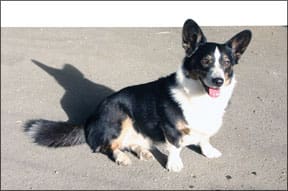
Spenser is a six-year-old Cardigan Welsh Corgi with a history of digestive problems. His owner is Diana Thompson of Fulton, California. Following Spenser’s attack of acute pancreatitis last December, Thompson’s veterinarian tried feeding Spenser Hill’s prescription canned i/d, but Spenser would not even try the food, and the vet didn’t know what else to offer him. Here is Thompson’s account of what she found worked for her dog:
While Spenser was hospitalized, with my vet’s approval, I offered him homemade dilute chicken broth, followed by slushy steamed potatoes mixed with a broth made from lean ground sirloin beef. Next I gave him some low-fat yogurt, then bits of boiled chicken breast. I fed him a couple of tablespoons of food several times a day.
Once Spenser came home from the hospital, he ate five or six small meals a day. Meals consisted of slushy potatoes, boiled chicken breast, and yogurt, a little less than 1/2 of a cup at a time. I also offered him 1/2 cup of diluted homemade chicken broth (25 percent broth, 75 percent water) every hour, as he wouldn’t drink plain water. The broth was made from the water I used to boil his chicken breast, with fat skimmed off.
I continued to feed small, frequent meals for the next few weeks, slowly increasing the size and decreasing the number of meals, until he was eating three meals a day. Five weeks after the attack, his blood tests were back to normal.
Today, Spenser continues to get three meals a day (even prior to the pancreatitis, he did better with more than two meals a day). For breakfast, I usually feed him 1 cup (4 oz) of cooked rice mixed with 1/2 cup (2 oz) ground round beef, cooked in a skillet. About one meal in five I will either substitute baked potato with skin removed for the rice, or combine rice or potato with two small scrambled eggs (21/4 oz) in place of the beef.
For dinner, Spenser usually eats two raw, skinless chicken necks (3 oz). If we are out of these, I’ll give him the same mixture he gets for breakfast. At bedtime, he gets a half meal consisting of 1/2 cup rice or potato with 1/4 cup cooked ground beef or one scrambled egg.
Spenser gets slices of raw carrots to chew, and a small beef marrow bone once every couple of weeks. He also mooches from my husband’s plate, getting small amounts of just about anything that is not high in fat. I use Liver Biscotti and a few tiny kibbles of dry cat food for training rewards.
Spenser’s coat and energy are great on this diet, and he’s back to his normal weight of 30 pounds. I think feeding a simple, home-cooked diet with only a few ingredients at a time helps him stay healthy. If his stools become loose, I know that potato helps to firm them up. Now that he’s been healthy for a year, I’m planning on reintroducing The Honest Kitchen’s Verve soon to give him more variety.
Mary Straus comments on this diet:
At first glance, this diet looks like it might be high in fat due to the chicken necks and eggs, but both are fed in small amounts so that all of Spenser’s breakfast and dinner meals have a similar amount of fat, ranging from 6 to 8 grams of fat per meal. The overall diet is 25 percent meat and eggs, 25 percent raw meaty bones, and 50 percent carbs, and averages out to 32 grams of fat per 1,000 kcal (GFK).
I agree that adding more variety would be an improvement, particularly since Spenser is not getting any organ meat, nor a good multi-vitamin and mineral supplement. Note that there’s no need to add calcium to this diet, because it’s provided by the raw chicken necks that include bone.
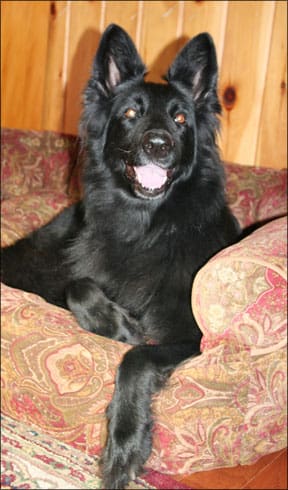
Marilyn Wilson of the northern Adirondack Mountains of New York has a seven-year-old German Shepherd Dog, Annie, who was diagnosed with EPI (exocrine pancreatic insufficiency) two years ago. Wilson feeds a home-cooked diet that works well for Annie, though many dogs with EPI do not do well with fiber or grains. Following is Wilson’s description of what she feeds Annie per meal, twice a day:
I start with 1/2 pound of cooked meat, rotating between chicken, pork, beef, venison, rabbit, turkey, and fish (canned salmon, jack mackerel, and sardines packed in water). I’ve recently begun using chicken and beef heart along with muscle meat. I usually feed one protein for a week, then switch to another, with canned fish fed once a week. I grind the cooked meat in a food processor for easier digestibility because of Annie’s EPI.
I add 3/4 cup of starchy carbohydrates, rotating between brown rice, sweet potato, quinoa, spelt, and whole-grain pasta. I overcook the grains for better digestibility. Sweet potatoes are baked and fed with the skins. I also include 1/8 cup of fresh, raw veggies, herbs, and fruits, such as celery, spinach, parsley, cilantro, carrots, green beans, other dark leafy greens, and berries. These are pureed in a food processor. Occasionally I include nuts (such as walnuts, but never macadamias, which are poisonous to dogs), or canned clams or oysters.
I add 1 teaspoon of oil, rotating among fish oil, olive oil, safflower oil, and butter, with the emphasis on fish oil. I feed about half a pound of raw, organic liver a week, spread out over multiple meals, as too much at one time leads to loose stools. Annie doesn’t do well with eggs or cottage cheese, so I leave those out of her diet, but I often add some plain, low-fat yogurt to meals. I also give her appropriate human leftovers. Each meal is mixed with a cup of warm, filtered water, along with Annie’s prescription digestive enzymes.
I use bone meal for calcium, and give a human multi-vitamin and mineral supplement. I also give cod liver oil that provides 130 IU vitamin D twice a day during the winter when there is little sunshine.
Once a day, I add 1 tsp psyllium for fiber, human probiotics, and a sublingual (under her tongue) vitamin B12, as dogs with EPI have trouble absorbing this vitamin from their intestines. Annie was dealing with SIBO (small intestinal bacterial overgrowth, which is common in dogs with EPI) for a long time, and using these supplements helped her to recover.
I cook food once every two weeks. I remove the separable fat from all meat, and skin from chicken, then boil the meat. I’ll cook a 40-lb case of chicken breasts in batches, using the same water each time. I put that water in the refrigerator overnight, then skim the fat off and use the liquid to cook the grains and pasta. I also bake sweet potatoes in large batches, buying 40-lb crates when they are on sale. I freeze the cooked meat in meal-sized portions, and the carbs in gallon-sized freezer bags.
I watch for sales and stock up on foods when I can. I sometimes buy whole shoulders and rump roasts. These come cryopacked, easy to freeze until I have time to defrost and cook them. When the hunting season starts, I ask hunters for any leftover venison from last year. I make training treats out of beef liver, boiling thin slices for ten minutes, then cutting into tiny pieces and microwaving for 10 minutes or drying in the oven for an hour at 150 F. I refrigerate a week’s worth and freeze the rest. I do Annie’s training right after she eats so she will still have the digestive enzymes in her system.
Both of my dogs look gorgeous and have great energy on this diet. Annie weighs around 70 pounds now, up from 50 pounds when she was at her worst. When I first started home cooking I was overwhelmed, but I actually enjoy cooking for my dogs now that I have the process streamlined.
Mary’s comments:
This diet has lots of variety and good proportions of meat and carbohydrates. When using bone meal, give an amount that provides 1,000 to 1,200 mg calcium per pound of food.
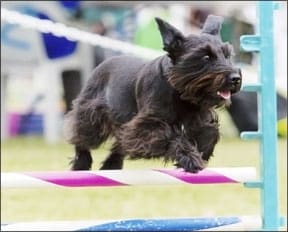
Keely, a five-year-old Miniature Schnauzer, is owned by Gail Roper, of Tucson, Arizona. A year ago, Keely’s right eye turned white. Her ophthalmologist diagnosed her with corneal fat deposits due to hyperlipidemia, which is common in Miniature Schnauzers, and advised putting Keely on a low-fat diet. Within a month, the deposits were gone. Here is Roper’s report of what she feeds her dog now:
Keely is an agility dog who weighs 19 pounds. She gets a lot of her food during training, so her meals are small. For training, I use chicken breast and London broil (both cooked), and non-fat feta cheese, which she loves. I boil the beef, then cut it up into quarter-inch squares and freeze it. I’ve had trouble finding heart, but my grocery store said they could order it for me, so I will be using that as well.
Breakfast foods include non-fat yogurt and cottage cheese, hard-boiled eggs, sardines, 93 percent lean turkey bacon (microwaved), and chicken wingettes with as much skin removed as possible. She gets 1/3 of a strip of bacon once or twice a week, one sardine twice a week, 1/2 hard-boiled egg three times a week, a tablespoon of cottage cheese and yogurt three times a week, and chicken wingettes once a week.
Dinner foods include skinless chicken breast, 93 percent lean ground turkey, salmon, and just a little bit of liver three days a week. I boil the chicken and liver, but feed the turkey raw. The salmon is left over from our meals once a week. I make 1-lb packages by mixing 9 to 10 ounces of raw turkey with 5 to 6 ounces of cooked and shredded chicken, plus a little yogurt to help with the mixing, then add 1/2 tsp ground eggshell per pound of meat for calcium. I add an ounce or two of liver to every other package. I then freeze each package in quart-sized freezer bags, which lasts my two dogs a couple of days. I add warm water at mealtime to make a stew.
Daily supplements include 1,000 mg fish oil, 200 IU vitamin E, 1,000 mg vitamin C, and Animal Essentials’ Multi-Vitamin Herbal Supplement. Three times a week I give a vitamin B-50 complex, and twice a week she gets 30 mg CoQ10. I hide some supplements in her food, but use a little bit of canned food for the rest.
Treats are EVO grain-free dog treats, Merrick’s dried beef lung, and homemade chicken, beef, and turkey jerky. To make jerky, I boil the meat, then cut it into thin strips and bake on a cookie sheet at 250 F until dehydrated. For recreation, I give Keely raw beef bones with marrow removed.
Mary’s comments:
Even a diet without carbs can be relatively low in fat, if you’re careful about what foods you use. The dinner meal has about 36 grams of fat per 1,000 kcal.
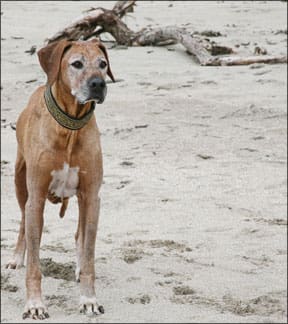
Rowdy is a Rhodesian Ridgeback who was hospitalized with acute pancreatitis for 10 days at age 12. His owner, Jerri Langlais of Brentwood, California, was afraid to return Rowdy to a raw diet after almost losing him. Instead, she fed him Royal Canin canned low-fat prescription food.
Rowdy was troubled by borborygmi (loud intestinal rumbling noises) after eating this food and seemed uncomfortable, switching positions frequently. After three weeks, he started rejecting the prescription diet, even with added fat-free organic chicken broth or low-fat cottage cheese. Langlais decided to switch back to a homemade diet, hoping it would help Rowdy return to normal. Here is her story:
I started with grilled skinless chicken breasts, combining half a breast with a cup of white rice that was cooked with lots of extra water and fat-free, low-sodium chicken broth. When he did well with that, I began feeding him Verve from The Honest Kitchen for one meal a day, then 1/2 cup green tripe every other day.
Next, I added beef heart, then beef kidney, and then raw chicken breast to his diet. I rotated between white rice, quinoa, and oatmeal, feeding these as half his diet. I then began feeding the chicken breast raw, with the bone, and giving one chicken wing. Each time I started something new, I would wait at least three days, watching for any signs of discomfort, before making any further changes.
Rowdy’s stomach noises and discomfort after eating gradually diminished, especially after I began feeding raw food. I gave him slippery elm tincture and chamomile tincture when this happened, which quieted them down within 10 minutes. Adding Primal Defense soil-based probiotics also really seemed to help.
Two months after his pancreatitis attack, Rowdy had emergency surgery for gastric dilatation-volvulus (GDV, also known as bloat). Fortunately, it was caught in time and the surgery was successful. The good news was that the surgeon said Rowdy’s pancreas looked normal. I fed him chicken soup, using chicken breasts boiled with white rice and grated vegetables, for five days following surgery, but he was able to resume his regular diet once his incision healed.
Rowdy dropped from 82 to 71 pounds after his stay at the hospital, and he looked emaciated. He had difficulty gaining weight until I began feeding him 5 to 6 ounces of raw pancreas every day. I had tried giving digestive enzymes with pancreatin, but they made him gassy. As soon as I added the pancreas, his energy level increased markedly and he started gaining weight and strength. It took about four months for him to return to his normal weight.
Rowdy’s current diet consists of a large meal in the morning, usually around ¨ lb raw meaty bones. He does best with raw turkey necks. I also feed whole chicken parts with skin and fat removed, or Verve from The Honest Kitchen.
His evening meal is smaller so that he gets a total of about a pound of food a day. I rotate among green tripe, raw pancreas (once a week), beef kidney, and I’m starting to try ground beef. I no longer feed lamb, which is high in fat. Beef heart makes his stools loose if I feed too much, so I just give a small piece with his meal. Raw liver also gives him loose stool, so I feed small amounts of cooked liver as treats. If he acts hungry in the afternoon, I give him 1/4 cup of nonfat yogurt. I use commercial dog cookies that are 5 percent fat.
For supplements, he gets wild salmon oil, probiotics, and algae/spirulina. Rowdy’s energy level improved dramatically when I began adding salmon oil. He gets one tablespoon three times a week, though I started with just 1/2 teaspoon and increased gradually once I saw that it wasn’t causing him any problems. I was alternating salmon oil with 1 tablespoon of coconut oil, but I’ve discontinued the coconut oil now that he’s back to his normal weight.
Rowdy turned 13 years old in October, and is doing really well. No more stomach sounds at all, and he plays more regularly now. The longer he is on raw, the better he seems to feel.
Mary’s comments:
There’s no reason that dogs can’t return to a raw diet after recovering from acute pancreatitis, as long as you’re careful not to feed too much fat. Most raw meaty bones are high in fat, though turkey necks have less than any other kind. Rowdy’s diet is high in bone, but that’s what works best for him.
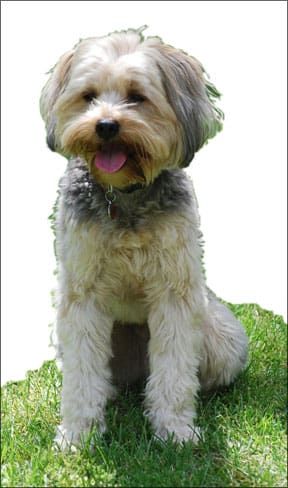
Rocky is a 31/2-year-old Yorkie-Poodle mix who has had digestive problems all of his life. From puppyhod, he was a picky eater and had frequent diarrhea. His owner, Danielle Flood, who lives in Crofton, Maryland, tried feeding all kinds of foods, but nothing seemed to work, and within a few days, he would stop eating again.
One of the vets Flood consulted believes that Rocky has both IBD and chronic pancreatitis, and suggested feeding a home-cooked diet, but Rocky wasn’t interested in a mixture of chicken and rice. Rocky was down to 13 pounds of skin and bones when Flood, desperate to find a food that Rocky would eat and that wouldn’t make him sick, came across the dehydrated foods made by The Honest Kitchen. Flood’s first success was with Preference, its low-fat incomplete mix meant to be combined with meat and other fresh foods:
I mixed just under 1/4 cup of Preference with hot water and added half of a boiled chicken breast. To my surprise Rocky devoured his entire plate and for the first time was begging for more food! Better yet, he didn’t start refusing the food after a few days, as he has with everything else we’ve tried.
A few weeks later, Rocky is still happily eating Preference mixed with chicken. We have also tried cooked chicken livers and very lean beef sirloin, and he loves those as well. He likes it best when there is a little more meat than mix.
We continue to give Rocky 1/8 tsp acidophilus with each meal. He also gets a multi-vitamin and mineral supplement.
Treat options are very limited for Rocky, but he does very well with “chicken breast wraps” made by Free Range Dog Chews, which we cut into tiny pieces. With our vet’s approval, we have also started giving him tiny pieces of lean raw meat (beef sirloin), which I was shocked to find he loves.
This is the longest I have ever been able to get Rocky to eat consistently. He is so excited at meal times, which is a first, actually diving into his plate to eat, and finishing completely on his own instead of my having to coax him.
We have discontinued giving Pepcid, as he no longer has an upset tummy. His stools are now normal, which they have never been before. He has gained weight, over a pound in the first two weeks, and is now up to 16 pounds and looks wonderful. Our vet, my husband, and I are delighted and relieved to see Rocky healthy, happy, eating, playing, and in no pain.
Mary’s comments:
This is a good example of perseverance paying off. There are many different types of foods available; if kibble and canned don’t work for your dog, try something else. Pre-mixes are a great way to feed fresh foods, without having to worry about balancing a homemade diet.
1. Feed a low-fat diet if your dog has hyperlipidemia or digestive problems that improve when fed lower-fat foods.
2. Experiment with different types of diets, including dehydrated, refrigerated, and frozen commercial diets, if your dog doesn’t do well on kibble or canned foods.
3. Don’t be afraid to feed a homemade diet, either raw or cooked, as long as you use appropriate ingredients and proportions.
4. Use a commercial pre-mix to make feeding fresh foods easier, without worry about calcium and balance.
Mary Straus does research on canine health and nutrition topics as an avocation. She is the owner of the DogAware.com website. She lives in the Bay Area.

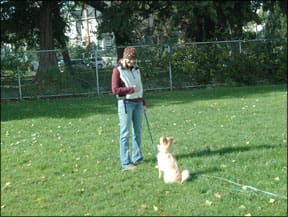
Lucy, come!” I call, as I walk across our front lawn toward the old barn to feed the ponies housed there. Our Corgi beelines across the driveway, low to the ground, ears flat against her head, as she speeds to join me. My heart warms. There is nothing more gratifying to a dog owner than a canine companion who comes flying as fast as her paws can carry her in response to the recall cue. The recall response seems to come naturally to some dogs. For others, it’s a hard-won behavior. The Miller pack has some of both.
A solid recall is a valuable behavior for dogs of all sorts, including dogs who compete in sports, do therapy or assistance work, or provide the valuable service of being someone’s beloved companion. The better the recall, the safer he is when off-leash, and the more he can enjoy off-leash freedom with his human. One good off-leash hike is worth at least 10 on-leash walks around the block!
I’ve been blessed throughout much of my life with dogs who have had naturally solid recalls. Maybe it’s due to my predilection for herding breeds, who seem to have a genetically programmed tendency to stick close to their humans. But then there was Josie, the best dog ever, a terrier-mix who never once entertained a “run away” notion during her 15 years as a beloved member of our family.
Still, I don’t think it’s a coincidence that on our farm, Lucy the Corgi and Missy the Australian Shepherd can be off-leash at will, while Dubhy the Scottie and Bonnie the Scottie-mix require closer monitoring. The two terriers have outstanding “situational recalls.” They will both come beautifully sometimes, in some places – not surprisingly, the places we’ve practiced the most – but not with the generalized reliability that Missy and Lucy demonstrate.
I used to teach “Come” the old-fashioned way, in which you put your dog on a sit-stay, walk to the end of the leash, turn, face him, call him, and jerk on the leash. I look back on those days and wonder that we were able to teach recalls that way at all! What a negative association those dogs must have had with the come cue: “Come means run to my owner fast so I don’t get hurt.” Not to mention that to a dog, the body language of a direct frontal position is assertive and intimidating, a position that threatens, “You may be risking bodily harm if you approach.” Yikes! Now I know why Marty, my tricolor obedience competition Collie, always trotted to me with his head down when I called him. He always came, but he wasn’t happy about it. “Workmanlike,” I think the judges called it then.
My Bull Terrier took it one step further. As long as Caper was within the 30-40 foot distance that we practiced for show-ring recalls, her “Come” response was faster than a speeding bullet. But if she was beyond range of my normal leash or long-line correction distance, my “Come!” cue caused her to run as fast, or faster – in the opposite direction.
Teaching happy recalls
We’ve raised the standard since those obedience days some 30-plus years ago. Nowadays we want recalls that are not just reliable, but that are happy and fast as well. We want dogs who come because they want to and love it, not because they have to.
The good news is it’s not as hard as you might think. It just takes a commitment to regular practice, keeping it fun and happy.
• Start by “charging” your “Come” cue. This will be a word that will always mean to your dog: “Absolutely wonderful stuff is about to happen and you better get over here fast or you’re going to miss out!” Say “Come!” in a loud, cheerful voice and feed your dog a very high-value treat – chicken, steak, whatever he thinks is totally wonderful. Repeat many times, until your dog’s eyes light up when he hears the cue. Remember, he doesn’t have to “come” for this part – he’s just hanging out with you, eating treats.
Note: If you’ve already taught your dog that “Come!” sometimes means “bad stuff” then you’ve “poisoned” your cue, and you need to pick a different word. See “The Poisoned Cue” on the next page.
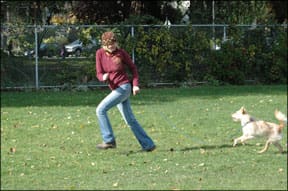
• Now, with your dog walking by your side on leash, say “Come!” loudly, in a cheerful tone of voice, and run away fast. You and your dog are running together, in the same direction. Run 10-15 feet. Reward him with a treat when you stop, or even better, a toy – play a quick game of “Tug” or toss a ball for him to catch. If you keep your rewards high-value and unpredictable, your dog will find your recalls irresistible. “I wonder what exciting thing she’s going to do next!”
By the way, “fast” is relevant. If you have a Labrador Retriever, “fast” is probably “fast as you can.” If you have a Yorkshire Terrier, “fast” is considerably slower. “Fast” should only be as fast as your dog can comfortably run.
• After several days of practicing the previous steps, try this: Wait until your dog is a few feet away from you (still on leash). Say “Come!” (cheerful and loud!) and run away fast. Run 10-15 feet and reward her at the end. Exciting and unpredictable! If your dog stays very close to you, drop a few yummy treats on the ground, walk to the end of the leash, wait until she’s eating the last one, then say “Come!” and run away. Practice this step for a week or more.
• When your dog consistently runs to you and with you when you say “Come!” and run, start a little off-leash work in a safely enclosed, low-distraction area, such as a hallway in your house, or large den. When he’s not right next to you and not deeply engrossed in some highly rewarding activity (such as gnawing on a bone), say “Come” (loud and cheerful) and run away. Remember to reinforce with an exciting, unpredictable toy or several treats when he comes.
• Avoid calling your dog when he’s not likely to come! At best, you’ll teach him “learned irrelevance” – that your recall cue is meaningless. At worst, you’ll get angrier and more insistent with your recall cue and poison it. Then you’ll have to pick a new cue and start over again. Make sure you have his attention before you call him. Say his name first and wait for him to look at you. If you call him and he doesn’t come, do something else: make a kissy noise or squeak a squeaky toy, and make sure you have his undivided attention before you call him again.
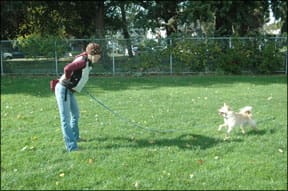
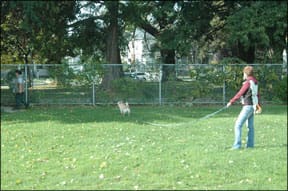
• You can practice longer distance recalls outside with your dog on a long line – a leash that is 20 to 50 feet long (not a retractable leash!). The long line keeps him safe and prevents him from leaving, but do not use it to pull him to you. Remember to turn and run away fast – at least at first. If he’s now flying to you happily every time, you can face him to greet him and reward him when he gets to you.
• When he reliably comes to you on the long-line in a safely enclosed location, start working on off-leash recalls – still in your safely enclosed location. Repeat the two previous steps. Take care not to call him if he’s involved in some highly rewarding activity such as eating deer poop in the garden. Always call him in a loud, cheerful tone, and use a high-value (and unpredictable) reward when he comes.
• When your dog will run happily to you even when you take only one or two running steps, you can add an automatic sit. This parks him when he gets to you.
If you’ve already done a good job of installing a “default sit” by reinforcing “sit” so much that he offers it easily and automatically, this part is easy. As he runs toward you, turn to face him, and when he gets to you pull your shoulders back, lift your chest and, if necessary, raise your hands to your chest. This body language will often elicit a sit. If he sits, reward him. If he doesn’t sit, reward him anyway for coming, and then ask for a sit.
• When your dog’s recall-sits happen easily and automatically, occasionally reach for his collar, gently, under the chin. Give him a yummy treat, and then toss a ball or toy for him to chase. This teaches him to happily accept you reaching for him after a recall for those occasions when you need to restrain him. We’ve all seen those dogs who dance just out of reach when their owners are trying to capture them. Don’t let that be your dog!
• Now you can add Round Robin Recalls with other family members and friends. Supply each player with a stock of toys and yummy treats. Take turns calling your dog and running away fast, with each person rewarding him each time they call him, with a high value (unpredictable and exciting) treat or fun game with a toy.
• As long as your friends and family are around to help with your training, ask them to create distractions while you call your dog. Small ones at first – standing between you and your dog; walking across his recall path; talking to him as he runs by – and then bigger ones: sitting on the ground between you and your dog; holding treats in their hands (but not letting him have them); holding a toy, eventually tossing it in the air and catching it as you call your dog – and finally, huge ones: running across his recall path; throwing a ball on the ground as he runs past; or walking across the yard with another dog on-leash.
What should you do if your dog fails to resist the temptation to investigate one of the distractions? First, try to stop him from engaging with the distraction (the other dog, a ball, another person with treats), put your dog back on-leash, and make a note to yourself: your dog is not yet ready for that level of distraction off-leash!
With your dog back on-leash, go back to work, but with a less-challenging distraction. Ask your distraction volunteers to stand farther away, or to be much less exuberant in their efforts to distract your dog. Also, increase the value of your reinforcer. Bring out the very top-level treats you possess, or the toy that your dog loves so much that it will overcome almost any distraction.
Your goals, as always, are to prevent the dog from being reinforced for behaviors you don’t want (failing to come to you); and to reinforce the behavior you do want (coming when called) with rewards that are very meaningful to your dog (not just kibble).
• If you and your dog have been successful at the previous steps, you can start working on generalizing your dog’s recalls in new locations. Each time you go to a new place, practice recalls on the long line until you’re sure he’s really reliable, even in the presence of big distractions. When you’re confident he’ll come every time you call, and as long as it’s legal and safe, you’re ready for long off-leash hikes in the hills – the best adventure and exercise any dog could ask for.
You may be surprised!
Sometimes our dogs are better than we think they are. While Dubhy’s and Bonnie’s recalls aren’t as solid as Lucy’s and Missy’s, I am sometimes reminded that they’re pretty decent after all. When we hike on the farm, I do let Bonnie off-leash. She bolts off after a flock of crows and I watch her disappear into a hayfield. Since our house in the middle of 80 acres surrounded by neighbors’ woods, I’m not too concerned that I can’t stop her in her tracks and that she ranges a little farther than I’m truly comfortable with. I give her several minutes of running time, then call her. Sure enough, her happy panting face soon peeks out from the tall grass, and we hike on.
Dubhy the Scottie stays on his long-line for our hikes and we practice safe recalls a lot. I know from experience that his recall is great unless he’s halfway down a groundhog hole where he might choose to stay for quite some time.
However, his recall worked like a charm this past July when he discovered a gate he could pry open in the backyard and he escaped into the darkness. When I called the dogs in from their final evening potty-break, Dubhy was nowhere to be found. I grabbed a flashlight and headed out to hunt for him in the woods, knowing how futile it would be to look for a small black dog in the dark, especially if he was down a groundhog hole. I anticipated sitting up all night, going out every 15 minutes to call him, hoping he’d stay out of trouble.
To my surprise and delight, I hadn’t even gotten to the woods when I heard doggie paws rustling through the horse pasture. It was Dubhy, speeding happily back to me in response to his “Come!” cue. Our long-line practice recalls on all our hikes paid off. I’m half-tempted to let him off-leash on our next farm-hike!
Thanks to Sandi Thompson, CPDT, owner of BravoPup! of Berkeley, California, for demonstrating these techniques. See “Resources,” page 24, for contact information.
Pat Miller, CPDT, is Whole Dog Journal’s Training Editor. Miller lives in Hagerstown, Maryland, site of her Peaceable Paws training center. Pat is also author of The Power of Positive Dog Training; Positive Perspectives: Love Your Dog, Train Your Dog; Positive Perspectives II: Know Your Dog, Train Your Dog; and the brand-new Play with Your Dog. See “Resources,” page 24, for more information.
[Updated March 28, 2018]
1. Help your senior dog at home by following a predictable daily routine.
2. Make gradual, rather than sudden, changes in the household or routine.
3. Use tactile (rugs, runners), and audible (TV, radio) cues to help pets maintain orientation and help with navigation around the house.
Each of us has, at some point, wandered into a room and realized that we’ve forgotten why we’ve gone there. When that happens, chances are we are momentarily perturbed with ourselves, but typically we chalk it up to too much on the brain, remember why we’re there, then move on. Should our dogs wander in the same fashion, it could well be a sign of cognitive dysfunction syndrome (CDS), a condition quite similar to Alzheimer’s in humans. CDS happens when the aging process affects brain pathology, resulting in behavioral changes, including cognitive decline (memory and learning). One of the biggest culprits is the damage done to mitochondria caused by oxidative damage over time. Researchers also believe that a decline in cerebral vascular circulation contributes to the changes we see in our aging dogs.
Testing dogs’ cognitive abilities in a laboratory setting has shown that signs of CDS can be seen as early as seven years of age, yet we, as pet owners, often don’t realize a change in our canine companions until they reach 10 years of age or older. However, dogs trained to a higher level – such as service or guide dogs, agility, and other competition dogs – are those whose cognitive decline might be noticed sooner than that in “just” a pet dog because of a subsequent drop off in the highly trained dog’s performance.
The gold standard for testing for CDS is in the laboratory. In aged dogs tested in a laboratory setting, researchers observed poor performances on cognitive tasks using a “three component delayed non-matched to position task” (3-DNMP) that tested discrimination learning (ability to select one object over another), reversal learning (after training to select an object, criteria are reversed), and spatial memory (memory of places).
Unfortunately, such laboratory testing is not readily available to us mere mortals. So what should you do? Watch and observe your dog, looking for changes in his or her behavior that might be symptoms of CDS. Traditional “DISHA” categories include:
Gary Landsberg, DVM, DACVB, in his paper “Therapeutic Agents for the Treatment of Cognitive Dysfunction Syndrome in Senior Dogs,” published in Progress in Neuro-Psychopharmacology and Biological Psychiatry, notes that we might also see:
At the same time, it’s important not to jump to conclusions and self-diagnose our dogs if we see any of these signs. These changes can also be due to a variety of medical problems, so it’s important to first rule out environmental factors, physical health, and drug-induced behavior side effects with a visit to your dog’s veterinarian.
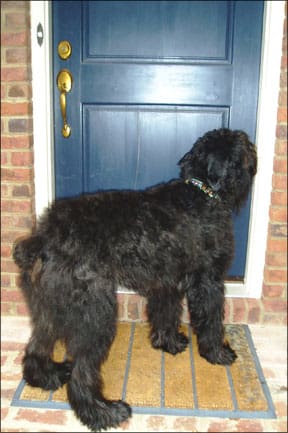
I had that very experience with my 12-year-old Bouvier, Axel. When I queried his veterinarian, Susan Wynn, DVM, as to whether his standing very still for periods of time when out in the backyard with me was a sign of CDS, her observation, after further querying me, was that she just wasn’t seeing it. Her hunch was that the behavior was most likely a result of pain from arthritis.
She further explains, “I think CDS is very difficult to differentiate from pain and this is a mistake that is made often. I do see CDS occasionally, but I treat for pain first, and as an acupuncturist, I often find pain that is missed on the conventional exam. If signs of compulsive walking and disorientation remain after two weeks, I’ll usually initiate a trial for cognitive dysfunction.”
If you’re concerned that your canine companion might be showing signs of CDS, don’t panic, cry, or devour a box of bon-bons just yet. The good news is that there are traditional and alternative interventions that can both treat the symptoms and also possibly halt further progression of the condition.
Most exciting of all have been ground-breaking studies examining the positive impact of dietary supplementation and behavioral enrichment that includes social, cognitive enrichment (learning problems), and physical exercise components. Check with your veterinarian to discuss the following alternatives.
A variety of clinical studies have revealed that dietary intervention in the form of an antioxidant-enriched diet improved the learning ability of older dogs, and a resulted in a subsequent decrease in CDS symptoms. Primary supplementation included:
• Vitamin E: Acts to protect cell membranes from oxidative damage
• Vitamin C: Essential in maintaining oxidative protection for the soluble phase of cells as well as preventing Vitamin E from propagating free radical production
• L-Carnitine: Mitochondrial co-factor
• Alpha-lipoic acid: Mitochondrial co-factor
• Other antioxidants from fruits and vegetables (i.e., spinach flakes, tomato pomace, grape pomace, carrot granules, and citrus pulp) that are also rich in flavonoids and carotenoids
Dr. Landsberg notes that it has been suggested that high intakes of fruits and vegetables might decrease the risk for age related cognitive decline through their antioxidant and anti-inflammatory properties, and the addition of omega-3 fatty acids can promote cell membrane health and provide a possible anti-inflammatory effect. Although available in a commercial prescription dog food, the diet can be mimicked by those pet owners who prefer to feed home-prepared, or another type of food by feeding an antioxidant rich diet and supplementing.
Dr. Wynn, who practices alternative and complementary medicine and is the nutritionist at Georgia Veterinary Specialists in Sandy Springs, Georgia, says that antioxidants are the single most important treatment for her clients diagnosed with CDS, adding that “any older dog with clinical signs” is a good candidate. In addition to antioxidants, she uses acetyl-l-carnitine and alpha-lipoic acid. She also recommends herbs, preferring to treat with lemon balm, gingko, bacopa, and gotu cola. In her experience, she expects to see results “usually within two weeks.”
Dr. Wynn agrees, too, that for those people so inclined, “Use the diet you want, plus antioxidants and alpha-lipoic acid and acetyl-l-carnitine supplements.”
Just as exciting is the research reported in Neurobiology of Learning and Memory, “Enhanced Spatial Ability in Aged Dogs Following Dietary and Behavioural Enrichment” (P.M.D. Nippak, J. Mendelson, B. Muggenburg, N.W. Milgram). This study tested aged dogs on a 3-DNMP test, and followed the results of dietary intervention and behavioral enrichment on the cognitive abilities of aged (and control) dogs in the trial for three years. As has been found in previous studies, dietary intervention in this study ” . . . led to rapid improvements in learning and within two weeks, significant improvements in spatial attention.” Over time, learning ability improved as well, while untreated dogs showed progressive decline.
In their test of the effect of behavioral enrichment on cognitive abilities, researchers reported that the dogs showed similar improvements to those receiving dietary intervention. Behavioral enrichment included increased exercise, environmental enrichment (kennel mate, toys alternated weekly), and a program of cognitive enrichment. Why? We can only guess, based on data from human studies that tell us:
• Physical activity is associated with improved cognitive function and lower risks of cognitive impairment and dementia.
• Enriched environments improve learning ability and ” can be sufficiently robust to reduce or eliminate age-dependent cognitive decline, particularly if intervention is instituted early in development.”
• Cognitive experience is linked to the absence of cognitive dysfunction, with an inverse relationship between educational level and rate of cognitive decline later in life; studies also show that patients with dementia demonstrated an improvement in cognitive performance following the implementation of special cognitive training protocols.”
Jonna Kanable, Certified Canine Rehab Practitioner (CCRP) with Atlanta Animal Rehab and Fitness in Roswell, Georgia, is a firm proponent of the exercise piece of the puzzle. “If you look at it from the common sense standpoint, if you increase blood flow to a particular organ, you’ll see more nerves firing and more synaptic involvement, and you should definitely increase cognitive ability at that point, too.
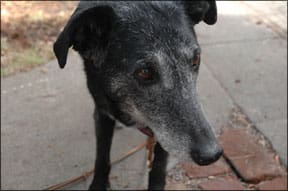
“In my own experience, I’ve had a lot of elderly canine clients for exercise (underwater treadmill) who were arthritic but also showed symptoms of CDS. They were prescribed exercise to help out with the arthritis, but we also saw their cognitive ability improve.”
Kanable also reported seeing dogs with “more peppiness, not that listless stare; they’re looking around more, and definitely seem to be more energetic afterward.” The more weekly sessions the dogs attended, the longer they “held” their treatments and demonstrated more voluntary movement at home instead of just lying or standing in one spot. Plus, she adds, “All the owners, every single one of them, said with exercise during the day they saw improvements (a decrease) in their dogs’ pacing behavior (a classic CDS symptom) at night.” Kanable believes daily exercise is the key. Even if it’s short periods of exercise – 10 to 15 minutes at a time, two to three times daily, for an elderly pet, depending on their level of conditioning – owners should expect to see better quality of sleep for their pets and better cognitive ability.
In addition to exercise, enriching your dog’s environment could include short outings to meet people and take in new sights and sounds; visits with other dog-friendly pets; mini-daily training sessions; a low key training class; and a weekly rotation of toys. Whole Dog Journal‘s Training Editor, Pat Miller, lists the following activities as a few of her favorites to keep your dog’s brain engaged:
• Shaping games, including “101 Things to Do With a Prop,” or directed shaping of a specific task; great because these can be played no matter how much a dog may be physically limited.
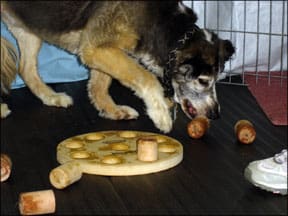
• Playing with interactive puzzle games.
• Targeting games such as touch an object, go outs, and object discrimination.
• Playing “find it!” (hide a toy or treat).
• Playing with interactive stuffed toys with “parts” the dog pulls out or apart.
All these things are helpful for dogs with CDS, but what researchers discovered was that the combination treatment group – the one that received both dietary and behavioral interventions – consistently demonstrated greater benefit than groups receiving a sole treatment. Prior reports indicated that the “3-DNMP” task was too difficult for aged animals, yet this study showed aged dogs making fewer errors and responding more slowly (actually a good sign!) on these complex tasks.
While Dr. Wynn likes to start dogs on antioxidants at roughly nine years of age as “prevention,” she, too, is a big believer in the power of behavioral enrichment in combination with dietary intervention.
“I think that, as in humans, if you don’t use it, you lose it,” says Dr. Wynn. “Some older dogs are left at home with nothing to do but dwell on their anxieties – the gradual loss of hearing and sight, increasing stiffness and pain. I really think they dwell on these changes unless they are given other things to do and to think about, and are provided with adequate pain control. So we should manage their pain very aggressively with acupuncture, massage, herbs, chiropractic, physical therapy, and drugs, and provide them with small projects, or if possible, keep them in training. Training and exercise should never stop.”
A variety of nutraceuticals intended to boost brain power are available. Studies that indicate that Juvenon®, available for dogs as “Vigorate,” is effective for canine CDS. Other available nutraceuticals include Memoractiv™, Geriactive®, Proneurozone™, and Senior Moment®. At this time, the efficacy of these products has not been proven through clinical trials or cognitive studies, although some users report seeing improvements in their dogs.
Currently, the only veterinary pharmaceutical approved by the FDA for treatment of CDS is Anipryl® (selegiline hydrochloride, L-deprenyl hydrochloride). This drug has also been used in the treatment of Alzheimer’s in humans.
Like any drug, Anipryl can cause adverse reactions and side effects, and should not be used in combination with drugs that include, but not limited to, phenylpropanolamine, ephedrine, other tricyclic antidepressants (Clomicalm), amitraz (Mitaban dips or Preventic collars), fluoxetine, mirtazapine ( a tetracyclic antidepressant used as an antiemetic and appetite stimulant, often in cancer patients), and tramadol. A thorough review of current medications and an in-depth discussion with your veterinarian are in order should you decide to take this route.
Other pharmaceuticals being studied, according to Dr. Landsberg, are those that enhance cerebral vascular circulation and drugs that increase alertness and regulate sleep-wake cycles. Antidepressants might also help (i.e., clomipramine), as might anti-inflammatory drugs and hormone replacement therapy, although clinical trials have yet to be run specifically for treatment of CDS with these interventions.
Think your friend is not quite ready for the senior center? Well then, now is the perfect time to get serious about updating his diet and engaging him in an active lifestyle. Human epidemiologic studies suggest that maintaining an active lifestyle can protect against pathological aging. Participation in cognitively stimulating or physical activities that lead to improved function reduce the risk of developing Alzheimer’s. Reduced intellectual or physical activity in middle age has been shown to lead to a higher risk of Alzheimer’s later in life.
Since some treatments might actually slow the progression of disease rather than simply treat symptoms, it’s best to start treatment of senior dogs prior to onset of clinical signs. At the end of the day, it’s a win-win situation, with both of you benefitting from a change in lifestyle that incorporates an antioxidant-rich diet, exercise, and cognitive stimulation.
Lisa Rodier lives in Alpharetta, Georgia, with her husband and two Bouviers.
1. Learn to calculate grams of fat per 1,000 kcal rather than relying on fat percentages to identify low—fat foods.
2. Be sure your homemade low-fat diet includes the proper amount of calcium.
3. Avoid foods that are excessively low in protein, such as some prescription and weight—loss diets.
4. Avoid low-fat diets for dogs that are excessively low in fat, unless your dog is one of the few who requires it.
In previous issues we’ve talked about the causes, diagnosis, and treatment of pancreatitis. In this article we will discuss low-fat diets for dogs that can be used long term for dogs who cannot tolerate too much fat in their diet. These low-fat diets for dogs guidelines are meant for adult maintenance only, not for puppies or females who are pregnant or nursing, as their requirements are different.
Many dogs with chronic pancreatitis and those prone to recurrent attacks of acute pancreatitis do better when fed diets that are low in fat. Dogs with exocrine pancreatic insufficiency (EPI) due to damage to the pancreas, or with inflammatory bowel disease (IBD), may also respond favorably to a low-fat diet. Some dogs need low-fat dog foods to control hyperlipidemia (high levels of triglycerides in the blood) that can lead to pancreatitis.
Dogs with fat intolerance or mal-absorption may show signs such as diarrhea and weight loss, or steatorrhea (excessive excretion of fat in the stool, resulting in large, pale, greasy, and malodorous stools) in more severe cases. Fat malabsorption can also be associated with liver and gall bladder disease, intestinal infection (viral, bacterial, or parasites), lymphangiectasia, and other conditions. It’s a good idea to try a low-fat diet for any dog with digestive problems to see if he improves, though if no improvement is seen, it need not be continued.
As a rule, veterinarians consider a diet with less than 10 percent fat on a dry matter basis (less than 17 percent of calories from fat) to be low fat, while diets with 10 to 15 percent fat (17 to 23 percent of calories) are considered to contain a moderate amount of fat. Foods with more than 20 percent fat are considered high-fat. A few dogs may need a very low-fat diet, especially if they have hyperlipidemia, or if they react to foods with higher levels of fat.
When comparing the percentage of fat in different foods, you must consider the food’s moisture content. The percentage of fat in wet food (canned or fresh) must be converted to dry matter (DM) for comparison, or to use the guidelines above. To do the conversion, first determine the amount of dry matter by subtracting the percentage of moisture from 100, then divide the percentage of fat by the result. For example, if a food is 75 percent moisture and 5 percent fat, divide 5 by 25 (100 – 75) to get 20 percent fat DM.
For a more exact figure, calculate the grams of fat per 1,000 kcal (kilocalories, the standard caloric measurement). For simplicity’s sake, I will call this GFK, though that is not a standard abbreviation. Veterinary nutritionists consider diets to be low-fat if they have less than 25 GFK (22.5 percent of calories from fat). This measurement can be used for any type of food: dry, canned, or fresh.
For example, a diet that is 10 percent fat with 4,000 kcal/kg provides 25 GFK, while a diet that is 8 percent fat with 2,700 kcal/kg provides 30 GFK.
In other words, for every 1,000 kcal your dog consumes, he would get 30 grams of fat from the food with 8 percent fat, but only 25 grams of fat from the food with 10 percent fat. See the sidebars on the following pages for instructions on how to easily calculate the GFK in various foods and combinations.
Here is a list of the percentages of fat that would translate to 25 grams per 1,000 kcal for foods with various calories:
Vegetarian diets are sometimes recommended to provide a low-fat diet. I do not advise feeding your dog a vegetarian diet, whether commercial or homemade. See “Have Dinner In,” (WDJ, April 2007) for more information on how such a diet can lead to serious nutritional deficiencies.
Some low-fat diets for dogs recipes are excessively low in fat, providing as little as 5 to 8 GFK, with as much as seven times more starches than meat. With very few exceptions, it’s not necessary to feed such an extremely low-fat diet to dogs recovering from or prone to pancreatitis or with other forms of fat intolerance, nor is such a diet likely to be nutritionally adequate, regardless of how many supplements you add. The NRC (National Research Council) recommends a minimum of 11.1 GFK for adult dogs (10 percent of calories from fat, or around 5 percent fat DM).
Low-fat diets for dogs that are too low in fat can lead to deficiencies of fat-soluble vitamins and problems with the skin and coat; they can also leave your dog feeling tired and hungry all the time. It’s important to feed adequate fat unless your dog absolutely cannot tolerate it. In that case, you can add easily digestible fat in the form of medium-chain triglycerides (MCTs), found in coconut oil and MCT oil (generally made from coconut and/or palm kernel oil). See last month’s article for more information on MCTs.
Not all dogs who have had acute pancreatitis, or who have EPI, need low-fat dog food. Many dogs who have experienced acute pancreatitis can return to a normal diet with no problem. A recent study showed that severe fat restriction (less than 13 percent of calories from fat, or less than 15 GFK) failed to show any significant benefit for dogs with EPI.
A case report of three German Shepherd Dogs with EPI demonstrated that a diet with 19 percent fat (on a dry matter basis) was well tolerated and resulted in weight gain, decreased diarrhea, and an improved coat (the diet used hydrolyzed protein, which is processed in such a way as to render the proteins nearly hypoallergenic). Diets with 43 percent calories from fat have been shown to promote better protein, fat, and carbohydrate digestibility compared to diets containing 18 and 27 percent calories from fat in dogs with experimental EPI.
You can calculate the grams of fat per 1,000 kcal in any food you find by using the following formula:
Fat percentage ÷ kcal per kg x l0,000 = grams of fat per 1,000 kcal (GFK)
For example, if a food is 10.0% fat and has 4,000 kcal/kg: 10.0 ÷ 4,000 x 10,000 = 25 GFK
For dry food, you need to know the kcal per kg, not per cup. a volume measure that cannot be converted to kcal/kg.
For canned food, if you know the number of calories and ounces per can. you can use this formula instead: Fat percentage x ounces per can ÷ kcal per can x 284 = GFK.
If you know the kcal per pound (rather than per kg) of any food. you can use this formula instead: Fat percentage ÷ kcal per pound x 4,540 = GFK.
See the table below for examples of higher-quality, lower-fat commercial foods (presented alphabetically) that you can choose from if your dog requires a low-fat diet. This is just a sampling; there are other brands that would be comparable. Most are senior or weight-loss formulas, but I have also included some adult formulas that are only moderately higher in fat. which will be fine for many dogs. For comparison. see the gastrointestinal prescription diets at the table‘s bottom; note that these are not high-quality foods.
The most important column in the table is “grams fat/1,000 kcal (GI-K)”. That value gives you the most accurate information about the amount of fat in each food, and can be used to compare different types of foods, Some varieties of food shown are lower in fat than most dogs need (less than 25 GFK); these can be combined with foods that have moderate amounts of hit to give you more feeding options.
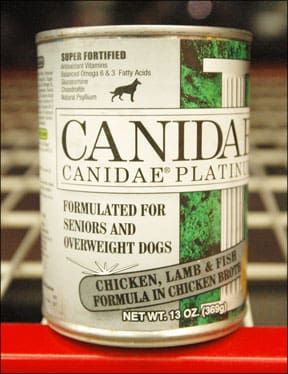
Be careful to check the individual food you‘re considering feeding; just because one variety a company offers is low-fat doesn‘t mean they all are. Canidae Platinum Formula is an example of a food where the canned version has almost twice as much fat as the dry.
I’ve included three incomplete dehydrated pre-mixes. These must be mixed with fresh foods per instructions to provide a complete diet. The added foods will boost the protein level of the overall diet to an adequate level.
The fat percentages in the table are taken from the minimum values as shown on the label. The actual amount of fat will be somewhat higher than the guaranteed minimum. Some companies provide (on their websites) the actual “as fed” amount of fat found when the food was tested. Ranges of fat percentage and GFK are given for those foods, showing the difference between the computations using the minimum and actual amounts of fat.
For canned and raw foods, I also show the dry matter (DM) percentages of fat and protein in parentheses: dry foods have so little moisture that their DM percentages are only slightly higher than their “as f ” percentages. Use the DM percentages of wet foods when comparing the amounts of fat or protein to the amounts in dry foods.
| BRAND | TYPE | KCAL/KG | % FAT | GRAMS OF FAT/1,000 KCAL (GFK) | % PROTEIN |
| CONVENTIONAL DRY AND CANNED FOODS | |||||
| Blue Buffalo Chicken Dinner | can | 1,213 | 4% (18.2%) | 33 | 8.5% (38.6%) |
| Blue Buffalo Senior Chicken & Brown Rice Recipe | dry | 3,398 | 8% | 24 | 18% |
| Blue Buffalo Weight Control Chicken & Brown Rice | dry | 3,100 | 6% | 19 | 20% |
| California Natural Low Fat Rice & Chicken Meal Adult | dry | 3,426 | 7% | 20 | 21% |
| California Natural Low Fat Rice & Lamb Meal Adult | dry | 3,373 | 7-7.1% | 20-21 | 21% |
| Canidae Lamb Meal & Rice | dry | 4,022 | 12.5% | 31 | 21% |
| Canidae Platinum Formula | dry | 3,328 | 8-8.5% | 24-26 | 20% |
| Chicken Soup for the Pet Lover’s Soul Adult Formula | can | 1,139 | 4% (18.2%) | 35 | 8% (36%) |
| Chicken Soup for the Pet Lover’s Soul Adult Light | dry | 3,088 | 6% | 19 | 20% |
| Chicken Soup for the Pet Lover’s Soul Senior Dog Formula | dry | 3,364 | 12% | 36 | 22% |
| Drs. Foster & Smith Dry Senior Dog Food Formula | dry | 3,180 | 8-8.9% | 25-28 | 23% |
| Eagle Pack Holistic Select Duck Meal & Oatmeal | dry | 3,656 | 13-13.6% | 36-37 | 23% |
| Eagle Pack Holistic Select Senior Care | dry | 3,606 | 10-12.5% | 28-35 | 26% |
| HealthWise Chicken Meal & Oatmeal Weight Control | dry | 3,285 | 7-8% | 21-24 | 20% |
| Innova Low Fat Adult | dry | 3,340 | 7-7.9% | 21-24 | 18% |
| Innova Senior Plus | dry | 3,491 | 10-10.2% | 29 | 24% |
| Wellness CORE Reduced Fat Formula | dry | 3,270 | 9-10% | 28-31 | 33% |
| Wellness Senior | can | 1,064 | 3% (13.6%) | 28 | 7% (32%) |
| Wellness Super5 Mix Complete Health Chicken | dry | 3,570 | 12% | 34 | 22% |
| Wellness Super5 Mix Just For Seniors | dry | 3,220 | 10% | 31 | 18% |
| DEHYDRATED DOG FOODS | |||||
| Sojos Europa Grain-Free Dog Food Mix (incomplete) | dehyd. | 3,469 | 6.5% | 19 | 15% |
| Sojos European Style Dog Food Mix (incomplete) | dehyd. | 3,738 | 6% | 16 | 13% |
| The Honest Kitchen Preference (incomplete) | dehyd. | 3,510 | 5% | 14 | 12% |
| The Honest Kitchen Verve | dehyd. | 3,770 | 7.5% | 20 | 21% |
| RAW FOODS | |||||
| Primal Pet Foods Venison Formula | frozen/ raw | 1,689 | 4% (18.2%) | 24 | 16% (73%) |
| PRESCRIPTION FOODS | |||||
| Hill’s Prescription Diet i/d | dry | 3,849 | 9-13% | 23-34 | 22% |
| Purina Veterinary Diets EN Formula | can | 1,194 | 3% (11.5%) | 25 | 6.5% (25%) |
| Royal Canin Veterinary Diet Digestive Low Fat LF20 | dry | 3,410 | 4-6% | 12-18 | 20% |
| Royal Canin Veterinary Diet Low Fat LF | can | 1,148 | 1.5-2% (6.8%) | 13-17 | 8% (32%) |
The table below has a sampling of foods that you can use to create a low-fat diet for your dog. You can check out other foods at nutritiondatacom, which allows you to save selected foods online and then use them to create recipes.
Once again, the most important column is the “grams fat/1,000 kcal,” which gives you the most accurate fat measurement for comparison purposes, Note that some of these foods, such as eggs, are high in fat, suitable only when combined in limited amounts with lower-fat foods. Several foods show a range that depends on how the food is prepared (raw, roasted, boiled, etc); see nutritiondatacom for details.
A simple formula similar to the one used for commercial foods will allow you to calculate the grams of fat per 1,000 kcal (GFK) in any individual food or recipe. All you need to know is the number of calories and the grams of fat (not the percentage) for each food or recipe. both of which can be found at nutritiondatacom.
grams of fat ÷ number of calories x 1,000 = grams of fat per 1,000 kcal (GFK)
Example: To calculate the grams of fat per 1,000 kcal in low-fat cottage cheese (using the numbers from the table below), divide 1.0 grams of fat by 72 kcal and multiply by 1,000.
1.0÷72x 1,000= 14 GFK
Remember that not everything you feed must be low-fat. Moderate-fat foods can be combined with very low-fat foods in order to create a low-fat meal. To calculate the GFK in any recipe, divide the total grams of fat in the recipe by its kcal and multiply by 1,000. For example, nutritiondatacom says that 8 ounces of cooked white rice combined with 8 ounces of roasted skinless dark meat chicken provide 223 grams of fat and 750 kcal. So, 22.3 ÷ 750 x 1,000 = 30 GFK
In order to calculate the amount of fat in commercial foods, you will need to know the kcal/kg. If this information is not provided on the label of the product you’re interested in, call or e-mail the company. Ask them to provide the actual amount of fat from a nutritional analysis if possible, rather than the guaranteed minimum amount that is shown on the label. (See above. You’ll see that the actual amount of fat in a food may be much higher than the “minimum” amount shown on the label.)
Most senior and light diets are relatively low in fat, but look for those that are not also low in protein. Low-protein diets should be avoided, as they can increase the risk of both hyperlipidemia and pancreatitis. Diets that are low in both protein and fat are mostly carbohydrates. Dogs get more nutritional value from protein than from carbohydrates, so it’s better to feed a diet that is higher in protein and therefore lower in carbohydrates. You can increase the amount of protein in the diet by adding high-protein, low-fat fresh foods, if needed. Moderate amounts of protein (up to 30 percent on a dry matter basis, or 23 percent of calories) are recommended for dogs recovering from acute pancreatitis.
Low-fat foods are inherently less palatable (not as tasty). If your dog is unwilling to eat low-fat foods, try adding some low- or moderate-fat canned or fresh foods, or low-sodium nonfat broth, to make the food more attractive. See the homemade diet section below for more information on foods to add. You can also combine low-fat food with moderate-fat food to keep fat at reasonable levels while increasing palatability.
Veterinarians debate about the amount of fiber that is best for dogs recovering from pancreatitis. Some dogs respond better to low-fiber diets (0.5 to 5 percent DM), using mixed soluble and insoluble fiber types, while others do better on diets that include moderate levels of insoluble fiber (10 to 15 percent). The difference may depend on what other gastrointestinal disorders the dog has. Low fiber is recommended for dogs in the initial recovery stages of acute pancreatitis, as fiber slows gastric emptying, which may prolong pancreatic stimulation.
To make a low-fat homemade diet, feed about half carbohydrates, and half low-fat meat, eggs, and dairy. The percentage of carbs can be decreased, and the amount of meat increased, if you use very low-fat cuts, or boil them to remove most of the fat.
The majority of the carbohydrates should be starchy foods, such as rice, oatmeal, barley, quinoa, pasta, potatoes, sweet potatoes, pumpkin, and winter squashes (e.g., acorn and butternut), to supply low-fat calories. Other types of vegetables, such as broccoli, summer squash, and leafy greens can be included, but they supply fewer calories so they can’t replace the starchy carbs. You can also use a low-fat pre-mix designed to balance out a homemade diet, such as Preference from The Honest Kitchen.
The other half of the diet should be mostly low-fat meats, or meats cooked to remove much of their fat. Skinless chicken breast is very low in fat, but other parts can be used as long as you remove the skin and visible fat. Turkey, venison, goat, buffalo, and rabbit are low in fat, while lamb and pork are generally high in fat. Ground beef comes in varying levels of fat.
Whole eggs are relatively high in fat but are highly nutritious, so they should be included in the diet in limited amounts. A large egg has about 5 grams of fat, which is not a lot for a very large dog, but too much for smaller dogs. You can hard boil eggs and then feed just a portion each day, or split them between multiple dogs. Almost all of the fat and calories are in the yolks, so the whites alone can be added to increase protein without increasing fat, if needed. When feeding just egg whites, they should either be cooked or a B vitamin supplement should be added, as raw egg whites can deplete biotin over time when fed without the yolks.
Low-fat or nonfat dairy products are also good to include in the diet. Cottage cheese, plain yogurt, and kefir (a cultured milk product that is easy to make at home using low-fat or nonfat milk) are all good choices. Avoid other cheeses; even low-fat ones are high in fat (nonfat is okay).
Homemade diets should include organ meat, and most organs are low in fat. Liver and kidney should be fed in small amounts only, no more than 5 to 10 percent of the total diet (around 1 to 1.5 ounces organ meat per pound of food). Beef heart is quite low in fat and is nutritionally more of a muscle meat, so it can be fed in larger quantities, as long as your dog does well with it.
Fruits such as apple, banana, melon, papaya, and blueberries are fine to include in the diet in small amounts. Avoid avocados, which are high in fat.
Meat can be fed either raw or cooked. Certain types of cooking, such as boiling and skimming off the fat, can be used to reduce the amount of fat, while other types, such as frying in oil, will increase the amount of fat. You can buy less expensive, fattier cuts of meat if you remove the fat by cooking or trimming before feeding. Grains and starchy carbs should be cooked to improve their digestibility, while other vegetables must be either cooked or pureed in a food processor, juicer, or blender in order to be digestible by dogs (raw whole veggies are not harmful, but provide little nutritional value).
If you feed raw meaty bones, the amounts should be small, as these tend to be high in fat. Be sure to remove the skin and visible fat from poultry, and avoid fattier cuts such as lamb and pork necks and breast (riblets).
This is one case where “balance over time” does not apply. A high-fat meal can’t be balanced out later with a low-fat meal. Instead, combine foods so that no meals are high in fat. Some dogs prone to digestive problems do better with more fiber, while others do better with less. Many vegetables and fruits are high in fiber, as are beans and some grains, while white rice has little fiber. If you need to add fiber, you can use canned pumpkin or psyllium.
You will need to add calcium to your homemade diet, unless you feed at least 20 percent raw meaty bones (RMBs, where the bone is consumed) or use a pre-mix designed to balance out a homemade diet.
Because you need to feed more food when feeding a low-fat diet in order to supply the same number of calories, it’s better to calculate the amount of calcium needed based on the calories your dog consumes rather than the weight of the food. The National Research Council recommends 1 gram (1,000 mg) of calcium per 1,000 kcal for adult dogs. Another way to compute the amount of calcium your dog needs is by body weight: the NRC recommends 30 mg calcium per pound of body weight (65 mg/kg) daily. Be sure to divide this daily amount by the number of meals you feed.
If you are feeding RMBs but they are less than 20 percent of the diet, adjust the amount of calcium proportionately. For example, if your diet is 10 percent RMBs, you would need to add only half as much calcium as the NRC recommends to balance out the rest of the diet.
You should also adjust the calcium amount if you feed part commercial and part homemade. There’s no need to add calcium if the homemade food is just a small percentage of the diet, say 25 percent or less, but if you feed more than that, calculate the amount of calcium based on the percentage of the diet that is made up of homemade food. For example, if you feed half commercial and half homemade, give half as much calcium as your dog would need based on body weight, or calculate the calories in the homemade portion and base the amount of calcium to add on that amount alone. You can use any form of calcium, such as calcium carbonate or calcium citrate. You can also use bone meal. Ground eggshells can be used to supply calcium. Rinse and dry the eggshells, then grind them in a clean coffee grinder or blender. One-half of a teaspoon of ground eggshell provides approximately 1,000 mg of elemental calcium.
If you feed a combination of different commercial foods, you’ll need to know the weights of each in order to calculate the GFK. Calculations are based on weight, not volume. The actual weight doesn’t matter, only the proportions.
If you feed the same amount of two or more foods, just add the values together before doing the calculation. For example, if you feed halflnnova Low Fat Adult (7.9% fat, 3,340 kcal/kg) and half lnnova Senior Plus (10.2% fat. 3,491 kcaI/kg), add the values for each together:
7.9 ÷ 10.2 = 18.1 grams of fat
3,340 ÷ 3.491 = 6,831 kcal
18.1 ÷ 6,831 x 10,000 = 26 GFK
What if you feed different amounts of two different foods? Say you feed 3 ounces of canned Blue Buffalo Chicken Dinner (4.0% fat. 1,213 kcal/kg) plus I ounce of dry Blue Buffalo Weight Control food (6.0% fat, 3,100 kcal/kg); that’s a ratio 3:1. To do the calculatiOns. multiply each canned value by 3 and add the results to the values for the dry food:
3 x 4.0 = 12.0 ÷ 6.0 = 18.0 grams of fat
3 x 1.213 = 3.639 ÷ 3.100 = 6.739 kcal
18.0 ÷ 6,739 x 10,000 = 27 GFK
If you know the kcal/oz of a canned food, you’ll need to convert that to kcal/kg in order to compute the GFK of a combination of foods. To do so, divide the number of calories per can by the number of ounces in the can, then multiply by 35. For example, if a food has 360 kcal per 12 oz can, 360 ÷ 12 x 35 = 1,050 kcal/kg.
If you know the kcal/lb of any food, again you’ll need to convert that to kcal/kg in order to compute the GFK of a combination of foods. To do so, multiply the kcal/lb by 2.2. So, if a food has 1,200 kcal/lb: 1,200 x 2.2 = 2.640 kcal/kg.
Things get a little trickier when you combine fresh foods with commercial foods. To calculate the GFK in a combination of a commercial food and fresh foods, convert both to amounts per 100 kcal.
To convert kcal/kg (which is how the information is usually given for commercial foods) to kcal/100 grams, just divide by 10. Percentage of fat is the same as grams of fat per 100 grams, so no conversion is needed there. Use nutritiondata.com to get the grams of fat and kcal for 100 grams of any food or recipe (be sure to change the serving size to 100 grams).
If you feed half commercial food and half fresh food, just add the grams of fat per 100 grams of the fresh food to the percentage of fat in the commercial food. then divide by the combined total calories. Remember that calculations are based on weight. not volume.
For example: To calculate the GFK in a meal that is half Blue Buffalo Weight Control Chicken & Brown Rice and half broiled 95% lean ground beef (e.g., 4 ounces ofeach), add the values for the two together and use the same formula from above. Blue Buffan has 6.0 grams of fat (6.0% fat) and 310 kcal (3,100 divided by 10) per 100 grams. The ground beef has 6.5 grams of fat and 171 kcal per 100 grams.
6.0 ÷ 6.5 = 12.5 grams of fat
310 ÷ 171 =481 kcal
12.5 ÷ 481x 1,000=266 GFK
This same formula will work no matter what combinations you use, as long as you adjust for weight ratios. For example, if you combine 4 ounces each of three different foods. you‘re feeding the same amount of each food. so just add the grams of fat and kcal for all three foods together.
If you use more of one food than another, then multiply the grams of fat and kcal for that food by the appropriate factor — for example, if you use three times as much of one food as another, multiply the grams of fat and kcal for that food by 3 and add it to the numbers for the other food.
For example: lnnova Senior Plus has 10.2 grams of fat (10.2% fat) and 349 kcal (3.491 divided by 10) per 100 grams. Low-fat cottage cheese has 1.0 grams of fat and 72 kcal per 100 grams. If you feed 6 oz lnnova Senior Plus and 3 oz low-fat cottage cheese. you‘re feeding twice as much of the lnnova as the cottage cheese, so multiply those values by 2 and combine them with the values for the cottage cheese:
10.2 x 2 = 20.4 ÷ 1.0 = 21.4 grams of fat
349 x 2 = 698 ÷ 72 = 770 kcal
21.4 ÷ 770 x 1,000 = 28 GFK
You can use the same formula for combining the values for raw meaty bones with other fresh foods, since nutritiondata.com doesn’t have information on RMBs. Enter your recipe for all the ingredients except the RMBs into nutritiondatacom and get the grams of fat and kcal for 100 grams of that recipe; again, make sure to change the serving size to 100 grams. Then combine it proportionately with the values for RMBs from the table above.
Once you get a feel for the diet you‘re feeding, there will be no need to continue to do the calculations. You’ll know about how much eg you can add, for example, without increasing fat too much — or you’ll know that you can add more egg when feeding a particularly low-fat meal.
Note that when we talk about a meal being half one thing and half another, we are talking about weight, not volume. A cup of dehydrated food will weigh less than a cup of ground beef, for example, so use the weight for the calculations. It‘s easy to weigh the food with an inexpensive kitchen or postage scale.
If the low-fat diets for dogs you feed lacks variety, especially organ meats, it’s best to add a supplement designed to balance out a homemade diet. Two supplements are designed to balance out high-carb diets: Balance IT Canine and Furoshnikov’s Formulas Vitamins & Minerals for Home-Cooked Dog Food.
When using Balance IT, calculate the amount of calcium your dog should have based on the formulas above, then figure how many scoops of the supplement are needed to supply that amount of calcium.
See Spot Live Longer Homemade Dinner Mixes can also be used, but give a little less than the recommended amount, since it’s made for diets that are higher in fat. Each of these supplements supplies calcium in the proper amounts, so there’s no need to add more.
Even if the low-fat diets for dogs you’re feeding has a lot of variety, it’s a good idea to add certain supplements. As discussed last month, digestive enzymes and probiotics may help to control the effects of chronic pancreatitis, and sometimes are helpful for other digestive problems. Fish body oil, such as salmon oil (not cod liver oil), and antioxidants, including vitamins C and E, beta carotene, and selenium, may help reduce the risk of acute pancreatitis. Dogs with chronic pancreatitis can be deficient in B vitamins, so a B-complex supplement is also recommended.
Many people feel more confident feeding low-fat diets for dogs that has been designed by a veterinary nutritionist, but these can have limitations. Most nutritionists provide the dog owner with a single recipe rather than a diet, and in fact caution against making any substitutions to the recipe in order to keep each meal “complete and balanced.”
The problem with this approach is that variety is key to good nutrition. Human nutritionists would never supply a single recipe and expect clients to eat that and only that for the rest of their lives. Instead, they give guidelines for which foods can be eaten in quantity, which in moderation, and which should be avoided or eaten in only very limited amounts. That’s what I’ve tried to do here. If you do use a recipe from a nutritionist long term, don’t be afraid to sometimes substitute other foods in the same category as those used in the recipe if they have similar amounts of fat (as long as your dog does not have severe digestive problems or food allergies that require a very limited diet).
The other problem with these recipes is that often they are excessively high in carbohydrates, with minimal amounts of protein, and rely on supplements to provide many nutrients. Carbohydrates are needed to supply low-fat calories for dogs who require a low-fat diet, but they provide less nutritional value than animal products such as meat, eggs, and dairy. Diets that are high in carbohydrates must rely on synthetic supplements to supply much of the nutrition that your dog needs.
A diet that contains more animal products and variety will meet more of your dog’s nutritional needs naturally, without requiring a complete vitamin-mineral supplement. Also, diets that rely on supplements may lack nutrients as yet unidentified as necessary or beneficial, as was the case with taurine before it was discovered that a deficiency leads to heart disease in cats (and some dog breeds as well). Taurine is one example of a nutrient that is found in meat, but not plant products.
If your dog cannot handle much fat in his diet, then you’ll also need to use low-fat treats. Carrot, apple, and banana pieces or green beans can be used, if your dog likes them. Many people buy or make dried sweet potato slices for dogs prone to pancreatitis. Rice cakes are another option.
Many commercial treats are low in fat. Check the fat percentage on the label of dry treats to get an idea of how much fat they contain; most dry treats with 8 percent or less of fat should be fine. Moist treats are harder to calculate, since you must either convert the fat percentage to dry matter, or know the number of calories so that you can use one of the formulas above in order to determine the actual amount of fat (most treat labels do not provide information about calories).
Some dehydrated or freeze-dried lung and other meats are low in fat. Avoid using dehydrated chicken jerky, though, as most are imported from China (check the small print carefully), and the AVMA and FDA have warned that these treats have been linked to kidney failure in dogs, though no cause has yet been found. Also avoid using pieces of cheese, hot dogs, lunch meats (even those marked low fat), and other fatty foods as treats.
You can create your own dehydrated treats by drying thin slices of low-fat meat in a dehydrator or an oven set to a very low temperature. Sprinkle with garlic powder or nonfat Parmesan cheese before drying to make them even more enticing. Anise is another flavor that dogs really like. Try boiling beef heart in water with a couple of teaspoons of anise seed powder, then cut into small pieces to use as treats.
Use low-fat or nonfat yogurt in place of peanut butter or cheese for stuffing Kongs. Put them in the freezer to create a frozen yogurt treat that will last a long time.
Some chews, such as bully sticks (also called pizzles), are low in fat, while others, such as dried trachea and pig ears, are quite a bit higher. Dried tendons appear to be low in fat, but may be greasy, so use your own judgment. Similar products from different manufacturers may vary in fat content, so pay attention both to the amount of fat listed on the label and to the feel of the chew. Marrow bones are filled with fat and should be avoided. Knuckle bones also appear to be too high in fat to use safely.
Two low-fat chews that last a long time are Himalayan dog chews, which are made from yak and cow milk and are less than one percent fat, and deer antlers, such as those marketed by Lucky Buck. Mindy Fenton, who owns K9 Raw Diet, carries these and other low-fat chews, and has helped many customers whose dogs are prone to pancreatitis to find chews that work for them.
I found several anecdotal reports of rawhide chews, particularly those that were imported, causing acute pancreatitis in dogs, but could find no studies or warnings from veterinarians or other reliable sources on this topic. Some people fear that the act of chewing for long periods may overstimulate the pancreas and cause problems for some dogs, but I could find no supporting evidence. A veterinary pancreatitis specialist confirmed that he feels chewing is not a problem as long as the chews are not high in fat (such as pig ears). Keep an eye on your dog and discontinue giving chews if they appear to cause any discomfort.
Remember that the bottom line is always to do what works for your dog. Numbers tell you only so much, and nutritional analyses for both commercial and fresh foods may vary from what you’re actually feeding.
If your dog continues to have problems, try different foods to see if he tolerates some better than others. If possible, feed frequent small meals, which are easier to digest. Experiment with supplements to find those that seem to help your dog. Keep a journal of what you feed, including treats and supplements, to help you see patterns and identify ingredients that might cause problems for your dog.
If digestive disorders continue no matter what you feed, work with your vet to look for other causes, such as intestinal infection, parasites, or food allergies that may be an underlying factor.
Mary Straus does research on canine health and nutrition topics as an avocation. She is the owner of the DogAware.com website. She lives near San Francisco with her almost 17-year-old dog, Piglet.
For some reason the blinking red light on my phone that signals “message waiting” always seems ominous to me. Last Thursday, my wariness was reinforced: my friend Cindy had left a frantic message. Her dog was lost.
“Hattie’s missing!” I could hear the panic in her voice. “I was walking her at Antietam Battlefield last night, the leash came off her collar, and she took off after a deer!” Bad news. In many parts of the country, dogs who chase wildlife or livestock can be shot.
There was more bad news as Cindy’s message continued. “I have to leave town today for a work-related retreat. I have people looking for her, but if there’s anything you can do?”
I called Cindy back immediately. She had already placed a “lost dog” ad in the paper for her 18-month-old, wheaten-colored, Irish Wolfhound-mix. She had put up posters in the area where Hattie was lost, as well as on the five-mile route between the park and her house in Sharpsburg. She had notified the only shelter in the county that handles stray dogs. She left one of her sweatshirts in the spot where Hattie went missing. And she had people who knew Hattie well – staff from the doggie daycare facility she visited regularly – looking for her. There wasn’t much more I could do. I gave her contact information for a person in Maryland who has a dog trained to find missing pets, and suggested setting a humane dog trap. And praying.
It was worrisome that Hattie had been out all night on her own and hadn’t been spotted by anyone. She was a large, light-colored, well-socialized dog, microchipped, and wearing a collar with tags. Someone should have found her already.
Thanks in part to my 20 years working at a California animal shelter, when an animal goes missing I tend to immediately imagine the worst-case scenarios. Lost dogs can be hit and killed (or badly injured) by cars; shot if suspected of chasing livestock or wildlife; poisoned; caught in a leghold trap; attacked by wild animals; or picked up by someone who wants to keep her themselves, or by someone with the misguided idea that anyone who loses a dog is irresponsible and shouldn’t get her back. Of course, what you hope is that your dog is picked up by someone who returns her to you or to a local animal shelter.
Our best hope was that Hattie was still wandering around the cornfields at the Battlefield, trying to find her way home. If someone had found her, they should have already called.
Before your dog gets lost
I fervently hope you never find yourself in the position of looking for your missing dog. But just in case, there are a number of things you can do in advance to maximize your success in finding her.
• Identification: For starters, make sure your dog is wearing a collar with lots of identification. Tags should include both a current dog license (if required where you live) and an ID tag with up-to-date owner information and at least two, preferably three, contact numbers. You can also order collars that have your phone number and the dog’s name stitched into the collar. Well-fitted collars are less likely to fall off than tags.</p>
Finally, tattoos and microchips are excellent “back-up” ID systems. Be sure you keep owner information current with those registries as well – if you’ve moved, they need to know. (For more information about identification methods, see 5 Reasons to Microchip Your Dog.)
• Shelters: There is only one shelter in my county that handles stray dogs. That makes it relatively easy to know where to look for a lost dog. In some jurisdictions there are several, and your dog could end up in any of them if she wanders or is transported over county or city lines.
Before your dog gets lost, find and visit every shelter in your area and ask how long they hold stray dogs, so you know where they are and how often you have to visit. Ask if they keep records of dogs found dead along the road, or if someone else does – perhaps the Department of Public Works. Then keep a list by your phone of the addresses, telephone numbers, and holding times of each shelter, so you don’t have to look them up in a panic.
• Training: A solid, frequently practiced recall is a must if you plan to take your dog off-leash anywhere that’s unfenced. But even if you don’t intend to let your dog run off-leash, dogs frequently get lost when stuff happens – stuff like Hattie’s equipment failure, the board that came loose on our fence last July, earthquakes and fires, doors and gates left open, and car accidents.
I highly recommend teaching every dog an emergency recall to a special cue that will carry through forests and over cornfields. We have a “storm whistle” – available online and at camping supply outlets – that is so shrill and loud I have to cover my ears when I blow it. Teach your dog that the sound means “chicken!” (or whatever your canine pal likes best) and you’ll have an invaluable tool for those emergencies.
• Take several photos of your dog now. Make a stack of emergency fliers with her photo and your contact information to hand out if she gets lost. Offer a reward on the flier. Stash them in a safe place for future use. With luck, you’ll never need them.
• Check your perimeter fence regularly to be sure it’s secure.
• Put locks on yard gates to avoid accidental release – and keep them locked.
• Google “lost dog” and bookmark websites that offer online lost pet announcements.
• See www.missingpetpartnership.org and find a trained “pet detective” near you. These are people with dogs who are specially trained to search (using their keen sense of smell) for lost dogs. Talk to the lost pet specialist, find out what services she offers, and put her contact information on your shelter list by your phone so you can reach her easily if you ever need her.
After your dog gets lost
The worst has happened: Your dog has gone missing. Don’t panic! It can happen to any of us. Our Scottie found the loose board on the fence late one evening last July and slipped out into the darkness. I envisioned searching through the woods for him all night as he pursued nocturnal critters. Fortunately, Dubhy came when I called him. Of course, the sooner you spring into action, the better your chances of recovering your dog quickly. So don’t panic, but do get busy.
Unless you know your dog was lost away from home, first, go looking on your own property. Dogs sometimes get trapped in a culvert, stuck in a hole or crawl space, closed in the basement, the clothes dryer, an upstairs bedroom, or a stall in the barn. Take a flashlight, so you can look in holes. Look behind, under, and inside everything that could possibly hide a dog.
If you don’t find her on your own property, or you know for sure she’s not there because someone saw her dash out the door and down the street, search your neighborhood. Take your emergency whistle, treats, a flashlight, and your dog’s favorite squeaky toy or anything else that makes a noise she’s familiar with. If she has a favorite canine friend, take him, too. Grab your emergency fliers to hand out to people you see while you search. Go to every home in the area, talk to the residents, and leave a flier with them. If no one is home, leave a flier on the door.
Talk to everyone you meet on the street, and give them fliers. Children, mail carriers, meter readers, delivery people, and school bus drivers are especially helpful. Walk the streets calling your dog, occasionally blowing the whistle, rattling a dog cookie box, squeaking her squeaky toy. Call out her favorite phrases, like, “Want to go for a ride?” or “Cookies!” Stop occasionally and be quiet, to see if you can hear your dog answering you. If she’s trapped somewhere, she may bark, or whine to try to get your attention. Most lost dogs can be found within the first few hours when the owner makes a concerted effort.
If you don’t find her within an hour, it’s time for the next level of attack. Call a lost pet specialist. Her dog will have a better chance of finding yours if there’s a fresh scent trail. Call the shelters to see if anyone’s reported finding your dog, or brought her in.
Make large, fluorescent posters and post them everywhere. If possible, put a large color photo of your dog on each poster, and make sure your phone number is large enough to be seen and dialed from a passerby’s car; you want to make it easy for someone to call you as quickly as possible if they’ve spotted your dog as they were driving. Consider creating fliers in a second language if there is a concentration of non-English speakers in your area. Offer a reward.
Call the newspapers and place “lost dog” ads. Call all the vet hospitals in the area, to see if anyone has brought in an injured dog, as well as to put the staff on the alert if someone should happen to come in for vaccinations or a check-up of their “new” dog – who just happens to fit your dog’s description. Deliver fliers with photos to all the vet hospitals and shelters. Look through each shelter’s kennels; your description of your dog may differ from theirs, and if you rely on a phone call, they could miss her.
Before you end your search for the day, especially if your dog went missing in unfamiliar territory, leave an article of your clothing and a bowl of her food in a sheltered placed near where she was last seen. You may even choose to camp out in a sleeping bag. You probably aren’t going to sleep well anyway.
Day two
On the second day, if you haven’t already, put a pet detective to work. Her dog should be able to at least help you focus your search on the most likely area, where your dog’s scent is strongest and freshest. She may also be able to tell you that your dog’s scent stops abruptly along the side of a road – perhaps a clue that someone picked her up. Her dog should also be able to find evidence – hair, perhaps blood – if the trail stops because your dog was hit by a car, in which case you’ll redouble your efforts to find your injured dog in the immediate area, hopefully still alive and in time to get veterinary care.
If the pet detective dog tells you there’s no fresh scent in the area, then you know to concentrate your efforts at shelters and around the community.
How long should you look? Start immediately and keep looking – for weeks and months if necessary. If someone else is keeping her, someone will see her sooner or later. If she’s roaming, someone will spot her and, one would hope, let you know, even if they can’t catch her.
If you have a strong connection to your dog you’ll find a way to do the impossible – visiting all the shelters, posting fliers, working with a pet detective, checking with rescue groups and internet sites – until you find your dog. If you are easily discouraged, your chances of finding your missing pal plummet dramatically. Don’t give up; she’s counting on you to bring her back home.
Tragic ending
The vast majority of lost dog stories have happy endings. But sometimes the end of the story is tragic. Cindy came home from her work commitment on Sunday afternoon and immediately went searching for Hattie. I got another red-flashing-light phone message from her late Sunday.
“I found Hattie.” Cindy’s voice on the recording trembled with emotion. “She’s dead.”
Cindy found her dog’s body not far from the place she had last seen her. She believes Hattie was shot with a high-powered rifle, possibly illegally on federal property and dragged back to the place Cindy found her, probably on the first night she was lost. Cindy, of course, was grief stricken and guilt-ridden.
If your story doesn’t have a happy ending, at least you will know you did everything possible to find your missing companion. Like Cindy, you will grieve, and perhaps blame yourself for allowing it to happen, or blame anyone else who might have contributed to her escape.
People who don’t understand the depths of your love for your dog will tell you to get over it – that she was “just a dog.” But you’ll know better. They are not just dogs. They are our beloved friends, family members, and part of our hearts. It’s okay to grieve, as long and as hard as you need to. Don’t let anyone tell you otherwise.
Pat Miller, CPDT, is Whole Dog Journal’s Training Editor. Miller lives in Hagerstown, Maryland, site of her Peaceable Paws training center. Pat is also author of The Power of Positive Dog Training; Positive Perspectives: Love Your Dog, Train Your Dog; Positive Perspectives II: Know Your Dog, Train Your Dog; and the brand-new Play with Your Dog.
How many of you would put your dog and yourself at the mercy of a network TV “reality” show, competing against other dogs and dog owners for more than six weeks? Keep in mind that the show’s producers will do their best to foment discomfort and personal conflict between yourself and your fellow contestants. Also, while your every moment will be filmed, only a highly edited and manipulated version of what actually happened will be broadcast to a national audience, who will be encouraged to share their opinions with other dog owners about you, your dog, your dog training skills, and your most unguarded facial expressions and utterances. I don’t think I would do it!
In my opinion, all of the 12 people who actually put themselves through this very experience last spring and summer on CBS’s “Greatest American Dog,” were very brave. True, they were competing for a prize of $250,000, and some hoped to use the exposure to promote their various careers; there was potential for some compensation to offset the risk of being made to look ridiculous.
In my opinion, though, the most admirable contestant was Laurie Williams, CPDT, a professional dog trainer from Fredericksburg, Virginia, who went on the show with her six-year-old Maltese, Andrew.
During the final episode, broadcast on September 11, the judges questioned the final three contestants about their motivation for taking part in the competition and what they had gotten out of the experience. Williams answered that her motivations for being on the show included promoting positive, dog-friendly training, and showing what well-trained small dogs are capable of. She added that she felt that she and Andrew had succeeded in realizing those goals.
The three judges on the show agreed. “Laurie, you and Andrew have so much love and respect for each other. You define what dog ownership is all about,” said judge Victoria Stilwell. Another judge, Allan Reznik, commented, “Andrew loves to work. I’ve never seen a dog work so happily, and that joy reflects the loving nature of your relationship and of your work ethic.” The final judge on the show, Wendy Diamond, said, “Andrew is the most incredible Maltese we have ever witnessed.”
Despite these enthusiasms, the judges selected another dog/owner pair as the winners of the “Greatest American Dog” title; Williams finished the competition in second place. Williams remains proud of her accomplishments on the show. “We definitely walked out of there with our heads held very high,” she says.
I interviewed Williams shortly after the conclusion of the show, to talk about her experiences in the competition, the opportunity she had to demonstrate dog-friendly training to a mass audience, and about her professional observations about the advantages of positive-only dog training techniques. You don’t have to have seen the show to appreciate her comments about the benefits of a strong, fear-free relationship with your dog.
WDJ: Laurie, it’s great to talk to you! Please accept my congratulations and condolences on your second-place finish. Of course, I wanted you to win!
LW: Thank you. I did, too!
WDJ: You got as close to winning as possible. Unfortunately, there was no way of guessing which way the final judging was going to go. It wasn’t at all clear what the judges criteria were.
LW: Yes, that was disappointing. But I’m very proud of Andrew. He did everything I asked him to do and more. And I’ve received hundreds of letters and e-mails from people who appreciated his performance.
WDJ: During the show’s run, I was unsure as to whether you or any of the other contestants were professional trainers. The biography provided by the show indicated you were a dog daycare owner.
LW: I’m not sure why they did that. I am a dog daycare owner, but I’m also a Certified Pet Dog Trainer (CPDT). I opened my business, Pup N Iron, in Fredericksburg, Virginia, in 2005. It is primarily a training facility and dog daycare, but we also have a therapy pool and offer rehab. I used to be a personal fitness trainer and a gym manager, and I would always joke around with my colleagues that one day I was going to open a dog gym and call it Pup N Iron. They would all laugh at me, but I got the last laugh, because I have realized my dream.
WDJ: Were you the only professional trainer on the show?
LW: I wasn’t. Teresa Hanula is also a CPDT, although the show identified her only as a pet sitter. She has a dog training and a pet-sitting business. Two of the other five finalists, Bill McFarlin and J.D. Platt, also have extensive dog training experience.
WDJ: Which makes it even more strange that the winner, Travis Brorsen, was quite up-front in saying he had no dog training experience whatsoever.
LW: He did make a lot of progress over the course of the show, though. He was smart enough to spend a lot of time learning from those of us who had a lot of experience, and asking a lot of questions. And he really did have a nice relationship with his dog. Plus, they were very appealing; they had “that look,” the stereotypical all-American boy from the Midwest and his floppy-eared young Boxer.
WDJ: I had a bad feeling about the show from the way it was originally described, but as a viewer, I was drawn in from the beginning. I have to say, though, that I was frustrated throughout the series because the technical aspects of training were very rarely discussed. And only in the final episode did we hear anyone say, “positive, dog-friendly training.” I could have kissed the TV when I heard you use that phrase.
LW: It was even more frustrating for me, because getting those words on TV was definitely part of my whole agenda for being on the show. I told [the producers] going in that that’s what I wanted to show. I wanted to show them the fantastic relationship I have with my dog, which was created entirely through positive training.
WDJ: I was surprised by the selection of the participants on the show. It seemed as though the producers wanted some well-trained dogs, but not all well-trained dogs on the show.
LW: That surprised me, too. From the way the concept of the show was described to me, I thought it was going to focus on the relationships between dogs and owners and that the whole objective was to test who had the strongest and best relationship. I wasn’t envisioning a lot of physical challenges; I thought it would be more about having a well-behaved dog and one you’re in sync with. That’s one of the reasons I was shocked when I saw very young dogs and completely untrained dogs after the selections were made.
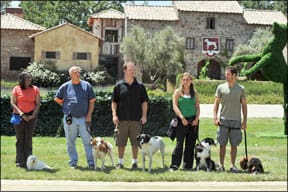
At the end, the judges talked about who was the most improved. I thought, Gee, I wish I knew at the beginning they wanted to see the dog’s progression. I also have a young Dalmatian I could have brought if that’s what they wanted! But, in retrospect, I brought exactly the right dog, maybe not to “win” by the judges’ standard, but to be a champion for my cause. I’m getting lots of e-mails from people who really appreciated what Andrew and I have, and who recognized the depth of our relationship.
WDJ: Did the show’s producers provide any instruction to those who needed help getting their dogs to complete the challenges?
LW: They did have trainers studio trainers who do things completely differently from the way I do them. Generally, they didn’t seem concerned with how to teach a dog to do something in a way that preserves his relationship with them, or in a way that will prove to be a positive experience for the dog in the long run. Studio trainers just want to get the dog to “get the shot” as fast as possible. Learning theory and principles of animal behavior was not the focal point.
Also, some of the participants were advised to get some help with training their dogs before the show started. The producers even sent lists of trainers to the contestants with a suggestion that we have some dog training “cram sessions” before we got to the show. I know that Travis (the eventual winner of the show) was one of the people who spent a bunch of time with a dog trainer, a week or two before the show started filming.
Here’s an odd thing: They made it clear from the beginning that all training styles would be welcome. And not all of the trainers on their list were positive trainers.
But when we got there, and learned that Victoria Stilwell [a positive trainer from Britain, and star of a cable TV show called It’s Me or the Dog!] was one of the judges, it was clear that at least some of the judging would be biased toward positive techniques. Which was fine with me; I’m completely committed to positive training. It was not especially fair to the people who use other types of training methods. J.D., in particular, got a raw deal; even though nobody ever saw him do anything harsh to his dog, Galaxy, he frequently described himself as an “old-school dog trainer,” and he got slammed for that on the show. If that’s not a set-up, I don’t know what is.
WDJ: I wanted to ask you about J.D. and his dog. It seems to me that you have a very strong relationship with Andrew, and clearly, nothing makes him happier than to work with you. J.D. also seems to have a strong relationship with Galaxy but I thought I could see a difference between the bond between you and Andrew and the one between J.D. and Galaxy. She’s a very well-trained dog, but there were moments when her body language told me that she had some reservations about him, that she had been trained with force-based methods at some point. It sometimes seemed as if she complied with his requests because she was at least conscious of the potential for an unpleasant consequence.
The judges said several times that Galaxy seemed “robot-like.” I think they were responding to the same things I was seeing but I have had a hard time figuring out what, exactly, it was about her that lent these impressions. I mean, it’s not like she cowered from him or anything like that. I finally decided that it’s her stillness, that body language that says, “Maybe I had better sit here and think about what he wants me to do, so I don’t make a mistake.” Whereas dogs who have been trained with no aversive techniques frequently and spontaneously “offer” behaviors. Was it a lack of exuberance?
LW: Perhaps that’s it the lack of that glee, that joy, that “Hey! Let me try this!” But you know, she’s also an older dog. She was very quiet. She didn’t really come alive until he got the ball out and she could work.
Andrew, on the other hand, did do that. He chose to do his own thing a lot. That was one thing that kind of got my goat, when the judges suggested he had separation anxiety. I felt that was so irresponsible of them to equate what can be such a serious dog behavior issue to Andrew’s desire to remain with me when given the choice. I’ve worked hard to establish that connection with him, because it’s necessary with a therapy, service, and performance dog.
Once he jumped up on an obedience trial judge in the ring “Hi judge! Pick me up!” He’s also prone to veering off to greet people at ringside , “Hello fans, love you!” He’s really a ham. And he offers behaviors all the time; he’s always clowning. In contrast, Galaxy is very “locked on,” very quiet, and I never really saw her behave in an upbeat way until her ball came out. But you’re right; she doesn’t offer behavior. She rarely did anything until told to do so.
WDJ: J.D. was highly criticized by the judges during the so-called “loyalty challenge,” where the dogs had to stay even with people using toys and food to try to get them to break the stay. She was really tempted by the balls and other toys and food, and he had to lean forward and raise his voice and his intensity, and keep repeating, “Galaxy, no, no!” and “Stay!” You and Andrew provided quite a contrast there. You were very quiet and calm, not at all intense, and you only had to repeat “Andrew, stay!” I loved watching that.
LW: That challenge was really difficult for Galaxy because she really loves to chase balls and to eat treats, since she never gets them! J.D. doesn’t believe in using food in training at all, and never, ever gives dogs “people food,” so of course food was her weakness, her Achilles heel. That’s why he felt he had to stay on her like that, kind of stay in her face, take his intensity to that level.
But that challenge leveled the playing field in that it was all about our relationships with our dogs and how we communicate with them; finally the dog’s size or age or physical condition didn’t matter. I mean, a dog can only do what he can do physically. Physically, Andrew cant do everything that Travis Boxer can do. The challenges like that, which tested our relationships, were my favorites. And that one in particular showed how strong the relationship is between Andrew and me. Hed rather hang out with me than go play ball or take food from someone else, and thank God for that!
Another reason I liked that one: It did really show your training style. If I leaned over Andrew and shook my finger at him and raised my voice, he wouldn’t know what that means. He’d be curious; “What are you doing, Mommy?”
I was trying to explain this to J.D.; he didn’t understand why the judges said he was being intimidating to Galaxy, because of course he didn’t hit her or scare her. I told him that it seemed like he was telling Galaxy, “Don’t you move, or else!” For my dog, there has never been an “or else.” Andrew doesn’t know what “or else” might mean. The worst thing that might happen is that I pick him up and put him back in that spot and ask him to do it over again. And the more likely thing that may happen is that he’ll get some delicious treats after a while.
But, again, J.D. wasn’t the only one who used that posture. I think most of the other contestants except for me used that type of body language at some time or another.
WDJ: Andrew was the only purely positively trained dog on the show, then?
LW: By my definition of correctly implemented positive training methods, yes. However, I think some of the contestants really didn’t know what correct positive training is. Some thought they were using positive methods when they actually were bribing and baiting, never “marking” correct behavior and just babbling “Sit! Sit! Sit! Sit!” Repeating every cue half a dozen times. That’s what gives people like J.D. a negative view of positive training
WDJ: This is what I liked most about the show: The opportunity to watch different people work with their dogs, and see what works well and what doesn’t. I can see the difference between dogs who are trained with only positive techniques, dogs who are trained with a lot of aversives, and dogs who are trained with a mix of techniques. Except for Andrew, the dogs on the show seemed like mostly the latter. J.D. and Galaxy, included.
LW: I found J.D. to be a very gifted handler, but from my view, he didn’t understand the science of animal behavior. He would say, “I never use treats; I’m old school!” And I would say, “J.D., don’t you understand that when you use playing with a ball as a reward, or praising Galaxy with words and petting, you are using positive reinforcement, just like I’m doing with my treats?” He couldn’t wrap his brain around that. He thought it was different. I would say, It doesn’t matter what the reward is, as long as the dog enjoys it. He could not accept that.
WDJ: Teresa and Leroy might be another example. It was clear that she used positive training and had taught him to do a lot of things but there were times when he would get overstimulated and lose focus, and she would get frustrated and yell at him. He would get confused and anxious and start barking . . .
LW: I have gotten to know Teresa better since the show ended, and I know she’s very committed to positive training. Some of her problems with Leroy are kind of like stage mother problems. I think she gets self-conscious and anxious when there are people waiting for her to get Leroy to do something, and she gets nervous, and he feels that and gets more nervous. But she’s very well-educated about animal behavior. And when she’s teaching others what to do with their dogs, she’s very positive, very patient, very encouraging.
WDJ: It must be difficult to sit still when you hear or read criticism from people who saw the show, knowing that they were only seeing an edited version of what really happened.
LW: Well, yes. And many people just dismissed the show out of turn, because it seemed ridiculous. It was ridiculous at times. But it was also the first time you saw regular people training dogs on national, network television!
WDJ: Many people make snap judgments about what they see on TV. I read many comments on the show’s message boards and elsewhere where people basically said, “I’m not watching the show any more since Tillman got voted off.” Or, “I’m not watching the show because they had an elephant scare the dogs.”
I thought, “Wow, people are so judgmental! Maybe you don’t agree with the judges or even with the show’s production choices, but, wait, you can learn from some of this footage!” It occurred to me that the challenge for the show’s producers was the same challenge I face at Whole Dog Journal and perhaps the same challenge you face as a positive trainer: Keeping people interested long enough past their initial snap judgments to show them how fun positive training is, and how effective . . .
LW: I think you’re right! I took a lot of flak for subjecting Andrew to the elephant challenges [where the dogs had to hold a sit-stay as an elephant approached them, and then, in a later episode, where the dogs had to fetch an object by running underneath a stationary elephant]. As I saw it, my daily job was to keep my dog safe, make sure each task was fun for him, and not set him up to fail. If I could meet those goals in each challenge, then wed participate as best we could. And we were able to do that in the elephant challenges.
I was actually more concerned about the smaller, daily things, like the extreme heat, keeping Andrew’s stress low, and making sure he was successful and didn’t get hurt. Unfortunately the judges didn’t seem to understand this, which was surprising. Victoria Stillwell accused me of “over-mothering” Andrew, which really shocked me. I thought of all the judges she would understand the concept of setting a dog up for success rather than failure, particularly when we were never really given the proper amount of time to really teach our dogs new behaviors and acclimate them to various different equipment.
WDJ: In the final episode, I liked when you stated that Andrew didn’t care if he won or not, he wouldn’t know the difference . . . that he was simply doing what made you happy with him.
LW: I’m glad [the producers] included that part, too. I thank my dogs a lot. “Thank you for letting me take you to that show, for doing what you do for me!” I know that they would rather just chill at home on the couch. I think people are delusional when they say the dog wants to win, or the dog is competitive. They mostly just want to be with you.
WDJ: And I loved when you stated that your goal had been to represent positive, dog-friendly training. And I think you did it very well.
LW: Thank you! Of course, having started training dogs 25 years ago, I used to be old school, too like everybody else back then. I am a “crossover trainer” for sure. I crossed over from the dark side about 11 or 12 years ago. And while I’ve never looked back, I think it helps me get through to my students even more, because I can tell people, “Look, I’ve done it both ways. And force-based methods do work. But I know that the relationship I have with my dog today is far deeper, far closer, far more reliable than what I had when I used aversives.”
I had dogs that I put obedience titles on who would run away from me if they were off-leash and had the opportunity. My all-positive dogs today are far more reliable than those well-trained dogs in my past; they can go anywhere off-leash and they stay with me without any special effort on my part. Because of their positive experiences with me, my dogs always look for me, check in with me, they want to be close to me. I really know the difference. I’ve seen it, I’ve lived it.
WDJ: Thanks so much for speaking with us, and doing your best to “represent” all of us fans of positive training. You and Andrew did us proud!
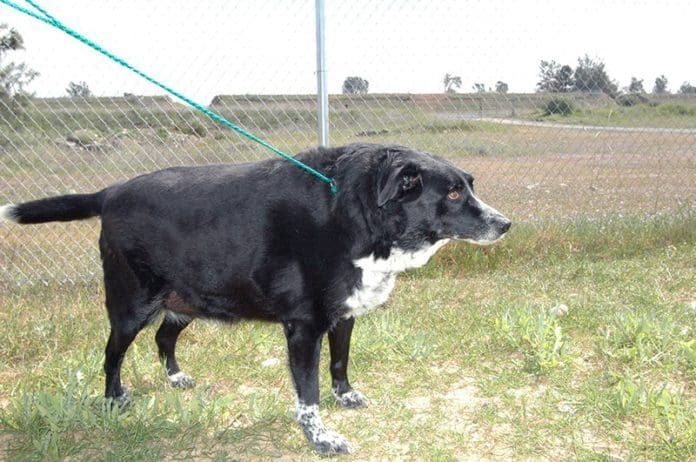
Your dog has vomited several times, doesn’t want to eat, and is walking around with his back arched up, or lying in a corner refusing to get up. Should you:
The answer is C: Take him to your vet right away. These can be signs of pancreatitis. While it’s fine to wait to see if a dog improves on his own after a single vomiting episode with no other signs of illness, repeated vomiting can quickly lead to dangerous dehydration and electrolyte imbalance, especially if your dog isn’t drinking or can’t keep water down.
When signs of abdominal pain accompany vomiting, pancreatitis is high on the list of possible causes. The worst thing you can do is feed your dog fatty food at this time.
Pancreatitis literally means inflammation of the pancreas, the glandular organ that secretes enzymes needed to digest food. When something causes these enzymes to be activated prematurely, they can actually begin to digest the pancreas itself, resulting in pain and inflammation.
Pancreatitis occurs in two different forms, acute and chronic, and both may be either mild or severe. Acute pancreatitis occurs suddenly and is more often severe, while chronic pancreatitis refers to an ongoing inflammation that is usually less severe and may even be subclinical (no recognizable symptoms).
Acute pancreatitis can be extremely painful, and can become life-threatening if the inflammation spreads, affecting multiple organs and systems. Symptoms commonly include anorexia (loss of appetite), vomiting, weakness, depression, and abdominal pain. Abdominal pain in a dog may be exhibited as restlessness or not wanting to move; a hunched appearance or a “praying position,” with the chest down and the rear raised; or vocalization (crying or whimpering). Additional symptoms may include diarrhea, drooling, fever, and collapse.
For mild cases, all that may be needed is to withhold food and water for 24 to 48 hours (no longer), along with administering IV fluids to prevent dehydration and drugs to stop vomiting and control pain.
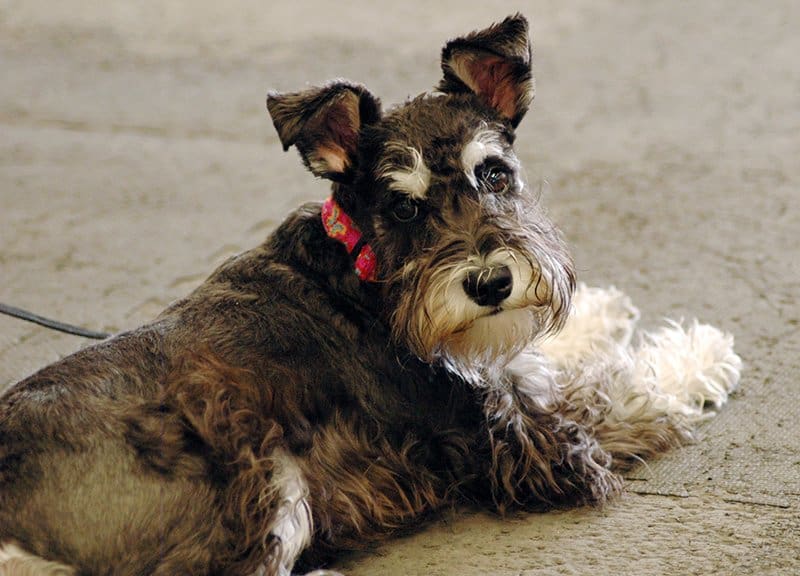
For moderate to severe cases, hospitalization and intensive treatment and monitoring is required. Supportive treatment includes intravenous fluids to keep the dog hydrated and restore electrolyte and acid-base balance. Potent pain medication is needed, such as injectable buprenorphine or other narcotic pain relievers. Treatment is generally required for three to five days, and sometimes longer. Surgery may be necessary, particularly if the pancreas is abscessed or the pancreatic duct is blocked.
Recommended medications that stop vomiting (antiemetics) in dogs with pancreatitis include a metoclopramide infusion and chlorpromazine (once dehydration has been controlled).
Alternatively, dolasetron (Anzemet) and ondansetron (Zofran) – antiemetics developed to combat vomiting that has been induced by chemotherapy – may be used. Cerenia (maropitant) is a new antiemetic drug approved for dogs that some vets are starting to use, though it has a limited track record. Metoclopramide (Reglan), a commonly used antiemetic, may be contraindicated in pancreatitis due to concern that it may decrease blood flow to the pancreas (antidopaminergic effect), though this has not been substantiated.
Antibiotics to control infections secondary to pancreatitis may be used, though this complication is not thought to be common in dogs. A plasma transfusion is sometimes given in moderate to severe cases in the hopes that it will inhibit active pancreatic enzymes and systemic inflammatory response; it also provides clotting factors that can help prevent and treat disseminated intravascular coagulation (DIC), an often lethal potential side effect of pancreatitis.
Antacids have not been shown to have any beneficial effect in the treatment of pancreatitis, though they may be given when vomiting is persistent or severe. Non-steroidal anti-inflammatory drugs (NSAIDs) are not effective and should be avoided due to concerns for gastric ulceration and kidney and liver damage. There are no studies yet to support the use of corticosteroids for treating pancreatitis in dogs.
Traditionally, the standard recommendation has been to withhold all oral food and water until symptoms subside, in order to allow the pancreas to rest. If symptoms persisted for more than 72-96 hours, nutrition was given parenterally (intravenously, avoiding the stomach and intestines). It was thought that even the sight or smell of food could trigger pancreatic secretions that would make the problem worse.
Today, though, there is growing evidence in both humans and animals that recovery time is reduced and survival rates increased when patients are fed early in the recovery from pancreatitis. It is now accepted that prolonged withholding of oral food and water for more than 48 hours (including the time before the dog was brought in for treatment) can lead to increased intestinal permeability (“leaky gut”), atrophy of the digestive cells in the small intestine, and sepsis (blood poisoning). In turn, sepsis can contribute to multiple organ failure and decreased survival rates.
Without oral nutrition, the intestines starve, even if nutrition is provided to the rest of the body through IVs. This is because the intestines receive their nutrition only from what passes through them. Enteral feeding, in which nutrition is provided through the digestive system, is thought to decrease the potential for bacterial infection caused by intestinal permeation, and may reduce the time the dog needs to be hospitalized.
Because most dogs with pancreatitis are unwilling to eat, a liquid diet may be fed via a tube placed through the nose, esophagus, or stomach. Dogs may tolerate nasoesophageal feeding even when vomiting persists. There is evidence that pancreatic secretions are suppressed during an attack of pancreatitis, so food delivered in this manner stimulates the pancreas less than we used to believe, and helps to maintain the health of the gastrointestinal tract and decrease inflammation and side effects such as those listed above.
The ideal composition of this diet has not yet been determined. It is possible that the addition of omega-3 fatty acids, pancreatic enzymes, medium-chain triglycerides, and the amino acid l-glutamine to the liquid nutrition may also help with recovery, though this must be done with caution. Probiotics, however, are not recommended; a recent human study showed an increased death rate for patients with severe acute pancreatitis when probiotics were administered, possibly due to reduced blood flow to the small intestine.
Enteral (tube or oral) feeding should begin after 48 hours without food. Vomiting can be controlled with antiemetics and pain medication. The goal of nutrition in the short term is to improve barrier function (stop leaky gut syndrome) rather than to supply total caloric needs.
Parenteral (IV) nutrition should be used only when absolutely necessary, due to persistent, uncontrolled vomiting. Survival rates improve when it is combined with enteral nutrition. A tube can be placed into the jejunum (part of the small intestine) if needed to provide enteral nutrition when vomiting cannot be controlled.
Chronic pancreatitis refers to a continuing, smoldering, low-grade inflammation of the pancreas. Symptoms such as vomiting and discomfort after eating may occur intermittently, sometimes accompanied by depression, loss of appetite, and weight loss. In some cases, signs may be as subtle and nonspecific as a dog not wanting to play normally, being a picky eater, or skipping a meal from time to time. Chronic pancreatitis may periodically flare up, resulting in acute pancreatitis.
Dogs with chronic pancreatitis often respond favorably to a low-fat diet. Pain medication can be helpful in relieving the symptoms of chronic pancreatitis and may speed recovery.
Chronic pancreatitis is often subclinical and may be more common than is generally realized, with symptoms blamed on other diseases. It may also occur concurrently with conditions such as IBD (inflammatory bowel disease) and diabetes mellitus.
In addition to digestive enzymes (exocrine function), the pancreas also produces insulin (endocrine function). Dogs who are diabetic may have an increased risk for pancreatitis.
Conversely, a dog whose pancreas is damaged due to pancreatitis may develop diabetes, which can be either temporary or permanent; 30 percent of diabetes in dogs may be due to damage from chronic pancreatitis.
Exocrine pancreatic insufficiency (EPI), when the pancreas is no longer able to produce digestive enzymes, can also result from chronic pancreatitis, leading to weight loss despite consuming large amounts of food. When the pancreas is damaged, diabetes is likely to show up several months before EPI.
Pancreatitis is often blamed on high-fat diets, though there is little scientific evidence to support this. Active, working dogs, such as sled dogs, can eat as much as 60 percent fat in their diets without developing pancreatitis, but too much fat may cause trouble for middle-aged, overweight, relatively inactive dogs, who are the ones most commonly affected by pancreatitis. Too much fat can also cause problems for some dogs with chronic pancreatitis.
Dietary indiscretion, such as eating rancid fatty scraps from the garbage, can also lead to pancreatitis, particularly when a dog accustomed to a low- or normal-fat diet ingests high-fat foods. That’s why pancreatitis incidents are thought to increase after Thanksgiving, when people may feed their dogs a meal of turkey skin and drippings.
Low-protein diets have also been shown to predispose dogs to pancreatitis, especially when combined with high fat intake. Some prescription diets may be a concern, such as those prescribed to dissolve struvite bladder stones; to prevent calcium oxalate, urate, or cystine stones; and to treat kidney disease; especially for breeds prone to pancreatitis.
Several medications have been associated with pancreatitis, most recently the combination of potassium bromide and phenobarbital used to control epilepsy. This combination has a much higher risk of causing pancreatitis than phenobarbital alone (no studies have been done on the use of potassium bromide by itself).
Many other medications have been linked to pancreatitis, though the relationship is not always clear. These include certain antibiotics (sulfa drugs, tetracycline, metronidazole, nitrofurantoin); chemotherapy agents (azathioprine, L-asparaginase, vinca alkaloids); diuretics (thiazides, furosemide); other antiepileptic drugs (valproic acid, carbamazepine); hormones (estrogen); long-acting antacids (cimetidine, ranitidine); Tylenol (acetaminophen); and aspirin (salicylates).
Corticosteroids, such as prednisone, are especially controversial: while veterinarians have long considered them to be the most common drug to cause pancreatitis, recent human studies have discounted this link. Based on anecdotal evidence, however, I believe the association does exist in dogs. I personally know dogs who developed pancreatitis within days of being given corticosteroids.
Toxins, particularly organophosphates (insecticides used in some flea control products), as well as scorpion stings and toxic levels of zinc, may also lead to pancreatitis.
Certain conditions may predispose a dog to pancreatitis. These include diabetes mellitus (though it is not clear whether pancreatitis precedes diabetes); acute hypercalcemia (high levels of calcium in the blood, usually from a calcium infusion or poisoning rather than diet or supplements); hyperlipidemia (high fat content in the blood, again usually due to metabolic disorder rather than diet); hypothyroidism; and Cushing’s disease (hyperadrenocorticism).
Both diabetes and hypothyroidism can affect fat metabolism and lead to hyperlipidemia, which may predispose a dog to pancreatitis. Miniature Schnauzers are prone to developing hyperlipidemia and thus may have an increased risk of pancreatitis. Obesity predisposes dogs to pancreatitis, and the disease is often more severe in dogs who are overweight.
Pancreatitis can occur in dogs of any age, breed, or sex. That said, most dogs with pancreatitis are middle-aged or older, overweight, and relatively inactive. Cavalier King Charles Spaniels, Collies, and Boxers have been shown to have an increased relative risk of chronic pancreatitis, and Cocker Spaniels an increased relative risk of acute and chronic pancreatitis combined. Dachshunds have been reported to be predisposed to acute pancreatitis.
Other breeds mentioned as having an increased risk for pancreatitis include the Briard, Shetland Sheepdog, Miniature Poodle, German Shepherd Dog, terriers (especially Yorkies and Silkies), and other non-sporting breeds.
Humans sometimes develop autoimmune chronic pancreatitis, and it is theorized that dogs may as well. German Shepherd Dogs have been shown to develop immune-mediated lymphocytic pancreatitis, which predisposes them to pancreatic atrophy.
Pancreatitis has been associated with immune-mediated diseases, which may include IBD, though the cause-and-effect relationship is not understood. While there is no scientific evidence to support this, some doctors have suggested that food allergies could be a rare cause of recurrent or chronic pancreatitis. I think IBD could possibly be both a cause and an effect of pancreatitis, or that both could be caused by an underlying autoimmune disease or food allergy.
Dogs with immune-mediated pancreatitis may respond well to corticosteroids such as prednisone, which suppress the immune system, even though this drug has also been thought to cause acute pancreatitis.
Trauma to the pancreas, such as a result of the dog being hit by a car, can lead to inflammation and pancreatitis. Surgery has also been linked to pancreatitis, probably due to low blood pressure or low blood volume caused by anesthesia. Gallstones (choleliths) can block the bile duct, and thus the flow of digestive enzymes from the pancreas and can lead to pancreatitis in people; it is likely that the same would be true for both species (pancreatitis can also block the flow of bile from the gall bladder).
Other theoretical causes include bacterial or viral infections; vaccinations; obstruction of the pancreatic duct; reflux of intestinal contents up the pancreatic duct; impaired blood supply to the pancreas due to shock, gastric-dilatation volvulus (bloat), or other causes; and hereditary factors. In rare cases, pancreatitis can be caused by a tumor in the pancreas.
In most cases with dogs, the cause is never found. In humans, pancreatitis is most commonly caused by alcohol abuse.
Some blood test results are suggestive of pancreatitis, but not definitive. Substantially elevated (three to five times the normal level) lipase and amylase, in particular, are strongly supportive of a diagnosis of pancreatitis, but the absence of these signs does not rule it out; lipase and amylase may be normal in as many as half of all dogs with pancreatitis. With chronic pancreatitis, blood tests are often completely normal, and may be so with acute pancreatitis as well, particularly if it is not severe enough to cause complications.
In 2005, IDEXX Reference Laboratories developed a blood test called Spec cPL (canine pancreas-specific lipase), based on the cPLI (canine pancreatic lipase immunoreactivity) test developed at Texas A&M University. There are three types of lipase: pancreatic, hepatic, and gastric. Standard blood tests cannot differentiate between them, but the Spec cPL measures only pancreatic lipase. Spec cPL is now considered the best choice for quick and accurate diagnosis, with results available in 12 to 24 hours. The cPLI test is equally accurate, but not as readily available and the results take longer.
IDEXX claims that the Spec cPL test has a sensitivity greater than 95 percent, meaning almost every dog with pancreatitis will test positive (fewer than 5 percent false negatives), and a specificity also greater than 95 percent, meaning fewer than 5 percent of dogs who don’t have pancreatitis will have a false positive result. In comparison, the cPLI test has 82 percent sensitivity and 98 percent specificity.
The Spec cPL test can be repeated every two or three days to help judge response to therapy, and after returning home, to confirm recovery. It can also be used to monitor response to changes in diet and other treatment for dogs with chronic pancreatitis.
The Spec cPL test is recommended for any dog whose symptoms include vomiting, anorexia, or abdominal pain. It can also be used to monitor dogs with chronic pancreatitis, or those with conditions or whose medications predispose them to pancreatitis. In the future, this test may be done as part of standard blood work on normal, seemingly healthy dogs, to identify chronic pancreatitis that may be subclinical (not causing recognizable symptoms).
In 2007, IDEXX introduced the SNAP cPL, a version of the Spec cPL test that can be done in-house by your veterinarian and return results in 10 minutes. If the SNAP cPL test results are abnormal, IDEXX recommends that you follow up with a Spec cPL test to establish a baseline cPL concentration and to monitor treatment.
Radiographs detect only 24 to 33 percent of cases of acute pancreatitis, but are also used to identify other causes of vomiting and anorexia, such as intestinal obstruction.
An experienced ultrasound practitioner can detect two-thirds of acute pancreatitis cases. Ultrasound may also be used to look for signs of peritonitis, pancreatic abscess or cyst, and biliary obstruction. Neither x-rays nor ultrasound can identify chronic pancreatitis. Biopsy of the pancreas can be used to identify pancreatic cancer. Biopsy may be an unreliable method of diagnosing pancreatitis, as often only part of the pancreas is affected.
TLI (trypsin-like immunoreactivity) is a blood test that has only 33 percent sensitivity for pancreatitis, but it is very accurate for diagnosing EPI (exocrine pancreatic insufficiency). Dogs with chronic gastrointestinal problems should have TLI, cobalamin, folate and Spec cPL testing done to look for EPI, SIBO (small intestine bacterial overgrowth, also called ARD, or antibiotic-responsive diarrhea), and chronic pancreatitis. Dogs with EPI usually have lower-than-normal Spec cPL results, but TLI is considered more accurate for diagnosing EPI.
Whether in the hospital or at home, once vomiting is under control, water is slowly introduced, with a few laps or ice cubes every hour or so. If the dog keeps this down, liquids are tried next, followed by soupy, low-fat, high-carbohydrate foods. Frequent small amounts are less likely to cause problems than larger quantities, particularly in the beginning. Dogs who have been hospitalized can return home once they are able to keep food down without vomiting.
Dogs are often sent home with pain medication, such as a Fentanyl patch or Tramadol. Controlling pain is important during recovery, so ask your vet for help if you feel your dog is uncomfortable.
Dogs recovering from acute pancreatitis are frequently maintained on an easily digestible, fat-restricted prescription diet, particularly if they are overweight or have hyperlipidemia. While I am not a fan of these products due to their low-quality ingredients, I think that sometimes it is easier to follow your vet’s advice, as long as your dog is willing to eat this food and does not react adversely to it. You can later transition your dog back to a better quality commercial or homemade diet.
But what if your dog won’t eat the prescription food, or reacts poorly to the food, or you just can’t bring yourself to feed a commercial food after feeding a homemade diet for so long? What should you feed your dog in that case?
The goal in the beginning is to feed a diet with low fat, moderate protein, and high carbohydrates, as carbs cause the least amount of pancreatic stimulation. An easy diet to start with is overcooked white rice made with extra water, combined with a low-fat protein source, such as cooked chicken breast, low-fat cottage cheese, or boiled hamburger (boiling removes most of the fat).
Even if you normally feed a raw diet, the meat should be cooked for now, to remove fat and to destroy bacteria that can be problematic if the intestines have been damaged. Cooking or warming food usually makes it more appealing as well. Bones should not be fed at this time. Offer food at room or body temperature, as cold food takes longer to digest.
If possible, choose foods your dog has had before – ones you know agree with him and that he likes. White rice is the preferred carbohydrate choice, as it is easiest to digest, but you could use potatoes or sweet potatoes instead if you need to avoid rice due to allergies or intolerance (remove the skins to reduce fiber in the beginning).
Overcooking starchy foods such as rice or potatoes increases their digestibility. Cooking white rice with extra water creates a type of porridge called rice congee, which is soothing to the stomach and digestive tract, and can help relieve vomiting and diarrhea. To make congee, boil one cup of white rice (not Minute Rice) in four cups of water for 20 to 30 minutes. You can offer the rice congee liquid alone to start with, then include the rice, and next add the protein. This progression can happen over the course of a few hours or a day or two.
At first, feed a higher percentage of carbohydrates, and a lower percentage of protein, such as two-thirds carbs and one-third protein. If your dog is doing fine, the ratio can then be slowly changed to half and half after the first few days.
Whatever you feed, start with small amounts fed frequently, six to eight meals a day or more. Small meals stimulate the pancreas less, and are less likely to trigger vomiting. Small meals are also easier to digest than larger meals, and less likely to cause discomfort. If your dog is able to keep the food down without vomiting or showing signs of pain, you can begin to feed larger amounts at longer intervals, but proceed slowly, especially in the beginning; you don’t want to make changes too quickly and end up with a setback.
Contact your vet for advice if your dog vomits. You will probably need to stop feeding again briefly (12 to 24 hours), then start over by introducing water and progressing to bland foods again. Your dog may also need anti-vomiting medication.
It is not necessary for your dog’s diet to be “complete and balanced” in the short term; an adult dog will do fine on an incomplete diet for a few days to a few weeks. Start with a very simple diet, and then add more ingredients as your dog recovers and you see he is doing well.
Broth can be used to make rice and to add to foods to improve flavor and encourage your dog to drink more. Many store-bought broths are high in sodium, however; even some “reduced sodium” varieties have hundreds of mg per serving. Look for broths with less than 100 mg sodium per serving.
You can make your own nonfat, no-sodium broth if you prefer.
You can also use the water that you boil chicken or other foods in for flavor and nutritional value, since boiling removes some nutrients that are then left in the water. Just be sure to remove the fat before feeding.
L-glutamine is an amino acid that can help the intestinal mucosa to recover from the effects of going without food. A typical dose is 500 mg per 25 lbs of body weight daily, but 10 times that much can be used to supply nutrition when necessary.
L-glutamine is available both as a powder and in capsules. The powder can be dissolved in water or mixed in food. Glutamine is unstable at room temperature for extended periods, so any uneaten portion should be removed after 15 minutes. L-glutamine can be found at supplement shops online and at health food stores.
Seacure is a highly nutritious supplement designed to treat malnutrition. Seacure can help to heal the intestines and provide other health benefits. Made of hydrolyzed whitefish, Seacure has a fishy smell. Sprinkled on your dog’s food, it helps make the food more attractive to your dog. (See “Securing Seacure,” WDJ April 2003, for more information.)
The herbs slippery elm and marshmallow can help to soothe a throat and stomach that have been irritated by vomiting. One product that contains both is Phytomucil from Animal Essentials. You can also make your own by steeping 1 teaspoon of either or both dried herbs in 8 ounces of very hot water. Optionally, add a teaspoon of honey for flavor. Give from 1 teaspoon to 4 tablespoons, depending on the size of the dog, every four hours.
Once a dog has had an attack of acute pancreatitis, he may be less able to tolerate fat in the future, depending on how much the pancreas was damaged. Some dogs are able to return to a normal diet after they have fully recovered, while others may need a low-fat diet for the rest of their lives to prevent chronic pancreatitis and further acute episodes.
Dogs who experience a single, acute, uncomplicated episode are more likely to be able to return to a normal diet, while dogs with repeated episodes of acute pancreatitis, hyperlipidemia, or steatorrhea (large, greasy, foul-smelling stools caused by fat malabsorption) should be kept on a fat-restricted diet.
Dogs with chronic pancreatitis may also do better on a lower-fat diet. Drugs that predispose dogs to pancreatitis should be avoided if possible in these dogs. If such drugs are needed, e.g., to control seizures, these dogs, too, may benefit from a low-fat diet. Dogs who have had acute pancreatitis should never be fed really high-fat meals, even if they are able to return to a normal diet afterwards.
Continue to feed a low-fat diet with moderate protein for at least 7 to 10 days or longer, depending on the speed of your dog’s recovery and the severity of the episode. Gradually increase the size of each meal and the time between meals until your dog is eating two or three meals a day.
If your dog is doing well and showing no sign of discomfort after eating, you can then begin to gradually increase the amount of fat in the diet. Begin adding small amounts of his regular food back into his diet. If the diet he was eating before was high in fat, try feeding foods with a moderate amount of fat to start with, though you may eventually be able to transition back to somewhat higher-fat foods if your dog gets a lot of exercise, is lean rather than overweight, and you have reason to believe that something other than diet caused the acute pancreatitis.
Remember that lower-fat diets provide fewer calories, so the total amount you feed will need to be increased when you reduce the amount of fat in the diet. The increase will depend on how much fat was in your dog’s previous diet. If possible, determine how many calories your dog was getting before and try to match that with the new diet (or moderately decrease the calories, if your dog is overweight). Weigh your dog frequently and then adjust the amount you are feeding up or down as needed to maintain proper weight. If your dog lost weight due to acute pancreatitis, don’t try to put the pounds back on too quickly; slow and gradual weight gain or loss is healthier than trying to make large changes in a short period of time.
Keep a close eye on your dog, particularly after meals, watching for signs of discomfort such as a hunched appearance, whining, panting, restlessness, or not wanting to move around. If you see any of these signs, return to a lower-fat diet and smaller, more frequent meals, and wait longer before trying again to increase the amount of fat even more slowly, using different foods. If the signs of discomfort return, you may need to keep your dog on the lower-fat diet indefinitely.
Also watch for signs of digestive upset, such as burping or flatulence (gas), borborygmus (stomach gurgling), lip licking, or heavy swallowing. These are not signs of pancreatitis, but could indicate that the diet you’re feeding does not agree with your dog. Try feeding a different brand of food, using different ingredients, a grain-free diet, or one with a different protein source, adding digestive enzymes, or feeding smaller, more frequent meals, to see if that helps.
These symptoms can also be signs of EPI, especially if accompanied by increased appetite, weight loss, and large “cow-patty” stools. EPI is treated with prescription-strength digestive enzymes such as Viokase, Pancrezyme, or generic equivalents. Raw pancreas can also be used, or human pancreatin supplements, which consist of freeze-dried pork pancreas.
With pancreatin supplements, strengths such as 4x or 10x indicate that the product is concentrated and the dosage is equivalent to 4 or 10 times as much as is shown on the label. Each mg of pancreatin contains 25 USP units of protease and amylase, and 2 USP units of lipase. Dogs with EPI may also require cobalamin (vitamin B12) injections, and often a low-fat diet as well.
Pancreatitis is both more common and more severe in overweight dogs. Inactivity may also be a contributor, so weight loss and exercise are both important.
Many weight loss diets are extremely high in carbohydrates, with low fat and low protein – in fact, some have even less fat than the prescription diets that are recommended for dogs recovering from pancreatitis. A low-fat diet is not required for dogs to lose weight, and higher protein helps dogs lose fat, while low protein can lead to muscle loss. It’s better to feed a diet that has higher protein and moderate amounts of fat and carbohydrates to help your dog lose weight.
Underlying metabolic disease such as hypothyroidism, hyperadrenocorticism (Cushing’s disease), and diabetes mellitus may be associated with increased risk of pancreatitis and should be managed appropriately. Hypothyroidism can contribute to obesity and may affect fat metabolism. Not all dogs who are hypothyroid have the classic signs, such as dry skin and hair loss. A full thyroid panel is more accurate than a simple screening test. Even dogs whose results are in the low normal range may benefit from thyroid supplementation. Noted thyroid specialist Dr. Jean Dodds at Hemopet will consult with you or your vet regarding test results for a small fee.
If your dog is prone to hyperlipidemia (increased blood levels of cholesterol or triglycerides, even when fasted for 12 hours before the test), there are several things you can do to try to lower these levels and reduce the likelihood of pancreatitis. Feeding a low-fat diet, giving fish oil supplements, and treating hypothyroidism, which is often the underlying cause, are all helpful in reducing lipid levels in the blood. In addition, dogs prone to hyperlipidemia may benefit from the use of human statin medications, such as Lipitor, to control lipid levels. Though no studies have yet been done, anecdotal reports from vets who have tried this on an experimental basis have been positive.
Whether or not too much fat was the initial cause of your dog’s pancreatitis, high-fat foods may trigger a recurrence, particularly if the pancreas was damaged. Be sure that your dog does not have access to your trash bin (use locking lids or an alarm if needed), and don’t feed high-fat foods or treats such as pig ears. Make sure that your dog does not get fatty treats from other family members, friends, or neighbors. Don’t try to tempt your dog with high-fat foods and additives if he doesn’t want to eat; this may be good advice even for dogs who have not had pancreatitis, unless you’re certain that the inappetence is not caused by pancreatitis nor a condition that would predispose a dog to it.
Avoid medications that may be linked to pancreatitis, particularly any that may have contributed to the initial attack. If possible, find alternative therapies for dogs taking drugs known to cause pancreatitis, such as using Keppra (levetiracetam) in place of or in combination with potassium bromide or phenobarbital for seizures.
In humans, vaccinations have sometimes been associated with pancreatitis. Avoid overvaccinating your dog. The American Animal Hospital Association now acknowledges that there is no need for yearly “boosters” for most vaccines. (See “Vaccinations 101,” August 2008, for more information on current vaccination recommendations.)
Periodic monitoring with the Spec cPL test may be helpful in preventing recurrent pancreatitis, especially after a change in diet.
Certain supplements can help reduce the risk of acute pancreatitis or control the effects of chronic pancreatitis.
Digestive enzyme supplements that contain pancreatin may be helpful for dogs who have had acute pancreatitis or suffer from chronic pancreatitis. It is theorized that these may reduce the load on the pancreas and inhibit pancreatic secretion.
These supplements are sold over-the-counter for humans or dogs; the prescription-strength enzymes needed by dogs with EPI can also be tried to see if they seem to reduce pain from chronic pancreatitis. Note that enzymes seem to help some dogs, but not others. If your dog does not respond well to one brand, you can try adjusting the dosage or using a different brand, but don’t continue to give them if they cause any problems.
You can also try feeding small amounts of raw pancreas, giving pancreatic glandular supplements, such as Pancreatrophin from Standard Process, or giving plant-derived digestive enzymes, which may be helpful if your dog has trouble digesting carbohydrates.
Fish body oil, such as salmon oil or EPA oil (not cod liver oil), can help to lower blood lipid levels (both triglycerides and cholesterol) in dogs with hyperlipidemia. Studies have also found it to be beneficial in treating acute pancreatitis, while its effects on chronic pancreatitis are unknown. The dosage needed to treat hyperlipidemia may be as high as 1,000 mg of fish oil (supplying 300 mg combined EPA and DHA) per 10 lbs of body weight. Dogs with normal lipid levels should do fine on that amount per 20 to 30 lbs of body weight daily, preferably split into two doses. If you use a supplement with more or less EPA and DHA, adjust the dosage accordingly. Vitamin E should always be given whenever you supplement with oils – give around 5 to 10 IUs per pound of body weight daily.
Probiotics are beneficial bacteria that live in the intestines and help to keep bad bacteria in check. While probiotics are not recommended for dogs with acute pancreatitis, their effect on chronic pancreatitis is unknown. As they are known to help with some gastrointestinal problems, and since their population may be depleted during acute pancreatitis, I think it makes sense to give them once your dog has recovered. You can use products made either for dogs or for people.
Prebiotics are indigestible carbohydrates that feed the beneficial bacteria in the intestines and are often included in probiotic supplements. Certain prebiotics called oligosaccharides have been shown to decrease triglyceride and cholesterol blood levels, which can be helpful for dogs prone to hyperlipidemia. These ingredients may be listed on the label as fructooligosaccharides (FOS), oligofructose, inulin, or chicory. (See “Probing Probiotics,” August 2006, for more information on both probiotics and prebiotics.)
Dogs fed a very low-fat diet may become deficient in the fat-soluble vitamins A and E. Adding fish oil and coconut oil to the diet can help with this. Dogs with damage to the pancreas may also suffer from vitamin B12 (cobalamin) deficiency – in this case, monthly injections may be needed if the dog is unable to absorb B12 when given orally. Chronic pancreatitis may interfere with absorption of vitamin B, so supplementing with B-complex vitamins makes sense.
Human studies suggest that antioxidants, which are found mostly in fruits and vegetables, may help protect against pancreatitis, and reduce the pain of chronic pancreatitis. Vitamin E and selenium (which work synergistically), vitamin C, beta-carotene, and methionine have been found to be effective in helping to prevent pancreatitis in human studies.
Other natural antioxidants sometimes recommended for chronic pancreatitis, though evidence is lacking, include SAM-e (S-adenosyl methionine); alpha lipoic acid (not recommended for diabetics); OPCs, found in grapeseed extract and pycnogenol; resveratrol; and milk thistle. There are a number of combination antioxidant products made for dogs, such as Small Animal Antioxidants and Immugen from Thorne Veterinary, and Cell Advance made by Vetri-Science.
In their book, All You Ever Wanted to Know About Herbs for Pets, Greg Tilford and Mary Wulff-Tilford suggest herbs to support the liver and digestive system. “Dandelion, burdock root, or Oregon grape can help improve digestion and reduce pancreatic stress by gently increasing bile and enzymatic production in the liver. …Yarrow is said to help reduce pancreatic inflammation and improve blood circulation to the organ.”
For information about commercial and homemade diets for dogs with chronic pancreatitis, EPI, and other conditions that may require a low-fat diet to be fed long-term, see https://www.whole-dog-journal.com/health/weight_control/healthy-low-fat-diets-for-dogs-with-special-dietary-needs.
For sample low-fat diets that people are feeding to their dogs, see https://www.whole-dog-journal.com/food/homemade-low-fat-dog-food-diets/.
At some point in our lives, some of us find ourselves living with a difficult dog, one whose behavior challenges our patience, and exhausts our training knowledge – and opens our hearts and eyes to a new, better way of training. This is the story of one such dog and her very knowledgeable dog owner. Together, they reached an entirely new and higher level of dog training skills, thanks to the owner’s life-altering experiences with a reactive dog who wasn’t fit to compete in the career intended for her: Flyball.
Flyball is not the sport for everyone. It is a relay team event, which means you have to commit to training and competing with your dog and other dogs and dog owners as a team, and you have to have an appreciation for over-the-top dogs and the resulting cacophony of sounds.
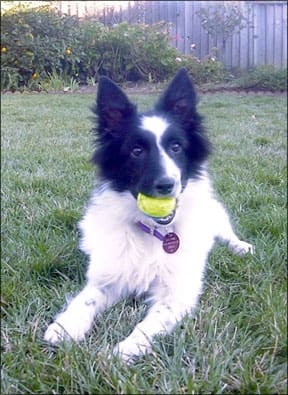
288
In flyball, a team of four dogs race, one after the other, leaping a series of hurdles, throwing their bodies against a spring-loaded box that ejects a tennis ball, snatching the ball, and hurtling their bodies back down the row of jumps to where their next teammates strain to be released for their turns. The fastest team wins.
You hear a typical flyball tournament before you see it. Dogs are barking in excitement and play growling while they play tug between races, and people are screaming encouragement so loudly to their canine teammates that many of them are hoarse the next day. Whistles blast to start races, to alert false starts, and to end races. It can be hard to hear the PA system, which alternately blares announcements and rock and roll music.
Chris Bond loved it all. She and her husband Rich, with three of their Border Collies, were on the Jets, the British flyball team that broke the world record in 1997. They loved it so much that when they moved back to California in 1999, they started their own team, Gold Rush Flyball. They worked with inexperienced pet dogs and owners and trained them to top competition levels. One of their teams achieved a race time of 17.88 seconds – at the time, within one second of the fastest team in their region. What they needed in order to beat the competition was a fast, small dog. Small is important in flyball because the jump height for the team is determined by the shortest dog on the team.
Fate in a small package
In February 2002, Chris was approached by someone from another team who was looking for a home for a small, bright-eyed, five-month-old Border Collie-mix pup that had been found as a stray. That little dog captured Chris and Rich’s hearts and, hoping that she would become the super-fast flyball dog they were looking for, they adopted her on the spot.
Although the little dog showed subtle signs of fearfulness (weight backward on the haunches when she greeted someone, lowered posture, and furtive glances at her surroundings), Chris assumed these were a result of the unfamiliar, noisy environment. They named her “Spryte” because she was as sprightly and cute as a little English pixie.
Other than being a bit nervous and shy, Spryte acted like a “normal” dog for the first two weeks. Then she suddenly began attacking the other household dogs. In one instance, when Misty (a 12-year-old Border Collie) walked by the couch where Spryte and Chris were sitting, Spryte leaped on Misty’s back and began biting her around the neck and shoulders.
Around the same time, Spryte began barking and lunging at unfamiliar dogs and people while out on walks. Her reactivity increased exponentially over the next few weeks. She became reactive to any sudden change in her environment, including loud or unusual noises, and other dogs or people appearing, even at a distance. Often, she would “shut down” for no apparent reason – most likely due to a noise she could hear that her humans could not.
Despite this, Chris’s attachment to Spryte was growing. When Spryte was in what she perceived a “safe” environment, she was very clever, sweet, and personable. Chris had never had a dog like this before. “My husband, Rich, and I were fortunate to have had three beautiful, sociable Border Collies, which we adopted over the years we lived in England. They came to us as puppies from Ghostland Kennels, known for lovely natured dogs. Our dogs were friendly with people, well mannered with other dogs, and full of confidence. They had traveled everywhere with us, and were comfortable in any environment. Nothing fazed them.”
As a result, all of Chris’s experience with training dogs had been with good-natured, resilient dogs; she was now in uncharted territory. She was also coming to the realization that this little dog might not reach the goals Chris longed for. In fact, she might not be a competition dog at all.
By nature, Chris does not give up easily so she decided to start training. But where to start? She had used both lure-and-reward training and traditional, punishment-based methods. Like many people, Chris’s first reaction to any signs of aggression from Spryte was to stop the behavior immediately. When Spryte attacked the other household dogs, Chris would hold her by the scruff and say, “No!” When she lunged and barked at people or dogs while on leash, Chris would jerk the leash and say, “No!” But Spryte’s over-reactivity escalated. When off-leash, she would rush other dogs and people across football-size playing fields. She had to be continuously leashed, and was often left crated in the car to avoid conflicts.
A positive shift
Frustrated and depressed, Chris sought the advice of a friend and professional trainer, Lisa Clifton-Bumpass of Hayward, California. Lisa is a positive trainer and her influence was a turning point in Chris’s relationship with Spryte.
“Lisa changed my understanding of how dogs learn, which probably saved Spryte’s life,” says Chris. “Through Lisa, I learned that fear is an emotion that is highly responsive to classical conditioning. If I punished Spryte in the presence of something she feared, she would begin to fear that thing more. If I rewarded Spryte the in the presence of something she feared before she became reactive, she would begin to associate that thing with good instead of bad, and she would become less fearful. Lisa taught me that punishment was escalating Spryte’s reactivity.”
Lisa recommended Chris avoid all punishment. She gave Chris reading assignments, including Don’t Shoot the Dog by Karen Pryor, and she explained how Spryte’s fears could be reduced through counter-conditioning. She also explained the limits of counter-conditioning, and the amount of time that Chris would need to invest. Months. Years, perhaps. And, although the work would make a profound difference, Spryte would always be what her genetics and prior learning history had made her.
“My heart sank with the realization that I had a true problem dog on my hands, and at the same time rose in the hope that there was something I could do to make things better,” says Chris. “With Lisa’s guidance, I began a positive training regime with Spryte. She earned her meals every day, with food for all her good behaviors.
“For counter-conditioning and desensitization, I took Spryte on leash to a nearby school in the evenings, when only a few children would be playing on the equipment. I stood at the far end of an open field, so far that Spryte was still attentive to me and not paying attention to the children. There, I fed her a continuous stream of food, one morsel at a time. She got all of her favorites: smelly, juicy, cooked steak; cheese; and sausage, chopped into quarter-inch squares. We gradually moved closer to the children, but never so close that she reacted. Before her bag of treats was finished, we would turn and leave. Over time, the distance gradually reduced. Eventually, we were able to play ball at the far end of the field, with her off leash. Things were looking better.”
Clicker training, shaping, and management
Chris also added clicker training to her arsenal of training tools. She played shaping games and practiced behaviors daily. Spryte learned an amazing number of behaviors, including useful skills such as a nose touch and a paw touch to objects. Chris would later use the nose touch to teach her to heel, and the paw touch to teach her agility touch-points.

288
Most importantly, Spryte learned that she had control of her environment through behaviors Chris wanted and rewarded, instead of behaviors Chris didn’t want and, therefore, did not allow to be rewarded.
For example, looking calmly at an unfamiliar dog or person was a wanted behavior; lunging at the dog or person was not. So Chris reinforced the wanted behavior by clicking as Spryte first glanced at the dog or person. At the sound of the click, Spryte would instantly turn her head back to Chris for a treat. Spryte soon learned to look at the other dog, then look back. This not only made an enjoyable game out of something that would otherwise be worrying to Spryte, it also taught her a head-turn, which is now one of her signature freestyle (dog dancing) moves.
Because clicker training was fun, it motivated Spryte (and Chris) to learn a variety of exercises. Chris and Spryte trained daily, building foundation skills such as “look at me,” “check the environment, then look back at me,” as well as the basic sit, down, wait, and leave-it behaviors. They participated in several classes, where the training was positive and the environment was calm and spacious. Spryte learned basic obedience, freestyle, tracking, and dock diving.
All the while, Chris worked very hard to manage Spryte’s environment. If they went somewhere, she would check the place before taking Spryte out of the car. If people were there, she would let them know that her dog was reactive, and she was specific about what they should do (avoid eye contact with her, give her space, and not make any sudden movements). Everywhere they went, Spryte was rewarded. And Chris quit activities before her little dog became bored or tired.
It was during this time that Chris accepted that Spryte could not compete in flyball. But she still hoped there was some venue that would allow her to compete with Spryte. She started thinking that perhaps agility would be okay. There, Spryte would have the ring to herself, with just a judge and a few ring stewards. Although there is a lot of activity going on at agility trials, there is only one dog competing at a time, unlike flyball where there can be as many as 16.
Agility class
Chris enrolled in a local class. There were 20 dogs in the class. Fortunately, most were good-natured Shelties. Standing in line with calm dogs her own size, Spryte began to respond positively. Chris asked the people around her to give them space, and she continuously fed Spryte small bits of fresh cooked meat or cheese. She was able to complete the first few training sessions, and things were going well.
Then one evening an Australian Cattle Dog attacked a Border Collie he had been eyeing for several sessions. One of the trainers was badly bitten, and the commotion was too much for Spryte. “Spryte refused food treats and began to bark at the air above her head. She had lost it,” remembered Chris. “The head trainer looked at me and said, ‘Hold her muzzle shut and tell her No!’
“Instead, I knelt down and made eye contact with Spryte. After a moment, her glassy eyes cleared as she recognized me. She came to me quietly and leaned her body into my side. She had learned to trust me. At that moment my heart melted, as a poignant realization hit me to the core: First and foremost, my duty is to protect this little dog. Not just physical protection. Emotional protection as well. I did not return to that training class.”
Some months later, a friend recommended another agility trainer. Kathryn Horn had a long track record in both the sport of agility and positive reinforcement methods. Chris contacted Kathryn and explained her situation. She told her everything she had been working toward over the past nine months and the progress Spryte was making. She asked if she could enroll in her class and use Spryte’s class time to do more counter-conditioning before working on the agility equipment. Chris wanted Spryte to enjoy agility, but knew that years of foundation work lay ahead before they could begin to focus on agility skills.
Kathryn was very understanding, and welcomed Chris into her class. “When I first brought Spryte out of the car, Kathryn automatically knelt down and averted her gaze so she did not make eye contact with Spryte. I was amazed when Spryte trotted up, wiggling with appeasement, and greeted Kathryn without barking. I felt a flood of relief. This was the kind of training instructor Spryte and I needed.”
Kathryn didn’t put any pressure on Chris to teach Spryte agility. Instead, she allowed Chris to teach Spryte that the agility arena was a fun place. The environment Kathryn provided was so supportive, with a small class and plenty of space and one-on-one training, that Spryte’s confidence grew quickly. She was able to practice on agility equipment much earlier than planned.
The agility equipment itself was easy for Spryte. She had some difficulty with the teeter-totter because of the noise; otherwise, she had no fear of the equipment. For touch-points (teaching a dog to stop at the bottom of the dogwalk, A-frame, and teeter), Kathryn taught bow-on-a-mat using clicker training. Spryte loved touch-points so much that she began seeking out the A-frame and dogwalk.
“Because my goal was to build confidence, I rewarded everything Spryte offered, as long as it was not fearful behavior. It worked. Spryte began to show excitement in the car when we neared the agility-training site, and confidence when she was in the training arena. As the months passed, she began to look like a true agility dog.”
Dealing with setbacks
Spryte’s progress was not always unremitting. One night as they were training, a ranch hand started the diesel engine of a Mac truck. The noise was sudden, loud, and startling. Spryte shut down. She became frenetic, looking for a place to hide, body tucked low in an attempt to become invisible. After the truck left, Chris tried to bring her out of it, but Spryte was unable to cope, so Chris took her home.
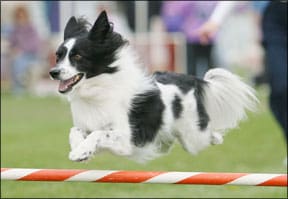
Photo copyright Dave Mills.
288
The following week when they neared the agility site, Spryte curled herself up in her crate. Fearful, she refused to come out of her crate, so they sat together in the car, watching the other dogs run, and Chris focused once again on counter-conditioning, feeding her bits of meat and cheese just for being there. Spryte took the food timidly at first, and then began to relax a little. But she still would not leave her crate.
“It was very depressing; I was starting all over again,” describes Chris. “My goals of a competition dog were, once again, slipping away. I thought about quitting. I had put so much work in building her confidence, and here we were back to square one. I decided to continue agility for a couple of months and, if she didn’t bounce back, we would leave the sport. After all, we were doing this for fun, and right then, it wasn’t fun for either one of us.”
Over the next few weeks, Spryte gradually became less fearful. Kathryn avoided using the teeter during that time so Spryte wouldn’t have a setback. Once her fears had subsided, her confidence bounced right back to where it had been before the event. Because Chris had worked through the problem, the bond between them seemed to grow. Lisa had given sound training advice that paid off over the months and years: Set short, attainable goals, and look at the behavior modification program from a long-term perspective.
After four years of agility training with Kathryn, Spryte was doing beautifully in practice and Chris was learning how to give verbal and physical cues smoothly to keep her confidence high. But she was so worried that Spryte would rush and bark at the agility judge that she avoided entering a competition. Finally, Kathryn convinced her to enter Spryte in a small competition where Kathryn would be judging some of the classes.
The payoff
On the day of the competition, Kathryn made sure all the judges, ring stewards, and helpers knew that Spryte was fearful and not to approach her. Kathyrn even saved Chris a parking spot in a quiet, shady spot, away from everyone else.
Kathryn was judging the first round. The plan was to walk Spryte into the ring, do a couple of obstacles, then mark (i.e., “Yes!”), and leave the ring to give her loads of treats. Chris’s goal was for both of them to completely forget about the dogs and people around them and play together, just for a moment. Chris describes their breakthrough:
“I walked Spryte in and out of the barn to introduce her to the area before our round, working some freestyle moves and giving her treats. She was tense. Then, when our turn came, we went straight into the ring, treat-less and leash-free. I said, ‘Ready, go over!’ Spryte flew forward, sailed over the jump, right past a helper – without even a glance – and up the dogwalk. We connected at the base of the dogwalk, and then she was off over the next jump, tunnel, and so on. Before I knew it, she’d done the entire course, about 15 obstacles – fast, happy, and absolutely connected with me the whole way. I threw my arms up with a big “Yes!” as she sailed over the last jump. She responded by bouncing on her hind legs. She was still playing. I was absolutely amazed.”
Chris and Spryte had done far more than achieve their goal. They not only made it through the entire course, but won first place in her height group. Spryte was also the third fastest out of 17 dogs in the Novice class. And she achieved a qualifying round toward her first agility title.
Chris and Spryte ran two more perfect courses, winning yet another first place and qualifying for points toward two titles. Most importantly, she was able to play agility happily among unfamiliar people and dogs, in an unfamiliar place. The classical conditioning of the agility obstacles was so strong that it transferred to a new location better than Chris expected.
“Throughout the day, several people commented how well we were doing for our first time. That was pretty cool. Especially given the true ‘obstacles’ we had tackled together. Of course, even if she hadn’t done all that, Spryte is still very special to me. She taught me how to be a better trainer and a better partner in our agility team.”
As Spryte’s confidence in the world has grown, Chris has focused more on agility. Since that inaugural competition, Spryte and Chris have entered five more agility competitions, qualified in 11 runs across four different classes, and earned two titles: Novice Regular and Novice Touch-n-Go. To a spectator, Spryte looks like a “normal” agility dog. She barked at the judge once, and at a cameraman once. But she recovered quickly on both occasions, and finished the course.
Spryte is a work in progress. She has provided Chris with many challenges, setbacks, and disappointments, but also a lot of joy and achievement. “The road to success with Spryte has been long and winding, with lots of dips and rises, but we’re enjoying the journey together,” says Chris.
Because she is so aware of every little thing around her, Spryte has taught Chris to be aware of her, to observe her, and respond to her needs each moment.
“The lessons Spryte has taught me have made me a better trainer,” says Chris. “She has taught me that trust, even in the human-dog relationship, requires patience, consistency, and clear communication beyond verbal language. She has also taught me that communication is two-way: To succeed as a team, I must listen to my dog and understand her emotional needs. In this way, Spryte has provided a service not only for herself, but for all the competition dogs that share my life in future.”
Terry Long, CPDT, is a writer, agility instructor, and behavior counselor in Long Beach, CA. Terry lives with four dogs and a cat and is addicted to agility and animal behavior.
Chris Bond lives with her husband and three Border Collies in Dublin, CA. Since her introduction to clicker training, Chris earned a diploma in Advanced Canine Behavioral Sciences with Companion Animal Sciences Institute, and has become a CAP assessor.