
Home Blog Page 237

Whole Dog Journal’s 2013 Canned Dog Food Review

1

Wet dog food, a.k.a. “canned” dog food, is not nearly as popular as dry food. The total sales figure for dry pet food in the U.S. last year (more than $12.7 billion) was more than 21/2 times that of wet pet food (almost $4.8 billion). 
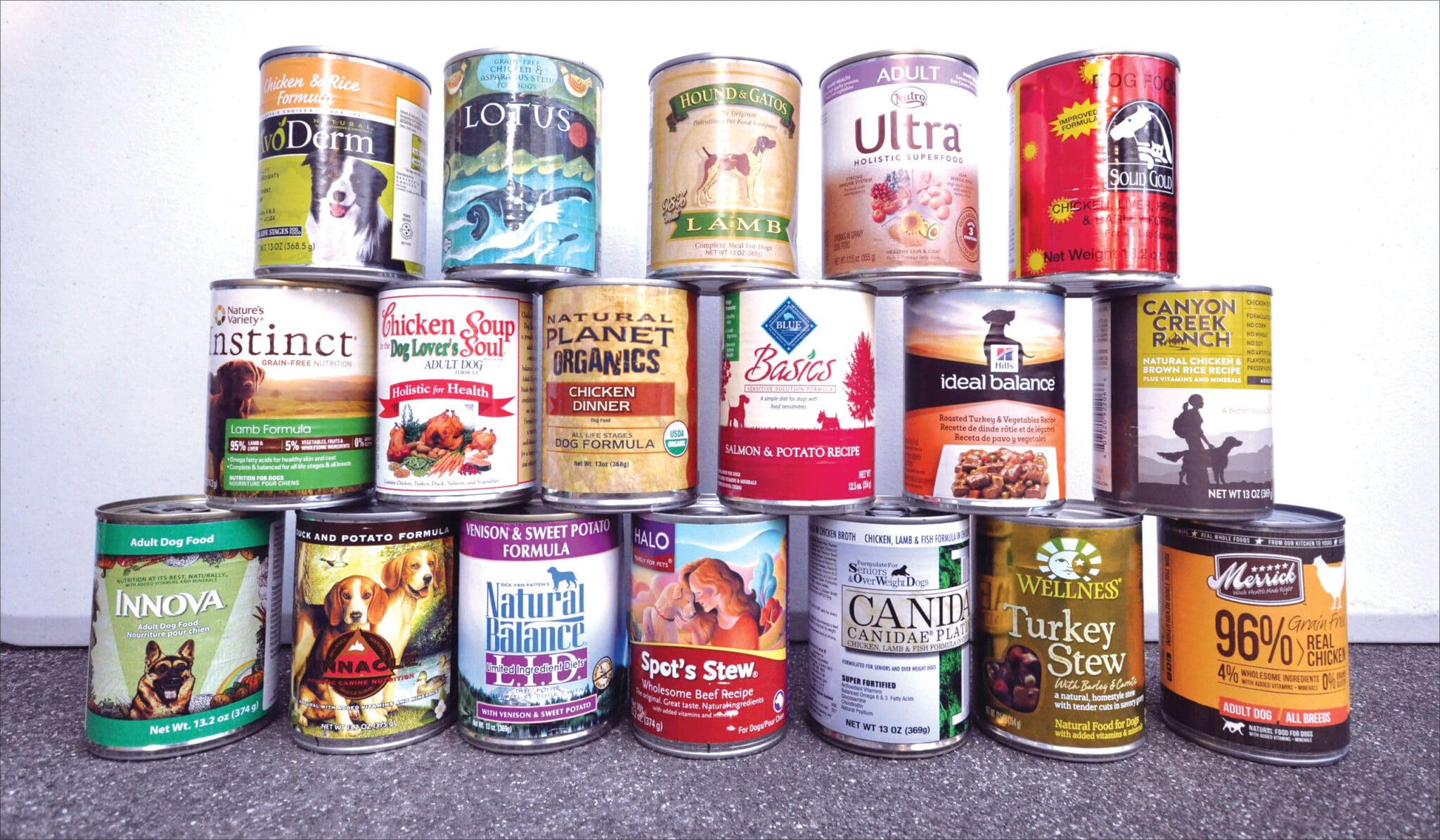
canned dog food

I understand the reasons for this, but wish it wasn’t so. Canned food is actually a much healthier diet for dogs than kibble.

Price is the most commonly cited reason that people prefer to feed dry food to their dogs; canned food is far more expensive to feed than dry food. Owners of large dogs or multiple dogs rarely feed canned food as anything other than an occasional treat, for this reason alone.

Of course, there are other objections, too. Many dog owners report that they don’t like the odor of wet food, or the extra work involved in opening the container and serving an appropriate amount – and the hassle of having to store any amount still in the container in a refrigerator for the next meal. And a persistent minority of dog owners worry that dogs who eat only canned food will have more dental problems (such as a buildup of tartar and resulting gum inflammation) than a dog who eats kibble.

These concerns vary in validity.

It’s impossible to counter an objection to the high cost of wet food; it simply is far more expensive to feed canned food than it is to feed kibble. Wet food obviously contains a lot of water, so you have to feed more of it (in terms of weight and volume) than dry food to deliver the nutrients your dog requires. Because it’s so heavy, it’s far more expensive for the pet food companies and distributors to ship wet food than dry food, too.

That said, the cost of feeding top-quality canned food is comparable to the cost of feeding commercial raw frozen or dehydrated diets – and lots of people find a way to pay for those foods.

I’m not sure I could sympathize very deeply with someone who didn’t want to feed wet food to a dog who would clearly benefit from that type of diet due to the off-putting aroma of the food, or the inconvenience of opening cans or storing opened-but-not-emptied pouches. Maybe if the owner was pregnant or chronically nauseated, and there was no one else to take over the dog-feeding job?

The dental objection, though: That one is bogus. I know that at least one of the dog food companies have conducted studies demonstrating that dogs who eat special “dental health” kibble end up with less tartar on their teeth than dogs fed another diet. But it’s pretty widely recognized that few (if any) dogs chew kibble well enough to scrape anything off their teeth – and especially off the exterior sides (cheek sides) of their teeth, where tartar is most likely to accumulate. If anything, crunching kibble can lodge pieces of the carbohydrate-laden food between the dog’s teeth, where those carbs get broken down into sugars and contribute to the development of dental plaque.

Wet food lacks any sort of abrasive material, but the better products also contain far fewer (if any) carbohydrates, the main contributor in a dog’s diet to the accumulation of dental plaque. Ideally, dogs chew and scrape their teeth clean by being given regular opportunities to chew appropriately sized fresh, raw bones in a supervised setting.
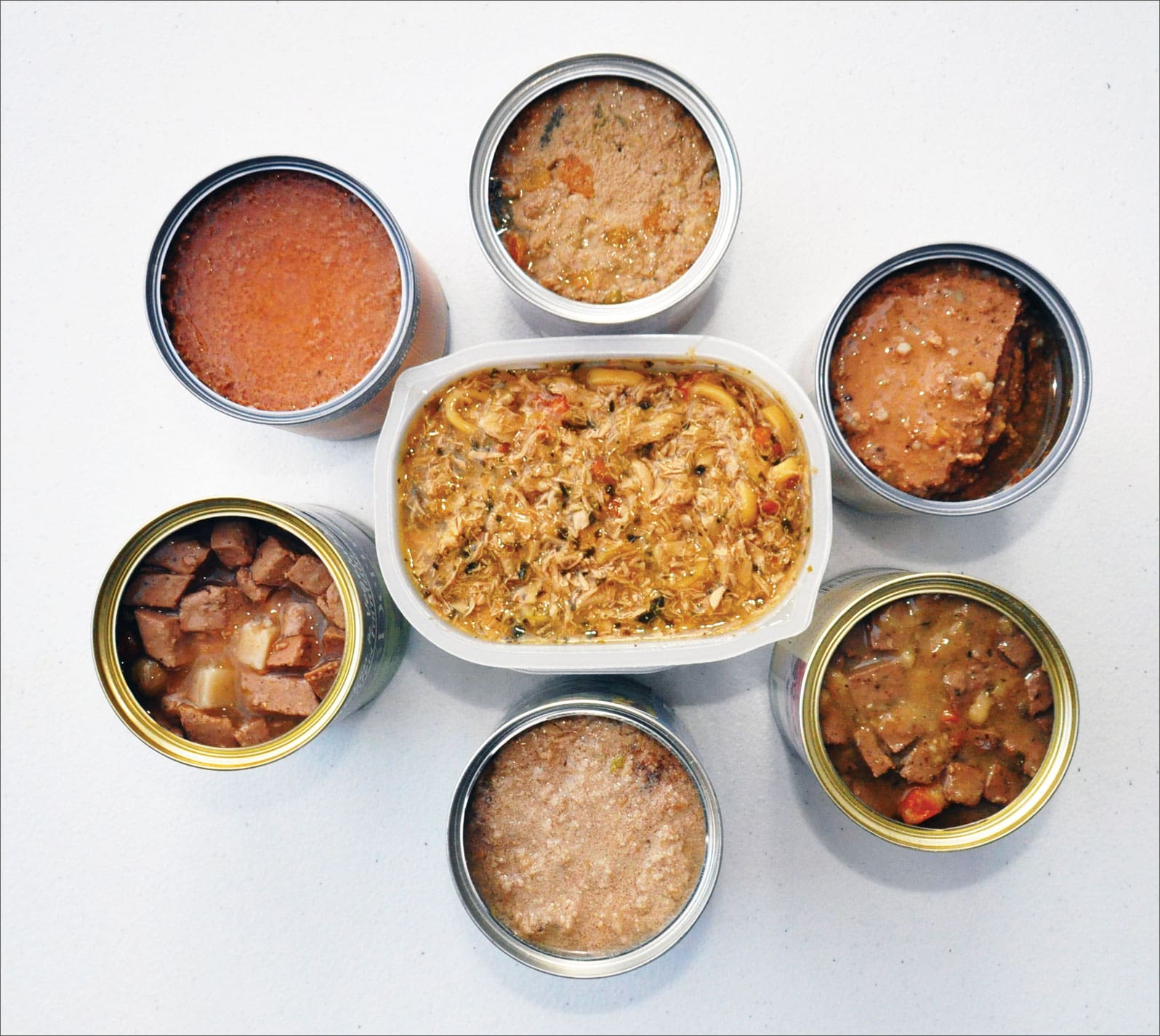
canned dog food

Let’s Talk Pros

Enough about why people might not feed canned food to their dogs; here are a lot of reasons why they should.

Meat

Animal protein is a staple – the most important ingredient – in the evolutionary diet of dogs. It may make up as much as 95 percent of what’s in a “complete and balanced” canned food. Even lower-quality canned foods that contain several grains or other carb sources generally contain more animal protein than some high-quality dry foods, because there is a mechanical limit to the amount of animal tissue that can be incorporated into kibble in the manufacturing process. That limit has increased significantly in the past decade or two, as technological innovations (and a demand for grain-free dry foods) have enabled pet food companies to push past former manufacturing limits. But high-protein, high-fat dry foods are highly vulnerable to oxidation. In contrast, canning is a near-perfect preservation system for foods with a high meat inclusion.

The high moisture content is one compelling reason to feed canned food. On average, wet dog foods contain about 78 percent moisture, though the lower-quality products that contain grain may have as little as 65 percent and some of the soupier varieties may contain as much as 85 percent or more. A high-moisture diet is especially helpful for dogs who are prone to urinary tract infections – or, in fact, for dogs with any sort of urinary tract or kidney disorder.

Palatability

Most dogs love canned food. The high meat (and moisture) content and the fresh (not rancid) aroma probably accounts for this. Even very old and sick dogs who have lost their appetites can usually be tempted into eating canned food.

Safety

The canning process kills any pathogenic bacteria that may have been in the food. Of course, as we learned during the massive pet food recalls in 2007, bacteria isn’t the only potentially harmful thing that can be in pet food; if an ingredient is adulterated with something toxic (such as melamine, an industrial chemical), canning won’t render the ingredient safe.

Far fewer additives

The canning process itself preserves the food, so preservatives are not needed or used. Artificial colors are used only rarely in canned food (and generally only in the lowest-quality products).

Digestibility

Most dogs digest canned food well, with a reduced volume of stool, and often, a lower production of intestinal gas.

Quite Variable

All things considered, good canned foods have a lot to offer our dogs. But the products offered by the pet food industry as a whole aren’t at all equal; there is much more variety in this category of dog food than in dry food.

For example, as previously mentioned, the moisture content in canned foods varies quite a bit, from as little as 65 percent to as much as 85 percent.

That range will be reflected in the appearance of the food. Some canned foods look like soup or stew, with chunks of meat (or shredded meat) and other ingredients suspended in a gravy; these obviously contain the highest amount of moisture. The lowest-moisture canned foods are generally referred to as “loaf” type products; these are the products with a more or less uniform consistency (if you opened both ends of the can and dumped out the contents, you’d have a perfect can-shaped loaf of food).

A canned dog food may contain no carbohydrates whatsoever, consisting of just animal protein and some vitamins and minerals to “complete and balance” the diet. (Remember, dogs have no biological requirement for carbohydrates; all of their nutritional needs can be met with protein and fat sources.) At the other end of the spectrum, a canned food may contain lots of grain or other carbohydrate sources.

Another huge variable in this type of food is the amount of fat present. Products that contain a lot of carbs are likely to contain less fat than the carb-free foods, but most canned foods contain more fat than the average dry food. You may have difficulty finding the perfect canned food if your dog tends to gain weight easily, has trouble digesting fatty foods, or is prone to pancreatitis (or is one of the breeds that is prone to pancreatitis).

Keep in mind that fat contains more than twice the amount of calories per gram than protein or carbohydrate. (Fats contain 9 calories per gram; proteins and carbohydrates contain 4 calories per gram). High-fat foods, then, are also high-calorie foods. This is ideal for highly active dogs or canine cancer patients suffering from cancer cachexia (a condition that alters the dog’s metabolism, causing the loss of body fat and muscle mass). Normal dogs, however, may experience alarmingly fast weight gain if switched to a high-fat food without a reduction in the amount of food given.

Hallmarks of Quality

The “macro” traits discussed above – the amounts of moisture, carbs, and fat – are factors to keep in mind when choosing a food for your dog (and budget). But none of those factors qualify a product as a “good” or “bad” food. In our opinion, the quality of a food is revealed in its ingredients.

And since the main advantage of canning is its ability to deliver a much higher percentage of animal protein than kibble is able to, in a much more shelf-stable and bacteria-free form, the first and foremost indicator of a canned dog food’s quality, in our opinion, is the amount and type of meat included in the formula.

Water (or broth) as required for processing is often among the first few ingredients listed on a canned food label, but a whole, named animal protein (or two) ought to be right next to it.

“Whole” means no by-products – although you should be aware that it doesn’t mean only the muscle tissue you might ordinarily associate with chicken breasts and beef steaks; the official definition of each type of meat includes fat and “the portions of skin, sinew, nerve, and blood vessels which normally accompany the flesh.” The legal definition of poultry (chicken, duck, and turkey) includes flesh and skin, with or without accompanying bone.

“Meat by-products” include lungs, spleen, kidneys, brain, livers, blood, bone, fat, and stomachs and intestines that have been “freed of their contents.” Poultry by-products include heads, feet, viscera (“free from fecal content and foreign matter except in such trace amounts as might occur unavoidably in good factory practice”). We do not consider foods that contain animal by-products for our “approved food” lists.

“Named” means a specific animal species – chicken, beef, pork, lamb – as opposed to “meat,” which can be just about anything.

Because we are looking for products with the highest possible inclusion of top-quality animal proteins, we’d choose a product with meat first on the label over one that listed water first and meat second.

If vegetables, grains, or other carb sources are used, we prefer to see them in their whole forms, rather than by-products (potatoes, rather than potato starch, for example).

The use of grains and other starches should be limited in a canned food; there is little sense in paying canned food prices for carbs. Otherwise, just add meat and water to a dry food! So a food that contained just one grain or vegetable by-product (such as oat bran) would be preferable to a product containing several (such as potato starch, oat fiber, and tomato pomace).

Traits of Lower-Quality Foods

There are a number of traits that automatically disqualify a canned food from our consideration. The first and most important is the inclusion of an unnamed animal source, such as:

– “Meat” or “meat by-products”

– “Poultry” or “poultry by-products”

– “Animal fat”

Wheat gluten is the next disqualifier. Wet foods often contain some sort of thickener or binder. Various types of “gum” (such as guar gum, from the seed of the guar plant, and carrageenan gum, from seaweed) are common thickeners. Whole grains, potatoes, and sweet potatoes also can be used to thicken wet food. But wheat gluten (and some other glutens) are generally used in wet foods both to augment the protein content of the food (albeit with lesser quality amino acids) and to act as a binder, to hold together artificially formed “chunks” so that they resemble chunks of meat. In other words, it’s a cheap replacement for a greater amount of animal protein. If chunks of meat are present in a wet dog food, they should be actual chunks of meat.

Sugar, molasses, or other sweetener used in a canned food is another automatic strikeout. A food that contains quality meats shouldn’t need additional palatants to entice a dog’s appetite.

Finally, as ever, we disqualify foods that contain artificial colors, flavors, or preservatives. These are rare in wet foods, but do appear from time to time.

The Right Price

The cost of canned food will undoubtedly factor into your purchasing decision. In general, the more meat that’s present in a canned food, the higher the price; also, higher-quality ingredients (such as organic or grass-fed meat sources) will increase the price of the food. In fact, some of these foods are crazily expensive; but some of you are willing and able to spend any amount for a suitable, top-quality food for your dog.

The local availability of these foods varies quite a bit and can also affect your buying options. Some are national brands that can be found in chain pet specialty stores (such as Petco and Petsmart); others are distributed only through independent pet specialty stores and perhaps natural food stores. Many can be purchased online, but shipping of canned food adds even more to an already high relative cost.

How To Choose

Many readers would appreciate it if we would present a rank-ordered list of recommended foods. But this is an impossible task, since it would have to be customized for each individual dog, owner’s budget, and local availability. Plus, what’s “best” for my super-active, large-breed dog is not what’s “best” for your couch-potato Pug who is allergic to chicken.

No, only you can identify appropriate prospects for your individual dog, keeping in mind the macro factors discussed above (the amount of moisture, carbs, and fat that you think will best suit your dog.

What we will do, however, is supply you with a list of potential candidates, companies that make canned foods that meet our basic requirements, and do not contain any disqualifying attributes. This “approved foods” list (found at the bottom of each page of this article) is a good place to start looking for foods that might be “best” for your dog.

Please note that the products are NOT rated or ranked; they are listed alphabetically by company.

It’s best to know what sort of attributes you are looking for before you walk into the pet supply store. For example, if your dog is overweight, you should be searching for a relatively lower-fat food with a higher protein content than the one you currently feed. Though pet food makers are not required to list the caloric content of their foods, many of them report this information voluntarily, and this can help you determine whether you might need to feed more or less of a particular food.

Some other selection tips:

– If your dog is itchy (the number one symptom of allergy in dogs), look for a limited ingredient food (a single protein and a single carb source, preferably not a grain) that contains none of the ingredients that his current food contains.

– If your dog is too thin, or acts hungry all the time, look for a food with a higher fat content, particularly if the food you’re feeding now is low in fat.

– If your dog seems to be losing condition as she ages, look for a food with more protein and higher-quality protein sources than the one she’s eating (i.e., chicken, rather than chicken by-products or “meat”).

– If your dog is a picky eater, try rotating foods more often, and offer foods with different protein sources to see which are most appealing.

Adjust as Necessary

You may have been told that it’s bad to switch foods, or you may have had a bad experience when your dog ate something different and unauthorized (by you) and erupted in gas or diarrhea. Don’t be afraid to change foods frequently! It’s true that when a dog is fed the same diet for weeks and months on end, the amount and varieties of digestive enzymes and bacteria in their digestive tracts decrease. But the more frequently you change their diets, the more robust and capable their digestion becomes. You can also help your dog adjust more quickly to variety in his diet by giving him digestive enzyme, probiotic, and prebiotic supplements, to help his gut recolonize itself with digestion-aiding agents.

Then, watch your dog! Let him tell you how the new food works for him. Keep track of what foods you’ve tried and what has and has not worked on a calendar dedicated to this purpose or in a diet journal, so you can continue to make adjustments and, we hope, improvements in your dog’s diet.

Properly Socializing Your Puppy

0
Socializing a puppy is important for their future behavior.
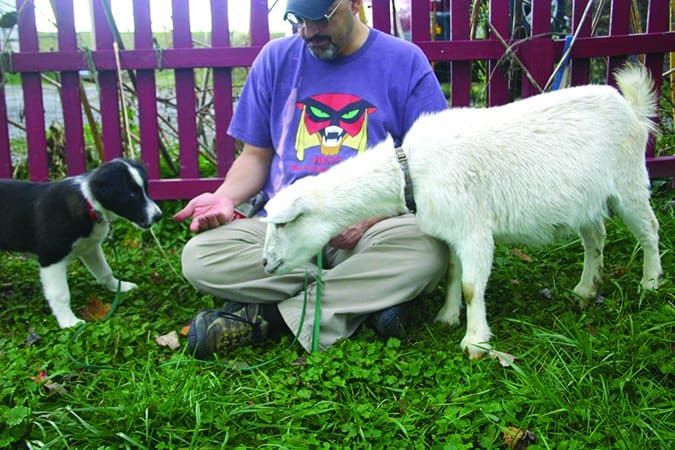
Just as you should be going out of your way to introduce your pup to a variety of people, you should make an effort to expose him to a variety of other animal species. Use a leash or other barrier to keep both parties safe and untraumatized. Photo by Heather Houlahan

PUPPY SOCIALIZATION: OVERVIEW

1. Make a commitment to super-socialize your puppy, and then do it — early. Don’t procrastinate; you don’t have much time!

2. Stay aware of your pup’s body language and help him out of trouble if he looks stressed. Be prepared to take prompt remedial action it your pup has a negative experience during your socialization program.

3. Sign up as soon as possible for a well-run positive puppy class, where both of you can socialize and have a good time.


When it comes to puppies who don’t get lots of opportunities to interact positively with other dogs, new people, or novel situations, the end results are often messy.

A puppy lays on her back n the middle of a scrum of young people who are petting her
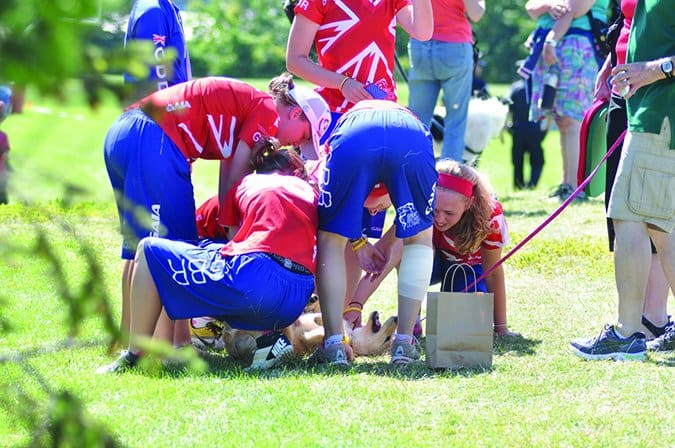
Protect your pup! If you take him to a place where he’s likely to get swarmed by children (or even, in this case, dog-loving young adult athletes), be ready to intervene so he doesn’t get overwhelmed by the attention. (The owner can’t even see her pup in the middle of this scrum!) Photo by Nancy Kerns

While curiosity and the ability to learn don’t have expiration dates, young puppies have an important behavioral “sweet spot” between the ages of 13 and 14 weeks. During this critical period, your dog builds her impressions and attitudes about what is normal and acceptable. At this time more than any other, positive experiences with the world around her build a solid foundation for the rest of your dog’s life.

As recently as 30 years ago, trainers and owners didn’t talk much about puppy socialization. But today, most people know about the importance of making puppies well-rounded little Renaissance hounds. And as they have gotten busy signing up for puppy kindergarten and arranging play dates with the dog next door, a new concern has developed: Fueled more by enthusiasm than knowledge, some people expose puppies to the world in a way that emphasizes its dangers rather than its delights.

Like anything in life, it’s all about balance. Here are some tips to help you guide your puppy through this brave new world in a way that will broaden her horizons and build her confidence.

Keep Your Puppy’s Experiences Positive

Socialization isn’t just about exposing your puppy to new things. It’s also about carefully monitoring these interactions to ensure they are positive ones. Though puppies can seem precociously unflappable – especially when they are gnawing your ankles – they are sensitive souls who can easily become overwhelmed. Your job is to gauge the tenor of a situation by reading your puppy’s body language.

“If your puppy clings to you, if she’s yawning or turning her head away, she’s stressed. Forcing the puppy will just make it worse,” says trainer and author Teoti Anderson of Fort Lauderdale, Florida. “Puppy emotions can be so fleeting. If more puppy owners paid attention to that, and just let the puppy go at his own pace, they’d avoid a lot of problems.”

In the buffet of sensory stimulation that your puppy encounters, make sure his experience is a quick snack rather than a binge. A visit to your child’s soccer game, for instance, can do more harm than good if you are distracted, a pack of kids swarms the cute new puppy, and someone’s snarky Schnoodle meanders over to chomp instead of chat. Less really can be more.

“I like lots of frequent, short sessions. Some puppies shouldn’t go out every day, especially if you have a puppy that’s a little shy,” Anderson says. “Instead, find five friends of different ages and ethnicities and have them over for 10 minutes.” Your puppy will be exposed to a variety of new, interesting people, “and you’ve ended it before it can go badly.”

Be sure to monitor the humans in this equation, too, especially if they are not very dog savvy: Something as simple as holding a puppy incorrectly – letting his legs dangle without supporting his bottom, for instance – can make him feel unstable and unsafe.

An adult dog and a puppy both hold parts of the same soft toy in their mouths
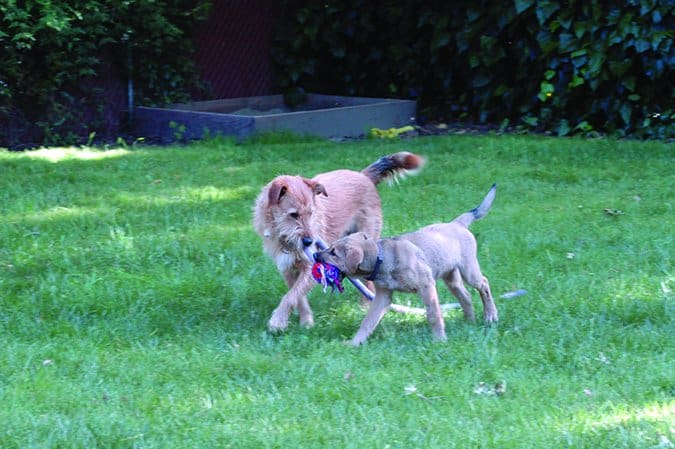
An adult dog who is willing and able to play gently but firmly with a puppy is worth his weight in gold to the puppy’s owner. Ideally, he will tolerate a certain amount of puppy hijinks but won’t allow the pup to push or boss him around. Photo by Nancy Kerns

Expose Puppies to New People at Home

Speaking of the home front, that’s often one place that’s ignored as people rush out to take their new puppies to Home Depot parking lots and the Petco treat aisles, hoping to imprint them with a zest for the outside world.

“People take their puppies out into the world to socialize them, but they forget to bring other living beings into their home,” says trainer and author Pia Silvani, assistant vice president and behavior specialist at St. Hubert’s Animal Welfare Center in Madison, New Jersey.

This doesn’t just apply to other people and children; be sure to invite some canine guests, too. “Many dogs are just not used to having other dogs coming on their property,” Silvani says. “The risk is that they can become territorial in their own home” because they’ve simply never had the chance to learn how to politely welcome a visitor.

Socializing at Puppy Kindergarten

Puppy kindergarten classes are a great way for puppies as young as eight weeks old to meet other dogs and people, provided it is in a controlled environment. A good class will require your puppy to have at least one vaccine, and will disinfect the classroom space before puppies assemble to cut down on the risk of communicable diseases.

Before plunking down your cash and signing up, visit a session without your puppy. Watch and see how the instructors manage the class. Are they watching out for different breed-specific playing styles? (Pairing a mouthy retriever with a chase-motivated herder might not end well.) Are they intervening and redirecting behavior that might escalate to something unpleasant?

Above all, these classes should not be a no-holds-barred romper room. Even if they don’t know it, when human kindergartners play, they are being taught important social concepts like self-control and respect for others, and it should be the same with their furry counterparts.

“Some people have the misconception that they’re going to bring their puppy into class and it will be an hour of playtime. And they believe if they don’t have that their puppy is not getting socialized,” Silvani says. “But socialization can mean sitting next to another dog in a calm fashion – it doesn’t have to entail wild, frenzied play. That’s a part of it, so they learn to read body language – but it’s a minor part.”

Veterinarian, trainer, and author Sophia Yin, DVM, reminds that avoiding inappropriate friends is just as important for four-leggers, too.

“People just think all play is fine because that’s a dog being a dog,” she says. “But if you had a child, you wouldn’t let him play with a bunch of kids who are swearing and hitting each other. Puppies can learn all kinds of unwanted behaviors” – and start morphing into the canine version of a schoolyard bully.

“For dogs who are having fun, one of the worst things they can learn is to play too roughly and have no impulse control,” Dr. Yin continues. “By letting them play in an ugly way, they get more and more practice being overly aroused. Over-arousal and aggression are on a continuum. If dogs learn to have no self-control and react without thinking, they can become aggressive.”

The lesson that Yin wants puppies to walk (or bounce!) away with is that calming down has tangible benefits. “I want dogs to be able to come when called, focus on me, and the reward is that they can go play again. It teaches the dog that, ‘Hey, it’s not that I can’t have these things. I just have to have a little self-control and be polite about it.'”

Anderson adds that while puppy kindergarten shouldn’t be a mosh pit, it shouldn’t be “a glorified obedience class,” either. “Obedience is the easy part,” she says. “But the time for that puppy foundation is finite.” Baby puppies should be learning more general life skills, she says, like how to accept handling and grooming (including the oft-dreaded nail cutting or grinding), and bite inhibition.

When Puppies Meet Adult Dogs

As their name suggests, puppy kindergarten classes are full of, well, puppies. But trainer and author Trish King of Marin County, California, points out that even more than playing with their peers, youngsters need positive interactions with older dogs who will help them understand and respect boundaries.

Three adult men each hold a puppy; they are in a puppy socialization class
While puppy play is a hugely valuable part of a puppy kindergarten gathering, the class should never be a free-for-all. Occasional breaks from the action help calm and re-focus the puppies. Photo by Nancy Kerns

“Sometimes it’s really hard to find appropriate adults for puppies to play with,” she says. As a result, “many puppies have trouble learning how to play appropriately, show deference to adults, and back off.”

At all costs, avoid play dates with Cujo wanna-bes, which sounds easier than it actually is. Some people are utterly clueless about their dog’s social graces, or lack thereof. “You have to screen the other dog and be realistic,” Anderson reminds. “If the adult has a history of not liking other dogs, introducing him to a puppy will not miraculously make it better.”

After asking how social the potential playmate is with other dogs, it’s also important to inquire about his play style. “Does he play roughly? Is he mouthy? Is he a chaser?” asks Silvani, adding that breed-specific temperament differences, as well as size differential, are important, too.

Finally, absolutely, positively no dog parks, which can be magnets for undersocialized dogs of all ages and their benign, but dangerously clueless, owners.

What Vets Say About Puppy Socialization

One of the biggest obstacles to proper puppy socialization can come from a seemingly unlikely source: veterinarians.

While no veterinarian wants to see a carefree puppy develop into a growling hermit, his or her primary focus is making sure that your puppy is not being exposed to infectious disease. As a result, many vets insist that their clients not take puppies out into the world until their booster vaccine series is complete and they are fully immunized, which is typically at 16 weeks – two weeks after the vitally important socialization window has closed shut.

Veterinary objections to even a nuanced approach to puppy socialization – arranging play dates with known, healthy dogs, and avoiding well-trafficked areas such as parks – are “huge,” Silvani says. “A lot of times I hear vets in Manhattan saying, ‘Don’t let your puppy hit the ground until he’s six months old'” – leaving legions of urbanites to paper-train large-breed puppies in postage-stamp-sized bathrooms or terraces. In private, she continues, many vets will acknowledge the importance of socialization, but will also voice concerns that they will be liable if something does go wrong.

King understands why many vets are so cautious in this regard, but points out that they could be unwittingly creating a situation that is just as life threatening: “The number-one reason dogs are surrendered to shelters is behavioral problems.” In other words, the odds are greater that a dog might be euthanized for a serious behavioral issue than coming down with parvovirus or kennel cough.

Dr. Yin says many of her veterinary colleagues also don’t realize that the science doesn’t support their concerns. She points to a recent study published this year in the Journal of the American Animal Hospital Association that found puppies who had been vaccinated once and attended socialization classes were at no greater risk of parvovirus infection than vaccinated puppies who did not attend those classes.

Of course, says Dr. Yin, be sure the class follows good sanitary protocols: She knows of one that uses a steam cleaner on its floor several times a week to kill bacteria and other nasties. Requiring that puppies have at least one vaccination and be free from illness are other basic requirements.

Dr. Yin notes the American Veterinary Medical Association is working on a statement on puppy socialization. And the American Veterinary Society of Animal Behavior already has a position statement on the same topic, which concludes that the risk of contagious disease is the lesser of two evils compared to the effects of inadequate socialization.

“During [the first three months of life] puppies should be exposed to as many new people, animals, stimuli and environments as can be achieved safely and without causing overstimulation manifested as excessive fear, withdrawal or avoidance behavior,” the AVSAB paper says. “For this reason, the American Veterinary Society of Animal Behavior believes that it should be the standard of care for puppies to receive such socialization before they are fully vaccinated.”

Despite these welcome changes in attitude about the importance of socializing puppies, you might very well encounter resistance from your veterinarian. In the end, it’s up to you to weigh the pros and cons, sort out your level of comfort, and make the best decision for you and your puppy.

Safe Ways to Socialize Before Full Immunization

Even before your puppy is vaccinated, you can still provide opportunities for him to socialize. Here are some ideas.

– Invite your friends over. Children, adults, men, women, the UPS driver, the gardeners – have your pup see and experience these people in and around your home.

– Take your puppy to a trusted friend’s house. Just going into a new environment will offer your puppy lots of new experiences.

– Invite your friends’ healthy, vaccinated, and puppy-friendly dogs over for a play date. Playing with other dogs is important for puppies’ social development and to learn not to bite hard in play.

– Take your pup on a walk. Just don’t allow him to walk places where there might be feces or urine from other animals.

– Take a large blanket to the park. Let your pup watch the world go by on the safety of the blanket.

– Take your pup for car rides. Help him get used to the motion on short rides to the store or even just around the block.

– Visit businesses that welcome dogs or a sidewalk café. Carry your pup in – or in the case of a cafe, set him up on a mat – and let him take in the sights and smells.

Visit the Vet’s Office

When it comes to your veterinarian, don’t forget to socialize your puppy to that office, and its strange smells and sights, when you have no other reason to go there! Do Happy Vet Visits! “Don’t go there only when your puppy needs his shots,” Anderson advises. “Have the vet techs give him a cookie and leave.”

 To make bona-fide visits go smoother, Anderson suggests accustoming your puppy to stand on a mat at home – a rubber-backed bath mat is fine – so you can transfer that surface to the vet’s office. Placing it on the scale or exam table will reduce your puppy’s anxiety, “like Linus with his blanket.”

Expose Your Pup to a Variety of Things

Socialization isn’t just about exposure to new people and places; it’s also about acclimating a puppy to all sorts of experiences: loud noises like hairdryers and fire trucks; things that move oddly, like people on crutches or skates; strange surfaces such as manhole covers, deep sand, and wooden bridges; and all types of weather. Here is a list of just SOME everyday things you’ll want to consider introducing to your puppy: “The Puppy Socialization Exposure Checklist“.

Anderson remembers babysitting a dog who would eliminate only on pine straw, because the only walks she had ever taken were in conifer-covered woods. “I had this huge, fenced-in backyard,” but her canine visitor insisted on pottying right next to the house – the only part of the property that had pine trees near it. Similarly, dogs who are accustomed to doing their business only on grass will be stymied when visiting a city and encountering blocks of pavement and blacktop.

Silvani makes sure to expose her dogs to cats and wildlife, taking puppies outside to watch a nearby herd of deer, and rewarding them for their calm behavior and attentiveness to her. “It creates a positive association with wildlife,” she explains. “This way you don’t have a dog who’s out there chasing chipmunks and squirrels, which can be a real danger.”

Conversely, make sure they are introduced to modern conveniences, especially those that involve movement, such as elevators and automatic doors. If you live in a rural setting, find safe and controlled ways to expose your puppy to traffic and the noise of suburban and urban settings – sirens, horn honks, rattling trucks. If you don’t have easy access to the real thing, invest in a CD of city sounds. And while you’re at it, you might pick up a recording of thunderstorms, another behavioral bugaboo that you can defuse with a positive association, such as feeding your puppy dinner while the recording plays.

Socialization to water can be a literal lifesaver. At five years old, Silvani was walking a dog she rescued when he became dangerously overheated. She remembers trying to walk him into a nearby stream to cool him off, but he refused – no amount of pulling or cajoling would make him reconsider. Silvani learned her lesson those many years ago: Today, she takes all her puppies for riverside romps where they play, get treats, and learn to love the wet stuff.

Never Force a Scared Puppy

Almost inevitably, eventually your puppy will encounter a situation or person that frightens him. The answer is not to force the puppy to “deal with it,” but rather to give him the space to come to terms with his fear on his own.

“If a puppy is running from a tall man wearing a hat, don’t put the puppy in the man’s lap and say, ‘He has to get over it.’ That’s overwhelming,” Anderson says. “But if you put the puppy on the ground, and the puppy chooses to go over and say hello,” that’s a better tactic. (Having the behatted man sit on the floor, with a pocket full of juicy treats, would nudge that encounter in the right direction.)

When a puppy is startled or concerned, some trainers advocate ignoring the fearful behavior and not comforting the puppy, lest you reinforce the reaction.

Knowledgeable behavior professionals know that kind of thinking is misguided – and that it misses the larger point.  You can’t reinforce emotions, but you can encourage the pup to enjoy the experience. King says“You want to switch over the brain, so he’s not thinking about how afraid he is, but rather how much fun he’s having.” Like a child who’s skinned his knee, you can go over, console him briefly and make sure he’s okay – then change the subject to something fun so the sniffling stops.

Places NOT to Take Your New Puppy

As important as socialization is, it’s equally important to avoid places where there’s a high risk of endangering your baby dog’s health or safety, or giving him a negative association with his world. Here are just a few of the places where you shouldn’t try to socialize your pup:

1. Off-leash dog parks, until he is fully vaccinated.

2. Any place where he is likely to encounter stray dogs.

3. Any place where he is likely to encounter sick dogs.

4. Any place where he is likely to encounter aggressive dogs.

5. Any place where he is likely to encounter aggressive/rowdy/drunk humans.

6. Places where there is an accumulation of feces from unknown dogs.

7. Any place he is not welcome.

8. Any place where he would have to be left unattended, or in a hot car (no tying
up outside the grocery store!).

9. Any place where he will be uncomfortable or frightened (sitting in the full sun while you watch your son’s Little League game, at a July 4th fireworks display, at a motorcycle rally, etc).

10. Any place where you won’t be able to devote enough attention to him to secure his safety, security and wellbeing.

Keep The Window Of Opportunity Ajar

While three-to-fourteen-week-old puppies are at the prime age for socialization, their ability to soak up new experiences doesn’t shut off like a faucet once they pass that landmark.

“Probably the most critical factor to me is, don’t stop after puppy class,” Silvani says. “Continue on in the first year” – especially into adolescence, when percolating hormones can create new behavioral challenges. “It’s going to benefit the dog for the rest of his life.”

Conversely, King notes that many people believe dogs can be socialized indefinitely, but at some point, it becomes an issue of reprogramming instead of programming, and changing habits is more difficult and time-consuming than preventing or short-circuiting them in the first place.

“The brain continues to grow for a while and then it stops – new connections aren’t made as fast,” she says. “Older dogs don’t learn as fast or take in as much.” By the time a dog is three or so, the odds of teaching him a new world view are not as favorable as they would have been when he was younger.

Just Do It

We’ve arguably never lived in more dog-friendly times, which should make socializing new puppies a snap. But ironically, it’s that very same modern lifestyle – with its competing demands and time-starved schedules – that can derail the best intentions.

“Puppies are so much work, and I think we are creatures of ‘there’s always time later,'” Anderson says. “People come home, and the cute puppy is now peeing and chewing on oh-my-God-my-favorite-shoe, and the kids have soccer this week, and I had to work late, so we’ll do it next week. And the next thing you know, it’s a six-month-old dog.”

It doesn’t take much to shape your new puppy into a worldly and well-adjusted canine citizen. With the right supervision, that unsocialized puppy can walk into a bar, and – after getting a few scratches behind the ear and a handful of Chex Mix from the bartop – saunter right back out, pleased as punch.

The Benefits of Canned Dog Food: WDJ’s Canned Dog Foods 2013

0

Price is the most commonly cited reason that people prefer to feed dry food to their dogs; canned food is far more expensive to feed than dry food. Owners of large dogs or multiple dogs rarely feed canned food as anything other than an occasional treat, for this reason alone.

288

Of course, there are other objections, too. Many dog owners report that they don’t like the odor of wet food, or the extra work involved in opening the container and serving an appropriate amount – and the hassle of having to store any amount still in the container in a refrigerator for the next meal. And a persistent minority of dog owners worry that dogs who eat only canned food will have more dental problems (such as a buildup of tartar and resulting gum inflammation) than a dog who eats kibble.

These concerns vary in validity.

It’s impossible to counter an objection to the high cost of wet food; it simply is far more expensive to feed canned food than it is to feed kibble. Wet food obviously contains a lot of water, so you have to feed more of it (in terms of weight and volume) than dry food to deliver the nutrients your dog requires. Because it’s so heavy, it’s far more expensive for the pet food companies and distributors to ship wet food than dry food, too.

That said, the cost of feeding top-quality canned food is comparable to the cost of feeding commercial raw frozen or dehydrated diets – and lots of people find a way to pay for those foods. I go into greater detail about this in The Whole Dog Journal 2013 Canned Food Review, WDJ December 2013.

I’m not sure I could sympathize very deeply with someone who didn’t want to feed wet food to a dog who would clearly benefit from that type of diet due to the off-putting aroma of the food, or the inconvenience of opening cans or storing opened-but-not-emptied pouches. Maybe if the owner was pregnant or chronically nauseated, and there was no one else to take over the dog-feeding job?

The dental objection, though: That one is bogus. I know that at least one of the dog food companies have conducted studies demonstrating that dogs who eat special “dental health” kibble end up with less tartar on their teeth than dogs fed another diet. But it’s pretty widely recognized that few (if any) dogs chew kibble well enough to scrape anything off their teeth – and especially off the exterior sides (cheek sides) of their teeth, where tartar is most likely to accumulate. If anything, crunching kibble can lodge pieces of the carbohydrate-laden food between the dog’s teeth, where those carbs get broken down into sugars and contribute to the development of dental plaque.

Wet food lacks any sort of abrasive material, but the better products also contain far fewer (if any) carbohydrates, the main contributor in a dog’s diet to the accumulation of dental plaque. Ideally, dogs chew and scrape their teeth clean by being given regular opportunities to chew appropriately sized fresh, raw bones in a supervised setting. 

For the complete Whole Dog Journal review on canned dog food, including the 2013 Approved Canned Dog Food List, check out The Whole Dog Journal 2013 Canned Food Review, WDJ December 2013.

Download the Full December 2013 Issue PDF

...
To continue reading this article or issue you must be a paid member.

Join Whole Dog Journal

Get full access to Whole-Dog-Journal.com – more than 4,000 articles – for just $20.
Join today and save 30% off our full price.
Already a member?
| Forgot your password? | Activate Web Access

Dog Food Nutrition and Feeding Trials

0

I received the following message on WDJ’s Facebook page:

Hey WDJ! My wife and I love your website/magazine and constantly link it and recommend it. Keep up the great work!

I was hoping to have a discussion with you about this article:https://www.whole-dog-journal.com/food/pet-food-company-on-trial/

How do you reconcile that feeding trials are the best way, imperfect as they are, to determine if a food is nutritionally sound, with the fact that hardly anyone (or their foods) does AAFCO feeding trials? My favorite dog food companies (aka the ones I learned about through your yearly reviews, like Merrick) don’t seem to have any AAFCO feeding trials under their belt.

I’m not trying to question your knowledge or recommendations (because I love both), more just hoping I’m not the only one out there thinking about this stuff so much. 

Thanks for your question! I’ve discussed feeding trials in a lot of different articles over the years, and I’m happy there are others “thinking about this stuff” as avidly as I am.

It’s true that in the article you mentioned in your note, I said that the “nutrient levels” method for establishing the nutritional adequacy of a food was flawed:

“Feeding trials are considered by most veterinary nutrition experts [emphasis added] to be the ‘gold standard’ for proving nutritional adequacy claims – superior to the ‘nutrient levels’ method of proof. That’s because it’s quite possible for a laboratory analysis to confirm that a food contains the amounts of various nutrients judged to be necessary for maintaining a dog, but for the product, in practice, to fail at that very job.

This is possible because not all nutrients may be in a digestible (‘bioavailable’) form. Most nutritionists agree that feeding trials offer the most reliable confirmation of a food’s ability to deliver nutrients in a form that will benefit the target species.”

However, as I’ve mentioned in many of my other articles on commercial diets, the feeding trial method of establishing nutritional adequacy is flawed, too.

The above-referenced article didn’t assert that feeding trials are the best way to prove the nutritional adequacy of a food. Its purpose was to clarify what feeding trials are, and describe conditions for dogs used in the studies.

In that article, I did call feeding trials “important” – and I still think they are. It absolutely is important to know whether a food that may well be fed to a dog every day for years on end is, in actuality, capable of sustaining dogs over time, without causing gross deficits leading to illness, weight loss, or abnormal blood chemistry.

I’m not going to go so far as to regard them as requisite, however, because they aren’t perfect. For one thing, they really aren’t long enough. Just because a diet can sustain a dog in a laboratory environment for about six months without causing illness or abnormal blood values doesn’t mean it will perform the same way for dogs who may lead a much more active and stressful life, and for years on end.

Also, as I explained in my 2007 dry food review (https://www.whole-dog-journal.com/food/whole-dog-journals-2007-dry-dog-food-review/
), foods that acquire the right to use a nutritional adequacy claim based on feeding trials need not be formulated to meet the other standard for nutritional adequacy: the “nutrient levels” criteria. Here is an excerpt from the 2007 article – but I’m going to boldface and correct a big mistake I made there:

“Foods that pass feeding trials are not required to contain minimum or maximum levels of any particular nutrients. Therefore, it’s possible for a food to sustain dogs long enough to ‘pass’ the trial, but fail to demonstrate an ability (in real-world, long-term use) to promote optimum health. As one example, mineral excesses may take a year or more to cause noticeable health problems, but a food that claims to provide complete and balanced nutrition for adult dogs (a ‘maintenance’ claim) may have passed only a 26-week test.

“There is also an AAFCO feeding trial (at least 13 weeks long) for products intended for dogs during gestation and lactation and another that tests puppy diets (10 weeks). To earn the right to claim nutritional adequacy for dogs of ‘all life stages,’ a food must undergo all three trials sequentially, for a total of 49 (or more) weeks. [Actually, to earn the ‘all life stages’ claim, the food must pass the ‘gestation and lactation’ and then the ‘growth’ (puppy) trials, sequentially, for a total of about 23 weeks. The ‘maintenance’ trial is not actually included.] If it passes, its label can state, ‘Animal feeding tests using AAFCO procedures substantiate that (name of product) provides complete and balanced nutrition for all life stages.’

“Many experts regard the ‘all life stages’ feeding trial as the best proof we have of a food’s ability to perform. But again: Even a year-long [nope, only six-month!] feeding trial may fail to reveal faults that can cause serious health problems if fed as a sole diet for a long period.”

However, as I said in the 2007 article, the “nutrient levels” claim is flawed, too:

“Foods that meet the ‘AAFCO nutritional profiles’ qualification can lack palatability and/or digestibility. If dogs don’t like the smell or taste of the food, they won’t eat enough of it to gain its nutritional benefits. Also, the nutrients contained in a product may not be present in a form that the dog can digest. The AAFCO nutrient profiles themselves contain a problem: Not many lay people are aware that the profiles allow for a wide range of values. Far from being some sort of industry ‘standard,’ or offering suggestions for optimum nutrition, they actually offer only broad guidance.”

The fact is, both methods that a company can use to “prove” the nutritional adequacy of a product are flawed. Here’s an excerpt from a 2012 article I wrote about the research conducted by pet food companies (https://www.whole-dog-journal.com/lifestyle/what-sort-of-pet-food-research-are-we-talking-about/
):

“Many people consider AAFCO feeding trials as the ‘gold standard’ for confirming the nutritional adequacy of a canine or feline diet. However, because the products that met the ‘feeding trial’ test of nutritional adequacy do not have to meet the ‘nutrient levels’ criteria, there is the possibility that these products may contain excessive, deficient, or unbalanced nutrient levels that may contribute to the development of health problems if fed as a sole diet for periods that are in excess of the testing period. An ideal test would encompass both a feeding trial and meeting the AAFCO nutrient profiles, but no such standard currently exists [emphasis added].”

Veterinarians are taught in vet school (with texts underwritten by pet food companies) that only foods qualified by feeding trials should be fed, ever. And the vast majority of veterinarians believe this. Maybe it’s because of all the blood tests a dog in a feeding trial is subjected to . . . But six months! It’s not enough to base a lifetime of feeding on, in my opinion.

That’s why I don’t say in our pet food reviews that one ought to use the type of nutritional adequacy claim as a selection criteria. I do think, however, that this information is worth knowing –that dog owners should always keep in mind which test was used to prove the adequacy of their dogs’ food as they monitor their dogs’ health and condition closely. If it’s a “feeding trial” product – ask the maker (or better yet, look for yourself) to find out if it DOES meet the “nutrient levels” standards, or do some nutrient values deviate from the AAFCO Canine Nutrient Profiles? If it’s a “nutrient levels” product, ask the maker what sort of informal feeding trials they use, how long the diet is fed to its test dogs, and what sort of tools are used to monitor or evaluate the dogs used in the trials. Some companies use their employees’ dogs or the dogs in a shelter close to the company headquarters as informal test dogs, but don’t follow up with any sort of health tests. These informal tests really only give the company information about the palatability and digestibility of the product; they don’t address long-term health consequences. But then, neither do the AAFCO-protocol feeding trials, unless you consider six months to be “long term.”

— Nancy Kerns, WDJ Editor

Home Treatment for Parvo May Prevent “Economic Euthanasia”

When experienced breeder Barbara Sorg noticed that Winks, one of her five 8-week-old puppies, was listless, not eating, and by nightfall was suffering from diarrhea, she hustled him off to her long-time veterinarian the next morning, a Tuesday.

The vet suspected that Winks had not tolerated the dewormer he’d been given Sunday. Although he had never left her property and had no suspected exposure, Sorg asked that he be tested for deadly parvovirus; her veterinarian discounted the possibility. Wednesday he was doing much worse. By Thursday, Winks had lost a third of his body weight along with his will to live. The SNAP test her vet finally administered confirmed that he was a victim of parvovirus. Sorg made the heartbreaking decision to euthanize him.

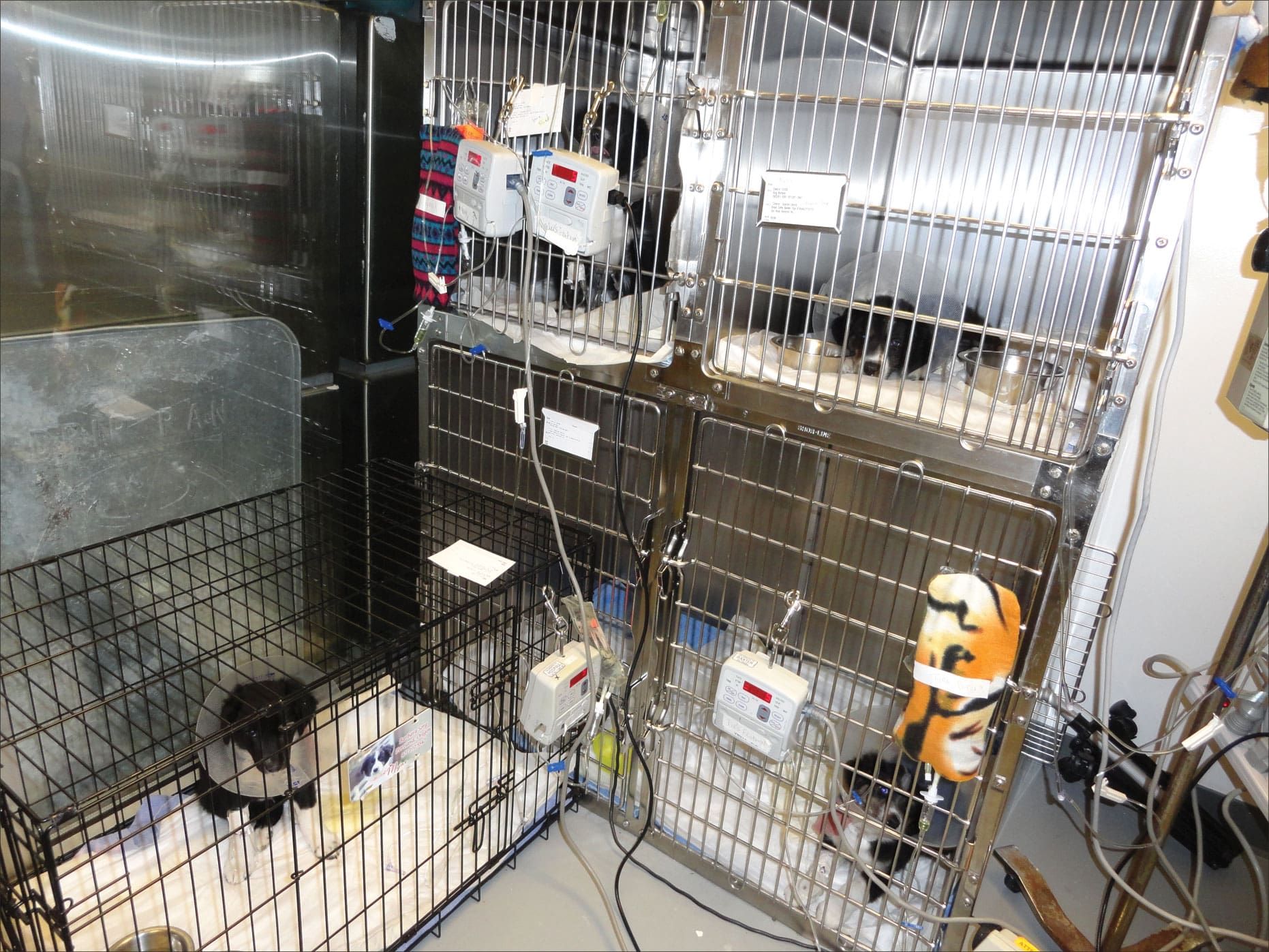
The cost of saving the lives of these four puppies, who were infected with parvovirus, with intensive care in a veterinary hospital, was more than $16,000. Owners who can’t pay for this gold standard treatment now have an often-effective option other than euthanasia.

“He was just done,” she says.

By Friday morning, all his surviving siblings had begun to vomit; fecal testing confirmed that they were also infected.

 What was a dog owner of ordinary means to do?

The Scourge of Economic Euthanasia
When parvovirus first appeared in dogs the late 1970s, the new disease killed nearly every puppy and dog it infected. While researchers quickly got to work developing effective vaccines, veterinarians began evolving the supportive treatment protocols that would enable the majority of patients that were diagnosed and treated promptly to fight the viral infection, survive, and recover.

The standard of supportive care for “parvo puppies” is hospitalization with 24-hour veterinary care that includes intravenously administered fluids, antibiotics, anti-nausea medication, and electrolytes. The dogs who respond to treatment generally recover well enough to go home for continued nursing in five to seven days. Animals diagnosed, hospitalized, and treated before they are critically dehydrated and shocky stand an 80 to 90 percent chance of survival. That’s the good news from 30-plus years of veterinary experience.
The bad news: the cost of treating a single puppy or dog for parvovirus generally starts at around $1,200 in less expensive veterinary markets, and can rise to more than $5,000.

Owners of limited means with brand-new and very sick puppies, shoestring rescue groups, or breeders with four (or eight or twelve) vomiting pups and two kids in college are often offered two choices by veterinarians: A bill they cannot possibly pay, or “economic euthanasia.” Many find their hands forced to the latter option. The death rate from parvovirus among infected puppies and dogs therefore remains very high, even though “gold standard” supportive treatment is very effective at helping patients whose owners can afford it to survive.

An Effective Alternative?
A new treatment protocol that has been tested at Colorado State University is meant to correct that tragedy. Researchers at the CSU College of Veterinary Medicine & Biomedical Sciences Veterinary Teaching Hospital conducted a clinical study of an outpatient parvovirus treatment protocol that is aimed at permitting owners – including shelters and rescues – to treat their sick dogs at home, under veterinary monitoring and supervision. The study was funded by Pfizer Animal Health, which produced the antibiotic and anti-nausea drugs that were tested. (Pfizer recently spun off its animal health division and renamed it Zoetis.)

The protocol was tested on dogs and puppies whose owners were unable to afford “gold standard” hospital care at private practices in Colorado, and were facing the prospect of economic euthanasia. The 40 dogs were randomized into a control group that received the standard in-patient treatment, and a study group that were cared for by veterinary students in a simulation of outpatient supportive care.

After initial stabilization on admission, the 20 dogs in the outpatient study group received a single subcutaneous injection of the long-acting antibiotic Convenia (cefovecin), a daily subcutaneous injection of the anti-nausea drug Cerenia (maripotant), and subcutaneous hydration of a balanced electrolyte fluid solution three times a day. Dogs were syringe-fed as soon as they could keep food down, and given glucose syrup by mouth. Subcutaneous injections and subcutaneous fluid replacement are not difficult procedures, and most owners who are willing can learn to administer them effectively.

The results were dramatic. Ninety percent of the dogs in the control group survived with “gold standard” care administered at a veterinary teaching hospital, which is in line with usual expectations. The exciting news: 80 percent of the dogs in the study group survived, thanks to the new protocol, which can be administered by a non-veterinarian who is available for around-the-clock nursing care and willing to give injections. 

(One puppy worsened under the study protocol and was moved to the control group, where he received the conventional intensive care treatment and recovered.) Eighty percent is not as good as the hospital protocol’s 90 percent, but significantly better than the 10 percent survival rate of untreated animals, and the 0 percent survival rate of dogs who are euthanized due to lack of funds for treatment.

The cost of the drugs and fluids used in the outpatient study group is about $200 per animal, according to Lauren Sullivan, DVM, DACVECC, the principle investigator for the parvo study. However, these are not the only treatment costs that a pet owner will incur; Dr. Sullivan stresses that all the dogs in the study were stabilized with intravenous fluids and had their electrolytes evaluated before being placed in the study or control group. Owners will have to pay for a SNAP test to diagnose the disease, daily monitoring, and further testing to determine when the dog has ceased to be infectious after recovery. These costs will vary depending on the location and type of veterinary practice, but at the CSU hospital, Dr. Sullivan estimates that the total cost of treatment would be about $400. Contrast that with $2,000 to as much as $5,000 for the gold standard hospital treatment that she says would be her choice if her own puppy contracted parvo tomorrow.

Dr. Sullivan also stresses that the outpatient protocol may not be effective for the most vulnerable patients – especially young puppies of small breeds, who are less able to maintain cardiac stability and blood sugar levels, and require aggressive monitoring of both variables.

The Cost of No Options
Barbara Sorg’s four surviving puppies are fortunate little tykes. Yes, all four got treatment, and all four recovered.

While Sorg confronted the reality that she could not front the cash to treat Winks’ siblings, and prepared for a gut-kick of a decision, help came from unexpected quarters.

The expectant owners of one pup told her to start treating him – they would pay what it took to save the pup that they had never met. A family member offered her a loan, to be repaid when she could. Her friends in the agility community began an online fundraiser that was publicized on social media, and taken up by both agility competitors and members of her breed community. Not only friends and colleagues, but also strangers contributed toward the puppies’ care.

Barbara Sorg may not have had the cash up-front to save her puppies, but as a member of caring dog-sports and breed communities, she had unexpected resources – resources not available to a less-connected pet owner, or even many nonprofits. Sorg calculates that the cost to diagnose and treat all the pups in-hospital (a different clinic than the one that missed the diagnosis) has topped $16,000 – including the charges for Winks, the one who didn’t make it.

That new veterinarian told her that 90 percent of the clients whose dogs receive a parvovirus diagnosis at that clinic end up euthanizing their pets.

What’s Next?
The CSU study has been presented to the veterinary community and its protocol is online for any interested veterinarian to use with clients who cannot afford hospitalization, but the study has not yet undergone peer-review and journal publication.

It’s important to note that this initial study does not address one of the most important factors in any medical treatment – compliance. The “outpatient” protocol was administered by veterinary students in a supervised, clinical setting. Dr. Sullivan would like to see larger studies that examine the effectiveness of the protocol when owners administer it in their homes.

Pet owners, breeders, and shelter and rescue personnel will vary in their discipline and compliance, and the variation in their diligence will affect the outcome of treatment. Dogs treated with the outpatient protocol still require 24/7 nursing care. Owners who must work or attend to other commitments will be unable to provide this level of attention. Shelters will need to train staff or volunteers and set up shifts in order to ensure continuous care and maintain infection control.

Dr. Sullivan says that she has seen a lot of interest in the outpatient protocol from veterinarians serving impoverished communities, where a combination of chronic low vaccination rates and cash-poor owners means that parvo death rates are persistently high. Veterinarians on reservations and who do international work, who serve poor urban and rural communities, or who just have a middle-class client who cannot front the cost of a new Lexus to save a litter of 10 puppies, are “in the trenches” and want to be able to offer an effective alternative to nothing to their clients who love their dogs. – Heather Houlahan

Heather Houlahan lives on a small farm near Pittsburgh, where she has recently learned that one of the things one should not do while raising her SAR partner’s litter of beloved puppies is research and write about parvovirus.

More Info: The Colorado State protocol can be found here

Using Veterinary Acupuncture as a Complementary Healing Method

Cornelia Guest doesn’t have a veterinary degree, but she does have decades of experience caring for animals. The renowned New York socialite, author, philanthropist, and businesswoman, the creative force behind a very successful line of designer vegan handbags, grew up riding horses and has always had a number of canine companions (she currently has nine!).

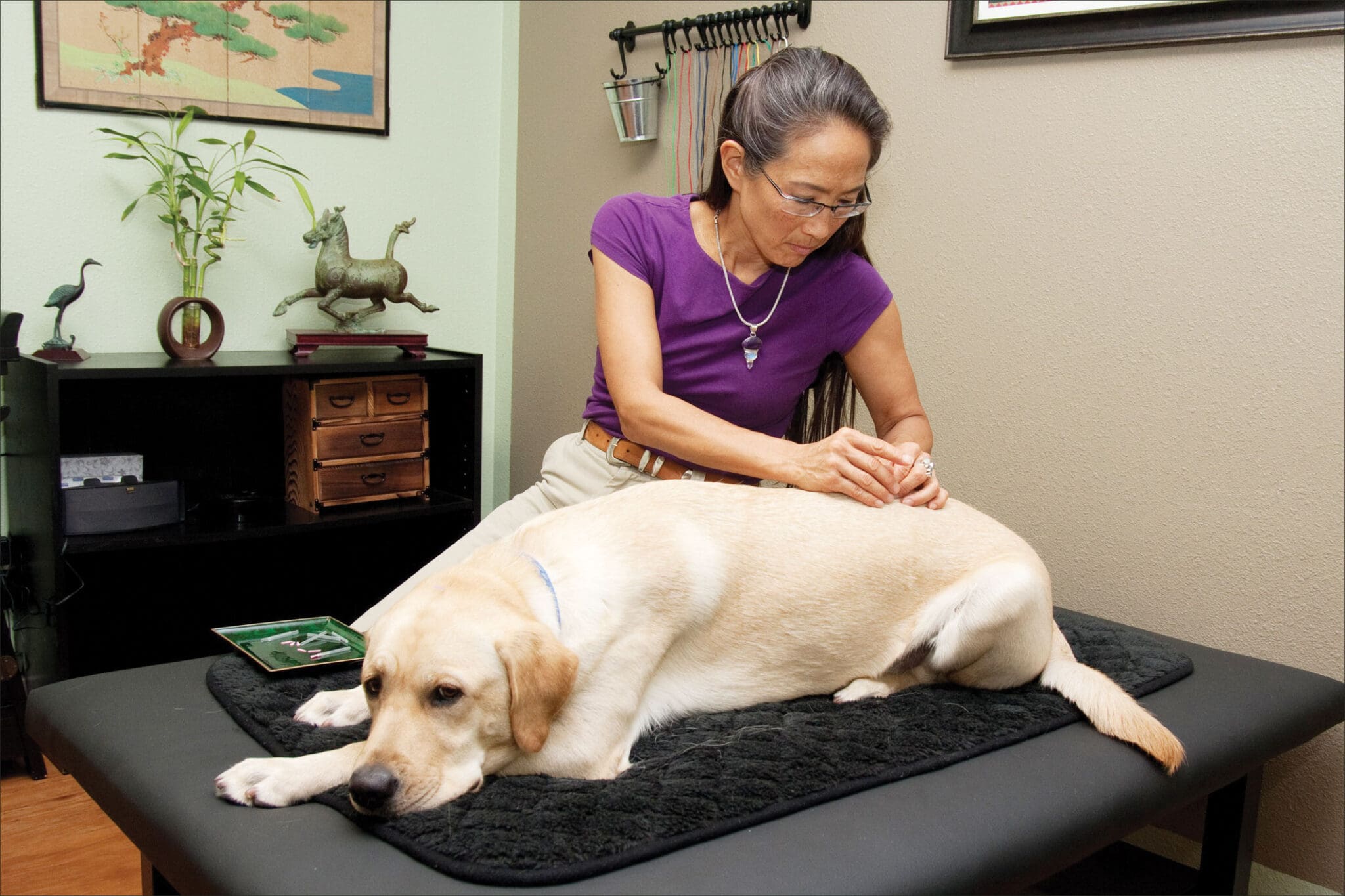
Madeline Yamate, DVM, uses traditional “dry needle” acupuncture, electroacupuncture, aquapuncture, and other Traditional Chinese Medicine (TCM) modalities in her practice, the Center for Integrative Animal Medicine, in Davis, California. Photo by and courtesy of jill quan, ciamvet.com

Guest has always had a passion for both animals and natural healthcare. She chooses natural healing modalities over Western pharmaceutical intervention whenever possible – for herself and her dogs. Guest entrusts the care of her nine dogs to Babette Gladstein, VMD, owner of

Animalacupuncture.net in New York, New York. Dr. Gladstein says she has treated Guest’s dogs for a variety of health conditions, including growing pains in her young Newfoundland, Cash; bladder stones in her German Shepherd Dog, Belinda; and arthritis in her 18-year-old West Highland Terrier, Arthur.

“I’ve tried many different veterinary modalities for my dogs, and acupuncture has been by far the most effective,” Guest says. “I’ve never seen the magic that happens with Chinese medicine – especially acupuncture – occur with conventional veterinary care.”

Guest is not alone in her endorsement of this ancient healing practice. The American Veterinary Medical Association’s (AVMA) House of Delegates approved veterinary acupuncture as an alternative and complementary modality in 1996, stating that it is an “integral part of veterinary medicine.” Its popularity among both pet owners and veterinarians has steadily increased.

“The increased demand for veterinary acupuncture mirrors its rise in popularity among humans,” says Deborah Prevratil, executive director of the International Veterinary Acupuncture Society (IVAS), which offers advanced acupuncture certification for veterinarians. IVAS has trained more than 6,000 veterinarians worldwide in animal acupuncture since its inception in 1974, and Prevratil says its membership has grown steadily in the past decade, with about 1,800 veterinary members today.

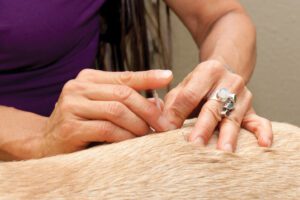
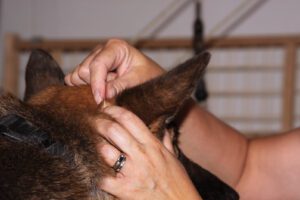
Acupuncture needles come in varying thicknesses, though most are much slimmer than needles used for “shots.” They are usually made of stainless steel, and are sterile (made for a single use). Here, Dr. Yamate uses a plastic guide tube to keep the needle from bending while it is inserted with the tap of a finger. Photo by and courtesy of Jill Quan, ciamvet.com

Simon Flynn, executive director of the American Academy of Veterinary Acupuncture (AAVA), IVAS’s United States affiliate, also reports a growth in membership within the past decade. Flynn says that in 2012, the AAVA’s membership consisted of approximately 940 veterinary acupuncturists, compared with about 680 members in 2002.

“Many people view their pets as part of the family and want them to derive the same benefits from acupuncture that they’re experiencing with their own health, which is helping to drive this growth,” Flynn says.

Brian Husbands, DVM, a board certified veterinary oncologist (DACVIM) and certified veterinary acupuncturist (CVA) with BluePearl Veterinary Partners in Minneapolis, Minnesota, has seen similar rates of growth in his practice. “As a scientist, I did a lot of research before deciding to become certified in veterinary acupuncture,” Dr. Husbands says. “I’m glad I did, because my patients are benefitting tremendously.”

A BRIEF HISTORY OF ACUPUNCTURE

Acupuncture is one of the oldest recorded forms of healing. “Acupuncture” literally means to “puncture with a needle.” Acupuncturists insert very fine, solid needles made of stainless steel (some may be gold plated, or have handles that are wrapped with copper wire) into the skin at specific points on the body, to stimulate and create a physiological change.

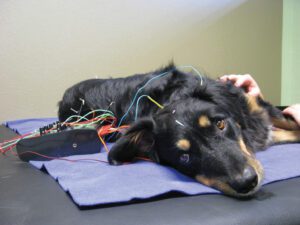
In traditional acupuncture, only needles are used to stimulate the acupuncture points. Today, many practitioners also use electroacupuncture, wherein needles are inserted in the patient’s body in the usual way, and then attached by light wires to a machine that generates tiny electrical pulses. The frequency and intensity of the impulse delivered is adjusted depending on the condition being treated. Among the advantages of electroacupuncture are increased effectiveness of treatment and potentially fewer treatments required. Obviously, this is a modern innovation!

Acupuncture was developed thousands of years ago in China as a component of Traditional Chinese Medicine (TCM), which also involves natural healing practices such as herbal therapies and nutritional (food) therapy. The Nei Jing, the seminal Chinese textbook on TCM, which contains 81 chapters on acupuncture, was compiled between about 305 and 204 BC, but it wasn’t until more than 2,000 years later that acupuncture made its way West.

Acupuncture gained a serious boost of credibility in the U.S. when it became the topic of the National Institutes of Health (NIH) Consensus Development Program. Initiated in 1977, the goal of the Consensus Development Program is “to consolidate, solidify, and broadly disseminate strong evidence-based recommendations for provider practice.” Consensus Development Conferences are developed when there is a strong body of evidence about the topic, but the information has not been translated into widespread clinical practice.

In November 1997, the 12-member review panel and 25 additional experts from a number of medical fields, presented scientific data on acupuncture’s efficacy to a conference audience of 1,200. According to the panel:

“Findings from basic research have begun to elucidate the mechanisms of action of acupuncture, including the release of opioids and other peptides in the central nervous system and the periphery and changes in neuroendocrine function. Although much needs to be accomplished, the emergence of plausible mechanisms for the therapeutic effects of acupuncture is encouraging.”

Based on its findings, the panel concluded that:

“There is sufficient evidence of acupuncture’s value to expand its use into conventional medicine and to encourage further studies of its physiology and clinical value.”

Acupuncture’s mode of action differs depending on whether you’re speaking with a practitioner trained in traditional Chinese medicine or a Western allopathic physician. The results, however, are the same.

Like most patients, Wyatt finds his acupuncture session extremely relaxing. Many dogs fall fast asleep during their treatments, even if they come into the clinic excited or anxious. Owners who are nervous about the needles also quickly learn that their dogs scarcely seem to notice their insertion.Photo by and courtesy of Jill Quan, ciamvet.com

According to the principles of TCM, all living beings are imbued with a vital universal energy, called “chi” (sometimes spelled “qi” but in any event pronounced “chee”). Chi flows in a precise manner along a network of channels, or meridians, that run deep within the body and connect to the major organs and systems. Meridians are mapped, however they do not exist in the physical sense, like the circulatory or nervous systems. Meridians are an invisible, energetic network that transports chi to every part of the body.

Dogs have 12 regular meridians, which run parallel in pairs along opposite sides of the body and connect to specific organs:

– Lung

– Large Intestine

– Stomach

– Spleen

– Heart

– Small Intestine

– Bladder

– Kidney

– Pericardium

– Triple Heater/San Jiao

– Gall Bladder

– Liver

They also have two special meridians, the Conception Vessel and the Governing Vessel, which are unpaired single meridians that do not connect to specific organs.

The Conception Vessel receives and regulates all the chi of the yin (soft, relaxed, feminine) energy meridians. It begins internally, with its first exterior point beneath the dog’s anus, and runs along the ventral midline of the dog’s body (closest to the abdomen), ending at a point on the lower lip. This vessel is important to all reproductive functions.

The Governing Vessel also begins near the base of the tail and runs the length of the dog’s body along the dorsal midline (closest to the back), ending at a point between the upper lip and gums. The Governing Vessel receives and regulates the chi of the yang (fiery, solid, masculine) meridians.

Each point on each meridian corresponds to a specific function. Points are labeled according to a numerical system in order to identify their exact location. GV 14, for example, represents the fourteenth point along the Governing Vessel, while LI 7 represents the seventh point on the Large Intestine. “This numerical shorthand enables practitioners to quickly and easily identify the points they have treated,” says Sandi Leonard, DVM, owner of Veterinary Alternatives in Kansas City, Missouri.

Although the regular meridians share names associated with Western-based organs, their function does not necessarily coincide with, and is not limited to, that organ. The spleen, for example, serves as an immune organ in Western medicine, but in acupuncture it is associated with transporting matter (such as food and drink) through the body, transforming it into chi, and moving that chi around the body as needed. “The connection between meridians and anatomical systems is complex, and acupuncture specialists trained in TCM spend many hours learning about these relationships,” Dr. Husbands says.

As chi flows along the meridians, its energy nourishes every cell in the body. “To maintain optimum health, chi must be able to flow freely. When chi becomes unbalanced or blocked, illness results,” Dr. Leonard says.

Acupuncture points are specific spots where the meridians surface just under the skin. By inserting needles into these points, practitioners can manipulate chi and unblock or rebalance it, stimulating the body to heal itself.

Western Interpretation
While Western medicine does not acknowledge the presence of chi or meridians, numerous scientific studies verify acupuncture’s benefits, including:

– Reducing inflammation. “Acupuncture increases blood flow, which stimulates blood cells that fight inflammation,” says Dr. Leonard.

– Creating a sense of well being by increasing circulating levels of serotonin and endorphins, neurotransmitters responsible for altering mood and brain chemistry. “These ‘feel-good’ chemicals are responsible for a wide range of positive emotions, including relaxation, happiness and even euphoria, while low levels are associated with sadness and depression,” Dr. Gladstein says.

– Reducing pain. The endorphins and serotonin produced during acupuncture also inhibit pain responses in the brain, while increased blood flow releases nitric oxide (NO), a chemical compound recognized for its analgesic (pain-relieving) and anti-inflammatory properties.

– Stimulating and enhancing the immune system, with measurable effects, such as improvements in leukocyte counts, and enhancement of leukocyte phagocytosis.

– Alleviating nausea. “Acupuncture supplies energy to nerves that affect the gastrointestinal tract, which in turn promotes good GI function,” says Dr. Husbands.

– Veins, arteries, and nerves are bundled together throughout the body, explains Dr. Gladstein. When you excite specific acupuncture points with needling, you accelerate their electrical conductivity, which increases blood flow and releases chemicals that promote healing.

Best Applications For Acupuncture
There are acupuncture points to treat just about any condition, from reviving a dog in shock to stimulating cranial nerves that enhance appetite.

Acupuncture is most commonly used to treat:

– Muscle strains, sprains, ligament/tendon inflammation/tears

– Behavioral disorders

– Allergies

– Dry eye

– Gastrointestinal issues such as IBD, vomiting, or diarrhea

– Muskuloskeletal diseases such as arthritis, back problems, and hip dysplasia

– Nausea related to chemotherapy

– Neurologic conditions

– Reproductive issues

– Respiratory conditions

– Skin issues

– Stress

– Urinary conditions

In his oncology practice, Dr. Husbands uses acupuncture to improve the quality of life of patients undergoing chemotherapy. “Acupuncture is extremely effective at reducing nausea and vomiting related to chemotherapy, and to stimulate the appetite. So, while it may not cure the cancer, it can certainly make the dog’s life a lot more comfortable.”

Acupuncture can sometimes work in cases where Western medicine has thrown in the towel.

In 2006, Dr. Leonard used acupuncture to dramatically alter the fate of a German Shepherd Dog named Piper. At just 21/2 years old, Piper was an agility and herding dog with a bright competitive future ahead of her. But then she began having grand mal seizures. “It was very frightening and traumatic in the beginning. There was no history of seizures in her blood line or rhyme or reason for it,” says Steve Grace, Piper’s owner. He and his wife took Piper to conventional veterinarians, who diagnosed her with epilepsy.

The veterinarians prescribed phenobarbital and potassium bromide, but even on the medications, Piper continued to suffer from violent cluster seizures about every 10 days. “A veterinary neurologist told us that if we got the seizures down to three weeks apart, it would be a miracle,” Grace says. “Dr. Leonard was treating our dog Keiko for arthritis at the time, so we decided to have her try acupuncture on Piper. It was so bad that we were considering putting Piper down, so we figured we had nothing to lose.”

Dr. Leonard’s initial protocol began with twice-weekly treatments. Within a few weeks, Grace says the severity of Piper’s seizures decreased from a 9.5 to a 4 or 5 on a scale of 10, and the frequency reduced to once per month.

After a year and a half, Piper’s seizures decreased to a severity of about 3 and occurred approximately once every 45 days. The treatments were scaled back to every two weeks, and Piper remained on her medication. “The longer Piper was treated, the less intense the seizures became and the more time that passed in between,” Grace says. After a couple of years of acupuncture, Piper’s seizures decreased to once every 6 months, then once per year.

Piper recently passed away from cancer at age 11. She had not suffered from a seizure in more than two years.

Consult with a veterinary acupuncturist to determine if treatment is right for your dog, advises Dr. Gladstein. “Acupuncture is not a ‘one-size-fits-all’ modality. It is completely unique to the individual. Only after a thorough examination by a trained veterinarian can you determine if the treatment plan, cost and expected results are right for you and your dog.”

Dr. Sandi Leonard performs acupuncture on Piper, a German Shepherd Dog who developed idiopathic epilepsy. Medication reduced the frequency of her seizures, but once regular acupuncture sessions were added to her treatment protocol, the seizures reduced dramatically in severity and even more in frequency.

An immediate call might be warranted if your dog:

– Battles emotional issues such as fear or anxiety

– Experiences nausea related to chemotherapy

– Has a sudden-onset problem such as a muscle injury or acute nausea

– Needs a general boost to his immune system

– Suffers from side effects of a chronic illness, such as vomiting or diarrhea

– Takes long-term medications to treat inflammatory conditions such as chronic arthritis or gastrointestinal issues. “Acupuncture can help minimize or in some cases eliminate the need for prescription drugs and greatly improve the quality of life for these dogs,” says Dr. Leonard.

Contraindications
When shouldn’t a dog receive acupuncture? While acupuncture is considered one of the safest healing modalities for people and animals, there are a few instances in which it should be avoided or used with extreme caution:

– Bleeding disorders. “Acupuncture needles are inserted only superficially, however there still is a chance of bleeding or bruising, which is accentuated in dogs with bleeding disorders,” advises Dr. Leonard.

– Cancerous tumors. Since acupuncture improves blood flow, needling through or around a tumor could provide it with energy it needs to grow. “You can still do acupuncture on the patient as long as you stay far from the tumor,” says Dr. Husbands.

– Pregnant animals. Caution should be used to avoid stimulating premature labor.

– Skin infections. Needling an infected area could spread the infection.

Selecting a Practitioner
Deborah Prevratil of IVAS advises selecting a practitioner who has been certified by, or at least completed training through, one of the three main certifying organizations: the Chi Institute, IVAS, or the Medical Acupuncture for Veterinarians (MAV) program offered by the Colorado Veterinary Medical Association (see “Resources,” right).

Veterinarians trained by IVAS undergo 160 or more hours of acupuncture study and must pass written and practical exams, Prevratil says. “This training ensures the practitioner possesses a sound understanding of acupuncture principles, acupuncture points, and diagnostic techniques.”

Dr. Husbands points out that when practiced by a trained veterinary acupuncturist, the complication rate is very low, about 0.5 percent.

“Several papers in human medicine indicate that the only complications associated with acupuncture arise from unskilled practitioners,” he says. “This is the same with veterinary medicine, which is why it’s so important to choose someone who has taken the time to obtain specialized training.” He warns against allowing any non-veterinarian to practice acupuncture on an animal, regardless of state laws. “Even when practicing complementary medicine, you need to have a deep understanding of animal physiology so you can diagnose and treat the pet holistically.”

What can you expect?
Most dogs tolerate acupuncture well. “These are very tiny needles, so most of the time the dog doesn’t even notice when they’re inserted,” Dr. Leonard says. Dogs often relax and might even fall asleep during the treatment; however, some dogs will fidget, especially during the initial visit when they are unsure of what’s happening.

Veterinarians typically insert multiple needles into various acupuncture points. The number of needles, specific points treated, and duration of the treatment depend upon the individual dog and the condition being treated. Husbands says his average patient receives between 8 and 20 needles per visit, which remain in between 5 and 20 minutes.

Since relaxation is essential, the veterinary clinic may provide a special acupuncture room designed to promote a sense of calm – for both the animal and owner. BluePearl’s acupuncture treatment room includes carpeting, a couch, and cocktail lights that dim to create a soothing glow. Owners remain with their dog during treatment and are instructed to keep their dog sitting or lying. “We give them a bell to ring in case they need assistance,” Husbands says. “So far, no one has rung the bell.”

Other veterinary acupuncturists, such as Drs. Gladstein and Leonard, create the ultimate relaxation experience with in-home visits.

The most common side effect of acupuncture is relaxation. Some dogs experience temporary minor soreness from the needles, which Dr. Gladstein says subsides quickly. Risk of infection is extremely low, since sterile disposable needles are used.

Animals with acute issues, such as an injury or sudden nausea, typically require fewer treatments than those with chronic conditions. “Dogs who have rather sudden onset of a problem tend to respond really quickly and readily to acupuncture,” says Dr. Husbands. “Patients with problems that have been going on weeks to months will still benefit, but it might take longer.”

Treatment plans vary depending upon the individual dog and the condition being treated. Expect to begin with weekly or bi-weekly treatments that will taper down to a less frequent maintenance level as the dog improves. Older animals typically require more frequent treatments because their bodies break down endorphins – essential in fighting pain – more quickly than younger dogs.

Conventional medicine often condemns acupuncture as providing little more than a placebo effect, but Leonard points out that such criticism does not apply with animals, since animals don’t “know” they are supposed to feel better. “My first acupuncture patient was a 200-pound Mastiff who couldn’t walk due to a lame leg,” she says. “After about three months of treatment she was effortlessly walking up stairs, and you couldn’t tell which was the bad leg. This dog certainly didn’t ‘think’ herself better.”

Dr. Gladstein agrees. “If you understand neurology and how the various aspects of the body interrelate and ‘communicate,’ acupuncture makes perfect sense. Even thousands of years ago, the Chinese had it together.”

Optimizing Your Puppy’s Brain

puppies in play pen

Cute is not the first word you reach for when describing newborn puppies. Born unable to hear or see, with smushed-in faces and twitchy little bodies, they look for all the world like diminutive aliens. Detached and distant visitors from another planet, they are in their own orbit, apparently seeking only warmth, milk, and the rough caress of their mother’s tongue. Nothing, of course, could be further from the truth.

From the time they are born, puppies are gathering, processing, and synthesizing huge amounts of information from the world around them. And although it is pretty well accepted that puppies need intense socialization when they leave their human caretakers for their forever homes, relatively little is said about the importance of thoughtful, consistent exposure to new stimuli in their first eight weeks of life.

Some forward-thinking breeders, however, have concluded that while temperament is certainly hereditary, early experience can dramatically modify brain development, stress tolerance, stability, and reactivity. Even the fundamentals of potty training, attentiveness to a handler, and a recall can be programmed at what some might consider an absurdly young age.

Longtime judge, breeder, and lecturer Pat Hastings of Aloha, Oregon, author of Another Piece of the Puzzle: Puppy Development (Dogfolk Enterprises, 2004), has seen firsthand the power that environment can exert over genetics.

“I believe very strongly that you are born with your temperament, but you can modify behavior,” she says.

“I really believe that with puppies, nurture is much more important than nature. I just see so much of it.”

Hastings is sought after for her puppy evaluations, in which she assesses whole litters of eight-week-olds, not just for conformation (physical structure) but also temperament. A case in point is a litter of Parson Russell Terriers she recently evaluated for a breeder who spends a great deal of effort interacting with and socializing her puppies.

In addition to her eight puppies, the breeder also brought one along that was three days older and had all the genetic background to be identical to her other puppies: The breeder had bred the puppy’s mother, and the sire was all her pedigree, too. But the puppy had been whelped and reared by someone else, and hadn’t been exposed to the same handling or socialization that her well-adjusted puppies had. “You would think it was a different breed,” Hastings says.

While reputable breeders breed with a specific goal in mind – their next great show dog or brood bitch, that future master hunter or agility star – an overarching priority should be producing stable, tractable temperaments, regardless of a puppy’s final destination.

“It’s very important to end up with really good pets,” Hastings says.

To that end, here are some of the techniques progressive breeders use to help maximize the neurological and behavioral development of their little explorers in fur suits. They share this common philosophy: Providing safe and fun experiences for puppies – to expand their horizons, stretch their bodies and minds, and learn that novelty brings good things – is the best investment breeders can make in their pups’ first eight weeks.

Never Too Early
Many breeders enthusiastically recommend a program of early neurological stimulation based on the “Bio Sensor” or “Super Dog” program developed by the United States military in the 1970s. (There are differing opinions about the success of the military program, and even who came up with the guidelines, but nonetheless, many breeders swear by them.) Daily from the ages of 3 to 16 days, puppies are exposed to these five exercises for three to five seconds each. All the exercises are intended to safely and briefly expose the puppy to a period of physical stress from which he can easily recover.

– Holding the puppy in one hand, the handler gently tickles between the pup’s toes with a cotton-tipped swab.

– Grasping the puppy with both hands, the handler holds the puppy perpendicular to the ground (that is, with his head held upward, directly above his tail).

– Again holding the puppy with both hands, the handler holds the puppy upside down, with his head pointing toward the ground.

– The handler holds the puppy on his back in the palm of both hands, so he is permitted to sleep.

– Finally, the handler puts the puppy, feet down, on a damp towel that has been refrigerated for at least five minutes, but does not restrain the puppy from moving.

– Breeders who do this early neurological stimulation say their puppies are better adjusted, with greater stress tolerance and reduced frustration levels when confronted with obstacles.

“I have seen unbelievable results with it,” Hastings adds. “I probably know 40 breeders who have done it to half their litter to see what the difference was – and the difference was mind-boggling.”

– Hastings points to her own breed, the Doberman Pinscher, as an example. “Dobies are working dogs, but they don’t work in bad weather – they don’t do cold or rain,” she laughs. “But I have never seen a Dobie puppy whose breeder did early stimulation that had any issue with weather.”

– Hastings stresses, however, that breeders should not go overboard. “Too much stress can have a negative effect,” she warns. If breeders embark on early neurological stimulation, it should be done only once a day, and no longer than the three to five seconds recommended.

That’s Your Problem
Lise Pratt of Huntington Station, New York – a longtime agility instructor, Golden Retriever breeder, and co-founder of Avidog, a new company that offers puppy coaching, among other services – advocates allowing puppies to solve their own problems, even as early as a few days old. But that can feel counter-intuitive to many breeders, whose first instinct is to help newborns get to the warmth and food they need as quickly as possible.

While intervention is certainly critical for puppies who are not thriving, Pratt suggests that healthy, vigorous puppies should be given the opportunity to find a solution for themselves.

“If you think about puppies in a whelping box, and you see a puppy who isn’t where he wants to be, most breeders will pick the puppy up,” and place him near a nipple or the warmth of his mother, she says. “At that point, the puppy is already learning. So unless that puppy isn’t well and doesn’t need to burn the calories, let him learn at five days old.”

Similarly, when a puppy is older and finds himself stuck in a doorway or stumped by a set of steps, resist the urge to “rescue” him, unless he is in obvious danger. Instead, Pratt recommends, give him the opportunity to solve the problem on his own – and build his confidence along the way. Some behavior professionals would argue, however, in favor of rescuing the pup if he appears significantly stressed by his entrapment.

Common Senses
In a smell-saturated variation of early neurological stimulation, at three days Pratt starts exposing her puppies to a new scent every day – tree bark, grass, herbs, fruits, spices, and training items like tennis balls and pheasant wings.

Linda Hartheimer of Grayhart Weimaraners in Saddle River, New Jersey, says exposing her puppies to scent this early primes them for the hunt tests in which they will eventually participate. Digging into her refrigerator for frozen duck and pheasant wings, she is amazed at how her puppies respond.

“At three days old, their chests are heaving with the scent of duck,” she says.

When puppies begin to hear, Pratt starts capitalizing on that sense, too, working to create a recall literally from the moment the ears open at 10 or so days old.

“When mom gets in the whelping box, we say, ‘Puppy, puppy,’ in a high, happy voice, or blow a whistle,” she says. “When they leave us, they have a rock-solid recall to both, because we start at an age when they never forget it.”

Exposure to new noises is important as well: the banging of pots and pans, the whoosh of a car on a nearby street, the whine of a landscaper’s leaf blower, and, of course, the roar of the vacuum. Puppies that are raised in cathedral quiet are almost fated to startle when they encounter these sounds in their everyday lives. As background noise, Pratt plays sound-desensitization CDs from a variety of situations that the puppies will encounter later in life, such as the din of agility and obedience trials, or the sound of gunshots in the field. Commercial recordings of thunderstorms, fireworks, and city street sounds are also available.

Kid Power
Chris Walkowicz, judge, author of Successful Dog Breeding (Howell, 1994), and a former breeder of German Shepherd Dogs and Bearded Collies, notes that puppies and kids can be a perfect combination, especially from a breeder’s point of view.

“I think everyone who breeds dogs should have kids, or rent them,” she says, half-jokingly. Most children are not only interested in spending large quantities of time in the whelping box – always supervised, of course – but also inspired in their imaginative play with the puppies. Dog-savvy kids can accustom puppies to being jostled, moved, restrained, and held in all kinds of interesting positions. Children also condition their playmates to quick motions and shrill voices, provided that the interaction is always monitored and positive.

The biggest problem with children is that they inevitably grow up. In Walkowicz’s case, there was a decade span between her first two children and her last two, so by the time her younger children left for college, her older ones began having grandchildren to start the cycle again. Breeders who don’t have children or are empty-nesters can recruit neighborhood kids or nieces and nephews to come for frequent visits.

Another advantage to having children in the household is that their cast-off toys can be great hand-me-downs for puppies. “My kids had a plastic toddler slide that was two feet long,” Walkowicz remembers. “I put that in the puppy pen, and they all loved it.”

No Flat Earth Society
As Walkowicz’s puppies demonstrated, puppies love to climb and clamber over all kinds of obstacles. (And that includes, frustratingly for breeders, the sides of the whelping box and exercise pens used to contain them.) These vertical-craving puppies aren’t mischievous – they are literally building new neural connections and wiring their brains to solve problems and be unafraid of novel things.

“I think it’s really important that puppies are never raised on a flat surface,” Hastings says. “We know that challenges in a puppy’s environment activate a part of the brain that deals with coordination.”

When puppies are very small, rolled-up towels can create obstacles that puppies learn to crawl over. Once the puppies are older and more mobile, breeders can add objects that move or shift, such as a toddler-sized seesaw or a balance board. (You can make your own board by screwing a piece of wood to a section of PVC pipe, or stapling a tennis ball inside a sock to the board.)

The more stuff the better, Hastings says, so the pen becomes a “jungle” of stimuli.

In a similar effort to “literally grow puppy brains,” Avidog’s Lise Pratt and her sister Marcy Burke developed the Adventure Box, a 30-inch-square frame that has a variety of interesting and interactive objects dangling from it.

“I wanted to get puppies to be bold and go through something, so I made a wall of noodles,” says Pratt, referring to the popular foam pool toys. Walks through the aisles of Home Depot inspired some interesting additions: empty metal paint cans, sections of garden hose, plastic funnels, and – popular among agility folks who aspire to future weave-pole stars – lengths of PVC pipe. Pratt exposes her puppies to the Adventure Box almost as soon as they can walk, depending on the individual litter.

Search the words “bottle pool” on YouTube.com, and you’ll find mesmerizing videos of puppies gleefully launching themselves into kiddie pools filled with empty soda and water bottles, making gloriously loud crunching noises as they bob around amid the plastic cylinders.

For her litters of Weimaraner pups, Hartheimer bought a kiddie sand box to use specifically for this purpose, then slowly introduced the puppies.

“When we first introduce the pool, we put them inside in pairs, with lots of food, and just a few bottles,” she says. “As they get older and more confident, we add more empty water bottles, and they remember the food and will start searching. Then, when there are a lot of bottles, they start diving in.”

While the bottle pool is very entertaining for puppies and humans alike, the experience can have lifelong benefits, especially for puppies that are headed to performance homes. “It desensitizes them to pressure on their bodies, and different noises,” explains Hartheimer, who in warmer months sometimes adds a bit of water to the pool to add a different dimension to the experience. “It’s not just about the bottles. It’s the whole environment in there.”

The Rule of Sevens
Pat Schaap, a Shetland Sheepdog breeder in Clarksville, Maryland, is credited for this list of experiences, people, and things that each puppy should have been exposed to by the time she reaches seven weeks old:

Seven different types of surfaces: Carpet, concrete, wood, vinyl, grass, dirt, gravel, wood chips.

Seven different types of play objects: Big balls, small balls, soft fabric toys, fuzzy toys, squeaky toys, paper or cardboard items, metal items, sticks or hose pieces.

Seven different locations: Front yard, backyard, basement, kitchen, car, garage, laundry room, bathroom.

Seven new people: Children and older adults, a person with a cane, someone in a wheelchair or walker.

Seven challenges: Climb on a box, climb off a box, go through a tunnel, climb steps, go down steps, climb over obstacles, play hide and seek, go in and out of a doorway with a step up or down, run around a fence.

Seven different food containers: Metal, plastic, cardboard, paper, china, pie plate, frying pan.

Seven different eating locations: Crate, yard, kitchen, basement, laundry room, living room, bathroom.

Of course, seven shouldn’t be a limiting number. Pratt says she exposes her Golden Retriever puppies to 100 different people before they leave at 8 1/2 weeks. But the number is probably not as important as the concept: Positively exposing puppies to novelty as early and often as possible will expand their horizons and make them more willing – eager, even – to accept change.

A key part of Pratt’s socialization process for her puppies is what she calls “woods walks.” At about six weeks, “when the instinct to follow starts to kick in,” she and her co-breeder, Gayle Watkins, take their puppies on long walks in a nearby land trust. These jaunts not only increase proprioception – the puppies’ sense of their own bodies in the larger world – but also set the groundwork for problem-solving: If a log is in the way, the humans step over it, the dam either jumps it or goes around, and the puppies are left to figure out how to follow.

“Most people have never let their dog take the responsibility of figuring out where you are,” Pratt explains. “The dog never learns to make the choice.” She sees this frequently in the agility ring, where dogs will take off from their handlers, with no sense of connection. By the time her puppies leave, by contrast, they are walking in the woods for an hour and a half, learning how to follow every step of the way.

Potty Talk
Breeders can make great inroads into priming their puppies for successful housetraining long before they leave for their new homes.

Step one is to ditch the newspaper and piddle pads. They’re not only messy and inefficient (there is nothing grosser than a lasagna of soiled New York Times from a day’s puppy pooping), but they do not teach puppies to use a designated area to relieve themselves.

“Puppies would like to be clean, and if you give them the opportunity to be, they are clean,” Hastings says. “Among the easiest puppies to housetrain are those that are litter-box trained, because from day one they have always been taught to go somewhere else to pee and poop.”

A popular substrate for puppy litter boxes are wood pellets, either the kind sold for use in wood-burning stoves, or as horse bedding. The compressed-wood pellets are the size of a pill capsule, chemical free, and when wet disintegrate into sawdust. If placed on the pellets every time they pee or poop, most puppies will soon associate the feel of the pellets beneath their feet with those bodily functions, and begin to seek the pellets out every time they need to eliminate. Saturated pellets and feces can be easily removed with a small plastic sand shovel, keeping odor and mess to a minimum.

The Final Analysis
Like breeding, raising puppies is as much art as science. It’s important to amass as much knowledge as possible, and then improvise.

“After every litter, I re-evaluate and see what worked, and what needs tweaking,” says Hartheimer, a special-education teacher who is fascinated by how the environment she creates literally grows and wires her impressionable puppies’ brains.

Then, after the puppies leave her home and venture out into the world, it’s up to their new caretakers to continue the next phase of their education.

Read Next: Socializing Your Puppy

Updated Alternative Treatments and Supplements

Whole Dog Journal readers often try techniques and products described in the magazine, but sometimes years go by before we need something we read about, or it disappears from the market, or we have trouble finding it, or we simply forget all about it. Last month we revisited systemic oral enzymes and EMT gel, and our September issue revisited green tripe, Seacure, and Willard Water. Here are three more go-to products featured in previous issues that might now be perfect for you and your dog.

Pellitol Ointment
Nine years ago, we described a smoky-smelling pink ointment that worked wonders for seriously infected ears: Pellitol (see “Chronic Ear Infections in Canines,” WDJ June 2004). Pellitol contained zinc oxide, calamine, bismuth subgalate, bismuth subnitrate, resorcinol, echinacea fluid extract, and juniper tar. These ingredients are both disinfecting and adhesive, so that as the ointment gradually dried and shrank (a process lasting several days), it healed ulcers, dried pus and debris, and reduced bacterial growth. In addition to being effective, this apply-it-and-leave-it approach spared patients the discomfort of repeated ear-cleaning treatments.

We learned about Pellitol from holistic veterinarian Stacy Hershman of Hastings-on-Hudson, New York, who became interested in ear infections while working as a veterinary technician in her teens. “This is a subject that isn’t covered much in vet school,” she told us. “I learned about treating ear infections from the veterinarians I worked with over the years. Because they all had different techniques, I saw dozens of different treatments, and I kept track of what worked and what didn’t.”

Chronic ear infections are the bane of long-eared dogs, swimming dogs, recently vaccinated puppies, old dogs, dogs with an abundance of ear wax, and dogs with allergies, thyroid imbalances, or immune system disorders. In other words, they are among the most common recurring canine problems.

Dr. Hershman’s maintenance program for healthy ears involves gentle cleaning with cotton balls, cotton swabs, and room-temperature green tea or an alcohol-free acidic ear cleaner. Mild ear inflammation can be treated with careful flushing.

But if the infection is serious, she takes a different approach. When she began her veterinary practice, Dr. Hersh-man met dogs who wouldn’t let anyone touch their ears. “I knew that nothing I’d learned in vet school was going to help them,” she says, “so I thought back to all the treatments I’d seen over the years. The one that seemed most effective was a combination of boric acid and a thick, old-fashioned ointment that looks like pink toothpaste. I couldn’t remember its name, but I never forgot how it smelled – really peculiar, like burnt embers.”

The ointment was Pellitol, and as soon as she tracked it down, Dr. Hershman combined it with boric acid. “Like the ear powders I learned about from groomers,” she explains, “boric acid dries and acidifies the ear. Yeast and bacteria are opportunistic organisms that die in a dry, acidic environment. They thrive where it’s moist, dark, and alkaline.”

Because boric acid is toxic (note warnings on the label), it should not be inhaled or swallowed. Shielding the face is important and usually requires a helper, someone who can hold the dog’s head steady while protecting the eyes, nose, and mouth.

Experimenting with her own dogs and dogs at the animal shelter where she volunteered, Dr. Hershman placed two or three pinches of boric acid powder in each infected ear unless it was ulcerated, bleeding, or painful. “Being acidic,” she explained, “boric acid might irritate open wounds. In that case, I would use the Pellitol alone. Otherwise, a pinch or two of boric acid was an effective preliminary treatment.”

After applying boric acid, she would fill the ear with Pellitol and let it work. Within a week, the dried ointment would fall out of the dog’s ear, leaving it cleaner and far less inflamed.

The Replacements
When its developer retired and closed his business, Pellitol disappeared. Fortunately for its fans, new versions of Pellitol are manufactured by compounding pharmacies.

Dr. Hershman orders Pell Otic ointment from Wedgewood Pharmacy in Swedesboro, New Jersey, which packages the ointment in 15-milliliter syringes that retail for $24. This ointment contains zinc oxide, calamine, bismuth subnitrate, resorcinol, juniper tar, and bismuth subgallate, which are (except for echinacea) the same ingredients as Pellitol in a slightly different formula. Wedgewood Pharmacy ships to all states except North Carolina. Pet owners can order Pell Otic ointment by phone or online, but orders must be accompanied by a veterinarian’s prescription.

Dr. Hershman likes the new product. “Instead of a tube, it comes in a syringe that you dial, which makes it more economical, and it has a convenient long nozzle for applying it deep in the vertical ear canal,” she says. “It works the same as Pellitol. It’s just more brown than pink in color, possibly due to less calamine and more bismuth. It still smells good, like burnt embers.”

She recommends turning the dial once for 1 milliliter per ear unless you’re working with larger ear canals, as with Coonhounds, Spaniels, or Basset Hounds, in which case she uses 2 ml per ear. “There is a cap for the end of the syringe so it will not dry out,” she says, “and it is actually a lot less messy with the syringe than a tube. The metal Pellitol tubes would break and dry up and the ointment would be wasted. This is a better arrangement.”

Like Pellitol, Pell Otic ointment is sticky. “I tell people to protect their furniture for a day or two. The ointment will stick to anything it touches, and when you fill the ear, it can stick to the outside of the ear or the dog’s face. That excess will dry and fall off. You can remove it with vegetable oil, but leave the inside of the ear flap alone.”

Another version of Pellitol is available from Specialty Veterinary Compounding Pharmacy in Stafford, Texas. Re-ca-litol Otic Ointment contains resorcinol, bismuth subgallate, bismuth subnitrate, zinc oxide, calamine powder, juniper tar, glycerin, and petrolatum.

Re-ca-litol Otic Ointment is available in 20-gram toothpaste-like tubes costing $24.63. Orders accompanied by a veterinarian’s prescription can be placed by phone or online. Specialty Veterinary Pharmacy does not ship to Arizona, Arkansas, Kentucky, Maryland, Nebraska, North Caroline, or Virginia.

“Pellitol-type ointments can completely cure mild ear infections,” says Dr. Hershman, “but for severe purulent (pus-producing), ulcerative, long-standing Pseudomonas and Proteus bacterial infections, the ointment by itself may not be enough. Sometimes conventional antibiotics with anti-inflammatory or anti-fungal ingredients have to be alternated with the ointment treatment since these bacteria are difficult to eradicate. In severely resistant cases, I go back and forth between the ointment and ear powders containing boric acid and zinc oxide along with conventional medications. But even in severe cases, Pell Otic ointment makes a big difference.”

Continue to page 2 to read about Jakes Canine Remedy and more replacements

Note: If your dog develops an ear infection for the first time, or if his condition seems especially severe or painful, consult your veterinarian to rule out a tumor, polyp, or something else that requires medical attention.

For detailed ear-cleaning and ear-flushing instructions, see “Chronic Ear Infections in Canines,” June 2004.

Aromatherapy products for dogs have become a big business, with almost as many essential oil blends, hydrosols, and carrier oils marketed for canines as for their human companions. For an introduction to canine aromatherapy, see “Smell This” (December 2004), “Essential Aromatherapy” (January 2005), “Canines in a Mist” (April 2005), and “Healing Oils for Your Dog” (August 2005).

One of the most versatile and effective aromatherapy blends for dogs is Jake’s Canine Remedy, a topical spray that helps heal and prevent skin and coat problems.

Years ago, Colorado aromatherapist Frances Fitzgerald Cleveland of FrogWorks, which manufactures products for pets and people, was out of town when her dog, Jake, developed a hot spot. The steroid shot he received caused kidney failure and Jake died. In his memory, Cleveland combined purified water, apricot kernel oil, and a proprietary blend of essential oils. Jake’s Canine Remedy can be sprayed onto wet or dry dogs, brushed into the coat, used as an ear flush, or dabbed onto skin irritations, including hot spots and lick granulomas (see “Canine Wounds Deemed ‘Hot Spots,’” September 2006).

“I chose essential oils that smell good to dogs and have anti-inflammatory, analgesic, itch-relieving, anti-dermatitic, antibacterial, bacteriostatic, anti-viral, anti-fungal, soothing, healing, and calming effects,” she explains.

One of Cleveland’s test dogs was her black Labrador-Golden Retriever mix, Oscar. “Oscar swam every day, and I always sprayed him with Jake’s Remedy. He never had a hot spot or any type of skin irritation,” she says. Oscar passed away last July at age 14, and her three-year-old Lab-mix, Indie, continues the tradition.

 In our 2006 hot spot article, Shelley Voorhees of Littleton, Colorado, reported that when her champion Rottweiler was a blood donor, he had a severe reaction to the disinfecting scrub that was used. “He developed a hot spot that covered his neck and chest,” she said. “After a course of antibiotics, the hot spot was still very inflamed and still oozing. I tried Jake’s Remedy, and within 48 hours the oozing stopped. The hot spot healed within a week and his hair quickly grew back.”

More recently, in Dallas, Texas, Sue Murphy’s 6-year-old yellow Labrador Retriever, Louise, developed a serious ear infection. “I was not aware of how bad it was because there wasn’t any smell,” she says. “Her ear continued to itch and she continued to scratch until the ear and ear flap became as red as a tomato. She tested positive for yeast and bacteria.”

Louise’s vet sent her home with ointment to be used with an ear flush. As Louise hates having her ears cleaned, Murphy called Cleveland for advice.

“Frances suggested that I flush the ear with Jake’s Canine Remedy,” she says. “It was a miracle on many counts. Louise was willing to let me put it in her ear, and when I was done, she put her paws on my shoulders and kissed my face! But the most amazing thing was that within two hours, Louise’s ear was almost her natural pink.”

Murphy continued to use Jake’s Remedy for a few more days, and Louise’s ears returned to their healthy state. She never had to use the prescribed ointment again. “Every morning Louise lets me check her ears and thanks me with a big kiss,” she says. “Now I spray it on her front paws to alleviate itching and to keep her from chewing on her paws. This stuff is awesome!”

California resident Jim Rounsavell’s eight-year-old German Shepherd Dog, Gretchen, has epilepsy, incontinence, a completely replaced left hip, and skin disorders. “She developed a rash from her prolonged use of steroids under a veterinarian’s direction,” he says. “We were never told that this steroid should not be used for long periods.”

When the rash around Gretchen’s genitals and lower abdomen continued to worsen, Rounsavell took Gretchen to the Veterinary Medical Teaching Hospital (VMTH) at the University of California, Davis, School of Veterinary Medicine. “The specialist said he sees only one dog every two years with a condition as severe as hers. He recommended that we work to reduce Gretchen’s weight from 122 pounds to around 100 pounds and then schedule surgery to remove the area that refused to heal.”

A FrogWorks distributor recommended Jake’s Canine Remedy and told Rounsavell that he could expect to see results in seven days. “We started using the product,” he says, “and Gretchen’s sore area became quite moist. We didn’t know what to expect so we called Frances, who informed us that this was part of the healing process. As promised, by the end of a week we saw results, and over the next two to three weeks her condition improved even more.” Rounsavell did not have to bring Gretchen back to the VMTH for the much more drastic procedure. Instead, he says, “Jake’s Remedy came to our rescue. I want everyone to know about this product.”

Kari Filburn, who lives near Portland, Oregon, purchased Jake’s Canine Remedy for her dog Koda, who had hot spots on his tail and legs. “It has really helped them heal,” she reports. In addition, Koda enjoyed Merlin’s Magic Calming Potion, another FrogWorks product. “I sprayed it on a washcloth for him and he carried it around the house. He rubbed his head all over it, then rested against the washcloth – very calm!”

Merlin was a black Lab-Great Dane adopted by Cleveland in 1999 when he was a year old. He had been severely abused and, when rescued, had a fractured hip and other injuries. “I used many essential oils to help him adjust to his new home and get over his past experiences,” says Cleveland. “A dog day care asked me to make a calming spray. . . . Then it hit me. I would use all the oils I used for Merlin when we first brought him home. The blend contained vetiver, grapefruit, frankincense, ylang ylang extra, and Roman chamomile essential oils in a base of water, apricot kernel oil, and dispersa, which is an all-natural emulsifier containing vitamins C and E. It worked, and the doggy day care was happy. In 2010, when Merlin passed away, I made it an official product to honor his memory.”

Continue to page 3 for another FrogWork’s blend and information on coconut oil. 

Another FrogWorks blend is Garth’s Canine Sneezing Remedy, which is designed to help dogs with sneezing and reverse sneezing conditions. “It’s a synergistic blend of basil, Roman chamomile, frankincense, and peppermint oils in a base of expeller-pressed safflower oil,” explains Cleveland.

“Garth’s Canine Sneezing Remedy is fabulous,” says Sue Murphy. “When Louise is having bad allergy days, she will wake with a thick coating in her eye, which I remove with a tissue. I apply Garth’s Remedy to her head and her eyes remain clear all day. I also apply it before bed so that she wakes up with a lot less stuff in her eye, just a little in the corner. I am 100 percent sold on this product for eye relief when allergies are in the air. I’m so glad I don’t have to put steroids in her eyes.”

See “Resources,” at the end of the article for a special offer on FrogWorks products for WDJ readers.

Coconut Oil
Eight years ago, when we first described coconut oil (see “How Coconut Oil Benefits Your Dog’s Health,” October 2005), it was hard to find. Now health food stores, supermarkets, and even some pet supply stores carry a variety of coconut oils from around the world.

Coconut oil fell out of favor during the second half of the 20th century because it’s a source of saturated fat. But the polyunsaturated vegetable oils that replaced it caused more harm than coconut oil ever did, and coconut oil’s medium-chain fatty acids (MCFAs), also known as medium-chain triglycerides (MCTs) have been shown to have significant health benefits, so this traditional food has made a comeback.

Coconut oil can be added to meals, used as a cooking oil, or taken as a nutritional supplement. According to its advocates, coconut oil:

– Reduces the risk of cancer and other degenerative conditions.

– Improves cholesterol levels and helps fight heart disease.

– Improves digestion and nutrient absorption.

– Heals digestive disorders like Crohn’s disease, irritable bowel syndrome, ulcers, and colitis.

– Contains powerful antibacterial, antiviral, and antifungal agents that prevent infection and disease.

– Relieves arthritis.

– Prevents and treats yeast and fungal infections.

– Prevents and treats viral infections.

– Helps balance the body’s metabolism and hormones.

– Promotes normal thyroid function.

– Helps prevent osteoporosis.

– Rejuvenates the skin and protects against skin cancer, age spots, acne, and other blemishes.

– Reduces allergic reactions.

In addition, coconut oil can be applied topically to speed the healing of cuts, burns, abrasions, and other wounds; to improve the condition of skin and hair; to deodorize whatever it touches (some people brush their teeth with it or use it as an underarm deodorant); and to clear up warts, moles, psoriasis, dandruff, precancerous lesions, athlete’s foot, jock itch, diaper rash, ringworm, vaginal yeast infections, and toenail fungus.

All of this is excellent news for people and their dogs, for most of coconut oil’s human benefits are shared by canines. And most dogs love the taste, which makes feeding coconut oil and other coconut products easy and pleasant.

There are two main types of coconut oil. The first, refined coconut oil (often labeled RBD – “refined, bleached, and deodorized”), is made from copra, or dried coconut meat, then treated to remove impurities. Most RBD coconut oil is inexpensive, bland, and odorless. It doesn’t contain all of the nutrients found in unrefined oil, its fragrance and flavor are different, and in most cases the coconuts used to produce it are of low quality and chemicals like chorine and hexane are used in the refining process. Some brands of refined coconut oil are labeled for use as a skin and hair care product.

Unrefined or “virgin” coconut oil, which is made from fresh coconuts, has culinary and health experts excited. Pressed by hand using traditional methods or manufactured in state-of-the-art factories, virgin coconut oil retains most of the nutrients found in fresh coconut.

In traditional methods, coconut meat is heated or baked until dry and then pressed, or fresh coconut milk is pressed from the meat and then heated to remove its water content, or freshly pressed coconut milk is allowed to ferment for 24 to 36 hours, during which the oil separates from the water. In modern factories, expeller-pressed coconut milk is centrifuged and vacuum-evaporated to remove water. Other methods of removing water from coconut oil include refrigeration and the use of enzymes.

The result of these traditional and modern manufacturing methods is an assortment of coconut oils in a range of flavors, prices, and quality.

Depending on temperature, coconut oil will be solid or liquid. Below 75º Fahrenheit, coconut oil is solid and white, like lard or vegetable shortening, and it is sometimes called coconut butter. At 76º F and above, coconut oil is a transparent liquid.

Good-quality oil is colorless when liquid and pure white when solid, never yellow or pink, and it should not contain any residue or have an “off” or rancid odor. “Many people complain that coconut oil makes their throat feel scratchy or causes a burning sensation,” says Bruce Fife, ND, who has written several books about coconut oil. “The catch in the throat is a sign of poor quality. Some of these oils have a roasted or smoky flavor and aroma, which is another indication of poor quality, as it comes from smoke that contaminates the oil during heat processing.”

The newest coconut oil products are liquid coconut oil and MCT oil. Plain coconut oil contains 62.5 percent medium chain fatty acids (MCFAs), while liquid coconut oil contains 93 percent, and MCT oil contains 100 percent.

“While 100 percent MCFAs may sound impressive,” says Dr. Fife, “there is a drawback. MCT oil contains only two medium chain fatty acids (caprylic and capric acids). It has no lauric acid, which is the most important of the fatty acids. Lauric acid is the most potent antimicrobial fatty acid and provides the greatest degree of protection against infection and disease. Similarly, liquid coconut oil consists of over 81 percent of the same two MCFAs as MCT oil, with only 11.5 percent lauric acid and very little caprylic and myristic acids, which also have antimicrobial properties.”

In addition, liquid coconut oil and MCT oil are far more expensive than plain coconut oil. 

It’s Good For Dogs
We’re not aware of any clinical trials of coconut oil for canine maladies of any kind, but the anecdotal evidence is impressive. Reports published on Internet forums describe how overweight dogs become lean and energetic soon after coconut oil is added to their diets, or their shabby-looking coats become sleek and glossy, and dogs with arthritis or ligament problems grow stronger and more lively.

Even dogs with serious diseases have improved. In one case, a Doberman Pinscher with severe Wobblers made a dramatic recovery in less than a week after coconut oil was added to his diet. In another case, coconut oil helped a dog recover from valley fever (Coccidioides), a fungal infection transmitted by soil spores in the Southwest.

Other reports involve itchy skin, cuts, wounds, rashes, lesions, skin tags, warts, and hot spots. Dogs with flea allergies, contact dermatitis, or other allergic reactions typically stop scratching soon after coconut oil is added to their food, and dogs treated topically for bites, stings (including bee stings), ear mites, or ear infections recover more quickly.

An easy way to improve a dog’s gums and breath is to rub the teeth with coconut oil once or twice a day or simply give the dog a small amount on a spoon.

Dr. Fife has collected coconut oil stories for years, and one of his favorites, mentioned in his book Coconut Cures, is from a man whose dog developed a lump next to her eye.

“The veterinarian said it looked like a tumor,” the owner reported, “and he recommended immediate surgery. I figured that if coconut oil is good for humans, it should be good for animals as well, so I began applying it to the lump on my dog’s forehead. As time passed, the lump grew smaller and smaller and eventually disappeared. It never returned. We avoided the surgery.

“Some time later my other dog developed sores just above his upper lip. The vet gave him an antibiotic, but it didn’t seem to do any good. After a week I stopped the medication and began applying coconut oil to the sores. They got worse for a few days and then began to heal. He recovered without a problem.”

How To Use Coconut Oil
For convenient application, store coconut oil in both a glass eyedropper bottle and a small jar. During cold weather, these containers are easy to warm in hot water so that the oil quickly melts.

Use the eyedropper to apply coconut oil to ears, cuts, wounds, mouth sores, and other targeted areas, including your dog’s toothbrush.

Use the small jar to apply coconut oil to larger areas, such as cracked paw pads. Coconut oil is not fast-drying, so use a towel or tissue to remove excess oil as needed. The main challenge with coconut oil’s topical application is that most dogs love the taste and immediately lick it off. To give coconut oil a chance to disinfect wounds and speed healing, cover the wound with a towel for a few minutes, or distract the dog long enough for at least some of the oil to be absorbed.

In addition to lubricating the skin and joints, coconut oil acts as a natural preservative, is exceptionally stable, has a long shelf life, and does not require refrigeration.

Solid or liquid coconut oil can be added to food at any meal or given between meals. The optimum dose for dogs is about 1 teaspoon per 10 pounds of body weight daily, or 1 tablespoon per 30 pounds. These are general guidelines, as some dogs need less and others more.

But don’t start with these amounts. Instead, introduce coconut oil a little at a time in divided doses. Because coconut oil kills harmful bacteria, viruses, parasites, yeasts, and fungi, the burden of removing dead organisms can trigger symptoms of detoxification. Headaches, fatigue, diarrhea, and flu-like symptoms are common in humans who consume too much too fast, and similar symptoms can occur in dogs.

Even in healthy dogs, large amounts of coconut oil can cause diarrhea or greasy stools while the body adjusts. Start with small amounts, such as 1/4 teaspoon per day for small dogs or puppies and 1 teaspoon for large dogs. Gradually increase the amount every few days. If your dog seems tired or uncomfortable or has diarrhea, reduce the amount temporarily.

Coconut oil isn’t the only coconut product that’s good for dogs. Fresh and dried coconut are excellent sources of dietary fiber, and dogs enjoy and benefit from the same coconut flakes, coconut chips, coconut cream, coconut milk, shredded coconut, and coconut spreads used by their human companions. Just be sure the products are unsweetened and free from chemical preservatives.

Some dog lovers report that fresh coconuts, which are widely sold in supermarkets and health food stores, can keep a dog busy for hours. Choose coconuts with a hard brown shell and shake them to be sure they’re full of coconut water. If you’re not used to opening coconuts, look online for instructions. Remove the coconut water, which your dog will enjoy; then split the coconut in half or into multiple pieces with a hammer or other tool, and let your dog go to work. Chewing on the shell to get every morsel will help clean her teeth, and coconut’s nutritional benefits make this a doubly rewarding treat.

Teach Your Dog to Help With Chores Around the House

Jessie can, among other things, wake up family members; dust with a feather duster; close a left-open toilet lid; mop up spills with a towel; get the mail; use a Dustbuster; mop the floor; polish shoes and boots; take out the trash; pick up dropped items; turn on lights; carry a shopping basket; and push a grocery cart. Some of these behaviors are just for fun; you couldn’t genuinely expect a dog to understand the point of putting polish on your shoes, much less doing a good job of it! But some of them are legitimately helpful!

1. Fetch the Newspaper

corgi getting newspaper

Of course there’s the old standby of bringing in the newspaper. Trainer Clarissa Bergeman, CPDT, owner of In Canine Company, in Round Hill, Virginia, enjoyed sharing a walk down the driveway with Anny, her Pembroke Welsh Corgi, to get the newspaper or the mail. Anny was always happy to carry the paper or a magazine on the walk back. Anny is gone now, but Bergeman’s new Corgi, Simon, is learning the task in her stead.

2. Sort Laundry

I thought this one might be particularly up my 8-year-old Scorgidoodle’s (Bonnie) alley, since she loves to hold soft things in her mouth. In fact, I often have to search Bonnie’s crate for socks; if she finds any lying on the floor, she stashes them in her bed.

Since dogs are partially color-blind, it’s probably too much to expect she could sort clothes by color herself, so I started by placing an article of laundry in each of several spots that I named accordingly: Whites, Jeans, Brights (pronounced “Buh-rights,” to help distinguish it from “Whites”), and Towels. The piles were generously far apart at first (six to eight feet between) so I could point to the proper pile without confusing her. I started by handing her a piece of clothing from the basket, gave the cue, pointed to the appropriate pile, and moved with her to the spot. Then I gave her the “Trade” cue, and when she dropped the item on the pile to “trade” for a treat, I clicked my clicker (one could also use a verbal reward marker, such as the word “Yes!”, to indicate that she performed the desired behavior) and gave her a treat.

I quickly faded my movement toward the appropriate pile, finding that the pointing gesture alone sufficed to send her to the proper spot. The “Trade” cue prompted her to drop the item, and a click-treat brought her back to me for the next piece of laundry. We just started this recently, so it’s still a work in progress. Our next step will be to fade the pointing gesture and see if she can identify the proper pile with just a verbal cue.

3. Close Doors

Susan Giordano, CPDT, owner of K9U in Atlanta, Georgia, taught her dog Potter to close the refrigerator, pantry door, and any cabinets that are open. Potter will also fetch a towel so Susan can wipe off the counters. Susan says when they are finished with the chores, they dance!

It’s relatively simple to teach your dog to close doors. Begin by teaching her to target with her nose or paw (hint: using your dog’s nose to close doors rather than a paw reduces the likelihood of scratches to the finish). Offer the palm of your hand to your dog at her nose level. When she sniffs it, click (or say “Yes!”) and treat. Repeat until she eagerly bumps her nose into your hand, and then add the cue “Touch!” as you offer your palm. (If she thinks your offered palm is the cue for “Shake” try the back of your hand, or offer her the knuckles of your closed fist.)

When you are confident she understands the “Touch” cue, hold a plastic lid (such as the top to a tub of cottage cheese or yogurt) in your hand and ask her to touch that. First hold it so it covers your palm, then eventually hold it by the edge.

When she will touch the lid reliably, attach it to a door or drawer with double-stick tape or rubber cement and cue her to touch it there. You may need to start with your hand near the lid and gradually fade the presence of your hand. When she reliably targets her nose to the lid, shape for more powerful touches until she touches hard enough to close the door or drawer. (For tips on using a target stick to teach this behavior, see “Utilize Target Training,” January 2007.)

4. Pick Up Trash

Lots of dogs have been taught to pick up their own toys and put them away in a basket designated for that purpose. Dana Ebbecke, one of the trainers at My Pet’s Teacher in Horsham, Pennsylvania, suggests a variation on that behavior: teaching your dog to pick up trash and put it in a garbage can. This is a perfect behavior to “backchain” – where you teach the last piece of the behavior first, and build the chain backward from there.

Offer your dog a piece of trash (that she won’t want to eat) directly over the center of a garbage can and say “Take it!” When she takes it, praise her, then cue her to “Drop.” If she already knows a “Drop” cue, she will drop the trash and it will fall in the can. Click (or use another reward marker) and treat. If she doesn’t know the “Drop” cue yet, say “Drop” and offer her a treat. When she opens her mouth for the treat the trash will fall in the can. Click and treat.

When the “Drop” is working over the center of the garbage can, move the trash slightly to one side, but still over the can, and cue the “Drop.” If it falls into the can, click and treat. If it misses, say “Oops!” and try it again. Gradually move the “training trash” farther from the center of the can, until it’s no longer even over the can. You are helping the dog understand that she needs to move it back over the middle of the can to make sure it falls inside, not outside the can.

When she can bring the trash that you hand her to the can from some distance, start offering it to her closer to the ground, so she understands she has to lift it up and move it to the can. Finally, place the trash on the ground, and add your “Pick up the trash!” cue before you say “Take it!” In fairly short order you should be able to fade the “Take it!” cue and your “Pick up the trash!” should prompt her to pick up that item and drop it in the can.

Now you’ll need to generalize the cue to a variety of different trash items. Make sure you don’t leave valuable objects on the floor when you ask her to pick up the trash! You can’t expect her to make good judgment calls about what is trash and what is treasure; your smart phone could end up in the garbage.

Ebbecke suggests adding to the “Wow! factor” of this behavior by using a garbage can with a push-pedal lid, and teaching your dog to step on the lid to open the can before she drops the trash in. (Just don’t teach this one to a dog who is likely to help herself to items in the can rather than putting more trash there.)

5. Pick Up/Find/Bring

The “seek back” used to be a behavior performed in advanced obedience competition. You walked around the ring and, when cued by the judge, dropped an item, such as a glove. Your dog was supposed to continuing heeling with you until you stopped and gave him the cue to, go back, get it, and bring it back to you. Very useful!

dog digging in couch

It’s relatively simple to get your dog to pick up something you just dropped. Your “Pick it up!” cue (from “pick up the trash”) can generalize to anything you indicate you want your dog to pick up – and it sure beats stooping over to get it yourself.

Just think how even more useful it would be if your dog could search for and find, by name, items you’ve misplaced such as your car keys, the TV remote, your cell phone, or your glasses. I realized many years ago how capable dogs are at finding lost stuff when our wonderful Terrier-mix, Josie, found our missing tortoise without even being trained to do so.

I didn’t realize I had taught Josie to associate the word “Turtle” with Fred and Wilma, the two yellow-footed tortoises we had adopted from the shelter where I worked at the time. But apparently I had. One day I couldn’t find Fred. I frantically searched the yard, repeating aloud to myself, “Where’s the turtle?” I eventually realized that Josie was coming to me, and then running to the spot where Fred had fallen behind a retaining wall. Because of that amazing little dog, Fred was found, safe and sound.

Chaser, the brilliant Border Collie and subject of multiple cognition studies, now knows the names of more than 1,000 objects, and can retrieve them by name.  Surely your dog can learn the names of a handful of objects, then learn to find them for you when they go missing.

You’ve probably already taught her some, simply by using object names in your conversations with her. “Fetch the ball!” “Go to your bed.” “Get in the car.” So it’s not a stretch to think you can teach her more.

Use your targeting cue, followed by the name of the object. Hold the TV remote in your hand and say “Touch, Remote.” Click (or say “Yes!”) and treat when she does it. Hold your car keys and say “Touch, Keys.” Click and treat. Then place them on a table or floor (one at a time) and do the same. When you’ve done it several times with each item individually, place both on the floor six to eight feet apart, stand six to eight feet away, and ask her to touch one. If she gets the right one, click, treat and party! If she goes to the wrong one, cheerfully say “Oops!” and try again.

If she gets more misses than hits, go back to working with just one object at a time for a while, then try again. Eventually teach her the names of other objects you’d like her to be able to find for you.

When she’s identifying the correct object at least 80 percent of the time, start adding the “Find it!” element. If you’ve already done nose games with your dog, this will be easy as pie. Just as you have been doing already, place one of the objects on the floor in plain view and say “Find Remote!” When she goes over and sniffs it, click and treat. She found it! Repeat several times.

Now start hiding it. First have her sit and wait, and let her watch you hide it in a very easy place. Return to her side and cue, “Find Remote!” When she goes to where it is, click and treat. If you want to teach her a “tell” – a behavior she performs to tell you she found it – start asking her for that behavior when she locates the object. You could have her sit or lie down at the spot where the item was, or she could come back to you and touch you with her paw to let you know she found it, then lead you to it.

Gradually hide objects in harder and harder places, and eventually hide them when she isn’t watching and then ask her to find them. The final step is to have her find things when you’ve really lost them.

You can even take this one step further by teaching her the names of family members and having her find them. Just as you did with objects, have your human hide first in easy places, then harder and harder. If, heaven forbid, a family member is ever truly lost, your dog can join in the search!

6. Reveille

Now that you’ve taught your dog the names of family members, you might as well make every day use of it. Send her to wake up family members who are sleeping in too long. Teach her to pull the covers off the sleepyheads! Have her deliver messages to the kids – carried in her mouth or attached to her collar. Ask her to bring everyone to the table at dinnertime. The sky’s the limit!

dog with lunchbox

Unexpected Help

A dog trainer friend, Deborah Lee Miller-Riley, from Monroe, Connecticut, posted this on her Facebook wall, just as I was writing this article. It’s a great testimonial for the value of teaching your dog a few general purpose helping behaviors. Miller-Riley wrote:

“This morning I attempted to change a small latch on a screen door. I was standing on a 4-foot high front porch, which is bordered by 6-foot high bushes. In my clumsy attempt to screw in the small metal bracket, it flipped out of my hands and landed under the bushes next to the house – a place I would have great difficulty reaching.

“So I called for Rivets, my service-dog-in-training. I showed her a short pathway to the spot where the item fell and told her to ‘Bring,’ her cue to seek and bring something back to my hand. The object would have my fresh scent on it and would most likely stand out to her like a bright color to us. She went right into the bushes, nosed around and pawed at the object. I said, ‘Yes, bring!’ She picked it up, crawled out and delivered it to my hand. She is such a cool dog, her mind and willingness astonishes me. I completed my door repair after a treat fest with my little paw-hero.”

Pat Miller, CBCC-KA, CPDT-KA, is WDJ’s Training Editor. She lives in Fairplay, Maryland, site of her Peaceable Paws training center, where she offers dog training classes and courses for dog trainers. Pat is also author of many books on positive training.

Download the Full November 2013 Issue PDF

...
To continue reading this article or issue you must be a paid member.

Join Whole Dog Journal

Get full access to Whole-Dog-Journal.com – more than 4,000 articles – for just $20.
Join today and save 30% off our full price.
Already a member?
| Forgot your password? | Activate Web Access

What’s the most appropriate home?

149

Here is a topic for discussion that was inspired by real-life events.

Two couples are both interested in a big, active dog at the shelter.

One couple is older. They own their home. Property is at least several acres, but unfenced. Husband is retired and home most days, puttering in garden and with hobbies. Wife works 30 or so hours a week. They formerly owned another big, active dog, who recently died of old age. They have a 2-year-old small dog who misses having canine company. They have a trainer who they have worked with previously and plan to do so again.

Second candidate couple is young, early 20s. They are renters. They also live on several acres, but their home property is fenced. They have another big, young, active dog, a female. They both work.

My bias in placing the dog was toward the older couple. While it’s true that they lacked a fenced yard for the dog, the fact that they own their home reassures me that they won’t be at the mercy of future landlords if they have to move for whatever reason. They also have the financial wherewithal to provide the dog with whatever medical or behavioral interventions he is likely to need. A week in training? Knee or hip surgery? Wouldn’t be a problem for these people.

Staff at the shelter was biased in favor of the young couple. The fact that their property was fenced, their youth, and that they were already dealing with a big, active dog made them seem more equipped to deal with the dog’s perceived need for activity.

I’m just curious: Where would most people, or most shelter staffers, end up placing a dog like this?