
To continue reading this article or issue you must be a paid member. Sign in

Join Whole Dog Journal
Get full access to Whole-Dog-Journal.com – more than 4,000 articles – for just $20.
Join today and save 30% off our full price.

Subscribe
The best in health, wellness, and positive training from America’s leading dog experts
[Updated February 7, 2018]
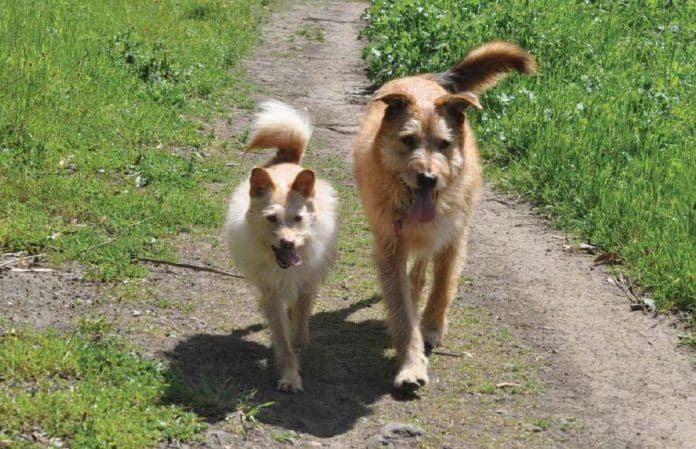
My six-month-old Rottweiler has a goofy, bouncy walk. Does that mean she has hip dysplasia?
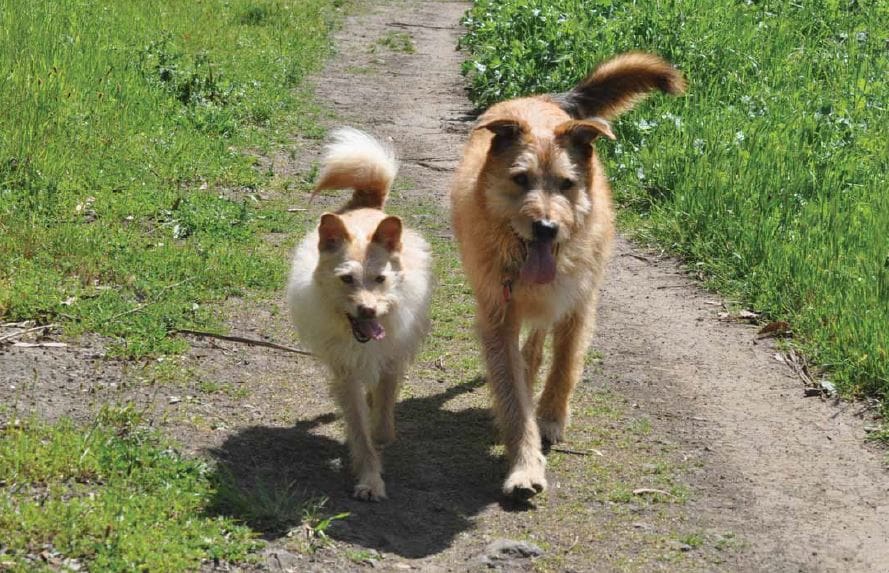
A lot of puppies – especially big, gangly ones – have a clumsy, bumbling gait, and this does not mean they have hip dysplasia. If your puppy had a hip dysplasia, you might notice that she limps sometimes, especially after strenuous exercise. You might hear or feel her hips “click” in and out, or notice that she stands and walks with her hocks or hind feet very close together. You might notice her struggling to push herself up into a standing position when she’s lying down, or she might have trouble climbing stairs.
The way vets assess a puppy for hip dysplasia is by looking for a limp as the puppy walks and runs, then checking whether the hip can easily be pushed out of position in the socket (this feels like a “click” and is called the Ortolani sign).
If there’s a suspicion of a problem – or if owners simply want more information – x-rays can be taken to check for hip dysplasia. Although a six-month-old puppy whose hips looked normal on plain x-rays might still develop hip dysplasia later, signs of the disease are often visible at this age. These x-rays are taken with the dog lying on her back in a frog-leg position. The puppy is sedated for a few minutes while the x-rays are taken. Sedation is required to relax the hip and thigh muscles and keep the dog in proper position for accurate x-rays. These x-rays can also be taken while a pup is under anesthesia for spaying or neutering.
On the x-rays, the vet will look at whether the head of the femur is smooth and round and fits snugly into the pelvis. In a puppy with severe hip dysplasia, the head of the femur may be out of the socket, or it may be obviously flat or misshapen.
Looseness in the hip joint – another sign of dysplasia – is measured by PennHIP x-rays. Very loose hips are a sign of dysplasia, and a good indication that a dog will develop arthritis over time.
You have a puppy of a breed that is known to have a high incidence of hip dysplasia, and you’re obviously concerned about it. If you haven’t already asked your vet to evaluate the puppy for hip dysplasia, I encourage you to do so. If her hips are normal, you’ll be reassured, and if they are abnormal, you’ll have surgical options for correcting the problem before arthritis sets in.
For answers to all your canine health questions – big and small – buy The Complete Healthy Dog Handbook by Betsy Brevitz, D.V.M from Whole Dog Journal.


Each and every one of the six people who adopted the puppies I fostered recently asked me the same question: “How much should I feed him?” I was surprised the first time, and cracking up by the last time I heard the inevitable question. “How much to feed” is not something I’ve ever struggled with or worried about. And yet, it must be a problem! Just look at the dogs at your local park or in the waiting room at your vet’s office – most of them are quite frankly obese! So here a few basic guidelines.

Calorie calculations and recommended amounts to feed are always an estimate, as the caloric needs of individual dogs can vary significantly based on activity level, metabolism, and other factors. The only way to know for sure how much food or how many calories your dog needs is to carefully monitor and keep track of the amount you feed her, watch her weight closely, and adjust the amount you feed as needed to keep her at, or help her reach, her ideal weight.
If you measure the amount of food you feed in cups, be sure to use a measuring cup, not just any cup, which might hold more or less than the regulation 8 fluid ounces. Better yet, get a small kitchen or postal scale and measure the food by weight, which is more accurate. This is especially useful for those of us feeding small dogs; even a few kibbles’ difference – which you can’t really appreciate when they are in even a measuring cup – can make a big difference in the weight of a small dog.
If you feed a homemade diet and calculate the amount to feed as a percentage of your dog’s body weight, remember that small dogs eat a larger percentage of their weight than larger dogs do. The amount of fat in the diet will significantly affect the number of calories provided; it’s best to feed only lean meats (no more than 10 percent fat) to most pet (non-athlete) dogs. Dogs fed grains and other starchy carbs will usually eat more food by weight than those fed primarily meat and animal products (which are higher in fat).
If your dog is any fatter than lean, he’s getting too many calories. Those of us who feed dry dog food (a nutritionally very dense food) may object when our veterinarian says, “Feed him less!” – especially when it seems we are feeding him practically nothing at all. But don’t forget to take into account the calories your dog gets from treats, chews, leftovers, and supplements (particularly oils, which provide 40 calories per teaspoon).
Many treats do not show calories on the label, so if you’re concerned, contact the company to find out. Some examples: Greenies have 25 to a whopping 272 calories each (depending on size), while Milk Bone dog biscuits range from 10 to 225 calories. Bully sticks may have about 29 calories per inch, while rawhide may have 80 calories per ounce!
If you find you have to feed much less than the amount of food recommended on the label to keep your dog at her proper weight, the odds are she’s getting significant calories from these other sources, which may be limiting the nutrients that she needs. (If that’s not the case, consider asking your vet whether it might be worth testing your dog for hypothyroidism.)
When adding “human” foods to a commercial diet, you can generally give as many non-starchy vegetables as you want, including carrots, broccoli, zucchini and other summer squashes, green beans, and all kinds of leafy greens. These foods are low in calories but provide valuable antioxidants and phytonutrients, and may help your dog feel fuller. Remember that vegetables must be either cooked or pureed in order to be digestible by dogs, but there’s no harm in giving whole, raw veggies as a treat, such as carrot sticks, green beans, or zucchini slices.
Other good choices for added foods without a lot of added calories include skinless chicken breast, low-fat or nonfat yogurt and cottage cheese, and sardines packed in water, not oil. Canned pumpkin and sweet potato in small amounts can be good for digestive health.
Remember, studies have shown that thin dogs live significantly longer, and their health and mobility stays good later in life. If you really love your dog, keep her lean!
Thanks to WDJ contributor Mary Straus for help with this article.
Recently, on the drive home from our annual vacation in Maine, our 11-year-old Brittany, Vinny, suddenly and inexplicably awoke from a sound sleep, and began to tremble, pant, pace, and obsessively lick at the sides of his travel crate. When I crawled back over the seat to find out what was wrong, I observed that Vinny’s eyes were “squinty,” and he avoided looking at me as he continued to lick and pant.
It’s important for dog owners to recognize and respond to signs of stress and fear in our dogs. If we are sensitive to their emotional states and are accurate in our interpretations, we can respond appropriately to situations in which a dog is uncomfortable, stressed, or frightened. Because nonspecific stress-related behaviors can be the first signs of illness or injury, attending to these promptly may help us deliver medical attention to our dogs before conditions worsen or escalate into an emergency.
It is well known that perceiving and understanding the emotions of others is a basic human social skill – and that studies have shown that these abilities vary tremendously among individuals. It follows that those of us who share our lives with dogs display a similar variability in skills when recognizing and interpreting the emotions of our canine friends.
However, until recently, the accuracy of our perceptions of dogs’ emotional states had not been studied. Two research studies examined the cues that we use and our levels of accuracy when we perceive fear and stress in our canine companions.
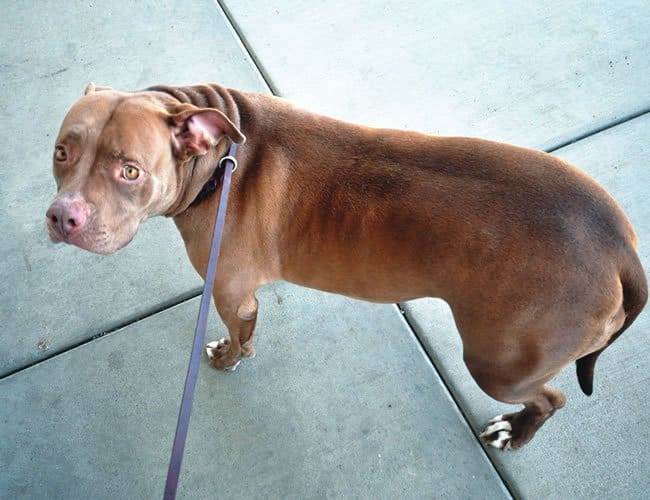
The first of these studies was conducted by researchers in the Department of Psychology at Columbia University in New York1. The study team produced a series of video clips of dogs and embedded them in an on-line survey. Participants viewed the videos and then were asked to classify each dog’s emotional state using one of five possible descriptors (angry, fearful, happy, sad, or neutral). The first four of these are called “primary emotions” and were selected because research has supported the existence of these emotions in dogs and other animals.
Although the study participants had five choices, the videos in the study showed dogs demonstrating one of only two expressions: either happiness or fear. All of the videos had been pre-categorized into the two emotion categories by a panel of dog behavior experts prior to the start of the study.
After identifying each dog’s emotion, participants were asked to describe the specific features of the dog that led them to their conclusion. For example, if a person classified a dog as showing happiness, she might say that the dog’s facial expression, ear set, and wagging tail were important features that conveyed this state to her. Last, the participants were asked to rate the level of difficulty that they experienced while attempting to interpret the emotions of each dog and to provide an estimate of overall confidence in their accuracy.
More than 2,000 people completed the survey and were divided into four categories based upon their dog ownership and professional histories: non-owners, dog owners, dog professionals with fewer than 10 years of experience, and professionals with more than 10 years of experience.
The vast majority of people who completed the survey – more than 90 percent – correctly identified happy dogs in the video clips, regardless of the person’s level of dog experience. This means that most people, even those who have never owned a dog, could look at a happy dog and see a happy dog! This is good news.
However, when it came to recognizing fear in dogs, the news was not quite so positive. While more than 70 percent of dog professionals correctly identified the fearful dogs, this proportion dropped to 60 percent of dog owners, and to only 35 percent of non-owners. Put another way, 40 percent of dog owners and 65 percent of non-owners were unable to correctly identify signs of fear and stress in an unfamiliar dog.
Moreover, a substantial number of the non-owners (17 percent, or about one in six people) misclassified a fearful dog as a happy dog!
This latter statistic is especially troubling, given the potential for a dangerous outcome of such mistakes. A person who approaches a fearful dog with the perception that the dog is friendly will, at the very least, increase the dog’s fear and distress, and could potentially cause a defensive response in the dog, leading to a snap or bite.
The features of the dogs that participants used to make their decisions also varied with experience level. A person’s tendency to focus on a dog’s facial features (eyes, mouth, ears) increased significantly along with experience. Inexperienced participants used primarily the dog’s tail and body posture to inform them about the dog’s emotional state. Conversely, more experienced people identified both facial expressions and body postures as important features when assessing a dog.
Interestingly, but perhaps not surprisingly, the results of this study are consistent with studies of human abilities to perceive and interpret the expression of emotions in other people. We are generally more sensitive to and more accurate at interpreting happy facial expressions in other humans than we are when experiencing fearful expressions. Moreover, while social experience seems to have little effect upon our responses to happy faces (we show a proficiency to do this at a very young age), having varied and extensive social experience is an important factor in determining our success at perceiving fear and stress in other humans.
This study tells us that dog-related training and experience enhance our tendency to pay attention to dogs’ facial expressions and body postures, and enhances our ability to correctly perceive fear.
While the first study provided a general test of how people perceive fear in unfamiliar dogs, the second examined the ability of dog owners to recognize signs of stress in their own dogs2. This Italian study was conducted by researchers at the University of Pisa, with a group of almost 1,200 dog owners recruited through veterinary clinics.
Participants first completed a questionnaire in which they were asked about stress in dogs and its potential health and behavioral consequences. They then identified what they believed to be signs of stress in dogs and estimated the level of stress in their own dog.
More than half of the owners (60 percent) were found to have a clear understanding of what stress is and how it can affect a dog’s emotional state and health. However, about 20 percent of owners (one in five) believed that experiencing stress had no negative physical or emotional consequences on dogs. (In other words, while they agreed that it occurred, they thought it was no big deal.)
The behaviors that owners most frequently identified as reflecting stress in their dogs included trembling, whining/crying, excessive barking, and panting. In contrast, very few owners identified more subtle behaviors, such as avoiding eye contact, turning away, nose licking, or yawning as signs of canine stress.
Those owners who self-reported as being highly concerned with their dog’s stress level were more likely to identify these less obvious signs as important. Overall though, owners tended to miss many of the facial expressions (squinty eyes, avoiding eye contact, changes to ear set, retracted commissures) that most trainers look for when assessing a dog’s stress level.
Like the first study, this suggests that it is these more subtle facial cues of stress and fear that may be missed if a person is only paying attention to the more obvious body posture signs.
These studies provide complementary information about the behavior cues that people pay attention to when attempting to decipher a dog’s emotional state. The first showed that even inexperienced people were able to correctly identify a dog who was feeling happy. However, perceptions of fear were strongly correlated to how much prior experience a person has had with dogs. As experience level increased, people were not only more likely to be correct, but also more likely to pay attention to a dog’s facial expressions, compared with people who did not spend much time with dogs. We also learned that dog owners are more likely to focus attention on their dog’s body posture, vocalizations, and movements than on the more subtle signs of stress that involve a dog’s facial expressions and eyes.
Accurately recognizing fear and stress in dogs is an important skill set to possess. Understanding our own dog’s emotional state allows us to respond by helping him out of situations that cause fear and reducing or eliminating triggers of stress when they are under our control.
For trainers and behaviorists, working with owners who are sensitive to their dog’s stress response promotes the development of a more effective training and management plan. On a societal level we all benefit from a universal understanding of the behaviors, body postures, and facial expressions that convey happiness versus fear or stress in dogs. Correctly interpreting a dog’s behavior is always enhanced by attending to both body posture and facial expressions.
However, interpretation of dogs’ facial expressions may not come naturally to many people. This knowledge emphasizes the importance of teaching the subtleties of canine facial expressions in training classes, behavior-education courses, and bite-prevention programs.
Moreover, the statistic suggesting that one in five owners do not consider the effects of stress in their dogs to be of negative consequence tells us that education is also needed regarding the health and welfare impacts of stress and fear on our dogs’ well-being and quality of life.
My husband and I are still uncertain about what caused Vinny’s acute stress response during our vacation. As quickly as possible, Mike pulled over to a rest area and we got Vinny out of the car. As soon as he was on the ground and moving about, Vinny relaxed, looked at us calmly, gave each of us a nice Brittany hug, and off we went for a little walk. Perplexed, we thought that maybe he had to eliminate (nope, no urgency there), was feeling carsick (no signs), or had had a bad dream (who knows?). Within less than a minute, our boy was his typical happy self, showing no signs at all of distress. We loaded all of the dogs back into the car and Vinny continued the journey home with no further incident.
Weeks later, Vinny has not had a recurrence and seems¡ healthy and happy, but we continue to monitor him carefully. As Vinny has aged he has become somewhat more sensitive to sounds, which is not unusual in senior dogs. However, even though we responded quickly at the time and he apparently recovered, we did not learn enough from the episode to determine a possible underlying cause. Perhaps we’ll never know. Regardless, I do know that paying attention to all of Vinny’s signs – body language, facial expressions, and eyes – will help us to understand, care for, and love him as best we can.
Linda P. Case, MS, is the owner of AutumnGold Consulting and Dog Training Center in Mahomet, Illinois, where she lives with her four dogs and husband Mike. She is the author of a new book, Dog Food Logic, and many other books and numerous publications on nutrition for dogs and cats. Her blog can be read at thesciencedog.wordpress.com.
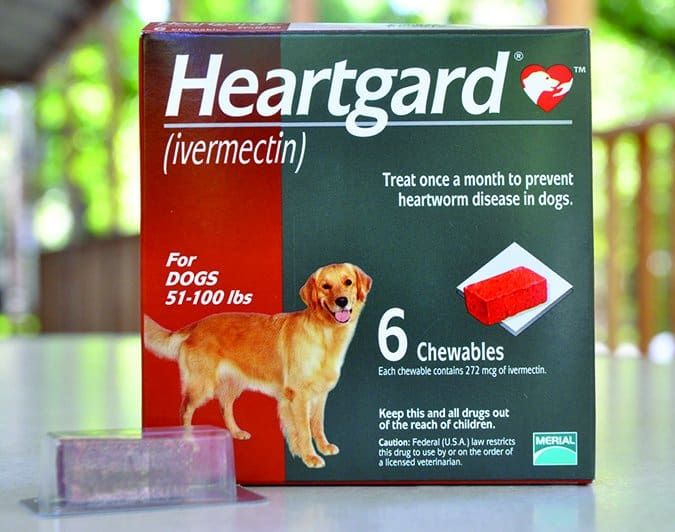

Heartworms might more accurately be called heart-and-lung-worms; these life-threatening parasites are almost as frequently found in the lungs of infected dogs as their hearts. But perhaps the term also references the owners of infected dogs, because when we learn our beloved dog has been diagnosed with these horrid parasites, our hearts are very much affected, if only figuratively. Treatment for heartworm can be risky, expensive, and inconvenient – altogether, quite a source of fear and anxiety for dog owners. The more information you have before initiating treatment, though, the better you will be able to support your dog through the process.
Jennifer Dodge of Wichita, Kansas, knows that fearful, anxious feeling all too well. In 2010, she rescued Holly, who had been living on the streets for three years after her owners abandoned her. Wary of strangers and covered with mange, Holly was underweight and had a disturbingly deep cough.
When Holly’s heartworm test came back positive, Dodge was devastated. “I had never been through this before,” she remembers. “And I thought, ‘I just lost this poor dog.'”
After canvassing the Internet for as much information as she could find, Dodge started a Facebook page called Heartworm Survivor, where other owners of dogs who had gone through treatment for a heartworm infection could share their experiences and resources. Most people who post there have specific questions about heartworm treatment and potential alternatives. Most significantly, people who come to the page want reassurance that there is a light at the end of the tunnel.
Heartworm experts stress that when it comes to this disease, prevention is the best defense, because no treatment is without risk. But for those who are weighing the pros and cons of different treatment options, it is comforting to know that the choices have gotten better than they used to be.
According to Dr. Stephen Jones of the American Heartworm Association, at least 1 million American dogs are infected with heartworm at any given time.
Heartworms are transmitted by mosquitos. When a mosquito bites and drinks the blood of a heartworm-infected animal (host species include dogs, coyotes, foxes, wolves, and ferrets), it also inadvertently consumes microscopic larvae. These larvae, called microfilariae, are little more than fertilized eggs that are produced by adult female heartworms after mating with adult male heartworms. The microfilariae circulate in the host animal’s blood, but can’t develop into adults in that host; they can develop further only in the digestive tract of a mosquito. It takes about two weeks of camping out in the mosquito that consumed them for the microfilariae to develop into their next life-form: infective larvae.
Once they have reached this stage, the larvae can abandon their mosquito host when it bites another animal, swimming out in the mosquito’s saliva. Once they have been deposited under the skin of their new and final mammal host, they develop into their next life stages. First, they transform into larvae that burrow through the animal’s muscle tissue toward the major blood vessels, a journey that takes about 45 to 60 days. Once there, the larvae develop into immature worms, and make their way through the circulatory system to the major pulmonary arteries. There they continue to mature and grow, reaching reproductive adulthood in about six to seven months.
The heartworm tests used in most veterinary practices detect hormones produced by adult female heartworms. This means it’s possible for a dog whose test is “negative” to be infected; if the dog was infected with larvae less than seven months prior to the test, his heartworms won’t be mature enough to produce the adult female hormones that the test is designed to detect. It’s also possible (though not common) for a dog to be infected with only male worms, who won’t, of course, produce those female hormones that the test looks for.
“There are probably more false negatives than we realize,” says Dr. Jones, noting that some dogs carry antibodies to the antigen used in the heartworm test: Though these dogs may indeed be infected, their results will come back as clear. “There are ongoing studies now looking at shelter pets who have negative tests,” he says, “and they are finding a large percent of those samples are actually positive.”
Geography has always been a key indicator in heartworm prevalence: Those parts of the country where mild temperatures mean an extended, if not perpetual, mosquito season, such as the Gulf Coast, the South, and Hawaii, have long had endemic heartworm problems.
But increasingly, says Dr. Jones – who practices in Moncks Corner, South Carolina, itself a high-risk state for heartworm infestation – the disease has pushed out from those historic boundaries.
“Follow the Mississippi River up through Ohio, go to a big city like Chicago and other parts of the country that you might think would be too cold, and there are practices there seeing 100 cases of heartworm a year,” he says. And in locales where the disease is endemic, increased exposure raises the worm load that a dog might be carrying.
In addition to climate, sociodemographics can play a role in the spread of heartworm: Communities whose residents cannot afford monthly heartworm prevention often have reservoirs of infected dogs. Since wild canids can harbor the disease, growing populations in increasing proximity to human residences – in particular, the coyote boom – mean greater risk, too.
Arsenic, that old favorite of surreptitious murderers in mystery novels, is the treatment of choice for heartworms, too. Today, veterinary medicine uses an analog of the notoriously poisonous metalloid: melarsomine dihydrochloride, sold under the brand name Immiticide, which was introduced to the market in 1995.
Compared to Caparsolate, the only other drug that has ever been approved to kill adult heartworms, Immiticide is a vast improvement. The use of Caparsolate gave rise to the sentiment that the cure for heartworm was arguably as bad as the disease itself; side effects were common and dramatic, and the drug wasn’t even that effective – it killed all the adult heartworms in less than half of the dogs treated with it.
In contrast, when used as directed, Immiticide kills 98 percent of the heartworms present, and is metabolized very quickly. “The dose administered doesn’t take long to get out of the body, and it doesn’t pose great risk to liver and kidney function,” Dr. Jones says. The injection needs to be administered deep in the muscle, and can cause soreness, pain and, sometimes, permanent lumps or abscesses at the injection site.
Typically, for a dog with “severe” disease (referred to as a “Stage 3 infection,”) veterinarians administer one injection of Immiticide, and send the dog home for a month, during which the owner is instructed to severely curtail the dog’s movements (more about that in a moment). Thirty days after that first dose, another injection is given, usually followed a day later by a third and final injection. Ninety-eight percent of dogs treated in this way (regardless of the state of disease) will be cleared of heartworms.
If the dog has Stage 1 or 2 disease (a mild to moderate infection), the vet may administer a second injection 24 hours after the first one. About 90 percent of dogs with Stage 1 or 2 infections will be cleared of adult heartworms by this protocol. A third injection would be indicated if the dog still tests positive four months after treatment. Because of the higher efficacy rate of the three-injection protocol recommended for Stage 3 dogs, many vets use the same protocol for even Stage 1 and 2 dogs.
Some (not all) veterinarians require overnight hospitalization after each injection so the dog can be monitored for adverse effects, especially if the test results indicated that the dog had a heavy worm burden (as indicated by high heartworm antigen levels).
The biggest problem with conventional heartworm treatment is its aftermath: The treatment kills the adult worms – and suddenly, the dog has a bunch of dead and decaying worms in his major blood vessels and lungs. It takes a bit of work for the body to clear out the dead worm corpses, which are protected by a tough cuticle surface. “When you kill a worm, it becomes a limp spaghetti noodle,” Dr. Jones explains. “It crumples into the artery, much like a spaghetti noodle in the sink drain. As the worms decompose, they can trigger blood clots, which can cause more blockage.”
During this time, dogs must be kept as quiet as possible and inactive, ideally in a crate or small pen. Most vets recommend that the dog be taken out to potty only on a leash, and then returned to a crate. Roughhousing with other dogs, or even a quick romp back into the house after pottying, can raise the heart rate and increase the risk of embolisms.
All dogs should be maintained on heartworm preventive medications throughout and following treatment, and tested four to six months after treatment, to ensure the infection has been completely cleared.
The danger is greater for dogs who have particularly severe heartworm infections (many adult worms) or whose circulatory and respiratory systems have been damaged by a long-term infection. Some of the effects that can result from a severe heartworm infection include:
To visualize the damage that heartworms do, Dr. Jones has necropsied more than three dozen dogs who had been successfully treated for heartworm, and all, he said, had noticeable damage in the pulmonary arteries as a result of the infection. “I still found dead pieces of mummified worms, thickening of the arteries caused by nothing other than heartworm,” he says. “I’ve never found a dog that didn’t have long-term disease, scarred lung lobes, vascular disease, or lung tissue damage. The scar tissue doesn’t go away.”
Dr. Jones notes that a dog’s body can do a tremendous amount to compensate for lost lung function. A heartworm-positive dog may appear clinically normal, perhaps only getting winded a bit early after intense physical exertion. “It’s really hard to clinically judge the real function of lungs and arteries in a dog who appears normal,” he says.
Depending on the condition of the dog and the stage of his disease, stabilizing treatments may need to be administered before or concurrently with treatment for the heartworm infection. A dog with serious damage to his circulatory and respiratory systems may require therapy with corticosteroids (to reduce inflammation), diuretics (to reduce the excessive fluid in his lungs or peritoneal cavity and reduce that burden on his circulatory system), vasodilators (to improve blood flow), and/or positive inotropic agents (drugs that strengthen the contractions of the heart, so it can pump more blood with fewer heartbeats).
Dead worms don’t just disappear; it’s the disposal of their dead bodies, in fact, that causes the major difficulties of heartworm treatment. To understand why, remember how the heart works with the lungs: The gas exchange that enables life takes place in the tiny air sacs (alveoli) in the lungs, where carbon dioxide is released into the lung for exhalation, and oxygen is taken into the blood vessels for distribution throughout the body. The heart provides the driving force for this gas exchange, driving oxygen-rich blood from the alveoli out to the body, as well as driving the “used” blood, now full of carbon dioxide and other waste products from the various tissues of the body, back to the lungs for disposal.
As the heartworms die and lose their attachment to the interior of the dog’s heart, lungs, and pulmonary arteries, and as their bodies are released into the bloodstream, the decaying fragments are deposited into the alveoli, where they can plug up the bronchioles and cause tissue death in the lungs. This, in turn, can cause fluid accumulation (as the lungs are overburdened by this new task), coughing, gagging (to the point of causing vomiting), and bacterial infections.
Dogs should be closely monitored and supported through this process. They may feel so weak that they refuse food and water; if they don’t drink (especially if they develop a bacterial infection and resulting fever), they can become dehydrated, which can complicate their recovery further. Sometimes supportive fluids (IV or subcutaneous), antibiotics, and/or corticosteroids may be needed to address these secondary symptoms.
In recent years, it’s become more common for veterinarians to pre-treat their heartworm patients (especially those dogs with Stage 3 infections) with doxycycline – sometimes, for as long as a month before the conventional Immiticide treatment. This pre-treatment reduces the occurrence of bacterial infections and adverse secondary symptoms once the Immiticide is administered.
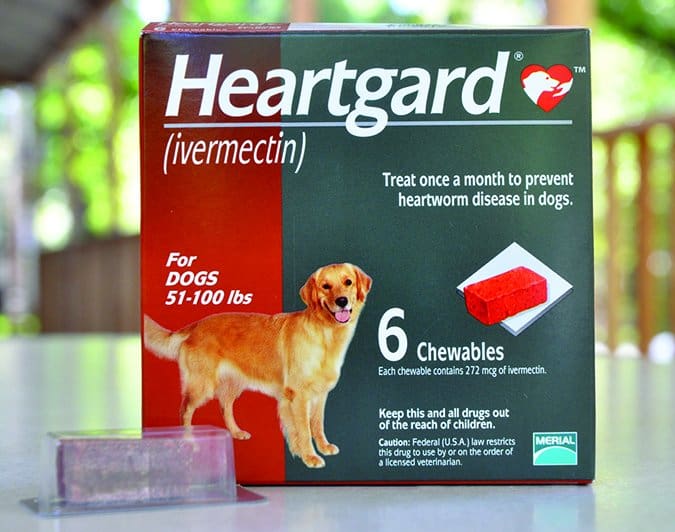
Jennifer Dodge says one of the most often asked questions on the Heartworm Survivor Facebook page is whether to consider the so-called “slow kill” method for heartworm infection. In this approach, instead of Immiticide, the dog receives a long-term program of ivermectin (the same drug used as a heartworm preventive drug) and daily doxycycline (an antibiotic).
The ivermectin kills any larvae that have been deposited by mosquitoes (preventing the development of any more adult worms) as well as the microfilariae that the adult worms are producing (which interrupts the reproduction cycle and reduces the chance that the dog will be a reservoir to infect other dogs).
The doxycycline accomplishes two things: First, it kills Wolbachia, a symbiotic rickettsial organism living inside the heartworms (yes, parasitic heartworms have their own parasites!), and the death of the Wolbachia seems to weaken the weakest heartworms. The doxycycline also renders the adult female worms unable to reproduce. Eventually, the worms die, but it is a process that can take 18 to 24 months.
Proponents of the slow-kill protocol say that it’s kinder on the body, allowing the worms to die gradually so they don’t burden the dog’s lungs by dying (and decaying) all at once. A 2008 study published in Veterinary Parasitology showed that after nine months, dogs treated with ivermectin and doxycycline showed a 79 percent reduction in worms (compared to 100 percent for those treated with Immiticide alone).
Still, many veterinarians, as well as the American Heartworm Association, caution against the approach. “It’s not the first line of treatment for heartworm disease,” says Herb Maisenbacher, VMD, of Veterinary Heart Care in Virginia Beach, Virginia. “Yes, it doesn’t sound good to inject a dog with arsenic, but in most cases the actual outcomes of conventional treatment are usually quite good, with fairly mild and manageable side effects. It really is the only way to kill adult worms in a reasonable amount of time.”
As its name suggests, the slow-kill method can take a year or two to totally eliminate all heartworms, as opposed to a few weeks or at the most months with Immiticide. And that’s precisely the problem, Dr. Maisenbacher says: “In that time, the worms are still there, still causing damage.” Also, some dogs experience serious stomach upset from doxycycline – severe enough to refuse to eat. And production shortages of the formerly inexpensive and abundant antibiotic have resulted in uncertain supplies and radically increased prices.
Dr. Maisenbacher says there are some cases where the slow-kill approach might be valid – for example, the dog is too sick to tolerate the arsenic-based drug, or the owners are unwilling or unable to pay for the conventional treatment, or restrict the dog’s activity. But it’s not his preference, by far; he’s had cases in his practice where dogs who were on the slow-kill method developed worsening heartworm disease in the interim.
Betsy Harrison of Wimberley, Texas, a former veterinarian who decided to pursue a career as a homeopath, did treat some dogs with the “slow kill” method when she was practicing. She points out that the ivermectin stops new worms from infecting the dog, and “eventually the adults that are there will die of their own accord, and they’ll only die one or two at a time,” mitigating the risks of a massive die-off. As for concerns about permitting heartworms to continue to live in the dog while the long-term kill off takes place, she turns the table to ask: “How much damage is the arsenic doing?” (The counter to this argument is that the Immiticide is cleared rapidly from the body, whereas it could take years for heartworms to die.)
Unlike some holistic-minded practitioners, Harrison does not have a problem with the judicious use of ivermectin, though she notes that care must be taken with those breeds, in particular collies and sheepdogs, that have a genetic sensitivity to the drug. “I don’t think it’s all that toxic,” she says. (Some veterinarians have an altogether different concern about using ivermectin to treat heartworm, arguing that it will lead to resistance to the drug over time.)
Harrison adds that constitutional treatment, to restore and bolster the vital force of the dog, would be the homeopathic approach. “From the homeopathic perspective, the issue is always the health of the overall system,” she explains, adding that a good, biologically appropriate diet is an important starting point. “Worms are kind of like a bacterial infection; they are a reflection of the animal’s state of health more than a disease in and of themselves.”
In some advanced cases, surgery can be performed to remove the heartworms while they are still alive, eliminating the need for the body to clear out the debris from heartworm die-off.
In the procedure, similar in approach to an angioplasty in humans, the veterinary surgeon makes an incision over the jugular vein, then uses special grasping forceps to inch her way to the pulmonary arteries, where the worms are extracted.
“You don’t damage the lungs themselves – you stay within the blood vessels,” explains Dr. Maisenbacher, who performed the surgery many times during his previous tenure at the College of Veterinary Medicine at the University of Florida in Gainesville. “The benefit is that the body doesn’t have to clean the worms out after they die off. But the downside is that it requires general anesthesia, which is much higher risk,” especially for dogs whose bodies have been compromised by a heavy worm load.
Because the surgery is highly specialized, requiring advanced imaging equipment and extensive post-operative care, veterinarians who perform it will likely be located at veterinary schools and large specialty hospitals. And the price tag is steep, potentially $2,000 to $3,000.
In the most advanced heartworm cases, the large number of worms in the pulmonary arteries reduces blood flow, and the dog may cough, be lethargic, and even faint and collapse. Inside the lungs, the worms begin to fall back through the vena cava into the right chamber of the heart, giving this severest form of the disease its name: cava syndrome.
In these cases, worm die-off in the heart cavity is not an option; the worms must be surgically removed before they compromise cardiac function. Though this surgery is slightly less complicated than removing worms from the pulmonary arteries (the veterinarian goes directly into the right atrium of the heart), the prognosis is worse. “In dogs with cava syndrome, the liver, kidneys, and lungs are all compromised, and anesthesia alone can destabilize them,” Dr. Maisenbacher says. “In those cases, the survival rate is 50 percent – not good.”
Pat Collins of Lapeer, Michigan, had two of her English Cocker Spaniels come up positive for heartworm last year after they spent time in Louisiana: 2-year-old Isaac and 3-year-old Jackie.
Collins opted to use the conventional Immiticide treatment, and her anxiety about the treatment centered around the injection itself. “That scared me,” she admits. “Jackie is very soft, and it scared me that she wouldn’t be able to handle the deep muscle injection next to the spine.”
Like any drug, Immiticide can cause allergic reactions, says Wendy Mandese, DVM, a clinical assistant professor at the University of Florida College of Veterinary Medicine. “And like with any caustic substance, sometimes there’s administration error, like the injection being given too close to the surface of the skin.” Experienced veterinarians scrub the skin surface thoroughly, give the needle a half-turn before removing it to avoid tracking the drug up through the injection site, and hold their finger over the hole, creating pressure so the drug doesn’t travel upward through the needle track.
Collins’ fears turned out to be unfounded: Both dogs returned from the vet’s office with a few days’ worth of pain meds and no major side effects, basically sailing through the medical process.
Keeping her two dogs confined for two months was “extremely difficult for both them and me,” Collins says – in particular for the very active Isaac. While she took both dogs on frequent leash walks, “it was very hard to keep him from running and jumping up on furniture. I let him play with his toys a little bit, but I didn’t want him to get wound up and start panting.”
“We don’t want that heart pumping and blood flowing at a high rate while the worms are dead or dying,” Dr. Mandese explains. “Walking around the house and short, on-leash walks are okay. But you don’t want the dog tearing around.”
Creativity counts in situations such as these, and mental exertion is a must. Owners can use this time to fine-tune training and teach targeting, tricks, or other desired behaviors … anything that the dog can master, provided the training process doesn’t get him too excited. That old standby, the Kong stuffed with peanut butter, then frozen, can help wile away a few hours. So can puzzle-style toys, like the Buster Cube.
“We have on occasion prescribed sedation, just to take the edge off,” says Dr. Mandese, who has used Acepromazine and even Xanax to send a tough customer off to a dreamier place. Diffusing calming essential oils such as lavender, or pheromone-release products such as the D.A.P. diffuser, may also help.
As with all things in life, balance is important. Jogging with a dog undergoing treatment would be clearly dangerous and irresponsible, but, Sockness says, it’s important to remember that “emotionally you can’t shut down a dog, either, because that’s part of their immune system.” While a dog’s activity needs to be curtailed, “let them enjoy a lifestyle.”
She also cautions against taking a sky-is-falling approach. “If your dog tests positive for heartworm, don’t call 911 and freak out,” she says. “You have options. Heartworm is not a death sentence.”
Dodge – who says the day the results came back proclaiming her dog Holly to be heartworm negative was “the best day of my life” – also recommends taking the long view. “It is not the end of your dog’s life!” she echoes. “Search for facts, especially from your vet, and follow the instructions. Stay calm – if you are scared and nervous, the dogs sense it.”
No matter what your treatment approach you take, tender loving care is compatible with all of them. “Baby your baby, spoil him!” she urges. “Do anything to get both of your minds off what you and your dog are going through.” And, of course, the best cure for what ails them – and you? “Lots of kisses.”
Denise Flaim of Revodana Ridgebacks in Long Island, New York, shares her home with three Ridgebacks, 10-year-old triplets, and a very patient husband.

[Updated December 18, 2018]
Cooper, my service-dog-in-training, trotted briskly at the side of my power wheelchair as we headed to the veterinary clinic, a mile from home. He was overdue for a routine dental cleaning, and my regular veterinary clinic was not within rolling distance. I decided to take a chance on a new vet, since it was just a standard dental cleaning. I dropped him off and rolled back home, relieved that I was finally able to afford the procedure.
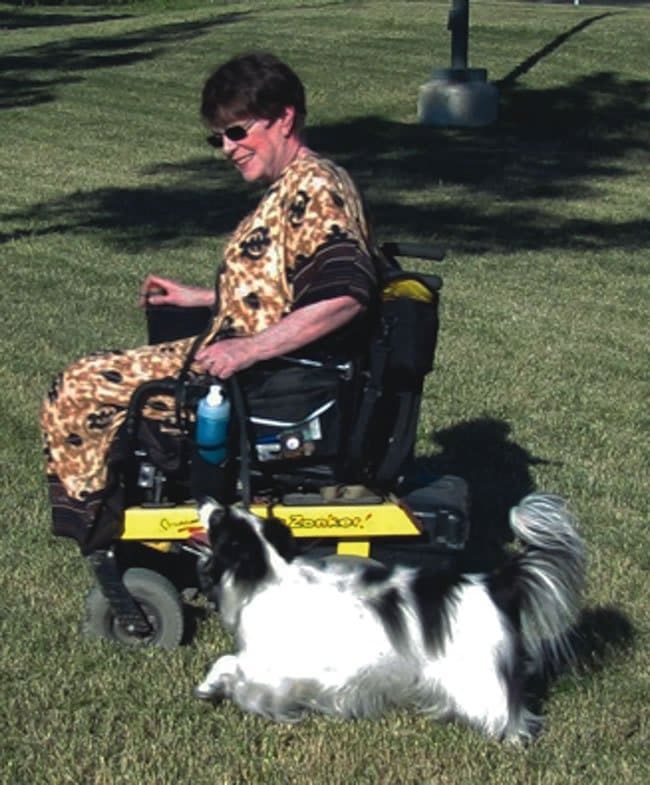
Later that morning, my cell phone rang. The new veterinarian called to let me know that Cooper, a 7-year-old Papillon-mix, had advanced periodontal disease, and needed 11 teeth extracted. Already numb with shock, I shuddered with disbelief when she added that six more teeth were starting to get loose, and would need extracting within six months.
Seventeen teeth? It was a death-knoll of hope for a service dog career, since his primary job would be retrieving items for me. With 17 missing teeth, his career was ending just as it was starting.
How could I have not realized his mouth was in such poor condition? His breath smelled rank, but I thought it was just mild gingivitis. I’d noticed some redness and swelling of his gums, and a small line of tan plaque at the gum line. I had been certain that it was nothing that a professional cleaning wouldn’t take care of. I had noticed he was no longer interested in playing with his soft toys, and that he was shunned dental chews, but I thought it was just because his gums were sore. The damage, however, had been happening beneath the gum line, where I couldn’t see.
I’d let his mouth go without a professional cleaning for a couple of years, because Cooper was the youngest and healthiest of my four dogs. I had three retired elder service dogs living with congestive heart failure, each of whom required expensive medications and blood work, which had depleted my bank account. My focus was on helping the elder dogs through the last years of their lives. They still were able to do retrievals for me at home.
My time with Cooper was spent training for public access, helping him to be stress-free and comfortable in every possible environment. Cooper enjoyed every training outing, and was quiet, biddable, and reliable in stimulus-rich environments. I’d planned to start his task-training once the elder dogs’ lives had ended.
I was finally able to schedule Cooper’s dental cleaning after the last of my elder service dogs had passed away. I had also started work on Cooper’s task-training. His personality and calm demeanor convinced me he’d be a fine service dog for me.
But my hopes crumbled like a stale cookie as the vet delivered the heartbreaking news that Cooper had advanced periodontal disease. I’d let my dog down in the worst possible way. And that $150 routine dental cleaning was now estimated at $1,200, with a recommended followup dental in six months estimated at another $1,000.
Like many people who’d struggled to care for multiple dogs in today’s tough economic times, I could see no way to stretch my budget any thinner. I told the vet that I could not afford the extractions at that time, and to just do the cleaning, root planing, and polishing. She replied the teeth were not abscessed, just loose from bone loss, and that some teeth would probably fall out on their own in a few months’ time. She agreed that Cooper could likely go six more months without being in tremendous pain, but would need to be put on a soft diet.
I had no idea what to do, so I called on a personal friend, a veterinarian in the process of retiring and closing her practice in another state. I explained my dilemma, and she told me to take a deep breath; she would help get me started on trying to save as many of Cooper’s teeth as possible.
My friend explained that she had saved many dogs’ teeth that other veterinarians had given up on, and that diligent mechanical care in brushing, combined with oral antibiotics, could do wonders, as long as there was enough bone left to hold the teeth in. She said that while the soft alveolar bone that held the teeth in the mouth would not grow back, she’d often seen enough fibrous scar tissue form to hold the teeth in place.
My friend further explained that it would require a twice-daily commitment to a strict home care regimen, but she felt that many, if not most, of the teeth could be saved with dedicated effort on my part.
My relief was palpable. I was willing to devote whatever it took to keep as many teeth as possible in Cooper’s mouth.
My veterinarian friend had already explained that an oral antibiotic was critical in helping save the teeth and stop the progression of periodontal disease. The antibiotics would work to keep the infection from restarting down deep in the pockets where the bone had been eaten away, and where a toothbrush could not reach. She also advised giving the antibiotics as “pulse therapy” – in which the antibiotics are given for a week to 10 days, then stopped for three weeks, and this on-and-off again regimen is repeated.
Armed with all this information, and filled with resolve, I contacted the young veterinarian who did Cooper’s dental cleaning. She was not familiar with antibiotic “pulse therapy,” and was skeptical about it. She said she normally only used antibiotics when teeth were extracted, but she finally agreed to prescribe Clindamycin, an oral antibiotic routinely used to treat soft tissue, dental, and bone infections, on my veterinarian friend’s recommendation.
To help me feel comfortable that I was doing the right thing, I began researching canine periodontal disease. I read every website published by board certified veterinary dentists. I studied canine dentition, and learned a whole new vocabulary.
Unfortunately, the veterinarian who had performed Cooper’s cleaning did not have dental x-ray equipment, so I could not see the extent of the bone loss. I could only go by the chart she had provided that identified each of Cooper’s loose teeth. Researching online helped me to see what I was up against.
One expert had a standout website: Dr. Jan Bellows, a board-certified veterinary dentist practicing in Weston, Florida. His website offered the most detailed information about canine dentistry and home care, with photos, illustrations, and x-rays. The “12 Steps of the Professional Teeth Cleaning Visit” page in particular provided step-by-step instructions on how to perform the most effective home oral healthcare for pets.
I emailed Dr. Bellows, and he gave me permission to reprint anything on his website, explaining that he felt strongly that home healthcare was a key to a healthy mouth, and the more people who understood how to do thorough oral home care, the happier he’d be. He offered to answer any questions I might have on the information shared on his website. It was clear that he cared about all dogs, not just his own clients’ dogs, and he encouraged me to share the information.

Dr. Bellows’ clients are not just sent home with a pet toothbrush, toothpaste, and rinse after a dental procedure; instead, each client is given a hands-on lesson on proper brushing techniques with her dog, and how to treat problem areas. The client practices the brushing techniques under supervision before they are sent home with their dog.
Dr. Bellows mirrored much of the advice my friend had given me, and was also was an advocate for antibiotic pulse therapy to combat periodontal disease. I was on my way! Maybe I could save most of Cooper’s teeth. Maybe I couldn’t. But I was committed to the challenge, and I would give it my all.
Twice a day, I brushed, irrigated, and rinsed Cooper’s teeth. I thought about how I might be able to get down into the pockets between the teeth, where the infection had destroyed the bone. I had used interdental (also called interproximal) brushes on my own teeth, to get into tight spaces to clean between them and under bridgework.
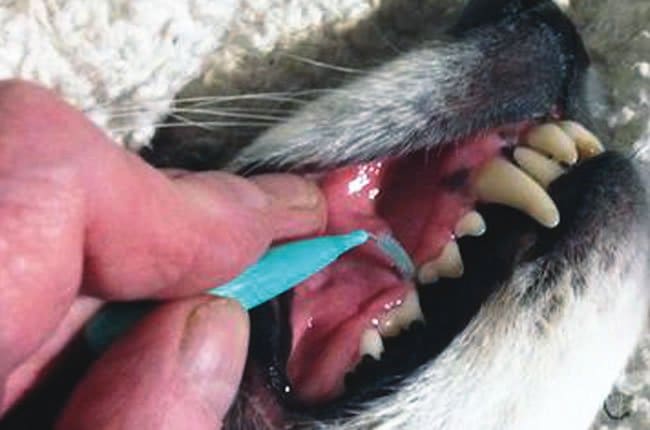
Interdental brushes are very narrow spiral bristle brushes, available in several shapes and sizes. I picked up a package of every size, to help get that antibacterial enzymatic rinse down into those hidden infected areas where bacteria multiplies and thrives. Normal dog toothbrushes cannot reach down that deep under the gum line.
Dr. Bellows’ website explained that the most critical areas are the upper back teeth on the outside surface, and to concentrate on keeping these areas especially clean.
I read that, “Proper technique involves applying the bristles at a 45-degree angle to the gingiva (gums). Use small circular motions around the outside of the teeth, being sure to get the bristles under the gum line. It is not as important to brush the inside of the teeth, as dogs do not have the buildup of tartar on the palatal or lingual (tongue) side of their teeth as people do.”
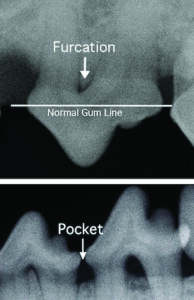
Cooper’s lower teeth were also a problem, with furcations already visible without probing. A furcation is the area between multi-rooted teeth where the bone has already dissolved, leaving a hollow area between the roots. This becomes an ideal environment for bacteria to thrive and quickly multiply, which rapidly destroys the bone.
Once the dental cleaning was completed, and Cooper’s gums were given a few days to heal, I was able to use the interdental brushes to keep these areas clean, allowing the scar tissue to help fill in the hollow areas where the bone had been destroyed.
The furcations and pockets between the teeth where bacteria multiply can be easily seen on the x-ray of a few of Cooper’s teeth. The dark areas show the bone loss. I’ve added a line where the bone should be, showing just how much bone loss is already present.
My home-care dental kit includes a long-shanked double-ended toothbrush made for dogs. The long shank helps reach the back teeth easier. I use the wide bristled end for all the teeth except the front incisors. I use the narrow end for cleaning the upper and lower incisors (front teeth).

Cooper likes the taste of poultry- and meat-flavored enzymatic canine toothpastes. Human toothpaste should not be used on dogs, as it contains foaming agents that cause upset stomachs, vomiting, and diarrhea. Human toothpaste is meant to be spit out and the mouth rinsed with water afterwards. Toothpaste made for dogs is made for swallowing. There are many brands available at veterinary offices and pet supply stores.
Saliva is slick, and using fingers to pull back the lips can be difficult. A gauze pad, a small piece of terrycloth or a dental mirror can be used to make it easier to hold the lips away from the teeth so the brush can reach all the way back to the carnassials – the back molars.
I also have a three-sided toothbrush, meant to clean both the inside and outside of the teeth at the same time. It’s a U-shaped brush with bristles on the sides and bottom. I use this only once a week, knowing the tongue does a good job keeping the inside areas of the teeth clean.
An antibacterial enzyme rinse made for dogs is also an important part of my dental kit. I pour a bit of the rinse in a small bowl, and dip the toothbrush and interdental brushes into it, once I have finished cleaning the teeth with the toothpaste. I also use a small piece of terrycloth dipped in the rinse to wipe and polish the teeth at the end of the dental routine. Cooper likes the taste of this, and gets to lick the bottom of the bowl as a treat when we’re finished.
Finally, I keep a small bottle of 3 percent hydrogen peroxide in my kit to soak the brushes for a few minutes after each cleaning, as advocated by microbiologist Dr. Philip Terno, who also advises this for human toothbrushes.
In the beginning, I spent about 15 minutes twice a day working on Cooper’s teeth and gums. Now it takes about five minutes per session, as the scar tissue is filling in, and I don’t have to use as many different sizes of interdental brushes, only the thinnest one. I’m also building up more skill and facility at doing a thorough job in a shorter amount of time.

Cooper had a second dental cleaning done six months later by my regular veterinarian, Dr. Bullard, who owns the dental clinic where I normally have my dogs treated. He took a full set of x-rays to give me a “roadmap” of the problem areas. With these x-rays, I can easily see where I need to concentrate my cleaning efforts, and it will also be used to compare the x-rays that will be taken on the next visit, five months from now.
Dr. Ballard called me during the cleaning, and said there was only one tooth (a lower front incisor) that needed to be removed, as about 70 percent of the bone had been lost and the scar tissue was not holding it in firmly. He said the rest of Cooper’s teeth were stabilizing fine, and he found no tartar or calculus anywhere. He praised my home-care regimen, and told me I’d done a spectacular job, and that he’d never seen a cleaner set of teeth.
He removed the one very loose incisor, but said everything else looked very good, and he thought most of the teeth could now be saved, as long as I kept up my twice-daily regimen. I beamed with joy, not expecting to hear such great news. Home care was working!
Today, Cooper is again able to eat harder food without pain, and is carrying around soft toys, shaking and playing with them. I have not begun to have him attempt to hold harder objects yet, as I want to give the scar tissue a chance to continue filling in the areas of bone loss, for more comfort and stability.
I won’t be able to have him do any tugging using his front teeth, because even though they are stabilizing, there is not enough bone for the front upper and lower incisors to safely be used. Instead, I will train him to tug sideways, from behind the canine teeth on the premolars and molars. He’ll be able to open doors and drawers outfitted with a pull rope by grasping the rope in this crosswise manner.
Dr. Bullard said that by the age of two, 80 percent of the dogs he sees already show signs of periodontal disease. Starting a daily tooth brushing regimen can extend the time between professional cleanings, and can prevent periodontal disease when started on puppies.
Teaching a dog to relax, and starting the brushing slowly, a few teeth at a time in short sessions, helps the dog learn to accept cleaning without stress. Behaviorist and trainer Donna Hill has a very helpful video showing how to shape a dog incrementally to accept and enjoy tooth brushing, and includes teaching the dog rest his chin in the palm of her hand. Donna’s YouTube video can be seen here.
If your dog has not had a dental cleaning recently, and you see any signs of swelling on the gum tissue, bleeding, plaque accumulation, or foul breath, then your dog needs a professional cleaning under anesthesia before you start a brushing routine. Without a thorough scaling to remove the hardened plaque (calculus), and polishing so that new plaque finds it harder to form, brushing will be painful to the dog, and could cause the dog undue stress over a daily procedure that should be painless and pleasant.
If you have multiple dogs, provide each dog with his or her own toothbrush, as contamination of bacteria can be spread from one dog to another.
This routine will pay off greatly in the dog’s senior years, when illnesses can prevent the dog from safely undergoing anesthesia. If the teeth are kept clean, senior “trash mouth” can be avoided.
Both my retiring veterinarian friend and Dr. Bullard note that small dogs with misaligned teeth are among those at greatest risk of having periodontal disease early in life, and worsening rapidly. I now realize that, to keep a dog healthy for life, daily tooth brushing is right up there with a healthy diet, exercise, mental stimulation, problem-solving games, walks and sniffs, training, and unconditional love.
The value of daily brushing is threefold: It will save money on dental cleaning bills, extend the time between professional cleanings, and it will save teeth and gums. It’s a winning trio.
Debi Davis is a retired professional calligrapher and service-dog trainer. She is a former faculty member of Clicker Expo, and has presented at service-dog training seminars and workshops. Debi is an advocate for reward-based training, and enjoys being an informal ambassador of goodwill in the service-dog and disability communities. She currently lives in Las Vegas with her husband and service dog in training.
Maybe you’ve heard about turmeric? It’s all the rage, you know. I’ve recently been exploring the 4,000-year-old history of human use of this plant product and what it can do for you and your dog. Though I’ve had turmeric sitting in my spice cabinet for longer than I can remember, it wasn’t until February of last year that I found out just how beneficial this plant-based substance can be for people and for dogs.

My annual physical last year happened to coincide with a raging bout of tendonitis in my elbows. I could barely lift a pen, much less anything heavier. Thankfully my doctor practices integrative medicine. In discussing a variety of traditional and natural options to treat the tendonitis, she recommended that I add turmeric to my diet. “Turmeric?” I asked. She went on to explain how turmeric’s anti-inflammatory properties would likely benefit my arms. She was right. In less than two weeks my tendonitis had disappeared. And those niggly aches and pains of getting older? Yep, they seemed to disappear, too.
My success with turmeric got me thinking about the journey we began in 2012 to help Cody, our then-4-year-old Australian Shepherd, with his chronic lameness. In addition to his lameness, which seemed to move from limb to limb, Cody had pretty severe skin issues, and several bouts of fever of unknown origin – all seemingly unrelated. In an attempt to get to the root of what was happening, we visited 12 veterinarians and veterinary specialists in two years. After Cody was finally diagnosed with autoimmune disease, we began treating him with both conventional and holistic veterinary medicine.
Cody had been on a daily low dose of prednisone for several months; it had initially caused his limp to disappear, but to our dismay, it had recently returned. We were considering giving Cody an increased dosage of the steroid when the mention of turmeric by my own doctor caused me to remember that at least one of Cody’s 12 vets had suggested adding turmeric to his diet.
I keep a behavior and health journal of Cody’s treatments and results, so I know the exact date: we began giving Cody a half-teaspoon of organic powered turmeric twice a day on May 5, 2014. Twelve days later, on May 17, my notes show “Cody’s not limping at all today.”
Today, six months later, we’ve been able to cut his prednisone dosage in half and Cody remains agile, active, and limp-free. Because of the other health benefits of turmeric, especially its antioxidant properties, we began adding it to our other dog’s diet, too.
Turmeric is derived from the root of the turmeric plant, Curcumin longa. It’s a perennial in the ginger family, native to south Asia, and has quite a long history of medicinal use. Curcumin is the most active component of turmeric. According to Herbal Medicine: Biomolecular and Clinical Aspects (Taylor and Francis Group, 2011), the use of turmeric dates back nearly 4,000 years to the Vedic culture in India, where it was used as a culinary spice. “In 1280, Marco Polo described this spice, marveling at a vegetable that exhibited qualities so similar to that of saffron.” It was also used as a dye. The bright color of the powder was traditionally used to color the robes of Buddhist monks.
Turmeric is a yellow-orange powder that has a slightly bitter, but also sweet taste. It’s oftentimes referred to as “Indian saffron” and is an ingredient in curry powder. It is also used in manufactured food products, such as mustard, pickles, yellow cakes, ice cream, cake icing, and cereals, among other foods. I frequently use turmeric in rice dishes, sauces, and marinades.
Though anecdotal, my own experience with the use of turmeric certainly made me a believer in turmeric’s anti-inflammatory properties. It has been used for treating a wide range of health issues because of its qualities as an antibacterial agent, anticoagulant, analgesic, anti-inflammatory, antioxidant, anticarcinogen, and neuroprotector.
According to the University of Maryland Medical Center, tumeric can be used for indigestion (dyspepsia or upset stomach), ulcerative colitis, heart disease (keeps the LDL, or “bad” cholesterol, from building up in the blood vessels), bacterial and viral infections, and uveitis (inflammation of the iris).
Researchers are looking at tumeric for both the prevention and treatment of cancer. The American Cancer Society has information about some of those studies on its website. Some studies have shown that turmeric can reduce the harmful effects of chemotherapy. Curcumin (the active ingredient in turmeric) has been shown to kill cancer cells in laboratory dishes and slows the growth of the surviving cells. A UCLA Jonsson Comprehensive Cancer Center Study by Marilene Wang, MD, and Eri Srivatsan, PhD, showed that curcumin can be used to treat human patients with head and neck malignancies and reduce activities that promote cancer growth.
Randy J. Horwitz, PhD, MD, medical director for the Arizona Center for Integrative Medicine, and assistant professor of clinical medicine at the University of Arizona College of Medicine calls turmeric “one of the most potent natural anti-inflammatories available.”
With all these amazing health benefits for humans, people were bound to try giving it to their dogs to see if might be equally beneficial for that species. There is abundant positive anecdotal information from pet guardians and veterinarians who give turmeric to dogs for a variety of conditions, but so far, few clinical studies on its use in canines. Those I’ve found have very small sample sizes, though one study worth noting does discuss an oral bioavailability problem – meaning that turmeric isn’t well metabolized when given orally.
According to Demian Dressler, DVM, co-author of The Dog Cancer Survival Guide (Maui Media, 2011) and dogcancerblog.com, the absorption issue can be overcome by mixing turmeric with lecithin and water and making a slurry. Lecithin is very gooey. Dr. Dressler recommends mixing four parts water to one part lecithin to the turmeric; some low sodium bullion can be added to improve the flavor.
Other turmeric advocates suggest mixing the turmeric with coconut oil or olive oil. However, my husband and I don’t do anything other than mix the turmeric powder into our dogs’ food – and our dogs have definitely reaped the intended benefits.
I’m already on the turmeric bandwagon – for my own benefit as well as my dogs’. I know other pet guardians who have used it at the recommendation of their veterinarians for its anti-inflammatory properties. Todd Czarnecki, DVM and Certified Veterinary Acupuncturist at Hanging Rock Animal Hospital in Roanoke, Virginia, says he recommends turmeric for a variety of situations, but especially for dogs who have inflammation and stiffness that worsens in cold weather, and as an aid to circulation in general. Dr. Czarnecki says these dogs respond very well to the addition of powdered turmeric to their diet. He recommends mixing the turmeric powder into a home-cooked diet. If you feed dry dog food, he suggests softening the kibble with water before mixing in the turmeric powder.
As with any other dietary supplement, it is always wise to check with your veterinarian, especially if your pet has any pre-existing conditions or receives medication daily, but if your dog suffers from an ailment that causes chronic pain or inflammation, turmeric could be beneficial. The recommended dosage for dogs is 15 to 20 mg per pound of body weight.
Our own dogs don’t mind the powder mixed into their home-cooked diet, but some people tell me their dogs dislike its taste. If that’s the case, look for turmeric in tablet form or capsules, which can easily be disguised in a bit of peanut butter or cream cheese.
With healing herbs, we always suggest looking for organic sources. My husband and I use Organic Turmeric Root Powder from Starwest Botanicals. You can find organic powdered turmeric for $9 to $15 per pound. Light and heat affects the potency of the powder, so be sure to keep it in a cool, dry, dark location.
Some studies suggest that turmeric may aggravate existing liver issues, so consult your veterinarian before giving the supplement if your dog has liver disease. Because turmeric is a binding agent – useful, in fact, for treating loose stools or diarrhea – be sure your dog always has plenty of fresh water available. We add a bit more water to our dogs’ meals to counteract any potential constipation. Turmeric is also an anti-coagulant, so it makes sense to discontinue the use before any surgery. And remember how turmeric was used to color the robes of Buddhist monks? Well, it will color nearly anything it comes into contact with, so be cautious and mix it well into your dog’s food or he will likely be sporting a bright yellow doggie moustache.
From 250 BC to 2014, this brilliant yellow spice has been helping people and animals. It certainly has spiced up the life of our guy, Cody. Seeing him once again streak across our pasture at full speed brings tears of joy to my eyes. Perhaps it’s time for you or your dog to give it a try!
Curious about how other popular spices work for dogs? Here is a great list from Dogster.com!
A passionate advocate for humane, science-based dog training, Lisa Lyle Waggoner is a CPDT-KA, a Pat Miller Certified Trainer Level 2, a Pat Miller Level 1 Canine Behavior & Training Academy instructor, and a dog*tec Dog Walking Academy Instructor. The founder of Cold Nose College in Murphy, North Carolina, Lisa provides behavior consulting and training solutions to clients in the tri-state area of North Carolina.

[Updated December 10, 2018]
Is your once cute, cuddly, and well-behaved pup suddenly acting out? Is your dog ignoring you, taking off if he sees something interesting, and chewing on everything in sight? Did his once perfect “sit,” “down,” “stay,” and “come” seemingly disappear overnight? Are his friendly, social ways being replaced with rowdy, over-the-top greetings? Is he sometimes cautious or even suspicious? Does he occasionally look at you as if he hardly knows you?
If your dog is between six and 18 months old, he is in the adolescent phase of life – where his body looks full-grown but his brain is still developing. Many of the so-called problem behaviors seen at the age, such as chewing, overexcitement, and distractibility, are a result of normal physical and developmental changes. Along with the brain maturing, the adolescent body is also going through growth spurts, secondary teething, surging hormones, and fear periods.
The teenage months are often a dreaded stage in a dog’s development; many dogs are given up to shelters or rescues during this phase because they are destructive or out of control. But adolescence doesn’t have to be terrible. In fact, it can be an exciting and fun time. As with their human teenage counterparts, adolescent dogs can be energetic, playful, full of curiosity, enthusiastic about learning, and ready for just about anything.
These following tips will help you not only survive your dog’s adolescence, but also help you both thrive as you travel through this challenging age.

Adolescent dogs seem to have unending energy and stamina. Even an hour-long on-leash walk may fail to make a dent in your dog’s energy. Leashed walks often need to be supplemented with dog/dog play, high-energy games of chase, swimming, and opportunities to run and explore new areas. The more physical and mental exercise you can give an adolescent dog, the better.
However, adolescent dogs need down time, too. Quiet rest for a portion of the day can help keep his stress hormones from soaring too high (which can contribute to overexcitement). Balancing rest, physical activity, and mental activity will help your dog behave his best.
Also, keep in mind that adolescent bodies are still growing and that joints are not fully developed. To reduce the risk of injury, wait until your dog is more than a year old before you start repetitive, joint-straining activities such as agility, Frisbee, or long-distance running.
During adolescence, it is imperative that you continue to provide positive social experiences with humans and other dogs. To keep up your dog’s social skills with humans, take regular walks in your neighborhood or other areas where you will see people. Invite friends to your home so your dog will continue to understand that people are welcome in your house. Practice “four on the floor” or “sit to greet.” When people come over, use a leash if needed to prevent your dog’s jumping – and of course, use treats, attention, and/or petting to reward appropriate interactions.
For socializing with other canines, identify your dog’s favorite playmates and arrange times for romps and rowdy play. Walk in areas where your dog will see other dogs. For on-leash walks, be sure your youngster learns how to pass by other dogs politely, without saying hello.
For the opportunity to meet and greet new dogs, try beaches and hiking paths where dogs are allowed off-leash. Help your young dog learn to greet briefly and move on by reinforcing him with especially high-value rewards (whether super yummy treats or your dog’s favorite toy) for continuing with you on your walk.
Previous training often flies out the window when a dog reaches adolescence. When you say “sit,” your dog may sniff the ground. When you say “come,” he may act as if he doesn’t hear you. His attention may be everywhere but on you. Try not to take it personally! Developmentally, adolescent dogs (like human teenagers) are learning about the world, their place in it, and their own limits. They may be less interested in you and more interested in friends and the environment. They are learning to think for themselves.
Continue to train – or get started training if you haven’t already. Make training fun, and mix play and training time to keep your young dog engaged. Practice in the real world, but in situations that are not too challenging for your dog, so that he can get a lot of successful practice. Gradually work toward more distracting environments.
In addition, balance “impulse control” behaviors such as sit, down, and stay, with fun and expressive activities such as tricks. Reward your dog generously when he makes good choices on his own, as well as when he appropriately responds to your cues. Use not only treats and food as reinforcement, but also attention, running together, games (like tugging), and the opportunity to explore.
Your adolescent dog’s reliability may be hit and miss. Keep working with him, but remember that he is still growing, developing, and learning.
One of the most important pieces of surviving adolescence is managing your dog’s environment in such a way that he simply cannot get into a lot of trouble. For example:
-Limit your young dog’s ability to be destructive when he is not actively supervised by confining him in a crate or puppy-proof area, with plenty of exciting “legal” chew items.
-If your dog is still learning to come, always use a leash or long line when you are out in the world, allowing him to be off-leash only in areas where he cannot get into trouble and where you can easily capture his attention (or capture him physically!) when play time is over.
Your young dog will not know how to handle the world! Help him make the best choices; use leashes, long lines, crates, and baby gates to help prevent him from practicing unwanted behavior. Remember that adolescent dogs often forget what they are supposed to do, or get too overexcited to do what was asked. Be ready to help them in those moments.
Your dog’s adolescent energy, enthusiasm, and excitement can be contagious. Take the time to appreciate what your dog is experiencing and learning. And keep in mind that everything is not always easy for the adolescent dog. Other dogs and people are often annoyed with them. The world is sometimes overwhelming or even scary. Adolescent dogs don’t always know how to behave and that is stressful for them, too.
Celebrate your dog’s adolescent antics – his frequent invitations to play, zoomies through the garden, and his delight over the smallest things. Consider looking at the world through your adolescent dog’s eyes – explore with him, and try to enjoy where he may lead you.
Adolescence is the time your dog is becoming an adult. It is also the time your relationship is growing, developing, cementing. Think past surviving your dog’s adolescence to thriving with him through and beyond this developmental period.
Writer and trainer Mardi Richmond lives in Santa Cruz, CA, with her wife and her Cattle Dog-mix. She is the owner of Good Dog Santa Cruz where she teaches group classes and provides in-home training. She enjoys working with adolescent dogs because they are so much fun!

You thought you were doing a good thing for your mature dog when you adopted a new puppy. “She’ll love him!” you assured yourself. “It will keep her young and active.” Rather than loving him, however, your senior girl has let you know in no uncertain terms that this young upstart is a pain in her tail. What do you do when your pesky puppy or active adolescent is making life miserable for your sedate senior? Here are five things that can help:
To some degree, adult dogs can be allowed to appropriately let youngsters know when they are being obnoxious. If your dog thoughtfully reprimands your pup when he’s using her ears or tail as a chew toy, let her. If the pup fails to back off, however, or in general is just too wild and crazy for your mature girl, she is likely to escalate to an inappropriate level of aggression just to defend herself. This can frighten or injure the pup, and create a lifelong tension-filled relationship between the two. Always actively supervise when the two are together, and when the younger dog’s energy is too much, protect your senior dog by intervening so she doesn’t have to. Give the pup a five-minute timeout in his crate or exercise pen, and if he calms sufficiently, let him rejoin the fun. If he’s still too aroused, keep him away from her until he settles.
Your adult dog may long for the days when she could laze around the house, stretched out in a sunbeam, without worrying about a 25-pound missile landing on her ribcage. Give that back to her by providing plenty of time when the two dogs are physically separated. They can have separate halves of the house (baby gates are a must-have for multi-dog management), or the youngster can be crated or corralled in an exercise pen if he’s not yet ready for house freedom. Even if you are home, keep them separated for your older dog’s peace of mind except when you are actively supervising.
Your young dog will be easier to live with for you as well as for your adult girl if you keep him well exercised (i.e., tired). Well-matched canine playmates can do a superb job of keeping each other suitably tired. However, don’t expect your senior girl to be your young dog’s workout coach; she’s already telling you she’s had more than enough of his energy. Find another dog closer to your pup’s age and energy level, and arrange frequent playdates. Both households will be calmer and happier for it, and your mature dog will thank you.
Of course your youngster needs training for his own sake, but teaching him good manners behaviors will also make life easier for your adult dog. You’ll be able to direct him to leave her alone with a cheerful “Go to your mat!” cue, and a good series of training classes will help your pup learn better impulse control and be calmer and better behaved all around.
One of the motives for getting a second dog is often to provide companionship for the first. While that’s all well and good, it still shouldn’t take the place of your attention, especially for your original dog, who may be accustomed to – and cherish – her alone time with you. If you thought you were saving time by getting a second dog, think again. You now need to carve out one-on-one time for each dog – the first so she isn’t deprived of the special relationship you created in your years together, and the second so you can create an equally special relationship with him that you will cherish for many years to come.
Pat Miller is WDJ’s Training Editor.
Hallmarks of Quality
The following is our selection criteria the things a canned dog food must have to appear on our approved foods list:
-A whole, named animal protein in one of the first two positions on the ingredients list. Whole means no by-products. Named means a specific animal species chicken, beef, pork, lamb as opposed to meat or poultry. Because we are looking for products with the highest possible inclusion of top-quality animal proteins, wed choose a product with meat first on the label over one that listed water (or broth) first and meat second.
-Named fat sources.
-If vegetables, grains, or other carb sources are used, we prefer to see them whole, rather than by-products (potatoes, rather than potato starch, for example).
Disqualifiers
There are actually far more traits that automatically disqualify a canned food from our consideration. Quality canned dog foods should not contain:
-An unnamed animal protein or fat source, such as meat, poultry, or animal fat.
-Any meat or poultry by-products.
-Wheat gluten, which may be used as a cheap source of plant protein, a thickener, and/or a binder, holding together artificially formed chunks of ground meat.
-Sugar, molasses, or other sweetener.
-Artificial colors, flavors, or preservatives.
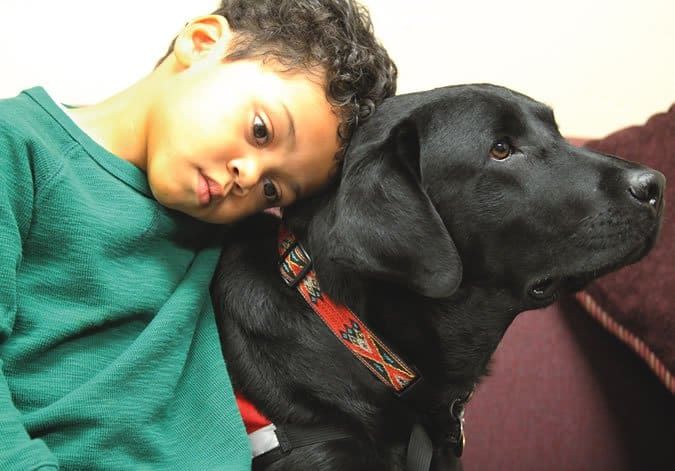
His real name is Blake, but his nickname is Batman – a handsome gentleman, ready to swoop in on a moment’s notice to fight crime in his own special way. Blake is a gorgeous, three-year-old Labrador Retriever employed as a courthouse dog for the Pima County Attorney’s Office in Tucson, Arizona. Trained by Assistance Dogs of the West (ADW), and partnered with victim advocate Colleen Phelan, Blake provides support to victims and witnesses of crime as they navigate the vagaries of the judicial process.
Courthouse dogs are professionally trained facility dogs who provide emotional support to people throughout the criminal-justice system. They may begin working with clients upon reception into a safe house or child-advocacy center, or during the process of conducting forensic and medical interviews, or when the case gets to court. While a courthouse dog is not a service dog, per se – the dog does not assist a person with a disability, nor does the dog have public-access rights as would a service dog – courthouse dogs are nonetheless “graduates” of accredited service-dog organizations, and are paired with handlers who are working professionals in the criminal-justice field.
At age two, Blake was selected to work in the Pima County Superior and Justice Courts, as well as the Southern Arizona Children’s Advocacy Center. His handler primarily focuses on cases in the Pima County Attorney’s Office Special Victims’ Unit, which prosecutes sexually based offenses with adults and physical/sexually based offenses with children. Phelan and Blake assist individuals from infants to older adults in cases including child molestation, adults who have been sexually assaulted, and babies with injuries caused by traumatic abuse.
According to Phelan, in a very broad sense, Blake provides a basic level of comfort to his charges. When Phelan works with a child (in her role, she’s active during the prosecution phase), the child is more inclined to feel comfortable with her because she has an amazing dog alongside who trusts her. Typically, she says, as children pet the dog, the interaction calms them, and they begin to talk about the trauma they’ve suffered, revealing accounts of sexual or physical abuse. “We help kids get their voices – to feel like somebody’s going to listen. There’s a lot of sitting on the floor and petting the dog while talking to the attorney, whereas typically, pre-Blake, we’d be sitting at a desk more formally,” Phelan notes.
In the courtroom environment – and what is allowed in one courtroom may differ from what is allowed in another – Phelan and Blake may sit quietly at the back of the courtroom, but within a clear line of the child’s sight, while a child is on the stand testifying. Because of the child’s prior interaction with and trust of the team, the child feels a sense of comfort and empowerment while in a potentially terrifying situation.
“While that might look like ‘just a dog sleeping,’ a dog who’s sleeping innately tells us that the environment is okay,” says Jill Felice, ADW’s founder and program director. “Because humans have lived with dogs for the past 20,000 years, when we see a dog who’s relaxed, we know it’s safe. For that child, in that moment, seeing a dog lying there in the courtroom sleeping . . . they know that they’re safe. The way that the dog moves so easily through the process gives people a model to mimic. Everybody is just a little bit calmer, and a little more relaxed, in a situation that is never easy.”
Phelan, who takes Blake home at night, echoes that sentiment. “He teaches me about slowing down and taking my time. Blake is my balance. He helps me to get grounded again, both at home and at work.”
While Phelan is the first to say that her overall wellness has increased (emotionally, spiritually, and physically) because of Blake, she also points out that being responsible for a courthouse dog is an incredible amount of work. While she wouldn’t trade Blake for anything, she explains that her job went from an 8 a.m. to 5 p.m. work day to 24/7.
“Some days I feel a little like Kevin Costner in ‘The Bodyguard’ and Blake is Whitney Houston. He is noticed wherever we go and we are constantly ‘on.’ That took some getting used to, especially when one of us is tired or I am in a hurry.” But she’s quick to add that people are generally a lot nicer when she has Blake, which may seem silly, but is very noticeable!
Blake was tapped for this special job as a puppy, in part due to his extremely calm and patient demeanor. His ability to remain focused and “still” during court is critical to his success. Another aspect of his personality is his emotional confidence, or his ability to approach and “take care of” an individual who is crying or upset, while not taking on any of that emotion himself.
Phelan also appreciates Blake’s ability to weave through a courtroom. “While he’s interested in what’s happening, he’s not too interested; he won’t necessarily approach people freely, but if somebody’s interested in him, he likes to be talked to. His personality is like that of an English gentleman,” she says with a smile.
ADW dogs begin training at eight weeks of age, and are trained up until 18 months to two years of age, using positive methods including clicker training. Although the dogs live with professional trainers, the ADW approach is unique in that children help train the dogs in programs that take place in school, after school, and during the summer. In the process, the dogs learn how to respond to being in environments that are crowded with a bunch of children running around, with all the emotional “stuff” that goes on.
During their training, courthouse dogs learn cues that are both navigational and engaging. For example, the “visit” cue asks a dog to lay his head in a person’s lap, and remain still and in that position so that his head can be stroked. As opposed to a dog who jumps on a couch and snuggles up to someone who might not be prepared for that level of contact, the visit behavior and positioning is non-threatening, yet allows for touch.
When the dogs are ready to be placed in an organization within the judicial system, the dog is matched with primary and secondary handlers. The type of environment that is typical for the courtroom he’ll be serving is also taken into consideration when placing the dog. “We want to make placements that are good for the dog, the courtroom, and the person who handles him in that situation,” Felice says.
When I first learned about courthouse dogs a few years ago, I wondered why therapy dogs couldn’t do the job; why a specially trained courthouse dog?
The Courthouse Dogs Founda-tion, a non-profit organization that promotes, educates, and advocates for the use of courthouse dogs in the criminal-justice system by criminal-justice professionals, stands firmly against the practice of using therapy dogs in court. They believe that courthouse dogs should be trained and placed only by accredited service-dog organizations, and handled by professionals in the legal field, since these individuals have an in-depth knowledge of the law and victims’ rights, and understand the confidentiality requirements of the judicial system.
“I love therapy dogs and all the work that they do,” explains Linda Milanesi, Executive Director of ADW. “The courtroom, however, is an environment that is very emotional, much heightened, potentially adversarial and, in a lot of cases, sad and demanding. If an individual doesn’t have the knowledge of the daily activities and workings of the judicial system, they could unknowingly, as a handler and her dog, get a case thrown out of court because of their behavior. It’s a scary place to be if you don’t know what you’re allowed and not allowed to do.” Case closed.
Lisa Rodier lives in Georgia with her husband and Atle the Bouvier, and volunteers with the American Bouvier Rescue League.