






Raccoon Removal Tips
I contacted a different wildlife rescue and control company for additional help with getting rid of the raccoon who was living under my deck. Some of their suggestions conflicted with what I had been told by the county vector control agent. Here is a summary of what this company told me.

Favorite Remedies Revisited
Whole Dog Journal readers often try many of the techniques and products described in its pages. But sometimes years go by before we need something we read about, or it disappears from the market, or we have trouble finding it, or we simply forget all about it. Here we take a look at Willard Water, Green Tripe and Seacure, three products that might now be perfect for you and your dog.
Consider Light Therapy For Your Dog’s Rehab
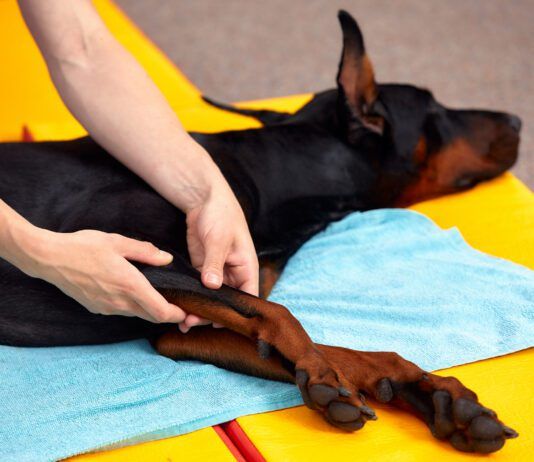
One look at the x-rays of my Border Collie’s phalanges make many people cringe and say “Ouch!” Those visible boney growths on his toes have been confirmed by biopsy as osteoarthritis. This disease is present in both of his front paws and his pain is evident after too much exercise. My friends with arthritis describe their pain as often being excruciating and so when Duncan shows pain, I can only imagine what he must be feeling. At 11½, Duncan – a.k.a. “Dutaro” – can still snag a ball like the San Francisco Giant’s second baseman and never wants the game to end. In an effort to keep him as pain-free as possible, and thus active, healthy and happy, I incorporated laser therapy into his treatment program. Playing ball is in his blood; by adding the effects of laser therapy, he’s able to stay off the disabled list.
Dog Got Skunked? DON’T Use Water (At Least, Not at First)
Chemist Paul Krebaum gets the credit for applying his chemistry knowledge to the age-old need for a substance that can neutralize the smell of skunk spray. He researched the putrid oil (which skunks can shoot out of special glands under their tails as a potent defense mechanism) and determined that the chemical responsible for the distinctive odor was in a class called thiols. The human nose is extremely sensitive to these organosulfur compounds, and can detect them at 10 parts per billion. But if you subject the substance to just the right compound, you can inactivate the chemicals responsible for the odor, as fast as a chemical reaction can occur.
Choosing The Right Harness for Your Dog
Harnesses for our canine companions come in a wide variety of colors, shapes, and sizes. But did you know that many are made for a particular purpose? Have a dog you want to pull you on your skis? Got it. Have a puller – and you’d like a respite? Covered. Have a little dog? The possibilities are endless. Despite that fact, many of us walk into our local big box pet store and pull a harness off the rack without even considering the harness’ fit and function. With just a little more awareness, you can be sure that the harness you select for your dog is the right one.

Peacekeeping Among Cats and Dogs
It's fairly common for dogs to be placed for adoption with a caveat that there should be no cats
The No-Pull Harness Debate
Recently, WDJ received a letter from Christine Zink, DVM, PhD, DACVP, DACVSMR, who was concerned about the photo in WDJ (on the cover, no less!) of a jogger whose dog, running alongside, was wearing a front-clip-type harness. A sports medicine guru and canine athlete enthusiast, Dr. Zink (and others) posit that no-pull harnesses are detrimental to a dog's structure and gait and are especially inappropriate for canine athletes.

Raccoon Attack!
One of my worst dog-owner nightmares recently came true. Or I should say, almost came true. A raccoon attacked my dog, injuring her, but I was able to save her life by fighting off the raccoon myself! As bad as that experience was, I never imagined the problems I would have to deal with that have emerged since our initial suburban wildlife encounter.

Letters and Corrections – April 2013
I am writing to express my concern at seeing the photograph on the cover of the April 2013 Whole Dog Journal that depicts a man running with a dog who is wearing a restrictive harness. As a specialist in canine sports medicine, I have significant concerns about the use of harnesses that wrap around the front of dog’s forelegs, particularly in circumstances like this, where a dog is exercising using a gait that requires forelimb…
When Dog Collars Become Deadly
I was pretty traumatized recently by a phenomenon I had heard about many times but had never before seen: the intense, chaotic, life-or-death struggle that ensues when one dog gets his jaw stuck in another dog's collar. These dogs survived the experience. But since I've been telling my friends about my experience (with all the fervor of the recently converted), I've heard about a number of dogs whose jaws were broken in similar situations

Hormone-Altering Chemicals A Common Hazard In Dog Toys
Researchers at Texas Tech University found that many popular bumpers" (items used for training retrievers) and other plastic toys exude BPA and phthalates when subjected to conditions that simulate chewing by a dog."
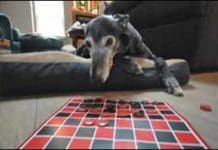
Senior Supplements for Canine Cognitive Dysfunction
Canine cognitive dysfunction (CCD), also called cognitive dysfunction syndrome, is comparable to Alzheimer’s disease in humans. Dogs with CCD may show signs such as confusion, disorientation, anxiety, irritability, apathy, reduced interaction, house soiling, forgetfulness, and aimless wandering or pacing, especially at night. CCD can rob a dog of quality of life, and make living with an old dog difficult.