

Plant Oils for Dogs
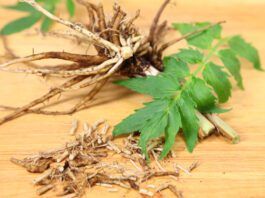
There are many different types of plant oils that people use to supplement their dogs’ diets, including oils from flaxseed, olives, coconut, vegetables, hempseed, and more. Some of these oils can provide benefits, but others are not helpful and may even contribute to inflammation.

Control Harness Fitting and Use Tips
Here are some trade secrets to getting your control harness to work better for you and your dog. With several of the simpler styles (SENSE-ation, SENSE-ible, Easy Walk) if you can’t get the harness to fit quite right, try putting it on upside down. (Doesn’t work with any of the “two-points-of-contact” harnesses.) If the front strap still slips down, clip your leash to the front-clip ring and the collar ring. This may diminish the effectiveness of the harness a little, but it will keep the front strap up and in place.

No-Pull Dog Harness Product Review
Once upon a time, a harness was the last thing you wanted to use for a dog who pulled, because they were designed to make pulling comfortable. By distributing pressure evenly across the chest they removed pressure from the throat, where damage could be done to a dog's trachea sometimes even to the point of tracheal collapse. Harnesses are better for the dog from a health perspective, but from a training viewpoint, a standard harness actually encourages pulling. There's a reason sled dogs wear harnesses! Head halters were introduced in the late 1990s as a gentle control tool. While they did, indeed, work well to control a dog's head (and where the head goes, the body follows), some trainers noticed that a significant number of dogs found head halters to be fairly aversive, requiring, in many cases, extensive conditioning to convince the dog to accept them.
Older Dogs and Surgery
Some are reluctant to perform surgery on old dogs because of anesthesia risks or complications, but these risks are minimal in the case of most lipomas. Modern anesthesia protocols are far safer than they used to be, and complications are generally minor, usually limited to superficial infection or delayed healing. There is no reason not to remove lipomas from older dogs when they interfere with their quality of life.
When to Seek Veterinary Care After Your Dog Has a Close Call at the...
Did Your Dog Have a Scary, Sinking Moment in the Water? “If the dog comes out and he’s fine, he’ll shake it off,” says Jules Benson, DVM. “You need to watch him for the next 24 to 48 hours, because that’s when aspiration pneumonia (caused by water going down into the main-stem bronchi) can occur. Especially if it’s water other than a pool, where there could be bacteria or protozoa in the water. If they aspirate any of that and it goes into the lungs, the bacteria spreads and multiplies.
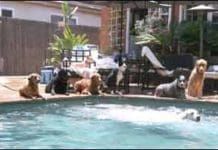
Keep Your Dog Safe Around the Pool this Summer
both in the water and facing away from her owner.üIt's vitally important to teach your dog to enter and exit a pool by its stairs
Canine Emery Board Training
According to trainer M. Shirley Chong, the easiest way to trim a dog’s nails is to have dogs trim their own nails. Chong says, “It’s easy! Find a board about 8-12 inches wide (the wider the dog, the wider the nail file needs to be) and about 24-36 inches long. At a hardware store, get some of the stick-on tape that is used on wooden steps to make them slip-proof. It’s rough, like extremely coarse sandpaper, and the adhesive lasts through anything. Cover the board with the slip-proof tape. You could also use sandpaper. The most important thing is to make sure the edges of the sandpaper are firmly glued down because otherwise the dog will peel it up. The adhesive used on the slip-proof tape won’t budge for anything. You now have a giant nail file for dogs!
A Counter-Conditioning Protocol for Trimming Your Dog’s Nails
Determine the location of touch your dog can tolerate without reacting fearfully or aggressively. Perhaps it’s her shoulder, perhaps her elbow, or maybe her knee. She should be a little worried, but not growl or try to move away. This is called the threshold. With your dog on-leash, touch her briefly and gently at threshold. The instant your dog notices the touch, start feeding bits of chicken, non-stop. After a second or two, remove the touch and stop feeding chicken.
Roses Have Holistic Value for Dogs
Gertrude Stein might have thought that a rose is a rose is a rose, but with over a hundred species and more than a thousand named cultivars, the genus Rosa has been among the world's most appreciated plants for millennia. And they can be appreciated by dogs, too, with numerous applications for medical, emotional, and behavioral afflictions. Roses grow, with and without thorns, as compact or miniature varieties, trailing vines, climbing plants over 20 feet tall, and impenetrable shrubs. Their flowers range from large to small in white, pink, yellow, orange, and every shade of red. Most roses are native to Asia, while some originated in Europe, Africa, or North America.

Proteolytic Enzymes – Natural Pain Relief for Dogs
Enzymes given with food are used for digestion, but certain enzymes (proteases, which break down proteins) can also help with inflammation, pain, recovery from injury, and more when given apart from food. Systemic enzyme therapy, also called metabolic or proteolytic enzyme therapy, allows enzymes to enter the body where they can be used for healing rather than digestion. Examples of proteolytic enzymes include pancreatin, trypsin, and chymotrypsin (from the pancreas); bromelain (from pineapple); and papain (from papaya).

Teaching Kids to Love Dogs from an Early Age
and quiet crates are always available for dogs who need time away from kids."