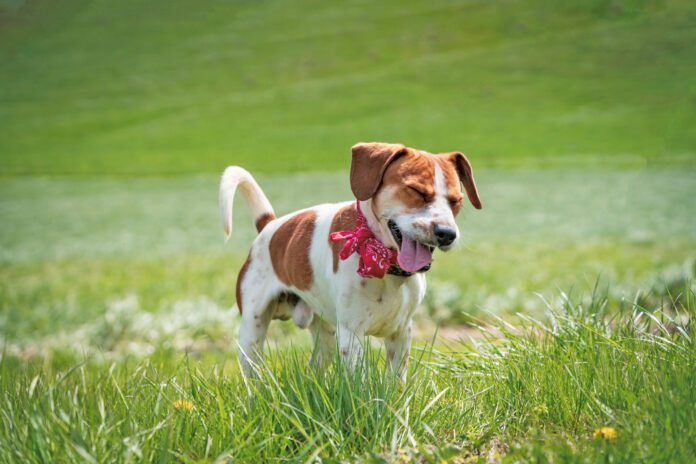
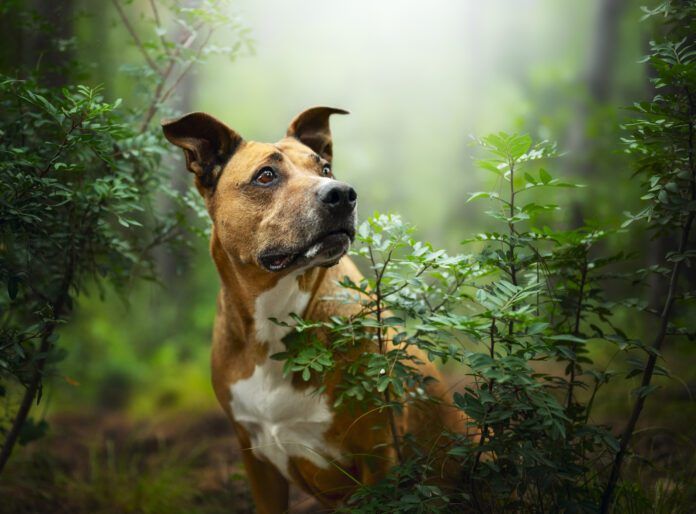
Yes, your dog can become congested and sneeze just like we do. Credit: Marcia Straub | Getty Images
Dogs can develop congestion just like humans do, resulting in snuffling, snorting, and loud breathing. Dog congestion has many potential causes, and treatment will depend on what sort of infection or illness your dog has.
In severe cases, your dog may gag or even vomit after heavy coughing fits, and he may also have difficulty breathing. Difficulty breathing is an emergency and requires immediate veterinary care.
Should I Panic if My Dog Is Congested?
Most cases of dog congestion are mild and will resolve on their own. If your dog sounds congested but seems otherwise fine, you can monitor him at home for one to two days.
Here are some things you can do to support your dog’s health:
Encourage rest. Less activity means less strain on his inflamed and irritated airways.
Increase humidity. Break out your humidifier if you have one or keep your dog in the bathroom while you take a hot shower. The steam will help to clear his airways and relieve congestion. Ideally your dog should be in a steamy room for 5 to 10 minutes at least once a day.
Encourage hydration. Be sure your dog has plenty of fresh, clean water available and that he is drinking.
Provide good nutrition. A complete and balanced diet will help to support your dog’s whole body and health.
Clean his nose as needed. Crusts and discharge can be wiped from the nose with a warm damp cloth. This will both help your dog feel better and clear his external nostrils.
If your dog has other symptoms of illness or doesn’t improve within 48 hours, it’s time to call your vet.
Brachycephalic dogs with smooshed faces, obese dogs, unvaccinated dogs, and dogs living in crowded conditions have the highest risk of developing congestion.
Your veterinarian will determine the cause of your dog’s congestion based on his symptoms and lifestyle. A dog with a dry, honking cough probably has the upper respiratory infection called kennel cough, which can be caused by viruses or bacteria. If your dog sounds congested and is reverse sneezing plus has reddish eyes and paws, he may have allergies.
Treatment will vary by the case. For mild congestion that hasn’t responded to home care, your vet may prescribe a short course of steroid or anti-inflammatory medication to give your dog relief. Bacterial infections can be treated with antibiotics, while viral infections require either antiviral medications or just supportive care. If the congestion is caused by something stuck in your dog’s nose, removing the offending object will resolve the issue.
Most dogs will experience congestion at some time in their lives. To minimize your dog’s risk, keep him at a healthy weight and up to date on his vaccinations and heartworm preventive medications. Vaccines are especially important if your dog goes to doggy daycare, boarding kennels, dog training classes, or dog shows.
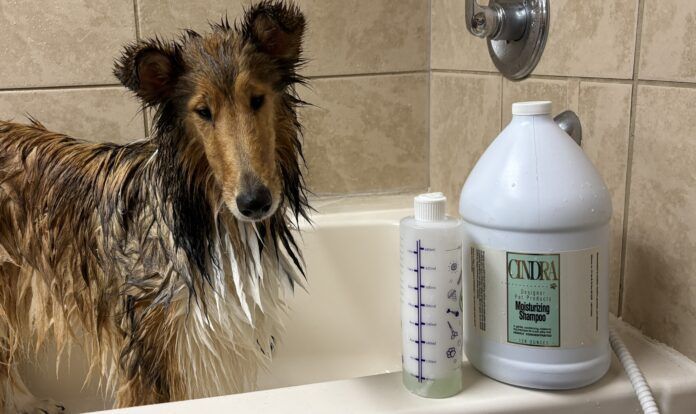
When picking a shampoo to help your manage your dog’s dry skin, look for an option made with skin-friendly ingredients like colloidal oatmeal, vitamin E, and aloe. Credit: Jae Thomas
There are many reasons your dog may have dry skin. Whether it’s from allergies, minor skin conditions, living in a dry climate, or frequent indoor heater use, you may notice that your pup has flaky skin, or a dull, dry coat.
To continue reading this article or issue you must be a paid member. Sign in
These days, dogs rarely stay with their mothers and siblings for long. However, some studies suggest that dogs may recognize their relatives even if they haven’t seen them in years. Credit: olgagorovenko | Getty Images
When Emmy VanderMeer offered to foster a pregnant dog for Lucky Lab Rescue and Adoption, she never dreamed the mama would give birth to 15 puppies.
Both VanderMeer and the mother dog, Velvet, spent many sleepless nights feeding the extra-large litter. Velvet nursed while VanderMeer supplemented by bottle-feeding.
Velvet tried her best to be a good mother, but when the puppies started to get those sharp, tiny teeth, it was time to call nursing quits. Eventually, all the puppies were adopted. “Velvet was so happy to see them leave,” VanderMeer says.
VanderMeer’s neighbor, Heather Kyser, adopted Velvet, and VanderMeer adopted Tulip, the runt of the litter.
Velvet and Tulip had not seen one another for the last two years, but for this article, the Texas neighbors recently reunited mother and pup, and the meeting went much better than they expected.
“Velvet is very aloof and not welcoming to other dogs typically, but she let Tulip lick her face. That’s huge for Velvet,” Kyser says. “I think after smelling Tulip, she knew there was something familiar.”
VanderMeer also thinks there was a connection. “Tulip is usually a little afraid of unknown dogs, but she wasn’t of Velvet,” VanderMeer says. “I’m not sure if they recognized each other as mother and daughter, but I thought Velvet was very nice to Tulip as compared to other dogs.”
So do dogs remember or recognize their parents? Do dogs know who their parents are? Do dogs remember their puppies? Since animals can’t talk, it’s hard to know for sure, but experts’ best answer is quite possibly.
Do Dogs Remember Their Parents?
Rescue dog Velvet and her 15 puppies were adopted by separate families once the puppies were ready to leave their mother. Credit: Emmy VanderMeer
Thousands of years ago, dogs’ ancestors, wolves, relied on the ability to recognize their family members.
“Wolves tend to stay in family packs, and since domestic dogs are most closely related to wolves, and these animals live in family packs, it makes sense that dogs may have maintained preferences for close kin and the ability to discriminate them from non-kin,” says Professor Jennifer Vonk from Oakland University’s Department of Psychology in Rochester, Michigan.
In 2015, Professor Vonk and then-graduate student Jennifer Hamilton (now an animal welfare programs manager at the Detroit Zoo) published a study after running experiments to determine whether dogs preferred the scent of their father.
Typically, dog dads don’t stick around to help raise the pups, and in dog rescue, most of the time, papa was likely an unneutered rolling stone who managed to get over a fence.
But in this experiment, the researchers partnered with a service dog organization and worked with pups and their fathers, though the pups never met their fathers in person.
Hamilton collected urine samples from the fathers and from another adult male dog, placed the samples on cloths in vented plastic containers in a clean room, and then welcomed the pups, who were now a year old.
“We just let the dogs in one at a time, and we kind of just let them go and see where they spent their time,” Hamilton says.
The female pups seemed to prefer their dog dad’s scent, while the males were more interested in the scent of the unknown dog.
“This is probably related to territoriality and vigilance, with the determination that their father’s scent was ‘safer’ and less time was needed to explore that scent,” Hamilton says. “This is not a conclusive study, but it does give a lot of evidence that there is a mechanism that dogs can tell who they are related to, and they don’t necessarily have to have lived with them when they were puppies.”
Another study by Peter Hepper, Ph.D., found that young adult dogs who had been separated from their mothers for nearly two years could recognize their mothers and preferred their mother’s scent.
Though anecdotal, other human dog parents report remarkable stories of their dogs recognizing their mothers. Cindy Howes, who lives in Massachusetts, tracked down the mother of her black Labrador, Scout. She arranged a meet-up, and the experience was remarkable.
“They recognized each other immediately,” Howes said. “Scout ran up to her, wiggling and happily wagging his tail. I’d never seen him like that before. He was so happy to see her, and she was so happy to see him! It was heartwarming because he never acted like that before, and never did again, with any other dog.”
But what exactly are the dogs thinking? Though no one can answer that question specifically, researchers have theories.
“We can say they recognize categories of familiar individuals from unfamiliar individuals,” Professor Vonk says. “I think they recognize a familiar individual, and they respond differently to a sense of kin from non-kin. But I don’t know if they’re saying like, ‘That’s my mother, or that’s my sibling.’”
But do dogs, like Velvet, remember their puppies?
Do Dogs Remember Their Puppies?
Velvet and her daughter, Tulip, were reunited after several years apart. Credit: Emmy VanderMeer
These days, puppies usually move on from their mothers and get new homes when they’re around eight weeks old, and likely never see their mothers again, unless there’s a special reunion.
So, even after being apart for potentially years, do dogs remember their puppies? Can they tell there’s a connection?
Hepper’s study also found that mother dogs could recognize their pups even a couple of years after separation.
“I think mother dogs can tell their offspring apart from unrelated individuals,” Professor Vonk says. “They probably do treat them differently, because there’s a familiarity there. But I don’t know if they would know, ‘This was a pup from two years ago, and this was a pup from four years ago.’ I’m not sure what level of detail they differentiate them. I think they might just treat all of their pups kind of the same and different from non-pups.”
Professor Vonk’s opinion is similar to VanderMeer’s thoughts after Velvet and Tulip’s reunion. “I think Velvet knew Tulip, but it wasn’t like, ‘Oh my darling daughter,’” VanderMeer says.
How Do Dogs Recognize Their Family Members?
Scout’s human family reports that he immediately and enthusiastically recognized his mother, who he hadn’t seen since he was a young puppy. Credit: Cindy Howes
Scent signatures are one of the most significant ways dogs seem to recognize family members. The experiments Hepper, Vonk, and Hamilton ran were all smell-preference tests.
“There’s familiarity, which is you’ve met that individual, so you recognize them as an individual you know,” Hamilton says. “Scent preference has been used in a lot of kin recognition studies in a variety of animals, from fish to voles to squirrels.”
Dogs may also use phenotype recognition to zero in on who belongs to their family tree.
“It’s more, ‘I have an internal idea of who I am and who people related to me are,’ and that is more of a genetic matching for recognition,” Hamilton says. “I think dogs are able to recognize their parents at some level. The challenge is what mechanism they’re using.”
While scientists continue to unravel the mysteries behind so many dog behaviors, we may never be able to fully answer questions like: Do dogs miss their moms? Do moms miss their pups?
But anyone who lives with dogs, cares for them, or watches dog videos on social media can tell you dogs have evolved to the point where their human family members are usually more important than their canine kind.
Though Velvet is Tulip’s mother, Tulip is most bonded with her human mother, who bottle-fed her during the tough times when she struggled to survive.
“Tulip is the baby here,” VanderMeer says. “She is loved and spoiled.”
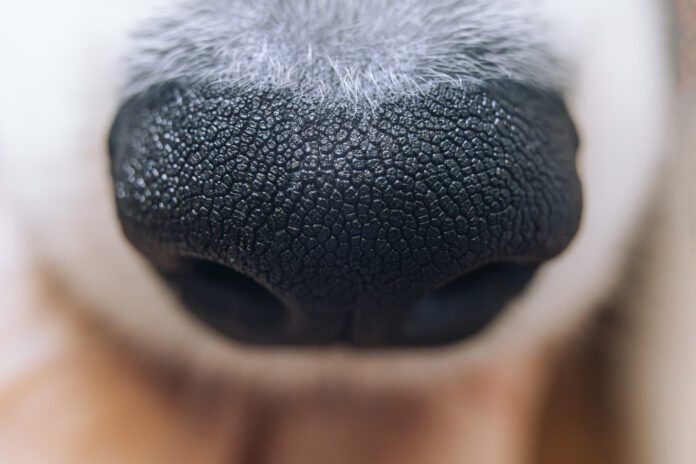
This is a normal dog nose, showing its bumpy surface. In DLE lupus, those bumps smooth out. Credit: Olga Pankova | Getty Images
Lupus in dogs is an autoimmune skin disease. Technically known as discoid lupus erythematosus (DLE), lupus in dogs starts at the nose with a loss of pigment, followed by crusts, erosions, and ulcers of the skin. A black nose may turn pink or have pink splotches. The nose may lose its normal “bumpy” appearance and become smooth.
With lupus, the dog’s skin around the ears, on the ear flaps, around the eyes, and on the lips may also be affected. Sometimes, footpad skin may be involved.
Any injury to areas affected by this cutaneous lupus may bleed due to the extensive vasculature to the area. These areas may also be quite painful.
While discoid lupus is most common in German Shorthaired Pointers, German Shepherd Dogs, Collies, and Shetland Sheepdogs, any breed can have this autoimmune problem. In my experience, Collies are most often affected. You may even hear the condition referred to as “Collie nose.”
Diagnosing Dog Lupus
While your veterinarian may be sure your dog has DLE just from a physical exam, for a definitive diagnosis, a skin biopsy should be taken. This is usually done under sedation with local anesthesia. While waiting for biopsy results, your veterinarian may prescribe some antibiotics to rule out the possibility of bacterial infection.
Note: Your veterinarian will distinguish DLE from systemic lupus erythematosus (SLE). SLE is also an autoimmune disease of dogs, but in this rare form the dog’s immune system attacks its tissues and organs. SLE is potentially fatal and is a much more serious condition than DLE. DLE does not progress into SLE (thankfully!)
Treating Lupus in Dogs
Treatment for DLE in dogs is aimed at reducing inflammation and moderating the immune system. Topical treatment is ideal, but it does present challenges as your dog can easily lick it off. For this reason, topical corticosteroids often aren’t successful.
Tacrolimus ointment is an immunomodulator that is often prescribed off label for use on dogs. It is quite effective and requires small amounts, making it is less lickable. It is also expensive, so apply it carefully and wear gloves.
Oral corticosteroids such as prednisolone are quite effective with lupus, especially to get the disease under control. Side effects can be tough to deal with (increased drinking and appetite), so every effort is made to taper the dose down as much as possible.
The combination of tetracycline (an antibiotic with some immunomodulating properties) along with niacinamide (a B vitamin supplement) works for about 70% of DLE cases. Oral cyclosporine, like Atopica, is another immunomodulator that may be effective, but it can cause gastrointestinal side effects.
What You Can Do
Along with controlling the symptoms, limit your dog’s exposure to ultraviolet (UV) light like bright sunshine, just as you would to protect from skin cancer. Keeping your dog inside during prime sunshine hours (10 a.m. to 2 p.m.) is ideal. You can also use sunscreen made for dogs. Do not use human sunscreens! The reality is that your dog will lick some off and human sunscreens are not suitable.
Epi Pet K9 Care Sunscreen and Lucky Pup Sunscreen Dog Balm are both strong choices. These products should only be applied as a preventive or after active skin lesions are under control. For dogs with naturally pink noses, no matter what breed, use as a preventive.
Luckily, DLE is treatable and controllable, so the prognosis is good, especially with an early diagnosis.
If you’re wondering what breed or mix of breeds your dog may be, canine DNA tests can often provide some insight. Credit: Oleksandra Korobova | Getty Images
At some point in our life with dogs, many of us may have wanted to find out more about our furry friends and ordered a dog DNA test in the hopes it would reveal more about our dog’s breed, susceptibility to health or genetic conditions, and behavioral traits and personality. The results can trigger everything from surprise to relief to ambivalence to panic. Yet the question remains, how accurate are these tests?
To continue reading this article or issue you must be a paid member. Sign in
Your dog is likely to encounter many types of biting insects as he adventures deeper into buggy areas. Credit: Bett Photos 500 PX | Getty Images
Bug bites on dogs can be just as irritating as they are on humans! Whether fleas, black flies, ticks, or any other biting bug, your dog may experience pain, itchiness, and inflammation. Many bug bites resolve on their own, but some may require treatment.
What Do Flea and Tick Bites Look Like on Dogs?
It isn’t always possible to identify which type of bug bit your dog from the bite alone, as the bites from many different bugs often look similar. The appearance and location of the bite itself as well as considering the time of year and your dog’s recent activities can give you some clues to narrow down the suspect.
Flea bites on dogs generally appear as tiny red dots on the skin. The bites hurt and are itchy. You may also see some fine, dark, gritty material on your skin. This is flea dirt, a combination of flea feces and blood. Flea bites can occur anywhere on the body, but your dog’s back end around his tail and haunches are a prime location. If your dog is one of the unlucky ones with flea allergy dermatitis, his skin will also be red and inflamed, severely itchy, and he will suffer hair loss over time until the fleas are addressed.
Tick bites on dogs generally look like a small red circle. Dogs usually do not get the same bullseye rash that humans do. The bites themselves don’t hurt, but the area may become itchy. Tick bites can occur anywhere on the body, but are most common on the dog’s head, ears, and neck.
Black fly bites on dogs generally look like a large reddish welt and may take on a bullseye appearance. The bites hurt and are extremely itchy. Black flies travel in swarms, so your dog will likely have multiple bites close together. These bites can occur anywhere on the body, but the belly, inner thighs, and inside of the ears are common sites.
Mosquito bites look like small bumps and are usually itchy. Some dogs just get small welts from mosquito bites, while others may have more dramatic swelling.
The bites from sarcoptic mange and demodex mites are too tiny to see, but over time these infestations cause hair loss and crusty, irritated skin.
Ant bites are usually small, raised, and kind of look like a pimple. Fire ants can cause an allergic reaction resulting in widespread hives, itchiness, and even difficulty breathing. This is more common if your dog receives many ant bites at once.
Bug Bite Treatment for Dogs
Most bites will resolve on their own and heal within a few days.
For painful bites, ice the area for 5 to 10 minutes. This numbs the skin, lessening pain and itchiness, and helps to reduce swelling. You can ice your dog’s bug-bite wounds several times a day. Wrap the ice pack in a thin cloth so it doesn’t stick to the skin.
If the bites are itchy, you can apply a small amount of hydrocortisone or diphenhydramine (Benadryl) ointment to the area. Do not let your dog lick these ointments. The ideal times to apply are right before giving your dog a meal or right before taking him on a walk so he is distracted.
Dog Severe Reaction to Bug Bites
If your dog is experiencing extreme pain or swelling, it’s time to call your vet. Difficulty breathing, lethargy, or collapse after receiving a bug bite is an emergency and requires immediate care.
Based on your dog’s symptoms, the number of bites, and which bug is the likely culprit, your vet will recommend coming in for an appointment or oral medications such as Benadryl or a dog-safe pain medication.
Flea and tick bites can be prevented by giving regular preventive medications, and there are dog-safe bug sprays that can help to deter black flies and mosquitoes. If your dog is sensitive to bug bites, keep him on preventives year-round and use dog-safe bug spray when going outside during black fly season.
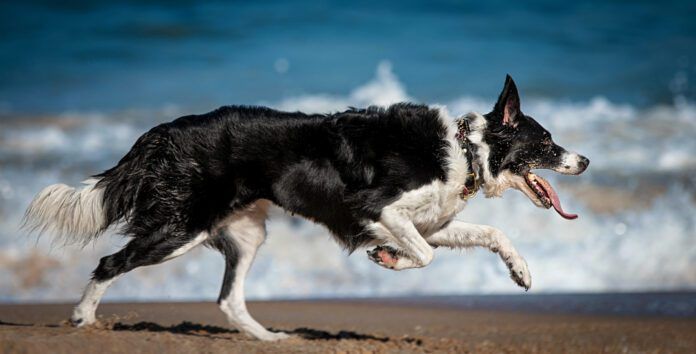
Develop a sensible plan to help your dog shed any excess weight. Your goal is a body condition score of 4 to 5, like this Border Collie.
Many of us focus on our fitness these days. We track our macros, our percentage of body fat, BMI score, and more. Being aware of our health leads to better conditioning for a wide range of activities and serves to spot and possibly prevent serious illnesses. Given these benefits, why treat your dog any differently?
Determining your dog’s health goes beyond a number on a scale. Veterinary experts at institutions like Tufts University (Cummings School of Veterinary Medicine) and Cornell University College of Veterinary Medicine stress that a scale is a blunt instrument.
To understand a dog’s health, look at your dog’s Body Condition Score (BCS). Arguably the gold standard is World Small Animal Veterinary Association’s BCS chart. The WSAVA represents nearly 400,000 veterinarians at 113 veterinary association members globally. (Another good source we like is the Purina Body Condition chart.)
Unlike a number on a scale, BCS is individualized. A measure of weight provides no context. Say your “little” dog weighs 15 lbs. That might be underweight for a Sheltie but really fat for a Papillon. In contrast, BCS ranks a dog’s condition on a scale of 1 to 9 with 1 being the most under ideal and 9 being the most above ideal. According to WSAVA, 4 and 5 are ideal scores.
“Most veterinarians view BCS as a better gauge of health than the number on a scale. Weight tells you how heavy a dog is, but it doesn’t show how much of that weight comes from fat versus muscle or other tissue. Two dogs can weigh the same and still have very different health risks,” says Dr. Anna Panyutin, a small animal internal medicine specialist at South Carolina Veterinary Specialists and Emergency Care in Columbia
Doctors at NC State Veterinary Hospital point out that “your pet’s ideal body condition can be difficult to assess in fluffier pets—another reason why veterinarians use a standardized body condition chart to determine if your pet is at their healthiest weight.” After all, two dogs can weigh 50 pounds but have different health profiles. One dog may be a lean, high-energy athlete, while the other carries visceral fat. Weight doesn’t account for frame size or muscle density the way BCS does.
How to Master the Rib Check
The rib check is the most common and effective way to measure your dog’s level of fat, but many owners struggle to interpret what they feel. “The ribs are the secret,” says Dr. Laurie McCauley, a veterinarian and board-certified specialist in canine sports medicine and rehabilitation.
“A barrel-chested dog, such as a bulldog or mastiff, will be wide compared to a German shepherd or border collie, but you should be able to easily palpate the ribs. A Havanese or Bichon, or even a Jack Russell terrier can develop muscle below the ribs from dancing around on their rear legs and look overweight, yet the ribs are still easily palpable if they are lean. Helping your dog stay lean is one of the most powerful things you can do for their health span and life span,” says Dr. McCauley.
BCS considers the amount of fat between the last three ribs and the skin. It doesn’t work at the beginning of the rib cage because there is muscle overlaying the ribs so you can’t feel them. By the last three rib ribs, the only thing between the skin and the ribs can be fat, she says.
The Dog Body Condition Score Hand Rule
While the rib check is the most effective way to measure fat, it can feel subjective to many dog owners. To calibrate your touch, the University of Minnesota Veterinary Medical Center recommends using your own hand to simulate the correct feel. Here’s how:
Underweight (use your knuckles): Lightly run your fingers over your knuckles while making a fist. If your dog’s ribs feel this prominent and bony, they are likely in the BCS 1–3 range and underweight.
Ideal (the back of the hand): Turn your hand over, palm down, and feel your knuckles. When your pet’s ribs feel like this—detectable but covered by a smooth layer of tissue—it’s an ideal BCS of 5.
Overweight (the palm): Put your palm up and run your fingers over the base of your fingers. If the ribs are buried under this much padding, they are likely in the BCS 7–9 range.
Your Dog’s Body Condition Score Provides Early Warning Signs
Changes in BCS signify more than your dog may be adding fat and needs to lose weight. They can also signal disease before the scale moves. Certain metabolic diseases or early-stage cancers can hide even if the dog’s weight remains stable because fat is replacing muscle, according to Dr. McCauley, who advises dog owners to watch for these conditions, which could be confused with simply adding weight:
False Weight (Cushing’s disease): “If a previously tucked-up belly becomes saggy or pendulous, it could be Cushing’s disease, a condition where excess cortisol from the adrenal glands weakens the abdominal muscles causing the belly to sag,” Dr. McCauley says.
Hidden Mass (abdominal swelling): “If the belly becomes rounder or larger without an increase in food, it could mean a mass is growing inside the abdomen and causing it to expand,” she says.
Muscle Wasting (cachexia): “A sudden drop in body size may also be a sign of early-stage of cancer, where the cancer is essentially hijacking nutrients. This is known as cachexia, or body wasting caused, by disease,” she says.
In business terms, think of BCS as a leading indicator and the scale is often a lagging indicator. That is, by the time the scale moves, the condition may have already progressed.
Meet With Your Vet and Stay Open
The first step in weight management is to meet with your veterinarian to determine the ideal weight for your pet. During the meeting, your veterinarian might recommend counting your pet’s calorie intake and measuring your pet’s food at each meal, including treats and snacks.
Remember, like you, your vet has your dog’s best interest, so don’t take it as criticism if your vet mentions a high BCS. “Treat it as useful health feedback, not criticism. Extra body fat raises the risk for arthritis, diabetes, and a shorter lifespan, so early action helps,” says Dr. Panyutin. “Clear goals make the process less frustrating.”
Play an active role and ask your vet for more information. Good questions to ask, she says, include the following:
What BCS or weight range should my dog aim for?
How much and what type of food do you recommend?
Do treats or table food need to change?
What exercise level makes sense for my dog?
How fast should weight loss happen?
When should we check progress again?
What One Point Means …
For dogs with existing orthopedic issues, how much does dropping just a single point in the BCS scale impact their daily pain levels and mobility?
One point on the 9-point BCS scale usually equals about 10% body weight. That reduction often eases joint strain enough to improve mobility and day-to-day comfort, according to Dr. Panyutin. “Extra weight puts disproportionate stress on joints, so even modest weight loss can help dogs move more easily and stay more active.”
“The net effect of excessive body weight [for dogs] is increased mechanical stress on joints and an inflammatory state, promoting degeneration and often leading to osteoarthritis,” according to AVMA Journals.
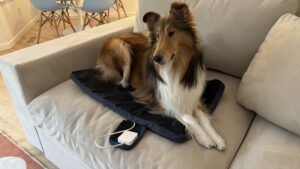
The best PEMF products for dogs provide a good range of settings and are easy to use. The top choice for your dog will also depend on which design works best for them. Credit: Jae Thomas
If your dog has had a soft tissue strain, TPLO surgery, or other injury, you may be wondering how best to support them between vet or rehab appointments. Or, if your furry friend is getting older, you may be looking for ways to aid their mobility aside from their regular joint supplements.
PEMF (pulsed electromagnetic field) dog beds and other therapy devices can be a helpful way to promote healing in injured, postsurgical, and aging dogs. PEMF benefits are wide-ranging in our furry friends and can be used in a variety of situations.
What is PEMF?
“PEMF therapy devices produce microcurrents which stimulate the release of nitric oxide,” says Dr. Courtney Wheeler, PT, CCRT, a canine physical therapist at Walking Paws Rehab in Boulder, CO. “When nitric oxide is released in the body, it helps to reduce inflammation and enhances vasodilation (blood flow), increases bone healing like after a TPLO, enhances muscle function, and helps promote angiogenesis (formation of new blood vessels).”
Dr. Wheeler recommends PEMF dog beds, mats, or other devices for “orthopedic, degenerative, and neurologic issues, as well as swelling and surgical pain.” She says that PEMF has also been proven to assist in wound healing and for dogs with stress/anxiety.
PEMF devices are particularly good for soft tissue injuries, muscle recovery for active dogs who compete in agility, flyball, dock diving, and other high-impact sports, and for dogs who could use anti-stress support around triggers like thunderstorms, fireworks, or travel.
Talk with your vet or canine physical therapist before using PEMF for your dog, as there are some contraindications (such as pacemakers, Holter monitors, insulin pumps, and hemangiosarcomas) that PEMF devices should not be used with.
Traits We Want in the Best PEMF Products for Dogs
Settings: Ideally, a PEMF device should have multiple settings or frequencies that are best suited to different uses. Some frequencies are best used for rapid healing, while others are better for stress relief. Generally, the frequencies are measured in Hertz (Hz) and treatment settings sit between 3 and 60 Hz.
Ease of use and price: The easier a product is to use, the more likely you’ll be to use it. We like PEMF devices that are simple to turn on and change the settings. The larger PEMF dog mats and PEMF dog beds are generally easier to use than a device you need to place or hold on your dog but can also be more expensive. If you’re on a budget, smaller devices may be a better option.
Design: The design of the dog PEMF device you choose should be best suited to your specific dog. For example, if you have a calm, well-trained dog who will sit still for a 15-minute treatment, a device that you place on or over them can be useful. If your dog isn’t comfortable being handled to that extent, a PEMF mat or bed may be a better option as it allows your dog to opt in and opt out of treatment.
This PEMF mat is one of the lowest cost options on the market and is canine physical therapist recommended. The app can be glitchy, but the pad itself works well, and it’s fairly easy to switch between settings. The thin, low-profile design is great for traveling with and the battery is rechargeable.
This PEMF bed is a bit big and bulky but it’s a great home base for active dogs. It features multiple PEMF frequencies for different uses as well as two heat settings to promote healing and muscle relaxation.
This PEMF device is designed for short-term issues like for soft tissue injuries and post-surgical healing. This device only works for 150 15-minute treatments. Even so, it’s a more cost-effective way to integrate PEMF than purchasing a more expensive PEMF mat.
Best PEMF Mat for Dogs: Petspemf Pad
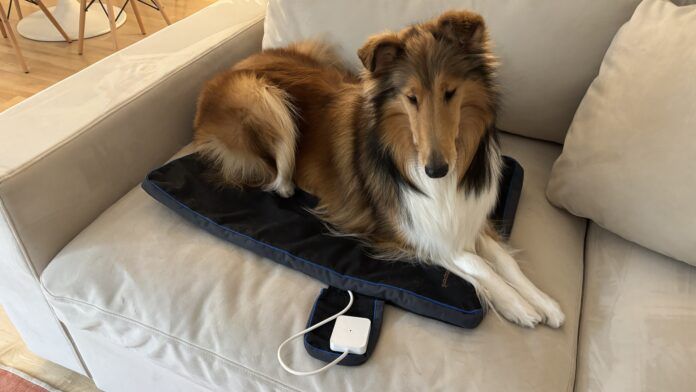
Although the app is a bit buggy, the Petspemf Pad offers four settings, great battery life, and is easy to travel with. Credit: Jae Thomas
When my dog had an agility injury, our Canine Physical Therapist recommended that I get a PEMF dog bed and told me that the Petspemf Pad was the most budget-friendly option on the market. I’ve used this pad regularly for my Collie’s iliopsoas strain, but I also love to use it to keep my dogs calm and keep their muscles loose while traveling or after hectic, busy days.
This pad features four different settings with different PEMF frequencies: Pain Relief (50.6 Hz), Accelerated Healing (15.2 Hz), Stress Relief (4 Hz), and Integrated Healing (15.2 Hz).
The pad connects to a companion app that can be a bit buggy—it sometimes takes a few tries to connect to the app. However, you only need to use the app to change the settings. If you’re using the same setting every session, you simply need to double tap the battery box on the pad, and it’ll turn on without the app.
The app allows you to select treatment times between 30 minutes and up to 8 hours. The battery life on this pad is stellar, and it regularly lasts 12+ hours on a single charge. My dogs really gravitate toward this pad when I put it on top of the beds they already like, and the lightweight design is easy to move around and travel with.
Best PEMF Bed for Dogs: HigherDOSE Infrared PEMF Pet Bed
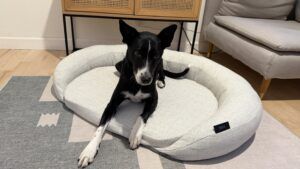
The HigherDOSE Infrared PEMF has a wide range of settings and an option for heat. However, it does need to be plugged in during use. Pet Bed Credit: Jae Thomas
Like the HigherDOSE PEMF mat for humans, the brand’s HigherDOSE Infrared PEMF Pet Bed offers a wide range of PEMF therapy frequencies and settings plus the added bonus of infrared heat. The combo of heat and PEMF frequencies work together to help support your dog’s recovery from sore muscles, long stressful days, or acute or chronic injuries.
I love that this bed comes with six different frequency settings and two different heat settings. The instruction manual lays out which setting is best for each use case:
Level 1: Sleep and recovery
Level 2: Stress Relief and balance
Level 3: Relaxation and circulation
Level 4: Recovery and strength
Level 5: Mobility and rejuvenation
Level 6: Energy and performance
All of the treatment settings sit between 3 to 60 Hz.
This bed needs to be plugged into a power outlet during use and is fairly heavy, so it’s an at-home only option that’s not well suited to travel. The plush bolster gives your dog a place to rest their head or snuggle into, but the main bed section isn’t plush or squishy, so dogs who like plush beds may not gravitate towards this option. This bed comes in two sizes (large and small), and sports a minimal, aesthetically pleasing design.
Best Non-Ned PEMF Device for Dogs: Assisi LOOP
If budget is on your mind or if your dog is experiencing a sudden issue, the Assisi LOOP is a great option to try out PEMF for the first time at a relatively reasonable price. This works well for surgical recovery or “one time” injuries.
This isn’t a forever product—the LOOP works for about 150 15-minute treatments. The battery has a limited life and works best when you allow 2 hours of resting time in between treatments. You may be able to get more than 150 treatments out of the device when following this protocol. The battery doesn’t need to be recharged, but it will die eventually and the entire device will need to be replaced.
While other options on this list are pads or dog beds, the LOOP is a wearable device. It can be worn around your dog’s neck, placed on a leg, or simply set on top of the dog. Depending on the location of your dog’s injury or pain, you may need to manage them or hold the device so it stays on top of them. The LOOP has a treatment range of 10 inches, so as long as it remains within 10 inches of the area you want to treat, your dog will receive the benefits.
Other Dog PEMF Products
Though we didn’t test these options personally, here are additional high-rated PEMF devices on the market:
Assisi Loop Lounge
The Assisi Loop Lounge is Assisi’s PEMF bed option and is one of the only options on the market that offers a thicker, plush dog bed as opposed to a thin mat. This bed comes in three sizes and starts at $949 for the smallest size. This bed will last for 6,000 treatments before it needs to be replaced.
If the Petspemf large bed is too small for your dog, the Respond Bio-Pulse PEMF Dog Bed Therapy System is another option for frequent travel or crate use which comes in larger sizes than the Petpemf. It’s more expensive than the Petspemf pad, but cheaper than the Assisi Loop Lounge. This option is more of a mat/pad than a true padded bed, but it’s moderate price and larger size is attractive to many pet parents. This is a favorite of many dog sport enthusiasts and vet physical therapists.
This PEMF mat offers three different frequency settings (5, 10 and 15Hz), a rechargeable battery, and a 30-minute treatment time with auto shut off feature.
In a puppy born with a liver shunt, the blood is sent around the liver instead of through it, so the liver can’t perform its job of handling nutrients and filtering out toxins. Credit: Yanukit Raiva | Getty Images
About 80% of canine liver shunts are present at birth (congenital) and involve the portal vein. In utero, puppies have a vessel called the ductus venosus that shunts blood flow around the liver since it is not functioning pre-whelping. When a puppy is born, however, this vessel should collapse so normal canine anatomy takes over.
“Five out of every 1,000 dogs in the general population are born with an inherited liver shunt,” says Jerold S. Bell, DVM, of Tuft’s Cummings School of Veterinary Medicine, in his paper “Exploring the Mysteries of Liver Shunts.” Caught early on, however, puppies with a congenital portosystemic shunt can go on to have a normal life once the shunt is corrected. Note: These dogs should not be bred however, since there is a genetic component.
Shunts may occur within the liver (intrahepatic) or outside the liver (extrahepatic). Secondary shunts can occur in older dogs due to cirrhosis with multiple small blood vessels interfering with the normal blood flow plan.
What Is a Liver Shunt in a Dog?
A liver shunt is an anatomic defect that directs blood flow from your dog’s gastrointestinal tract, including the pancreas, plus the spleen around the liver instead of through it. With the portal vein shunted off, the liver isn’t doing its normal functions of handling nutrients and filtering out toxins. You will often see the term “portosystemic shunt” used since the portal vein is usually the culprit.
Dogs with liver shunts may circle, press their heads into corners and “be stuck,” act disoriented, and eventually progress to seizures. Some may show gastrointestinal signs such as vomiting and diarrhea. Often clinical symptoms are seen after a high-protein meal due to the metabolites from protein.
Some dogs may form bladder stones and others will exhibit pica, which is a tendency to eat unusual items. Some breeds, ranging from Irish Wolfhounds to Yorkshire Terriers, have a genetic predisposition to portosystemic shunts.
Diagnosing a Portosystemic Shunt in Dogs
Diagnosing a portosystemic shunt may be easy or tricky. Bloodwork is often the first step. A complete blood count and a blood chemistry panel, combined with the physical exam and history, will often be diagnostic but not always.
Some dogs will have mild anemia and some abnormally small red blood cells. Low levels of blood urea nitrogen (BUN) and albumin (a protein) are common. Liver enzymes such as aspartate aminotransferase (AST) and alanine aminotransferase (ALT) are elevated. A urinalysis may show ammonium biurate crystals. Beyond the basic laboratory tests, the next step is often a bile acid test. Dogs with shunts tend to have increased bile acids.
For bile acid testing, two samples are required. The first is a fasting sample that gives your dog’s baseline for bile acids. A second sample is taken after your dog’s normal meal (usually breakfast). Bile acid numbers are expected to increase after a meal.
Imaging procedures are next. A plain X-ray may show a small liver. Ultrasound with contrast may illuminate abnormal blood flow pathways. CT scans, MRIs, and X-rays with dye can all help to pinpoint the location of the problem. Recent work out of Cornell University’s College of Veterinary Medicine using CT scans has helped to illustrate intrahepatic shunts, showing that in at least some cases, the shunts are between liver lobes, not located in liver tissue.
Caring for a Dog with a Liver Shunt
For mild liver shunts and true intrahepatic shunts, medical management may provide decent quality of life. These dogs need strict dietary management to minimize the toxin buildup. The goal for treatment is to decrease the production and absorption of toxins from the gastrointestinal tract into the bloodstream.
If your dog shows signs of hepatic encephalopathy (neurologic signs), his dietary protein needs to be managed carefully. All dogs need protein in their diets, so severe restrictions are generally not recommended. High-quality protein that is highly digestible is ideal. Some dogs do better with dairy or plant-based proteins versus meat proteins.
Lactulose is often recommended to help decrease the absorption of ammonia and other toxins. This is a non-absorbable synthetic disaccharide that decreases transit time in the gut by acting as an osmotic laxative, meaning that digested nutrients move through the intestinal tract faster than normal. This could lead to diarrhea, so generally dosing starts at a very low level and is gradually increased so your dog’s gastrointestinal tract can adapt somewhat. Antibiotics may change the intestinal microbiome and help to reduce toxins as well.
Medical therapy may work for mild cases or for older dogs with cirrhosis who can’t handle surgery. In addition, for cases that are truly intrahepatic, it may be next to impossible to surgically correct the problem.
Surgery is the ideal treatment, particularly for extrahepatic shunts. The basic idea is to close the shunt, with accessory blood vessels picking up the load and delivering most of the blood to the liver instead of bypassing it. Very few dogs can handle an acute closure of the shunt. Portal hypertension can cause abdominal pain, endotoxic shock and even death.
Luckily newer surgical techniques using rings, bands, constrictors, or intravenous coils can all act to gradually close the shunt, allowing time for the underused vessels to replace it. These surgeries are usually referred to a board-certified veterinary surgeon.
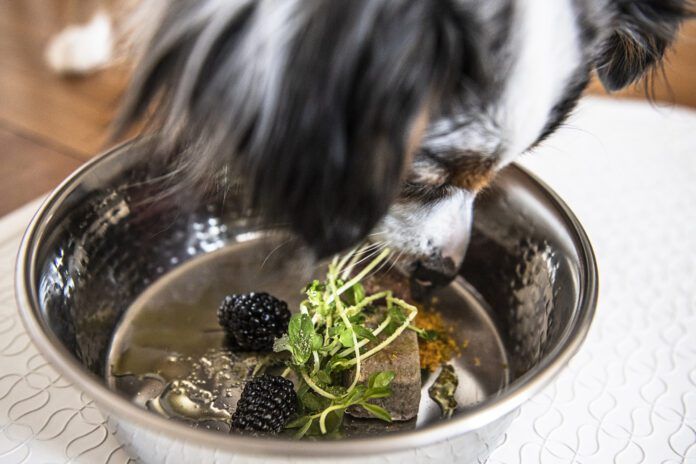
This dog’s food consists of raw rabbit meat, turmeric, Credit: Giordano Cipriani | Getty Imagessprouts, blackberries, hemp oil, and goat’s milk, among other things. You might be better off mixing a little turmeric into your dog’s regular food.
Is turmeric good for dogs? I have given turmeric to past dogs, and I take it myself for arthritis. I can attest that it helps me tremendously. But I never did a deep dive until now.
First, what is turmeric exactly? It’s a golden colored spice derived from the turmeric root, a tropical plant native to Asia that is related to ginger. The interest in it as a supplement is its anti-inflammatory properties. The heavy lifting in this equation is done by curcumin, the phytonutrient found in turmeric. There are a whole host of health benefits attributed to turmeric including arthritis relief, skin itching reduction as well as functioning as a digestive aid. A study published in Science Direct gave it a thumbs up for use in dogs: “The results would suggest that curcumin offers a complementary anti-inflammatory support for OA (osteoarthritis) treatment in dogs.”
Indeed, studies do show that curcumin may support healthy joint mobility and comfort. This fact has resulted in some dog food manufacturers including turmeric as an ingredient. However, the limited quantity of such within the kibble formulas are unlikely to be sufficient to provide an adequate anti-inflammatory benefit. Look for supplements for that benefit instead.
Is Turmeric Safe for Dogs?
In general, yes, turmeric is safe for dogs, although anyone can have an adverse reaction to anything so, discuss starting your dog on turmeric with your veterinarian first. This is especially important if your dog is on any other type of medication and/or supplements. Being proactive is always wise.
How Much Turmeric Should I Give My Dog?
In general, the recommended dosing schedule for turmeric is 15 mg–20 mg per pound of body weight, which is about 1/8 to 1/4 teaspoon for every 10 pounds of body weight. This is the daily dose starting point. All supplements should be started small to gauge digestive system tolerance. From there, if all goes well, you can increase a bit. A large dog could work their way up to a tablespoon per day.
Turmeric supplements are not inexpensive so a word to the wise, buy the best quality supplement that you can afford and watch for sales. It’s important to note that purchasing the type that already includes black pepper helps to assure maximum absorption of the key ingredients that provide those magical attributes. It is also recommended that you combine the dose with healthy fat, which can easily be done with a meal.
My dogs have always taken their turmeric supplements at a meal, as do I. If you use capsule supplements, you can administer them in the same manner that you administer any pills to your dogs. I have simply buried them in soft foods (I feed a raw diet as well as a cooked diet). Please do be careful, though, because if your dog bites into the capsule but does not consume it, you may be cleaning orange powder off of everything close for some time. Ask me how I know.
So, turmeric for dogs is indeed safe as well as possibly being beneficial. All in all, it’s not a bad idea to give it a go! As always, consult your veterinarian to be certain it won’t interfere with any other medications or supplements your dog is currently taking.
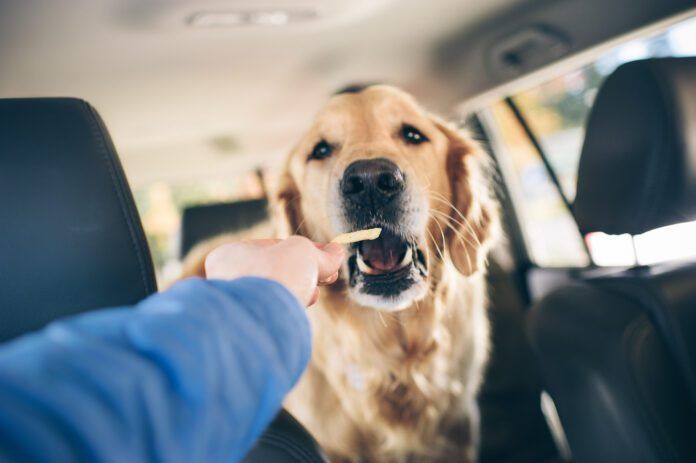
French fries are usually loaded with salt, so sharing them with your dog is not a good idea.
When it comes to salt, our dogs aren’t that much different from us. Just as we need sodium in our diets for maintaining a balance of body fluids, allowing nerves and muscles to function properly, and regulating blood pressure, so do our dogs.
However, the line between necessary and dangerous salt levels is particularly thin for canines. “While salt is a normal part of any diet in small amounts, excessive salt can be very dangerous for dogs,” according to Michael Hyder, medical director, VEG ER for Pets in Palo Alto, Calif.
What Do Low-Sodium Labels Mean?
The real issue isn’t salt itself, but the excess of it. It’s important for owners to note that when choosing commercial products: “While there are definitions established by the U.S. Food and Drug Administration regarding sodium for human foods, there are none for pet foods or pet treats. Therefore, pet treats or foods that claim to be ‘low sodium’ may or may not actually be low enough in sodium for your pet,” according to experts at Tufts University Cummings School of Veterinary Medicine.
Salt Toxicity: The Symptoms of Salt Poisoning
Excessive salt intake can cause a condition called hypernatremia, or salt poisoning, which occurs when the sodium levels in the bloodstream become too high. This can disrupt cellular function and affect major organs, especially the brain.
Symptoms of salt toxicity in dogs may include the following, according to Dr. Hyder:
Vomiting
Diarrhea
Excessive thirst or urination
Lethargy or confusion
Muscle tremors
Seizures
In severe cases, coma or death
Understanding the Danger of Salt
Understanding the fine line between the sodium required for healthy bodily functions and the toxic levels found in many human foods is the key to keeping your canine companion safe.
“The total amount of daily salt that is safe for dogs is based on their weight, underlying health problems, and complicating factors like access to water, so this will vary from one dog to another,” according to Dr. Amy Fox, a New York-based veterinarian. “In general, serious signs of toxicity will occur when dogs ingest about 2 grams of salt per kilogram [or about 2.2 pounds] of body weight, but at lower doses, toxicity can occur if any complicating factors are present. A gram of salt is about 1/6 of a teaspoon.
“Foods that are very salty should be avoided for all dogs, and especially for dogs with health problems like heart disease and kidney disease,” says Dr. Fox. “Salt can be a serious problem when dogs ingest large amounts of it accidentally in food, inedible items like homemade play dough—or salt dough—or if they ingest forms of salt that contain other ingredients besides sodium and chloride, such as ice melt, which may be toxic.”
“If you suspect your dog has eaten a salty food or product, especially something like rock salt, salt dough, or brine,” Dr. Hyder says it’s important to act quickly.
Do not induce vomiting at home, unless specifically instructed by a veterinarian.
Monitor your dog for signs of toxicity, especially neurological symptoms or extreme thirst.
Understanding sodium is about balance. One key to prevention is ensuring your dog always has fresh, unrestricted access to water—a critical defense mechanism that helps the body process and excrete excess sodium safely.
Think You Know Your Salt?
Do you know the answers to common questions about sodium? As a dog owner, it’s important that you do. As a fun to test (or improve) your knowledge, take the “Are You Sodium Savy Quiz,” compiled by Tufts University Cummings School of Veterinary Medicine.
The best cognitive dog toys encourage your dog to think while stimulating natural canine behaviors. Credit: Jae Thomas
Whether you have a high-energy dog who needs a little extra daily activity or an older dog who needs low-impact mental stimulation, cognitive dog toys are a great way to work your dog’s brain indoors. Having a selection of interactive dog toys on hand will keep your furry friend from getting bored when you need to work or when the weather outside isn’t the best for a walk or play session.
What is a Cognitive Dog Toy?
There are many different types of interactive dog toys, but the best toys for your dog’s cognition have a problem-solving component and encourage natural canine behaviors like foraging, playing, licking, and chasing. Think food-dispensing toys that your dog can bat around and chase to get food out, a puzzle toy that requires your dog to think about how to earn the food inside, or a snuffle mat that encourages sniffing.
Studies have shown that cognitive or stimulating dog enrichment toys can have a positive impact on dogs’ behavior. Appropriate interactive dog toys can increase your dog’s activity levels, reduce unwanted behaviors, and may even offer a calming effect.
Traits We Want in the Best Cognitive Dog Toys
Problem-solving or instinct-encouraging design: The best cognitive dog toys should require your dog to engage in some kind of problem solving or instinctual behavior. We like options that encourage licking, sniffing, chasing, and making your dog work to access their food. The best stimulating dog toy for your dog will depend on which of these behaviors they find the most enriching.
Ease of use and cleaning: Most cognitive dog toys involve your dog working for their food, so they should be easy to clean between uses. Bonus points for toys that are dishwasher safe.
Durability: Because many cognitive dog toys encourage dogs to directly interact with them with their nose, mouth, and/or paws, they should be durable enough to stand up to regular play.
This classic calming lick mat is a great option for dogs who need to decompress through licking. The soft bristles hold peanut butter, wet dog food, and other spreadable treats well and the simple pattern reduces the likelihood of frustration.
This snuffle mat is a great option for dogs who enjoy sniffing and foraging for their food. The dense fabric sections offer plenty of places to hide kibble and the whole snuffle mat can be machine washed between uses to keep it clean.
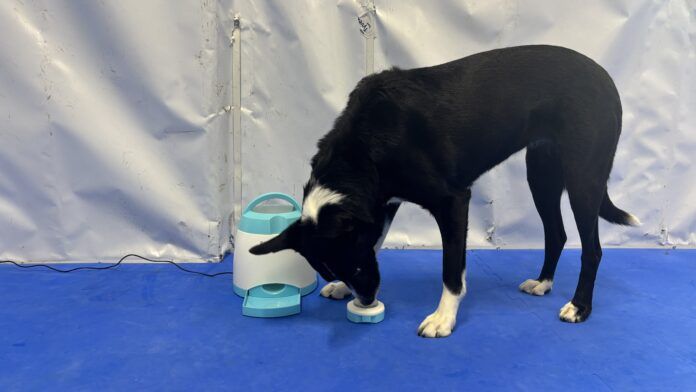
This electronic interactive dog toy encourages problem solving, memory skills, and movement—perfect for cold, rainy, or hot days indoors. Teach your dog to press the wireless button to be rewarded remotely via the treat dispenser.
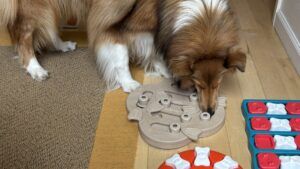
This entry-level puzzle toy is great for puppies and adult dogs alike. It features no loose parts so chewers can safely enjoy this option. Just hide food in the compartments and watch as your dog snuffles, slides, and scoots puzzle pieces around to access their reward.
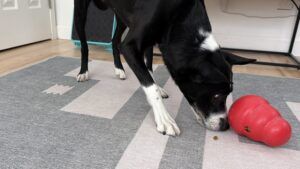
The Kong Wobbler is a favorite for dogs who like to chase and pounce on things as the rolling and wobbling motion of this toy will activate your pup’s natural prey drive. Fill it with food to make mealtime more like playtime.
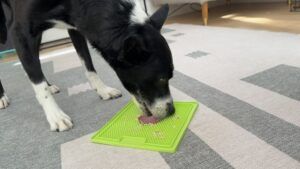
Best Cognitive Dog Toy for Decompression: LickiMat Classic Soother
Lick mats, like the LickiMat Classic Soother shown here, make great cognitive toys for dogs who get easily overstimulated or could use some decompression time. Credit: Jae Thomas
Voted the best lick mat in our best dog lick mats roundup, the Lickimat Classic Soother is the best cognitive dog toy for pups who could benefit from decompression time. Licking is naturally soothing for dogs and the soft bristles on this lick mat offer lots of nooks and crannies for canned dog food, raw dog food, or soft treats like peanut butter and yogurt.
For dogs who are easily overstimulated, the LickiMat Classic Soother offers mental stimulation in a calmer, more relaxing way and is unlikely to cause frustration. This is also a solid enrichment toy option to extend mealtimes and slow quick eaters down. Toss it on the top rack of your dishwasher for easy cleanup after use.
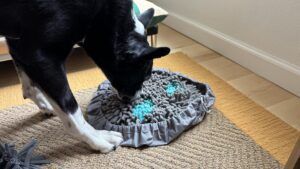
Best Cognitive Dog Toy for Scent-Oriented Dogs: Pet Parents Forager Snuffle Mat & Slow Feeder Dog Bowl
For dogs who like to use their noses, snuffle mats provide great mental stimulation. Credit: Jae Thomas
If you have a dog who constantly has their nose to the ground (looking at you, scent hounds), the Pet Parents Forager Snuffle Mat & Slow Feeder Dog Bowl is one of the best ways to let them engage their nose at mealtime. This option was named the winner of our best snuffle mat story, and it remains a good option for most dogs.
Just sprinkle dry dog food or treats into the mat and hide them in the soft, dense material. You can also pull the drawstring cord to add an extra challenge. Dogs have to use their noses to find the food which can increase their desire to eat while also preventing them from eating too fast and gulping down large amounts of food. Since the food stays contained in the mat, this is a more mess-free choice than true scatter feeding. It’s also machine-washable for easy cleaning.
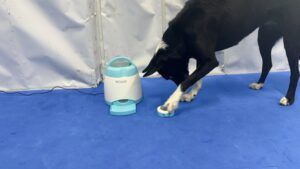
Best Electronic Cognitive Dog Toy: Arf Pets Dog Treat Dispenser
The Arf Pets Dog Treat Dispenser can turn training and mealtimes into a stimulating game of hide-and-seek. Credit: Jae Thomas
When the wireless button is pressed, the device dispenses dog treats, so you can train your dog to press a button, then run to the device to get their reward. As your dog gets the hang of the game, you can place the button and the device further and further apart, so your dog walks (or runs) back and forth from the button to the device. Some people can even place the button and the device in different rooms depending on how well their dog learns the game.
This toy is great for your dog’s cognition as it incorporates training, memory, and movement. Because this toy can be quite stimulating, especially for food-motivated dogs, keep it tucked away in a closet or cabinet when not in use.
Best Dog Puzzle Toy: Outward Hound by Nina Ottosson Dog Hide N’ Slide Treat Puzzle
Puzzle toys, like the Outward Hound by Nina Ottosson Dog Hide N’ Slide Treat Puzzle, teach dogs to think their way to accessing tasty treats. Credit: Jae Thomas
The Outward Hound by Nina Ottosson Dog Hide N’ Slide Treat Puzzle is a top pick for dog puzzle toys because it doesn’t have any removable pieces. Though you should always supervise your dog with cognitive toys, this puzzle is the best choice for young puppies and dogs who are prone to chewing or ingesting their toys.
Simply add dog treats, kibble, or even canned dog food to the holes in the puzzle, and slide the moving pieces over the holes to cover up the food. Your dog will sniff, nudge, and paw their way to a reward, teaching them valuable problem-solving skills and slowing mealtimes down for fast eaters.
Best Food Dispensing Cognitive Dog Toy: Kong Wobbler
The Kong Wobbler is a great cognitive dog toy for pups who like to chase, pounce, and retrieve. Credit: Jae Thomas
The Kong Wobbler was one of the first toys I bought for my rescue dog, Miso, when I brought her home. Though she didn’t know how to play with toys, this one was a quick hit. Just fill it with your dog’s normal dry food (or small treats if they don’t eat dry food) and watch as they bat the Wobbler around, chasing it, pouncing on it, and retrieving the food pieces that fall out of the hole.
This is a useful toy for kibble fed dogs, since the small version holds ½ cup of dry food, and the large size holds one cup of food (though in my experience, you can definitely fit more than the one cup the manufacturer suggests).
To provide the best experiences, we use technologies like cookies to store and/or access device information. Consenting to these technologies will allow us to process data such as browsing behavior or unique IDs on this site. Not consenting or withdrawing consent, may adversely affect certain features and functions.
Functional
Always active
The technical storage or access is strictly necessary for the legitimate purpose of enabling the use of a specific service explicitly requested by the subscriber or user, or for the sole purpose of carrying out the transmission of a communication over an electronic communications network.
Preferences
The technical storage or access is necessary for the legitimate purpose of storing preferences that are not requested by the subscriber or user.
Statistics
The technical storage or access that is used exclusively for statistical purposes.The technical storage or access that is used exclusively for anonymous statistical purposes. Without a subpoena, voluntary compliance on the part of your Internet Service Provider, or additional records from a third party, information stored or retrieved for this purpose alone cannot usually be used to identify you.
Marketing
The technical storage or access is required to create user profiles to send advertising, or to track the user on a website or across several websites for similar marketing purposes.
This website uses cookies and other tracking technologies to offer you a better experience, personalize content and ads, and analyze our site traffic. Before proceeding, you agree to our Terms and that you’ve read our Privacy Policy. Update Settings
Functional
Always active
The technical storage or access is strictly necessary for the legitimate purpose of enabling the use of a specific service explicitly requested by the subscriber or user, or for the sole purpose of carrying out the transmission of a communication over an electronic communications network.
Preferences
The technical storage or access is necessary for the legitimate purpose of storing preferences that are not requested by the subscriber or user.
Statistics
The technical storage or access that is used exclusively for statistical purposes.The technical storage or access that is used exclusively for anonymous statistical purposes. Without a subpoena, voluntary compliance on the part of your Internet Service Provider, or additional records from a third party, information stored or retrieved for this purpose alone cannot usually be used to identify you.
Marketing
The technical storage or access is required to create user profiles to send advertising, or to track the user on a website or across several websites for similar marketing purposes.