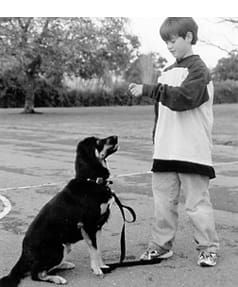
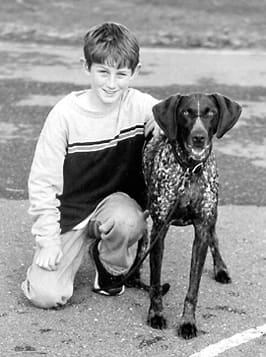
Like peanut butter and jelly…like macaroni and cheese…like Lassie and Timmy, dogs and kids just naturally seem to go together. Still, for every heartwarming story we hear where a loyal Shep pushes his toddler out of the path of a speeding car, it seems we read about an equally bone-chilling tragedy where Cujo mauls a child.
Dog bites are responsible for a minuscule number of fatalities per year an average of 19 per year over the last 20 years, not all of them children compared to thousands of children’s deaths from auto accidents, house fires, and domestic abuse. According to the Centers For Disease Control in Atlanta, Georgia, however, non-fatal dog bites are the number one health problem for children in this country, outpacing measles, mumps, and whooping cough combined.
It is an unusual child who does not, at some point in his childhood, want a puppy more than anything else in the whole wide world, and it is an unusual parent who does not, at some point, succumb to those wishes. It’s also unusual for a child to reach the 12th grade without having been bitten by a dog on at least one occasion. Since, thank goodness, kids will have and love dogs, it is critically important for parents and the dogs juvenile caretakers as well to do all the right things to make sure they end up with a Shep rather than a Cujo.
Donna Duford is an internationally-known positive dog trainer and behavior consultant. Her dog training business, Companion Dog Training, is based in North Brookfield, Massachusetts, where she frequently sees clients with kids and dogs. Duford has a special interest in child/dog relationships, and has presented information on the subject to other dog trainers at the annual conference of the Association of Pet Dog Trainers (APDT), a professional organization that promotes dog-friendly training and ongoing trainer education.
Duford says there are so many wonderful things that happen in positive dog/kid relationships, that it’s hard to know where to begin! Children who have good relationships with dogs often learn about responsibility and develop great empathy for a species different from their own, she says. I have seen many children gain self-esteem from caring for and/or training their dogs.
On the other hand, Duford recognizes that there are myriad ways that the child/dog relationship can turn sour. She has seen dogs with every conceivable negative reaction to children, and has been consulted by countless families to solve problems between dogs and kids in a household. WDJ caught up with Duford at November 2000 APDT meeting in Houston, where we discussed ways to train dogs and kids to build the strongest and safest relationship possible.
WDJ: What are some of the problems you see occuring between kids and dogs?
Duford: The negative aspects of the dog/child paradigm that I see most frequently are children teasing dogs, and dogs chasing, mouthing, and sometimes mounting children. The good news is that these problems are quite treatable if the family is motivated to work on them.
The worst thing I see in child/dog relationships is antagonism, deliberate or not, that results in aggression. When the family dog bites a child it is a traumatic event. It is scary, there may be injuries, and it causes great emotional upheaval for the family, not to mention financial liability.
WDJ: Clearly, the largest part of the responsibility to create good dog/kid relationships falls on human shoulders. What are the most important things that you teach parents to do to dog-proof their kids?
Duford: Dog-proofing falls into three categories: dogs in general, the family dog, and strange dogs.
To be dog-proofed, kids need to have respect for dogs, and they need to understand strict rules about dog safety. Parents should teach their children empathy and respectful behavior to all dogs.
Parents also need to teach dog safety much the way they teach fire safety with a clear, strong message. Children need to know that they must not bother dogs when they’re eating, chewing on a bone, or playing with other dogs. They must never approach or run from an unknown dog. They should be taught to ask owners of unknown dogs if they may pet the dog, and they need to be taught the correct way to pet.
Also, all children need to know that all dogs can bite. Dog bites are serious and the topic should not be sugarcoated.
With respect to the family dog, very young children under five years of age should not be encouraged to hug or kiss the dog. Even if the family dog tolerates or likes it, children of this age are impulsive and not old enough to understand one set of rules for one dog and different rules for others. If a young child routinely hugs and kisses her dog, she will be more likely to try it with strange dogs, which could have devastating results. Older children can be taught, if it is appropriate, that there are different rules for the family dog and other dogs.
WDJ: Let’s turn it around. What can dog owners do to kid-proof their dogs?
Duford: Socialization to children is paramount. Building a positive association with children by exposing the dog to friendly, polite children is a great start. Playing the dog’s favorite game or giving her special food treats when children are around is even better.
Another child-proofing measure I teach all my clients is to help the dog to have positive associations with all kinds of handling. We do this by pairing various types of touching with something the dog loves, like a special food-treat or toy. This should be done systematically, starting with very gentle handling and working up to rough, toddler-like handling such as tail-pulling, hair grabbing, and poking. The handling should not actually hurt the dog, and is best done under the supervision of a qualified dog trainer.
WDJ: Are some breeds of dogs better choices for kids dogs?
Duford: This is a tough one I hesitate to classify dogs by breed. There certainly are tendencies, within breeds, but each dog is an individual and I would hate to deprive a dog or a kid of a great companion based on a generalization. Instead, I would look at temperament qualities.
Good qualities for family dogs are high sociability and responsiveness, and low to moderate energy and excitability. This is somewhat dependent on the age and number of children and the family lifestyle, of course, but you stack the deck in your favor by choosing a dog who likes people, one who actively seeks them out. A social dog chooses to be with people when given the chance. This is different from a dog who likes people but doesn’t actively engage with them.
Dogs who are responsive take direction easily and are easy to train. Energy level and excitability are especially important considerations for families with small children. Dogs who are easily aroused and have a high energy level are likely to get overstimulated by children running, playing, and squealing.
If there is one breed category I would steer clear of with young children it would be toy dogs. Bigger dogs are sturdier and will fare better when accidentally stepped on or tripped over.
Also, with young families, I usually suggest adopting an adult dog. Most families with young children do not need the extra work required to raise a puppy or adolescent dog. It is also often easier to evaluate the temperament of an adult dog and its suitability to living with children.
WDJ: What are some of the worst things a parent can do in a dog/kid relationship?
Duford: Lack of supervision is a big problem. Dogs and kids should not be left unsupervised. Even the best-behaved children and dogs slip up. Accidents happen. Forcing dogs to interact with kids is also a big no-no. If the dog doesn’t want to be with kids, she is sending a clear message.
Pushing kids to take too much responsibility for the dog is also something I discourage. Unless we are talking about a teenager, dogs should always be the total responsibility of the adults in the household. Children do not have the maturity or self-discipline to care for another being, and parents need to understand that the kids should, at best, play a supporting role in dog care and training.
WDJ: Once a dog has bitten a child, can he ever be trusted with children again?
Duford: This is a loaded question. It depends on the severity of the bite and the circumstances surrounding the incident. Some dogs are fine with the family children but not with strange children. Some dogs are wonderful with children of a certain age and not with others.
Occasionally, the dog will be fine in all situations except the one in which the bite occurred. For instance, a dog may be wonderful with the kids except when they approach the dogs food dish. Regardless, if the dog has bitten, or even growled at a child, everyone should sit up and take notice. This is not a fluke. The dog is communicating something and there is every reason to expect that if she finds herself in the same situation she will bite again.
Nancy Strouss lives and works with dogs. As the owner of People Training for Dogs in Valley Cottage, New York, she teaches group and private classes from puppy kindergarten to advanced obedience. Her own Golden Retrievers compete in the show ring, obedience, and agility, and when time permits they visit nursing homes as therapy dogs.
Juniper (Shady Lane Juniper, CDX, NA, TT, CGC) is a spayed 7½-year-old Golden Retriever who has been on a well-balanced raw diet for the past four years, prior to which she ate high-quality kibble and a variety of raw foods. Strouss, the dog’s co-breeder, raised Juniper without heartworm medication or unnecessary vaccinations. “She has been a very healthy dog with minimal need for veterinary care,” says Strouss. “Juniper has had an occasional hot spot, but otherwise, her health has been excellent. Her only regular veterinary appointment is a monthly maintenance adjustment from a veterinary chiropractor.”
Spilled food starts problems
As part of her training business, Strouss sells training equipment, natural pet foods, and supplements. Recently a local pet food store that was going out of business asked Strouss to carry its customers’ favorite reduced-calorie kibble. The food’s first ingredients are ground yellow corn, poultry by-products, wheat flour, poultry by-product meal, oat flour, and beet pulp.
“Some of its ingredients, like poultry by-products and beet pulp, are controversial,” says Strouss, “and I have serious questions about foods that contain large quantities of grain. At the same time, this food does not contain chemical preservatives, flavoring agents, or dyes. As a convenience to the store’s customers, I agreed to carry it.”
One day a 40-pound bag of the food broke open while Strouss was moving it. She put the spilled kibble into a container with a tight-fitting lid, but a few days later someone moved the container, the lid came off, and Strouss’s assistant discovered Juniper helping herself to the kibble. Strouss and her assistant weren’t concerned because Juniper hadn’t eaten much, and she seemed fine.
That night after teaching her classes, Strouss took her dogs outside to play ball, after which the dogs, as usual, drank plenty of water. She waited an hour before feeding them dinner.
“My dogs are all good eaters and never miss a meal,” she says, “so I was startled when Juniper refused to touch her food. I remembered the stolen kibble and immediately thought of bloat. Sure enough, her stomach and sides were distended. Of course, it was after hours and no vets in the area are open for emergencies, but fortunately I have a friend, Beverly Cappel, who is a holistic veterinarian. I decided to call her before making the 40-minute trip to the emergency hospital in New Jersey.”
Juniper was in the early stages of bloat and not yet showing the dangerous symptoms of panting, drooling, trying to vomit, or having difficulty lying down. Dr. Cappel suggested that Strouss give Juniper charcoal capsules, walk her for at least 15 minutes, and try to get her to burp.
“I did this right away,” says Strouss. “After a 15-minute walk, Juniper burped a few times and then defecated. I brought her back inside and kept a close eye on her. Her stomach was definitely less distended, and she lay down on a cool part of the floor and fell asleep. Half an hour later, she jumped up onto my bed and fell asleep again.”
The next day, Juniper seemed completely well, but Strouss decided to feed her a very small morning meal, just in case. “Late that afternoon I again noticed the early symptoms of bloating,” she says. “This time it happened during office hours, so I decided to take her across the street to my conventional veterinarian. Her stomach and sides were once again distended, but only slightly. We decided to repeat the charcoal and walk-till-you-burp routine, and again her symptoms disappeared.”
New signs of trouble
Juniper was her happy, healthy self for the next few days. Then Strouss noticed her licking an area on her inner thigh. At first it was a small, inflamed lesion, like a hot spot, but as the day went on, the inflamed area spread until it took over her entire belly, both inner thighs, and the sides of her ribcage. “It was like a wildfire burning out of control,” Strouss explains, “like a severe burn with a poison ivy rash on top of it. Ouch! The skin was red hot and moist. Juniper was obsessed with licking the area and had difficulty standing, walking, and sleeping due to pain and discomfort.”
Strouss contacted a veterinarian whose line of natural skin-care supplements she carries, describing Juniper’s symptoms. “Go see your local vet,” he told her. “This could be a superficial spreading pyoderma that will require antibiotics for about three weeks and may require short-term prednisone to put out the fire.”
However, after hearing this, Nancy Strouss didn’t follow his advice. Instead, she took matters into her own hands. Why?
“Juniper is a seven-year-old Golden Retriever,” says Strouss. “That’s an age/breed combination that tops the charts these days for developing cancer. Juniper has been raised and cared for holistically all her life. My goals for her have always been good health, good quality of living, and greater longevity. A conventional approach to the problem would have provided relief from her extreme discomfort, but at what price? In the long run, the excessive use of steroidal drugs and antibiotics destroys the body’s immune response and, I believe, leads to the development of cancer and other life-threatening diseases.”
Turning down the heat
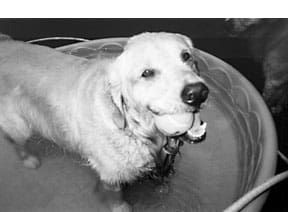
Strouss cut all the hair away from the inflamed area and continued to trim it as the inflammation grew in size. “Every hour or so until bedtime, I took Juniper outside and sprayed her gently with cold water from the hose,” she says. “Sometimes she would stand in the wading pool, telling me it was time to hose her down. This brought her enormous relief. Had it been winter, I would have done this in the bathtub.” After each soaking, Strouss gently dried the area with soft towels and a hair dryer set on “cool.”
When Juniper’s skin was dry again, Strouss sprinkled the area with Gold Bond powder, a drug store talc powder that contains menthol, zinc oxide, acacia, eucalyptol, methyl salicylate, thymol, zinc stearate, and salicylic acid. “It’s recommended for skin irritations like burns, poison ivy, and prickly heat rashes,” says Strouss. “She lay on her back as I applied it, and I was careful to keep it away from her nose and mine, so we wouldn’t inhale its dust. Then I covered the area with a towel and held it in place for several minutes.
“These steps minimized her pain and allowed her to rest for about an hour, when we began again. Thinking about what was going on inside her, I gave her Traumeel, a homeopathic remedy for the symptoms of pain and inflammation, and Rescue Remedy, the Bach flower remedy recommended for stress, which I gave her orally whenever I noticed her panting or acting anxious. I diluted the Rescue Remedy with distilled water and sprayed it directly on the inflamed skin and in the air around her.”
Strouss also supplemented Juniper’s diet with digestive enzyme tablets (one or two every hour or so), extra vitamin C, two echinacea/goldenseal capsules three times a day to boost her immune system, and her usual raw diet. Juniper eats raw meat, raw meaty bones, and raw vegetables pressed with salt to produce lactic acid to feed her beneficial bacteria. Also, for several days Strouss added raw garlic to Juniper’s dinner for its immune system support.
Positive outcome
Juniper’s ordeal lasted one week, from the first symptoms of bloat and inflammation to their complete resolution. The rash disappeared, her skin stopped itching, and her playful disposition returned.
“Caring for a sick dog holistically can take longer and make more demands on the dog and owner than the use of symptom-suppressing drugs,” says Strouss. “I knew that in the long run, preserving Juniper’s own healing abilities was the right thing to do, but there were moments when I found myself fantasizing about prednisone.
“The temptation to treat these symptoms conventionally is overwhelming, both from the perspective of the dog’s discomfort and the amount of time and effort needed from the owner,” admits Strouss. “For many, like those who work away from home, hourly treatments are out of the question. If I didn’t have a flexible schedule, I would have used conventional therapies. But I was able to spend time with Juniper, so when I weighed the long-term benefits of natural care against the quick fix offered by conventional drugs, I decided in favor of Mother Nature, and I’m glad I did.
“Juniper is completely well, and she isn’t having to deal with the residues or side effects of cortisone, antibiotics, and other prescription drugs. I hope that, as a result, she will have a longer, healthier life.”
-By CJ Puotinen
CJ Puotinen is the author of The Encyclopedia of Natural Pet Care and Natural Remedies for Dogs and Cats. She is a frequent contributor to WDJ.
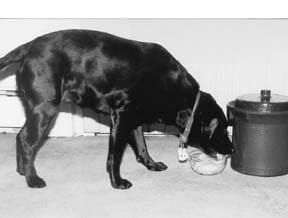
The author’s Labrador, Samantha, dives right into a bowl of lacto-fermented cucumbers fresh out of a ceramic German pickle crock. Most dogs (and their families) relish the taste of vegetables prepared by this method.
There would we be without our microwave ovens, convenience foods, and modern, high-tech food production methods? A lot better off, say some researchers.
One of them is Sally Fallon, founder of the Weston A. Price Nutrition Foundation and author of the ground-breaking cookbook Nourishing Traditions (New Trends Publishing, 1999). According to Fallon, just about everything that has been done to Americas food supply in the last century has been detrimental to the food itself and to those who consume it. The way we grow, harvest, store, and process our grains, fruits, vegetables, oils, meat, poultry, and dairy products is entirely different from methods used by humans around the world for thousands of years.
The result, says Fallon, is an epidemic of modern diseases, including cancer, heart disease, allergies, and auto-immune disorders. It is only by adopting our ancestors farming and food preparation methods, she says, that we can fully meet our nutritional requirements and enjoy perfect health.
Today, food scientists are educating people in the art of preparing foods in ways that preserve and enhance the nutrients naturally contained in them. People who are committed to providing the healthiest foods for their families won’t find it too difficult to extend these methods to the preparation of the family dog’s meals.
Traditional preparation methods increase the digestibility of many foods we share with dogs. These simple steps so dramatically improve the nutritional content of everyday foods that they reduce or eliminate the need for nutritional supplements.
In fact, the food-source nutrients that these techniques release are so easily assimilated that their effects are superior to those of any synthetic or laboratory-produced supplement. Improving the nutritional content of the food we give our dogs can significantly improve their overall health, endurance, skin and coat condition, joint flexibility, strength, digestion, wound healing, reproduction, and immune function.
Time and organization are the main ingredients in these techniques, but quality is a factor, too. Holistic veterinarians agree that todays dogs are adversely affected by industrial and agricultural chemicals and pollutants. Whenever possible, it makes sense to use organically grown, minimally processed, fresh, whole foods.
Any home-prepared diet can be improved without altering its basic ingredients or menus by using the following methods.
Lactic acid fermentation
Vegetables are important to canine health, and although advocates of home-prepared diets debate the quantity of vegetable matter dogs should consume, all agree that vegetables contain essential nutrients that are not provided by other foods.
Unlike animals that evolved on a vegetarian diet, dogs lack the ability to break down cellulose, a carbohydrate consisting of linked glucose units in plant cell walls. One way to help dogs digest vegetables is to puree them. Blenders and food processors make this task easy, and pureed root vegetables like carrots and parsnips, leafy herbs such as parsley, and grasses like wheat grass or barley grass can be added to every meal with good results.
There is another way to improve the digestibility of vegetables, and a growing body of research indicates that this method both prevents and helps cure cancer and other serious illnesses. Lactic acid fermentation is one of the simplest and oldest methods of food preservation.
There are two kinds of lactic acid. One is found in the blood, muscle tissue, and stomach; the other is produced by bacteria. During active exercise, pyruvic acid, a compound derived from carbohydrates, breaks down into lactic acid, which can accumulate in the muscles and cause cramps. Lactic acid consumed in foods such as yogurt and naturally fermented vegetables does not have this effect. It actually helps remove the harmful lactic acid from muscles.
Lactic acid that is generated through fermentation produces vitamin C, vitamin B12, enzymes that support metabolic activity, choline (which balances and nourishes the blood), and acetylcholine, which tones the nerves, calms the mind, and improves sleep patterns. Lactic acid is also a chemical repressor that fights cancer cells without harming healthy cells.
As William L. Fischer explains in his book How to Fight Cancer and Win (Alive Books), unpasteurized sauerkraut and other fermented vegetables are living foods that improve bowel health and digestion, maintain beneficial intestinal flora, help eliminate harmful bacteria, improve the assimilation of nutrients, and enhance healing.
To make lacto-fermented vegetables, you dont need special equipment, although a plastic Japanese salad press or ceramic German pickle crock simplifies the effort. You can do it in a glass or ceramic bowl using a weighted plate as a press. The basic ingredients are vegetables, a pinch of salt, a few optional herbs, and time.
Cucumbers, the fastest to prepare, are ready in about two hours. Carrots and other root vegetables take a couple of days if they are sliced rather than shredded and a week or more if prepared in a large ceramic crock. You may try this technique on your pet’s behalf, but once you taste the results, lacto-fermented vegetables may become part of your own daily diet. The vegetables can be added to salads, served as side dishes, or used in recipes that call for raw vegetables.
As with any new food, introduce fermented vegetables gently and in small quantities. Many dogs love them at first bite, but if your dog needs coaxing, mix a tiny amount with her regular food and whatever oil you normally add, such as flax seed, coconut, or cod liver oil.
Some pet nutritionists recommend that vegetables make up as much as 20 to 25 percent of a dog’s diet, while those who follow the prey model, in which vegetables represent the partly digested contents of a prey animal’s digestive tract, use much smaller amounts. Whatever vegetables you now feed can be replaced with a slightly smaller amount, such as 10 to 15 percent less by volume, of lacto-fermented fare. Fermentation and pressing condense the vegetables and concentrate their nutrients. The resulting liquid, which looks like water but is really the vegetable’s juice, is a rich source of lactic acid and other nutrients. It can be added in small amounts, such as 1 or 2 tablespoons at a time, to your pets food and drinking water.
Vegetables are ”done” when they taste tangy and feel slightly soft. They keep in the refrigerator for several weeks, especially if stored in plastic bags from which you press the air before sealing, or store them in glass jars with their juice.
For best results, use an unrefined sea salt such as Eden, Lima, or Celtic Sea Salt, all of which are sold in health food stores. These salts, which are manufactured in France by traditional methods, are gray in color, feel moist to the touch, and contain all of the minerals and trace elements found in unpolluted sea water.
Wash vegetables thoroughly, but do not peel organically grown produce except for thick-skinned cucumbers; if the vegetables are commercially grown, reduce pesticide residues by washing well, removing outer leaves, or peeling. Then slice with a knife, shred with a grater, puree, or slice/shred with a food processor, discarding any tough stems or damaged portions. Use only glass, ceramic, stainless steel, or plastic pressing materials, not aluminum, tin, or copper. Keep all utensils meticulously clean.
Want a preview? Too busy to make your own? Some health food stores carry lacto-fermented vegetables, including unpasteurized sauerkraut.
Making grains digestible
Although dogs are not designed to eat cooked food, they cannot digest raw grain, either. Pet nutritionists agree that the only grain that dogs can fully utilize has been predigested, such as by a prey animal’s digestive organs. Cooked grains are more digestible than raw grains, but cooking does not digest grains. Microwave cooking, cooking in a pressure cooker, and the high heat and pressure used in extrusion processing (the method used to produce most commercial kibble) alter the protein molecules and fragile oils in grains.
In traditional cultures, grain was never used in its dormant state. Raw grain contains enzyme inhibitors that prevent sprouting until the grain absorbs enough moisture and warmth to support life. Lacking these conditions, grain remains inert.
In the industrial West, grain is taken from field to storage in a single day. This is very different from traditional methods, in which harvested grain was left in the field for days or weeks, during which rain and sunlight provided the conditions needed for germination. Partly germinated grain was stored whole, ground just before use, and soaked overnight before cooking. Gruels and porridges made from the grain were cooked slowly over gentle heat, and breads made from it were allowed to ferment for days before baking. All of these steps release vitamins, amino acids, and other nutrients while removing chemicals that interfere with digestion.
Soaking removes phytic acid, an organic acid in untreated grain which combines with calcium, magnesium, copper, iron, and zinc in the intestinal tract, blocking their absorption. According to Sally Fallon, this is why a diet high in whole grains can lead to serious mineral deficiencies and bone loss. You can prevent this adverse effect with overnight soaking in warm water, which, in addition to destroying phytates, neutralizes the enzyme inhibitors present in all grains, increases the production of beneficial enzymes, helps break down gluten (a difficult-to-digest protein found in most grains), and makes grains less likely to cause allergic reactions.
Unlocking nutrients
The process of germination or sprouting changes grains into living foods that are rich in vitamins, trace minerals, the carbohydrate-digesting enzyme amylase, amino acids, and other nutrients. Before-and-after measurements show as much as 25 times more vitamin K and 12 times more carotene in grain after it has sprouted. B-complex vitamins such as pantothenic acid typically increase up to 200 percent, vitamin B12 by over 500 percent, pyridoxine by 600 percent, and riboflavin by nearly 150 percent.
Use organically raised wheat, rye, spelt, kamut, barley, oats, millet, buckwheat, or other grains from a health food store, macrobiotic supply company, or sprout catalog. Rice is the only popular grain for which this process is not recommended.
Soak ½ to 1 cup grain in a wide-mouth quart jar of water to which you have added 10 drops of liquid grapefruit seed extract, an all-purpose disinfectant. Soak the grain 10 to 12 hours or overnight. For increased mineral content, add a pinch of powdered or liquid kelp to the soak water. H
ealth food stores sell plastic sprouting lids for wide-mouth quart jars, or you can fashion a sprouting lid with cheesecloth and a rubber band. Sprouting lid in place, drain the jar well, then lay it on its side in a warm place away from direct sunlight. Ideal sprouting temperatures are between 70° and 80° Fahrenheit.
After 24 to 36 hours, you will see small white roots emerge from the grain. If you dont see this growth on almost every seed by the second day, your grain is not viable and should be discarded. Assuming that its sprouting, let it grow another day, then puree the grain in a blender or food processor.
Add a tablespoon of raw honey (a source of carbohydrate-digesting amylase) and/or ¼ teaspoon of an enzyme powder containing amylase and let the mash stand at room temperature for an hour or two before refrigerating. This gives the amylase a chance to work, further breaking down and predigesting the grain.
To introduce predigested grain to your dog, start with 1 teaspoon per 10 pounds of body weight every other day and gradually increase the amount as desired.
Cooking grains
Many popular diets for dogs include large or small amounts of cooked grain. The nutritional content of any cooked grain can be improved by first soaking it in warm, filtered water and whey. For best results, soak 1 cup grain such as whole wheat, rolled or cracked oats, or a coarsely ground blend of wheat, millet, short-grain rice, barley, and oats, in 1 cup water plus 2 tablespoons liquid whey for at least 6 hours or up to 24 hours. Some grains, like rye, may need additional water and soaking time for complete hydration. The ancient grains teff and amaranth are best soaked for 24 hours.
To make a traditional porridge, add the soaked grain to 1 cup boiling water or stock, lower heat, cover, and simmer for 5 to 10 minutes. Soaking significantly reduces the cooking time of whole grains.
To make a simple whole-grain casserole, Sally Fallon recommends combining 2 cups sprouting grain with 3 cups beef or chicken stock. Bring to a boil and skim. Add 1 teaspoon sea salt and ½ teaspoon each dried thyme, rosemary, and crushed green peppercorns. Boil vigorously until the liquid is reduced to the level of the grain. Transfer to a 250°F oven and bake for approximately 4 hours, or until the grain is tender.
Add digestive enzyme powder according to label directions when feeding cooked grain to help compensate for the enzymes destroyed by cooking.
Whole rice and millet contain lower amounts of phytates than other grains, and they are gluten-free, which makes them easier to digest even without presoaking. However, these grains should be cooked very slowly over low heat in a high-mineral, gelatinous broth to facilitate digestion.
Corn is widely used in commercial pet foods because it is inexpensive. It is also notoriously difficult for dogs to digest. In traditional cultures that utilized corn or maize, it was always soaked in lime water. Soaking in lime water releases the vitamin B3 in corn, which otherwise remains bound up, and it improves the amino acid quality of proteins in the corns germ. Soaking also destroys corns enzyme inhibitors.
To make lime water, place 1 inch of dolomite powder (sold as a supplement in health food stores) in a half-gallon (2-quart) glass jar. Fill the jar with filtered water, cover tightly, shake well, and let stand overnight. The resulting clear liquid will be lime water, which does not require refrigeration. To use, carefully pour off what you need without disturbing the settled powder. To replenish the jar, top it with filtered water, cover, and shake well. Also With This ArticleClick here to view “Feed Your Dog Vegetables”Click here to view “Home Prepared Dog Food Recipes”
Bones are usually the issue that sticks in the craw of many people who are thinking of feeding their dogs according to the diet plan called BARF, a humorous acronym for “bones and raw foods,” or sometimes, “biologically appropriate raw foods.”
We’ve all been told that bones are dangerous, that dogs can choke on them, that they can cause teeth to fracture, that they can obstruct or perforate the bowel with potentially fatal consequences.
Yet dog owners who advocate the diet rave about their dogs’ beautiful coats, tartar-free teeth, and sparkling good health. Not surprisingly, the subject has taken on emotional overtones, with people taking strong (and usually inflexible) positions regarding the inclusion or exclusion of bones in a dog’s diet. So which is it? Do bones kill? Or do they save dogs’ lives? The truth bridges the two positions. A small number of dogs can and do suffer problems – sometimes fatal – from their inability to properly digest bones. There are no studies that quantify these tragedies, although the practice of feeding bones would not be nearly as popular as it is if the percentage of fatalities or even serious injuries was very high.
However, the anecdotal evidence provided by veterinarians who have attended bone-injured dogs confirms that there is some risk – whether the injuries they see are due to inappropriately fed bones or not, we don’t know.
Similarly, there are no studies that confirm the allegation that most dogs enjoy improved health from eating a diet that includes or is comprised entirely of bones and raw food. But the anecdotal evidence from experienced “raw feeders” suggests that most dogs thrive on their boney diets.
As always when making important decisions that affect their beloved canine companions, responsible dog owners must learn as much as possible about the safest ways to feed bones, and take their dogs’ size, age, health, temperament, and lifestyle into account. Then, they must decide for themselves and live with the results.
Benefits of Bones
Nutritional Benefits
First and foremost, bone is a great source of calcium and phosphorus, two minerals that are present in appropriate percentages for healthy dogs, and are important to a dog’s skeletal health. Dogs who eat a diet that includes raw meat must receive either bone, bone meal, or a calcium supplement. Meat is high in phosphorus, and a diet that is mostly meat will result in a dog that is seriously deficient in calcium. When bones are a regular part of a dog’s meat-based diet, the calcium/phosphorus ratio is rarely a problem. Bone-averse raw feeders can use a calcium supplement or bone meal to balance their dogs’ diets, but should consult a veterinary nutritionist for help.
Some experts assert that bone also supplies the dog with a variety of other nutrients that contribute to the dog’s health in subtle but important ways. Australian veterinarian Ian Billinghurst is one of the earliest modern proponents of the BARF diet and author of best-selling books Give Your Dog a Bone and Grow Your Pup With Bones. According to Dr. Billinghurst, “Bones are living tissue composed of living cells. Because bones are living tissue, just like any other part of the body, they are a complex source of a wide variety of nutrients.” Such nutrients include minerals embedded in protein, fat and fat-soluble vitamins, marrow, which contains iron, and natural antioxidants.
Others speculate that it is not the bone itself, but what usually comes with it, that is responsible for the improvement in a bone-fed dog. According to T. J. Dunn Jr., DVM, director of veterinary services for PetFoodDirect.com and ThePetCenter.com, the real gift of bones is the muscle, fat, connective tissue, and cartilage that comes attached to those bones. “If the dog has been fed a grain-based or otherwise deficient diet, the addition of ‘bones’ will make a remarkably beneficial difference not only in how the dog looks but also in how it feels and acts. The same testimonials are made by pet owners who switch from poor diets to those with meat as a primary ingredient and who wouldn’t even think of feeding a bone.”
The soft tissues that accompany bone, says Dr. Dunn, are highly digestible and contain a wide spectrum of nutrients. “It is my conviction based on established and verifiable scientific data, as well as 37 years of observing pets on a daily basis, that it is the various tissues attached to bone, not the bare bone itself, that provides all those great benefits so often seen when ‘bones’ are fed.”
Dental Benefits
Chewing on bones also does a great job of scraping tartar off a dog’s teeth, keeping the dog’s “smile” gleaming white and clean and his breath fresh. This is far more than just a cosmetic issue. Tartar formation invites inflammation of the gums (“gingivitis”), by giving bacteria a way to infiltrate the gums and multiply. The resulting infections can wreak havoc with the dog’s health, contributing to problems with the joints, lungs, kidneys, and liver. Chronic infections can also lead to the decline of the density of the bone in which the dog’s teeth are anchored, and tooth loss often results.
Karen Zokovitch of Miami, Florida, has owned and bred Cavalier King Charles Spaniels for more than 20 years. On a diet of natural dry food, her dogs did very well, except in the area of dental health. “I was losing teeth as early as three years and always combating tartar,” she says. Thus, the attraction of the BARF diet, which she began feeding about four years ago. “Feeding a raw diet of chicken wings and thighs or beef marrow bones two to three times a week has greatly improved the problem and virtually eliminated the need for veterinary dental scrapings,” Zokovitch says.
Increased Physical and Mental Health Overall
Dr. Billinghurst suggests a third, if less-realized benefit: Dogs who have to work at tearing meat from bones reap the benefits of all that exercise. A dog with a meaty, raw bone will often plant his front feet on the bone and pull the meat and other soft tissues away in sections and scraps, exercising his legs, shoulders, neck, and back. Billinghurst says that this exercise builds appreciable muscle tone in even young puppies, claiming that raw-fed pups are identifiable by their superior muscle tone and good posture.
Smart trainers often recommend the use of Kong toys stuffed with cream cheese or peanut butter to occupy a “busy” dog who finds too many undesirable things to do around the house. Raw, meaty bones can also provide this sort of dog with several hours of entertainment, as long as you are nearby to monitor the activity.
Breeder Janet Sampson of Live Oak, Florida, who owns 10 Labrador Retrievers, says her dogs have been much healthier on the BARF diet. “They have not been to the veterinarian for any sickness or skin or ear infections in two years,” she says.
Sampson’s story is echoed by many others, including Kathy Kozakiewicz of Phoenix, Arizona, who says her vet bills have been significantly reduced since she began feeding raw meat and bones. “The dogs are healthier and need far fewer teeth cleanings at the vet,” Kozakiewicz says.
Dangers of Eating Bones
Many of the dangers to dogs presented by bones are actually caused by chewing inappropriate bones. The most dangerous bones, everyone agrees, are cooked bones, especially cooked poultry bones, which tend to splinter. It’s also unsafe to allow a dog who tends to eat fast or chew aggressively to eat his bones without supervision. BARF advocates will swear to you that these following dangers don’t apply to dogs who are fed the “right” kind of bones in an appropriate manner. We’ll talk about the safest bones to feed in a moment. In the meantime, let’s explore what we’re all afraid of:
Cracked or Broken Teeth
Even though dogs’ teeth are not enervated like our own, broken or cracked teeth still cause the dog a lot of pain and discomfort. At a minimum, this can make a dog reluctant to chew or eat. If this condition goes undiscovered and untreated, bacteria can infiltrate the crack and infect the tooth pulp. Numerous problems may result, including the unnecessary loss of the tooth, localized inflammation, and abscesses.
Dogs whose teeth are already in poor, weak condition, and dogs who chew super-hard items such as rocks, dried cow hooves, or commercially prepared dried or sterilized bones are most likely to damage their teeth or crack a molar. Broken teeth do not commonly result from chewing fresh bones, even the relatively hard joint or “knuckle” bones or “marrow” bones taken from cattle.
In general, the dogs at greatest risk of cracking their teeth are the ones that chew their bones especially aggressively, crunching the bones between their molars and cracking them open to eat the marrow inside. Dogs who are new to bone consumption may also damage their teeth due to enthusiasm over their new favorite food. Most dogs, especially those who have regular access to bone, chew much more speculatively.
Less serious is the possibility that dogs can get bone fragments wedged painfully between teeth or on the roof of their mouths. As long as this is detected quickly and the fragment is removed, this does not generally cause permanent damage.
Choking, Blockages, or Perforations
When dogs eat bones, they chew them up – or swallow them whole – and the bones go down in variously sized pieces. In the best case scenario, the dog crunches the bone thoroughly or breaks off small chunks, in the case of large bones. The bone is softened or dissolved by the dog’s powerful stomach acids and then pass through the intestinal tract, where they are finally eliminated, often in a white, chalky stool.
Sometimes, however, something goes wrong. Susan Wynn, DVM, a veterinary nutritionist at BluePearl-Georgia Veterinary Specialists, Sandy Springs, Georgia, says she has heard of dogs with bones stuck in the esophagus, where they may not be visible but can still cause choking. Bones can also become lodged in the gastrointestinal tract, causing obstructions. And sharp bone fragments can puncture the intestine during digestion.
While all of these hazards can threaten a dog’s life, it is far easier to surgically correct an obstruction than deal with a perforated intestine. If the bacteria in the gastrointestinal tract escape into the abdomen through a perforation, the dog can quickly become septic – an extremely dangerous, usually fatal condition.
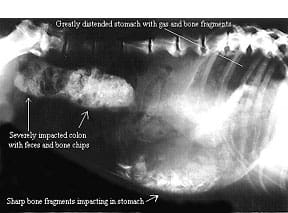
Dr. Dunn appreciates the benefits of feeding bones – but doesn’t approve of dogs crunching them up and eating them. Dunn says he has treated numerous dogs that were severely constipated from bone impactions, suffered intestinal obstructions that required surgery, or were near death from complications of bone perforation or obstruction. “I have removed bone fragments from the oral cavity, the esophagus, the stomach, intestine, and rectum.”
“I had a Chesapeake Bay Retriever who presented with persistent vomiting attempts and no appetite for three days. X-rays revealed an intestinal blockage due to a bone fragment. The owner was stunned because he said he had fed bones to this dog for years. He believed me when he saw the x-ray and when I showed him the bone fragment that was retrieved at surgery. This dog recovered well but really was near death due to a perforated intestine; luckily the owner brought him in just in time. I have seen dogs die from bone impactions in spite of attempts at surgery; every case is different,” says Dr. Dunn.
Balancing the Risks and Benefits of Feeding Bones
Even in the holistic veterinary community, opinions about the safety of feeding bones vary widely.
Larry A. Bernstein, VMD, of Natural Holistic Pet Care in North Miami Beach, Florida, gives bones to his pack of Cavalier King Charles Spaniels and recommends the BARF diet to his clients. “I don’t see feeding raw bones as a danger,” Dr. Bernstein says. “I think the danger comes with feeding cooked bones. The dog that gets the cooked chicken out of the garbage is in more potentially desperate straits than the dog that gets a bird outside. Uncooked bones are pretty soft, and animals are used to eating and digesting those. It’s cooking that causes the matrix to solidify so much that the bones splinter and become sharp.”
However, Dr. Susan Wynn believes that even the bones generally described as “safe” can injure a susceptible individual, and that there is no way to predict whether your dog will have a problem with bones. “A few dogs are going to have problems with bones, potentially fatal problems, and I can’t tell who they are,” she says.
Dr. Wynn also feels that both types of bones that are commonly fed to dogs – large marrow bones and raw poultry bones like chicken wings, thighs, necks, and backs – present separate problems, so she doesn’t recommend feeding any bones. “Some dogs deal with bones just fine. But some big dogs fracture teeth on the big beef bones, the marrow bones that we used to recommend because they are safe as far as splintering. Those big marrow bones don’t generally splinter and cause problems in the bowel. On the other hand, chicken and turkey bones are softer and will go down without causing fractures of the teeth, but those are the bones that can cause perforation of the bowel.”
Dr. Wynn has witnessed the wonders that chewing bones can contribute to the dog’s dental health, but doesn’t feel that this benefit is worth the risk. “There’s nothing like the BARF diet for teeth,” says Dr. Wynn, “but it’s the only advantage that the bones seem to offer above and beyond other raw diets that don’t include bones.” When you balance clean teeth with potential death from a perforated bowel, she says, there just have to be better ways to take care of the teeth.
Dr. Dunn notes that chewing on Nylabones, Kong toys, or rawhides will also clean teeth, but every item that dogs chew on has its own attendant problems. Anything that can be chewed up by a dog can cause obstructions if swallowed. Dr. Bernstein practiced conventional veterinary medicine for almost 20 years and remembers many instances of dogs getting into garbage and eating cooked chicken bones or other bones. Of those, he says, maybe 10 required surgery to remove obstructions. The chance that a raw bone will perforate the intestine is rare, he says.
But that’s the problem that Dr. Wynn sees with the BARF diet: Obstructions or peritonitis may be rare, but the conditions are impossible to predict.
If You Choose to Feed Bones
None of us want to do anything to hurt our dogs. And no one wants to imagine what it would be like to require the services of an emergency veterinarian because of a bone fed to the dog deliberately – especially a veterinarian who thinks the practice is crazy. These fears and the dangers listed above make the first step in deciding to feed bones to your dog the most difficult. In anticipation of the publication of this article, one woman called the WDJ office to admit that she had prayed for divine assistance the first few times she fed a bone to her Brittany Spaniel, but that, a year later, the dog has still never had a problem with its bone consumption!
We can’t speak for prayers, but there are a number of things you can do to make the practice of feeding bones as safe as it can be for your dog.
1. Grind the Bones
Dr. Dunn is a fan of incorporating meaty bones into a dog’s diet – as long as the bones aren’t fed to the dog whole. “Finely ground bone, such as that present in some manufactured raw pet foods, presents absolutely no hazard relative to potential obstruction or perforation,” he says. “And the finely ground particles of skeletal tissue – bone – provide a greater surface area for digestive acids to leach out the minerals from the bone particles.”
Some dog owners avoid concerns about bones by feeding commercial raw diets like those described by Dr. Dunn. Other dog owners use grinders to reduce bones to more manageable pieces.
2. Choose Appropriate Bones
The selection of bones depends on each owner’s experiences as well as the size of their dogs. Dee Dee Andersson, a Mastiff breeder from West Virginia, feeds her dogs pork necks and chicken leg and thigh bones at meals, and offers the dogs beef knuckle bones for chewing. “I think turkey bones are too hard, but others disagree,” she says. Chicken necks, backs and wings seem to be the bones of choice, followed by beef and lamb ribs.
Most people agree that some bones are unsafe for dogs to chew, especially long, hard leg bones from cattle. Dr. Bernstein says, “Be careful with the big long cattle bones; they can be lower in nutrition and harder for the dog to eat. Plus, as an animal gets older, who knows what it stores in its bones – lead or other toxins. I prefer bones from younger animals, such as lamb, chicken, and smaller beef bones. Chicken is probably best as long as it’s raw.”
While some people give dogs pork neck bones, Dr. Bernstein prefers to avoid them, saying that they tend to crumble too much.
Labrador breeder Janet Sampson also suggests using mostly chicken necks and backs, and avoids large or long bones. “I prefer more cartilage. Most lodging problems occur with leg or thigh bones,” she says.
Breeder Ruth Beetow of Springville, New York, has been feeding raw bones to her Norwich and West Highland White Terriers for three years with no incidents of broken teeth. She notes that whether a bone is safe partially depends on the size of the dog that’s eating it. “My small terriers can’t handle pork or beef leg bones, but a larger breed such as a Saint Bernard or Shepherd would be able to consume them.”
All are in agreement that cooked or dried bones are dangerous. Williams is careful not to give any dried-up bones, including dried-up knuckle bones.
3. Always Supervise Bone Chewing
Dogs must be under your supervision while they eat their bones, not only to prevent any choking episodes but also to avoid fights. It’s an even better idea to feed multiple dogs separately.
“I would never give bones in an enclosed area to more than one dog,” Andersson says. “You would invite a fight or the dog might gobble the bones too quickly to keep another dog from getting them. This invites choking. Each of my dogs gets their meaty bones exactly the way they were once served their kibble: in a crate, a separate room, or a spot in my kitchen where I am present while they eat. That way, they feel secure and are in no great rush to swallow in order to keep another dog from getting at their portion.”
Never hesitate to take your dog to the veterinarian if you suspect an obstruction or perforation. Signs of problems include extreme lethargy, vomiting, and diarrhea.
4. Take Your Time
Finally, and most importantly, start slowly if you decide to give bones. Corgi breeder Judy Williams, of Hayden, Idaho, recommends starting with chicken necks so dogs can get used to chewing them. Many experienced BARF feeders suggest limiting the amount of time a dog is allowed to gnaw on bones at first. Some dogs are so wild about their new treats that they attempt to swallow the bones whole; some dogs never learn the trick of drawing out the pleasurable chewing experience. Anything you can do to encourage the dog to take his time and chew will help his teeth.
In addition, make sure you build in some time to help transition your dog from manufactured food to a diet that includes bone. This will permit their digestive system to “ramp up” the production of more and stronger stomach acids to digest the bones.
Some experienced raw feeders find that it helps to give a dog who is new to bones some digestive enzymes (such as Prozyme or Florazyme) for the first few weeks as his system adjusts.
Other dogs may suffer diarrhea following their first few bones. Sometimes a loose stool is accompanied by a plethora of thick, clear mucous. As long as these conditions don’t persist beyond a few days, and the dog is exhibiting a normal appetite and plenty of energy, everythig is OK.
As Dr. Bernstein says, there’s something to be said for moderation. “Some people get into feeding raw diets with both feet forward. They tend to overdo things at first. It makes sense to do this with guidance, and it makes sense to do it gradually. You don’t have to go 100 percent in an hour.”
Dogs with severe periodontal disease may find it painful to chew on bones. Dr. Bernstein suggests getting the dog’s teeth in good shape before starting the dog on the BARF diet. A minority of dogs may have dental problems severe enough to preclude this sort of diet altogether. “I have seen some dogs whose teeth were so rotten – mainly toy breeds where the bone has decayed in the jaw – that the pressure of eating bones might create a problem,” Dr. Bernstein says. “I would be very cautious in what I gave to a much older dog with severe periodontal disease. I might mince or chop the bones or feed soft stuff like chicken wings.”
5. Examine the End Product
A dog’s stool may be hard and white after eating a lot of bones. That’s not unusual, but may indicate that the diet is overly high in bone. Constipation can also indicate a problem. Bone chips can cement together in the colon to form rocklike masses. If your seems to be in pain while passing feces, or fails to produce a stool for more than a day or two, a veterinary examination is in order.
The Do’s and Don’ts of Bone Feeding
Any time you’re dealing with raw meat or bones, proper handling is important. Freeze or refrigerate raw bones until you feed them. Clean the surfaces in your kitchen that the bones have touched, such as counters or cutting boards, and wash your hands after handling them. This is especially important if you’re handling poultry, which often carries salmonella bacteria. This bacteria is not generally harmful to dogs, but can sicken your family much more easily.
How the dog handles the bone after it’s given is not necessarily germ-free, of course. Lots of dogs bury bones, digging them up to snack on later. That’s not really a problem, Dr. Bernstein says. The bones decompose a little from the natural enzymes in them, but that probably just adds to the aroma and the dog’s enjoyment. “Billinghurst points out that if your dog is burying bones, you’re probably feeding him too much,” Dr. Bernstein says, “but I have one client with a Rottweiler that will only eat yesterday’s bones. He buries them, digs up the ones from the previous day, and eats them. I guess he likes the aging process. It’s something he’s done for years.”
Whatever you do, DON’T buy the dried, baked, “basted,” or “sterilized” bones available in stores and through catalogs. These impossibly hard products are not intended for consumption, and pose a great risk of damaging the dog’s teeth.
The Leap of Faith
Cutting back on vaccinations and feeding raw bones as part of a raw-foods diet require the two biggest leaps of faith for people who are exploring non-conventional care for their dogs. These acts can be amply rewarding – a shining, energetic but centered dog who is not just disease-free but also vibrantly healthy is the payoff.
But a person has to really “own” the decision to take these steps, to take responsibility for the results, positive, negative, and everything in between. Going into something like this half-heartedly is mistake. Rather, we suggest going slow, grinding the bone for as long as it takes you to feel really confident that your dog is going to be just fine – even if that’s forever – and letting your dog’s glowing good health convince you that you did the right thing.
To provide the best experiences, we use technologies like cookies to store and/or access device information. Consenting to these technologies will allow us to process data such as browsing behavior or unique IDs on this site. Not consenting or withdrawing consent, may adversely affect certain features and functions.
Functional
Always active
The technical storage or access is strictly necessary for the legitimate purpose of enabling the use of a specific service explicitly requested by the subscriber or user, or for the sole purpose of carrying out the transmission of a communication over an electronic communications network.
Preferences
The technical storage or access is necessary for the legitimate purpose of storing preferences that are not requested by the subscriber or user.
Statistics
The technical storage or access that is used exclusively for statistical purposes.The technical storage or access that is used exclusively for anonymous statistical purposes. Without a subpoena, voluntary compliance on the part of your Internet Service Provider, or additional records from a third party, information stored or retrieved for this purpose alone cannot usually be used to identify you.
Marketing
The technical storage or access is required to create user profiles to send advertising, or to track the user on a website or across several websites for similar marketing purposes.
This website uses cookies and other tracking technologies to offer you a better experience, personalize content and ads, and analyze our site traffic. Before proceeding, you agree to our Terms and that you’ve read our Privacy Policy. Update Settings
Functional
Always active
The technical storage or access is strictly necessary for the legitimate purpose of enabling the use of a specific service explicitly requested by the subscriber or user, or for the sole purpose of carrying out the transmission of a communication over an electronic communications network.
Preferences
The technical storage or access is necessary for the legitimate purpose of storing preferences that are not requested by the subscriber or user.
Statistics
The technical storage or access that is used exclusively for statistical purposes.The technical storage or access that is used exclusively for anonymous statistical purposes. Without a subpoena, voluntary compliance on the part of your Internet Service Provider, or additional records from a third party, information stored or retrieved for this purpose alone cannot usually be used to identify you.
Marketing
The technical storage or access is required to create user profiles to send advertising, or to track the user on a website or across several websites for similar marketing purposes.