Home Blog Page 319

Different Dog Breeds for Different Jobs

0

Generally, dogs are bred to do different jobs. Want to herd sheep? You get a Border Collie, not a Cocker Spaniel! Want to go sledding? You look for a Malamute, not a Borzoi! You get the idea.

However, not every representative of a specific breed of dog can fill the “job description” for that breed. So, even though you might wisely choose a German Shepherd when you go looking for a guard dog, it’s impossible to know for sure that the individual shepherd you choose is going to be a good guard dog.

This is exactly what happened with Bill and his dog, Freedom. Bill owned a printing business and wanted a dog who would guard the place at night, but be friendly to clients during the day. He had seen a classified ad in the local paper for German Shepherd puppies and decided that he would obtain one.

Without researching the breed and without doing any temperament tests, he simply bought the last remaining puppy. She was a little bit shy and wiry, not at all tough-looking, but she was available and the price was right. Freedom was seven months old when Bill bought her, which might explain some of her shyness. She had spent all of her short life with her mother, in the back yard of the breeder’s home. She had no frame of reference for a life beyond the boundaries of her yard.

Bill had Freedom for about a month when he called me. He had seen a flier for my teaching services and thought I might be able to help him attain his goals.

However, he hadn’t really read the fine print. I don’t offer my services for protection or attack dogs, nor do I prepare people for teaching their dogs to compete in obedience trials. I put an emphasis on gentle teaching, without any punishment methods. And I don’t allow choke chains, pinch collars, or shock collars in my school. Since this is rather different from the services of many trainers, I explained my techniques, terms, and conditions to Bill, who didn’t have a problem with any of my requirements.

On to the next step. I asked Bill to fill out a “Behavior Profile.” On this sheet, I ask owners to tell me about their dog’s history: how old the dog is, what kinds of training the dog has had thus far, what the dog’s health history has been, and most importantly, what kind of behavior the dog displays in different situations. I also ask them to describe how they respond to these behaviors. When he mailed the Profile back to me, he also included an extra sheet. This is what he had written:

1. Housebreak

2. Jumping on people

3. Chewing

4. Licking

5. Nipping

6. Come when called

7. Stay when told

8. Would like dog that can be free during business hours without endangering anyone or leaving the premises. Can bark and attack at night to deter vandals and burglars.

The next time we met, I had to explain to Bill that I had a few problems with helping him with his goals for his dog. First, of course, I wouldn’t help him train Freedom to attack. Even if I did prepare dogs for these careers, I would never recommend keeping an attack-trained dog so exposed to the general public. If a dog bites someone, even a burglar, you can be brought to court on a dog bite charge. Also, protection dogs must return to a training facility every 4-6 weeks for follow-up and evaluation to ensure their predictability, reliability, and safety.

However, Bill indicated he would be happy enough if the dog just barked to ward off intruders at night – something that would be easy enough to accomplish, and within my boundaries. But he added that Freedom had not barked once since he had her and she often cowered from strangers. OOPS! Not a good sign for a dog who is supposed to guard a business! I decided to run a temperament test and see what would happen. Normally these tests are done on very young puppies but they can sometimes be of help to determine what is happening with an older dog.

Canine Temperament Tests

I used some of the temperament tests from William Campbell’s Behavior Problems In Dogs, a classic dog teaching manual. (A few of these tests are appropriate only for puppies, so I just did the ones that could be conducted with adult dogs.)

First, I placed Freedom in the middle of the teaching center. Then I stepped away, knelt down and clapped my hands to attract her to me. Freedom did not come. She just sat there looking quite uncomfortable. According to Campbell’s criteria, this would indicate a dog who was introverted and shy. Next, I stood next to her making sure that she saw me. Then I walked away in a normal fashion to see if she would follow me. She did not. I tried again, this time I got her interested in a tidbit before I walked away. She did follow me but hesitantly and with her tail tucked. This, too, would indicate a dog who was introverted and submissive.

I moved on to a social dominance test. During this one, I crouched down and stroked her from the top of her head, along her neck and down her back. She proceeded to lie down, looking very uncomfortable. Then she relaxed slightly and began to lick at my hand. This, especially, indicates submissiveness – not a good trait for a self-confident guard dog!

I also did a startle test. I took my keys and tossed them loudly on the floor. Freedom startled, moved away and did not want anything to do with the keys. Again, this fearful reaction is not what you’d hope to see in a guard dog. A better candidate for the job might startle, but would quickly move to investigate the keys, perhaps barking as he went up to them and sniffed them. Using Campbell’s methodology, these reactions would indicate that the dog “will probably not socialize quickly and may be difficult to train without special techniques,” and “will tend to shy away under stress. These types usually do not interact well with small children.”

It was quite obvious to me that Freedom was not qualified to do the job she had been purchased to do. However, Bill was convinced that his dog should and could be a guard dog. After all, she was a German Shepherd, and that was why he got her!

Multi-pronged approach

I told Bill that we could try some things but I wouldn’t guarantee that Freedom would ever be the dog he envisioned. The first thing I wanted them to do was change her from the grocery store food he was feeding her to a fresh food diet. Improved nutrition would undoubtedly make Freedom feel stronger and healthier, more comfortable with “being in her skin.” He immediately informed me that would be impossible, because Freedom lived at the business and was never taken home.

I suggested that in the morning they could feed her a bowl of high quality, healthy dog food such as Wysong or Pet Guard. Then I asked him if he or any of his employees ever brought their lunch to work? He said “Of course!” I asked whether they could take turns sharing their lunches with Freedom. That way she would get some fresh foods and there would be no extra work for anyone. Bill said he would try that.

Next, we would have to deal with some non-invasive, learn-to-earn teaching. Bill had an employee who had taken a dog training class in the park. There, he had learned how to use a choke chain and how to hit, knee, and scold his dog. He was trying what he had learned on Freedom. This was not working and probably could never work with a dog like Freedom.

Instead, I showed him how to use the click/treat technique. First, we taught Freedom that the sound of the click means she gets a delicious treat. Fortunately, Freedom loved the hamburger treats I was using. She quickly caught on that at the sound of the click, she got the treat.

Next I wanted to show him how to teach Sit with the clicker. At this point he proudly told me that she already knew Sit. I asked him to demonstrate. Bill stood up, quietly said Sit! and nothing happened. Next he said Sit!! a bit louder and nothing happened. Then he shouted Sit!! and nothing happened. So then he pulled up on her collar and pushed down on her butt. At this point, he proudly looked at me as if he had proved that she knew Sit.

I then stood up and showed him how I would teach his dog the word without using the word. I simply took a hamburger treat, held it by Freedom’s nose, then moved the treat up and back. This raised her head and caused her butt to fall to the floor. At that instant I clicked and gave her the treat. I repeated this several times until she was sitting the instant my hand moved up.

Then I added the word. Before I moved my hand I said Sit. Then I moved my hand, clicked when she sat, and, as I gave her the treat, I said GOOD SIT! I repeated this several times until she was sitting as I was saying Sit. No fuss, no muss, no choking, no pushing. She now truly knew what Sit meant. Bill was pretty impressed with this display and thought he might like to continue the process. I then showed him how to teach Down and Walk using the same concepts. I sent him on his way with some handouts and let him know that if he had any problems or questions he could call me. We set up an appointment for the following week.

Sometimes the “Right” Dog for the Job Isn’t a Dog At All

Since I had not heard from Bill, I had assumed that his week had gone well and was expecting him to show me a dog who could sit, down and walk. Boy, was I wrong! Bill said that he had been too busy to do any teaching during that week and that Freedom had become a real problem because she was getting bored and wanted attention.

Apparently, the good experience she had at our last session was something that she wanted more of because she came trotting into the center and came right up to me and sat. Freedom wanted to learn and wanted to please but no one was taking the time to teach her about living with humans.

I tried to explain to Bill that unless someone found the time to work with Freedom, there would be no change in her behavior. Nothing changes in your relationship with a dog until the human changes first! Dogs take their cues from us. As long as the cues stay the same, the response to the cue also stays the same.

We reviewed what we had gone over the previous week and again I told him to call me if there were any problems. The following week, it was the same story only this time, Freedom seemed to want nothing to do with Bill. She just sat next to me as if I were her person, not Bill.

Bill said that having to teach a dog and run a business was just too much work. Couldn’t someone just train the dog for him and send him a perfect watch dog? I told him that it’s never a good idea to send a dog away for training. You never know what they will do to your dog. They will develop a leader relationship with the dog that may not necessarily transfer to you. Any problems that arise will always be made to look like it’s your fault because the trainer never has any problem working your dog. It will cost a lot of money, the dog could be ruined in the process and you will never have the control you want over your dog.

My holistic approach to dealing with dogs and behaviors is to consider the entire picture: the dog, people, environment, lifestyle, diet, health, desires, abilities, etc. In this case the situation was clearly not good for a dog – especially a dog like Freedom, who was expected to act as a deterrent and a guard dog, but who was actually a sweet dog with a yen for a human friend.

This time I told Bill that maybe he had made a mistake getting a dog for this purpose – and that he had definitely made a mistake getting this particular dog. It might be more productive and efficient, I told him, to install an alarm system and find a proper, loving home for Freedom.

Bill said that one of his employees had fallen in love with Freedom and that she seemed to like the woman. “Maybe,” he thought out loud, “I could give Freedom to this person and get a different dog to act as a guard dog.” Obviously, Bill was not listening! I told him another dog would still require work, time, and commitment. He had already proven to me, as well as to Freedom and hopefully to himself, that he had none of those things to offer a dog. I gave him the number of the alarm company I used for my business and suggested he call the company for an estimate.

A few weeks later, I got a call from Bill. He had taken my advice. The alarm system had been installed at his business and had already paid for itself. Someone had tried to break in and the alarm went off, scaring them away; nothing was damaged or stolen.

And, best of all (from my perspective), Freedom was in a wonderful home. She was happy and loved, living with a woman who adored her. She was feeding Freedom fresh foods and taking the dog everywhere with her. Freedom was responding to her love, food, and teaching, and was relaxed and comfortable with her new person and her new life.

Author Linda Goodman operates PORGIE Teaching Center in Riverside, CA. 

The Importance of Blood Tests for Your Dog

1

Your six-month-old puppy is scheduled to be spayed tomorrow. When you call to confirm your appointment, and review the veterinarian’s estimate of charges with the receptionist, you learn that you will be charged $60 for a blood panel. Is this necessary?

• Your five-year-old Golden Retriever seems sick. You’re observing him for any evidence of disease or injury. And yet, all you can really find is that Ralph seems “not himself.” A friend urges you to have Ralph’s blood tested . . . What for?

• Your Poodle is eight years old. She has bad breath and tartar-encrusted teeth, so you make plans to take her to a veterinarian to have her teeth cleaned. However, the doctor demands to perform a blood test before he will anesthetize her for a dental scaling. What’s that got to do with anything?

• At a recent health exam, your veterinarian asks about your 12-year-old Pointer’s activity level. You explain that the dog has begun to decline to join you on your daily jog, and chalk it up to the onset of his “old age.” But your veterinarian is alarmed, and asks to conduct blood tests. Isn’t it normal for an old dog to want some rest?

A visit to a veterinarian is imminent for each animal, even though the justification for each individual’s blood test is different. In each of the cases we’ve described, blood testing will reveal a wealth of useful information about the dog’s state of health. There are cases, however, where this information is really not needed. How can you know when blood tests will and will not repay your investment with information that is critical for tailoring a treatment plan for your dog?

You can answer the question for yourself, once you understand what blood tests can and can’t do.

What is a Blood Test?

Blood is composed of different types of cells, and the status and percentage of type of cell present in the mixture communicates important facts. There are a variety of ways to examine blood; each examination method reveals specific information. A morphologic inspection consists of looking at the shape of the blood cells under a microscope. A complete blood count (CBC) is just what it sounds like – an actual count of the various types of red blood cells (RBCs), white blood cells (WBCs), and platelets present in a specific volume of blood. The goal of measuring blood by means of a hematocrit (HCT) or packed cell volume (PCV) is to determine the amount of RBCs.

A chemistry profile identifies and quantifies other agents in the blood, including enzymes, glucose, proteins, electrolytes, cholesterol, and other substances produced by the internal organs. A “chem screen,” as it is often called, can tell a trained observer how well these organs are functioning. For example, a lack of albumin, which is produced by the liver, can alert you to decreased liver function; a high amount of amylase, which is produced by the pancreas, can indicate pancreatic and/or kidney disease. Typically, 28 different chemical values are yielded from each blood sample, and, studied together, these tests can help identify the location and severity of disease in the body.

Blood can be regarded as a rich river of information about the body. While it is possible that a dog can have health problems without any detectable abnormalities in his blood, these cases are the exceptions, rather than the norm.

When Should You Get Your Dog’s Blood Tested?

The cases described at the beginning of this article are good examples of the most beneficial opportunities to glean information about a dog’s health.

A young dog, at the veterinarian’s office for a spay or neuter surgery, should not be expected to have any health problems that would preclude anesthesia or surgery. However, veterinarians will tell you that there is one great reason to authorize the additional expense of a blood test at this time: the future. Your dog’s vigorous youth is the optimum time to establish a “baseline,” that is, a chemical picture of how she “looks” when she’s healthy. Results of these tests can be compared to those from tests taken in times of trouble to establish the extent of the deviations from her “normal.” Some veterinarians use this same rationale to request that you allow annual blood tests on your apparently healthy animal. This is undeniably a great opportunity to detect subtle signs of disease before your dog has an opportunity to display symptoms; early treatment of any disease helps prevent permanent damage.

On the other hand, if your young dog is bright-eyed, glossy-coated, and energetic, the tests may never detect anything amiss. Today’s veterinarians are taught to be assertive in encouraging owners to “make an investment in their pet’s health,” but the truth is, authorizing tests at this time in your dog’s life is entirely up to your own conscience and pocketbook. The possibility that you might discover early signs of disease is a compelling concept, but it shouldn’t be considered mandatory by any means. After all, not many of us have annual blood ourselves.

A Dog Who is “Not Quite Right”

Blood tests are very valuable in cases where a dog isn’t displaying any overt signs of disease or injury, but still doesn’t seem quite like himself. A veterinarian attending to such a dog, like the Golden Retriever mentioned at the beginning of the article, would first conduct a thorough physical exam and take a complete history. However, there are numerous cases where a blood test and only a blood test would be able to reveal the source of his subtle malaise. For example, standard blood tests might show that his red blood cells were smaller than usual, his hemoglobin levels were low, and that he had an iron deficiency. These facts would suggest that the dog may have been losing small amounts of blood through his stools over a period of time. A radiograph of his digestive tract would be indicated, and the pictures could reveal an intestinal tumor that was responsible for the blood loss.

Chem screens can also detect – if not always identify – complex problems with the endocrine system. The endocrine system is responsible for making gradual responses to environmental and internal stimuli, which are mediated by chemical substances (hormones) secreted by endocrine glands into the blood.

An experienced veterinary interpreter of the test results can read the hormonal responses that have been dropped into the blood system like clues to a crime. Thyroid dysfunction is the most frequently recognized endocrine disorder of the dog, followed by adrenal function disorders, Addison’s and Cushing’s syndromes (hypo- and hyper-adrenocorticism) which are very common in adult and aging dogs. Though these diseases may be detected early through routine periodic screenings and managed so as to improve quality of and prolong life, they are difficult to diagnose accurately without appropriate laboratory tests.

“Today, viral and bacterial diseases aren’t the main cause of death for many dogs; as with humans, dogs are living longer due to better disease control and good nutrition,” comments Dr. Fred Metzger, a veterinarian from State College, Pennsylvania. “My clinical experience demonstrates the most common diseases as renal disease, then diabetes, and third, either hypothyroidism or Cushing’s disease. Fortunately, if a client will avail himself of them, there are many clues blood tests can give us when these diseases are in progress, especially for geriatric animals.”

Other conditions commonly detected by blood work include hypercalcemia (too much blood calcium which could indicate possible tumor growth), and hypoglycemia (low blood sugar indicating diabetes). “Hypothyroidism is a common problem in aging dogs, so, starting at age seven, thyroid panels should be included in all dogs’ blood panels,” says Dr. Metzger. “Electrolytes tests are important too. For example, Addison’s syndrome (hypoadrenocortism) is frequently associated with severe hyponatremia (low sodium), but is frequently misdiagnosed by those who don’t run electrolyte panels.”

Pre-Surgical Blood Tests

The middle-aged Poodle in need of dental work is another classic candidate for blood tests. Anesthetic drugs are processed by the liver and kidneys, which also remove the drugs from the body in a more or less predictable rate. However, if the dog’s liver and/or kidney function are impaired, normal usage of anesthetic drugs can have deadly consequences for the dog.

Just as with people, as your dog ages, her organs gradually become less efficient. Holistic veterinarians speculate that the plethora of toxins that modern dogs are exposed to (from flea-killing pesticides to preservatives in commercial dog foods) speeds up the degradation of these organs, rendering them ill-prepared for the major challenge of removing anesthetic from the bloodstream.

Results of a pre-surgical blood test, specifically focused on the values that reveal the efficiency of the liver and kidney, can help the veterinarian select the safest dose and type of anesthetic drug for your dog.

Alternatively, in case of tests that reveal very poor organ function, the veterinarian may want to discuss the risks and benefits of the surgery with you, or may elect not to risk the surgery at all.

It’s impossible to say exactly when your dog’s organs are likely to start showing signs of compromised function. After all, what ages are considered “middle-aged” and “geriatric” differ widely from breed to breed.

Again, it’s ultimately up to you to decide, with input from your veterinarian. Are there any other reasons to believe your dog’s vital organs are not as vigorous as they should be? Any dog with chronic health problems is a good candidate for a pre-surgical blood test. But if your middle-aged dog is energetic, fit, and happy, you’d probably be safe foregoing the test. Do young, healthy animals need a pre-surgical blood test? This is where opinions vary wildly. Emotion and economics are what usually inform an owner’s decision. Since it IS possible, but highly uncommon, for a young dog to have as-yet undetected liver or kidney problems that could complicate anesthesia, a breeder with a valuable or rare breeding animal may consider the extra expense as “insurance.”

A veterinarian’s personality and style of practice are what generally shape his or her opinion of this matter. Aggressive proponents of the tests MAY be opportunistic, looking for a way to increase billable services, but more likely, they are medical conservatives, trying to further reduce the chances that the animal will suffer complications on their surgical table. Holistic veterinarian Dr. Jean Hofve, of Denver, Colorado, usually skips pre-surgical blood tests for apparently healthy young and middle-aged animals. “The most widely used anesthetic today, isoflurene, is quick-acting and quick to be metabolized out of the system. It is considered very safe. Older dogs should be watched more carefully for blood pressure changes while under the anesthetic, but administration of IV fluids would take care of potential problems.”

Dr. Metzger is more conservative. “This is a good time to get base-line information on the dog for future use, as well as to check liver and kidney function. The client learns something, and we have information to use and compare to if there is a medical event someday down the line,” he says. Veterinarian and clinical pathologist Joe Zinkel, of the University of California at Davis School of Veterinary Medicine, has adopted a middle-of-the-road approach. “For a young healthy animal in for elective surgery, such as spay, neuter, dew claw removal, or dental, I’d run a few, minimal tests – say, the packed cell volume to rule out anemia, and with the fluid left from the sample, a dipstick Blood Urea Nitrogen (AZO test) for a quick kidney test. With good results from these two simple tests, the practitioner can be pretty much assured that the animal is in overall good health, a good candidate for a surgical procedure.”

Blood Tests for Geriatric Dogs

As for the 12-year-old Pointer who has decided to give up jogging? Most veterinarians would advise including a blood test in any elderly dog’s annual health examination. And a dog who has begun to “show his age” with stiffness, reluctance to exercise, or depression may actually be manifesting signs of disease, rather than “age.”

Once older dogs have their health problems diagnosed and treated, their owners are often surprised to discover them return to a level of activity they haven’t seen for years.

Keeping Perspective

Aside from the cost, there is perhaps only one downside of running blood tests: the possibility that your dog’s “normal” values are not normal for the rest of the dog population, tempting a thorough veterinarian to order further diagnostic tests. Dr. Zinkel explains: “From time to time you’ll see perfectly healthy animals that may have one value out of the ballpark, giving an odd value that you may chase down to no avail.”

Dr. Zinkel estimates that as many as one out of every 20 animals may have blood values that are abnormal, without having any health problems. While he appreciates how quickly the labs are now able to return critical information back to veterinarians’ offices, he says it’s important to view the results in context. “The value of blood tests is inestimable, but the veterinarian’s physical exam, history, and other observations will always be indispensable,” he says.

Training a Dog to Stay Using Cues

Have you ever watched the impressive Open Obedience competition at a dog show? If so, you may have been impressed by the long Sits and Downs, where all of the dogs do a group Sit-Stay for three minutes with the owners out of sight behind a barrier or in another room. They also demonstrate a Down-Stay for a full five minutes with the owners nowhere to be seen.

If you struggle to make your dog stay in the car when you open the door, you may find those show ring achievements downright awe-inspiring. As you should! It is awesome to see a dozen or more dogs sitting shoulder to shoulder amidst all the distractions of a dog show, stoically awaiting their owners’ return, and it takes a serious commitment to training to accomplish this feat.

Fortunately, teaching your dog to stop leaping out of open car doors, running out the front door when visitors open it, or getting too far ahead of you on an off-leash trail, are attainable goals for any dog owner who is willing to make a commitment of a few minutes a day to the training project.

training dog to stay

However, in each of the latter situations, where many people might ask their dogs to “Stay,” I would use the cue “Wait,” saving the “Stay” cue for different situations. To my dogs, “Wait” means “Pause,” and “Stay” means “Don’t move from the position you’re in until I tell you it’s time to get up.” If I’m getting out of my car, I use the “Wait” cue, since what I really mean is “Don’t jump out of the car,” not “Freeze and don’t move until I return.”

If I use the word “Stay” in this scenario, I damage my dog’s understanding of the Stay cue and behavior. Dogs can only learn one meaning for a particular cue. Humans can understand that the word “down” might mean lie down on the ground, get off the sofa, don’t jump on me, or go down the stairs. Dogs can’t make those distinctions.

Most owners actually mean “Wait” when they say “Stay.” Think about it. When you leave your dog home while you go to work, do you say “Stay!” as you walk out the door? You don’t really want him to sit frozen by the door all day, do you? You are really asking him to pause for a moment or two, not “Sit right there until I return.”

You can, of course, continue to use “Stay” to mean “Wait” and use a different word, like “Freeze,” for his formal Stay. Whichever cue you choose, remember to be consistent and use each cue for its specific intended behvavior. Otherwise you risk muddling both commands in the dog’s mind.

Teaching the “Wait”
I have my dogs Wait every time they go in and out a door to the outside world. This gives me a great opportunity to remind them to defer to me at least a half-dozen times a day, thereby reinforcing their good manners. It’s also a great safety reminder. An open door is not an open invitation to go charging out into the big wide world.

One of the easiest ways to teach the Wait behavior is by using a door, preferably a door that your dog wants to go through, and one that opens to a safe, enclosed yard, garage, or other room. Most dogs are eager to go outside. It usually means a romp in the yard, a walk on the leash, or a ride in the car. You can use this to your advantage by teaching your dog that it’s calm behavior – sitting at the door – not pushy behavior, that gets the door to open.

Put your dog on a leash, stash a healthy supply of treats in your pocket, and have your reward marker handy, such as a Click! or the word “Yes!” (For more information about using a reward marker in training, see “Tricks for Clicks,” May 2000.) Walk up to the door and ask your dog to sit. Click! and treat. Move your hand halfway to the doorknob. If he’s still sitting, Click!, treat, and tell him he’s a good boy.

If, however, he gets up when you move your hand halfway to the door, say “Oops!” and have him sit again, and reduce the challenge. Move your hand four inches toward the doorknob. If he’s still sitting, Click! and treat. If he gets up when you move, try moving just two inches. When you find the increment of motion that doesn’t cause him to get up, work at that distance for several repetitions, clicking and treating each time. Then try moving your hand a little farther. Do several repetitions at each increment until you can reach all the way to the door knob without your dog getting to his feet. Don’t forget to praise him in addition to the clicks and treats!

Don’t be tempted to jump too far ahead, even if your dog is holding the Sit; you never know when you’ll hit upon the part of the door opening process that will trigger a “Oh boy! I get to rush out!” response. Continue the incremental approach. Jiggle the knob. Click! and treat for sitting. If he gets up, say “Oops!” have him sit and repeat the step, but do a smaller jiggle. When you find the level of knob-jiggle where your dog can succeed (where he stays sitting), do several repetitions of that, clicking and treating for each repetition. Next you get to open the door – but only a crack. Click! and treat him for staying in the sit position. If he gets up, say “Oops!,” close the door and try again, with a smaller crack this time.

training dog to stay

By closing the door when he makes a mistake and gets up, you are using negative punishment – making the good thing go away. The more eager he is to go out, the quicker he will realize that the way to get the door to open is to keep sitting. Once he has learned the Wait you can fade the use of the Click! and treat. Since what he really wants is to go through the door, you can sometimes give him a “life reward” by telling him to go out.

Some dogs will “get it” in just one session. Others will need to practice over a period of several days or more, depending on their energy level and attention span – and yours! Any time you feel you or your dog getting frustrated in a training session, take a break after doing one easy, fun behavior that you both like so you end the session on a happy note.

Adding the cue
In a positive training program, you add the verbal cue for a new behavior only after you know your dog will do the behavior, not before. This is because you want him to associate the word with the right response, not the wrong one. Once your dog will remain sitting as you open the door, you can add the Wait cue. In essence, you are telling him that the behavior he is now doing is called Wait.

Other applications for Wait
When your dog understands Wait in one situation, you can extend it to other situations. Practice in the car, so he also understands that an open car door is not an invitation to jump out. You’ll be amazed at how nice it is to have a moment or two to pocket your keys, or even tie your shoes before your dog jumps out of the car! You’ll also appreciate being able to use Wait to ask your dog to pause if he is wandering too far ahead of you when you are on an off-leash outing, or about to follow the wrong person out the gate of the dog park.

How “Stay” is different
I teach my dogs the formal Stay behavior for those instances when I absolutely need them to remain frozen in their places. For example, when I walk down my driveway in the morning to get the newspaper, my dogs all accompany me, but only to a point near the end of the driveway. I don’t want them going near the main road, so I tell them all “Down,” and then “Stay.” For their own safety, they must remain where they are, not follow me across the road.

Another useful application of Stay is when you are with your dog off-leash and you see something approaching that you absolutely do not want your dog to chase or go near. Say you are washing your car in your driveway, and your dog is lying on your front porch when you see a boy on a skateboard coming up the sidewalk. Having a dog that will Stay reliably on cue in this situation is a real blessing. I also use Stay when a delivery person comes to the door, so I can sign the forms and accept a package without having to worry about any of the dogs slipping out or scaring the bearer of gifts away!

I should mention that Stay is a much more challenging exercise than Wait. It takes more focus and concentration for both you and your dog. When teaching Stay, you have a greater responsibility; once you tell your dog to stay, you can’t forget and go off to start dinner or work on the car.

Consider this
Until the advent of positive dog training, Stay was taught by punishing the dog, sometimes severely, for moving out of position. While many dogs did learn reliable Stays by this method, they also often learned to associate the return of their owners with fear and pain. Fortunately, there are several ways to teach a positive Stay without the use of force and pain.

Before you begin, it’s important to recognize that Stay has three elements of difficulty: duration, distraction, and distance. Duration is the length of time the dog remains in place, distraction is the reliability of the dog’s Stay in the presence of distractions, and distance is the distance you can move away from the dog. It is critically important to work on the length of time and distractions before you work on distance. If your dog won’t do a reliable Stay with distractions when you are standing in front of him, it is wholly unreasonable to expect him to do it when you are across the room.

The most common mistake people make in teaching Stay is advancing too quickly. If you ask your dog for too much, he’s likely to make a mistake, and you may be sorely tempted to correct him for “breaking” the Stay. Remember: You want him to succeed so you can reward him for doing the right thing. You can use negative punishment here if necessary (dog’s behavior makes a good thing go away), but it’s more effective to create opportunities to Click! and treat.

Positive Stays
Start by asking your dog to Sit. Tell him he’s a good dog, then hold up a treat. After one second, feed him the treat (calmly, so he doesn’t jump up), then use a release word and encourage him to get up (I’ll talk about release words in just a moment). You can praise him for getting up, but don’t Click! the release, since it’s the Stay behavior that you want to reinforce and reward. When he is Staying for several seconds at a time you can add the verbal Stay cue in a pleasant tone of voice while he is staying. Owners tend to want to say “Stay!” harshly, as an order. Remember that you aren’t trying to intimidate your dog into Staying, you are using the word as a cue for a behavior.

Cue for release
The release word is a cue that means “Get up now, the Stay is over.” Lots of people use the word “Okay,” and the only problem is that it’s a word used frequently in conversation. I do use “Okay” as my release word, and this means that I have to be careful when I’m around my dogs. If my dogs are on a down-stay at the beach and I turn to my husband and say, “Okay, let’s eat the picnic lunch now,” whoops … there go our dogs!

I’ve heard people use a variety of other cues for the release, including “All done,” “You’re free,” “Break time,” “Release,” and “At ease.” Use just about any word or phrase you want; your words mean nothing to your dog until you give them meaning.

Gradually increase difficulty
When your dog is staying for one second in the Sit-Stay, extend the time to 2 seconds. Then increase the stay to 4, then 7 seconds. Then 10. If you’re not good at estimating time by counting in your head, you can use a stop-watch or have someone else count for you. Don’t use a timer – the dog will start releasing himself when he hears the “Ding!”

As the Stays get longer you can Click! and reward during the Stay, then remind him not to move, with another verbal cue, since he may think the Click! ends the Stay. Reward with treats several times during the Stay, then release him before he decides to get up on his own. Remember, you want him to succeed.

If your dog does get up before you release him, whisk the treat behind your back (This is the negative punishment part. His behavior – getting up – makes the good thing – the treat – go away.) When he sits again, the treat comes back out – and he gets it after he stays again, for at least a second at first, then longer as he gets better at Stay. (This is the positive reinforcement part: His behavior – sitting and staying – makes a good thing – the treat – happen.)

As the Stays get longer, you can also start “fading” the treat so you don’t have to hold it in front of his nose to get him to stay. Over a series of stay repetitions, gradually relax your arm until the treat-hand is at your side. During this process you can still whisk it away if he gets up. As he gets more confident about the Stay, you can start asking for the behavior without a treat in your hand at all. Click! when he stays for you, and get the treat out of your pocket or off a table or shelf. He will soon Stay without the visible treat as the incentive.

The process for Down-Stay is exactly the same, except your dog is in the Down position instead of the Sit position.

Adding distractions
Once your dog will Stay for 10-20 seconds you are ready to add small distractions. Ask him to Stay and take one small step to the side, then step in front of him again. Click!, reward, and release. Do another Stay and take a hop on one foot. Click!, reward, release. Gradually build the distractions until your dog will Stay as you hop up and down without stopping, do jumping jacks, clap your hands, sit or lie down on the ground in front of him, spin in circles, bounce a ball, have someone go by on a skateboard – or whatever other creative distractions you can invent.

Gradually is the keyword here. You want your dog to succeed. If you go directly from one hop to the skateboard you’ll probably lose him. Gradually is also subjective, depending on your dog. Bailey the Bloodhound may progress to a 20-second Stay in the first session, while excellence for Chili Pepper the Chihuahua may be 3 seconds. Some dogs will achieve a solid Stay at a distance, with distractions, within a few weeks; others will take longer.

Adding distance
When your dog is doing 20- to 30-second stays with distractions you are ready to start working on distance. Now you should lower your expectations for the other two elements: shorten the time and remove the distractions.

Ask your dog to Stay and take one step away. Click!, return, reward, and release. Gradually increase the distance, remembering that you want to add distance slowly so your dog will succeed.

It’s important to always return to your dog to reward and release him. You want the Stay to be rock-solid. If you start calling your dog to you from the Stay, he may start breaking the Stay in anticipation of the joy of running to you – and the reward that ends the Stay. If he thinks the Stay is never over until you return to him, the behavior will become reliable. Only in higher training levels do you occasionally call him from a Stay. Even then, you will want to return and release 10 times for every one time you call him to you.

Final step: combine elements
Once your dog will Stay at a distance, you can combine all of the elements. Again, lower the bar by adding distractions when you are one step, then three steps, then five steps away from your dog, always returning to him to reward and release.

At this point you can even start leaving the room while he is on a Stay, briefly at first. Take one step out, step back in, return, reward, and release. Gradually increase the length of time you stay out of sight. You can set up a mirror in the doorway if you want to keep an eye on your dog, always remembering that you want to return before he moves out of his Stay position. Again, you want him to succeed. If he makes several mistakes in a row and you return each time to try the stay again he is learning that the “mistake” of breaking the Stay makes you return to the room. Any time he starts making mistakes, return to an easier version of the exercise and get several successes in a row before you raise the bar again.

Whether your goal is to get your dog to park himself on a down-stay while you cross the street to fetch your paper, or you have visions of you and your dog earning a perfect 200 score together in the Obedience ring, you can get there with a positive stay – no harsh words, no collar corrections, and no damage to the relationship of trust and respect that you and your dog value so highly.

-By Pat Miller


Buying a Naturally Reared Puppy

Read any good puppy contracts lately? Probably not. Health and placement guarantees, spay and neuter requirements, limited registration and other legal details are important, but they can (yawn) put you right to sleep. Well, that used to be true, but today some breeders are writing contracts that leave people rubbing their eyes in disbelief because they contradict everything mainstream veterinary medicine recommends. These contracts require puppy buyers to feed an all-raw diet, avoid routine vaccinations, and use holistic therapies instead of conventional veterinary care.

Although she no longer has time to breed the Basset Hounds that remain her first love, Marina Zacharias of Jacksonville, Oregon, is well-positioned to observe this growing trend. A disciple of Juliette de Bairacli Levy, one of the earliest advocates for an all-natural diet for dogs and cats, Zacharias’ Natural Rearing philosophy has shaped the lives of dogs, cats, and other animals around the world for half a century. She publishes a bi-monthly newsletter as well as an annual directory of breeders who rely on nutrition and natural therapies to prevent and treat health problems in dogs and cats.

“Every responsible breeder wants the best for every puppy,” she says. “We all want our dogs to be healthy, intelligent, happy, and loved. A good breeder wants to know what kind of person you are, where you live, what kind of lifestyle you have, and what kind of match you would make with different puppies. What has changed in the minds of many breeders is the realization that commercial pet food, routine vaccinations, flea chemicals and symptom-suppressing drugs cause more problems than they solve.”

A Healthy Diet is the Most Common Requirement of Holistic Breeders

Zacharias saw the difference a natural diet makes when she bought her first Basset 13 years ago. “He had been raised on a premium-quality food for the first five and a half months of his life,” she says. “I switched him over to a raw-food diet, which he had a much easier time digesting, and he grew very well. When he was 18 months old, I saw some of his littermates, and the contrast was amazing. He had been one of the smaller puppies in the litter, and now he was the largest. His coat, bone density, posture, eyes, disposition, and alertness were superior.

“It works the other way around, too,” she says. “I know breeders who raised their puppies on raw food and sent them to show homes where their diets were changed. When they saw the pups in show-handling class a few weeks later, their coat quality and bone density had deteriorated and they didn’t look as well as they used to. It’s not that a raw-food diet pushes growth, which would be unhealthy, but it meets the animal’s genetic potential by providing all the nutrients the body needs to grow properly.”

Breeders who feed a natural diet do more than strengthen individual dogs; they improve their entire lines. Barbara Werner, who raises Golden Retrievers in New Jersey, produced a second generation of raw-food puppies last spring. “This was my first litter from a dog who has been on raw food all her life, which is four years, and the difference was dramatic,” she says. “She showed none of the signs of nutritional stress that are common in pregnancy. Her coat stayed gorgeous, her labor was short, and she produced nine strong, lively pups that landed on their feet. This is a breed so prone to autoimmune disorders and cancer that one veterinarian told me a three-year-old Golden is now considered middle-aged. I find this attitude unacceptable. The puppies’ 11-year-old grandfather is still so vibrant, he wins show ribbons.”

Dog Ownership Contracts as Education Tools

Raw-food diets are intimidating to the uninitiated not because they are difficult to prepare but because they are unfamiliar. “Don’t forget that we have all been brainwashed to believe that dogs should eat processed dog food and that raw bones are bad,” says Christine Swingle, who raises West Highland White Terriers in Connecticut. “I have been feeding a raw-food diet for three years, and more recently, I gathered up the courage to feed raw chicken necks and wings. The Westies love them. Gee, it is amazing, but they do digest raw meaty bones despite what I was led to believe!”

To help her clients make the transition to raw foods, Swingle gives them books, articles and instructions weeks before the pups are ready to go. “I want my puppies’ guardians to appreciate the commitment they are making in sufficient time to get used to the idea of feeding raw bones and raw food,” she explains. “My health guarantee depends on feeding a ‘biologically appropriate raw food’ diet for life, the use of homeopathic nosodes, and the disuse of toxic chemicals such as found in flea and tick products.”

Kymythy Schultze, an animal health instructor, has raised Newfoundlands for 20 years and recently moved from Southern California to Washington State. “Natural health is today’s hot topic,” she says, “but I like to remind people that when we adopt a raw diet and use natural therapies, we’re not doing anything new. We’re doing something old-fashioned.

“When I made the transition 10 years ago, I met Newfie breeders who were still feeding their dogs the way everyone did before commercial pet foods were developed,” she continues. “These dogs ate the same raw meat, raw bones, and table scraps that people have been feeding their dogs for thousands of years, and they were strong and healthy, with calm dispositions, terrific coats, resistance to fleas, and a total absence of doggy odors.”

Kathy Herman realized the benefits of raw food when she visited Labrador Retriever breeders in England and met supremely healthy dogs – her first time seeing such healthy dogs, she later realized. On a diet of raw bones, raw meat, raw goat milk, vegetable peelings, other table scraps and cereal-based kibble, these minimally vaccinated dogs suffered from none of the problems common to American Labs. Herman adopted a similar regimen and gradually reduced the amount of kibble until her dogs were eating all raw food. Since she improved their diet 14 years ago, her dogs have been free of orthopedic problems, and the only puppies whose owners reported health problems were those who switched back to commercial food.

“My puppies go to people who are motivated and informed,” she says, “and I give them a three-day supply of raw food to help them get used to its preparation. I didn’t put raw foods into my contract until two years ago when the owners of an eight-month-old female called to say she was limping and the specialist recommended immediate surgery. When I asked if they were still feeding raw food, they said their veterinarian had frightened them into feeding one of the dog foods he sold at his clinic because raw meat is dangerous and raw chicken bones would make her sick.”

After Herman convinced the owners to forget about the surgery and resume her natural diet, the dog made a rapid recovery. “Most veterinarians know very little about nutrition,” she says, “and because they are authority figures, they can be intimidating. I suggest that when asked about their puppies’ food, my buyers simply say they’re feeding a home-prepared diet of meat, poultry, dairy products, vegetables, oatmeal and a few supplements. That sounds less frightening to most veterinarians than raw meat and raw bones.”

Like other holistic breeders, Herman encourages her clients to call her with questions and invites their veterinarians to do the same. “It’s difficult for most people to tell a conventionally trained veterinarian that they’re going to ignore his recommendations and continue feeding raw bones or that they won’t let him vaccinate their puppy,” she says, “but I have all the facts, figures, knowledge, and experience I need to discuss these requirements with anyone. I tell my clients not to debate these issues but to refer their veterinarians to me.”

It’s About Keeping the Puppy “Natural”

A contract requiring raw food and holistic health care typically states that the buyer agrees to feed the dog according to the breeder’s guidelines and that feeding commercial dog food in any form is unacceptable. If it mentions vaccinations, the contract may specify that no vaccines be used, that the buyer return the puppy to the breeder for minimal vaccinations or that the buyer locate a veterinarian who will follow the breeder’s vaccination schedule.

The contract’s language may be as gentle as the warning with which Jo Forsythe in Washington State concludes her Portuguese Water Dogs’ letter of sale (“Unless you follow my feeding and vaccination guidelines, I cannot guarantee the health of this puppy”) or it may stipulate financial penalties for feeding commercial food and giving conventional vaccinations. Fines are unusual, but some contracts reportedly include $5,000 or $10,000 penalties.

Are raw-diet, no-vaccination or limited-vaccination clauses in puppy contracts enforceable? Opinions vary, but Ohio German Shepherd breeder Joan Andreasen-Webb speaks for many when she says that isn’t what matters. “The best way to use a puppy contract is as a communication tool,” she explains. “The number-one priority for responsible breeders is finding good, stable, loving homes for our dogs. After we establish that someone is appropriate in that respect, we focus on education. Many puppy buyers have never had a dog, or they’re new to the breed or haven’t lived with a puppy before. A good breeder prepares new owners by showing and telling them what to expect.

“I know of breeders who have financial penalties in their contracts,” she continues, “and who require receipts documenting the purchase of ingredients for the raw-food diet, but this approach strikes me as unwieldy. In addition, a punitive attitude creates a relationship based on fear instead of trust. I would rather enforce my guarantee indirectly, by requiring puppy buyers to subscribe to Whole Dog Journal or the Natural Rearing Newsletter. That way they’ll get a ‘booster shot’ of important information every month, and they’re more likely to continue with natural methods and a raw diet. It’s confusing at first, which is why breeders have to provide patience, encouragement, and communication. There’s so much to learn when you’re starting out that an unfamiliar feeding plan on top of everything else can be overwhelming.”

Marina Zacharias agrees. “Many breeders who use an all-raw diet start by suggesting that the puppy get at least some fresh, raw food,” she says. “Soon these people see how much the puppy prefers it, how well she digests it and how healthy she is. Gradually they feed a little more fresh food until soon they’re off commercial food all together. The goal is to develop a good relationship with puppy buyers so they are continually learning and understanding why you want them to feed a natural diet and use holistic therapies. That’s much better than forcing it on them. A good long-term relationship between breeder and owner is always in the animal’s best interests.”

Some breeders put technology to good use as they collect information and share it with clients. Barbara Cicognani, a New York Akita breeder, produced her first raw-food litter in the spring of 1998. “My Internet website sets forth my philosophy with regard to the effect diet and vaccines have on health and structure,” she says, “and I make it plain that I expect my buyers to adhere to my guidelines when they buy a pup from me. My puppy contract includes a requirement that buyers continue feeding a raw diet and that they avoid vaccinations except for rabies, which is required by law. I encourage the use of natural therapies where appropriate, and I will not guarantee hips or other skeletal health unless the buyer adheres to a raw diet.”

Discussing diet, vaccinations and holistic therapies gives breeders an opportunity to evaluate prospective clients. “I am up front with people who come to be interviewed,” says Christine Swingle. “It keeps them informed and it gives me a chance to weed out individuals who are not willing to learn. Fortunately, many families are already health-conscious, and they grasp the logic right away.”

“Contracts are only as good as the people who sign them,” says Kymythy Schultze. “My pups’ quality of life is my responsibility, no matter where they live, forever. I would be undermining their future if I didn’t place them in homes that provide everything they need for optimum health and happiness. My puppy people want to live with a dog that won’t suffer from hip or elbow dysplasia, endocrine disorders, skin and coat problems, tooth and gum disease, fleas, parasites and a persistent doggy smell. By feeding a well-balanced raw diet, my puppy families and I work toward the same goal.”

Ownership Contracts for Naturally Reared Adult Dogs

Raw-food contracts are not unique to puppies. Breeders who insist that puppies receive a natural diet require the same for the adult dogs they place in new homes. Even some rescued dogs are covered by raw-food contracts.

Take, for instance, Darla Duffey of Jacksonville, Florida, who bred Shetland Sheepdogs for many years, and is active in Sheltie Rescue. “We try to place our rescued Shelties with people who have lost a dog to cancer, lupus, kidney disease or one of the other illnesses common in this breed,” she explains. “I tell them that if they don’t want the problem to happen again soon, they’ve got to keep the dog on a healthy diet. I go into the whys and wherefores, and in most cases, the light bulb goes on in their head as they make the connection. Most of the people who have adopted dogs or bought puppies from me in the past have had no problem with my contract or its feeding requirements.

“Here in Florida, we have a terrible flea problem,” she continues, “but as soon as they go on raw foods, our rescued Shelties stop itching, their skin heals, their coats improve and they’re less attractive to fleas. They look more alert, they’re less anxious, and their eyes are bright. This breed’s health has been going down the tubes for a long time and it’s going to take several generations to get it back on the right track. Fortunately, although it will take a long time to repair the breed, it doesn’t take long to improve the health of individual dogs.”

Thanks to holistic breeders, puppy contracts aren’t as dull as they used to be. In fact, the next one you read might be as exciting as a good book.

CJ Puotinen is the author of several books about medicinal herbs and The Encyclopedia of Natural Pet Care (1998 Keats Publishing). This is her second article for WDJ.

Answers From Experts 04/99

0

ACL Injury and Surgery
A friend’s 3-1/2 year-old purebred black Lab just had knee surgery at MSU for a bilateral rupture of the anterior cruciate ligament (ACL). After reading about the benefits of St. John’s Wort on surface wounds, my question is, can St John’s Wort help in healing her internally? She is scheduled to have the same procedure on the other knee soon. Any information you can give to us would be appreciated.

-Samantha M. Cahoon
Waterford, MI

We directed this question to Carolyn Blakey, DVM, of the Westside Animal Clinic in Richmond, Indiana. Dr. Blakey has been practicing veterinary medicine for 32 years, the last four in an all-holistic practice. She especially enjoys serving as a holistic veterinary consultant to clients all over the country.

St. John’s Wort (Hypericum perforatum) IS often used in topical wound healing creams and ointments, as it demonstrates broad-spectrum antimicrobial activity. Taken internally, however, it has not demonstrated any ability to heal injuries, but has well-documented abilities to lift depression and lessen anxiety.

I would encourage you, however, to take a step back from looking at this dog’s injury as something that a single thing might fix. How has such a young dog of such a sturdy breed come to require such a serious repair for a such a serious injury in the first place? A black Lab should be able to take a lot of stress on his joints; these dogs are meant to be very active and play rough. If this dog has blown out two ACLs, it makes me wonder what she’s done to the other ligaments and tendons in her body. There is more to this story than meets the eye. I can’t second-guess MSU regarding the dog’s whole health work-up, but I can’t help but think there is something wrong with the dog’s overall metabolism. Has the dog ever suffered a major accident or illness?

Right off the bat, I would start the dog on a supplement that can nourish the ligament structure of the body. In fact, in light of her two ligament failures, she should probably be on a ligament support for the rest of her life.

The surgery will repair or replace the ACL ligaments in the dog’s knees. To nourish what’s left of the old ligament, any new implants, and the surrounding tissues, I’d get this dog on a ligament supplement right away. As a matter of fact, if the dog wasn’t too lame, I’d try this approach before I did the surgery on the other leg!

My favorite ligament support, Ligaplex II, is made by Standard Process, of Palmyra, Wisconsin. Standard Process only sells their products through doctors and veterinarians; you can’t buy them at a health food store. See if you can find a holistic veterinarian who can get you some of this supplement, or something very similar. (To find holistic veterinarians, try contacting the American Holistic Veterinary Medical Association.) Your veterinarian can reach Standard Process at (800) 848-5061 or (414) 495-2122.

Ligaplex II contains a number of nutrients and micro-nutrients which are needed for the creation and health of ligaments and tendons, including manganese, vitamins E, A, C, and B12. I’ve seen it work wonders.

Glucosamine and chondroitin sulfate are two other supplements that can be beneficial in these cases, even though they are more helpful for joint problems. But this Labrador’s knee joints are probably going to be very traumatized by the surgeries.

Sometimes calcium supplements can help with ligament problems, though you always have to be careful when supplementing with calcium because too much can get the dog’s chemistry out of balance. You might just try to find a food that is high in calcium.

Speaking of food, if the dog is not already on a wholesome, fresh-food diet (and with such troubles at her tender age, I suspect she’s not) she ought to be. Her diet should be superior – no cheap foods. I’d make sure she was getting fresh raw foods, including fresh meat – foods that really feed the joints, and ligaments, and tendons.

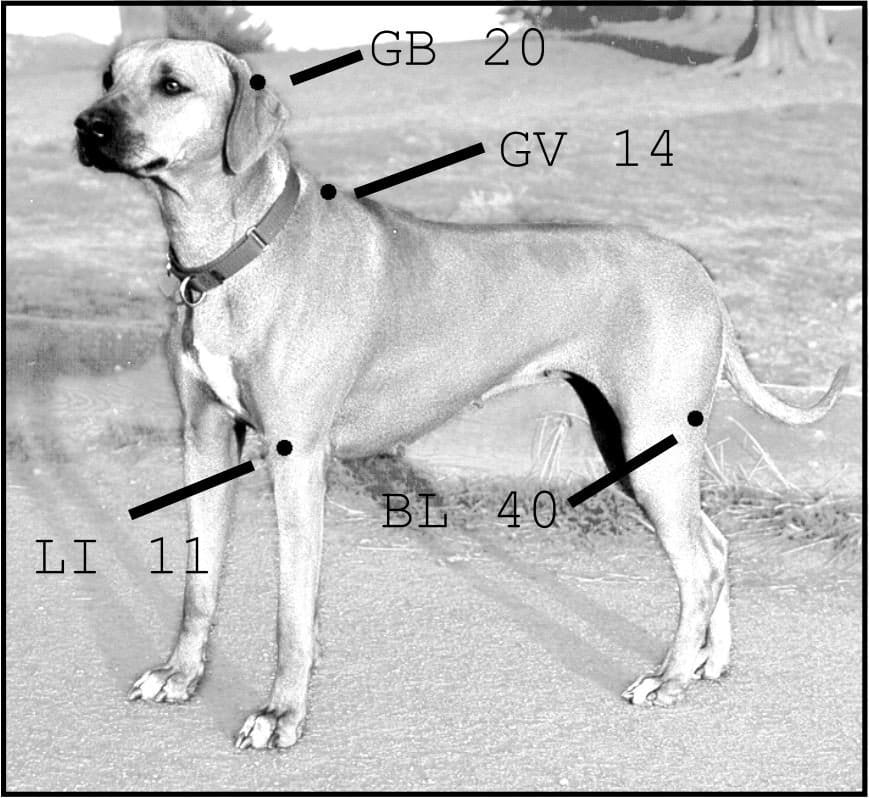
There are a couple of other modalities that could help this dog. Acupuncture would help move some energy into and through that joint, particularly through the healing process. And chiropractic could be of particular value; this dog may well suffer a back injury by doing some compensatory movements because of pain from her ACL problems. Chiropractic could help resolve all the lameness problems, helping her body coordinate a total recovery.

False Motherhood
I have a problem with one of my dogs that my veterinarian has never encountered. Cleo, my four-year-old Lab/Husky mix, thinks she had puppies – but she hasn’t!

Cleo was spayed at six months (by a different vet) but has been having what I call pseudo heat every six months ever since. It was never a big deal – no dogs calling at our door, and only a few drops of blood.

Last September I adopted a Shih Tzu couple who were on their way to the pound. I was led to believe the female was spayed. The male I had neutered a week after they got here. Sixty-four days after they moved in, I awoke to a shock; the female had two puppies. Cleo went into heat right after the puppies were born. Nine weeks later she acted like SHE had given birth to puppies. Hers were in the form of three balls of varying sizes and colors that she found around the house. She lays on her bed (where she never used to go during the day ) and whines for me to come see her; understand that she is not a whiner by nature. And she growls at anyone else who attempts to come near her “puppies.”

My vet checked her literature and said I would just have to wait it out. I have since had the Shih Tzu spayed but Cleo is still having her pseudo heats, and recently she went through the whole “I’ve had puppies!” thing again. Her heats involve a little more blood since the other dogs moved in.

-Patty Spear
Waterford, MI

We gave this question to Dr. Mark Newkirk of Margate Animal Hospital and Alternative Care Center in Margate, New Jersey. Dr. Newkirk uses a number of complementary therapies, including herbs, homeopathy, NAET (allergy elimination), nutritional therapy, and alternative cancer therapies. 

Pseudo heat with blood dripping can be a sign of an ovarian remnant, or ectopic (not in the normal place) ovarian tissue. Both of these conditions could be the result of a birth defect, or caused if a piece of the ovary was left in place when the dog was spayed. If there is an ovarian remnant, holistic treatment is NOT the answer. Surgery is.

It’s also possible that the behavior results from an adrenal gland that is making too much sex hormone. This is rare, but at least it’s easier to diagnose. You can have your veterinarian do a blood test to determine whether her estrogen and progesterone levels are abnormally high. High estrogen levels can make a spayed female act like she’s in heat, but this is not usually accompanied by vaginal bleeding.

Homeopathy could be very helpful, but a classical homeopathic approach would be necessary to effect a cure (as opposed to simply choosing one remedy that addresses one troublesome symptom). A very detailed and involved history would be required.

Bach Flower Essence therapy might help ease Cleo’s protectiveness and mothering behaviors. I would suggest chicory, for possessiveness, mustard, for depression, and/or scleranthus, for indecision.

First and foremost, however, I would suggest having her examined by another veterinarian. I would try to make an appointment to see the veterinarian when she is exhibiting her mothering behavior (even if you have to bring her tennis balls with her to the vet’s office!) so that her blood can be tested while she is at the peak of her unusual behavior.

Dogs With An Unhealthy Fear of Storms and Loud Noises

dog running from loud noise
At the first rumble of thunder, some noise-phobic dogs run for you, some run and hide under your bed, and some frantically try to run away. Without some intervention, this sort of blind panic can endanger the dog.

[Updated Dec 20, 2022]

When I was younger and much more foolish than I am today, I did a very stupid thing. I took my 12-week-old Australian Kelpie puppy to help me staff a humane society booth at the county fair, and stayed to the very end to watch the evening’s fireworks display.

With the onset of the first deafening pyrotechnic boom and ensuing panoply of brilliant lights, Keli urinated in my lap and struggled frantically to escape. I tried to comfort her as the show continued, but she was in a total, unmitigated panic. I couldn’t have engineered a more perfect way to create a noise-phobic dog if I had tried. For the rest of her 14 years, Keli trembled violently in fear and crawled under the bed during thunderstorms (fortunately a rare occurrence in California) and whenever 4th of July and New Year firecrackers rocked the tranquillity of the neighborhood.

Preventing Noise Phobias in Dogs

Many behaviorists and dog trainers believe that puppies go through a so-called “fear imprinting” period sometime between the ages of eight to 20 weeks, when they learn what is safe in the big wide world, and what is not. Exposure to traumatic stimuli during this period can have long-lasting effects, as the fireworks did with Keli.

The same exposure outside this critical period might temporarily frighten a dog, but is much less likely to do permanent damage to her psyche. Obviously then, the first step in dealing with noise phobias is prevention. During this “fear imprinting” period of a young pup’s life, it is imperative to take extra precautions to see that she isn’t traumatized by unusually loud or sudden noises.

Even later on in a dog’s life, it is important to avoid experiences, such as confining the dog near a noise-producing object, that might trigger an unhealthy fear of loud noises. There may actually be a genetic predisposition for the development of fearful behaviors, which would help to explain why one dog can tolerate repeated noisy stimuli with impunity, while another needs only one exposure to the same stimulus to develop a severe behavior problem. But what do we do about the thousands of noise-phobic dogs for whom prevention is no longer an option? The damage has already been done. Are they doomed, like Keli, to spend the rest of their lives hiding under the bed whenever storm clouds gather?

It is a serious concern. Animal shelters universally report that July 5th and January 1st are the two busiest days of the year in their kennels, caring for dogs who escaped the night before. Fear-induced adrenaline causes dogs to scale fences that would normally be more than adequate to keep them safely confined. Some even go through plate-glass windows and dig through doors in their frantic attempts to escape the torment of the noise.

Fortunately, there are ways to desensitize noise-phobic dogs. It takes time and a real commitment on the part of the dog owner to follow through on a noise desensitization program, but such programs, if followed faithfully, do have a good chance of succeeding.

Dogs and Thunderstorms

Noise-phobic dogs, often labeled “gun shy,” may react to firecrackers, gunshots, cars backfiring, cap guns, wood chopping, falling pots and pans and any other loud noise. But by far the most common stimulus that triggers noise phobia in dogs is the thunderstorm.

Thunderstorms offer a number of potential fear-producing stimuli, including the noise of thunder, wind and rain, flashes of lightning, changes in atmospheric pressure, ionization and storm-related odors. While they may all play a role in thunderstorm phobias, the most overpowering and easiest of the thunderstorm stimuli to replicate for modification work is the noise component.

The two most common approaches to behavior modification involve either desensitization and counter-conditioning, or flooding and habituation (see “Behavioral Definitions,” below). Medications have been used in noise phobia treatment with mixed success. While they may help to calm and control a dog during a storm and prevent self-inflicted injury, they seem to have little long-term effect on the dog’s fear. Also, drugs may actually inhibit a dog’s ability to learn that the storm is not frightening.

Desensitization/counter-conditioning and flooding/habituation are opposite approaches; one can’t do both at the same time. Flooding can be extremely traumatic, and once embarked upon must be followed to its conclusion in order to be successful. This can take many hours, and if the session is stopped before the dog relaxes and accepts the noise, it is likely to just make the problem worse – the dog may think that it was the fearful behavior that finally succeeded in making the noise stop. Flooding is commonly used in the treatment of human fears and phobias, but much less so in dogs.

Desensitization and counter-conditioning, on the other hand, are used together frequently and successfully to overcome canine fears. We can’t use real storms in a desensitization program. Real storms happen too quickly to allow for the gradual increase in intensity that is necessary for desensitization to succeed. However, we can create artificial, controllable thunderstorms through the creative use of stereo equipment, recordings of thunder, strobe lights (to simulate lightning) and sprinklers or hoses to create the sound of rain on the window or roof.

Behavioral Definitions

Phobia: A non-useful, counter-productive fear response that is out of proportion to the real level of threat posed by the stimulus.

Counter-conditioning: A technique by which an animal is conditioned to respond in ways that are incompatible with an undesirable response, by gradually presenting the feared stimulus while the animal is engaged in a pleasurable activity (such as eating food). Ideally the stimulus is presented at a level that does not evoke a fear reaction at any time. (Usually performed simultaneously with desensitization.)

Desensitization: A technique used to reduce fear responses in a step-by-step process by exposing the animal initially to non-fearful stimuli and gradually increasing the intensity of the stimuli without evoking a fear response.

Flooding: A fear-removal technique whereby an animal is continuously exposed to a full-strength fear-causing stimulus until the animal stops exhibiting the fearful behavior. The stimulus is not removed until some time after the animal has completely relaxed. At the end of the session the animal is experiencing the full-strength stimulus in a non-fearful state of mind. We do not recommend using this technique.

Habituation: The decrease or loss of response to a fear-inducing stimulus solely as the result of repeated exposure to that stimulus without the use of pleasant or aversive associations (rewards or punishments).

Desensitizing Your Dog to Noise

Begin your behavior modification program by finding a recording (or combination of recording and other stimuli) that causes your dog to react fearfully. Thunderstorm recordings on tape or CD are available at most music outlets. As soon as the dog begins to show fear of the stimuli, turn them off. You don’t want to evoke a full fear response; you just want to find the level at which your dog begins to respond.

dog looking up
Some dogs are so frightened of thunder that even the noise of an airplane overhead commands their immediate attention and apprehension. Desensitizing such a dog to storm sounds can help him learn to keep calm when there are ANY loud noises.

Once the dog is totally relaxed again you can begin the training program. Start by playing the recording below the level that would evoke a fearful response. This may be at a level that you cannot even hear. Remember that your dog’s hearing is infinitely better than yours. After five minutes or so, increase the sound slightly. (This is the desensitization part.) While your dog is still calm, feed him absolutely wonderful treats – roast beef or steak, fried chicken skins, or anything else that your dog would normally do backflips for. (This is the counter-conditioning part.) You want him to think that absolutely wonderful things happen when thunderstorm noises occur.

Be generous with totally terrific treats, petting, and praise, and keep the sound at each level for several minutes before gradually increasing the volume again. At some point, your dog will start to exhibit a mild, fearful reaction. (If it is not mild, you have increased the volume too quickly.) Watch for panting, pacing, clinging to you, and other signs of tension. When this happens you have two choices. You can either immediately turn the volume back down, or wait and see if the dog habituates to that level of intensity. If the reaction is truly mild and you have been very gradually increasing the volume, it is preferable to wait for habituation.

Keep the volume at this level for a considerable period of time before increasing the volume again (the exact definition of “considerable period of time” depends on the individual dog). As soon as the dog relaxes – when the signs of stress go away – resume treat-feeding and petting.

Try Never to Invoke a Fear Response

It is important not to play the recording too loudly or to increase the volume too quickly. This is the most common mistake made in desensitization programs – increasing the stimuli level too rapidly. It is very important not to evoke a fear response that does not habituate during the session; this would be a major step backward. Be patient. While the first few sessions may proceed slowly, typically subsequent sessions will go much faster. It often takes only three to five sessions to move past the initial volume level at which the dog first reacted fearfully. This can be accomplished in less than a week.

Once your dog accepts loud thunderstorm noises, reduce the volume and add the other stimuli, one at a time, until he is comfortable with the entire package. Each time you add a new stimulus, reduce the intensity of the others and gradually increase them again, one at a time.

You will also want to change locations from time to time, so the dog accepts the stimuli package in any room of the house. Later on, the onset of the artificial storm should occur outside of formal training sessions – at first perhaps while the dog is playing with a favorite toy, or eating dinner, then at other random times.

When your dog is comfortable with storm noises in all of these situations, you can set your storm on a timer to play at very low levels for very short intervals (at first) when you are not home. Don’t forget: Every time you change an aspect of the exercise you must reduce the intensity of each element of the stimulus package.

Your Dog May Take a While

Studies indicate that frequent, long desensitization/counter-conditioning sessions (30-45 minutes) are more effective than multiple short ones. Mild to moderate phobias may be successfully treated in just a few weeks. Severe cases can take longer – a month or more is not unusual; sometimes they never come around.

giving dog treat
Pet, praise, and treat your dog any time she remains calm in the face of her most feared noise. If the dog, like the one above, is tentative about eating when she is nervous, use some especially tasty treats, such as pieces of bacon or bits of canned chicken.

The prognosis for severely affected dogs may not be rosy – studies of desensitization programs for extremely noise-phobic dogs are not very encouraging. Many of these dogs don’t respond. However, this may be because the dogs weren’t being desensitized to the right stimulus. It is important to mimic as many of the elements of the package of thunderstorm stimuli as possible for the greatest chance of success.

It is beneficial to accomplish the desensitization program as quickly as possible. If a real storm occurs during the training process and traumatizes the dog it can set the training back. Where storms are seasonal, it makes sense to start and complete the program during the “off” season. Because the desensitization can apparently fade with time, it is also a good idea to refresh the training once or twice a month.

The Dog-Static-Electricity Theory

Some people believe that it is the build-up of static electricity (and resultant static shocks to the dog) that occurs during a thunderstorm that makes many dogs develop an extreme fear of storms.

This would explain why some dogs hide in bathtubs or wedge themselves behind toilets when a storm hits. Their contact with the porcelain plumbing fixtures is thought to ground them and protect them from shocks. Many storm-phobic dogs are much more calm if they are allowed to “ride out” the storm in a car – maybe because the car protects them from the storm sounds as well as from static shocks.

Some owners report success with laundry no-cling strips. Rubbing these sheets over the dog can also prevent static shocks. It is not an unreasonable theory. The intensity of many dogs’ reactions to storms is comparable to the extreme reaction often seen by dogs who are subjected to shocks from electronic training collars. Driving your dog around in a car during a storm, or rubbing him with laundry no-cling sheets are easy and inexpensive solutions to try.

For noises other than storms, it is a matter of finding an adequate artificial replication of the offending noise and any other relevant stimuli that can be incorporated into a similar program.

While not every noise-phobic dog can be successfully desensitized, behaviorists report a fair degree of success with desensitization programs like the one described above. This is good news to the owners of the thousands of noise-phobic dogs that suffer through thunderstorms and other fear-inducing sounds.

I will never deliberately expose another dog of mine to the fireworks experience that caused Keli’s extreme fear of loud noises. I will always regret that I didn’t know how to better help her recover from the trauma of that exposure. But it’s good to know that I now have the tools to help clients’ dogs break through the barrier of debilitating fear so that they can lead normal canine lives, even on the 4th of July.

How To Grieve For the Death of a Dog

0

I am sure that nearly everyone has experienced grief over the death of a pet at one time or another. However, I want to digress from a focus on death and bereavement to address life, and its full enjoyment.

For some people, it can be as difficult (or even more difficult) to endure or reconcile the death of a dog as it is to deal with the death of a person. This isn’t a matter of displaced affections; today, we tend to be isolated from human death. Few people die at home in the arms of loved ones; most people die in hospitals. In contrast, people are much more likely to be personally involved with the death of their dogs. Many animals die at home, and often, owners are intimate with the anguish of making decisions regarding euthanasia.

Additionally, while no one would be embarrassed to admit they were upset about the loss of a human friend or relative, many people feel unnecessarily self-conscious and embarrassed when they get so upset about the death of ‘only a dog.’ But the loss of a good friend and companion is always upsetting, regardless of whether it was a dog or a person. It always hurts. It really hurts. In reality, it is part of the owner’s life that has died and the owner must now reevaluate and reconstruct.

As with the death of a relative or close friend, losing a dog can have long-lasting effect on the owner’s lifestyle. For example, I am surprised to realize that I have not been cross-country skiing or running (both previously major activities) since the death of my first Malamute, Omaha Beagle, well over 10 years ago.

Grieving is a painful, yet necessary process. At the time of the pet’s death, owners may lose perspective, tending to focus on all the bad experiences associated with the last few days, weeks and sometimes months prior to the pet’s demise. The bad experiences tend to become magnified and temporarily tend to obscure the many happy memories of years gone by. Each owner may experience different emotions, generally progressing through phases of denial, pain, anger and maybe depression. The goal, though, should be to get to the place where they can accept the death of their pet and remember the many good times along with the bad. It is essential to regain perspective on life. The loss of a pet is sad and unfair, but ultimately inevitable. We are all mortal.

And, most importantly, the loss of one life should not destroy another. The owner is still living and can have fun. The deceased pet would most certainly have wanted it that way. And when the time is right, there are other pets that are crying out for human companionship. There are so many unwanted pets that would be so lucky to have such a caring owner.

“I ask my (owner) to remember me always, but not to grieve for me too long. In my life I have tried to be a comfort to her in times of sorrow and a reason for added joy in her life’s happiness . . . One last request that I earnestly make. I ask her, for love of me, to have another. It would be a poor tribute to my memory never to have another dog. I would like to feel that once having known me, she cannot live without a dog!”

– from The Last Will and Testament of an Extremely Distinguished Dog, by Barbara Meyer

I would like to echo the above sentiments. Loved ones whose loss we may grieve tomorrow are presently alive and well and living with us today. Whereas no one can even remotely comprehend the full nature and magnitude of the feelings of the bereaved over the death of a loved one, nearly everyone can recognize, enjoy, and benefit from an overt display of love and affection for the living.

For those of you who are currently sharing their lives with a happy and healthy dog: watch him, be with him, play with him, talk to him, and train him. Let today be the excuse for a party. And tomorrow. And the next day. Listen to your kids, talk to your husband or wife, visit your parents, and appreciate your friends. Don’t wait for a day of grief to evaluate your feelings for those who are close to your heart. Tell them now!

Dr. Ian Dunbar is a veterinarian and dog trainer residing in Berkeley, CA. He is also the founder of the Association of Pet Dog Trainers, and is renowned for his Sirius Puppy Training program, which he describes in his popular books and instructional videos.

Flower Essence Therapy For Dogs

We know from innumerable modern research studies that a person’s immune strength and resistance can be improved through a positive mental outlook, and that people who are happy heal more quickly than emotionally depressed people. Stated simply: emotional states can affect the physical body.

Most veterinary health care professionals would probably agree that the principle is true for animals, too. For example, most healthy dogs are usually happy dogs – or is it the other way around? And have you noticed how, just as with people, very often an anxious or angry dog also tends to be prone to more injuries and illness than a content and cheerful dog?

We have proof of this today, but it was a radical proposition when English physician Dr. Edward Bach (pronounced “Batch”) posed a similar theory in the late 1920s. Bach started his medical career as a bacteriologist, but found fame as the founder of “flower essence therapy,” a healing modality based on the principle that addressing psycho/emotional imbalances can lead to improved health and function. Negative emotions, Bach conjectured, suppress healing, so he looked for elements that could positively affect people’s emotions and moods. His theory was that once a person felt better, he or she would begin to get better. Bach wrote, “. . . our fears, our cares, our anxieties and such . . . open the path to the invasion of illness. Remove the disharmony, the fear, the terror, or the indecision, and we regain harmony between soul and mind, and the body is once more perfect in all its parts.”

Familiar with the use and preparation of herbs through his study of homeopathy, Bach experimented with substances made from flowers, which he regarded as the most vibrationally powerful stage of plant growth, and ultimately developed 38 formulations of “flower essences,” each aimed at a specific emotional condition.

Curing or preventing disease may have been Bach’s ultimate goal, but the flower essences soon came to be valued by Bach’s adherents for their primary ability: positively affecting moods.

Bach’s goal was healing humans, but it didn’t take long for veterinarians who agreed with his theories to try Bach’s formulations on their animal patients. Indeed, for animals, the essences’ ability to improve mental and emotional states has proved to be perhaps even more valuable than for humans. (People, after all, can alternatively be helped by cognitive therapies such as discussion and analyses of thoughts and feelings – not a viable option with animals.)

Animals also provide us with an opportunity to determine whether any benefits experienced from flower essences are due to a placebo effect (where the patient expects the medicine to make him feel better, so he “makes” himself feel better). A dog who begins behaving in a more normal fashion after receiving the flower essences makes an ideal illustration of the flowers’ power!

Today, a growing number of veterinarians and complementary animal health care providers use flower essences on their animal patients. And because the remedies are safe, gentle, and available at most health food stores, many animal owners are trying the flower essences on their own, with remarkable results.

A Veterinarian-Tested Rescue Remedy

Without a doubt, the best-known and most widely used flower essence remedy is a combination of flower essences that Dr. Bach named “Rescue Remedy.” The remedy, a mixture of five different flower essences (Cherry Plum, Clematis, Impatiens, Rock Rose, and Star of Bethlehem), is indicated for anxiety, agitation, upset, terror, and shock. Many people give the remedy to their dogs to ease show-ring or field trial jitters, for calming dogs who get anxious in the car, or for trips to the veterinarian’s office.

A growing number of veterinarians also use the five-flower combination on their patients. The blend is not only useful for treating the panic that many animals experience when they visit the veterinarian, but also for treating the conditions that necessitated the animal’s visit!

Maggie Voorhees, DVM, of the Natural Animal Hospital in Sarasota, Florida, makes it a habit to administer Rescue Remedy to her clients before particularly frightening procedures. “I’ve seen amazing results at times,” she says. “Many animals that are pretty wild before being treated with Rescue Remedy calm down nicely afterward.”

Any animal that experiences fear or terror at the veterinarian’s office can benefit from Rescue Remedy, says Voorhees. She administers the remedy to her patients before and/or after surgery, and says it can be counted on to “calm them right down.”

Another veterinarian, Arthur Young, of the Stuart Animal Hospital in Stuart, Florida, says he gives Rescue Remedy to any dog who has been hit by a car or suffered any other kind of traumatic injury. He’ll use traditional emergency veterinary medicine on the dog in addition to a dose of Rescue every 10 minutes until the dog is out of shock.

Every Day Flowers

However, Rescue is not the only flower essence he uses. “I use Bach flower remedies in my practice every day,” he says. “When there is disharmony in the mind, body, or spirit, something will give, and that’s where we get disease. When you’re stressed, you’re sick, and when you’re sick, you’re stressed. Stress creates an obstacle to healing, so I use the Bach flower remedies to fill the emotional need created by stress or illness,” he explains.

Dr. Young can rattle off a number of useful applications for many of Bach’s original formulations. “An animal whose owner has died can benefit from Honeysuckle, which is specifically for ‘grief for the loss of a loved one,’ and Rescue Remedy, to relieve fear, anxiety, and to take away the ‘edge.’ I also prescribe Rescue Remedy for a dog who is going to be traveling, especially for flying. Rather than using a tranquilizer for air travel, I’d treat him with Rescue Remedy for anxiety, add Aspen for fear, and Walnut when the dog gets to where you’re taking him to help him make the adjustment to a new venue.”

Dogs can also be treated for problematic behavior that is caused by negative emotions. For example, a dog “who has a strong personality and feels the need to be in charge can be treated with Chicory to help him quit seeking so much negative attention,” says Dr. Young.

Young also uses flower essence remedies to help him resolve physical problems that are aggravated by negative emotion. “I’ve seen dogs that have developed skin problems from unrelieved scratching, who have been treated allopathically for flea allergies but just keep scratching. Typically, the dog will have been overdosed with pesticides, or cortisone, even antibiotics. I’ll prescribe Agrimony, to help relieve the crawly feeling or sensation of itching, and Crabapple, which can be used as a detoxifier. Within a few days, the dog will feel a lot better – physically and emotionally.”

“In short,” says Young, “I use flower essences extensively in my practice. One of the best aspects of this truly holistic therapy is that it is gentle and non-reactive with other therapies.”

In his house call practice, Russell Swift, DVM, of Tamarac, Florida, uses flower essence therapy alone and in combination with nutritional therapy. But he finds them especially useful for treating behavior problems.

“I have used the flower essences for several years to treat for a variety of pet health problems, and have found them to be very effective,” he says. “But they are great for behavior. I’ve prescribed Chestnut Bud for a dog that ‘failed to learn from experience,’ an animal that kept making repeated mistakes in an obedience training situation – and it makes a huge difference. I’ve found Walnut to be helpful for a dog who had difficulty adjusting to a new dog adopted into a household, and Larch for the new dog who is low in confidence, as he was low in the pecking order in the household.”

Dr. Swift says the availability of the essences, as well as information about them, makes them especially useful to dog owners. “In the past decade, there has been a significant increase in the number of essences available from around the world, and many books and courses available on the subject for anyone who would like to learn how to use these healing substances,” he says. The biggest challenge for most pet owners, he warns, is in selecting the appropriate essences. “Since we have to interpret our pet’s behavior patterns through our own eyes, it is difficult not to superimpose our own emotions and feelings on them.”

How to Use Flower Essence on Your Dog

Flower essences generally come in tiny bottles of less than one ounce. The already diluted contents is referred to as a “mother tincture,” which is usually (but not necessarily) diluted further before administration. The undiluted mother tincture can be administered directly to a dog (two drops at a time), but due to the high alcohol content, many animals object to its taste and smell.

Further dilution does not affect the action of the essence, and it saves money!

Most health food stores that carry flower essences will also sell small (about 30 ml.) dropper bottles and/or mister bottles to use for mixing and administering a “working stock.” Pour three parts water (well, filtered, or bottled water if possible; neither chemically treated tap water nor distilled water are recommended) to one part alcohol (vodka, brandy, or Purol) into the bottle. Most experts suggest adding two drops of each mother tincture to be used (up to a maximum of seven essences, with Rescue Remedy counting as one essence) to the water/alcohol mixture. Then, put the top on and shake the bottle vigorously. Administer four drops of this working stock to the dog four times a day for chronic symptoms, or every 10 minutes or so in emergency or critical situations. (The potency of the essences is best increased by more frequent dosing from the working solution bottle, rather than giving a mixture with a higher percentage of mother tincture.)

Commonly, the working stock is administered with an eyedropper and squirted into the dog’s mouth. Some people prefer to drop the mixture onto a treat and feed it to the dog. The mixture can also be sponged onto the dog’s face, softly massaged into his skin, and rubbed behind his ears. Sometimes a dog who is panicked or aggressive will calm down after being gently misted (through a cage door, for instance) with a mixture formulated for his condition.

None of the essences’ manufacturers claim that the products will heal specific conditions on a physical level. The essences should not replace medical treatment, and should your dog manifest any symptoms of illness before, during, or after treatment, consult your veterinarian as usual. All of the makers say that the essences may be administered by themselves or in conjunction with medical or other treatment; they won’t conflict with medication, including any homeopathic remedies.

That fact that you don’t have to (and shouldn’t) change anything about a dog’s other treatments when you administer the remedies makes it easier for many skeptical dog owners to give the remedies a try; since they cannot hurt a dog in any way, an owner has “nothing to lose” by giving them a try. And that’s often precisely when the flowers seem to work their subtle, wonderful miracles.

Answers From Experts 03/99

0

Relief for Megaesophagus
Do you know of any holistic cures or remedies for megaesophogus? I’ve been through everything known to help alleviate the horrible effects of this dreaded condition and now I’d like to try a holistic approach.

-Name withheld
New Jersey

We directed this question to Carolyn Blakey, DVM, of the Westside Animal Clinic in Richmond, Indiana. Dr. Blakey has been practicing veterinary medicine for 32 years, the last four in an all-holistic practice. She especially enjoys serving as a holistic veterinary consultant to clients all over the country.

Megaesophagus truly is a horrible condition, both for the dog, who really suffers, and for the dog’s owner, who can’t do very much to help. However, there are a couple of holistic healing methods that I’ve seen help dogs with megaesophagus.

I use a lot of homeopathy in my practice, so of course, my first suggestion is to use homeopathy, which is entirely dependent on the body’s ability to respond. Homeopathy is “energy medicine;” the purpose is to present the energy picture of a specific problem to the body so the body will raise a defense, a response to that trigger at both the physical and the energy level. When you give the correct remedy to a dog whose vital force is still able to respond, you’ll see improvement.

I would suggest having a veterinary homeopath conduct a complete homeopathic intake. To prescribe the correct homeopathic remedy for any given individual, you have to know what’s behind the condition – in this case, the megaesophagus – and what’s behind that. Every individual is different, so every prescription will be different.

That said, there are several homeopathic remedies that are indicated for megaesophagus, including Kali Carbonicum, and Lyssen, the rabies nosode (which makes sense, because a rabid dog can’t swallow, either). However, in order to know which remedy is best for your dog, the practitioner has to hear the whole history and put all the dog’s total symptoms together.

The other approach I would try for relieving megaesophagus is acupuncture, which would be great for stimulating whatever tonal ability the dog may have. With megaesophagus, the whole problem is a lack of innervation (sufficient supply and activity of the nerves). The messages are just not getting through to the esophagus to constrict and move food down; it gets all flaccid. But acupuncture can get those neurotransmitters working, or at least, get them working better than before.

In some cases of megaesophagus, the “cardiac sphincter” (which controls the opening to the stomach) spasms shut, so the food just can’t go in. Over time, with that spasm occurring again and again, the esophagus begins to stretch.

Acupuncture is especially helpful with these cases, because it can relieve the spasms and relax the sphincter, letting the food flow into the stomach. So I would definitely take the dog to a veterinary acupuncturist and ask if she would use these points:

Conception Vessel 23
Large Intestine 4 and 11
Stomach 36 and 45
Bladder 21
Pericardium 6 and 9

You could also help the dog with acupressure on these points, and with massage, to help condition and tonify the muscles. (For help finding the points mentioned above, ask your veterinary acupuncturist. You can learn the acupuncture meridians and points by consulting Dr. Cheryl Schwartz’ well-known book on Traditional Chinese Medicine for use on animals, “Four Paws, Five Directions,” or her “Circadian Clock and Meridians” poster.) I always encourage my owners to do acupressure, because it always helps. It may not be strong enough to cure a dog with megaesophagus, but it’s always helpful.

The practical, home-care things are very important, too. Feeding the dog with his food at head level, using gravity to help the food slide into his stomach, will be helpful. People have tried different diets on these dogs, including super smooth foods that would slide on into the stomach. But the current theory is to use high fiber diets, including brown rice, for instance, to try to stimulate whatever is still able to be stimulated in the esophagus, and I’ve had some success with this approach.

Most of these dogs have trouble their whole lives if you can’t get the condition under control. They have trouble maintaining weight, and they usually have other health problems because they can’t get the nutrients they need. I’d definitely recommend giving this dog a good-quality, daily multi-vitamin, mineral, and digestive enzyme supplement.

Jump Back, Jack!
My dog is a leaper and a jumper, displayed most predominantly when my husband comes home from work. She also does this to guests when they first come in the door. I have tried using a 10-foot lead on her collar and yanking down on it when she jumps, but she does not respond to this or scolding. Any suggestions?

-Frustrated in OH
Maggie Kallerud-Jurist

Sergeant Tibs, my four-year-old, neutered Collie/German Shepherd mix, is a wonderful dog, but he has a few behavior problems. His worst habit is jumping. He gets so wildly excited when someone comes he’s uncontrollable and doesn’t listen at all. I’ve never seen a dog get more wound-up when someone comes then he does. He jumps all over them almost knocking them over.

I’ve tried a “No Jump Harness” but that didn’t work. I’ve also used a “Pet Agree Ultrasonic Pet Training Aid,” which worked for awhile until he discovered when he ignored it, nothing happened.

I’ve heard of the techniques “knee in the chest” and “step on his hind feet.” But I know they are cruel and dangerous, so I haven’t used them. I prefer very gentle training techniques.

Sergeant gets a lot of attention, so it’s not as if he’s home alone a lot and lonely. He gets a lot more attention than the average dog, because I’m home almost 24 hours a day. He also gets plenty of exercise.

-Chavvah Frick
Cass Lake, MN

We gave these questions to Pat Miller, WDJ’s regular gentle training expert. Miller, a member of the Association of Pet Dog Trainers, pens her monthly contributions to WDJ from her home in Salinas, CA, where she offers private and group dog training classes.

Dogs must think we are the rudest creatures on earth. They greet each other by sniffing noses. But when they try to give us a polite greeting by jumping up to sniff a human face, they are met with bizarre behaviors. We yell. We bump them in the chest with a knee. We smack them on the nose. We grab their front paws and won’t let go. We squirt lemon juice in their mouths. We stomp on their hind feet . . . and these are just some of the coercive methods that have been used over the years to teach dogs not to jump on humans.

Too bad that we resort to violence when the solution is really a simple one. As in all positive-based training, all we need to do is to “reward the behavior we do want, and ignore the behavior we don’t want.”

The problem with jumping up is that a lot of it gets rewarded. When puppies are small we pick them up and cuddle them, teaching them that “up” is a very rewarding place to be. When they do jump up, someone often pets them or pays attention to them, rewarding the very behavior we want to extinguish. Dogs that get rewarded for jumping up keep doing it. For some dogs, even the coercive techniques meant to punish are perceived as rewarding – plenty of active Labradors view a knee in the chest as an invitation to a great game of body slam!

How do you ignore jumping up? You can’t just stand still, because the dog will reward himself by slamming his paws on your chest. But there are other effective exercises and management tools that can teach Aero that four-on-the-floor is far more rewarding than aerial maneuvers.

For starters, consistency is important. You must never reward jumping up, and you must convince your friends and family members to react appropriately to Aero’s antics as well. Behaviors that are rewarded randomly can become very strong, because Aero discovers that if he tries often enough, sooner or later a jump gets rewarded. While he may inevitably succeed in jumping on you occasionally, avoid having anyone actually encourage jumping by hugging or petting him when he does.

By the way, if you start doing these exercises with a young puppy, he will never learn that jumping up is a rewarding behavior, and you will never have to deal with an adult dog that is leaping and jumping.

Exercise #1
The on-leash jump

Start with Aero on leash next to you. Have your helper approach and stop just out of leash-range, holding a tasty treat high against her chest. Hold the leash tightly, and stand still. Now you wait. Aero will eventually get frustrated that he can’t jump on the helper, and he will sit to figure it out. The instant he sits, have your helper say “Yes!” and pop the treat in his mouth.

Repeat this exercise often. It usually takes a half-dozen or fewer repetitions for Aero to start sitting as the helper approaches. Now if he tries to leap up to get the treat when it is offered, have the helper whisk it out of reach and say in a cheerful voice, “Too bad, Aero!” When he sits again, say “Yes!” and offer the treat again. He will soon learn to sit tight in order to get the treat, instead of jumping for it.

In a variation of this exercise, you can say “Yes!” and pop the treat in his mouth when he sits. This way, he will start looking at you and sitting when people approach, instead of looking at the other people.

Repeat this exercise with as many different people as possible. When you are out walking and a stranger admires Aero and asks if she can pet him, toss her a treat and have her do the exercise. You will be amazed by how quickly Aero will start sitting as he sees people approach him.

Exercise #2
The off-leash jump

You come home from work, walk in the front door and see Aero flying over the back of the sofa. You know a brutal greeting is coming. What should you do? Turn your back on him! Watch him out of the corner of your eye, and continue to turn away and step away as he tries to jump on you.

Again, in a surprisingly short period of time Aero will sit in frustration to figure out why he’s not getting his ration of attention. The instant he sits, say “Yes!” in a happy voice, turn and feed him a treat. (Yes, you have to have a treat with you when you walk in the door. I suggest keeping a jar on the front stoop. Or have cookies in your pockets all the time!) If he starts to jump up again after he eats the treat, turn away and step away. Keep repeating this until he realizes that “Sit!” gets the attention, not “Jump!”

Exercise #3
Incompatible behavior

This works if your dog responds really well to the verbal cue for sit or down. When Aero approaches, ask for a sit or a down before he has a chance to jump up, and reward that behavior with a “Yes!” and a treat. With enough repetitions, he will learn that the sit or down gets rewarded, and he will start to offer them voluntarily.

Exercise #4
Putting the jump on cue

I recommend this only when someone in the family finds Aero’s aerobics endearing and wants to be able to invite him to jump up. In this case, you teach Aero to jump up on a particular cue such as the word “Hugs!” (not by patting your chest, as too many well-meaning strangers and children will likely invite the behavior), and teach him that the only time he can jump up is when someone gives the cue.

Tie down time-out
A “tie-down” is a 4- to 6-foot plastic-coated cable with snaps on both ends. One end can be secured around a heavy piece of furniture, or attached to a strategically placed eye-bolt. You will want to put a comfortable rug or bed at the tie-down locations. When Aero is out-of-control and jumping on the company (or you!), he gets a cheerful, “Too bad, Aero, time-out!” and a few minutes on his tie-down.

If you know in advance that he’s going to maul Aunt Maude the instant she walks in the door, clip him to the tie-down before you open the door, and release him once he settles down. If you release him and he revs up again, you can always do another “Too bad, Aero, time-out!” Remember, despite your frustration over his behavior, this should be a cheerful interlude, not a forceful punishment. He will learn to control his own behavior in order to avoid time-outs, and you won’t need to yell at him.

Jumping up is a normal, natural dog behavior. Like so many other normal dog behaviors that are unacceptable in human society, it is up to us to communicate to our dogs that jumping up isn’t rewarded, and to help them become more welcome members of our human pack by rewarding acceptable behaviors that can take the place of jumping. It’s easier than you think!

How to Help Car Anxiety in Dogs: Road Scholar

Car anxiety in dogs can be addressed leading to fun outings for you and your pup.

Car rides. Some dogs love them. Some dogs hate them. Some dogs race from window to window, barking at every passing kid, cat, skateboarder, and bicyclist. Some dogs leave their breakfast on your new seat covers. Helping car anxiety in dogs, and getting a calm passenger is a step-by-step process.

Widget, from the time she was a tiny puppy, had trouble with car rides. When the Lowchen puppy was first brought into their home, she was covered with throw-up, said Nicole Dubus, Widget’s person.

It was really terrible, said Dubus. For the first three years of Widget’s life, almost every time she went into the car, she got seriously sick. This is an example of motion sickness due to extreme car anxiety.

One time, we were all packed up to go to Yosemite, said Dubus, recalling the hours spent packing the car and the excitement she felt about the camping trip. We didn’t drive more than 20 minutes and Widget just kept throwing up and throwing up. Dubus said that they tried stopping and giving Widget some water, but the dog wouldn’t drink. She knew that if they kept going, Widget would get dehydrated. So they turned around, went home, and unpacked.

But today, Widget, who is now eight years old, has learned to ride without getting sick. Widget joins her people on around town travels, trips to the beach, and, yes, she can even handle long car rides and camping trips.

The reluctant rider
Carsickness, even extreme cases like Widget’s, is often the result of fear or discomfort. Why are some dogs afraid of cars? Here are the most common reasons:

• The dog sees the car as a big, bad scary monster. Dogs or puppies who haven’t been socialized to cars may be afraid of the noise of the engine, the feel of the car moving, or the sight of objects whizzing by outside the window. Plus, dogs are confined in a car. A dog that is already afraid may experience added stress from the sensation of being trapped within the scary moving monster.

• The dog knows the car will take him somewhere terrible. A dog whose main association with cars is trips to the vet, boarding kennel, or other unpleasant places quickly learns that cars equal bad things.

• The dog experiences physical discomfort. Some dogs (especially young dogs and puppies) have trouble balancing when the car moves from side to side. They may have trouble standing or suffer from motion sickness.

Five steps to a happy canine car passenger
Fear, bad associations, and physical discomfort often produce the same results hesitation to get into the car, carsickness, whining, or barking. Fortunately, you don’t have to know the cause of the problem to fix it. In fact, the road to a happy car trip may be just around the next corner.

Getting a dog used to riding in the car is a simple step-by-step process of desensitization and counter conditioning. As with any type of training, it’s easiest if you are able to start when your dog is a puppy, but even an adult dog can learn to love the car.

Your dog may fly through these steps in a few training sessions, or you may need a few sessions a day for several days or even weeks. But having a dog that enjoys the ride will be worth the time and effort. The key to a dog that is both physically and emotionally comfortable in the car is to take your time. Make sure your dog is happy at each step before moving on.

Step 1: Approaching the car
The first step is to help the dog feel safe around the car before you actually go out for a drive. Have your dog slowly approach the car. Some dogs will walk right up to the car without hesitation. If your dog happily walks to the car, Click! and treat. Then move him away and repeat a few times. This will teach him that going to the car is rewarding.

If he shows any hesitation or fear around the car, move as far away as you need to for your dog to be comfortable. Then start clicking and treating your dog for showing any interest in the car or for moving towards the car. If your dog is very nervous or afraid, walk in a large circle around the car. Gradually make the circle tighter, moving the dog closer to the car. Click! and treat for each step you take closer to the car.

Step 2: Getting in the car
Once your dog happily approaches the car, open the door and invite your dog to get in. Don’t force your dog into the car. Instead, make it his choice. You can encourage your dog by patting the seat or climbing in yourself and calling him to you. You may want to use a yummy treat to entice him into the car. Or, you can shape getting into the car by clicking and treating any movement towards the open door.

Once your dog gets into the car, sit next to him for a few moments. Leave the door open so that he doesn’t get worried about being confined. Then take him back out and repeat the process several times.

Step 3: Assigned seats
When your dog is happily jumping in and out of the car, it is time to help him learn where he will sit. Assigning your dog a place in the car can help him feel safer and know what you expect of him on car rides.

If you use a crate (and your dog is crate-trained), you can invite him into the crate. If you use a harness or another restraint system, or if you have your dog stay in the back of your car behind a barrier, you may want to place a towel or blanket in your dog’s “spot.”

Call your dog into the car, have him now go to his spot, and hang out together for a few minutes with the car door closed. Give your dog lots of praise, or Click! and treat him for hanging out calmly in his spot.

If you use a harness or restraint system, you can buckle your dog in. Click! and give him a treat for accepting the harness and sitting calmly in his spot. (If your dog is new to the harness, you’ll need to spend some time away from the car training your dog to the harness.)

Step 4: Start your engines
Once your dog happily jumps into the car, goes to his spot, and is comfortable with the door closed, you can move into the driver’s seat. Click! and treat your dog for remaining calm in his spot. Then start your engine. Let the engine run for a minute or two while you Click! and treat your dog for remaining calm.

If your dog is in a crate or behind a barrier, give him a chew bone or a Kong toy stuffed with something yummy to encourage him to stay calm.

After a minute or two, stop the engine and take your dog out of the car. Repeat this process several times until your dog is completely comfortable with the engine running.

Note: If your dog is prone to carsickness and you have just given him a bunch of treats while working through the first four steps, you may want to wait for another day to continue with step five. A belly full of treats may contribute to carsick problems!

Step 5: Start with short drives
Once your dog will happily get into the car, knows where to sit, and is comfortable with the engine running, it is time to actually go for a ride! Start with very short rides to happy places, such as the dog park.

For a dog that gets carsick, think about how far you have been able to drive in the past before your dog vomits, then drive less than that distance. For some dogs, you may need to start with only driving a half of a block. When your dog can go a half of a block without getting sick or upset, increase the distance to a full block. Gradually increase the length of your rides until you can take a short trip to the park or another fun dog place. When you stop the car (even if you’ve only gone a half of a block), get out and engage in a rewarding activity such as a walk or ball play.

While you are desensitizing your dog to the car, always make the rides end with fun activities. Avoid vet visits and trips to the kennel or groomer while you are working through this process.

More about motion sickness
For most dogs, the desensitization process will take care of carsickness, as long as you take it slowly. For some dogs, especially young dogs that may still be wobbly on their legs, confining them to a crate may help. The flower essence known as Rescue Remedy (or, depending on the maker, Five Flower Remedy or Calming Essence) may help calm a nervous dog, and cooled peppermint tea may help soothe his tummy. In addition, make sure that your dog has gone to the bathroom and that you have opened the windows a little for fresh air. Being too hungry or too full may also contribute to carsickness.

If your dog still has trouble with motion sickness after desensitizing him to the car, you may want to talk to your veterinarian. A physical problem may affect your dog’s balance and his ability to ride comfortably in a car.

Car manners
Dogs need good car manners for safety and the sanity of the driver. Because it’s pretty darned difficult to actively train while driving, the best solution to behavior problems in cars is prevention and management.

The most common behavior problems arise from dogs moving about the car freely. Running from window to window, barking as dogs or bikes go by, stepping on the driver, trying to climb out windows all of these behaviors can only be accomplished by a dog that is moving freely. In addition, a dog moving freely can create safety hazards and can be disastrous if you get into an accident. Having your dog in a crate or safety restraint is both more safe and more sane.

Dogs should also be taught not to jump from the car without your permission.

The open road
Once your dog has learned to love the car ride and mind his manners in the process – you can set out for many adventures together. You can explore new areas in your city or town, take driving vacations, or head out for a serious road trip. You, your dog, and the open road. What more could you want?

Also With This Article
Click here to view “Car Safety For Canines”

-By Mardi Richmond

Mardi Richmond teaches Agility for Fun classes in Santa Cruz, California, and is the co-author of Ruffing It: The Complete Guide to Camping with Dogs.

Safest Canine Seat Belts

Canine seat belts offer an alternative to crates for a dog's car travel.

Americans love their dogs and their cars, so it’s natural that you’ll frequently find them together. On any given day on any given highway across the United States you might see Fido in the Ford, Buddy in the Buick, and Chester in the Chevy. In fact, a whole branch of the pet supply industry has developed to help us make sure our canine pals are well cared-for as we cruise America. We checked out some car products so we could give you some hot tips on what’s cool in the car for Fido.

Safety first
Without a doubt, some sort of car restraint is the most important car accessory for a dog owner to buy and use. Many people think the use of canine seat belts (or some other restraint) is ridiculous; however, 20 years ago, many people thought seat belts for people were an unnecessary annoyance. Several thousand lives saved later, most people have gotten with the program and buckle up.

Besides, the use of restraints undeniably prevents canine injuries; who among us hasn’t, at some point in their driving career, had to slam on the brakes in traffic and had their dog flung against the seat, dashboard, or windshield in front of them? Restraints also save canine lives. Several years ago, my brother Bill lost his beautiful Australian Shepherd-mix in a horrible car accident. Lacy survived the impact, but, in a panic immediately after the crash, leaped through the shattered windshield and was killed moments later when she dashed under the wheels of a truck. Bill was fine – he was wearing his seat belt. What a tragedy that Lacy wasn’t.

While it’s true that one reason to crate or seat belt your dog in your car is to keep her as safe as possible in an accident, another is to keep you from being injured in a wreck. A free-flying dog body can become a deadly projectile, causing serious injury to you or other vehicle passengers if she hits them in mid-flight.

Finally, another good reason to restrain your dog in the car is to prevent her rambunctious antics from causing a wreck. (Did you all read the news accounts of famous author Stephen King being hit by a car, and seriously injured, by a driver who was reprimanding his dog while driving?)

Alternatives to crates
While a well-outfitted and well-secured crate would be our first choice for safe dog transport, we did not review crates for this article – that’s a product review all of its own! If you do use a crate to keep your dog safe in the car, it must be fastened down in some manner so it doesn’t become a projectile itself. And crates that shift and slide even in normal driving can be aversive to a dog and make him not like his car-crate.

But not everyone has room in their cars for crates, nor solid things to fasten them to. And the space required for multiple-dog households would certainly preclude each dog having his or her own transport crate, unless you drive a large van or school bus!

Fortunately, there are now a number of tethering devices on the market. Most interact in some way with your car’s seat belts, although there are some made to fasten to cargo hooks in trucks and SUVs.

For safety reasons, all restraint devices should be used with a harness, not a collar, so you’ll need to add the cost of a harness (about $3-15) to those products that don’t include one as part of the package. Also, dogs should always be buckled up in the back seat of your vehicle. Just like small children, they risk severe injury or death from air bags in the front seats of most newer cars. Remember: Air bags can be engaged in even very slow-speed accidents, but deploy with lighting speed and potentially dog-crushing force.

WDJ’s restraint selections
We’ll discuss the products we examined in descending order of our preference, beginning with the pet seat belts, and then discussing the car tethers.

We gave our top rating of four paws to only one product, the Doggie Catcher Pet Seat Belt, made by Smiling Dog Enterprises of Chattanooga, Tennessee (my own location, though I’d never examined this product before).

The Doggie Catcher is a simple and sturdy product that is fastened firmly in place with your car’s own seat belt. All the other canine restraints we examined were slipped over the fabric of the car’s seat belt, so they don’t prevent your dog from moving around. Also, all the other models rely on the locking action of the belt to restrain the dog in case of a sudden stop.

But the Doggie Catcher Pet Seat Belt is fastened right at the seat belt buckle – the stubby, fixed part – for maximum security. You actually slip the metal tongue of the seat belt through a slot in the Doggie Catcher’s molded plastic flange and then insert the tongue into the buckle as you normally would. A strong grey nylon strap is fastened to the Doggie Catcher’s flange; a snap at the other end clips onto the dog’s harness. Because it actually clips into belt latching mechanism, it secures the dog at a specific length of the restraint strap, adjustable from 12 to 18 inches. We especially like the extra plastic flap that covers the seat belt release mechanism and prevents the dog from stepping on it and accidentally getting loose.

We do have some very minor quibbles with the product. We support the efforts of animal control agencies, and have an aversion to the whole “Dog Catcher” image. We understand play on words, but we hate the phrase. We wish also the product was less expensive. At a suggested retail price of $20, this is a pretty high-priced item. Add another $3-15 or more for a harness, and you’re getting up there. Is your dog’s safety worth this much money? Of course it is. But not everyone will spend this much – and every dog ought to have one, in our opinion.

Three paws
Our enthusiasm for the next product has a lot to do with its exceptionally low price. The Kwik Klip Car Safety Harness is a harness and restraint device in one, so, at just $5-6.50 (depending on size), this is probably the best value of all the restraints we examined.

The harness is made of black nylon (not as heavy as the straps used by the Doggie Catcher), with a padded chest strap for comfort, and an extra loop protruding from the top of the harness, almost like a handle, but roomier. When the dog is harnessed and in his seat, the seat belt is passed through this loop and buckled closed.

Because the loop can slide on the belt, however, and because most seat belts lock only under sudden braking, the Kwik Clip does not hold the dog as securely in place as the Doggie Catcher does.

The plastic buckles on the harness appear sturdy, but are a little large and bulky for small dogs. Also, the harness straps slip through the buckles a bit too easily, so once you have fitted the harness appropriately for your dog you might want to sew the straps down to prevent them from loosening as your dog moves around.

Note: Many of the car restraint products contain valuable warnings about not leaving dogs in hot cars. The Kwik Klip does not, and it would be a nice addition to their packaging.

Two and a half paws
Here’s an incredibly low-tech (and low-cost) product: the Seat Belt Restraint made by Coastal Pet Products, Inc. This is a seven-inch black nylon strap with a snap at one end and a loop at the other. You simply snap it to the back of your dog’s harness, slip the car’s seat belt through the loop and buckle the seat belt closed. The strap can also double as a short leash in a pinch.

We’re a tad worried about the ability of the metal snap to restrain a larger dog, especially under the impact of a crash; it seems fairly lightweight. Also, as we’ve noted before, the loop-over-seat-belt design does not provide for optimum safety – the dog can still move around the car more than we would like.

Two paws
The Batzibelt Pet Seat Belt is similar in design to the product above, but gets a slightly lower rating from us, in part because it’s more than double the cost for essentially the same product.

The Batzibelt has a metal snap at each end, and uses a metal shackle (instead of a nylon loop) that slips over the seat belt fabric. We don’t see this as an improvement – the metal snaps are more likely to fail under pressure than nylon, so this product has two weak links instead of just one. The shackle is a separate piece – one of those small metal gadgets that we manage to lose all too easily.

Finally, the directions on the package suggest attaching the clip to the dog’s harness or collar – an instruction we find irresponsible, since a dog restrained by the collar in a sudden stop could injure or break his neck.

Tethers: fixed length
We’re using the word “tether” in this application to mean a product that restrains the dog and is fastened to something fixed in the car – not an adjustable seat belt.

Again, Smiling Dog Enterprises offers the product we liked best: the Doggie Catcher Pet Restraint. And again, we like this product’s sturdiness and simplicity. The same grey heavy-duty nylon strap is adjustable up to 24 inches in this permutation, with a strong metal D-ring sewn into each end. A “quick link” is linked to each D-ring, one that attaches to an anchor point in the back of a van or SUV; the other attaches to your dog’s harness.

However, we were dismayed to see promotional photos in the product’s brochure of the restraint being used on a dog’s collar (risking a broken neck in case of a sudden stop), and on a dog in the back of an open pickup truck. We would love to see safety products a little more consistent in the safety message they send!

The Travel Tether is another very usable product, losing a point in our estimation for being more complicated to put on the dog and install, and a little less sturdy than the Doggie Catcher. This product utilizes snaps (not as strong as metal links) to secure the dog to two anchor points of a van or SUV, effectively cross-tying him for maximum security. It is more expensive than the Doggie Catcher, but includes a harness.

We found the instructions for using the Travel Tether to be very poorly written. We finally put them aside and figured out how to get the harness on the dog ourselves. On the plus side, the fact that the tether clips onto a ring sewn into the bottom of the dog’s harness makes it harder for him to get tangled up. (The company also placed a ring on the top of the harness, to which a leash could be attached for walked the dog to or from the car – neat!) Finally, the tether appears to be well-made, and we love that it is not suggested for use in pickup trucks. We also appreciate the clear safety tips offered on the back of the package.

Also With This Article
Click here to view “Car Restraints For Dogs”
Click here to view “Car Safety For Canines”
Click here to view “WDJ’s Care Safety Harness Recommendations”

Tug o War Used As a Training Tool

From tiny Pomeranians to huge Mastiffs, dogs love to play Tug ‘o War. There is an inherent canine joy in growling, grabbing, pulling, shaking, ripping and shredding that satisfies a dog’s basic predatory instincts. Owners also find it rewarding to roughhouse with their four-footed friends, and a Tug ‘o War game is a great way to take the edge off a high-energy pooch.

Many trainers caution against playing Tug ‘o War with canine companions, warning that it teaches a dog to be dominant and aggressive. I encourage my students to play Tug ‘o War with their dogs. If you play the game right, it’s a perfect opportunity to teach your dog deference and good manners and you can even resolve aggression problems. Only if it is done improperly does “Tug” teach your dog bad habits.

The first key to playing the game right is that you always win. At least almost always. At least in the beginning. The Tug Toy is a very special, cherished object. It is kept hidden in a special place, and only comes out when you want to play. Tease Woofie with the toy – shake it a squeak it, and use a word such as “tug” or “pull,” that you chose for your behavior cue. Let him grab one end, and have a great time tugging and shaking the toy with him for a few minutes, then offer him a very tasty treat.

dog toys tug of war


If you’ve used a sufficiently tasty treat, Woofie will open his mouth for the treat. When he does you say “Drop,” or “Give,” since he must drop the tug toy to eat the treat. You just won the game. “Click!” a clicker or tell him “Yes!” to let him know he did a rewardable behavior, then hold the treat and let him nibble at it while you safely remove the tug toy. Now you can either play again (playing the game again is another reward for Woofie for giving up the toy when you asked) or you can put it away and play again later.

Before long, Woofie will be programmed to drop the toy on cue, and you can win whenever you want. Now you can let him grab it and run off with it every once in a while to make the game more interesting. Just remember to have him give it back to you when his turn is up – don’t start playing chase!

Some dogs want to play too aggressively with a tug toy, and some dogs get seriously aggressive. If Rambo plays too rough, and either jumps up on you or puts his mouth on your clothing or skin, it’s time for an instant “time out!” Just say “Too bad!” in an upbeat, cheerful, non-punitive tone of voice and put the toy away for a few minutes. If his rowdy behavior persists, use a tie-down, a crate, a puppy pen, or just step out of the room briefly. After a moment or two, resume the game. Every time he bites or gets out of control, it’s “Too bad!” and a time-out. Four time outs in a row ends the game for the day.

Rambo will learn very quickly that when he is too rough, playtime is over. In short order he will begin to control his behavior so that he can continue playing the game.

There are lots of different tug toys on the market. To some extent the ideal tug-toy depends on your own dog’s size, strength and chewing preference. Tug toys should be durable, safe, appealing to the dog, and affordable. WDJ tested several tug toys based on these criteria.

Solid rubber dog tug of war toys

Dogs seem to like these – the solid rubber gives them something to sink their teeth into, which is an especially enjoyable treat for young dogs who are still teething.

WDJ Approves

Cressite Solid Rubber Tug Toy
Pet Supply Imports, Inc.
South Holland, IL (made in England)
$7.79. Available at most pet stores.

The Cressite Rubber Tug Toy is made of natural rubber and was very inviting to our test dogs. They got quite enthusiastic, to the point that I feared for the integrity of the toy. The price is reasonable, but given the somewhat flimsy construction (I have seen them snap under heavy use), I would reserve this toy for dogs 25 pounds and under.

Not Recommended

Cressite Solid Rubber Play Ring
Pet Supply Imports, Inc.
South Holland, IL (made in England)
$7.29. Available at most pet stores.

Made of the same natural rubber, but thicker and sturdier, the Cressite Play Ring is a great fetch toy, as it promises on its label. However, the packaging also encourages its use as a tug toy, which we could not recommend. We found insufficient distance for safety, with your hand on the edge of the ring on one side and your dog’s teeth on the other. This could be a suitable tug toy for a well-behaved, trained dog, but it’s not one we would recommend for the “Rambo” who is just learning how to play politely.

WDJ’s top pick

Four Paws Rough & Rugged
Four Paws Products, Ltd.
Hauppauge, NY (made in China)
$12.99. Available at most pet stores.

It’s more expensive, for sure, but the Rough & Rugged gets our rubber toy vote, paws down. It is also made of natural rubber, and is more than twice the thickness of the Cressite Tug Toy, which increase its durability substantially. It is a decent length to separate hands from jaws (13 inches), which should give Rambo the needed distance to differentiate rubber from skin.

Tennis ball toys

Most dogs love playing with tennis balls, so it was only a matter of time before they got incorporated into all kinds of dog toys. WDJ looked at two from a tug toy perspective.

Not Recommended

Tug Max
PetSport USA
Pittsburg, CA.
$9.49

The Tug Max consists of two tennis balls tied five inches apart with a soft nylon rope. It appears well-constructed, although a little pricey. Our test dogs loved it, but even they had difficulty restricting their teeth to their end of the tug toy.

Also, having tennis balls on both ends invites teeth at both ends. This could be a great toy for two dogs to play tug with together, but it would not be WDJ’s choice for owner-dog “Tug” play.

WDJ’s Top Pick

Cassidy Big Tug/D
Farlar Int’l.,
Camarillo, CA. (made in USA).
14.99. Available in pet stores.

This tug toy has a tennis ball securely attached to two ropes at one end of the toy. A full 22 inches away, a rubber handle encircles the rope, making it easy for the owner to hold on to the toy – and win the game! Rambo has plenty of room to chomp the ball or the rope, without getting too close to human skin at the handle end. This is the kind of toy that would be most useful to teach the rules of “Tug ‘o War” to your dog.

Braided rope toys

Dogs love to chew these colorful, heavy, cotton braided ropes for hours – which is exactly the problem; when swallowed, the tiny threads can wreak havoc in the intestines, sometimes necessitating major life-saving surgery. As a tug toy, though, they can be great. Just don’t leave them lying around – they should always be put away at the end of the game. We selected two of the almost infinite variety of knotted rope toys to demonstrate what you should look for.

Not Recommended

Booda Tug
Aspen Pet Products, Inc.
Denver, CO
$5.99. Available at most pet stores.

This 20″ model is on the modest size (and price!), yet plenty long and sturdy for a good game of tug for a small to medium size dog. It was our Pomeranian’s favorite. We would not recommend it for bigger, stronger dogs, as there is no handle and it would be relatively easy for a large dog to pull the tug out of the owner’s hands.

WDJ’s Top Pick

Booda Wonder Tug (Twin)
Aspen Pet Products, Inc.
Denver, CO
$15.49. Available at most pet stores.

A shade pricier, but this one comes with all the extras you need for a really safe tug toy with a larger dog. A soft rubber handle protects the owner’s hand, some 27 inches from the business end of Rambo’s teeth. Halfway down the rope the toy splits into two ends, giving Rambo a choice if he tends to bounce around with his teeth.

These are just a few of the many tug toys available. Keep in mind the importance of safety, durability, dog appeal and price, and you can find several more that can fill the bill. Have fun, and remember to win! -By Pat Miller