Home Blog Page 313

Taking Measures to Prevent Separation Anxiety Related Behaviors

[Updated October 5, 2017]

Thank goodness, I have never owned a dog with separation anxiety. This complex behavior challenge can be one of the most difficult to live with, and one of the toughest to resolve. The dog who panics when left alone may manifest a range of behaviors that the average owner finds intolerable, including serious household destruction (I’ve heard about dogs who have clawed holes through the walls of their homes, all the way through the outdoor siding), self-injury from biting or clawing at doors or walls, hysterical vocalization (nonstop whining, crying, barking, howling, and/or screaming), and inappropriate defecation and urination – on floors, carpets, beds, and owners’ possessions.

Separation anxiety (SA) stems from a dog’s natural survival instinct to stay in close proximity to the pack. In the wild, a canine who is left alone is more likely to die, either from starvation, since he has no pack to hunt with, or from attack, since he has no pack mates for mutual protection. Given the vital importance of a dog’s canine companions, it speaks volumes about their adaptability as a species that we can condition them to accept being left alone at all! We’re lucky we don’t have far more SA problems than we do, especially in today’s world, where few households have someone at home regularly during the day to keep the dog company.

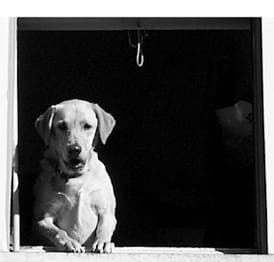
old dog looking out window

Recipe for Failure

It’s not enough that dogs are naturally inclined to become anxious when left alone. Many well-intentioned but misguided owners of new dogs inadvertently set the stage for SA by doing all the wrong things when they first bring their new dog home.

For example, lots of families adopt their new dog or puppy at the beginning of the summer, when the kids will be home to spend a lot of time with him. Other new-dog parents may take several days off from work, or at least arrange to bring the dog home on a Friday afternoon so they have the entire weekend to help the new kid settle in. On its face, this is a thoughtful approach to acclimating the dog to his new life. What better way to help him feel comfortable and welcome than to give him a couple of days of your loving company?

It’s true that spending extra time with the newcomer can help smooth the transition for him, but unless you take some important precautions, you could be setting him up for a rude awakening on Monday morning when you go back to work, leaving him alone all day to wonder and worry the pack is ever coming back to rescue him from solitary confinement.

Recipe for Success

The key to SA is to never trigger it in the first place. This is without a doubt one of those behaviors where it is well worth investing in many ounces of prevention, lest you end up spending many beginning with making a wise selection of your new family member.

Dogs adopted from animal shelters seem to have a higher than average incidence of SA. We don’t know whether this is because dogs with SA are more likely to be recycled through shelters by their frustrated owners, or because the stress of shelter life triggers SA in previously unaffected dogs. It’s likely that both explanations play a significant role. This doesn’t mean that you shouldn’t adopt from a shelter. It means that you need to look for signs of potential SA whatever the source of your new dog, and especially if you adopt from a shelter or rescue group.

Dogs who seem anxious in general are more likely candidates for SA, particularly those who are worried and clingy. Velcro dogs who won’t leave your side in the get-acquainted area, even though they have just met you, can be hard to resist. “She loves me already,” you think to yourself. “How can I possibly leave her here to face the risk of euthanasia?”

Indeed, that kind of instant bond can be very endearing in the moment. It is far less so when you get home from a hard day’s work to find your sofa cushions in shreds, and dog feces and urine smeared across the kitchen, or worse, a note from your landlord informing you that elderly Mr. Jones with a heart condition who lives in the apartment next door called 11 times today to complain that someone was screaming at the top of their lungs in your living room. If you do think that’s your furry soulmate glued to your leg in the get-acquainted room, do a simple test. Place an inexpensive pillow or cushion that you have purchased at Goodwill for this very purpose on the chair or floor, and leave the dog alone in the room for 10 minutes. Wait outside, close enough that you can hear any activity. Ideally, the shelter will have a one-way window into the room, so you can watch her but she can’t see you. Now, take note of what she does.

A certain amount of activity is normal. She might explore the room, playfully chew on the pillows or other dog toys, snuffle at the door, and stand up on her hind legs to look out the window. She might even whine or bark a bit to see if anyone responds. As long as she seems relatively calm, and settles down after several minutes, you’re not looking at SA behavior, despite her instant and endearing connection to you. You will still need to take precautions not to trigger SA once you get her home, but again, that’s easier than undoing an existing condition.

If, however, she charges in a panic from one end of the room to the other, digs frantically at the door, flings herself bodily at the window, shreds the pillow into tiny pieces and proclaims her distress vocally and insistently, you are looking at a serious behavior challenge. If you choose to adopt her anyway, be prepared to enter into a long-term, potentially costly relationship with a good, positive behavior counselor and a doggie daycare facility.

Puppies are less likely to come complete with a fully developed set of SA behaviors, but again, some are more likely candidates than others. Puppies will naturally exhibit some concern at being isolated from their littermates, but the pup who happily visits with you or explores his new environment is a safer bet than the one who shows immediate distress and a single-minded determination to return to his siblings. A conscientious breeder who makes an effort to separate littermates for brief, non-traumatic periods between the ages of six to eight weeks can help set the stage for a puppy who is able to tolerate being left alone when he arrives in his new home.

Pat Miller is a freelance author and a professional dog trainer. She is also a member of the Board of Directors of the Association of Pet Dog Trainers.

A Guide to Choosing the Best Dog Trainer for You AND Your Dog

So, you’ve decided that you and your dog need professional help. Don’t worry; all relationships can use a helping hand at one point or another. Maybe the two of you have communication issues that need to be dealt with (like your dog doesn’t listen and you wish he would!). Or maybe your bouncing bundle of fur is growing faster and bigger than expected, and you’re desperate for a constructive outlet for all that energy and enthusiasm. You’re sure that training is the answer to your problems – and you are probably right!

But how can you sort through piles of names given to you by well meaning friends, neighbors, your veterinarian, and the folks at the feed store? (We also recommend looking through the Trainer Search at the Association of Pet Dog Trainers web site, found at www.apdt.com. APDT is dedicated to building better trainers through education, promoting dog-friendly methods and encouraging their use.) Getting names is not the problem; figuring out which trainer will be just right for you and your dog is the first step in meeting your training needs. And the following five tips will help!

1. Look for a trainer who offers what you want

That may seem obvious. You want someone to help you train your dog – right? But different trainers have different skills and offer a variety of services. To really narrow down your specific needs and wants, ask yourself:

• Do I want a group class or individual training? Each has its benefits. For someone with a new puppy, a class offers essential opportunities for socialization. Plus, classes are less expensive than individual training. With individual training, however, you’re more likely to get personalized attention and have your specific needs addressed.

• Am I looking for general training or do I need help with a specific problem? If you are dealing with a behavior problem such as barking, separation anxiety or aggression, you may want to look for a trainer or behaviorist with experience in that area.

• Am I primarily looking for short-term training opportunities to help my dog become a happy member of my family, or do I have specific long-term goals such as obedience or agility competition? Some of us look for training classes because we love dog sports and hanging out with people who are as crazy about their dogs as we are.

Take Nancy Layton, for example. Layton, who lives in Aptos, California, with her mixed-breed, Dodger, and her Bearded Collie,Scout, plans to compete with both of her dogs in obedience and agility. “I was working with one trainer that I really liked, but her classes weren’t consistent enough for me,” says Layton who decided to train with a club that offered the structure she needed to prepare for competition.

2. Investigate different training methods
Trainers use a variety of techniques and methods. Most of the techniques do “work” to change behavior, but not all are gentle, kind, and humane. When choosing a trainer, it is essential to understand which training methods are both humane and effective. Positive reinforcement training, for example, works by rewarding what the dog does right. It is an effective, humane, and fun way to train. Dogs can easily (and happily) learn everything from basic manners to masters’ level agility using positive reinforcement techniques.

Positive reinforcement training is becoming more common all the time, making it easier to find good trainers who use reward-based methods. Two of the most popular positive methods are “lure and reward” and “clicker training.” Both use food as the primary reinforcement and both methods are very effective.

We would suggest that you steer away from “traditional” or military based-training methods that use choke or pinch collars. Training can be accomplished without correction-based techniques; force is not necessary to train dogs. In addition, we’d recommend that you run from any trainer that uses inhumane practices such as hitting, kicking, hanging, shocking, or any other action that can cause a dog pain or distress.

When asking a trainer about her training methods, listen carefully to her answer. As positive reinforcement training has become more popular, some trainers who teach using traditional correction-based methods have begun calling themselves “positive” trainers, too. To discover exactly how a trainer works, ask for a detailed explanation of how she would train a basic behavior such as “Sit.” In addition, ask how she would deal with problems like a dog not listening, a dog misbehaving in class, or a dog who displays aggression.

Best of all, ask to sit in on a typical beginner’s class and watch to see whether or not the trainer’s description of his methods actually matches what he practices.

3. Get a feel for the trainer’s people skills, too
A trainer is part teacher, part therapist, and part communications expert, and the right trainer will help you even more than she will help your dog. But let’s face it, most people who become dog trainers do so because they like or even love dogs, not because they are experts at working with people. So how will you know if a trainer who works well with dogs will really be able to teach you?

Again, your best bet is to go and watch a class and observe the students and their dogs. Do they appear to be relaxed and enjoying the experience? Do you understand the trainer’s explanations? Are suggestions offered to students in a way that you feel good about? Are problems handled so that all involved appear satisfied? Or do the students look puzzled or frustrated?

Most important, however, is that the trainer is able to make it clear to you what is working and what isn’t – and what specifically you can do to fix problems. This takes observation skills, communication skills, and diplomacy. Layton notes that feedback she receives must come in a way that feels supportive, not punitive. A good trainer really needs to be able to “positively reinforce” what the person does right, as well as what the dog does right.

4. Check out the trainer’s level of experience
The length of time a trainer has offered professional services doesn’t determine her ability, but it is a gauge that should contribute to your decision. Someone who has less professional training experience but good skills, for example, may be great for a basic training class. In fact, newer trainers often bring to a class enthusiasm, energy, and creativity that a trainer who has taught for a long time may have lost.

However, a less-experienced trainer may not be the best choice for a class that offers specific activities that require overall behavior knowledge and experience. Take off-leash “play time” as an example. During off-leash socialization (even with puppies), a trainer really needs to be skilled at reading canine body language, predicting interactions, and intervening appropriately when necessary. This takes specialized skills. And a trainer without extensive experience and knowledge might not be the best choice for serious problems such as aggression.

How can you assess a trainer’s experience and knowledge? Ask how long she has worked as a professional trainer and how she learned to train. If your dog has a specific behavior problem, ask if she has dealt with this problem before. Remember that a good trainer will acknowledge what she doesn’t know, as well as what she does know.

Most importantly, trust your instincts. If the trainer “feels” like a good match, she probably is. On the other hand, if you do not have full confidence in a trainer’s ability to help you and your dog, you will be less likely to follow her prescribed plan of action and less likely to have success.

5. Cost and convenience count
While it can be said that you get what you pay for, it is equally true that for most of us a training class needs to be both affordable and convenient. A single class can get you started, but many people need or want advanced training opportunities. And the simple fact is, if you can’t afford the classes, you’re not likely to stick with it!

Changing personality?
After you’ve done your research and found a trainer to help you solve your canine relationship problems, all you have to do is get busy and train, right?

Right – but stay alert to apparent “shifts” in your trainer’s training philosophy or methods. If at any time you and your dog seem to frustrate the trainer, or knock up against the limits of her abilities to solve her student’s problems in a positive fashion, you may want to consider taking a break from training and reconsider your choice.

Less experienced trainers (or those who are, deep down, less committed to positive methods) may not have learned to cope with every type of canine behavior issue or with every dog “personality” positively. While it would be ideal if the trainer was the one who recognized his inability to deal with a given situation and gave you a recommendation for another trainer, it’s fairly rare that this happens. If your trainer begins to use punitive methods, citing your dog’s extraordinary “stubbornness,” “disrespect,” or any other trait as justification for force-based methods, politely excuse yourself from the class, and look for a new trainer. Believe me, there are positive trainers who can deal your dog – no matter how rowdy – without resorting to violence.

If your own commitment to positive methods needs reinforcement, I suggest you read Don’t Shoot the Dog by Karen Pryor and Culture Clash by Jean Donaldson. Both of these internationally renowned trainers, leaders in the modern dog training field, bolster the argument for positive training by describing how dogs think and learn. Dogs can and do learn to perform specific behaviors in order to avoid punishment, of course, but they are pleasure-seekers by nature. It’s far more effective, both of the authors conclude, to inspire the dog to figure out what behaviors will result in pleasurable rewards. This not only produces a dog who is motivated to do “the right thing,” but also preserves an affectionate, trusting relationship with his handler.

With good luck, good training, and lots of hard work, you’ll soon be over the rowdy dog blues and on to a fulfilling and happy relationship with your canine pal.


Iams vs. Nutro: An Update

0

It’s unfortunate that The Iams Company was not given the opportunity to provide relevant background information and a scientific point of view prior to the publication of “Iams vs. Nutro: A Dog Food Labeling War,” in the May 2001 issue. Here are the facts.

For more than 50 years, the Iams Company has manufactured premium pet food, and our company mission is to enhance the well-being of dogs and cats by providing world-class quality foods.

The feeding guidelines for Iams Dog Foods are based on: (1) extensive experience making, testing, and selling our premium products; (2) the professional judgement of Iams veterinarians and research nutritionists; (3) the collective judgement of independent experts at universities throughout the U.S.; and (4) direct feedback from Iams Customer Service representatives who respond daily to consumer questions about feeding. If dogs were having problems from underfeeding of Iams products, we would be the first to know.

Veterinarians, pet owners, and statistics from across the country tell us that obesity is a serious nutritional problem for dogs, which can lead to a variety of ailments. Proper feeding management plays a key role in helping dogs maintain a healthy weight, and The Iams Company creates feeding guidelines with the dogs’ well-being in mind. These guidelines are carefully designed to help dog owners feed the right amount of food to achieve the best outcome.

Two years ago, we began updating our feeding guidelines for Eukanuba and Iams Dog Foods – lowering the amount of food we recommend dogs be fed each day. Feedback from pet owners, veterinarians, and breeders over the past two years has reinforced the fact that we made the right decision.

Why would a pet food company recommend consumers to feed less of its food? Iams made that recommendation with the health of its consumers’ pets in mind. The allegation that Iams reduced the recommended feeding quantities to lower the cost of feeding is false. The vast majority of Iams’ advertising involves building consumer awareness and brand recognition. We focus on educating pet owners about the nutritional benefits of feeding Iams and Eukanuba products. The cost or value message has never been the focus of our advertising.

While the misinformation about feeding guidelines is unfortunate, it’s not surprising given that Iams’ recent growth and success in the pet food industry has affected our competitors. Today, Iams’ is investing more in research and development, manufacturing, selling and marketing our premium quality products than ever before.

Ultimately, pets and their owners are the real winners as it relates to our feeding guidelines. We take our business very seriously and we will continue to take appropriate steps to protect our reputation as a world leader in dog and cat nutrition.

We appreciate this opportunity to set the record straight, and we encourage any pet owners who have questions about Iams and Eukanuba products to contact Iams Customer Service at (800) 863-4267.

-Daniel Carey, DVM
Director of Technical Communications Research and Development
The Iams Company, Dayton, OH


We read with great interest your article “Iams vs. Nutro.” We feel compelled to point out a few things relevant to the last sentence in your article, which states, “It seems that opportunities for corporate profits will always prevail over the needs of consumers and the health of their animals.” This may apply to Iams, but not to Nutro and other competitors who should not be painted with the same brush. Nutro’s objective was and remains to ensure that consumers are provided with accurate information with which to make informed purchasing decisions. We do not expect you to believe it simply because we say so, but ask you to consider the following:

1. When Nutro discovered and confirmed the misrepresentations being made on the Iams label and in related advertising (and confirmed the unhealthful weight loss suffered by dogs fed off the Iams label), Nutro did not seek a competitive advantage by going to the marketplace with this information. Instead, Nutro went to Iams and appealed to Iams privately to correct its statements to the benefit of consumers and their animals.

2. Kal Kan, another competitor, filed a similar lawsuit concerning Iams’ false and misleading feeding instructions.

3. A consumer class action was also filed in California seeking to vindicate harm to consumers that resulted from Iams’ false statements.

Nutro’s conduct, Kal Kan’s conduct, and the consumer class action in California all have as their central objective ensuring that consumers receive accurate information. That is far different from Iams’ conduct, which clearly evidences support for your concern that “opportunities for corporate profit will always prevail over the needs of consumers and the health of their animals.”

-Jerold I. Sicherman
President, Nutro Products, Inc.
City of Industry, CA


Interesting, isn’t it? We’ll keep readers posted on developments in this conflict.

Download the Full June 2001 Issue

0
To continue reading this article or issue you must be a paid member.

Join Whole Dog Journal

Get full access to Whole-Dog-Journal.com – more than 4,000 articles – for just $20.
Join today and save 30% off our full price.
Already a member?
| Forgot your password? | Activate Web Access

Dog Parks Help Socialize and Exercise Dogs in a Safe Environment

Summer is upon us, and with it comes an irresistible urge to enjoy the great outdoors with our best canine friends. It’s good for them, fun for us, and besides, trainers and behavior counselors are forever reminding us that a tired dog is a well-behaved dog.

But where can we go to take our dogs out for a high-energy, off-leash run? Regular walks on leash don’t even come close to addressing the exercise needs of most dogs. The result is an exacerbation of canine behavior problems including aggression due to lack of socialization, to destructive behavior, hyperactivity, and separation anxiety.

The best solution to the “place to run” dilemma is the dog park. More and more, savvy community leaders are building fenced areas where dogs and their owners are encouraged to run, play, and socialize together. The concept has caught on and is spreading.

If you are fortunate enough to live in one of the communities that boasts a dog park you may have already availed yourself of its benefits and discovered the joys that such parks have to offer. If you just haven’t checked out the park yet, or don’t go very often due to problems you’ve had with your dog there in the past, see “A Walk in the (Dog) Park.”

But if your town lacks a dog park, read on! You could be an integral part of a movement that improves the quality of life for all your city’s dogs – and their neighbors!

Many benefits
Twenty years ago dog parks were a rarity, but today there are hundreds of safe, dog-centered places for recreation, and that’s a good thing! Here are just a few of the ways that a well-designed dog park can benefit the people in a given community:

• Time spent in a dog park helps socialize and exercise dogs in a safe environment, resulting in well-adjusted companion dogs with fewer behavior problems. This can thereby reduce the number of “nuisance dog” complaints sparked by bored, restless dogs who bark, as well as reduce the number of dogs surrendered by their owners to local animal shelters (with a corresponding reduction in euthanasia numbers).

• The availability of a safe, pleasant dog park attracts dog owners to that site, reducing the presence of dogs in multiple-use areas, and preventing off-leash dogs from infringing on the rights of other community residents and park users, such as joggers, small children, and those who may be fearful of dogs.

• Dog parks can provide an accessible place for elderly and disabled owners to exercise and enjoy their canine companions.

• Use of dog parks promotes responsible pet ownership by giving people the opportunity to allow their dogs to run off-leash legally.

• Informal meetings between people with shared interests – dogs! – are ideal for educating owners about responsible dog care and training.

Dog park detractors
But it’s a fact of life in America that no good idea goes uncritiqued. While dog park supporters seem to be outnumbering their detractors, many criticisms (some valid, some ridiculous) have been used to try to torpedo dog park projects in some communities. These include:

• Dog parks can mean dogfights, resulting in injury to dogs or people

• A dog park will result in accumulations of dog waste and human litter

• Loose dogs are a threat to wildlife living in the park area

Fortunately, the majority of these concerns (and most others you can think of) can be alleviated if a dog park is carefully planned and executed. The very fact that dog parks have been in operation for years in so many communities can help proponents of new projects.

While the dog park pioneers had to figure out what works and what doesn’t by (costly) trial and error, there is now very good information about the best ways to design, build, and manage facilities. If organizers in your town draw on the best examples of successful parks, they can build a new park that will minimize any negative impact on the community and maximize the safety and enjoyment of all who use it.

Overcoming objections
Today, many successful public dog parks are maintained under the auspices of a “user group” – dog owners who frequent the park regularly, educate new users, and help enforce park rules. These user groups can be a valuable resource for educating both the park visitors as well as civic leaders who may have concerns.

For example, the presence of an active user group significantly reduces the risk of one concern expressed by many: dogfights. User group members will step in and encourage (or demand) leashes on or the removal of aggressive or out-of-control dogs. They also help novice dog owners learn how to read their dogs’ body language and intervene appropriately when a conflict seems imminent. (While it can be difficult to “sell” a balky city council on the added expense, it is very helpful to plan the park with two or three separate enclosures. Conflict between large and small and/or bold and timid dogs can be vastly reduced if at least one area is designated specifically for the little and/or shy guys.)

A user group can also ensure that the “accumulations of waste” issue never piles up. Peer pressure is the best insurance against waste disposal problems. If the culture of the park users is such that they consistently clean up their own dogs’ waste (and the occasional unclaimed pile), it will become obvious that they don’t tolerate irresponsible owners who don’t scoop poop.

In fact, the dog park culture can serve an important educational function and public service by teaching unaware dog owners about the importance of cleaning up after their dogs everywhere, not just at the park. Park users can also be instrumental in educating newcomers about disease and parasite prevention and control.

Members of the user group can also help determine what rules will guide the behavior of park visitors, human and canine. Well-run dog parks have clear rules prominently posted at all park entrances.

Rewarding activism
Don’t panic if all of this sounds like a daunting task; you will be amazed at how many like-minded dog lovers there are in your community who would be more than happy to help get a local park built. You won’t have to sell dog owners on the park’s benefits!

However, when dealing with people who have little experience with dogs, be prepared to explain, over and over, how such a park will benefit the humans who happen to own dogs – as well as their neighbors! City leaders may never enjoy the vision of well-socialized dogs playing and running off-leash the way we do, but they should be able to appreciate how much quieter the evenings are, as the tired, happy dogs of your community snore peacefully through the night!

Also With This Article
Click here to view “How To Raise A Well Socialized Dog”

-By Pat Miller

Pat Miller is a freelance author and a professional dog trainer in Fairplay, Maryland. She is also a member of the Board of Directors of the Association of Pet Dog Trainers.

Comparing the Best Raw Dog Food Diet Plans

0

Have you ever noticed that dog owners tend to select one expert to follow in the area of nutrition and another for training? And they’ll often adhere to their personal guru’s program no matter what? Is it our unconscious dog-like loyalty, or what?

Many of our readers are already preparing their dogs’ food themselves, and generally, they are following the guidelines of some canine nutrition expert. We hear three names a lot – Dr. Ian Billinghurst, Kymythy Schultze, and Wendy Volhard are mentioned most frequently – and they are often being compared to the others.

However, many more of our readers have not yet sorted out the differences between the raw diets being promoted today. To help the readers who fit this description understand the differences between the leading raw food gurus, we present (via the links below) our own objective comparisons of the competing diet plans.

Interestingly, each of the three experts we spoke to had different foods on their lists of desirable ingredients and inappropriate ingredients – despite the fact that each characterizes their nutritional plans as recreations of a dog’s “evolutionary diet.” In other words, their ideals and goals are the same, but the routes they take to there are quite divergent.

Also very dissimilar are the personal styles with which our three experts approach the task of feeding dogs for optimal health. This should come as no surprise; each of these knowledgable people have strong personalities – necessary, perhaps, for buck-ing the commercial dog food establishment! Interestingly, their personalities are reflected in their diets, and their diets, in turn, tend to attract dog owners with similar personalities.

For these reasons, we couldn’t begin to rank these diet plans; it wouldn’t make any sense for us to tell you which one we think is “best” for your dog. In our opinion, based on our research and observations, each of the experts we interviewed has a viable and valuable plan for improving the health of your dog. But you are the person who has to plan ahead, purchase, prepare, and serve the foods to your dog; you have to approach the task with confidence, and take responsibility for the results. Choose the approach that makes the most sense and feels best to you.

Even more to choose from
Please note that there are dozens more raw feeding proponents who promote different “natural” diets for dogs, several of whom have also published books and articles and who frequently lecture on the subject. For this article, we decided to focus on the three people whose names we hear most frequently from our readers. We will examine some of the other leading experts in the field of raw diets for dogs in future issues.

For more information about the raw feeding experts discussed in the above article, refer to their books – each of which is available through DogWise (800-776-2665 or www.dogwise.com) – or the expert’s personal web pages:

Dr. Ian Billinghurst: www.drianbillinghurst.com.

Kymythy Schultze: http://home.earthlink.net/~affenbar/.

Wendy Volhard: www.volhard.com.

-By Nancy Kern

Another Round of Dog Toy Testing – A Focus on Safety, Durability and Cost

0

Testing new toys! This is always our favorite assignment, since we get to spend lots of time playing with our dogs. We have once again perused the pages of various dog supply stores, catalogs, web sites, and trade shows to find a selection of new toys to review. This time, we found a greater than usual percentage of delightful surprises, though we were, as usual, also disappointed a few times.

All in all, remember that proper toy selection is a very individualized venture – you must keep your own dog’s interests, propensities, and chew power in mind when shopping for her.

The reviews here are based on the following criteria:

Dog appeal and human appeal
Obviously, a toy should be attractive in texture and overall appearance; just as obviously, appeal can vary widely from dog to dog and person to person. One dog’s absolute favorite toy might be the next dog’s “Booooring!” But the whole purpose of a toy is to entertain a dog – and, to a slightly lesser extent, the people who enjoy him. Ask any trainer and she will tell you: A bored dog is often a destructive, “misbehaving” dog. Playing with toys can keep a lonely dog busy, give an undermotivated dog incentive to interact with you, and give you endless opportunities to enjoy each other. So, the toy has to look and feel . . . fun!

Safety
Toys should pose no casual danger to the dog. Any toy can be chewed up by some dogs, even the incredibly durable black Kong toy. The toy assortment that is suitable for aggressive chewers is much more limited than the variety of toys for dogs who don’t tend to chew up their toys. But no toy should begin to come apart after just a minute or two of play, exposing dangerously small or toxic components, such as stuffing or threads that can cause internal problems if swallowed.

Even though we deplore the lack of garden variety common sense that necessitates warning labels on dog toys, we like to see safety warnings included with every toy. Most people need to be reminded to supervise their dogs with every toy, and to buy appropriately sized toys for their dogs (no dog should have a ball that he could accidently swallow, for example). If a toy poses special risks – say, a toy that includes rope that contains long threads – then the label ought to include warnings specific to that toy. (For instance. “Do not allow your dog to chew up or swallow the rope or rope fibers as these can cause damage to the gastrointestinal tract.”)

Durability
While the perfect chew object for Tiffany may be shredded in an instant by Jaws, you want the toy to provide at least a few weeks or months of entertainment. At least, we do! We really don’t fancy spending an appreciable percentage of our monthly budget on toys that last only hours or days.

Cost
The above statement notwithstanding, we’re willing to pay more for something that provides tons o’ fun and lasts forever. If it doesn’t meet these criteria, it had better be cheap!

Top new toys
We had better discuss the PitBall while we are talking about spending small fortunes. Yes, this is a fabulously expensive toy; at $129, it’s not a casual purchase for most dog owners. But the PitBall is a be-all, end-all toy for ball-obsessed dogs; it’s not your average dog toy. Think of it as playground equipment rather than a toy, and the price sounds better. For the right dog – one who loves to chase balls and constantly has excess energy (read Border Collie or Jack Russell Terrier), the PitBall can be a godsend.

Created by Gary Bessette, owner and operator of the Puppy PlayGround in Ormond, Florida (see “Members Only clubs For Dogs,” below.), this toy consists of a molded plastic ring, five feet in diameter, and a hard plastic ball, too large and too hard for a dog to pick up in his mouth. The ring is shipped in three pieces, which snap together easily and can be staked to the ground. The concept is simple – the dog chases the ball around and around and around the ring until he gets bored, tired, or until the owner puts the ball away.

Several of our test dogs had no interest in the PitBall – chasing a plastic ball around in an endless circle just wasn’t their thing, and they couldn’t be bothered. Our Scottish Terrier tester showed moderate interest and played with the ball for a few minutes. We left it out for him to play with, and about once a day he will take a turn in the pit, romping with the ball for about five minutes before he gets bored with it. (He did manage to push the ball over the top of the ring once, and thought it was much more exciting to chase the ball around the entire fenced back yard – until it got stuck in a low corner.)

Our Jack Russell tester was another story. He quickly became addicted to the toy; he couldn’t get enough of it. He harassed the red ball mercilessly until we put it away, fearing that the little guy would overexert himself. Every time we brought the ball back out, he ran to the “pit,” ready for play. PitBall proved to be a perfect outlet for his over-the-top JRT energy. There was only one problem: he, too, became adept at flipping the ball out of the ring, and he was just as happy to chase it around the yard. We’ll need a much heavier ball to keep him in the pit.

If your dog loves to chase balls and leans toward obsessive behaviors and hyperactivity, this might be your ticket to a happy, tired pet and a calmer household. Just don’t let him overdo it – be sure to restrict his PitBall activity to a healthy level – physically and mentally.

Stuck on a stick
Boy, were we skeptical about paying $15 for a stick to throw for our dogs, especially since we figured that our moderately hard chewers would turn it into toothpicks in no time. We were delightfully surprised; we have been using the stick for more than two months now, and whatever “non-threatened hardwood” it is made of is pretty darn tough – our dogs’ teeth have barely made a mark on it. We love the Fetch!

Fetch is a 12-inch piece of hardwood, rounded on the ends and tapered in the middle, and, according to the amusing booklet that comes with it, is individually hand-tooled, rubbed to super smoothness, and safe, durable, and non-toxic. It’s almost more a work of art than a dog toy! The maker of the Fetch says it should last forever. We believe it. Our dogs certainly hope so. Of course, we don’t leave it out for them to chew on when we’re not playing fetch, but still, we expected more damage than this.

Our only caveat is that it’s heavy and solid enough that you need to be careful with your aim; you wouldn’t want to bonk your dog on the head, and you wouldn’t want him to try to catch it in his mouth – it might break a tooth!

Getting a handle on it
We wouldn’t want the job of inventing a new type of ball, but the maker of the Action Ball has certainly gotten creative with the task. The Action Ball is essentially a regular ball – it comes in a football, soccer ball, or basketball model – with tough nylon straps harnessed around the ball with two rope tugs extending at opposite ends (look at the photo, above center; it’s hard to describe!).

Our dogs thoroughly enjoyed playing with the ball: chasing it (it’s too big to bite) and carrying it around by the ropes. They play with it by themselves, with each other, and with us. Our 75-pound Cattle Dog mix, Tucker, will grab one rope and drag 20-pound Dubhy around, firmly attached to the other. After more than two months of hard play, our soccer ball is slightly deflated, but still round and very usable (the ball can be easily reinflated with a bike pump and special needle for this purpose). The nylon straps are still intact, and the rope tugs, while somewhat shredded, are still serviceably tuggable.

The Action Ball is one of our dogs’ all-time favorite toys (and ours!). It meets our criteria for a safe tug-of-war toy – long enough that dog teeth stay far away from human flesh, and the ball neatly prevents the dog’s grip from creeping higher and higher up the rope – a hazard with some tug toys.

Improving the tennis ball idea
We were happily surprised by the durability of this simple toy – a hard, hollow, rubber ball, about four inches in diameter and covered with a tough patterned plush.

We’ve never been able to confirm rumors that ordinary tennis balls contain harmful adhesives (or something), but we’re happy to see the manufacturers claim on the ZooBeez balls that the products do not contain toxins of any kind. Dogs who are more determined than ours to dismantle a ZooBeez ball might succeed in doing so, but our ball has held up quite well in the jaws of some pretty tough testers, with no visible signs of damage after two months of dog exposure. While this toy lacks some of the novelty and excitement of our top choices, it is an attractive, sturdy, usable, and affordable item worth adding to your dog’s toy box.

(Not so) tough
These soft toys are so cute, and since they are advertised as “tennis ball tough” we had high hopes that we had finally found a sturdy, soft chew toy. Our hopes were quickly dashed. It took our test dogs fewer than three hours to pop the seams of our adorable Tennis Tough horse (it comes in several animal shapes) and pull out the stuffing.

True, the outer cover itself is tough, and our dogs tossed around the empty horse shell for several days after we removed the stuffing and squeaker, before we finally threw it out. At that point the seams had deteriorated even further, so we were finding pieces of blue horse all over the house.

This is a great soft toy for gentle chewers; two of our dogs would have treasured this toy for years if not for their destructive siblings. If the maker could just find a way to make the seams tougher, it might hold up for stronger chewers, too.

Not comfortable
This 16-inch-long product pictured in the catalog looked like it had great potential to be a safe and sturdy tug toy, with interesting shapes for the dog to grip.

Sturdy it is, indeed. We purchased the “Chew Bar and Inner Tube” model, and found that the plastic bar and tube are so hard that our dogs didn’t even like to hold onto them, preferring instead to grab for the soft nylon rope that holds the pieces together. This put our canines’ canines uncomfortably near my hand, which was holding onto the uncomfortable green plastic handle.

(Note: Contrary to some trainers’ philosophies, we like playing tug-o-war with our dogs. For safety rules and training advice, see “Play and Train by Tugging,” March 1999.)

The same product designed with a little more give in the plastic parts might be a winner, but for now, we’ll pass on this one.

No date for Bettie
The Bettie is an attractive three-legged throw toy, eight inches across, made of a non-toxic rubbery material. The packaging promises that the “buoyant material makes water play fun,” that the “chewy hollow legs” can hold tasty treats, that the “lightweight construction makes throwing a breeze,” and the shape makes it “perfect for tug-o-war.”

Well, it does float.

A small note on the back of the pakaging says, “not recommended as a chew toy.” We concur. It took our Scottie tester a total of three minutes to destroy the Bettie. Even a few retrieves with a dog who mouths the retrieve object at all would do terminal damage to the Bettie, and tug-o-war is out of the question. If you have a soft-mouthed retriever who doesn’t bite down at all, the Bettie might do it for you. Otherwise,your dog is far better off with a Fetch stick.

-By Pat Miller

Classical Conditioning for Dogs

When Maggie, a young Australian Cattle Dog-mix, first walked into our agility training yard, she was obviously scared. As I crouched near her, hand outstretched with a treat, she slunk away. When another dog moved on the opposite side of the yard, she jumped. When her handler led her gently past a tunnel, she tried to escape and run away. When a truck drove by on the street nearby, she cowered.

Maggie was, quite literally, afraid of everyone and everything. I’m sure that if the sun had been out that day, she would have been afraid of her own shadow.

Yet this morning, less than a year later, Maggie confidently marched into the same training yard. She approached another dog, tail wagging. She excitedly ran up to each person in the class (including a couple of people she did not know) asking for attention and treats. Then, at her handler’s direction, Maggie leaped through the tire jump, raced over the A-frame, ran through the tunnel, jumped three jumps, pushed through the chute, and banged down the teeter. And she did all of this while cars and trucks noisily passed on a nearby street.

How did Maggie overcome her fears and learn to confidently approach strangers, interact with other dogs, and charge through an agility course all the while tuning out loud rumbling trucks? The key was a powerful learning experience called classical conditioning.

How Classical Conditioning Works for Dogs (an Humans)

Classical conditioning, quite simply, is learning by association. It is when a person or animal associates one stimulus with something that was not previously associated. For example, if you ran an electric can opener in front of a dog who had never eaten anything out of a can before, he may not respond to the sound in any way. But if you begin feeding the same dog canned food, he’ll soon learn to associate the sound of the electric opener with the advent of his dinner, and begin to display great excitement whenever the electric can opener runs.

Classical conditioning happens everywhere, all the time, with or without our help or knowledge. Most of us have dogs that get excited when they hear the jingle of keys. A set of keys, by itself, has no special meaning for dogs. But when those keys are linked with walks or car rides, they can trigger as much excitement as the walks or car rides themselves.

While classical conditioning occurs naturally, we can also consciously use it as part of training and socialization. Classical conditioning is one of the most powerful (and often underutilized!) training tools available.

Using Positive Association in Dog Training

Classical conditioning differs from other types of training; in fact, it’s not training, per se, although it can play an important role in the training process. The goal of training is to get the dog to exhibit certain behaviors – or cease to exhibit certain undesired behaviors – on cue. For example, you want the dog to sit when you use a verbal cue, or you want to teach the dog not to jump up on you. Most training is accomplished through the use of operant conditioning, the use of rewards and/or punishment to encourage or discourage the dog from displaying certain behaviors. Praise, petting, or feeding a dog treats when he is sitting increases the likelihood of his sitting behavior; punishment such as ignoring the dog and turning your back on him will decrease his jumping behavior.

With classical conditioning, on the other hand, changing the dog’s behavior is not your immediate goal, but rather, a “backdoor” sort of result of changing his feelings about a given stimulus. Your immediate focus is how the dog feels; you use classical conditioning to make the dog unconsciously react a certain way. This is called a conditioned reflex. The power of classical conditioning comes from its ability to help shift the emotional reactions that drive his behavior.

To use Maggie as an example, we used classical conditioning to help her relax and enjoy being in the training yard. The process was simple: her handler showered her with great treats each time she came into the training yard. Within a few weeks, Maggie’s fears started to subside; strange people, new dogs, spooky obstacles, and noisy trucks no longer triggered a fear response – these things now meant treats! She quickly began relaxing while in the agility yard and anticipating the treats she would receive there. Soon, we were able to start teaching her agility.

As I said, even though classical conditioning does not train a dog to perform behaviors on cue, it can play a powerful role in a behavior modification program.

Dog Clicker Training and Other Reinforcement Tools

One of the most common ways to use classical conditioning in a positive training program is in the initial steps of clicker training. The clicker, at first, has no special meaning to the dog. But as soon as the Click! of the clicker is repeatedly paired with great treats – also known as “charging” the clicker – it becomes a powerful tool in training. The “charged” clicker elicits the same emotional response in the dog as the treat itself.

Classical conditioning can also be used to help dogs learn to accept training tools that they don’t like at first, such as head halters, muzzles, or crates. Take head halters as an example. Many dogs will, without conditioning, resist or even actively dislike wearing a halter. But through associating pleasant things with the halter, most dogs can actually learn to love wearing one. At first, you might give your dog treats when you take out the halter. Next, you give your dog treats, praise, and other enjoyable attention while you hold the halter near the dog, and eventually, you lavish this enjoyable treatment on the dog while he wears the halter. Once the dog can wear the halter without any signs of distress, you can reinforce the conditioning by always having the halter signal the start of fun activities: walks, ball play, training, and other adventures.

Positive Reinforcement and Dog Socialization

Behaviorist and author Jean Donaldson, who directs the behavior and training department at the San Francisco SPCA, calls the use of classical conditioning in conjunction with early socialization “a puppy insurance policy.” Each time you pair the presence of children with treats, for example, you are paying into an insurance policy that will protect you and your dog from behavior problems around children later in life. The more you put into the insurance policy, the bigger your protection! Here’s how it works:

By introducing a puppy or young dog to kids of all different ages, he will be more likely to accept kids. When you provide classical conditioning through feeding treats in the presence of children, the dog will not only learn to accept kids, but also will learn that when he is around kids, good things happen. If you also have the children actually feed your puppy treats or play his favorite game, he will learn that children not only equal good things, but also are the source of good things!

If you incorporate classical conditioning in all of your socialization efforts, you are more likely to have a dog who not only likes the things he’s already encountered, but may also learn to simply enjoy new experiences.

Reassociating Sources of Dog Anxiety

Classical conditioning is a good tool for helping the dog to overcome most types of fears, including fear of people, noises, and new places. One of the great advantages of using classical conditioning to overcome a dog’s fears is that you don’t have to know why the dog is afraid. You just need to figure out what she is afraid of and then condition her to “like” that thing.

For example, a dog that is afraid of umbrellas may be afraid because she hasn’t seen many umbrellas, because an umbrella bopped her on the head when she was a pup, or maybe because a person carrying an umbrella looks like a big, bad monster. You may not know what caused the fear, and truthfully, you don’t need to know in order to help your dog overcome her fear of umbrellas. (See “Putting Classical Conditioning to Work,” below, for step-by-step instructions for using classical conditioning to dispel your dog’s fears.)

Decreasing Fear and Aggression in Dogs

Fear and aggression are usually considered flip sides of the same problem. Dogs that respond to stressful situations with “flight” are considered fearful. Dogs that respond to stressful situations with “fight” are considered aggressive. But the underlying stress reaction may be similar.

I became intrigued with classical conditioning because of my own dog’s problems. Jesse has displayed fear-based dog-to-dog aggression on numerous occasions. I consulted another trainer for this problem, and together we worked on helping Jesse overcome her aggression through remedial socialization, teaching incompatible behaviors, and management.

After years of work, and lots of help from the trainer, Jesse could walk down the street past another dog without acting out, she could perform in dog classes, and she even learned to safely negotiate with other dogs in off-leash play areas. Still, while Jesse was under good control and had improved social skills, she was never relaxed or confident when other dogs were present. And, if her stress level shot too high, the aggressive behavior would resurface.

About a year ago, we began to incorporate large doses of classical conditioning into our work with Jesse. Each time she saw another dog – no matter what she was doing – we showered Jesse with treats. Within six months, her stress response around dogs was noticeably lower. Last week, for perhaps the first time in her life, she stood in the center of a small group of dogs, tail wagging, relaxed, and confident. I would in no way consider her “fixed” at this point, but she is farther along than I would have thought possible just a year ago.

Watching a dog (or cat, or person, or any animal for that matter) overcome a strong fear is a magical experience. So is seeing our dogs becoming calmer and more confident in everyday and especially in strange, new environments. When a dog can learn to relax or even enjoy things that used to be scary, life becomes easier. Quality of life for both of you will dramatically improve.


Download the Full May 2001 Issue

0
To continue reading this article or issue you must be a paid member.

Join Whole Dog Journal

Get full access to Whole-Dog-Journal.com – more than 4,000 articles – for just $20.
Join today and save 30% off our full price.
Already a member?
| Forgot your password? | Activate Web Access

Remedies for Your Flea Problem and More

0

Natural Flea Solutions

Regarding the natural flea-erradication tactics you published in the June issue: Trying to pick fleas off of my 18-year-old Timber Wolf can be a very dangerous proposition as she regards those fleas as hers to eat! Nor does she tolerate the application of powder or sprays. So what I have done through the years is apply a little caster oil to the base of her tail and above her hips. When the fleas run up over her back and through the oil, it suffocates them. You have to heat the oil slightly and rub it down to the skin with your fingers. I do this two or three times a year, washing off the old caster oil and drying the fur thoroughly before applying the new. She still gets fleas, as we walk through the woods every day, but in a couple of days they are gone.

She also suffers from separation anxiety (also mentioned in the June issue). When I leave the house now I leave the TV on and place a small cardboard box on the floor that she can tear up. This saves the rest of the house and the TV puts her to sleep, until I can return.

-Tom Stewart
Freeport, PA

———-

I use a number of the preventive measures that you mentioned in “Fighting Fleas Naturally,” but I also do an additional one. Feeding fresh garlic to my dogs helps reduce the numbers of flees that I find. I have three dogs, and each weighs between 70 and 90 pounds. They each get one teaspoon of garlic twice a day with their food. I mix the garlic in a food processor with olive oil. They prefer extra virgin first pressed olive oil. I mix enough oil in to get a paste and start feeding them small amounts in mid-June, the start date for fleas in my part of New England. I slowly increase the amount over a few days until I get to the one teaspoon twice a day. I have gotten success only using fresh garlic. Bottled and dried just didn’t seem to help.

Overall, I’m extremely happy about Whole Dog Journal. I’ve been showing it to other dog lovers, hoping that more people will turn to “alternative” methods first.

-Mark Valery
Billerica, MA

———-

More Than Expected

I just received my first issue of Whole Dog Journal and I must say it is far more than I expected. It is full of valuable things you should know about your dog. I have a Maltese I love dearly and I always want the best for her. I especially enjoyed “Herbs for Common Canine Ailments” (Volume 1, #4), since I’m a herb grower. I always rub my dog’s fur with penny-royal after her nightly brushing, and I really enjoyed Nancy Kerns’ editorial, “What’s Best for Dogs.” I’m looking forward to each issue from now on.

-Eunice McGarvey
Palmyra, PA

———-

We Love The Buster Cube

To defend the Buster Cube (reviewed in WDJ Vol. 1, # 3): It arrived at our house by UPS at 5PM. Pepper, a mix we got from a shelter, got very frustrated that first night but the next day had it figured out. A few days later she could maneuver it out of tight places. I put a cup of food in it every day, and one cup in her bowl. She eats it whenever she gets hungry.

I enjoy WDJ; it’s very informative. I was very glad to know about the propylene glycol in treats. We no longer buy that kind. I look at the ingredients in dog food now, as well as our food!

-Darla Terry
Sierra Vista, AZ

———-

A Better Biscuit?

Your Journal fills a huge void! I can now begin to make my own educated decisions regarding the well being of my dogs. You have already helped me decide on an alternative to antibiotics for my dog’s giardia; the goldenseal worked! (“A Garden of Benefits, WDJ Vol. 1, # 4). In the future, please include suggested dosages when you write about these alternatives).

My only complaint is that you wasted valuable space in your journal complaining about MLM companies! There are retail stores with annoying pushy sales people as well – I find that a simple “No, thank you,” works to halt the pitch. You must have been very annoyed with them!

Keep the important information coming!

-Ava Eskin
Durango, CO

The Best Dog Food Bowls

Consider your dog’s dinnerware, a topic more complicated than you might have thought.

A visit to your local pet superstore, for example, will reveal dozens of choices, in plastic, stainless steel, glass, nylon, ceramic, and possibly aluminum. Among them are many simple, practical and economical models, meant for long-term everyday use, which are the focus of this article.

Of course, bowls also come in a million different “specialty” models – to feed automatically, repel ants, resist spilling, fold up for travel, and so on. But in essence, dog bowls function in pretty much the same manner: they hold food or water. You can spend a few dollars on a practical stainless steel model, or a few hundred for a kidney-shaped granite job with legs. What’s most important, however, is not what they look like or how much they cost, but whether they contain that food and water without contaminating it with any chemicals of their own!

Many people are unaware that certain types of dog dishes (and people dishes!) are capable of leaching dangerous substances into the foods and liquids that fill them. Concerns have been emerging for some time, for instance, about the use of aluminum cookware, and the possibility of lead poisoning from unsafe pottery glazes. Some experts believe that carcinogenic substances can seep out of plastic dishes, too.

But there are so many attractive, inexpensive, and perfectly safe products on the market – including products made for humans – that there is really no reason to take a chance with your dogs. After all, they might use the same dishes day-in and day-out throughout their lifetimes.

Purpose-Built Dog Food Bowls

If you’re like many dog owners, you feed and water your dog in dishes culled from your own supply of culinary containers. Recently, after visiting the kitchens of a number of dog owners, WDJ came home with some interesting data: most used vessels unintended for the purpose. Some of the dishes were perfectly safe, but we also found among these ad hoc substitutions a cheap aluminum two-quart pot, a chipped glass bowl, a variety of plastics, and a pretty (but possibly dangerous) ceramic dish purchased in a Mexican street market. In every case, we were told those dishes were “temporary situations” whose permanent solutions hadn’t yet made it to the top of the agenda.

We have no problem with using safe “people” dishes, even permanently, but think about it! Using cast-off dishes that aren’t safe for people is even less safe for our dogs, who may be exposed to far more toxins in their short lives than we are!

NOT RECOMMENDED:

Foreign-Made or Old Ceramic Dishes

There are a lot of pretty bowls in the world, and some that are painted and sold for use by dogs are too cute for words. But if you don’t know how or where they were made, it’s best not to use them.

The reason is that ceramic glazes contain lead, which can leach into food and water. Lead is a highly potent toxin that accumulates in the body – once in, it can not be gotten rid of easily or inexpensively. Prevention is the only realistic “cure” for lead poisoning.

Exposure to lead can cause a multitude of health problems, including brain and organ damage, impaired vision and hearing, stunted growth, impaired motor function, cancer, and reproductive complications. The smaller the dog, the more this toxicity is magnified.

In the U.S., manufacturers have been required since 1971 to fire pottery at temperatures high enough (in theory) to make glazing safe – that is, impervious to surface degradation. However, the FDA tests only a small percentage of imported pottery. In reality, a consumer has no way of knowing whether a dish was fired at temperatures adequate to prevent seepage. While the only way to know for sure that a dish will not leach lead is to have it tested, the following cautions should be observed:

• Use only stoneware or porcelain products, both of which are fired at extremely high temperatures.
• Not many people feed their dogs on old, fine china, but if you do – stop! These heirlooms were made before lead was recognized as a hazard.
• Use only those ceramics, foreign or otherwise, which are certified safe. It is important to note, however, that repeated washing and scrubbing can cause glazes to deteriorate; again, this seems to be most common with earthenware, not with properly fired stoneware of porcelain. If a dish’s glaze is corroded, or develops a dusty, chalky gray residue after washing, stop using it at once! The residue is characteristic of a faulty glaze, and it could be very dangerous.

• Avoid dishes with raised decorations on the interior surfaces of the dish. Glazes might not cover all of a textured surface.
• If you suspect your dog has been exposed to lead, ask your veterinarian for a blood test immediately. Chelation therapy can diminish the amount of lead your dog has already accumulated, though the procedure is expensive and difficult. Alternatively, a veterinarian may prescribe a course of action to reduce its effects. For instance, nutritional deficiencies can exacerbate lead poisoning, so a dog that has been exposed to lead would benefit from regular vitamin and mineral supplementation.
• If you are sentimentally attached to ceramic pet dish of questionable origin, you can have it tested at a laboratory, though this can cost anywhere between $35 and $80. Or, you can use a home-test kit. LeadCheck Swabs are available for about $8. Note that these swabs don’t test whether lead is present in the dish, but whether lead is leaching from the dish at the time of testing.

ALSO NOT RECOMMENDED:

Aluminum Dishes

Aluminum is a neurotoxin that can cause cognitive dysfunction and bone damage. Studies have shown that aluminum migrates or leaches into food, though exactly how much is a matter of dispute. Anodized aluminum, as used in high-quality expensive cookware, is thought to lessen or eliminate this interaction with food; this too is a matter of dispute. However, pet dishes made of aluminum are not anodized.

Plastic Dishes

Plastics used in food storage and preparation are an increasingly controversial topic. Plastics can contain a number of substances, such as formaldehyde, chlorine, and resins known to be carcinogenic (cancer-causing). Among these are polyvinyl chloride and polyethylene, which have been shown to migrate into food at high temperatures, such as those produced by microwave ovens.

To prevent this, don’t use plastic dishes if you are in the habit of warming your dog’s food in a microwave, or if you pour very hot water over his kibble a few minutes prior to serving it to him.

If your dog is apt to chew on plastic, or has ever gnawed on the edge of his plastic bowl, you should probably replace his dinnerware with something he can’t chew. Even if the chemicals in the plastic prove to be harmless, ingesting chunks of sharp-edged plastic could be fatal.

Dirty Dishes

These come in every size, color, and description, and they can be as dangerous as any carcinogen. Unless you routinely wash (with hot water and detergent) and thoroughly air-dry your dog’s food and water dish, these containers may provide an ideal site for the growth of harmful bacteria, which can cause mild or severe gastrointestinal upset and even lethal food poisoning.

As far as the food bowl goes, this risk is not great if you feed your dog nothing but dry kibble every day, but it is magnified greatly if you feed your dog raw meats and table scraps. In that case, you MUST wash his bowls daily to prevent harmful bacteria from gaining a foothold in your kitchen. It is wise to rotate water bowls, so one can air-dry while another is in use. Bacteria doesn’t grow in the absence of moisture.

So, look at your dog’s bowls. Are they covered with bits and chunks of old food? Coated with a greasy film? Is there slime growing in the water bowl? . . . Has your dog’s stomach been upset lately?

WDJ RECOMMENDATIONS:

Stainless Steel

Stainless steel, without doubt, is the number one choice of most professional dog breeders and handlers. It is safe, inexpensive, comes in a variety of sizes and shapes, and is also extremely durable and easy to clean. Stainless steel does not interact with food or water, and dogs can’t chew on it. Most pet stores and pet supply catalogs sell stainless steel dishes in a wide variety of sizes, for less than $15.

Glass

This material is a very minor player in the dog bowl trade. We include it because all of us sometimes feed and water our pets with whatever is handy, and if you must use a cast-off, glass is one of the kitchen’s safest materials – as long as it is not cracked or chipped. (If you were in the habit of licking your bowls as clean as dogs do, you’d understand.) From personal experience, however, I must add that any breakable dish that is regularly left on a kitchen floor will get broken. Call it Govier’s Law, if you will – just don’t call my dogs late for dinner.

Roger Govier is a freelance writer. He lives in San Francisco with two mixed-breed dogs.

Properly Crate Training Your Dog

1

[Updated October 3, 2017]

Crates are perhaps second only to choke collars as the most misused training equipment forced upon dogs. However, unlike choke collars, there is a terrific training principle behind the use of crates.

A crate, or, in other words, short-term close confinement, can be used to help dogs teach themselves two very important skills. The first is eliminating only when and where it is appropriate. The second skill is keeping out of trouble – behaving appropriately in the house. Without these two skills, a dog doesn’t have much of a chance in this world.

crate training a dog

But before I tell you how to help your dog learn these skills, let me say what crates should not be used for.

What Dog Crates are NOT For

They are not for punishing your dog for doing something wrong; if used in this way, the dog will quickly learn to avoid ever going in the crate, or how to be as obnoxious as possible in order to get let out.

They are not for “warehousing” a number of dogs, so you don’t have too many underfoot. I have to say that breeders abuse the use of crates more than all other dog owners. You often see breeders who don’t actually want to live with the dogs they breed and raise; they use crates to contain their “merchandise,” keep it out of the way until it’s ready to sell. This is in itself objectionable, even more so when they force this prison concept of the crate upon the people who buy their dogs and puppies. I can’t tell you how many people I’ve spoken to who faithfully lock their perfectly well-behaved dogs in crates for hours every day because the breeder they bought the dog from told them they had to.

Puppies are Babies

Crates are also not for keeping puppies out of trouble all day. Puppies are just like babies; they need to be watched every minute, and few puppy owners seem to understand this. People make arrangements for their new babies to be supervised when they are at work or school or going to the movies and so on; they have to learn to do the same with puppies.

Recently, I was talking about this to a dog trainer friend from Manhattan. She was discussing this with a number of students in a dog training class, and several people were having trouble accepting it. Finally, frustrated, she told them, “Look, I’m sorry, I must end the class now, because my two-year-old daughter is at home on her own and I’ve been away for several hours, so I should get back and see how she is.” Everyone went, “WHAT?” And she said, “See? Actually, I don’t have a child, but you accept that you can’t leave one kind of baby alone; why is it any less dangerous or cruel to abandon another one?”

When the puppy gets older, say, six to 12 months old, you can begin leaving it for longer periods of time. However, you can’t just go out the door and hope for the best. You have to teach your puppy how to cope with short-term close confinement, and later, with long-term confinement.

Simply stated, crates are not for long-term close confinement of puppies or adult dogs. They are too small; any animal suffers when it is forced to stay that closely confined for more than a few hours.

Long-Term Dog Confinement

Until your new dog is house-trained, you can’t give it the run of the house all day while you are at work – it would get into trouble – but you can’t put it in the crate, either.

In my opinion, you can view each mistake a dog makes while you’re gone all day as 20 mistakes, because one puddle, or one little chew, sets the precedent for many other mistakes. And when the dog’s bladder and teeth get bigger, and bigger mistakes are made, the dog will be put outside, where it will then learn to dig and bark, and then the neighbors will complain, and then it goes into the garage as a temporary stop, before it goes to the humane society to play the Lotto of life, where only one out of eight dogs win.

So, instead, when you’re away from home, you use long-term confinement to keep him or her out of trouble. The most suitable place for teaching long-term confinement would be a bathroom, one with all the toilet paper, towels, shower curtains, and carpets removed. You’d leave only a few things in there: the dog’s bed (which could be a cozy blanket placed in a crate with the door open), an adequate supply of water, some safe hollow chew toys which are stuffed with food treats, and the dog’s toilet. For the latter, I suggest something like two short rolls of turf on a sheet of plastic. The benefit of this, rather than those commercial puppy pads, is the dog will train itself to urinate on turf or dirt.

If your new dog is extremely anxious, and it takes desperate measures to escape, such as tearing the bathroom door apart, you can’t use this method. You will need to consult a professional for advice on dealing with about extreme separation anxiety.

The long-term confinement method is a temporary measure, only meant to keep your new dog out of trouble until you have the time to potty- and house-train it.

Crates for “Potty Training”

All right. Back to what crates are for! The first proper use of a crate, as I said, is for teaching a puppy or dog to eliminate only when and where it is appropriate.

You can teach this to an adult dog within three days. This is something we did with the San Francisco SPCA in the mid-1980s, when I started the animal behavior program there. We taught the volunteers how to take home dogs that weren’t house-trained and house-train them using the umbilical cord method, where the dog is tied to your waist, so you can watch it every second. Then, every hour on the hour you take it outside, to the place where you want it to eliminate. When they do, you give them three liver treats, take them back inside, and let them off the leash for a little while. If they do not eliminate, they do not get a treat, and they go back inside still on the leash. By four days of this, there were no longer any mistakes; the dog thoroughly wants to use its dog toilet.

Puppies may or may not take a little longer to potty-train. Your consistency will make all the difference.

When at home, confine the puppy all the time that you can not watch it 110 percent. Few dogs or puppies will soil their bedrooms unless they are really desperate; don’t keep the puppy (or a dog, for that matter) in there long enough to get desperate.

Every hour on the hour, release the puppy, saying, “Let’s go potty!” and run with it to its doggie toilet. (Running is helpful because you don’t want an accident to happen on the way to the toilet, and because running “jiggles” its bladder and bowels.) Most puppies will urinate within two minutes. If it does, give it three liver treats, and go back in the house. By doing this, you actually give the puppy the desire to wait until you come home and take it outside to eliminate, because that’s the only time it can cash in its urine and feces for liver treats.

Once it has eliminated, then you can take it back into the house and turn it loose, where your empty puppy can spend some time exploring the house under supervision. Then you’ve only got to watch that it doesn’t chew the wrong things! After an hour or so, put it back into the crate, and start the process over again.

However, if it doesn’t eliminate, it goes back in the crate for another hour, and you start over again.

House-Training Your Dog

“Potty-training” is what most people are worried about, of course, but what I call “house-training” is just as important, and, fortunately, it’s a nice side-effect of crate-training. In just a matter of days, the dog will learn that every time he is confined, he gets to chew on toys, and soon, he’ll become addicted to chewing toys. That means he won’t destroy the rest of your house, and it mean he won’t become a recreational barker. He’ll still alert when the doorbell rings, but recreational chewers almost never become one of those annoying chronic barkers.

The dog will also self-train itself to settle down and to enjoy time spent when at home alone. After a week or two of this procedure, the adult dog can safely enjoy the full run of his home for the rest of his life. Again, I do not advise that puppies are left alone – for any length of time – until they are at least 12 amonths old.

Crate-Training Mistakes

The most common mistake I see people making with their crates is using it as a prison, or shoving the dog into the crate when he’s been “bad.” That’s the very best way to teach him to avoid going into the crate at any time.

Instead, a dog should regard the crate as his play room, his doggie den. Confining a dog or puppy to a crate should be on par with confining your child to a room with a TV and VCR, a Sega, and a ton of toys. This is a simple thing to teach puppies. When a puppy is tired and hungry, you put him in the crate along with his dinner and some toys, and you leave him there. He’ll eat his dinner and fall asleep.

If someone has taught an adult dog to have apprehensions about the crate, though, it will probably take at least a few days to overcome them. The process here will be a little different; he’ll need additional time to get over his anxiety that he will be locked and trapped in the crate. While you are trying to convince him of this, don’t lock and trap him in the crate!

Dog Training Theory

The point of “training” is to make the dog want to do what you want it to do. If your dog doesn’t want to be in the crate – if he has only unpleasant associations with it – use your head. How can you make a dog want to be in the crate? Food is one way.

First, I would always feed this dog in his crate, and make the most of his daily ration by feeding it to him in numerous courses – as many as a dozen, even. I’d put a little food in the crate, let him go in and eat it, and then let him out right after he’s finished. I’d also make the final course of the day a big one, mixing his kibble with some juicy canned food. Put the bowl in the crate and then shut the door, with the dog on the outside, and let the dog think about this for a while. After a minute, he’ll be saying, “Hey! Open the crate door! Let me in!” This is what training is all about. When your dog is pleading to get in its crate, let it in!

Here’s another tactic. Throw a bit of kibble in the crate. Let him go in and get it; he’ll come right out again. Do this three or four times. Then, throw a bit of kibble in, and when he goes in to get it, shut the door and immediately feed him another couple of bits of kibble through the bars. Then, let him out, and ignore him for three minutes. Then, put a bit of kibble in the crate, shut the door, feed him five bits of kibble through the bars, and then let him out and ignore him for five minutes.

The next time, put a bunch of kibble in a Kong toy, along with some freeze-dried liver and a bit of honey in the Kong, so it is difficult to get the food out, and put the Kong in the crate. Let the dog in and shut the door. Before he’s finished trying to get all the food out, after about 10 minutes, open the door, let him out, take the Kong away, and ignore him for five minutes.

What is the dog learning? “When I’m in the crate, my owner talks to me all the time, she sits next to me and reads me a book, and keeps feeding me. And there are toys in the crate. There are no toys anywhere else – that crate is OK!”

If a dog is expressing dissatisfaction with its lot, you haven’t really done your job as a trainer to teach him to want to do what you want him to do.

Every dog develops favorite places to lie down. If you’ve crate-trained your dog properly, that favorite place will be in the crate with the door open. If the dog goes there of his own accord, it’s a good sign that you have done a good job as a trainer.

Dr. Dunbar is the founder of the Association of Pet Dog Trainers, the creator of the K9 Games, and is best known for his SIRIUS Puppy Training program.