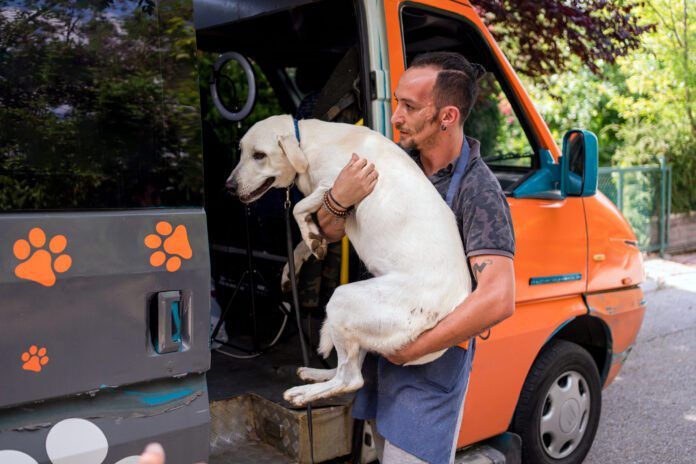
When picking up or moving a large dog, do not grab the dog by his chest. Support his weight with an arm around his rear end. Credit: Phynart Studio | Getty Images
The ability to pick up a large dog requires more than just strength. You need to use the proper technique, understand canine anatomy, and pay careful attention to your large dog’s comfort and safety.
Whether you are helping your dog into a vehicle, lifting them onto a grooming or exam table, or assisting a senior dog up the stairs, knowing how to properly pick up, hold, and carry a large dog can prevent injury for both you can your pet. Mishandling a big dog, even with the best intentions, can cause stress, pain, or worsen underlying conditions, especially in dogs with joint issues, injuries, or mobility concerns.
Before Picking up the Dog
Before attempting to pick up your dog, assess the situation and determine whether it is truly necessary to carry them. Even the nicest dog may lash out if they are afraid or in pain, so picking them up may not be a safe option.
Many big dogs are heavy enough that picking them up should be done only when necessary, such as in emergencies, recovery from surgeries, or when mobility is compromised. If the situation is not urgent and your dog can move on their own with some encouragement or mild assistance, that is always the safer option.
Proper Form Lifting a Heavy Dog
One of the most important aspects of lifting a big dog is maintaining proper body mechanics. Watch this excellent video that shows how to properly pick up a big dog.
Remember, just like lifting heavy objects, picking up a large dog requires using your legs, not your back:
Stand with your knees shoulder-width apart and bend at the knees, not at the waist, keeping your back straight.
Move calmly and confidently, as quick, jerky movements can startle a dog.
Place one hand around the front of your dog’s chest, at the base of their front legs, to support the dog’s weight and keep them stable.
Place your other arm behind your dog’s back legs to support their back half without placing pressure on their abdomen. This two-arm method distributed the dog’s weight evenly and prevents unnecessary strain. If your dog is too large for this, or if they have arthritic hips or joint pain, placing one arm under their chest behind their front legs with your other arm just in front of their hind legs, under the abdomen, is an alternative.
With your arms in place and your dog feeling secure, slowly straighten your legs to lift, keeping your dog close to your body to maintain balance. The closer your dog is to your core, the more stable you will be.
Mobility Harnesses
For giant breed dogs or dogs weighing over 100 pounds, lifting your dog manually may not be practical. In these cases, equipment can make all the difference. Mobility harnesses with handles, rear-end slings, or dog stretchers are incredibly useful tools. These devices are designed specifically to support a dog’s body in a safe and ergonomic way, reducing stress on your dog’s spine and joints while also minimizing the effort required on your part. Harnesses with front and rear handles allow for two-person lifts and are particularly helpful for dogs recovering from surgery or those with chronic mobility issues such as arthritis or hip dysplasia.
Knowing how to safely pick up, hold, and carry your dog is part of being prepared for life’s unexpected moments, but if you find yourself needing to lift your dog frequently or if your dog struggles with mobility, consult with your veterinarian to explore some long-term solutions.
Just like us, dogs put tremendous wear and tear on their joints. MSM is a strong ingredient to include in your choice of a joint supplement for dogs. Credit: Hillary Kladke | Getty Images
MSM is included in most dog arthritis supplements for good reason. It works and has research backing up its use. MSM is methylsulfonylmethane, a naturally occurring compound made up of sulfur, carbon, and oxygen. Although it can be found in small amounts in certain plant and animal products, it is most commonly produced synthetically for use in dietary supplements. In both human and veterinary supplements, MSM is used for its anti-inflammatory and pain-relieving properties, making it a valuable tool in managing a variety of chronic health conditions, particularly those affecting joints.
MSM to Reduce Dog Joint Inflammation
One of MSM’s most well-known benefits is its ability to reduce inflammation. Chronic inflammation is a main culprit behind the joint pain experienced by dogs suffering from arthritis, degenerative joint disease, or previous injuries. This ongoing inflammatory response not only causes pain but can also contribute to further joint deterioration over time. MSM helps reduce the production of inflammatory compounds, targeting the root of discomfort rather than merely masking the symptoms. This reduction in inflammation can significantly improve your dog’s mobility and overall comfort, especially during activities that were once difficult or painful.
MSM for Pain in Dogs
In addition to its anti-inflammatory properties, MSM has mild analgesic effects, helping to relieve pain. When pain relief is paired with a decrease in inflammation, the result can be a noticeable happier and more active dog. Pet owners often report seeing their dogs become more energetic and willing to engage in activities they had previously avoided. These improvements mark significant step forward in restoring your pet’s quality of life.
What Is MSM?
MSM is a compound rich in organic sulfur, which is essential for many biological processes and necessary for the synthesis of collagen and glucosamine, key components for healthy cartilage and connective tissue. Cartilage acts as a cushion between the bones in joints. As dogs age, this cartilage can break down leading to painful bone-on-bone contact. By supplying the body with the sulfur it needs, MSM supports the rebuilding and maintenance of these tissues. Some studies suggest that MSM may enhance the absorption of other joint-supportive nutrients like glucosamine and chondroitin. This synergistic effect is part of what makes MSM such a popular component in many joint supplement blends.
Which MSM Supplement for My Dog?
MSM supplements are available in a variety of forms including powders, capsules, soft chews, and liquids, making it easy to incorporate into your dog’s daily routine. Whether used on its own or as a part of a multi-ingredient joint care formula, MSM is a natural compound with the potential to offer meaningful and lasting relief for your pet.
When purchasing supplements, look for the NASC seal. That’s indication that the manufacturer is a member of the National Animal Supplement Council. Member manufacturers voluntarily submit their products for testing and approval, which indicates to the consumer that the products contain the ingredients listed on the label and the sources of those ingredients are NASC-approved.
Note: The only exception to this is products from Nutramax. This company was one of the original manufacturers of supplements for animals. They were a leader in producing groundbreaking research on ingredients, dosages, and quality control for animal supplements. They remain an undisputed giant in quality control and research.
You can purchase MSM for dogs without any other ingredients. WDJ top choices are:
NaturVet MSM
PeakTails MSM
VitaFlex MSM
That said, we prefer to use MSM as a strong ingredient to include in multi-ingredient joint products. Look for glucosamine, chondroitin, green-lipped mussel, and MSM. The WDJ top five joint supplements that include MSM in the mix are:
Nutramax Cosequin
Nutramax Dasuquin
Zesty Paws Hip and Joint Bites
The Missing Link Hip and Joint Powder
VetriScience Healthy Hip and Joint
Note: It is important to note that, while this article focuses on MSM, fish oil shouldn’t be overlooked as a strong supplement to support joint health.
For many dogs, especially those experiencing age-related joint degeneration or pets recovering from orthopedic injuries or procedures, MSM can play a significant role in improving mobility, easing pain, and supporting long-term joint health. Always consult your veterinarian before beginning any new supplement, but if joint pain is impacting your dog’s quality of life, MSM is certainly worth considering as a part of a wholistic approach to your dog’s care.
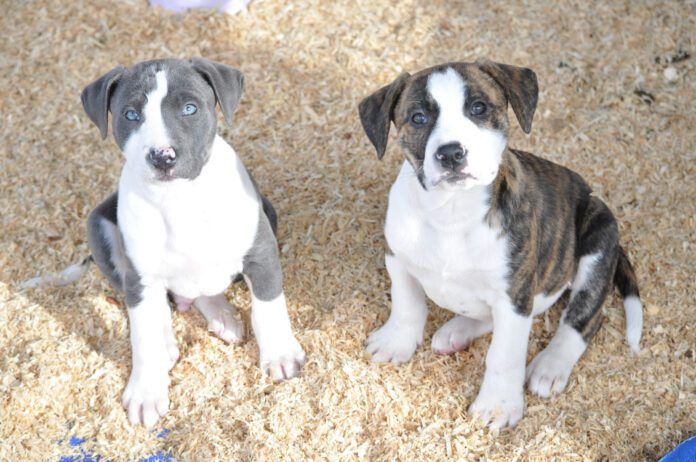
It’s very tempting to take two pups from the same litter. But most experts advise against it. Credit: Nancy Kerns
You’ve gone to the shelter, excited about the photos they posted on social media of a big litter of pups that look like just the kind you’ve been waiting for. It’s near closing time—you couldn’t get there until after you got off work!—and the shelter staff is clearly buttoning things up for the night. It turns out that the litter was popular; there are just two puppies left from which to choose! As you approach their pen, you see that the littermates are entwined in a small single dog bed. They blink at you sleepily, and then approach the front of the kennel to greet you, almost as one—and the thought of taking one home, leaving the other completely alone in the cold concrete shelter kennel, brings tears to your eyes. They are clearly so bonded! How much harder could it be to raise two dogs, you think to yourself? If we adopt both, they can keep each other company at home!
STOP! Don’t do it! Whether the idea of adopting two puppies just occurred to you, or you had been planning to adopt two all along, every trainer I’ve ever met would advise you to think twice and adopt just one. Because training and socializing littermates well is more than twice as difficult as training and socializing one puppy.
There have been littermates in several of the group puppy classes I’ve taught recently, and in every case, the family who adopted them looks overwhelmed and sounds regretful about the decision they made to adopt two. It’s noteworthy, also, that each family has told me that if they knew then what they know now, they would not have adopted two. They love their dogs, they are working hard to make it work, but they had no idea that certain things would be so difficult. Things like:
One pup is anxious and a little reactive, which the other is generally very calm and takes new things in stride. But when the anxious dog barks and growls at new sights and situations, it makes the other pup bark and grow suspicious also—and increasingly, both dogs bark when they see new people or something unfamiliar!
You are crossing the living room when you realize your sock is wet. You discover a series of wet, urine-soaked spots on the carpet. Which pup is having trouble with house training?
You find some vomit in the puppy pen. Which one isn’t feeling well? Which one may have swallowed a sock and potentially needs to be taken to the vet?
You’re trying to train both puppies the basics: sit, down, stay, etc. Except one puppy leans fast and dives for all the treats, and the other is disinterested in competing . . . So, as time goes by, one pup knows a few things, and the other hasn’t really learned anything at all.
One pup had to go to the vet and you’ve discovered that the other is petrified to go outside without his brother. You thought that this pup was just a little less confident without the other, but it turns out that without his guide, he’s terrified of everything!
Or, one dog had to go to the vet—and that’s when both dogs starting howling, panicking in their crates, tearing at the crate doors with their paws, vomiting—in an utter panic at being without their littermate. Who knew they were that bonded?
If that last scenario doesn’t give you the shivers, consider this: What if some disaster befell your family, and you had to rehome the dogs? It’s hard enough to find a good home for one adult dog; who will possibly take on two dogs who can’t be separated?
Don’t just take it from me: Here are two articles from the WDJ archives written by professional trainers who have seen it for themselves:
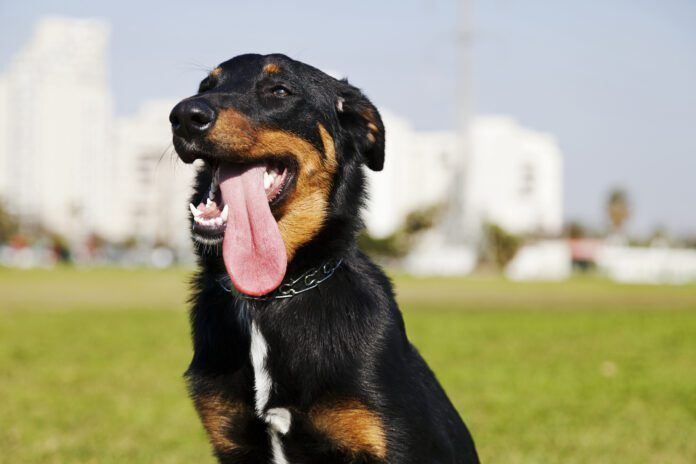
Dogs cool themselves through panting and rarely need electrolyte supplementation unless sick. Note: This dog’s wide, long tongue indicates that the dog may be overheated and needs water and a cool, shady spot to rest and recover. Credit: Eldadcarin | Getty Images
While electrolytes are essential for proper bodily function, most healthy dogs do not require electrolyte supplementation unless they are experiencing significant fluid loss through vomiting or diarrhea.
Humans and dogs have different needs for hydration and electrolyte balance. Most healthy dogs do not require added electrolytes in their diet under normal circumstances. Understanding how dogs regulate their hydration and when electrolyte supplementation is truly needed can help you make informed decisions, especially during times of illness or extreme exertion.
Electrolyte Loss Through Dog Panting
Unlike humans, dogs do not sweat to regulate their body temperature. Instead, they pant. Humans lose a significant amount of electrolytes, including sodium, chloride, potassium, magnesium, and calcium, which is why replenishing them after strenuous exercise or heat exposure is so important for people. Dogs, on the other hand, lose minimal electrolytes through panting, which relies on evaporative cooling of saliva. As a result, giving electrolytes to dogs simply because they are active or because it is a hot day is generally unnecessary and can even lead to electrolyte imbalances if not used correctly. Avoid giving your dog “electrolyte water” or other homemade electrolytes. It’s just not worth the risk.
When Your Dog Needs Electrolytes
The situations where your dog may need electrolyte supplementation are specific. The most common scenarios include vomiting, diarrhea, or severe dehydration caused by illness or heat stroke. In these cases, dogs may lose a significant amount of fluids and electrolytes like sodium, potassium, and chloride, which can disrupt normal cellular function and overall hydration status.
For dogs experiencing these kinds of losses, veterinary-formulated electrolyte fluids, often administered subcutaneously, can help restore balance and support recovery. It is important, however, that any supplementation be done under veterinary guidance, especially for dogs with underlying medical conditions or for those on medications.
The Pedialyte Question for Dogs
Pedialyte, a popular electrolyte drink designed for humans, can sometimes be given to dogs in specific situations, but it should be used with care and fresh water should also be offered. If a dog is experiencing mild dehydration due to vomiting, diarrhea, or heat-related stress, Pedialyte may help replenish lost fluids and electrolytes. However, it is important to choose the unflavored and unsweetened version, as flavored varieties often contain artificial sweeteners such as xylitol, which is toxic to dogs, or added sugars that can upset their stomach further. Even the unflavored type should be offered in small amounts and, ideally, under the guidance of a veterinarian. Pedialyte is not a cure for the underlying cause of dehydration, so if your dog is lethargic, refuses to drink, or shows signs of worsening illness, professional veterinary care is crucial.
Betaine for Canine Hydration
An emerging area of interest in canine hydration is the use of functional ingredients like betaine, a naturally occurring compound found in foods like beets. Betaine acts as an osmolyte, which means it helps cells maintain fluid balance without disrupting normal cellular processes. In simple terms, it helps cells hold on to water more effectively, especially during times of heat or stress.
Unlike electrolyte supplementation, which addresses losses after the fact, betaine works by helping the body maintain hydration in the first place. This makes it particularly useful in scenarios where hydration is a concern, but electrolyte loss is not significant, such as for working or athletic dogs that may be under physical stress but not actively losing fluids through vomiting or diarrhea. By using products like betaine, you can optimize hydration status without unnecessarily loading the body with salts it does not need.
Remember, most dogs only require electrolytes when they are sick with vomiting and/or diarrhea. If your dog is sick, call your veterinarian to ask about electrolyte supplementation and work with the vet to create a plan of care for your pet.
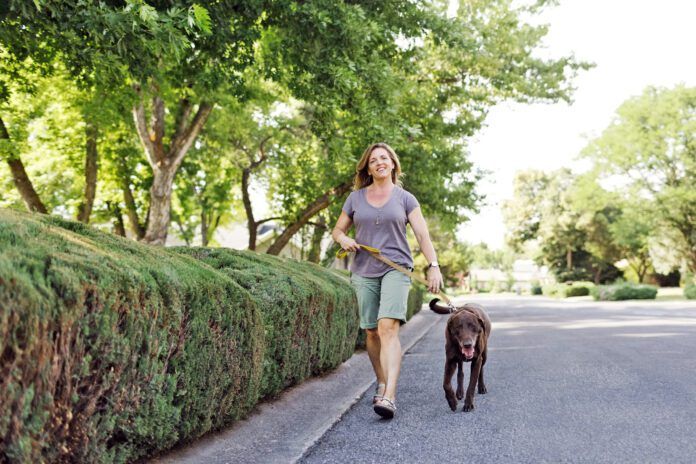
Hot concrete and blacktop can injure your dog’s paw pads. Try to stick with shaded routes, preferably in the morning or evening when it’s cooler. Credit: Jessica Peterson | Getty Images
Dog walks are the highlight of the day for most dogs. But what about when it’s hot and humid, with the sun beating down on that black asphalt? How do you know if it’s safe to walk your pup then?
Learn to identify the temperature of the area where you want/need to walk. Many experts recommend the “7-second rule.” Place your hand on the pavement/asphalt/surface for 7 seconds. If it’s too hot for you at that time frame or before you even reach 7 seconds, it’s too hot for your dog without protection.
For example, according to the chart, at 2 p.m., on a 91-degree day, the asphalt is 140 degrees. That’s too hot for your dog’s paws. This is your most basic and simplest dog walking temperature chart.
With the information at hand, you can best determine if surfaces like blacktop are too hot for your bare paw dog to walk over.
Summer Dog Walks Are Critical
Walks are important mental enrichment for dogs. It would be a sad thing for dogs to miss them simply because it’s hot outside. Learning how to do this safely is of utmost importance to both the dogs and humans in their lives.
Dog walks don’t always have to be high activity. They just need to be fun for your dog! If you can drive your dogs to a wooded area that offers an abundance of shade and sniffing opportunities, do this.
Bring plenty of water and a bowl for your dog to drink from. Walk slowly and simply allow sniffing and pottying without a goal of getting somewhere. Be mindful of how far away from your vehicle you are walking and allow for the energy needed to get back there safely.
If possible, aim for dirt/grass/mossy terrain versus asphalt and concrete. Know your dog’s limits and breathing abilities and consider their age/overall health/physical fitness levels as well as their color. Dark dogs get hotter faster as do floofy dogs. Double that for a dark floofy dog. Brachycephalic dogs do have breathing handicaps that are even worse when it’s hot.
Schedule Your Dog Walks to Avoid Heat
If you must walk in your own neighborhood that consists of primarily concrete or asphalt surfaces, do the longer walks early in the morning or later at night when it’s a bit cooler.
Make additional potty breaks short and purposeful. Invest in a paw protectant like Musher’s Secret, a highly recommended choice. This not only protects paw pads from ice/cold/salt in the winter, but it also protects from heat in the summer. Booties are also an option if your dog will wear them, but most dogs prefer the balm.
Take fresh water and go slowly and stick to grass when you can. The same rules as above apply. Keep it short with the goal of sniffing and pottying.
Provide extra indoor mental enrichment to make up for shorter walks. Examples can include snuffle mats, lick mats, puzzle toys, search games, and training time.
Tips to Make Hot-Day Dog Walks Safer
When it’s hot, do not take lengthy walks or runs. It doesn’t matter whether you can handle this heat, your dog cannot.
Take extra care with brachycephalic breeds like Pugs and Frenchies. These dogs cannot breathe normally. Don’t place them in danger.
Never leave dogs in your yard unattended in overly warm temperatures for longer than a very short time. Make sure that there is adequate shade available as well as fresh water and even a doggy pool if your dog enjoys such.
Check on them frequently, meaning every few minutes in some cases. It doesn’t take long for a heat-related issue to surface.
And, of course, never leave your dog in a vehicle in hot and humid temperatures for even a literal minute, even with AC on. In high-humidity temperatures, the AC and the car will be less reliable.
For most dogs, a slicker brush is an all-around favorite for keeping hair from tangling and developing mats. Choose the right size for your dog.
Credit: Connect Images | Getty Images
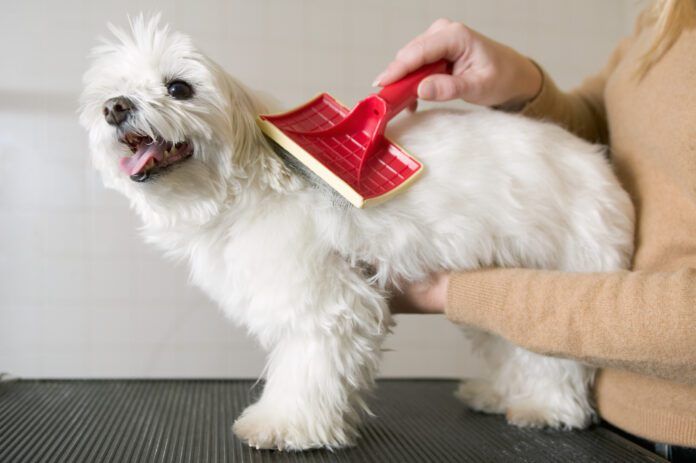
An abundance of grooming tools flood the market for dogs who battle hair mats. I urge you to do your due diligence if you prefer to handle much of your dog’s grooming yourself. All tools are not right for all dogs, making research and listening to user reviews very important. Also important, as you will see here, is keeping up with mats and grooming.
I have an Ovcharka (also known as a Caucasian Shepherd Dog) and a Chow Chow. These dogs are about as floofy as it gets. The same rake that I used with my previous Ovcharka is the one that I prefer with my current Ovcharka. Oddly though, the super expensive Chris Christenson slicker brush that was gifted to me for my previous cream Chow Chow does not work well for my current red Chow Chow.
My cream Chow Chow had cotton-candy texture fur that was thick but fine. That brush worked great with her almost delicate coat. My red Chow Chow has a very thick coarser coat that is better dealt with by the same rake that I use with my Ovcharkas. Dog coats can be very different, even within breeds.
Removing Mats From Dog Hair
Mats are painful for dogs and can irritate and pull their skin if left in. I prefer to finger-comb mats out when they are just starting, especially in the floofy parts and the back of the legs. Neck mats can often be minimized by simply keeping up with the rake several times a week to remove the excess.
A light touch is important to a low-stress grooming experience. If a mat is too difficult to remove easily without stressing the dog, I cut them out with my hair cutting scissors (place a human comb between the dog’s skin and the scissors to avoid cutting the dog’s skin when removing a mat with scissors). Of course, try to trim evenly. They don’t care if they look snappy, but their mom does!
Rakes: I use primarily rakes with my dogs. For shorter-haired dogs, Furminators work fine, but they seem to cause too much pulling in my longer-coated dogs. An undercoat rake removes fur more deeply but needs a light touch to not rip out fur harshly.
Slicker brushes: Among the long-haired-dog parents I polled on this subject, slicker brushes were favorites.
Deshedding blades: These tools can work with thicker coats. The Zoom Groom is a favorite for silker coated smaller dogs.
Dematting combs: A trusted colleague of mine recommends the Raw Paws dematting comb for her dogs. A regular dog comb can work just fine as well.
Clippers: There are no best dog clippers for removing mats. Leave that tool to the professionals.
Preventing Mats in Dogs
Remembering to demat regularly—at least once or twice weekly—and brush around the ears and tails, preferably daily. This can go a long way toward preventing mats. Remember that mats can form wherever there is hair, including on the inside of back legs or in the elbow area. There are spray detanglers for after baths, but nothing beats proper grooming maintenance.
Mats can become painful, especially when they get large, so use patience when removing the mat. It’s important to minimize potential stress on your dog. And keep up with regular grooming, there’s no better mat prevention technique.
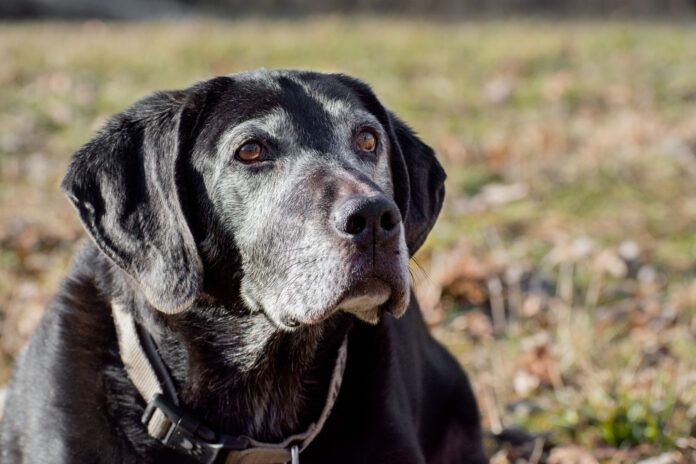
Administered by a vet, Adequan is given to dogs to help manage osteoarthritis, which is common in senior dogs. Credit: Mariah Harper | Getty Images
Adequan is an injectable medication for the treatment of osteoarthritis in dogs. It is a disease-modifying osteoarthritis drug (DMOAD), meaning it can reverse some of the damage that occurs in arthritic joints.
Adequan contains polysulfated glycosaminoglycan (PSGAG), which has been shown to inhibit catabolic enzymes that contribute to the destruction of cartilage in arthritic joints. PSGAG has also been shown to stimulate the production of anabolic enzymes. Anabolic enzymes promote cartilage repair and enhance the quality of synovial fluid in arthritic joints.
So, what exactly does this mean for dogs suffering from osteoarthritis? Let’s take a look at the basic structure of joints to get a better understanding of how Adequan works.
Understanding Canine Joint Structure and Osteoarthritis
A joint is the junction of two or more bones that allows movement, such as the back-and-forth movement of the knee. The ends of the bones are capped with a smooth, glistening substance called cartilage. Think about the last time you ate a chicken wing (or watched someone else eat a chicken wing, if you don’t eat meat). That smooth white cap on the end of the chicken wing bone is cartilage.
Cartilage protects the ends of the bones from damage and provides a smooth surface for movement of the joint. The ends of the bones are connected by ligaments—strong, fibrous bands of tissue that keep the joint aligned and prevent it from moving in inappropriate ways.
The joint is surrounded by an envelope of fibrous tissue called a joint capsule. The joint capsule creates a sealed space around the joint which is filled with synovial fluid. Synovial fluid is produced by cells that line the inside of the joint capsule. It is viscous (thick) so that it can provide shock absorption within the joint and lubricates the joint to keep everything moving smoothly.
Cartilage requires nutrition and oxygen to perform its functions. Blood is the primary source of oxygen and nutrients in the body. Cartilage does not contain any blood vessels and therefore has no direct source of nutrition and oxygen. It can obtain some of these vital ingredients from blood vessels in the ends of the bones the cartilage covers. However, most of its nutritional needs are met by absorbing oxygen and nutrients from synovial fluid within the joint.
Joints affected by osteoarthritis experience inflammation and degradation of cartilage. Inflamed cartilage releases catabolic enzymes which cause further degradation of the damaged cartilage. This turns into a vicious cycle of inflammation and degradation that makes cartilage thin and brittle.
Bones that are capped by thin and brittle cartilage do not have the same protection as those covered by thick, healthy cartilage. Bones that do not have adequate protection within joints become damaged and painful. Adequan slows the progression of osteoarthritis and improves joint health.
How Adequan Works
Adequan inhibits the production of catabolic enzymes in inflamed joint cartilage. Catabolic enzymes destroy molecules that are necessary for maintaining healthy joints. These molecules include:
Proteoglycan—an important building block of cartilage.
Collagen—this structural protein is the basis for cartilage, ligaments, and tendons.
Hyaluronic acid—a lubricant in synovial fluid.
Adequan also enhances the activity of anabolic enzymes inside joints. Anabolic enzymes stimulate production of collagen, proteoglycans, and hyaluronic acid. These are necessary to repair damaged cartilage and keep synovial fluid happy and healthy. Adequan has also been shown to reduce inflammation in arthritic joints.
Treating a Dog with Adequan
Adequan can be an effective part of a multi-modal therapeutic plan for the treatment of osteoarthritis in dogs. It is administered by intramuscular injection and, once injected, it moves from the muscle into the bloodstream. Then it passes from the bloodstream into each joint’s synovial fluid. Joint cartilage absorbs Adequan from the synovial fluid.
Adequan is given twice a week for four weeks for a total of eight doses. Peak concentration of Adequan in the bloodstream is achieved about 20 to 40 minutes following intramuscular injection. It takes about two days for Adequan to reach peak concentration in synovial fluid. Adequan persists at peak concentration in the joints for an additional three days.
The concentration of Adequan in synovial fluid and cartilage will be higher than that found in the bloodstream once the series of injections has been completed. Cartilage damaged by osteoarthritis will take up more Adequan than joints unaffected by osteoarthritis.
Adequan is only indicated for the treatment of non-infectious arthritis and degenerative joint disease. It is not for use in dogs with septic or infectious arthritis.
Side Effects of Adequan
The most common side effect of Adequan is pain at the injection site. Other side effects are transient and include vomiting, diarrhea, and decreased appetite. These side effects typically resolve quickly and without intervention.
Adequan shares structural similarities with a compound called heparin. Heparin is an anticoagulant that is used to prevent formation of clots in the bloodstream. Abnormal bleeding in the first 12 hours after administration of Adequan is rare but has been reported. Adequan should be used with caution in dogs that have a bleeding disorder.
Adequan for Dogs: Cost and Dosage
Adequan is purchased by the vial and is dosed by a dog’s weight. Bigger dogs require a larger Adequan dose than smaller dogs. Therefore, it costs more to treat a bigger dog with Adequan.
Adequan is the only FDA-approved DMOAD available in the United States. Cartrophen is a DMOAD that is available in other parts of the world, including Canada, Australia, and Europe. Do not confuse Cartrophen with the non-steroidal anti-inflammatory drug (NSAID) called carprofen (also known by the brand name Rimadyl).
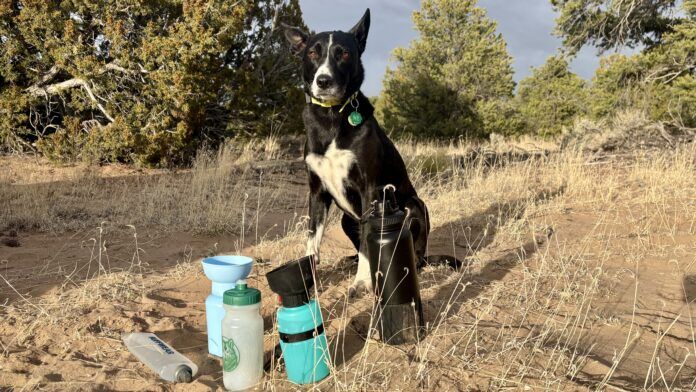
We trail-tested six dog water bottles to determine which were the best for hiking hydration. Credit: Jae Thomas
You need to stay hydrated while hiking, and so does your dog! Giving your dog plenty of water while hitting the trails will ensure they stay cool and avoid heatstroke, especially in the hot summer months. That’s where portable dog water bottles come in. A dedicated dog water bottle will make it easy to carry your pup’s water and make it easier to offer them a drink more frequently.
We tested six different dog water bottles, including ones that had collapsible bowls attached, soft-sided bottles that your dog can carry in a dog hiking backpack, and options with fun features like a detachable treat compartment. Read on for our top picks:
Traits We Want In a Dog Water Bottle for Hiking
Portability: The best dog water bottles for hiking should be portable enough to throw in a hiking backpack (or even a belt bag/treat pouch), but big enough to carry an adequate amount of water. The typical rule of thumb is to carry eight ounces of water per dog for every hour spent hiking. For one dog, a 16-ounce water bottle is a good starting point if you’re planning on hiking for 1-2 hours.
It’s nice to have a carabiner clip on a dog water bottle as well, so you can easily clip it to a hiking backpack while adventuring with your pup.
Leak-proof design: If you’re going to carry your dog water bottle in a backpack or fanny pack, a leak proof design is paramount. We tested all the bottles on this list for leak-proofness and noted any that were prone to spilling.
Extra features: Extra features like an attached bowl are helpful if you don’t want to carry a separate travel bowl. Water bottles with attached bowls also typically suck up any unused water back into the bottle, so you don’t waste any
Easy cleaning: If easy cleaning is a must, opt for a dog water bottle that can be cleaned in the dishwasher. This will likely limit you to hard-sided bottles, as the ultra-portable soft-sided options are usually hand wash only.
This squeeze-style bottle has an attached silicone bowl and a handy lock on the outside of the bowl. However, it didn’t always drain fully during testing.
For backpacking or longer day hikes, this soft-sided bottle from Ruffwear is a good option. It carries a full liter of water, and even fits into dog hiking backpacks, so your dog can carry their own water.
For short hikes or park walks, this lightweight bottle is super packable and even fits in most fanny pack style dog treat pouches. Just remember to bring a separate collapsible dog bowl.
24-ounce bottle, 8-ounce treat compartment, 13-ounce silicone cup
Though it’s a bit too bulky for hiking, this insulated bottle is a great pick for car travel and includes a separate treat compartment and a silicone bowl.
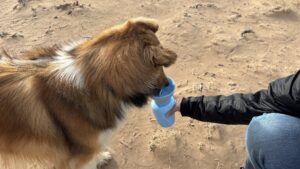
My Collie loved drinking out of this bottle. Multiple times while hiking, I offered her a bowl of water or a drink out of the Flip Dog Bottle, and every time, she chose the Flip Dog bottle. I think she even drank out of this bottle when she wasn’t thirsty, just because she liked it that much.
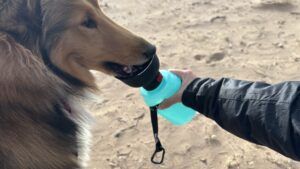
This squeeze bottle has a silicone bowl attached to the top that flips up for use and down for travel. When you squeeze the bottle, the bowl fills with water, then you can hold it in front of your dog to drink. Once they’re done, any leftover water drains back into the bottle when you stop squeezing it. If you don’t want to keep squeezing the bottle as your dog drinks, you can also lock it, so the water doesn’t suck back down into the bottle. The lock also means water can’t squeeze out of the bottle by itself when not in use. In addition, the bottle comes with a convenient carabiner clip that’s easy to clip onto backpacks, bags, or dog treat pouches.
This bottle is easy to use and didn’t leak at all during testing, even when I took it with me on a weekend trip and tossed it in multiple bags over three days. My only qualm with it is that if you want to lock the amount of water in the bowl, you have to stick your fingers into the water to turn the lock. I’d much prefer it if the lock was outside of the bowl, but my dogs didn’t mind drinking while I held the bottle, so I rarely had to use this feature.
If your dog is shy about drinking, skip the squeeze-style water bottles and opt for a normal travel bottle and a collapsible bowl so they can have a little extra space while they sip.
Best Budget Dog Water Bottle for Hiking: LESOTC Outdoor Dog Water Bottle Dispenser
While not our top pick overall, the LESOTC Outdoor Dog Water Bottle is a solid option for dog owners on a budget. Credit: Jae Thomas
If you’re not sure if your dog will drink out of a handheld water bottle with a bowl attached and you don’t want to invest as much money, the LESOTC Outdoor Dog Water Bottle is worth a look. It’s often priced between $12 and $14 on sale, so trying it out won’t cost much.
This bottle is a squeeze style with an attached, flippable bowl, similar to the Springer Pets Flip bottle. I liked the locking mechanism on this LESOTC bottle better than the Springer Pets one, simply because it’s completely outside the bowl, so you don’t have to stick your fingers in the water to lock it.
However, this bottle was kept out of the winning spot because the water didn’t always drain back into the bottle if my dog didn’t drink all of it. That left me having to dump out a little bit of water occasionally, somewhat defeating the purpose of the squeeze design. With that being said, this bottle is reasonably priced, has a nice big silicone bowl attached to the top, and is easy to squeeze, so folks on a budget should consider it if they don’t mind having to dump a sip or two of water out when their dog is done drinking.
Best Dog Water Bottle for Backpacking: Ruffwear 1L Collapsible Water Bottle
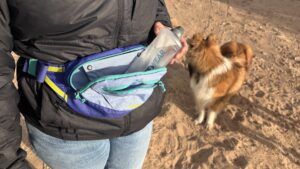
Designed to fit in most running belt pockets, the Ruffwear Trail Runner Soft Flask is a great choice for short runs or hikes. Credit: Jae Thomas
If you’re planning an overnight backpacking trip (or a long day hike) with your dog, the Ruffwear 1L Collapsible Water Bottle is a good pick. The larger capacity ensures you have enough water for multiple hours of hiking and the design fits perfectly in a dog backpacking pack.
I use this water bottle for my dogs with the Ruffwear Approach Dog Backpack, and it fits perfectly in a side pouch. The soft-sided design is super portable and doesn’t add much weight or bulk. When it’s empty, it’s even more portable, and can be rolled up to save space.
This bottle does require carrying an additional travel bowl, or else you risk wasting a lot of water by letting your dog drink directly from the stream. It’s nice to use on day hikes though, since you and your dog can both use the same water (bottles with included bowls suck up your dog’s backwash after they’re done drinking—not great for sharing).
Like human water reservoirs, the Ruffwear 1L Collapsible Water Bottle can only be hand washed and needs a little bit of extra care to dry fully before storing it. Ruffwear recommends using chopsticks to hold it up while drying, then inflating it and putting it upside down to get any excess water out after washing.
Most Portable Dog Water Bottle: Ruffwear Trail Runner Soft Flask
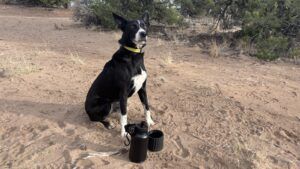
It’s a bit on the heavy side, but the Frisco Water Bottle is a good option if you’re looking for something that can carry both treats and water. Credit: Jae Thomas
Frequent runners and hikers know about Hydrapak bottles, so they’ll be thrilled to hear that the Ruffwear Trail Runner Soft Flask is the result of a partnership with the hydration brand. The soft-sided design is super portable, and while it’s meant to fit in running belt pockets for running with your dog, it also fits in fanny-pack style treat pouches, making it a great option to bring along for walks where you don’t want to carry a backpack.
At a little over 12 ounces, this bottle is best suited for short runs, walks, and hikes. Anything longer will likely require you bring more water for your dog. I use this bottle for park walks since it’s so packable—but I always have to remember to bring an extra travel bowl with me for my dogs to drink out of.
Similar to the other soft-sided bottle on this list, the Ruffwear Soft Flask can’t be put in the dishwasher. You’ll need to hand wash it, stand it up to dry, and inflate it to get rid of any lingering moisture before storing it.
The Wilderdog Plant Based Water Bottle is a light-weight, eco-friendly choice that fits well in most bike bottle cages and running belt bottle compartments. Credit: Jae Thomas
For frequent car rides or longer travel, the Frisco Water Bottle does it all. It features a 24-ounce water bottle, an 8-ounce treat compartment, and a 13-ounce silicone cup that acts as a water bowl.
This bottle is primarily metal and is similar in weight to a Hydroflask or other human metal water bottle. For this reason, I found it too heavy for hiking in most cases. It has a carabiner on the back of it to hook onto a backpack, but during testing, the weight caused my hiking pack to sag more than I liked. It’s also a little bit too inconvenient to unscrew the bottom treat container and grab snacks for your dog while walking.
Instead, this bottle is a good pick for folks who go on longer car rides with their dogs. Whether you go on frequent cross-country road trips or drive multiple hours to find a good dog-friendly camping or hiking spot, this bottle is a great car companion. The silicone cup attachment acts as a separate bowl for dogs who don’t like drinking out of a handheld bottle and the treat compartment is great for refilling an empty treat pouch before you hit the trails.
The water section of this bottle is insulated, so you can fill it with cold or ice water and it’ll actually stay cold in the summer heat. I traveled with this bottle in a bag in the back of my car on a weekend road trip and it didn’t leak at all. It’s also dishwasher-safe for easy cleaning.
Best Eco-Friendly Dog Water Bottle: Wilderdog Plant Based Water Bottle
The hard-sided, eco-friendly Wilderdog Plant Based Water Bottle is made out of corn and is a good size for most water bottle pouches on backpacks. It also fits most bike bottle cages and running belt bottle compartments, so if you regularly bike, bikejor, or do canicross with your dog, this is a good option. The rigid design makes it much better suited for bottle compartments than its soft-sided counterparts.
I’m a big fan of the Wilderdog Mega Hip Pack for hiking, and this bottle fits perfectly in the side water bottle pouches of the pack. The bottle itself is super lightweight, so I’d be okay with carrying two at a time for longer hikes.
The downside of this bottle is that, aside from being made of eco-friendly material, it’s not much different than a typical water bottle with a sport cap. If the corn material isn’t a draw for you, I’m sure you can find a similarly sized water bottle made for humans to use for your dog.
Nystagmus or rapid eye movement in older dogs often just comes down to supportive care, ensuring he’s safe, comfortable, and eats and drinks.
Credit: UK Mal | Getty Images
If your dog’s eyes are rapidly moving, seeming uncontrolled, your dog may be suffering from nystagmus. It’s usually part of vestibular disease, which is common in older dogs. Your dog may be walking in circles with his head tilted, in addition to the rapid eye movement. He also may have ataxia, which is indicated by a wobbly, unbalanced gait.
The affected dog’s eyes can move rapidly back and forth (horizontal nystagmus), up and down (vertical nystagmus), or even in a circular motion (rotary nystagmus). The movement is involuntary and usually occurs in a steady rhythm. While a mix of movements are possible, most often the eyes move to one side then back.
When anything messes with the vestibular system, which is responsible for the dog’s balance, the dog’s eyes are potentially affected too. Normally, when your dog moves his head, his eyes adjust to the movement. With nystagmus, the eyes move even when the dog’s head is still. Not surprisingly, the dog usually becomes nauseous.
What Causes Nystagmus in Dogs?
The vestibular system is a part of the brain and includes middle and inner ear components. Injuries or infections of the deep ear structures may cause nystagmus. Sometimes something as simple as a thorough ear cleaning at the vet clinic may cause a short bout of nystagmus. Brain lesions such as encephalitis, certain viral infections, and cancers may cause nystagmus as well.
Old dog vestibular disease is generally of unknown cause but appears in senior dogs and usually resolves, or almost completely resolves, in a few days to a week or two. The nystagmus may stop before the head tilt and circling signs subside.
How Do You Treat Nystagmus in a Dog?
There are no “magic eye drops” for this condition. The goals are two-pronged: You want to identify the cause, if possible, and treat it or provide supportive care.
Diagnostics usually start with a thorough physical examination, including looking into the ears. A neurologic exam could provide information about the overall neurological health of your dog. X-rays, bloodwork, and possibly even an MRI may be indicated in some cases. With a senior dog, your veterinarian may suggest that diagnostics can wait while you see if your dog responds on his own.
Treating Nystagmus in Dogs
Supportive care generally requires you keep your dog safe. He can’t move around safely with this condition. Block off steps, go back to leash walks instead of free yard time. Crate him when you are not around.
Your dog will be nauseous, so your veterinarian may prescribe some anti-nausea medications. It is important that your dog eats and drinks. You may need to hand feed and resort to special treats to get him to eat. You can hold the bowls for him if that helps. If he does not drink, the veterinary staff can show you how to give subcutaneous fluids at home.
Most dogs show improvement in 24 to 72 hours. Complete recovery may take two to three weeks. In most dogs, nystagmus will clear first, then the head tilt and circling will end.
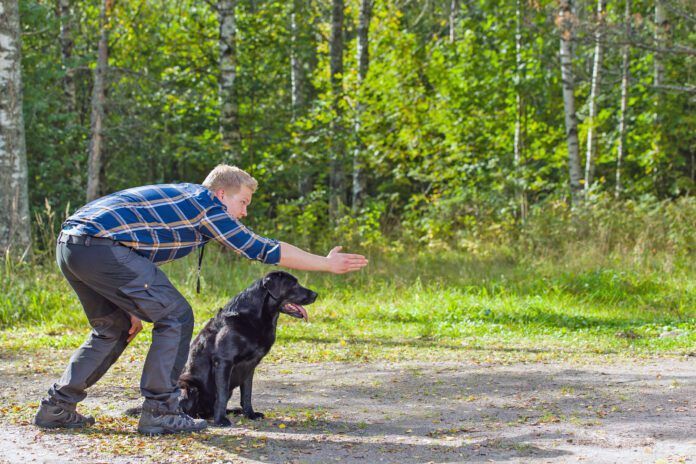
With consistent training and rewards, your dog will learn to read your hand’s sign language and understand what you are asking them to do.
Credit: Jarih | Getty Images
Do you use hand signals to communicate with your dog? You should! When dogs know both hand signals and verbal cues, they are far more likely to respond to the hand signal than a verbal cue. A study published in Animal Cognition shows that “while dogs respond to both gestural and verbal requests, gestures are more salient than words.”
Yes, dogs are tuned in with body language, both of each other and of humans, so training hand signals is an important part of training. They can sense the intent of action from body language displayed by us and therefore understand us more clearly. Deaf dogs, of course, are dependent on those hand cues, and teaching them now can help if your dog loses hearing function as they age.
Dogs Read Body Language First
When I taught group classes, I would explain to my students that if they said one thing to their dogs with their voice and another thing with a hand signal, their dogs would be far more likely to respond to the hand signal than the verbal cue. I have always taught a hand signal for some things before I ever get to the verbal equivalent.
An example of that is teaching a sit or a down cue. My dogs have always learned the hand signal first. I eventually add a verbal cue, simply because I feel like I should but usually months later. What I personally use more frequently are hand signals.
If you’ve already taught basic cues using verbals like sit, wait, stay, and down, you can still add hand signals. Just start doing it. You will be surprised at how quickly your dog understands what you mean. If your starting your training from scratch, this article by noted trainer Kathy Callahan can help you get started, using hand signals first, then adding verbals.
Hand Signals to Teach Your Dog
Dogs learned to read our body language to determine our intent, especially movement and action. While you can use whatever hand signal is comfortable for you, examples of the hand signals that I teach my own dogs include:
Sit: Fist made with thumb on top of closed fingers presented with knuckles facing the dog and fingers on the upside. You can teach it this way with a treat inside of your hand initially and the hand signal still looks the same sans treat inside. When actionable, it resembles a hand pulling a zipper up.
Down: Fist made the same way as above but fingers/thumb facing down and knuckles facing up. Again, treat can be inside initially and easily relinquished with a proper down completed by simply opening the hand after flipping it up. This hand signal also looks the same sans treat.
Touch: The usual way, flat palm, fingers tightly closed, palm up initially started literally right in front of the nose but underneath a bit to not look threatening.
Chin Rest: Flat palm, fingers tightly closed, offered level under/near the chin but sideways positioned to the dog’s head, underneath the chin.
Wait: Flat palm, fingers tightly closed, positioned with the fingers pointing to the sky with a brief push forward when initially offered.
Paw: Mirror image hand offered palm up slightly cupped just in front of either front leg.
By Me: Slightly extended arm with hand horizontally aligned, thumb up, with a waving motion in my direction aimed near my chest area. This is for a busier environment when on leash to keep my dog close.
Can I Have That? (my name for Drop It): Palm up, fingers closed, positioned with fingers slightly cupped aimed towards the dog’s mouth just in front of such.
Here Here (means come inside the house or come closer to me, period): Standing sideways to the dogs on my porch, using either arm extended while making a welcoming motion with my hand towards the door or myself.
Stand: When the dog is seated, I use a flat palmed aimed down horizontally aligned hand positioned sideways to their nose and move the hand away from their nose to cue a stand.
Spin: Primary finger pointing with thumb extended as well, other fingers closed, while making a circular spinning motion. One dog is a leftie, so his hand signal is reversed in position.
All Done: Jazz hands to indicate we are done training for the moment, no more treats.
Left and Right Turns: Pointing in the direction to go with arm extended. I used to hike, and trail run with multiple dogs on leash, so they were trained to look to me for which way we were heading when reaching a trail split. I am no longer that energetic but maybe you are?
I asked some fellow trainers which hand signals they use with their own dogs and was rewarded with these gems from Denise O’Moore, a trainer in Ireland:
Distance Recall: Closed fist in the air.
Go Play: Open hand.
Come and Sit: Open hand to the side.
Fast Distance Recall: Touching her bag means there is a toy so come at record speeds please.
Hand signals are a sign language for dogs. They are such a clearer communication method than verbal cues. There are so many things that can be more easily conveyed to dogs with hand signals and body language than with verbal cues. Dogs are experts in body language. Subtle differences in how you hold your hand when signaling to your dog what you want from them can make a huge difference. Being precise and consistent with your communication makes for less misunderstandings. Adding dog training hand signals to your repertoire with your dogs can only improve your mutual understanding so try it today.
I took this photo on the day I first met Leroy at my local shelter in 2011. I picked him out as one of two dogs at my local shelter I wanted Stephen and his partner to meet and potentially adopt; they were looking for a small but not tiny dog. His fun-loving but compliant demeanor was on display from our first meeting. Photo by Nancy Kerns.
In the past few days, I’ve exchanged dozens of texts and phone calls and one FaceTime session with a long-time friend regarding his dog Leroy. Stephen and his partner adopted Leroy from my local shelter in September 2011—and in the 13½ years since, we’ve probably exchanged hundreds of texts and emails and phone calls about the happy, clever little dog.
Leroy was the first dog Stephen had ever owned, and was the first dog his partner had owned as an adult, and they often had questions about the joyful, willful little mixed-breed dog! As Stephen’s long-time friend and adoption facilitator (I selected Leroy, who was then an estimated 7 to 9 months old, as a good candidate for my friends following a disastrous adoption failure from another shelter), I was asked for advice regarding Leroy’s diet, training and behavior, boarding/pet sitting, and, starting in Leroy’s middle age, advice about his health issues.
Stephen and his partner made a sizeable donation to my local shelter after adopting Leroy. At the time, a pet supply store chain in their area would have a giant poster made with your dog’s photo when you showed proof of a donation of a certain size to a shelter. Their donation enabled Leroy’s poster to be made and hung in one of the stores—as well as another giant poster for my dog, Otto! Photo by Mark Rogers, for Petfood Express.
Leroy had some intermittent lameness, which eventually resolved with a costly but effective spinal surgery; in the past two years, he started having urinary tract issues, which were eventually traced to cancerous tumors. Stephen and Scott spent a small fortune on chemotherapy and surgery, with the hopes of giving the little dog an estimated four to six more months to live; he made it 15 months before his kidneys failed. Despite having to wear an incontinence garment indoors in the past few months, until just a week ago, Leroy still enjoyed his meals, going for walks with his owners, rolling in the grass at the park, greeting his many friends in dog-friendly stores in his neighborhood, and living his sweet comfortable life with his owners.
But in the past few days, his health took a sudden nosedive. At the veterinary ER, he was put on IV fluids for two days in an attempt to improve suddenly off-the-charts-bad lab results indicating that his kidneys had more or less quit functioning; those values didn’t budge even with rehydration therapy. He stopped eating. Stephen and his partner made the decision to bring Leroy home and make the call to a veterinarian who would euthanize Leroy after they had one more day to spend with him.
I spoke to Stephen several times during Leroy’s last day. Stephen stayed home from work and spent every minute watching the little dog and working to keep him comfortable. He administered subcutaneous fluids, which, in combination with an anti-nausea medication, made Leroy feel good enough to eat some chicken and some baby food. But Leroy mostly slept.
Stephen had second thoughts about having a vet come to euthanize Leroy; with another day or two on IV fluids, might his kidney function improve enough to give him another couple of days or weeks? One of the vets who saw him on his last day at the emergency clinic thought it might. Stephen wanted to know what I thought.
I told him that the decision absolutely sucked, it was awful, and no one could tell him what was the right thing to do. That it’s our responsibility to do our best to make the decision that would spare our friends the most pain, without robbing them of the potential for more good days, and that it’s impossibly difficult to know if you’ve made that calculation accurately. That no matter what, we are likely to feel like we didn’t make the right decision. I shared with him that I am haunted by the idea that I had my beloved Otto euthanized too early, when perhaps he had another good day or two in him; but one of my best friends is haunted by the idea that she had her dog euthanized too late, and the dog had a painful last day and a traumatic last hour. You just have to do what you think is best for your dog.
Stephen asked me to observe Leroy, and we switched our call to a FaceTime video. I teared up when I looked at Leroy’s darling foxy little face, now with a distinguished grey muzzle. His cloudy eyes were open as he lay there; he looked exhausted, near death. But then suddenly he sat up and licked some baby food out of a jar that Stephen offered him, and then walked over to one of his other dog beds and emphatically rearranged the fleece blanket in the bed to his liking before curling up to go back to sleep. It was easy to see that he didn’t feel good, and yet he was still himself.
I told Stephen, “We should be so lucky, to have such a nice last day. He’s home, not in the hospital. You’re home, and Scott will be home soon. Leroy is failing, but given the help from all his meds, he’s not in agony—but that pain is barely being held at bay. If you ask me, it’s time—but you have to make the decision.”
Stephen and his partner kept the appointment with the housecall veterinarian; Leroy passed easily and peacefully. But my friends are still in shock at Leroy’s sudden decline and that they didn’t have more time to weigh the euthanasia decision. I am doing my best to offer them some comfort—but I also know that living with doubts about whether or not you made the right call is par for the course.
Does you ever feel like you did exactly the right thing at the exact right time? How do you cope if you feel you didn’t handle things perfectly?
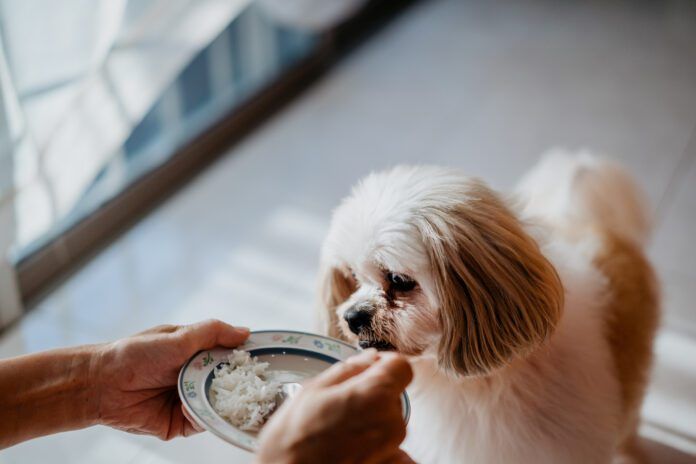
Chicken and rice will help get digestive issues under control, but it’s not an option for feeding more than a few days.
Credit: Hxyume | Getty Photo
A chicken and rice diet is a common home remedy for dogs experiencing digestive upset, especially diarrhea. The bland combination is typically palatable for dogs and can help provide some nourishment during recovery. But how much chicken and rice should you feed, how long should your dog be fed chicken and rice, is it safe to feed your dog chicken and rice every day, and is there a better alternative? Let’s break it down.
The combination of chicken and white rice is easy on the stomach and provides easily digestible protein and carbohydrates. When your dog has diarrhea, switching to a bland diet gives their digestive system a break from heavier, harder-to-digest ingredients, like fats. The chicken you use should be unseasoned, boneless, skinless chicken breast; the legs, thighs, and skin of chicken all have a higher fat content that can worsen diarrhea and cause further gastrointestinal (GI) upset.
How to Boil Chicken and Rice for Your Dog
When cooking the chicken, boil it until it reaches an internal temperature of at least 165°F (74°C). Do not feed raw chicken, as the bacteria present can worsen your dog’s illness, especially with an already compromised system. The rice should be plain white rice and should not include any butter, oil, or seasoning.
How Much Chicken and Rice to Feed a Dog
When determining how much chicken and rice to feed, a good starting place is about 2% to 3% of your dog’s body weight per day in total food. When feeding a temporary chicken and rice diet, aim for a 2:1 ratio of rice to chicken and split up the daily amount into multiple small meals given throughout the day. You don’t want to overload your dog’s digestive system. For example, a 22-lb. (10 kg) dog should eat around 0.55lbs (250 g) of food daily, which is roughly 165 g of rice and 85 g of chicken.
Our chart on how much chicken and rice to feed your dog breaks everything down for you:
Dog Weight
Total Daily Food
Chicken
Rice
5 kg (11 lbs)
100 – 150 g (0.22 – 0.33lbs)
33 – 50 g
70 – 100 g
10 kg (22 lbs)
200 – 300 g (0.44-0.66lbs)
65 – 100 g
130 – 200 g
15 kg (33 lbs)
300 – 450 g (0.66 – 1lb)
100 – 150 g
200 – 300 g
20 kg (44 lbs)
400 – 600 g (0.88 – 1.32lbs)
130 – 200 g
270 – 400 g
25 kg (55 lbs)
500 – 750 g (1.1 – 1.6lbs)
170 – 250 g
330 – 500 g
30 kg (66 lbs)
600 – 900 g (1.3 – 2lbs)
200 – 300 g
400 – 600 g
35 kg (77 lbs)
700 – 1050 g (1.5 – 2.3lbs)
230 – 350 g
470 – 700 g
40 kg (88 lbs)
800 – 1200 g (1.7 – 2.6lbs)
270 – 400 g
530 – 800 g
You should feed your dog chicken and rice for no longer than two to three days, or until their stool becomes firm and regular. Once diarrhea stops, start reintroducing your dog’s regular food slowly over the next few days by mixing it with the chicken and rice:
Day 1: 75% chicken and rice, 25% regular food
Day 2: 50% chicken and rice, 50% regular food
Day 3: 25% chicken and rice, 75% regular food
Day 4: 100% regular food
If diarrhea continues for longer than three days, or if additional symptoms such as vomiting, lethargy, blood in the stool, or loss of appetite occur, contact your veterinarian.
How Long Should I Feed My Dog Chicken and Rice?
A diet of chicken and rice does not constitute a complete diet for your dog and should not be fed long-term. It lacks essential nutrients and feeding it daily can lead to nutritional deficiencies over time.
For this reason, a better option is available for dogs with upset stomachs that both vets and nutritionists prefer: canned sensitive stomach dog food.
These specialized diets are typically more effective and are nutritionally complete and balanced, ensuring your dog has all the nutrients needed to support your dog’s health during and after their upset stomach resolves without risking nutritional deficiencies.
Canned sensitive stomach dog food recipes typically contain easily digestible proteins, such as chicken, turkey, salmon, or hydrolyzed proteins. This is especially advantageous for dogs that have sensitivities to chicken, as it provides alternative proteins that will not further exacerbate the GI issues. Sensitive stomach formulas also contain low-fat contents that provide the essential fatty acids your dog needs in their diet without causing pancreatic strain, easily digestible carbohydrates like rice, oats, or barley, and soluble fiber to help firm up the stool and promote regular bowel movements. I recommend canned or wet formats over dry, as dogs with diarrhea can typically benefit from the additional hydration.
Sensitive stomach formulas take out the guesswork when it comes to preparing your dog’s meal. Feeding chicken and rice requires boiling and preparing each portion and measuring out the correct ratio for your dog. Even with the best intentions, homemade meals can be inconsistent. Sensitive stomach foods provide consistency and balance and are easy to keep on hand in case your dog suddenly comes down with an upset stomach. This can help make mealtimes easier and take out the guesswork when you are juggling cleanup and care.
When to Switch from Chicken and Rice for Your Dog
Chicken and rice should only be fed for a maximum of two to three days and is not designed for extended feeding. If diarrhea or stomach upset lasts longer, you risk nutrient deficiencies on chicken and rice alone. Sensitive stomach dog foods, however, are safe for extended or even lifelong feeding, especially for dogs with chromic conditional such as inflammatory bowel disease (IBD), sensitive digestive tracts, food allergies, and recurrent pancreatitis.
While chicken and rice can be helpful in a pinch, it is best reserved for very mild cases of diarrhea or vomiting, particularly when your dog is refusing to eat their usual food or needs a gentle, short-term diet. This bland combination is suitable for temporary use—typically no more than 1 to 3 days—to give your dog’s digestive system a break.
However, if your dog’s symptoms persist beyond just a few days, or if they have underlying health conditions, chicken and rice may not provide the complete support they need. In contrast, sensitive stomach dog food is specially formulated to address digestive issues while offering balanced nutrition. It is a more consistent, long-term solution that not only supports your dog’s recovery, but also helps prevent nutritional deficiencies, promotes healthy digestion, and ensures your dog is getting all the essential nutrients they need. Regardless of diet, if your dog’s symptoms persist for more than a few days, worsen, or if your dog stops eating and drinking, be sure to consult your veterinarian.
To provide the best experiences, we use technologies like cookies to store and/or access device information. Consenting to these technologies will allow us to process data such as browsing behavior or unique IDs on this site. Not consenting or withdrawing consent, may adversely affect certain features and functions.
Functional
Always active
The technical storage or access is strictly necessary for the legitimate purpose of enabling the use of a specific service explicitly requested by the subscriber or user, or for the sole purpose of carrying out the transmission of a communication over an electronic communications network.
Preferences
The technical storage or access is necessary for the legitimate purpose of storing preferences that are not requested by the subscriber or user.
Statistics
The technical storage or access that is used exclusively for statistical purposes.The technical storage or access that is used exclusively for anonymous statistical purposes. Without a subpoena, voluntary compliance on the part of your Internet Service Provider, or additional records from a third party, information stored or retrieved for this purpose alone cannot usually be used to identify you.
Marketing
The technical storage or access is required to create user profiles to send advertising, or to track the user on a website or across several websites for similar marketing purposes.
This website uses cookies and other tracking technologies to offer you a better experience, personalize content and ads, and analyze our site traffic. Before proceeding, you agree to our Terms and that you’ve read our Privacy Policy. Update Settings
Functional
Always active
The technical storage or access is strictly necessary for the legitimate purpose of enabling the use of a specific service explicitly requested by the subscriber or user, or for the sole purpose of carrying out the transmission of a communication over an electronic communications network.
Preferences
The technical storage or access is necessary for the legitimate purpose of storing preferences that are not requested by the subscriber or user.
Statistics
The technical storage or access that is used exclusively for statistical purposes.The technical storage or access that is used exclusively for anonymous statistical purposes. Without a subpoena, voluntary compliance on the part of your Internet Service Provider, or additional records from a third party, information stored or retrieved for this purpose alone cannot usually be used to identify you.
Marketing
The technical storage or access is required to create user profiles to send advertising, or to track the user on a website or across several websites for similar marketing purposes.