
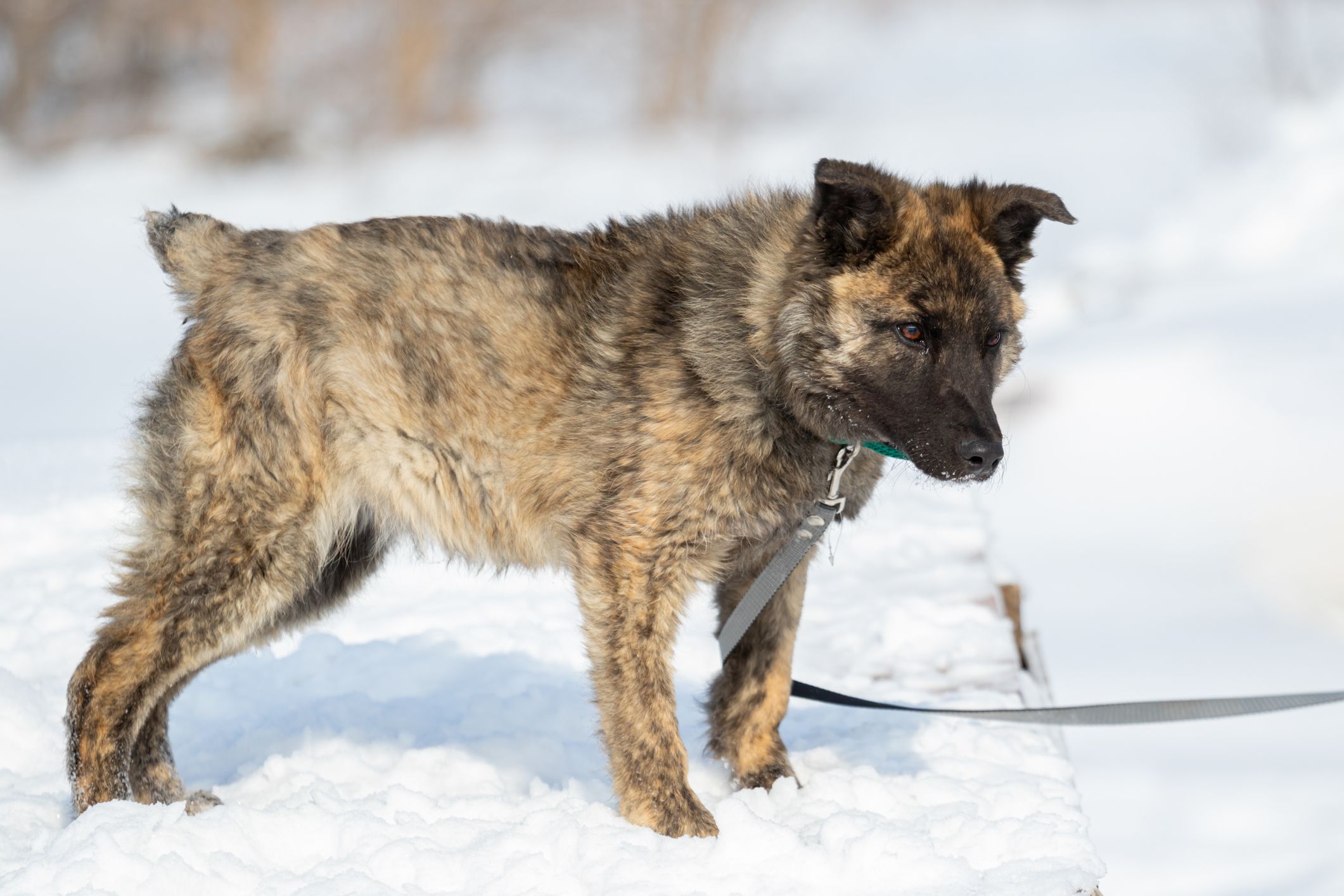
Happy tail syndrome occurs when joyful, exuberant dogs with long, strong tails wag ferociously and traumatize the tip of their tail when it bangs on hard surfaces. Tails get damaged by hitting furniture, walls, crates, floors, and basically any hard surface. After a short time, once there’s damage to the tail skin, the wound opens more every time they bang it. And it bleeds. A lot.
Even if you get the bleeding stopped and the wound forms a clot or a scab while the dog is resting, as soon as the dog is up and wagging—and hits something—the scab comes off, the wound opens, and it bleeds again. It’s frustrating for you and for your dog.
Complications can arise if you try to ignore repeated damage. You may notice the dog’s tail looks swollen, crusty, and possibly has an odor. Infection is a strong possibility requiring medication. With repeated injuries, broken tail bones can result.
Happy Tail Syndrome Treatment
Happy tail syndrome treatment requires finding a way to protect the dog’s tail tip from the repeated trauma of wagging against hard objects.
Creativity is key. It’s not easy to keep a bandage or protective padding on constantly wagging tails, and dogs aren’t always willing to leave the protection in place. People have tried all kinds of things, including toilet paper rolls, cut water bottles, pool noodles, foam pipe insulating tubes, and syringe cases from your vet. Commercial kits designed to protect the dog’s tail largely use protective padding devices that go into a bandage that goes on the tail. However, these products can be expensive, and you may have to try several to find one that works on your dog, if at all.
My advice: Whatever you try, make it as lightweight as possible. The heavier the bandage, the more likely it is to go winging off with the wagging. I use white first-aid tape that runs the length of the tail for several inches and is then incorporated into the bandage over the injury. The purpose is to give the bandage more “grab,” so it can stay on. Don’t make it too tight! Leave the end open inside the protective tube for air circulation to the tail tip. Consider using an Elizabethan collar or similar device so your dog cannot pull the bandage off.
Don’t Ignore the Damaged Tail
Sadly, even if you do get your dog’s tail to heal, it’s likely to happen again. You can try padding the walls, corners, and whatever he keeps hitting his tail on, but that’s hard to do and a bit unsightly when guests come over. You can try to interact with your dog only where there’s space to do so, but that’s not practical either.
If you can’t get the tail to heal—even with laser therapy—and you’re tired of coming home to a bloody scene right out of a horror film, talk to your veterinarian about tail amputation. The procedure will take care of the traumatized tip, and if you go short enough, it will never happen again. No, it’s not ideal, but it will protect your dog from constant tail injury. They can still wag as hard as they want, and you’ll avoid the pain and blood splatter.