Urine scald or urine burn is a wet, irritated, inflamed skin infection caused by leaking urine or exposure to a wet diaper or belly band. In the early stages, you may notice that the hair is wet around the urethra and inside back legs, but that urine is irritating the skin due to its ammonia content. That’s how the problem starts.
Urine scald may include hair loss, if it’s bad enough. You will notice affected areas around the urethra, inside the back legs, near the dog’s rear end, and even creeping onto the belly if the dog is exposed to enough urine and the infection spreads.
The Risk for Urine Scald in Dogs
Irritation from urine exposure is more common in females since the urinary tract opens directly on skin, unlike in males where the penis can direct urine away from the body somewhat. With time, the chronic wetness from urine leakage (incontinence) leads to skin irritation. The urine ammonia adds to the inflammation. Hair loss, moist eczema, and bacterial or yeast infections can set in.
Urine scald is a common problem in any dog with urinary incontinence, including spay incontinence. Dogs who have mobility issues can be affected as well because they pee and then cannot get up from the wet spot. Some senior dogs with dementia will urinate while sleeping or resting and not seem to realize they are resting in a puddle of urine. (Obviously, you cannot scold dogs for these problems because it’s beyond their control.)
Urine scald can also appear if a dog is left in diapers or a pee wrap for long periods of time, hence the term diaper rash. In these cases, skin irritation occurs because the urine is held near the skin and can’t dry or air out.
Regardless of why your dog’s skin is irritated by the urine, it needs treatment.
Treatment for Urine Scald
Treating mild cases of urine scald is simple. The problem is the wetness, so you need to keep the area dry. Note every time your dog urinates. If she has had an accident on her bed, don’t try to just wipe it up. Face the fact that you need to wash the bedding.
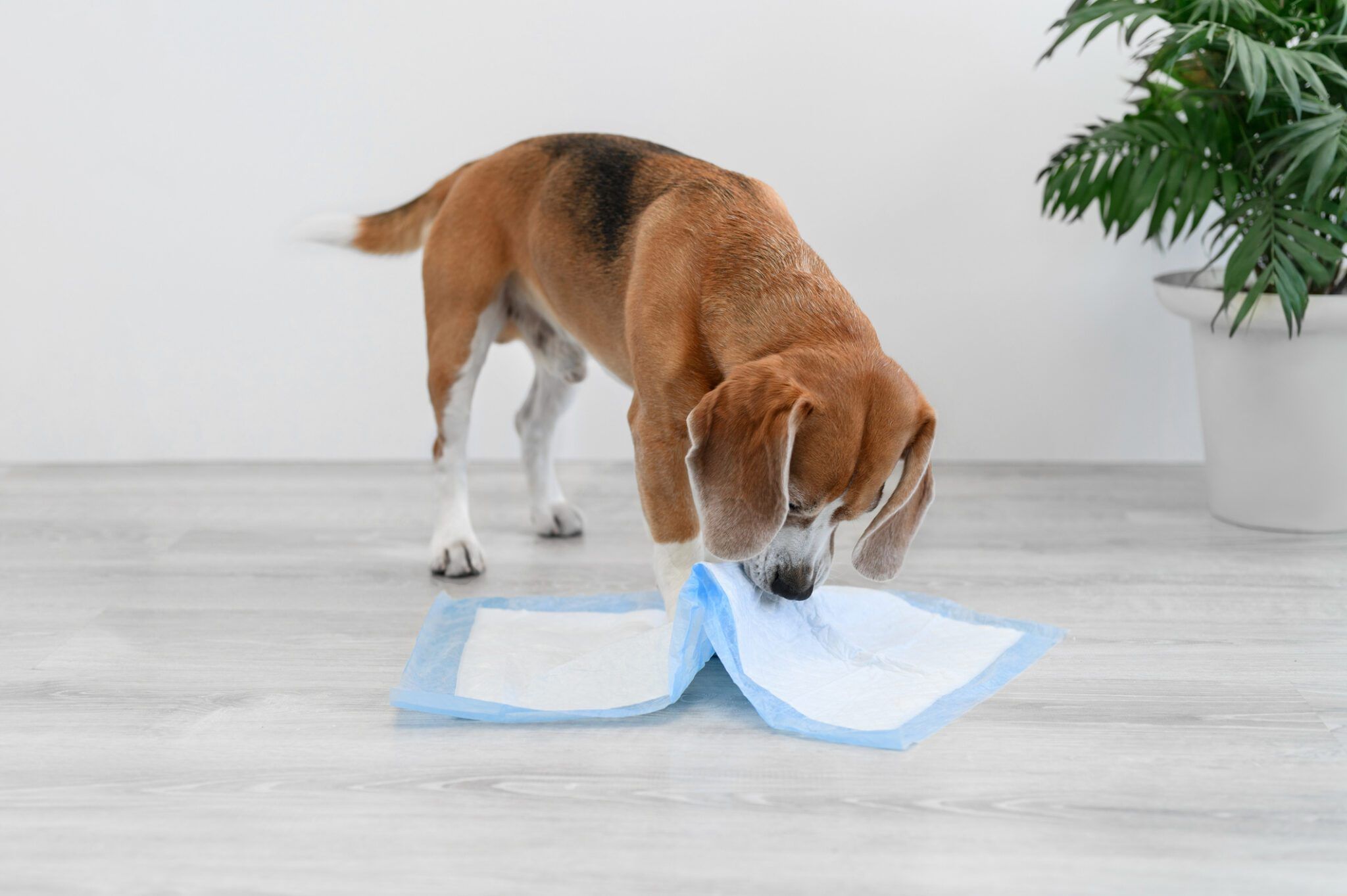
Puppy pee pads laid down over a dog bed or on the floor where your dog likes to rest can help to soak up the wetness and wick it away from your dog’s body. Washable bed pads for people work too.
If the area becomes infected, your veterinarian may dispense a topical medication or, in case of stubborn yeast infections, oral medication. The goal is to get back to normal and then you need to develop a protocol for prevention.
Preventing Irritation from Dog Incontinence
When your dog pees, wipe her off with baby wipes and then dry the area with a soft cloth to keep the area dry. You can carefully apply plain cornstarch or baby powder to help. Discourage the dog from licking the area.
For some dogs, it helps to apply an ointment around the area such as petroleum jelly or KY jelly to keep moisture off irritated skin.
Preventing urine scalding requires diligence on your part. This means paying close attention to your dog’s urinary habits. Take your dog out frequently and express the bladder if needed. Check bedding and blankets multiple times during the day and remove any wet ones. Then, clean your dog and put down dry bedding or blankets.
If you use pet diapers or pee wraps/belly bands, check them frequently for wetness and change them. When possible, leave these coverings off so the area can dry and air out naturally.
Learn your dog’s elimination habits. If she tends to urinate right after she wakes up, try to get her out before she goes. Trim hair to help keep the area around the vulva clean and dry. If you need to express your dog’s bladder, consider doing that in the bathtub so you can clean the genital area right away. Dry her entire body carefully.
With care, you can work around your dog’s incontinence and associated urine scald. You can also discuss some of the incontinence medications available to help with dog incontinence.