|
|||||||||||||||||||||||||||||||||||||||||||||||||||||||||
![]()
|
Whole Dog Journal offers the best methods for keeping your dog cool this summer (and why it's a good idea).
By CJ Puotinen Hot weather spells trouble for dogs. Because they cant release heat by sweating the way humans do, heat and humidity can raise canine body temperatures to dangerous levels. Heat stroke kills, and heat stress (a less severe condition) can take a serious toll on a dogs health. Unfortunately, heat-related problems are among the most common summer canine ailments. Conscientious caregivers plan ahead and do everything they can to keep their dogs safe in the heat. Here are some strategies and products for helping hot dogs chill out. To reduce canine summer heat stress, let your dog become accustomed to climate changes naturally and gradually, the way animals adapt in the wild. Schedule long walks for the coolest time of the day but
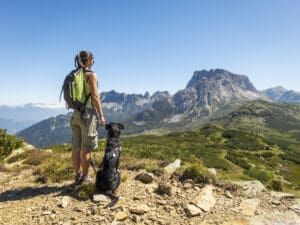
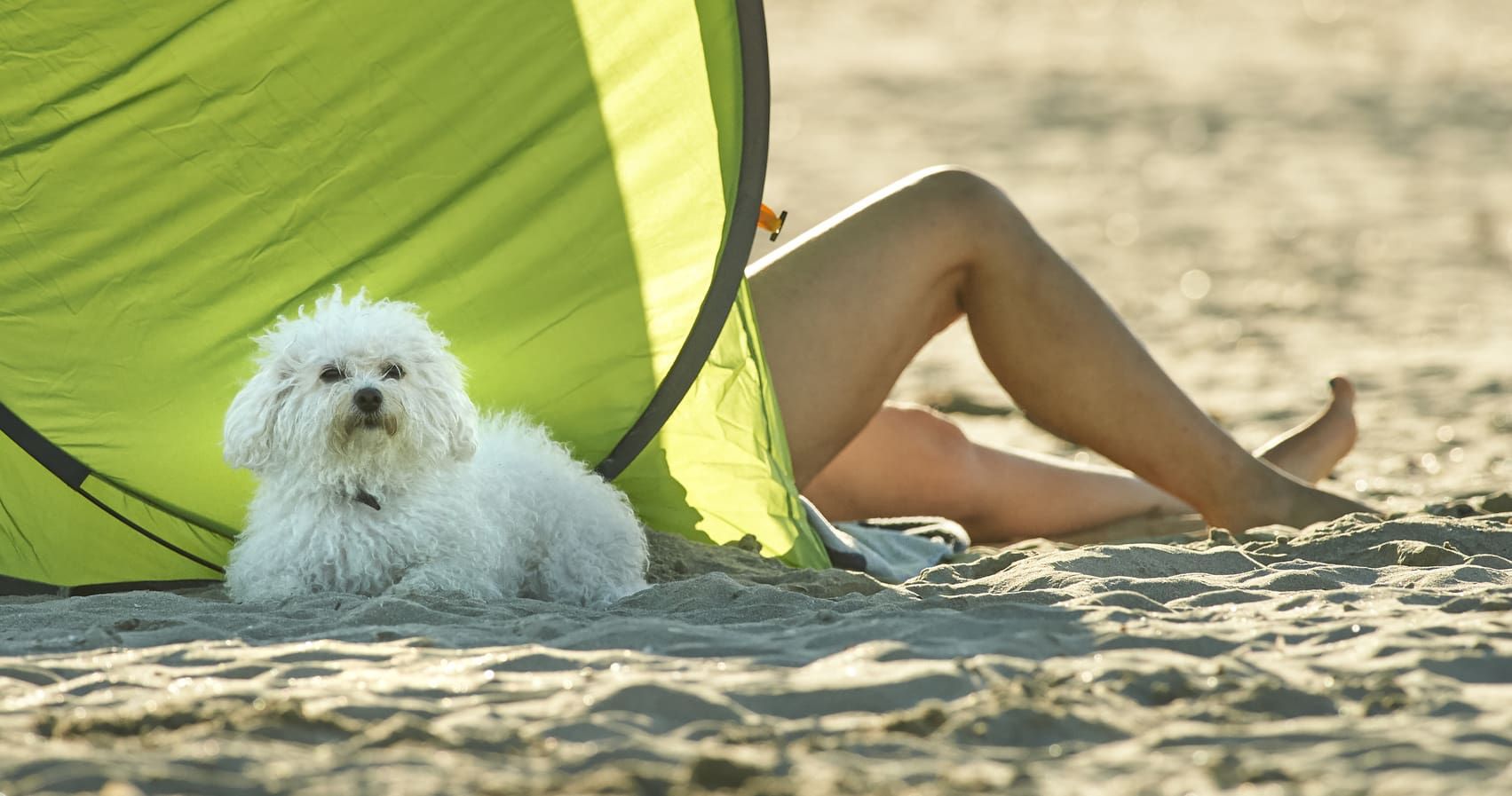
Summer daytime temperatures are coolest at dawn and dusk. Just after sunrise and just before sunset are the best times to take your dog for a run or a long walk. Humidity matters as much as temperature; in fact, a combination of high humidity and moderate temperatures can stress a dog as much as mid-day sun. Always watch for signs of stress. Dogs pant to release heat, so if your dog pants more heavily than usual, slow down, stop, find shade, offer water, and rest for a while. Ideal dog exercise locations are shaded parks or lawns near a pond, river, creek, or pool. Beaches are usually cooler than inland areas, and both lakes and oceans (assuming conditions are safe for swimming) allow dogs to cool off whenever they like. Whether your dog is a wader or swimmer, let him rest in the shade after playing in water. At home, a plastic wading pool can be a perfect place to dip and chill. Whenever temperatures climb, provide extra drinking water. Your dogs panting cools him by releasing body heat, but this process also can dehydrate his body. To encourage a hot dog to drink on hot days, resupply his cold water. Some people fill a dog bowl or bucket and freeze it overnight. As it melts during the day, it provides a steady supply of refreshing, cold water (check to make sure it melts quickly enough to provide as much water as he might wish to drink). Alternatively, or in addition, freeze or simply chill water in the refrigerator in a plastic water bottle and add the melting or chilled contents to your dogs water periodically throughout the day. Change your dogs water more often during hot weather and add ice cubes to your dogs bowl. Many hot dogs enjoy curling up with a nice cold ice pack. A frozen plastic water bottle stays cool for hours. Dogs who use frozen water bottles as pillows cool down quickly, since blood circulates close to the surface at the neck and throat. For summer comfort, nothing beats the shade of trees, so as you plan the days activities, look for parks, play areas, picnic tables, and hiking trails that are sheltered from direct sunlight. At home, if your dog doesnt have a dog door or easy access in and out, be sure he has shade to rest in and ample water supplies. The suns angle changes with the seasons, so be aware of shifting shade patterns. Providing shade is most important between 10 a.m. and 4 p.m. Ventilation and air circulation are crucial when dogs are confined to pens, crates, and kennels. Solid walls interfere with air circulation while chain link fencing, screens, or mesh fabric allow the air to move. Shade covers help reduce heat loads, and fans that circulate air have a cooling effect. Study the forecast as you schedule play dates and outdoor events. When heat and humidity are high, save outdoor activities for breaks in the weather or days with lower humidity. As all Whole Dog Journal readers know, its never safe to leave a dog in a parked vehicle. The inside of a car parked in the sun, even with its windows down, can increase by several degrees per minute, quickly reaching 125oF or even 150oF. Keep your dog well groomed, with frequent brushing to remove dead hair, especially the undercoat. Some long-haired or heavy-coated dogs feel much more comfortable with short summer cuts, keeping in mind that dogs whose coats are shaved or cut very short are at risk for sunburn.
Heat stress risks Any dog can suffer from heat stress, but dogs who are most susceptible include the very young and old; any dog with a history of heat stress; breeds with flat faces or short noses; and dogs who are overweight, physically inactive, have cardiovascular disease, or respiratory problems. Some prescription drugs may increase the risk. The symptoms of heat stress include profuse panting, salivation, an anxious expression, staring without seeing, failing to respond to commands, skin that is warm and dry, fever, rapid pulse, fatigue or exhaustion, muscular weakness, and physical collapse. The symptoms of heat stroke or heat prostration can include a warm nose and foot pads, glazed eyes, heavy panting, rapid pulse, a dark red tongue, fever, dizziness, vomiting or diarrhea, immobility, and unconsciousness. Brain damage occurs when the bodys temperature reaches 106o to 107oF. A dogs normal temperature is 100.5o to 101.5oF If your dog experiences any of the above symptoms, provide immediate first aid. Your rapid response may save your dogs life. Reduce your dogs temperature by moving her into shade and immersing her gradually into cool water, such as in a stream, pond, fountain, horse trough, bath tub, or wading pool. Otherwise, wet the dog thoroughly, pouring a continuous stream of cool water over her body, beginning with the head and extremities, from a hose, watering can, bottle, or pan. If possible, apply ice packs to her head and neck. Apply wet towels to her abdomen, groin, legs, head, and neck. If you can, take your dogs temperature and continue applying cool wet towels until it returns to normal. As soon as possible, take your dog to a veterinary clinic. Even if she seems to have recovered, her body temperature could increase again; heat stress always carries a risk of brain damage; and depending on the dogs age, physical condition, and the amount of time spent with an elevated temperature, complications can occur.
Cool equipment Now cooling vests are becoming popular. Made from different materials and operating on different cooling principles, these garments are designed to keep dogs from overheating.
Do they work? To help us find out, we recruited Bridgeport, Connecticut, dog trainer Deborah Lee Miller-Riley and her Portuguese Water Dog, Skyler, to test some popular models. Miller-Riley competes with her dogs in water sports and runs Splash Camps and Splash Workshops across the country (see k9watersports.com for more information). Skyler is an 11-year-old male who weighs 61 pounds and had a 3-inch-thick wavy coat until we finished our tests, when he got a short, cooling summer cut. Each vest was tested on a sunny, warm day with some cloud cover, in temperatures ranging from 83 to 85o F, humidity near 45 percent, and very mild winds. The walks lasted 30 to 35 minutes for each vest tested, ending at a stream where Skyler cooled his legs before returning by the same route. All of the vests come in different sizes, with size charts based on weight and measurements such as girth (chest at its widest part), neck, back length, or length from front leg to back leg. Skylers correct size, depending on the manufacturer, was medium, large, or extra large. Because his measurements often fell near a size change, we supplied all of his statistics when ordering, asking the seller to send his best size. Two had to be returned for size replacement, and one more should have been. Miller-Rileys observations apply to Skylers experiences with the vests. Several of the vests reviewed here were designed for or are used by military, search and rescue, police, and working dogs. Results may vary for smaller or larger dogs, dogs of different breeds, engaged in different activities, or in other climates.
Canine Cool Vest
50 Degree makes a Cool Pad for lying on, as well as vests and other cooling products for humans. The Cool Vest comes in seven colors and four sizes. Size is determined by neck/yoke, chest girth, and side body length measurements. Skyler wore a woodland camo vest (green and black) in size large, which cost $120. Velcro tabs close the vest around the dogs belly and back. Two cold panels slip inside the vest and cover the lower rib cage. This product was cut too long for my slightly off-square male dog, reports Miller-Riley. The coat cut into his groin and pressed on his penis, which seemed to be uncomfortable for him when he lifted his leg. The panels, which were chilled in the refrigerator overnight, remained solid throughout the walk. Skylers chest was cold where it came in contact with the pack. But he did not appear cool; in fact, he panted during the entire walk. When we reached the stream, he not only cooled his legs but went for a swim to cool off more. Despite being a water dog, he is not fond of swimming unless he is really hot. I thought I would like this vest. The Velcro panels were easy to use, and I thought the wrap-around design would act as insulation to keep coolness next to the dog. Instead, it appeared to make him warmer, even while it chilled the skin next to his ribs.
Hawaiian Cool Coat Cocojor Hawaii says its Hawaiian Cool Coat is filled with
Skyler tested a cotton green floral vest in size extra large, costing $42. This colorful coat had quilted sections that contained the beads that absorb water, says Miller-Riley. Absorb is just what they did. Once soaked, the coat weighed close to five pounds. Try as I might, I could not get the coat to stay on my dog. The Velcro patches on the end of the body strap were not large enough to remain closed; the weight of the coat kept pulling the fastener apart, and the coat would slide off.
We were not able to complete our test walk. This coat requires extra care (sun drying) to prevent mold growth, and it still got moldy. It remained swollen for a week, even in the sun, and was heavy, bulky, and a bother to maintain.
Cool Vest by Radic
The vest comes in five sizes (extra small to large) and two colors, orange or blue. Skyler wore a blue size large, which cost $59. Miller-Riley reports, This design was very light weight even after being soaked in cold water and refrigerated. The coat has a liner that protects the dog from getting wet, so it might work well for dogs waiting to go into a show ring where wet coats are undesirable. The vest was simple, easy to use, and packed up nicely. It did need care after use to prevent mold growth, but it dried within the day mold-free. This style fit my dog the best of all the vests we tried. The panel over Skylers back was still cool underneath at the end of the walk, and his skin under the vest was cool, while his head and rump, which were not protected, were hot to the touch. He began the walk with light panting and ended the same way. At the stream, he walked in to wet his feet.
Canine Cool Coat
The coats size is the dogs back length measured from top of shoulders to base of tail, with 14 sizes ranging from 10 to 36 inches. Skyler wore size 22. All sizes cost $25. This coat was very light, easy to use, and easy to pack, says Miller-Riley. But I think my dog was cooled more by the stream than by the coat. Once it dried, it didnt make much sense to use it further. Just soaking my dog with water before and during our walk worked just as well as this coat and I didnt have to buy anything. SmartPak also sells cage cooler fans, a cool cot (portable crate with elevated floor for cooling air circulation), and solar shade sheets.
RPCM Cooling Vest
According to its manufacturer, the vest was developed for firefighters and adapted for military working dogs in Iraq. The black nylon vest comes in two sizes, Chilly Dog ($130) and Chilly Pup ($99). Skyler wore the larger size, which adjusts for chest girths of 28 to 46 inches. Miller-Riley reports, We tested this vest when the temperature was 82 degrees and the humidity 56 percent. The cool packs cover the abdomen, and the vest is held in place with straps over the chest and back. There was no change in Skylers panting from start to finish. He did not go for a swim, just got his feet wet. His skin stayed cool under the rib cage covered by the vest. This product, which seems to be designed only for large dogs, is medium-weight and simple to use, but you have to cool or refrigerate the gel-like cells. I didnt like its large plastic snaps resting on my dogs spine, though he didnt seem to care.
Chillybuddy
Chillybuddy uses to determine size; the length of the dogs back. As you can see in the photo above, the size we ordered was too short to cover Skylers back, and we ran out of time to return this and order the correct size. A company representative belatedly suggested using the back length as the critical measurement, as the neck and girth straps are highly adjustable. According to Chillybuddys maker, the vest can reduce a dogs coat temperature almost 30 percent on a 90-degree day. Soaking it before use dampens the cotton lining, which holds water for evaporative cooling. Miller-Riley says, It was slightly cooler (72 degrees) when we tested this product, so we walked for an hour rather than our usual 30 minutes. Skyler stayed comfortable throughout. This coat is easy to use, lightweight, and it folds up and packs well. The shade cloths I use for my tent and car are made of the same kind of fabric, which really reflects heat, and the mesh circulates air well. A full strap goes around the belly, anchored with belt loops, and Velcro strips allow further adjustment. However, both the front and back kept flipping up and always seemed to need adjusting. Perhaps this would not be the case if we had ordered the correctly sized coat.
Conclusions Most wild canines do not venture forth in the hottest part of the day. They seek cool spots in the earth or under vegetation until the sun goes down. Its wonderful that so many products are being developed to help working dogs in adverse conditions, but where pets are concerned, keeping them cool involves a certain amount of common sense. Why drag a dog out into the heat unless its to go for a swim or a wade? CJ Puotinen is author of The Encyclopedia of Natural Pet Care, Natural Remedies for Dogs and Cats, and other books (see Resources, page 24 for purchasing in-formation). She lives in New York with her husband, a Labrador, and a tabby cat.
|
||||||||||||||||||||||||||||||||||||||||||||||||||||||||
|
www.whole-dog-journal.com For questions about your order or subscription, please email us at: Whole Dog Journal Customer Service Or call us at: 800/424-7887 Copyright Belvoir Publications, Inc. All rights reserved. About Us / Privacy Policy |
|||||||||||||||||||||||||||||||||||||||||||||||||||||||||