

Home Search
heart%20disease - search results
If you're not happy with the results, please do another search

Treating Your Dog’s Separation Anxiety
and it helped keep Sandi sane.üAn early meeting of Sandi's SA Support Group" (and their dogs
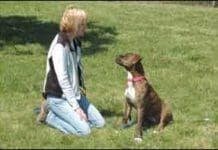
Teaching Your Dog Calm, Slow Breathing
Radio talk show psychologist Dr. Joy Browne offers her listeners a stress-reducing “Square Breathing” technique. To relax before or during any potentially anxiety-producing experience, try square breathing: Inhale to the count of four, hold to the count of four, exhale to the count of four, and hold for four. With practice, you can increase each side of the “square” to a count of eight or even 20; the longer the count, the slower and more calming the breathing.
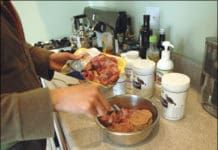
Instructional Books on Home-Prepared, Bone-Free Dog Food Diets
Interest in homemade diets has never been greater, especially since the huge pet food recall of 2007. Last month, I reviewed books that explained how to feed a homemade canine diet based on raw meaty bones (RMBs). This month, I’ll look at books about boneless diets – by far the largest category of books. Unfortunately, I found a lot of bad books out there. Many of the recipes provided in the books are nutritionally inadequate! There’s no harm in using them from time to time, or to replace a small portion (up to 25 percent) of a commercial food diet, but anyone who relies on these books to feed their dogs a homemade diet is likely to end up with issues that could range from dry skin to crippling orthopedic conditions.

Dog Breeders Who Only Feed Raw Dog Food Diets
You know you’ve been feeding raw for a long time when it no longer seems like a radical, ground-breaking, or – ubiquitous adjective for beginners – scary way to feed. When I started feeding raw – a dozen years and three generations of Rhodesian Ridgebacks ago – it was the Middle Ages of raw feeding. Ian Billinghurst’s Feed Your Dog a Bone was the hard-to-find illuminated manuscript (the lax editing could have stood some sprucing up by Benedictine monks), and everyone used the unfortunate acronym BARF, which stood for “bones and raw food” (or, later, the loftier-sounding “biologically appropriate raw food”). No commercial raw diets were available, and new converts dutifully ordered their Maverick sausage grinders over the Internet. The instruction booklet said the table-top grinder couldn’t be used on any bones harder than chicken necks or wings, but everyone ignored that.
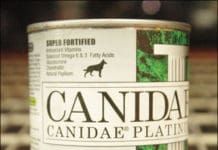
Healthy Low-Fat Diets For Dogs With Special Dietary Needs
Some low-fat recipes for dogs are excessively low in fat, providing as little as 5 to 8 GFK, with as much as seven times more starches than meat. With very few exceptions, its not necessary to feed such an extremely low-fat diet to dogs recovering from or prone to pancreatitis or with other forms of fat intolerance, nor is such a diet likely to be nutritionally adequate, regardless of how many supplements you add.
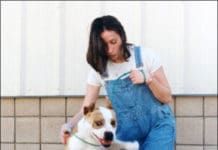
Canine Acupressure to Calm High Energy Dogs
These are too-common refrains of guardians of dogs who are bouncing off the walls: "She has way too much energy!" "This dog is out of control!" "I've had enough of this crazy dog, he's a maniac!" You can love your dog to pieces, but if his behavior is unruly, it can be very hard to live with on a steady basis. One of the most common reasons dogs are released to shelters is because they are out of control. Hyperactive dogs are frequently difficult for their owners to enjoy. Surviving this situation may stressful for you, your family, guests - and the dogs themselves. The first step is to have the dog evaluated by your trusted holistic veterinarian, to determine if there is any underlying medical condition. Hyperactivity, also called "hyperkinesis," actually can be the result of a medical condition that is characterized by frantic behavior, incessant movement resulting in exhaustion, a consistent elevated heart rate, panting, loss of weight, vomiting, and increased appetite or loss of appetite. Canine compulsive disorders such as tail-chasing, self-mutilation, and other nonproductive, repetitive behaviors are usually considered forms of hyperactivity.
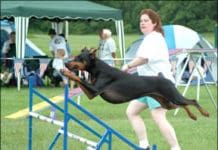
Healing Your Canine with Energy Medicine and Holistic Dog Care Techniques
Can exposure to color change your health? What about tapping on key acupuncture points or other body parts? And is there any way to focus or concentrate naturally occurring energy so that it has a more therapeutic effect? Veterinarians and other healthcare practitioners who experiment with energy healing deal with these and related questions when they address the “etheric body,” the invisible part of the patient that is also described as the vital or energy body. Improving the etheric body’s energy flow or state, they say, stimulates a self-healing mechanism that encourages the body to repair itself, often in record time. In the past four issues, we’ve described a number of “energy medicine” tools such as homeopathy, flower essences, Reiki, crystals, acupuncture, and therapeutic touch. In this article, the conclusion of this series, we’ll describe several more modalities that can be used alone or in combination with conventional or alternative therapies and are widely considered to be free from adverse side effects.
Dog Exercises and Injury Prevention
Strained muscles, pulled ligaments, sprains, and bruises . . . these are common canine injuries in the spring, when the weather invites us all outside and even seems to encourage our dogs to overdo it. Enthusiastic, rigorous exercise that follows several months of relative inactivity is a prescription for injury.
Canine Pain Management
Pain may be the most enigmatic of all the disease symptoms of man or beast. It is a sensation we all have experienced at one time or another and in varying degrees. But, few of us can explain adequately how a particular pain feels, fewer still can give a reasonable explanation for why pain occurs; and despite all the recent scientific research that has gone into pain, we still have a minimal understanding for how it occurs – or truthfully, for how to consistently prevent or alleviate it.

The Canine Central Nervous System
What’s on your dog’s mind? You may never know, but it can be helpful to know at least a little something about his brain – and the rest of his central nervous system (CNS). The CNS describes the system of neurons formed by the spinal cord, brain stem, cerebellum, and cerebrum. This month’s installment of the Tour of the Dog focuses on the CNS, its diseases and disorders, and treatments for those ailments.
How Coconut Oil Benefits Your Dog’s Health
There are dozens of products on the market, but look for unrefined oil at your health food store. We like to see oils packaged in glass jars (rather than plastic containers). The really good stuff is expensive, but its benefits are worth the money.üOne good candidate for supplementation is the thick-coated dog who is often greasy or smelly. Many of these stinkers" have freshened up when receiving a little coconut oil daily. Just start out with a low dosage (perhaps just a dab) and increase slowly."

What to Think About When Petting Your Dog
Those of us who like dogs can't help but touch them. We are irresistibly drawn to adore them with our hands, to pet them, stroke them, rub their ears, and get lost in the ecstasy of dog beneath our fingertips. Dogs pull not only our hearts but also our hands into a companionship of touch, a relationship we hope is mutually satisfying. Caressing a dog can be a direct line to nirvana, calming nerves, lifting mood, relieving suffering, a spiritual experience that soothes the soul.