Home Blog Page 301

Choosing The Right Dog Chew For Your Dog

2
There are a wide variety of dog chews and treats to keep your dog satisfied, but which ones are healthy and safe? Credit: Emilija Manevska | Getty Images

[Updated June 17, 2016]

Walk down the right aisle in any pet supply store and you can’t miss them: row upon row, bin upon bin of preserved and processed animal parts, all intended for your dog’s chewing pleasure.

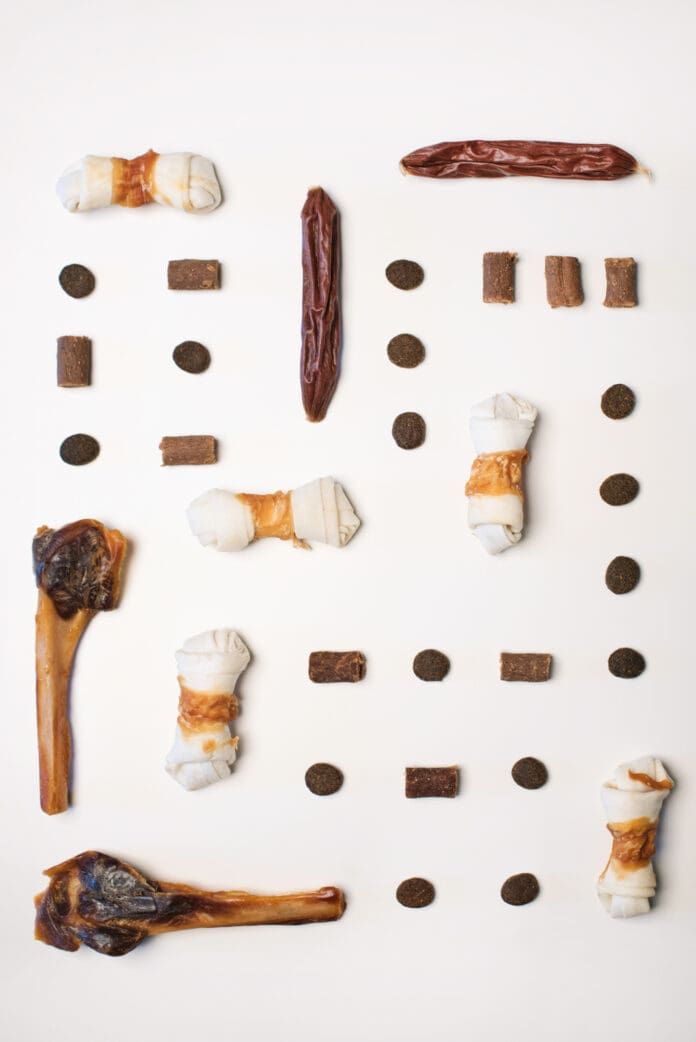
First, there are the rawhide products – perhaps the least visually objectionable stuff on display. Most pet stores carry many varieties of rawhide chews, including flat discs, round rolls, twisted and braided chews, and fanciful items such as rawhide footballs and food bowls.
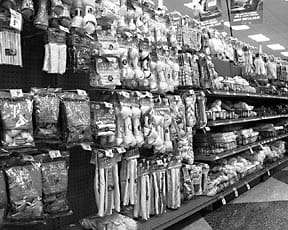
Nearby you’ll likely find the knackery wares: cattle hooves, bones, tendons, and penises, and pig ears and snouts – items that can make even the most seasoned carnivore cringe, though they may delight your dog.

Are these animal-based chews, even the ones labeled “all-natural,” truly safe for your canine companion?

The short answer: It depends.

What’s an “All-Natural,” Dog Chew Anyway?

The phrase “all-natural” shouldn’t be construed as either healthy or true. The term actually has no legal or regulatory definition, according to the Food and Drug Administration. Labeling a finished product as “all-natural” could simply mean the final processor hasn’t used any preservatives. But it may have been bathed in chemicals when processed, dunked in a liquid smoke substance for flavoring, or worse; there’s just no way to know. Despite the fact that dogs do eat these things, they are not considered “food,” and there are no federal agencies that oversee or regulate the market other than to provide permits required for production.

Some vendors tout their wares as “all natural” based simply on the marketing materials or ingredient lists sent to them by suppliers, without researching what’s behind the final product. The Leash Connection, a retailer in Clayton, Alabama, sells its wares online and touts its “natural dog bones, natural dog treats, and natural dog chews.” When we asked Carmen O’Conner, a spokesperson for the company, what makes the products natural, she said, “I just go by what they (the suppliers) list the ingredients as.”

The company isn’t breaking any rules or laws; it’s perfectly legal for a manufacturer to list the ingredients of a rawhide chew as “100% cowhide,” even if the hide was washed in formaldehyde and whitened with titanium dioxide.

Think about it: All products that are of animal origin need to be treated in some way to prevent spoiling. The trick is finding products that contain a minimum of the preservative chemicals, yet are still free of harmful bacteria. And because these products are not considered “food,” they fall into a regulatory grey zone, with little (if any) oversight from either the Department of Agriculture or the FDA.

The Rap on Rawhide

Among the most popular of the animal-based chews is the basic rawhide. Chewing rawhides satisfies a dog’s need to exercise his jaws, relieves boredom, and aids dental health, since chewing rawhides can help remove plaque and tartar from a dog’s teeth.

There are three main raps on rawhides: problems associated with the physical act of chewing and swallowing the chews (such as broken teeth, choking, gastrointestinal obstructions, etc.); bacterial contamination; and concerns about the presence of manufacturing chemicals in the animal-based products. This article focuses mainly on the latter concerns; see sidebar, below, for more information about the former problems.

Many people don’t think about the origin of the products they buy for their dog’s enjoyment, whether out of naiveté or because they hate to consider their role in the factory farming and slaughter industries (that’s a topic for another day). But given the popularity of animal-based treats and chews, it’s useful to consider the process of their manufacture.

The process of making rawhide chews starts at the tannery, where hides are first de-haired through a physical and a chemical process. They are treated with another chemical to “puff” the hide, making it easier to split into two layers; the upper layer is earmarked for leather goods – shoes, purses, and so on. The lower level is used to make, among other things, rawhide and gelatin.

The split hides, known as “splits,” are then transported to the processor. If the plants are far apart, the hides are frozen or treated with a lime solution.

At the processor, the split is washed, treated with an antibacterial and/or bleaching agent, then cut. It’s formed into shapes, including the traditional rawhide bone and rolled retriever sticks, then dried. After drying, the products are packaged and sent off to distributors.

It sounds like a straightforward process, but there are vast differences between the quality of the end products, depending on the location of the hides’ origin, the processor location, and the distance and travel time between the two. Hides from some tanneries in the Far East and South America are de-haired using arsenic; others may be treated with formaldehyde. Excessive lime may be used to preserve the hides before processing.

While extensive washing in water can remove traces of any contaminants, the process is time-consuming and expensive, and some factories skimp on this step.

“Foreign manufacturers often heavily lime the hides upon receipt to store them longer before processing,” explains Marco Corsi, owner of Pet Factory, one of two companies who process rawhide products in the U.S. “This is not a real problem if one washes the hides enough to fully get the lime out. Measuring the pH will tell you when the rinses are enough, but time is money, and you can process more loads if you shortcut the rinses.”

If the washing process is too short, Corsi explains, the rawhide dries to a cement-hard finish, partly because the lime cuts the fat content in the hides. This makes for a less-palatable, tough chew. “When the final product is rock-hard, it makes the shards of rawhide harder for the dog’s tummy to handle,” says Corsi. “A well-manufactured natural rawhide will actually have some ‘give’ when twisted, and look like a manila folder, with a golden hue.”

Hydrogen peroxide is used to whiten rawhide and to eliminate bacteria. But Corsi warns consumers to avoid products that look as if they are painted white; they probably were painted, with titanium oxide. The coating gets pasty when wet and is unpalatable for most dogs.

If the rawhides are not dried correctly or long enough – a more common problem with rolled or shapes rawhides – the outer layer may dry while the inner layer remains moist. This can create a breeding ground for bacteria. And over time, the rawhide chew slowly putrefies from the inside out – not a healthy treat for your dog.

Rawhide Chews Selection Tips

Select chews that are unlikely to be chewed into separate pieces, for example, the “knotted” chews whose “knots” are separate pieces.

Look for rawhides that are as thick as possible. Your dog will quickly consume products made from thin hides, rather than spend hours cleaning his teeth and toughening his gums on a thick hide.

Do not buy “munchie” or “crunchy” products, made of small chips of rawhide glooped together with binding agents. Again, these products can be consumed too quickly, defeating the purpose giving the dog something to chew.

“Pressed” rawhide chews are especially hard – hard on teeth, but harder for aggressive chewers to consume quickly. Use your discretion.

Do not buy products that are obviously artificially colored. Do not buy unlabeled products of uncertain origin.

Even “Natural” Chews Can Cause Problems

Vets, breeders, and owners all have horror stories they can tell about a dog who died or had a close call from an intestinal blockage caused by swallowing a chunk of rawhide. According to many vets, the more common dangers include pieces stuck in the mouth or the esophagus, upper airway obstructions, broken teeth, and gastrointestinal distress.

Dale Olm, DVM, a co-owner of Southampton Pet Hospital in Benicia, California, says he’s treated several dogs with teeth damaged from chewing rawhides. “We see quite a few slab fractures of the molar teeth from rawhides,” he says. “(Rawhides) do help with dental tartar, but you have to weigh the risk of breaking the teeth with that benefit. Shards of rawhide jammed up under gums, pieces adhered to the roof of the mouth, and bits stuck painfully between teeth are also a worry.

Upper airway obstructions caused by a piece of rawhide wedged across the throat are another danger. I’ve seen the greatest complications in either the esophagus or the throat,” says Michael Schaer, DVM, a professor of small animal medicine at the University of Florida’s College of Veterinary Medicine. If the dog takes in a big, wedge shaped piece of rawhide, that’s where he gets into trouble.

Gastrointestinal distress is a common malady. John Flanagan, DVM, at Studio City Animal Hospital in Los Angeles, estimates that 10 to 15 percent of his canine clients who chew rawhide experience tummy troubles. “Most of the problems aren’t emergencies, but they’re not fun,” he says. “Most commonly, we see bloody diarrhea, or dogs who throw up and don’t want to eat.”

Despite these caveats, all the veterinarians we interviewed agreed that rawhides could be safely given to dogs as long as owners maintain appropriate supervision. Chewers and gnawers do well with rawhides; gulpers and dogs who destroy and down any object in sight don’t. And nothing beats supervision.

“What I always tell people is, if a dog chews it nicely – chewing, shredding, maybe swallowing little bits – they shouldn’t have any problems,” says Sandy Young, DVM, of the Brewerton Veterinary Clinic in Brewerton, New York.

Concerns About Salmonella

Salmonella is a bacteria found in many dairy, poultry, and meat products. Once ingested, it passes into the intestine and can extend to the liver or spleen. Infection by salmonella bacteria can pose a real threat to humans. In a healthy adult, an infection is characterized by diarrhea, abdominal cramps, vomiting, and nausea, which can last up to a week. The elderly, infants, and people with impaired immune systems are at greater risk for contracting a severe infection, which can result in death.

In 1999, Farm Meats Canada was the subject of a Canadian government warning and recall due to the discovery that some shipments of its pig ears were contaminated with salmonella. Some human infections, possibly caused by handling these treats, were reported. In response, the FDA issued an advisory warning U.S. consumers to exercise extreme caution when handling beef- or pork-based dog chews or to avoid them altogether.

In addition, in 2000 the FDA issued an import alert that instructed U.S. authorities to detain without physical inspection dog chews manufactured by 20 companies in 11 countries – including Canada, Brazil, China, Venezuela, Thailand, New Zealand, and Germany – due to suspicions of salmonella contamination in those products.

After its troubles four years ago, Farm Meats Canada made improvements in the handling and processing of its pig ears and other products and also implemented testing procedures to ensure each batch is salmonella-free. The pig ears are not as yet irradiated, although Darby Brewer, the company’s general manager, says when the company begins building a market in the U.S. its policy will be to irradiate any exported product.

No official incidents of salmonella infection in humans related to dog treats have been reported in the U.S. However, despite the best safety precautions at any plant, the possibility of salmonella contamination remains with any meat-based chew.

“Let me tell you, salmonella is tough,” says Petrapport’s Steven Mendal. “You can be as clean and perfectionist as you want, but you can never say 100 percent that you cannot have some salmonella contamination at some point.”

While the FDA was most concerned about the transmission of salmonella to humans, dogs can also get infected. While a healthy adult dog may deal with the bacteria without much trouble, nursing dogs, puppies, and ill animals can be in for trouble.

“It can be a big problem, especially in a critically ill animal, where they become septic,” says Michael Schaer, DVM, of the University of Florida’s College of Veterinary Medicine. “Even a healthy dog can get symptoms including vomiting and diarrhea. And there’s the potential of crossspecies contamination, from dog to human.”

To help avoid these risks, wash your hands after handling meat-based chews, just as you would after handling raw meat. In addition, says Brewer, it’s crucial to supervise children when they’re around the dog’s goodies.

“It’s especially important with little kids, because you know they like to hold whatever the dog is holding, play with the dog’s toys, maybe even put the toy or the chew in their mouths,” he says.

Wash and Rinse

Because of all these possibilities, it’s very hard to say with certainty that a particular rawhide treat is completely safe. Even trace remnants of chemicals can be dangerous.

Frank Burkholder, owner of the Ecology Rawhide Company in Miami, agrees with Corsi that extensive washing is key to producing a top-quality chew. Ecology Rawhide produces the Natural Rawhide brand of chews and operates its own factory in Paraguay. “We go to great lengths to wash the hides,” he says. Washing each batch takes 8 to 10 hours. Ecology Rawhide used hydrogen peroxide to bleach and sterilize the hides. Drying time ranges from a minimum of 48 hours up to 120 hours, at 60 degrees Celsius (about 140 degrees Fahrenheit).

Steven Mendal, COO of Petrapport, which produces the Beefeaters line of dog chews, says his company is also a stickler for quality. Petrapport imports rawhide products from manufacturers in a number of countries, but Mendal says he insists on extensive washing and gentle, safe disinfectant and bleaching agents.

Where the Cows Come Home

Knowledgeable sources generally believe that hides from U.S. cattle are less likely to be adulterated with hormones, antibiotics, and pesticides than those that come from cattle raised in other countries; U.S. cattle farmers are regulated and inspected far more stringently than in other countries. But in a few countries with extensive grazing land and huge cattle herds, such as Brazil and Argentina, the cattle are free-range and grass-fed, and some believe that these cattle contain fewer chemicals than U.S. cattle.

However, the country of manufacture is also important. It’s far more likely that rigorous manufacturing standards and scrupulous quality control practices are followed in U.S. companies than in companies in China, Thailand, and South America.

This point would be disputed by Steven Mendal, who asserts that Petrapport’s quality control in their foreign manufacturers’ plants is top-notch. Natural Rawhide’s Burkholder says that as the owner of his Paraguayan factory, he can control the quality of the manufacturing process.

What About Bones?

Next month, we’ll examine commercial chew bones. Some bones are sold filled with a strange glop (whose ingredients are not described). Some are wrapped in dried meats and other tissues. Some are incredibly hard; the manufacturers of some “slow roasted” bones claim the process keeps the bone soft and edible. Others are “sterilized” – so much so that dogs may be completely uninterested in them. Should you buy any of these bones? We’ll tell you next month.

Blowing Smoke?

Another concern with rawhides lies in the flavoring of these treats. It’s not difficult to find cheese, garlic, or beef-flavored chews. Many are smoked to create greater appeal by odor or color.

But the odds are that your dog’s rawhide wasn’t dipped in fresh garlic or cooked with real cheddar to give it that special taste. Chemical flavorings, a food industry standard, are usually utilized for ease and affordability. Ditto for smoking, which usually involves immersing the chew in a liquid smoke solution rather than hanging it in a smokehouse.

Real wood smoke contains known carcinogens. However, the liquid smoke used in Petrapport’s rawhide products, says Mendal, is an FDA-approved substance and shouldn’t cause harm to your dog.

Rawhide chews don’t need special flavorings or colorings to be appealing to your dog; most pooches will chew happily on a plain rawhide. So if the thought of chemical additives concerns you, just skip them.

The Bull Market

An item that’s rapidly gaining popularity as an alternative to rawhide chews is an item euphemistically called a bully stick or a bull pizzle. Not to put too fine a point on it: we’re talking about dried bull penises.

“From what everybody tells me, all the people I talk to and vets, they are fully digestible,” says Wayne Bosak, whose Knine Kountry business sells the chews online. “So if a dog should gulp an end piece, the intestinal tract will take care of it, unlike rawhide, which (can) cause blockages.”

Is this claim borne out by scientific study? Again, facts are hard to come by, partly because this item is relatively new to the American market (although Mendal says animal by-products as dog chews are very popular in Europe). Dr. Schaer, at the University of Florida, hadn’t even heard of them and declined to speculate on digestibility issues. So while a manufacturer can’t assert with any authority that they’re 100 percent digestible, neither can skeptics say they’re not.

Like rawhides, pizzles are good for helping a dog maintain clean teeth. And they make a good, long-lasting pastime for light to medium chewers – although aggressive chewers can polish one off in 15 minutes, says Bosak.

Bosak gets his supply from Farm Meats Canada, Ltd., in Alberta, Canada. Farm Meats gets its supply of raw pizzles from processing plants in the United States and receives them frozen. When it’s time to manufacture, the frozen pizzles are thawed in plain water and treated with a 50-ppm solution of sodium hypochlorite (bleach) to kill bacteria, according to general manager Darby Brewer.

Next, they are briefly soaked in liquid smoke and then dried for a minimum of 48 hours at 185 degrees Fahrenheit. They’re cut to size (anywhere from 5 inches to 12 inches) and then sent to British Columbia for irradiation – a final step to ensure that all bacteria are removed.

“The process kills bacteria, including salmonella and anything else that’s in there,” says Brewer. “If we didn’t do that it’s still more than likely the pizzles wouldn’t have any bacteria, but that’s our insurance.”

Pig Ears and Other Parts

Pig ears and pig snouts are popular dog chews, but they really shouldn’t be considered to be in the same category as rawhide chews, due to the rapidity with which a dog can consume them. Pig snouts consist largely of cartilage; pig ears are cartilage and fat. Neither treat offers a dog the teeth-cleaning, gum-toughening, time-consuming benefits of chewing rawhide.

The processing of pig ears at Farm Meats’ plant is similar to that of pizzles, according to Brewer. They are de-haired, then frozen for transport at a U.S. plant. At Farm Meats Canada, they’re thawed, dipped in sodium hypochlorite, and dried. The ears are sprayed with flavoring and cooled before packaging. The process is similar for snouts and tendons.

In terms of physical safety, hooves draw the most ire from veterinarians. Hooves are the most likely animal product to cause broken teeth. Splintered, sharp edges can cause injury to dogs’ mouths and gastrointestinal tracts. Serious blockages can result from dogs eating too much hoof material.

“We tell (our clients) not to feed hooves,” says Dr. Olm. “We’ve seen broken teeth, slivers of the hoof shoved up underneath the gum . . . the hooves are really just too hard.”

Safety = Selection + Supervision

Regardless of the brand of chews you give your dog, it pays to observe some basic safety guidelines:

Know what kind of chewer your dog is. An aggressive chewer – one who devours items quickly or eats them lock, stock, and barrel – may not be a good candidate for any of these items.

Buy appropriately sized chews – too large for them to chew up and swallow in less than an hour or so of supervised chewing.

Supervise your dog while he is chewing. Take the chew away if you have to leave the room for even a minute.

When the item becomes small enough that your dog could ingest it whole – as soon as he can almost fit the whole thing in his mouth – throw it away.

Don’t let a dog chew the same rawhide for more than two or three days. The moist rawhide at room temperature makes a great breeding ground for bacteria.

Keep kids away from dog chews; don’t let them put chews into their mouths.

Wash your hands after handling any dog chew.

The Bottom Line

Knowing what you do now, would you still give any of these chews to your beloved canine companions?

Dr. Schaer swears by rawhides to keep his new Golden Retriever puppy happy. Wayne Bosak gives his champion St. Bernards bully sticks as a diversion. And Frank Burkholder started Ecology Rawhide because he wanted to create top-quality chews for his dogs.

If you choose to give your dog rawhides, select chews from companies that make a big deal about quality control, and whose representatives will discuss their manufacturing process. Be prepared to pay more for quality products; select an appropriately sized chew for your dog; always wash your hands after handling these items; and supervise, supervise, supervise!

C.C. Holland is a freelance writer from Oakland, CA, who enjoys applying what she learns about canine health and behavior to her own mixed-breed dog, Lucky.

Common Hazards to Dogs

DOG SAFETY OVERVIEW

– Evaluate your dog’s environment and make any necessary changes to minimize the risks to his health and safety.

– When in public, protect your dog like a mother hen from foolish and malicious humans and dangerous dogs.

– Acquire one or more pet first aid kits and educate yourself through books, courses, and/or videos about providing first aid to your dog.

One of our primary responsibilities as caretakers of our canine companions is to keep them safe. There seems to be an endless host of hazards just waiting to take advantage of a breach in our defenses and attack our unsuspecting pals. If you’ve owned dogs for any length of time, you’ve probably encountered your share of those hazards and vowed not to make the same mistakes again.

It’s easy to become paranoid and want to shroud your four-legged family members in bubble wrap to protect them. But how much protection is reasonable? How do you keep your dog safe and still let him enjoy his life as a dog?

breakable dog collar

Accidents happen when you least expect them. That’s why they are called accidents. Your job as a responsible dog owner is to minimize the possibility of accidental trauma and tragedy without minimizing the quality of life that you share with your dog. We’re here to make your job easier, by spelling out some of the common dangers and giving you some tips for avoiding them. You might as well learn from others’ past mistakes as well as your own! Let’s look at some sensible safety suggestions that you can implement to maximize your dog’s potential for a long and healthy life.

Dog Collars That Kill

The Problem: We need a place to attach our dogs’ ID tags and leash. The collar – with variations such as the harness and head halter, are the best options we humans have been able to invent. They are not without their drawbacks, however. Thousands of dogs have been killed by their collars – including one of my own, and another personal near-miss.

The once-ubiquitous choke chain – a training collar that is now losing favor, thank goodness – has a fair share of dog fatalities to its credit. For decades, well-meaning but uneducated dog owners have left these collars on their dogs and blithely gone off to work. I did this myself when I was young and dumb, joining the long list of grieving owners who returned home to find that their dogs had hung themselves on this unforgiving, aptly named collar. I was devastated by my thoughtless contribution to the death of my lovely young St. Bernard, Bear.

When used as a training tool rather than an everyday collar, the choke chain can still injure and kill. From time to time, a news story crosses the wires describing how an overzealous trainer has jerked on a choke chain and killed a training subject by yanking hard enough to crush the dog’s trachea. They can also be deadly in play. Twenty years ago, while my dog, Keli, was playing with her sister, Darby (who was owned by a friend), after a training class, Keli got her lower jaw through Darby’s collar. Darby spun around, trapping Keli’s jaw and strangling herself. I managed to lift Keli and spin her in the opposite direction, narrowly averting the tragedy.

However, even standard buckle and snap collars can kill. There are numerous reports of dogs strangling themselves in their collars when snagged, or when, like Keli and Darby, they get caught in the jaws of a playmate.

Identification tags, so vital for an escaped dog’s safe return to his owner, have also caused collar tragedies. We’ve heard of numerous dogs whose ID tags slipped through the grate of a floor heating or air conditioning duct, pinning the dog to the floor and causing him to panic. In other cases, dogs who sleep or rest on outdoor decks have gotten their ID tags caught between the spaces between the deck boards.

Unfortunately, collars with some sort of ID attached still provide the best odds that your dog will be returned to you if he somehow escapes your supervision. Head halters, of course, cannot be left on all the time, and body harnesses can chafe.

Solutions: Some dog owners choose to remove collars whenever they are not home with their dogs, to avoid any possibility of strangling. Unfortunately, that leaves the dog without a visible ID tag, should he escape the bounds of his house or yard.

PetSafe Products offers another solution: the KeepSafe Breakaway collar. This collar features a reusable safety buckle that will pop open when a sufficient amount of pressure is applied. The breaking strength of the buckle is geared to the size of the collar, so even the weight of a small dog is sufficient to pop the buckle of the small-sized collars. The collar also has an override feature so it can be safely used to walk the dog on a leash.

We put the KeepSafe collar on two of our dogs (Dubhy, our Scottie, and Tucker, our 75-pound cattle dog mix) when the two pals started engaging in collar-grab games. We found Dubhy’s collar on the floor numerous times, and on one occasion trapped by his tags in one of the heater grates in the floor. I shudder to think what might have happened on any one of those occasions had he been wearing a regular collar.

Dog Safety at Home

The Problem: There are any number of dangers for your dogs at home, including things they can eat, things they can chew, things they can get caught in, and things that can fall on them. Hazards outside are even greater, even in a fenced yard, including malicious mischief, theft, poisoning, attack from predators, and accidental escape or release.

Young puppies are at greatest risk, since they explore the world with their mouths, and because they are smaller and more vulnerable than adult dogs. Puppies chew cords and get electrocuted. They get into garbage and household cleaners. They are more likely to ingest multiple pieces of chew toys as well as non-edible objects and become impacted, requiring emergency surgery.

Adult dogs are not immune, however. Nuisance barkers often get released from their yards, shot or poisoned. Dogs escape their yards by jumping over, digging under, or slipping through the fence when the pool cleaner leaves the gate open. They also get stolen for resale, breeding, and lost pet scams.

Solutions: First and foremost, keep your dogs indoors when you are not home to protect them. If they must be left outside, make sure your fence is solid and secure. Also make sure your dogs are not disturbing the neighbors, at risk of escaping, or able to fall into the hot tub or swimming pool. Finally, padlock the gates religiously.

Indoors, a puppy should be crated, or kept in an ex-pen or puppy-proofed room during your absence. Any new dogs in our home are crated when we are not there until they are at least a year old, at which time we give them gradually increasing periods of freedom as they demonstrate their maturity and ability to handle house-freedom privileges.

In addition, baby-proof latches on cupboard doors, covered garbage cans, and similar management tools can protect hazardous materials from pooches who have a penchant for snooping where they ought not.

Riding in Cars

The Problem: Loose dogs in cars can cause accidents by getting under the driver’s feet, blocking the driver’s view, or simply by causing a distraction that diverts the driver’s attention from the road. Even a well-behaved dog can become a deadly projectile if the driver has to slam on the brakes suddenly, or if an accident does happen. And if a free-flying dog manages to survive the accident, he may escape the damaged vehicle and become lost in strange territory, or get hit by a car in traffic and be injured or worse, as happened to my brother’s Australian Shepherd years ago when she jumped through the shattered windshield of his car and was killed by a passing truck.

Of course, another hazard presented by taking your dog with you in the car is heat stroke. It does not have to be very warm outside for the sun to superheat your car and kill your dog if you are foolish enough to leave him unattended – but we are confident that WDJ readers are smarter than that! By the same token, we’re sure we don’t have to warn you about the hazards of hauling your dog in the back of an open pick-up truck.

Solutions: Canine seat belts and crates are available just about everywhere dog products are sold. One of our favorite seat belts, intended for use with your dog’s regular harness, is the Doggie Catcher, produced and sold by Smiling Dog Enterprises (www.doggiecatcher.com, 800-741-3480). In a review of seat belts in our May 2001 issue, it was our top choice among seat belts by virtue of its simplicity and ease of use. Since our review, this product was modified with a smaller flap to cover the smaller seat belt release button in newer model cars.

If you crate your dog in your car, remember that you need to secure the crate in some safe fashion as well. In case of an accident, your dog could be subjected to a very unpleasant ride as the crate bounces around the car, or worse, the crate itself can become a deadly projectile with the dog in it!

Out in Public

The Problem: We frequently harp on the importance of getting your dog out in public for ongoing socialization. When you do, you will need to guard him like a mother hen; you can’t count on people to be dog-savvy, and you never know when you might encounter a less-than-friendly dog. Big and small, young and old, even well-intentioned humans can do some very foolish things around dogs. Feeding chocolate, cooked chicken bones, alcohol or drugs; tossing a tennis ball off a cliff; or approaching and hugging a dog who clearly prefers not to be hugged are just a few of the “stupid human tricks” that come to mind.

Remember, it is one of your primary responsibilities as caretaker of your canine companion to keep him safe. That means never leaving him where he could be vulnerable to unsafe acts by foolish or malicious humans, or nasty dogs.

Solutions: I’m afraid we don’t have any magic products to offer that will protect your dog from human hazards. Your constant vigilance and direct supervision are your most useful safety tools.

Never leave your best friend tied up outside the grocery store or exposed in the back of your pickup truck while you run in to do your shopping. There’s no telling who might do what to him while you are thumping the melons. Even leaving him in the car with the windows cracked open for ventilation risks someone sticking their hand through the crack and being bitten, or unlocking the door and releasing or stealing your furry pal. Leave him home if you run errands where he can’t accompany you into the store.

At social events, always keep your eye on your dog and be prepared to step in and rescue him if he needs help. If your dog appears anxious about an approaching person, stop the interaction. Gently but firmly turn away the toddler who wants to hug him, and stand your ground with the person who insists, “It’s okay, dogs love me!” as your dog stiffens and tries to retreat behind your legs. Your dog will be blamed for any bites that occur, regardless of the provocation.

As for those nasty dogs, it’s a good idea to carry protection. Direct Stop, available from PetSafe, is a citronella spray in a handy, small pressurized can. Direct Stop can startle and ward off a stray dog exhibiting malicious intent. Brush up on all your options for keeping your dog safe from other canines, and be ready to intervene if necessary (see “How to Safely Break Up a Dogfight,” December 2002).

Safe Play

The Problem: We love to recreate with our dogs, and that’s a very good thing. In appropriate circumstances, we can take our dogs hiking, biking, horseback riding, and boating, to mention a few.

Just as we take calculated risks for ourselves when we engage in our favorite sports, so we expose our dogs to some of those same risks. Athletic activity can subject a dog to paw wear and tear, strains and sprains, overheating, dehydration, and accidents. Long-term, high-impact sports such as Frisbee-catching and Flyball can lead to eventual arthritis. That doesn’t mean we don’t share our outdoor activities with our dogs, but we do need to minimize the risks.

Solutions: Evaluate the risks of each activity you want to share with your dog and decide if they are reasonable. Then figure out how you can reduce the risks to make them even more acceptable.

For example, be sure to carry plenty of water for your dog as well as yourself when you go hiking or biking together (see “B.Y.O.W” in the June 2002 issue for a review of leak-proof dog water bottles). If you hike or bike in rough, rocky areas or on hot pavement or sand, consider getting him accustomed to wearing boots to protect his pads (see “Pooch in Boots,” January 2001).

If you want to go riding with him, take the time to teach him to stay out from under equine hooves. For boating activities, insist that he wear a canine flotation device. As with humans, even a strong doggie paddler can get into trouble in fast or deep water, and if your craft should go down in open water, he may need a life jacket to help him stay afloat until he can reach land – or regain consciousness. See WDJ’s 2016 review of canine flotation devices here.

Be Prepared

Regardless of our best efforts, stuff happens. Tornados, hurricanes, floods, and fires can cause major injuries. Falls can break bones. Dogfights occur. Accidents happen when you least expect them – that’s why they call them accidents. In spite of all your bubble wrap, chances are there will come a time in your dog’s life when you are called upon to deal with an emergency. The better prepared you are, the better the outcome is likely to be.

Solutions: Get at least two pet first aid kits – one for your home and one for your car. If you take your dog hiking, get a third, smaller one, that he can carry in his backpack. Stock them with items appropriate to canine first aid. We like the commercial pet first-aid kits available from Creative Pet Products.

Your personal library should also include a good book on pet first aid, such as the one offered by the American Red Cross, Pet First Aid, available through your local Red Cross Chapter. The Red Cross also offers a course on Pet First Aid that teaches pet owners how to respond to a wide range of animal emergencies, from dressing a wound, performing CPR, to preparing pets for natural disasters. Call your local Red Cross chapter or go to redcross.org to find the list of course locations. If the class is not offered in your area, you can order The Pet First Aid for Dogs and Cats video from the American Red Cross of Greater Los Angeles. You don’t have to be a Boy Scout to be prepared.

Pat Miller, WDJ’s Training Editor, is also a freelance author and Certified Pet Dog Trainer in Chattanooga, Tennessee. She is the president of the Board of Directors of the Association of Pet Dog Trainers, and published her first book, The Power of Positive Dog Training, in 2002.

Nettle for Dogs

By Gregory L. Tilford

Are you among the millions of people who set out into the great outdoors every year? If so, are you familiar with Urtica? If not, you certainly should be. Collectively known as nettle, these plants inhabit drainage ditches, stream banks, and other moist soils in North America and throughout the Northern Hemisphere.

Nettle deserves your attention. In fact, it actually demands your attention. Even the slightest brush of skin against the stems or leaves of the plant will immediately result in a painful sting. Tiny, hollow needles line the stem and leaf margins of the plant, each containing a combination of formic acid and antigenic proteins. These toxins are held under a slight pressure, so when a person’s skin comes in contact with the tiny needles, the venom is actually injected into the outer layers of skin, causing a burning rash of tiny blisters.

Fortunately, the discomfort is generally short-lived. The chemicals that cause nettle’s sting dissipate quickly when exposed to air, and the rash usually disappears within a couple of hours. In fact, complete drying or cooking of the leafy greens will neutralize these compounds altogether, allowing dogs and their caregivers to enjoy its delicious flavor and powerful medicine. And for those who do not wish to brave foreboding incursions into unruly patches of stinging weeds, don’t despair; nettle is accessible to everyone, in certified organic, dried (and sting-free), bulk-bin form at your local health food store.

Nettle is extremely nourishing. One hundred grams of the dried leaves may contain as much as 30.4 g (that’s 30 percent by weight!) of crude protein, 2,970 mg of calcium, 680 mg of phosphorus, 32.2 mg of iron, 650 mg of magnesium, 20.2 mg beta-carotene, and 3,450 mg of potassium. Also present are vitamins A, C, D, and B-complex, all in a highly palatable form that can be effectively assimilated into the body without adding stress upon the liver, kidneys, or digestive tract. This makes nettle an excellent “green food” supplement for dogs who need extra trace minerals and vitamins in their diets, but not in huge, multi-vitamin doses, such as those on a well-balanced home-prepared diet.

In addition, because nettle is rich in gut-cleansing fiber and antioxidant chlorophyll, it a good choice for dogs that are prone to chronic digestive disorders, systemic toxicity, or urinary tract problems. The dried herb can be sprinkled directly onto the animals’ food, ½ tsp. for each pound of food fed.

Nettle for the eyes and skin
Many of the herbal eye rinse preparations found on store shelves contain extracts of a plant called “eyebright” (Euphrasia species). Although eyebright is an excellent anti-inflammatory agent for the eyes, much of it is harvested from the wild. A growing concern among ecology-minded herbalists suggests that wild stands of eyebright may not be able to sustain the impacts of the burgeoning herb market much longer. Therefore, if you choose to utilize any product that contains eyebright, please make sure it comes from cultivated sources. Or, as an earth-friendly alternative to wild harvested eyebright, use nettle instead.

Nettle is one of the first herbs I reach for when a need arises for a soothing, anti-inflammatory eye rinse. Start by making a good, strong nettle tea. Stuff a tea ball as full as you can with dried nettle leaves, then steep in a quart of near-boiling water until the tea is completely cool. Strain it through a paper coffee filter.

To make the final eye rinse, mix a few tablespoons of the nettle tea with 8-12 ounces of buffered saline solution (the stuff used for rinsing contact lenses, available at any supermarket). To apply, hold your companion’s head to one side and pour a small quantity across the eye, making certain that it reaches affected areas.

If nettle tea is not your bag, an alcohol-based nettle leaf tincture (available at health food stores) can be used instead. Simply mix 10-12 drops of the tincture into one ounce of saline. Don’t worry about the alcohol; at this mixing ratio it will be very dilute – a harmless one percent or less. Apply the tincture/saline rinse the same way as mentioned above, one to three times per day until the redness is gone.

These preparations will work as a gentle astringent to shrink swollen tissues and bring soothing relief to mild cases of conjunctivitis or eye irritation that are due to blowing dust or too much dry wind in the eyes during car rides. If a bacterial or fungal infection is suspected, a few drops of Oregon Grape (Mahonia aquifolium) or certified organic goldenseal root (Hydrastis canadensis) tincture can be added to the above formulas for antimicrobial support.

Nettle leaf tea is also an excellent skin and coat rinse that will nourish your animal’s fur and provide symptomatic relief for itchy skin and fleabites. Simply make strong tea, allow it to cool, and pour over your dog until he is thoroughly soaked. Allow your companion to drip-dry; don’t waste precious nettle tea by wiping it off with a towel!

Nettle for allergy
Although researchers remain puzzled about how nettle works in this capacity, many herbalists who suffer from seasonal allergies have found that nettle leaf helps lessen their symptoms if taken on a regular basis just before and throughout hayfever season. In a recent study involving 69 patients who suffer from allergic rhinitis, 58 percent found relief after taking a freeze-dried preparation of the leaf. Similarly, many of the holistic veterinarians I work with have seen positive results when nettle is used in the same capacity for dogs.

There are a number of theories that could explain nettle’s success at treating allergies. The anti-allergenic activities of nettle may be attributable to its histamine compounds, which may serve to mimic or somehow slow the release of histamines that are naturally produced by the allergy sufferer’s body. Or they may trigger an immune response that serves to strengthen the body system proactively, so the body is better prepared to deal with the inevitable onslaught of allergens that come when hayfever season begins.

For animals with predictable, seasonal occurrences of allergies, dietary supplementation with dried nettle leaf may help. Use one-half teaspoon of the dried herb, added to each cup of food at mealtime.

Nettle for urinary dysfunction
Many herbalists believe that the roots of nettle may be useful in the treatment of prostate enlargement, especially at early onset of the disorder. Although swollen prostate is not as common in animals as it is in humans, it can happen. In my experiences with dogs, chronic or acute urinary infections, mucous discharge, inexplicable ejaculation, or urinary incontinence may accompany prostate enlargement. The problem may be secondary to injuries of the urinary tract that have resulted from stones, neutering, or other trauma.

Prostatic adenoma is a degenerative enlargement of the glandular part of the prostate that typically results in frequent urination during the night. In a study conducted with human subjects who had mild cases or early onset of this disorder, the fluid extract (tincture) of nettle root was found to reduce the duration and volume of urine retention, and thus the need to urinate throughout the night was reduced as well.

The active constituent in this case is thought to be Beta-sitosterol, a phytosterol known to possess mild anti-inflammatory actions. Although this action is not likely to reduce the formation of scar tissue within the urinary tract and prostate, it may help relieve symptoms through reduction of swelling in surrounding tissues. Given the safety of this herb and functional similarities between the prostates of animals and humans, nettle is certainly worth a try in dogs.

Enjoyable harvest
If you are bold enough to harvest nettles yourself, do so before the plants bloom. The younger the plants are the better they will be. Mature plants become tough and bitter, and begin developing tiny crystalline particles, called cystoliths in their leaf tissues that can be irritating to mucous membranes in the urinary tract.

Wear long sleeves and gloves (if you forget, you’re in for painful lesson) and harvest from clean, herbicide-free areas that are least 100 feet from any roadways. After gathering, you can boil the greens and serve them as you would spinach (excellent with garlic, lemon, and butter) or you can spread them onto clean newspapers to dry. Be sure they are in a well-ventilated, sunlight-free location until they are crispy-dry.

If by chance a leaf or stem manages to sneak under your shirt sleeve during harvest, try this: grasp a piece of the stem and squeeze some of the nettle juice onto the affected area. The stem juice is rich in lecithin, which will sometimes antidote the sting.

Just remember; if you don’t introduce yourself to nettle, it may introduce itself to you. Ouch!

Greg Tilford is a well-known veterinary herbalist, lecturer, and author. He serves as a consultant and formulator to hundreds of holistic veterinarians throughout the world, and is CEO of Animal’s Apawthecary, a company that develops herbal products specifically for use in animals. He is author of four books on herbs, including All You Ever Wanted to Know About Herbs for Pets (Bowtie, 1999), which he co-authored with his wife, Mary.

Mysterious Holistic Medicine

Every system of medicine has something to offer, even if it’s hard to explain just what it is and how it works. I’ll admit that I’ve been subtly (I hope) resistant to discussing some alternative and complementary diagnosis techniques in WDJ, largely because I have a hard time publishing information that doesn’t make sense to me.

But seeing is believing. Once you’ve personally witnessed (as I have) a practitioner make a dead-on diagnosis and restore the health of a patient with treatments indicated by an unconventional method – well, whether it makes “sense” or not, it’s worth talking about.

I was a very skeptical journalist 13 years ago, when I was assigned to write my first article about holistic veterinary medicine. Today, I strongly believe in about 80 percent of what I then regarded as absurd. I’d characterize myself as dubious – but respectful – of about 18 percent of the rest.

If you’re an alternative medicine skeptic, I suggest you simply file this information away, in case there ever comes a day when no one else can tell you what’s wrong with your dog.

–Nancy Kerns, Editor

———-

By Shannon Wilkinson

One hundred years ago, medical practitioners had only a few tools they could use to determine the cause of their patients’ problems: visual and physical examinations, thermometers, stethoscopes, and little more.

The assemblage of veterinary diagnostic tools has expanded exponentially in the past century – particularly in the last 20 years, as technologies developed for human medicine (such as ultrasound, MRI, and CT scan) became more affordable and found their way into veterinary clinics. These tools, combined with the ability to share information about patients and treatments with other informed and experienced practitioners in “real time,” have made the field of veterinary diagnostic medicine very exciting.

The field of alternative and complementary veterinary medicine has also gained intriguing new diagnostic tools and methods over the last century. As with conventional medicine, some of these diagnostic accoutrements developed out of centuries-old medical models; some were inspired and aided by new technologies.

Why would dog owners enlist the aid of unconventional veterinary practitioners when so much amazing diagnostic science and technology can be had elsewhere? Sometimes, it’s because Western medical diagnostics failed to fully or even partly explain what is wrong with their dog, and the results of conventional treatment were incomplete, compromised, or nonexistent. Sometimes it’s because they have experienced amazing results with alternative or complementary healthcare methods. Or it may be that the unconventional approach just feels better to them.

The following are descriptions of some diagnostic techniques used by a growing number of veterinary practitioners who use alternative and/or complementary medicine. These brief snapshots are not meant to completely explain how each method works, but to introduce you to the possibility that they can work.

PHYSICAL EXAMINATIONS
A conventional veterinary examination may include looking at the dog; checking his ears, eyes, and nose; taking his temperature and pulse; and listening to his heart and lungs.

Examinations completed by a veterinarian trained in traditional Chinese medicine (TCM) are much more comprehensive, and include extensive study of the dog’s pulse and tongue. These diagnostic techniques have been an integral part of Chinese medicine for thousands of years. “The pulse and tongue provide bottom line information . . . they don’t lie,” says Cheryl Schwartz, DVM, author of Four Paws Five Directions: A Guide to Chinese Medicine for Cats and Dogs.

TCM’s pulse diagnosis: Dr. Schwartz was one of the first practitioners to adapt pulse diagnosis for veterinary medicine. She started to develop the method in the 1980s and teaches it to other veterinarians as part of her training courses in acupuncture.

Rather than simply checking the pulse in one location on the patient’s body, recording the pulse’s frequency and strength, practitioners of traditional Chinese medicine may check the pulse in as many as nine different positions, looking for up to 28 different “conditions” or “qualities.”

“For practicality in veterinary medicine the maximum is usually six positions; most practitioners only do three,” says Karen Ivin, DVM, owner of Desert Mobile Veterinary Services in Gilbert, Arizona. Dogs are not always comfortable with you palpating the pulse for long, Dr. Ivin explains.

In people, the radial pulse (found at the wrist) is normally used for observing the pulse in a leisurely manner. However, in dogs, this pulse is somewhat difficult to find; instead, the femoral artery (found on the inside of the hind leg) is used for relatively lengthy observations.

The practitioner uses three fingers to feel the dog’s pulse in three different positions along the femoral artery. Then, two levels of depth are felt in each position; the pulse felt at the surface or superficial level corresponds to the yang organs of Chinese medicine, while the deeper layer corresponds to the yin organs. By utilizing three positions and two layers on each side of the body, a trained practitioner can evaluate each of the 12 energy meridians (each relating to a different organ system) of the body.

The pulse qualities being evaluated include rate, rhythm, “shape,” and force. As she feels the pulse, Dr. Schwartz says she asks herself, “Is it large and bounding, too slow, too fast, is there enough juice?”

The qualities observed in the dog’s pulse, along with the findings from the rest of the physical examination, lead the practitioner to further investigation and treatment of specific conditions.

TCM’s tongue diagnosis: Stick out your tongue and say “Ahhh” takes on whole new meaning in traditional Chinese medicine. According to its practitioners, looking at the tongue can help determine the health of the patient’s internal organs. Dr. Schwartz describes the tongue as the “visual gateway to the interior of the body.”

According to this system, different areas on the tongue correlate to the internal organs. For instance, the tip of the tongue relates to the heart and the sides of the tongue represent the liver and gallbladder. The area just behind the tip refers to the lungs, the center of the tongue is spleen/pancreas and stomach, while the back of the tongue relates to the kidneys.

When evaluating the tongue, the practitioner looks at its color, shape, and coating. She makes particular notes of any differences between the different areas of the tongue.

Observing these subtle characteristics played a crucial role in the proper diagnosis of one of Dr. Schwartz’s patients, a dog with back problems. After a few treatments, there wasn’t any improvement. Dr. Schwartz noticed the dog’s tongue had a curl at the tip and a deep groove, indicating a heart problem. She referred the client to a cardiac specialist, where the dog was, in fact, diagnosed with a heart condition.

Evaluating the tongue can also provide insight to how the dog is progressing with treatment. Fewer cracks or a change in color may indicate that treatments are benefiting the animal.

One problems with proper tongue analysis is that sometimes you just can’t see an animal’s tongue. “Wrenching open a dog’s mouth to evaluate his tongue will almost always turn it some degree of purple, so you have to try to evaluate it at rest, and not when he is panting a lot,” says Dr. Ivin. Or, Dr. Schwartz recommends asking a dog to yawn, or using some gentle Tellington TTouch work to help the dog relax, open his mouth, and show his tongue.

While it can take many years to become an expert in pulse or tongue diagnosis, the layperson can start observing these markers and learn what is “normal” for her dog. Look at your dog’s tongue when he is relaxed and well; experiment with feeling his femoral pulse. When you are thoroughly familiar with these attributes, it’s easy to discover changes that can indicate early signs of trouble.

LABORATORY WORK
Most guardians of companion animals understand the value of regular blood work. Running a blood chemistry panel and complete blood count (CBC) when your dog is ill helps determine whether the organ systems are functioning properly or if infection is present. The results of these tests also can alert your vet to the possibility of other conditions, such as endocrine dysfunction or cancer, which might require further testing.

Some holistic veterinarians have taken this laboratory analysis a step further, to evaluate more subtle changes in organs and body systems, sometimes even when they are subclinical (before there are physical signs).

Bio Nutritional Analysis (BNA): Veterinarians Robert and Martin Goldstein are brothers who share a special interest in nutrition and its role in animal health. They developed a method of analyzing an animal’s blood test results with an interesting purpose in mind: to determine supplements that would correct any nutritional imbalances or deficiencies the animal might have. They also developed a computer program that could run the analysis, named the test “Bio Nutritional Analysis” or BNA, and offer it to pet owners nationwide.

How do they do that? Your own veterinarian draws blood and submits the sample to Antech Diagnostics, a lab with facilities nationwide; the results get sent directly to the Drs. Goldstein for evaluation. Their recommendations for nutritional supplements are sent to the client and/or her vet.

The BNA and the Goldsteins’ prescribed supplements have numerous success stories to their credit, and the larger holistic veterinary community is generally respectful of the Goldsteins’ work. However, some practitioners have complained that the inventors of the BNA have not offered any explanation for the methodology that enables their computer program to match blood work values with a patient’s specific nutritional needs – especially since the veterinarians also mix and sell supplements tailored for those patients. (To their credit, they also take pains to tell clients that the supplements are available elsewhere – not custom-mixed, though.)

BioMedical Profile (BMP): Don’t get confused with the initials or other similarities; the BMP was developed and is used by Wm. Konrad Kruesi, DVM, owner of the Cold River Veterinary Center in North Clarendon, Vermont. Dr. Kruesi himself analyzes the results of blood, hair, and urine tests to formulate a nutritional plan tailored for his patients’ “organ functional relationships.” He also orders repeat tests in many cases to help identify trends that may indicate progressive disease, describing the BMP as “a personal medical service, labor- and brain-intensive process.”

Like the Drs. Goldstein, Dr. Kruesi believes that supplements are a critical factor in his treatments, and he sells them, too. (He does not custom-formulate supplements for his patients, and does offer information on other sources for the supplements. “The emphasis of my practice is nutritional medicine because it is the safest, most effective way I have seen to promote health in virtually every case,” he says.

Hair analysis: Another laboratory test ordered and used by some veterinarians is hair analysis, to determine levels of heavy metals and/or nutritional deficiencies. Gloria Dodd, DVM, owner of Everglo Natural Veterinary Services in Gualala, California, says she orders hair analysis for every animal who comes into her practice. “Hair analysis opens up a whole new vista for solving the mystery of illness,” she says.

Dr. Dodd reports that each hair analysis report on sick animals shows abnormal amounts of minerals and toxic levels of aluminum. Many exhibit combinations of other heavy metals. This can cause a variety of conditions, she says, including hypoglycemia, arthritis, skin rashes and allergies, anemia, hypo- and hyperthyroidism, digestive disorders, epilepsy, kidney dysfunction and cancer.

As mentioned earlier, Dr. Kruesi also routinely uses hair analysis in his practice. “Any small animal patient with chronic disease is a good candidate for hair element testing,” he says. Follow-up analysis helps monitor the patient’s response to treatment, too.

ENERGY EVALUATIONS
Conventional practitioners use a variety of means such as EKG, MRI, and even radiographs to measure energy patterns of the body. Holistic veterinarians may reach far beyond these diagnostic devices to evaluate and measure a patient’s life force energy, sometimes also called chi (borrowing the traditional Chinese medical term for the same force).

Practitioners use the tools of their choice to try to assess the functioning of organs, detect the presence of viruses or bacteria, and identify any other physical problems or even emotional imbalances. In addition, some of the following evaluation techniques are used to help find the best solutions for their patients’ health problems.

Kinesiology or muscle testing: What if you could do a simple test to determine what foods and remedies make you “stronger” and what things make you “weaker”? According to proponents, this is exactly what muscle testing does. Better known as kinesiology (pronounced kin-knees-ee-ALL-oh-gee), the process involves “testing” a muscle for strength as the test subject answers a “yes” or “no” question.

In a classic method, the tester pushes down on the subject’s outstretched arm, using the response of the subject’s deltoid muscles. The theory is that when the answer to the question is “yes,” or is “good” for the individual, the muscle will remain strong and the subject’s arm will not fall under the tester’s pressure. If the answer to the question is “no,” or it is “bad” for the individual, the muscle will weaken and the arm will sink.

Since you can’t elicit a yes or no response from a dog or other animal, you can’t directly test the muscle in the same way that you can with a person. In this situation, a human “surrogate” is used to stay in physical contact with the animal and answer the tester’s questions. However, like animal communicators, some practitioners of muscle testing believe that they can do the work at a distance, without direct physical contact with the animal.

Some practitioners are advocates of what is called “Applied Kinesiology” – a more formal and strict use of muscle testing, with more stringent methodology; these practitioners tend to feel that less than rigorous study of the techniques constitutes their improper use.

Many holistic practitioners use at least some aspect or degree of muscle testing to aid in their clients’ health evaluations and treatment protocols. Donna Starita, DVM, uses muscle testing extensively in her practice, located in Gresham, Oregon. In addition to using standard diagnostic techniques, such as hands-on examinations and blood tests, Dr. Starita evaluates her patients through muscle testing to check the health of their organs and emotions. She then uses her experience, knowledge, and muscle testing to determine a treatment protocol.

According to Dr. Starita, kinesiology enables the practitioner to “interface with the body electromagnetically.” This statement gets at one theory of how kinesiology works, based on quantum physics and the theory that all matter is really energy. Muscle testing identifies energy weaknesses in an individual that might be related to organ systems, emotions, diet, or other criteria established by the tester. It also can be used to determine which (if any) supplements, medications, dietary changes, or other treatment protocols will strengthen the energy.

Contact reflex analysis (CRA): This diagnostic tool is predominantly used for detecting and addressing nutritional deficiencies. Originally developed by a chiropractor, CRA shares theoretical attributes with muscle testing and traditional Chinese medicine.

According to the basic theory, the body naturally exhibits an electromagnetic field; any deficiency or disease will cause an imbalance in the body’s electrical circuits. These “malfunctions” can be detected by methodically testing the body’s reflexes; how and where the normal reflex fails indicates different problems to the trained tester. Veterinary practitioners generally use a human assistant to hold the animal patient and act as an electrical conduit for the testing.

Bert Brooks, DVM, and his wife, Melissa, use a modified form of CRA in their practice, Cache Creek Veterinary Services, in Woodland, California. Dr. Brooks finds the technique useful for identifying his patients’ nutritional deficiencies and correcting them with supplements, homeopathy, or other therapies.

“We have lost some clients because they cannot accept what we do. While I am sorry to see patients that we could help go because of prejudice [against CRA], hundreds of new clients have taken their places and have been rewarded for their faith in something new,” says Dr. Brooks.

Electrodermal screening: In 1946, a German doctor developed a method and a machine that he said could measure activity at acupuncture points. He claimed that acupuncture points give off a quantifiable rating, indicating whether they are weak, normal, or stressed. He then determined that introducing different remedies or supplements into the circuit could alter the reading. Finding the “right” remedy normalized the reading.

This technique, now known as Electrodermal Screening, Meridian Stress Testing, or an BioEnergetic Evaluation, is used by a handful of holistic practitioners. Dr. Kruesi says he utilizes BioEnergetic Evaluation in his practice because it provides subtle information, not necessarily available through blood tests, xrays, hands-on exams, or conventional diagnostic techniques. Plus, it is noninvasive and provides immediate results.

On a person, the process takes about 20 minutes, and measures activity on 60 different acupuncture points on the hands and feet. Since most dogs don’t care to have their paws handled for that length of time, Dr. Kruesi developed a method of using the animal’s guardian or one of his technicians as a conduit, similar to how assistants are used when CRA is used on animals.

Dr. Kruesi says he can then evaluate the results – along with other diagnostic techniques – to help determine appropriate treatments. “This is a blending of traditional Chinese medicine, homeopathy, and modern physics,” says Dr. Kruesi.

What will you use? As you can see, the evaluation techniques used by holistic veterinarians can vary widely; many alternative and complementary practitioners don’t use any of these alternative diagnostics, while a few may use all of them. In addition, any two veterinarians who call a method by the same name may not use it in the same manner.

We suggest asking any practitioner you consult a lot of questions; if the answers seem nonsensical to you, it may be best to work with another practitioner, one whose methods you can better appreciate.

Since any “holistic” healthcare program is bound to require a considerable commitment of your time, attention, and resources, you should feel as comfortable as you can working with the veterinarian.

Finally, don’t forget to consult your dog. If a course of treatment isn’t working for him after a few months, consider changing healthcare providers.

Also With This Article
Click here to view “Holistic Veterinarians Discuss Holistic Healing”

Shannon Wilkinson is a TTouch practitioner and freelance writer who lives with two dogs, two cats, and a husband in Portland, Oregon.

Consider Safety

0

Pat Miller’s article on safety in this issue got me thinking about a close call my husband and I occasionally joke about, when he almost caused the death of my beloved Border Collie, Rupert – on one of our first dates. “Just think,” I will say to Brian with a rueful smile. “If you had killed my dog that day, we wouldn’t be together now!”

The three of us had gone for a day hike in an area known as Land’s End, in a steep and wooded area near the Golden Gate Bridge in San Francisco. We had stopped to eat lunch, perched just feet away from a cliff, hundreds of feet above the Pacific Ocean. We were talking while Brian ate an apple, when suddenly he cocked his arm to throw the core over the cliff.

I had less than a second to grab for his arm and yell, “DOWN!” to my (unbeknownst to Brian) fetching fool of a dog –who skidded to a halt on his belly, inches from leaping over the cliff. Fortunately for all of us, Rupe’s obedience is every bit as ingrained as his desire to fetch anything that anyone throws anytime, anywhere.

Brian looked kind of white – we both did. He said, shakily, “He . . . he wouldn’t have jumped . . . would he?” I could only nod and pat the earth beside me, as Rupert wiggled back to my side, eyes bright, still ready to fetch.

Why hadn’t he been leashed? Why hadn’t I been holding the leash as we sat there, perched on the cliffs? Well, because Rupert is so smart, and so perfectly well-behaved; he’s often off-leash. But, of course, I never would have imagined that someone might make what I knew to be a “Go get it!” gesture so close to a cliff. It’s only after tragedies, or as in our case, near-disasters, that you think, “What was I thinking?”

In “Better Safe Than Sorry,” Training Editor Pat Miller discusses a lot of things to consider regarding dogs and their safety. She even mentions the possibility of a dog leaping off a cliff for a tennis ball – I didn’t add that – so it appears she’s thought about all this more than the average dog owner. Please pay attention to her suggestions for keeping your dog safe.

Jam-packed with info
This issue is exceptionally stuffed with valuable information. There’s a report on a promising new treatment for cancer; an important training article; instructions on how to select safe rawhide chews; an effective remedy for your dog’s spring allergies; and a description of numerous alternative diagnostic techniques that many dog owners have found useful. Last month, I promised we’d have some letters in this issue, but we ran out of room. Our readers’ suggestions for safe airline travel with dogs, as well as some additions to our list of healthy dogtreats, will appear next month.


-Nancy Kerns

Download the Full April 2003 Issue

0
To continue reading this article or issue you must be a paid member.

Join Whole Dog Journal

Get full access to Whole-Dog-Journal.com – more than 4,000 articles – for just $20.
Join today and save 30% off our full price.
Already a member?
| Forgot your password? | Activate Web Access

New Dog Do’s and Don’ts

0

By Nancy Kerns

When I hear that someone I know is getting a dog, I experience mixed feelings. I’m hopeful it will work out, and fearful that it won’t. In the six years that I’ve edited WDJ and paid close attention to such things, I’ve seen a score of my friends, neighbors, and acquaintances bring home a new dog or puppy. And, sadly, about half of those new dog/people relationships didn’t work out – a euphemism which means here, they had to find another home for the dog. When this happens, it’s not ethical, it’s not cool, it’s a tragedy for all concerned – and in my view, it all can be prevented.

Often, new-dog ventures fail most frequently when people don’t take enough time – time to research what sort of dog is really best for them, time to prepare for the dog’s arrival, and time to spend with the dog. In fact, the first thing I ask when I hear someone is thinking about getting a dog is, “How much time do you have?”

The following is a brief distillation of everything I’ve learned about what makes new dog/human relationships successfully sail off into the sunset, and what causes the ship to sink within days, weeks, or months.

Pre-planning for the dog
I never fail to be amazed at the number of people I hear about who decide to get a dog, go to the shelter, and come home with one – all in the same weekend. At least half a dozen of the sad dog/family relationship failures I’ve seen in recent years have been due to a hasty adoption; the people just didn’t take enough time to evaluate the dog or their own abilities to deal with it.

Give yourself at least a month to do some long, hard thinking about what sort of dog you want. Visualize the whole package: your ideal dog’s age, size, coat, energy level, attention span, ability to give and receive affection, sociability, portability, and health status. Plan to visit shelters a few times a week for a month or so without bringing a dog home. Keep the vision of your ideal dog in mind as you visit, even if you begin to discover that there are a few aspects of your “perfect dog” vision that you are willing to be flexible about.

But don’t depart from your vision too much! Little things can grow into big issues over time, compounding with each new problem. For example, say you have gorgeous hardwood floors in your home, and your vision of your ideal canine companion is a clean, short-haired dog. But then you fall in love with a shaggy Australian Shepherd cross. Over time, you learn that in order to keep your floors as pristine as you like them, you have to vacuum or sweep every day – or keep the dog out. And as the dog spends less time with you in the living room, he becomes more anxious and more unruly. The ship starts sinking . . . and, for the dog, the impending disaster will be titanic.

I know how hard it will be to walk away from close candidates. But I also know with a certainty that there is a perfect candidate for your “best dog ever” in a shelter near you. Don’t settle for a dog who doesn’t gladden your heart in every way, and you won’t find yourself returning an older, sadder, and less-adoptable dog to the shelter down the road.

For more in-depth information on choosing the best dog, see “How to Pick a Winner,” July 2001, on evaluating shelter dogs for a safe, friendly, adaptable temperament; “Second-Hand Friends,” April 1999, on the importance of selection and early training for shelter dogs; and “When Only a Purebred Will Do,” May 2002, on how to find your ideal breed, and how to find a responsible breeder.

Infrastructure items
As you look for your new best friend, start getting your house in order. Purchase all the stuff you are going to need: a leash, toys, chews, treats, a bed, shampoo. (See “The Dog Owner’s Hope Chest,” WDJ February 2002, for more “must-have” dog care items.) Think about containment. Do you need baby gates, a crate, tethers, a pen for the backyard, or major fencing improvements? If your home is completely prepared and able to safely and easily contain your dog, it will seem a lot easier having him live with you.

As you prepare on the physical plane, consider how your new dog’s needs are going to change your spiritual life. I’m only sort of joking; can you feel blessed and happy if you’ve been sleepless due to a whimpering puppy? Are you committed to taking walks every day, no matter how much snow has fallen, or how stifling the heat becomes? These are the kind of things you have to be ready to meet with your chin up.

And while we’re talking about full emotional preparation, how is everyone else in your household feeling about your new dog project? Does anyone in your home have reservations about the new dog’s impact on their life-styles? If so, work out solutions before the dog shows up. A tense emotional environment can definitely delay or prevent a dog’s emotional settling-in.

For more ideas on how to get the house ready, see “A Gated Community,” July 2002 and “In the Dog House,” September 1998.

A welcome home
Many people imagine that the day they bring home their dream dog will be the best day they’ll ever spend together, full of joyous discoveries and loving moments. That’s how it works in the movies!

The reality should be more like a movie shoot – scripted, structured, with all the scenery in place, and all cast members aware of their parts and on their marks.

Your new dog – the star of the show – should feel he has perfect freedom and leisure to explore his new home. In actuality, you should have constructed the set so that he is unable to go anywhere he’s not supposed to be (such as your allergic daughter’s room, or the unfenced front yard).

Also, while feeling that he is not being forced to interact with anyone just yet, he should nevertheless be under the constant supervision of an attentive family member. Don’t assume any level of housetraining, but treat him as you would a young puppy. Take him outside every hour or so, reward him richly when he relieves himself in an appropriate place, and don’t give him any opportunity to make a mistake in the meantime. When he’s in the house, keep him in your direct view, tied “umbilical cord” fashion to your waist by a leash, or in a crate until you see that he fully understands housetraining.

For descriptions of housetraining strategies, see “Getting Off to the Best Start,” January 1999 and “Minding Your Pees and Cues,” December 2001.

Finally, while your impulse will probably be to cancel everything else in your appointment book to spend every possible minute getting to know the new dog or puppy, you should follow your household’s usual routines. So many people pick up their new dog on Friday afternoon, spend the entire first weekend in a more or less constant, loving embrace with the dog, abandon him in favor of work and school on Monday –and then freak out Monday night when they come home and see all the damage caused over the last 10 frightening hours by the confused and anxious dog.

Instead, start habituating the dog to spending time alone in the house on the very first day he lives there. You accomplish this in tiny increments. Leave him alone in the kitchen with a food-stuffed Kong toy for 10 minutes while you watch TV in the next room. If he handles that okay, take him outside for an opportunity to relieve himself, and then leave him in his crate for an hour while you soak in the bathtub upstairs. Your goal is to build his confidence, in just a couple of days, that no matter how long you’re gone, you’ll return and he’ll be okay.

See “Learning to Be Alone,” July 2001, for critical information on how (and why) to prevent your dog from developing separation anxiety.

Train, train, train
My final recommendation would be to enroll in a positive dog or puppy training class as soon as possible. The more training and socialization your dog has, the better for everyone who meets him. Classes give you both an opportunity to learn to observe and communicate with each other. Practicing between classes, during walks and at home, is good mental and physical exercise for both of you. And the more time you spend together in a mutually enjoyable, interesting activity, the better it is for building permanent bonds between you.

The Right Herbal Remedy For Your Dog

Herbs for dogs can be used as natural treatments for a range of ailments.

With new herbal products popping up like weeds on store shelves everywhere, it can be difficult to decide which ones are right for you and your dog. There are herbal remedies for immune system support, cardiovascular health, worms, fleas, nursing bitches, and dogs with urinary problems. Herbal products with cute and clever labels (most of which tell us nothing) have appeared on the shelves of health food stores, pet supply stores, even in mainstream supermarkets.

Some of these products are very effective while others are nothing more than gimmicks that serve only to take your money. And as if things aren’t confusing enough, federal regulators currently prohibit even the best manufacturers from making reasonable and valid label claims about the intended uses of their products. I hope this will change one day.

Until then, the job of learning which products are right for you and your animal companions is entirely up to you. Fortunately, a wealth of herbal information waits in every bookstore, and whether you know it or not, many of the most effective herbal remedies are already at your fingertips. In fact, they may be as close as the kitchen cabinet.

Which Herbs are Safe for Dogs?

Even the most experienced herbalists (myself included) sometimes fail to look in the kitchen when the need for an herbal remedy arises. “Kitchen herbs” seem lackluster—they are not as trendy or sexy as plant medicines with long, exotic-sounding names. Perhaps they just don’t appeal to the mental image of a wise old medicine woman carefully harvesting odd-looking berries from a dark, primeval forest. Nevertheless, some of the most useful and safest herbs for animals are stored in our kitchens. Here are a few of my favorites.

Dill is Good for Dogs’ Digestion

Dill is very good for relieving nausea and flatulence in dogs, especially when such maladies are secondary to a sudden change in diet, such as when your puppy swipes a tamale from your foolishly unattended dinner plate. The effectiveness of dill in this capacity is largely attributable to the plant’s numerous volatile oil constituents, which exhibit an anti-foaming action in the stomach, much like over-the-counter anti-gas remedies. The highest concentrations of these oils are held within the seeds of the plant, but the dried leaves and stems (the stuff you are likely to have in your kitchen) can be used, too.

If your dog is belching something suspiciously reminiscent of what was supposed to be your dinner, and the problem appears to be getting worse, make a tea by steeping one tablespoon of dill seed in eight ounces of very hot water. After the tea has cooled, strain it and try direct-feeding two ounces of the liquid to your companion. If your dog doesn’t like the flavor, try adding the tea to his drinking water. Or if need be, disguise it as “yummy people food” by mixing it with some clear, low sodium broth instead of water. A sprinkling of ground dill seed on his food may also bring about symptomatic relief, but the liquid option tends to be more effective.

Fennel and Fennel Seed are Good for Gastric Distress in Dogs

Fennel seed represents another option for relief of gastric discomfort. A cooled tea works very well for this purpose; one teaspoon of the dried seeds in eight ounces of boiling water, steeped until cool. The tea can be fed at a rate of two to four tablespoons for each 20 pounds of your dog’s body weight, or it can be added to his drinking water, as generously as he will tolerate. A glycerin tincture also works very well, and allows the convenience of a smaller dosage for finicky animals; 10-20 drops (or more precisely, up to 0.75 ml) per 20 pounds of the animal’s weight, as needed.

Fennel is high in vitamins C and A, calcium, iron, potassium, and varying amounts of linoleic acid. It is an especially good nutritional adjunct for dogs whose chronic indigestion cannot be attributed to a specific disease entity. Fennel also helps increase appetite, and freshens the breath—thanks to its antibacterial activity in the mouth—and by minimizing belching. Fennel also has estrogen-like properties, which may explain why the herb has been used for centuries to increase milk production in nursing mothers. Some herbalists find that fennel helps alleviate urinary incontinence in spayed dogs by acting on hormone imbalances that contribute to the problem.

Rosemary is Good for Dogs’ Hearts

Rosemary is an extremely useful herb. At the top of its medicinal attributes are nervine, antidepressant, antispasmodic, and carminative properties. These combine to make rosemary an excellent remedy for flatulent dyspepsia and other digestive problems that are secondary to general nervousness, excitability, or irritability.

The rosmarinic acid contained in the plant is also believed to have painkilling properties, especially in situations where pinched nerves are suspected. In such instances 0.5 ml (about 1/8 tsp.) of the tincture can be given orally, as a starting dose, for each 20 pounds of a dog’s body weight, up to three times daily.

Rosemary is also useful as general cardiovascular tonic, moderating and improving heart function and strengthening capillary structure. A cooled rosemary tea (two tablespoons to a quart of water) serves as a very good, pleasant-smelling rinse for itchy skin, and because of the ursolic acid, rosemarinic acid, carnisol, and other antibacterial constituents it contains, the rinse can be very effective for relieving the symptoms of various bacterial infections of the skin.

For itchy skin and fleas, cooled rosemary tea can be poured into the coat as a soothing, healing, flea-repellent rinse. Rosemary also has excellent anti-microbial properties inside or on your companion’s body. Scientific studies have shown that it is active against various types of fungi, as well as numerous Gram-positive and Gram-negative bacteria. This makes it useful in antibacterial skin and eye rinses, minor cuts and burns, and for fighting infections of the mouth, throat, and the urinary and digestive tracts.

Rosemary essential oil is thought to stimulate the nervous system, and may have a worsening effect upon epileptic seizures. Although rosemary in its natural form contains only a small amount of essential oil, it is probably best to avoid this herb altogether if your companion is epileptic. If applied in concentrated form, the volatile oils in rosemary may cross placental barriers and can effect uterine contractions. Therefore, rosemary is not appropriate for use during pregnancy.

Sage is Safe for Dogs and Helps Prevent Infection

Sage is an excellent remedy for infection or ulceration of the mouth, skin, or digestive tract. Most of its antimicrobial activity is attributable to its content of thujone, a volatile oil that is effective against a wide variety of harmful bacteria. In the mouth, a strong sage tea or tincture is useful for treating or preventing gingivitis, as well as infection that may be secondary to injury or dental surgery.

For mild bacterial or fungal infections, sage tea can be added to drinking water. Make it by steeping one tablespoon of the dried leaves in a cup of near-boiling water. Stir the mixture frequently until it has cooled to lukewarm. Strain out the plant material, but don’t discard it if you are treating a localized gum infection; it can be used as a poultice by applying the wet herb directly to the affected area.

If your companion doesn’t like the taste of sage tea, try sweetening it with a little honey (which has healing properties as well). The sweetened tea can be fed at a rate of one fluid ounce per 20 pounds of your dog’s body weight, twice or three times daily. Used in the form of a rinse, sage tea is useful for bacterial or fungal infections of the skin, and is especially wonderful when mixed in equal parts with rosemary and thyme teas.

Thyme is Good for Dogs and an Alternative to Sage

Most of the medicinal activity in thyme is attributable to the volatile oils thymol and carvacrol. Thymol is a very good antiseptic for the mouth and throat, and useful for fighting gingivitis. In fact, thymol is used as an active ingredient in many commercial toothpaste and mouthwash formulas.

Combined with thyme’s infection-fighting qualities are its antitussive and expectorant properties, making the herb useful for raspy, unproductive coughs that are secondary to fungal or bacterial infection. As an antispasmodic, thyme helps ease bronchial spasms that are related to asthma.

A glycerin tincture, or an alcohol tincture that has been sweetened with honey, serves well for most internal applications; use one-quarter of a teaspoon (1ml) for each 30 pounds of your dog’s body weight, fed as needed up to twice daily. A cooled tea will work too, provided it has been brewed with near-boiling water to draw out the volatile oil constituents. One teaspoon for dogs, ¼ teaspoon for cats, fed directly into the mouth two to three times daily.

For infections of the mouth or as a preventative against gingivitis, the tincture or a very strong tea can be directly applied to the gum lines or infected sites with a swab. A thyme tea skin rinse, made by steeping one tablespoon of the herb in one quart of near-boiling water) is useful for various fungal or bacterial infections of the skin, especially if combined with equal parts of chamomile tea.

Chamomile is another kitchen herb that is so incredibly safe and useful, that I’ll devote an entire article to it in a future issue.


Securing Seacure

Seacure for dogs is a whitefish derived supplements.
Credit: Boy_Anupong | Getty Images

Can you imagine a food so easy to assimilate that even the most impaired digestive tract absorbs it on contact?

Now imagine that this food speeds the healing of wounds throughout the body, repairs digestive organs, alleviates nausea and vomiting, stops diarrhea, supports the liver during detoxification, reduces the side effects of chemotherapy and possibly helps prevent or reverse cancer, prevents toxemia in pregnancy, rescues newborns from Fading Puppy Syndrome, helps elderly dogs maintain their strength and stamina, helps all dogs recover from chronic and acute illness, stimulates hair growth, reduces urinary tract infections, reduces or eliminates allergic reactions, prevents hot spots, improves mobility, reduces pain, and even enhances the effectiveness of homeopathy and herbal therapies.

That miracle food exists, and dogs love its taste. They should. It’s an odoriferous powder made from fermented fish.

Seacure was Invented to Combat Hunger

Forty years ago, scientists at the University of Uruguay, who were searching under the direction of the U.S. National Academy of Sciences for a way to feed starving children, perfected a fermentation technology that predigested fish, creating a highly absorbable protein supplement. Fresh, deep-sea whitefish fillets were broken down by marine microorganisms, then dried to create a fine powder.

During the 1970s and 1980s, physicians in Uruguay and adjacent countries used the formula to save the lives of thousands of premature, underweight, or malnourished infants. In clinical studies, these infants showed significant improvement in weight and immunity factors (globulin and gamma globulin levels) within 30 to 60 days. No premature infants receiving the fish formula developed edema. When other infants developed edema, use of the formula caused its disappearance within 48 to 72 hours.

Uruguayan researchers tested a combination of two-thirds mother’s milk and one-third fermented fish powder for premature infants and found that the fish powder improved assimilation and weight gain. The researchers reported a “most remarkable” disappearance of dysergia (lack of motor control due to defective nerve transmission) in cases of dystrophy. When given to pregnant women, the supplement was also found to be very effective in promoting normal birth weights (preventing low birth weights).

When the fish supplement was fed to babies who were allergic to milk or had other food allergies, their allergic reactions disappeared, along with symptoms such as acute and chronic diarrhea or blood-based immune disorders. Soon physicians were documenting health benefits for patients with all kinds of illnesses. However, when the formula’s key developer died, production stopped.

Donald G. Snyder, Ph.D., then director of a Fisheries Research Laboratory at the University of Maryland and a member of a U.S. National Research Council committee on protein supplements, formed a partnership to obtain the technology and produce the powder, which he named Seacure®.

Seacure, which is made from Pacific whiting caught in the Pacific Northwest, contains beneficial omega-3 fatty acids and other fish nutrients, but its amino acids and peptides (the fundamental constituents of protein) are its primary healing ingredients.

(EDITOR’S NOTE: Proper Nutrition, Inc. is the maker of Seacure® and licences its use in other supplements. Still other supplement makers manufacture and sell similar biologically hydrolyzed whitefish products. All of the product studies and research referred to in this article were conducted using Seacure®.)

Seacure is a Different Kind of Protein

Most protein supplements sold in the United States contain ingredients that can be difficult to digest and assimilate, such as meat, animal skins, milk, eggs, or soy. Dr. Snyder (who recently passed away) felt these proteins were inferior sources for supplements.

“Often,” he explained, “these raw ingredients are contaminated or of low quality, such as rejected eggs or excess milk, or they are processed using harsh physical or chemical methods. Severe drying methods are often used, resulting in a deterioration in the final protein quality. And protein from the byproducts of processing may be of questionable value to begin with. The key thing is the quality of a supplement’s protein and the pre-digestion factor that makes it available to the body.”

All proteins are formed from long chains of compounds called amino acids. The body (both human and canine) can synthesize or manufacture some amino acids, but others are called essential because the body cannot manufacture them and they must be provided by protein in the diet. This use of the word “essential” can be confusing, for many amino acids are necessary for optimum health, but only those that must be provided by protein in food are called essential.

The World Health Organization established a model or ideal balance of the essential amino acids (isoleucine, leucine, lysine, methionine, cysteine, phenylalanine, tyrosine, threonine, tryptophane, and valine) in terms of milligrams of amino acid per gram of protein. The value of the protein provided by Seacure exceeds the model in every category. In addition, the quality of its raw materials exceeds that of other protein supplements, and its assimilation requires no digestive effort from the dogs and people who take it.

Seacure for Dogs

At Proper Nutrition, Inc., the company he founded, Dr. Snyder worked closely with marketing director Barry Ritz in research and development. “We receive many reports from veterinarians,” says Ritz, “indicating that Seacure’s benefits are as dramatic for dogs as they are for people.”

For example, he explains, malnourished, premature puppies have no ability to handle intact, complex protein. Seacure’s predigested protein can literally save their lives. In addition, it nourishes growing puppies, adult dogs, and any animals with malabsorption problems, such as sick or elderly dogs.

“It is no exaggeration,” Ritz observes, “to say that any dog of any age can benefit from Seacure’s high-quality predigested protein. The results, which are cumulative, include everything from improved wound healing to a thicker, glossier coat; a calmer disposition; improved digestion; and improvements in coordination, stamina, range of motion, and athletic performance.”

According to Ritz, veterinarians and dog owners report that doses of 6 to 12 capsules a day cause shaved fur to grow back in record time, broken bones and other wounds to heal quickly, and ailments like allergies, diarrhea, and inflammatory bowel disease to improve or completely disappear. Even dogs with autoimmune disorders like lupus have regained their mobility and appetite. Some owners report pigment corrections or a reduction in an older animal’s gray hairs.

“Seacure also helps dogs with diabetic leg ulcers and other slow-healing wounds. It speeds recovery from surgery, bite wounds, cuts, abrasions, burns, pulled muscles, and sports injuries. Dogs in obedience or agility class are more attentive as well as more efficient in their movements. And dogs with arthritis or joint pain just keep improving,” Ritz says.

Most dogs tolerate Seacure well. Dogs with kidney disease, for which low-protein diets are often recommended, should not have a problem because Seacure is already predigested and does not add stress to the kidneys.

The levels of mercury contained in Seacure are below the threshold of detection in mercury toxicity tests, 0.01 parts per million.

Understanding Detoxification

In our polluted world, detoxification has become a health buzz word. Like people, dogs are said to benefit from supplements and dietary changes that stimulate the removal of chemical residues, stored toxins, and stagnant wastes.

But too-rapid detoxification can be painful as well as harmful. Symptoms such as nausea, vomiting, dizziness, confusion, overwhelming fatigue, and skin eruptions such as hot spots often accompany rapid weight loss, the switch from commercial pet food to a raw, home-prepared diet, the use of herbs and supplements that cleanse the liver and blood, the acute phase of any illness, treatment with conventional drugs, treatment for parasites, or exposure to environmental toxins.

We often forget that detoxification is an ongoing body process. It never stops. If the body receives the nutrients it needs to break down and remove waste products well, it maintains itself in a state of health. If the process is impaired, health suffers. Unfortunately, many if not most of America’s dogs are overwhelmed with the ongoing burden of detoxification.

During the first stage of detoxification, the body identifies and separates waste products and toxins from the blood and lymph. Water-soluble material that can be excreted goes to the kidneys. Dehydration complicates the detoxification process, which is why access to clean drinking water is so important for dogs.

In Phase I of detoxification, during which waste products are made water-soluble and sent to the kidneys, the liver uses antioxidants and key minerals such as vitamins A, C, and E, bioflavonoids, selenium, copper, superoxide dismutase (SOD), zinc, and manganese. In phase II, the liver needs glucuronic acid, sulfates from glutathione, acetyl-cysteine, and the amino acids taurine, arginine, ornithine, glutamine, glycine, and cysteine.

When a dog is deficient in either Phase I or Phase II nutrients, backups and spillovers occur. Partially processed toxins traveling through the bloodstream may find a home in fatty tissue, or they may stay in the blood, infect healthy tissue, and cause new illnesses.

Many herbs and supplements are recommended for canine detoxification support, but few address the body’s need for amino acids. Seacure not only fills that gap and reduces the symptoms of detoxification, but also literally heals damaged organs and improves the dog’s digestion. Like people, dogs can suffer from leaky gut syndrome. Tiny injuries to the intestinal wall cause it to become too porous, allowing large molecules of undigested protein, bacteria, and microorganisms to migrate from the digestive tract to the rest of the body, which stresses and impairs the liver, pancreas, and immune system. Leaky gut syndrome is associated with food sensitivities, allergies, hyperactivity, and autoimmune disorders.

Giving meat and other high-protein foods to dogs with leaky gut syndrome or other digestive disorders doesn’t help because the damage prevents the food from being completely digested and assimilated. Seacure doesn’t require digestion, so it allows digestive organs to rest while supplying the amino acids and peptides needed for tissue repair and recovery.

Even dogs who suffer from vomiting, chronic diarrhea, and wasting diseases can usually accept Seacure, which can be mixed with water and administered with a dropper or feeding syringe. Seacure is not yet available as a powder for the convenience of feeding dogs and cats, but most dogs are happy to swallow the capsules whole. Or, the capsules can be opened and the powder sprinkled over food or mixed with water.

Whether you make Seacure part of your dog’s everyday diet or use it for a short time to speed recovery from an illness or accident, Uruguay’s solution to Third World famine problems can help your dog lead a longer, healthier life.

Also With This Article
Click here to view “Favorite Remedies Revisited”
Click here to view “Supplements and NSAIDs for Dogs”

A regular contributor to WDJ, CJ Puotinen is also the author of The Encyclopedia of Natural Pet Care, Natural Remedies for Dogs and Cats, and several books about human health, including Natural Relief From Aches and Pains.

Download the Full March 2003 Issue

0
To continue reading this article or issue you must be a paid member.

Join Whole Dog Journal

Get full access to Whole-Dog-Journal.com – more than 4,000 articles – for just $20.
Join today and save 30% off our full price.
Already a member?
| Forgot your password? | Activate Web Access

Shipping Your Dog Cargo While You Fly

-By Pat Miller

A client called me recently, seeking my advice. She is moving across the country, and wanted my recommendation on which airline to use to fly her Lab mix.

“I can’t give you one,” I told her. “I simply would not ship a dog by air, so I haven’t made any effort to keep track of which one might be safest.”

She wasn’t happy with my response. “But I have no choice,” she said, “I have to ship him.”

I told her that for me, flying a dog cargo was not a viable option, and that if I were in her position I would simply, somehow, find another way. I’m sure she was nettled by what she thought was my inappropriately stubborn refusal to give her the information she wanted.

The fact is, the information is almost impossible to come by. Unbelievably, neither the Federal Aviation Administration (FAA) nor the airline industry keeps records of the number or percentage of animals that are lost, injured, or killed during air cargo transport. Any figures that do get reported are regarded as suspect by one or another player in the industry.

For example, the American Humane Association estimates that of the approximately two million animals who travel by air each year, some 5,000 are lost, injured, or killed. The Air Transport Association contests that number, but can’t deny that animals are sometimes harmed during transport. Because there is currently no disclosure of such incidents required by law, however, no one knows the true number.

We pet owners tend to hear about only the sensational cases that make it into the newspapers, such as the five German Shepherds, trained for law enforcement work, who died traveling on a Delta Airlines flight from Georgia to Ohio in May 2002, or the cat who disappeared somewhere between Canada and San Francisco while being shipped on an Air Canada flight in August 2002 (the cat’s heavily damaged carrier arrived, however).

We don’t hear about the less dramatic (but hardly less damaging) cases. Our dogs can’t tell us about their exposure to the elements – excessively hot or freezing cold temperatures they may experience in the cargo hold and on the tarmac. We don’t hear about pet carriers falling off luggage conveyor belts or being tossed around by careless or hurried baggage handlers. Nor do we hear about animal carriers that, just like other luggage, get loaded on the wrong flight and end up far from their intended destinations, with no one available to comfort or allow the distressed animals to relieve their full bladders or bowels. And when a puppy is shipped to us from a distant breeder, we never know for sure if his fearful personality is genetic, or stems primarily from the trauma of travel, especially if he was shipped during one of the several “fear periods” that can occur during the first year of a puppy’s life.

The airline industry doesn’t help its public image when it resists legislation and regulations intended to improve animal safety during air travel. New rules, ordered by Congress and proposed by the FAA, are supposed to go into effect by the end of this year, but are being met with vociferous objection from at least Delta, Northwest Airlines, and the Air Transport Association. The rules would, among other things, require closer observation of animals in flight and reporting of information regarding any incidents where animals are hurt, lost, or killed, so that consumers (ostensibly) would be able to choose an airline with the best safety record. (For more about this legislation, see sidebar below.)

First things to know
Personally, even if I had reliable information about the airline’s safety record, I doubt I would risk flying my dogs – unless I can fly them in the cabin with me, as I did with my Pomeranian last September, to attend the Association of Pet Dog Trainers’ annual conference in Portland, Oregon. As I learned, there is a lot that a person should know before she carries a dog onto an airplane, too! Even though I anticipated many of Dusty’s training issues that the experience would test, and had spent a significant amount of time getting him used to staying in his new airline-approved, soft-sided carrying case, there were many other aspects of our journey that were, at least, an inconvenience and could have been a major problem for Dusty and me. The first thing I learned is that the airlines charge a fee – usually about $75, each way – for each carry-on pet. This, despite the fact that they will not be handling the dog’s carrier at all! (Imagine if you had to pay $75 for any other carry-on luggage!)

I also found out that all of the airlines have a limit on how many animals a single person can carry (usually, only one pet per person) and a limit on how many animals can be on each flight. Most airlines will accept no more than two or three pets on any given flight. If you are headed toward a large dog-related event, then, you need to make your dog’s reservations very early to ensure his place under your seat.

Next, I learned that I would need a certificate from a veterinarian, advising the airline that my dog was healthy and completely vaccinated. The airline I used required this certificate to be issued no more than 10 days before my trip. Because I was going to be away for a week and the 10-day rule applied to the trip home as well, I made the health exam appointment with my veterinarian for the day before I left home. Otherwise, I would have needed to find a veterinarian in Portland to examine Dusty and issue another certificate for the trip home. Most veterinarians charge between $25 and $50 for the health exam, and an extra $10 to $25 for the certificate.

Also, those dog owners who use a reduced vaccination protocol should discuss the vaccination-reporting portion of the health certificate with their holistic veterinarian long before they plan to bring their dog on a plane. The certificate is a legal document that requires the veterinarian to swear (with his or her medical license at stake) that the dog is fully and currently vaccinated. As we’ve discussed in numerous articles, many holistic veterinarians suggest a reduced vaccination schedule for most dogs, using vaccine antibody titer tests to confirm that the dogs possess adequate antibody levels to convey protection from disease (see “Take the Titer Test,” WDJ December 2002, and “Current Thoughts on Shots,” August and September 1999).

And, of course, vaccinating the dog right before a potentially stressful trip is ill-advised.

First things to practice
Weeks (if not months) before you head to the airport with your carry-on dog, you need to invest in an appropriate airline-approved carrier (we have a strong recommendation for one; see the sidebar below). Then, you need to spend lots of time having your dog practice getting in and out of it, and spending significant amounts of time in it. This is to ensure that she will be physically and emotionally comfortable in the carrier for extended periods of time.

Introduce your dog to the carrier slowly; don’t ever force him in and zip it up quickly, which would be enough to convince many dogs to dread the carrier forevermore. Leave the carrier open, with a few treats sprinkled inside it, in your living room for a day or two so he can approach and smell it all on his own. Then, while you are reading or watching television one evening, toss treats onto the floor near the carrier, and then inside it, so your dog has to enter it, at least partway, to get the treat.

You can speed this process along by using a reward marker (such as the Click! of a clicker or the word “Yes!”) every time your dog goes even a little way into the carrier, followed by a yummy treat. Reward him for going farther and farther inside, and for increasingly long visits to the carrier before you close him in – and make those first “captures” very brief.

When your dog is comfortable staying in the closed carrier for a minute or so, give him a Kong toy stuffed with delicious treats; you can freeze the food-filled Kong to make it last even longer.

Monitor your dog closely while he’s in the carrier so you can let him out before he starts whining or exhibiting any anxiety about being closed in. If you free him immediately after any sort of outburst, you may set yourself up for further displays of whining, barking, or scratching to get out.

When he’s comfortable spending significant periods in the carrier, practice carrying him in it. Even a brief practice session may influence your selection of other carry-on items; even little dogs get heavy!

Cabin fever
I felt well-prepared but nervous before my first flight with a dog. Dusty, in all his fluffy 8 pounds and 13 years, had never been on a plane. We had driven to the APDT conference in upstate New York the year before and earned two of the three Rally legs we needed to get his title. I really wanted us to get that last Rally leg while Dusty was still capable of doing it. Besides, I had enjoyed having dogs with me at the conference the previous year and was really looking forward to his company.

Two days before we were scheduled to leave, just to be sure, I decided to call the airline to check on Dusty’s reservations, which I had made weeks before. To my dismay, the airline reservations person told me they had no record of the reservations! Fortunately, there was still an opening on my flight, but it confirmed my opinion that “you can’t be too prepared.”

The morning of our departure finally arrived. I carefully packed Dusty’s health certificate, treats, and water for the trip, as well as a stuffed Kong with extra stuffing materials in case he decided to switch into “demand barker” mode. I loaded my luggage into the car, then Dusty’s carrier, and finally, Dusty. He would be in that carrier for several hours – I didn’t want to shut him in until the last possible moment.

I parked in long-term parking at the Chattanooga airport; fortunately, the airport in our town is small enough that even long-term parking is just a brief walk from the ticket counter. I checked one suitcase through, and then we were on our way, Dusty prancing happily by my side through the airport.

At the security check, Dusty had to go into his carrier. The security officer reminded me several times that “the dog” could not come out of his carrier past this point, until we reached our destination. Dusty’s ears flattened a little at my cue to “go to bed,” but he hopped in for a treat, and I zipped him up, leaving the nylon cover rolled up on one side so he could see out. Taking a deep breath, I hoisted his bag over my left shoulder, picked up my purse with my left hand, grabbed my laptop case with my right, and headed for the gate.

Dusty wasn’t very happy and I didn’t blame him. Although I had acclimated him to the carrier, I had neglected to practice carrying it with him inside. I wasn’t very happy either; I had not realized how heavy the darn thing was once it was packed with one small dog and his various accessories. The carrier bounced and shifted as I walked, and I could feel my little friend trembling in the carrier at the same time I felt the crate strap biting into my shoulder. Other travelers, not aware of my precious cargo, came precariously close to bumping into him, which stressed us both even more.

Since I had allowed myself lots of extra time, I was able to experiment with my bags until I found a more comfortable way to carry everything. Let this be a warning: Try out all equipment in full dress rehearsal prior to actually using it.

We made it onto the plane without any new stress, and his carrier fit (just barely!) snugly under the seat in front of me. I had carefully measured it ahead of time to be sure it met the airline size limit of 17 inches long, 16 inches wide, and 10.5 inches high.

Dusty rested quietly without a peep throughout the first leg of the trip. None of the engine noises or plane vibrations seemed to bother him a bit. Seems there are some advantages to being almost totally deaf!

When flying with a carry-on dog, it is best to get a direct flight if at all possible. Of course, one of the disadvantages of a small friendly airport like Chattanooga is that you can’t get most places from here. We changed planes in Cincinnati, and had a long hike from one gate to the other. My shoulder became more and more sore.

The remainder of the trip was quiet. As soon as we exited the Portland airport I rescued Dusty from his crate and he gratefully lifted his leg for several minutes on a bush.

Not over until it’s over
The conference was enjoyable for both of us. Dusty loved sitting on my lap through workshops, and enjoyed treats and pets from other conference-goers who had left their canine companions at home and needed a “dog-fix.” He even enjoyed his first-ever professional dog massage! Halfway through the conference his shoulder popped out of place and he was walking on three legs. His chances for earning that last Rally leg were fading, until a five-minute massage miraculously fixed the problem.

When the week was over, Dusty had indeed won his Rally title, as well as an award at one of the three trials for Highest Scoring Dog Adopted From a Shelter, and High Scoring Senior Dog. He was retiring from the Rally ring with honors, and I was looking forward to getting us both back home.

Seasoned travelers now, we had far fewer anxieties about the trip. We made it home almost hitch-free.

Knowing that Dusty would travel well, I packed only the bare necessities in his travel carrier, which lightened the load on my shoulder. I had perfected my technique for holding the carrier, which also reduced the wear and tear on both of us. The Portland to Cincinnati jaunt was trouble-free, and with one leg of the journey left to go, I confidently climbed onto the small plane that would bring us home, walked to my seat and set the carrier down to slide it into its space.

Uh-oh. It didn’t fit. I pushed on it, flattening it as much as I could without infringing on Dusty’s space. It wouldn’t go, and stuck out about six inches. The flight attendant came by doing her last minute check.

“It has to go all the way under the seat,” she said.

“It won’t fit,” said I.

“We have a closet up front I can put it in,” she said.

“Not unless I can fit in the closet with him,” I answered, calmly but firmly.

“Then he’ll have to go in cargo,” she said.

“Not unless I go in cargo with him,” I answered, calmly but firmly.

“I’ll have to go get someone else,” she said, looking distinctly worried.

She brought back a male flight attendant, who went through the same litany of options for where Dusty’s carrier could go if it couldn’t fit under the seat. I gave him the same calm, firm answers. I finally reached down and managed to smoosh the carrier under the seat another two inches so it was sticking out only four inches, and he agreed that Dusty could stay there. Good thing, because I wasn’t looking forward to spending the flight in the cargo hold or in a closet!

I have to admit, while it was nice having Dusty with me at the conference, I would think long and hard before flying again with him or another small dog. It was stressful on both of us – especially when I thought I might have to change planes to prevent the airline from whisking Dusty into the cargo hold because the carrier wouldn’t fit under my seat.

People who travel more frequently than I may be more relaxed about the entire ordeal. But that doesn’t mean they can be any less vigilant about protecting their dogs from unexpected developments en route.

Pat Miller, WDJ?s Training Editor, is also a freelance author and Certified Pet Dog Trainer in Chattanooga, Tennessee. She is the president of the Board of Directors of the Association of Pet Dog Trainers, and published her first book, The Power of Positive Dog Training, in 2002.

Canine Glandular or Organ Therapy

The premise seems simple – if your dog has liver problems, feed him liver. What if it’s a kidney, thyroid, or adrenal problem? Then feed kidney, thyroid, or adrenal tissue. This is, in its simplest form, glandular or organ therapy.

The process has become much more refined over the years. Now your dog can experience the benefits of glandular therapy even when you can’t find the raw glands or other organs to feed him. Now, glandulars (the common term for products containing animal cells even if they aren’t from glands) are available in tablet, capsule, and liquid form, depending on the manufacturer.

The use of tissue from one species to help rebuild damaged tissue in another species dates back thousands of years. The papyrus of Eber, the oldest known medical document from about 1600 BC, describes the injection into humans of preparations made from animal glands. In the Middle Ages, the physician Paraclesus wrote and practiced the maxim “heart heals the heart, lung heals lung, spleen heals spleen; like cures like.”

While these crude forms of glandular or cell therapy were used for hundreds if not thousands of years, the techniques weren’t significantly refined until the 19th and 20th centuries.

Hormonal influence
There are a number of theories about exactly how glandulars work. The earliest medical hypothesis was that the glandular preparations supplied the hormones that the patient’s damaged glands failed to produce themselves. This led to the isolation of those hormones and the manufacture of their synthetic equivalents, and was how the drugs hydrocortisone and prednisone were ultimately discovered.

Researchers found they could maintain the lives of adrenalectomized cats by giving the cats adrenal extracts. (In fact, the Pottenger cat study, which most raw feeders are familiar with, was originally designed to help Pottenger regulate the potency of an adrenal extract he was manufacturing. The nutrition study evolved out of his observations of the adrenalectomized research cats.)

After discovering that the extracts could keep the cats alive, the key hormone cortisol was isolated. From this discovery, scientists developed synthetic hydrocortisone and prednisone to mimic the activity of naturally occurring cortisol. However, patients who receive these very narrow-focus drugs (which lack all the other potential activity of the glandular tissue) often experience harmful long- and short-term side effects. Incorporating the whole tissue, or extracts of tissue, must therefore have additional value.

It turns out that Paraclesus’ thinking was right on target. It turns out that cells are attracted to and nourish “like” cells – even if they are from a different species. By tracing stained or radioactive cells, research has shown repeatedly that the injected cells accumulate in the like tissue of the recipient.

For example, one study conducted in 1979 by T. Starzyl, showed that when animals with chemically damaged thyroids were given thyroid cells, there was a marked regeneration of the damaged thyroids.

In 1931, Paul Niehans the modern discoverer of cell therapy (injection of tissue into a patient rather than oral ingestion) came upon the treatment quite by mistake. A colleague of his had accidentally removed the parathyroid glands from his patient. Dr. Niehans was called upon to transplant bovine parathyroid glands into the woman. Because the woman was convulsing so violently and concerned that she wouldn’t survive the transplant surgery, he quickly sliced up the glands into minute pieces and injected her with them. The woman not only recovered, but lived another 30 years.

“Tissue decoys”
Another interesting benefit of glandulars is their use as an apparent tissue decoy. In 1947, Royal Lee (founder of Standard Process, a well-respected supplement manufacturer) and William Hanson published a book, Protomorphology, Study of Cell Autoregulation, in which they presented their theory that when taken orally, protomorphogens (PMG) – portions of cellular chromosomes – speed the elimination of tissue antibodies. This concept is now referred to as oral tolerization and is being researched extensively in the treatment of the human autoimmune diseases including rheumatoid arthritis, type I diabetes, uveitis, and multiple sclerosis.

“When the body is attacking itself and you give a PMG decoy, the body will attack [the decoy] rather than the organ,” explains Arthur Young, DVM, CHO, a holistic veterinarian based in Stuart, Florida. By stopping the autoimmune attack on the body’s own organs, you give those tissues a chance to recover.

This is what contemporary researchers are finding with their experiments using glandulars to combat autoimmune diseases. In the research on MS, when bovine myelin is administered orally, the autoimmune process against the body?s myelin basic protein is suppressed.

Nutritional value, too
In addition, glandular supplements provide a wide variety of nutrients and enzymes. These amino acids, peptides, enzymes, and lipids may directly help with the functioning of the glands and organs. Besides that, they’re good nutrition.

“Glandulars are one of the primary modalities I work with,” says Gerald Buchoff, BVScAH, owner of Holistic Housecalls for Pets and vice president of the American Holistic Veterinary Medical Association. “I find most pets have imbalances and I have three things I use to rebalance in my bag of tricks: chiropractic, acupuncture, and nutrition. Glandulars are a key part of nutrition.”

When to use glandulars
Many holistic vets use glandular supplements in combination with other modalities, such as homeopathy, traditional Chinese medicine (including Chinese herbs and acupuncture), flower essences, and chiropractic. Dr. Young feels that rather than competing with the energy medicine of homeopathy, glandulars work synergistically with the modality. He says, “Glandulars support the organ systems involved while homeopathy helps the body to heal itself.”

For instance, with a dog exhibiting signs of hypothyroidism, Dr. Young will use a product such as Standard Process’ “Thytrophin PMG®” to support the thyroid gland and act as a decoy to possible autoimmune activity that could be damaging the gland. Because thytrophin has been processed to remove the hormone thyroxine, it doesn’t impact the complex and sensitive pituitary-thyroid feedback system. In contrast, the medication Soloxine replaces endogenous thyroxine, thereby suppressing the thyroid’s ability to produce hormones itself.

In combination with the glandular supplementation, Dr. Young completes a thorough homeopathic workup and prescribes the appropriate homeopathic remedy. The remedy is chosen to help balance the body so that it can heal itself. Dr. Young has found that using this combination of glandulars and homeopathy benefits a wide variety of health issues, including inflammatory bowel disease, skin problems, liver disease, fertility issues, and even cancer.

In Dr. Buchoff’s experience, diseases of the kidney and liver respond the best to glandular therapy. Contrary to Dr. Young’s experience, Dr. Buchoff has found that dogs with hypothyroidism can benefit from glandulars, but usually need to continue taking conventional medications as well. “Hypothyroidism is frustrating that way,” he adds.

Spay incontinence is one of the common problems that Ihor Basko, DVM, of Kapaa, Hawaii, treats with glandulars. He’s seeing the problem more frequently as animals, particularly shelter animals, are spayed at younger and younger ages. He has had the most success with “Resources Incontinence Formula” made by Genesis Ltd. This product’s ingredients include bovine ovary and herbs such as licorice and wild yam, which contain phytoestrogens. In his opinion, this supplement is very effective and safer than the estrogen (usually DES) or PPA (phenylproanolamine) commonly used in conventional veterinary practices.

Dr. Basko has found that glandular supplements are also effective for treating geriatric dogs experiencing cognitive disorders, and he far prefers this approach to the conventional pharmaceutical drugs used for cognitive disorders in aged dogs. He recommends adrenal glandulars in particular for these dogs, finding that they can give older animals a boost.

In addition to addressing specific issues such as liver, kidney, or thyroid disease, Dr. Buchoff recommends using supplements with glandulars as a preventive to keep the endocrine system balanced. He recommends that all of his patients receive the gender-specific version of the Standard Process product, Symplex® (Standard Process makes a male and female version). This product is a combination of bovine ovary or orchic, adrenal, pituitary, and thyroid PMG extracts. He also recommends Catalyn® to patients not on a raw diet.

Other suggestions
Your veterinarian should conduct blood tests to establish pretreatment values for hormone levels and other indicators, reminds Dr. Basko. Be sure to follow up with additional testing to confirm whether or not the therapy helps. If you don’t notice results initially, the dose may need to be increased. Not enough has been done to determine optimal doses of these supplements, he adds.

Despite a possible need for more research on dosing for animals, glandular therapy is quite safe. “There are no contraindications, glandulars aren’t drugs or toxins, but naturally occurring nutrients,” explains Dr. Young. Do be sure to use fresh products from quality suppliers. And don’t over-supplement with glandulars; more isn’t always better.

Also With This Article
Click here to view “Help for Dogs with Hypothyroidism”
Click here to view “Case of the Missing Hormones”
Click here to view “Symptoms of Addison’s Disease”

Shannon Wilkinson is a TTouch practitioner who lives with two dogs, two cats and a husband in Portland, Oregon.