

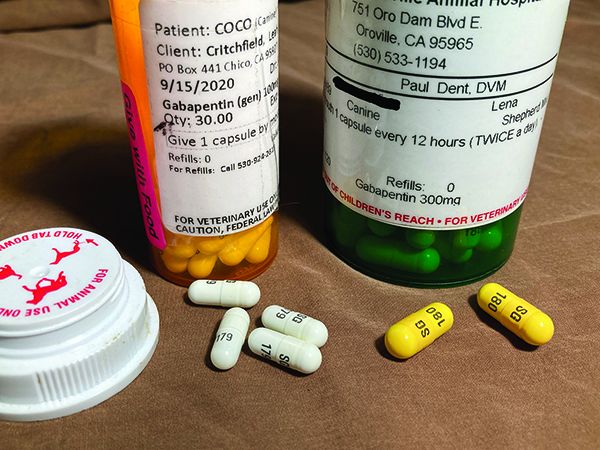
Gabapentin is a medication that veterinarians are prescribing with increasing frequency, sometimes alone but more commonly in combination with other medications, for the management of pain in dogs. It’s also increasingly prescribed in combination with other medications for canine anxiety. Why has it become so popular? I’ll get to that, but first we have to discuss pain.
Why Dog Pain Relief is a Priority
Pain management has become an integral aspect of health care in both human and veterinary medicine. If you’ve ever been hospitalized or had surgery, you will be familiar with the frequent question, “How’s your pain? Rate it on a scale from zero to 10.” So you try to pick a number, again and again, throughout the time you are hospitalized.
It turns out there is a very compelling reason for this. Pain is not our friend. It hurts. But the significance goes much deeper than that. Left uncontrolled, pain causes not only physical damage but also emotional and psychological damage. It delays healing and negatively impacts the immune system. In humans and nonhuman animals alike, it frequently results in harmful, unwanted behaviors like self-trauma, aggression, or withdrawal from the joys of life.
You’ve heard medical professionals say it’s important to stay ahead of the pain. There’s a strong reason for this as well. Untreated pain makes your pain receptors increasingly sensitive, which results in increasingly worsening pain. This is called “wind-up” pain, and it becomes more difficult to control.
We, veterinarians, work hard to prevent pain. When this is not possible, we work even harder to relieve it. This has become easier over the years with the ongoing advancements in science, medical knowledge, and extrapolation from discoveries made in human medicine. Veterinarians now have a whole array of medications and other therapeutics at their disposal for managing pain.
Chronic pain, something that is not expected to go away, is particularly challenging for us. It must be managed, often for the remainder of the dog’s life. For this type of pain, “polypharmacy” (multiple medications) and a multi-modal (more than one treatment modality) approach are usually most effective.
To manage chronic pain, we usually employ prescription medications, as well as safe and potentially effective “nutraceuticals” –nutritional supplements that have positive effects for a medical condition. There are increasing numbers of veterinarians who use Chinese and herbal medicine as complementary therapies to treat pain. Modalities like acupuncture, laser therapy, therapeutic ultrasound, physical therapy, and rehabilitation are all readily available to dog owners in most areas. An increasing number of dog owners now use various forms of cannabidiol (CBD) to treat their dog’s pain.
Pain is a highly personal experience. How one patient perceives pain may be completely different from another. Some have higher tolerances than others. One medication or therapy may work wonders for one patient and do nothing for another. This makes it crucial for owners to be observant, monitor their dogs closely for response to therapy, report accurately back to their veterinarians, and be open to recommended changes in the prescribed pain protocol.
What Does Gabapentin do for Dogs?

Gabapentin has gained popularity in leaps and bounds (hey! that’s what we’re going for: leaping and bounding dogs!) for its potential contribution to pain management in veterinary medicine. But this isn’t what it was initially developed to treat.
Pharmaceutically, gabapentin is classified as an anticonvulsant, or an anti-seizure medication. It works by blocking the transmission of certain signals in the central nervous system that results in seizures. Then researchers learned that some of these same transmitters are involved in the biochemical cascade involved in pain perception, and doctors began exploring its use for pain management.
Today, gabapentin is best known and respected for its ability to manage a specific form of pain called neuropathic pain. Neuropathic pain comes from damaged nerves, either deep in the brain and spinal cord or in the peripheral nerves, which are the ones that extend outward from the brain and spinal cord. It is different from the pain that is transmitted along healthy nerves from damaged tissue. Examples of neuropathic pain include neck and back pain from bulging discs, pinched nerves, tumors of a nerve or tumors pressing on nerves; some cancers; and dental pain.
A perfect example of neuropathic pain in humans is fibromyalgia. You’ve probably seen the commercials for Lyrica, a treatment for this chronic, debilitating, painful nerve disorder. Lyrica is pregabalin, an analog of gabapentin. (By the way, pregabalin is used in dogs as well, so if your dog’s current pain protocol includes gabapentin but isn’t working well enough, ask your veterinarian about pregabalin.)
How Gabapentin is Used to Manage Pain in Dogs
Although gabapentin is primarily thought to work best for conditions with neuropathic pain, it is most commonly used as an adjunctive or “add-on” medication in the polypharmacy approach to managing any chronic pain. It is rarely used alone, as the sole medication for pain, even in neuropathic conditions like neck and back pain.
Non-steroidal anti-inflammatory drugs (NSAIDs) are, and likely always will be, the first-line choice in veterinary pain management. But gabapentin is being added more frequently when an NSAID alone isn’t helping enough. Gabapentin is so safe it can be added to virtually any of the drugs currently used for pain management in dogs. There is a recent study that shows gabapentin has a synergistic effect, which means when it’s used in combination with another drug, such as the opioid pain-reliever tramadol, the effect of both drugs are enhanced.
When adding gabapentin to a current pain protocol, you may see some effect within 24 hours, but you won’t see the maximal effect for seven to 10 days. For this reason, dosage adjustments are usually made only every couple of weeks. Be patient. Gabapentin has the potential to add much value to your dog’s current pain-management plan.
Additionally, adding gabapentin, which has minimal side effects, sometimes allows for dosage reduction of other medications like NSAIDs, which do have potentially dangerous side effects, especially with long-term use. This is a huge plus for both your dog and your veterinarian, who took an oath to “do no harm.”
What are the side effects? Nothing much. There is the potential for mild sedation and muscular weakness, which increases with higher dosages. This side effect is usually minimal at the dosages typically prescribed for pain. Veterinarians actually take advantage of this side effect by using higher dosages of gabapentin in combination with other sedative drugs like trazadone to enhance the calming effect for anxious or aggressive patients in the veterinary clinic setting.
Side Effects of Gabapentin for Dogs
Gabapentin has a huge safety margin in dogs. It won’t hurt your dog’s kidneys or liver and is even safe to use with CBD products, although the mild sedative effect of both products may be enhanced.
There are some important precautions of gabapentin for dogs, however:
- First and foremost, do not use the commercially available liquid form of gabapentin made for humans. This preparation contains xylitol, the sweetener that’s commonly used to sweeten sugar-free gum. Xylitol is extremely toxic, even deadly, for dogs.
- Wait before giving gabapentin after antacids. If you regularly give your dog an antacid like Pepcid or Prilosec, you must wait at least two hours after giving the antacid before giving gabapentin, as the antacid decreases absorption of gabapentin from the stomach.
- Never stop gabapentin cold turkey if your dog has been on it for a while. This could result in rebound pain, which is similar to wind-up pain, in that it’s pain that’s worse than ever. For this reason, always wean your dog off gabapentin gradually.
Is Gabapentin Safe for Dogs?
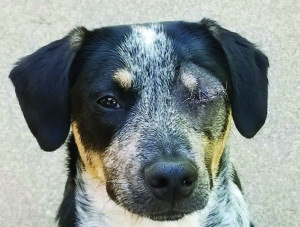
As you can probably tell, I am a huge fan of gabapentin for dogs. It helps many of my patients with their pain, it’s safe, and it’s not expensive. I prescribe it most frequently as part of my polypharmacy approach to managing chronically painful conditions like osteoarthritis and cancer. I prescribe it for dental pain. It works wonders for neck and back pain.
While gabapentin is not currently used heavily for post-operative pain as its efficacy in that realm has been questionable, I’m excited right now as there is a study under way to assess its efficacy pre-emptively (before the pain) for dogs undergoing surgery. Many veterinarians already prescribe it for their surgical patients to be started before the procedure, because they have so much faith in it.
Gabapentin is extremely safe for dogs, and it has the potential to alleviate pain for our dogs and improve their quality and enjoyment of life. If you’ve been wondering why so many veterinarians are prescribing this medication more and more, there’s your answer. We see results, plain and simple.
Gabapentin does not have a direct anxiolytic (anti-anxiety) effect, limiting its usefulness for treating the chronically stressed, anxious dog as a stand-alone drug. However, as with its synergistic use alongside pain medications, it is sometimes prescribed in combination with Prozac (fluoxetine, a selective serotonin reputable inhibitor [SSRI]) or Clomicalm (clomipramine, a tricyclic antidepressant [TCA]) for persistent cases of generalized anxiety, panic disorders, compulsive disorders, and true separation anxiety.
The goal when adding gabapentin in these instances is to help the dog relax in the face of his stressors, as you try to help him through his issues with appropriate desensitization and behavior modification exercises. This is particularly useful in cases where the dog is already receiving the maximum dose of anti-anxiety medication, with less than the desired effect.
It’s important to note that medication alone is not likely to relieve anxiety for your dog unless paired with the above-mentioned desensitization and behavior-modification exercises. These exercises can be prescribed by your veterinarian or a veterinary behavior specialist.
Gabapentin’s sedative effect at higher dosages can be used on an as needed basis to help dogs relax and get through specific situations that cause undue stress for them. Examples of this type of situational anxiety are veterinary visits, grooming appointments, long car rides, thunderstorms and fireworks.



I heard it is not that hard on the liver. Did you google it?
My 15 year old Shih Tzu has been taking liquid Gabapentin for over a year to help her rest. Before she started taking Gabapentin for Canine Cognitive Disorder, she would spin in circles for hours and bark all night. Now she is able to rest at night and to settle down enough to eat, drink, and potty normally.
My dog became anxious and unable to follow commands on Gabapentin. It happens.
What are typical dosages for say back pain depending an a small to large dog?
I have been under the impression that Gabapentin is extremely hard on the liver. I had my dog on it for a very short time, had blood drawn and already his liver enzyme (I forget which one) was already slightly elevated. Why is every other thing about gabapentin I’ve ever read is that it’s bad for the liver?