

There are few things as frightening as watching your dog have a seizure. Yet seizure disorders are surprisingly common in canines. A seizure is defined as uncontrolled electrical activity in the brain. Seizures can run the gamut from very minor, focal seizures (a twitching of the face or a leg) to major convulsions in which a dog loses consciousness, may vocalize loudly, has uncontrolled muscle movements, and loses bowel and/or bladder control.
Types of Dog Seizures
A seizure or “ictus” is comprised of three phases. The pre-ictal phase can begin as much as 24 hours before a seizure and is not always obvious. Your dog may act strange during this period, but this is usually only recognized in retrospect. The second phase is ictus (the seizure itself). In the third, or post-ictal period, your dog is recovering from the seizure. It can be stressful and disturbing to witness, and it varies significantly between dogs. The post-ictal stage can include a deep sleep that lasts several hours to an entire day, confusion, and abnormal behavior, including ravenous hunger or complete anorexia, dilated pupils, and in some cases, blindness that will resolve. Your dog may be disoriented for a short time, but this period is otherwise not dangerous.
In the past, seizures have been categorized as grand mal (French meaning “great sickness”) or petit mal (“small sickness”). These terms are no longer used to describe seizure activity, as they are considered too vague. The more recent classifications are tonic-clonic, clonic, and tonic. Seizures can also be described as generalized, focal, or psychomotor.
In a tonic-clonic seizure, the first, very short phase is the tonic. The dog will suddenly stiffen and collapse if standing. Next is the clonic phase, in which the muscles contract and relax rapidly. This is the type of seizure with which most people are familiar. It is often called a convulsion and represents the most common, generalized seizure type in dogs.
A tonic seizure is usually brief (less than one minute) and involves a sudden stiffening of the muscles. This is a less common manifestation of a seizure disorder. A clonic seizure is rhythmic muscle jerking that generally starts in one area of the body. It is very rare and often associated with canine distemper virus. Both a tonic seizure and a clonic seizure can be generalized or focal.
Psychomotor seizures often manifest as unusual behavior, such as “flybiting” at the air or staring into space and not responding to cues. Sometimes, they are called “absence spells,” as the pet seems unaware and unresponsive to his surroundings.
Seizures can last from seconds to hours. When a seizure doesn’t stop after a few minutes, it is called status epilepticus. In this scenario, the body temperature will start to go up due to the repeated muscle contraction, and heat stroke can result. A dog’s body temperature can elevate to as high as 110 degrees or more if the seizure is not interrupted. Prolonged hypoxia (low oxygen) to the brain due to seizures can also cause damage. Status epilepticus is always an emergency.
Medical Emergency: Status Epilepticus
Status, as it’s commonly called, occurs when a seizure persists and will not stop without medical intervention. This is always an emergency and requires veterinary attention. Benzodiazepines like Valium will be given intravenously to stop the seizure. Your dog may need to be cooled to prevent heat stroke. He may need to stay on a continuous infusion of medications like Propofol (an anesthetic) to break the seizure cycle and allow recovery. This can take two to four days in some cases. The prognosis is guarded for recovery.

Dog Seizure Causes and Diagnostics
Causes of seizures can be divided by age group:
Dogs Less Than Six Months
A dog of this age with sudden onset of seizures likely has a congenital problem, infection with parasites such as Neospora, infection with a virus such as canine distemper or rabies, or toxin exposure. Epilepsy at this age is extremely rare.
The first step of evaluation is, as always, a thorough history. Puppies are prone to ingesting toxic substances such as rat baits and gum sweetened with xylitol. As a result, if your puppy presents with seizures, your veterinarian will recommend a thorough diagnostic work-up. This will start with a complete blood count (CBC) and chemistry panel, urinalysis, and fecal examination.
Bloodwork will evaluate for metabolic causes of seizures, such as liver failure, electrolyte abnormalities, or low blood sugar. A urinalysis will help determine how the kidneys are functioning, as well as look for evidence of any inflammation or infection within the urinary tract. Your vet may also recommend specific blood tests to rule out parasites such as Neospora caninum and Toxoplasma gondii.
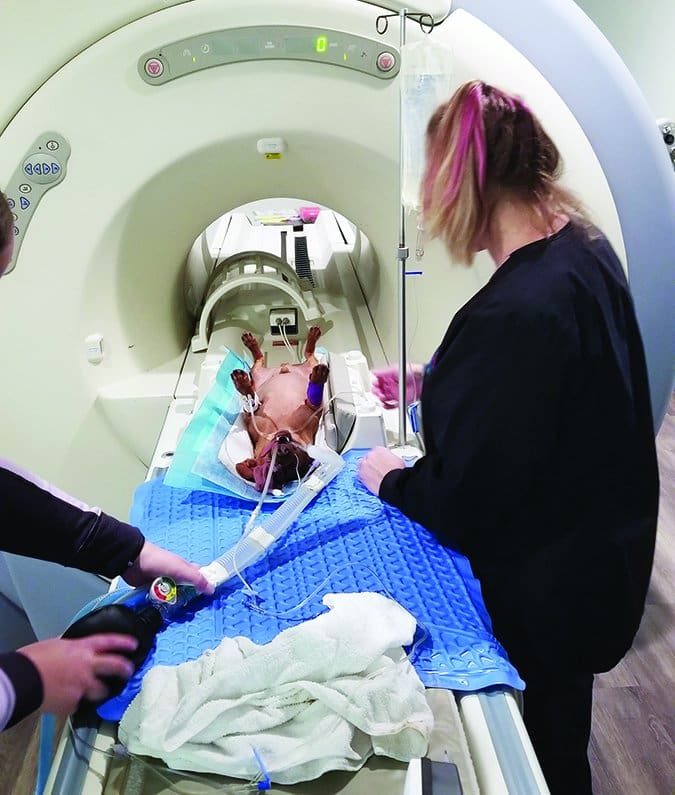
If those tests do not reveal a cause, your vet will refer you to a specialist for a cerebrospinal tap and imaging of the brain such as an MRI or CT scan. Because epilepsy is very rare in dogs this age, it is important to find the cause of the seizures. Without definitive diagnosis, the underlying condition is likely to worsen, as are the seizures.
If further testing is not financially possible, your veterinarian will start empirical treatment based on the suspected underlying cause. This may or may not be effective.
Dogs Aged Six Months to Five Years
Epilepsy becomes the most likely diagnosis in this age group when other causes are excluded. Epilepsy is not a disease per se. It is a description of seizure activity for which no underlying cause can be found.
A diagnosis of epilepsy cannot be made definitively until every other cause of seizures is ruled out. The tests needed to rule out an underlying cause can be expensive, however, so this diagnosis is often made based on breed, clinical signs, and response to treatment. Beagles, Schnauzers, Collies, Cocker Spaniels, and Basset Hounds are predisposed to epilepsy.
Your veterinarian will recommend the same set of diagnostic tests as for puppies and likely add a blood pressure measurement, thyroid levels, and x-rays of the chest and abdomen. If those are normal, the next steps are imaging of the brain as outlined above. In most cases, owners do not opt for the advanced testing and instead treat the suspected epilepsy with anti-epileptic drugs (AEDs).
Dogs Older Than Five Years
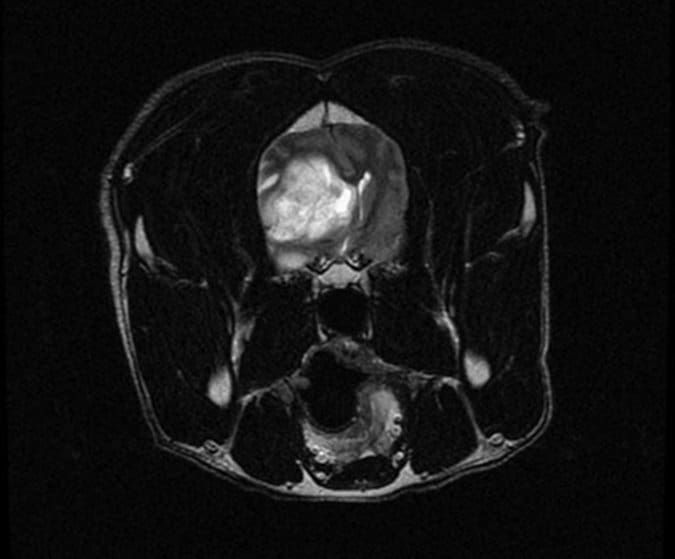
In dogs older than five, the most common cause of seizures is a brain tumor. These are generally benign tumors, such as meningiomas. Seizures can result from the tumor pressing on nearby structures as well as from swelling around the tumor.
The same diagnostic algorithm is followed as above, and again, many owners opt to merely treat the seizures without an in-depth exploration of the causes. While brain tumors are generally benign and can be removed via surgery, they are invasive and carry a guarded prognosis for recovery.
The causes of seizures are vast and varied. They can be broadly divided into extra-cranial (outside the brain) and intracranial (inside the brain).
Extra-cranial diseases include metabolic disease such as liver failure, toxin ingestion like xylitol or bromethalin rat poison, insulinoma (a tumor of the pancreas causing low blood sugar), infectious diseases like rabies and canine distemper virus, parasitic infection, and electrolyte derangements.
Intracranial causes are almost as varied and include cancer, inflammatory conditions such as necrotizing encephalomyelitis, previous head trauma leading to scar tissue formation within the brain, and vascular abnormalities like blood clots.
Dog Seizure Treatments
The first step in treatment may be nothing at all. If seizures are short and not frequent, treatment may not be necessary.
While they are difficult to witness, if the seizures are brief (under five minutes) and self-limiting, then they are not dangerous to your dog. In this case, your veterinarian may not prescribe medication but simply have you keep a “seizure journal.” This involves writing down when the seizures happen, what could have precipitated them (stress, anxiety, sleep), how long it lasted, and how long it takes your pet to recover. Your veterinarian will use this log to help dictate when to start treatment and what treatment to start.
In 2016, the American College of Veterinary Internal Medicine (ACVIM) released a consensus statement regarding when to start AED therapy. In general, if the seizures are mild and infrequent, therapy is not recommended. If they are severe and frequent, or the dog has a history of previous head trauma, or if there is an obvious lesion on CT/MRI (such as a brain tumor), AEDs should be started.
If the seizures are becoming a problem, medication is the first step. There are four commonly used AEDs in veterinary medicine, but more drugs are currently under study and are tentatively being used.
The most commonly prescribed first-line medication is phenobarbital, although this is slowly changing. “Pheno,” as it is frequently called, has long been used to treat seizures in humans and animals, so the effects and side effects are well-known, and the drug is readily available and inexpensive. It is also very effective. Unfortunately, it does have side effects such as sedation, weight gain, panting, increased appetite, and increased liver enzymes.
Phenobarbital is usually given twice a day and is a controlled substance under FDA regulations. It should not be stopped abruptly, as this can lead to more seizures. If you start administering this drug to your dog, make sure you are always prepared with refills before you run out! This will require at least a yearly examination with your veterinarian to maintain a valid client-patient relationship (VCPR).
Your veterinarian will also recommend monitoring of liver values and phenobarbital levels, likely on a bi-annual or annual schedule. This will help determine the effects that phenobarbital is having on your dog’s body. It will also assist your veterinarian in determining how much more (or less) phenobarbital your dog can receive.
About 30 percent of dogs will achieve good seizure control on phenobarbital. Greater than 75 percent will have a significant reduction in seizure frequency. About 30 percent of dogs will require an additional drug to control their seizures.
Historically, potassium bromide has been the next drug of choice. This is changing, as more and more veterinarians are becoming comfortable with and using newer AEDs. Potassium bromide also causes sedation and can be associated with pancreatitis, as well as a condition called bromism (bromide toxicity). It is being used less as newer drugs replace it.
The two newest AEDs are levetiracetam (Keppra) and zonisamide (Zonegran). Keppra has been used in humans in the U.S. for the past 10 years. It has very few known side effects and does not damage the liver. It is safe to use in patients with compromised kidney or liver function and does not generally cause drowsiness. It requires dosing every eight hours and can be expensive for larger dogs. An extended release formulation is sometimes available and can be given twice a day. It is also less cost effective. Unfortunately, there are few studies to evaluate how well it works in canines, so Keppra’s use is currently anecdotal. As time passes, there will likely be more evidence for its usage, more generics available, and a twice-daily formulation will become readily available.
Zonisamide is similar to Keppra. How it works to prevent seizures is not clear. It has possible side effects of sedation, decreased appetite, ataxia (wobbly walking), and might contribute to liver and urinary problems, though this has not been proven. It is also given twice a day.
In some cases, one drug can control seizure activity. In others, multiple seizure medications are needed.
Recently, a veterinary therapeutic diet was released by Purina that may significantly improve seizure control when given with medications. This diet uses medium chain triglycerides (MCTs) as the fat source. These MCTs have an anti-seizure effect and can improve control in conjunction with medication therapy.
Your veterinarian may send you home with an anti-seizure medication to apply into the rectum or nostrils if your dog has a seizure.
There are other, less mainstream treatment options such as vagal nerve stimulator implants. These are not commonly done and are only used in the most refractory cases.
Catherine Ashe is a 2008 graduate of the University of Tennessee College of Veterinary Medicine. After nine years in emergency medicine, she now works as a relief veterinarian in Asheville, North Carolina.




My dog coby started having fits 6 months ago l put him on pexion as advised by the vets however it did not stop his fits and he slowly got worse fitting more often and just so hungry and clingy. He was a collie staffi cross and started having fits just after he turned two. I thought l was giving him the best drug option available as l didnt dig deep enough with my research. It turns out that pexion is not the best option for cluster fits and l would have been better going for epiphen which l was about to start him on the day that he very sadly passed away. I am putting this up for people to read as l am devistated by his death and feel that if l had know that Pexion can worsen some dogs and does indeed come with its own set of side effect such as extream increased hunger to the point of eating anything and everything increased urination, marking lots of places in the house, whining confusion, back leg ,weekness vertigo and in the last few days exhaustion. He was an amazing dog who loved life and was brave till the end he loved life and we loved him l am heartbroken to have lost him so young wish that l had understood more about epilepsy medication. Please take your time before putting your dog on pexion just because it doesnt cause liver damage doesnt make it as safe or revolutionary drug as the vet has led me to beleive.
I have a golden retriever who is epileptic it’s been 40 days since his last one he’s on medication Epiphen and Livertracetam but he always has a few today five and it’s upsetting but the next day he’s ready for his walks after the fits we have taken him to the vets 5am in the morning but we don’t want him put to sleep we think the world of him.so reading about CBD would it be possible to add a bit to his food maybe every 30 days would it help we have tried accipuchire no luck we never leave him he’s every where with us. We are both active pensioners he loves the car but because of lock down we can’t go far
I would like to know why my 2yo springer spaniel had one siezure and died instantly, I would like to get another dog but am afraid to.
We adopted a 9 month old Australian Shepherd , after one week she had two massive seizures we took her to ER dr heard loud heart murmur they did a chest X-ray then a couple days later had an echo cardio gram found out her heart is extremely enlarged with two holes in it , she has maybe a year to live 😞the drs do not know if heart and seizures are connected she will not be able to have an mri to know for sure . She has had nine seizures in a week 4 grand mal 5 small We are trying Keppra 625mg 3xs day still having break thru seizures with clonazapan that totally dopes her up . We started a strong dose of CBD oil 3xs day . I have read about potassium bromide going to ask about that today plus having diazepam on hand when I see it coming. This has been the most stressful experience absolutely heartbreaking when they go thru it , we will try everything so she can have a good year.
My one-year-old mini golden doodle had 2 back to back seizures yesterday, scariest thing EVER!!! She is very tired today and its heartbreaking to watch. I’m so grateful I found this site, reading everyone’s experiences has brought me relief. Our vet has said to watch her for the next 72 hours, needless to say it was a sleepless night last night.
Again Thank you, everyone, for sharing your experiences!!
I have a Golden Retriever. She is 12 years old. Approximately 6 weeks ago she had a very bad seizure for the first time. She was foaming from her mouth and convulsing. When she came out of it she immediately peed and had a bowel movement before we could get her out. Scared the heck out of me. She had another one about 2 weeks ago exactly the same as the first. This morning she had another one. She has bad arthritis in her back legs and eye disease. I don’t know what to do. After they are over she just lays there then finally starts moving. The rest of the day you would think their is nothing wrong with her. When we know she is having a bad day with her arthritis we give her a pain pill prescribed by a vet. Right now I can not afford a vet which is the first thing I would do. I now have very high medical bills I pay for my son. Does anyone have any suggestions? I am going to call the humane Society today and ask them. I looked them up and they are much cheaper but they mainly can take blood or put the dog down. I will be heartbroken to do that but I can sit and watch her go through this. I have to do what is best for her not me.
My 6 year old mix dog is in the animal hospital now. He has had a history of seizures over the last five years but not enough to qualify him for preventative meds, yet.
He normally behaves differently just before his seizures; often sniffing wildly in the air as if he smells the seizure coming and he is trying to find it. He often seeks me out, getting my attention and cuddling with me just before he starts the seizure … sadly although I know what is going to happen I cannot help what happens next.
Normally, his seizures last a couple of minutes, then he walks around like a blind zombie for a while and returns to his old self. He usually loses control of all bodily functions, bites the air, and flails around violently but appears to be responsive to comforting words and gentle stroking of the fur. He had been better with being able to control his seizures when he would get them. Often biting a blanket or bracing himself on the couch just before it happens.
Today’s seizures woke me up and continued off and on for an hour until I was able to get him to the hospital. They sedated him with a Valium IV drip and a anti-seizure medication. Several hours later, when the meds wore off, the Vet called to say he went straight back to having seizures again. They have given him what amounts to a general anesthetic to see if giving his brain a rest will help. Time will tell.
I hope my best friend is okay. Covid restrictions make it so that I can’t be there.
I had a beautiful Siberian husky he was only 6 but sadly passed away on the 7 April it was his 3rd seizure and it was a bad one .he was on medication. But it did not help him and sadly he was put to sleep and we were on lockdown so we could not be there with him saddest day of my life miss him so much
Lisa I’m so so sorry
try a salmon formula dog food.had my pitbull on a salmon formula 8 ingredients for years took him off of it and started having seizures put him back on and they went right away. it’s the omega 3 n 6 vitamins
Hi Joe…what is the name if the food you have your dog on?
Well, I‘ve found something that does have a temporary relief from symptoms that comforts them immediately. I have 4 dogs with “white dog shaker symptoms “,
They are Maltese mix and all but 1 are symptomatic. I thought of the idea after seeing the movie about the girl who is Autistic and helped out with cattle stress. So, they still are with some symptoms but went through the episode very calmly. At this point, I am currently thinking about how to market this piece of gadget.