


Grain-inclusive dog food refers to diets that include grains such as rice, barley, oats, corn, or wheat as part of the carbohydrate and nutrient base. Unlike grain-free diets, which often replace grains with legumes like peas or lentils, grain-inclusive formulas rely on traditional grains that provide digestible energy, fiber, vitamins, and minerals. These grains are often referred to as “fillers,” however they can contribute valuable nutrients, support steady energy levels, and can complement high-quality animal proteins in complete diets. Grain-inclusive diets are a viable option for most dogs, as grain allergies or sensitivities are relatively uncommon, and many dogs thrive on them.
Is Grain-Free the Best Choice for Dog Food?
Not necessarily. One of the main reasons grain-inclusive dog food has regained popularity is growing awareness around the potential downsides of certain grain-free formulations. Many grain-free diets rely heavily on legumes, which have been investigated for possible links to heart health concerns in dogs. Instead of relying on grains such as wheat and corn, many brands have switched to ingredients like rice and oats that are easy to digest and widely tolerated, even by dogs with sensitive stomachs or food intolerances.
The best dog food with grain is typically defined not just by the presence of grains, but rather by its overall formulation quality. This includes having a clearly identified, high-quality animal protein source as the first ingredient, balanced fat levels, and the inclusion of whole grains.
Best Brands of Dog Food with Grain
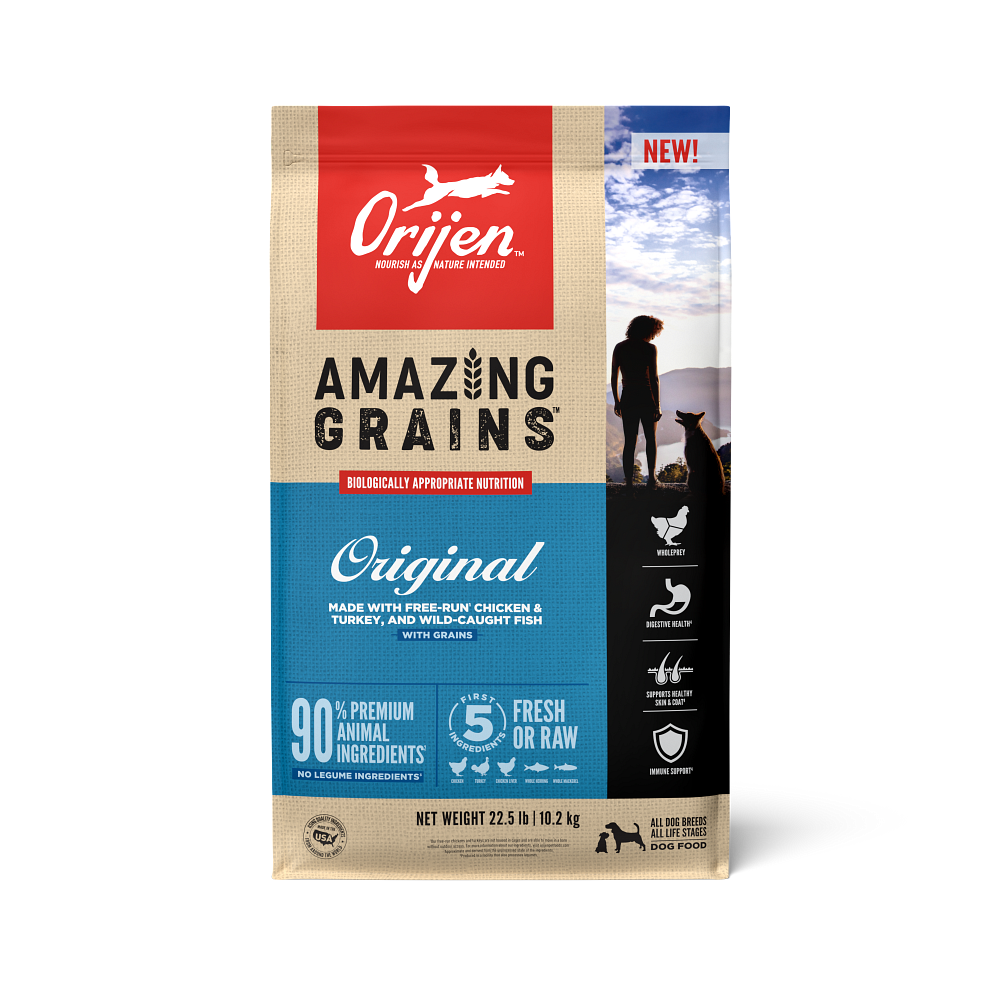
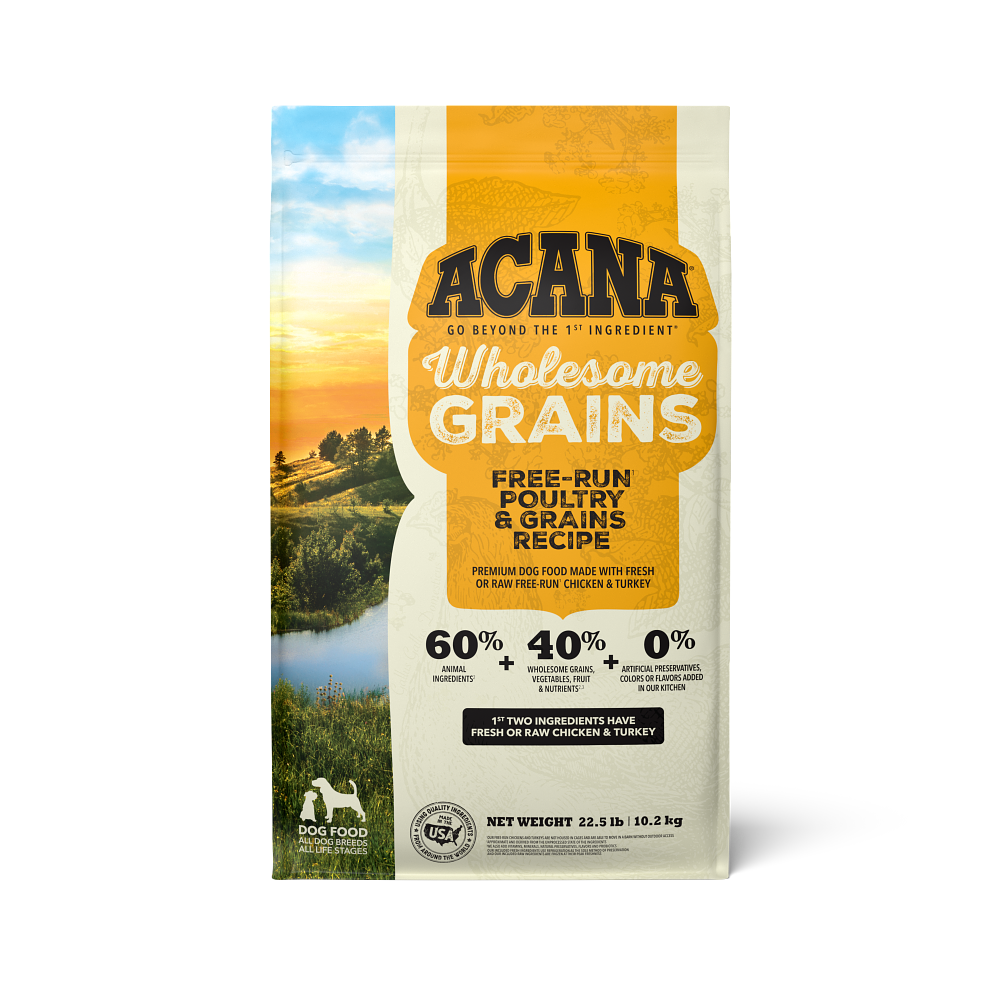
Several grain-inclusive dog foods stand out in the market today, offering a range of protein sources and formulations to meet different needs. For a premium, high-protein option, Orijen Amazing Grains is recognized for combining diverse animal proteins with quality grains. ACANA Wholesome Grains is another strong option, offering recipes with fish, beef, or poultry paired with oats and sorghum for a nutrient-dense approach. For dog owners specifically looking for grain-inclusive dog food without chicken, there are still excellent choices available, although they can require a bit more label scrutiny.
Grain-Inclusive Dog Food Without Chicken
For dog owners specifically looking for grain-inclusive dog food without chicken, there are still excellent choices available, although they can require a bit more label scrutiny.
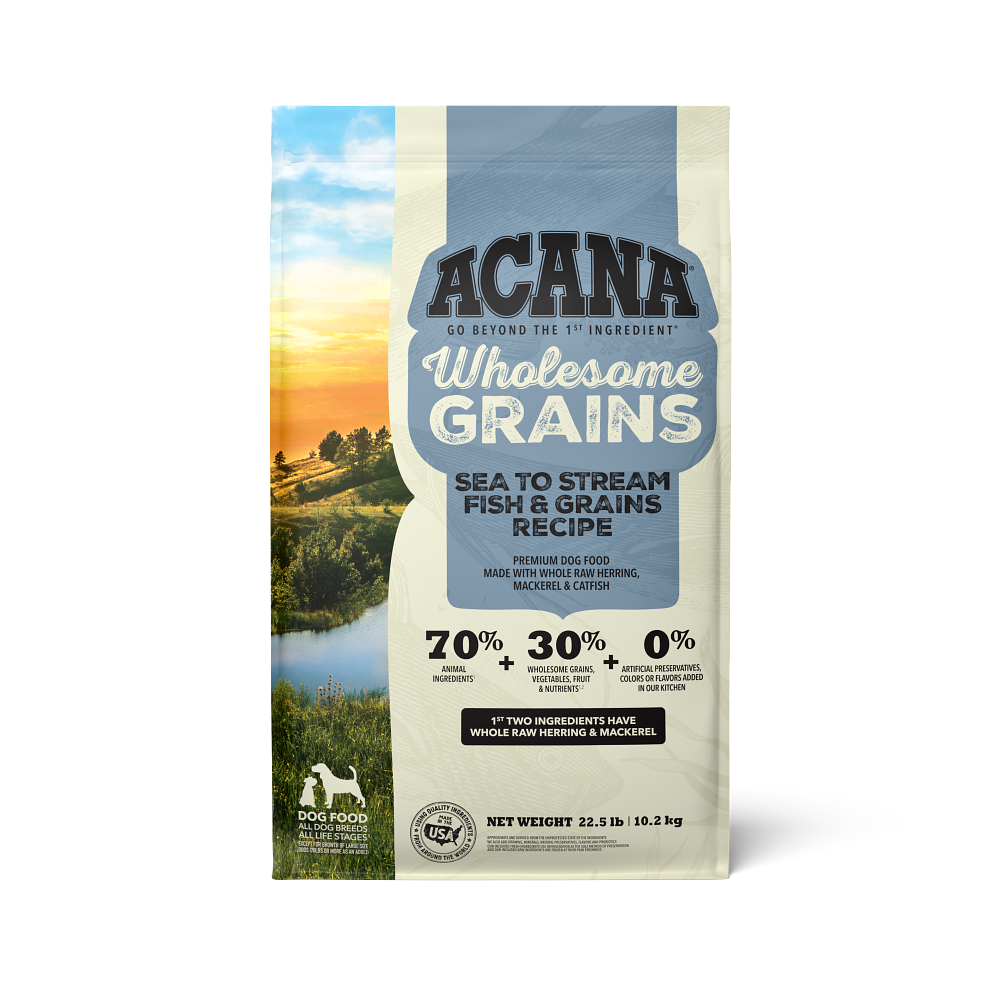
Chicken is one of the most common protein sources in pet food and one of the more common sensitivities, so alternatives like salmon, lamb, beef, or venison are often preferred in these cases. Fish-based formulas, such as salmon and rice recipes, are especially popular for dogs with both digestive and skin sensitives. For those looking to avoid chicken, ACANA offers a Red Meat & Grains Beef Pork & Lamb Wholesome Grains recipe and a Sea to Stream Saltwater Fish formula, which are both good options. Merrick Classic Healthy Grains also offers both a beef and a lamb formula for those looking for a more limited ingredient diet.

Bottom Line on Dog Food that Contains Grain
Ultimately, choosing the best grain-inclusive dog food comes down to your dog’s individual needs, including sensitivity, activity level, and life stage. Dog foods that contain grain can offer excellent nutrition, especially when formulated with high-quality proteins and digestible grain sources.
For dogs with chicken sensitivities, focusing on alternative proteins like salmon, beef, venison, or lamb within a grain-inclusive formula can provide a well-balanced and well-tolerated diet. The key is not simply whether a diet contains grains, but rather how thoughtfully the entire formula is put together to support long-term health and well-being.


My dog was fed Darwin’s raw frozen from age 1 to 9 when he had a liver issue. Vet urged me to switch a vet- approved fresh food product. I did but found some of their products had uncooked rice which my dog could not process. Was able to return for refund, but why not cook the rice?
I feed my dogs Wellness Lamb and barley. They love it. How does it rank?
What about wet foods in general? I think only feeding dry foods can lead to a perpetual state of dehydration. Would you just pour food out of a bag everyday for your child? What you feed your pet should require thought and intention.
My dog is allergic to chicken and two beef when we got him he kept losing weight every time we tried a different food. I now feed him small batch lightly cooked turkey sliders the first several ingredients or different kinds of organ meat from turkey and then the rest is organic vegetable vegetables, but to supplement this I feed him Open Farm ancient grains!!
I supplement because that’s the way of giving him different proteins. They make an ancient grain formula with white fish or salmon or venison, lamb and turkey as well as chicken and beef. So I’m just curious is there a reason Open Farm’s was not mentioned I have found them to be a very reputable and high-quality food.
“Well-designed research studies show that conventional lawn care exposes dogs to herbicides like 2,4-D and glyphosate (Roundup), increasing their risk of developing bladder cancer, non-Hodgkin’s lymphoma, multicentric lymphoma, and other malignancies.”
The quote above is from a WDJ article on 10/3/25. It seems that most corn and wheat grown in the U.S. is heavily treated with glyphosate which would seem to be an important consideration in choosing grain based foods (human as well as dogs).
Especially since federal food safety organizations have not yet recognized glyphosate as a risky chemical it would be helpful to have an article detailing the studies regarding herbicide use on grains, including evidence of association with disease, typical usage on particular grains, brands of food which have moved to organic sourcing of some ingredients, etc.
What about The Honest Kitchen?
Right. I’d like to know about THK too. Thanks