



How to Train Your Dog for Off-Leash Walks
Taking a dog for a walk or hike off-leash must be done appropriately and legally in order to prevent any number of risks to the dog, other dogs, or humans who may encounter the off-leash dog, as well as livestock or wildlife in the area. Off-leash dogs may run off and get lost, run onto roads and cause serious accidents, cause hikers to fall and bicyclists to crash, and chase or even kill other animals.
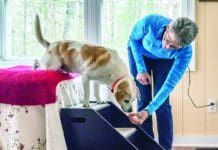
How to Keep Dogs Off Furniture – If You Want To
There's a method to keeping your dogs off the furniture if you don't want them there. I personally love a dog on my lap or under my arm when I'm sitting on the sofa. Not only do I enjoy the cuddling, I also get cold easily and love the warmth of dog bodies next to me. In our home, we keep the furniture covered with blankets for easy removal when company comes (dog hair begone!) and both dogs are taught to get off and/or stay off when asked to do so.

The 7 Habits of Highly Effective Dog Owners
but finds it even more rewarding to teach their owners how to build a better relationship with their canine family members

Is Frequent Urination in Dogs Normal?
If the symptoms your dog exhibits are straining to urinate, frequent, small accidents or repeated, small puddles when going outdoors, a likely cause is a lower urinary tract issue such as a bladder infection, bladder stones, or cystitis (bladder inflammation). Diagnostics will include a urine sample, urine culture, and possibly xrays of the bladder. Some breeds such as Schnauzers are more prone to certain lower urinary tract issues like bladder stones.

How to Teach Your Dog to “Search”
The "search me!" game uses lots of energy and can tire out your very active dog, and offers very practical applications as well. Start with treats, since most dogs will happily look for food. You can eventually ask him to look for hidden objects (favorite toys, your lost keys) and even hidden or missing humans!
How to Stop a Dog’s Unwanted Behavior in Five Steps
Most of the time, when dogs do something we don't want them to do (such as stealing our socks or jumping on our elderly...

How to Teach Your Dog to Greet Nicely – or Not Greet at All
passing by humans and/or dogs without fussing or pulling. Don't expect this to happen without practicing and rewarding your dog for the behavior you want!üThanks to Ally Padgett and Rosi Garcia (above)
How to Teach Your Dog to Just Walk Away!
Being able to teach your dog to move away from something when asked is an invaluable tool, both for your dog's safety and for your sanity. Note: Be sure to repeat each step eight to 12 (or more) times, until your dog eagerly responds to the cue before progressing to the next step.
Houseguest Etiquette for Dogs
Those of us who love dogs tend to assume that everyone else in our circle of friends and family does, too. Sadly, that's not always the case. In fact, even those who do share our passion for canine companions don't always appreciate the over-enthusiastic attentions of a happy hound, especially when they are trying to enjoy the company of human friends in the comfort of a private home. Whether you are a visitor bringing your own beloved dog with you to someone else's house, or a host greeting friends at your own front door with your canine family members milling about your feet, here are some tips to help you make sure your dog/human visits go well.

How to Potty Train A Dog
Preventing your dog from pottying in the wrong place is the first and most important housetraining task. Since most of us cannot keep our eyes on our dogs every minute, having a safe, comfortable confinement area is key to housetraining success. Most dogs naturally avoid going potty in their sleeping areas, so confining your dog in a small enough area that is more bed-like than room-like not only prevents unwanted accidents but also will help him develop bowel and bladder control.

The Allure of the Lure
give the cue
Tips on Introducing a New Dog
Be sure to reinforce both/all dogs for calm, appropriate behavior in each other's presence. Your reinforcers should be calming: treats, massage, and verbal praise are good choices; tug and fetch are not. You can use tethers, if necessary, to create calm, and follow Norwegian dog trainer Turid Rugaas' suggestions to have dogs approach each other in a curving line rather than directly, allowing them to sniff the ground and do other displacement and appeasement behaviors such as looking away, as they choose.